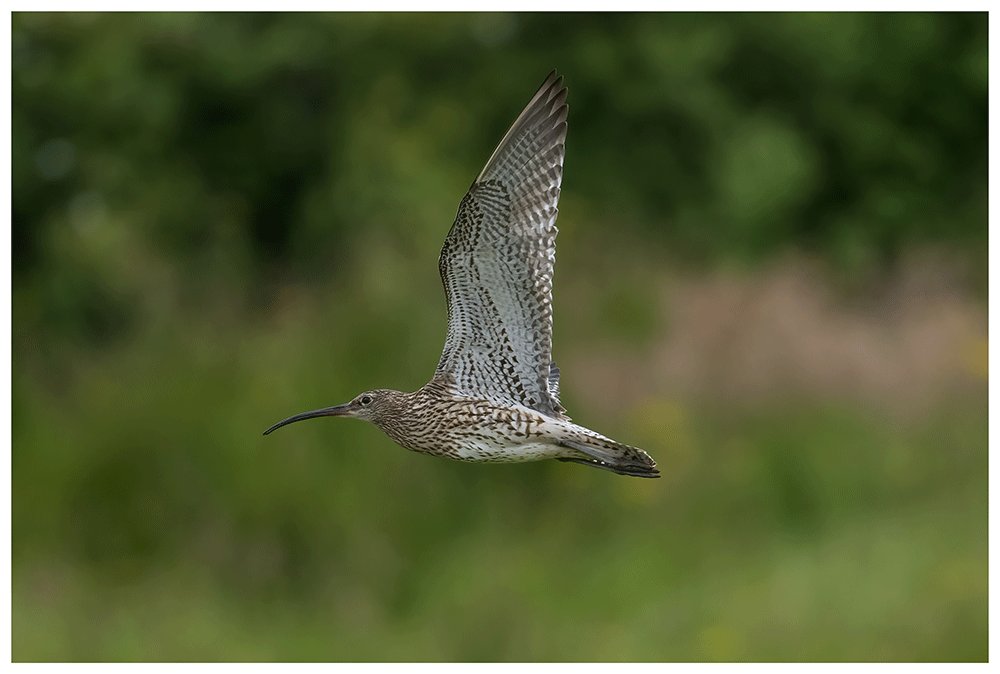
Yesterday was #WorldSaltmarshDay and though tricky to pick a favourite saltmarsh species, we are highlighting the magnificent Eurasian Curlew.
Read all about how a @WWTworldwide wetlands sample becomes a genome here: wwt.org.uk/discover-wetlands…
Delve into the Curlew genome here ⤵️
Are you curious about Curlews?
If the answer is yes, then this Genome Note could be for you: wellcomeopenresearch.org/art…
Sample partners in Ireland collected this species for sequencing - and now there is a freely available reference genome anyone can access.
@ucdagfood
ALT Eurasian Curlew (Numenius arquata) at its breeding grounds in Co. Monaghan, Ireland during June 2022.
Credit: William O’Connor.
🧬❄️ Not every specimen collected becomes a genome. Once identified, species already represented in the project are released, while new or supplementary samples are preserved for sequencing.
🦋🌿 Accurate identification guides every sampling decision.
@darwintreelife
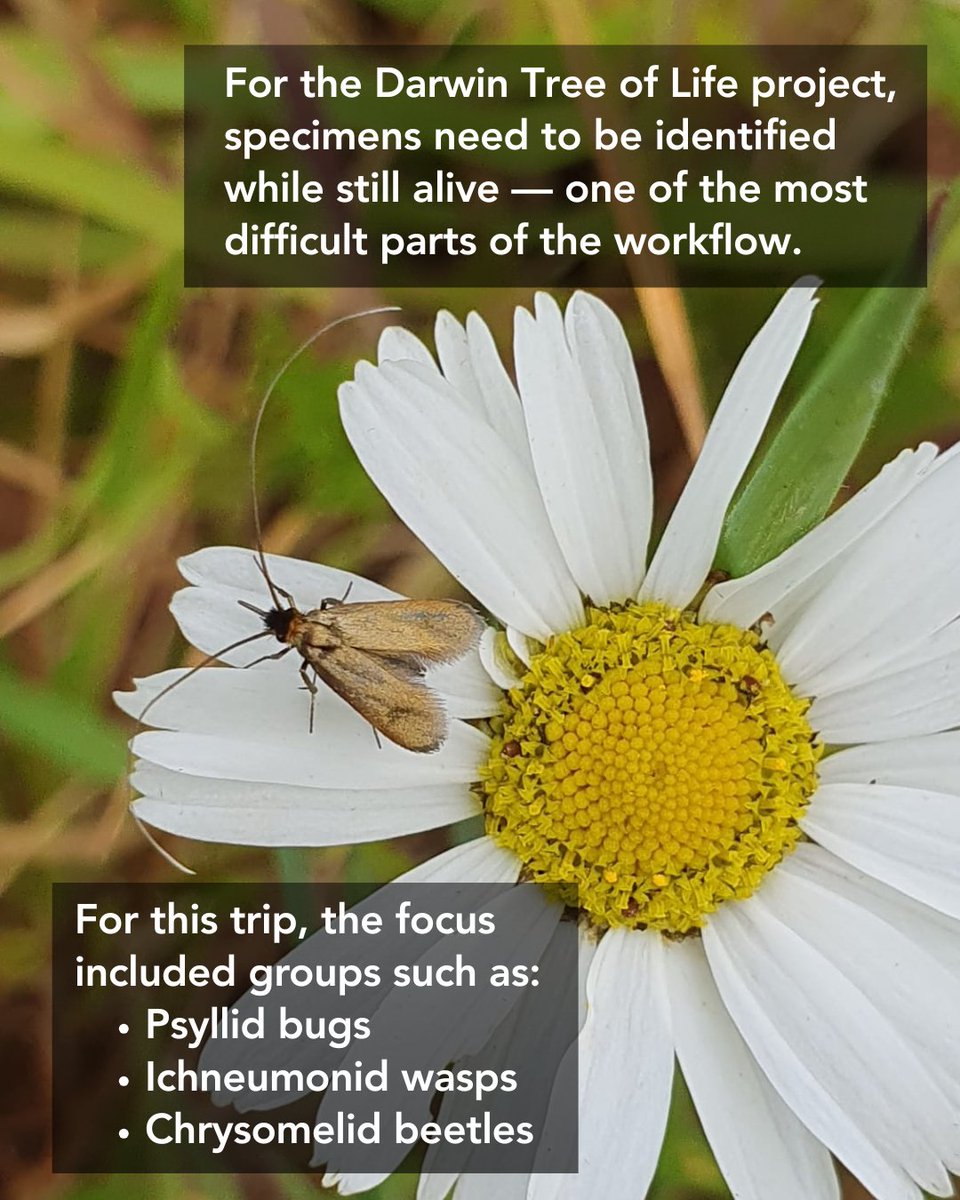
ALT Close-up photograph of a small moth resting on a white daisy with a yellow center. Text overlay reads: “For the Darwin Tree of Life project, specimens need to be identified while still alive — one of the most difficult parts of the workflow.” Additional text lists target groups from the field trip: psyllid bugs, ichneumonid wasps, and chrysomelid beetles. The image highlights the challenge of live specimen identification during biodiversity genomics sampling.
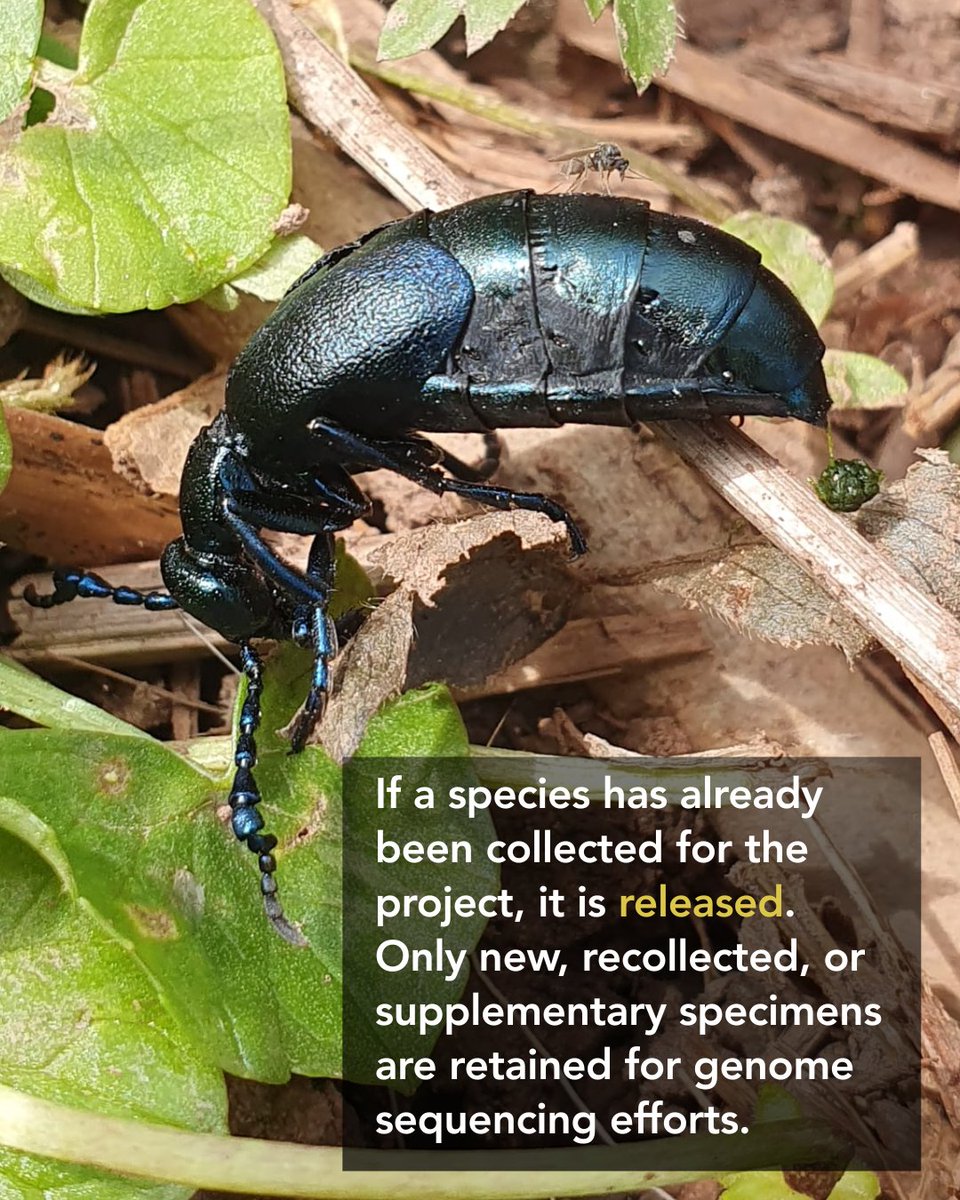
ALT A metallic blue-black oil beetle walks across leaf litter and low vegetation on a woodland floor. Text overlay explains that if a species has already been collected for the project, it is released, while only new, recollected, or supplementary specimens are retained for genome sequencing efforts. The image illustrates the Darwin Tree of Life programme's approach to minimizing specimen collection while obtaining material needed for genome sequencing.
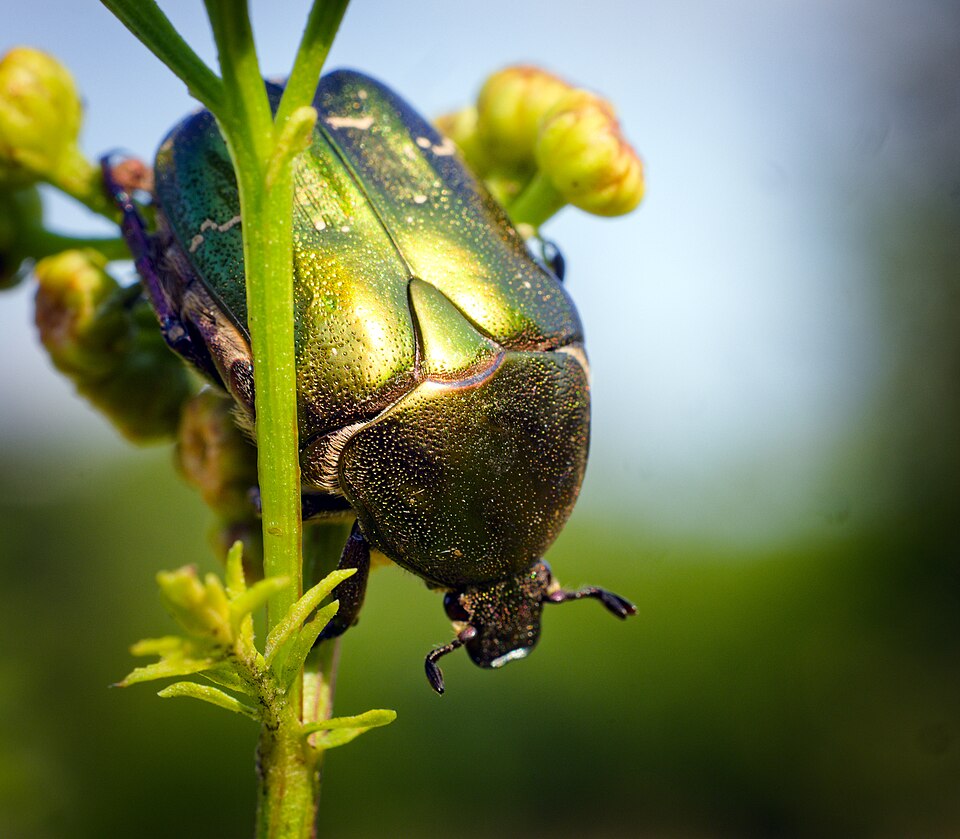
#DYK the Rose Chafer adults feed on pollen and nectar for which they have adapted mouthparts with a unique mechanism for taking in pollen?
Dive into Cetonia aurata DNA thanks to this full genome from our project: wellcomeopenresearch.org/art…
ALT emerald green beetle, a Rose Chafer, on a gree stemmed flowering plant.
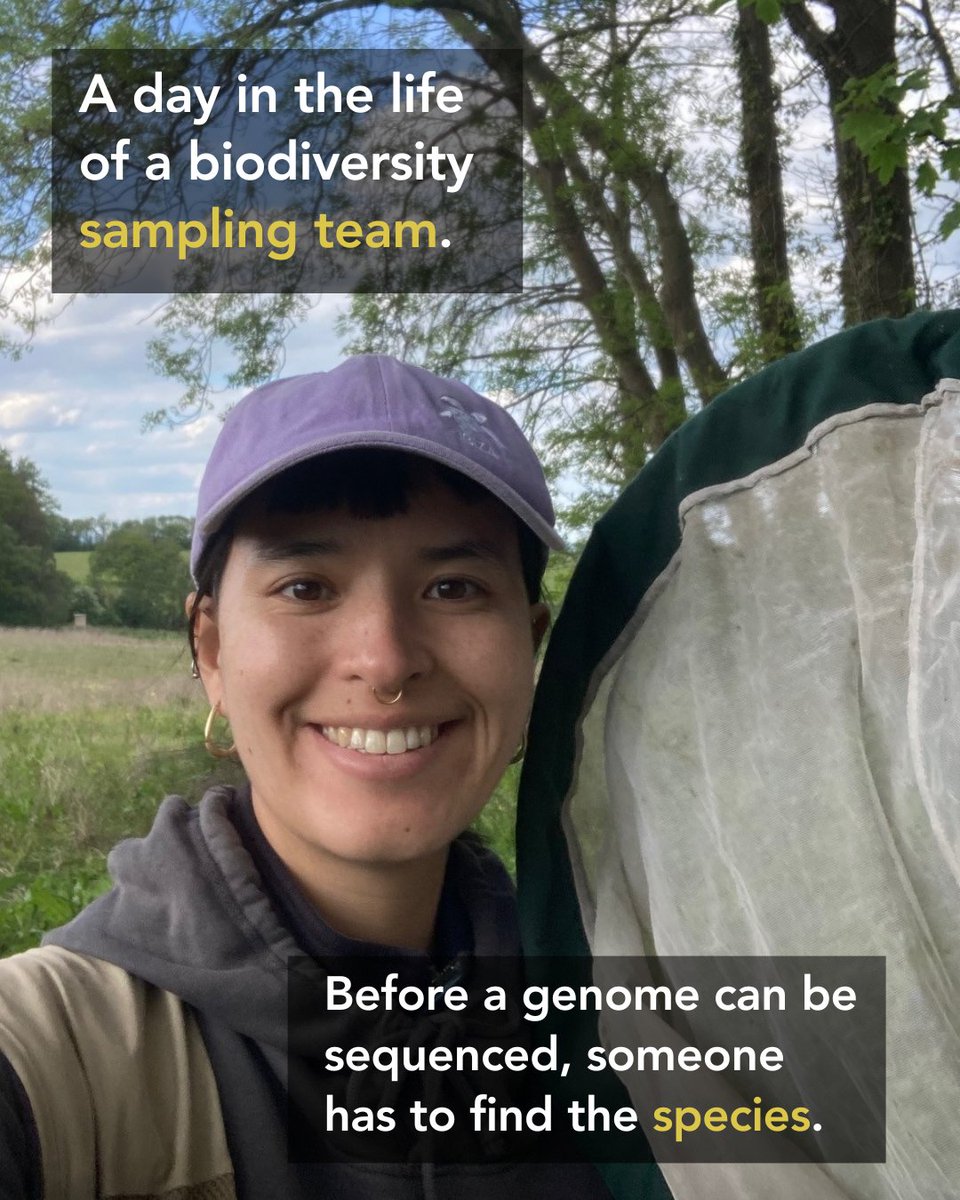
🦋🌿High-quality genomes begin with quality biological material.
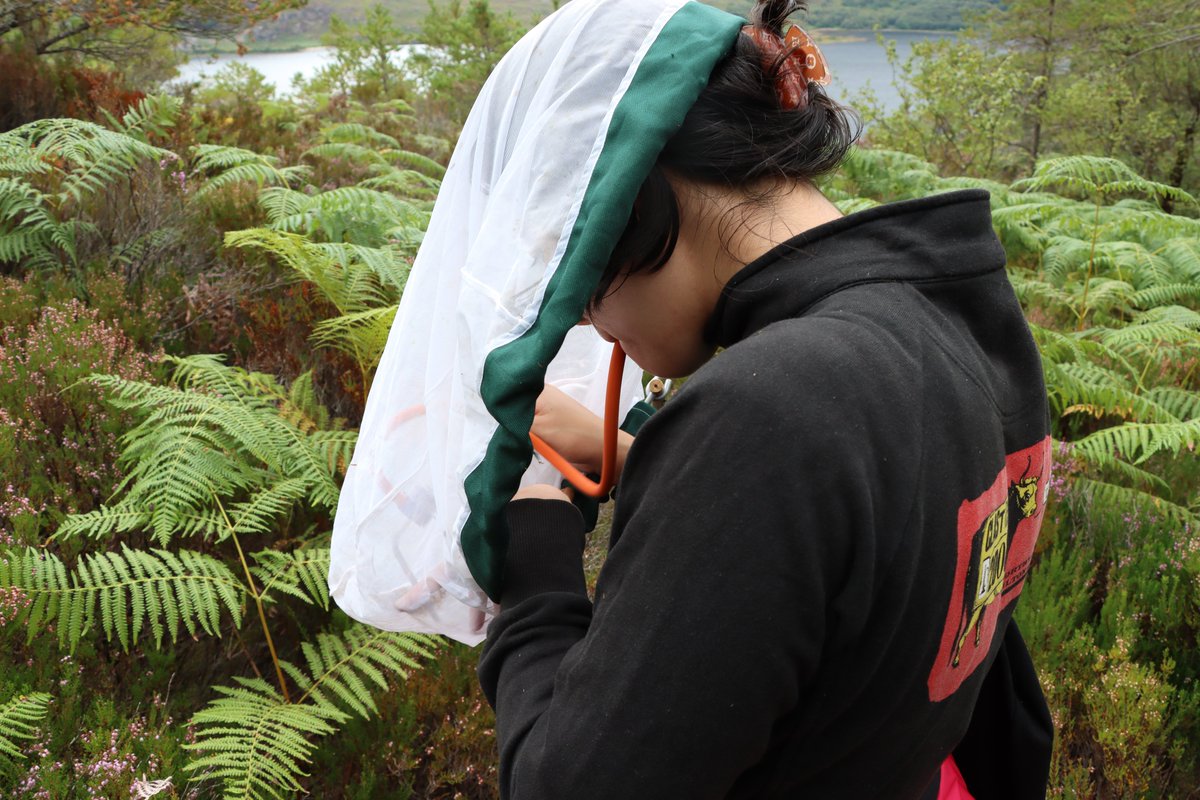
🐝 Before sequencing, each species is identified, documented, collected, and preserved to ensure integrity. For insects, this requires field expertise, taxonomy, and preservation workflows.
#biodiversity#genomics🐞
ALT A field biologist stands outdoors holding an insect net in a grassy landscape bordered by trees. Text overlay reads: “A day in the life of a biodiversity sampling team.” Additional text states: “Before a genome can be sequenced, someone has to find the species.” The image highlights the field collection stage that precedes biodiversity genome sequencing.
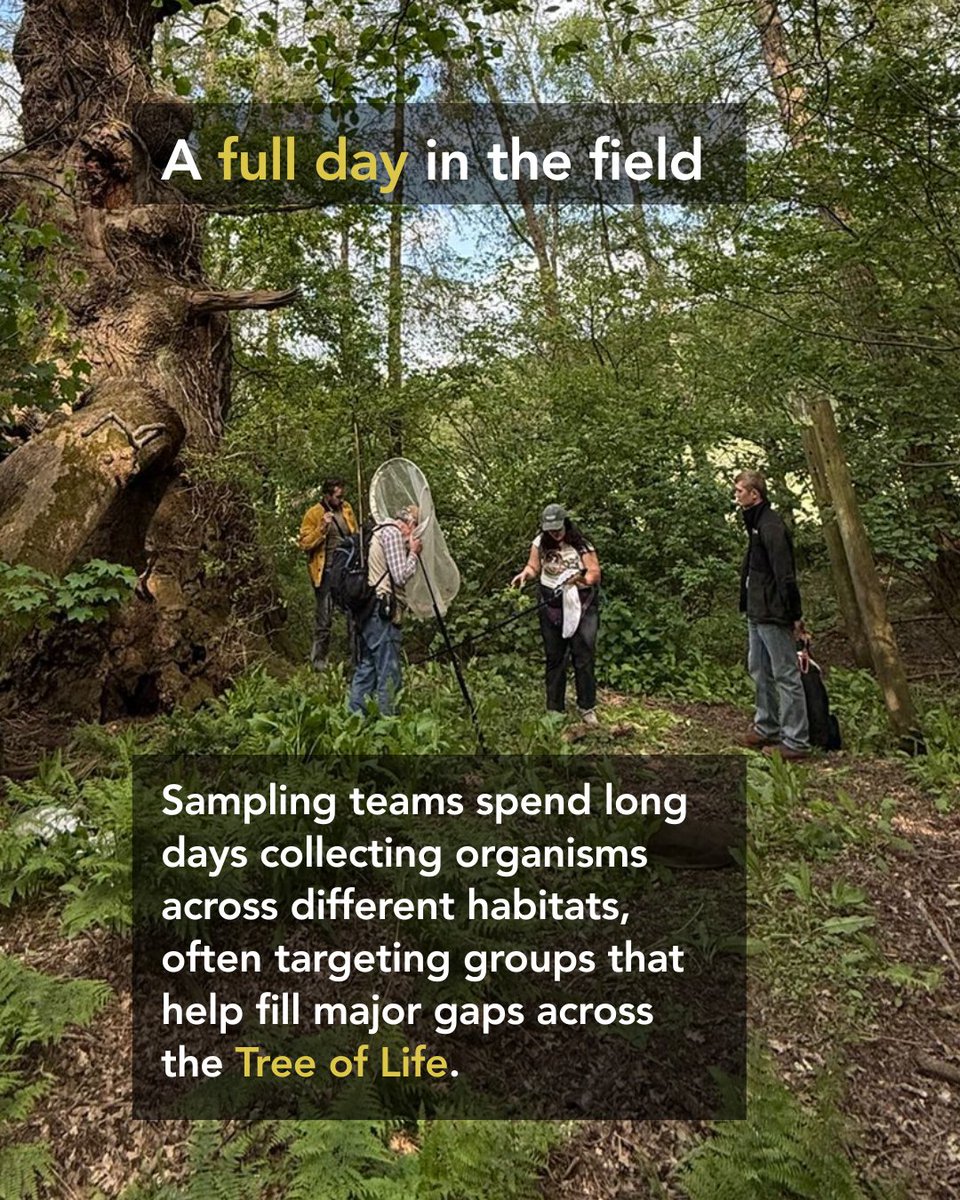
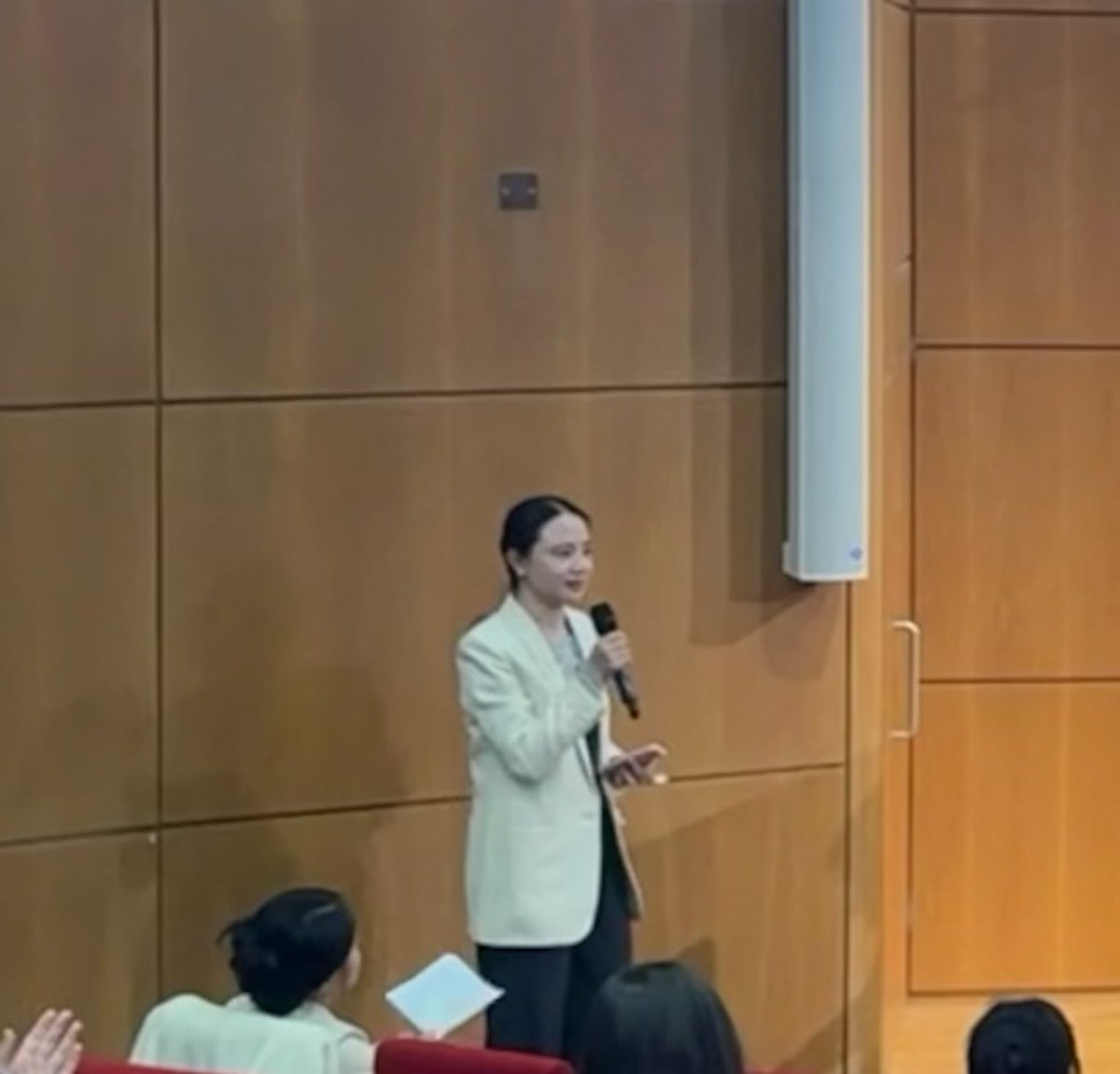
Last year at the Sanger Symposium @sangerinstitute , I gave a flash talk about my research.
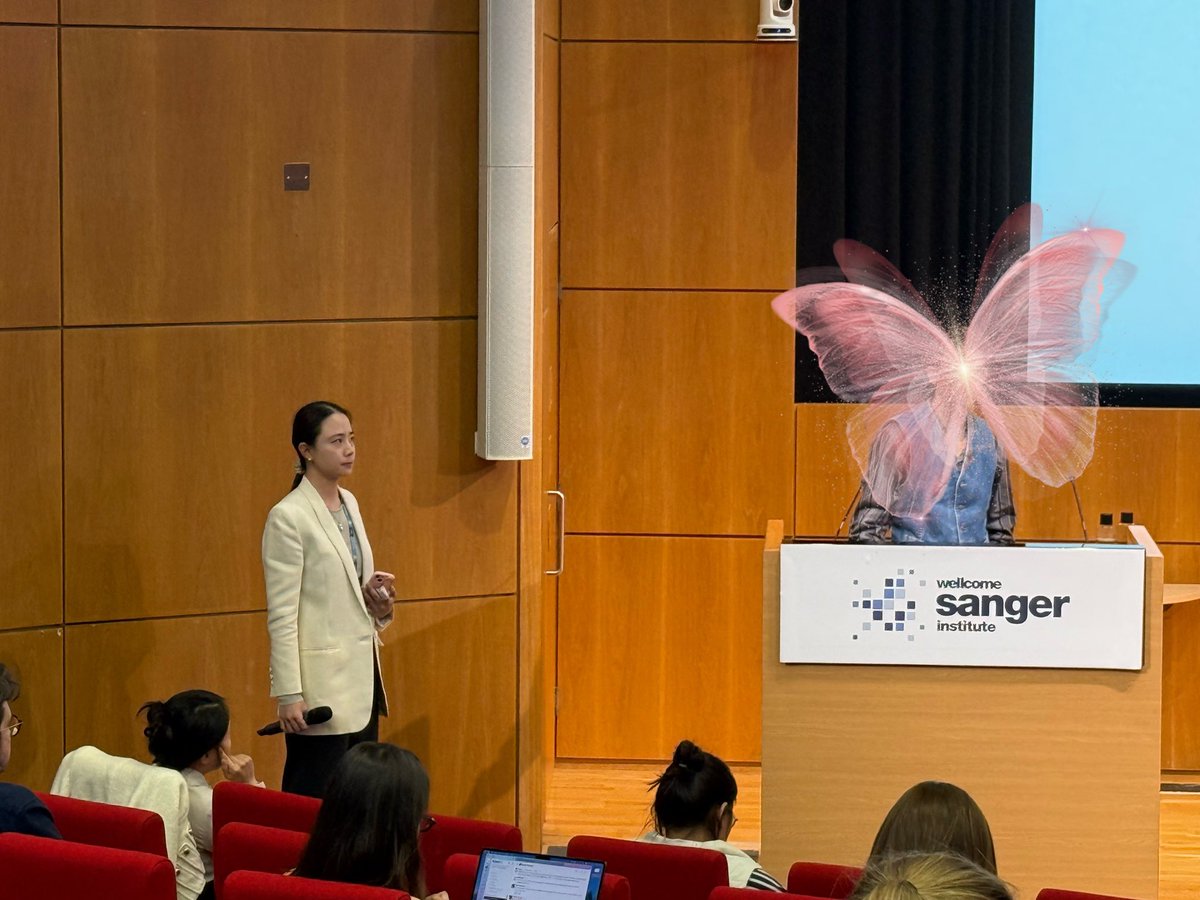
This year, I had the pleasure of chairing the Tree of Life session @darwintreelife
A small full-circle moment — grateful for the journey, and for all the “I’ll try” moments.
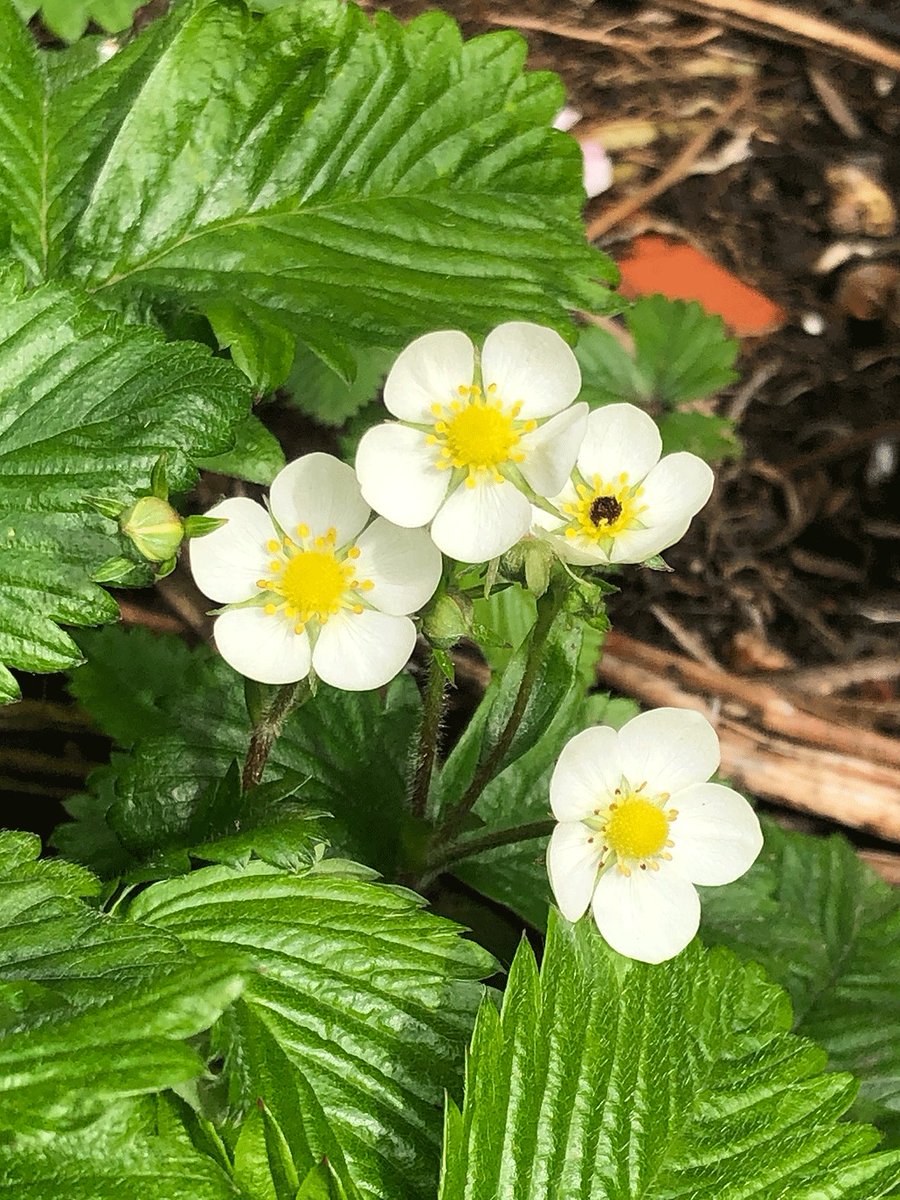
Did somebody say Strawberry season?
We have just the genome to celebrate - Fragaria moschata, AKA the musk strawberry 🍓
Sampled by the experts at Kew, read more about this berry popular plant via the link below ⤵️ wellcomeopenresearch.org/art…
ALT Photograph of the Fragaria moschata specimen from which samples were taken for genome sequencing. Photo: Maarten J. M. Christenhusz
Today is the International Day for Biological Diversity
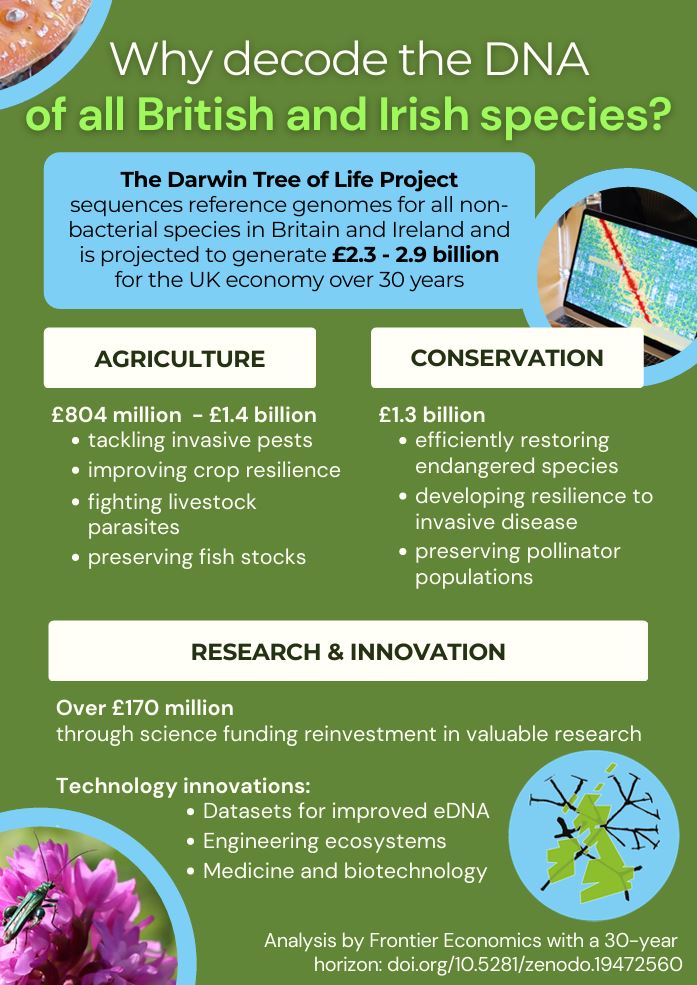
Our project is sequencing all known complex life in the UK and Ireland; a recent report highlights the tangible value sequencing biodiversity at scale offers to the economy.
Read more here: sanger.ac.uk/news_item/unloc…
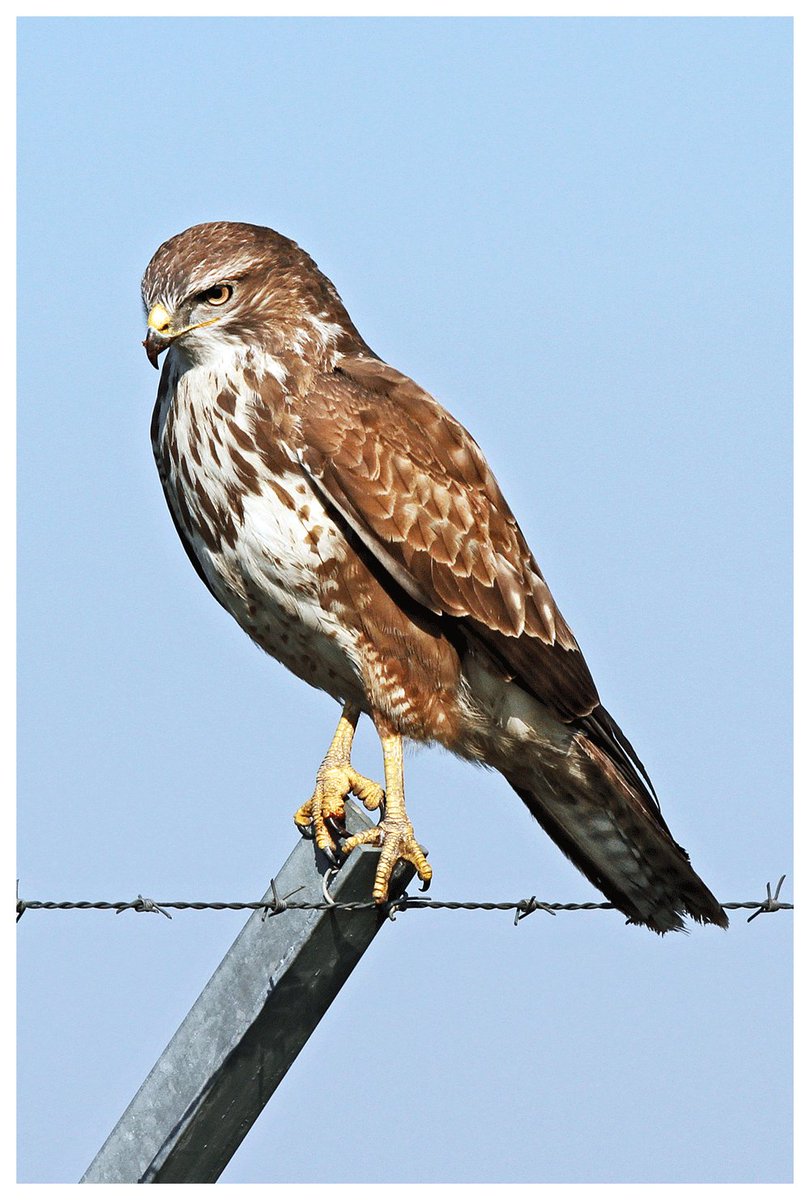
ALT Read the full Genome Note for Buteo buteo here: https://pmc.ncbi.nlm.nih.gov/articles/PMC12481152/
Photograph by Björn Strey/Flikr
23 May is @TETTRIsEU 's taxonomy appreciation day - coinciding with Carl Linnaeus' birthday.
Read the @sangerinstitute blog on UK springtails and the student expert identifying them: sangerinstitute.blog/2026/03…
📸Within the blog, enjoy macro photos by photographer @TimothyJonas
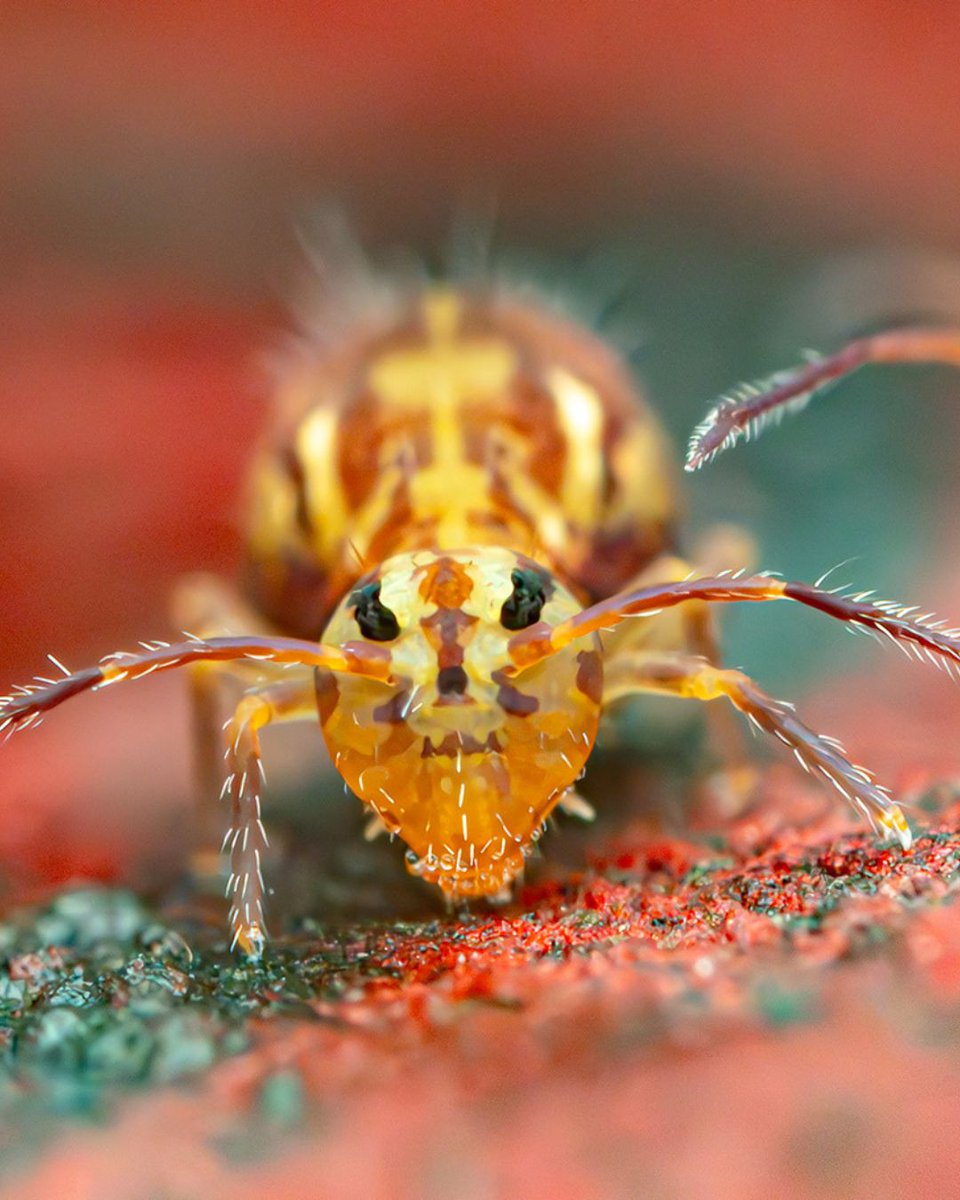
ALT Springtails can range in shape from the elongate entomobryomorphs to the rotund, globular symphypleonans. Macro-photography reveals details of the eyes, hairs, and patterns which are often crucial for identifying springtails to species level. Image credit: Tim Jonas, photographer.
Which freshly released genome would you like us to deep-dive through? 🐝🪲🐟
Whichever species wins, we'll share a thread going through the @WellcomeOpenRes Genome Note for that species. 📝
@thembauk@GenomeWytham@NHM_Science
Which freshly released genome would you like us to deep-dive through? 🐝🪲🐟
Whichever species wins, we'll share a thread going through the @WellcomeOpenRes Genome Note for that species. 📝
@thembauk@GenomeWytham@NHM_Science
Fantastic new resource for European bees, hoverflies and butterflies from the Pollinator Academy pollinatoracademy.eu/pollina…. Invaluable for anybody involved preofessionally with pollinators or keen amateur recorders/researchers.
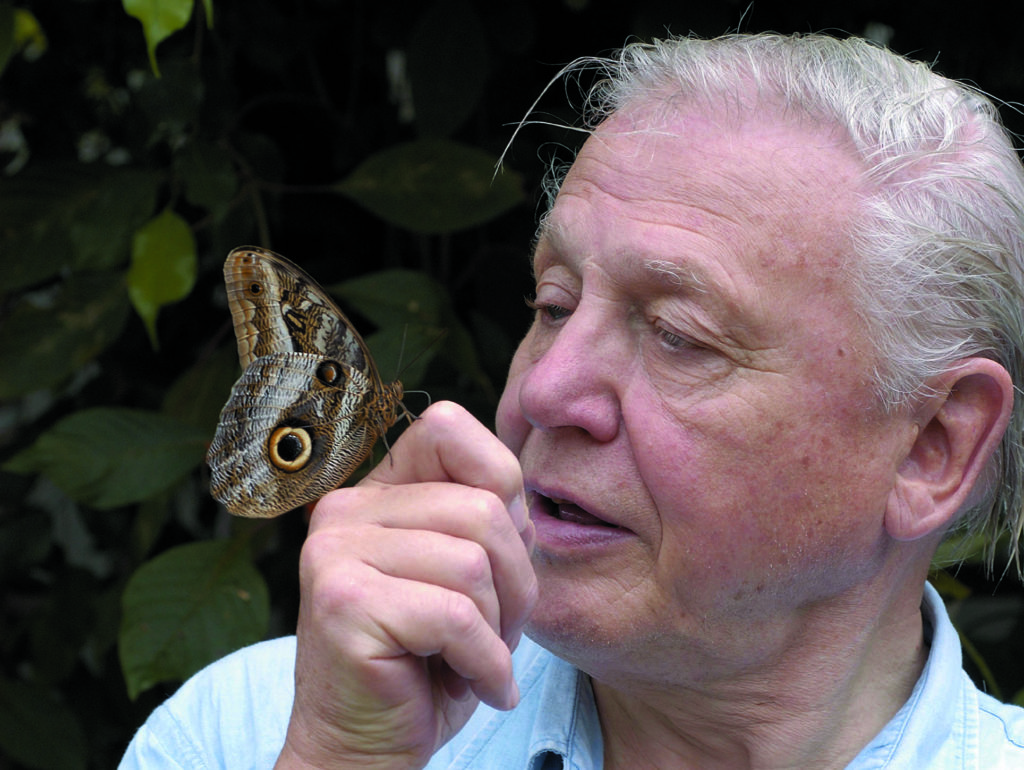
🎉 100 years of David Attenborough 🌍
Today we celebrate Sir David Attenborough Hon.FRES on his 100th birthday - His work has inspired generations of scientists & conservationists, elevating the importance of biodiversity & the need to protect it.
royensoc.co.uk/news/100th-bi…
ALT Close-up of a large butterfly perched on Sir David Attenborough's finger against a leafy background.

The Justice, Equity, Diversity and Inclusion (JEDI) Committee is seeking 4-6 new members. This year, priorities include developing an EBP demographic survey and expanding outreach, education, and storytelling in biodiversity genomics.