
Monero focused, tech driven cypherpunk piggie | Full time trader, crypto obsessed, and fierce fighter for human rights to encryption & privacy.
Joined June 2022
- Tweets 6,720
- Following 493
- Followers 1,227
- Likes 4,530
1,939 Photos and videos




Pinned Tweet

22 Mar 2025
In a world where governments pry into every transaction, dictating what we can buy when it comes to medicine, personal desires, or aid for others.
True financial freedom slips away. Privacy isn’t just a luxury, it’s the bedrock of liberty. The right to encryption, exemplified by tools like Monero, defies the suffocating norms of surveillance and control.
We must grasp on to it and fight for it, because only in shielding our choices can we reclaim the power to live as we see fit.

8
14
117
7,132
Most people don’t realize, it’s not living in fear. It’s called being prepared and aware
23
Crypto Piggie retweeted
18 Nov 2025
One transparent, one’s private, they’re both on the same chain representing the same token
This can’t mess up fungibility in anyway could it? 🤔
5
2
31
2,876
Crypto Piggie retweeted
Jan 15
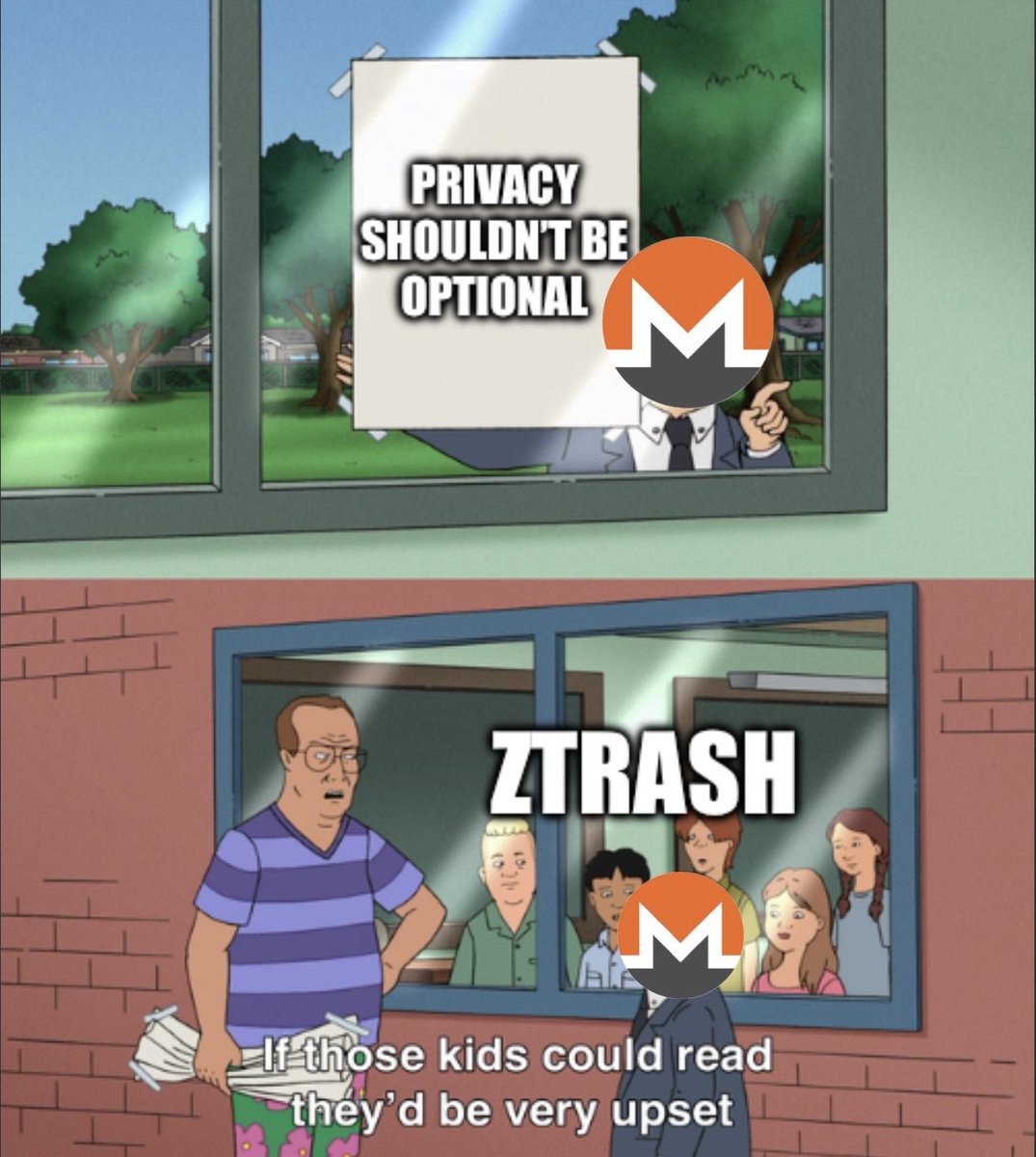
👀 privacy shouldn’t be optional
3
5
38
1,321
Mar 30
Just imagine what they could do with Monero 🤔

1
77
Crypto Piggie retweeted
Monero’s tail emission, the permanent 0.6 XMR block reward that kicked in after the main emission curve ended in mid 2022 was deliberately designed to be perpetual and inflationary by a tiny amount not because the developers wanted endless money printing, but to solve a problem most cryptocurrencies pretend doesn’t exist.
Unlike Bitcoin, which bets everything on transaction fees eventually being high enough to secure the chain once subsidies end, Monero’s creators openly admitted that a pure fee market might fail under certain conditions
(low fees → low security → centralization risk).
So they baked in a tiny forever inflation of 0.6 XMR every 2 minutes, trending toward 0% over decades as the total supply grows specifically to guarantee miners always have a baseline incentive, no matter how low fees drop.
This makes Monero one of the very few major crypto that mathematically ensures long term security doesn’t rely on hoping people suddenly pay high transaction fees forever. It’s a quiet but bold philosophical departure from the “fixed supply forever” dogma most crypto projects follow.
Most people only know Monero equals privacy, but this tail emission choice is actually a pretty hardcore engineering stance on sustainable decentralization
18
70
347
18,069
Mar 10
My Monero Fam & Friends
I’ve missed you all so much! I’m pumped to catch up with everyone and get the lowdown on anything I might’ve missed while I was away.
The reason I’ve been MIA? Life hit me with some serious family matters that demanded my full focus. But things are finally settling down and getting more manageable.
Probably not gonna start off posting as much but I’ll be back at 💯 in no time. 🦾
7
7
37
743
Mar 10
First bill in US history with Monero in it. 🤝
2
95
Monero once had scheduled hard forks every 6 months in 2016, deliberately to force privacy upgrades & prevent protocol ossification. technically noncontentious hard forks
This approach was deliberate to enable regular protocol evolution, enforce timely adoption of privacy enhancements, fix vulnerabilities, adjust mining algorithms for ASIC resistance, & prevent protocol ossification by keeping the network adaptable to emerging threats in the privacy arms race.
Unlike contentious forks that create new coins, these upgrades were community consensus driven, with the old chain abandoned post fork.
The schedule was roughly every 6 months initially, allowing time for users to update without disruption, though it has become less frequent as the protocol matured shifting toward longer intervals or as needed changes to avoid unnecessary forks while still preventing stagnation.
Below is a chronological timeline of Monero’s mainnet network upgrades, including approximate activation dates based on target block heights, fork versions, & key changes.
• March 22, 2016 (Block 1,009,827) - Fork v2 : Required ring sizes of at least 3 for transactions, set block time to 120 seconds, & established a fee free block size of 60 KB. This was the first scheduled upgrade, marking the start of the 6 month cycle to promote ongoing improvements.
• September 21, 2016 (Block 1,141,317) - Fork v3 : Split coinbase outputs into denominations for better privacy mixing and transaction uniformity.
• January 5, 2017 (Block 1,220,516) - Fork v4 : Introduced support for both standard & Ring Confidential Transactions (RingCT), enabling hidden transaction amounts while maintaining privacy. This was a major step in forcing privacy upgrades across the network.
• April 15, 2017 (Block 1,288,616) - Fork v5 : Adjusted the minimum block size & fee algorithm to improve scalability & economic incentives.
• September 16, 2017 (Block 1,400,000) - Fork v6 : Mandated RingCT for all transactions & required ring sizes of at least 5, further enhancing privacy by increasing anonymity sets.
• April 6, 2018 (Block 1,546,000) - Fork v7 : Switched to CryptoNight variant 1 (for ASIC resistance), required ring sizes of at least 7, & enforced sorted inputs in transactions to standardize formats.
• October 18, 2018 (Block 1,685,555) - Fork v8 : Limited outputs per transaction to 16, changed PoW to CryptoNight variant 2, enabled Bulletproofs for more efficient range proofs reducing transaction sizes, & required 10 confirmations for alternative blocks.
• October 19, 2018 (Block 1,686,275) - Fork v9 : Enforced 10 confirmations for locking transfers, building on v8 for improved security.
• March 9, 2019 (Block 1,788,000) - Fork v10 : Adopted CryptoNightR PoW for continued ASIC resistance, introduced a new dynamic block weight algorithm, & optimized RingCT formats for efficiency.
• March 10, 2019 (Block 1,788,720) - Fork v11 : Prohibited older MLSAG/RingCT transaction formats to phase out legacy features & enforce modern privacy standards.
• November 30, 2019 (Block 1,978,433) - Fork v12 : Switched to RandomX PoW (CPU friendly, ASIC resistant), required at least 2 outputs per transaction, adjusted block median for penalty calculations, & used a 1 byte median size for optimizations.
• October 16, 2020 (Block 2,210,000) - Fork v13 : Increased ring size to 11 & added a new fee per byte structure to bolster privacy & resist spam.
• October 18, 2020 (Block 2,210,720) - Fork v14 : Banned RingCT outputs of type 0 to eliminate outdated formats.
• August 13, 2022 (Block 2,688,888) - Fork v15 : Raised ring size to 16 for stronger anonymity sets, added view tags to speed up wallet scanning by 30~40%, adjusted fees & dynamic block weights for better attack resistance, & upgraded to Bulletproofs for smaller, faster transactions.
• August 14, 2022 (Block 2,689,608) - Fork v16 : Prohibited empty RingCT signatures to close potential vulnerabilities.
2
10
61
2,559
Never forget that Bitcoin’s foundation rests on core members & key developers essential to its creation who are linked to the Epstein files through investments, funding, and associations.
5
14
521
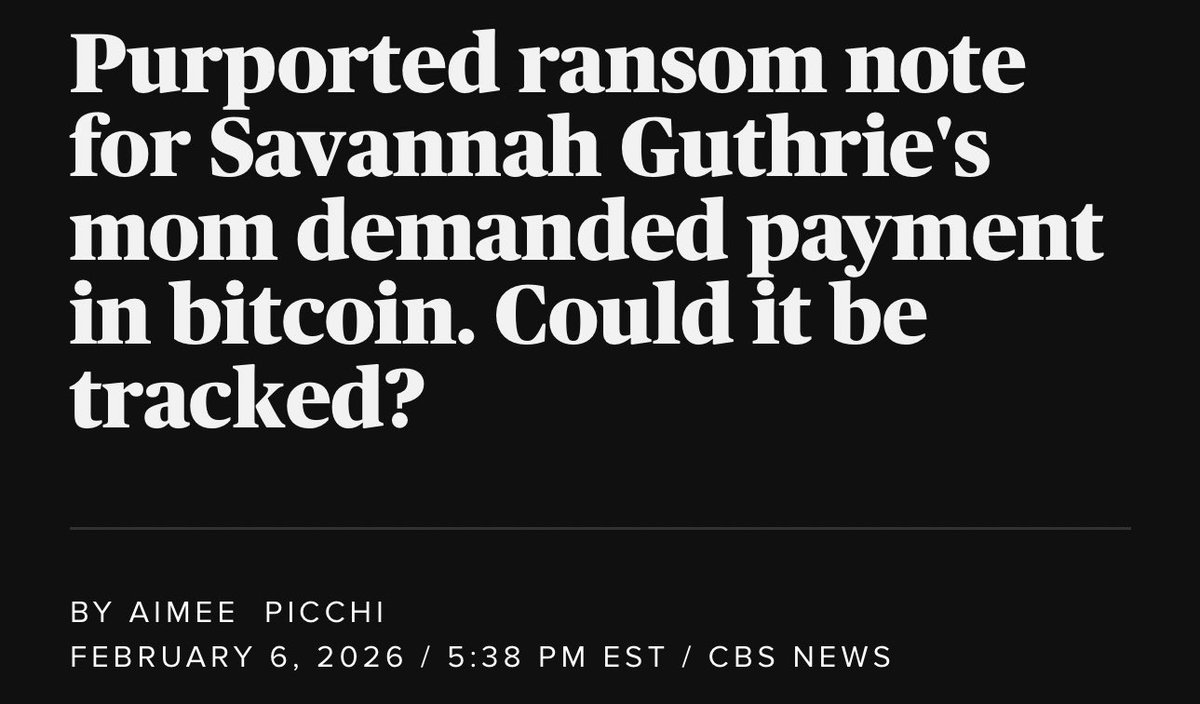
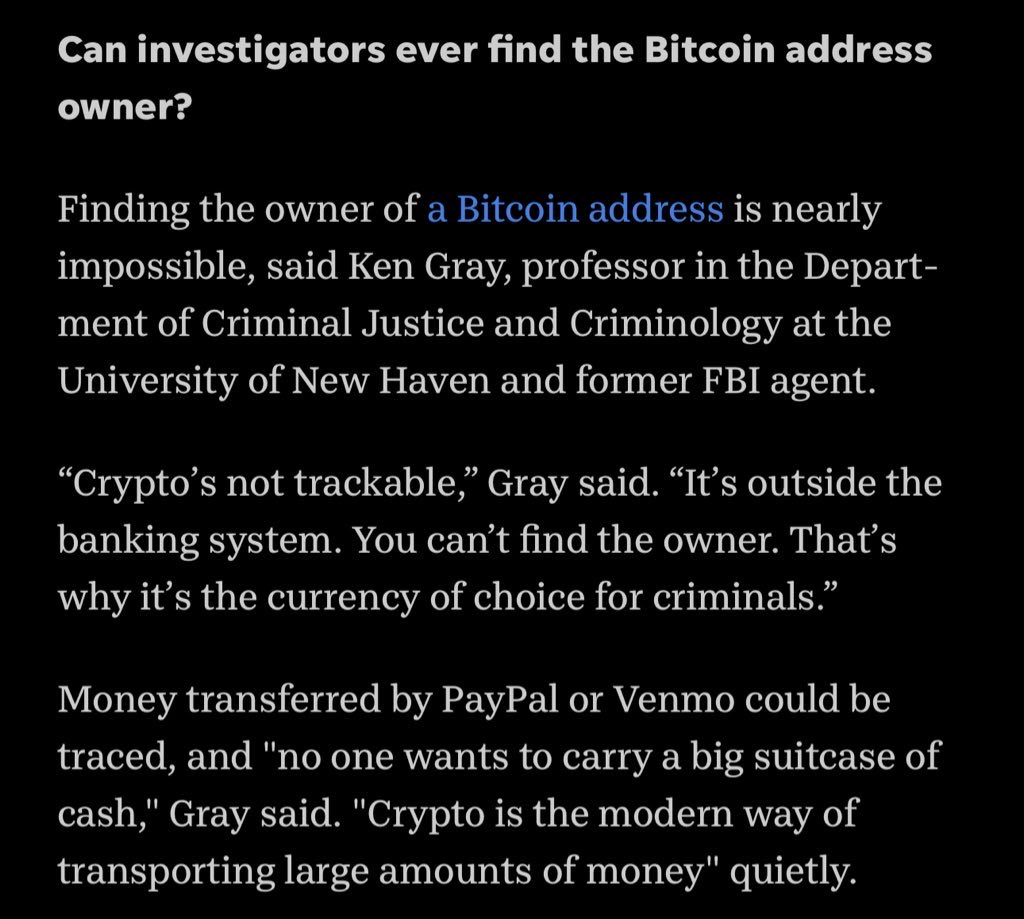
🚨Today on Retail News‼️🚨
“Bitcoin, could it be tracked?”
Retail’s confusion over Bitcoin basics highlights how early we are & how we’re pioneers in a world that’s only beginning to value true anonymity.
We truly are ahead of the adoption curve by miles.
1
168
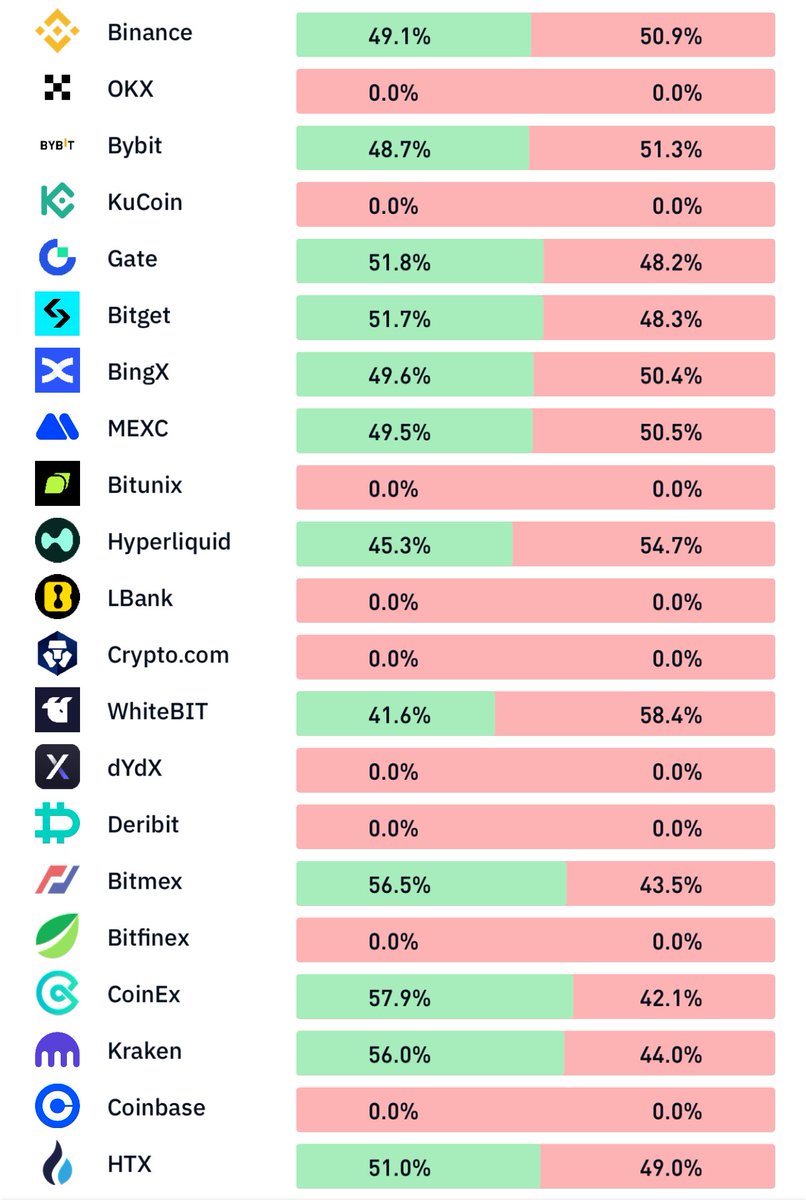
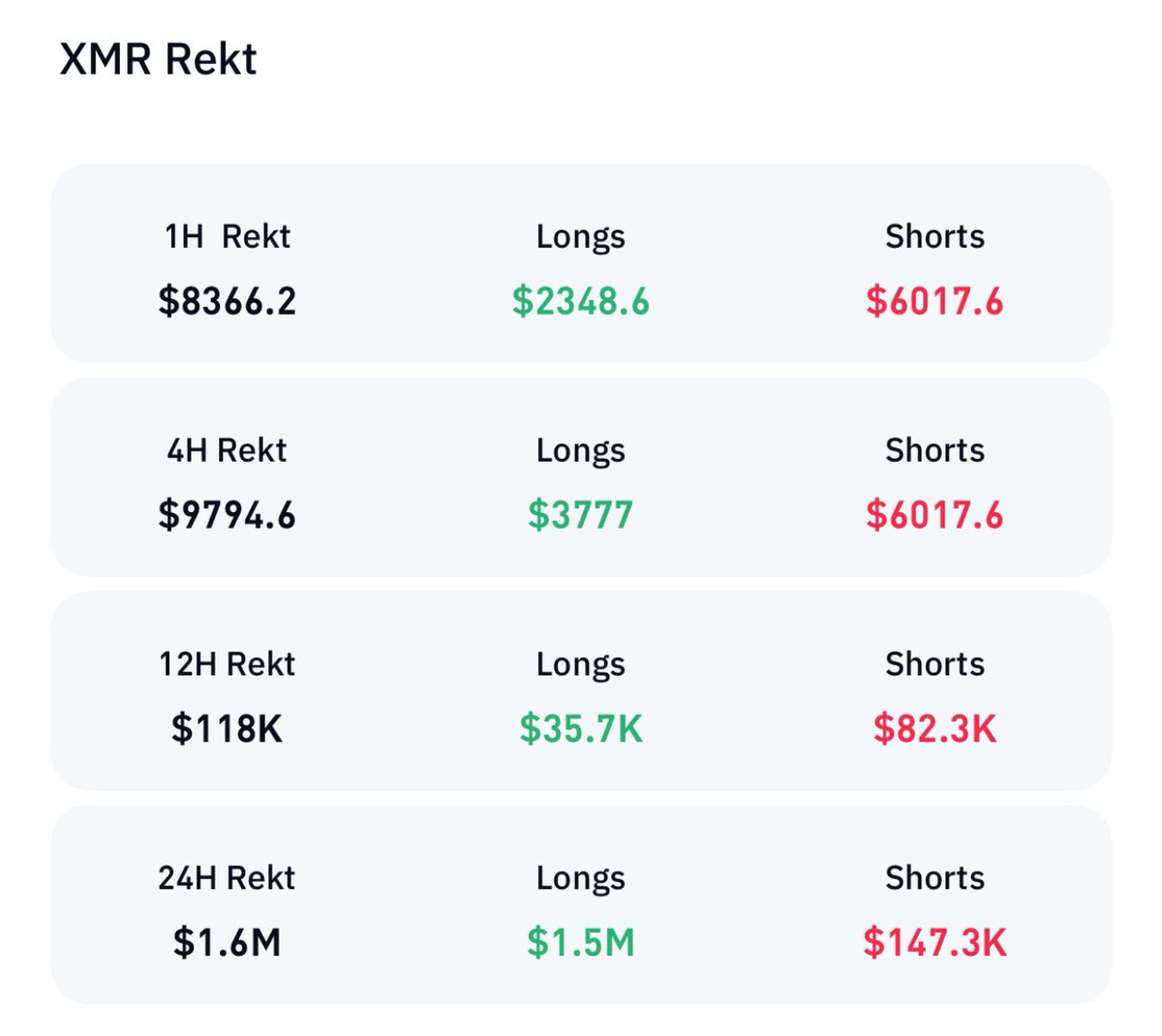
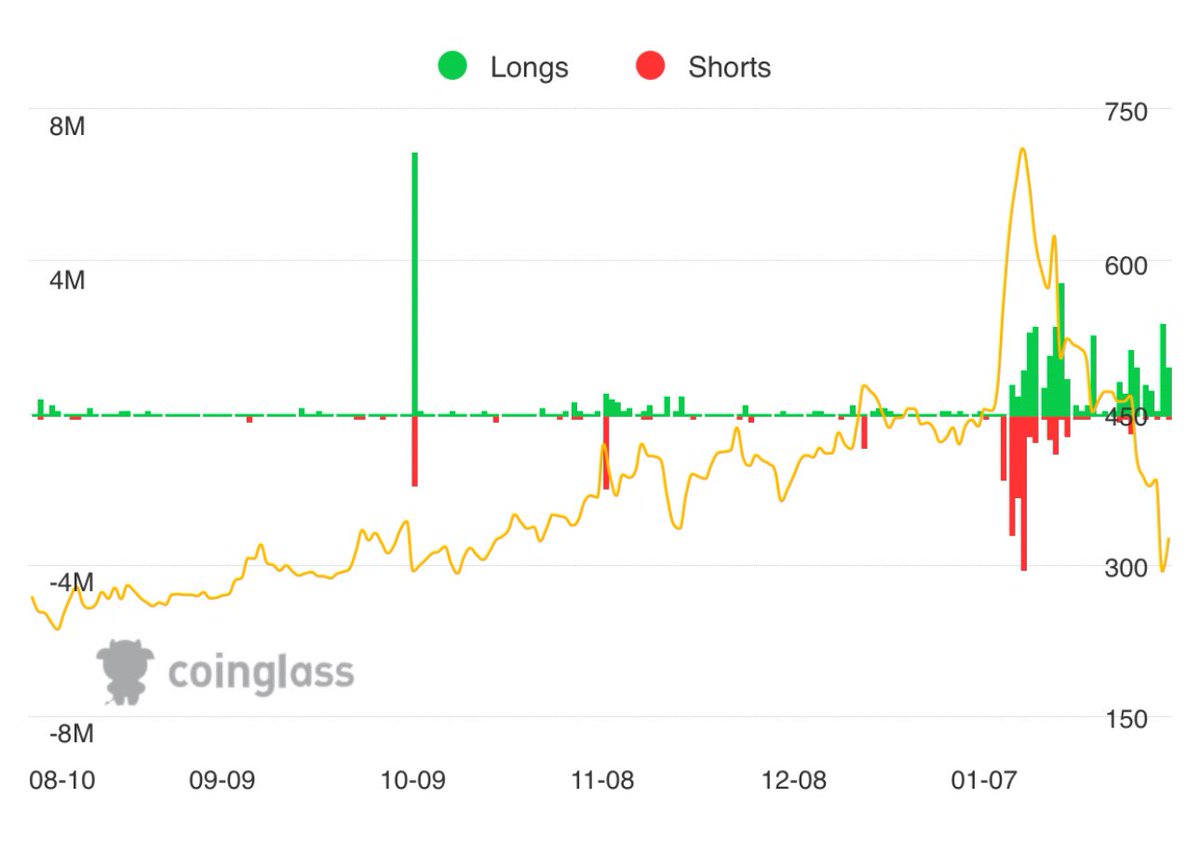
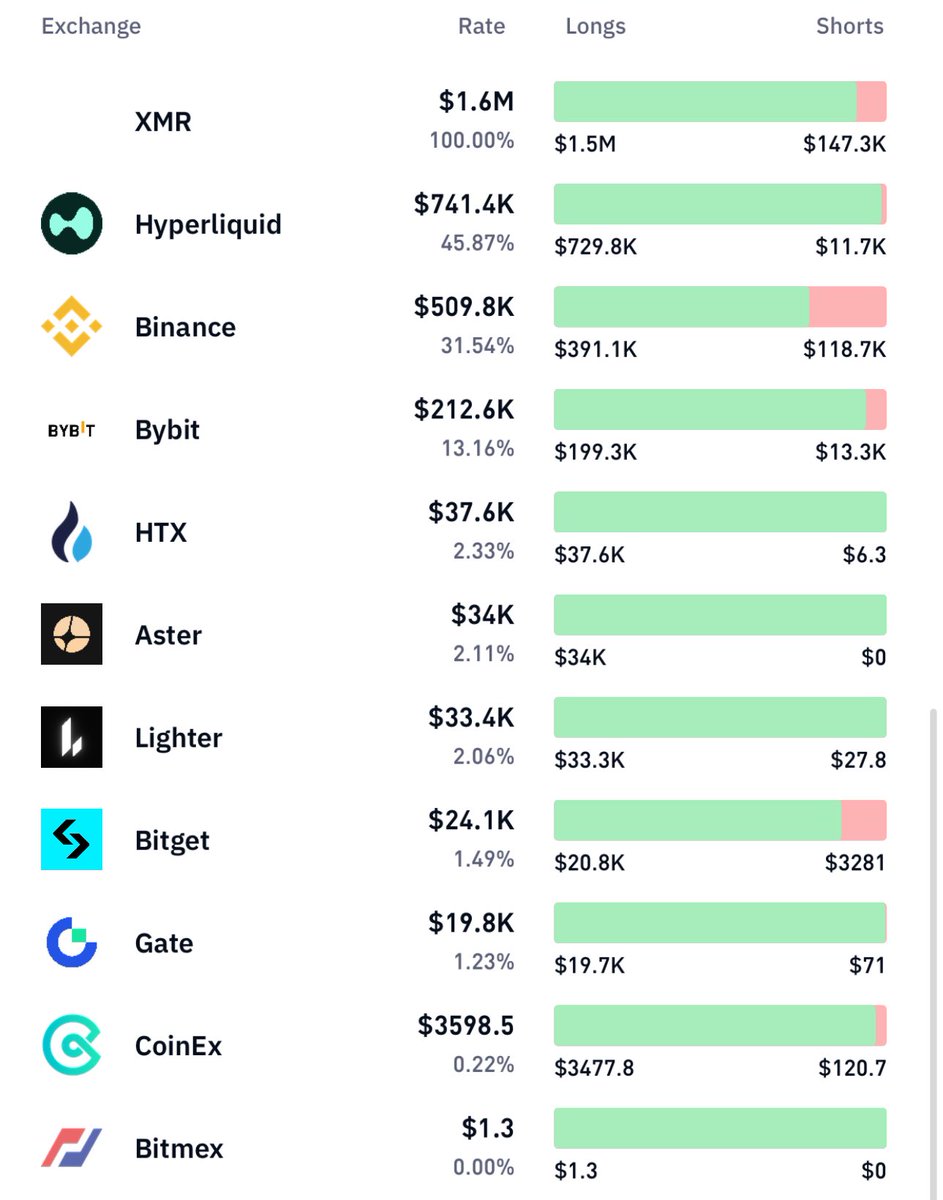
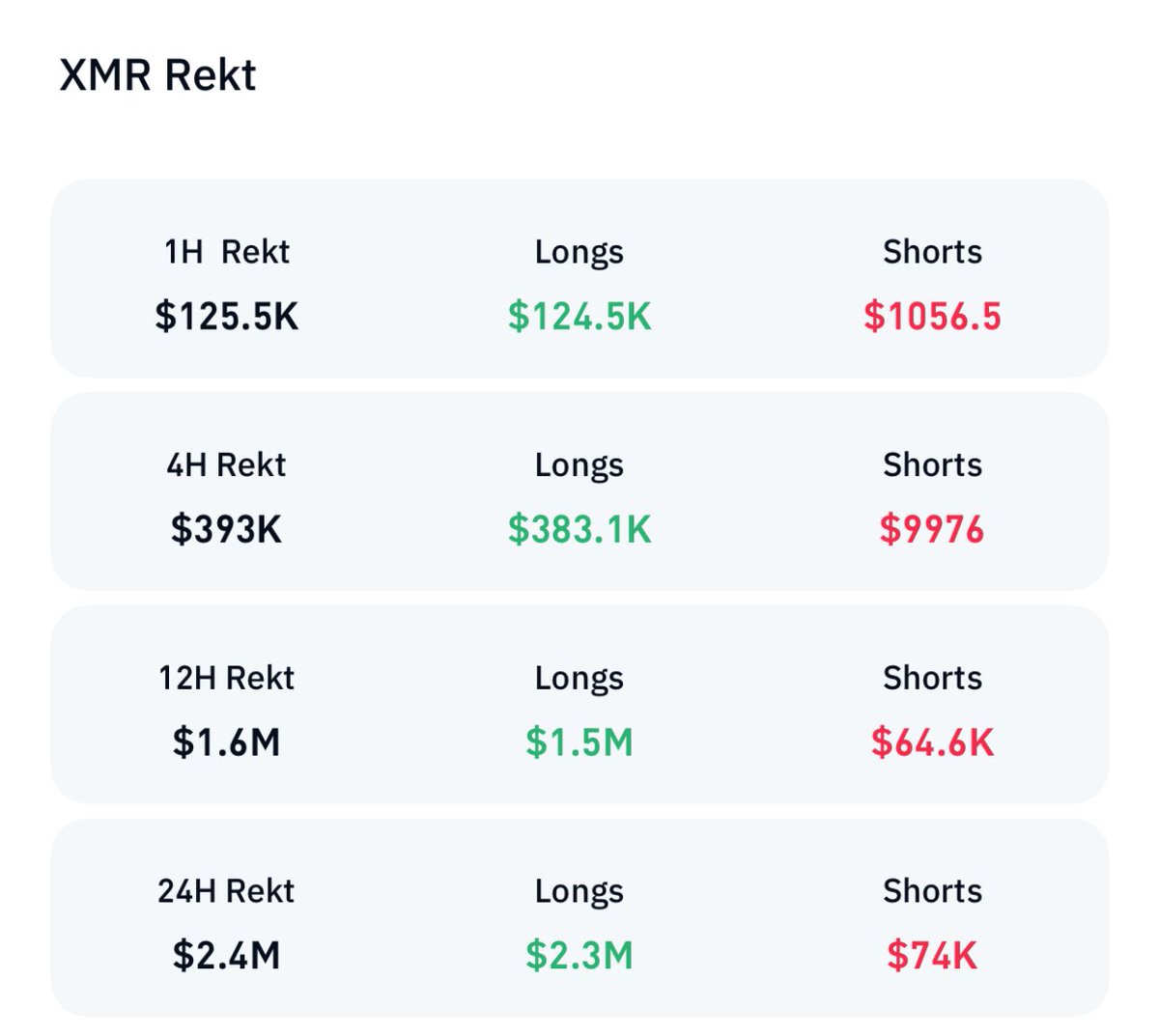
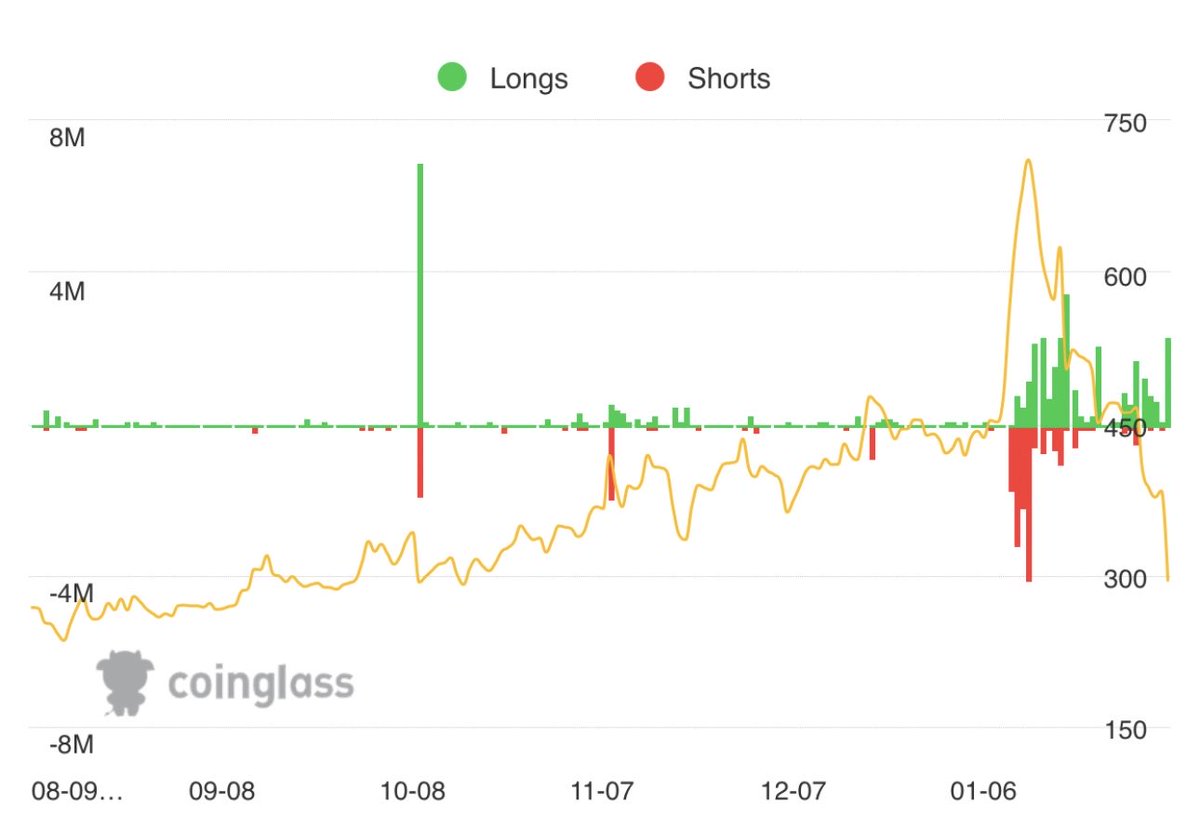
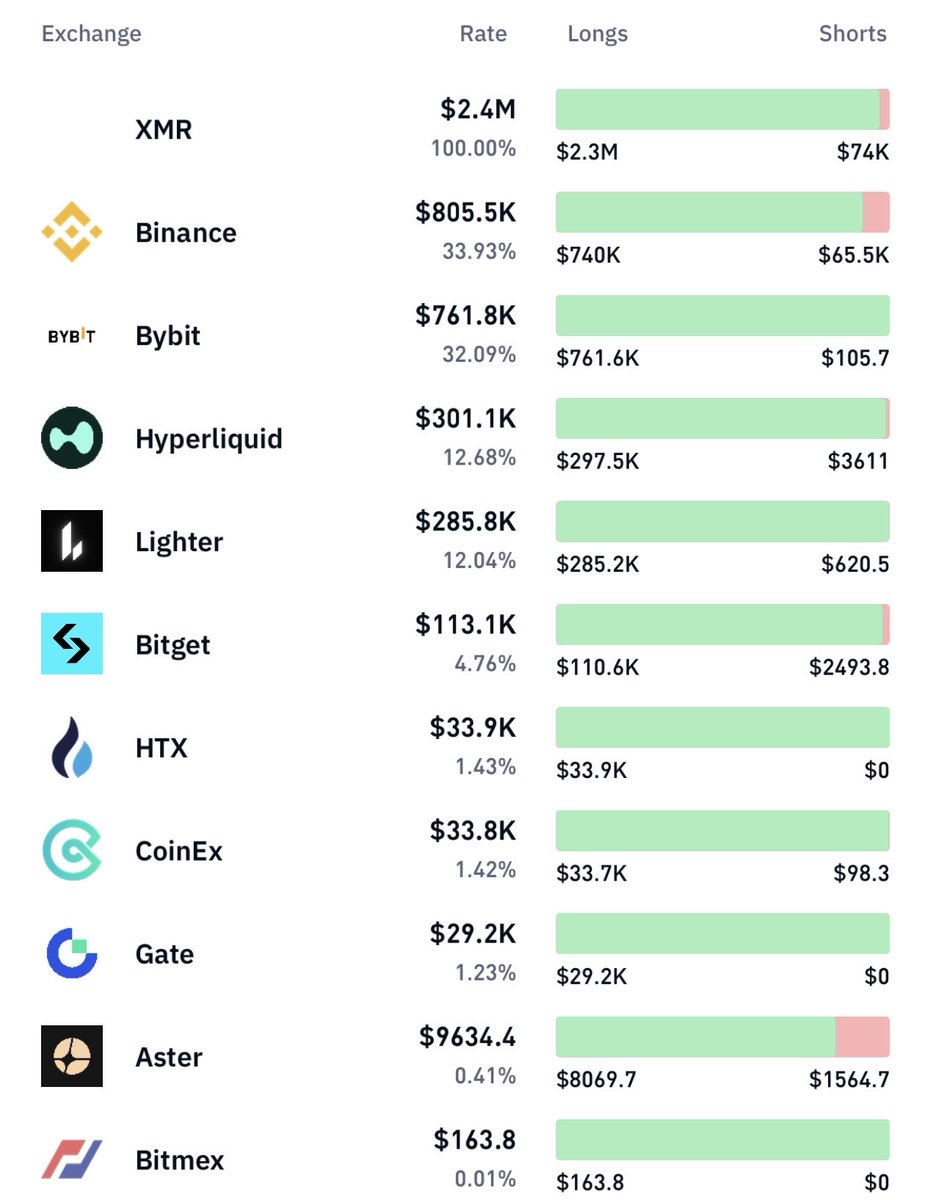
Update on Monero liquidations in the past 24 hours

2
194
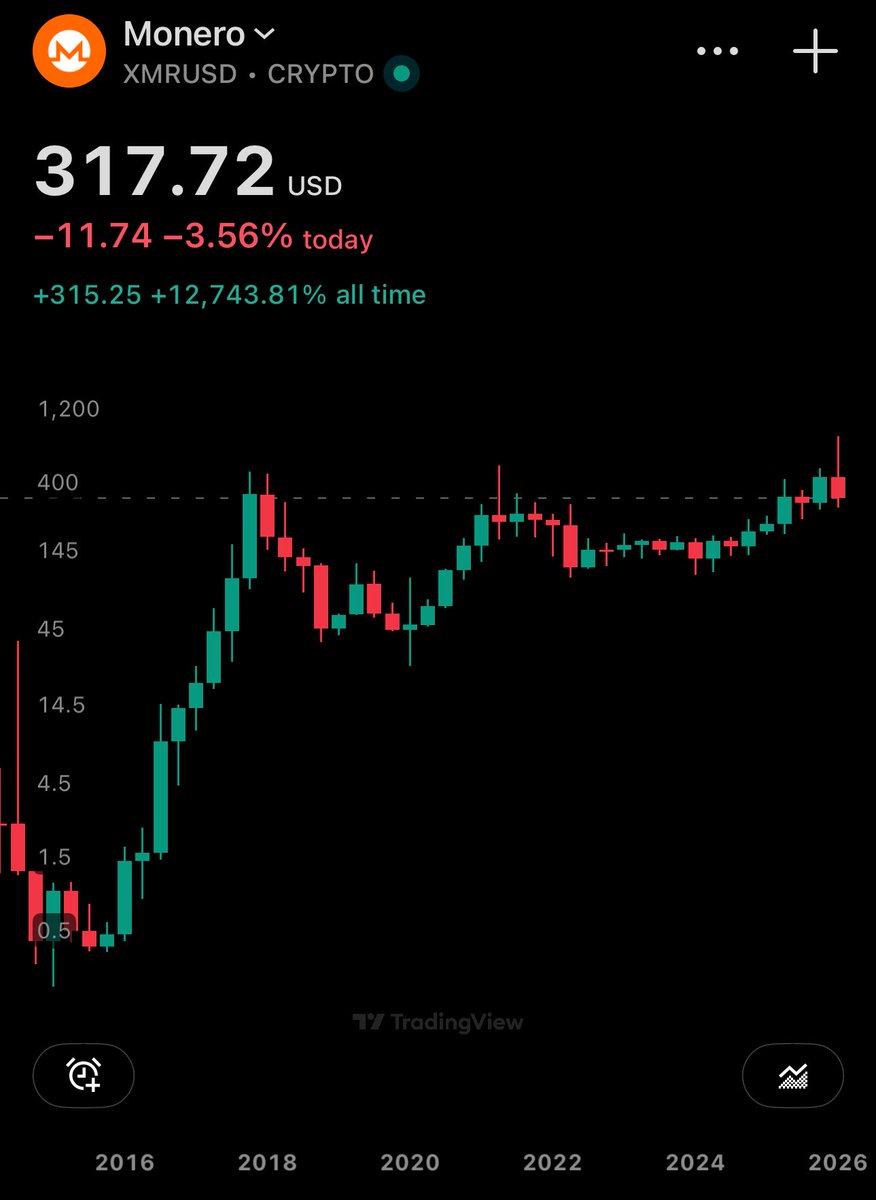
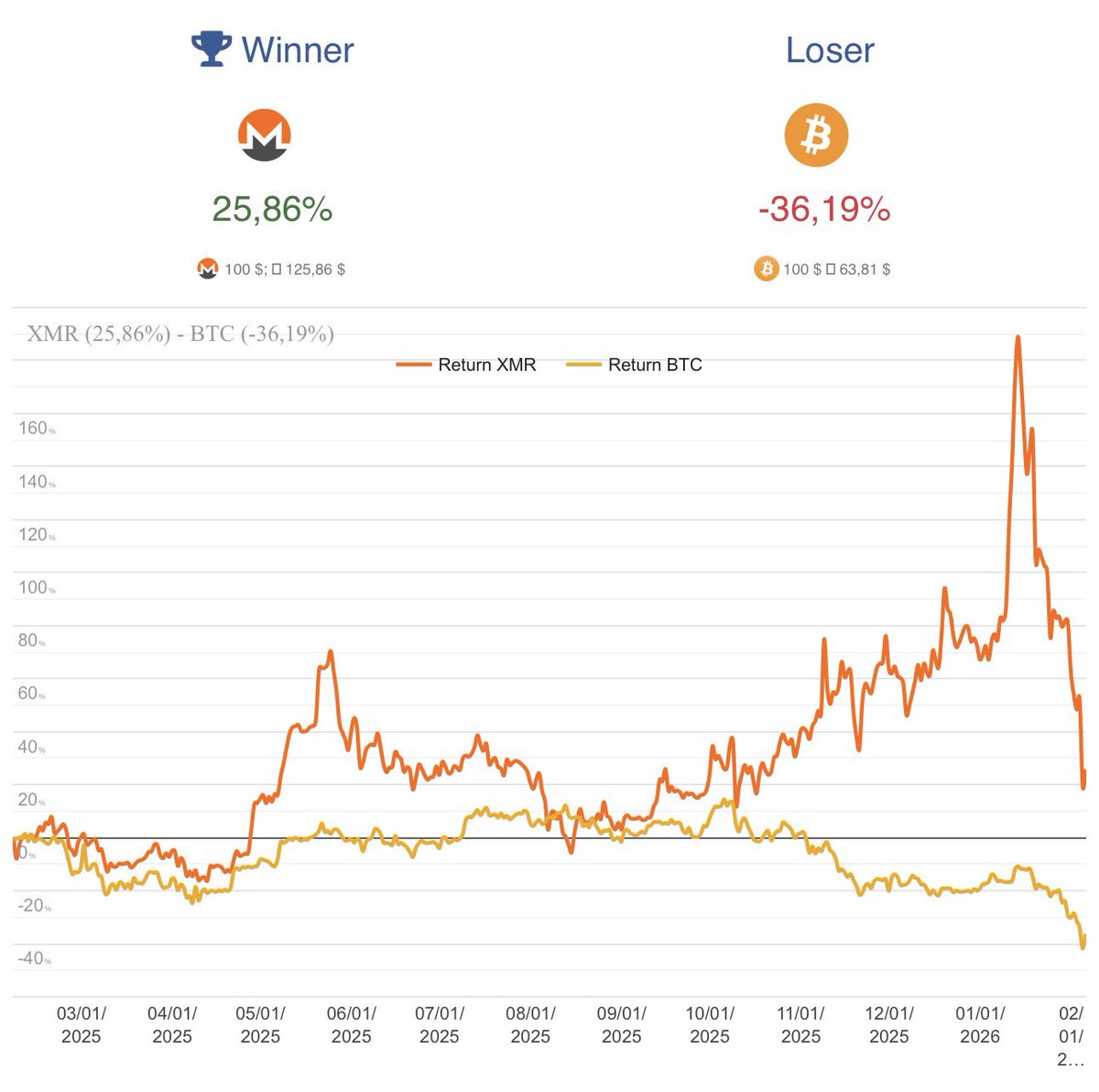
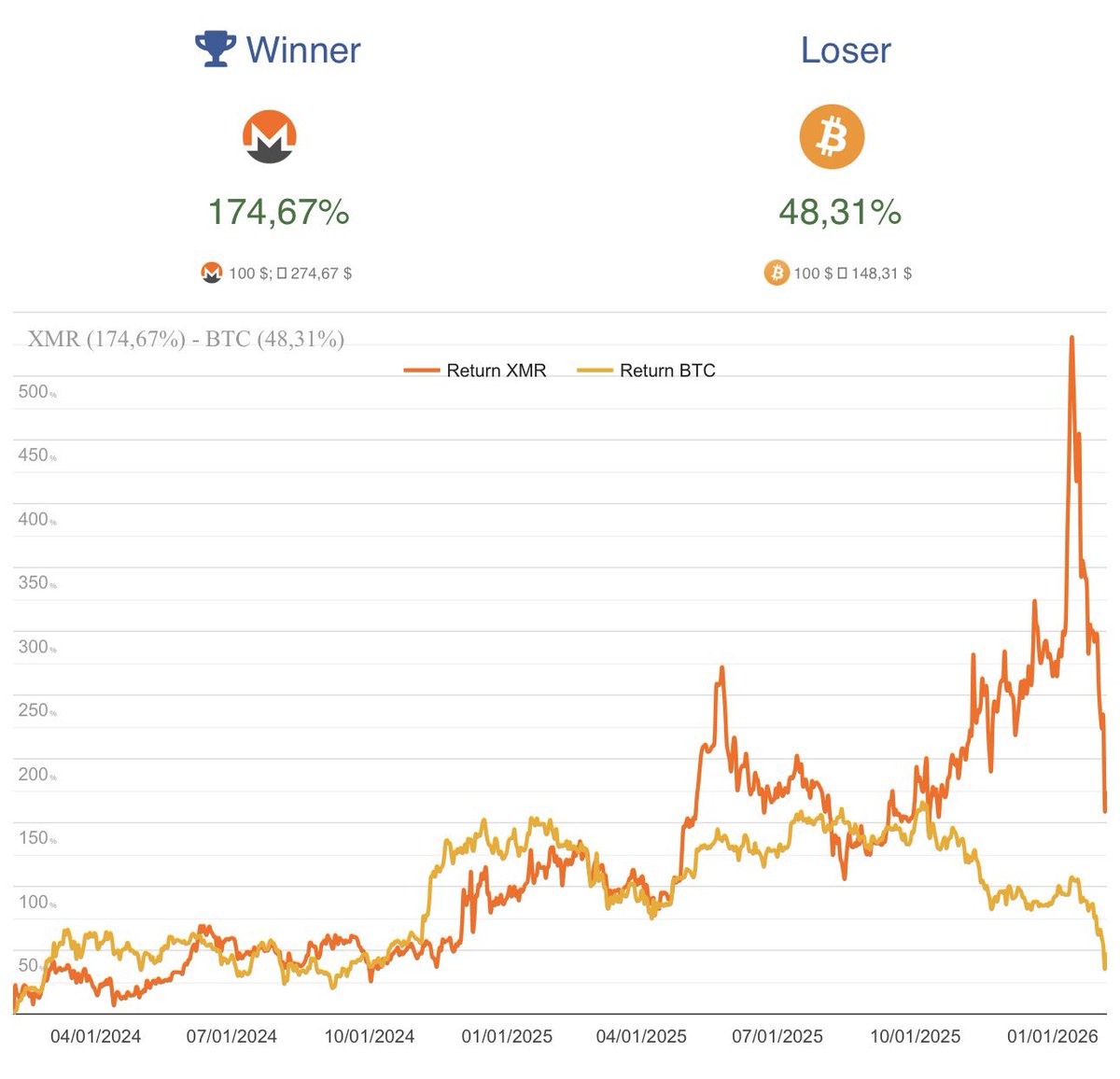
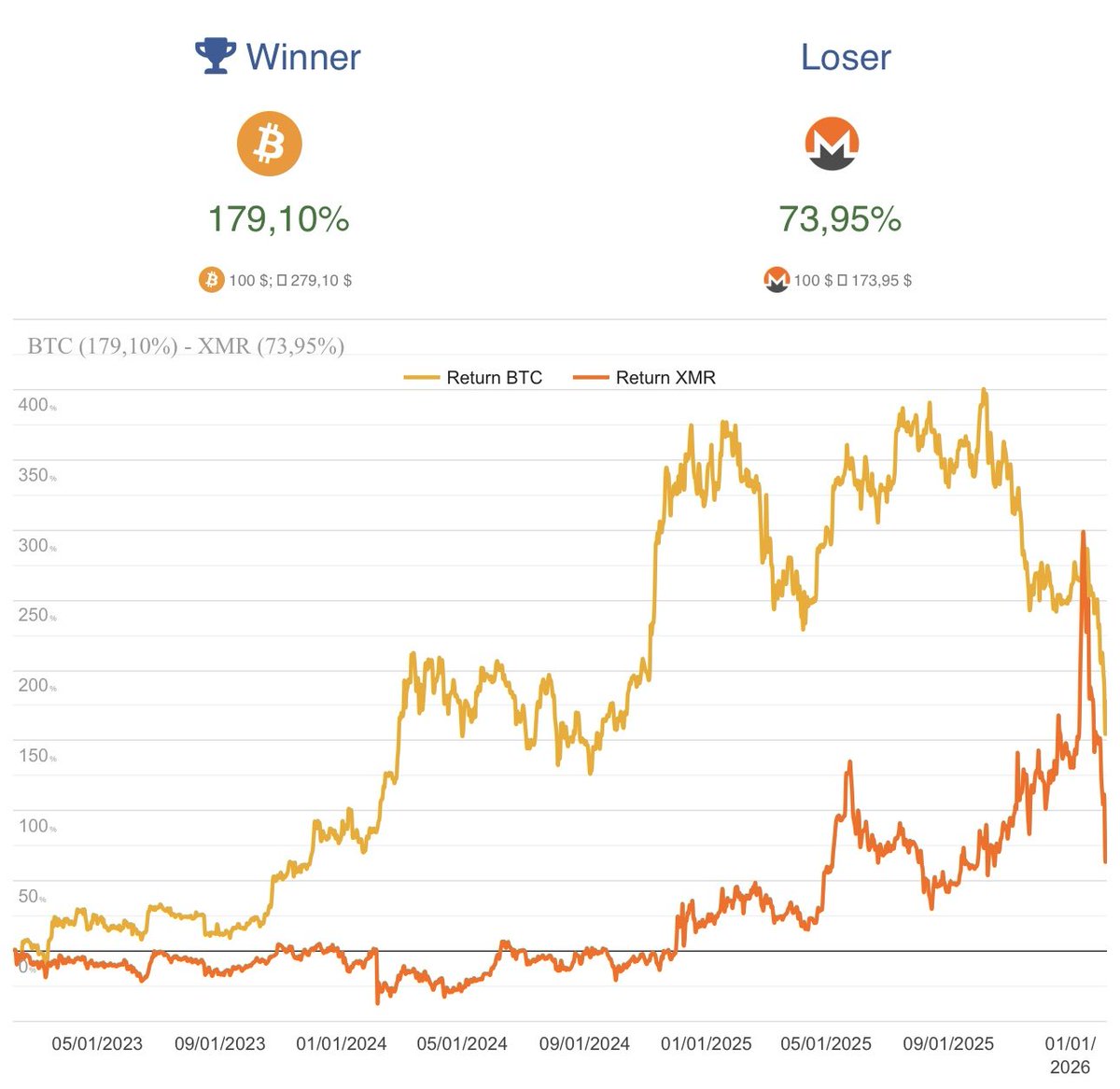
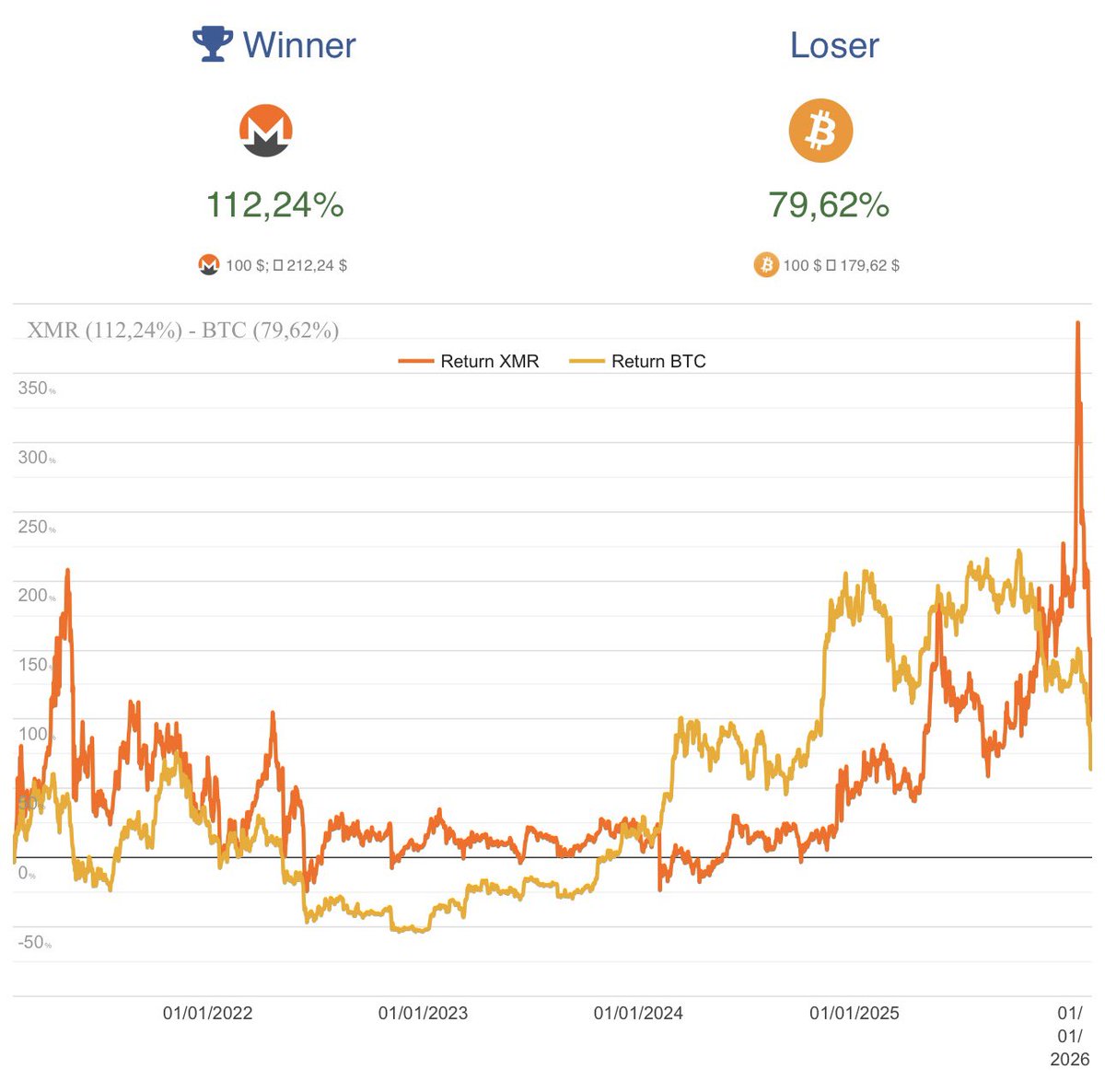
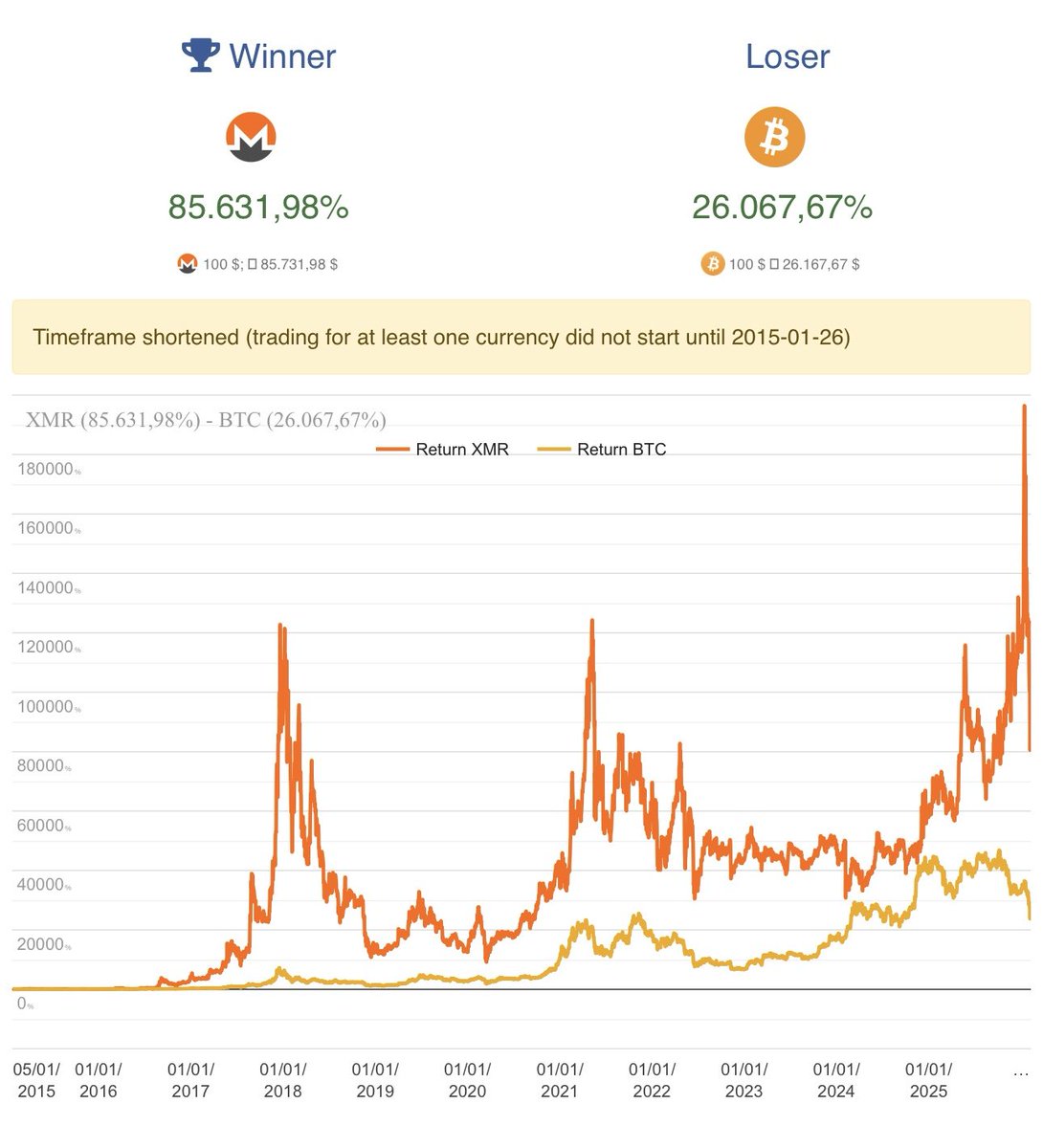
Bitcoin ( BTC ) & Monero ( XMR ) ROI since 01-26-2015
1
1
2
282
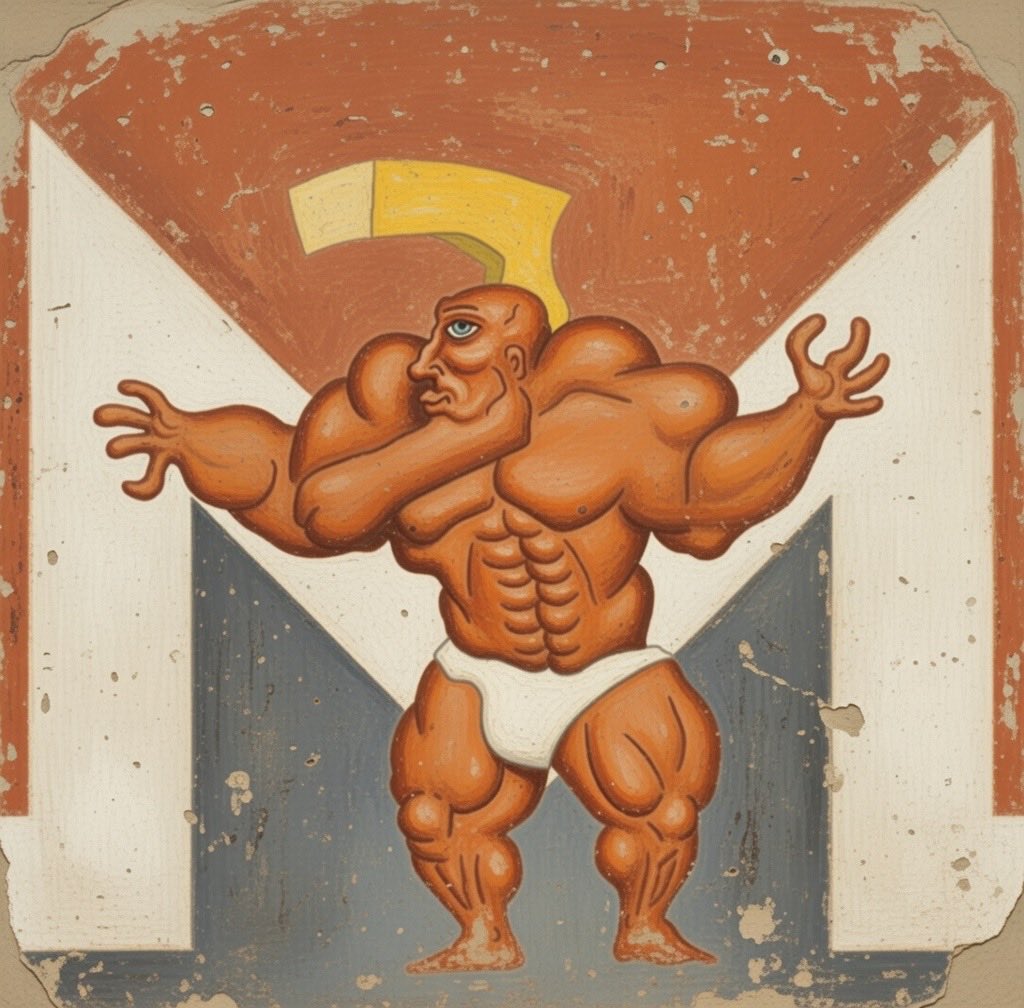
True Monero Giga Chads don’t have a sell button.
They mine, they earn, they buy.
Then they either spend it like privacy chads or stack it like silent chads.
We don’t sell XMR.
We mine it.
We earn it.
We buy it.
We use it.
We hoard it.
The Giga Chads Of Monero
4
7
66
1,715
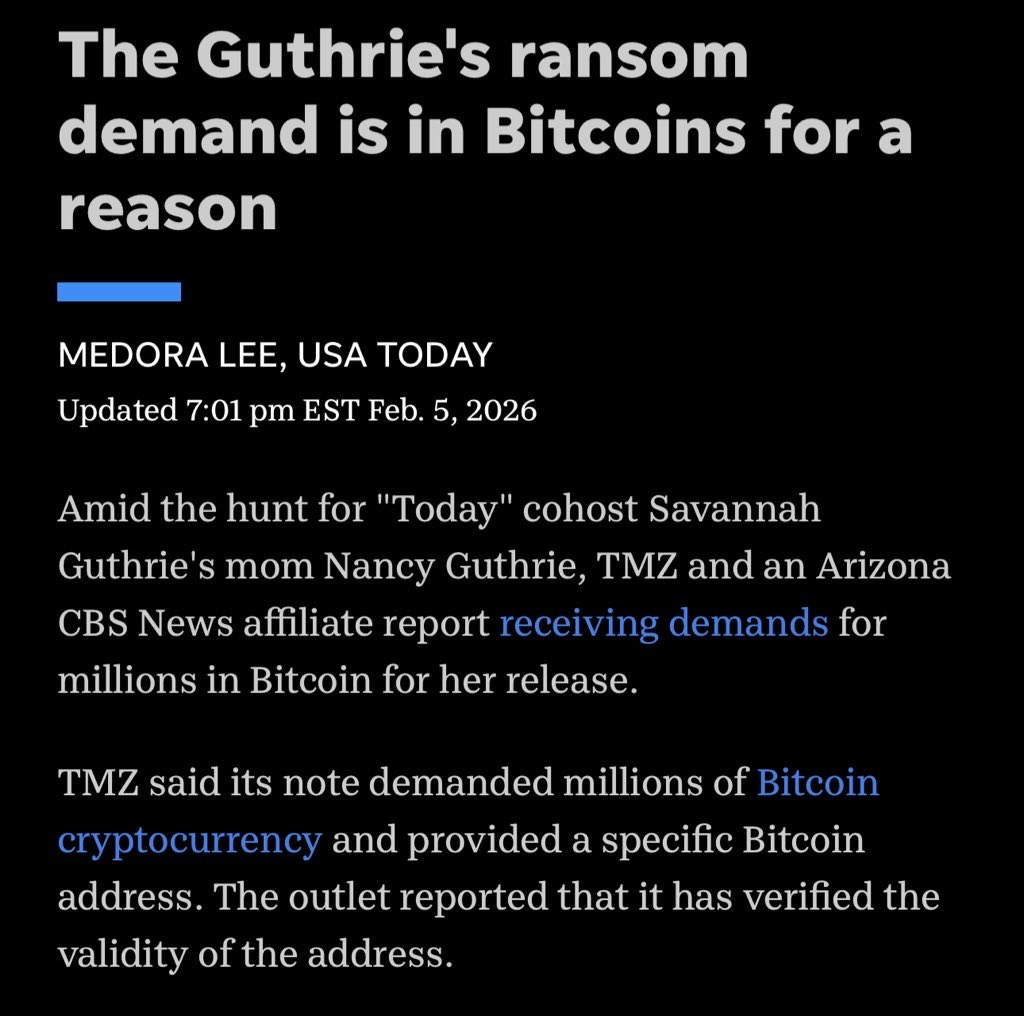
"Crypto's not trackable," Gray said.
I don't think Gray knows what he's talking about.
USA TODAY really misinforming their readers today.
They should be asking for Monero 🤫
2
3
72