
Joined September 2024
- Tweets 414
- Following 304
- Followers 692
- Likes 2,159
310 Photos and videos



Jun 12
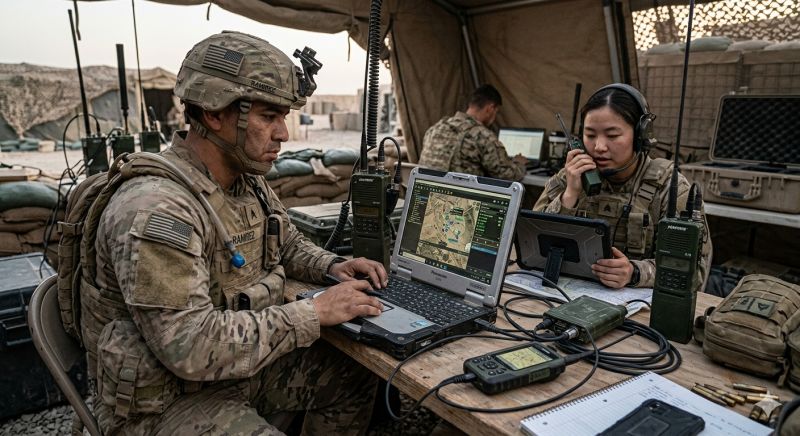
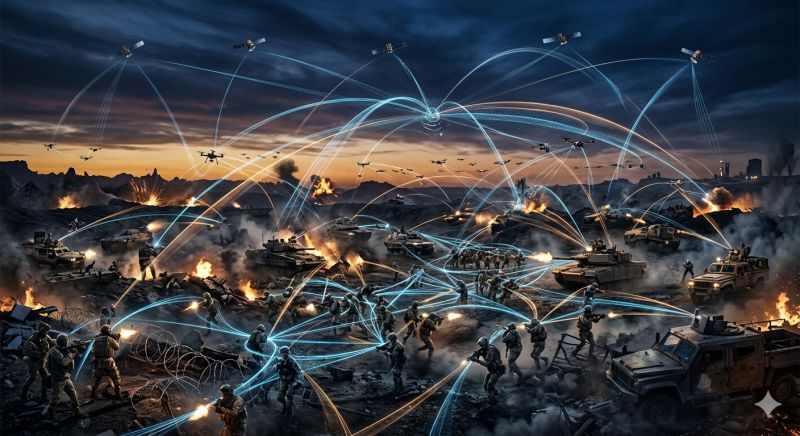
The hardest part of defense technology isn't building the capability—it's integrating it.
New systems that require ripping out existing infrastructure face an uphill battle: budget cycles, retraining, logistics, and procurement timelines that add years before capability reaches the field.
The smarter approach: build for integration from day one.
This means meeting existing systems where they are—supporting standard data formats, deploying on existing hardware, and connecting to established workflows without disruption.
When software integrates rather than replaces:
→ Deployment timelines compress from years to months
→ Operators work within familiar systems they already trust
→ Organizations avoid costly rip-and-replace cycles
→ Capability reaches the field faster
The best technology isn't always the most advanced. It's the most deployable.
Innovation that can't integrate doesn't reach the warfighter. And capability that doesn't reach the warfighter doesn't matter.
Build for the mission. Integrate for reality.
1
2
32
Jun 11
What is edge AI, and why does it matter for defense?
AI typically runs in one of two places: in the cloud (centralized servers far from the point of action) or at the edge (directly on the device collecting data).
For most consumer applications, cloud AI works fine. Latency of a few seconds is acceptable.
For tactical operations, it isn't.
Edge AI processes data locally—on the device, at the point of collection, without sending anything to a central server.
In practice, this means:
→ Detection happens in milliseconds, not seconds
→ Operations continue when networks are degraded or denied
→ Sensitive data never leaves the tactical environment
→ Intelligence reaches operators at the speed of the threat
The battlefield doesn't pause for network connectivity. Edge AI ensures the intelligence pipeline doesn't either.
When the mission can't wait, Edge AI doesn't.
1
2
32
Jun 8
See you in Paris.
DataShapes AI will be at Eurosatory 2026 (June 15-19) at Paris-Nord Villepinte—the world's premier land and air-land defense and security exhibition.
With over 100,000 defense professionals from across the globe, Eurosatory is where the international community comes together to address the most complex operational challenges of our time.
We're looking forward to conversations about edge-native AI, electromagnetic spectrum operations, and distributed intelligence with NATO allies, European defense leaders, and global partners.
If you're attending Eurosatory and would like to meet, please reach out to us at Info@datashapesai.com.
#Eurosatory #datashapesai
1
3
75
Jun 5
A single software update can do what a new hardware program cannot: reach every fielded system simultaneously.
Traditional capability improvements required new platforms, new procurement, new training, and new logistics. Capability improvements were measured in years and billions.
Software changes this entirely.
Update once. Deploy everywhere. Every system in the field becomes more capable overnight—without new equipment, without new procurement cycles, without additional burden on operators.
This is why software-defined systems are the foundation of modern defense innovation:
→ Continuous improvement without hardware replacement
→ Rapid response to emerging threats
→ Capability refresh measured in weeks, not years
→ Scale that hardware procurement can never match
The battlefield evolves daily. Defense capability needs to keep pace.
Software is how you get there.
#AI #softwareengineering #DefenseInnovation
1
3
36
Jun 5
The most dangerous gap in defense isn't a capability gap. It's a speed gap.
Adversaries develop and deploy new threats in weeks. Traditional defense procurement cycles take years.
This asymmetry is where software-driven innovation changes the equation.
When capability lives in software, updates reach fielded systems in days—not procurement cycles.
A new threat emerges. Engineers respond. An update deploys. Warfighters adapt.
Hardware sets the floor. Software raises the ceiling.
The organizations winning the innovation race aren't the ones with the biggest R&D budgets—they're the ones who can push meaningful capability updates to operators faster than adversaries can adapt.
In modern defense, iteration speed is a strategic advantage.
2
4
48
Jun 1
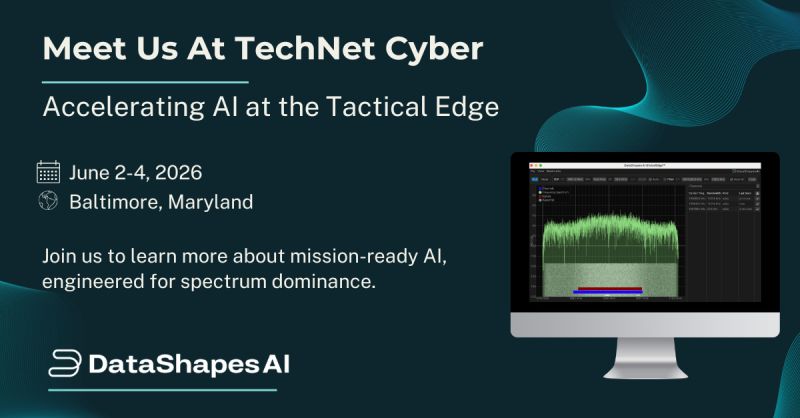
See you at @AFCEA_Intel TechNet Cyber this week in Baltimore.
As cyber and electromagnetic spectrum operations continue to converge, the conversations happening at TechNet Cyber are more relevant than ever to what we're building at Datashapes AI.
Looking forward to connecting with the community on edge-native AI, distributed RF intelligence, and what spectrum awareness means for modern cyber operations.
If you're attending, let's find time to connect.
#technet2026 #AFCEA #AI
2
2
41
May 29
𝐋𝐚𝐭𝐞𝐧𝐜𝐲 𝐢𝐬 𝐢𝐧𝐯𝐢𝐬𝐢𝐛𝐥𝐞 𝐮𝐧𝐭𝐢𝐥 𝐢𝐭 𝐜𝐨𝐬𝐭𝐬 𝐲𝐨𝐮 𝐭𝐡𝐞 𝐞𝐧𝐠𝐚𝐠𝐞𝐦𝐞𝐧𝐭.
In RF operations, the time between detection and response determines whether you're controlling the situation or managing its consequences.
Send signals to centralized servers for analysis? You're adding hundreds of milliseconds. Coordinate through multiple networks? More delay. By the time intelligence reaches decision-makers, the threat landscape has shifted.
This is why edge processing matters—not as a feature preference, but as operational necessity.
When intelligence processes locally and reaches operators in seconds, decision cycles compress. Response becomes possible instead of inevitable.
Speed changes everything about operational advantage.
2
25
May 21
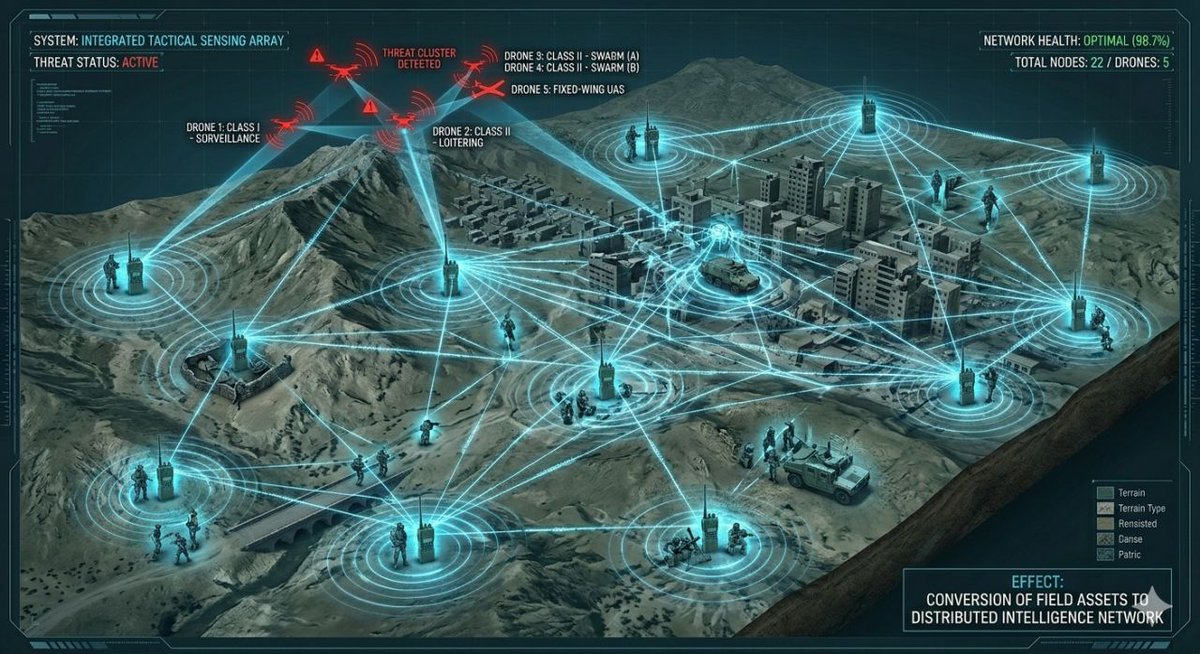
100,000 fielded radios. One software upgrade. Instant distributed counter-UAS network.
This is the scale our partnership with @L3HarrisTech on Wraith Shield delivers.
U.S., NATO, Five Eyes, and allied forces already carry Wraith-capable tactical radios. Now those same systems become AI-enabled RF sensors that detect and classify small drone threats in real-time.
The impact: From individual communications devices to a distributed intelligence network—without procuring, deploying, or carrying a single additional piece of hardware.
GlobalEdge processes the RF data, enabling warfighters to see threats in their electromagnetic environment and respond immediately.
This is force multiplication through intelligent software.
#globaledge #wrathshield #partnership
3
4
58
May 20
Thanks to @DefensePost for covering Wraith Shield.
Tactical radios soldiers already carry, transformed into an intelligent counter-drone network through software. No new hardware. No additional burden.
It's the first radio-sensing product capable of connecting to distributed data networks—communications equipment that simultaneously senses, classifies, and shares RF threat intelligence.
GlobalEdge delivers the AI layer that makes this convergence possible.
When every radio becomes a sensor, the entire force gains awareness.
Read the article: lnkd.in/giy2_ZmA
3
4
80
May 17
We'll be attending this year's AOC Europe event, connecting with the European electronic warfare and electromagnetic spectrum operations community.
Fresh off our partnership announcement with @L3HarrisTech on Wraith Shield, we're excited to discuss how edge-native AI is transforming distributed RF intelligence—from tactical radios to forward-deployed sensors.
If you're attending, let's connect to discuss:
→ Real-time threat detection at the tactical edge
→ AI-enabled counter-UAS capabilities
→ Distributed sensing without infrastructure dependency
→ How GlobalEdge™ integrates into existing platforms
We're looking forward to engaging with NATO allies, European defense leaders, and industry partners advancing spectrum superiority across the continent!
#aoceurope #wrathshield #radioasasensor #AI #globaledge
1
2
80
May 14
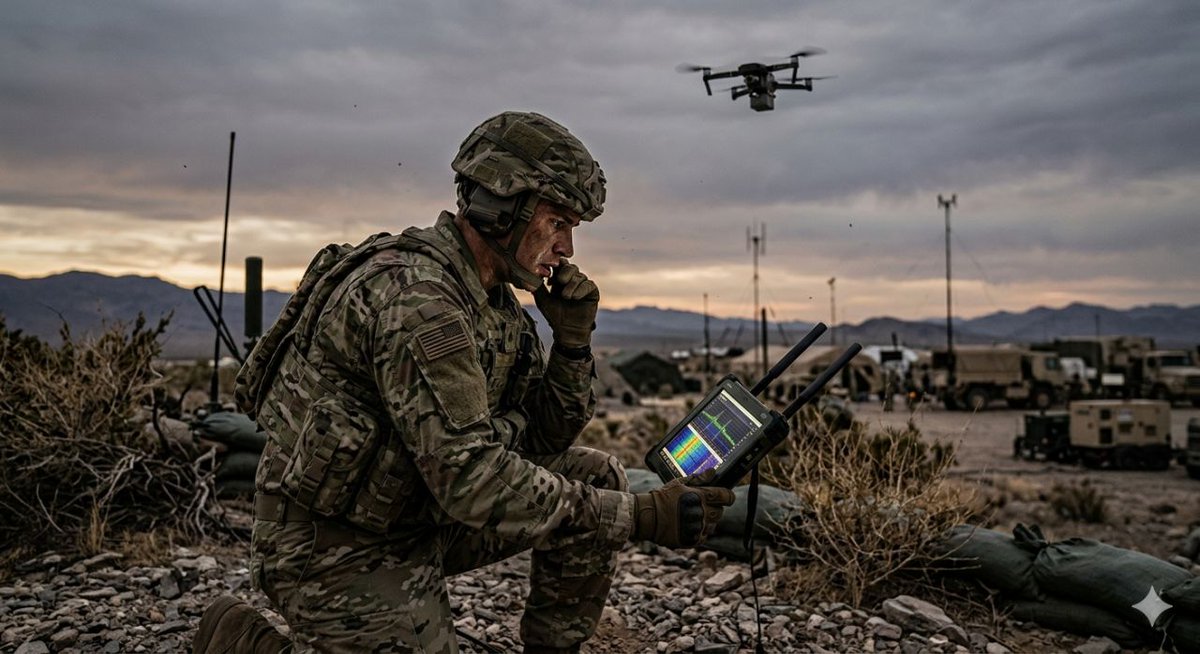
𝐖𝐡𝐚𝐭 𝐢𝐟 𝐭𝐡𝐞 𝐫𝐚𝐝𝐢𝐨𝐬 𝐰𝐚𝐫𝐟𝐢𝐠𝐡𝐭𝐞𝐫𝐬 𝐚𝐥𝐫𝐞𝐚𝐝𝐲 𝐜𝐚𝐫𝐫𝐲 𝐜𝐨𝐮𝐥𝐝 𝐚𝐥𝐬𝐨 𝐝𝐞𝐭𝐞𝐜𝐭 𝐭𝐡𝐫𝐞𝐚𝐭𝐬?
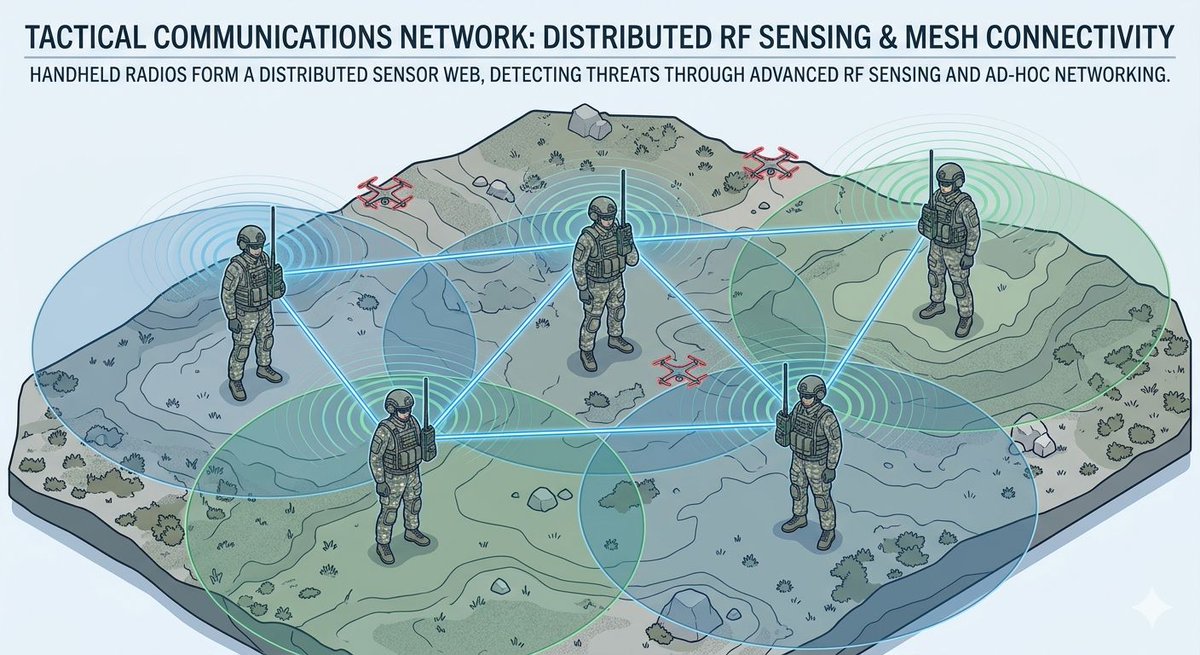
Traditional counter-UAS systems require dedicated sensors, specialized equipment, and infrastructure that may not reach the tactical edge. But forward-deployed forces already carry communications equipment everywhere they operate.
The concept: Turn existing tactical radios into distributed RF sensors.
Instead of deploying new hardware, add intelligence to what's already in the field. Communications devices that monitor the electromagnetic spectrum while performing their primary function—creating a distributed sensing network without additional equipment burden.
𝐖𝐡𝐲 𝐭𝐡𝐢𝐬 𝐚𝐩𝐩𝐫𝐨𝐚𝐜𝐡 𝐦𝐚𝐭𝐭𝐞𝐫𝐬:
→ Ubiquitous coverage - Sensors wherever forces operate
→ No additional SWaP-C - Uses existing equipment
→ Distributed intelligence - Network resilience through multiple nodes
→ Real-time awareness - Detection at the point of operation
When thousands of radios become intelligent sensors, the entire force gains electromagnetic awareness. Small drone threats get detected by the equipment operators already carry.
𝑅𝑒𝑠𝑝𝑜𝑛𝑠𝑒 ℎ𝑎𝑝𝑝𝑒𝑛𝑠 𝑎𝑡 𝑡ℎ𝑒 𝑡𝑎𝑐𝑡𝑖𝑐𝑎𝑙 𝑒𝑑𝑔𝑒, 𝑛𝑜𝑡 𝑎𝑓𝑡𝑒𝑟 𝑑𝑎𝑡𝑎 𝑡𝑟𝑎𝑣𝑒𝑙𝑠 𝑏𝑎𝑐𝑘 𝑡𝑜 𝑐𝑒𝑛𝑡𝑟𝑎𝑙𝑖𝑧𝑒𝑑 𝑠𝑦𝑠𝑡𝑒𝑚𝑠.
This is the convergence of assured communications and threat detection—dual-purpose systems that communicate and sense simultaneously.
The best capability is the one already in the field.
#datashapesai #AI #radioasasensor
3
115
May 13
Proud to partner with @L3HarrisTech on Wraith Shield™— using our proprietary GlobalEdge AI to transform 100,000 tactical radios into AI-powered counter-UAS sensors to support forward-deployed warfighters.
Now, warfighters can detect, classify, and respond to drone threats in real time—without centralized infrastructure.
Speed wins. Edge AI delivers.
Check out full article here: bit.ly/492hg14
#L3Harris #datashapes #AI #radioasasensor
May 13

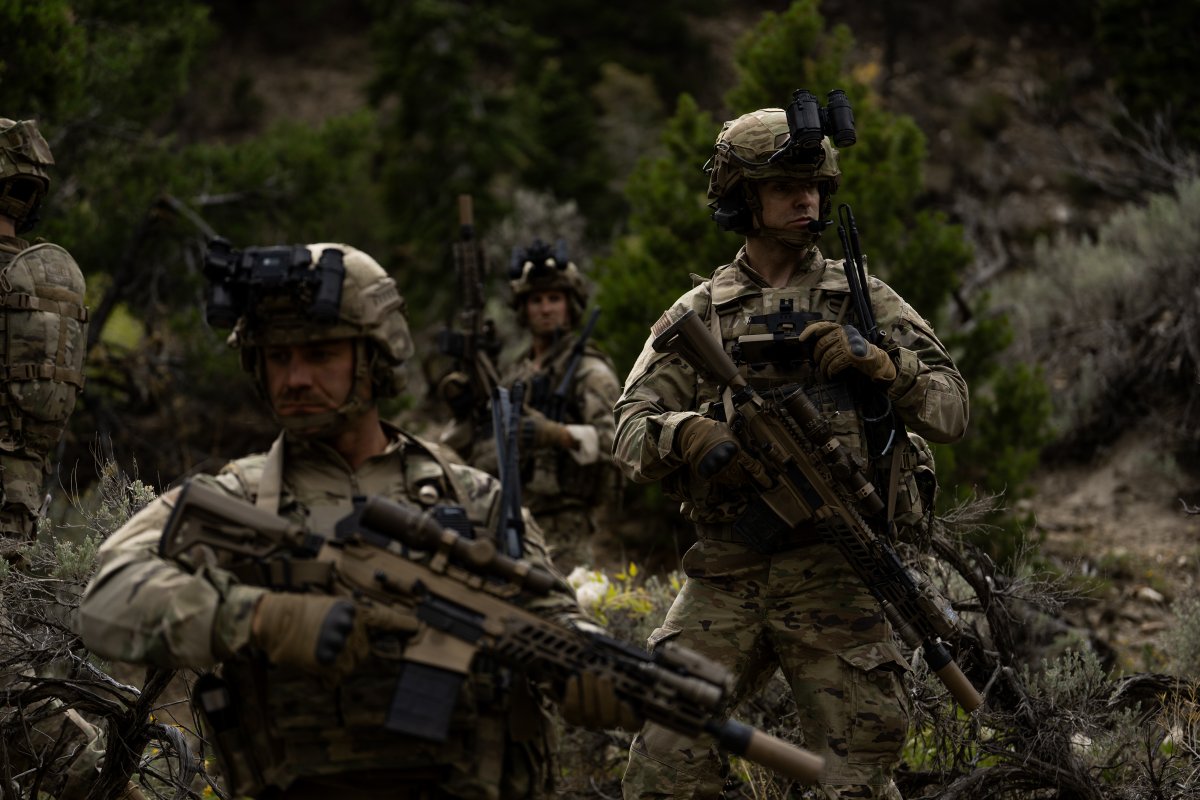
We’re transforming tactical radios into AI-enabled counter-UAS sensors with our new Wraith Shield™ software. This converged capability gives warfighters real-time electromagnetic awareness and a new way to detect and defeat small drone threats at the tactical edge.
We’re working with @DataShapes_AI to help bring this capability to soldiers around the world. More: spklr.io/6013EzinV
2
6
111
DataShapes AI retweeted

May 13
We’re transforming tactical radios into AI-enabled counter-UAS sensors with our new Wraith Shield™ software. This converged capability gives warfighters real-time electromagnetic awareness and a new way to detect and defeat small drone threats at the tactical edge.
We’re working with @DataShapes_AI to help bring this capability to soldiers around the world. More: spklr.io/6013EzinV
3
10
61
2,171
May 12
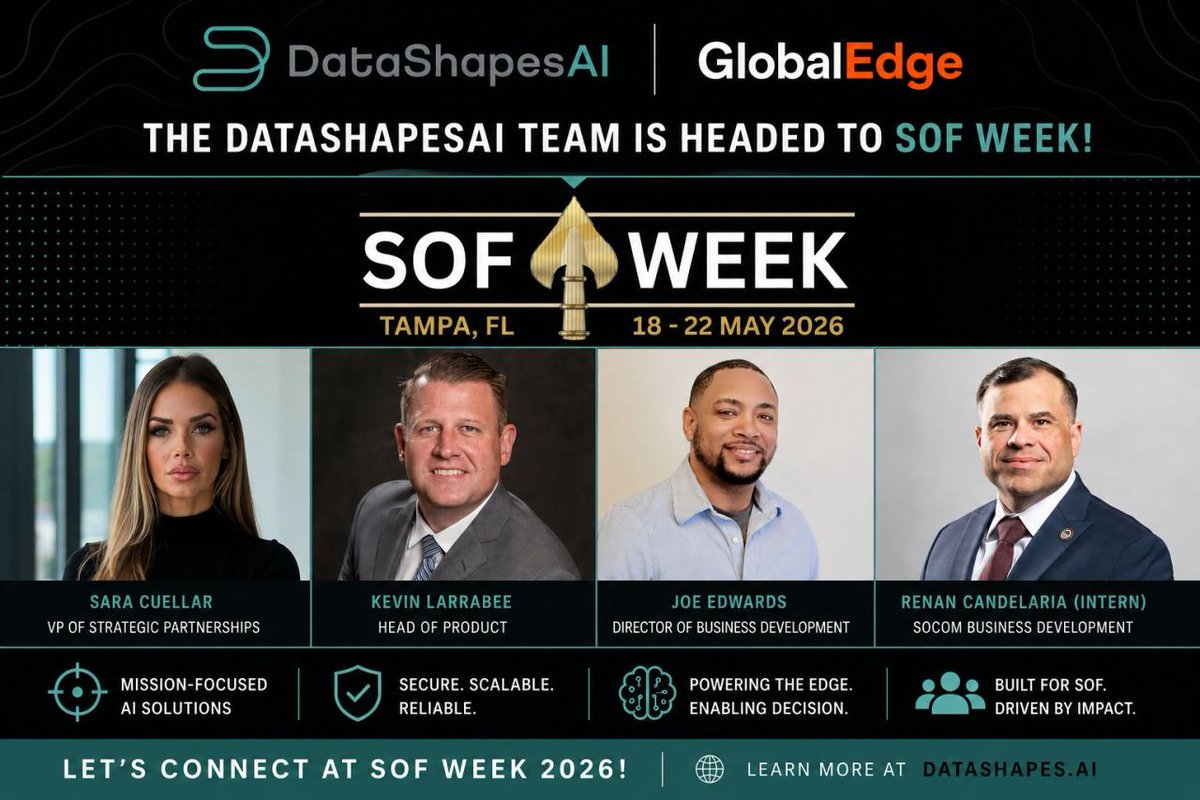
The DataShapes AI team is heading to SOF Week next week in Tampa. If spectrum intelligence, drone detection, or Edge AI is on the agenda — let's talk.
Join us next week as we'll be on the ground connecting with the SOF community, meeting with partners, and working to bring Edge AI to those who need it most.
Drop a comment below or DM to schedule time.
#Sofweek2026 #sof #edgeAI #spectrumintelligence #dronedetection
1
1
3
58
May 11
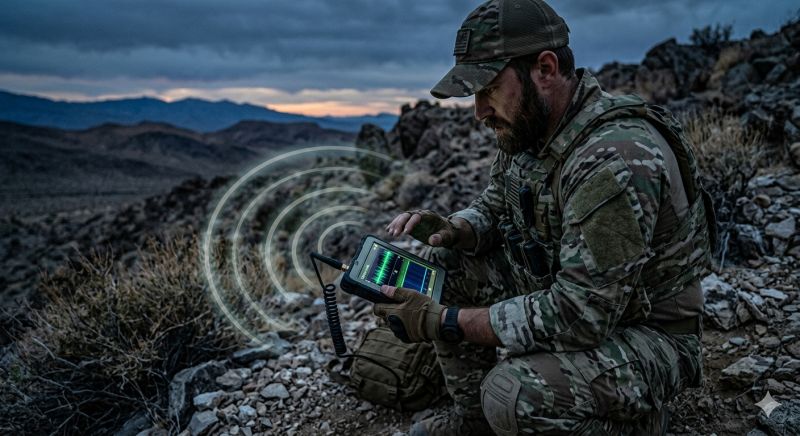
Spectrum intelligence shouldn't stop at the edge of the network.
Most RF systems depend on cloud connectivity to process and return useful data. In denied, degraded, or disconnected environments, that's a liability.
GlobalEdge can run fully offline. Detection, classification, and analysis happen on-device — with no external dependency.
That means operators get actionable intelligence whether or not there's a connection to reach back to.
The mission doesn't pause for connectivity. Neither should the tools.
3
40
May 8
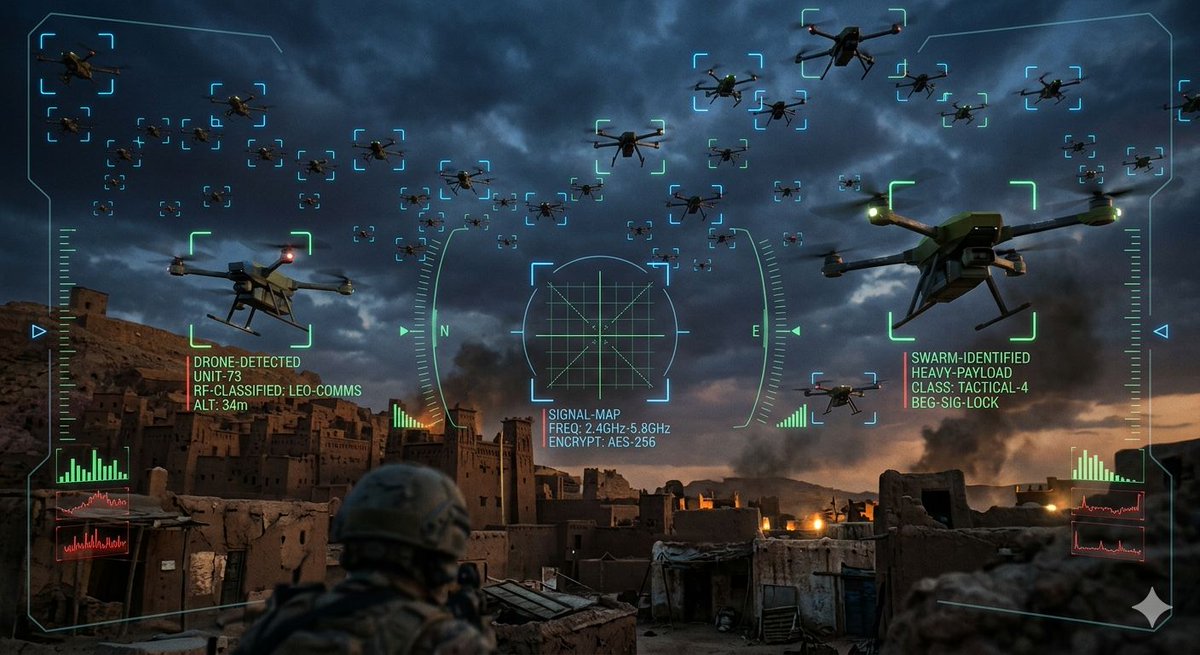
The drone threat has outpaced most detection systems.
UAS proliferation isn't slowing down. Consumer-grade platforms, modified commercial drones, and purpose-built threats are increasingly present in contested environments.
Traditional radar, RF and optical detection have real limits — especially against small, low-altitude, RF-controlled systems operating in complex terrain.
AI-powered spectrum analysis changes the calculus. Signal identification happens in near real-time. Threats are classified before they're a problem, not after.
Detection that keeps pace with the threat. That's the standard.
4
52
May 6
Every modern military operation depends on it. Communications, navigation, ISR, targeting — all of it runs on spectrum.
That's why adversaries aren't just contesting airspace and land anymore. They're contesting frequencies.
The threat environment has evolved. Jamming is more sophisticated. Drone proliferation has exploded. Signals are harder to classify and faster to adapt.
Organizations that treat spectrum awareness as a secondary capability are already behind.
AI spectrum intelligence at the edge — real-time, automated, hardware-agnostic — isn't a future requirement. It's a current one.
#AI #defensetech #electromagneticspectrum
2
44
May 4
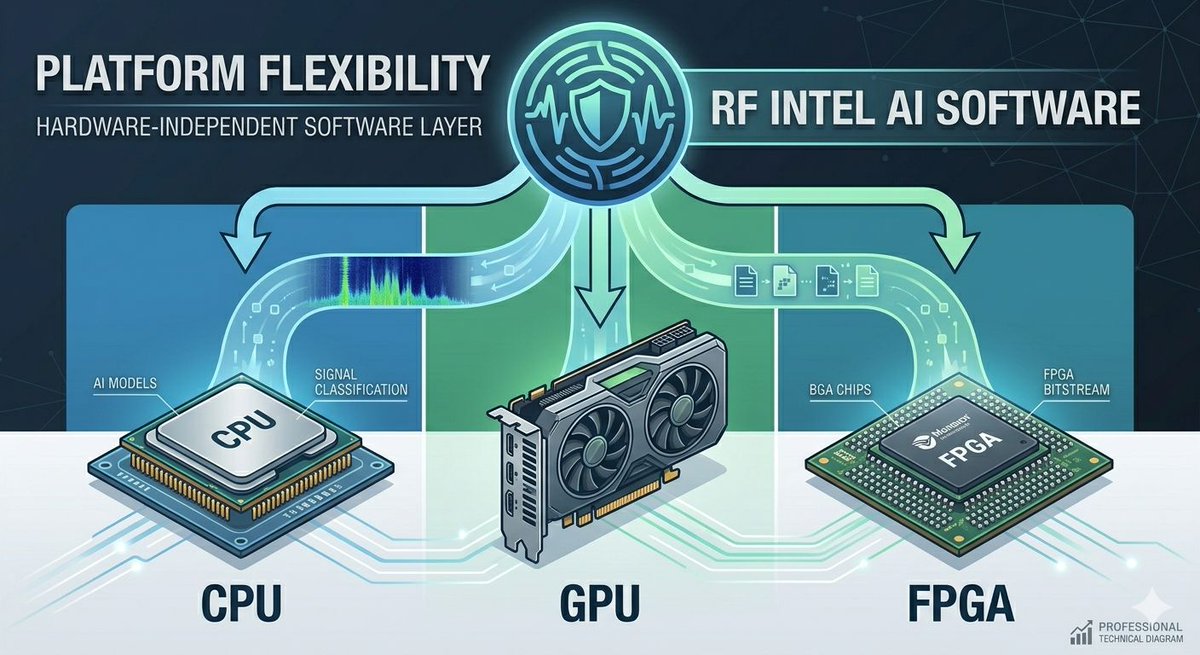
Why hardware-agnostic deployment matters for defense tech.
Vendor lock-in isn't just a procurement annoyance—it's an operational constraint.
When RF intelligence systems require specific hardware platforms, organizations face limited flexibility, higher costs, and slower capability refresh as technology evolves.
Hardware-agnostic deployment changes this entirely.
AI-powered detection that runs on CPU, GPU, or FPGA platforms means:
1. Deploy on existing mission hardware - No forced equipment replacement
2. Adapt to different operational contexts - Match processing to mission requirements
3. Upgrade software without hardware constraints - Capability improves independently
4. Avoid vendor dependency - Choose best platform for each deployment
Organizations can integrate advanced RF intelligence into the systems they already have fielded, reducing cost and accelerating deployment timelines.
The best technology is the technology that works with what's already in place.
Flexibility in deployment means faster capability to the field and lower total cost of ownership.
1
3
34
Apr 29
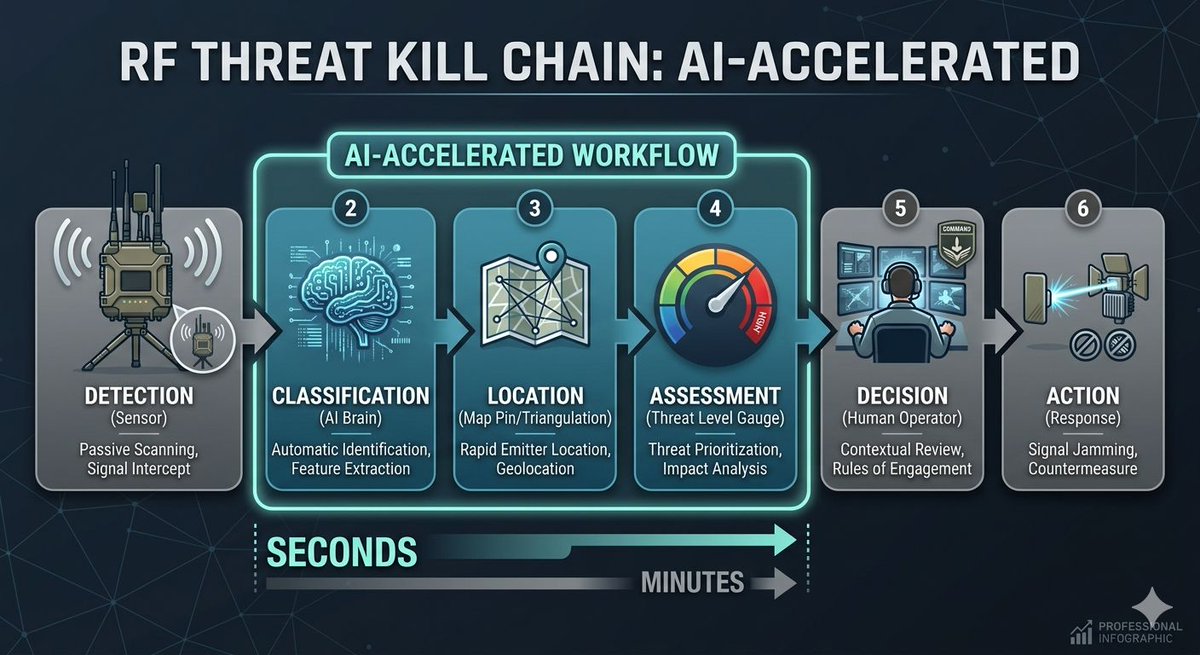
The kill chain: From RF detection to action.
Understanding the steps from awareness to action shows where speed matters most.
1. Detection- RF sensor identifies electromagnetic activity. Something is transmitting.
2. Classification- AI determines what the signal is—drone, jammer, communications link, reconnaissance platform.
3. Location- Distributed sensors triangulate position and trajectory.
4. Assessment- Threat level determined based on behavior, intent indicators, and operational context.
5. Decision- Operator evaluates options: monitor, jam, kinetic response, or coordinated action.
6. Action- Response executed based on commander's authorization and rules of engagement.
Where time is lost: Steps 2-4 in traditional systems that require manual analysis.
Where AI accelerates: Automating classification, location, and assessment—collapsing the timeline from minutes to seconds.
The faster you move through the command chain, the more options you have. Delay at any step reduces your response capability.
Speed through the chain determines whether you're acting or reacting.
#rfdetection #AI #KillChain #DefenseTech
1
36