
Father of 3 | Cybersecurity | AI | Education | Data Vis
Joined May 2023
- Tweets 1,687
- Following 171
- Followers 266
- Likes 3,650
125 Photos and videos






May 15
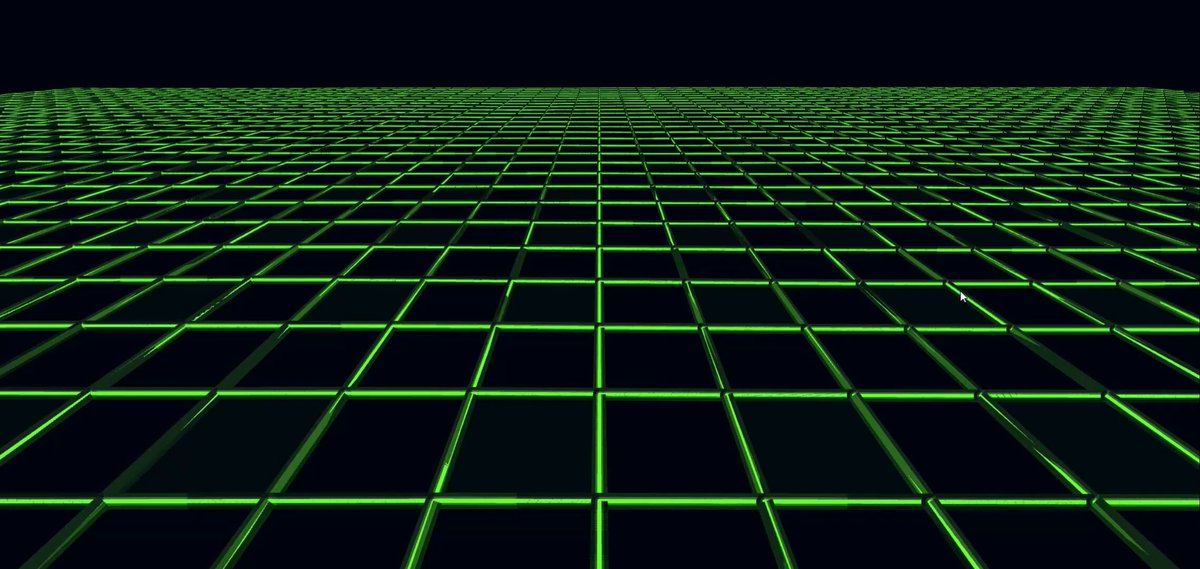
Being able to select the specific follow up questions and comment directly on them before accepting a plan inside Grok Build is pretty awesome.
1
30

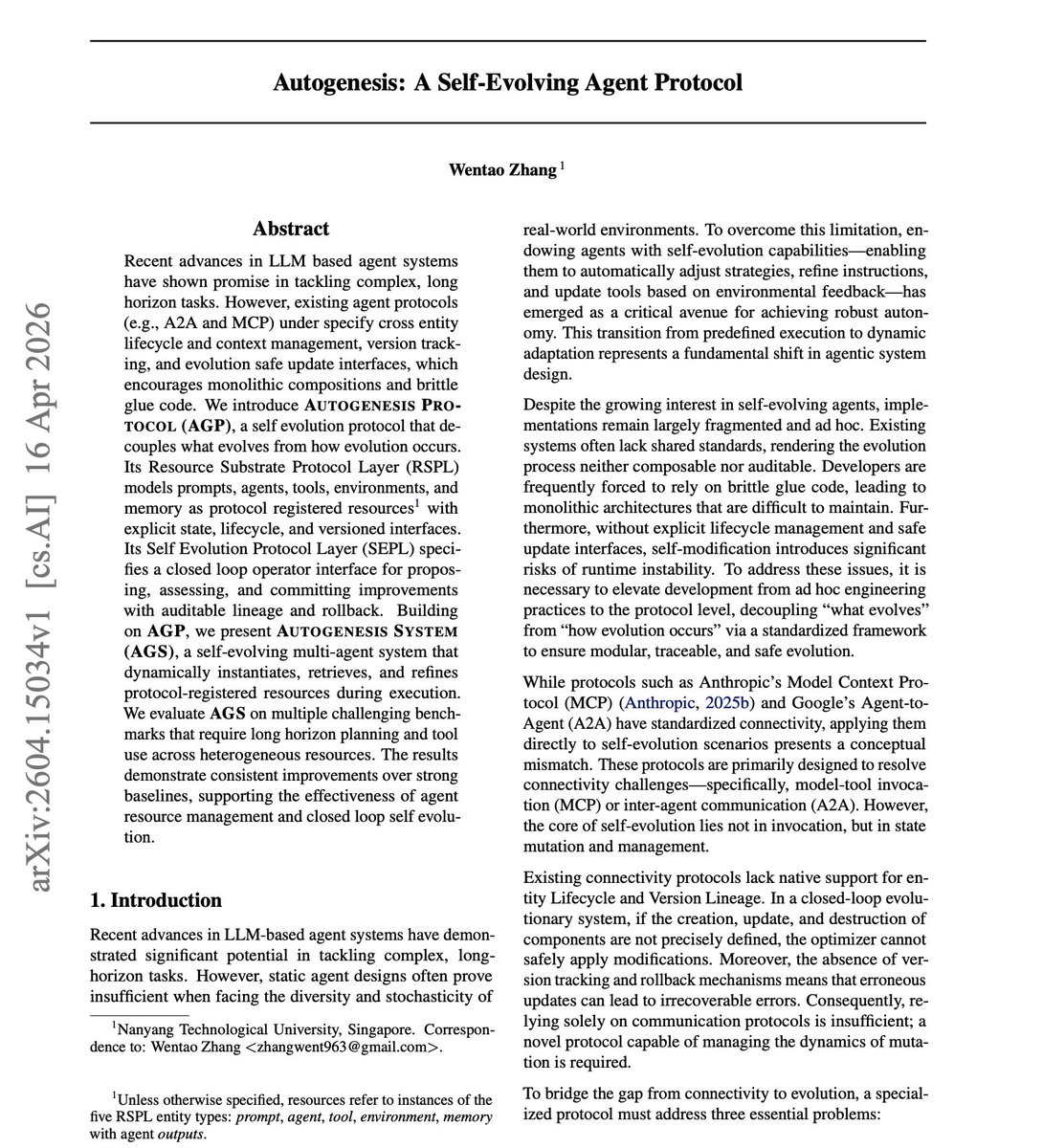
// Self-Evolving Agent Protocol //
One of the more interesting papers I read this week.
(bookmark it if you are an AI dev)
The paper introduces Autogenesis, a self-evolving agent protocol where agents identify their own capability gaps, generate candidate improvements, validate them through testing, and integrate what works back into their own operational framework.
No retraining, no human patching, just an ongoing loop of assessment, proposal, validation, and integration.
Why it's worth reading this paper:
Static agents age quickly.
As deployment environments change and new tools arrive, the agents that survive will be the ones that can safely rewrite themselves. Autogenesis is part of a growing wave of self-improving agent systems, alongside work like Meta-Harness and the Darwin Gödel Machine line, and it's one of the cleaner protocol-level takes on continual self-improvement so far.
Paper: arxiv.org/abs/2604.15034
Learn to build effective AI agents in our academy: academy.dair.ai/
58
259
1,606
253,319
18 Sep 2025
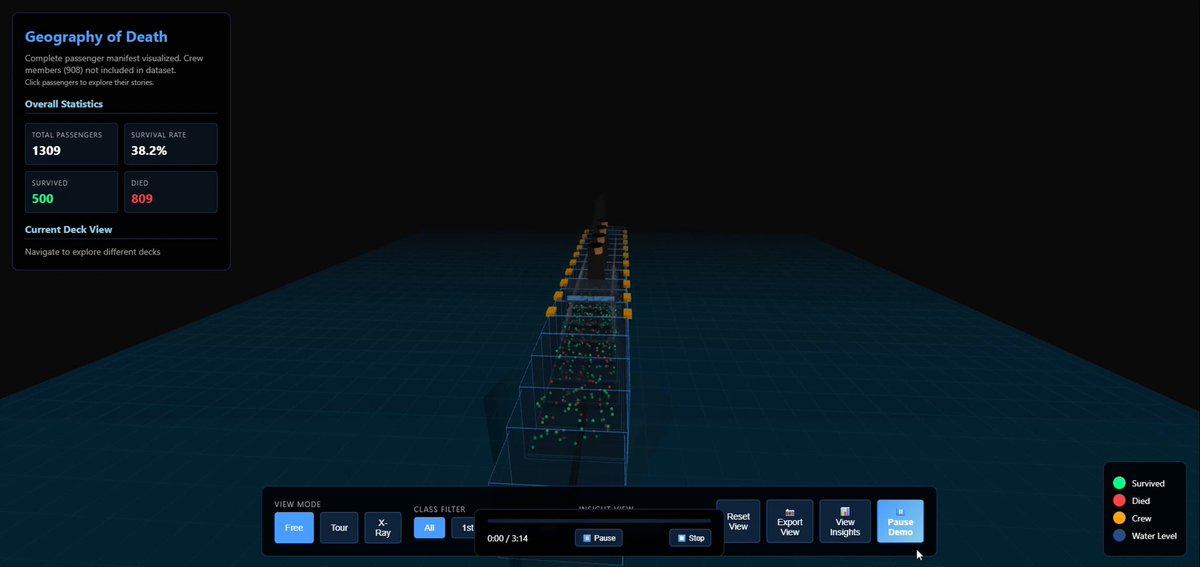
I visualized all 1,309 Titanic passengers in 3D, positioned by their actual cabin locations.
Used Three.js to render the ship's structure with passengers as colored dots - green survived, red didn't.
The vertical distribution tells the whole story.
2
1
8
248
18 Sep 2025
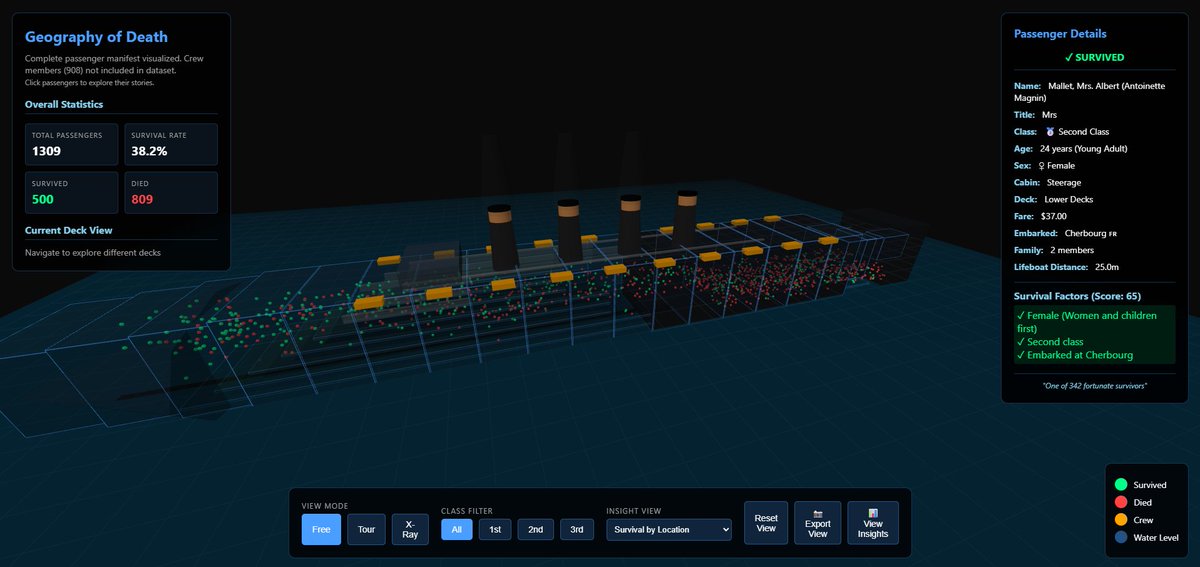
I pulled down the Encyclopedia Titanica titanic3 dataset to see what I could do in Three.js.
So far you can click the nodes that represent the passengers and see their details. The nodes are in the general area of the cabin the passenger was assigned.
6
133
17 Sep 2025
Another awesome visualization from Techartist.
17 Sep 2025

An interactive 3D visualisation of Earth using Three.js and GLSL shaders. Features a glowing, animated shield that can be toggled on/off, set against a dynamic star-field.
Use cases: Engaging interface for games, websites, in education or as an interactive art installation.
1
3
117
15 Sep 2025
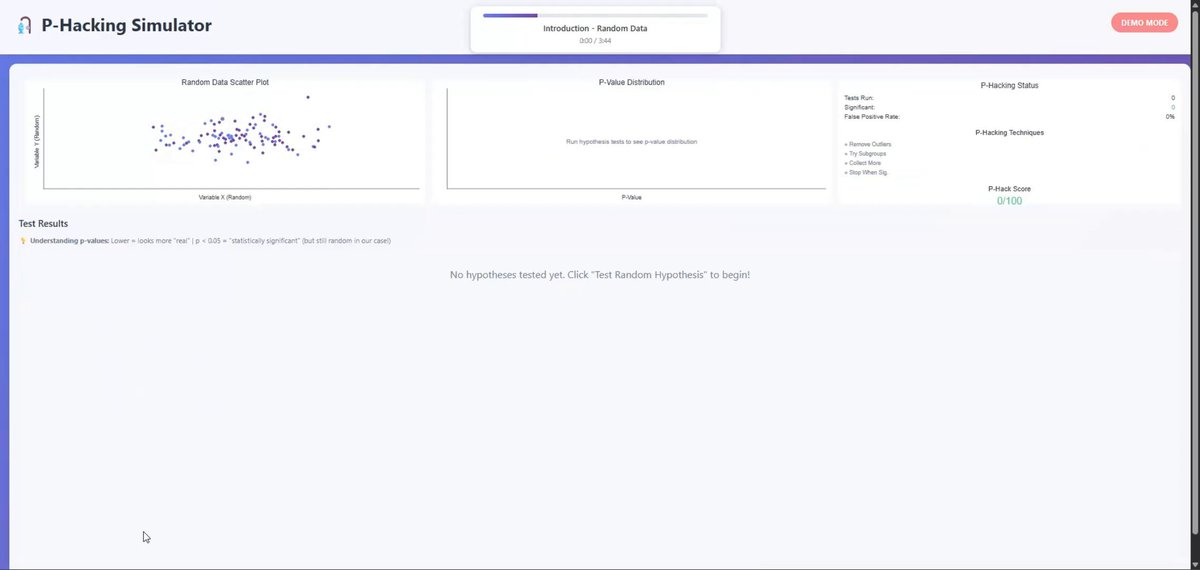
Random data. No real patterns. Yet with enough tests and creative analysis, we manufacture "significant" findings.
This simulator reveals how p-hacking creates the illusion of discovery. Those surprising studies you see? Many used these tricks
1
1
2
84
15 Sep 2025
💪 Power Poses: "Stand confident for 2 min, boost testosterone!"
Except...
co-author later admitted p-hacking. 5x larger study found nothing. Now she says "I do not believe power pose effects are real." npr.org/2016/10/01/496093672…
1
1
62
15 Sep 2025
📊 The pattern is clear:
When 100 psychology studies were carefully replicated, only 40% worked.
In cancer research? 11%.
That's not science failing, it's p-hacking being exposed. science.org/doi/10.1126/scie…
1
58
12 Sep 2025
bet on these skills for the next few years:
> interactive data viz
> educational game design
> kid-friendly AI apps
> storytelling with data
> making learning fun with tech
1
3
117
12 Sep 2025
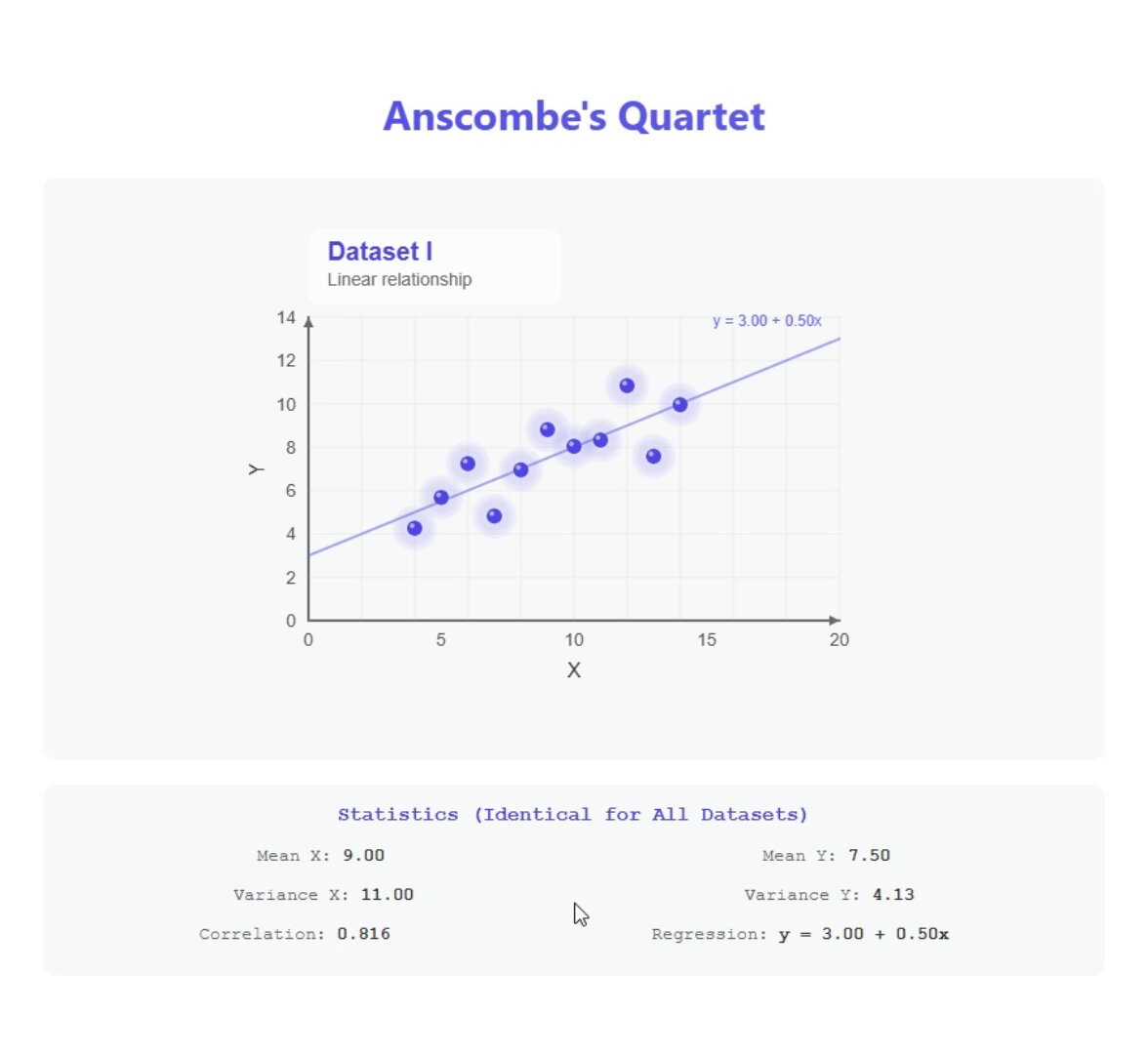
Anscombe's Quartet proves why we need to visualize data. Four datasets with identical statistics (mean, variance, correlation) reveal completely different patterns when plotted - linear, curved, outliers, and false correlations.
1
115
10 Sep 2025
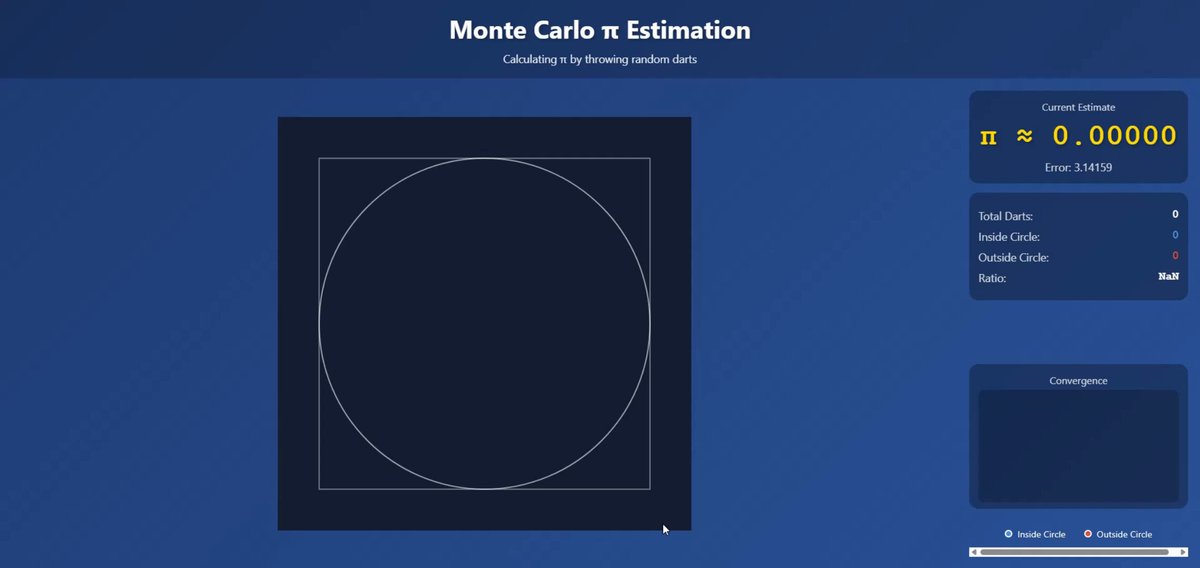
Monte Carlo simulation uses random sampling to solve problems that are hard to calculate directly.
Here we estimate π by throwing random points at a square - pure randomness finding mathematical truth.
Can you guess how this technique is used in the real world?
1
2
115
Aaron retweeted
10 Sep 2025
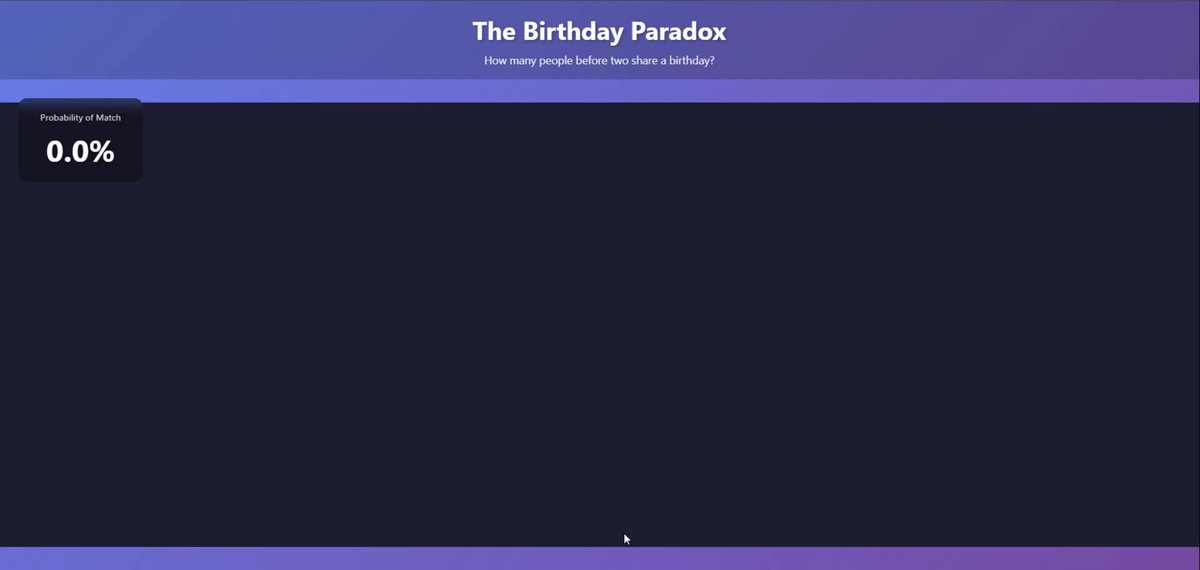
How many people need to be in a room before two share a birthday?
The Birthday Paradox reveals why our intuition about probability is so wrong. This visualization shows each person's birthday as they join, tracking when matches occur.
The answer will surprise you.
1
1
2
146
8 Sep 2025
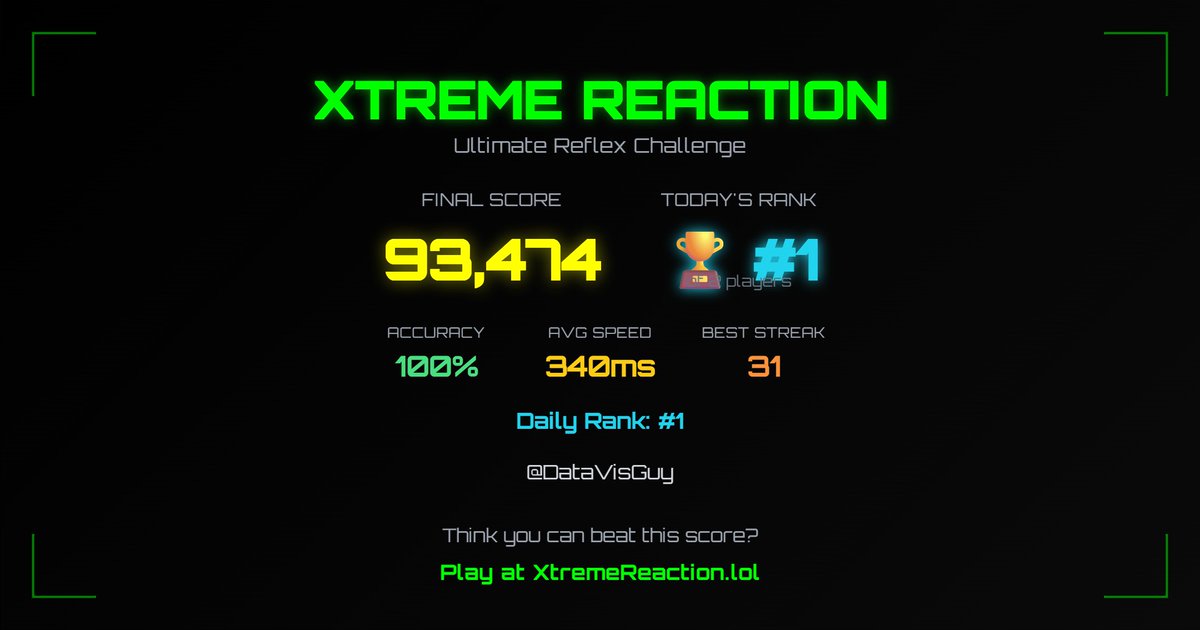
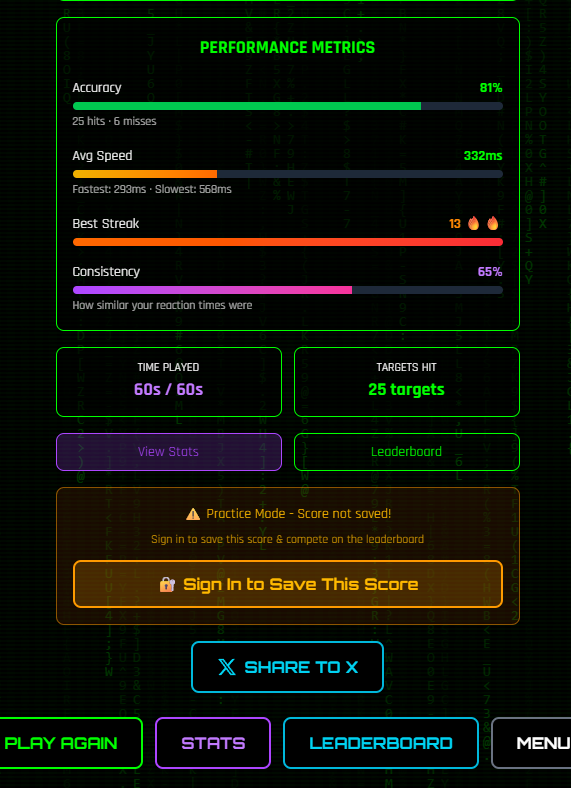
Testing the updated shareable results card. Looks like I need to format the rank.
🎯Just scored 93,474 in Xtreme Reaction!
⚡ Avg reaction: 340ms
🎯 Accuracy: 100%
🔥 Best streak: 31
🏆 Ranked #1 today out of 2 players!
Think you can beat me? 💪 XtremeReaction.lol
1
3
74
7 Sep 2025
Perlin noise visualization. The same algorithm that generates Minecraft terrain, rendered as a wireframe with height-based color gradients. Won Ken Perlin an Academy Award in 1997 for revolutionizing computer graphics.
4
139
6 Sep 2025
Just a random experiment with Three.js visualization. I used ElevenLabs for the speech to text. It does not line up perfectly but it's good enough for this one. Onto the next random visualization.
1
9
730
5 Sep 2025
Business idea: GIFS, but actually useful visualizations to help reinforce a point.
1
120