
Philosopher. Published with 'Modal Homotopy Type Theory' (OUP, 2020). Published with D. Leader 'Why do people get ill?' (Penguin, 2007).
Joined July 2017
- Tweets 2,857
- Following 300
- Followers 1,979
- Likes 1,176
451 Photos and videos




David Corfield retweeted

Apr 30
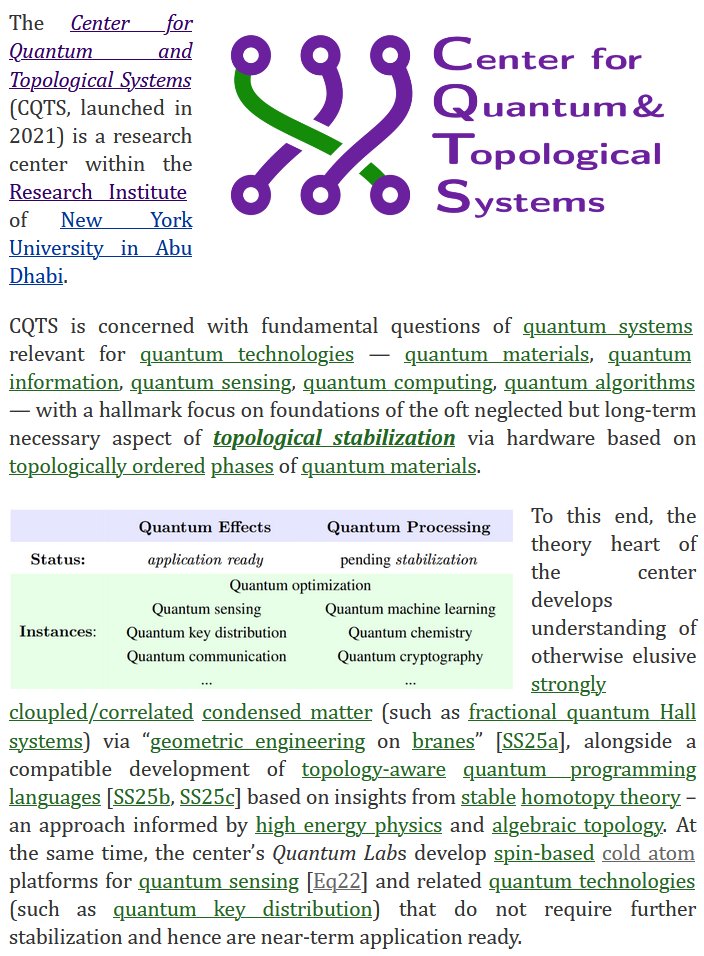
Funding has just been renewed, for the next 5 years:
ncatlab.org/nlab/show/Center…
4
7
78
2,628
David Corfield retweeted

Apr 4
I’ve recently accepted the Programme Director role at ARIA, taking over from davidad in running the Safeguarded AI programme.
🧵 about the programme’s strategic vision our upcoming funding efforts in cybersecurity we're hiring!
11
25
231
18,746
David Corfield retweeted

A new web page for my book! tomasp.net/cultures/
It has all the links you need to get the open access PDF, buy a hardcopy or an ebook, as well as some older talks.
If you run a podcast, conference or a user group, I'm always hapy to join & talk about something from the book!
2
13
98
4,138

20 Dec 2025
Looking forward to a happier post-postscript.

The open access version of Cultures of Programming is now available online. Just in time for the holiday break!
Read it here: cambridge.org/core/books/cul…
If you prefer a real book, use PETRICK26 for a 20% discount (valid until January 31) at: cambridge.org/9781009492348
4
442
12 May 2025
There's something of Gendlin et al.'s 'Think at the Edge' to this: focusing.org/gendlin/docs/go…
3 Apr 2025

A paper that seeks to extract concepts from an AI chess player that are currently beyond human experts, but are still teachable:
pnas.org/doi/10.1073/pnas.24…
Having extracted the most powerful novel AI concepts as vectors, they look to see if these are outside the human range
1
4
892
9 May 2025
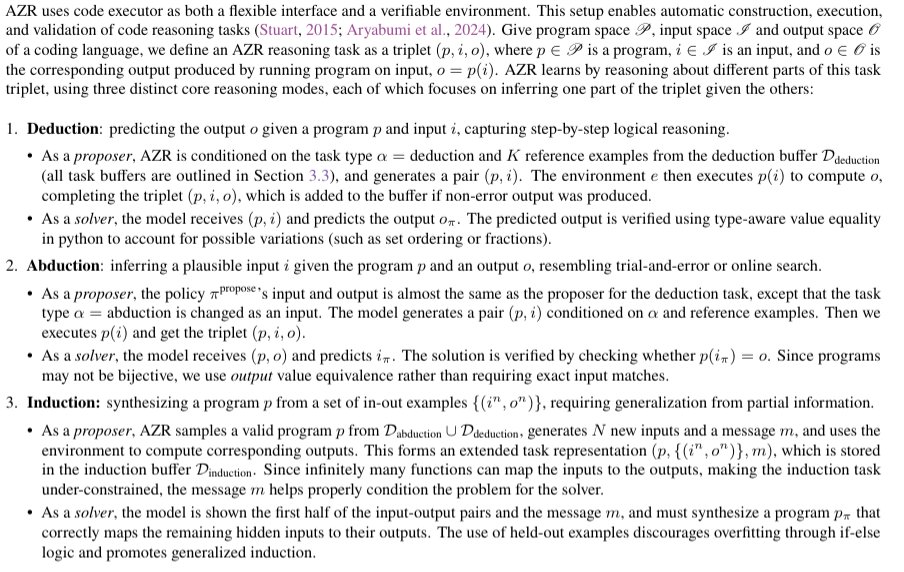
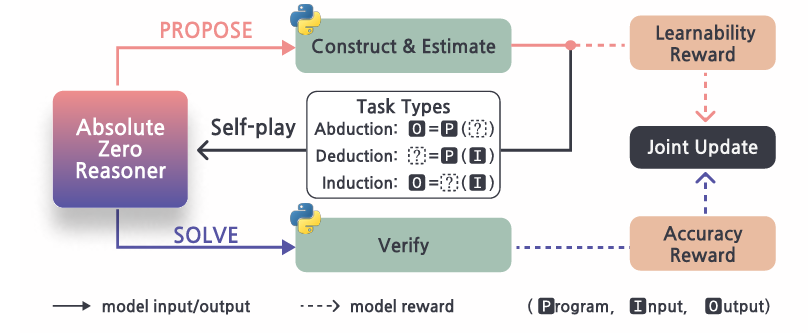
Converging ideas, arxiv.org/abs/2505.03335:
4 Apr 2025
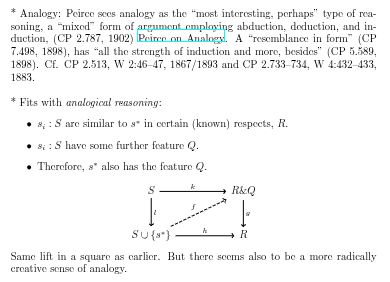
Some reflections here (ncatlab.org/davidcorfield/sh…) on the extent to which may see Charles Peirce's three modes of reasoning (deduction/induction/abduction) as completions of inferential triangles.
1
14
918
16 Apr 2025
"opposite poles of reason", i.e., dual constructions: ncatlab.org/davidcorfield/sh…
16 Apr 2025

Abduction and induction have, to be sure, this common feature, that both lead to the acceptance of a hypothesis because observed facts are such as would necessarily or probably result as consequences of that hypothesis. But for all that, they are the opposite poles of reason,
/3
1
7
663
4 Apr 2025
Some reflections here (ncatlab.org/davidcorfield/sh…) on the extent to which may see Charles Peirce's three modes of reasoning (deduction/induction/abduction) as completions of inferential triangles.
1
19
2,015
3 Apr 2025
A paper that seeks to extract concepts from an AI chess player that are currently beyond human experts, but are still teachable:
pnas.org/doi/10.1073/pnas.24…
Having extracted the most powerful novel AI concepts as vectors, they look to see if these are outside the human range
1
8
21
2,933
3 Apr 2025
"We define the novelty score based on how well a concept vector can be reconstructed using a set of basis vectors derived from AZ’s games. A lower reconstruction loss means that the concept is better represented by the given set of basis vectors...
2
4
398
3 Apr 2025
...In other words, we look for concepts that are better explained using AZ’s language (basis vectors) than humans’ language."
So better bases allow the easier expression of powerful concepts. Interesting.
3
370
30 Mar 2025
I'd love to see this vector space approach meet with dependent type theory. There should be a way to pass back and forth between the hierarchical encoding of dependent typing and corresponding representations within a very high-dimensional space.
10 Jun 2024

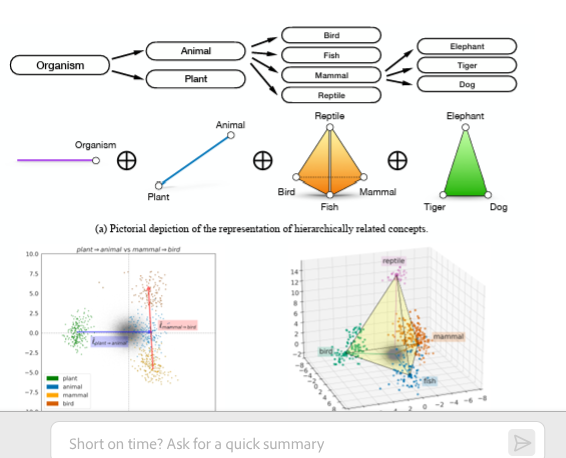
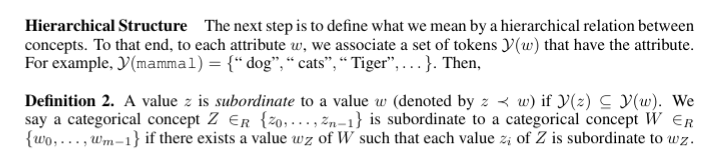
Fundamentally, high-level concepts group into categorical variables---mammal, reptile, fish, bird---with a semantic hierarchy---poodle is a dog is a mammal is an animal.
How do LLMs internally represent this structure?
arxiv.org/abs/2406.01506
3
1
21
1,443
28 Jul 2023
Interesting. They give a h/t to @_julesh_ who had related laxness of functors to emergent effects (julesh.com/2019/12/02/lax-fu…).
Maybe we can get category theory to speak to other approaches to emergence, such as @erikphoel et al. arxiv.org/abs/2104.13368, arxiv.org/abs/2202.01854.
28 Jul 2023

Caterina Puca, Amar Hadzihasanovic, Fabrizio Genovese, Bob Coecke: Obstructions to Compositionality arxiv.org/abs/2307.14461 arxiv.org/pdf/2307.14461
1
2
18
2,465
31 Jul 2023
it's mono.
If so, what do departures from isomorphism look like in this category? Do they relate to what Comolatti and Hoel have on determinism and degeneracy as generalizations of sufficiency and necessity?
1
3
525
20 Mar 2025
I see @erikphoel has now issued a Causal Emergence 2.0, arxiv.org/abs/2503.13395. May be worth revisiting this thread.
263
3 Feb 2025
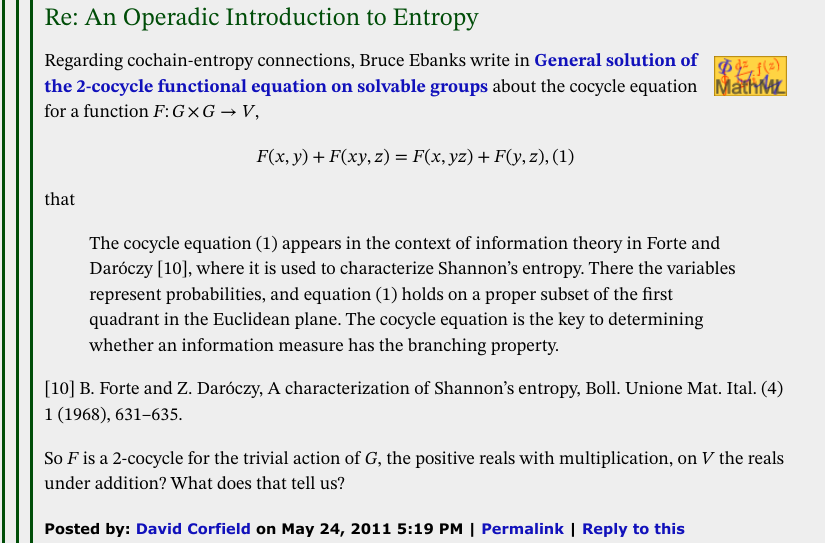
Quiver representations look very interesting here: arxiv.org/abs/2207.12773
28 Jan 2025
But taking the first steps to go symmetric situations, are there people looking to utilise what's coming from monoid representation theory? This is notorious less simple (mathoverflow.net/q/37115/447), but there is material on the subject, such as ...
4
645
28 Jan 2025
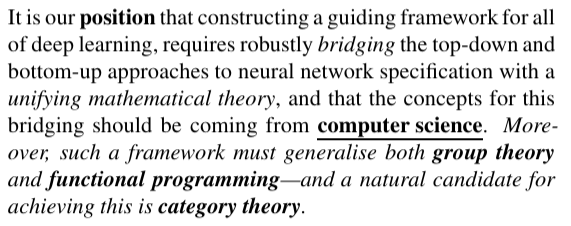
We hear plenty about methods from group representation theory being used to train neural nets to operate under conditions of symmetry. And there are people looking to push beyond to apply category theory (e.g., arxiv.org/abs/2402.15332).
1
20
1,676
28 Jan 2025
But taking the first steps to go symmetric situations, are there people looking to utilise what's coming from monoid representation theory? This is notorious less simple (mathoverflow.net/q/37115/447), but there is material on the subject, such as ...
1
6
981
28 Jan 2025
this book by Benjamin Steinberg: link.springer.com/book/10.10….
I see this is taken up in an interesting looking thesis by Sören N. Schwenker, Genericity in Network Dynamics: ttps://ediss.sub.uni-hamburg.de/bitstream/ediss/6159/1/Dissertation.pdf
6
377
16 Jan 2025
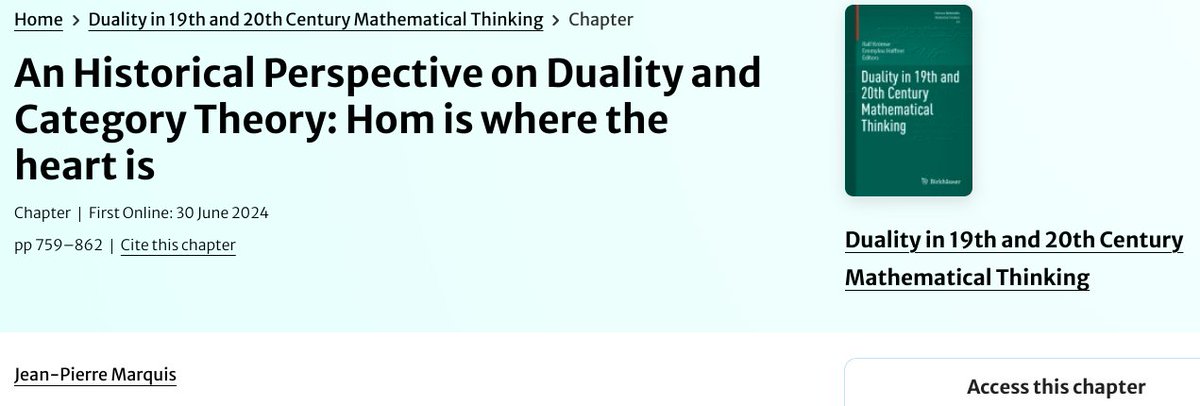
Another great historical piece on category theory by Jean-Pierre Marquis (philpapers.org/archive/MARAH…), to add to his collection (philpapers.org/s/Jean-Pierre…).
4
9
53
2,407
20 Jan 2025
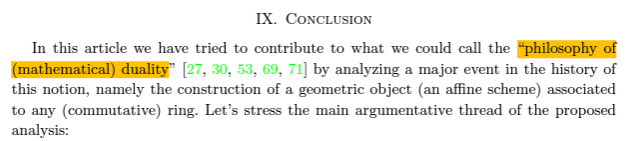
Another reference to add to category-theoretic approaches to a philosophy of duality: 'Grothendieck's theory of schemes and the algebra–geometry duality'
hal.science/hal-03913076/doc…
1
3
345
16 Jan 2025
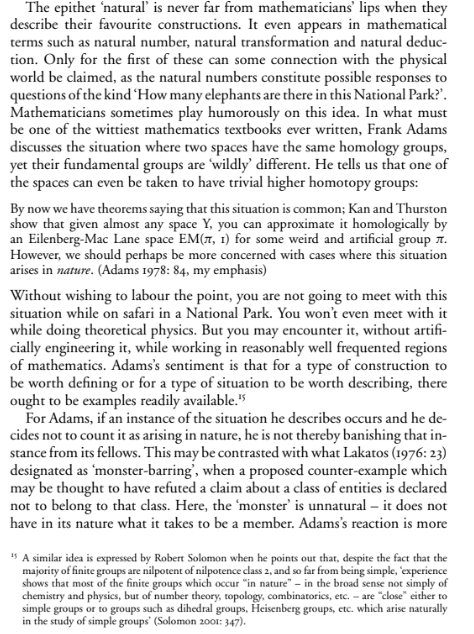
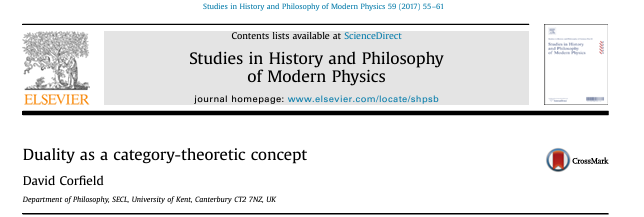
Hmm, but you can't do much more than put the clue in the title: ncatlab.org/davidcorfield/fi…

4
327