
Neurology, Functional Medicine, Nutrition, Author, Lecturer
Joined July 2009
- Tweets 13,005
- Following 120
- Followers 81,900
- Likes 5,224
1,347 Photos and videos

Pinned Tweet

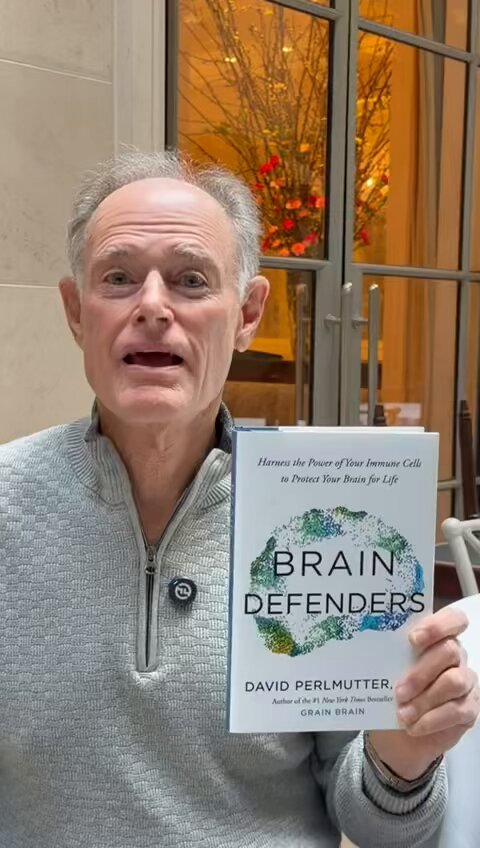
There is no cure for Alzheimer’s. Prevention is essential.
If we want a future with a lower risk of Alzheimer’s and cognitive decline, we must care for the brain long before symptoms begin. My new book Brain Defenders is a practical guide for doing exactly that.
Pre-order now: drperlmutter.com/books/brain…
10
24
148
7,433
You cannot cancel out the ultra-processed foods you consume just by adding healthy, whole foods to your diet too.
Adding healthy foods to your diet is important. But it does not erase the effects of foods linked to inflammation, metabolic dysfunction, cognitive decline, and Alzheimer’s disease.
Adding healthy foods matters, but reducing ultra-processed foods matters just as much.
6
5
54
3,304
In this episode of The Empowering Neurologist, I speak with @robinberzinmd about why metabolic health may be the missing piece behind brain fog, fatigue, and burnout, and what a more proactive approach to medicine can unlock.
Listen to find out what your symptoms might actually be telling you. youtu.be/CEcneMkNOl4?si=ZVLB…
3
909
Mental clarity is often built through basics:
Quality sleep
Stable blood sugar
Movement
Human connection
3
24
1,289
What’s one daily habit that helps you feel mentally clear?
1
2
946
What’s one thing you do to protect your brain health that more people should know about?
4
2
780
In a world full of conflicting health advice, the science of metabolic flexibility stands out as one of the most fundamental factors in how we age, think, and feel.
That's exactly what my latest conversation with @robinberzinmd explores.
In this episode, we go deep on metabolic health, hormones, sleep, and inflammation and what they mean for your brain and your longevity. We also explore what the traditional medical model often gets wrong, and what a more proactive approach can unlock.
youtu.be/CEcneMkNOl4
1
8
1,392
Do you actually need omega-3s?
In my opinion, yes. One of the most important omega-3 fatty acids for brain health is DHA, and one of the best food sources is wild salmon. Many people may also benefit from a high quality omega-3 supplement with at least 800–1,000 mg of DHA daily.
9
42
7,018
For decades, the consensus was that genetics were destiny.
But research in epigenetics tells a different story. Lifestyle choices, especially nutrition, can influence how genes are expressed.
One example is sulforaphane from broccoli sprouts, studied for its role in detoxification, oxidative stress reduction, and anti-inflammatory pathways.
Your genes matter. But your daily choices matter too.
4
1
19
1,420
You should be getting at least 800-1,000 mg of DHA daily. DHA, a key omega-3 fatty acid, is one of the most important fats in the brain. Save this as a reminder to have your levels checked at your next appointment.
6
1
35
4,044
Most people are not getting enough vitamin D. Sunlight matters, but for many people, it isn’t enough. That’s why I often recommend checking vitamin D levels and considering D3 supplementation with guidance from your physician.
3
1
22
1,633
Why does Alzheimer’s affect women more than men?
Research points to the connection between estrogen, brain inflammation, and the immune cells that help protect the brain. drperlmutter.com/why-does-al…
2
17
862
Inflammation often starts in places people overlook.
For many, it comes back to two foundational things: Sleep and metabolic health.
Not just how long you sleep, but whether it’s restorative.
Not just what you eat, but how your body responds to it.
Blood sugar and insulin sensitivity sit at the center of the conversation.
16
889
AI can analyze massive amounts of data, recognize patterns, and support earlier, more precise diagnosis in ways we’ve never seen before. The real opportunity is not replacing clinical judgment, but enhancing it. How we integrate this technology will shape the future of patient care.
How do you feel about it?
drperlmutter.com/new-reality…
4
1
19
1,816
June is #BrainHealth & #AlzheimersAwareness Month.
Awareness alone is not enough. We need to shift the conversation toward prevention. Sleep, exercise, nutrition, metabolic health, and social connection all help shape brain health over time. The best time to protect your brain is now.
1
3
24
1,271
Do not confuse potential cognitive benefits with safety.
Nicotine has been shown to influence attention and focus, which is why it has been studied in the context of cognitive function. That does not make it benign. Its use is still associated with dependence and other well-established health risks, which need to be part of the conversation. aarp.org/health/healthy-livi…
2
16
1,268
There’s one marker women going through perimenopause or menopause should pay closer attention to:
Omega-3 status.
As estrogen declines, the body becomes less efficient at converting plant-based omega-3s into the forms the brain actually uses, especially DHA.
This can affect inflammation, brain health, and cardiovascular function.
2
42
6,207
In the age of AI, one question has never mattered more: what makes the human brain unique?
By comparing human cognition with machine learning, Tom Griffiths reveals what our brains do that no algorithm can replicate: reason flexibly, find meaning in ambiguity, and generalize from almost nothing. The comparison doesn't diminish us. It illuminates us.
youtu.be/5sASHx7TUpI?si=qg1X…
6
1,250
One of the easiest ways to reduce unnecessary inflammation this summer:
Don’t get burned.
Use sunscreen.
Seek shade.
Be mindful of timing your exposure.
2
11
1,507
Brain health is no longer a side conversation in wellness, it’s becoming the conversation.
I was honored to see Brain Defenders mentioned in @FrankBruni's @nytimes piece on the rise of brain health as a wellness priority. But what’s most important is this: we’re finally expanding the conversation beyond treating brain disease after it happens and focusing on defending the brain long before symptoms begin. nytimes.com/2026/05/25/opini…
1
1
11
1,016