
Web3 jobber|| Community manager||Deal flow expert offering MM service|| Advisory service ||Fundraising || OTC
Joined April 2022
- Tweets 6,867
- Following 730
- Followers 408
- Likes 25,719
276 Photos and videos














David retweeted

May 26
Liquidity depth matters less than liquidity distribution.
$10M TVL with 5 real users is fragile.
$1M TVL with 500 real users is a foundation.
4
13
185
David retweeted
May 30
DeFi Foundry Wrapped 🎬✅
One year. No announcements that didn't ship. No partnerships that stayed on paper. No governance theater.
Just numbers.
👇
• 6 OTC deals closed • 10M raised across projects
•500K minimum tickets
• 30 strategic partners
• 300 scouts powering dealflow
• 1.8K builders & investors in our community
Year one was about proving the model.
Year two is about scaling it.
Thanks to everyone who showed up before we were obvious.
If you're watching from the outside — the door's still open. For now.
2026 will be louder. But more importantly, bigger.

11
14
41
1,011
David retweeted
Jun 2
🎉 Congratulations to Our Giveaway Winners! 🎉
🏆 Our 10 Winners:
1 @BodamProsp36607
2 @prince_7034
3 @oartcraft
4 @Confidence1804
5 @Davidfallon
6 @dminister4u
7 @Route2Ace
8 @djadejoro
9 @ydk_jnr
10 @Itsformyguy
Please send a DM within the next 24 hours with either:
💳 Your bank account details (for fiat payment), or
👛 Your wallet address (for crypto payment)
Thank you for being part of the DeFi Foundry community. Here's to more opportunities, partnerships, and growth ahead! 🚀
12
6
36
916

Jun 1
Inshallah very soon
Jun 1

8.8 million naira go enter your hand before month ends.🙏
2
13
David retweeted
May 30
🎉 GIVEAWAY ALERT! 🎉
As DeFi Foundry celebrates its 1-Year Anniversary, we’re giving back to our amazing community!
💰 $100 Giveaway
🏆 10 Winners
🎁 $10 Each
How to participate:
✅ Like this post
✅ Repost/Retweet
✅ Comment what you like most about DeFi Foundry
⏰ Winners will be selected and announced within the next 48 hours.
Thank you for being part of our journey. Here’s to another year of growth, partnerships, and innovation in Web3! 🚀

109
101
137
2,956
David retweeted

May 29
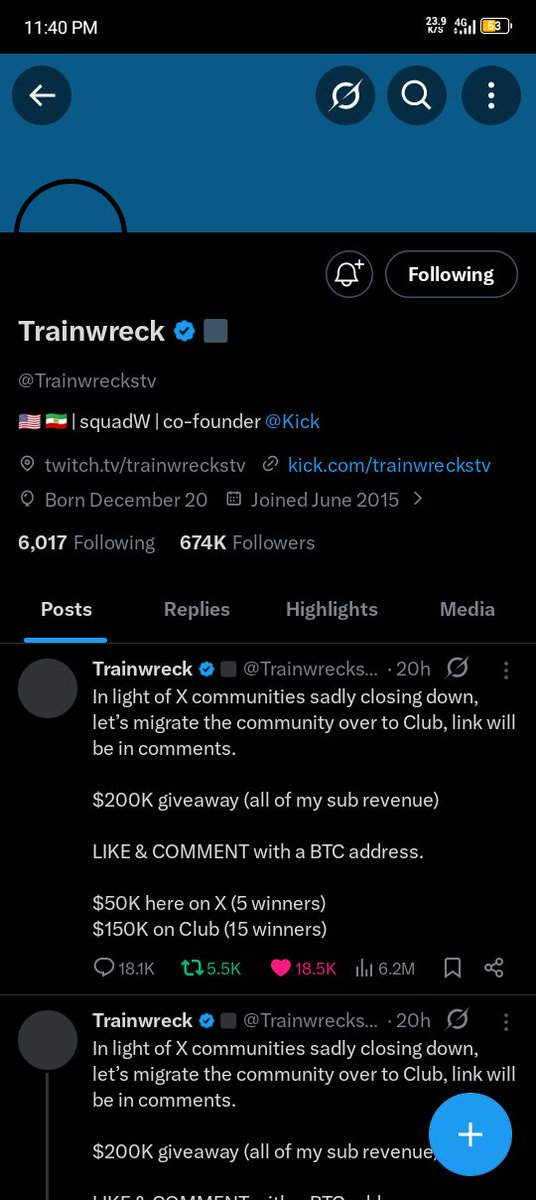
In light of X communities sadly closing down, let’s migrate the community over to Club, link will be in comments.
$200K giveaway (all of my sub revenue)
LIKE & COMMENT with a BTC address.
$50K here on X (5 winners)
$150K on Club (15 winners)
21,676
6,370
21,045
32,420,689
May 29
RT @thisisseunn: $50 SOL Giveaway
- Follow @BarbiePlayz_ 🔔
- like rt Comment wallet
Winners 24hrs.
448
David retweeted

May 28
2sol to 2niggas
Comment whatever
2,851
1,279
4,677
273,579
David retweeted

May 27
In the Spirit of Eid, let's buy lunch for some people.
Drop your EVM wallet address and RT this
I'd be picking some people and send lunch money to your wallets.
Happy Celebrations!
May 27

Eid Mubarak, Amazing People ✨✨✨
Wishing you and your families warmth and abundance!
Taqabalallahu Mina wa Minkum

259
148
311
19,550
David retweeted
May 27
Eid Mubarak, Amazing People ✨✨✨
Wishing you and your families warmth and abundance!
Taqabalallahu Mina wa Minkum
54
21
116
21,390
May 27
RT @thisisseunn: $30 SOL Giveaway
- Follow @junacute_degen 🔔
- like rt Comment wallet
Winner 12hrs 🥰
312

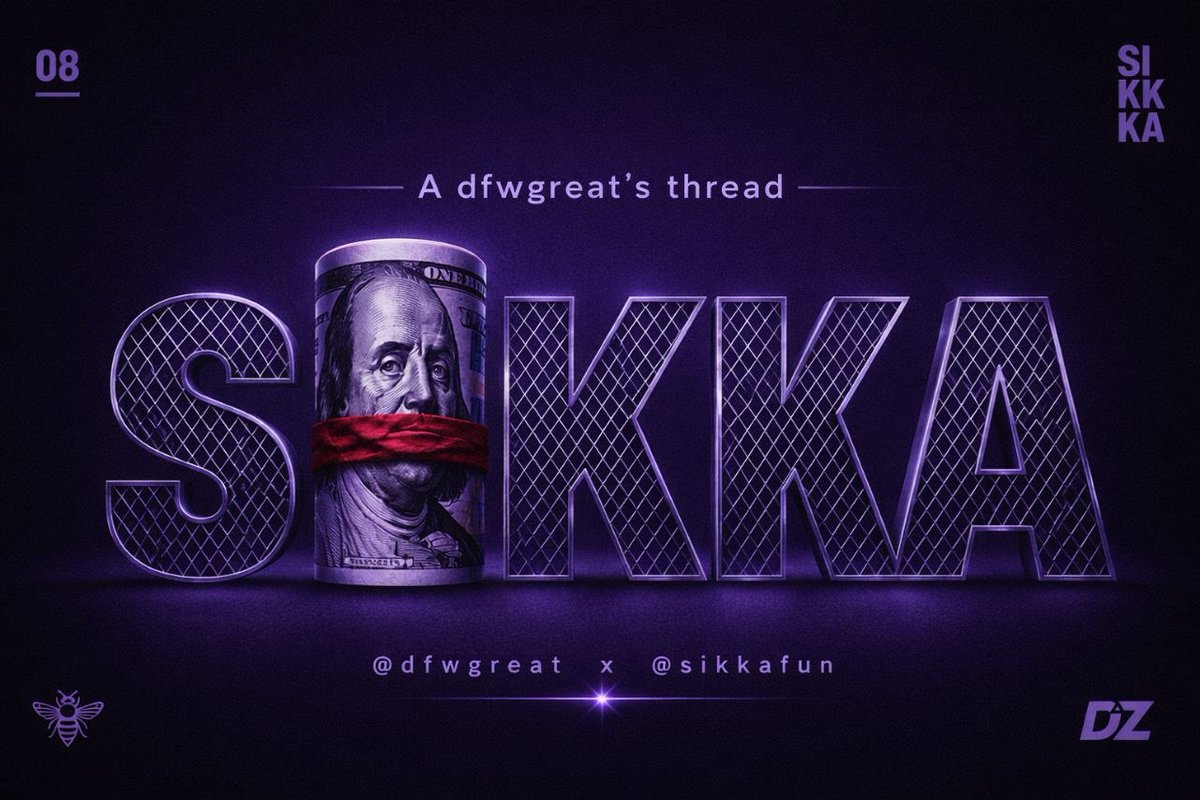
so I launched my first coin last week
with just my phone, a photo from my gallery, and about 47 seconds
for a moment I was convinced there was supposed to be more to it than that
because I'd always filed "launching a coin" under things people with far more technical skills than me could do
the kind of thing that needed a budget, documentation, and skills I didn't have
turns out I was completely wrong
🔻
@sikkafun #SikkaFun
31
25
64
2,314
David retweeted
May 18
Nigerian founders building in Web3 have one advantage:
They build for resilience, not just scale.
When your infrastructure fights you daily, you learn to build around dependencies.
1
2
13
119
David retweeted

May 14
Introducing Nuelcrypt,
I became both 🙂↔️.
This video took me legit 24hrs if not more
What do you think about it?
89
10
188
6,085
David retweeted
May 12
Teams go silent when reality doesn't match promises.
But silence creates worse problems than honest updates about delays.
Communication cadence matters more than content quality.
1
10
119
David retweeted
May 9
The Infrastructure Layer Nobody Sees
Everyone talks about DeFi protocols. Nobody talks about the infrastructure that makes DeFi possible.
Oracles feeding price data. Indexers tracking blockchain state. RPC nodes serving requests. Bridges moving assets across chains.
These systems process billions in value daily. Most users have no idea they exist.
This is the nature of infrastructure. When it works, it's invisible. When it breaks, everything stops.
The founders building this layer aren't chasing token pumps or building communities of speculators. They're solving technical problems that other builders depend on.
Their success metrics aren't TVL or token price. They're uptime, latency, and reliability.
This work doesn't generate headlines. It generates leverage.
Every protocol built on solid infrastructure can focus on their core product. Every protocol built on shaky infrastructure spends half their time managing dependencies.
The opportunity here is obvious but underappreciated: infrastructure scales differently than applications.
One good oracle serves hundreds of protocols. One reliable bridge enables thousands of cross-chain transactions. One fast RPC node improves experience for millions of users.
The leverage is enormous. The recognition is minimal.
Most founders want to build the application layer because it's visible. The ones who understand Web3 long-term build infrastructure.
Because infrastructure doesn't compete. It compounds.
2
6
117
David retweeted
May 7
Your first 100 users aren't a stepping stone to scale.
They're the foundation everything builds on.
Get them wrong and nothing else matters.
1
1
9
262
David retweeted
May 6
The Capital Efficiency Delusion
Web3 founders compete on capital efficiency metrics.
"We only raised $2M." "We're profitable on $500K runway." "We haven't touched our treasury."
This signals discipline. Sometimes it signals under-resourcing.
The capital efficiency narrative assumes capital is the constraint. For many projects, it's not.
Talent is the constraint. Time is the constraint. Market timing is the constraint.
Being "capital efficient" while losing market position to better-funded competitors isn't efficiency. It's losing slowly.
The real question isn't "how little can we raise?" It's "what's the right amount of capital for our timeline and ambition?"
Some projects genuinely benefit from staying lean. Others need resources to move fast in competitive markets.
The mistake is optimizing for capital efficiency as a virtue rather than as a tool.
You're not being efficient if you:
- Underpay talent who then leave for competitors
- Skimp on audits and get exploited
- Delay key hires and miss market windows
- Run out of runway before proving your model
Efficiency means achieving objectives with appropriate resources. Not achieving less with fewer resources.
If you raised $10M and need $15M to execute your plan, raising another $5M isn't inefficient. Failing with $10M is.
Capital markets reward success, not frugality.
Be thoughtful about capital. Don't make it a competition to raise the least.
2
3
24
1,788