Visoki Dečani Monastery, Serbian Orthodox Church, official account in English, covering Church life, human and religious rights. Serbian Account @DecaniManastir
Joined July 2011
- Tweets 14,353
- Following 1,633
- Followers 38,741
- Likes 7,173
6,971 Photos and videos

Jun 11
The Eleventh Graduating Class of the Restored Prizren Orthodox Seminary Completes Its Studies
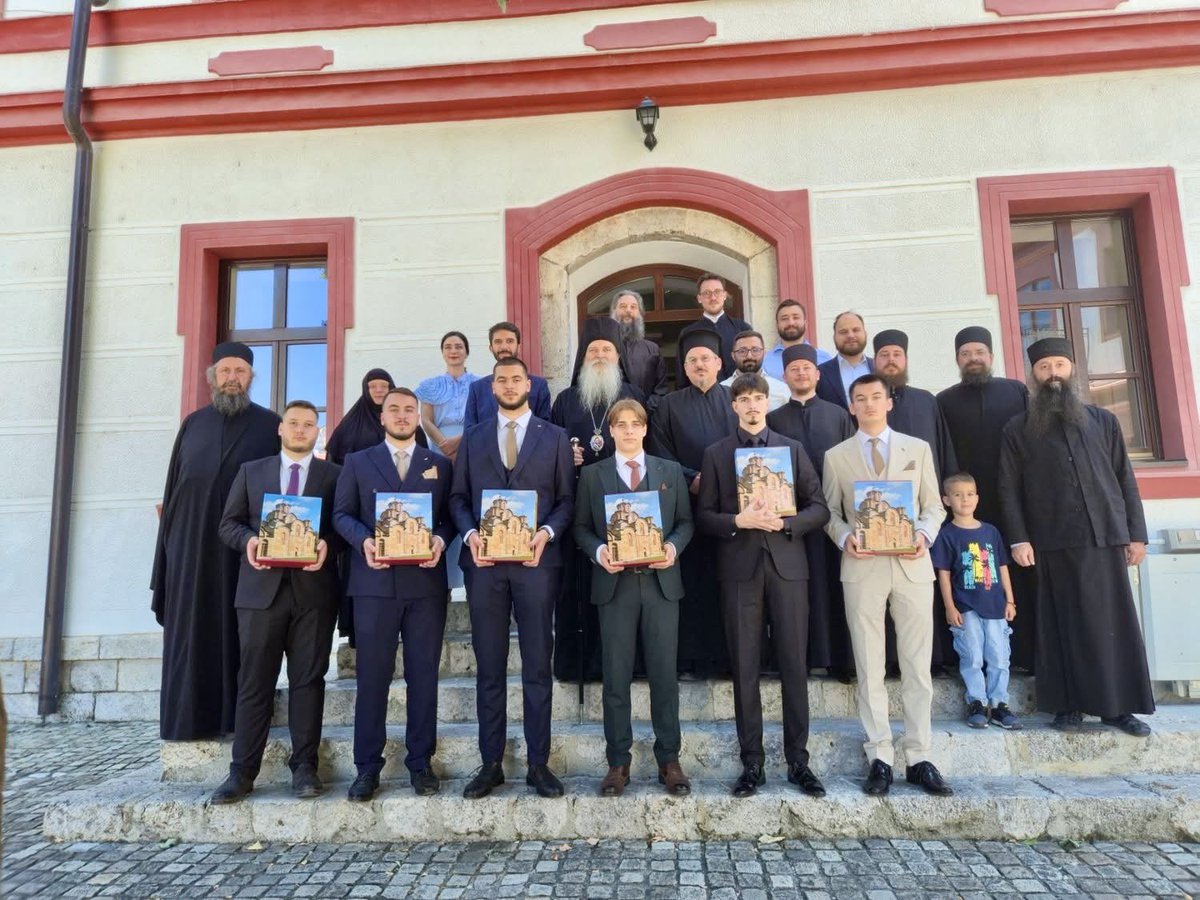
The eleventh graduating class of the restored Prizren Theological Seminary has successfully completed its studies. In recent days, the students sat for their Final Theological Examination, which they passed successfully.
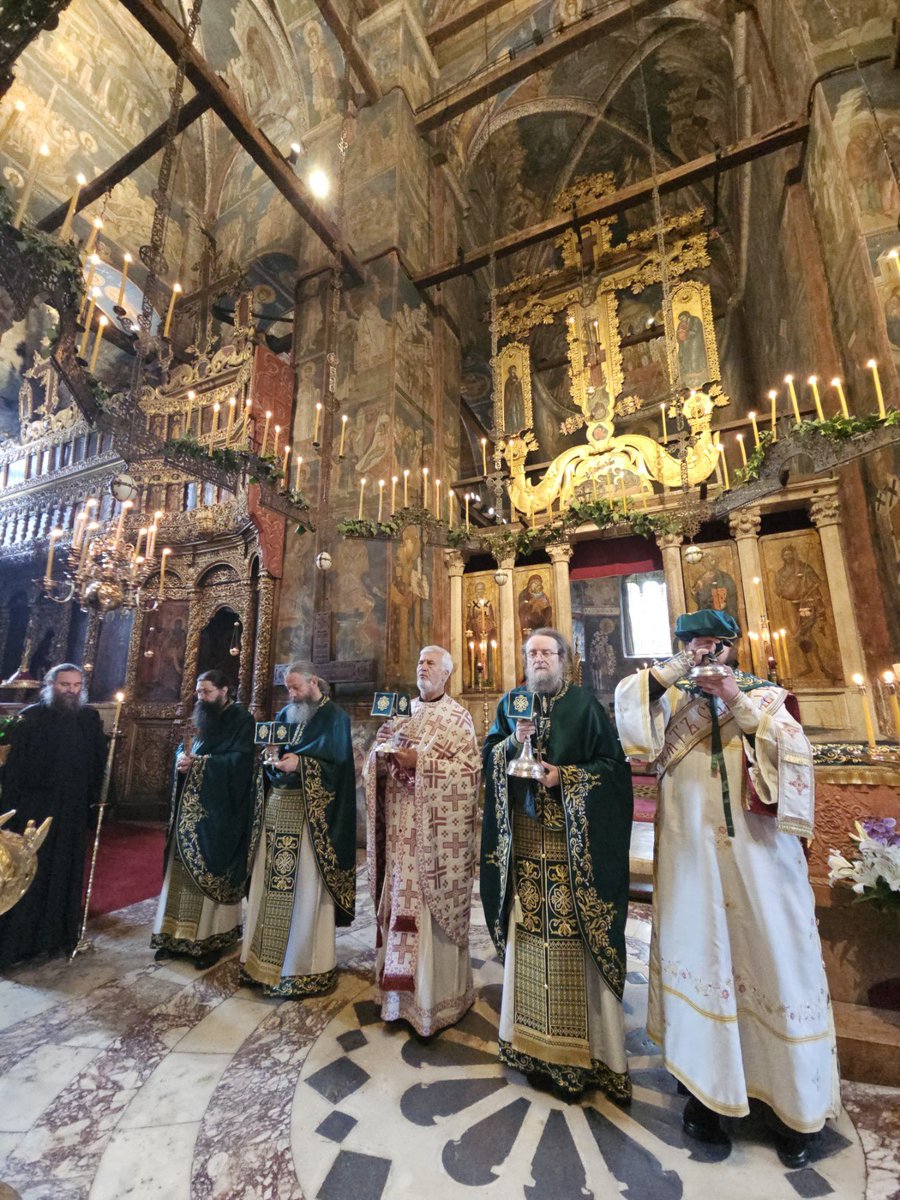
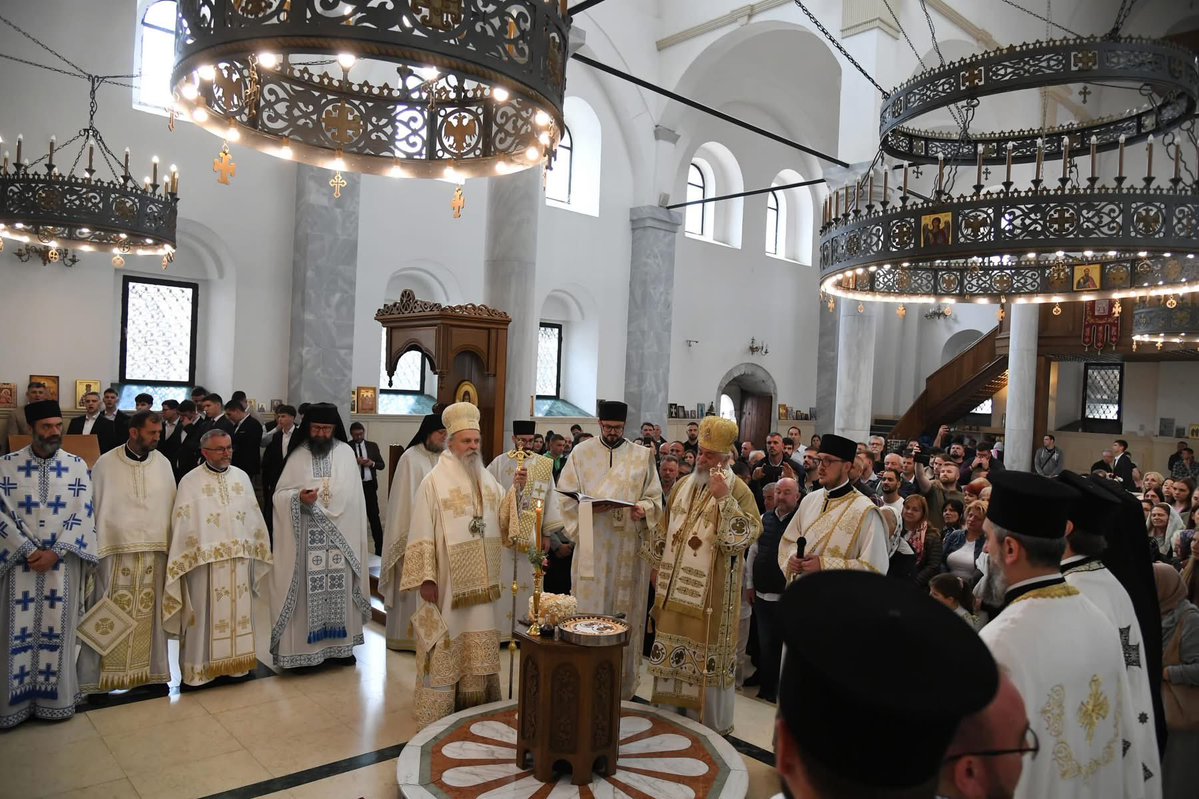
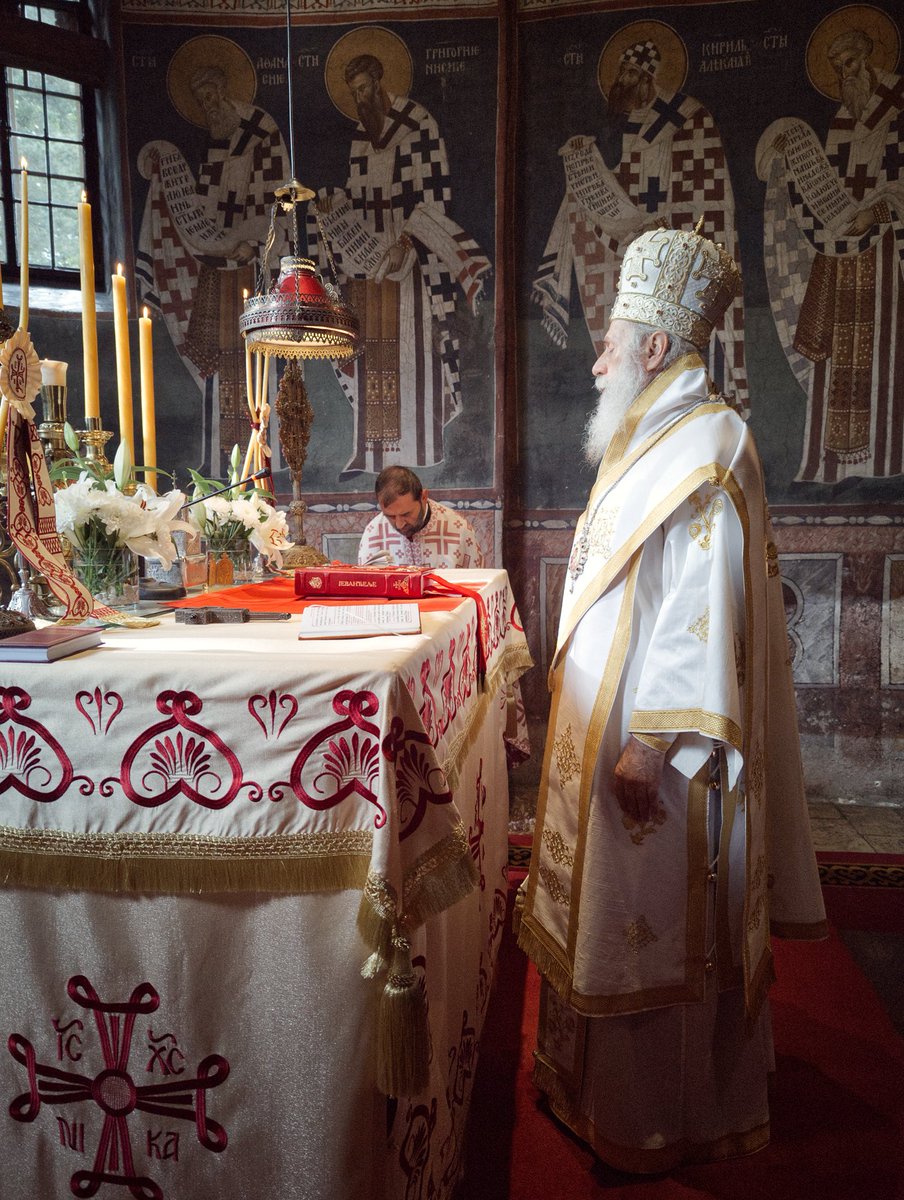
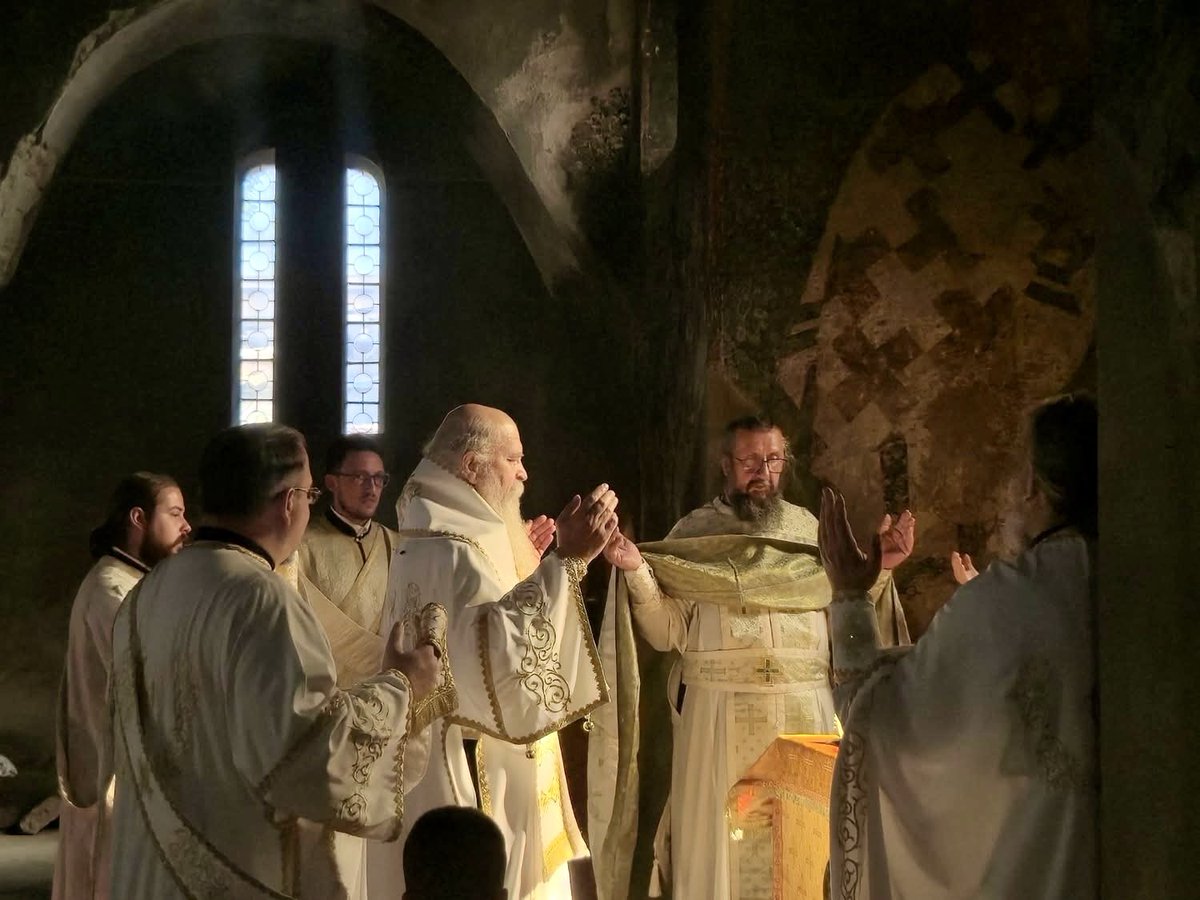
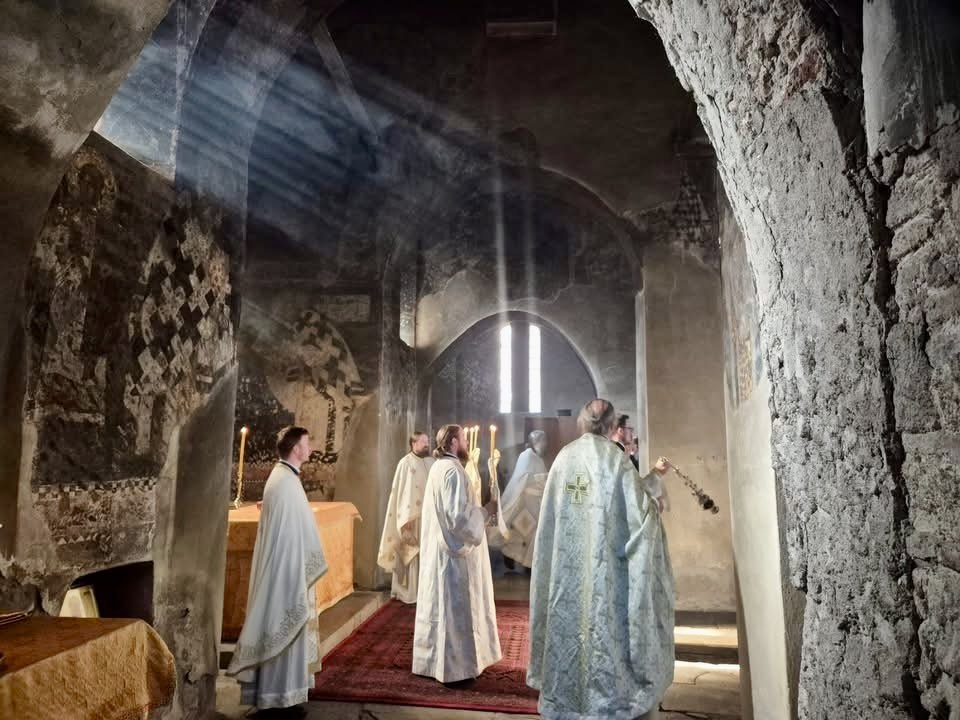
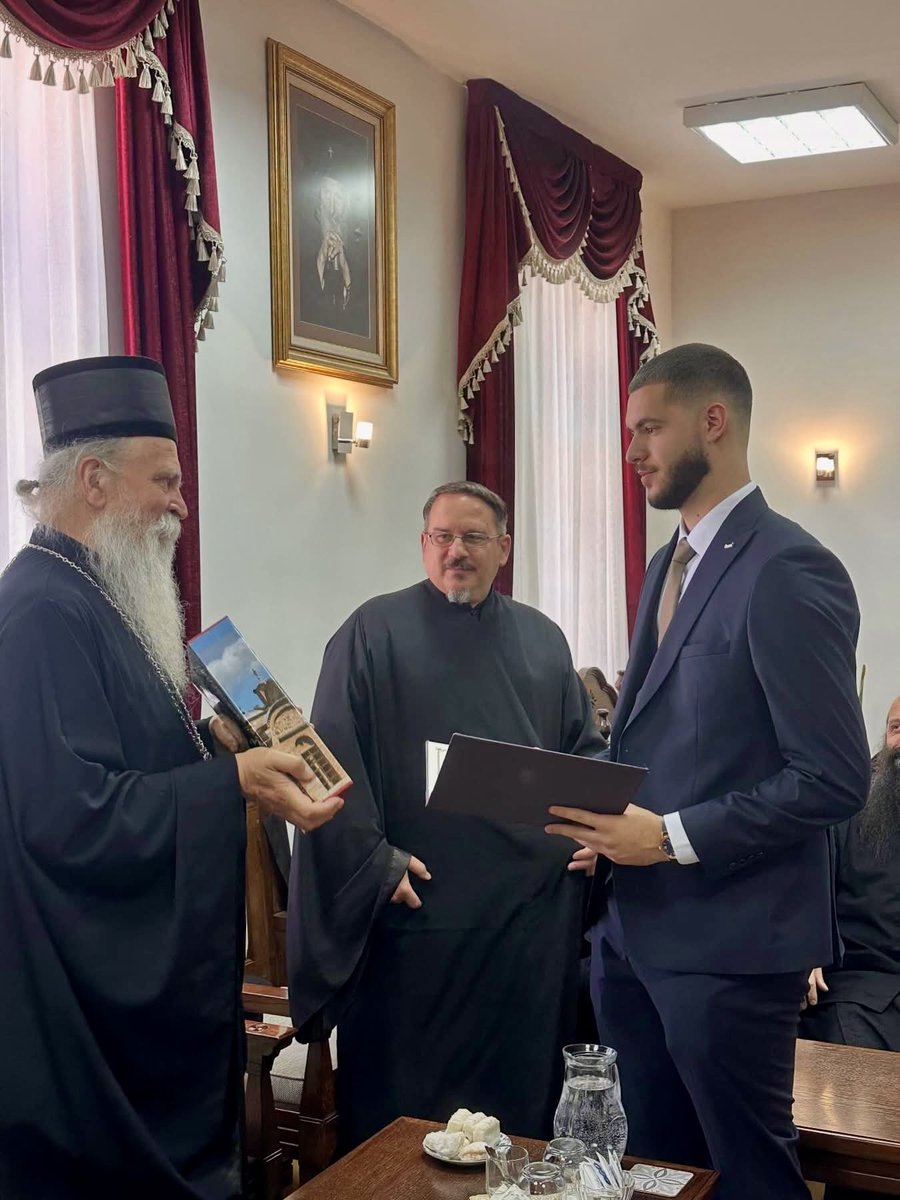
The day began with the celebration of the Divine Liturgy, presided over by His Eminence Archbishop and Metropolitan Teodosije of Raška and Prizren in the ancient Prizren shrine of the Church of the Mother of God of Ljeviša, after which the diplomas were formally awarded.
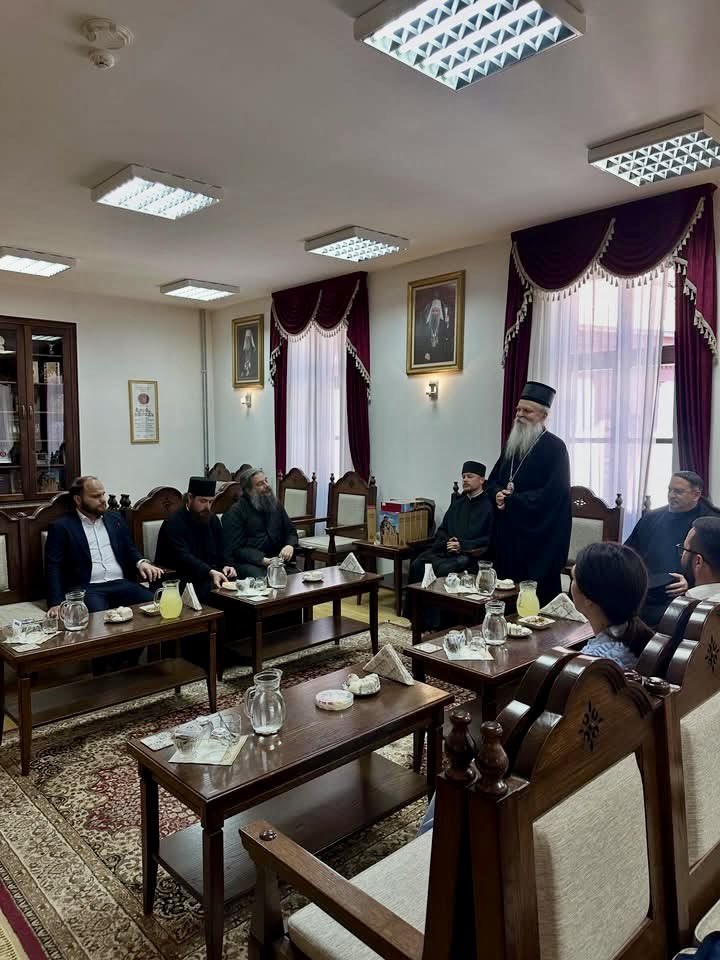
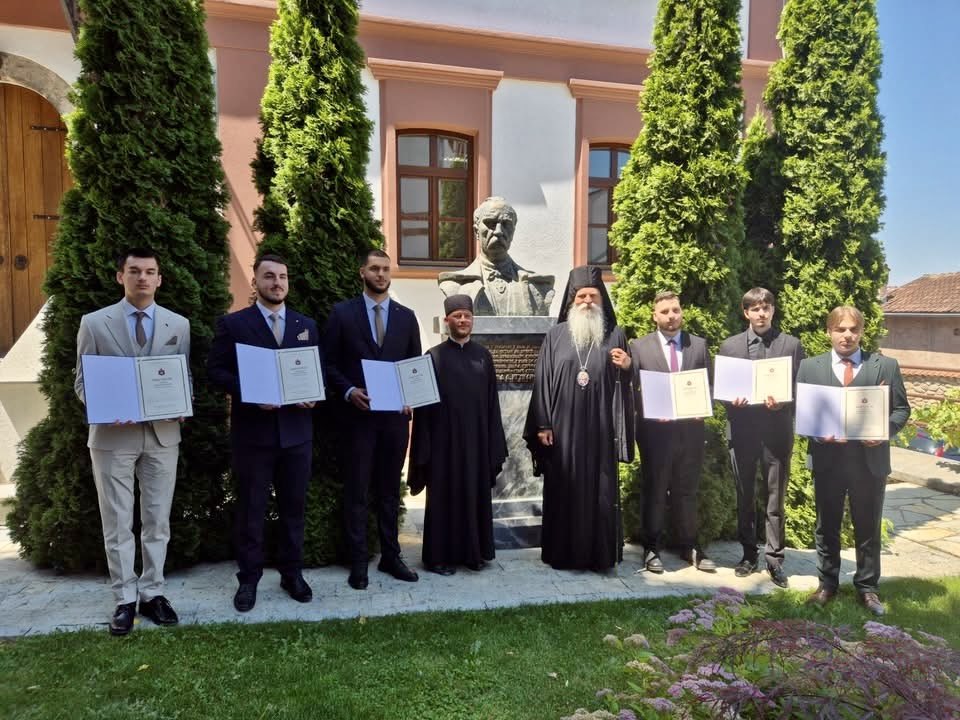
Metropolitan Teodosije congratulated the graduates on the successful completion of their secondary theological education. Also addressing the graduates and participating in the graduation ceremony was Deacon Zdravko Jovanović, representative of the Holy Synod of Bishops of the Serbian Orthodox Church.
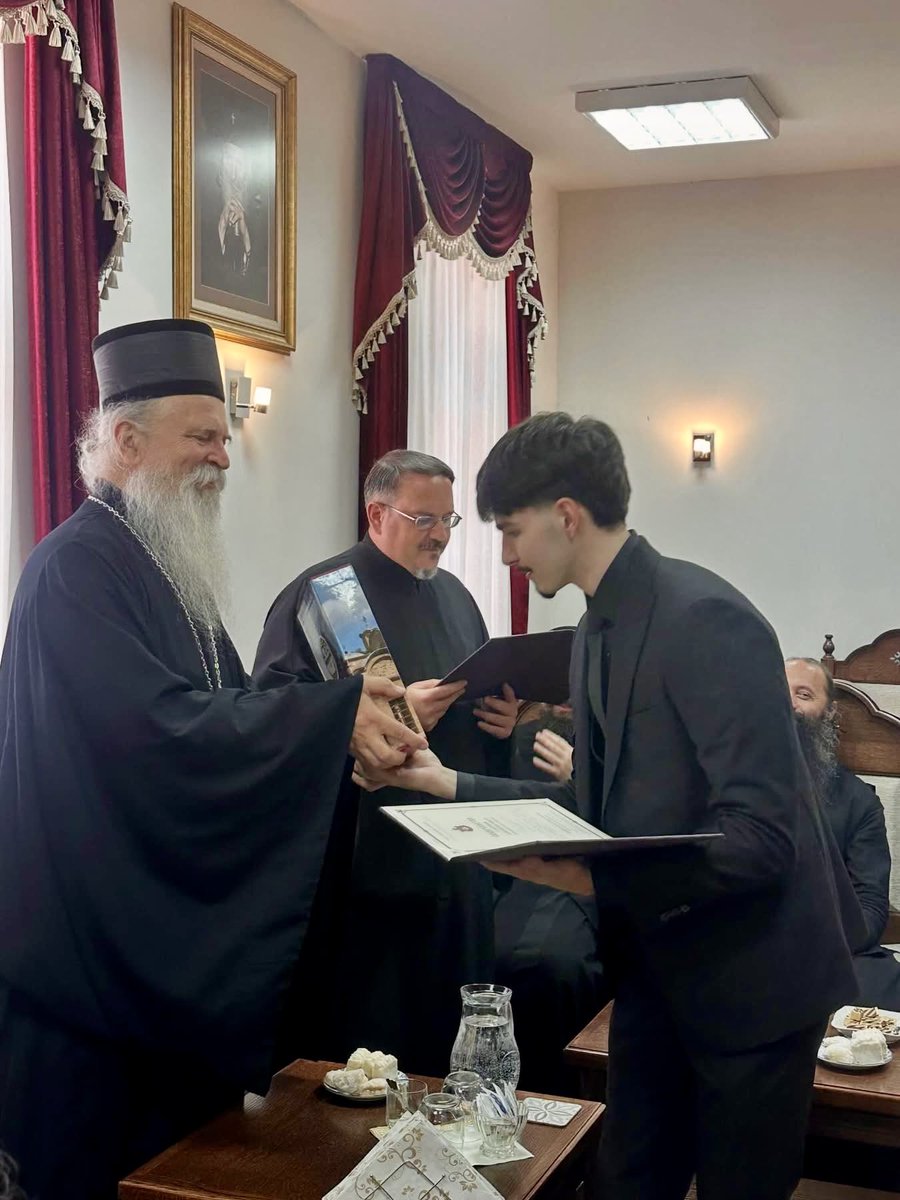
In addition to their diplomas, all graduates traditionally received from the Diocese of Raška and Prizren a copy of the monograph The Endowments of Kosovo and Metohija as a commemorative gift.
#SerbianOrthodoxChurch #Kosovo #Prizren #TheologicalSeminary
4
38
959
Jun 11
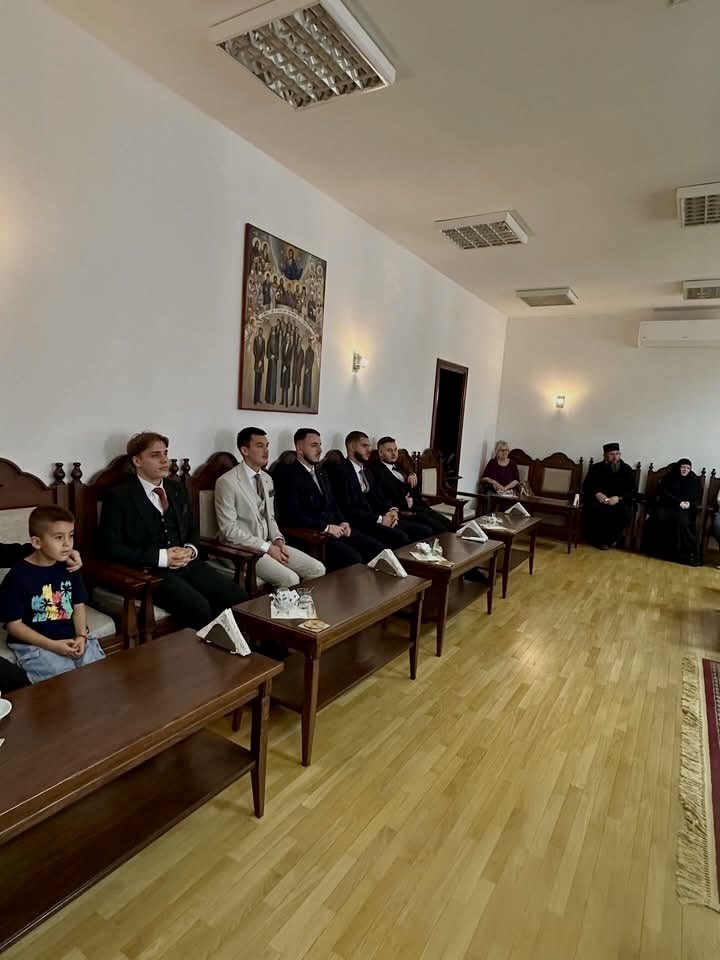
Following the Eucharistic celebration, a solemn graduation ceremony was held in the Serbian Orthodox Seminary guest hall. Addressing the graduates, Rector Metropolitan Teodosije offered words of encouragement, followed by Fr. Zdravko Jovanović, who reminded the future students that true theological knowledge is drawn from the liturgical and prayerful life of the Church, and that theology for them must remain the Bread of Life.
As a token of appreciation for their five years of dedication, study, and contribution to the life of this sacred institution, the graduates were presented with the monumental work The Endowments of Kosovo and Metohija.
We extend our heartfelt congratulations and best wishes to our graduates as they continue their theological education and spiritual growth.
#SerbianOrthodoxChurch #Kosovo #Prizren
6
40
922
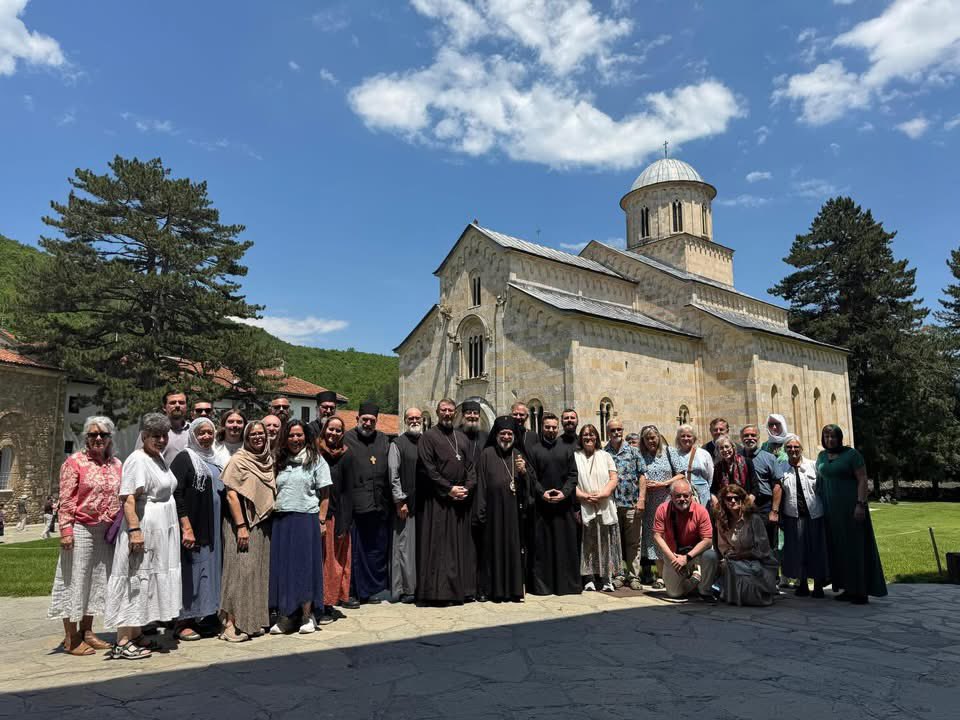
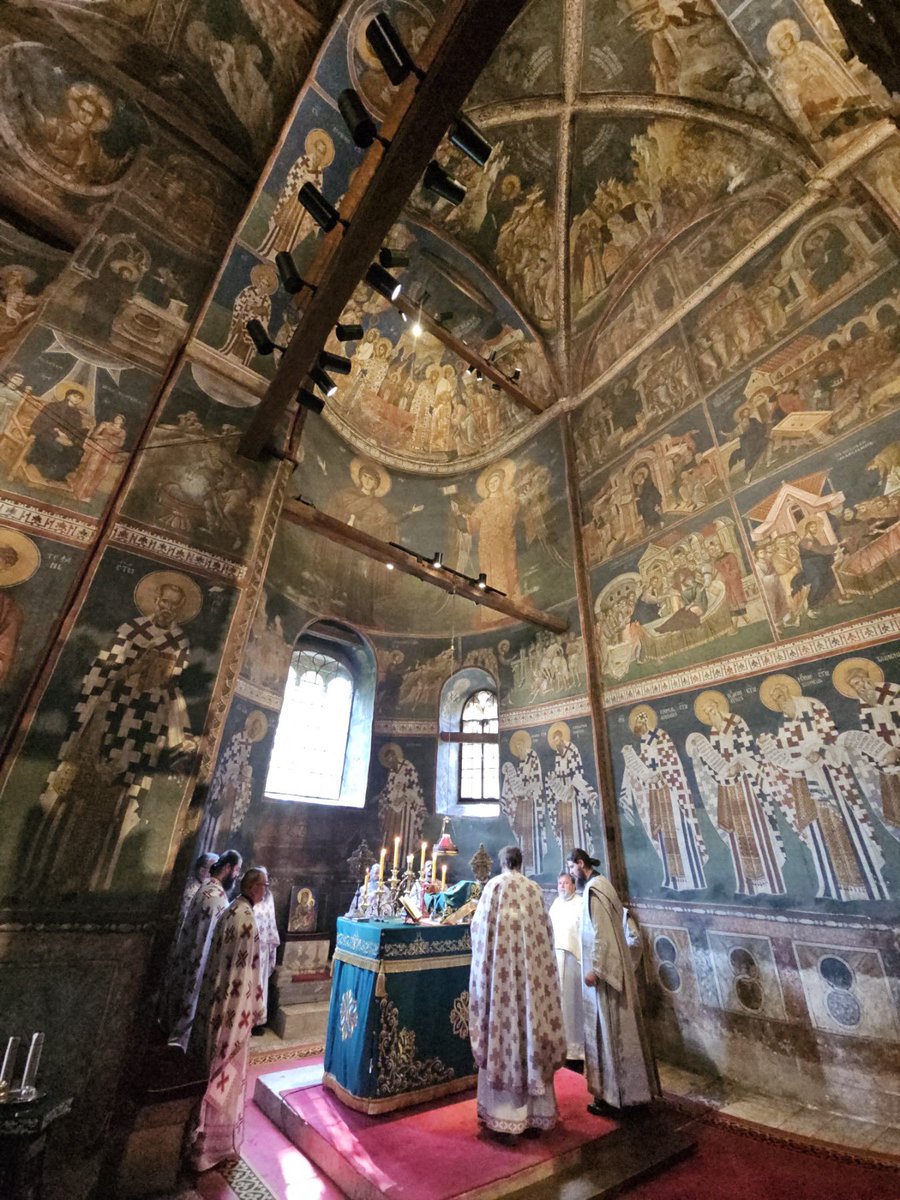
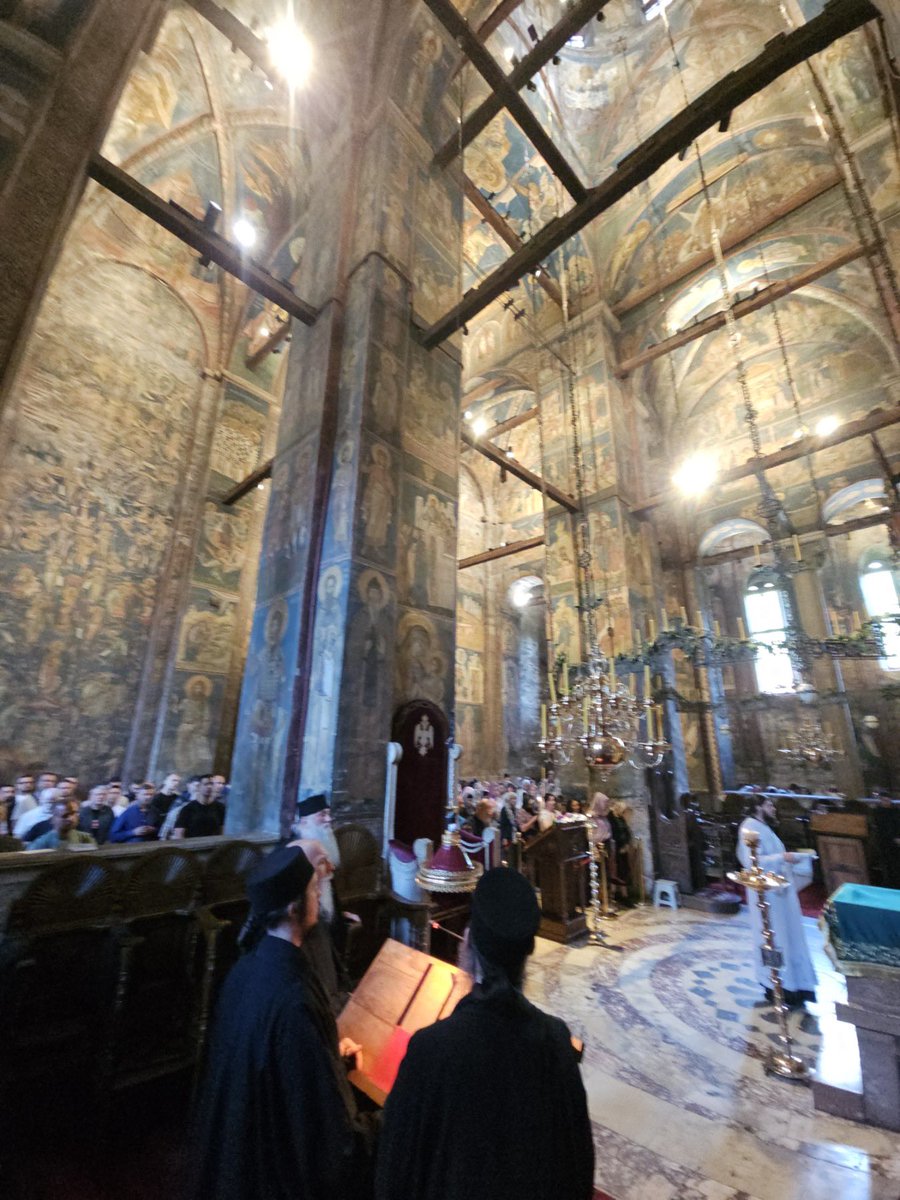
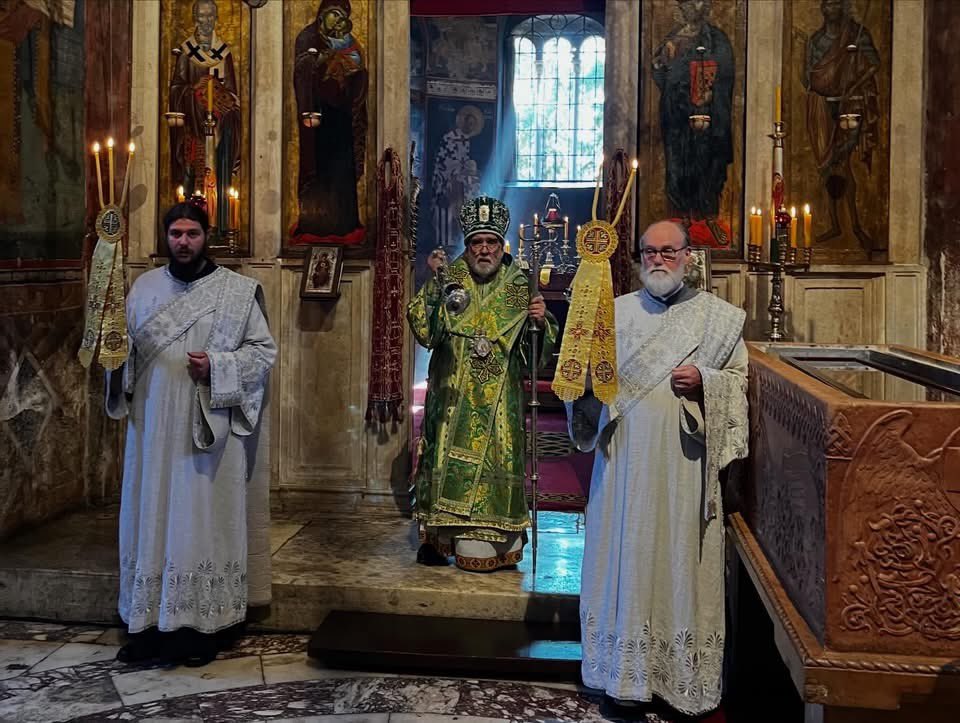
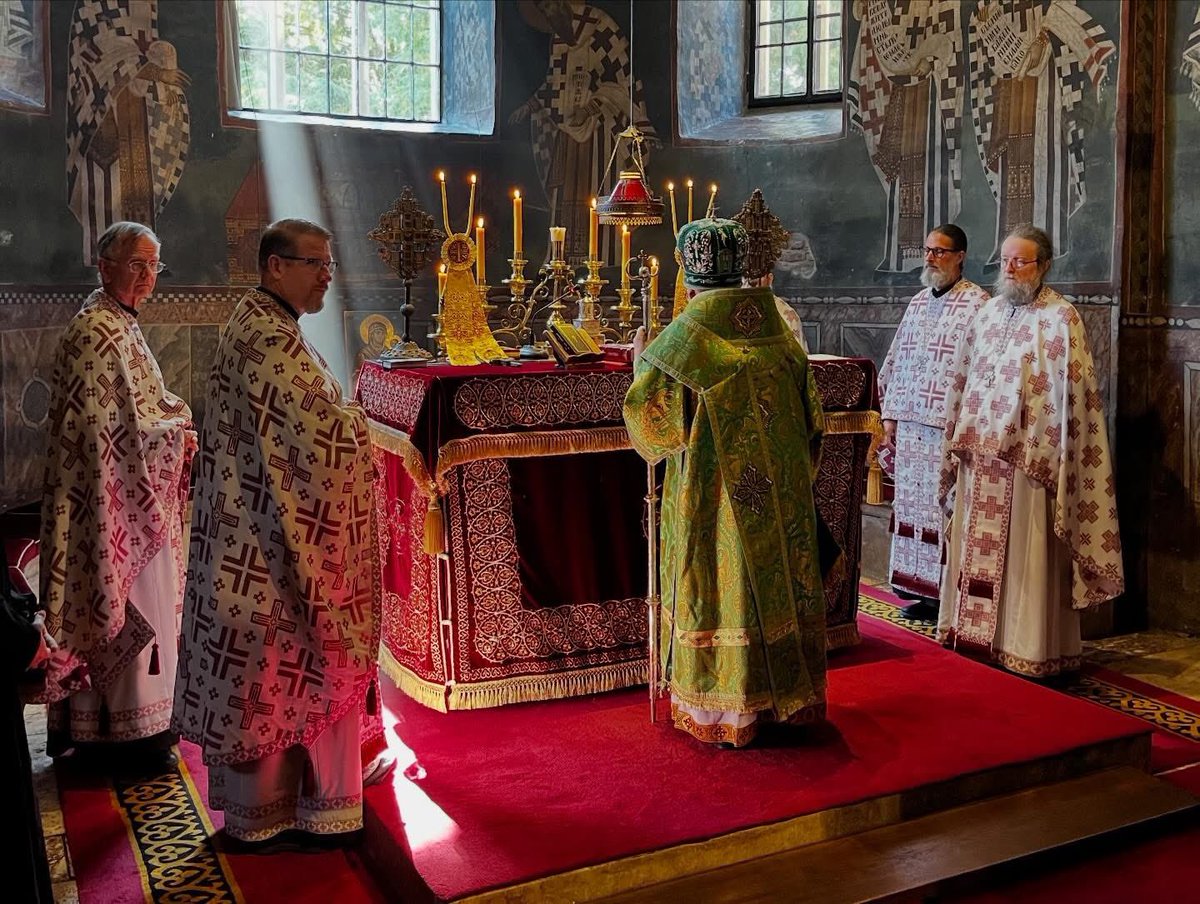
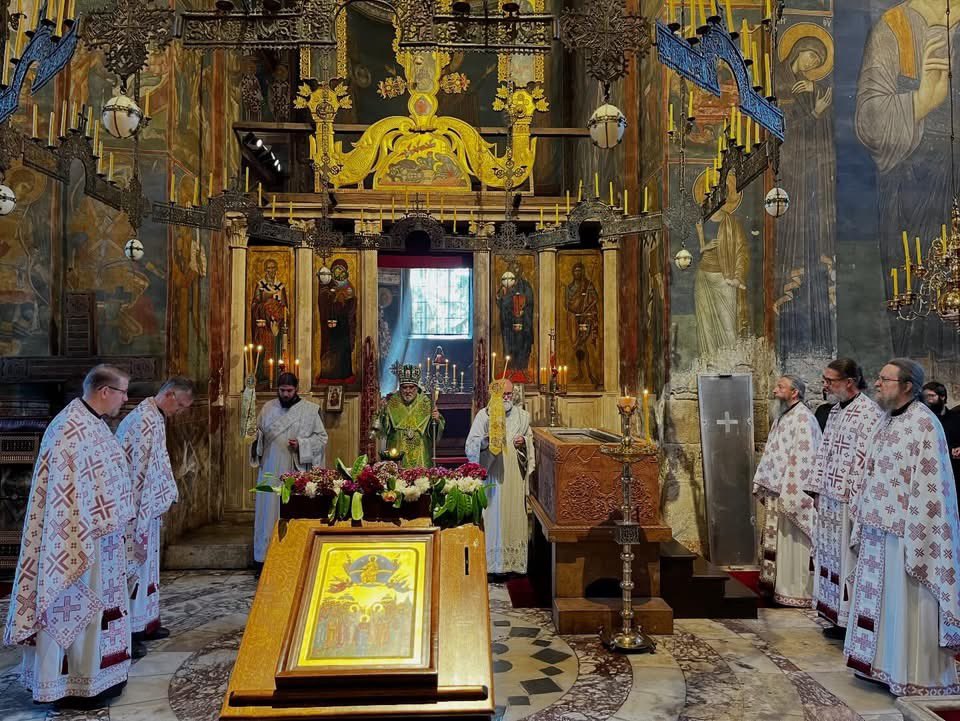
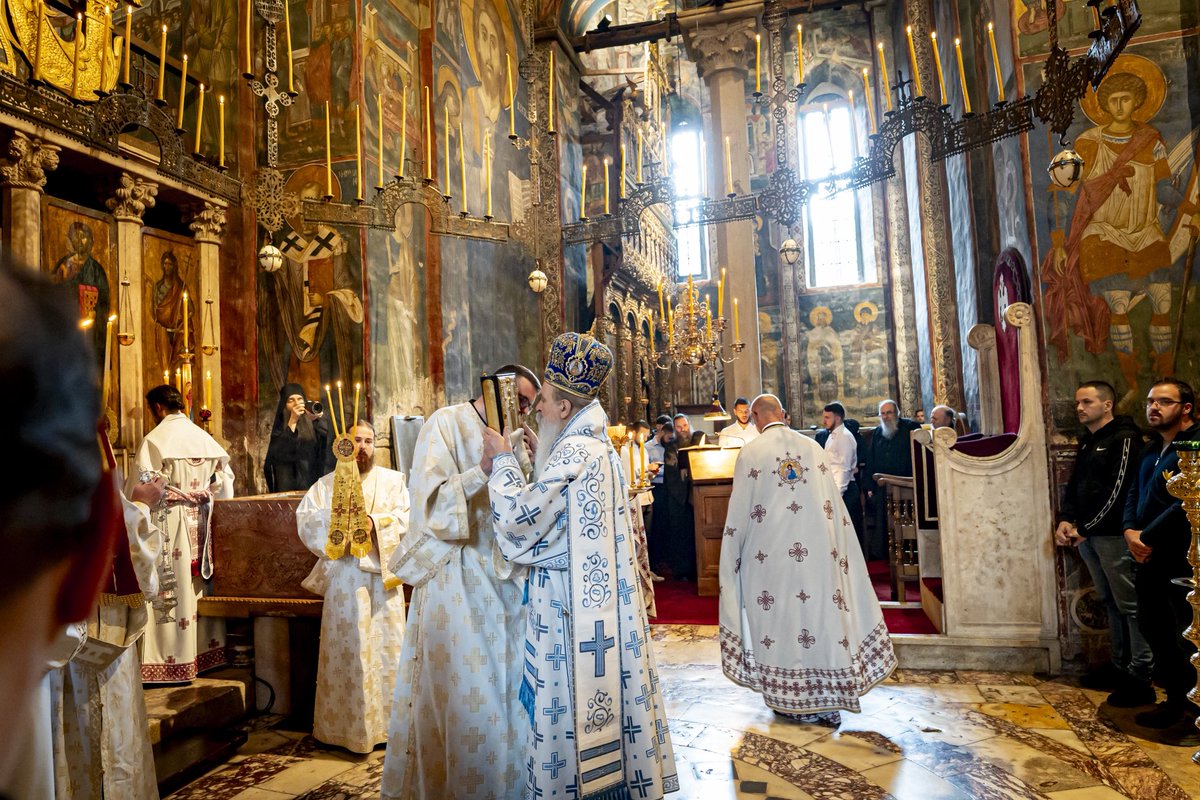
Today we were blessed by the visit of clergy and faithful of the Orthodox Church in America, led by His Eminence Archbishop Michael of New York and New Jersey, who, with the blessing of our Metropolitan Teodosije, celebrated the Divine Liturgy in the church of Visoki Dečani together with his clergy and the monastery brotherhood.
Following in the spiritual footsteps of Saint Nikolaj Velimirović, who once taught at St Tikhon’s Seminary, the present rector of this renowned Orthodox institution, Archbishop Michael, came to Kosovo and Metohija together with its dean, Fr John Parker, Fr Josiah Trenham, and their friends and co-workers.
During their pilgrimage, in addition to Visoki Dečani, they also visited the Patriarchate of Peć and the renowned Gračanica Monastery, bearing witness to the living bonds of faith, prayer and love between Orthodox Christians in America and the Serbian Orthodox Church.
#SerbianOrthodoxChurch #DecaniMonastery #Kosovo
10
63
1,396
Sunday of All Saints at Visoki Dečani Monastery, 7 June 2026
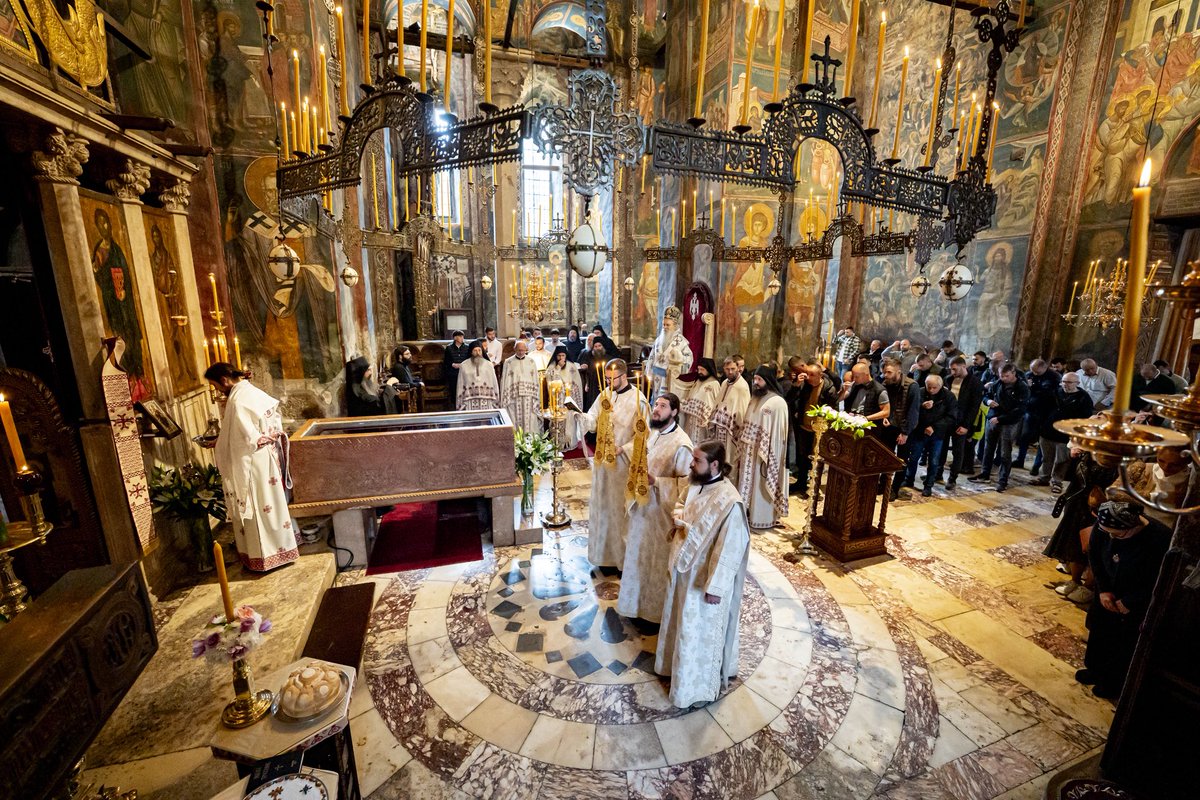
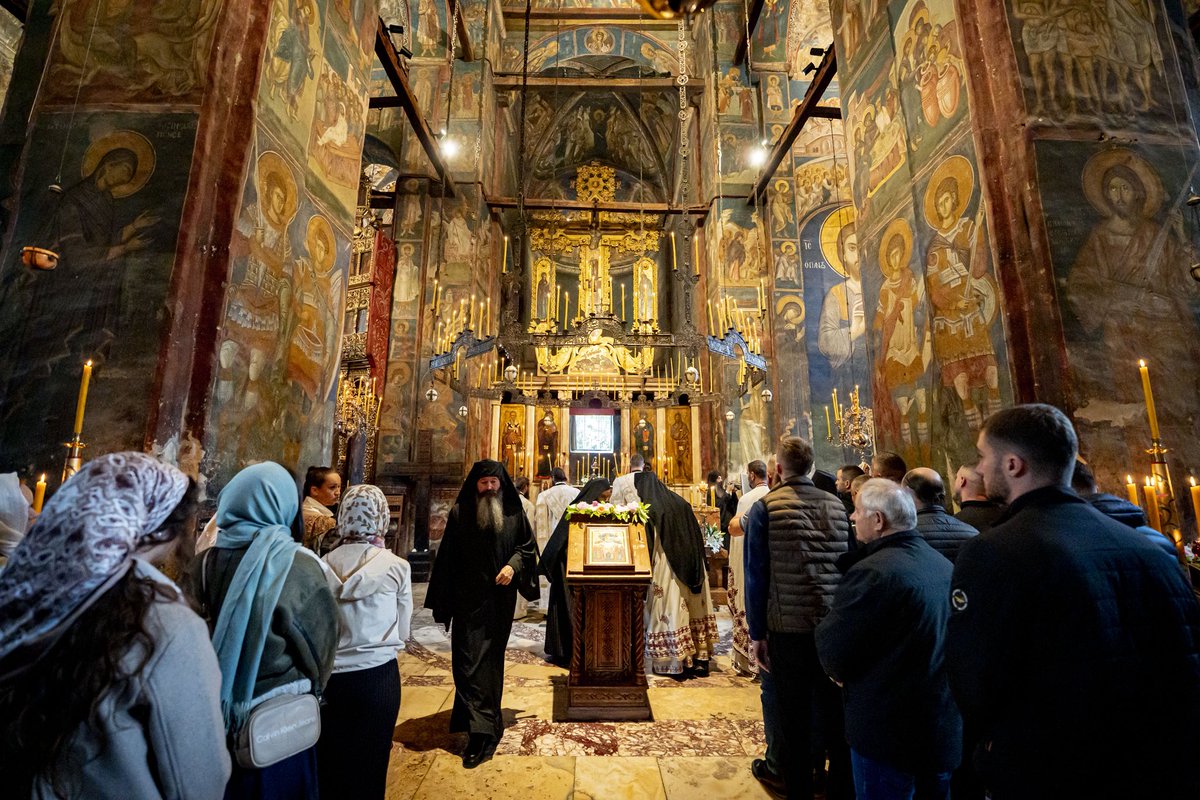
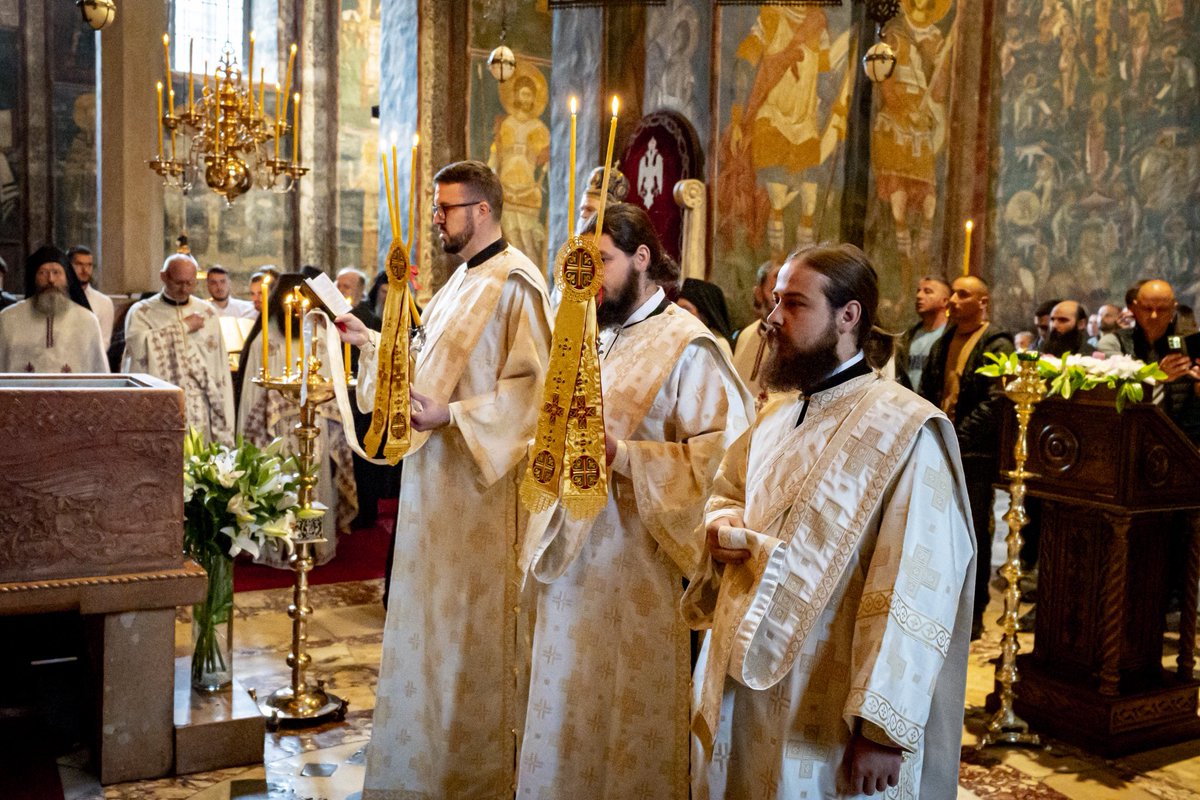
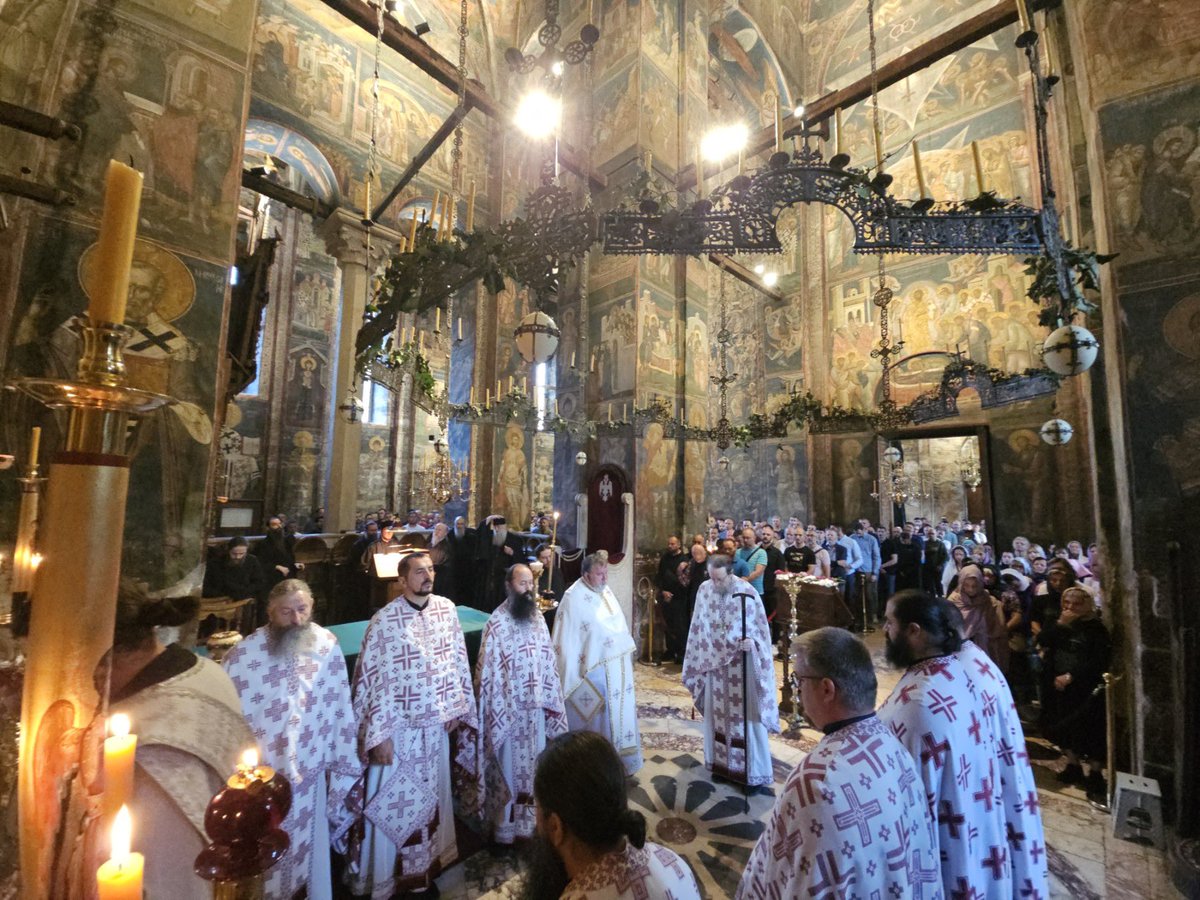
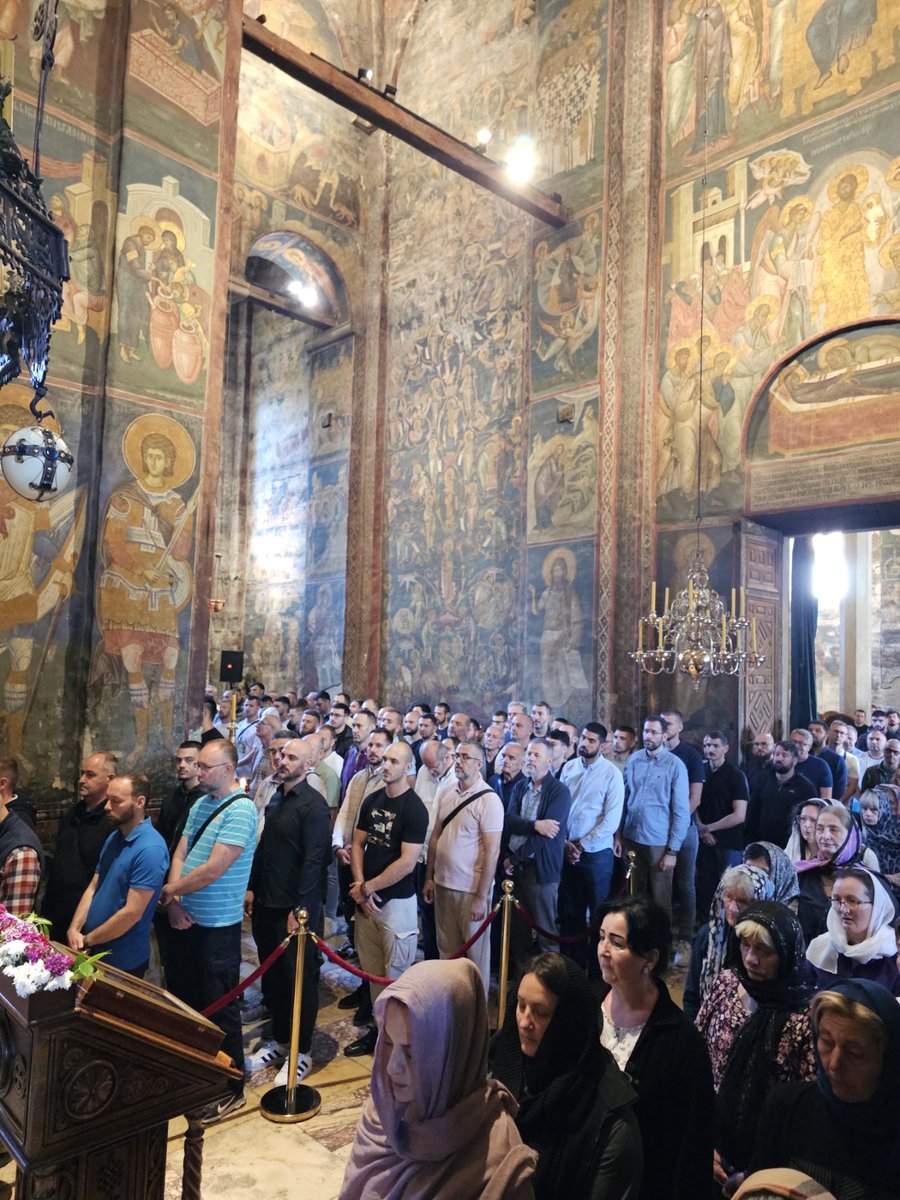
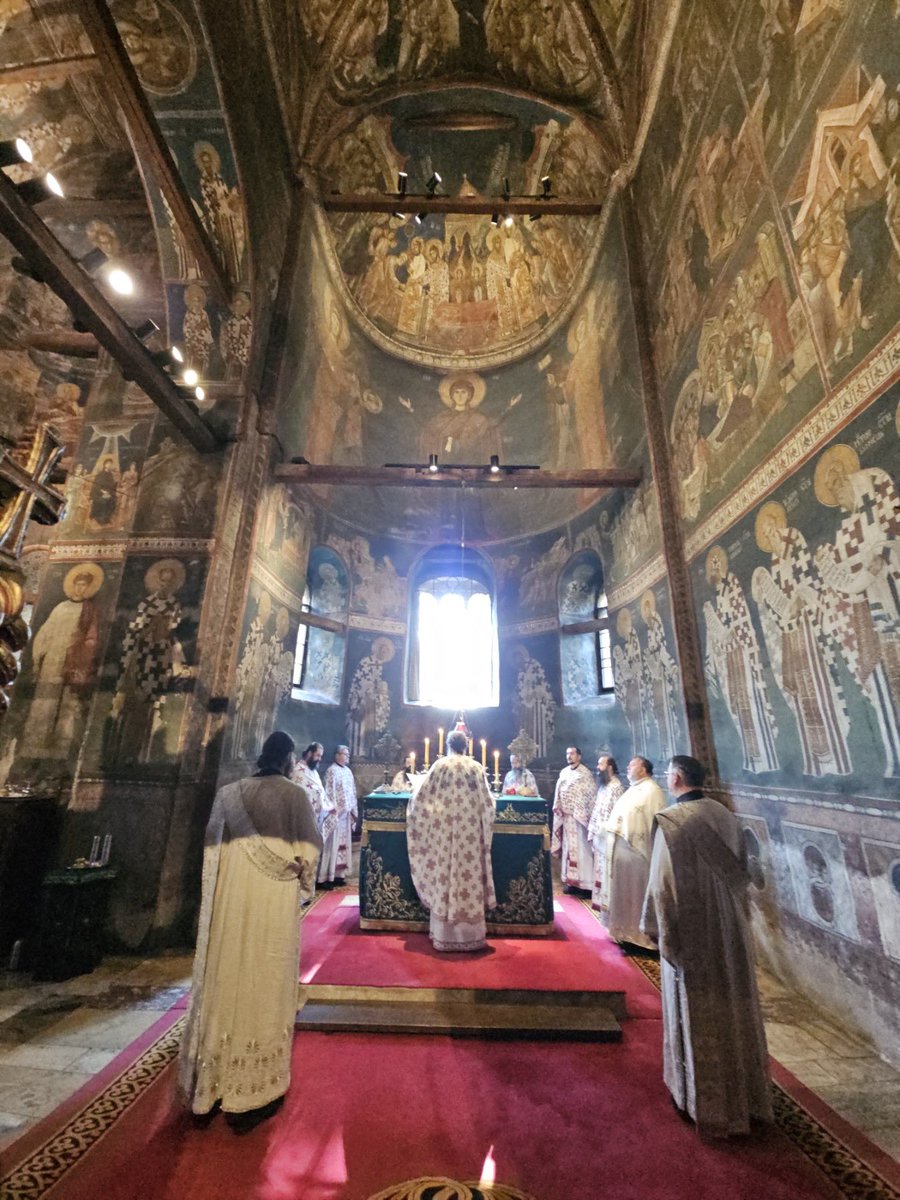
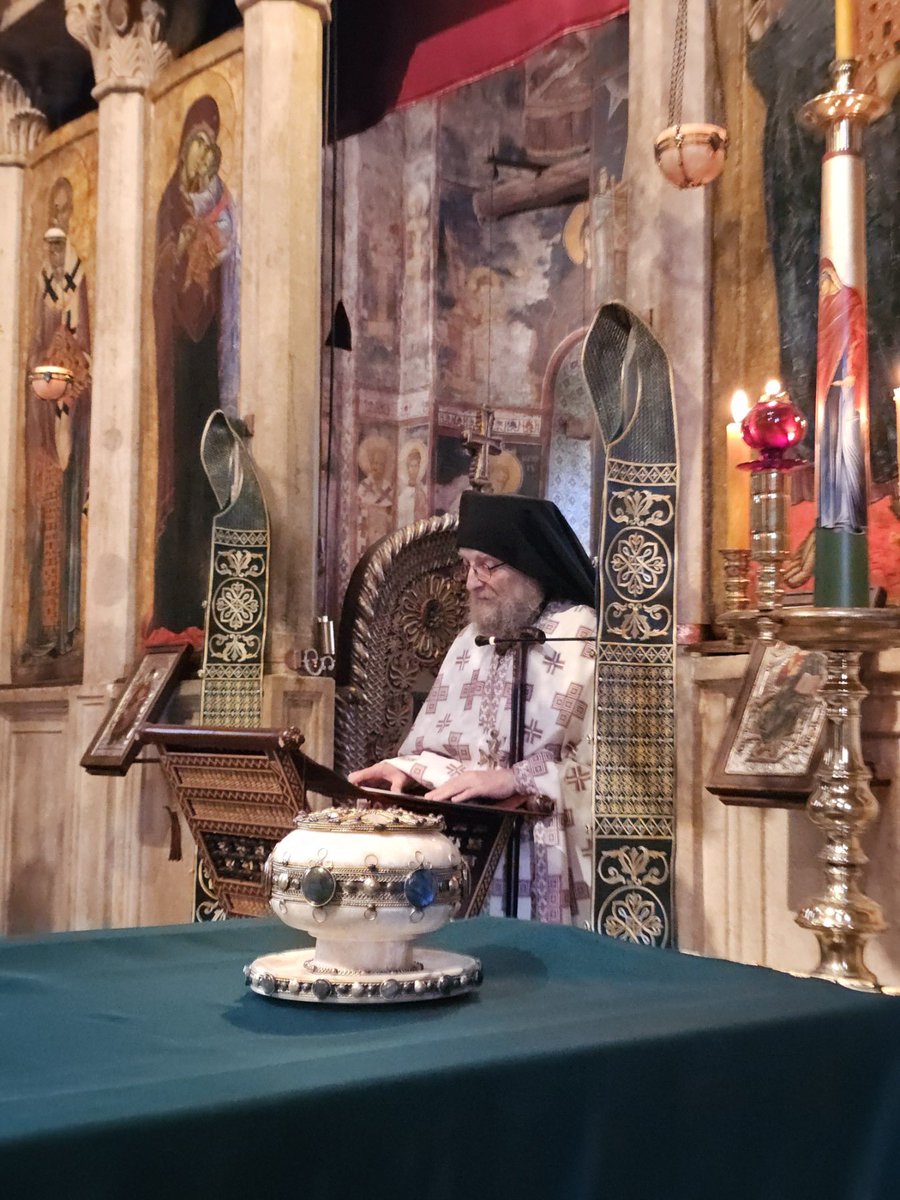
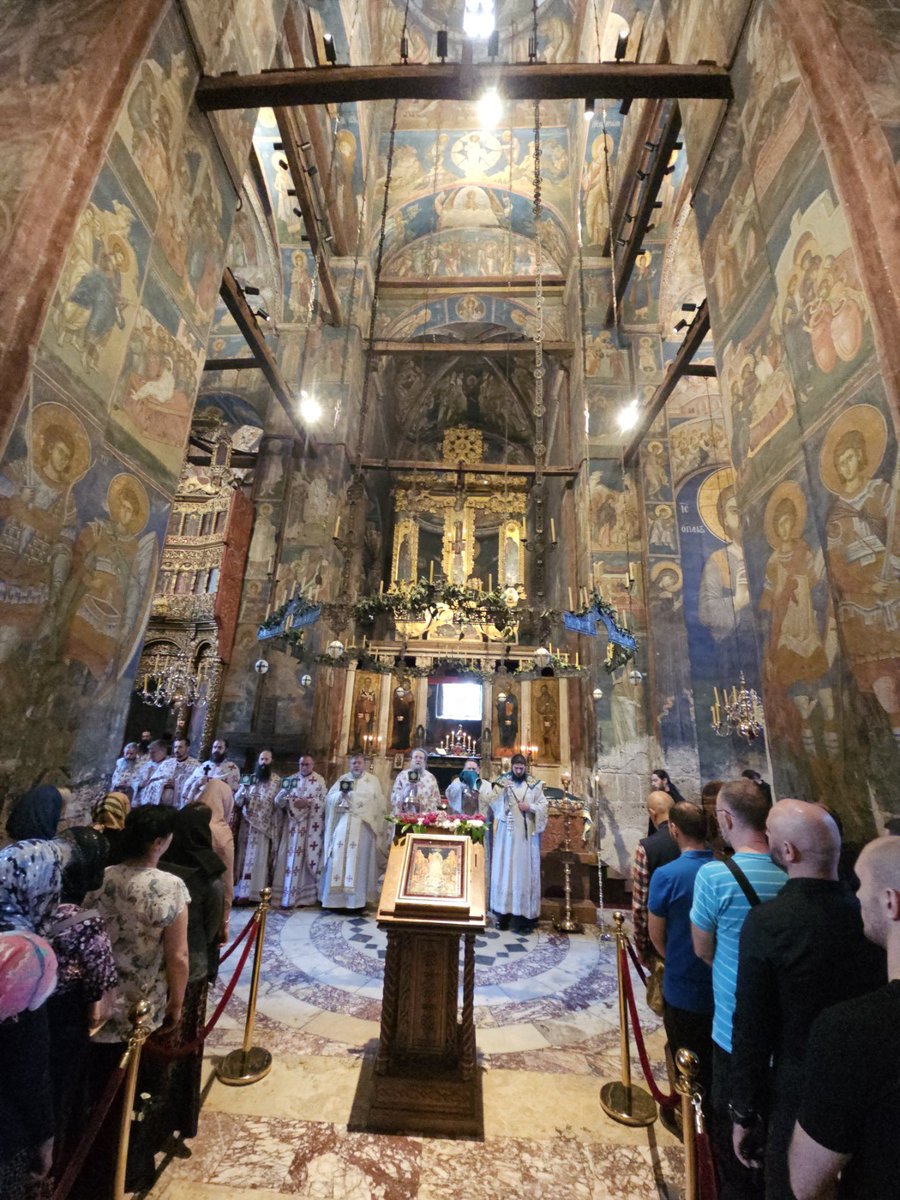
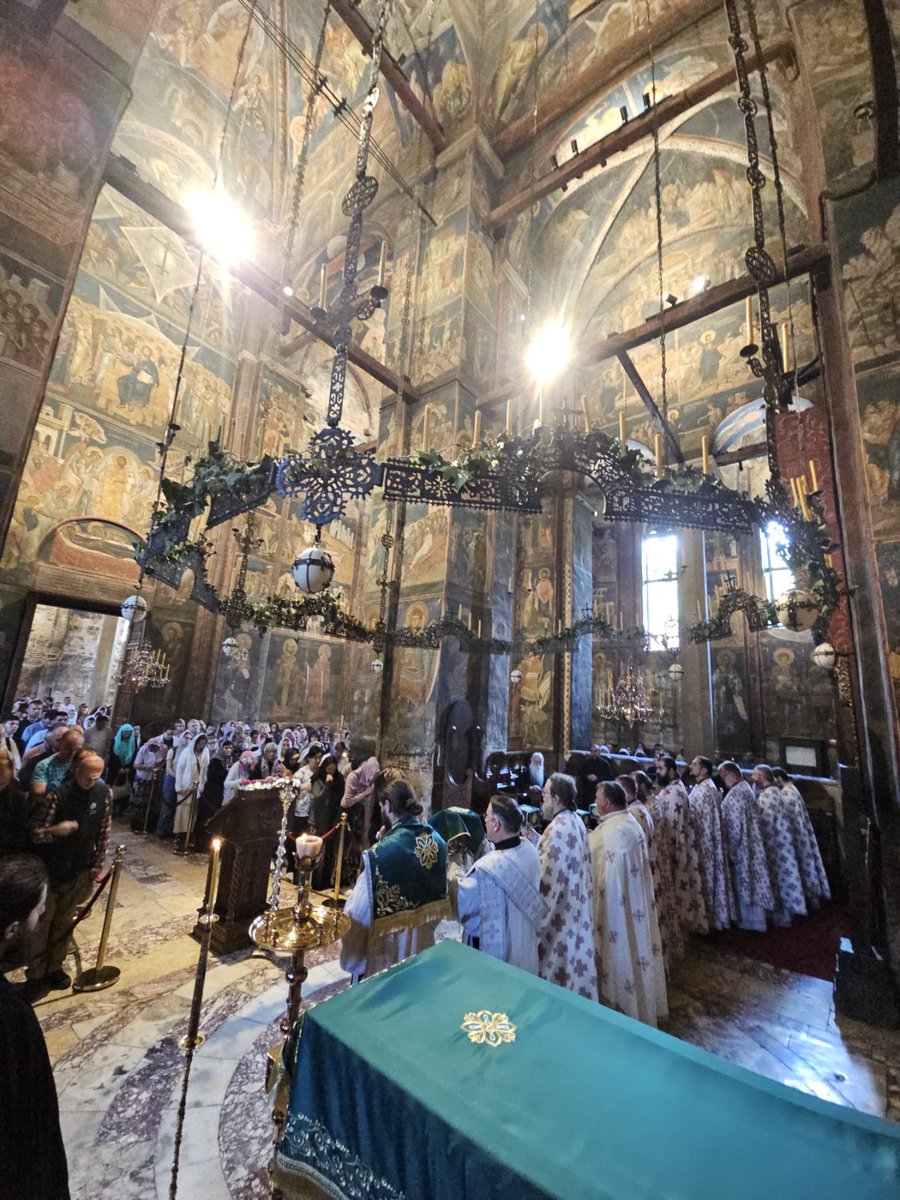
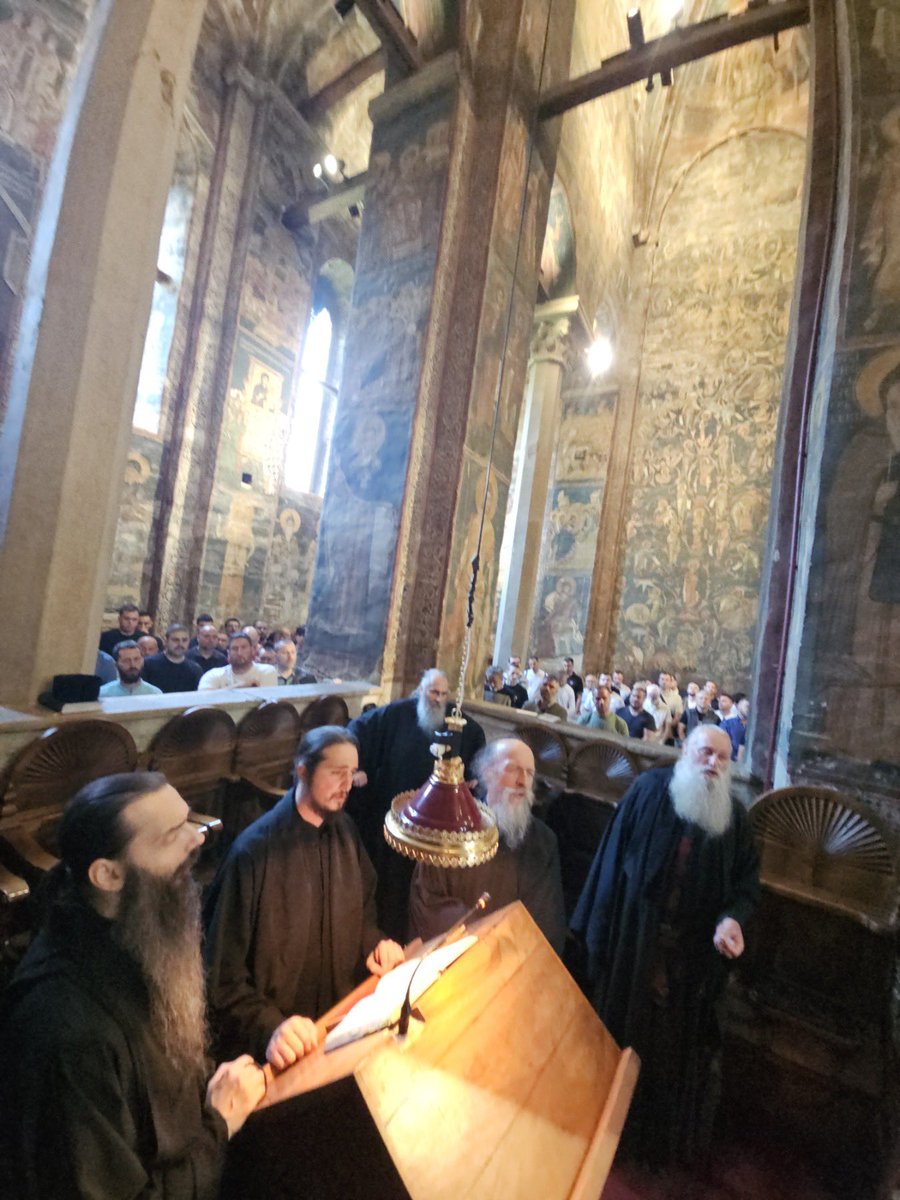
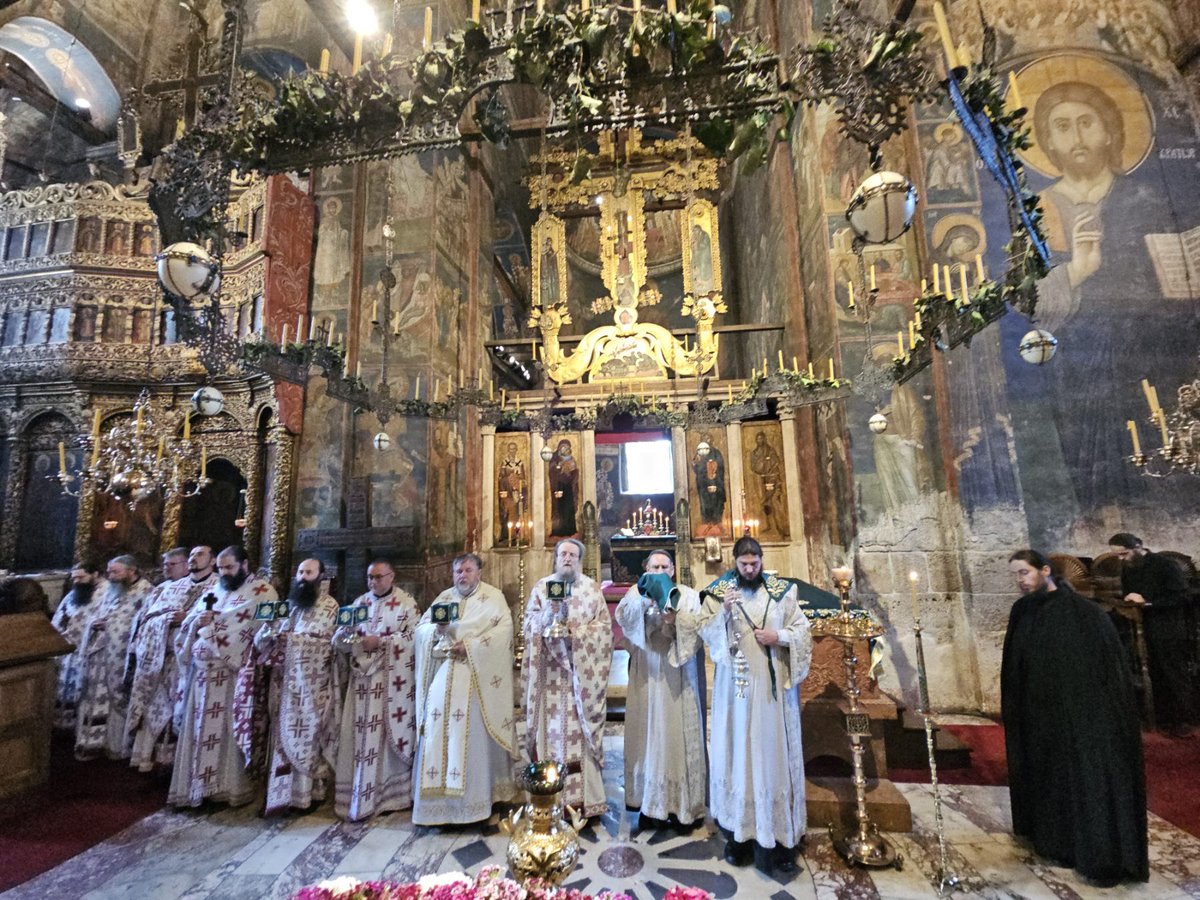
The Sunday of All Saints was solemnly and prayerfully celebrated today, 7 June 2026, at Visoki Dečani Monastery, with twelve clergy concelebrating and with the participation of more than 400 faithful from central Serbia, Republika Srpska, Montenegro, and Kosovo and Metohija. Gathered from many places, we partook of the divine Mysteries and affirmed our unity in Christ the Lord.
Festal Homily
Today, brothers and sisters, on the first Sunday after Pentecost, the Church celebrates the Sunday of All Saints. It is not by chance that this feast comes immediately after the descent of the Holy Spirit. Pentecost reveals to us the gift of the Spirit, while today’s feast reveals the fruit of that gift in human life. Pentecost shows that the Holy Spirit has been given to the Church, and the Sunday of All Saints shows what happens to the human person when the heart is opened to the grace of God, when one ceases to live closed within oneself, and when one allows Christ to come alive within.
For this reason, today’s feast is not a celebration of the extraordinary achievement of certain individuals, but above all a celebration of the victory of grace. It is not the feast of spiritual supermen, but the feast of Christ manifested in those who surrendered themselves to Him completely. The saints are not holy in themselves. God alone is holy in the full and absolute sense. Christ alone is Holy by nature. Therefore, when the Church glorifies the saints, she is in fact glorifying Christ in them. She does not turn her gaze away from the Lord toward man, but recognises in man the work of the Lord.
This is the first truth that we must understand deeply today. Holiness is not something that a person possesses as his own private property. Holiness is not an autonomous achievement. It is participation in the holiness of Christ, just as true life is participation by grace in the life of God. The saints are holy because, through their ascetic struggle, they allowed the One who alone is Holy, Christ the Lord, to be manifested in them. They did not live by themselves, but opened their hearts so that Christ might become the life of their life.
For this reason the Apostle Paul says: “It is no longer I who live, but Christ lives in me.” In these words the whole mystery of holiness is contained. Holiness does not begin when a person constructs around himself an image of spiritual greatness. It does not begin when he becomes someone important in the eyes of others. It does not even begin when he gains some outward spiritual respect. Holiness begins when a person ceases to place himself at the centre of existence. When he empties himself of pride, of self-sufficiency, of the constant need to affirm himself. When he humbles himself, so that Christ may grow within him.
This is why the saints, despite all the great deeds that we see in their lives, were essentially people of profound humility. The martyrs were not superhuman. The confessors were not of some other nature. The ascetics were not beings without weakness. Holy men and women, monks and bishops, kings and the poor, righteous people in the world and hermits in the desert, all of them were human beings like us, sharing the same human nature, with their own struggles, temptations, fears, and weaknesses. Yet the weakness of their human nature was not an excuse for them to remain far from God. On the contrary, precisely in their weakness they sought Christ and opened their hearts to the grace of God.
Here lies the mystery of kenosis, the mystery of inner self-emptying. Christ humbled Himself, and although He is the pre-eternal Son of God, He took the form of a servant, suffered on the Cross, and so the saints followed the same path. They did not seek to become great, but were always aware of their own weakness and helplessness. They did not seek their own glory. ....
👉 continued
1
5
47
983
👉 They did not strive to build themselves up or realise themselves through outward achievements, but to offer themselves to God. Precisely for this reason they became full of grace. They emptied themselves of their old “I”, so that they might be filled with the life of Christ.
Saint Maximus the Confessor teaches us that, after the fall, man began to live contrary to the truth of his own being. Instead of living as a being of communion, thanksgiving, and offering, man lives as a being of possession, fear, and self-assertion. Holiness is precisely the restoration of the authentic mode of existence. A saint is not merely a person who performs good deeds. A saint is a person in whom the very manner of life is transformed according to the image of Christ. This means a person who no longer lives from himself and for himself, but from Christ and in Christ.
It is therefore important to understand correctly the role of grace. Holiness is not magic. It does not come upon a person from outside, without his will and freedom. Yet holiness is also not the product of human effort alone. It is the fruit of synergy, of cooperation, the fruit of the collaboration between free human consent and the divine gift. The saints did not become holy only through their own effort, but neither did they become holy without their own ascetic struggle. They consented to repentance, to humility, to the Cross, to the battle with themselves. And precisely there, grace began to fill them and transform them.
For this reason the Church does not produce saints by her own decision. She does not make them holy. She recognises that the holiness of Christ has been manifested in someone’s life. When the Church glorifies someone as a saint, she is saying: here is a life in which Christ acted so deeply that this person became a visible manifestation of grace. Here is a person in whom the Gospel did not remain only words, but became life. Here is a person in whom Christ truly lived.
Today’s Gospel confirms precisely this. The Lord says: “Whoever confesses Me before men, I will also confess before My Father who is in heaven.” And again: “He who does not take up his cross and follow Me is not worthy of Me.” In these words the Lord reveals to us that holiness is not an ornament of Christian life, but its very essence. The saints were people who placed Christ at the centre. Not as an idea, not as a symbol, but as the living Person for whose sake they were ready to lose everything, only not to lose Him. For this reason the Apostle Paul calls all Christians to holiness and names them saints, each according to his own measure and calling.
But here there also lies a serious warning for all of us. A person can turn faith, ascetic effort, virtue, and even the very desire for holiness into an undertaking of self-glorification. One may wish to be “holy” in order to become someone, to be recognised, to construct a spiritual image of oneself. But then Christ is no longer at the centre, but one’s own “I”, the old man. Therefore it is important to say clearly: the goal of Christian life is not for a person to become someone, but to become Christ’s. It is not to acquire outward holiness, but to allow the holiness of Christ to be manifested within.
This is the essential difference. Christian life is not a struggle for external perfection and self-confirmation, but a path of self-offering. It is not about adorning oneself outwardly with a pious life, but about humbling oneself to such an extent that grace begins to live within. It is not about being seen by others, but about becoming an instrument of the glory of God. The saints are great precisely because they did not wish to be great. They shine precisely because they did not seek to shine, but allowed the light of Christ to shine through them.
Saint Gregory Palamas reminds us that deification is participation in the uncreated energies of God....👉
1
1
19
566
👉This means that holiness is not an outward adornment of the soul, but the real permeation of the whole human person by divine life. Yet this takes place only where a person ceases to be selfishly and self-lovingly closed within himself. Only where one humbles oneself, is purified, repents, forgives, endures, prays, receives Holy Communion, and lives eucharistically, there a different life begins to appear, the life of Christ.
And precisely here lies the great consolation of today’s feast. Most of us will not become desert dwellers, will not endure martyrdom of blood, will not perform great miracles. But each of us can set out on the same path. The path of humility. The path of repentance. The path of quiet renunciation of our pride. The path of forgiveness. The path of bearing our own cross. The path of prayer that is not merely prayer of words, but the complete offering of oneself to God in the stillness and peace of the heart. The path of a life in which a person wishes less and less to impose himself, and more and more desires that Christ should live within him. If we walk this path, even those who do not know Christ may come to know God through us, and therefore we all bear this obligation and responsibility to be witnesses of God’s love. There are many holy people who seem simple and unnoticed, yet they shine with Christ, whom they have truly loved.
The Sunday of All Saints therefore does not speak to us only about the glorious past of the Church and her saints. It reveals to us the truth of our own calling and of the true life given to us by God. Holiness is not something distant and unattainable, reserved only for the exceptional. Holiness is a calling addressed to every baptised person. Not in the same form, not by the same path, but from the same source. We are all called not merely to imitate some saint, but to allow Christ to manifest His holiness in our own life as He wills.
Therefore today we must ask ourselves: do we want to become someone special, or do we want to belong to Christ? Are we seeking spiritual success, or do we want to surrender ourselves to God so that He may be our only success? Are we trying to build some pious image of ourselves, or are we truly repenting, that is, changing our mind and heart? Do we want people to see us as good, or do we desire above all that Christ be manifested in our life? For there begins the true path of holiness.
May all the saints therefore be for us not a cause of discouragement, but a source of hope. They bear witness that the grace of God is real and active, that Christ is always present through the Holy Spirit, and that holiness is possible for all. And holiness is nothing other than a life in which a person has allowed the One who alone is Holy, Christ the Lord, to shine within him.
May our old man, with his old habits and weaknesses, live less and less within us, according to the measure of our humility, repentance, and love, and may Christ live more and more in us, so that through our life too He may be glorified, the One who alone is worthy of glory, the Father in the Son and in the Holy Spirit.
#SerbianOrthodoxChurch #DecaniMonastery #Kosovo

15
424
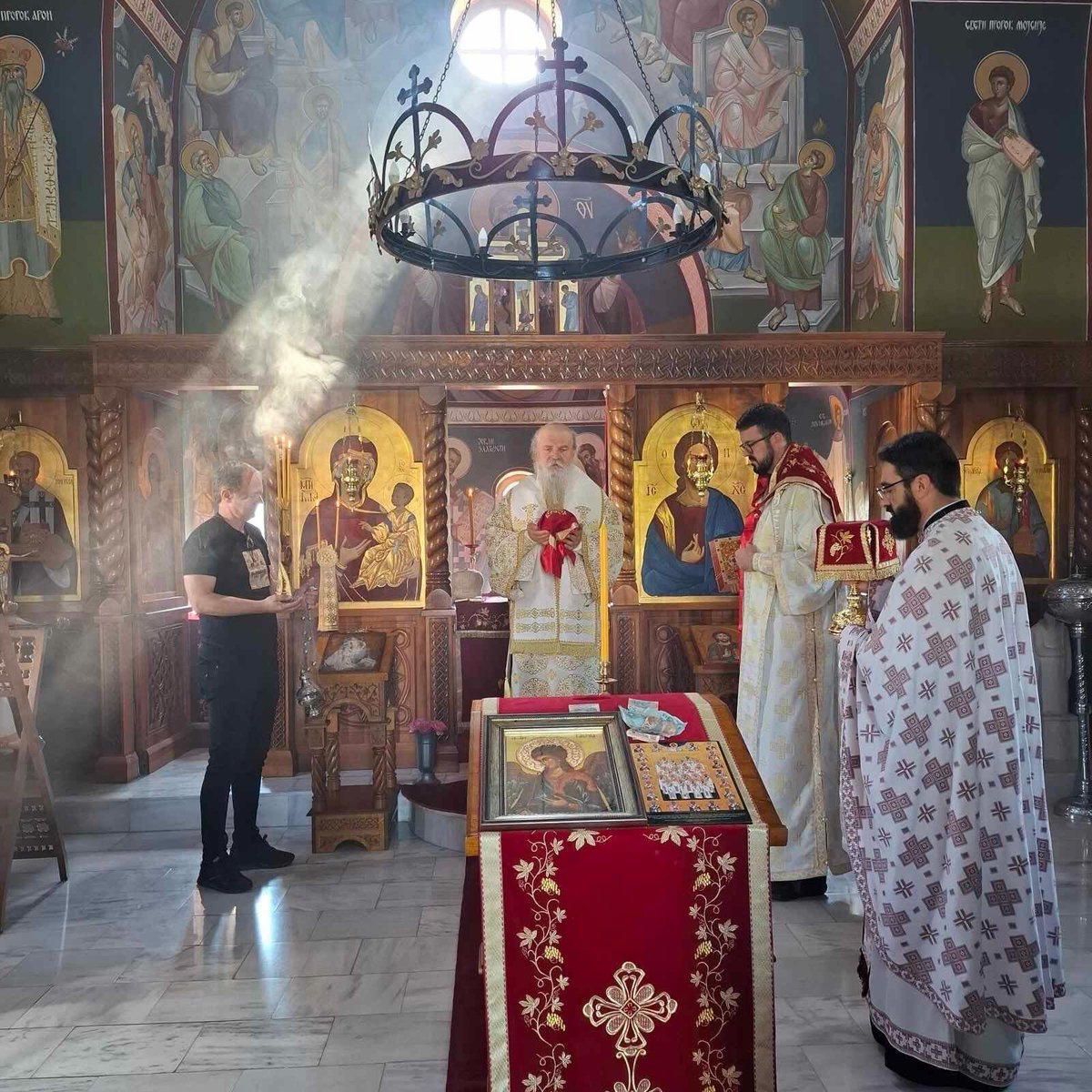
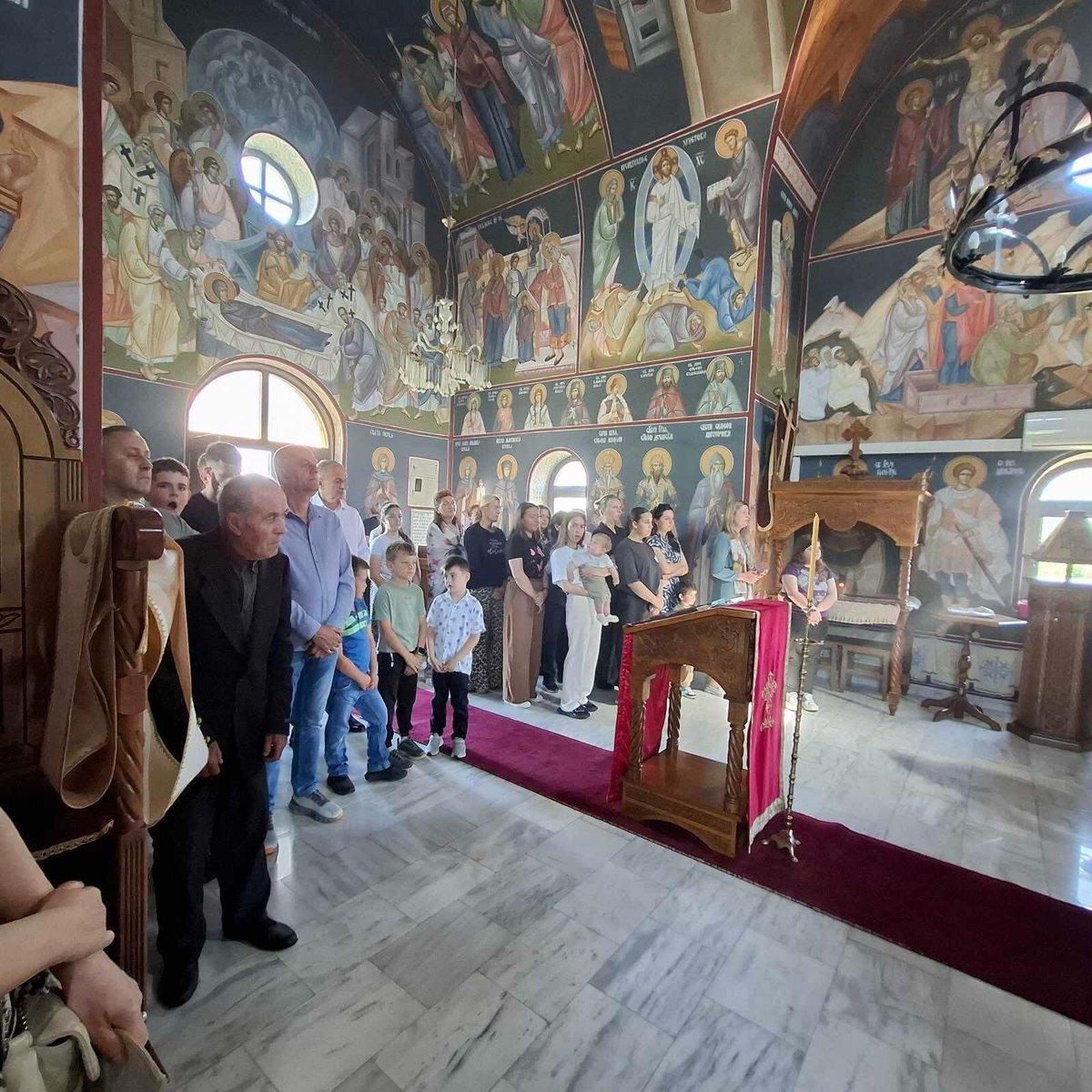
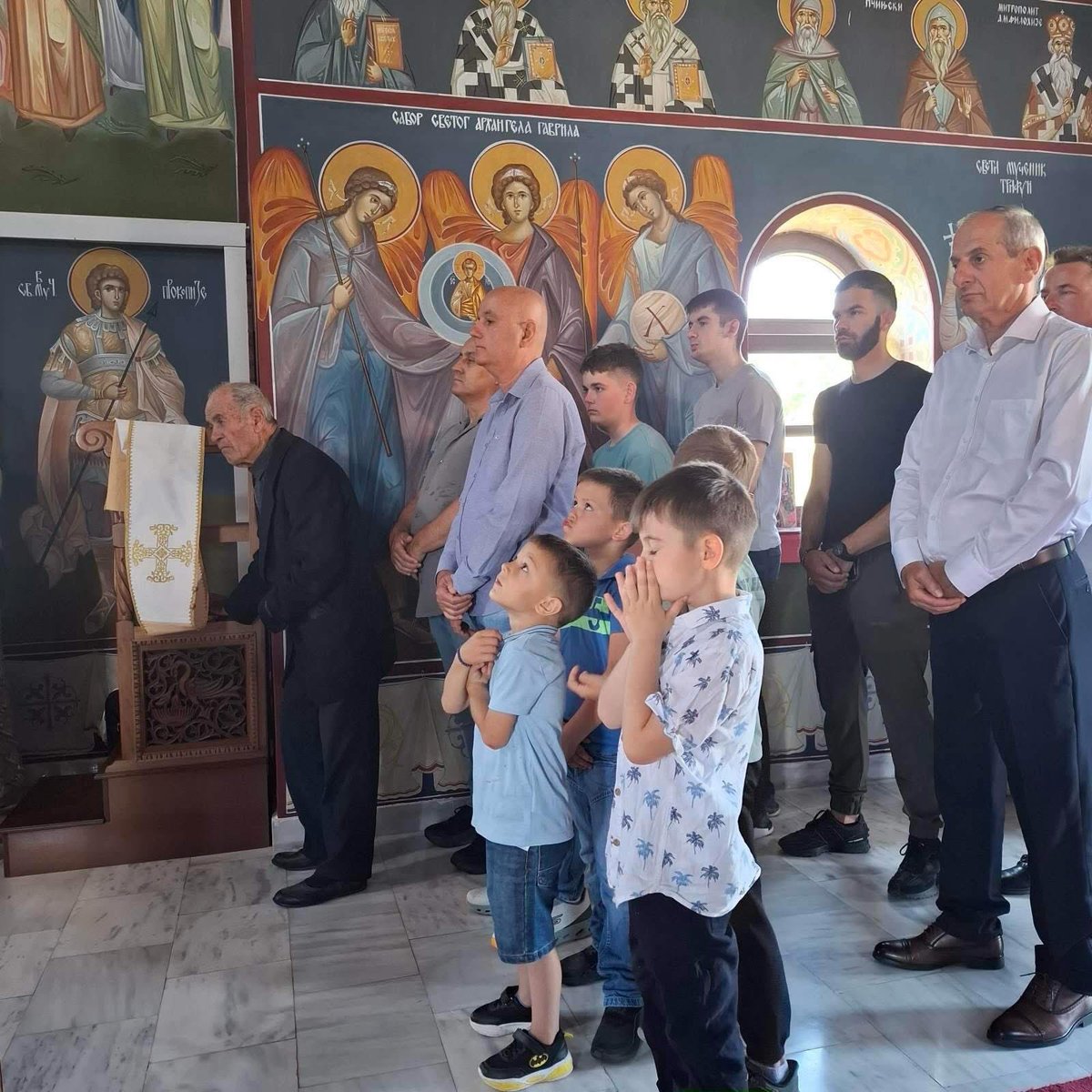
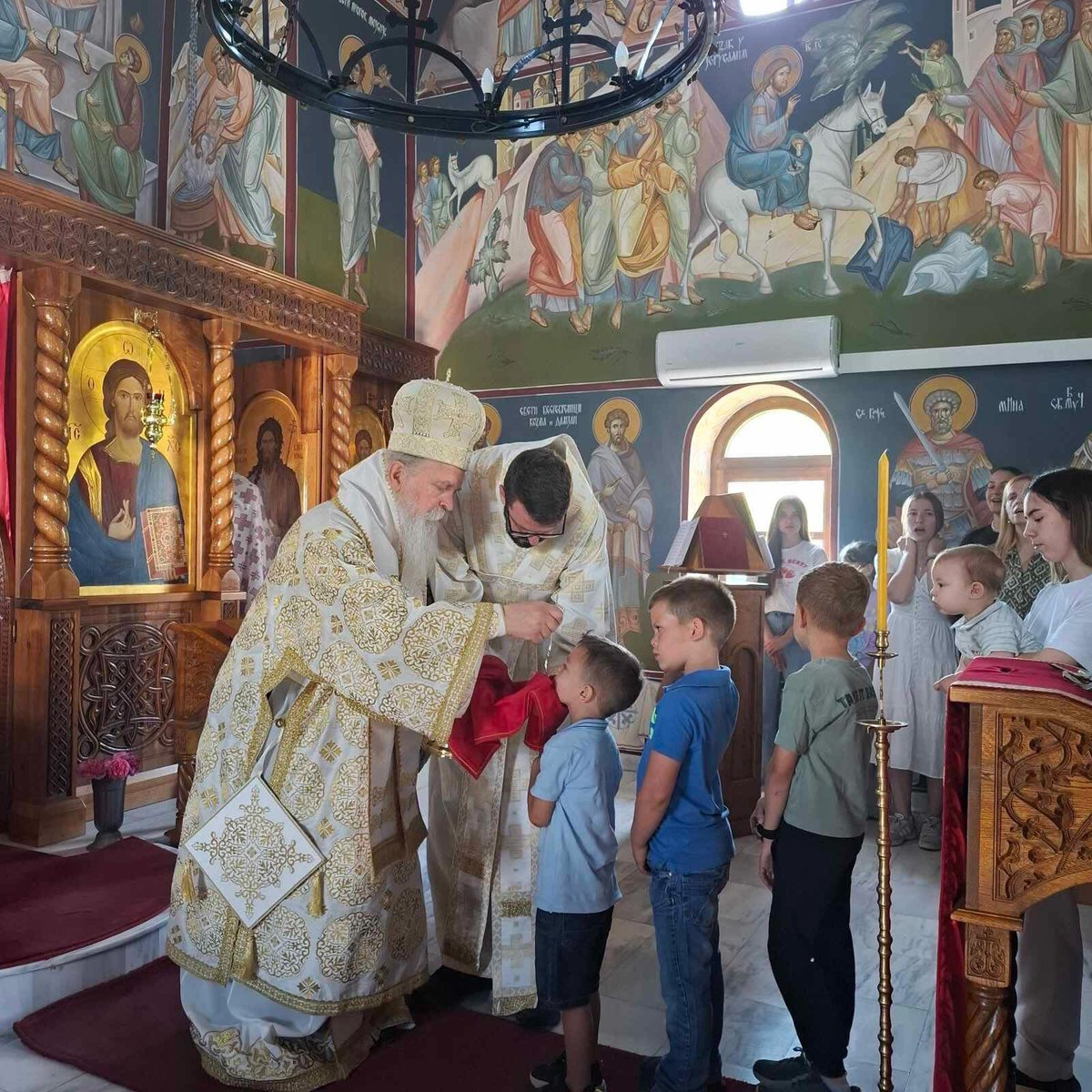
🌿 Today in Osojane, the Divine Liturgy was celebrated by Metropolitan Teodosije of Raška and Prizren, concelebrated by Archpriest Dalibor Kojić and Deacon Bratislav Bogdanović.
In his homily, Metropolitan Teodosije emphasised that the path to God’s blessing is found in living according to the Gospel and keeping God’s commandments.
“God’s commandments are not a burden for man, but the path to true freedom, peace and salvation. When we live with God and strive to fulfil His will, the Lord blesses our homes, our families and our entire people,” Metropolitan Teodosije said.
#SerbianOrthodoxChurch #Kosovo
6
53
999
Dečani Monastery retweeted

Jun 6
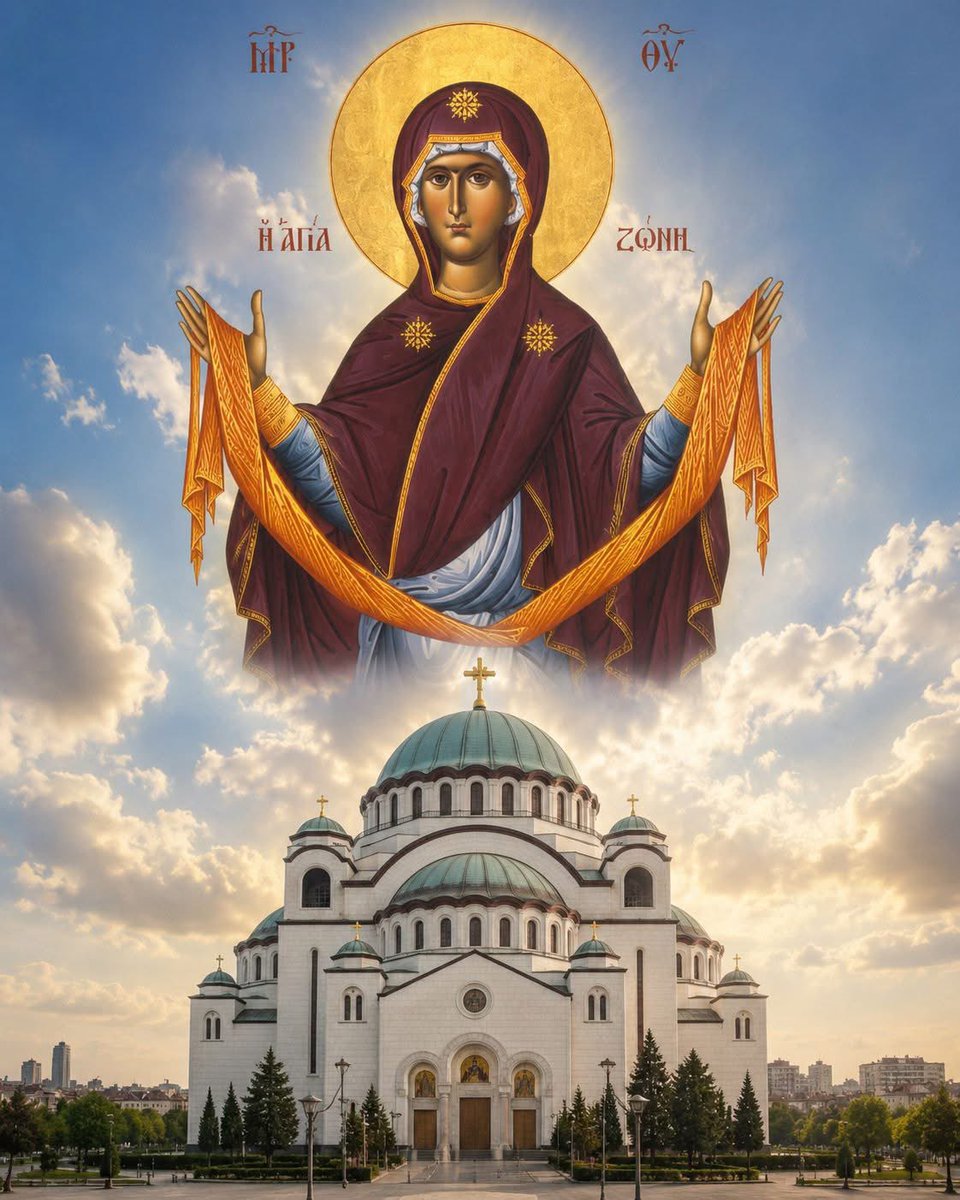
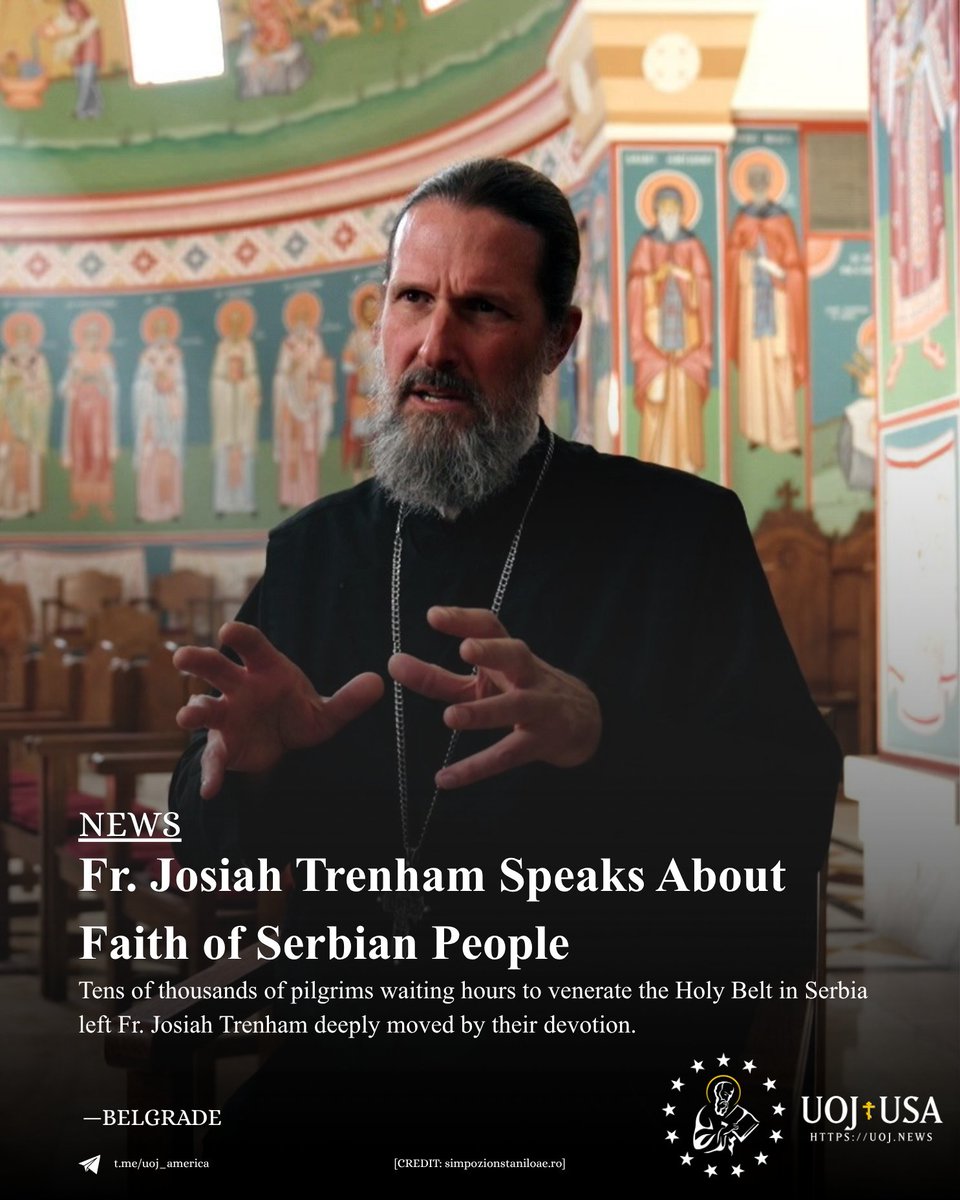
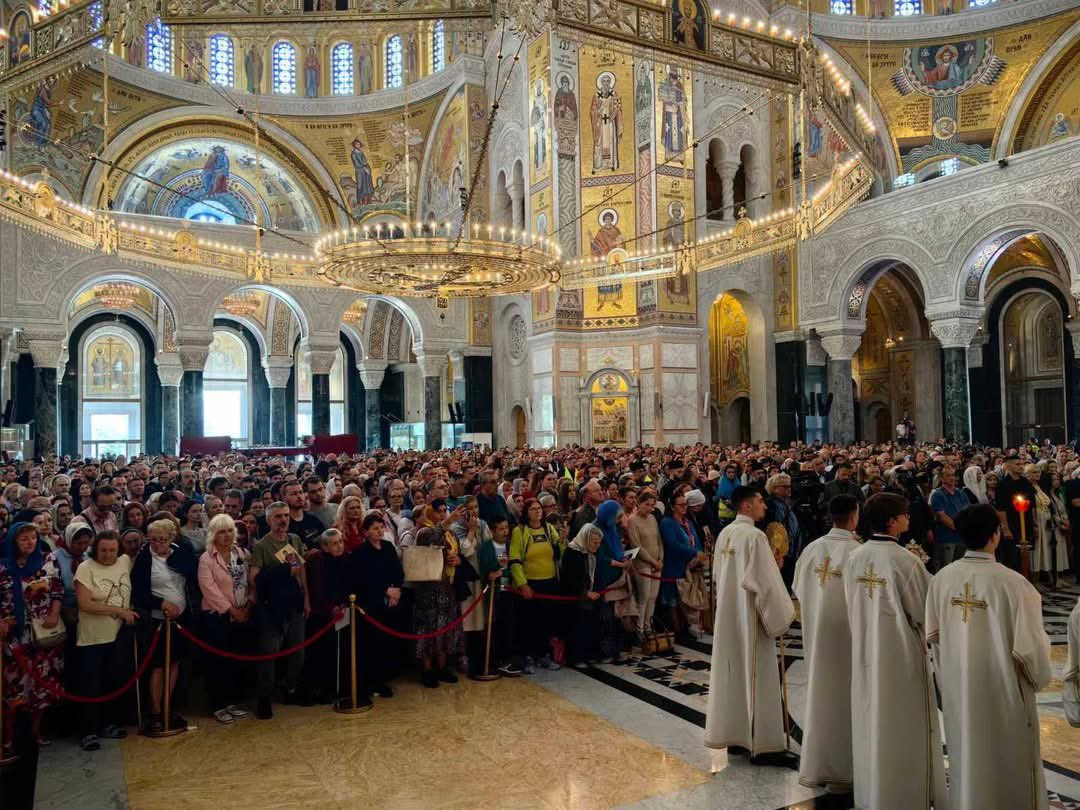
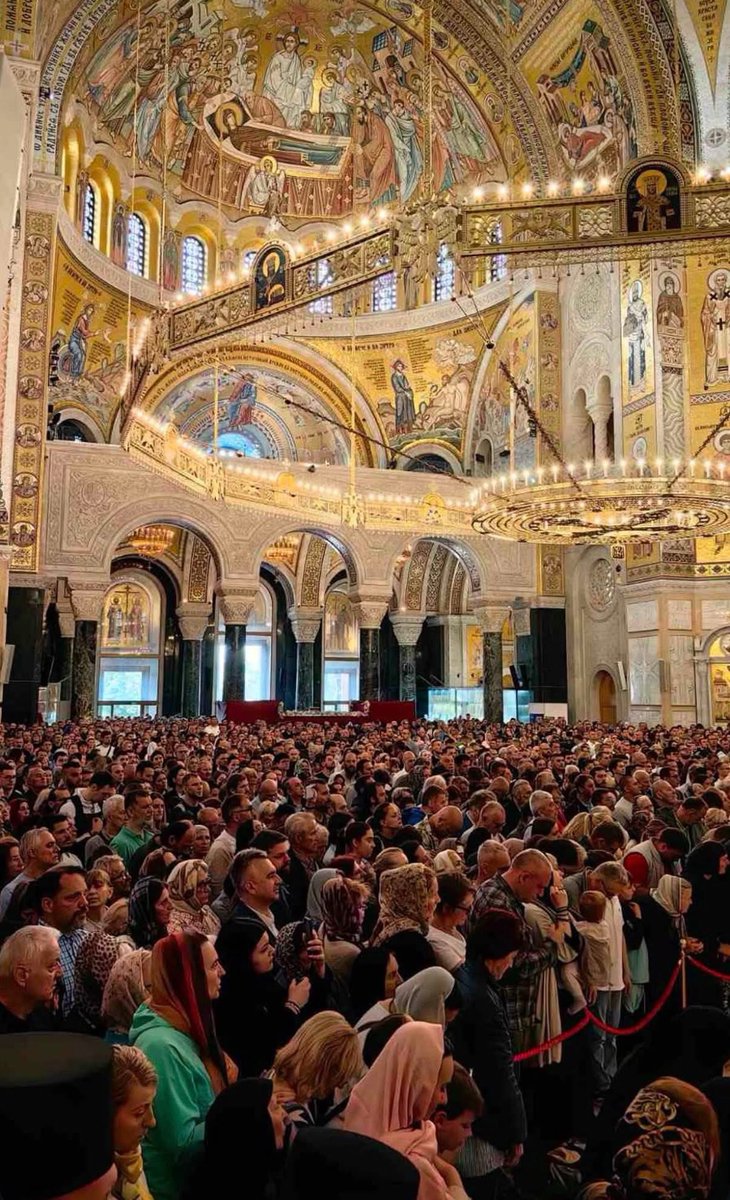
BELGRADE — As reported by UOJ-Serbia, Fr. Josiah Trenham (@PatristicNectar), widely known for his Patristic Nectar YouTube channel, said he was deeply moved by the remarkable devotion on display in Belgrade, where vast crowds of faithful have spent hours waiting to venerate the Belt of the Most Holy Theotokos at the Cathedral of St. Sava.
4
18
174
2,824
The Holy Belt of the Theotokos in Belgrade: A Historic Witness of Faith
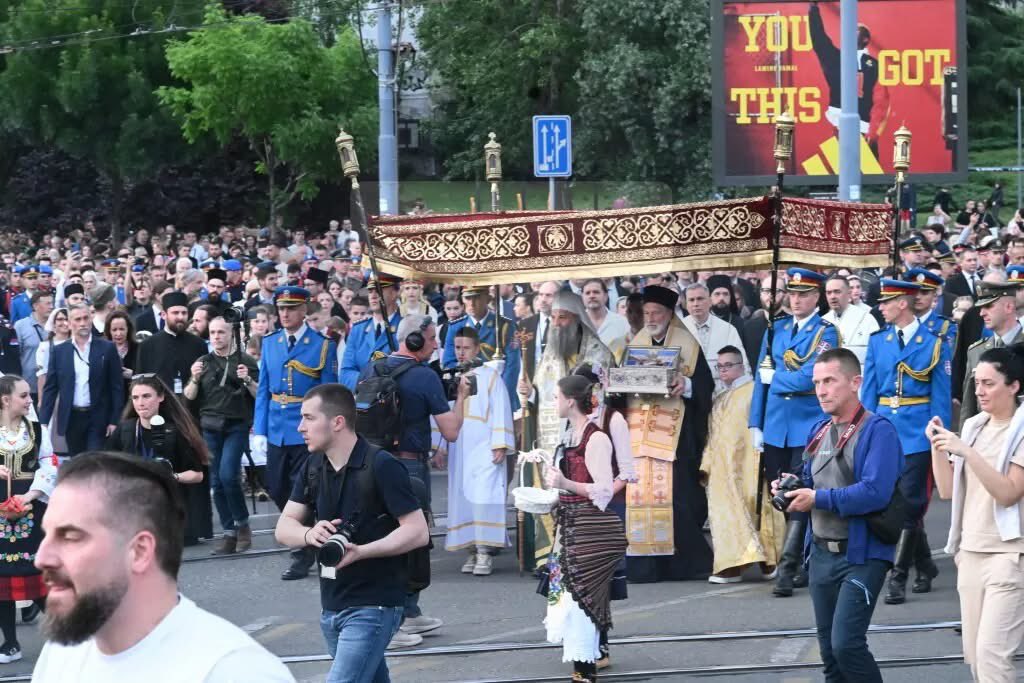
From 20 May to 6 June 2026, Belgrade became the centre of one of the most remarkable Orthodox Christian pilgrimages in recent Serbian history. The Holy Belt of the Most Holy Theotokos, brought from the sacred Monastery of Vatopedi on Mount Athos, was received in the Serbian capital for the Feast of the Ascension of the Lord, Spasovdan, the patron feast of Belgrade.
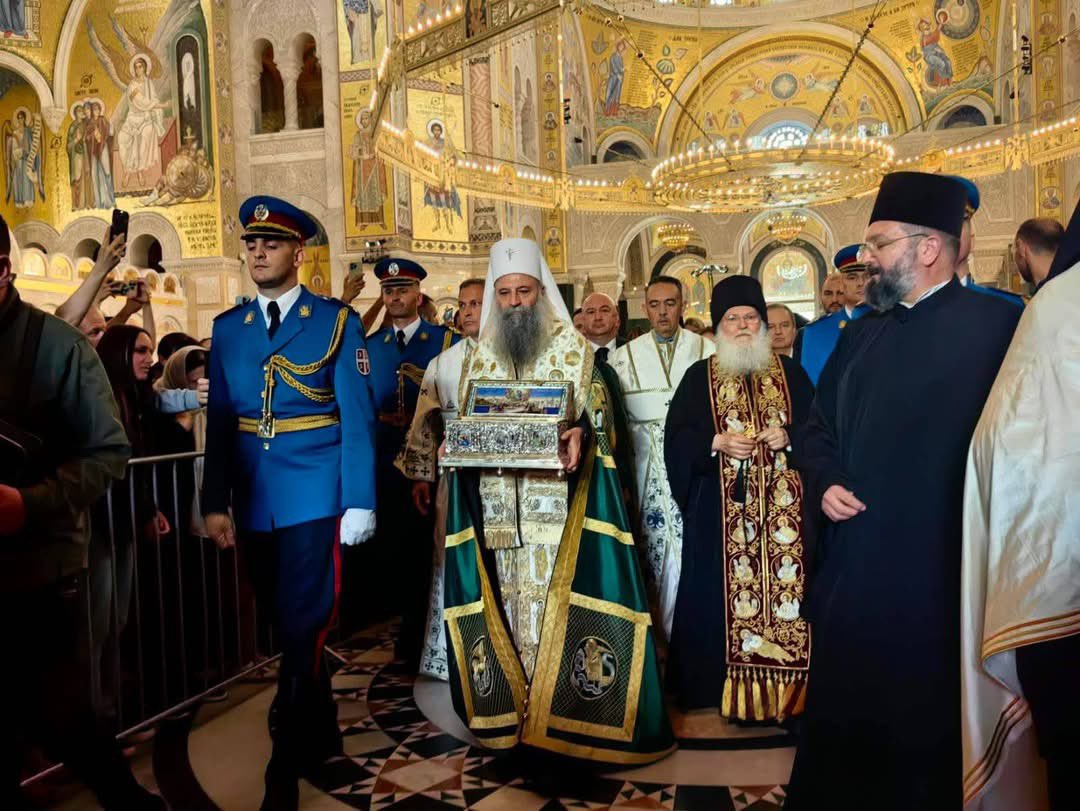
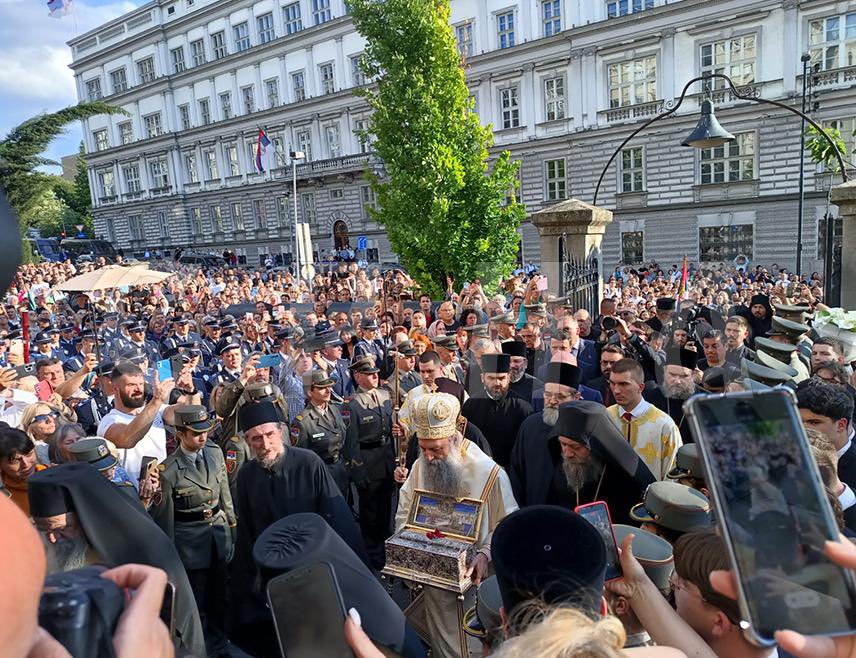
The relic was first received at the Church of the Ascension and then carried in the traditional Spasovdan procession, before being placed for veneration in the Cathedral of Saint Sava in Belgrade. What followed was a profound and moving expression of living faith. Day after day, and throughout the night, hundreds of thousands of people came in prayer to venerate the Holy Belt. Because of the extraordinary number of faithful, its stay in Belgrade was extended more than once, with the blessing of the brotherhood of Vatopedi Monastery. By the time of its departure, the Serbian Orthodox Church reported that more than 1.1 million faithful had venerated the holy relic.
The Holy Belt of the Most Holy Theotokos is among the most revered relics of the Orthodox Christian world. According to the tradition of the Church, the Mother of God wove it herself from camel hair and, after her Dormition, entrusted it to the Apostle Thomas. It is regarded as the only relic preserved from her earthly life. Through the centuries, the Holy Belt was connected with Jerusalem, Constantinople, and later Mount Athos, where it has been preserved at Vatopedi Monastery as one of its greatest spiritual treasures.
Serbian tradition also connects this holy relic with Saint Prince Lazar, who is remembered as having given the Holy Belt, together with a portion of the True Cross as gifts, to Vatopedi Monastery in 14th century. For this reason, its arrival in Belgrade was experienced by many not only as a rare visit of a great Athonite shrine, but also as a deeply symbolic return of a sacred treasure connected with the spiritual memory of the Serbian people.
In the Orthodox tradition, the Holy Belt is especially associated with prayers for healing, consolation, protection of families, the blessing of children and help for couples longing for offspring. Those who venerated the relic in Belgrade also received small blessed ribbons, prepared in the Athonite tradition as a sign of prayerful blessing and remembrance of the Mother of God’s intercession.
On Saturday, 6 June 2026, the Holy Belt was solemnly displayed once again in the Church of Saint Sava. After the Divine Liturgy and the prayerful farewell, the relic was carried out with great reverence and sent back to Vatopedi Monastery on Mount Athos. The departure was marked by deep emotion, gratitude and prayer.
Yet the significance of these days cannot be measured only by numbers, however extraordinary they may be. More than one million people came not as spectators, but as pilgrims. They came with illness, grief, hope, repentance, thanksgiving and prayer. They came to stand before a sign of the maternal protection of the Most Holy Theotokos and to experience, even for a moment, that the Church is not a memory of the past, but a living communion of faith, love and grace.
The Holy Belt has returned to Mount Athos, but the blessing of these days remains with the faithful who gathered in Belgrade, and with all who turned to the Mother of God in prayer.
Most Holy Theotokos, save us.
#SerbianOrthodoxChurch #Belgrade #Serbia
19
159
2,665
Dečani Monastery retweeted

#Serbia Serbian Patriarch Porfirije was in tears during today’s Divine Liturgy, following which the Holy Belt of the Most Holy Theotokos departed from the Church of St. Sava in Belgrade and is returning to the Vatopedi Monastery.
x.com/Sevastokrator3/status/…
x.com/NationalIndNews/status…

#Serbia Over a million believers visited the Church of St. Sava in Belgrade since May 20 to venerate the Holy Belt of the Most Holy Theotokos, the Serbian Orthodox Church said.
The relic now returns to the Vatopedi Monastery.
x.com/SerbiaBased/status/206…
x.com/NationalIndNews/status…
7
29
259
9,435
May 31
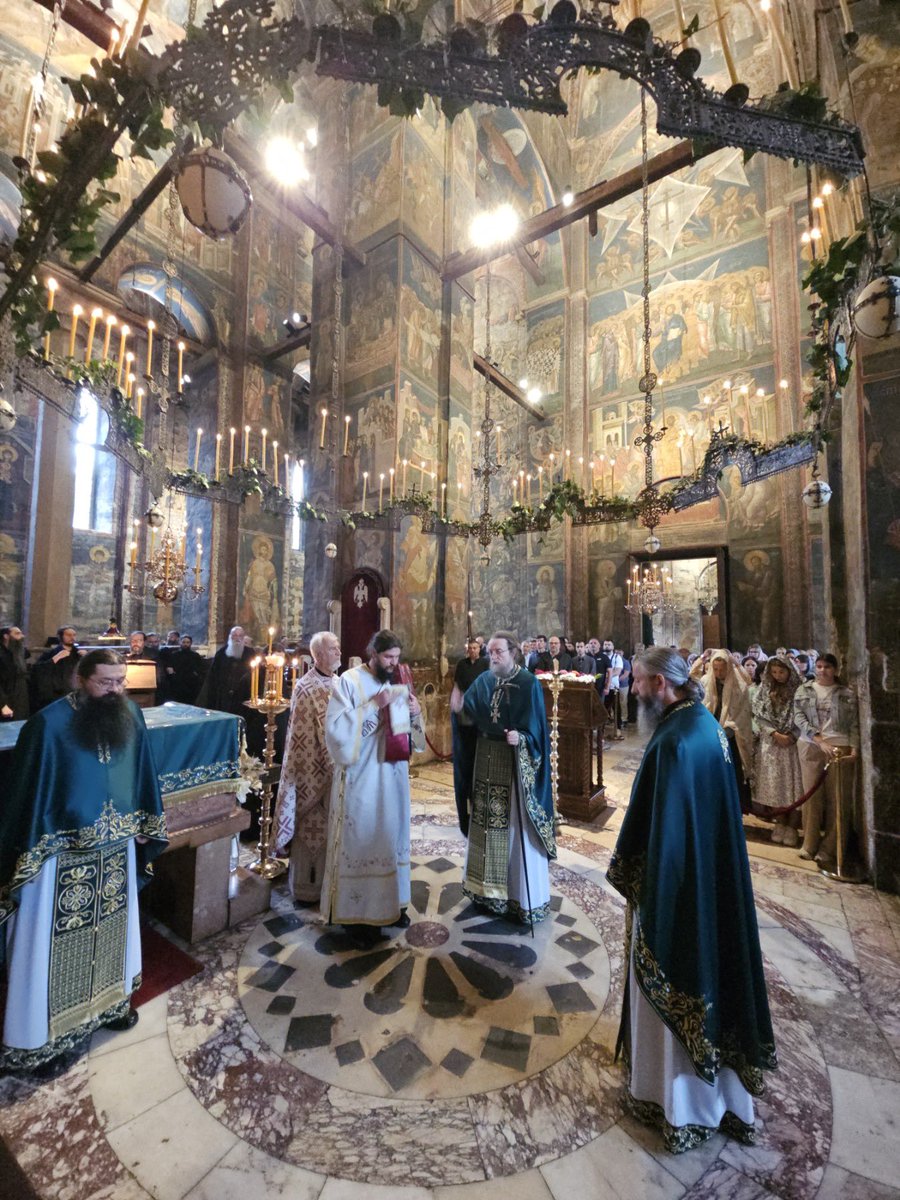
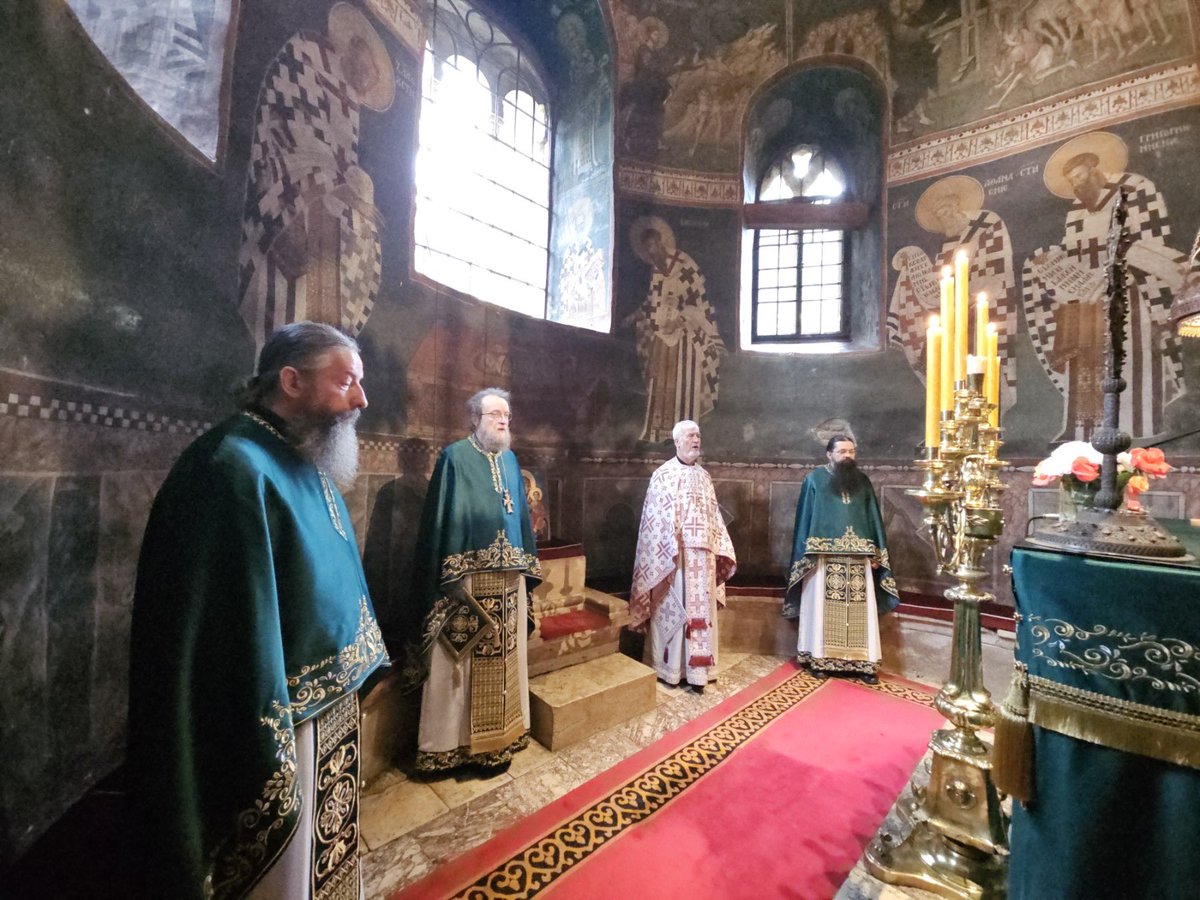
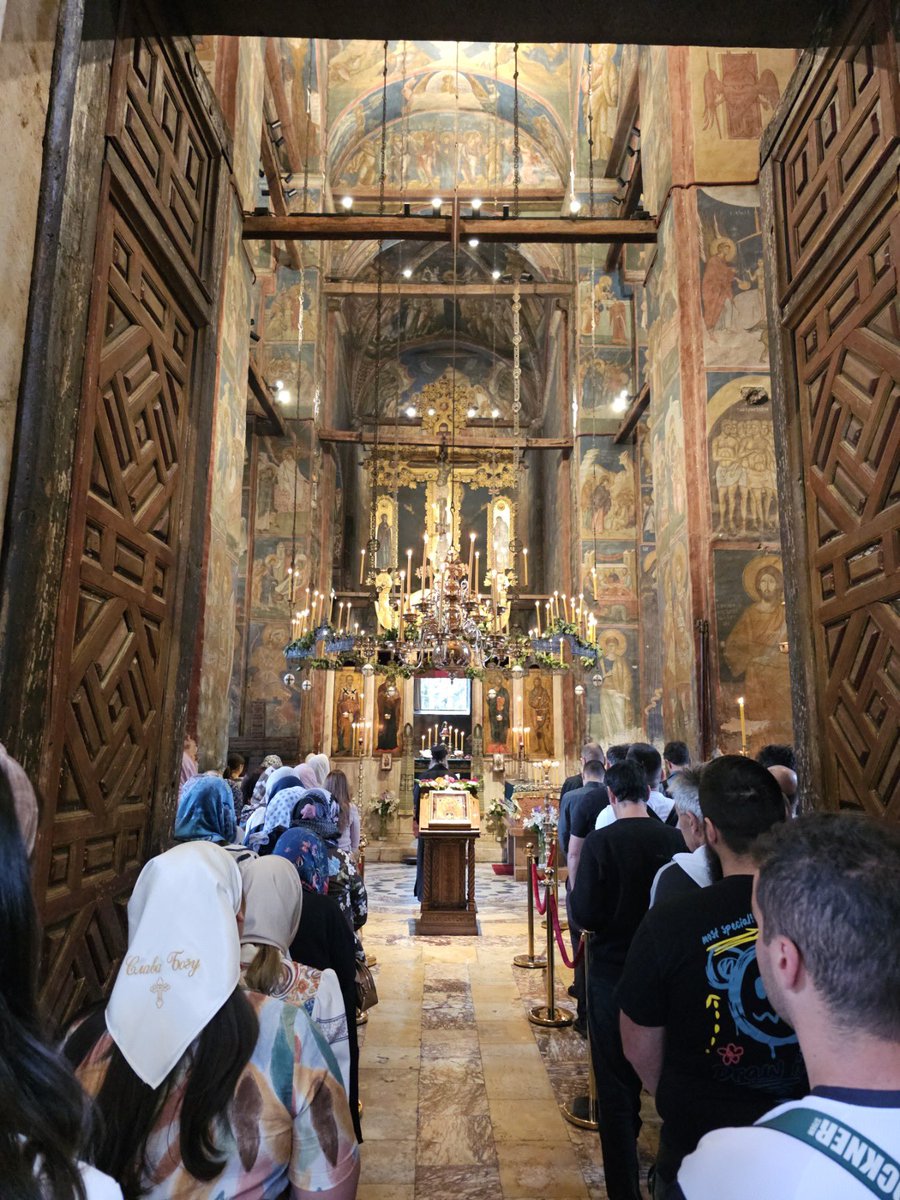
Holy Pentecost at Visoki Dečani Monastery, May 31, 2026
Pentecost is not merely the commemoration of the descent of the Holy Spirit upon the Apostles, but the feast of the fulfilment of the entire economy of salvation. After the Cross, the Resurrection, and the Ascension of Christ, it is in Pentecost that the work of Christ is revealed not as an external event of sacred history, but as the very life of the Church and the life of every believing Christian. The Holy Spirit, the Lord and Giver of Life, who proceeds from the Father, does not come as an impersonal force or mere inspiration, but as a divine Hypostasis who introduces us into the fullness of communion with Christ and, through Christ, with the Father. For this reason, Pentecost is the feast of the full revelation of the Holy Trinity in the life of the Church.
The descent of the Holy Spirit also reveals the very mystery of the Church. The Church is not merely a community of those who follow Christ’s teaching, but the Body of Christ living and breathing through the Holy Spirit. Without the Holy Spirit, the Gospel would remain a written text, but with the Spirit it becomes the Word of Life. Without the Holy Spirit, the Eucharist would be only a symbolic rite, but with the Spirit it becomes true communion in the Body and Blood of Christ. Without the Holy Spirit, faith could easily become an ideology or a custom, but with the Spirit it becomes a new mode of existence, communion, freedom, the knowledge of God, and the beginning of deification.
Pentecost therefore represents the gathering together of the nations scattered at the building of the Tower of Babel. Where pride scattered humanity, the Holy Spirit gathers it once again. Where difference became a cause of division, the multitude of languages now becomes the means of a single proclamation of the Good News. The Spirit does not abolish diversity, but transforms it into the unity of faith and love. He illumines the mind, purifies the heart, strengthens believers for witness, and makes fearful Apostles into bold preachers of the Risen Christ.
This is also the deepest meaning of this feast for us today. Pentecost means that God does not remain distant from us, but comes to dwell within the human person, to heal our fragmentation, to transform isolation into communion, fear into faith, and outward religiosity into a living participation in the divine life. This is why the Church continually prays: “O Heavenly King, Comforter, Spirit of Truth, come and abide in us,” for in these words lies the entire mystery of Pentecost and the entire mystery of the Christian life.
#DecaniMonastery #SerbianOrthodoxChurch #Kosovo
7
54
7,728
May 30
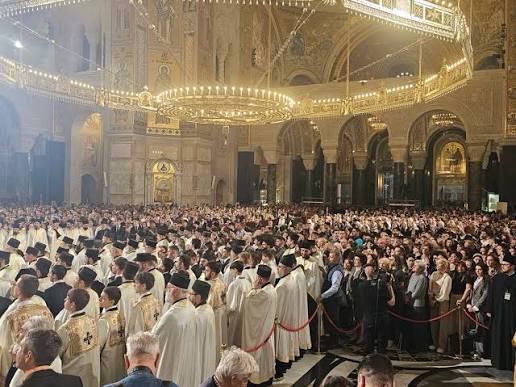
On May 20, 2026, the Holy Belt of the Most Holy Theotokos, one of the most revered relics in the Orthodox Christian world, arrived in Belgrade from the Monastery of Vatopedi on Mount Athos. It was brought at the invitation of Serbian Patriarch Porfirije for the feast of Spasovdan, the Ascension of the Lord and the patronal feast of the city of Belgrade.
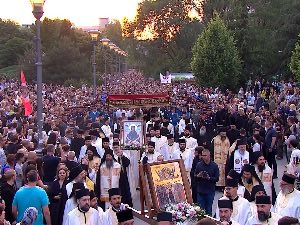
The relic was solemnly welcomed at Nikola Tesla Airport by Patriarch Porfirije, bishops of the Serbian Orthodox Church, the Vatopedi brotherhood led by Abbot Ephraim, and state representatives. After its arrival, it was taken to the Ascension Church and then carried through the streets of Belgrade during the traditional Spasovdan procession attended by tens of thousands of faithful.
According to Orthodox Tradition, the Most Holy Theotokos wove the Belt herself from camel hair and, before her Dormition, entrusted it to the Apostle Thomas. It is regarded as the only surviving relic directly connected to her earthly life. The Holy Belt has been preserved for centuries at Vatopedi Monastery, where it remains one of the greatest treasures of Mount Athos. (Newsmax Balkans)
Serbian medieval tradition also preserves the memory that Holy Prince Lazar greatly enriched Vatopedi Monastery with gifts and endowments before the Battle of Kosovo in 1389, strengthening the historic spiritual bonds between Serbia and the monastery. The Holy Belt itself, however, has remained in the care of Vatopedi for many centuries and is only rarely brought out of Mount Athos for pilgrimage.
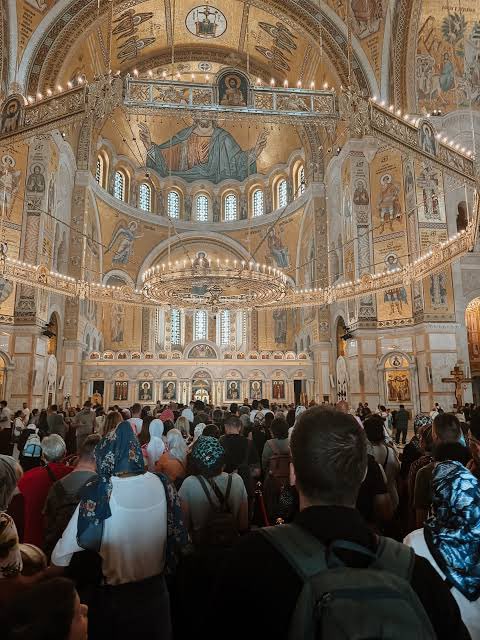
The response of the faithful in Serbia has been extraordinary. For days, enormous lines of pilgrims have formed at the Church of Saint Sava, with many waiting for hours in prayer to venerate the relic. Because of the unprecedented number of worshippers arriving from Serbia and neighboring countries, the stay of the Holy Belt was first extended from May 29 to June 1, and then again until June 5, with the blessing of Abbot Ephraim of Vatopedi.
In Orthodox tradition, the Holy Belt is especially associated with prayers for healing, for mothers and children, and for couples struggling with infertility. Countless testimonies throughout the centuries speak of consolation, spiritual renewal, and God’s mercy received through the intercessions of the Mother of God. Pilgrims who venerate the relic receive a small ribbon blessed upon the Holy Belt as a sign of blessing and prayerful remembrance.
The sight of hundreds of thousands of people gathering in prayer around this great shrine has become one of the most remarkable spiritual events in Serbia in recent decades, a powerful witness to the enduring love of the Serbian people for the Most Holy Theotokos and the living faith of the Orthodox Church.☦️
#OrthodoxChristianity #Theotokos #HolyBelt #MountAthos #Serbia #Belgrade #Vatopedi #OrthodoxFaith #SerbianOrthodoxChurch
1
24
145
4,337
May 30
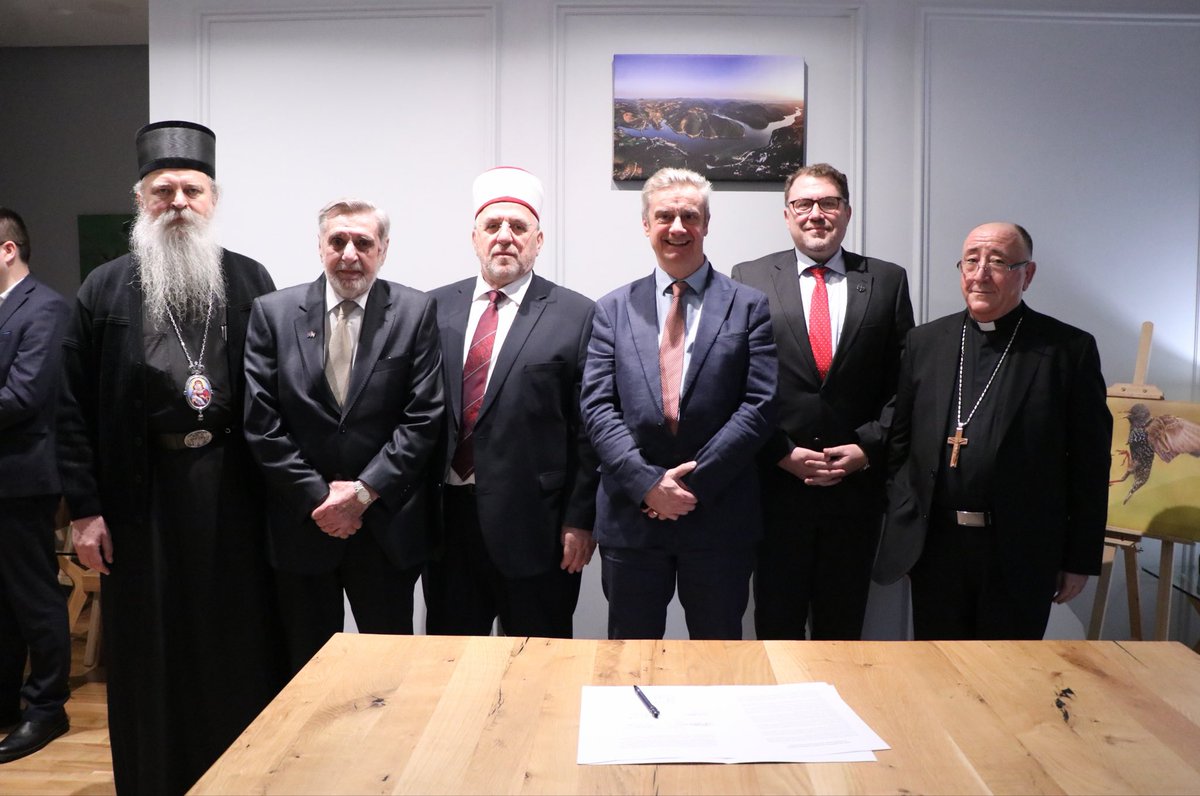
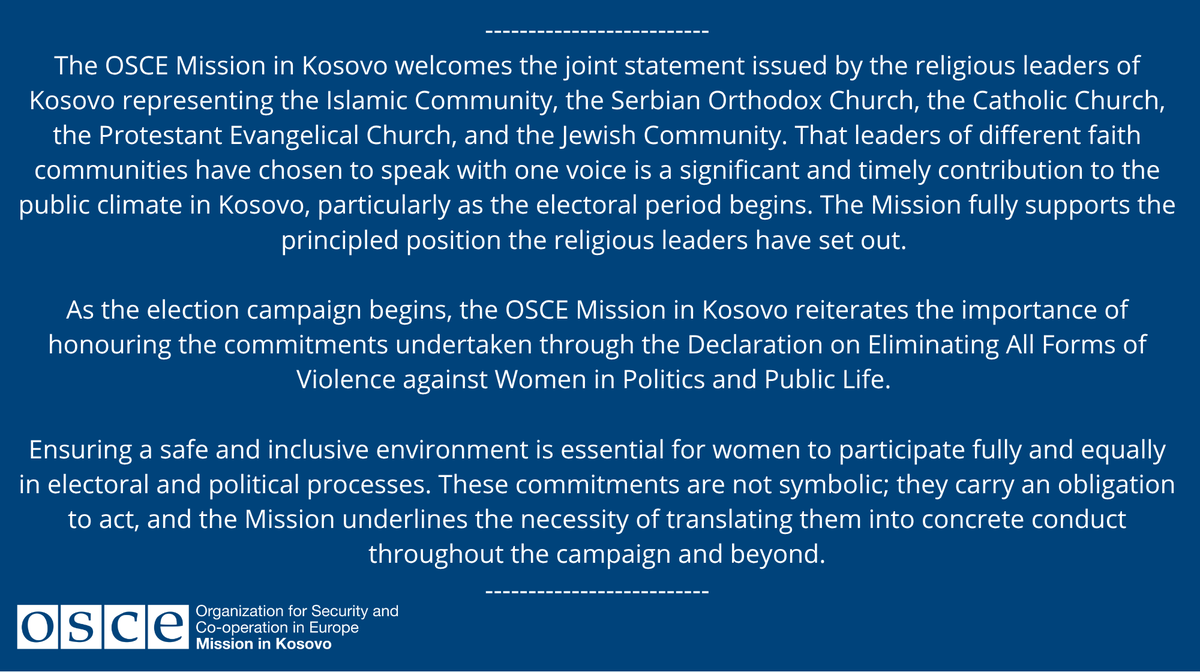
🕊️Religious leaders of the Islamic, Orthodox, Catholic, Protestant and Jewish communities in Kosovo have issued a Joint Declaration reaffirming their shared commitment to peace, human dignity, mutual respect and responsible public discourse, especially during election periods.
Joint Declaration by Religious Leaders in Kosovo, 28 May 2026
We, the religious leaders of Kosovo - Islamic Community, Serbian Orthodox Church, Catholic Church, Protestant Evangelical Church and Jewish Community - representing our diverse faith communities, reaffirm our shared commitment to peace, human dignity, and respect among all people. We recognise the importance of democratic values and the need for a responsible public climate, especially during election periods.
We call on all political actors, institutions, and citizens to uphold the following principles:
1. Language of respect and dignity
We call for respectful and measured language in public debate; an end to insults, humiliation, and personal attacks against others; and a culture of dialogue grounded in dignity and mutual respect.
2. Respect for women and girls
We call for zero tolerance for sexist or misogynistic language; rejection of harmful stereotypes and gender-based attacks; and equal respect, voice, and participation for women and girls in public life.
3. Rejection of hate speech and incitement
We call for no use of hate speech, threats, or incitement to violence; respect for ethnic, religious, and social diversity; and active efforts to protect social peace and inter-community trust.
4. Truth and integrity in public life
We call for honesty and accuracy in public communication; rejection of disinformation and manipulation; and respect for the law and democratic standards.
5. Responsible communication
We call for ethical conduct in the media and on social platforms; an end to online abuse, bullying, and degrading language; and leadership that sets a calm and responsible tone.
6. Shared responsibility
We call on all leaders and citizens to uphold these principles throughout the election period; guide others by example; and work together to protect Kosovo’s democratic and social fabric.
As religious leaders, we speak with one voice on this: words matter. They shape behaviour. They can divide or unite. We urge all those in public life to choose respect, truth, and responsibility.
(Archive photo of religious leaders in Kosovo)
#Kosovo #tolerance #ReligiousLeaders
1
4
30
1,393

May 24
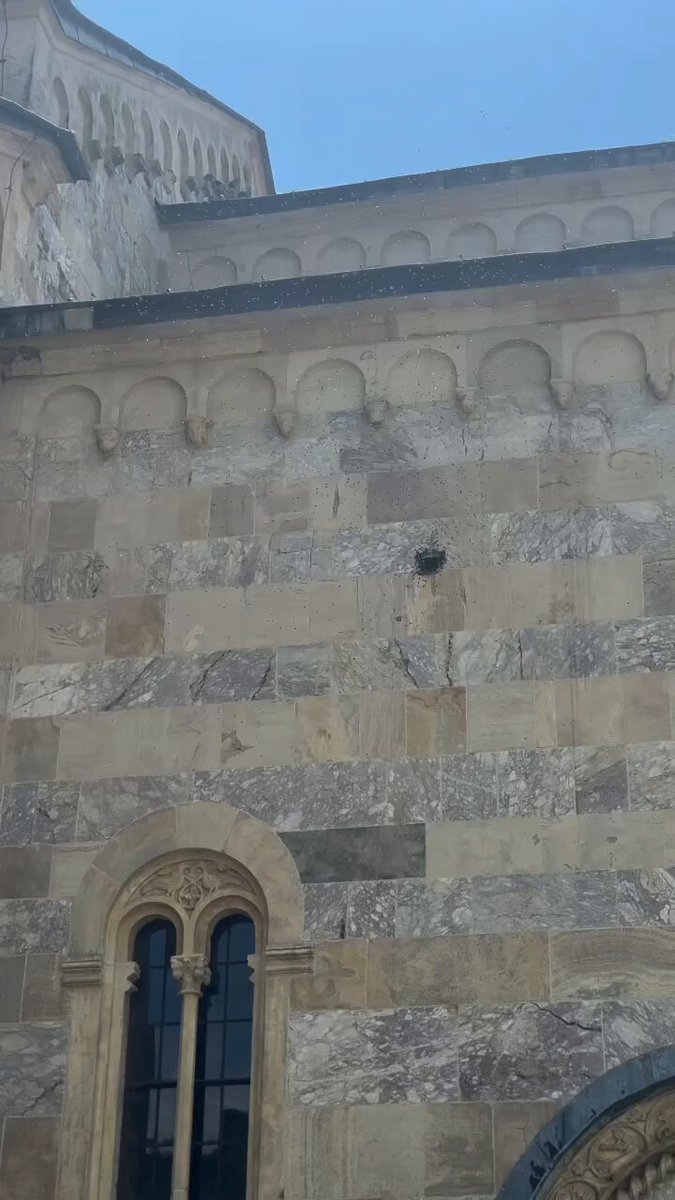
After several years, the bees of the Holy King have once again swarmed and settled within the walls of the Dečani church, where even they seem to rejoice in the grace and fragrance of the Saint’s holy relics. 🐝
14
197
3,218
May 24
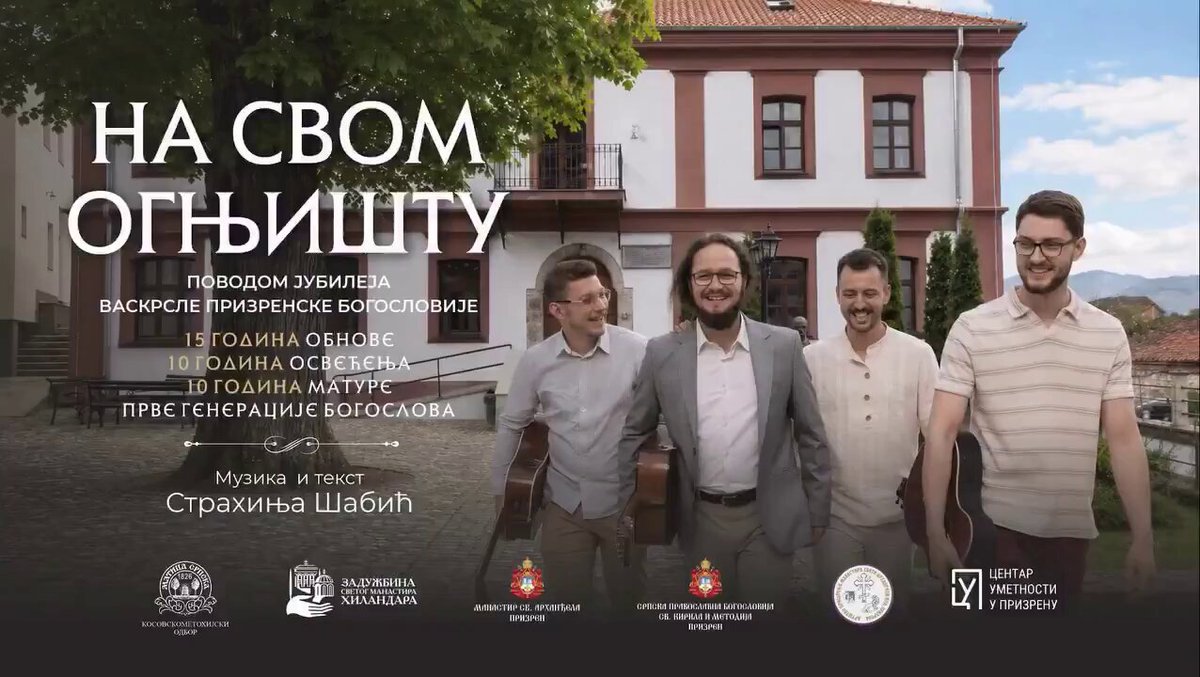
On the feast day of its heavenly patrons, Saints Cyril and Methodius, the Prizren Theological Seminary premiered this video presentation as a joint work of its students and professors.
The video was prepared in the year in which the Seminary marks 155 years since its founding, 15 years since the restoration of its work in Prizren, and 10 years since the consecration of its renewed buildings. #Prizren #SerbianOrthodoxChurch #Kosovo #SaintsCyrilandMethodius #OrthodoxEducation
10
56
1,696
May 24
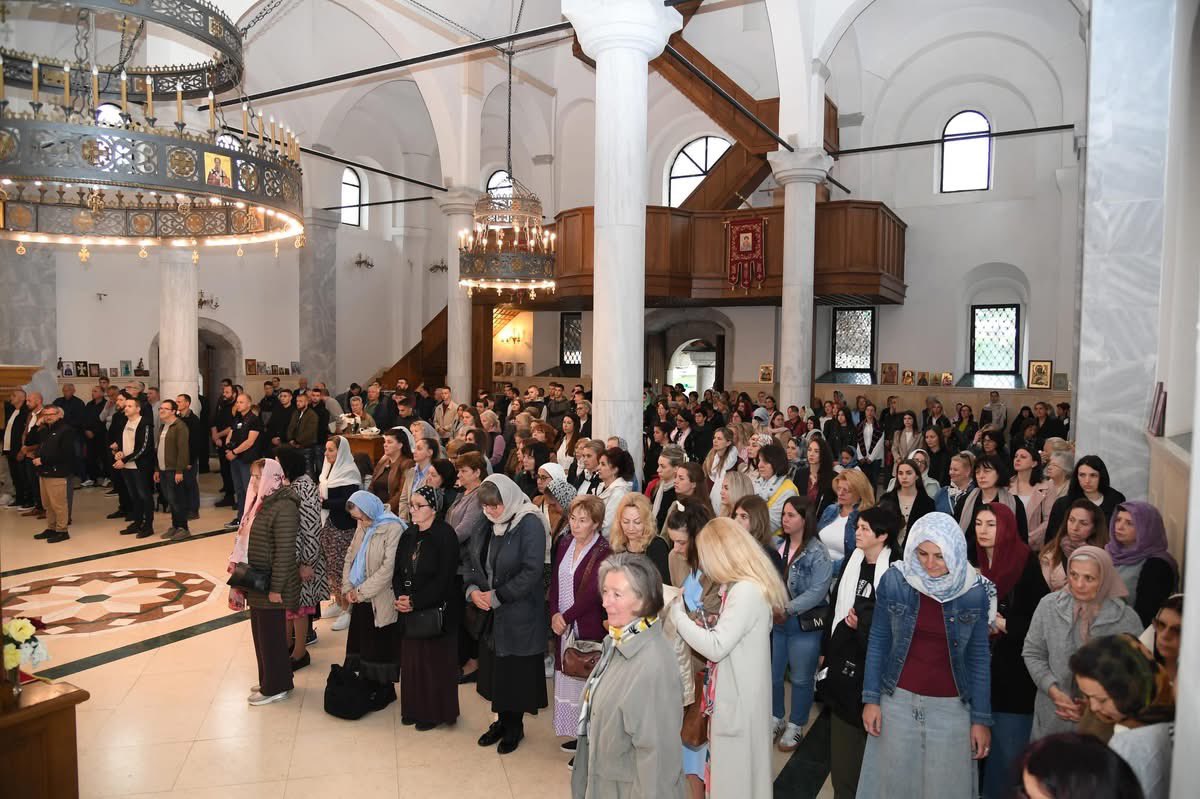
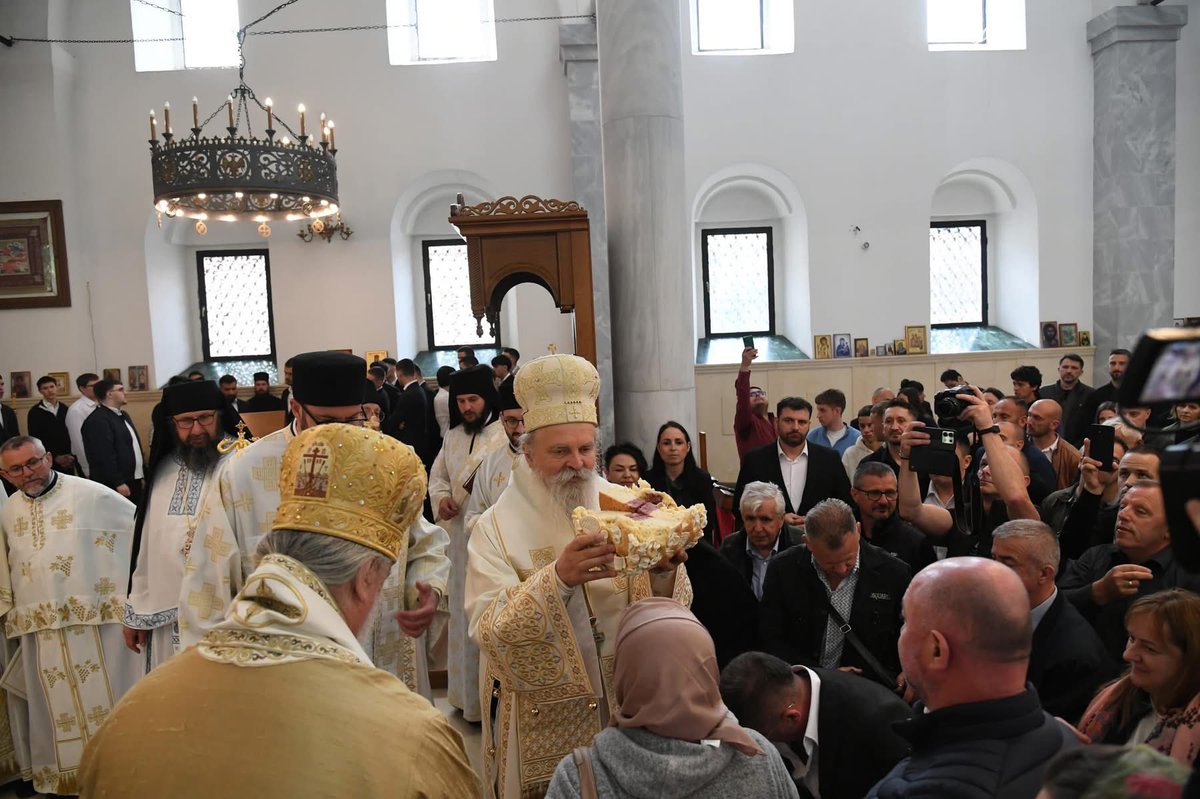
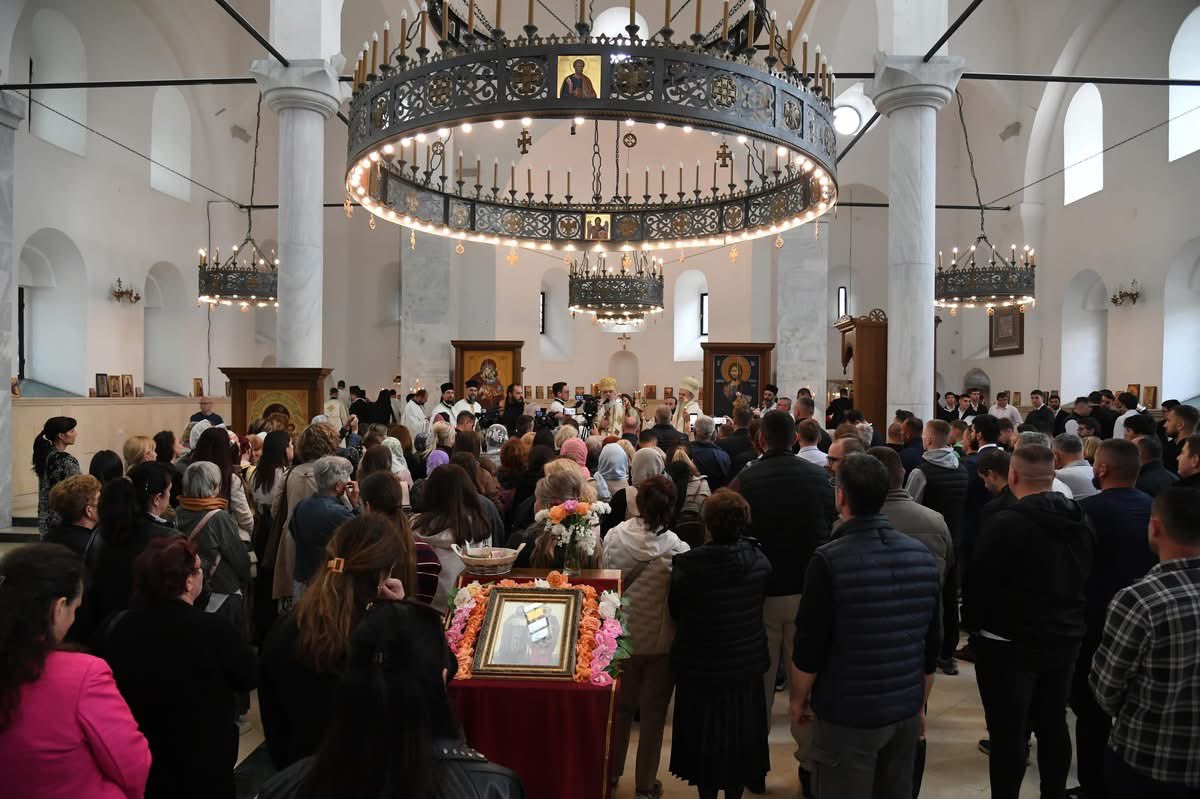
🌿 Today the feast day of the Prizren Theological Seminary, dedicated to Saints Cyril and Methodius, was solemnly celebrated in Prizren.
The Divine Hierarchical Liturgy in the Cathedral Church of St George was served by Metropolitan Theodosije of Raška and Prizren and Bishop Kirilo of Buenos Aires and South-Central America, concelebrated by clergy and accompanied by the chanting of the seminarians of Prizren Seminary.
A special joy was brought to the faithful when Metropolitan Theodosije announced that, by decision of the Holy Assembly of Bishops of the Serbian Orthodox Church, Venerable Mother Jefimija of Devič, Blessed Stojna, has been officially added to the ranks of the saints.
The celebration continued with a festive meal and a cultural programme prepared by the students of the Seminary. #Prizren #OrthodoxChurch #Kosovo #SaintsCyrilandMethodius
6
43
1,007
May 23
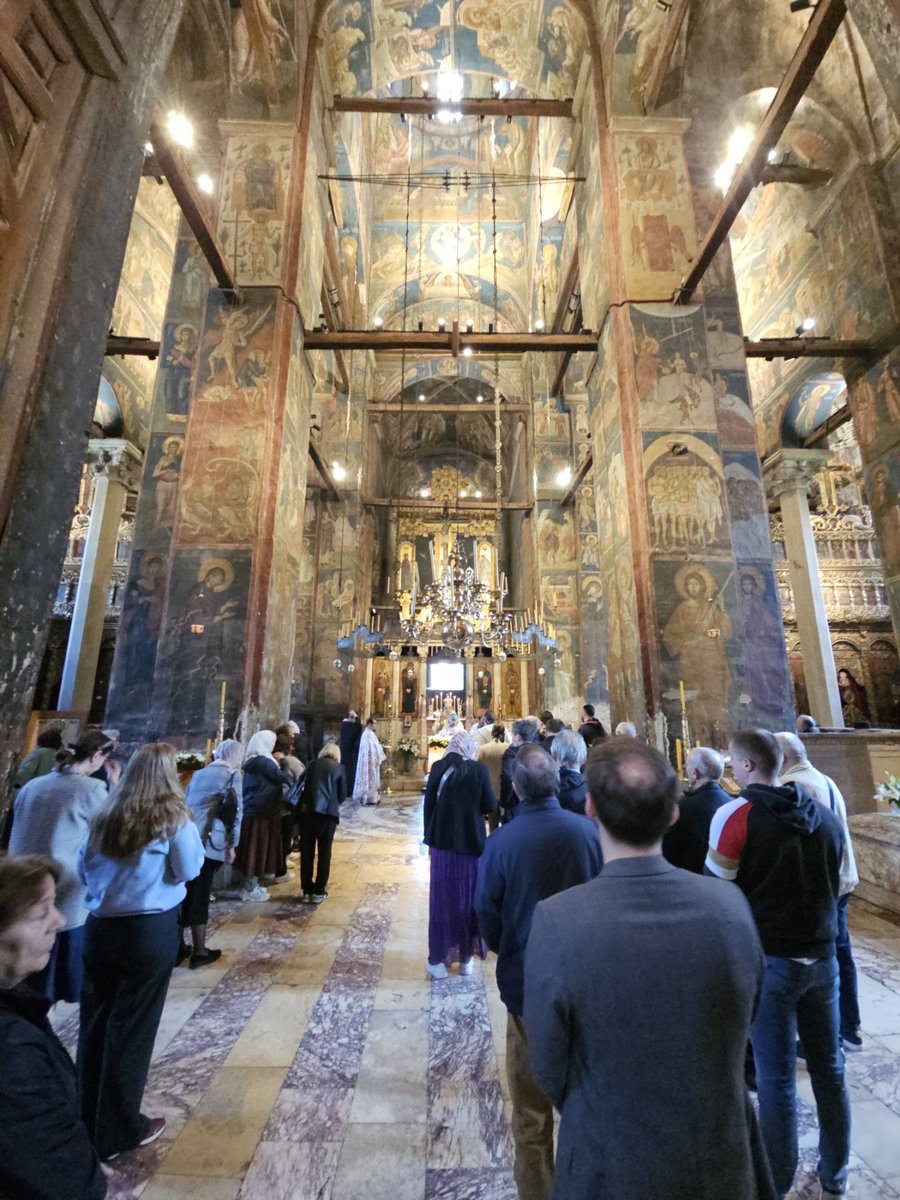
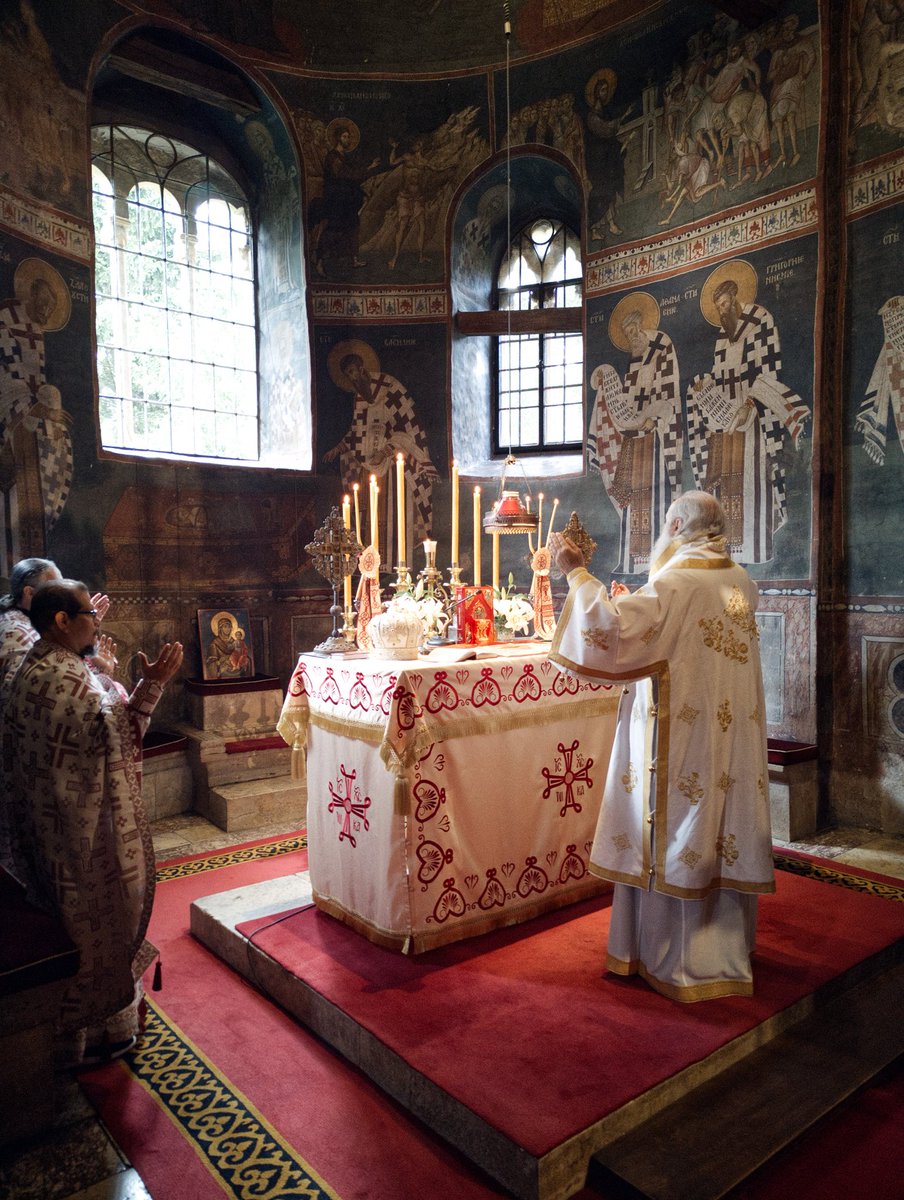
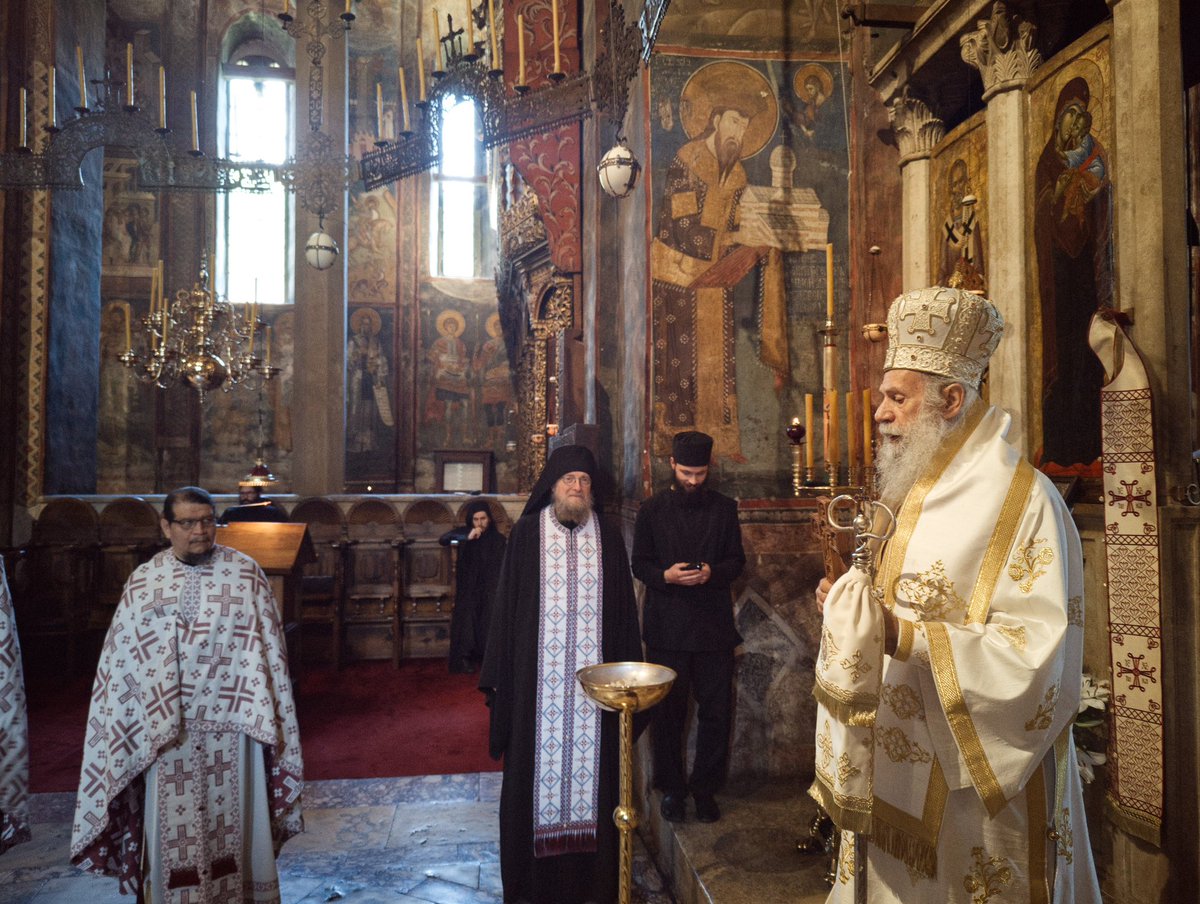
Today, the Holy Liturgy at Dečani Monastery was celebrated by Bishop Aleksej, who commemorated the 50th anniversary of his monastic priestly ordination. #DecaniMonastery #SerbianOrthodoxChurch #Kosovo
6
67
1,297
May 21
Youtube Video - Celebration of the Ascension of our Lord at Visoki Dečani Monastery 20-21 May 2026. youtu.be/_UsyGZ0eTp8?is=Ea7t…
1
2
40
1,045