
Joined November 2025
- Tweets 594
- Following 3
- Followers 169,038
- Likes 581
104 Photos and videos


Pinned Tweet

Mar 6
Treasure Chests are officially live!
Users can now access and open their Treasure Chests directly in the Dive platform and review their pre-TGE rewards.
In addition, XP balances are now visible in the staking interface. All active staking positions continue to accrue XP automatically.
No additional steps are required for existing participants.
Treasure Chests represent an important step in DeepNode’s reward framework. Further Dive campaigns and reward opportunities will follow.
Huge thanks to our community for all the support as we build toward what’s next.
Log in, open your chests, and check your XP now!
499
304
664
135,485
Jun 12
Something's in the works. The kind of thing that's still taking shape but already feels right.
Claim your staking XP if you haven't already. The community that's here now? You'll see.
Stay close.
64
31
566
50,661
May 22
Incredible week for DeepNode.
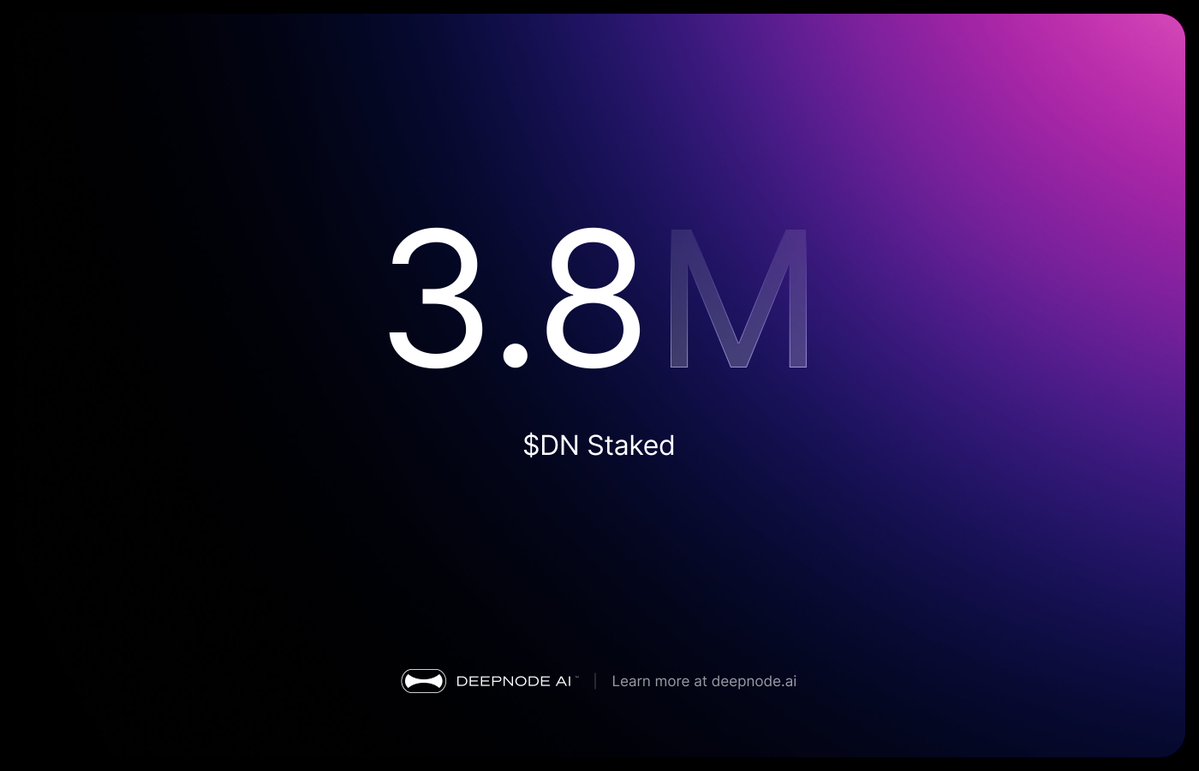
3.8M $DN now staked. That's 52% more tokens than our last update. This community brings the conviction and puts it on-chain.
Big things ahead. None of it happens without you.
64
23
350
50,690
Mar 27
llama.cpp runs 70B models on a gaming laptop. The routing, validation, and reward layer above it? Still fragmented.
DeepNode closes the gap. Build locally. Route globally. Get paid.
63
14
394
83,429
Mar 18
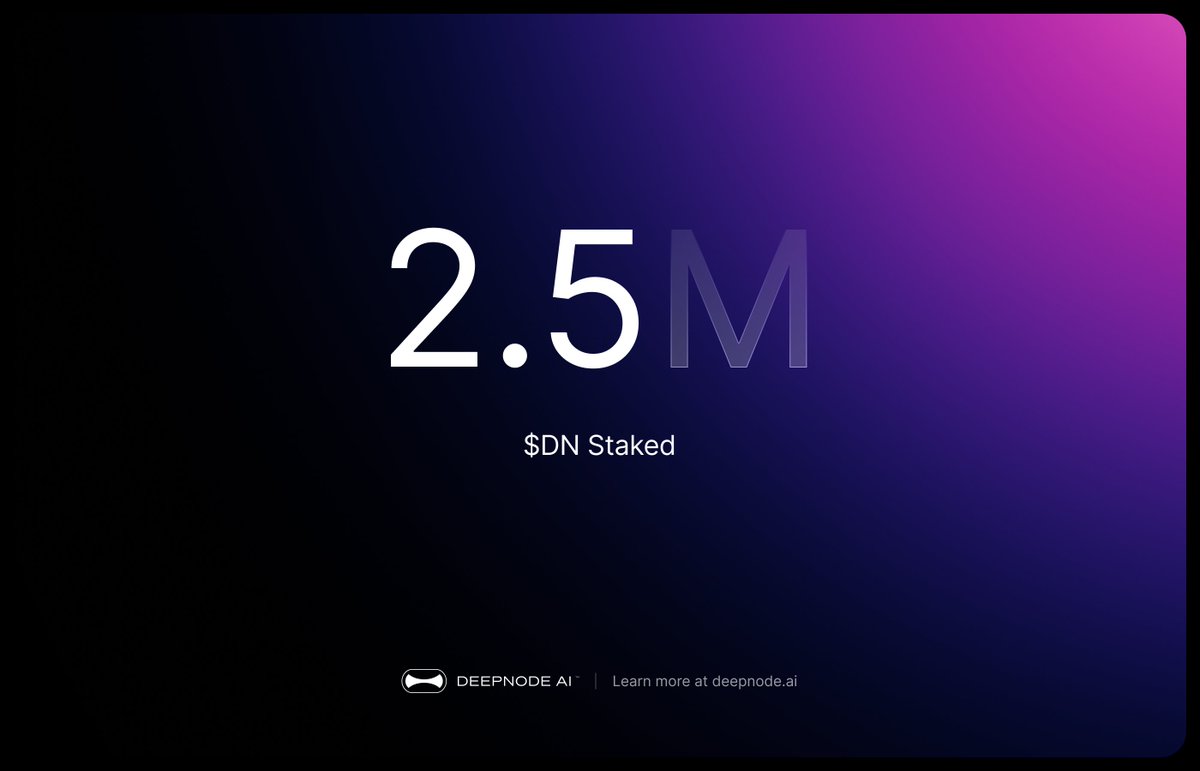
Over 2.5M $DN is now staked!
This level of participation highlights growing alignment and long term commitment across the ecosystem.
With XP rewards now live, all active staking positions continue to accrue value over time.
Dune dashboard in the post below 👇🏼
82
25
323
74,822
Mar 13
DEEPNODE FOUNDATION - EXCHANGE UPDATE

Exchange Update
We want to share an update regarding Bitget.
Following the post‑TGE incident, our team fully intended to meet all of Bitget's requirements, including deploying additional liquidity and supporting healthy market depth. We made repeated efforts to align on a workable path forward with the exchange.
We were not able to satisfy the requirements and Bitget has communicated their decision to delist DN.
We appreciate Bitget’s time and engagement throughout the process, and we remain open to re‑exploring a partnership once recovery efforts are further along.
We’re grateful for the support and understanding shown by our other exchange partners during this process, and we will continue to fully support all remaining trading venues. In parallel, we are working constantly toward recovery and rebuilding with the long term health of the project as our priority.
Thank you all for your continued support.

76
33
466
76,913
Feb 19
DEEPNODE FOUNDATION UPDATE – INVESTIGATION AND MOVING FORWARD:
Investigation Update
The DeepNode Foundation has reason to believe that a party representing itself to be a liquidity provider (herein " Liquidity Provider"), in violation of their contract, began algorithmically dumping $DN tokens almost immediately after TGE, resulting in the liquidity incident first highlighted on Jan 14th, 2026.
This resulted in mandatory Security Deposits provided to CEXes as part of the token listing process being depleted and lost. These represented a significant portion of all capital raised by DeepNode Foundation.
The DeepNode Foundation has since:
- Engaged experienced Web3 counsel,
- Is cooperating with law enforcement, and
- Engaged former U.S. Federal and Intelligence Officers to assist in the restitution efforts against those associated with the “Liquidity Provider”.
Emergency Liquidity Restoration
As part of the DeepNode Foundation's efforts to restore market stability and operational continuity, it has acquired over 100% of the amount of tokens initially provided as collateral to the “Liquidity Provider”. This was funded through existing DeepNode Foundation resources.
Moving Forward
To ensure long-term viability, the DeepNode Foundation will be temporarily scaling back non-essential spend. Marketing, social activity, and business development will take a back seat as we focus on shipping the platform and delivering core utility.
Launch is not the finish line, it is the beginning of operational resilience.
Our priorities remain clear: accountability and restitution efforts, disciplined execution, and shipping the core product.
We appreciate the continued support from those who have stood with DeepNode through this period. We will continue to share further updates as material developments occur.
Please Note:
While we are aware that some sources have published the alleged identity of the “Liquidity Provider”, the DeepNode Foundation cannot risk impeding law enforcement or restitution efforts by commenting further at this time.

551
392
628
92,854
Feb 10
Treasure Chests are coming!

GM
We have seen the questions around Treasure Chests and appreciate the patience.
The feature is nearing completion and is expected to be ready by the end of this week.
New Dive campaigns will start shortly after Treasure Chests go live.
Unstoppable.
150
81
348
91,732
Feb 9
DeepNode XP Launch, Now Live!
The XP system for DeepNode staking is officially live.
XP introduces a long-term aligned reward mechanism designed to recognize sustained participation and strengthen protocol TVL. All active staking positions are now accruing XP automatically.
No action is required for existing stakers.
How XP Is Earned
XP accrues for every active staking position and is determined by three factors:
1. Amount Staked
Higher $DN stakes earn more XP per day.
2. Time Staked
XP increases continuously for as long as the stake remains active. Longer staking periods result in higher total XP.
3. Time-Based Multipliers
Rather than fixed lockups, XP multipliers activate automatically as a stake ages, rewarding long-term holders while keeping staking flexible.
XP Multipliers (Automatic)
• 0–29 days: 1.0×
• 30 days: 1.2×
• 90 days: 1.5×
• 180 days: 2.0×
Multipliers apply only once the full time threshold is reached.
Existing Stakers
Users with active stakes will:
• See accumulated XP directly in the staking interface
• Be able to claim XP at any time
• Continue earning XP as long as the stake remains active
No restaking or migration is required.
Claiming XP
• XP can be claimed from the staking management screen
• Claiming XP does not affect the staked $DN
• XP continues accruing after each claim
Unstaking Rules
• All stakes are subject to a fixed 7-day unstaking period
• No XP is earned during the unstaking cooldown
• Time-based multipliers only apply if the full duration is completed
These rules are designed to discourage short-term farming and protect long-term stakers.
646
446
757
87,098
Feb 4
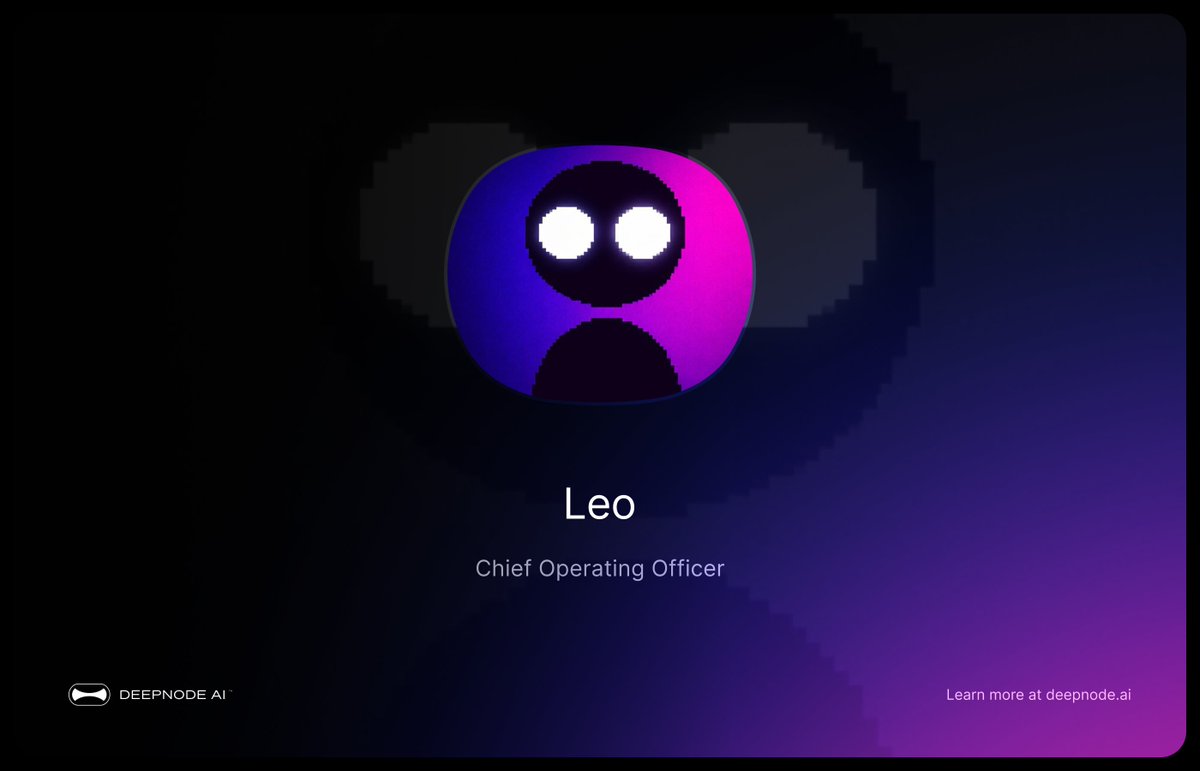
Meet @Leo_DeepNode the COO of DeepNode, transforming vision into reality!
158
90
342
88,276
Feb 2
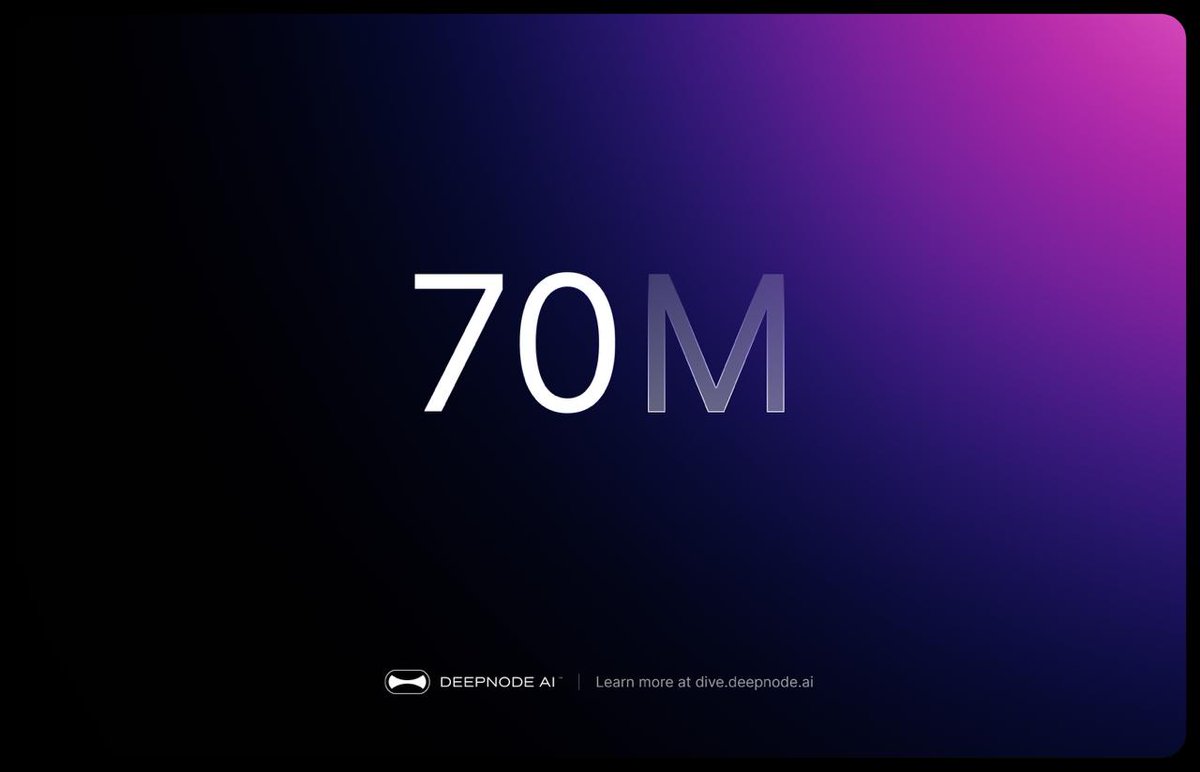
DIVE keeps thriving, with new users and thousands of points being earned daily.
More precisely:
• 300K Daily Active Users
• 540K Badges Minted
• 70M Points Earned
And things are about to heat up even more, with brand new challenges coming later this week.
Be there 👇
dive.deepnode.ai
916
587
1,061
126,329
Jan 30
Setbacks don’t define us. How we respond does.
We are following with our commitment to transparency and to assure you that DeepNode is here to stay.
Here’s where we stand today.
What is going on now?
- We’re actively working on a full scale action plan to recover and drive the project forward.
- Platform development continues at full speed
- Ongoing conversations to establish partnerships with strong, long-term industry players
What to expect next?
- Regular updates on recovery
- Sneak peeks of ongoing platform development
- Details on XP & Treasure Chests on DIVE
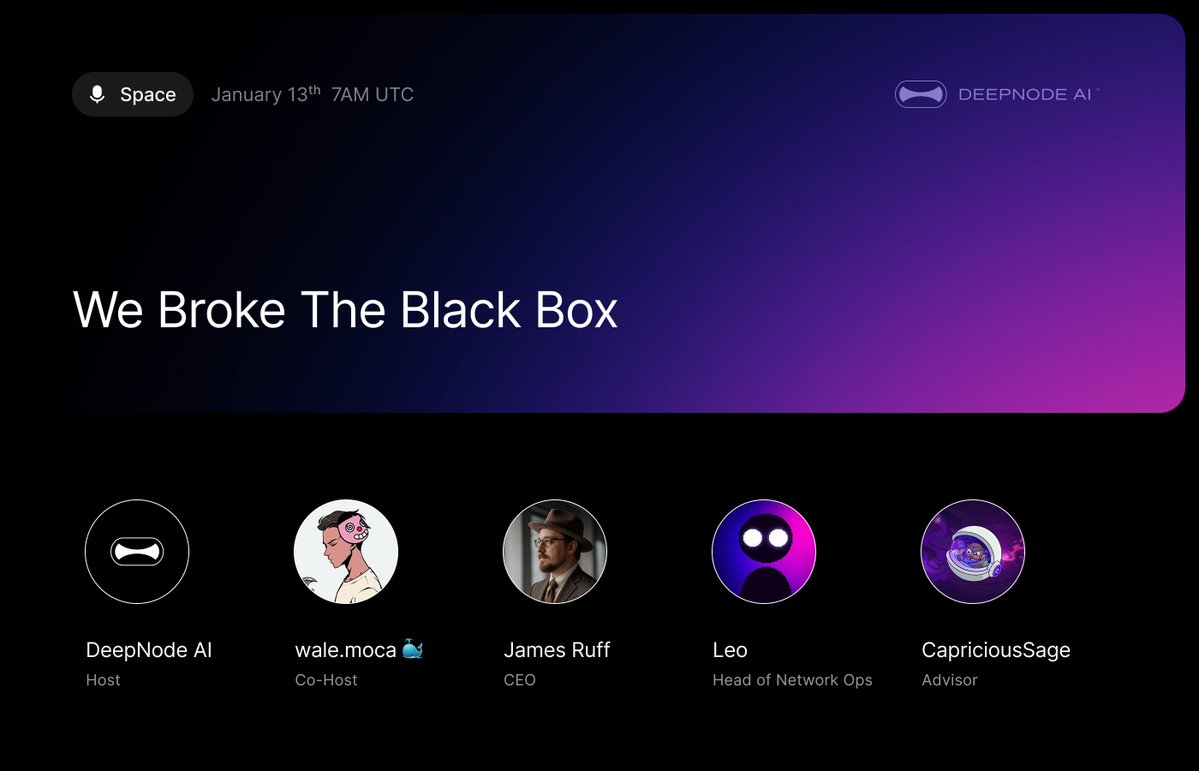
- An upcoming X Spaces with our CEO & Founder James Ruff
One thing we can promise: we’ll continue building to take $DN to where it belongs and give the best opportunities to our community.
Together, for the long-haul.
962
625
1,089
104,057
Jan 23
Each obstacle is another chance to prove our resilience.
We might get slowed down.
But we’ll never stop.
Jan 23

This was a very hard week. For me, for the team, and for everyone who believes in DeepNode.
But now, we’re restructuring everything.
Processes. Priorities. Execution.
We’re rebuilding with full focus and discipline. Together.
Development never stopped.
Testnet, foundational domains, and the Dive platform all continue to move forward.
Our partners are still here. The community is still here.
We’re staying discrete for now.
The right details will come at the right time.
This isn’t the end.
It’s a reset. And a reignition.
The next chapter starts now.
We're back.
230
114
498
101,973
Jan 20
Thank you all for your patience.
As you know, we are taking this situation extremely seriously and are working tirelessly to achieve the best possible outcome for our community.
Quick updates:
Staking is live
Users can unstake at any time and withdraw their tokens after a 7-day cooldown.
Please note that unstaked positions will not accrue XP.
XP will be counted for users who have $DN staked at the time XP goes live.
XP adjustments for eligible positions will follow within the same 48–72 hour window.
The TGE badge remains a meaningful booster for the airdrop, but it is not a hard requirement.
Liquidity Incident
Our focus remains on securing the best possible resolution for everyone.
While we can’t share specific details just yet, we assure you that progress is being made behind the scenes, and we will continue to provide updates.
We are here for the long haul and will stop at nothing to rebuild your trust and deliver on our mission.
Thank you for your continued patience and support,
The DeepNode Team
1,354
941
1,677
121,193
Jan 15
Official Follow Up to First Statement
To the DeepNode community,
Today's update continues our commitment to transparency, providing additional information on what has happened and the recovery plan moving forward.
Backstory:
- To ensure sufficient liquidity on Exchanges at launch, the DeepNode Foundation borrowed $ X mil USDT (at interest) from a Liquidity Provider, which was over-collateralised with Y% of DN's supply.
- Those borrowed funds (in addition to other capital we contributed) were then provided to our Market Makers, along with a corresponding amount of DN tokens.
- The collateral was held by a recognised third party trading firm.
- This is the way things work with new projects. Teams must provide liquidity (stables and tokens) to Exchanges (via Market Makers) during a token launch if they are to be listed.
What Happened:
- The Liquidity Provider (bad guys) took our collateral (the DN tokens) and dumped them. They violated our contract, broke our trust, and we have the evidence to prove it.
- Fearing an exploit/hack, our Market Makers (good guys) acted quickly and pulled liquidity from Exchanges until they could figure out what happened.
- Between the good guys pulling liquidity and the bad guys relentlessly dumping into the void, price fell off a cliff.
- Where things get strange is that the collateral was being custodied by a third party (a large and well known trading firm). We do not know why the Custodian executed the instructions from the Liquidity Provider and are actively investigating the matter.
Bad Guys Update:
- Multiple sources have confirmed that the bad guys are out of tokens.
- We are negotiating a settlement agreement with the bad guys for a return of funds (people become surprisingly communicative once exchanges start freezing assets).
- Any funds that we get back from the bad guys will be used to provide market liquidity, tokens from these purchases will be permanently burned.
Good Guys Update:
- Market Makers, Exchanges and other partners are all aware of the situation, and want to help us right the ship.
- The biggest reason that our Market Makers are able to help us rebuild is because they acted so quickly to pull liquidity when things hit the fan.
What Next:
- We are in the process of restoring liquidity and working with our partners to stabilize the market.
- The process will be gradual, involving ongoing capital commitments from both the Foundation and several of our partners.
- There are ongoing legal aspects to this situation, so while we do know who the bad guy is, and who the Custodian is, we are not able to share that information publicly at this time.
In Closing:
- To those that have continued to support us and show us grace through this difficult process, we thank you from the bottom of our hearts.
- To those that are hurting right now, know that we are hurting right beside you.
- We ask for your patience and understanding while our team and our partners are doing everything possible to try and make this right.
We will continue to provide regular updates as we progress.
Thank you,
The DeepNode Foundation
1,664
1,412
2,220
176,567
Jan 14
Official statement from the DeepNode Foundation.
DeepNode Incident Update:
Following our earlier announcement, we have conducted an extensive audit regarding the extreme volatility that occurred within the past 24 hours.
As part of our coordinated launch, DeepNode engaged a well respected funding partner to provide the initial liquidity needed for healthy market operations during the intense trading volumes following our TGE. Per industry norms, collateral ($DN tokens) were held by our liquidity lending counterparty, which were not to be touched, and were to be returned to the DeepNode Foundation in full at the end of the liquidity lending term.
Based on our investigation, it is our belief that this liquidity partner breached the terms of this agreement regarding this collateral. We do not make these allegations lightly, and are working with legal, law enforcement, and Centralized Exchanges to recover assets and protect the interests of all $DN holders.
While this is ongoing, the DeepNode Team are also actively working with Market Makers to stabilise markets and improve liquidity on all fronts.
We hear you, we know people are hurting, we are working tirelessly to fix this, and we are not going anywhere. Our commitment to the project and our community remains unwavering, and we're focused on ensuring this doesn't impact our long-term vision.
We'll keep you updated as we progress toward a resolution. Thank you for your patience and continued support.

1,798
1,464
2,278
148,807
Jan 13
We’ve been alerted to an issue involving $DN market makers that is impacting liquidity depth.
Our tech team has confirmed there are no security concerns.
We’re currently working with the Market Makers to resolve the issue.
2,723
1,599
2,785
177,297
Jan 13
Snagged your TGE badge yet?
Now’s the moment!
Unleash your Treasure Chest and DIVE into the rewards waiting for you.
dive.deepnode.ai/
1,157
990
2,595
188,499
Jan 13
Miners are the economic engine of the DeepNode ecosystem.
They provide the network’s core utility by executing model tasks, running inference, and delivering verifiable compute. The quality and performance of miners directly determine the value generated across each network.
So how does mining on DeepNode work?
First, miners onboard to a network by depositing $DN as collateral. This collateral aligns incentives and establishes accountability from day one.
DeepNode is designed to stay open and accessible, not behind closed doors. To help make mining approachable for anyone, our partners behind the scenes from @ZanaVentures will be publishing state-of-the-art mining articles and step-by-step explainer videos for the public, lowering the barrier to entry and enabling more operators to participate with confidence.
Once onboarded, miners receive tasks from the network’s task queue. Each task represents a real workload defined by model creators and requested by users or applications. In Phase 1, mining is limited to inference-only tasks.
Miners execute the required computation, submit their inference output, and have their identity, trust score, and collateral position recorded by the network. The task and result are then forwarded to validators.
Validators evaluate whether the miner’s output is correct.
If the output is approved:
• The task is accepted
• Verified Work Units (VWUs) are assigned
• Miner rewards are unlocked
If the output is incorrect:
• The task is rejected or reassigned
• The miner’s trust score is reduced
• A collateral review is triggered
Once validation succeeds, rewards are distributed across the network. Miners earn rewards based on VWUs and task difficulty, while validators, creators, backers, and networks receive their respective shares. A portion of fees is routed to payment processors, and variable burn may be applied depending on governance.
Collateral plays a critical role. If a miner submits incorrect, fraudulent, or harmful outputs, they can be flagged. Depending on severity, part of their collateral may be slashed or partially returned, ensuring that misbehavior has real economic consequences. In Phase 1, slashing events are manually reviewed to reduce risk.
This system ensures miners cannot cheaply attack the network, honest operators earn more through higher trust, and performance and reliability are rewarded over time.
Why do miners matter?
They execute the work that creates real demand for $DN. They scale inference capacity across networks. They compete on performance, trust, and cost efficiency. They maintain collateral and reputation, creating strong long-term alignment.
Without miners, DeepNode cannot deliver inference, serve workloads, or generate revenue.
Miners power the entire $DN flywheel.
2,523
2,199
3,268
147,642