
DeepScribe’s AI-powered scribe captures the natural conversation between clinician and patient and writes documentation for you. Be a doctor. Not a scribe.
Joined September 2018
- Tweets 196
- Following 149
- Followers 519
- Likes 281
92 Photos and videos





16 Aug 2024
DeepScribe is partnering with Commons Clinic, an innovator in multi-specialty healthcare with a focus on musculoskeletal (MSK) care. Together, we're building custom AI for MSK specialists and unlocking data that drives better value-based care.
hubs.la/Q02LwCw90
1
425
2 Aug 2024
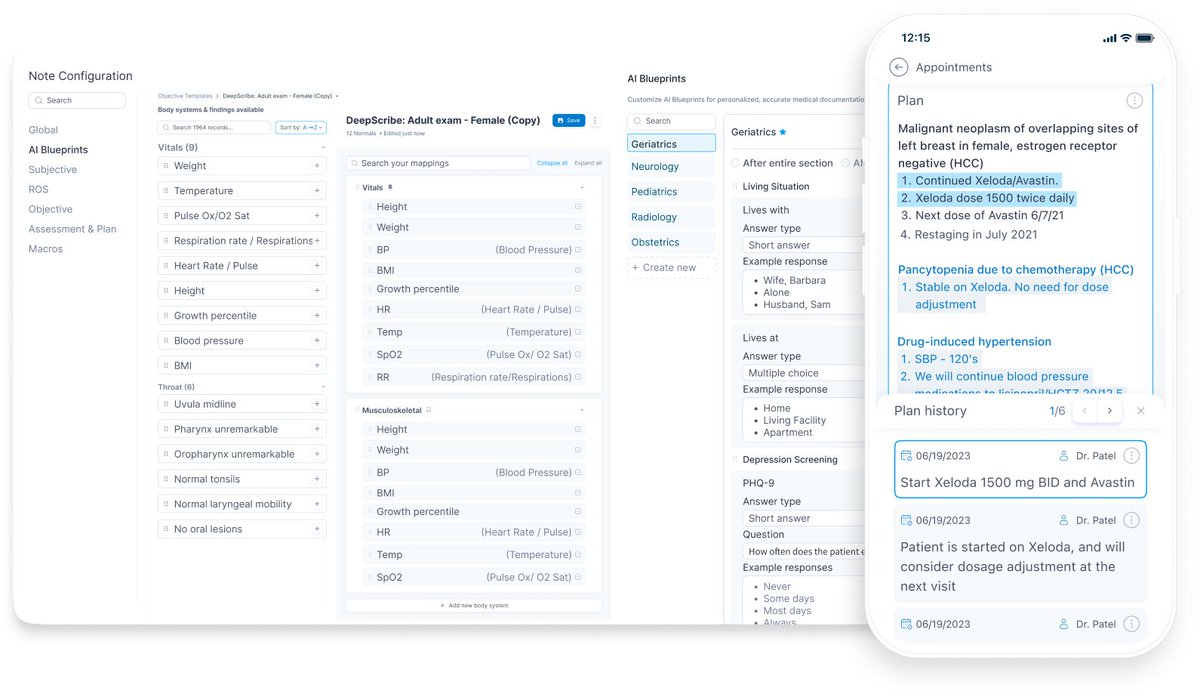
With DeepScribe, 4,700 clinicians at @OchsnerHealth can personalize their clinical notes the way they like, ensuring our ambient AI generates documentation that sounds like them, every time. Watch their testimonials!
#ambientAI #healthcareIT #patientcare
2
408
1 Aug 2024
@heatherlandi at @FierceHealth provides some details of our just-announced partnership with Ochsner Health – including the side-by-side comparison the Ochsner team conducted during the selection process.
fiercehealthcare.com/ai-and-…
1
1
3
260
1 Aug 2024
Here’s some advice from Ochsner Health Innovation Officer, Jason Hill, MD, on the importance of clinician adoption: “If you can't find value in the solution, and if you can't get providers to use the solution, nothing else that you do downstream of that is worthwhile.”
1
175
1 Aug 2024
Read more about the DeepScribe-Ochsner Health partnership here: deepscribe.ai/resources/ochs…
185
DeepScribe retweeted

31 Jul 2024
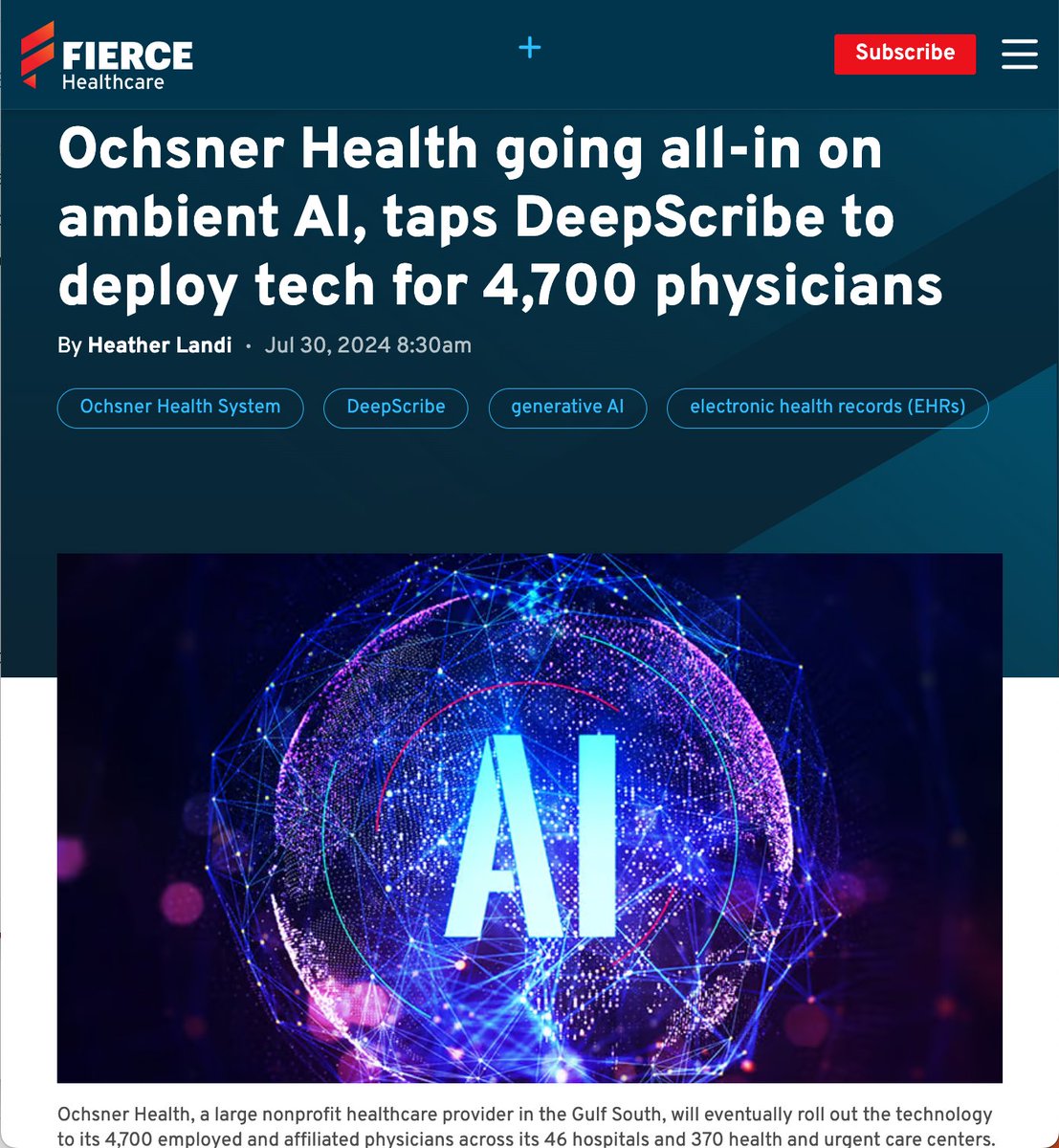
.@OchsnerHealth going all-in on ambient AI, taps @DeepScribeAI to deploy tech for 4,700 physicians
bit.ly/3LPshqt
1
1
611
DeepScribe retweeted

31 Jul 2024
@OchsnerHealth is going all-in on @DeepScribeAI's tech for its thousands of doctors. Ochsner saw high adoption during a pilot phase, innovation officer Dr. Jason Hill said, and the health system inked an enterprise agreement to expand the rollout
bit.ly/3LPshqt
1
1
1
314
DeepScribe retweeted

31 Jul 2024
.@OchsnerHealth going all-in on ambient AI, taps @DeepScribeAI to deploy tech for 4,700 physicians
bit.ly/3LPshqt
1
1
257
DeepScribe retweeted

30 Jul 2024
My 6 takeaways from the big AI Medical Scribe news that @OchsnerHealth deploying @DeepScribeAI across the 46-hospital system:
𝟭. 𝗢𝗰𝗵𝘀𝗻𝗲𝗿 𝗽𝗶𝗹𝗼𝘁𝗲𝗱 𝗗𝗲𝗲𝗽𝗦𝗰𝗿𝗶𝗯𝗲 𝗵𝗲𝗮𝗱 𝘁𝗼 𝗵𝗲𝗮𝗱 𝘄𝗶𝘁𝗵 𝗮𝗻𝗼𝘁𝗵𝗲𝗿 𝗔𝗜 𝗦𝗰𝗿𝗶𝗯𝗲 𝗮𝗻𝗱 𝗗𝗲𝗲𝗽𝗦𝗰𝗿𝗶𝗯𝗲 𝗰𝗮𝗺𝗲 𝗼𝘂𝘁 𝗼𝗻 𝘁𝗼𝗽
A key differentiator was DeepScribe’s customization studios - which enabled flexibility for physicians to have 50 different ways to personalize their notes.
Yes health systems want to standardize their technology approaches… but there needs to be reasonable customizability for clinicians.
That’s been my experience as well with digital care journeys at @SeamlessMD.
𝟮. 𝗣𝗵𝘆𝘀𝗶𝗰𝗶𝗮𝗻 𝗮𝗱𝗼𝗽𝘁𝗶𝗼𝗻 𝘄𝗮𝘀 𝘃𝗲𝗿𝘆 𝗵𝗶𝗴𝗵 𝗮𝘁 𝟳𝟴%
Contrast that with the Kaiser Permanente publication that showed clinician adoption plateauing at 34% after 10 weeks (although hard to say what adoption is now).
𝟯. 𝟱𝟬 𝗽𝗵𝘆𝘀𝗶𝗰𝗶𝗮𝗻 𝗽𝗶𝗹𝗼𝘁 𝗶𝗻𝘁𝗲𝗻𝘁𝗶𝗼𝗻𝗮𝗹𝗹𝘆 𝗶𝗻𝗰𝗹𝘂𝗱𝗲𝗱 𝗱𝗶𝘃𝗲𝗿𝘀𝗲 𝘀𝗽𝗲𝗰𝗶𝗮𝗹𝘁𝗶𝗲𝘀
Mostly primary care providers, but 8 other specialties were included in the pilot (e.g. oncology, nephrology, palliative, etc.).
This is key as what you don’t want to do as a health system is find success in just primary care, invest in an enterprise-wide rollout, and recognize it didn’t work for every other specialty.
𝟰. 𝗢𝗰𝗵𝘀𝗻𝗲𝗿 𝗲𝘃𝗮𝗹𝘂𝗮𝘁𝗲𝗱 𝘀𝘂𝗰𝗰𝗲𝘀𝘀 𝗯𝗮𝘀𝗲𝗱 𝗼𝗻 𝘁𝗶𝗺𝗲 𝘀𝗮𝘃𝗲𝗱, 𝘂𝘀𝗲𝗿 𝗮𝗱𝗼𝗽𝘁𝗶𝗼𝗻 𝗮𝗻𝗱 𝗽𝗮𝘁𝗶𝗲𝗻𝘁 𝘀𝗮𝘁𝗶𝘀𝗳𝗮𝗰𝘁𝗶𝗼𝗻
→ 78% clinician adoption
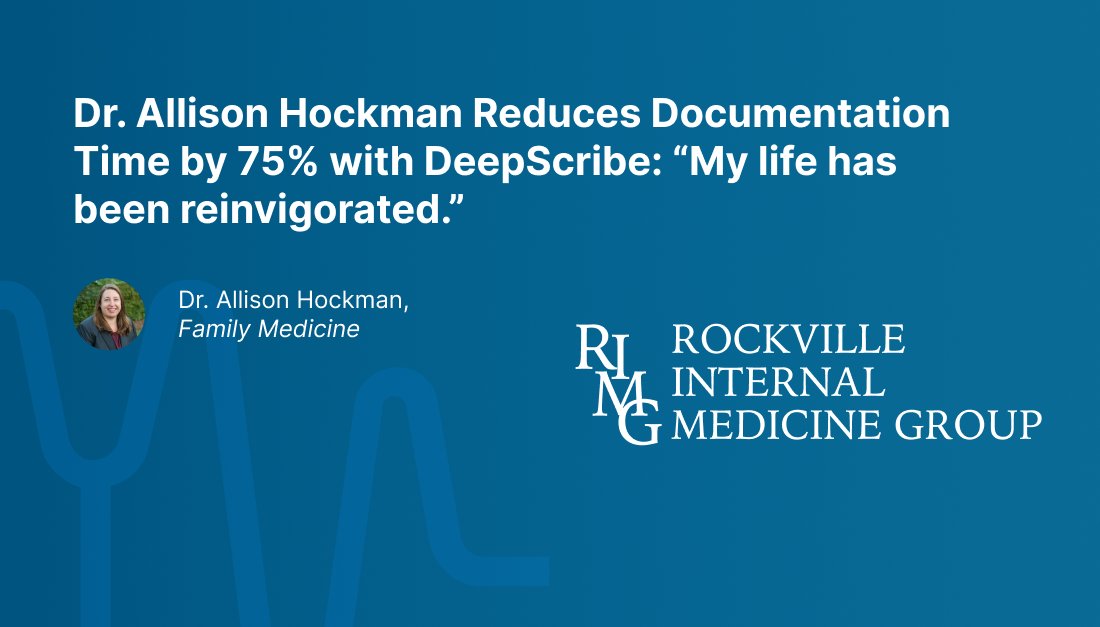
→ 75% reduction in documentation time
→ 96% of patients whose provider used DeepScribe were likely to recommend the provider - and increase from 89% for providers not using the tech
Future metrics to be explored include retention and physician joy
𝟱. 𝗢𝗰𝗵𝘀𝗻𝗲𝗿 𝗵𝗮𝘀 𝗮 𝗿𝗼𝗮𝗱𝗺𝗮𝗽 𝗳𝗼𝗿 𝘀𝗰𝗮𝗹𝗶𝗻𝗴 𝗮𝗰𝗿𝗼𝘀𝘀 𝘁𝗵𝗲 𝗲𝗻𝘁𝗲𝗿𝗽𝗿𝗶𝘀𝗲
Initially expanding to orthopedics, and then eventually the rest.
At scale the tech will reach 4,700 physicians across 46 hospitals and 370 health and urgent care centers!
𝟲. 𝟭𝟬𝟬% 𝗮𝗱𝗼𝗽𝘁𝗶𝗼𝗻 𝗶𝘀 𝘂𝗻𝗿𝗲𝗮𝗹𝗶𝘀𝘁𝗶𝗰 - 𝗴𝗼𝗮𝗹 𝗶𝘀 𝘁𝗼 𝗳𝗼𝗰𝘂𝘀 𝗼𝗻 𝘁𝗵𝗲 𝟴𝟬% 𝘄𝗵𝗼 𝘄𝗶𝗹𝗹 𝗮𝗱𝗼𝗽𝘁 𝗮𝗻 𝗶𝗻𝗻𝗼𝘃𝗮𝘁𝗶𝗼𝗻
According to Chief Innovation Officer Dr. Jason Hill that adoption will be based on demonstrating more and more value to providers, and value will differ based on specialty.
For example, for primary care that might be improved well-being whereas some procedural specialties may see value in getting to spend more time in the operating room.
3
2
8
593
30 Jul 2024
We’re thrilled to announce a new partnership with Ochsner Health, the Gulf South’s leading nonprofit healthcare provider. Together, we’re bringing DeepScribe ambient intelligence to Ochsner Health’s 4,700 clinicians, across 46 hospitals and 370 health and urgent care centers.
2
2
1
427
30 Jul 2024
It’s a privilege to partner with an organization that is so committed to the future of healthcare. As we roll out DeepScribe AI to the entire Ochsner Health clinical staff, we're excited to continue improving care delivery and defining the future of generative AI for healthcare
1
104
DeepScribe retweeted

21 Jun 2024
Explore insights on ambient clinical voice companies and their unique solutions: healthcareittoday.com/ambien…
See how @DeepScribeAI 's ambient voice solution, built on a vast dataset, generates medical notes with a human touch tailored to each physician: healthcareittoday.com/2024/0…
1
2
187
11 Jun 2024
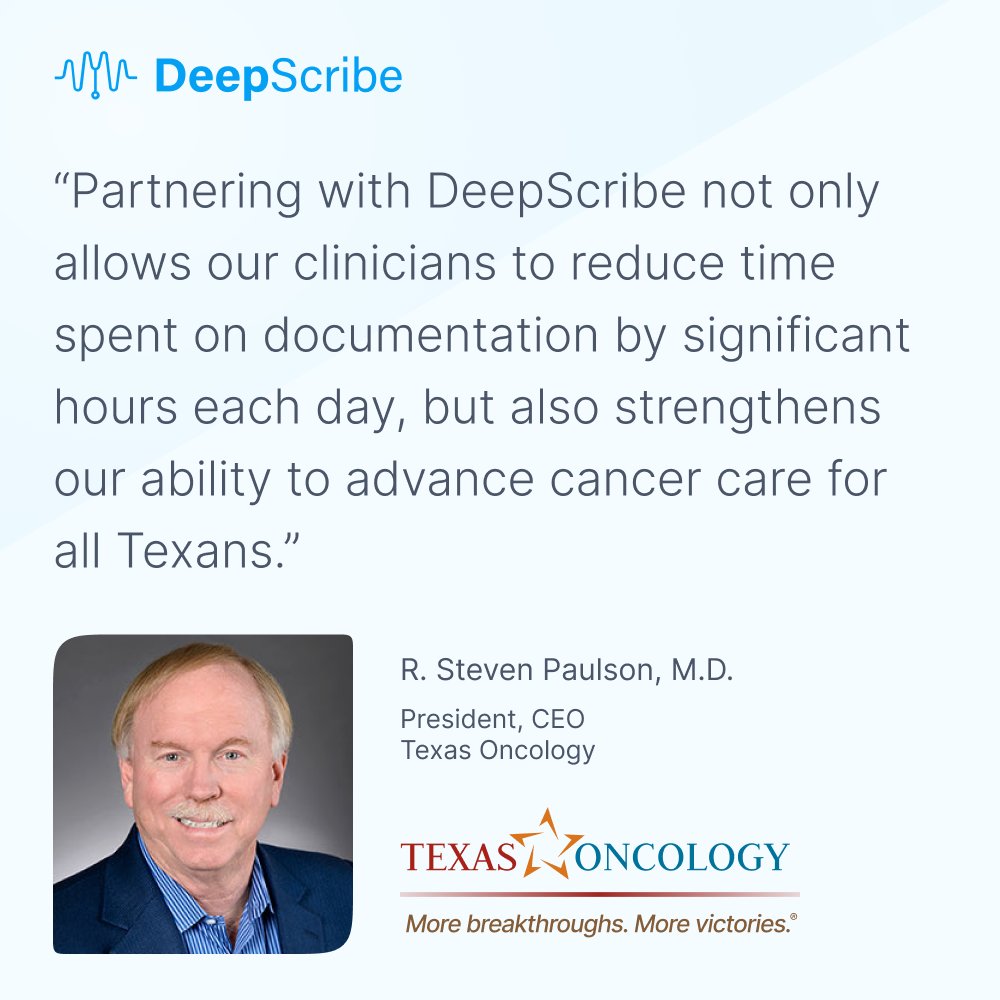
Today, Texas Oncology announced their partnership with DeepScribe, bringing our industry-best AI documentation to oncology exam rooms across their 280 locations.
deepscribe.ai/resources/deep…
1
6
3,122
DeepScribe retweeted

3 Apr 2024
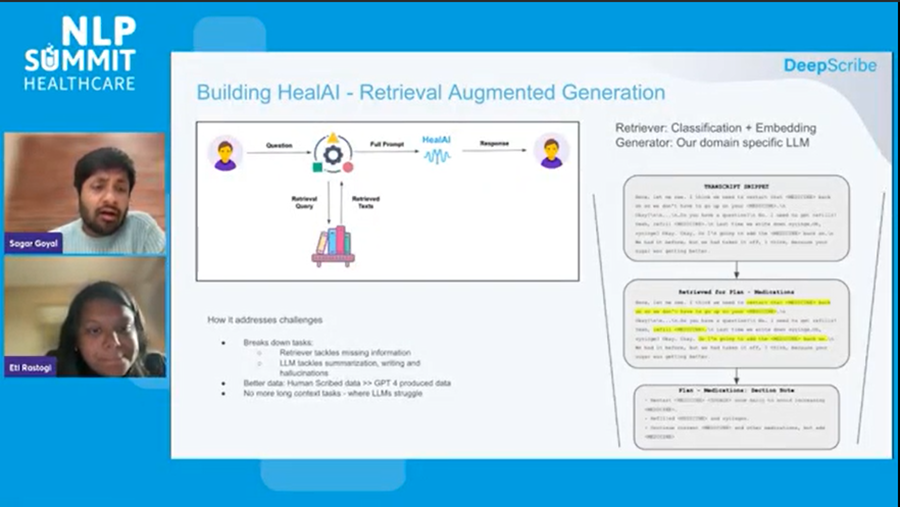
Join Sagar and Eti from @DeepScribeAI at Stage 3 as they share their journey of developing a cost-effective medical LLM. Learn how they tackled challenges like medical prompt engineering and GPT4 limitations to outperform existing models.
1
1
427
DeepScribe retweeted
29 Mar 2024
Every day, we transform thousands of patient conversations into comprehensive, customizable medical notes. Our ability to deliver on that promise hinges on more than just automation; it’s about accuracy, reliability, and meeting strict clinical standards. How do we do it?
1
1
2
402
29 Mar 2024
Every day, we transform thousands of patient conversations into comprehensive, customizable medical notes. Our ability to deliver on that promise hinges on more than just automation; it’s about accuracy, reliability, and meeting strict clinical standards. How do we do it?
1
1
2
402
29 Mar 2024
⭐️ Golden Notes: Quality control *for* quality control.
📈 Rates: Pulse, Panel, and Statistical evaluations used to measure the effectiveness of changes to our algorithm.
🔎 Qualitative Evals: Continuous quality control that allows us to identify, report, and fix problems.
1
160
29 Mar 2024
With robust quality management, we remain committed to delivering the highest standards of accuracy and reliability in healthcare. Read more about our quality management systems here:
deepscribe.ai/resources/enha…
139