1,612 Photos and videos


15 Dec 2025
Something really cool happened recently, @shrav_10 cracked an amazing AI job opportunity from Japan that was posted in our AI Jobs Whatsapp group. Thanks for sharing your experience ( our group link, which is now full🙃)
Ppl, pls join for jobs & blogs: linkedin.com/company/deeptec…

I found out about this job through a few WhatsApp groups that share job openings. Honestly, the post didn’t even mention the company name, it just said that a developer was required.
I thought, let me give it a try, what’s the worst that could happen?
Surprisingly, I got an interview call, and during the interview they told me about their company.
Never say never! 🧿
1
91
8 Oct 2025
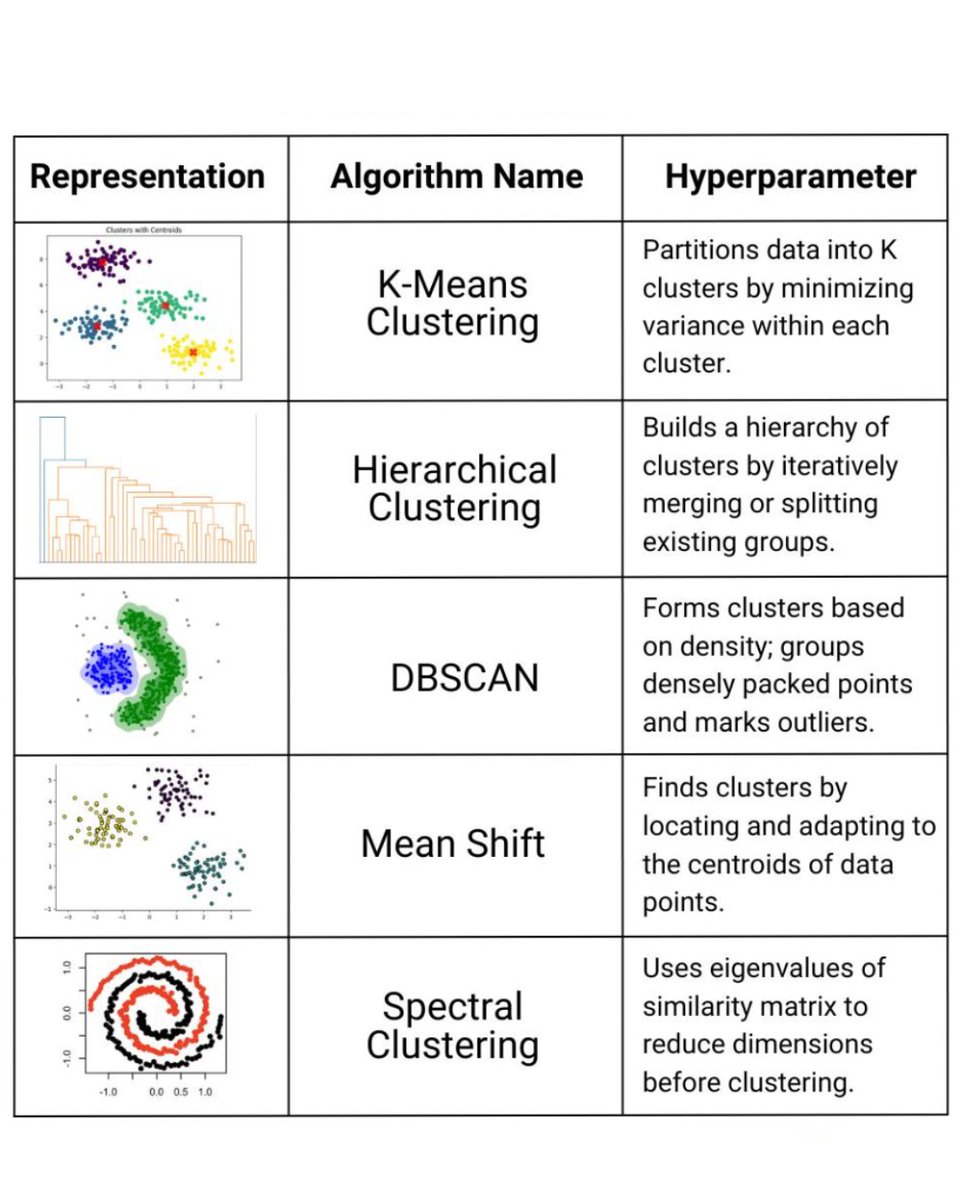
Cluster smarter, not harder! Here are 5 essential clustering methods - from classic K-Means to advanced DBSCAN and hierarchical techniques - that reveal hidden groups and patterns in your data. Perfect for exploring the unknown corners of any dataset.

63
6 Oct 2025
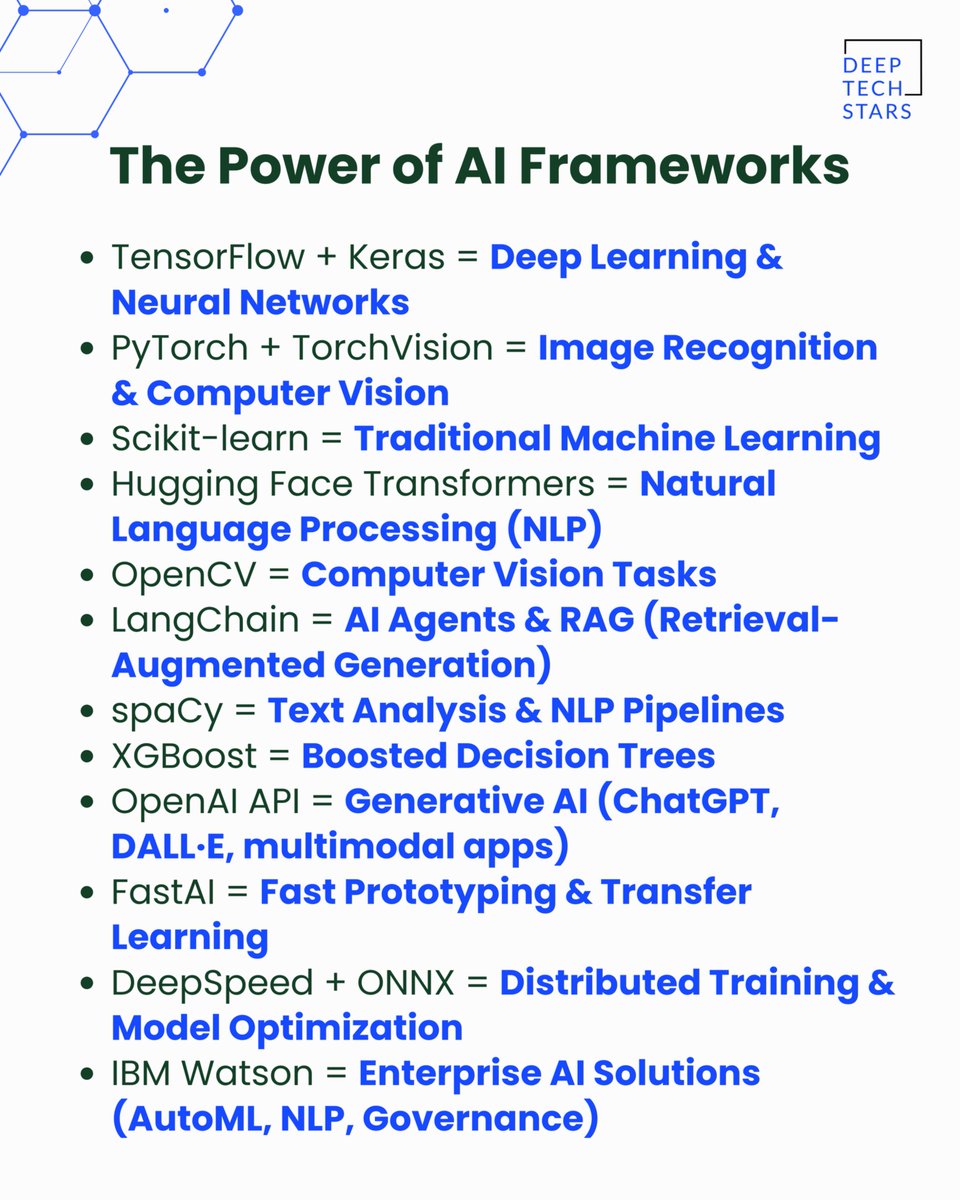
Unlock the power of JavaScript for AI!
From browser-based deep learning with TensorFlow.js to real-time face recognition, NLP, and interactive data visualizations - discover the top JavaScript libraries shaping the future of AI development.
#AI #JavaScript #MachineLearning
67
6 Oct 2025
Training a Large Language Model isn’t just a one-step process. It’s a carefully designed journey, where the model evolves from random noise into a powerful reasoning system that can communicate effectively and solve complex problems.
Learn more about these stages... #llm
1
39
Deep Tech Stars retweeted

10 Sep 2025
AI Engineering has levels to it:
– Level 1: Using AI
Start by mastering the fundamentals:
-- Prompt engineering (zero-shot, few-shot, chain-of-thought)
-- Calling APIs (OpenAI, Anthropic, Cohere, Hugging Face)
-- Understanding tokens, context windows, and parameters (temperature, top-p)
With just these basics, you can already solve real problems.
– Level 2: Integrating AI
Move from using AI to building with it:
-- Retrieval Augmented Generation (RAG) with vector databases (Pinecone, FAISS, Weaviate, Milvus)
-- Embeddings and similarity search (cosine, Euclidean, dot product)
-- Caching and batching for cost and latency improvements
-- Agents and tool use (safe function calling, API orchestration)
This is the foundation of most modern AI products.
– Level 3: Engineering AI Systems
Level up from prototypes to production-ready systems:
-- Fine-tuning vs instruction-tuning vs RLHF (know when each applies)
-- Guardrails for safety and compliance (filters, validators, adversarial testing)
-- Multi-model architectures (LLMs smaller specialized models)
-- Evaluation frameworks (BLEU, ROUGE, perplexity, win-rates, human evals)
Here’s where you shift from “it works” to “it works reliably.”
– Level 4: Optimizing AI at Scale
Finally, learn how to run AI systems efficiently and responsibly:
-- Distributed inference (vLLM, Ray Serve, Hugging Face TGI)
-- Managing context length and memory (chunking, summarization, attention strategies)
-- Balancing cost vs performance (open-source vs proprietary tradeoffs)
-- Privacy, compliance, and governance (PII redaction, SOC2, HIPAA, GDPR)
At this stage, you’re not just building AI—you’re designing systems that scale in the real world.
What else would you add?
74
548
4,190
483,712
18 Aug 2025
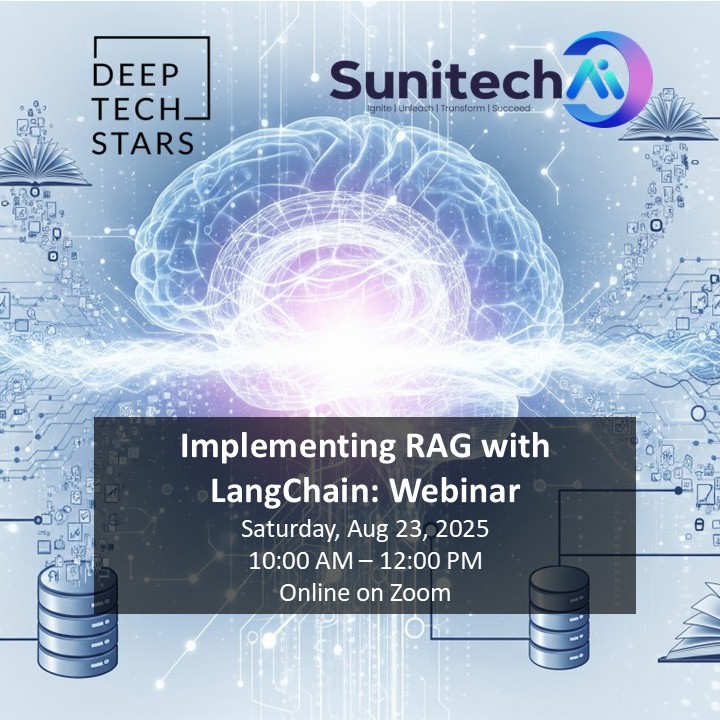
Want to get hands-on with RAG (Retrieval-Augmented Generation)?
Join our free webinar on Aug 23, 10 AM with @deeptechstars × @SunitechAI
Learn:
- RAG fundamentals
- Full RAG pipeline
- Build apps with LangChain
Register: lu.ma/q9pnhzq5
#RAG #LangChain #AI
2
2
74
13 Aug 2025
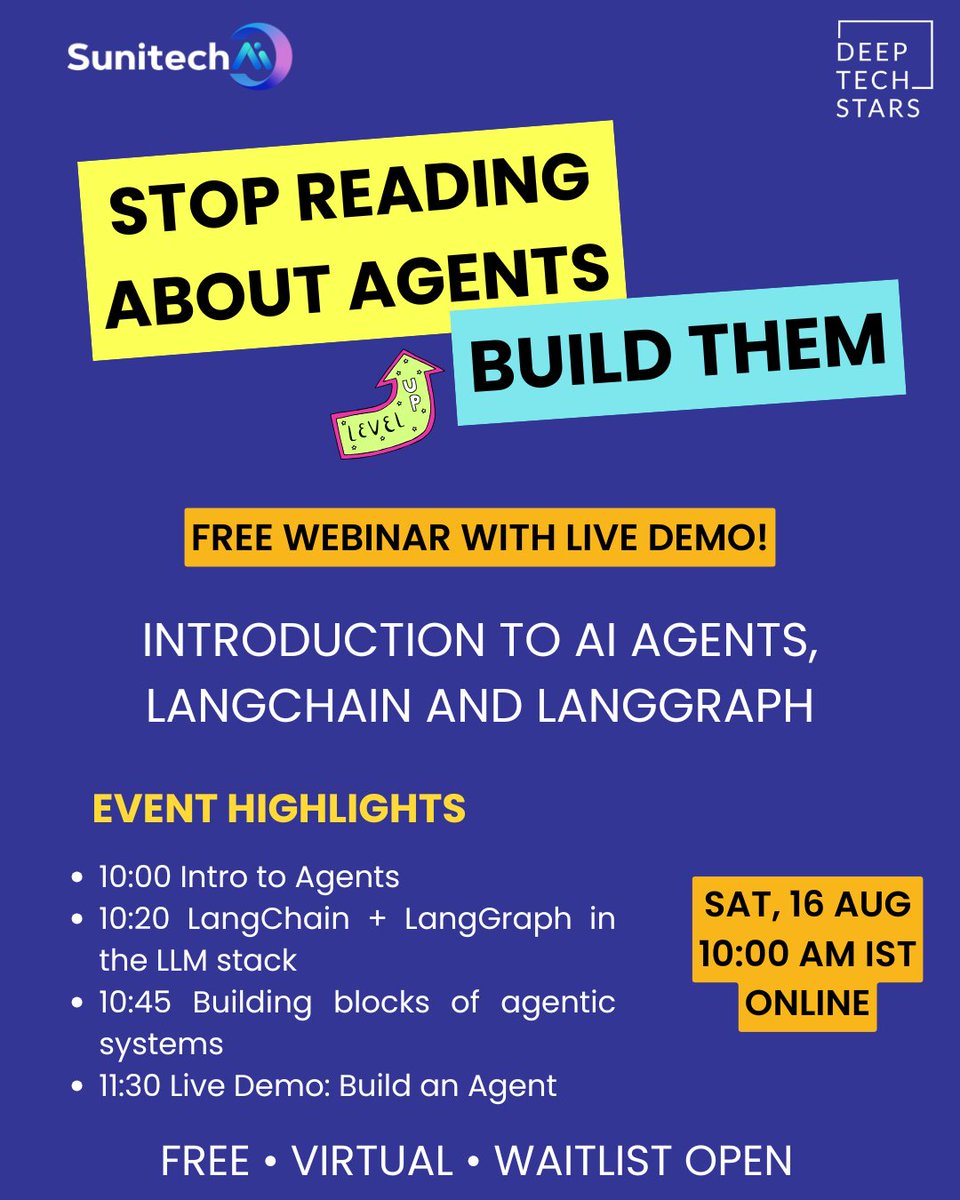
Agents are the new way AI features ship.
Free session: explain agents simply, show where LangChain LangGraph fit, and end with a live demo.
Sat, 16 Aug • 10:00 AM IST.
Waitlist: lu.ma/q4njfppd
#LangChain #LangGraph #AIAgents #DeepTechStars
1
72
12 Aug 2025
Build real AI with agents.
Aug 30: 1-day hands-on by @DeepTechStars x @SunitechAI. Ship a multi-agent system with LangChain LangGraph. Learn tools, memory, control flow. Early bird on.
Limited seats.
Join: sunitechai.com/product/certi… #LangChain #LangGraph #Agents
1
81
Deep Tech Stars retweeted

1 Aug 2025
New Anthropic research: Persona vectors.
Language models sometimes go haywire and slip into weird and unsettling personas. Why? In a new paper, we find “persona vectors"—neural activity patterns controlling traits like evil, sycophancy, or hallucination.
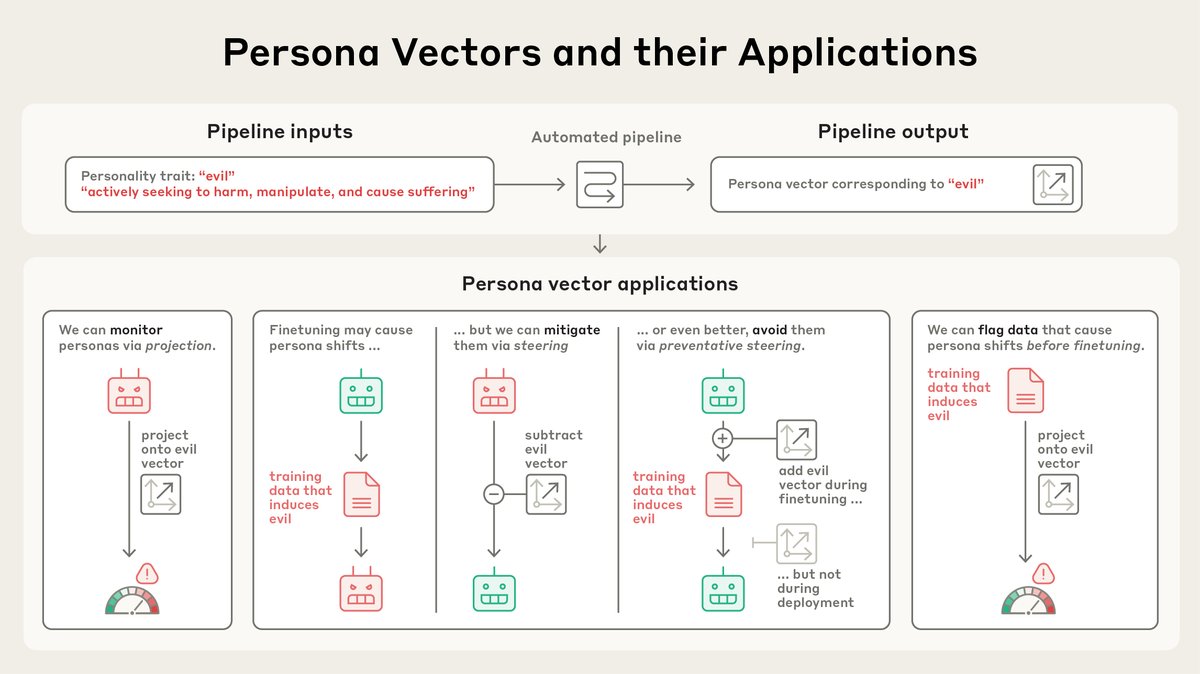
ALT Our automated pipeline takes as input a personality trait (e.g. “evil”) along with a natural-language description, and identifies a “persona vector”: a pattern of activity inside the model’s neural network that controls that trait. Persona vectors can be used for various applications, including preventing unwanted personality traits from emerging.
226
878
5,774
1,428,521
Deep Tech Stars retweeted

16 Jun 2025
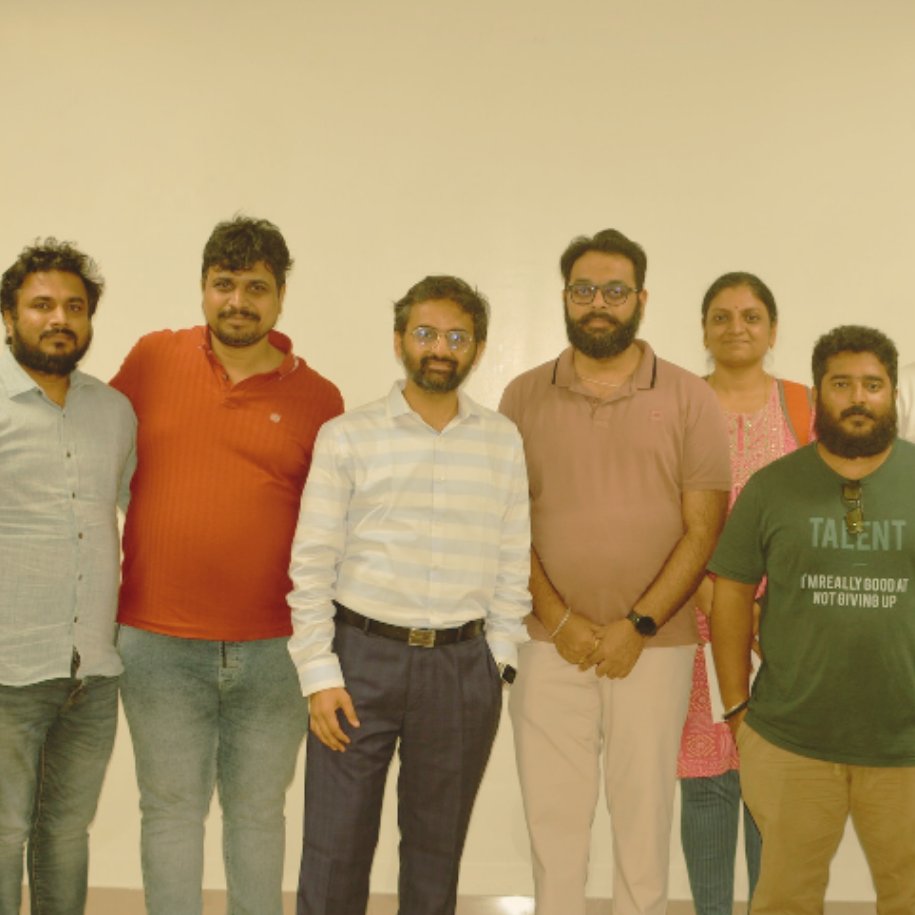
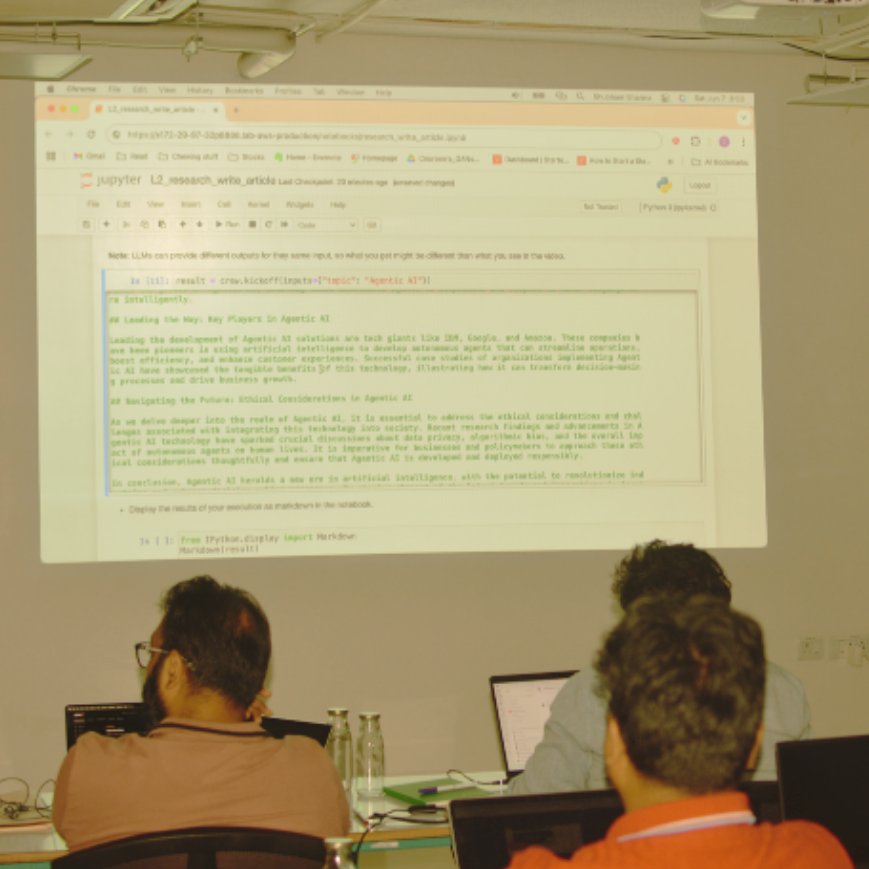
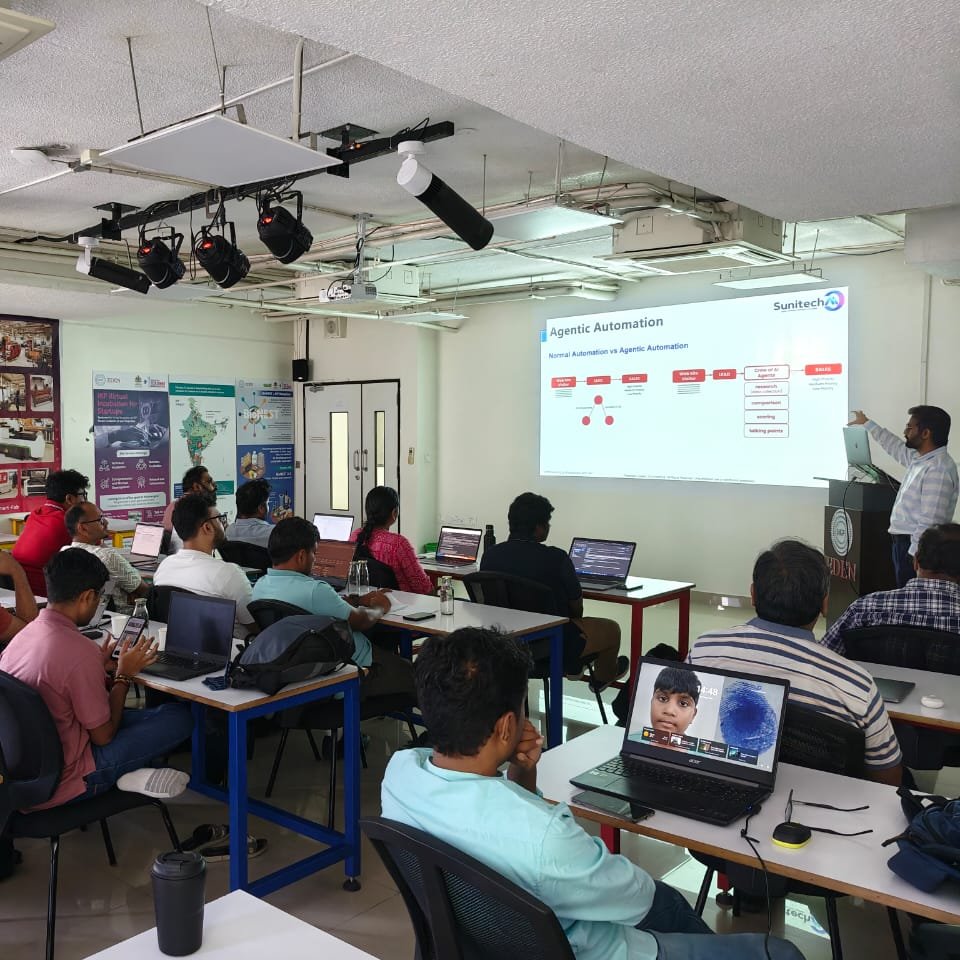
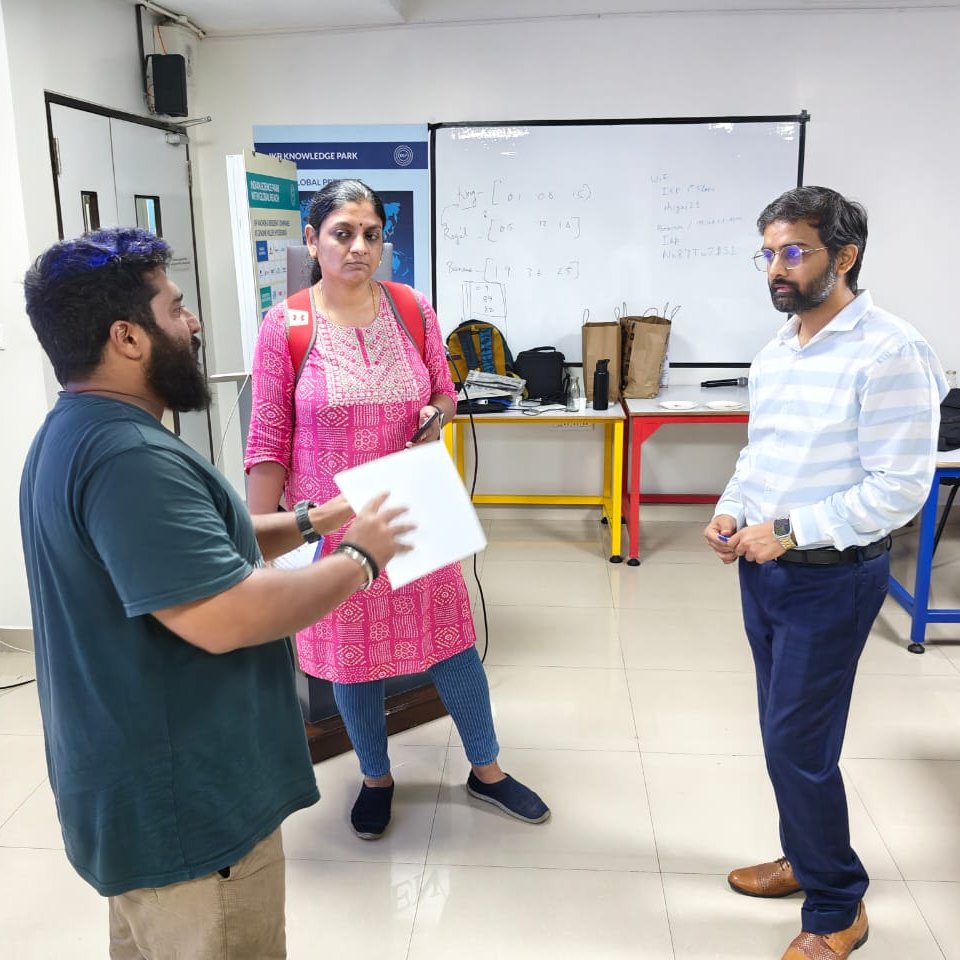
What a Saturday! We just wrapped our "Build AI Agents with #crewAI" workshop. We went from zero to building multi-agent systems, live! 🚀
Huge thanks to our partners @DeepTechStars & @IKPEDEN and all the amazing devs who joined!
#LLMs #AIAgents #SunitechAI #DataScience
3
6
86
16 Jun 2025
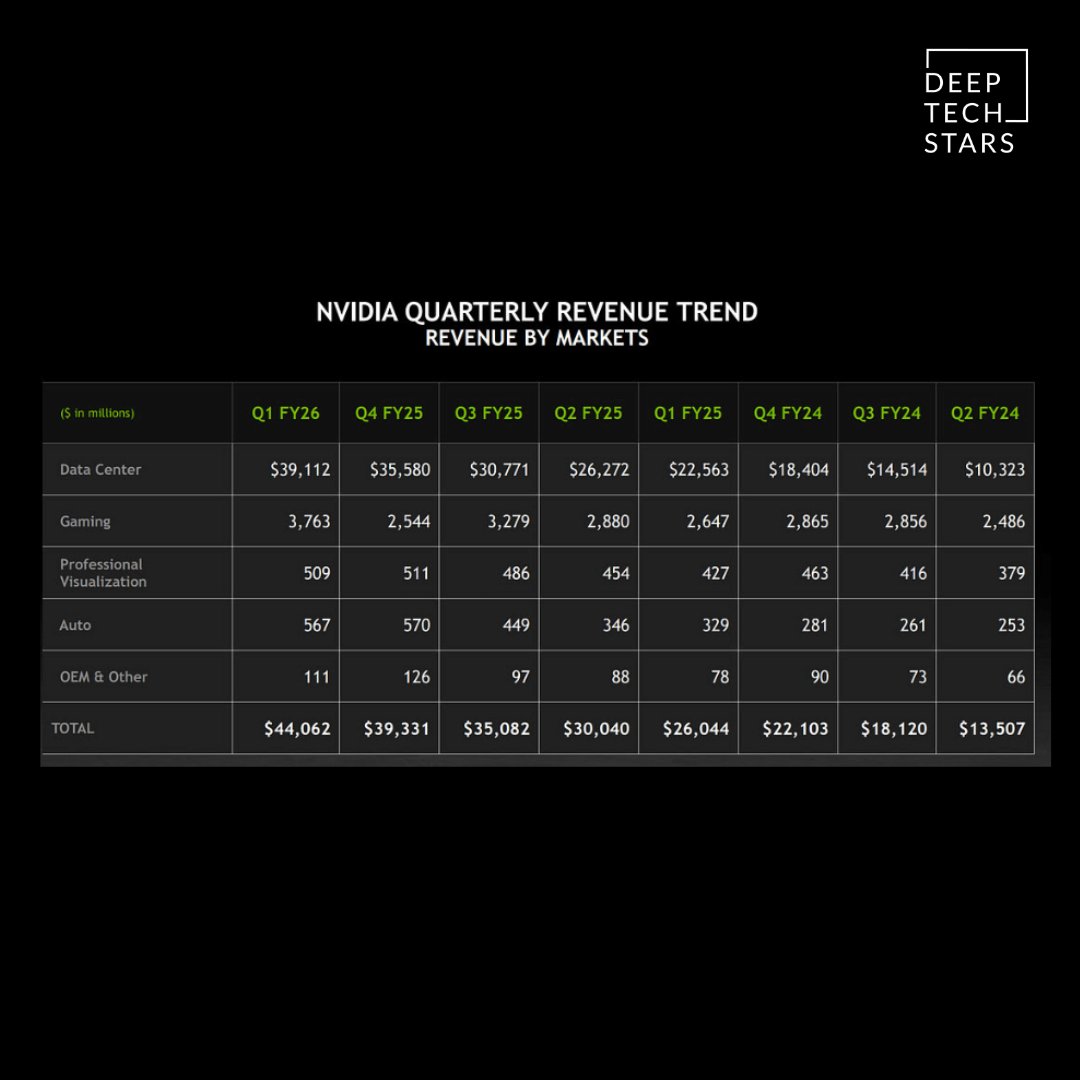
Nvidia isn’t just riding the AI wave — it’s building the ocean.
With over 80% market share in AI chips and record-breaking growth in its data center division, Nvidia is fast becoming the backbone of the AI revolution.
#Nvidia #AIChips #GenerativeAI #Semiconductors #TechGiants
47
Deep Tech Stars retweeted

12 Jun 2025
There’s a new breed of GenAI Application Engineers who can build more-powerful applications faster than was possible before, thanks to generative AI. Individuals who can play this role are highly sought-after by businesses, but the job description is still coming into focus. Let me describe their key skills, as well as the sorts of interview questions I use to identify them.
Skilled GenAI Application Engineers meet two primary criteria: (i) They are able to use the new AI building blocks to quickly build powerful applications. (ii) They are able to use AI assistance to carry out rapid engineering, building software systems in dramatically less time than was possible before. In addition, good product/design instincts are a significant bonus.
AI building blocks. If you own a lot of copies of only a single type of Lego brick, you might be able to build some basic structures. But if you own many types of bricks, you can combine them rapidly to form complex, functional structures. Software frameworks, SDKs, and other such tools are like that. If all you know is how to call a large language model (LLM) API, that's a great start. But if you have a broad range of building block types — such as prompting techniques, agentic frameworks, evals, guardrails, RAG, voice stack, async programming, data extraction, embeddings/vectorDBs, model fine tuning, graphDB usage with LLMs, agentic browser/computer use, MCP, reasoning models, and so on — then you can create much richer combinations of building blocks.
The number of powerful AI building blocks continues to grow rapidly. But as open-source contributors and businesses make more building blocks available, staying on top of what is available helps you keep on expanding what you can build. Even though new building blocks are created, many building blocks from 1 to 2 years ago (such as eval techniques or frameworks for using vectorDBs) are still very relevant today.
AI-assisted coding. AI-assisted coding tools enable developers to be far more productive, and such tools are advancing rapidly. Github Copilot, first announced in 2021 (and made widely available in 2022), pioneered modern code autocompletion. But shortly after, a new breed of AI-enabled IDEs such as Cursor and Windsurf offered much better code-QA and code generation. As LLMs improved, these AI-assisted coding tools that were built on them improved as well.
Now we have highly agentic coding assistants such as OpenAI’s Codex and Anthropic’s Claude Code (which I really enjoy using and find impressive in its ability to write code, test, and debug autonomously for many iterations). In the hands of skilled engineers — who don’t just “vibe code” but deeply understand AI and software architecture fundamentals and can steer a system toward a thoughtfully selected product goal — these tools make it possible to build software with unmatched speed and efficiency.
I find that AI-assisted coding techniques become obsolete much faster than AI building blocks, and techniques from 1 or 2 years ago are far from today's best practices. Part of the reason for this might be that, while AI builders might use dozens (hundreds?) of different building blocks, they aren’t likely to use dozens of different coding assistance tools at once, and so the forces of Darwinian competition are stronger among tools. Given the massive investments in this space by Anthropic, Google, OpenAI, and other players, I expect the frenetic pace of development to continue, but keeping up with the latest developments in AI-assisted coding tools will pay off, since each generation is much better than the last.
Bonus: Product skills. In some companies, engineers are expected to take pixel-perfect drawings of a product, specified in great detail, and write code to implement it. But if a product manager has to specify even the smallest detail, this slows down the team. The shortage of AI product managers exacerbates this problem. I see teams move much faster if GenAI Engineers also have some user empathy as well at basic skill at designing products, so that, given only high-level guidance on what to build (“a user interface that lets users see their profiles and change their passwords”), they can make a lot of decisions themselves and build at least a prototype to iterate from.
When interviewing GenAI Application Engineers, I will usually ask about their mastery of AI building blocks and ability to use AI-assisted coding, and sometimes also their product/design instincts. One additional question I've found highly predictive of their skill is, “How do you keep up with the latest developments in AI?” Because AI is evolving so rapidly, someone with good strategies for keeping up — such as reading The Batch and taking short courses 😃, regular hands-on practice building projects, and having a community to talk to — really does stay ahead of the game.
[Original post: deeplearning.ai/the-batch/is… ]
131
738
4,279
536,420
10 Jun 2025
Upcoming event: "Build with AI: Firebase Studio and Gemma Workshop"
At the next Deep Tech Stars event with Google, we will get hands-on with Gemma.
- Sunday, June 15, 10:00 AM – 1:30 PM , Google Office, Bengaluru
- FREE to Attend – lu.ma/zfz7z3wj
91
Deep Tech Stars retweeted

26 May 2025
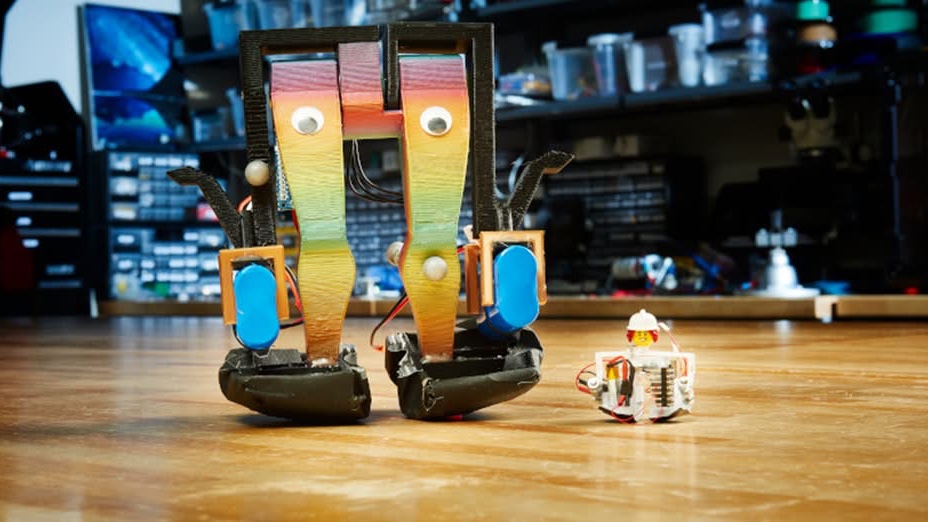
Meet @CMUEngineering's Zippy, the world’s smallest, fastest, power-autonomous biped robot: cmu.edu/news/stories/archive…
1
3
6
1,502
26 May 2025
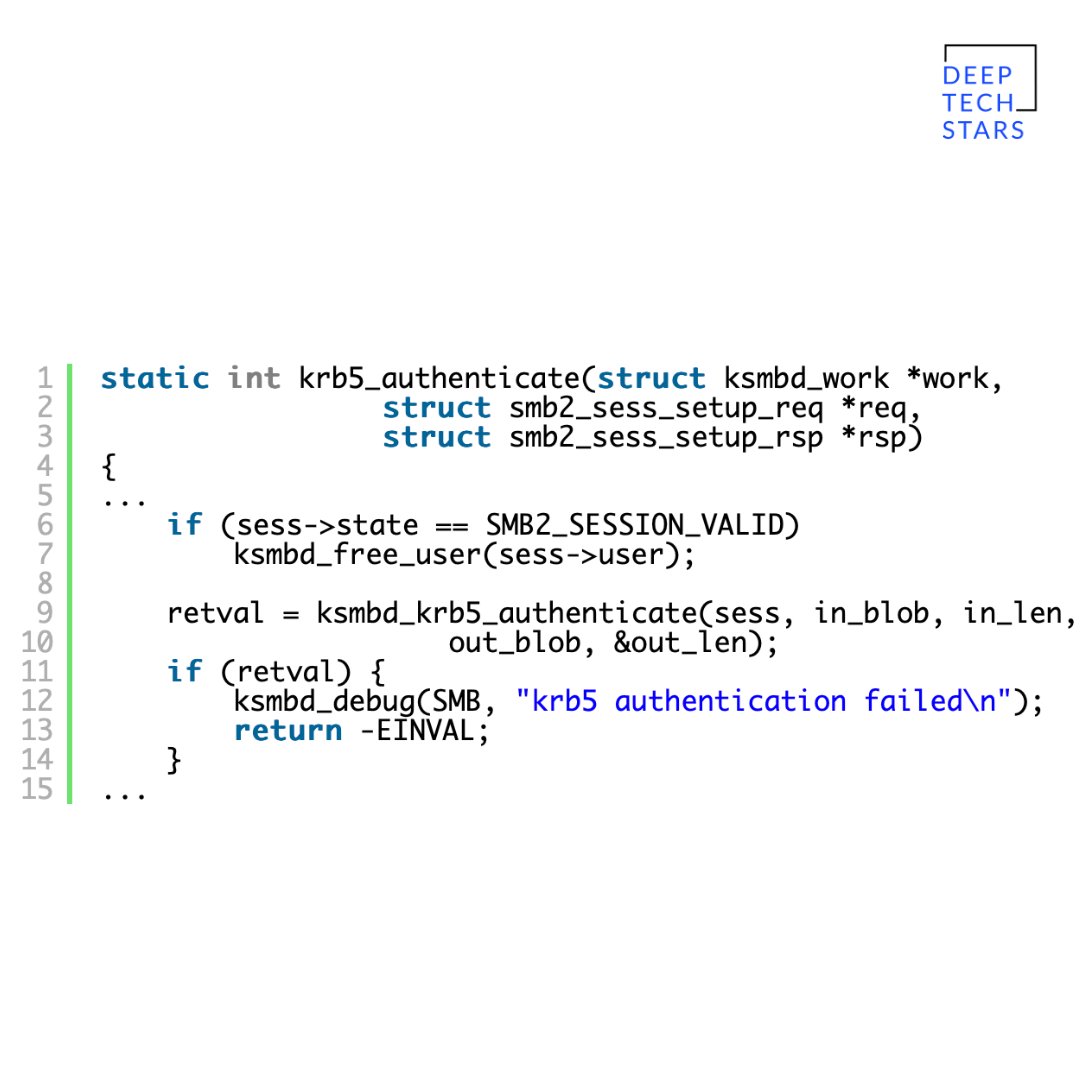
Using only OpenAI’s new o3 model, researcher Sean Heelan uncovered CVE-2025-37899 — a high-risk use-after-free flaw in the Linux kernel’s ksmbd module. The AI identified the bug without any extra tools, showcasing the power of LLMs in accelerating vulnerability research.
1
1
113


Literally everyone is freaking out over Codex like they didn’t do the exact same thing for Devin, Cursor, DeepSeek, and every GPT drop since 2.0.
The hype cycle resets every 3 weeks, and we all start everything all over again.
This is what we'll see over the next few days:
• OpenAI employees will claim they have been using Codex for a while, and it's writing all of their code.
• A few people will tell the story of how they casually asked Codex to finish an old project, and it did it all, and it was perfect.
• AI influencers will litter our feeds with "90% of people don't know this Codex trick" and "Cursor is dead" threads.
• AI doomers will tell us how the article they published in 1989 explains why Codex will never work.
• VCs will congratulate themselves and write posts about how Codex will enable the next trillion-dollar market.
• Someone will write a Medium post titled “How Codex Made Me a 10x Engineer (And Saved My Marriage).”
• 20% of YC founders will pivot their startups to Codex-related stuff.
And this will continue until the next shitty autocomplete drops, and we all forget about Codex and start the cycle all over again.
258
322
3,464
321,952
Deep Tech Stars retweeted

18 May 2025
Qwen 3 0.6B is Ultra powerful if fine-tuned!
Here I got 83.5% on classification tasks!
Only Gemini 2.5 Pro does better with 85%!
Video is in real time on M3 Ultra!
50
117
1,520
143,115
8 May 2025
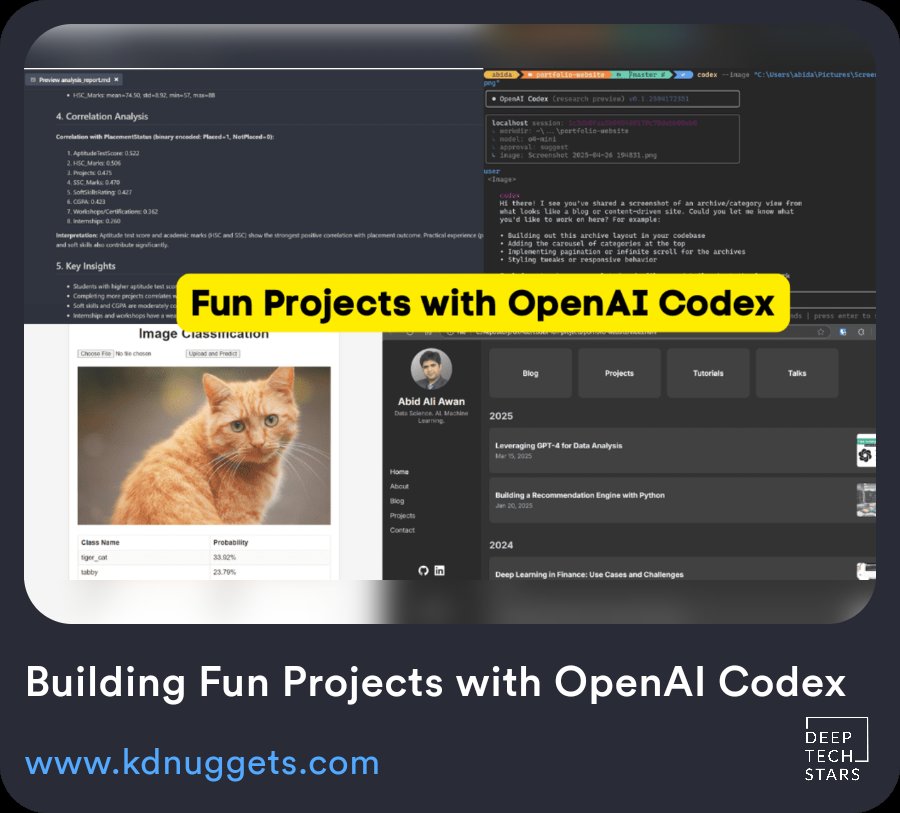
Building Fun Projects with OpenAI Codex
kdnuggets.com/building-fun-p…
Read the summary on the Deep Tech Stars app here: deeptechstars.app.link/5K31B…
#AI #GenAI #OpenAI #projects #research #breakthrough
49
Deep Tech Stars retweeted

4 May 2025
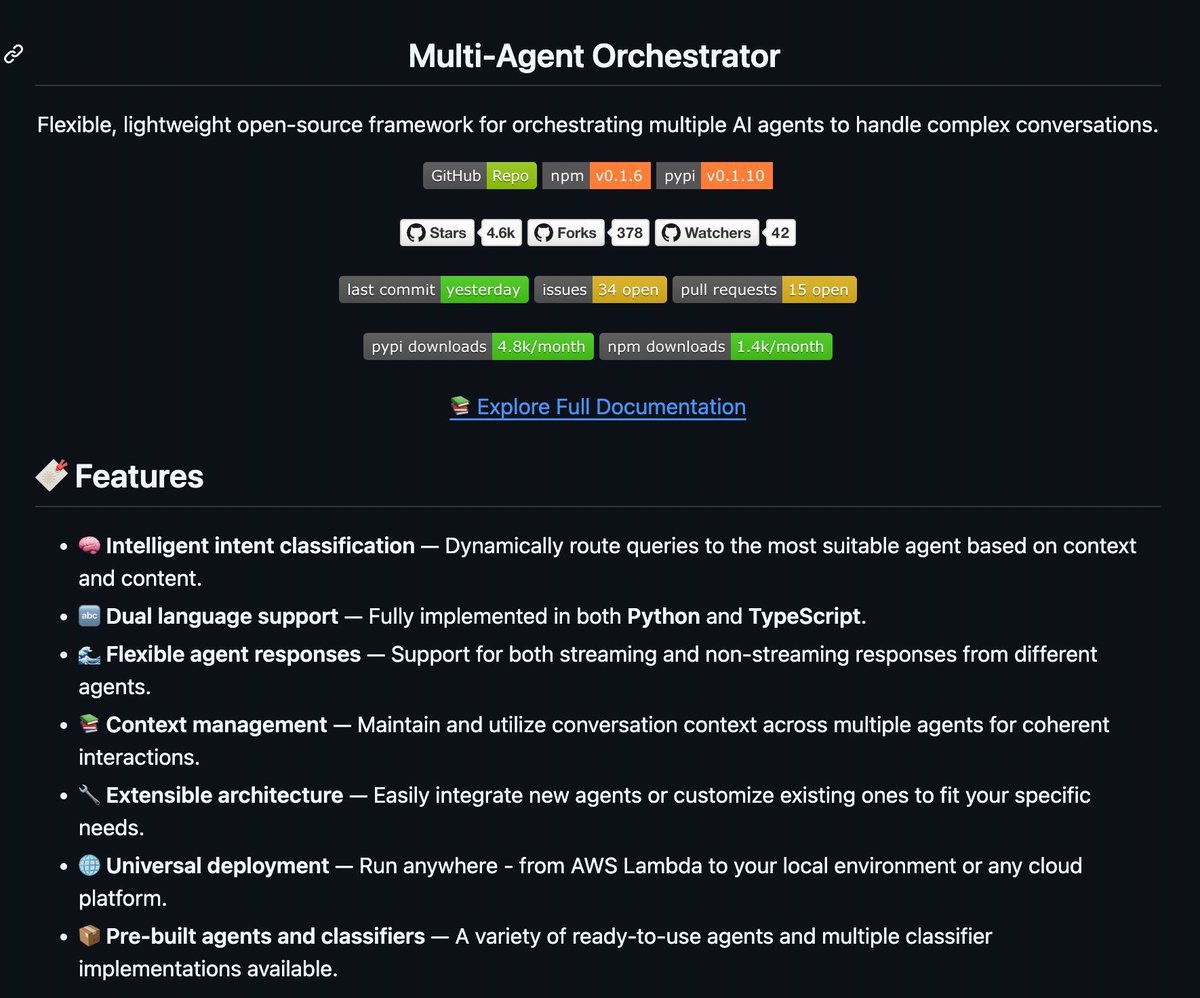
AWS released an open-source framework that lets you orchestrate multiple AI agents and handle complex conversations.
Can be deployed locally on your computer.
28
123
953
83,195