
Joined February 2021
- Tweets 2,266
- Following 3,060
- Followers 1,788
- Likes 6,861
408 Photos and videos









The Google paper released yesterday (March 31) specifically highlighted that 6.9 million BTC are currently "at-rest vulnerable" because of their address type.
Here is the breakdown of how your specific address type holds up against a quantum attacker:
1. The "Exposed" Group (High Risk)
These addresses have their Public Keys written directly on the blockchain in plain sight. A quantum computer doesn't need to wait for you to spend; it can start the math right now.
• P2PK (Legacy/Satoshi Era): Used for the first ~1.7 million BTC mined (2009–2010). These are the most vulnerable.
• P2TR (Taproot - bc1p...): To make Taproot fast and private, it commits a "tweaked" Public Key directly to the chain. While it’s the best for current fees, it is technically an "at-rest" vulnerability compared to older hashed types.
• Reused Addresses: If you have ever sent Bitcoin out of an address and then received more back into that same address, your Public Key is now permanently "naked" on the ledger.
2. The "Hashed" Group (Safe while "At-Rest")
These addresses only store a hash (a digital fingerprint) of your key. Even a 500,000-qubit computer cannot "see" the key to attack it while the coins are just sitting there.
• P2PKH (Legacy - 1...): The original "hashed" address. Safe until you spend.
• P2WPKH (Native SegWit - bc1q...): This is the current "Gold Standard" for 2026. It is cheap, fast, and keeps your Public Key hidden behind a quantum-resistant SHA-256 wall.
3. The "Quantum-Hardened" Group (Future Proof)
This is the new frontier being discussed this week in the Bay Area dev circles.
• P2MR (BIP-360 - bc1z...): This is the "Satoshi Fix" merged earlier this year. It works like Taproot but removes the key-path. It only commits to a Merkle root of scripts. It is designed to be the "Forever Vault" that you can leave your coins in for 50 years without worrying about quantum breakthroughs.
The 2026 Strategy: If you have funds in an old 1... or 3... address that you've used before, or a large stack in a Taproot bc1p address, the "Smart Money" is currently migrating those to a fresh, never-used bc1q address (or a bc1z if your wallet supports the BIP-360 testnet yet).
1
6
22
1,241
DeezeyTech retweeted

Apr 1
This is absolutely MASSIVE.
Manipulation in the crypto is finally ending.
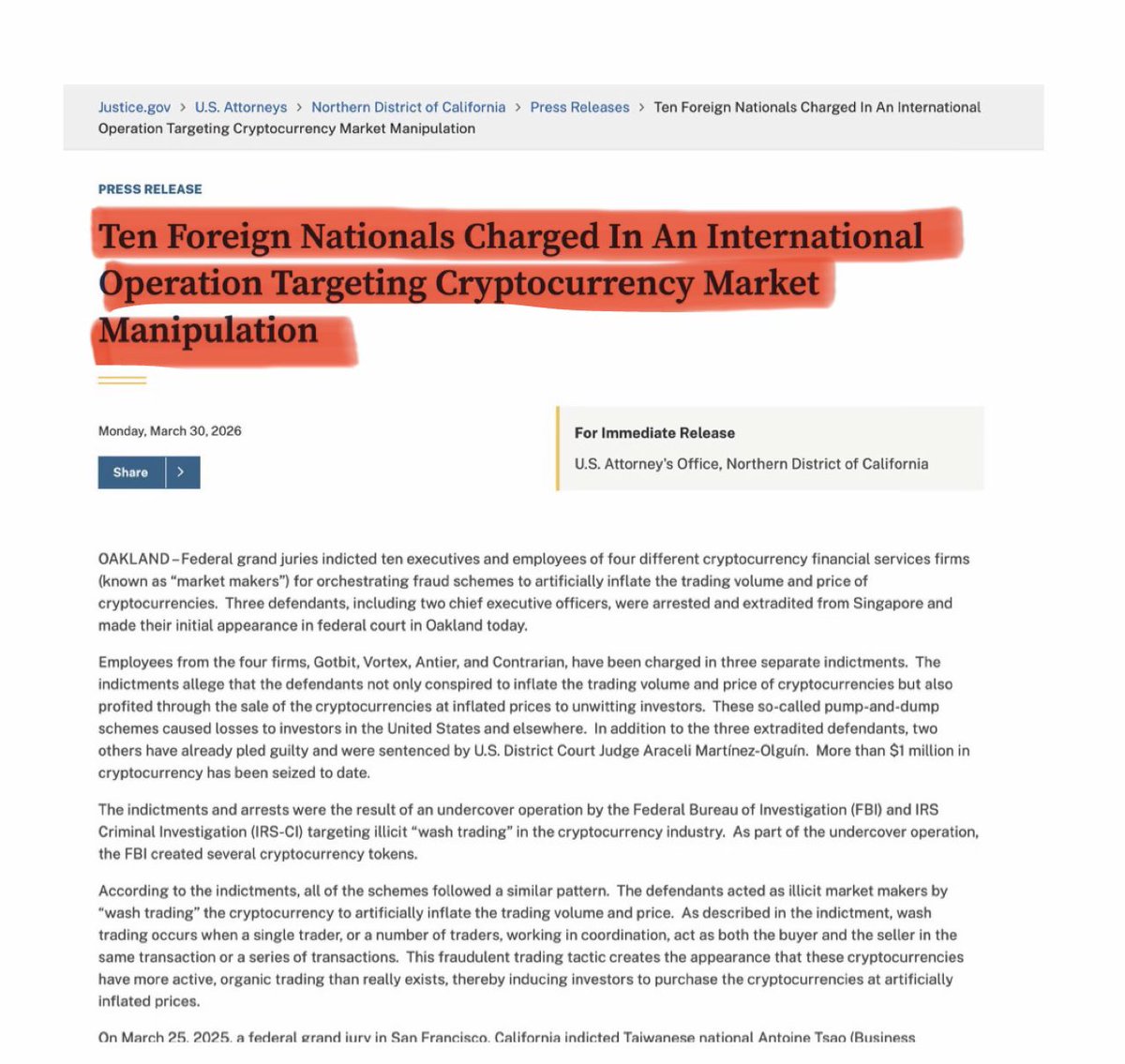
Ten foreign nationals have been charged by the US Justice Department for manipulating the crypto market.
These ten executives and employees are from four different crypto “market makers”: Gotbit, Vortex, Antier, and Contrarian.
The indictments allege these people conspired to inflate the trading volume and price of tokens and profited through the sale of the cryptocurrencies at inflated prices to unwitting investors. These so-called pump-and-dump schemes caused losses to investors in the United States and elsewhere.
Three of the accused, including two CEOs, were recently arrested and extradited from Singapore to the United States.
To make it simple:
- These guys pump the price with fake volume
- Then trap retail investors at higher prices
- Then dump on them
- Rinse and repeat
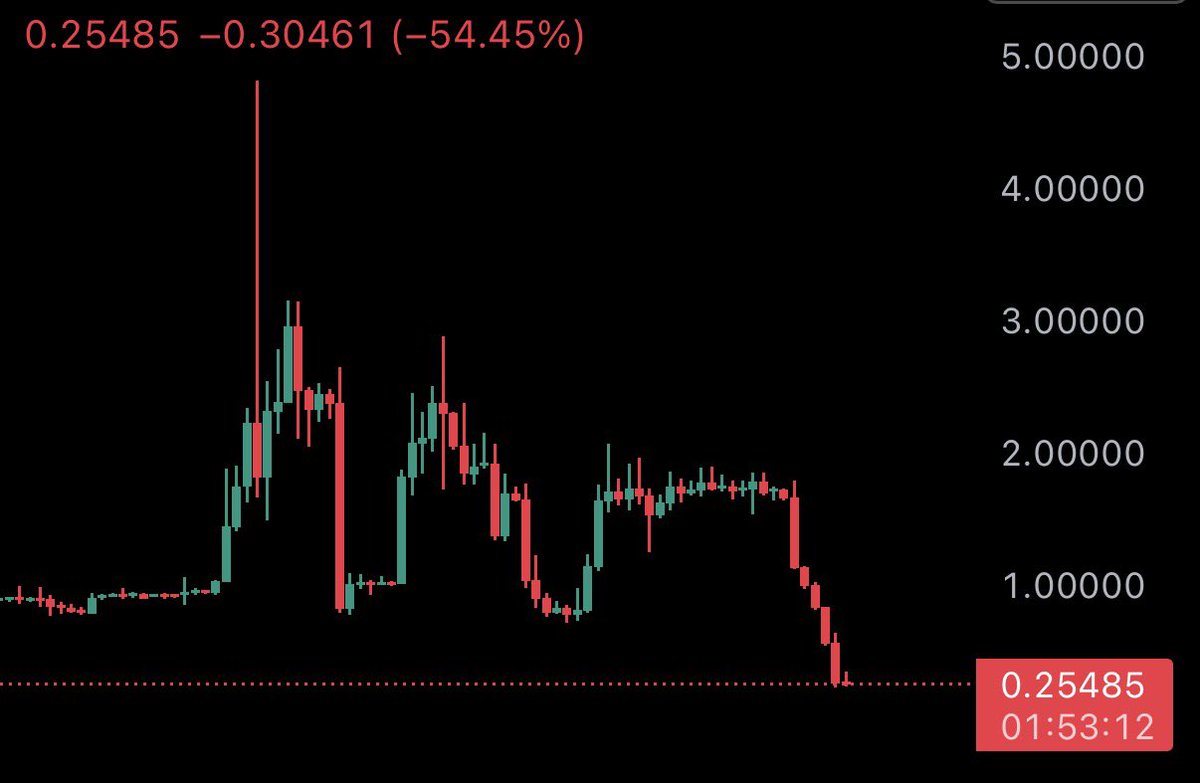
These market makers are the reason why crypto has been dumping nonstop for months. They do a crazy amount of paper trading to suppress the price and profit from it.


465
1,175
5,591
361,378

Feb 27
Dollar cost averaging is a good strategy while accumulating crypto during times of volitility and uncertainty. Implementing strategic DCA can average your purchases over time reducing your risk durring unfavorable market conditions. Consider using laddering 🪜 purchases 🥂
4
4
61
DeezeyTech retweeted

Jan 10
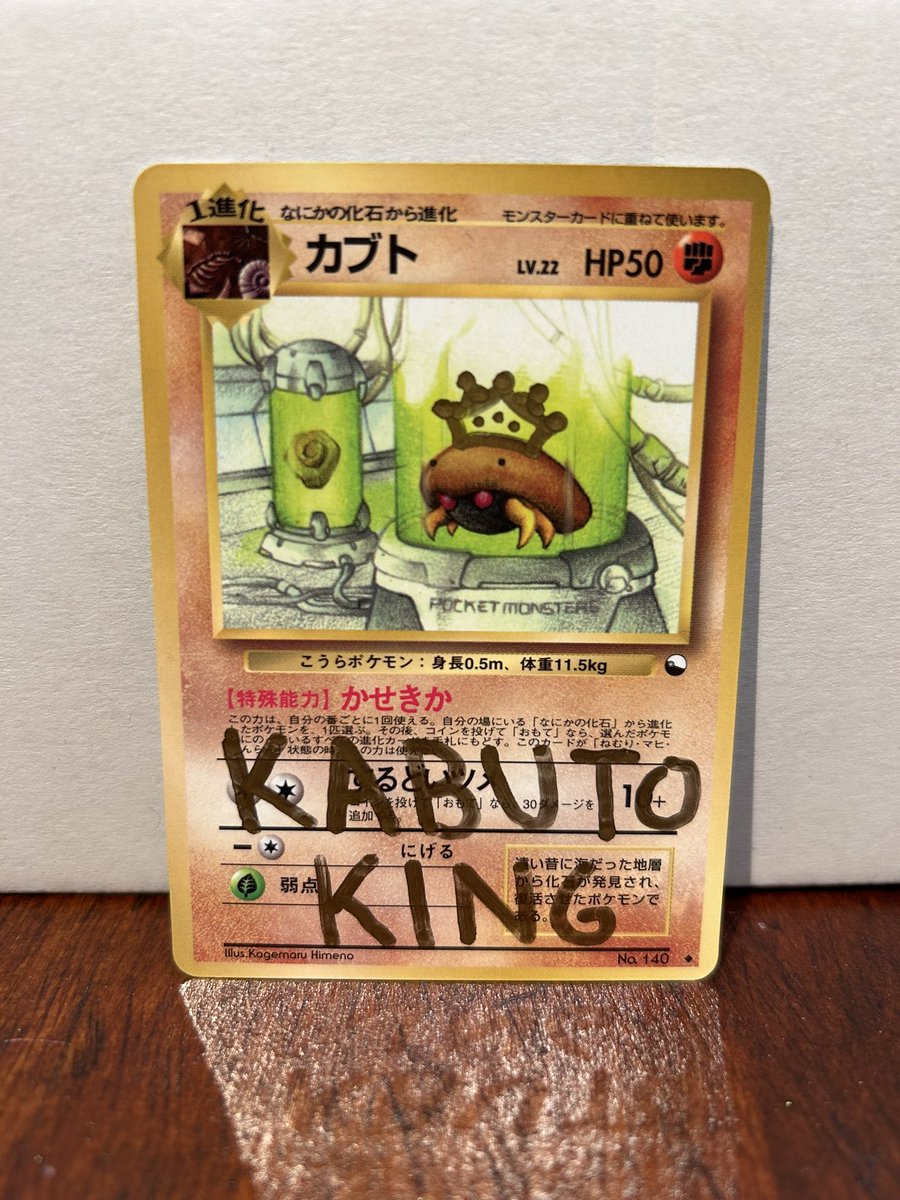
Kabuto King Giveaway 👑
Winner Receives:
👑 Autographed 1998 Japanese Vending Series II Kabuto
How to Win:
👑 Follow @KabutoKing_
👑 Like & Repost
This is the first of this card I have signed, and is EXTREMELY rare on its own!
A winner will be picked Monday evening. Good luck and thank you all!
448
1,971
3,001
229,185
DeezeyTech retweeted

30 Dec 2025
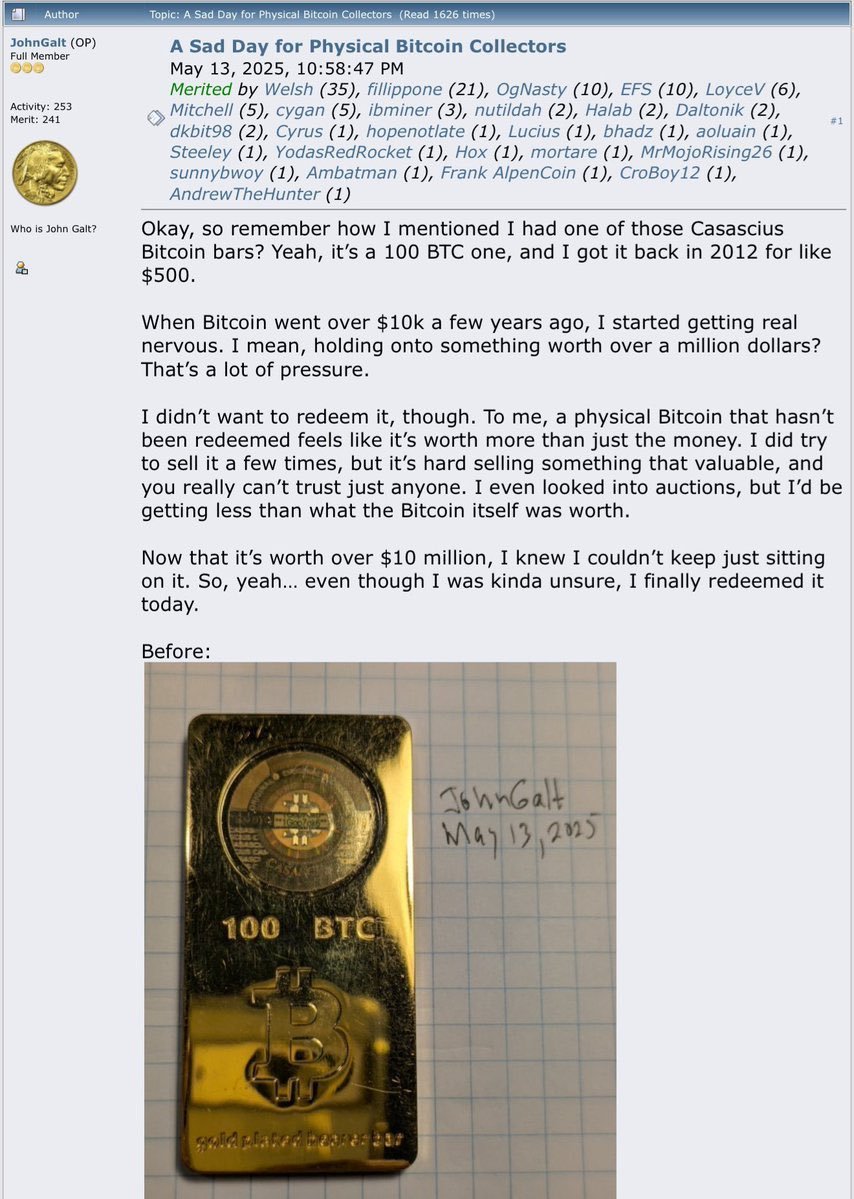
This guy bought a physical Bitcoin bar in 2012.
100 BTC for $500.
Held it through:
-the Mt. Gox collapse
-multiple 80% drawdowns
-the pandemic crash
-the FTX collapse
and a million other scares
And finally sold it.
He walked away with $10 million.
Ten. Million. Dollars. 🤯
31
39
243
33,027
DeezeyTech retweeted

20 Dec 2025
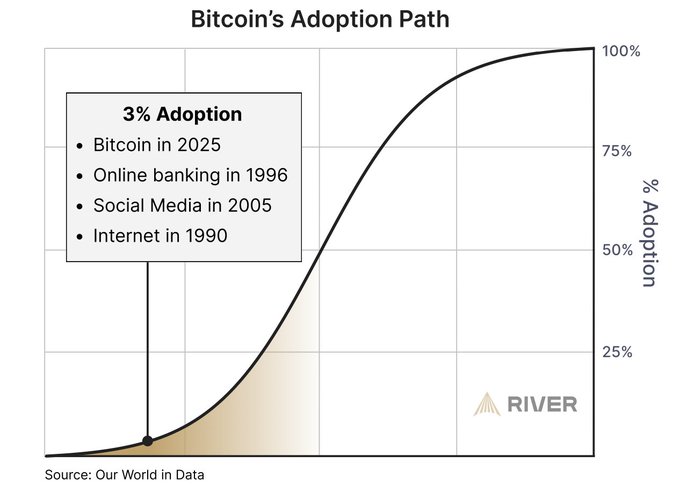
Send this to people who think it's too late to buy bitcoin.
39
224
1,128
88,053
DeezeyTech retweeted

19 Dec 2025
AFTER 400 WEEKS OF $50 DCA…
- CASH: $20,000
- GOLD: $38,864
- BITCOIN: $148,707
THIS IS WHY I STACK BITCOIN
NOTHING BEATS IT OVER TIME.
154
311
2,797
504,857



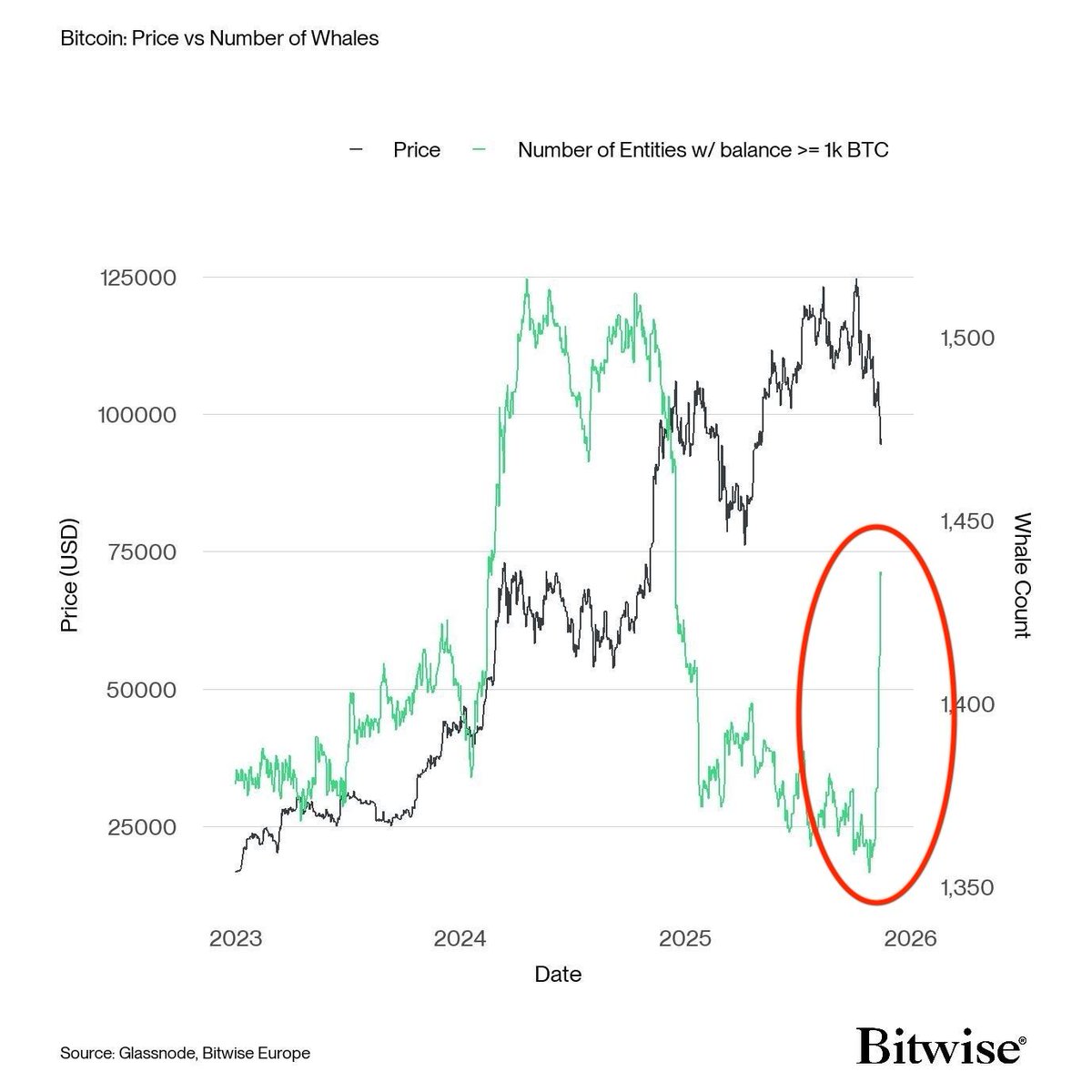
DeezeyTech retweeted

18 Sep 2025
The SEC just started altcoin season 👀
17 Sep 2025

JUST IN: 🇺🇸 SEC approves generic ETF listing standards, clearing path for #crypto ETF listings without individual approval.
"Get ready for a wave of spot crypto ETP launches in coming weeks and months." - James Seyffart

152
259
1,987
138,237