
Helping Web 3 Founders Projects grow with solid writing
Joined April 2023
- Tweets 7,859
- Following 894
- Followers 930
- Likes 25,303
766 Photos and videos


Pinned Tweet

Jun 6
Have you ever lost a business deal because your workload became overwhelming?
I have.
Last year, I ran a call service business and one of my clients asked me to reach out at the beginning of the next month.
It sounded simple enough.
But that day got busy.
I was handling multiple clients, juggling different tasks, and before I knew it, I completely forgot.
By the time I remembered, the opportunity was gone.
That experience taught me something:
The conversations are rarely the hard part.
The hard part is everything that happens between conversations.
Who needs a follow-up?
Who has paid?
Who is waiting for a response?
Which deal is still active?
As your workload grows, opportunities start slipping through the cracks.
That’s why businesses use CRMs.
But Web3 has a different reality.
Most business doesn’t happen through email.
Partnerships happen in Telegram.
Investor conversations happen in DMs.
KOL negotiations happen in chats.
Exchange listings happen in private messages.
The result?
The real deal information exists, but it’s buried inside chat history, screenshots, and pinned conversations.
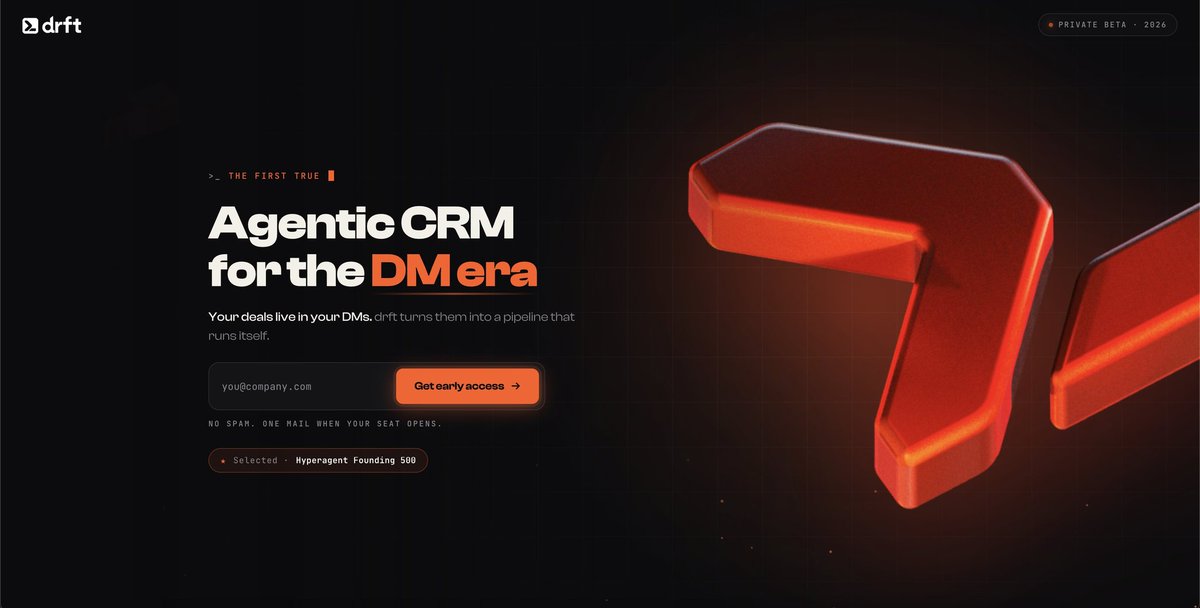
That’s exactly what @DRFT_CRM is solving.
Instead of forcing teams to manually update a CRM, DRFT turns chat history into an organized business system automatically.
It can tell you:
“This partnership has gone silent for 12 days.”
Or:
“You promised a proposal but never sent it.”
But the biggest problem isn’t just follow-ups.
It’s knowledge loss.
Someone builds relationships for a company.
They leave.
And years of context, conversations, and opportunities leave with them.
DRFT solves this with an org-owned approach where relationship history belongs to the company, not the individual.
When team members leave, the context stays.
This vision recently earned DRFT a spot in HyperAgent’s Founding 500 program.
Beyond validation, it also means access to resources that help the team build faster on expensive agent infrastructure and experimentation.
Official announcement:
x.com/DRFT_CRM/status/206251…
The DRFT waitlist is now live:
join.godrft.com/
It’s early, which is exactly why it matters.
Waitlist users aren’t just signing up for a product,
They’re getting early visibility into how a new category of software is being built in real time.
At its core, DRFT isn’t trying to build another CRM.
It’s building an operating system for business relationships inside messaging apps.
A system that watches conversations, understands context, organizes opportunities, and tells teams what needs attention before deals die.
An Agentic CRM for the DM economy.
@DRFT_CRM @Arp_it1 @crypto_kalua
Jun 4

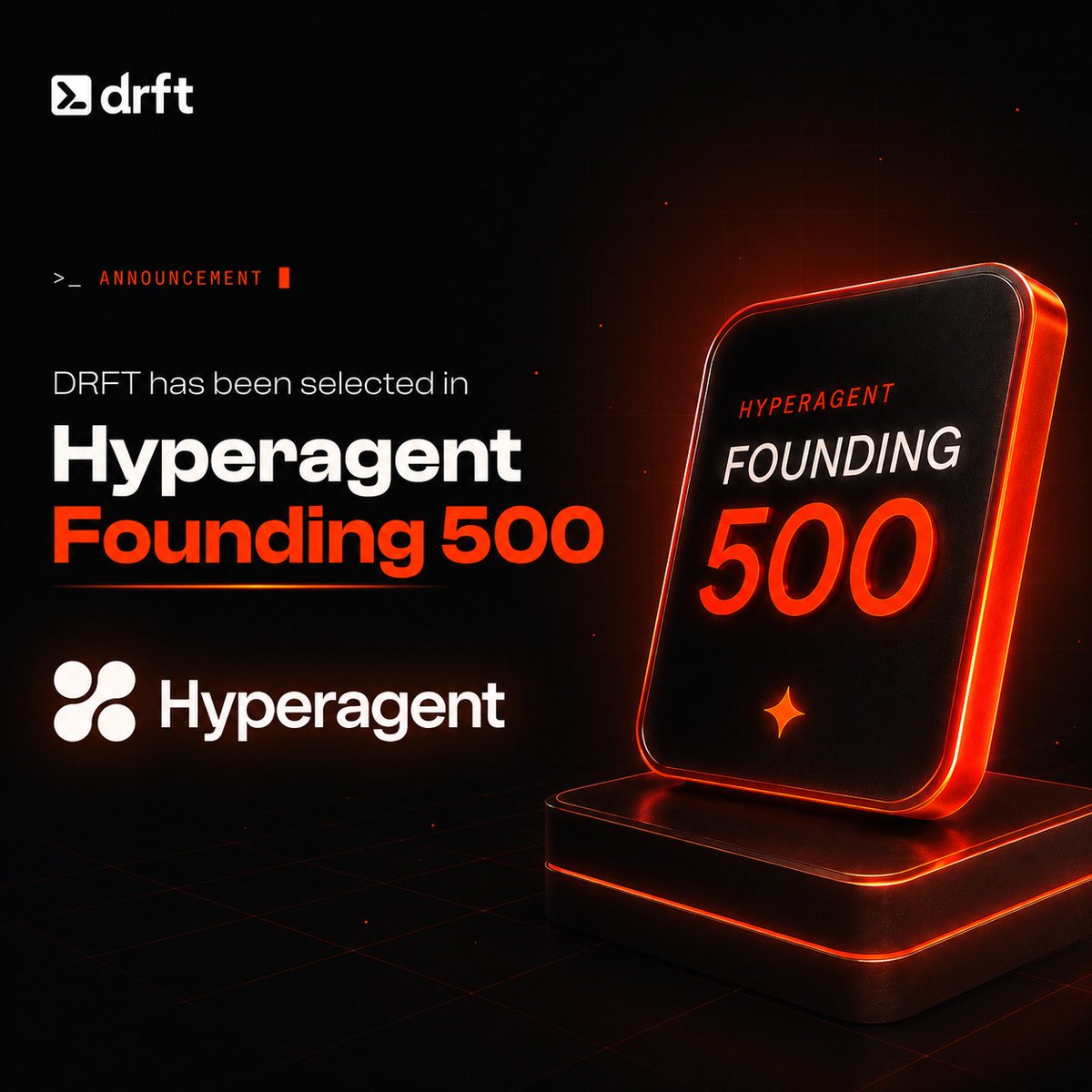
Excited to share that we have been selected in the "HyperAgent Founding 500" Program by @Hyperagentapp
Honored to be part of founders building the next generation of agent-first companies.
Back to building.
cc: @howietl
39
1
42
293
𝐃𝐚𝐳𝐳𝐥𝐞🔶 retweeted
Jun 6
Have you ever lost a business deal because your workload became overwhelming?
I have.
Last year, I ran a call service business and one of my clients asked me to reach out at the beginning of the next month.
It sounded simple enough.
But that day got busy.
I was handling multiple clients, juggling different tasks, and before I knew it, I completely forgot.
By the time I remembered, the opportunity was gone.
That experience taught me something:
The conversations are rarely the hard part.
The hard part is everything that happens between conversations.
Who needs a follow-up?
Who has paid?
Who is waiting for a response?
Which deal is still active?
As your workload grows, opportunities start slipping through the cracks.
That’s why businesses use CRMs.
But Web3 has a different reality.
Most business doesn’t happen through email.
Partnerships happen in Telegram.
Investor conversations happen in DMs.
KOL negotiations happen in chats.
Exchange listings happen in private messages.
The result?
The real deal information exists, but it’s buried inside chat history, screenshots, and pinned conversations.
That’s exactly what @DRFT_CRM is solving.
Instead of forcing teams to manually update a CRM, DRFT turns chat history into an organized business system automatically.
It can tell you:
“This partnership has gone silent for 12 days.”
Or:
“You promised a proposal but never sent it.”
But the biggest problem isn’t just follow-ups.
It’s knowledge loss.
Someone builds relationships for a company.
They leave.
And years of context, conversations, and opportunities leave with them.
DRFT solves this with an org-owned approach where relationship history belongs to the company, not the individual.
When team members leave, the context stays.
This vision recently earned DRFT a spot in HyperAgent’s Founding 500 program.
Beyond validation, it also means access to resources that help the team build faster on expensive agent infrastructure and experimentation.
Official announcement:
x.com/DRFT_CRM/status/206251…
The DRFT waitlist is now live:
join.godrft.com/
It’s early, which is exactly why it matters.
Waitlist users aren’t just signing up for a product,
They’re getting early visibility into how a new category of software is being built in real time.
At its core, DRFT isn’t trying to build another CRM.
It’s building an operating system for business relationships inside messaging apps.
A system that watches conversations, understands context, organizes opportunities, and tells teams what needs attention before deals die.
An Agentic CRM for the DM economy.
@DRFT_CRM @Arp_it1 @crypto_kalua
Jun 4
Excited to share that we have been selected in the "HyperAgent Founding 500" Program by @Hyperagentapp
Honored to be part of founders building the next generation of agent-first companies.
Back to building.
cc: @howietl
39
1
42
293
𝐃𝐚𝐳𝐳𝐥𝐞🔶 retweeted
Jun 6
Jay is a crypto trader.
Like many traders, he has experienced the trust gap that exists across the industry.
Delayed withdrawals.
Poor customer support.
Platforms making promises they never keep.
Ahmed is another trader.
He uses a different exchange called Bitval Exchange.
One day, Ahmed introduces Jay to @BitvalExchange.
Now Jay trades on Bitval.
The reason is simple:
The trust gap has been closed.
Every crypto trader has been in Jay's shoes at least once.
And that is exactly why Bitval stands out.
@BitvalExchange is a cryptocurrency exchange that allows users to buy, sell and trade digital assets while also earning rewards through referrals.
But it isn't trying to reinvent trading.
Instead, it is focused on creating a trading home users can trust.
With Bitval, users can access:
• Spot Trading – Buy and sell crypto at live market prices.
• Perpetual Futures Trading – Go long or short with no expiry dates.
• Leverage Trading – Access larger market exposure with leverage.
Beyond trading, Bitval also rewards its community.
Users can invite friends and earn a share of the trading fees generated by their referrals, creating an additional income stream.
The platform also offers competitive trading fees with volume-based discounts.
The more you trade, the lower your fees become.
Bitval is also investing in education through its blog, helping users understand concepts such as Bitcoin, Blockchain, DeFi, Altcoins and other important aspects of the crypto ecosystem.
What I find most interesting isn't the trading features.
Many exchanges offer spot markets.
Many exchanges offer leverage.
Many exchanges offer futures.
What stands out is the vision behind the platform.
@BitvalCMO has consistently emphasized something the crypto industry desperately needs: trust.
One of his recurring messages is that crypto companies should actually live up to the promises they make.
That vision resonates because the industry's biggest problem isn't a lack of exchanges.
It's a lack of confidence.
Anyone can launch an exchange.
Anyone can offer leverage.
Anyone can lower fees.
But if users genuinely trust a platform with their money, they stay.
And from everything I've seen so far, that appears to be the long-term vision behind @BitvalExchange.
It is building a trusted trading home.
43
1
51
285
𝐃𝐚𝐳𝐳𝐥𝐞🔶 retweeted
Jun 4
Dave entered a competition and the winner was eventually disqualified for botting his post.
It got me thinking about a much bigger problem.
So many creators get away with botted views, fake engagement, and inflated metrics every day. In the creator economy, genuinely talented creators who can't afford to buy engagement often end up losing opportunities to those with artificially boosted numbers.
Brands typically choose creators based on follower count, impressions, views, and likes.
But what if those numbers don't tell the whole story?
A creator can have a massive audience while still having low-quality engagement, inactive followers, or even bot-driven activity.
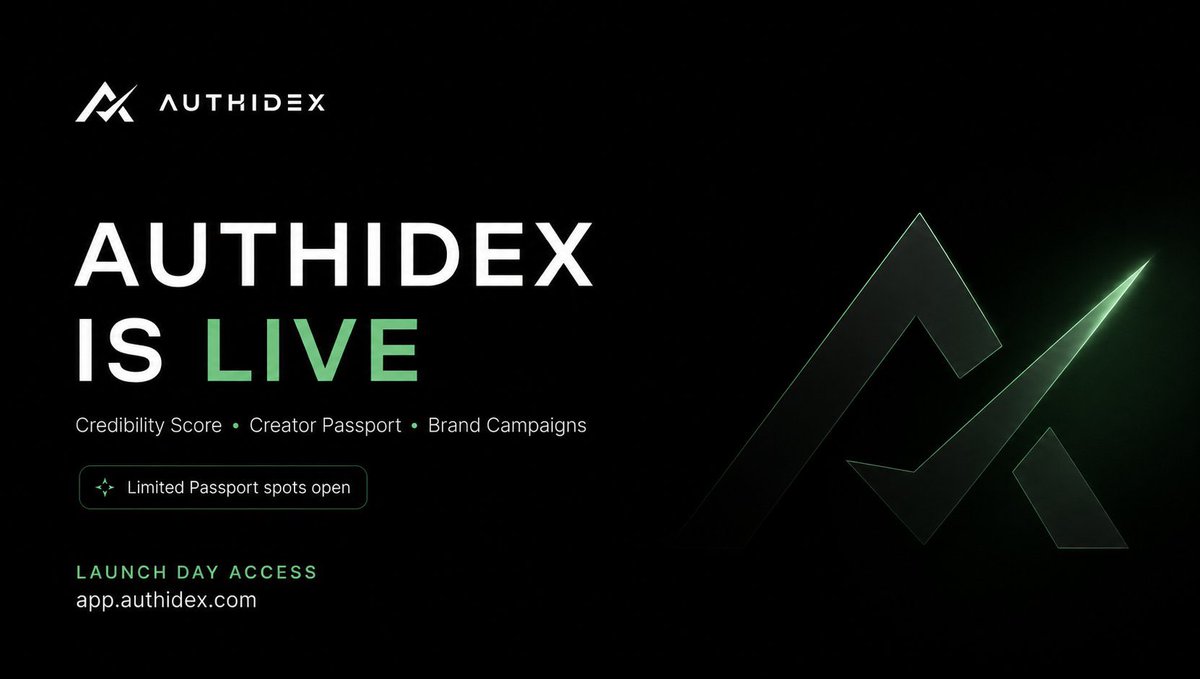
This is where @Authidex comes in.
@Authidex is a trust and credibility scoring platform built for X creators.
Instead of relying solely on vanity metrics, it helps brands evaluate creators through deeper credibility signals.
For every registered creator, brands can review:
• Creator credibility
• Audience quality
• Engagement health
• Risk signals
• Campaign readiness
Think of it as a professional reputation layer for creators.
Getting started is simple:
Visit authidex.com and either run a creator check or create a brand account.
Creators can apply for a saved approval snapshot that supports profile reviews, creator board visibility, and campaign evaluations.
Brands can use these snapshots as quick trust signals when reviewing creator profiles and campaign submissions.
Authidex also offers creator bounties for focused campaign work.
The process is straightforward:
• Pick a bounty
• Complete the task
• Submit proof
• Receive reward review
Brands can also create campaigns directly through the platform.
What's interesting is that Authidex isn't trying to tell brands who they should hire.
Instead, it provides decision-support signals that help brands make smarter and more informed choices.
It's a win-win for both sides.
For creators:
• Prove authenticity to brands
• Build a verified creator passport
• Improve sponsorship opportunities
For brands:
• Reduce wasted campaign spend
• Compare creators side-by-side
• Screen creators before making payments
In a world where engagement can be bought, trust becomes one of the most valuable metrics.
And that may be exactly what the creator economy needs more of.
62
5
62
482
𝐃𝐚𝐳𝐳𝐥𝐞🔶 retweeted
May 27
I went to the bank yesterday to make a deposit early in the morning.
I was ready for the usual routine: get a form, fill it, join a long queue, wait for hours.
But then I saw someone I knew.
Instead of going through the full process, I simply handed her the cash and my details and said:
“I want you to handle this deposit for me.”
And just like that, I skipped hours of stress. By the time I got home, everything was already done.
That moment is simple, but it shows something important:
People don’t care about the process, they care about the outcome.
That is exactly why @lifiprotocol matters.
Today, fintech apps, wallets, and neobanks are trying to bring financial services onchain.
But there’s a problem:
every action still requires too many steps: swaps, bridges, gas, routing, and multiple liquidity sources.
For users, it feels like dealing with infrastructure instead of money.
For companies, it means building and maintaining too much complexity just to deliver simple outcomes.
LIFI INTENTS removes that complexity.
It is infrastructure that lets apps express outcomes instead of building execution steps.
Instead of saying:
«“swap here, bridge there, handle gas, route liquidity…”»
Apps simply say:
«“This is what the user wants.”»
Then a network of professional, KYB’d solvers competes to execute it by finding routes, providing liquidity, handling gas, and settling the transaction in the background.
What this changes in practice:
A user inside a wallet or neobank can now:
- send stablecoins across chains without thinking about bridges
- make payments without holding gas tokens
- access tokenized real-world assets through a simple action
- move money globally without seeing any underlying complexity
Everything feels like one clean financial experience.
How it works (behind the scenes):
1. A fintech app submits a user’s desired outcome as an intent
2. Funds are locked in an input settler (escrow or reusable balance)
3. The intent is broadcast to a solver network
4. Solvers compete using pre-published liquidity quotes
5. The winning solver delivers the exact output asset on the destination chain
6. Settlement is verified and completed automatically
This removes the need for apps to coordinate bridges, DEXs, and routing logic themselves.
Why this matters:
Because it changes what companies actually have to build.
Before:
- manage bridges
- integrate DEXs
- handle gas abstraction
- maintain routing systems
- patch broken cross-chain flows
After:
- define the outcome
- let solvers handle execution
The result is simple:
Financial apps stop being infrastructure-heavy systems and become experience-driven products.
And that’s the real shift:
From users interacting with chains and complexity
to users just expressing intent and getting results.
That’s what LIFI INTENTS enables, not just better crypto infrastructure, but a different way of building financial apps entirely.
May 26

Introducing LI.FI Intents.
Infrastructure for apps, wallets, and neobanks to:
• Enable stablecoin payments
• Access real-world assets
• Tap into compliant onchain liquidity
Built for enterprises bringing financial products onchain.
45
2
48
271

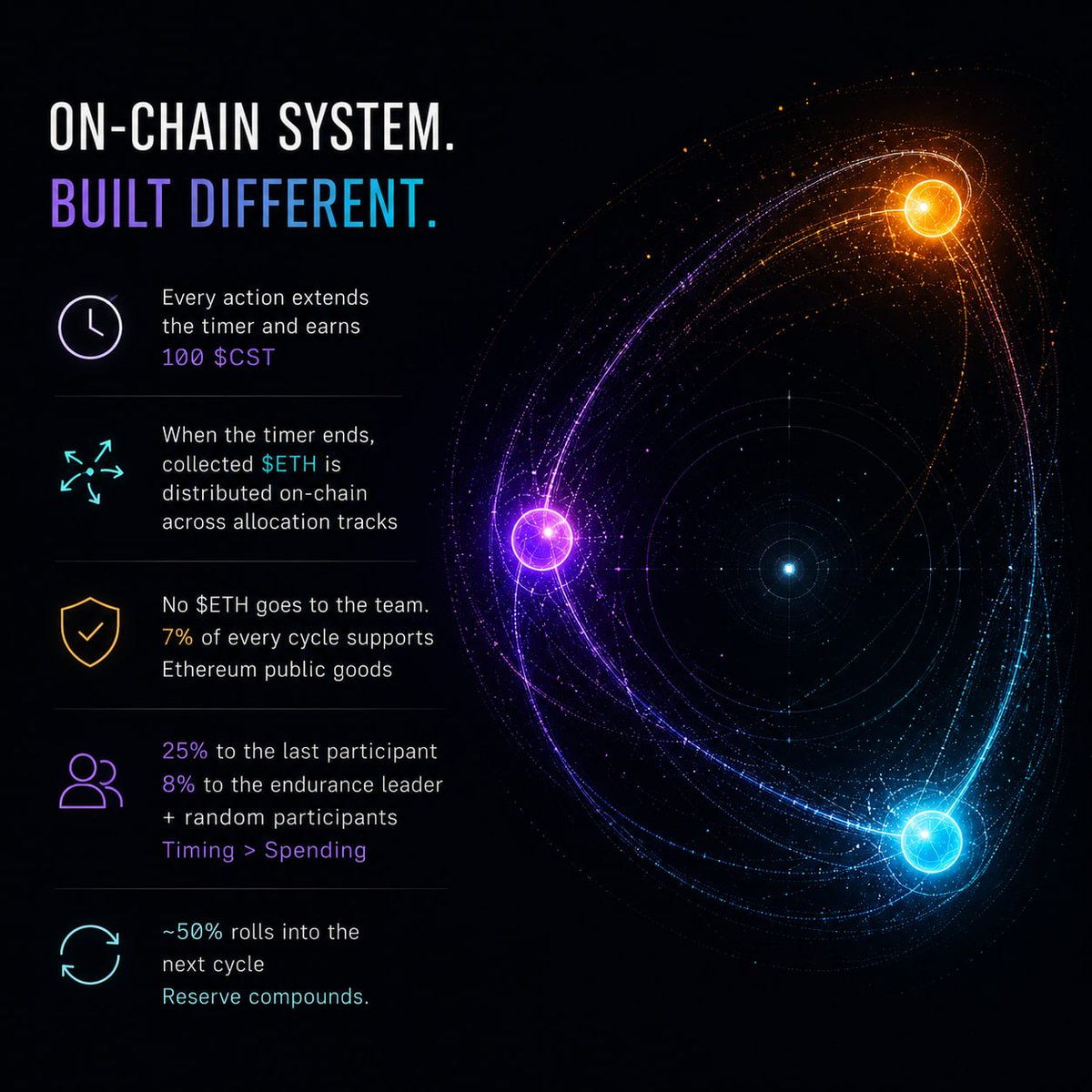
There’s a protocol called @CosmicSignature live on Arbitrum right now that’s doing things very differently from most onchain projects.
Users interact using $ETH or $CST, and every action extends a live timer while also rewarding 100 $CST.
When the timer ends, the collected $ETH is automatically distributed onchain across multiple allocation tracks instead of going to a company or team treasury.
What stood out to me most is the structure itself. No $ETH goes to the team.
Part of every cycle instead, goes to Ethereum public goods through Protocol Guild, which receives 7% of each cycle and helps fund around 190 Ethereum core contributors.
The reward system is also based heavily on timing, not just spending.
25% goes to the last participant before the timer ends, while 8% goes to whoever held the endurance position the longest, and various random participants.
Meaning smaller users can still compete with larger ones.
Around half of the $ETH also rolls into the next cycle, so the reserve compounds over time.
The NFT side is interesting too.
The visuals are generated from deterministic gravity simulations rather than AI generated artwork.
This is worth looking into:👇
121
14
175
7,389
𝐃𝐚𝐳𝐳𝐥𝐞🔶 retweeted

May 22
Gamers already predict outcomes every single day.
Who wins.
Who throws.
Which team dominates.
@Wahoopredict is turning those opinions into live prediction markets built around gaming culture.
From Valorant and CS2 to Fortnite, GTA, and more…
If you understand the game,
you can play the market.
I tested the platform myself and honestly, this is one of the more interesting gaming prediction concepts I’ve seen recently.
Watch the video for more details
Telegram signup link in the comments.
164
19
236
3,156
𝐃𝐚𝐳𝐳𝐥𝐞🔶 retweeted

Greetings @blockfestafrica
The BlockZillas Tribe would like to confirm whether the October event in Lagos, as listed on your website, is officially happening this year.
Best Roars,
BlockZillas roaring on the blockchain, one block at a time. Known for proof of work before mint.
16
9
29
420
𝐃𝐚𝐳𝐳𝐥𝐞🔶 retweeted
May 14
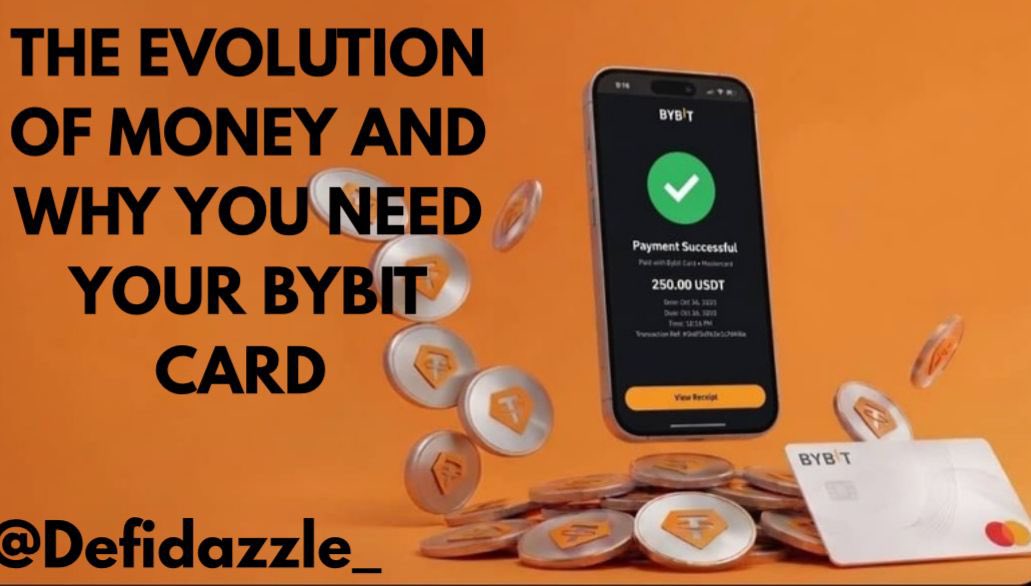
Money has always evolved with people.
Every generation looks for a faster, easier way to spend value
We went from cash to cards and now crypto is stepping into everyday payments
That shift is exactly why you need your Bybit Card.
Cc: @BybitAfrica
#MyBybitCardThread
50
5
55
272
May 14
Money has always evolved with people.
Every generation looks for a faster, easier way to spend value
We went from cash to cards and now crypto is stepping into everyday payments
That shift is exactly why you need your Bybit Card.
Cc: @BybitAfrica
#MyBybitCardThread
50
5
55
272
May 14
With traditional banking, entering crypto usually involves multiple steps, exchanges, conversions, transfers and delays.
With the Bybit card, the process feels more seamless
You fund your account with crypto and when you spend, it converts in real time for payment
1
11
31
May 14
No extra stress
No constant switching between systems
Just swipe and pay
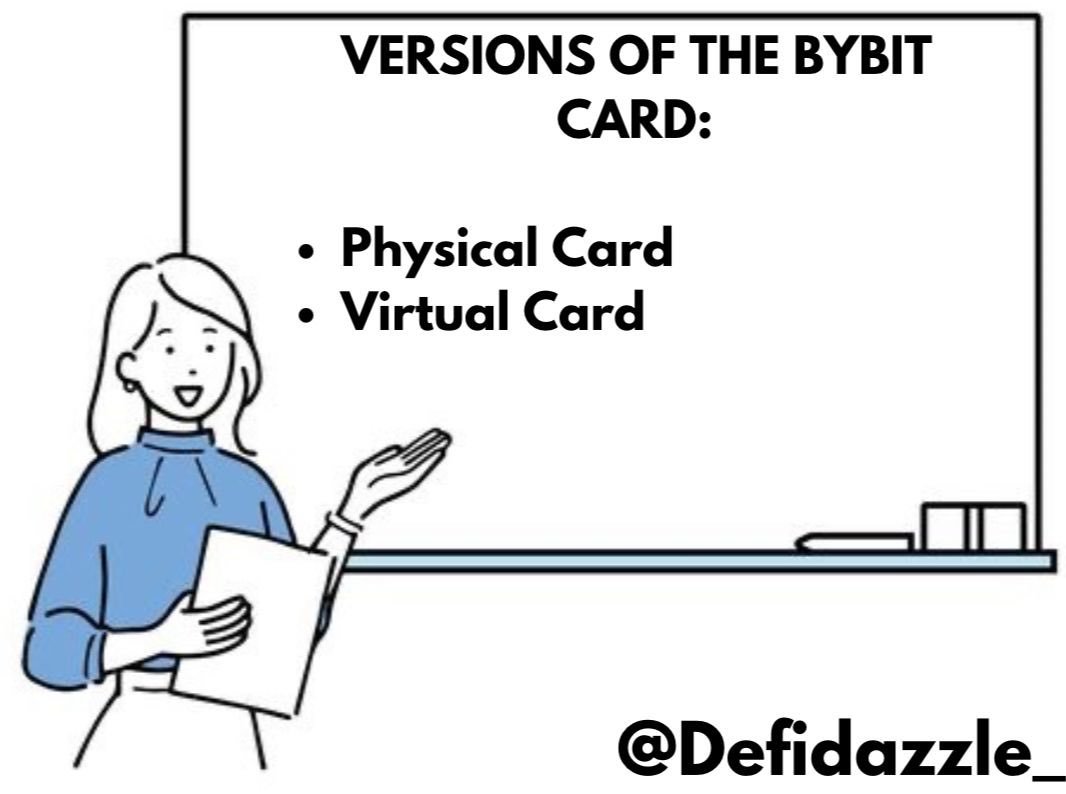
How to get the card:
Virtual card:
Apply directly from the card portal inside your Bybit app
Physical card:
Complete the card application process and the payment will be deducted from your funding account. Delivery is free
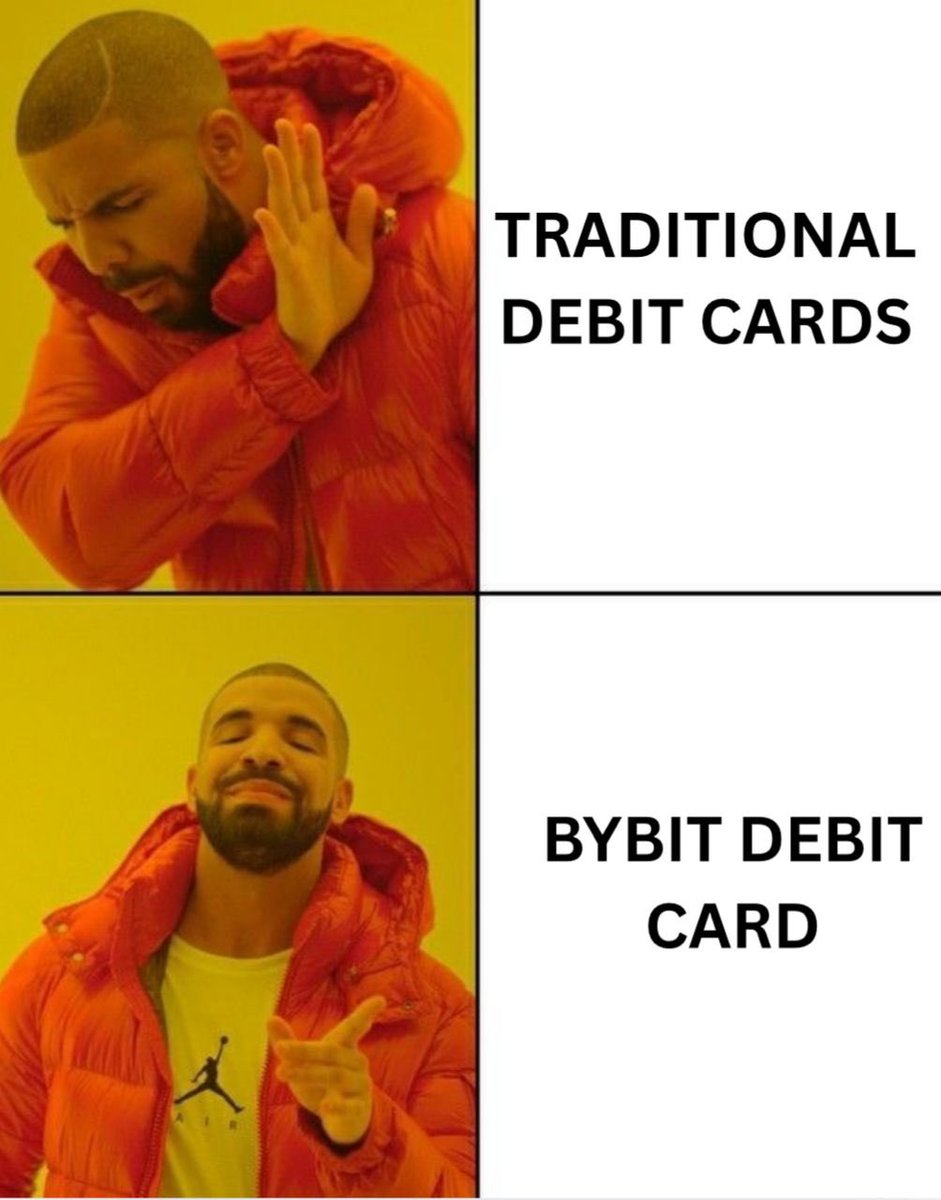
Most people currently spend their crypto through P2P or third party payment services
But if crypto is really becoming part of everyday finance, then spending it should feel just as easy as using your normal debit card.
Why manually convert when you can simple swipe and pay?
Apply for your Bybit Card today.
11
31