
E Rank Bounty Hunter | Onchain Creative Journalist | Content Creator | @Mantle_Official believer | Builder
Joined November 2023
- Tweets 21,825
- Following 817
- Followers 1,007
- Likes 43,729
1,428 Photos and videos












Pinned Tweet

Something big is happening in Berlin on June 13
Not big like "cool event."
Big like, the people who just put Mastercard, Western Union, and $2.5B in real-world assets on a blockchain are all flying into the same room.
The Solana Germany Summit, powered by @SuperteamDE, is 8 days away.
Here's why you should be there. 🧵
34
5
54
777
Zayd. ₿TC ♟️(RWA arc) retweeted
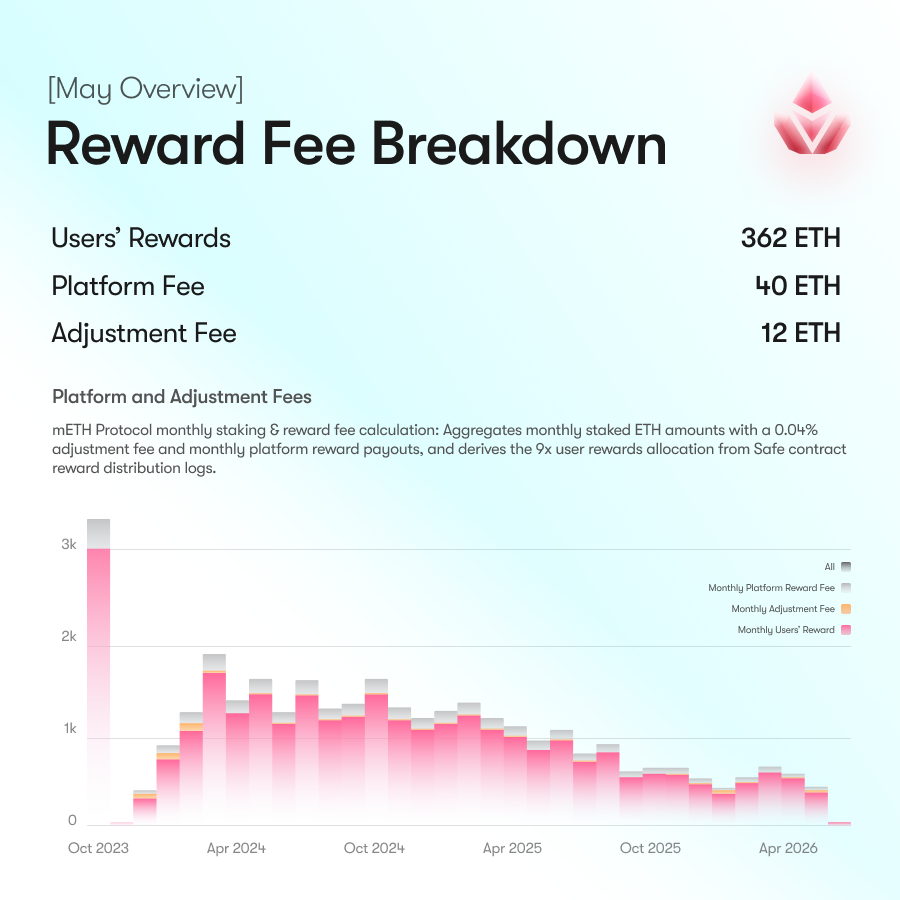
A closer look at May reward distribution across mETH Protocol users.
Over the month, a total of ↑362 ETH was generated from staking activity.
1
4
18
358
Zayd. ₿TC ♟️(RWA arc) retweeted
The Day ETH Staking Broke
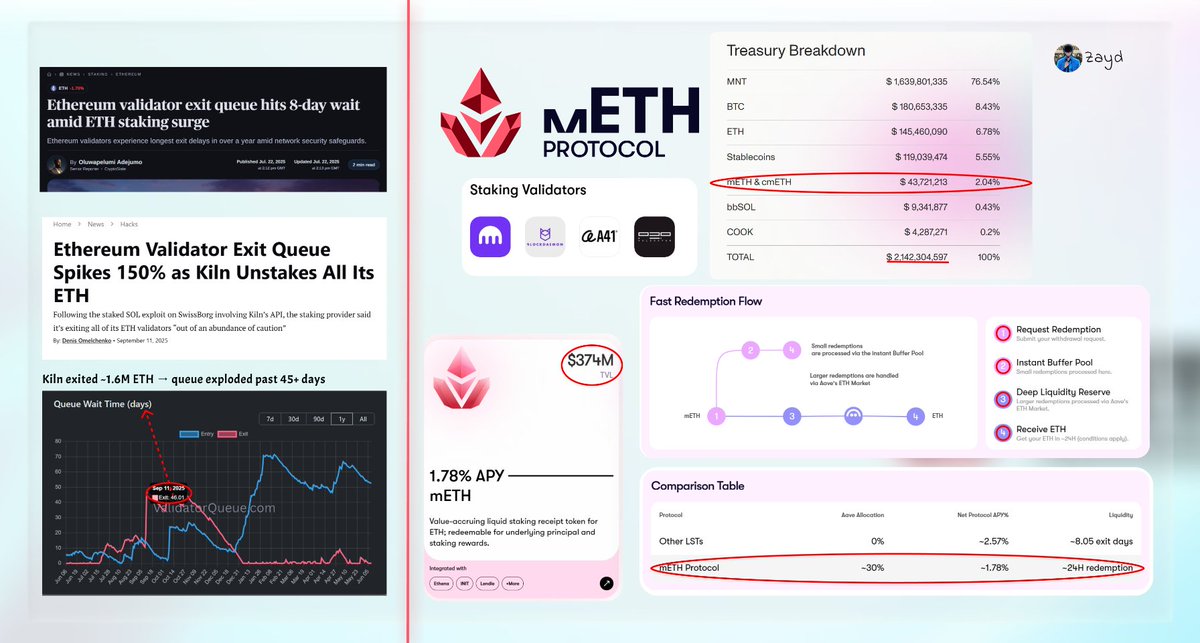
In September 2025, a validator operator called Kiln pulled roughly 1.6 million ETH out of the network after a security incident.
The exit queue stretched past a month.
If you were staking directly (or holding most liquid staking tokens) your position was effectively locked.
You couldn't get your ETH back for over a month without selling into the market.
Here's why that happens.
Ethereum limits how many validators can exit per day. It's a deliberate security feature with the goal of stopping bad actors from doing damage and then racing out before slashing catches up.
The trade-off is simple: when one large operator exits, everyone else in line waits.
That's the part most liquid staking protocols skip.
The token itself can trade, but the underlying $ETH still sits in the same validator queue as native staking.
Now let's zoom out...
Why does anyone stake ETH?
When you stake ETH, the network pays you for helping secure it.
Rewards come from three sources:
-> newly issued ETH the protocol creates each epoch,
-> priority fees users attach to transactions to get processed faster, and
-> MEV, value validators capture from ordering transactions inside a block.
You earn in ETH -> Your stack grows while you hold ->
That's the trade-> Your ETH works -> You get paid -> You stay exposed to ETH upside the whole time.
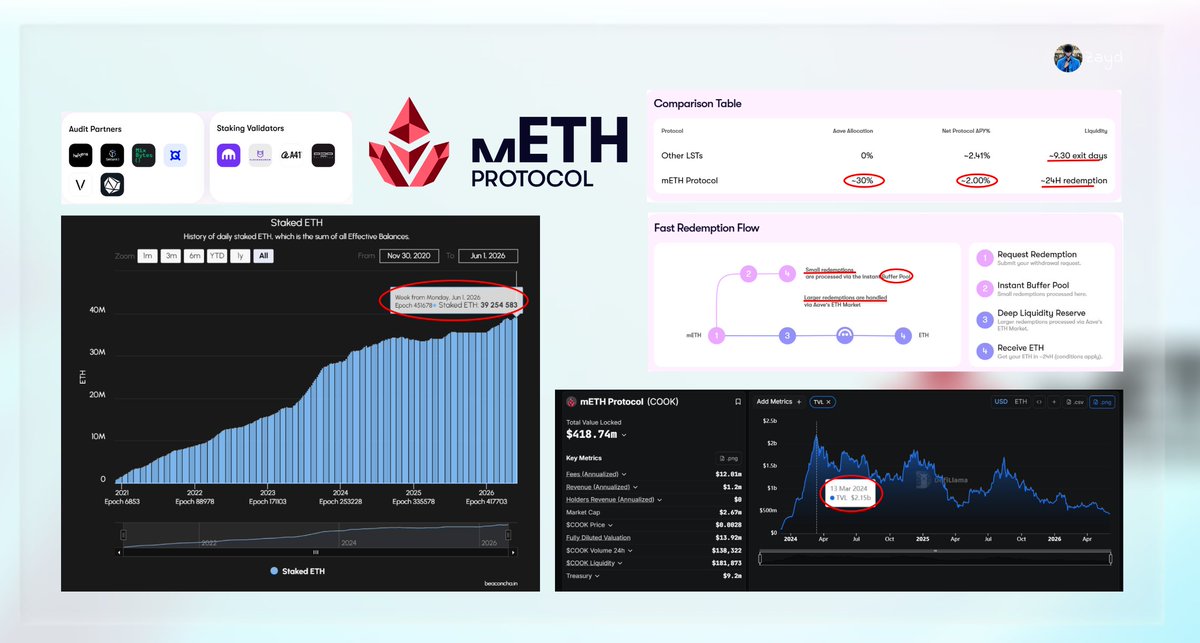
That combination (yield, liquidity, and utility) is why 39.3 million ETH is staked right now, roughly 32% of the eligible supply.
Someone might say: "32% is solid, not unsustainable.
The protocol will gradually onboard more validators and won't need to extract staking from users."
Fair point
But the issue was never that 32% is unsustainable today.
The bigger opportunity is the other 68% that isn't staking yet.
And the catch is always the same: your capital is locked while it earns.
Getting it back requires joining an exit queue and that queue does not always cooperate.
As Ethereum keeps onboarding validators and activity grows, those queues stretch further before they ease.
Other approaches exist. Some sell the receipt token on the open market for faster access, that brings slippage and price risk. Others lean on internal queues that still blow out when demand spikes.
“mETH took a different route. It kept part of the reserves both productive and immediately usable through the Buffer Pool.
@mETHProtocol (mETH) made a structural choice insteadtook a different route...
-> keep part of the reserves both productive and immediately usable.
In October 2025 they activated the Liquidity Buffer.
By December they expanded it into the Buffer Pool.
A meaningful slice of the ETH (around 20–30%) sits in Aave's ETH lending market, earning supply yield while it waits. When you redeem mETH for ETH, small and medium requests pull straight from the buffer.
Larger ones tap Aave's deep reserves.
The result is a target of roughly 24-hour redemptions that does not depend on selling the receipt token or waiting through long validator queues.
Since the Buffer Pool upgrade, median redemption times have remained in the low 20s of hours even during periods of elevated withdrawals, while the protocol continued to process requests without depeg.
Underneath it sits the operator and security stack.
mETH runs Tier-1 node operators including A41, P2P(.)org, Blockdaemon, stakefish, and Kraken Staked, with custody partners like Copper.
Zero slashing incidents to date. Over $5.2 million spent on audits and security programs with firms including Hexens, MixBytes, Secure3, and Verilog.
A public dashboard and on-chain proof of reserves let anyone watch buffer capacity and redemption queues in real time.
In March 2026, the SEC and CFTC jointly clarified that standard liquid staking arrangements generally don't involve the offer or sale of securities. mETH was already built for that posture.
And the team isn't just shipping it for others. Mantle Treasury (one of the largest on-chain treasuries in crypto) holds over $43 million in mETH and cmETH.
They run their own treasury on the same rails they're asking allocators to trust.
ETH staking is shifting from "yield on capital you can't touch" to treasury infrastructure that stays liquid and usable.
The protocols that win the next phase are the ones that solved the exit constraint before large allocators started asking out loud.
mETH solved it last year.
When the next exit queue spike hits, the question isn’t whether you can earn yield.
It’s whether you can actually get your ETH back when you need it.
Jun 11

ETH staking is moving beyond yield alone.
“The next phase is about stronger security, deeper liquidity, and better distribution.” - @Defi_Maestro
Read more below on how mETH Protocol is building for 2026.

3
2
3
236
The Day ETH Staking Broke
In September 2025, a validator operator called Kiln pulled roughly 1.6 million ETH out of the network after a security incident.
The exit queue stretched past a month.
If you were staking directly (or holding most liquid staking tokens) your position was effectively locked.
You couldn't get your ETH back for over a month without selling into the market.
Here's why that happens.
Ethereum limits how many validators can exit per day. It's a deliberate security feature with the goal of stopping bad actors from doing damage and then racing out before slashing catches up.
The trade-off is simple: when one large operator exits, everyone else in line waits.
That's the part most liquid staking protocols skip.
The token itself can trade, but the underlying $ETH still sits in the same validator queue as native staking.
Now let's zoom out...
Why does anyone stake ETH?
When you stake ETH, the network pays you for helping secure it.
Rewards come from three sources:
-> newly issued ETH the protocol creates each epoch,
-> priority fees users attach to transactions to get processed faster, and
-> MEV, value validators capture from ordering transactions inside a block.
You earn in ETH -> Your stack grows while you hold ->
That's the trade-> Your ETH works -> You get paid -> You stay exposed to ETH upside the whole time.
That combination (yield, liquidity, and utility) is why 39.3 million ETH is staked right now, roughly 32% of the eligible supply.
Someone might say: "32% is solid, not unsustainable.
The protocol will gradually onboard more validators and won't need to extract staking from users."
Fair point
But the issue was never that 32% is unsustainable today.
The bigger opportunity is the other 68% that isn't staking yet.
And the catch is always the same: your capital is locked while it earns.
Getting it back requires joining an exit queue and that queue does not always cooperate.
As Ethereum keeps onboarding validators and activity grows, those queues stretch further before they ease.
Other approaches exist. Some sell the receipt token on the open market for faster access, that brings slippage and price risk. Others lean on internal queues that still blow out when demand spikes.
“mETH took a different route. It kept part of the reserves both productive and immediately usable through the Buffer Pool.
@mETHProtocol (mETH) made a structural choice insteadtook a different route...
-> keep part of the reserves both productive and immediately usable.
In October 2025 they activated the Liquidity Buffer.
By December they expanded it into the Buffer Pool.
A meaningful slice of the ETH (around 20–30%) sits in Aave's ETH lending market, earning supply yield while it waits. When you redeem mETH for ETH, small and medium requests pull straight from the buffer.
Larger ones tap Aave's deep reserves.
The result is a target of roughly 24-hour redemptions that does not depend on selling the receipt token or waiting through long validator queues.
Since the Buffer Pool upgrade, median redemption times have remained in the low 20s of hours even during periods of elevated withdrawals, while the protocol continued to process requests without depeg.
Underneath it sits the operator and security stack.
mETH runs Tier-1 node operators including A41, P2P(.)org, Blockdaemon, stakefish, and Kraken Staked, with custody partners like Copper.
Zero slashing incidents to date. Over $5.2 million spent on audits and security programs with firms including Hexens, MixBytes, Secure3, and Verilog.
A public dashboard and on-chain proof of reserves let anyone watch buffer capacity and redemption queues in real time.
In March 2026, the SEC and CFTC jointly clarified that standard liquid staking arrangements generally don't involve the offer or sale of securities. mETH was already built for that posture.
And the team isn't just shipping it for others. Mantle Treasury (one of the largest on-chain treasuries in crypto) holds over $43 million in mETH and cmETH.
They run their own treasury on the same rails they're asking allocators to trust.
ETH staking is shifting from "yield on capital you can't touch" to treasury infrastructure that stays liquid and usable.
The protocols that win the next phase are the ones that solved the exit constraint before large allocators started asking out loud.
mETH solved it last year.
When the next exit queue spike hits, the question isn’t whether you can earn yield.
It’s whether you can actually get your ETH back when you need it.
Jun 11
ETH staking is moving beyond yield alone.
“The next phase is about stronger security, deeper liquidity, and better distribution.” - @Defi_Maestro
Read more below on how mETH Protocol is building for 2026.
3
2
3
236
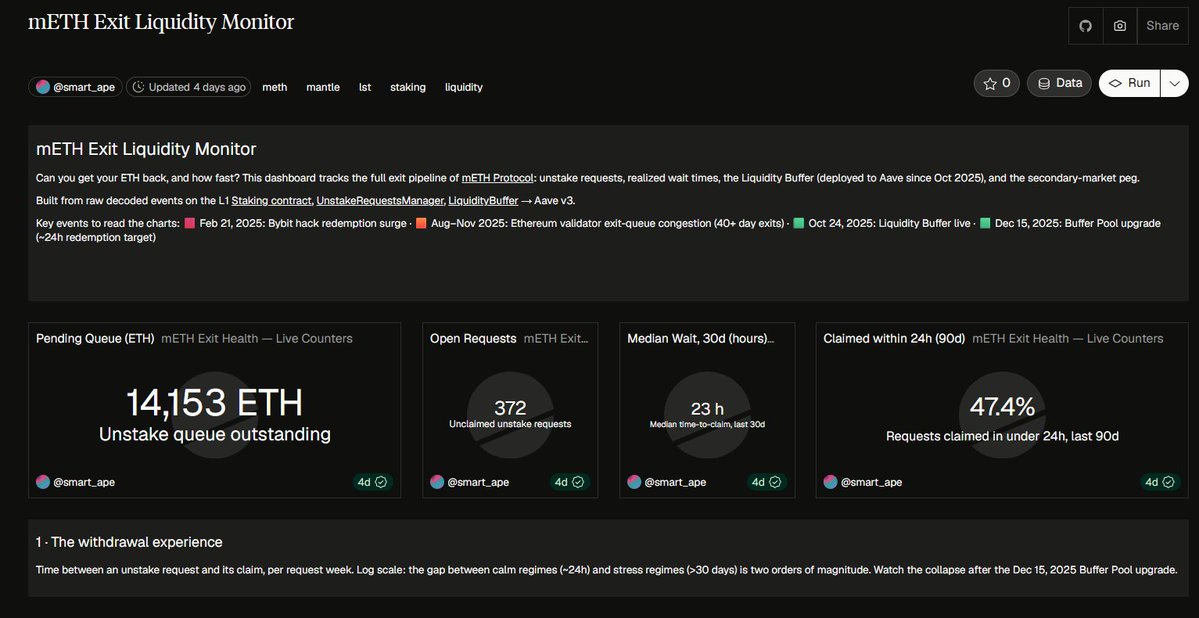
For anyone who wants to verify the Buffer Pool on-chain:
dune.com/smart_ape/meth-exit…
Credit to @the_smart_ape for building this.
1
32
Zayd. ₿TC ♟️(RWA arc) retweeted

Jun 10
1
4
40
4,585
Zayd. ₿TC ♟️(RWA arc) retweeted

Jun 11
ETH staking is moving beyond yield alone.
“The next phase is about stronger security, deeper liquidity, and better distribution.” - @Defi_Maestro
Read more below on how mETH Protocol is building for 2026.
7
4
37
5,850
Zayd. ₿TC ♟️(RWA arc) retweeted
Something big is happening in Berlin on June 13
Not big like "cool event."
Big like, the people who just put Mastercard, Western Union, and $2.5B in real-world assets on a blockchain are all flying into the same room.
The Solana Germany Summit, powered by @SuperteamDE, is 8 days away.
Here's why you should be there. 🧵
34
5
54
777
Zayd. ₿TC ♟️(RWA arc) retweeted

63
20
109
2,320
Zayd. ₿TC ♟️(RWA arc) retweeted
𝐓𝐡𝐞 𝐑𝐞𝐚𝐥 𝐑𝐞𝐚𝐬𝐨𝐧 𝐄𝐓𝐇 𝐒𝐢𝐭𝐬 𝐔𝐧𝐬𝐭𝐚𝐤𝐞𝐝 (𝐀𝐧𝐝 𝐖𝐡𝐚𝐭 𝐦𝐄𝐓𝐇 𝐏𝐫𝐨𝐭𝐨𝐜𝐨𝐥 𝐁𝐮𝐢𝐥𝐭 𝐭𝐨 𝐅𝐢𝐱 𝐈𝐭)
39.3 million ETH is staked on Ethereum right now, roughly 32% of the eligible supply.
That sounds like a lot, but here's the number that gets less attention: the amount that isn't.
Most ETH holders know staking pays
Consensus rewards, priority fees, MEV, the yield is real. Yet capital keeps sitting idle. The reason isn't complexity or trust. It's: the exit.
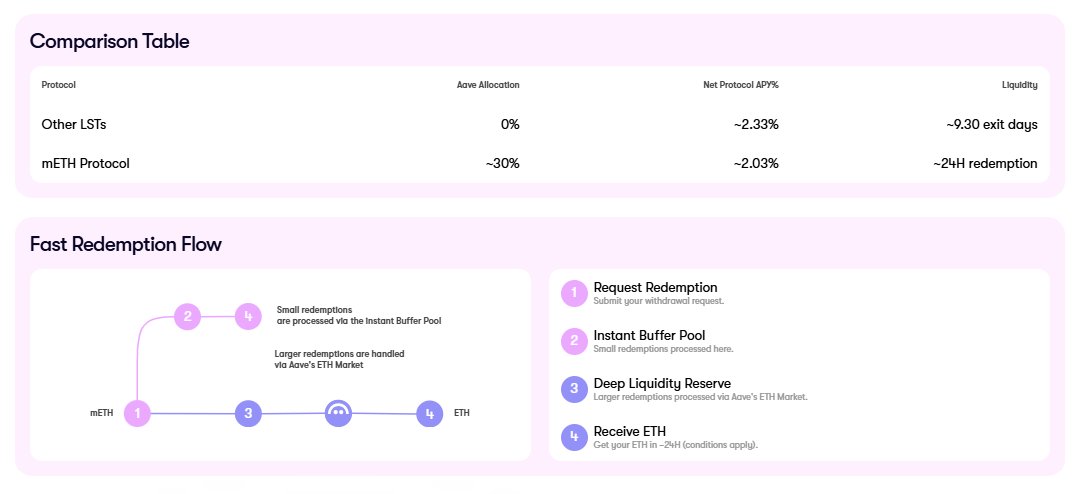
Native staking exit queues run anywhere from several days to 20 days depending on network conditions.
Most liquid staking tokens aren't much better, averaging around 9.30 days to process a redemption.
-> For a retail user that's inconvenient.
-> For an institutional treasury managing liquidity, that's a dealbreaker.
You don't park capital somewhere you can't exit predictably.
mETH (@mETHProtocol) is a permissionless, non-custodial liquid staking protocol on Ethereum L1, incubated by Mantle.
You deposit $ETH, receive $mETH: a yield-accruing receipt token redeemable for your principal plus accumulated rewards.
Standard liquid staking setup so far. But the piece that separates it is what happens when you want out.
The Buffer Pool changes the exit math entirely.
Here's how it works
mETH Protocol allocates roughly 20–30% of TVL into Aave's ETH lending market. That sitting allocation does two things at once:
1. it earns additional Aave supply interest on top of your staking yield, and
2. it creates a standing liquidity reserve that can process redemptions without touching the Ethereum validator exit queue at all.
Small-to-medium redemptions clear instantly from the pool. Larger ones route through Aave's ETH market.
Target turnaround:
• approximately 24 hours.
• Zero additional fees.
Your base staking yield keeps accruing while the redemption processes.
When queues congest, the buffer absorbs redemption demand. When deposits slow, idle ETH earns incremental yield through Aave. Capital is always working, never sitting idle waiting for a queue to clear.
Compare that directly:
- other LSTs at ~2.39% APY with a ~9.30-day average exit.
- mETH at ~2.00% APY with ~24-hour redemption capability.
The yield difference is real, but so is the liquidity difference.
For anyone who has ever watched a redemption queue stretch across a volatile week, that tradeoff tells a different story than the headline APY.
@mETHProtocol publishes weekly Buffer Pool reports (inflows, outflows, available liquidity, validator queue status) so the 24-hour claim is verifiable in real time, not just number.
Security sits underneath all of this
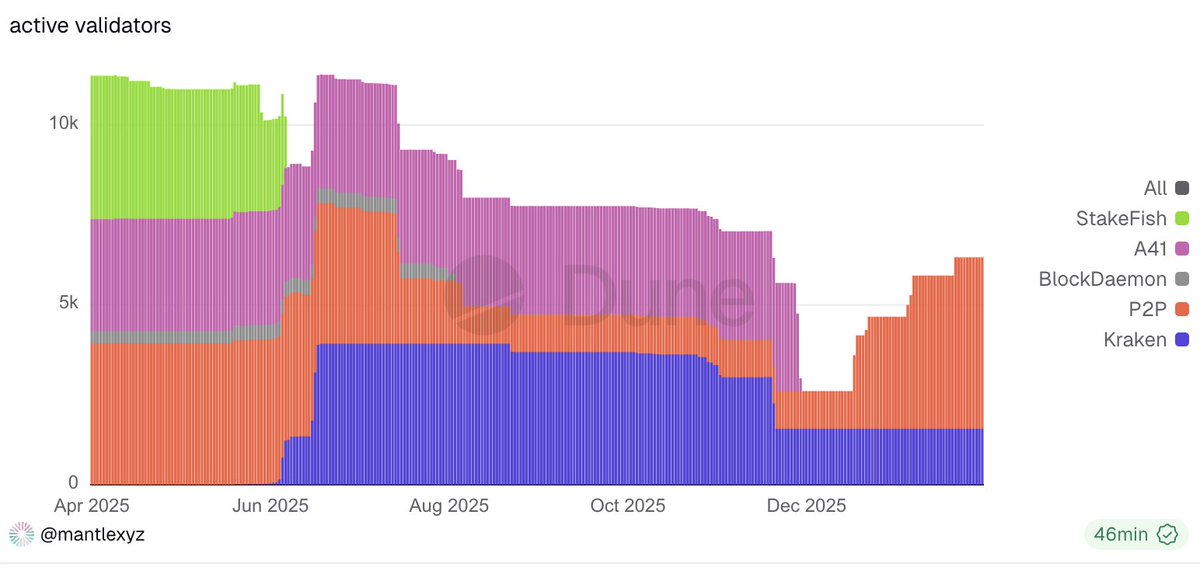
mETH has zero slashing incidents since launch, backed by Tier-1 validator partners including A41, P2P.org, Kraken Staked, OSL, and Copper, with a Guardian network monitoring operations alongside them.
Over $5.2 million invested in audits and security programs. On-chain proof-of-reserves, verifiable anytime.
The result is a protocol that hit $2.15B peak TVL within its first year (one of the fastest ramps in liquid staking history) now holding ~$418M with zero slashing incidents through the full cycle.
Distribution is what turns a good protocol into a scalable one.
mETH is embedded across 40 DeFi protocols and exchanges including Bybit, Kraken, and Ethena.
-> On Bybit, mETH functions as a yield-bearing asset and capital-efficient collateral across margin and unified trading accounts.
-> On Kraken, it integrates into multi-collateral systems enabling deployment across margin and futures strategies.
The same asset, working across CeFi and DeFi simultaneously, without leaving the position.
mETH and cmETH now function as simultaneous collateral in
- liquidity pools,
- money markets, vaults, and
- CEX earn programs.
cmETH continues to deliver EigenLayer and Symbiotic rewards on the same 24-hour liquidity base for existing positions.
The longer-term thesis is simple
Institutional capital needs predictable exits to enter at scale.
The exit problem is why ETH staking participation has a ceiling today. The Buffer Pool is a direct architectural answer to that ceiling and as Ethereum staking grows, the protocols that solved liquidity first will be the ones that hold the institutional stack.
Yield matters. Liquidity to exit matters more.
If you want to explore the protocol yourself: methprotocol.xyz
What's stopping you from staking your ETH right now, yield, exit time, or something else? Drop it below."

𝗺𝗼𝘀𝘁 𝗹𝗶𝗾𝘂𝗶𝗱 𝘀𝘁𝗮𝗸𝗶𝗻𝗴 𝘁𝗼𝗸𝗲𝗻𝘀 𝘄𝗼𝗻'𝘁 𝗲𝘅𝗶𝘀𝘁 𝗶𝗻 𝟯 𝘆𝗲𝗮𝗿𝘀
mETH did a 30-min live breakdown explaining exactly why and more importantly, what separates the ones that survive from the ones that don't.
Here's everything that matters 👇
🧩 TᕼE ᗰETᗩ SᕼIᖴT IS ᖇEᗩᒪ
The team opened by addressing something most protocols won't say out loud, 𝘁𝗵𝗲 𝗲𝗿𝗮 𝗼𝗳 𝗰𝗵𝗮𝘀𝗶𝗻𝗴 𝗔𝗣𝗥 𝗮𝗻𝗱 𝗿𝗲𝘁𝗮𝗶𝗹 𝗵𝘆𝗽𝗲 𝗶𝘀 𝗰𝗼𝗼𝗸𝗲𝗱.
So what does a survivor actually look like❓
It comes down to three things: liquidity certainty, distribution scale, and legible risk
Stay with that thought… yeah
$mETH is pivoting hard toward "treasury-grade" infrastructure built for institutions.
we're talking @FireblocksHQ, @osldotcom and @CopperHQ custodian integrations, scaled CeFi distribution rails, and inbound institutional inquiries already coming in post-upgrades.
This positions mETH as a 𝗘𝗧𝗛 𝘁𝗿𝗲𝗮𝘀𝘂𝗿𝘆 𝗶𝗻𝗳𝗿𝗮𝘀𝘁𝗿𝘂𝗰𝘁𝘂𝗿𝗲.
🧩 TᕼE ᗷᑌᖴᖴEᖇ ᑭOOᒪ IS TᕼE ᗩᑕTᑌᗩᒪ ᗩᒪᑭᕼᗩ
This was the meatiest segment and honestly, the most important one.
Competitors make you choose between yield and liquidity. long locks, idle funds, or unpredictable withdrawal timing.
mETH's answer is blended yield (staking Aave) with fast redemptions.
The Buffer Pool works like a hybrid engine, roughly 20% of TVL gets deployed to @aave for additional lending yield, while a liquid buffer handles $ETH redemptions in ~24 hours under normal conditions.
no extra fees, no waiting weeks or wondering when you're getting your ETH back.
Clean liquidity across both CeFi and DeFi. the play isn't to be the highest APR LST, it's to be the most predictable one
They called it a "dumbbell strategy" one end serving retail growth, the other end serving institutional readiness.
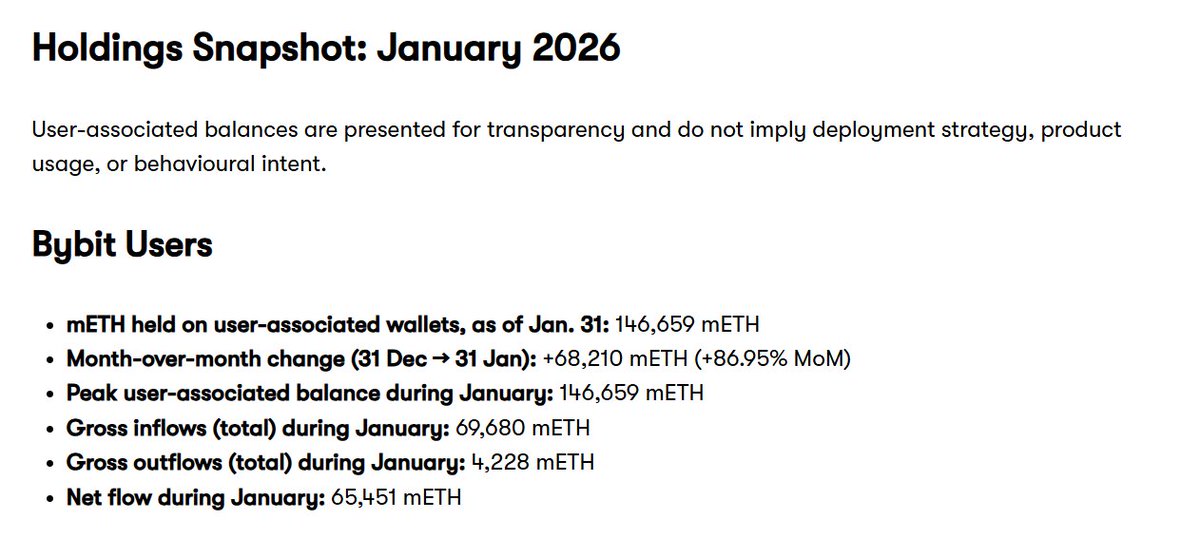
The on-chain January stats they shared backed this up:
→ net flows of 49,923 mETH,
→ treasury holdings up 851% MoM,
→ ecosystem balances up 23.7% MoM.
This shows that product-market fit is showing up on-chain.
🧩 ᗷYᗷIT IᑎTEGᖇᗩTIOᑎ Is GOIᑎG ᑕᖇᗩᘔY
~100% growth in mETH balances on Bybit from December 2025 to January 2026 from deep backend integration that makes on-chain earning seamless with reliable redemptions.
They're growing wherever ETH capital naturally wants to sit.
🧩 ᗪEᖴI, ᖇᗯᗩs, ᗪᗩTs (mETH as a liquidity routing layer)
this segment got interesting. the team is thinking about mETH beyond staking, as productive capital that flows through DeFi, Real World Asset tokenization, and Decentralized Autonomous Treasuries.
real example they dropped: put 1,000 ETH into mETH. That's a treasury allocation, not a degen play.
cmETH expansions are also live for yield without sacrificing liquidity. DeFi is industrializing and mETH wants to be the infrastructure layer it runs on.
🧩 ETᕼ Is TᕼE SETTᒪEᗰEᑎT ᒪᗩYEᖇ ᗩᑎᗪ IT's OᑎᒪY GETTIᑎG STᖇOᑎGEᖇ
brief but worth noting, the team framed Ethereum as the optimal settlement layer for capital in 2026, especially as tokenized assets and autonomous agents grow.
mETH is essentially a leveraged bet on ETH ecosystem growth.
validator queue data and mid-February inflows ( 899 ETH) confirm demand is real, even while APY temporarily compresses.
🧩 ᗩI ᗪISTᖇIᗷᑌTIOᑎ ᒪᗩYEᖇs: TᕼE ᖴᑌTᑌᖇE SEGᗰEᑎT
this one's more of a thesis than a product right now but it's worth paying attention to.
the team (shoutout Jon) laid out a vision of Ethereum as a deterministic settlement layer for AI agents, with mETH deployed as productive capital within AI-driven distribution systems.
they didn't overhype it but framed it as part of 2026's bigger roadmap.
AI x DeFi x LSTs is a narrative that's just getting started.
🧩 The goals are clear
closing segment was basically the roadmap recap:
⇛ scale CeFi and custodian onboarding
⇛ deploy mETH across DeFi, tokenization, and AI layers
⇛ optimize the Buffer Pool for institutional liquidity and withdrawal certainty
⇛ show up at Token2049 Dubai
the tldr: mETH is quietly building the infrastructure that institutions actually need, fast redemptions, blended yield, clean liquidity, and CeFi-grade distribution.
While everyone else is farming attention, they're farming trust.
2026 is setting up to be their year. The on-chain numbers are already saying it

4
3
11
662
Zayd. ₿TC ♟️(RWA arc) retweeted
4
3
14
1,044

I’m not gonna lie, this is the most excited I've been about a prediction market in a while.
@jup_predict is running a $125K World Cup Challenge with a Free Roll pool AND a Paid pool.
It’s zero excuses not to join
Get in guys, don’t fade 🔻
Join here || t.me/worldcuplounge
Jun 2

We’re hosting a $125,000 World Cup Challenge on @jup_predict
If you’re a FIFA World Cup 2026 fan, this one’s for you
All you need to do is correctly predict 5 matches
This isn’t one to miss. Here’s how to participate:
10
5
52
1,833
Zayd. ₿TC ♟️(RWA arc) retweeted

1 more week until Solana Summit Germany
Our growth and events gal @sammrvt wants to know if you are coming?
What's your answer? 🙂
72
19
216
8,900
Something big is happening in Berlin on June 13
Not big like "cool event."
Big like, the people who just put Mastercard, Western Union, and $2.5B in real-world assets on a blockchain are all flying into the same room.
The Solana Germany Summit, powered by @SuperteamDE, is 8 days away.
Here's why you should be there. 🧵
34
5
54
777
90 days ago, most people still called Internet Capital Markets a "thesis."
A Multicoin whitepaper. A conference talking point. Something that would happen eventually.
Then something shifted:
-> February 2026: Solana processes $650B in stablecoin volume in a single month, more than Ethereum, more than Tron.
-> March: Mastercard, Western Union, and Worldpay join Solana's enterprise developer platform.
-> May: Western Union launches USDPT stablecoin on Solana, bringing on-chain settlement to its global payments network. Amundi (€2.4 trillion AUM) puts assets into a Solana UCITS fund.
-> June 3, three days ago: Mastercard enables always-on stablecoin settlement on Solana. 3.7 billion cards. 210 countries. On-chain. Now.
"Eventually" just became right now.
Here's what most people don't know about why this Summit is in Berlin.
Berlin is not just a city. It's where EU digital finance policy gets written. MiCAR. The digital euro framework.
The regulatory architecture that will determine how Solana-powered finance scales across an entire continent.
@SuperteamDE didn't pick Berlin for the aesthetic.
They picked it because this is where policies are made and they want the builders in the room when that happens.
The Summit opens on June 13. Berlin Blockchain Week runs June 13–21. By the time the week ends, thousands of people will have moved through this city for one conversation: what does onchain finance actually look like from here?
The Solana answer starts on Day 1.
So what happens when you walk through the doors at Spreespeicher?
A venue on the River Spree. 12 hours, 10am to 10pm.
→ Mert Mumtaz (Helius CEO) on the state of Solana live, not a panel clip
→ Xiao-Xiao Zhu, President of Jupiter, in a fireside on building the everything app
→ Sessions on stablecoins, Euro finance, AI, privacy, and German-born innovation
→ A live Trading Cup, real stakes, real leaderboard, winner announced on stage
→ Startup showcase from teams actually shipping
→ Live experiences along the Spree
→ A 3-hour afterparty
Germany's biggest Solana event ever. This isn't a morning conference. It's a 12-hour room where the deal gets done.
Here's the part that should move you to act right now.
Entry is free.
But registration is approval-based. Spots are limited. Hundreds have already signed up.
The people who hesitate on free things and miss the room are the same people who spend the next six months watching the recap on YouTube, wishing they'd been there.
The conversation happening in Berlin on June 13 (between builders, institutions, policy people, and capital) will shape how this ecosystem grows in Europe for the next decade.
The Internet Capital Markets thesis says that virtually all assets will eventually trade on global, permissionless systems.
Six months ago, institutions called that ambitious.
Today, Mastercard is settling on-chain, Western Union's payments network is running on Solana. $2.5B in real-world assets are locked into the network. And SOL is now classified as a digital commodity under US federal law.
The thesis didn't win a debate. It won the deployment.
What's left is execution and execution happens in rooms like this one.
The Solana Germany Summit. June 13. Berlin. The biggest Solana event Germany has ever seen.
Free. Approval-required. Spots are going.
Register here 👇
luma.com/solanasummitgermany
Follow @SuperteamDE for updates.
See you on the Spree. 🌊
26
188
Zayd. ₿TC ♟️(RWA arc) retweeted
Builder
$110,000 in FREE API credits for you
with a Hackathon reward price pool of $100,000
just say I should share this opportunity with you
don't mention, we don't do that here
Gm
4
1
10
291
Zayd. ₿TC ♟️(RWA arc) retweeted

If you're building something or interested in building, @Mantle_Official Hackathon has $110,000 in FREE API credits for you.
here's what which companies are helping out:

10
9
39
1,736
First viral post of the month
Let's do Great things
GM creators
$25,000 in live bounties for creators
and some of close in 3 days
make sure to bookmark this
lets dive in:
1. Roots of Embervault – @RuyuiStudios (Video/Written)
Prize pool: $300 USDC 2 NFTs | 5 winners | Deadline: June 5, 2026
x.com/RuyuiStudios/status/20…
2. How I Earned on First Dollar – @earnfirstdollar (IG/TikTok Video)
Prize pool: $600 USDC | 13 winners | Deadline: ~June 9, 2026
x.com/earnfirstdollar/status…
3. CodeXero v2 Video Campaign – @clusterprotocol (Video)
Prize pool: $2,000 USDC | 17 winners | Deadline: ~June 12, 2026
x.com/earnfirstdollar/status…
4. Endless Domains Identity OS Waitlist – @endlessdomains (Quote Tweet)
Prize pool: $300 USDC | 15 winners | Deadline: June 15, 2026
x.com/earnfirstdollar/status…
5. Stellar Journey to Mastery – @riseinweb3 (Short-Form Video)
Prize pool: $510 USDC | 10 winners | Deadline: ~June 14, 2026
x.com/WizzHQ/status/20614623…
6. Solana Summit Berlin – @SuperteamDE (Any Content Format)
Prize pool: $10,000 USDG | 40 winners | Deadline: ~June 5, 2026
x.com/SuperteamDE/status/205…
7. Amulets Crypto Card – @Amuletslabs (Video/Written)
Prize pool: $1,000 USDC $5/referral | 3 winners raffle | Deadline: ~June 10, 2026
x.com/SuperteamEarn/status/2…
8. Totalis Short Video – @totalistrading (Vertical Video)
Prize pool: $1,000 USDC | 4 winners | Deadline: ~June 7, 2026
let's dive in:/SuperteamEarn/status/2059883678336213146?s=20
Tip:
Make sure to read the full brief. Most people skim it and miss a disqualifying requirement (minimum impressions, specific hashtags, vertical format, etc.)
See you at the top winner.
4
7
681
Zayd. ₿TC ♟️(RWA arc) retweeted
$25,000 in live bounties for creators
and some of close in 3 days
make sure to bookmark this
lets dive in:
1. Roots of Embervault – @RuyuiStudios (Video/Written)
Prize pool: $300 USDC 2 NFTs | 5 winners | Deadline: June 5, 2026
x.com/RuyuiStudios/status/20…
2. How I Earned on First Dollar – @earnfirstdollar (IG/TikTok Video)
Prize pool: $600 USDC | 13 winners | Deadline: ~June 9, 2026
x.com/earnfirstdollar/status…
3. CodeXero v2 Video Campaign – @clusterprotocol (Video)
Prize pool: $2,000 USDC | 17 winners | Deadline: ~June 12, 2026
x.com/earnfirstdollar/status…
4. Endless Domains Identity OS Waitlist – @endlessdomains (Quote Tweet)
Prize pool: $300 USDC | 15 winners | Deadline: June 15, 2026
x.com/earnfirstdollar/status…
5. Stellar Journey to Mastery – @riseinweb3 (Short-Form Video)
Prize pool: $510 USDC | 10 winners | Deadline: ~June 14, 2026
x.com/WizzHQ/status/20614623…
6. Solana Summit Berlin – @SuperteamDE (Any Content Format)
Prize pool: $10,000 USDG | 40 winners | Deadline: ~June 5, 2026
x.com/SuperteamDE/status/205…
7. Amulets Crypto Card – @Amuletslabs (Video/Written)
Prize pool: $1,000 USDC $5/referral | 3 winners raffle | Deadline: ~June 10, 2026
x.com/SuperteamEarn/status/2…
8. Totalis Short Video – @totalistrading (Vertical Video)
Prize pool: $1,000 USDC | 4 winners | Deadline: ~June 7, 2026
let's dive in:/SuperteamEarn/status/2059883678336213146?s=20
Tip:
Make sure to read the full brief. Most people skim it and miss a disqualifying requirement (minimum impressions, specific hashtags, vertical format, etc.)
See you at the top winner.
May 19

Roots of Embervault Content Creator Bounty is back!
Prizes:
🥇 1st - $150 USDC
🥈2nd - $100 USDC
🥉3rd - $50 USDC
4th & 5th - 1 Ruyui NFT each
To Enter:
1. Post and @RuyuiStudios
2. Submit the link in our Discord to make sure we see it!
Deadline: June 5, 2026.
6
6
64
5,983