
Most teams build products. We build ecosystems. Engineering excellence paired with authentic community growth. That's how we help project thrive.
Joined March 2026
- Tweets 135
- Following 9
- Followers 16
- Likes 62
35 Photos and videos






The Real Job of a Frontend Developer
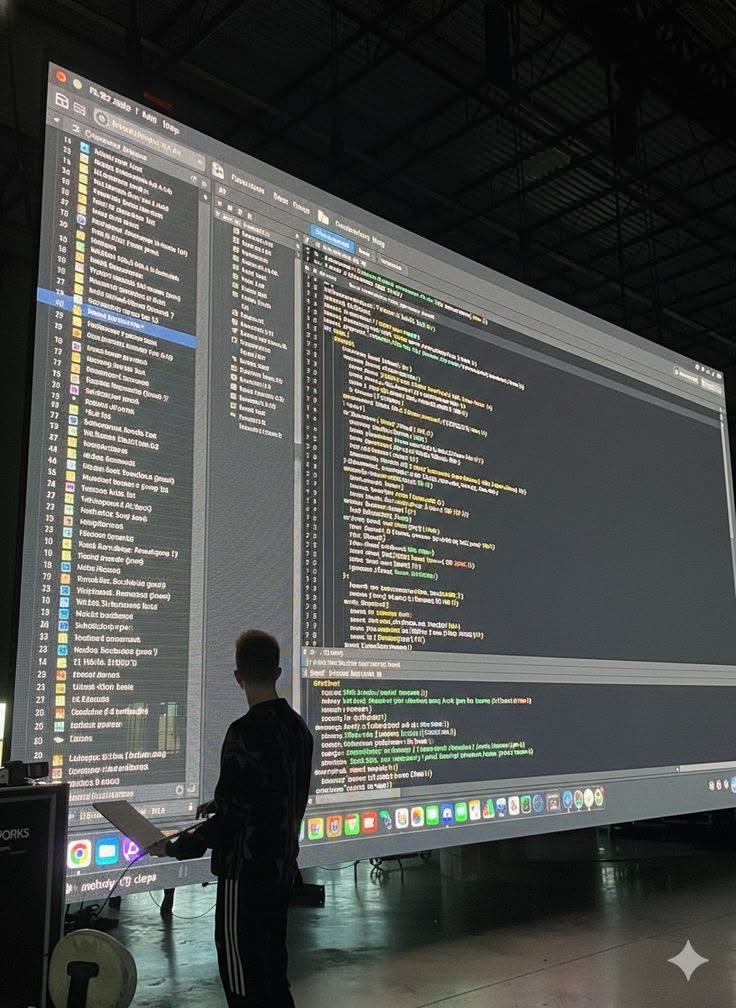
Most people think frontend development is “making things look pretty” or “writing HTML/CSS/JS.”
That’s like saying a translator’s job is “typing in another language.”
The real job? Problem translation with graphic design representation.
You take messy, ambiguous human/business problems and turn them into intuitive, visual, interactive solutions.
A product manager says: “We need users to upgrade their plan easier.”
A designer mocks up some buttons.
But the frontend dev’s actual work is translation:
• What does “easier” actually mean in user behavior?
• How do we reduce cognitive load?
• What micro-interactions build trust?
• How does this fit the existing mental model of the app?
You’re not just implementing pixels. You’re interpreting intent.
Good frontend is empathy engineered.
You’re constantly translating between:
• Business goals ↔ User needs
• Abstract requirements ↔ Concrete interfaces
• Technical constraints ↔ Delightful experiences
The best frontend devs I know think like product designers and engineers. They spot when a requirement is actually a symptom of a deeper problem.
Example:
Stakeholder: “Add more filters to the search.”
Naive translation: Dump 15 checkboxes on the page.
Skilled translation:
• Study how users actually search
• Group filters intelligently
• Add progressive disclosure
• Make it feel instant (even if it’s not)
• Ensure it works beautifully on mobile
That’s design code psychology in one.
This is why great frontend is so hard to hire for.
You need someone who can:
• Understand the why behind the ticket
• Question assumptions without being annoying
• Make something that feels right, not just looks right
• Ship fast but think holistically
It’s craftsmanship, not just implementation.
The industry sometimes forgets this.
We chase framework trends and pixel-perfect Figma matches while undervaluing the translation skill that actually moves the needle on retention, conversion, and user love.
The best interfaces don’t scream “designed.” They feel inevitable.
If you’re a frontend dev reading this:
Own the translator role. Ask better questions. Push on requirements. Prototype solutions, not just implement them.
You’re not a “pixel pusher.” You’re the bridge between intention and experience.
That’s powerful.
What’s the hardest “translation” challenge you’ve faced lately as a frontend dev? Drop it below 👇
#Frontend #WebDev #ProductDesign #UX
2
1
2
107
The internet rewards visibility more than hidden talent:
In fact, this is not what you thought this was going to be about 😀.
Surprised? Hahaha… no worries, it’s deliberate.
Yes… we are thinking what you are thinking.
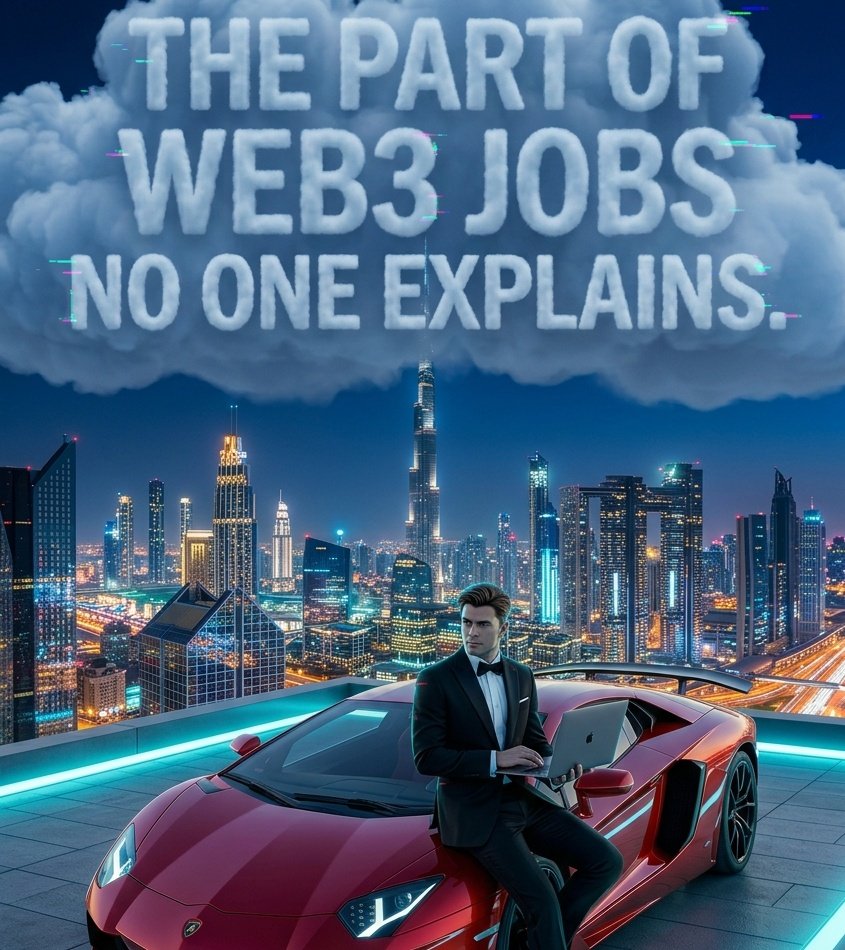
Let’s take a practical illustration. The image attached is being used deliberately as a teaching tool.
Now be honest, when you saw the image, what did you think this thread was going to be about?
That assumption did not come from the content itself but from perception given by the image.
This is how our mind functions and unfortunately also how opportunities are gotten and lost online.
Something gets seen and meaning is assigned before it is understood.
Once that label is formed, everything after it gets filtered through it.
So the point of all this is not complicated, it is to make you understand that talent or ability alone is not enough and that you have to show workings.
Why?
Because hidden talent has to be interpreted and interpretation takes time and time is rarely given.
Now, unlike the counterpart, visible work does not require all these steps.
All it requires is a simple step, nothing more, because it is already placed in a frame people can process immediately.
So it does not win by being better.
It wins by being already available in a usable form.
At that point, talent stops being the main factor.
What matters is how quickly value can be recognized without effort.
And online, speed of recognition often decides what gets attention.
Attention does not stay for explanation.
It moves with what is already clear.
In that space, clarity carries more weight than depth that still needs decoding.
The gap is not between talent and no talent.
It is between what is already readable and what still needs work to understand.
It is all about labels.
And those labels decide perception in seconds.
So the skill is not just talent or ability.
The skill is learning how to shape what people see before they have time to interpret it.
Your goal is no longer just to be seen.
Your goal is to control what is seen in that first moment of contact.
Never underestimate the power of labels.
1
1
4
1,175
Most crypto projects don’t fail because the idea is bad.
They fail because execution becomes messy.
Dev, marketing, community, strategy… all moving in different directions.
That’s where DevCrib comes in.
A team built to help projects stay visible, organized, and built to last.
Here’s what they’re about 👇
2
1
2
61
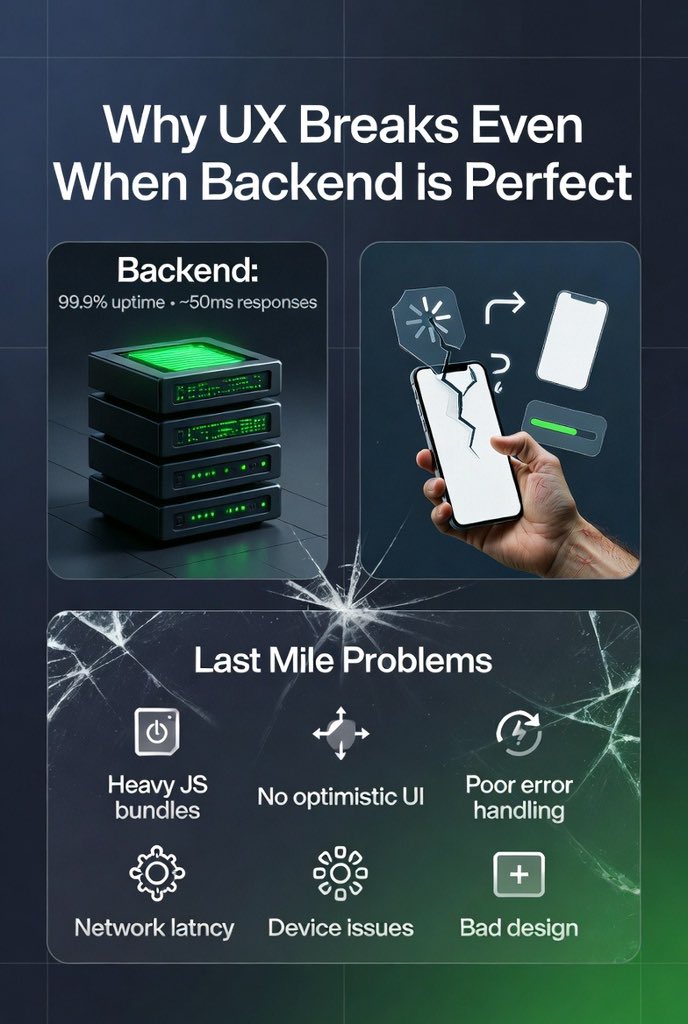
We’ve all been there: the API returns in <100ms, servers are green, databases are optimized… yet the user is frustrated and ready to churn.
Great backend ≠ great product. The real experience lives in the last mile what the user actually sees and feels.
Here’s why UX collapses even when the backend is flawless. A thread for product teams, engineers, and designers. 👇
1. The Invisible Latency Tax
Backend is fast, but:
• Bundle size bloats your JS
• Render blocking resources
• No skeleton loaders or optimistic UI
Result? User sees a blank screen for 2–3 seconds. Perception of slowness is reality. Studies show even 100ms extra can tank conversion.
2. Frontend Fragility
Backend returns perfect JSON, but:
• Race conditions in state management
• Poor error boundaries
• Unhandled edge cases on the client
A 500 from the server is easy to catch. A stuck spinner because your React query didn’t refetch properly? That’s the kind of silent killer that makes users rage quit.
3. Design & Interaction Debt
Beautiful backend logic can’t save:
• Confusing navigation
• Inconsistent micro-interactions
• Missing accessibility (keyboard traps, low contrast)
• Mobile-unfriendly layouts
Users don’t “read the docs.” They feel the friction instantly.
4. The Ecosystem Outside Your Control
• Third-party scripts (analytics, chat widgets) slowing everything
• Network conditions (users on 3G or spotty Wi-Fi)
• Device variability (old phones, iOS Safari quirks)
• Browser extensions and ad blockers
Your backend can be perfect in the lab. Real life is messy.
Key Takeaway
Backend reliability is table stakes.
True product excellence is measured by how the user feels in the first 3–5 seconds and every click after.
Obsess over perceived performance, graceful degradation, and delightful interactions. The best teams treat frontend backend as one unified system.
What’s one UX break you’ve seen despite a solid backend? Drop it below 👇
1
1
1
51
THE POWER OF RELATIONSHIPS:
One thing that shows up in Web3 jobs is that people often overestimate the role of credentials and underestimate the role of relationships.
Now before anyone gets angry, this doesn't mean skills stills don't matter.
They do.
Without skills, there isn’t much value to offer in the first place.
But what tends to happen is that when opportunities start moving around, they’re usually moving through people.
Think about it.
Most jobs are gotten through relationships, referrals, recommendations, previous interactions, or simply being remembered when an opportunity appears.
The interesting part is that relationships don’t magically appear either.
Nobody wakes up one morning and randomly decides to trust you, recommend you, or bring you into a project. They have to know you exist first.
And that’s where positioning comes in.
3
2
3
70
A lot of people hear positioning and immediately think of personal branding, content creation, or trying to become an influencer.
That’s not what this is.
Positioning is simply increasing the chances of being in the right place, around the right people, often enough that opportunities have a chance to find you.
After all, nobody refers someone they’ve never seen, recommends someone they’ve never interacted with, or remembers someone they’ve never encountered.
So while relationships create opportunities, positioning creates relationships.
One puts you in the room, the other shapes what happens after you enter.
And that’s why they complement each other so well.
You can have great relationships, but if nobody knows you exist, there are no relationships to begin with.
You can also be visible everywhere, but if you never build trust with anyone, visibility alone won’t carry you very far.
The sweet spot is where both meet.
You’re visible enough to be noticed and connected enough to be remembered.
That’s usually where opportunities start showing up.
One of the biggest advantages of relationships is that they continue working even when you’re not.
You could be asleep, offline, busy with something else, and your name still comes up in a conversation simply because enough trust has been built with the right people.
That’s leverage.
Most people miss this.
They spend their time asking how to find opportunities when the better question is how to become the person opportunities naturally flow towards.
That’s why Web3 jobs are less about credentials and more about positioning.
Positioning helps people discover you.
Relationships help people trust you.
And opportunities tend to follow trust.
16
GM GM ☕
X is nice, but noisy if your timeline isn't filled with devving related content
If you're a Dev, here's your opportunity to optimise your timeline
Let's connect with more devs and jobbers in the comment section
If you’re into Tech,Startups, Design, web dev, AI, etc
Say GM and get the chance to connect with like minded people
Let's gooo
4
3
6
5,229
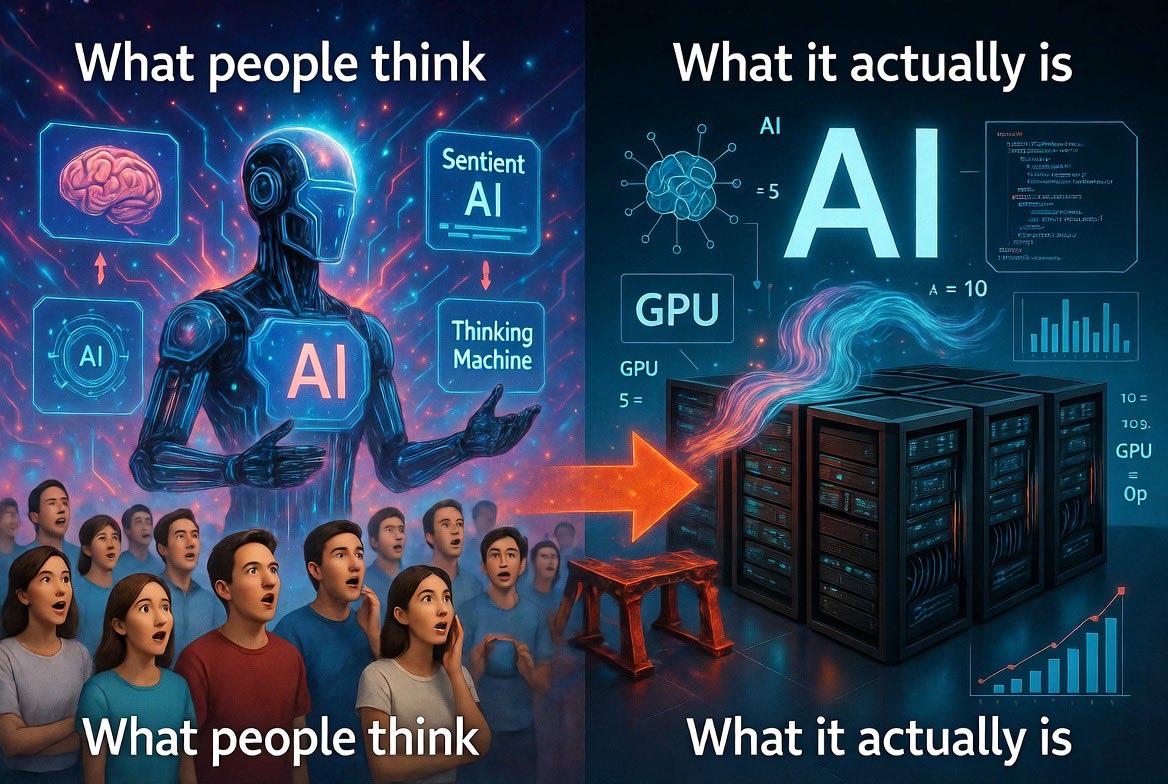
Most people misunderstand what AI actually does in real systems, however, this is what AI does in real system.
🧵 Most people think AI "thinks."
It doesn't.
Here's what AI actually does in real systems and why the distinction matters more than you think.
4
6
7
169
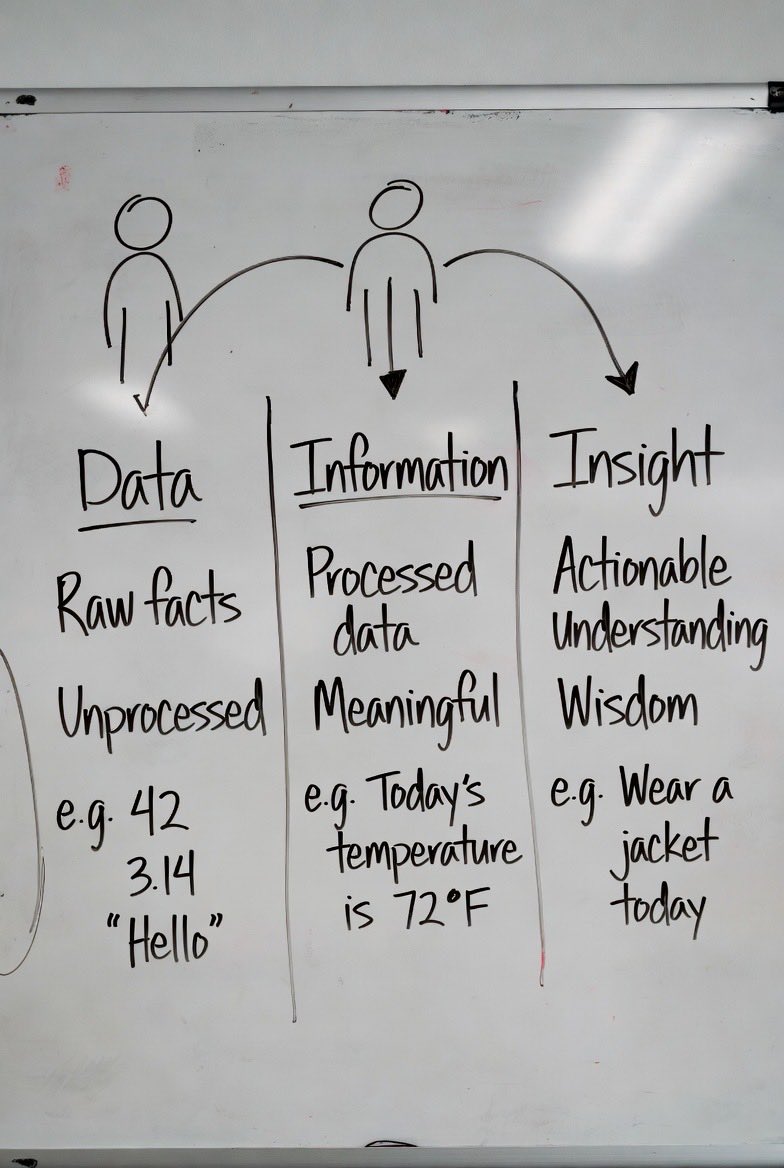
The hierarchy:
🔹 Data → collected
🔹 Information → processed
🔹 Insight → understood
Most companies drown in data.
Few convert it to information.
Even fewer extract real insight.
The ones that do? They win. 🏆
The question to ask yourself:
"Are we collecting data or generating insight?"
Because a thousand dashboards with no insight is just expensive noise.
Data informs. Insight transforms.
Know the difference. And Use it. 🧠
RT if this clicked for you 🔁
12
WHY INTELLIGENT PEOPLE STAY BROKE ONLINE FOR TOO LONG:
The funny thing about intelligent people is that they are usually the last people you'd expect to struggle online.
They learn fast, understand systems quickly, think 4 steps ahead and can spot opportunities earlier than most people.
Yet somehow...
A lot of them stay stuck for years.
Have you ever wondered why?
The answer is actually pretty simple, their advantage is their disadvantage.
Because of how analytical they are, intelligent people often spend too much time trying to fully understand a system before participating in it.
And that sounds reasonable.
After all, why jump into something you don't understand?
The problem here is that the world doesn't pause while they're trying to figure everything out.
Funny enough, a certain member of our team was like this until recently 😂 😂 😂
Let me explain 👇
5
3
5
216
WHY INTELLIGENT PEOPLE STAY BROKE ONLINE FOR TOO LONG:
The funny thing about intelligent people is that they are usually the last people you'd expect to struggle online.
They learn fast, understand systems quickly, think 4 steps ahead and can spot opportunities earlier than most people.
Yet somehow...
A lot of them stay stuck for years.
Have you ever wondered why?
The answer is actually pretty simple, their advantage is their disadvantage.
Because of how analytical they are, intelligent people often spend too much time trying to fully understand a system before participating in it.
And that sounds reasonable.
After all, why jump into something you don't understand?
The problem here is that the world doesn't pause while they're trying to figure everything out.
Funny enough, a certain member of our team was like this until recently 😂 😂 😂
Let me explain 👇
5
3
5
216
For the longest time, whenever he came across a new opportunity online, his first instinct wasn’t to participate but to understand.
He always wanted to know how everything worked first, the business model, the risks, the sustainability, and everything that could possibly go wrong or right 🙄 before even considering taking the first step.
😂
In his head, it made perfect sense because why would he put time into something he didn’t fully understand?
So he kept researching and researching while other people were already getting started.
The funny thing is that people like this often never start, not because they love learning too much, but because they get stuck in strategy and overthinking and they end up postponing action.
And that is why those who seem “normal” often perform better because they understand just enough to begin.
That was the part he missed for a long time, the assumption that understanding creates progress, when in reality progress is often what creates understanding.
There are things you simply cannot learn from the sidelines, no matter how many videos you watch, threads you read, or opinions you collect.
You only really learn them by getting involved, making mistakes, adjusting, and continuing.
That is why you will sometimes see people who know less making more progress online, not necessarily because they are better, but because they entered the game while everyone else was still trying to figure everything out.
1
2
53