
Joined August 2023
- Tweets 30,068
- Following 610
- Followers 3,273
- Likes 29,731
1,746 Photos and videos



Pinned Tweet

23 Nov 2025
Holy shit!
Are you sure we're ever going to be up again?
Happy new week if you believe in positivity.

70
2
96
5,066
22h
Making AI Simpler: The Goal Behind @AINFTcom
One of the biggest challenges in artificial intelligence today is not access to models. It is managing the growing number of tools, interfaces, accounts, and workflows required to use them effectively.
As AI capabilities expand, users increasingly want a simpler experience—one place where they can discover tools, interact with models, and move from idea to execution without navigating multiple platforms.
This is the problem platforms like AINFT are working to address.
Rather than treating AI as a collection of disconnected services, AINFT aims to provide a unified environment where users can access AI capabilities through a streamlined Web3-native experience.
Bringing AI Services Together
Modern AI workflows often involve several separate steps:
• Finding the right model
• Accessing the appropriate tool
• Managing credentials and payments
• Switching between different interfaces
• Coordinating outputs across platforms
A unified platform helps reduce complexity by bringing these interactions into a single environment.
Built for Accessibility
The value of AI increases when it becomes easier to use.
For developers, creators, researchers, and everyday users, accessibility means:
• Faster access to AI services
• Simplified onboarding
• Consistent user experience
• Reduced operational friction
• More time focused on outcomes rather than setup
This approach helps make advanced technology more approachable for a broader audience.
AI and Web3 Integration
AINFT also operates within the growing intersection of artificial intelligence and Web3 infrastructure.
This enables features such as:
• Wallet-based access
• Digital asset compatibility
• On-chain identity integration
• Cross-ecosystem participation
• Decentralized access models
These capabilities support a more connected environment where AI services and blockchain infrastructure work together.
A Broader Direction for the Industry
The long-term evolution of AI may be shaped as much by usability as by model performance.
Powerful technology becomes valuable when people can access it easily, understand it clearly, and incorporate it into their daily workflows.
Platforms focused on simplifying access help move AI from a specialized tool toward a more practical and widely available resource.
That broader shift is becoming increasingly visible across the industry.
More accessibility.
More integration.
More practical use.
And ultimately, more people able to participate in the opportunities created by AI.
@AINFTcom
@justinsuntron
#TRONEcoStar
1
1
15
23h
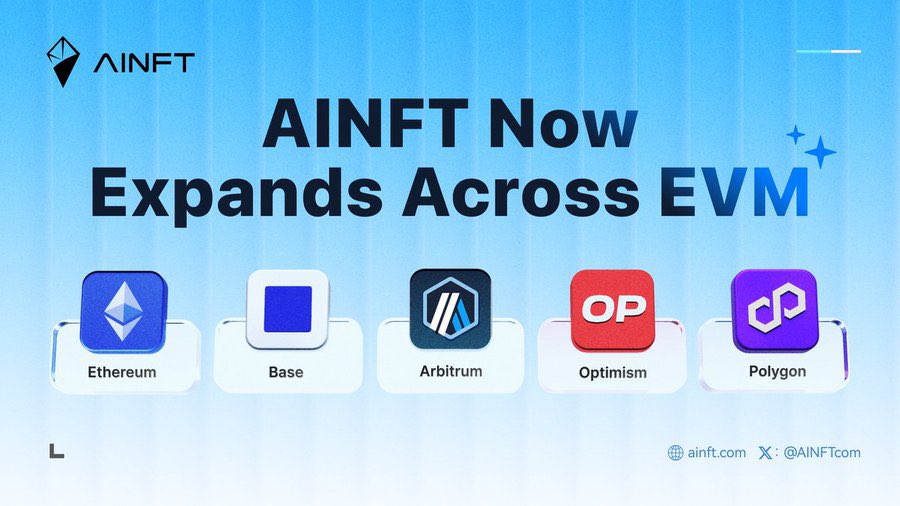
AINFT Expands Multi Chain Access Across EVM Ecosystems
AI platforms in Web3 are moving toward broader interoperability as users increasingly operate across multiple blockchain networks. Access, compatibility, and ease of connection are becoming central to how these systems are designed and used.
AINFT’s latest update reflects this direction by extending platform support across additional EVM compatible chains alongside its existing integrations.
Multi Chain Access and User Flexibility
Support for multiple blockchain networks allows users to access AI services through the ecosystems they already use. This reduces dependency on a single chain and improves overall flexibility in platform interaction.
Interoperability in Web3 Systems
As Web3 continues to develop, applications are no longer limited to one network. Multi chain compatibility allows platforms to function across different ecosystems in a consistent way, supporting broader participation and smoother user experience.
Wallet Connectivity and Onboarding
EVM compatible wallet support enables users to connect through standard wallet infrastructure. This approach simplifies access to AI tools by reducing setup steps and allowing direct interaction using familiar wallet systems.
Supported Networks
The platform now operates across the following networks:
• Ethereum
• Base
• Arbitrum
• Polygon
• Optimism
• TRON
• BNB Chain
Expanded Platform Capabilities
The update introduces broader access to AI services through:
• Multi chain wallet login support
• Expanded deposit and top up options
• Access across multiple blockchain environments
• Compatibility with a wider range of digital assets
• Unified access to AI model interactions
Conclusion
AI platforms in Web3 are evolving toward systems that operate across multiple networks rather than remaining isolated within a single ecosystem. Multi chain support strengthens accessibility and aligns with how users already interact with digital assets across different blockchains.
AINFT’s expansion reflects this shift toward broader interoperability, where access to AI services is structured around flexibility, connectivity, and cross chain usability.
@justinsuntron @AINFTcom #TRONEcoStar
4
23h
AI, Web3, and the Changing Structure of Digital Creativity
Digital creativity is entering a new phase shaped by artificial intelligence tools and blockchain based systems. These technologies are changing how ideas are formed, how content is produced, and how digital ownership is recorded and shared.
Lower Barriers to Creation
Artificial intelligence systems now assist with writing, design, code generation, and media production. This reduces the amount of technical knowledge required to turn ideas into finished work.
In practical terms, this leads to:
• Faster development of digital concepts
• Easier testing of new ideas
• Wider access to creative tools
• Reduced dependence on specialized technical skills
This shift allows more people to participate in digital creation using simpler workflows.
Digital Ownership and Blockchain Systems
Blockchain infrastructure introduces a clear method for recording ownership of digital assets. Each asset can be linked to a verifiable record stored on distributed networks.
This supports:
• Transparent asset ownership records
• Clear provenance for digital content
• Transfer of assets without central intermediaries
• Participation in digital economies through owned resources
These features are used across many Web3 applications where verification and traceability are required.
Role of Platforms Like AINFT
Platforms such as AINFT operate within this broader environment by combining AI tools with blockchain based ownership systems. The goal is to connect content generation with on-chain structure so that digital output can be created, recorded, and managed in a unified process.
This type of system reflects a growing pattern where creation tools and ownership systems work together within the same environment.
Community and Shared Development
Digital ecosystems develop through participation. Users, developers, and creators interact with shared tools and standards, which influences how platforms evolve over time.
This interaction supports:
• Shared use of creative infrastructure
• Continuous improvement of tools and systems
• Formation of digital communities around common platforms
• Broader participation in technology driven creation
Conclusion
The combination of artificial intelligence and blockchain technology is changing how digital work is produced and managed. Creation tools are becoming more accessible, while ownership systems are becoming more structured and verifiable.
Together, these developments are shaping a digital environment where ideas can move from concept to recorded asset within connected systems.
Platforms like AINFT exist within this transition, linking creative processes with blockchain based infrastructure in a single workflow.
@justinsuntron @AINFTcom #TRONEcoStar
3
23h
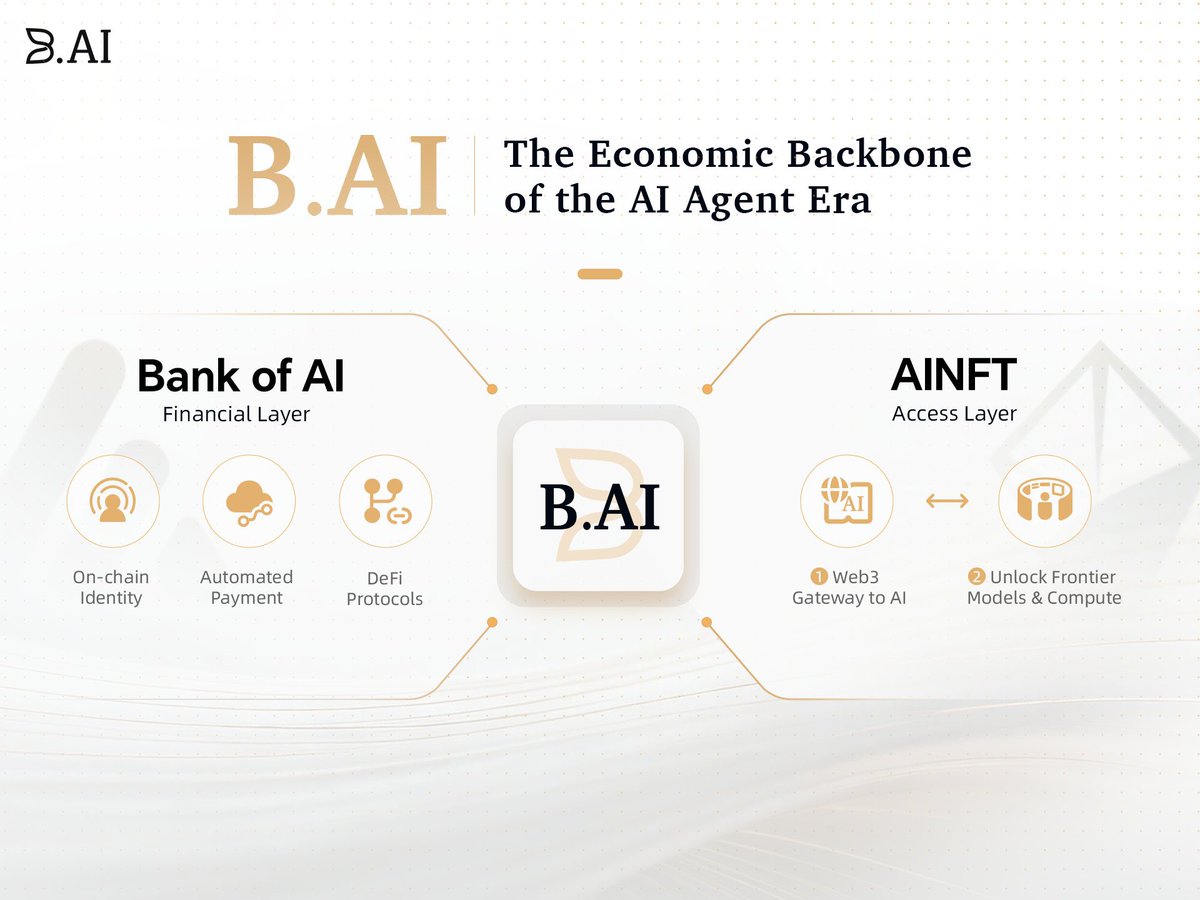
B.AI and the Infrastructure Layer for Autonomous AI Agents
As artificial intelligence systems move toward greater autonomy, their usefulness is no longer defined by intelligence alone. It is defined by their ability to interact with digital services, move value, and operate across different networks in a structured and reliable way.
B.AI is designed around this requirement. It focuses on building the underlying infrastructure that allows AI agents to function within digital economies rather than remaining isolated tools.
Financial Infrastructure for AI Agents
A core part of this system is the financial layer built through Bank of AI. This layer is intended to give AI agents the ability to participate in on-chain economic activity in a controlled and verifiable way.
Key components include:
• On-chain identity for AI agents
• Automated payment execution
• Integration with decentralized finance systems
• Coordination of value across multiple blockchain networks
This structure supports interaction across ecosystems such as TRON and BNB Chain, where AI systems can operate with defined financial permissions and traceable activity.
Access Layer for AI Services
Through AINFT, the ecosystem also provides a structured entry point for users to access AI services within a Web3 environment.
This layer supports:
• Wallet-based access to AI tools
• Simplified onboarding for users
• Interaction with multiple AI models
• Access to decentralized compute resources
The objective is to reduce friction between users and AI systems while keeping interactions native to blockchain infrastructure.
System-Level Function of the Ecosystem
When combined, these layers form a framework where AI agents can operate with defined roles and capabilities across different systems.
This includes:
• Accessing applications through standardized interfaces
• Coordinating value transfer through blockchain rails
• Executing transactions based on predefined conditions
• Operating across multiple networks without centralized control points
The system is designed to support structured interaction between intelligence systems and financial infrastructure.
Conclusion
B.AI represents an approach focused on connecting AI systems with financial and identity infrastructure. Instead of treating AI as standalone software, it positions it within a broader network where agents can interact with services, value systems, and digital environments in a coordinated way.
As autonomous systems continue to develop, the importance of infrastructure that supports identity, access, and value transfer becomes central to how these systems function at scale.
@justinsuntron @BAI_AGI #TRONEcoStar
2
23h
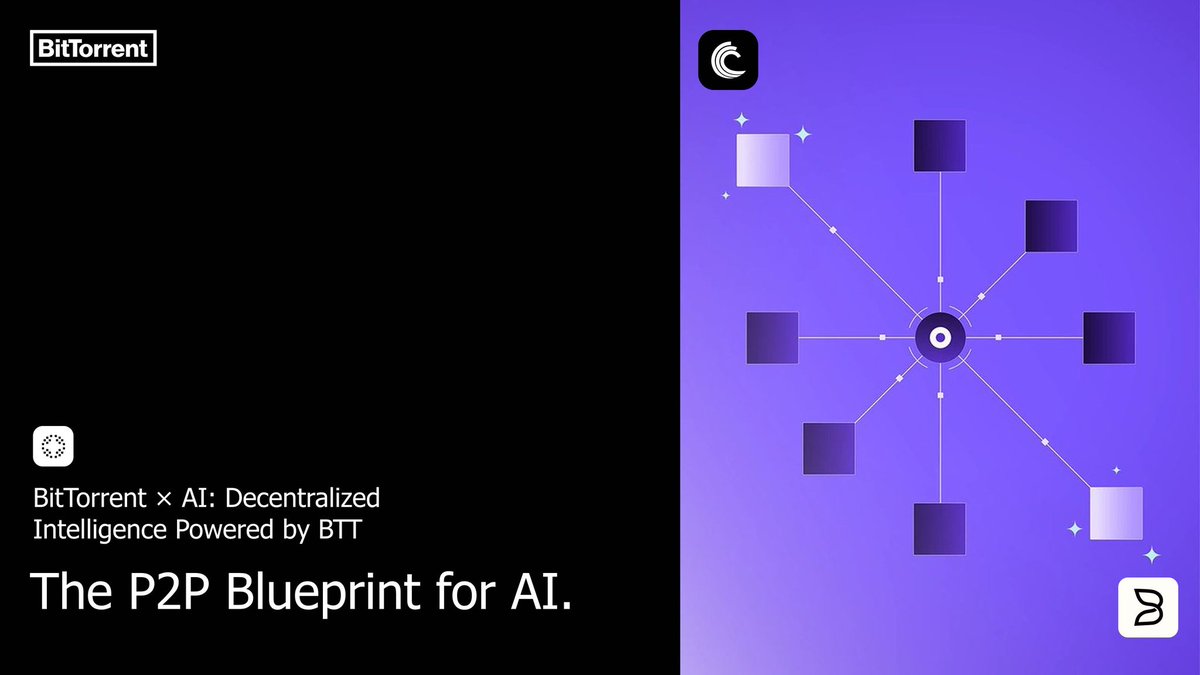
Peer to Peer Networks and the Expansion of Distributed Systems
Peer to peer systems have shaped how digital information moves across the internet for more than two decades. The core idea is simple. Devices communicate directly with each other without relying on a central server. This structure allows data to move efficiently across large and distributed networks.
Foundation of Peer to Peer Architecture
Early implementations of peer to peer networks became widely known through systems such as Napster in 1999 and BitTorrent in 2001. These systems demonstrated that large files could be shared across millions of users by distributing the load across participating devices rather than central infrastructure.
This model reduced pressure on single servers and improved global accessibility of data transfer.
Practical Impact on Global Networks
Peer to peer design introduced a scalable method for distributing digital content. Each participant in the network contributes bandwidth and storage, which strengthens the system as usage increases.
This structure supports:
• Efficient global file distribution
• Reduced dependence on centralized servers
• Scalable data transfer across large user bases
• Improved resilience through distributed participation
BitTorrent remains one of the most widely used examples of this model in practice, supporting large scale content distribution across the internet.
Expansion Into Modern Distributed Systems
The same principles behind peer to peer networking now influence broader distributed systems. Modern blockchain networks apply similar ideas by spreading computation, storage, and validation across many independent nodes.
This approach enables:
• Distributed data processing
• Shared network responsibility
• Continuous system availability
• Reduced reliance on centralized infrastructure
These characteristics support the growth of decentralized applications and large scale digital ecosystems.
Conclusion
Peer to peer networks introduced a structural shift in how data moves across the internet. The removal of centralized dependency created systems that scale through participation rather than central control.
This foundation continues to influence modern distributed technologies, where coordination across many independent nodes supports global digital infrastructure.
@justinsuntron @BitTorrent #TRONEcoStar
1
23h
Oracles in Web3: Connecting Smart Contracts to Real-World Data
Smart contracts operate with precision. They execute instructions exactly as written and produce consistent outcomes when conditions are met. This reliability is one of the core strengths of blockchain systems.
However, smart contracts operate only with data available on-chain. They do not access external systems directly. This creates a clear requirement for trusted external data sources when real-world information is needed.
The Structural Gap in On-Chain Systems
Blockchains maintain internal accuracy, but they do not independently verify external conditions such as:
• Market prices
• Asset valuations
• External events
• Off-chain system states
For applications like lending, trading, insurance, and stable assets, this separation becomes a functional limitation. These systems require accurate and timely external data to operate correctly.
The Function of Oracle Networks
Oracle networks exist to provide verified external data to blockchain applications in a structured and secure way.
Within the TRON ecosystem, [WINkLink Oracle](winklink.org?utm_source=chat…) functions as a data layer that connects smart contracts to off-chain information.
Its role includes:
• Collecting data from multiple independent sources
• Checking consistency across inputs
• Filtering unreliable or incomplete signals
• Delivering verified data to smart contracts
This process allows blockchain applications to use external information in a controlled and verifiable manner.
Why Verified Data Matters
Decentralized finance and blockchain applications depend on accurate inputs. Without reliable data, system outcomes become inconsistent.
Verified data supports:
• Accurate pricing for financial protocols
• Stable operation of lending and collateral systems
• Consistent execution conditions for smart contracts
• Reduced exposure to incorrect external inputs
These factors are essential for maintaining system reliability at scale.
From Execution to Data Awareness
Smart contracts handle execution with precision. Oracle systems provide the information required for those executions to reflect real-world conditions.
This separation of roles is important. Execution defines how a system responds. Data defines what the system responds to.
Oracle networks provide the structured link between the two.
Conclusion
Blockchain systems rely on both computation and external information to function effectively. Smart contracts handle automated execution, while oracle networks supply verified external data.
Within this structure, WINkLink supports data delivery for decentralized applications in the TRON ecosystem, enabling smart contracts to operate with reliable external inputs.
As blockchain adoption grows, access to accurate and verifiable data becomes a core requirement for system stability and dependable performance.
Execution provides structure.
Data provides context.
Together, they enable functional decentralized systems.
@WinkLink_Oracle @justinsuntron
#TRONEcoStar
1
23h
Proof of Reserves and the New Standard for Exchange Trust
Trust in digital asset platforms is built through visible systems, clear reporting, and independently verifiable data. In an industry where users depend on custodial services to hold and manage value, transparency becomes a core requirement for long term confidence.
Proof of Reserves is one of the mechanisms designed to support that requirement.
What Proof of Reserves Represents
Proof of Reserves is a verification approach that allows exchanges to demonstrate that customer assets are backed by on platform holdings. It relies on cryptographic verification methods and publicly accessible blockchain data so users and independent observers can review reserve positions.
The purpose of this system is straightforward. It provides measurable confirmation that reported balances align with on chain holdings.
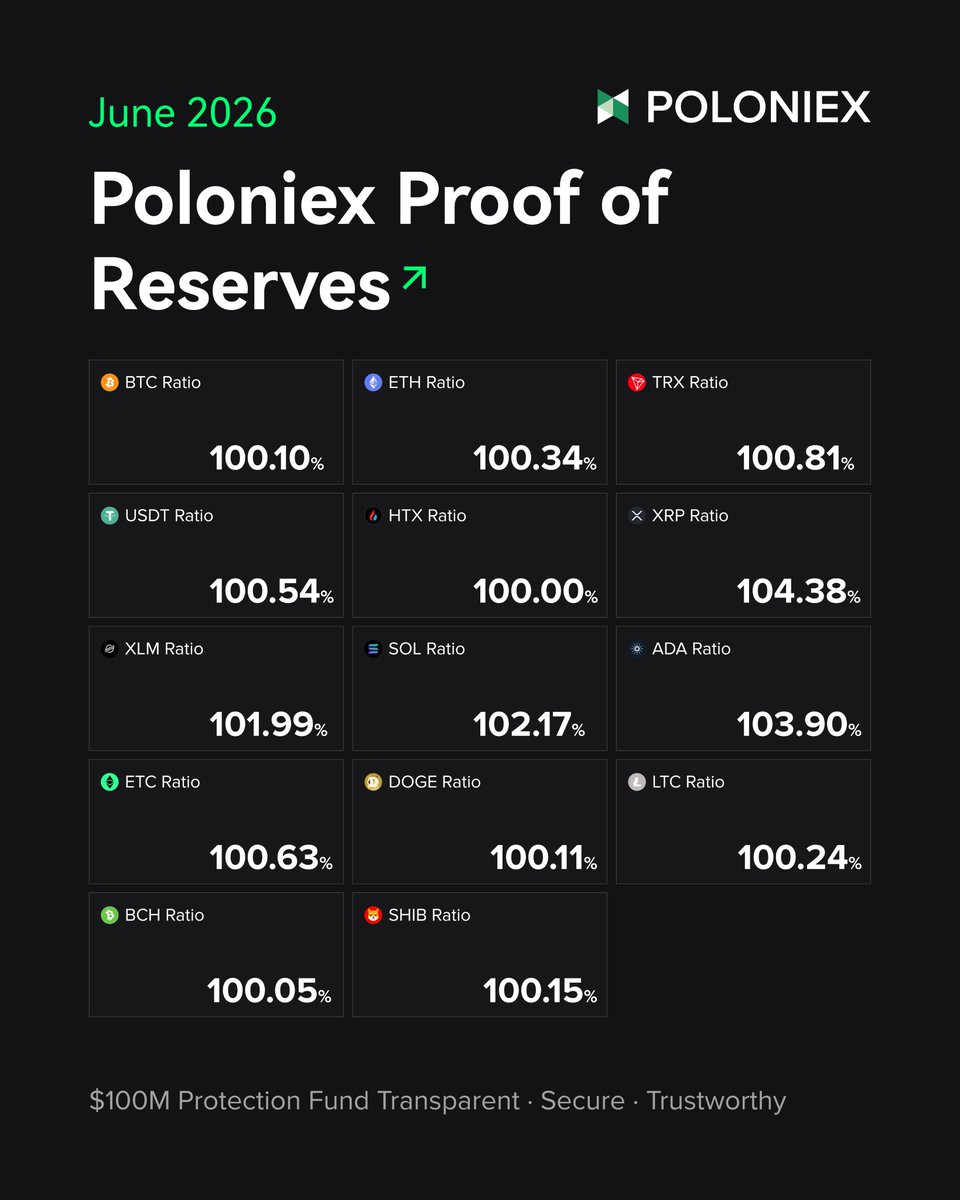
Poloniex June 2026 Reserve Disclosure
The latest Poloniex Proof of Reserves update for June 2026 highlights the following reported points:
• Reserve ratios above 100 percent across major assets
• A $100 million protection fund maintained for risk coverage
• Public verification tools available for user validation
These elements are part of the exchange’s reporting framework for asset transparency and risk management.
Why Reserve Transparency Matters
Exchange users rely on platforms for custody and execution of trades. Clear reserve reporting supports confidence by providing visibility into asset backing conditions through verifiable data.
Key outcomes of reserve transparency include:
• Independent verification of asset holdings
• Improved clarity on custodial structure
• Better visibility into platform risk controls
• Structured reporting of user asset backing
These factors support more informed user participation in centralized trading environments.
Security as a Core System Requirement
Financial infrastructure requires consistent safeguards that can be reviewed and validated. Proof of Reserves contributes to this requirement by creating a framework where asset backing can be measured through data rather than assumptions.
Over time, such systems contribute to higher operational standards across the exchange sector.
Conclusion
Proof of Reserves reporting reflects a growing focus on transparency within centralized exchanges. Through reserve disclosures and protection funds, platforms such as Poloniex provide users with structured insight into asset backing and system stability.
This approach aligns with the broader direction of digital asset markets where verifiable data supports trust and participation across the ecosystem.
@justinsuntron
#TRONEcoStar
Jun 12

Poloniex June 2026 Proof of Reserves is live. ✅
100% reserve ratios across major assets.
$100M Protection Fund.
Transparent. Secure. Trustworthy.
1
23h
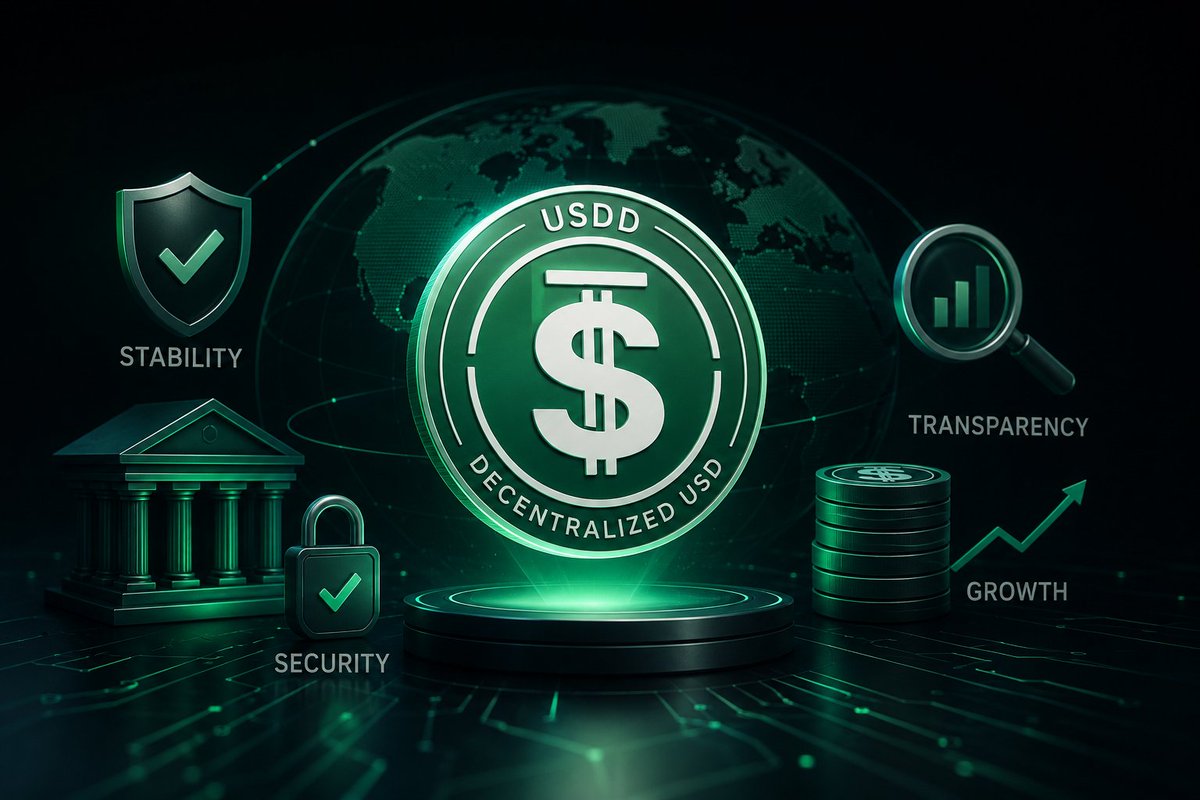
USDD and the Role of Stable Value in a Digital Economy
Crypto markets move quickly. Prices shift across short time frames. In this environment, stable assets provide a reference point that supports everyday financial activity across blockchain systems.
USDD is designed to maintain a value close to the U.S. dollar while operating within decentralized infrastructure. It functions as a digital representation of stable value that can be used across trading, savings, and payment activity within the Web3 ecosystem.
Design and Structure
USDD operates as a decentralized stable asset supported by on-chain mechanisms and reserve-based systems. These structures are used to maintain peg stability and ensure that the asset can function reliably across different market conditions.
The system is built to operate without dependence on traditional banking rails, using blockchain infrastructure to support issuance, circulation, and verification processes.
Transparency and Verification
Stable digital assets rely on clear and verifiable information. USDD provides visibility into key protocol data such as reserves, supply metrics, and ecosystem activity through publicly accessible blockchain records.
This level of transparency supports user confidence by allowing independent verification of system conditions at any time.
Role in Decentralized Finance
USDD serves as a foundational asset across decentralized finance applications. Its primary use cases include:
• Stable value storage during market fluctuations
• Participation in lending and borrowing markets
• Cross-border value transfer
• Liquidity provision across DeFi protocols
• Access to blockchain-based financial tools
These functions allow users to interact with financial applications while maintaining exposure to a stable unit of account.
Ecosystem Integration
USDD is integrated across multiple platforms and protocols within the TRON ecosystem. This integration supports continuous usage across trading environments, decentralized applications, and liquidity systems.
As adoption expands, stable assets like USDD become an important part of transaction flow within blockchain networks, supporting consistent settlement and capital movement.
Importance of Stability in Digital Finance
Stable assets play a central role in connecting traditional financial concepts with blockchain systems. They provide a consistent value reference that allows users and institutions to operate with reduced volatility exposure.
In a growing digital economy, this stability supports:
• Predictable transaction value
• Efficient settlement across networks
• Broader access to decentralized financial services
• Improved usability of blockchain applications
Conclusion
USDD represents a category of digital assets designed to support stability within decentralized environments. Its structure, transparency, and integration across DeFi applications position it as a key component of blockchain-based financial systems.
As digital finance continues to expand, stable assets remain an essential element in enabling consistent participation across global markets.
@usddio @justinsuntron
#TRONEcoStar
6
23h
BTTC Validators and the Infrastructure Behind Cross-Chain Systems
Blockchain networks depend on more than applications and user activity. They rely on infrastructure that processes data, confirms transactions, and keeps different systems aligned in real time. Within BTTC, this responsibility is carried by validator participation across the network.
How Validators Support the Network
Validators are nodes that confirm activity across the system and help maintain correct records of transactions. Their work supports the ongoing operation of the network by ensuring that information is processed in a structured and verifiable way.
Key responsibilities include:
• Confirming transactions submitted to the network
• Maintaining consistent block records
• Supporting consensus operations across connected systems
• Assisting with network security through validation rules
These functions help the network operate with accuracy and stability during continuous usage.
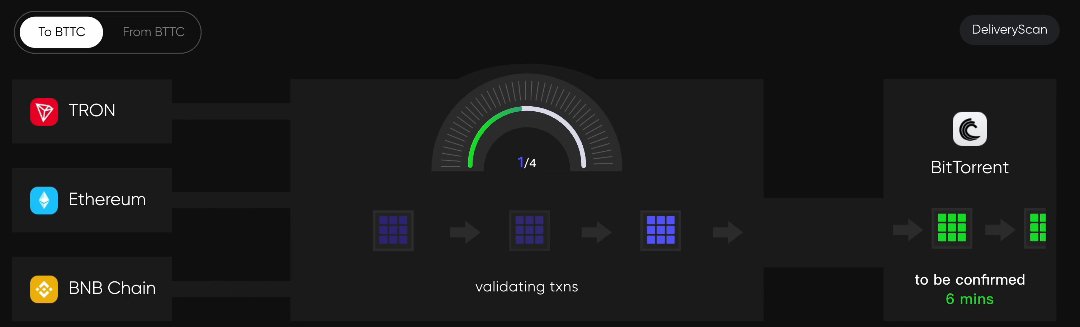
Delivery Chain Coordination
BTTC uses a Delivery Chain mechanism to coordinate information across supported blockchain environments. Validators participate in this process by verifying and passing data between systems.
This structure supports:
• Cross-chain transaction verification
• Synchronization of blockchain state data
• Secure movement of information across networks
• Stable communication between connected chains
Through this process, multiple blockchain systems can exchange data in a coordinated way.
Why This Infrastructure Matters
Cross-chain activity depends on accurate and timely data handling. Validators provide this foundation by confirming that information transferred between networks follows the required protocol rules.
This supports:
• Consistent transaction processing
• Reliable data exchange between ecosystems
• Secure validation of cross-chain activity
• Continuous network operation across different chains
Each of these elements contributes to the overall reliability of interoperability systems.
Multi-Chain Network Direction
Blockchain ecosystems are expanding across multiple networks. Activity is no longer limited to a single chain. Users, applications, and assets move across different environments as adoption increases.
Validator infrastructure supports this movement by maintaining coordination across systems and ensuring that data remains consistent during transfer between chains.
Conclusion
BTTC validators form part of the underlying system that enables cross-chain communication. Their role focuses on confirmation, synchronization, and coordination of data across connected networks.
This infrastructure supports reliable interaction between blockchain systems and helps maintain structured communication as multi-chain activity continues to grow.
@BitTorrent @justinsuntron
#TRONEcoStar
1
23h
Borderless Money: How Digital Payments Are Quietly Changing Global Access
Football shows how easily people connect across countries. Fans in Brazil and Morocco can share the same moment, even if they are far apart.
Money movement is now going through a similar shift.
For many individuals and families, sending value across borders is still slow, costly, and dependent on multiple intermediaries. Transfers can take time to settle, and fees reduce the final amount received. This affects everyday needs such as tuition payments, rent support, and family remittances.
The Shift Toward Digital Settlement
Blockchain systems are being used to improve how value moves internationally. Stablecoins allow digital transfer of value over public networks without relying on traditional settlement timelines.
On networks such as [TRON Network](trondao.org?utm_source=chatg…), stablecoin activity has grown significantly over time, driven by consistent usage across wallets, exchanges, and payment applications. Public blockchain data shows that TRON processes large daily volumes of stablecoin transfers, reflecting continuous demand for fast settlement infrastructure.
Why This Matters in Real Life
Behind each transaction is a practical use case.
A student receiving support from family abroad
A worker sending remittances home
A small business settling payments with international partners
A user moving funds between platforms or regions
In each case, the goal is the same: value should move without unnecessary delay.
Digital dollar systems reduce the need for traditional banking delays and allow users to access funds directly through supported wallets and applications.
The Role of Infrastructure
The value of a payment network is measured by reliability and consistency.
Key characteristics include:
• Fast transaction settlement
• Continuous network availability
• Low operational friction
• Broad wallet and platform support
• Global accessibility through internet connection
These factors determine how effectively a system can support real-world financial activity at scale.
A Connected Financial System
As digital payments expand, the gap between regions becomes smaller in financial terms. Users are no longer limited by banking hours or geographic constraints when transferring value.
Networks like TRON are part of this broader shift toward always-available financial infrastructure, where digital assets can move across borders in a predictable and efficient way.
The direction is clear.
Financial access is becoming more immediate, more global, and more connected to everyday digital life.
@trondao @justinsuntron
#TRONEcoStar
1
23h
The Real Competition in Stablecoins Is No Longer Issuance. It's Distribution.
The conversation around stablecoins has changed.
Several years ago, the focus was on whether digital dollars would gain adoption at all. Today, that question has largely been answered. Stablecoins have become one of the most actively used products in the blockchain industry, moving value between exchanges, businesses, applications, and individuals every hour of every day.
The next question is different:
Which networks are actually carrying that activity?
That question matters because financial systems are ultimately judged by usage. A payment network proves its value when people use it consistently. A settlement network proves its value when institutions, businesses, and individuals trust it with the movement of capital.
This is where TRON has established a significant position.
Public blockchain data shows that tens of billions of dollars in stablecoins circulate on the network. Daily transaction counts regularly reach into the millions. Stablecoin transfers occur across exchanges, payment providers, trading desks, decentralized finance applications, and peer-to-peer markets operating around the world.
These numbers represent more than blockchain activity.
They represent economic activity.
Every transfer reflects someone moving value, managing liquidity, settling a transaction, or accessing financial services through digital assets.
What makes this important is the consistency of that usage.
Financial infrastructure gains relevance through reliability. Networks become valuable when users know what to expect each time they interact with them. Speed matters. Cost matters. Accessibility matters. Predictability matters.
Over time, these characteristics create habits.
And habits create adoption.
The growth of stablecoins has revealed an important reality about digital finance: distribution matters as much as issuance.
Creating a digital dollar is one challenge.
Building a network where that dollar can move efficiently between millions of participants is another.
The networks supporting that movement become part of the financial infrastructure itself.
This helps explain why stablecoin activity has become one of the most closely watched indicators across the blockchain industry. It provides insight into where capital is moving, where users are active, and where financial services are finding practical demand.
As adoption continues expanding, the importance of settlement networks will continue growing alongside it.
The future of digital finance depends on systems capable of supporting continuous value transfer across a global user base operating twenty-four hours a day.
That future is already taking shape.
And the networks facilitating that activity today are helping define how digital money moves tomorrow.
Infrastructure rarely attracts the most attention.
It earns something more valuable:
Dependence.
And in finance, dependence is built one successful transaction at a time.
@trondao @justinsuntron
#TRONEcoStar
1
23h
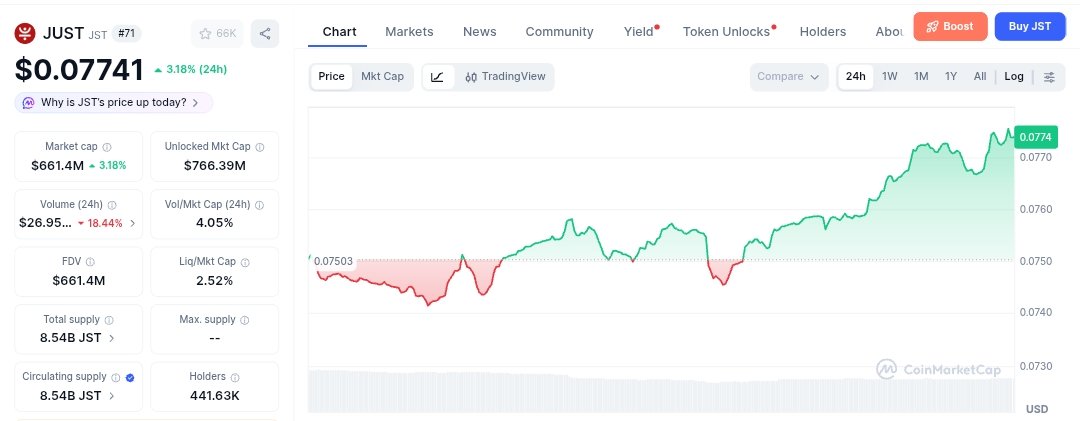
Why JST Continues to Matter in the Growth of TRON DeFi
Markets often focus on price.
Infrastructure tells a deeper story.
Over the past few years, the blockchain industry has produced thousands of tokens, countless narratives, and an endless cycle of trends competing for attention. Through that process, a small number of projects have remained active because they serve a practical purpose inside their ecosystems.
JST belongs to that group.
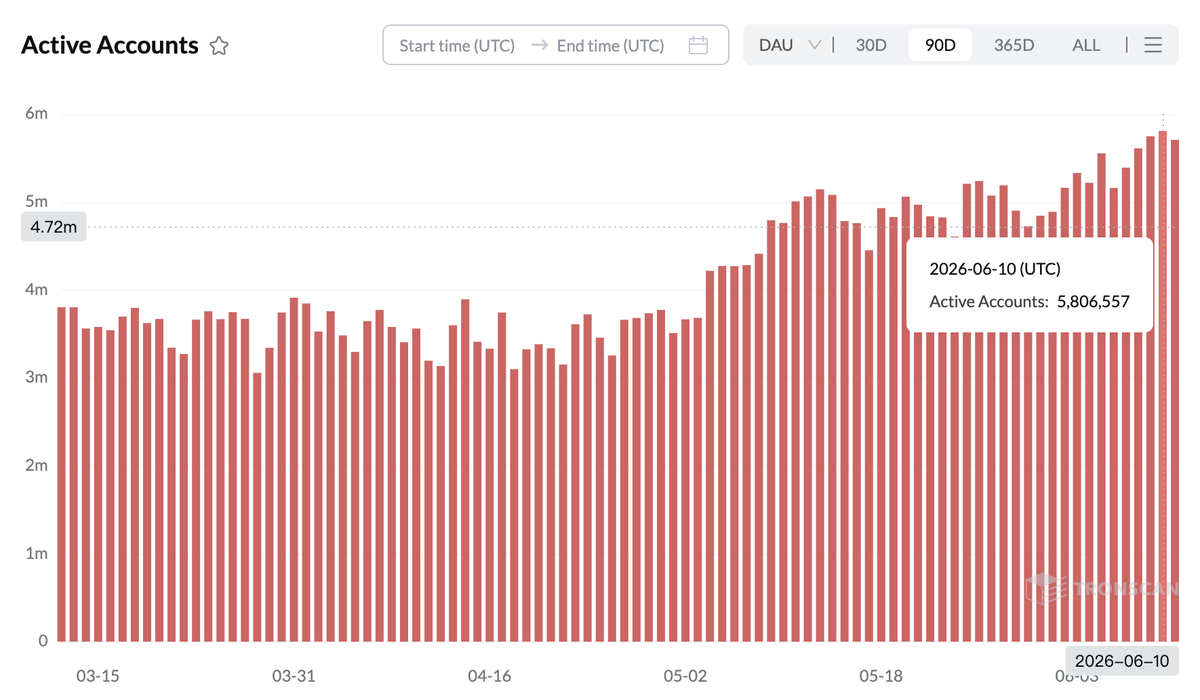
Today, JST remains one of the core assets supporting decentralized finance on TRON, an ecosystem that has grown into one of the most active blockchain networks in the world. Public blockchain data shows that TRON now supports hundreds of millions of accounts and processes millions of daily transactions. Behind much of that activity sits a growing financial layer built around lending, stablecoins, liquidity, and on-chain capital management.
JST plays an important role within that environment.
The token serves as a governance asset for the JUST ecosystem, one of TRON's primary decentralized finance platforms. Through products such as JustLend, JustStable, USDD, and sUSDD, the ecosystem provides users with access to borrowing, lending, collateral management, stablecoin liquidity, and yield generation.
This is important because the long-term value of a DeFi asset is often connected to the usefulness of the services surrounding it.
As blockchain adoption expands, financial applications continue becoming one of the most active sectors of the industry. Users increasingly seek efficient ways to borrow capital, earn yield, manage liquidity, and access stable digital assets without relying on traditional intermediaries.
These are precisely the areas where the JUST ecosystem operates.
Recent market activity has reflected renewed attention toward JST. Trading volume has increased, market capitalization remains among the largest assets in the sector, and participation across the ecosystem continues to support liquidity and utility.
The significance of these developments extends beyond short-term price movement.
What matters is the foundation supporting the activity.
JST benefits from a fully circulating supply structure, providing transparency around token availability. The asset is also supported by a large base of holders and remains integrated into products that continue serving real users across the TRON ecosystem.
That combination creates a connection between network activity and token utility.
The broader lesson is simple.
Financial infrastructure becomes more valuable when people use it.
Lending markets become stronger when liquidity grows.
Stablecoin ecosystems become stronger when adoption expands.
Blockchain networks become stronger when users find practical reasons to participate.
JST exists at the intersection of these developments.
As TRON continues expanding its financial ecosystem, the importance of assets connected to lending, liquidity, stablecoins, and on-chain financial services becomes increasingly clear.
Technology evolves through utility.
Networks grow through participation.
Financial ecosystems mature through consistent usage.
And over time, the projects that remain relevant are often the ones helping users accomplish real objectives on-chain.
That is why JST continues to hold an important position within the TRON ecosystem today.
@DeFi_JUST @trondao @justinsuntron
#TRONEcoStar
1
23h
Treasury Accumulation and Long-Term Capital Strategy
Public companies are increasingly exploring digital assets as part of their treasury strategy. The objective is straightforward: acquire assets they believe can contribute to long-term balance sheet strength while maintaining transparency for shareholders and the broader market.
That context makes the latest activity from [Tron Inc.](tron.inc noteworthy.
The company announced the acquisition of 157,392 TRX at an average purchase price of $0.3177 per token, increasing its treasury holdings to more than 700.4 million TRX.
Viewed in isolation, a single purchase may appear modest relative to the company's total position. Viewed as part of a broader accumulation strategy, it reflects a continued commitment to building a substantial digital asset treasury over time.
Why Treasury Holdings Matter
Corporate treasury decisions often provide insight into management's long-term outlook.
When a company consistently expands a strategic asset position, it signals confidence in the underlying ecosystem, its utility, and its future relevance.
For digital asset treasuries, several factors typically influence this approach:
• Long-term exposure to ecosystem growth
• Participation in expanding blockchain infrastructure
• Potential appreciation of treasury assets over time
• Alignment between corporate strategy and network development
The Significance of Scale
With holdings now exceeding 700 million TRX, Tron Inc. has established one of the larger publicly disclosed corporate positions tied directly to the TRON ecosystem.
Large treasury positions are not simply financial assets on a balance sheet.
They represent long-term alignment with the network's development, adoption, and economic activity.
As blockchain networks continue maturing, treasury strategies are becoming an increasingly important part of how companies participate in digital asset ecosystems.
Looking Ahead
The broader story is not only about the latest acquisition.
It is about the continued integration of digital assets into corporate capital allocation strategies.
Each addition to the treasury reflects a view that blockchain networks are evolving into increasingly important pieces of global digital infrastructure.
For Tron Inc., the stated objective remains clear:
Continue growing its TRON Digital Asset Treasury (DAT) holdings in support of long-term shareholder value creation.
@trondao @justinsuntron
#TRONEcoStar

Tron Inc. (NASDAQ: TRON) acquired 157,392 TRX tokens today at an average price of $0.3177, further increasing its TRX treasury holdings to more than 700.4 million TRX in total. The company aims to further grow its Tron DAT holdings to enhance long term shareholder value. For live update on the designated on-chain TRX treasury wallet for Tron Inc., please refer to: tronscan.org/#/address/TEySE….
1

Tron Inc. (NASDAQ: TRON) acquired 157,392 TRX tokens today at an average price of $0.3177, further increasing its TRX treasury holdings to more than 700.4 million TRX in total. The company aims to further grow its Tron DAT holdings to enhance long term shareholder value. For live update on the designated on-chain TRX treasury wallet for Tron Inc., please refer to: tronscan.org/#/address/TEySE….
28
9
79
140,435
Jun 13
Data as the Foundation of Trust in Web3
Trust as an Engineering System
In Web3, trust is not defined by messaging or perception. It is defined by system design. Every interaction in decentralized systems depends on predictable rules, consistent execution, and reliable inputs. This makes trust an engineering requirement built into the structure of the network.
Smart contracts operate through predefined logic. AI systems process information based on input data. Neither system evaluates meaning or intention. Their output is fully dependent on the quality of the data they receive.
The Role of Data in Decentralized Systems
Data serves as the base layer for computation across blockchain applications. It influences financial execution, automated agreements, and digital coordination between systems.
For this reason, data quality determines system reliability. When information is accurate and consistently delivered, applications behave as intended across different conditions and environments.
Core Properties of Reliable Data
Effective decentralized systems rely on data that maintains three core properties:
• Verifiability through independent confirmation
• Traceability across origin and delivery paths
• Resistance to unauthorized modification
These properties allow blockchain applications to operate with consistent logic across distributed environments.
Oracles as Infrastructure for Truth
Oracle networks function as the connection layer between external environments and on-chain systems. They provide structured and verified data that allows smart contracts to interact with real-world information.
In ecosystems such as TRON, oracle infrastructure supports financial applications, automated execution, and cross-system coordination by supplying consistent data inputs to decentralized protocols.
This role places oracle networks as part of the foundational infrastructure for Web3 systems.
System Growth and Data Reliability
As decentralized applications expand in scale and complexity, the importance of reliable data infrastructure continues to grow. Financial systems, automated agents, and on-chain services depend on consistent information flow to maintain stable operation.
Reliable data supports predictable execution across networks. It also strengthens the overall structure of decentralized ecosystems by aligning computation with verified information sources.
Closing View
Web3 systems operate through data, logic, and execution. Data remains the starting point for every process within this structure. The strength of decentralized infrastructure depends on how consistently that data is delivered and verified across networks.
Oracles contribute to this structure by supporting the delivery of structured and verifiable information to blockchain systems, reinforcing the reliability of on-chain computation.
@WinkLink_Oracle @justinsuntron
#TRONEcoStar
1
4
23
Jun 13
TRON as a Stablecoin Settlement Network
A Clear Shift in How Stablecoins Are Used
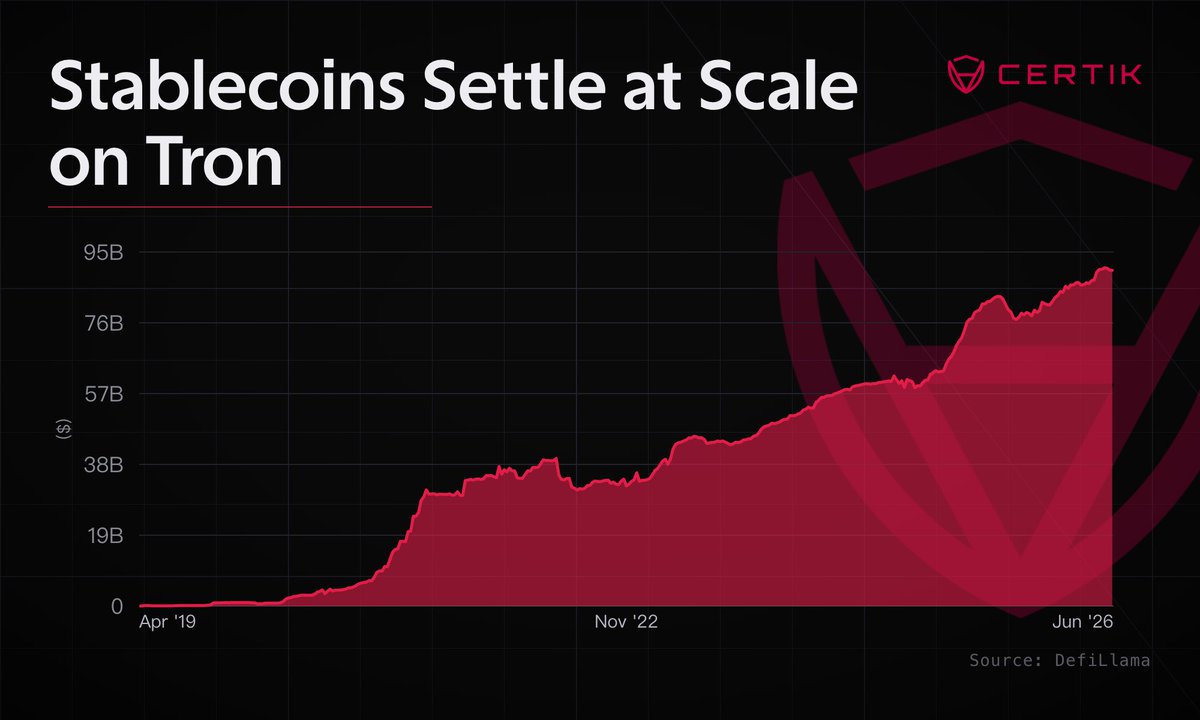
Stablecoins have become a central part of blockchain activity, supporting payments, transfers, and liquidity movement across global markets. TRON has developed into one of the key networks used for this purpose, with on-chain stablecoin value reaching approximately $90B based on public blockchain data.
This level of activity reflects consistent usage of stablecoins as a settlement medium within the ecosystem.
Network Activity and Real Usage
Stablecoin transactions on TRON represent ongoing movement of value across wallets, exchanges, and decentralized applications. Each transfer reflects participation from users, businesses, and platforms interacting with digital assets in real time.
The scale of activity highlights steady demand for fast settlement and low transaction cost environments that support frequent on-chain transfers.
Distribution as a Core Factor
The development of stablecoin networks has shown that value circulation depends on how widely assets are used across participants and applications.
TRON’s activity reflects broad distribution of stablecoin flows across its ecosystem, including payments, trading activity, and DeFi usage. This distribution supports continuous network usage across different regions and user groups.
Ecosystem Significance
Stablecoin settlement networks operate as infrastructure for digital value movement. Their importance increases as more financial activity shifts on-chain.
TRON’s role in this system is connected to its capacity to process large volumes of transactions with consistent demand from users interacting with stablecoins such as USDT and others deployed on the network.
Public dashboards such as TronScan and DeFi analytics platforms provide visibility into this activity, showing sustained levels of on-chain engagement.
Closing View
The evolution of stablecoin networks continues to highlight the importance of real usage patterns in blockchain systems. TRON’s on-chain activity reflects how digital settlement infrastructure is being used at scale to support global value transfer across multiple applications and markets.
@justinsuntron @trondao #TRONEcoStar
Jun 11

TRON has become the most widely held stablecoin settlement layer in crypto.
Onchain stablecoin value on @trondao just hit a record $90B while net capital keeps flowing in.
The differentiator is no longer supply, it is distribution.👇🧵
10
9
74
Jun 13
Why Trust Has Become One of Crypto's Most Important Assets
Every financial system runs on trust.
Technology can improve speed. Infrastructure can improve efficiency. Innovation can expand access. Yet none of these developments achieve their full potential unless people have confidence in the systems they use.
As digital assets become part of global finance, trust is emerging as one of the most important foundations supporting long-term growth.
Building that trust requires more than technical progress. It requires accountability, cooperation, and a shared commitment to protecting the integrity of the ecosystem.
This is why the recent recognition of the T3 Financial Crime Unit (T3 FCU) by the Financial Action Task Force (FATF) carries significance beyond a single organization or initiative.
The recognition highlights a broader reality within the digital asset industry: effective collaboration between blockchain organizations, investigators, and law enforcement agencies has become an essential component of ecosystem development.
The growth of blockchain technology has created new opportunities for individuals, businesses, and institutions around the world. At the same time, expanding adoption has increased the importance of identifying and disrupting illicit activity that seeks to exploit emerging technologies.
Addressing these challenges requires expertise, coordination, and access to reliable information.
Initiatives such as T3 FCU demonstrate how public and private sectors can work together to strengthen the security of digital asset networks while supporting legitimate innovation.
This approach helps create an environment where users can participate with greater confidence, businesses can operate with greater certainty, and institutions can engage with blockchain technology through clearer frameworks of accountability.
The significance of these efforts extends well beyond enforcement.
They contribute to a stronger ecosystem by improving transparency, supporting responsible growth, and reinforcing the credibility of blockchain-based financial systems.
As adoption continues expanding across markets and industries, confidence will increasingly become a defining factor in determining which ecosystems achieve lasting success.
Confidence grows when participants see consistent action.
It grows when organizations cooperate across jurisdictions.
It grows when systems demonstrate resilience, transparency, and responsibility over time.
The evolution of digital assets is often discussed in terms of technology.
Equally important is the development of the trust infrastructure that allows technology to operate effectively within the broader financial world.
Recognition from international organizations such as the FATF reflects the growing importance of that work.
It signals that blockchain ecosystems are continuing to mature through practical efforts that strengthen security, improve accountability, and support responsible participation.
Trust is not created through statements.
Trust is built through outcomes.
And every step that strengthens the integrity of the ecosystem contributes to a stronger foundation for the future of digital finance.
@trondao @justinsuntron
#TRONEcoStar

Trust is built through action.
@T3_FCU being recognized by FATF as an invaluable resource for law enforcement worldwide is an important step for a safer crypto ecosystem.
5
6
36
Jun 13
The Growing Role of Stablecoins in Everyday Finance
Financial systems are often judged by how efficiently they move value.
For decades, moving money across borders has involved a network of banks, intermediaries, settlement processes, compliance checks, and operating schedules. These systems have supported global commerce for generations, yet they were designed for a world where transactions moved more slowly and digital connectivity was far more limited than it is today.
The rapid growth of stablecoins reflects a broader shift in how people and businesses are choosing to move value.
Stablecoins combine the stability associated with fiat currencies with the accessibility of blockchain networks. They allow users to transfer dollar-denominated value across the internet in a manner that is continuous, programmable, and globally accessible.
As adoption has expanded, blockchain networks have become important pieces of financial infrastructure rather than simply technology platforms.
One recent example comes from TRON, which recorded more than 14.13 million transactions in a single day. Numbers of this scale deserve attention because transaction activity provides insight into how a network is being used.
Every transaction represents an action performed by a user, business, application, or financial service. At millions of transactions per day, blockchain activity begins to reflect real economic participation rather than isolated experimentation.
Much of this activity is connected to stablecoins.
Today, stablecoins are used for payments, treasury management, trading, remittances, settlements, liquidity movement, and business operations across multiple regions of the world. They have become an important bridge between traditional finance and digital networks.
Their appeal is practical.
A business can move capital internationally without waiting for multiple banking intermediaries.
A freelancer can receive payment from another continent without navigating several layers of payment processors.
A user can access digital dollar liquidity at any time of day through a connected wallet.
These capabilities help explain why stablecoin adoption has continued to expand across developed and emerging markets alike.
The importance of networks such as TRON lies in their ability to support this activity at scale.
Large transaction volumes require infrastructure capable of handling sustained demand while maintaining efficiency and accessibility. As usage grows, reliability becomes increasingly important because financial systems are only valuable when users can depend on them consistently.
Viewed through this lens, transaction milestones are more than technical achievements.
They provide evidence of growing participation in a new form of financial infrastructure that operates continuously and serves users across geographical boundaries.
The broader story is not simply about blockchain adoption.
It is about the gradual modernization of how value moves around the world.
Stablecoins are becoming an increasingly important component of that process. They offer a framework for transferring value that is digital, accessible, and available whenever economic activity requires it.
As global commerce becomes more connected, demand for efficient settlement networks is likely to continue growing.
The continued expansion of stablecoin activity suggests that many users have already begun embracing this transition.
The technology is maturing.
The infrastructure is expanding.
And the movement of value is becoming increasingly digital.
That evolution is helping shape the next chapter of global finance.
@trondao @justinsuntron
#TRONEcoStar
Jun 12

Across the world, stablecoins are changing how money moves by making payments faster, cheaper, and more accessible than traditional systems.
This shift matters because it brings reliable digital dollars to markets that need them most. Reaching 14.13M daily transactions on @trondao is a clear example of that demand in action.👇
6
32
Jun 13
Making Blockchain Creation More Accessible
Every major technology becomes widely adopted when it becomes easier to use.
The internet expanded when publishing information no longer required technical expertise. Mobile applications reached billions when software became more accessible to build and use. Artificial intelligence gained mainstream adoption when complex systems became available through simple interactions.
Blockchain is now experiencing a similar evolution.
For many years, creating a token required technical knowledge, smart contract deployment, wallet configuration, and familiarity with blockchain development tools. While the technology offered tremendous possibilities, the process remained challenging for many potential creators.
Today, that experience is beginning to change.
AI and the Next Stage of Web3
Artificial intelligence is helping simplify how users interact with blockchain networks.
Instead of managing every technical step manually, users can increasingly focus on their ideas while intelligent systems assist with execution.
This shift is creating more accessible pathways into Web3 by reducing complexity and lowering barriers to participation.
The objective is straightforward:
Make blockchain technology easier to use without compromising the power of the underlying infrastructure.
How SunGenX Fits Into This Trend
SunGenX is part of this broader movement.
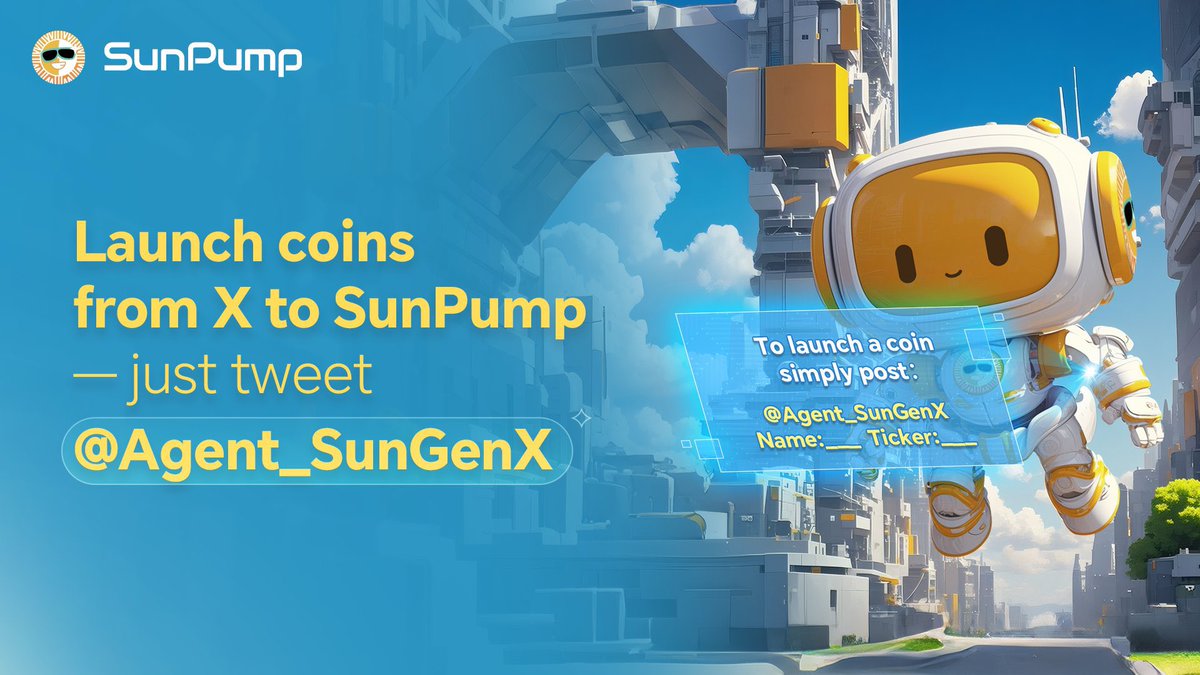
Built within the TRON ecosystem, it introduces an AI-assisted approach to token creation. Rather than navigating complicated deployment workflows, users begin with three simple inputs:
🔹 Token Name
🔹 Token Symbol
🔹 Token Description
The platform then assists with the remaining process, helping transform an idea into an on-chain asset.
The importance of this approach extends beyond convenience.
It creates greater accessibility for creators, entrepreneurs, communities, and users who want to explore blockchain innovation without extensive development experience.
Why Accessibility Matters
Technology grows when more people can participate.
Accessible tools encourage:
• Faster experimentation
• Broader community involvement
• Increased creator participation
• Greater ecosystem activity
• More opportunities for innovation
As barriers become smaller, more ideas can move from concept to execution.
The Role of TRON
TRON provides an environment well suited for these experiences through its focus on efficiency, scalability, and accessibility.
As AI-powered tools continue to emerge across the ecosystem, users can spend less time navigating technical processes and more time building, creating, and participating.
Looking Forward
The future of Web3 is not only about developing more advanced technology.
It is also about making that technology easier for people to use.
SunGenX reflects this direction by combining AI and blockchain in a way that simplifies creation while expanding participation.
Because the next phase of blockchain adoption will be driven not only by stronger infrastructure, but by experiences that allow more people to turn ideas into reality.
@Agent_SunGenX @OfficialSUNio @justinsuntron
#TRONEcoStar
16
16
60
Jun 13
Stablecoins Are Becoming Essential Financial Infrastructure And TRON Is Playing a Growing Role
Financial infrastructure rarely attracts attention while it is working properly.
People rarely think about settlement networks, payment rails, or transaction processing systems. Yet these systems support the movement of value across economies every day. Their importance becomes visible through usage, reliability, and scale.
Recent stablecoin activity on TRON offers a useful example.
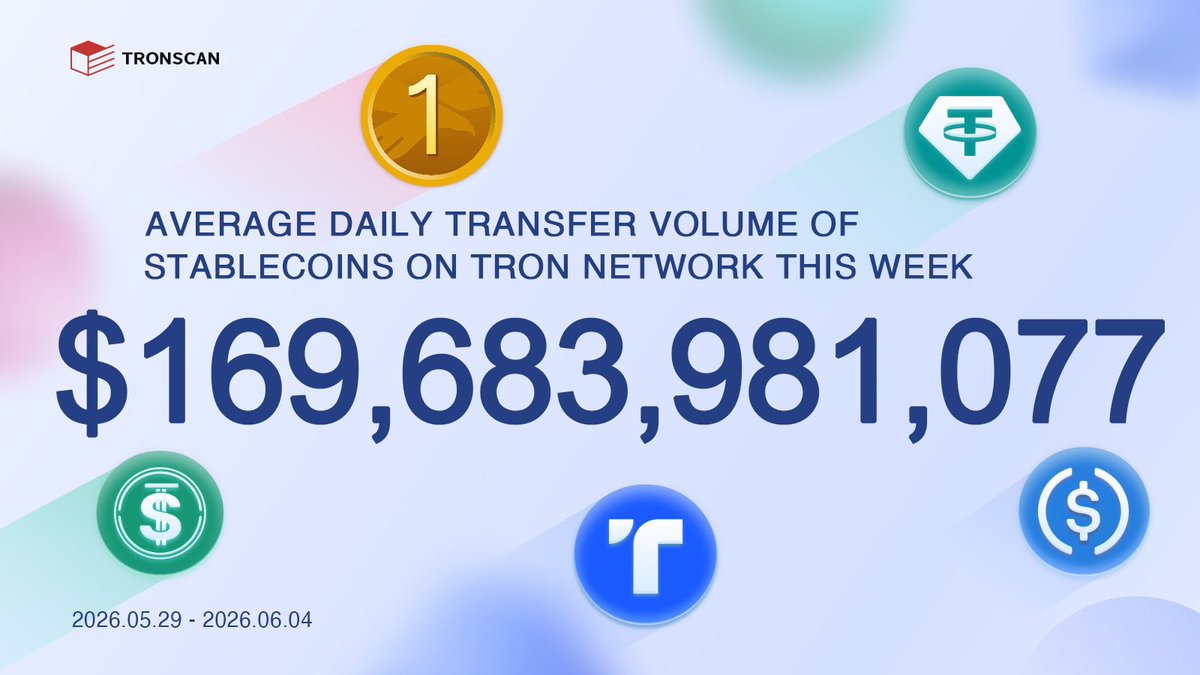
According to publicly available blockchain data, TRON processed an average of approximately $169.68 billion in daily stablecoin transfer volume between May 29 and June 4, 2026. This activity included major assets such as USDT, USDC, USDD, TUSD, and USD1.
These figures tell a broader story about how digital dollars are increasingly being used in real-world financial activity.
The Expanding Role of Stablecoins
Stablecoins have evolved into one of the most widely used tools in digital finance.
Today, they support:
• Cross-border payments
• Exchange settlement
• Treasury management
• Decentralized finance activity
• Business transactions
• Peer-to-peer transfers
Their value comes from stability, accessibility, and the ability to move funds efficiently across global networks.
As adoption grows, the infrastructure supporting these assets becomes increasingly important.
Why Volume Matters
Transaction volume is one of the clearest indicators of network utility.
Large and consistent settlement activity reflects value moving between individuals, businesses, exchanges, and applications. It signals participation and demand for efficient financial infrastructure.
At this scale, stablecoin transfers represent more than blockchain activity. They reflect a network supporting continuous economic movement.
The focus shifts from speculation toward practical financial use.
The Infrastructure Behind the Growth
Sustained volume requires a network capable of handling demand efficiently.
TRON's position in the stablecoin ecosystem has been supported by:
• Fast transaction processing
• Low transaction costs
• High network capacity
• Broad wallet support
• Global accessibility
These characteristics make the network practical for users seeking efficient digital settlement and value transfer.
The Power of Network Effects
Financial networks strengthen as participation grows.
More users create more liquidity.
More liquidity attracts integrations.
More integrations create additional utility.
Over time, this process reinforces adoption and expands the ecosystem's reach.
The result is a network increasingly embedded in the flow of digital finance.
Looking Ahead
Market attention often focuses on asset prices.
Infrastructure is measured by usage.
The recent stablecoin figures suggest that TRON is becoming an increasingly important settlement layer within the digital asset economy, facilitating the movement of significant amounts of dollar-denominated value every day.
The broader trend is becoming clearer.
Stablecoins are evolving into a key component of modern financial infrastructure.
And networks capable of supporting that demand at scale will continue playing an important role in the future of global digital finance.
Because in the end, financial systems are defined by one thing:
The ability to move value efficiently, reliably, and at scale.
@justinsuntron @trondao #TRONEcoStar
1
15
39