I'm no one too special, just a regular trauma surgeon trying to save the world one idiot at a time. Evidence or it didn't happen.
Joined January 2012
- Tweets 41,054
- Following 30
- Followers 41,953
- Likes 21
3,705 Photos and videos






Pinned Tweet

25 Mar 2018
It has taken medical science 200 years to advance humans to the point where people are so healthy and living so long that they can deny that science and medicine is what got us here.
184
2,649
7,046
Doc Bastard retweeted

Feb 18
Behold the anti-vax evangelist.
When you contradict their mythology of COVID, they do not debate — they declare.
When you say you were there, they accuse you of lying.
When you describe hallways lined with ventilators and refrigerated trucks behind hospitals, they reply with a video of an empty clinic lobby taken at 9 p.m. on a Tuesday.
Each move is deliberate. Each designed to plant doubt.
You bring data — randomized trials, excess mortality curves, ICU capacity graphs — and they inform you that the data are fabricated. You explain how ventilators are used, and they insist you never understood them. You describe surge staffing, proning teams, tracheostomies at 2 a.m., and they counter with TikTok clips of nurses dancing for 20 seconds between codes.
The performance is the point.
They operate in a closed epistemology. If hospitals were full, it was staged.
If they were not full in a viral lull, the pandemic was fake.
If vaccines reduced admissions, the decline was natural immunity.
If admissions rose before vaccines, it was hospital fraud.
No outcome falsifies the belief. Every outcome confirms it.
This is not skepticism. It is theology.
Show them excess deaths — conspiracy.
Show them ICU occupancy — manipulated.
Show them randomized vaccine trials — rigged.
Show them global replication — coordinated fraud.
Meanwhile, they will tell you they know how to run a ventilator, despite never adjusting PEEP in refractory hypoxemia. They will mock exhausted nurses for dancing as a coping mechanism and then, in the next breath, deny the very surge conditions that made coping necessary.
They deny the fire while criticizing the smoke.
And here is the final absurdity:
They insist hospitals were empty — until the vaccine arrived. Then they insist vaccines didn’t work. The contradiction does not trouble them, because coherence was never the objective. Conversion was.
Doubt is their currency. Outrage is their marketing strategy. Certainty is their costume.
Science revises.
Medicine adapts.
Data accumulates.
But conspiracism calcifies.
And so we arrive here — where those who have never held pressure on a crashing patient accuse those who did of inventing the crash.
111
284
945
26,369
Feb 27
There are thousands of physicians who would be qualified to be the US Surgeon General, so of course Donald Trump nominated Casey Means, someone who is uniquely unqualified to treat anyone, let alone EVERYONE in the country. My thoughts: docbastard.net/2026/02/ameri…
3
8
74
3,823
Jan 23
This aged either really poorly or absolutely perfectly. I can’t decide.
10 Jun 2025

If RFK gets his way, pretty soon “thoughts and prayers” will be all we have left to fight infectious diseases.
5
3
36
4,534
Jan 23
Hey everyone, I still remember how to write, so I wrote something about vaccines in case anyone is still interested in silly things like facts. docbastard.net/2026/01/more-…
5
8
38
3,532
12 Jun 2025
For those of you keeping score, this is the guy who wants to Make Polio Great Again.
11 Jun 2025

A @nytimes reporter asked me, “Are you working on federal vaccine policy under an official role, such as lobbying, appointment or other authority?”
I responded: “The work our firm has done for nearly a decade, interacting with HHS and its agencies, including writing letters, petitions, and suing these agencies on behalf of our clients, remains the same. The New York Times’ disregard for objectivity regarding the products at issue and for the grievous harm they cause to some children remains the same as well.”
Unsurprisingly, NYTs did not publish my response. The truth stings.
3
4
38
5,104
10 Jun 2025
If RFK gets his way, pretty soon “thoughts and prayers” will be all we have left to fight infectious diseases.
5
10
56
8,707
8 Jun 2025
As it turns out, these 2 things can be true simultaneously:
1) For-profit pharma and insurance companies are evil.
2) Doctors are doing the best they can to take care of people within this broken system.
Oh, & doctors who sell supplements & “detox kits” are in the former group.
3
15
101
5,652
8 Jun 2025
That’s how most jobs work - you get paid more for doing more.
Meanwhile you sell unregulated and unproven supplements whilst criticising doctors who are taking care of patients. YOU, sir, are the problem.
7 Jun 2025

You deny that the medical establishment makes more money from more patient volume/procedures/meds?
#perverseincentives
4
6
69
7,875
16 Jan 2023
I was getting aggravated by the bullshit on my timeline when my daughter randomly asked me for a hug. My irritation at Twitter began to spill onto her before I paused, took a breath, & gave her a huge hug, & if that isn’t the best reason to get off Twitter, I don’t know what is.
8
8
226
23,112
10 May 2022
If this pandemic has taught me anything, it’s that anyone with internet access and a complete lack of knowledge about statistics can and will instantly misinterpret statistics.
10
41
268
10 May 2022
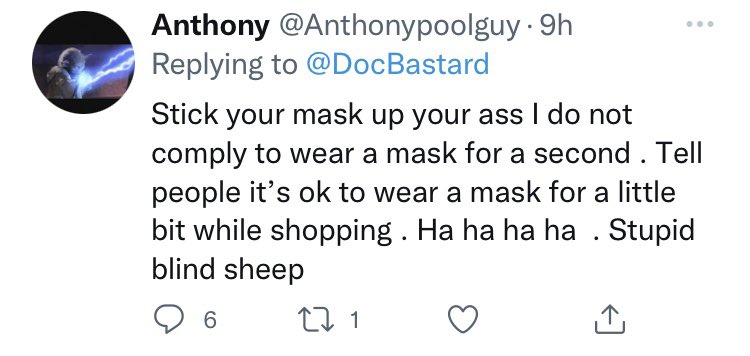
Imagine being so arrogantly ignorant that you tell a surgeon how masks work.
12
10
115
7 May 2022
Tell me more about how you believe all life is sacred when you spent the last 2 1/2 years refusing to wear a mask to protect the lives of people around you.
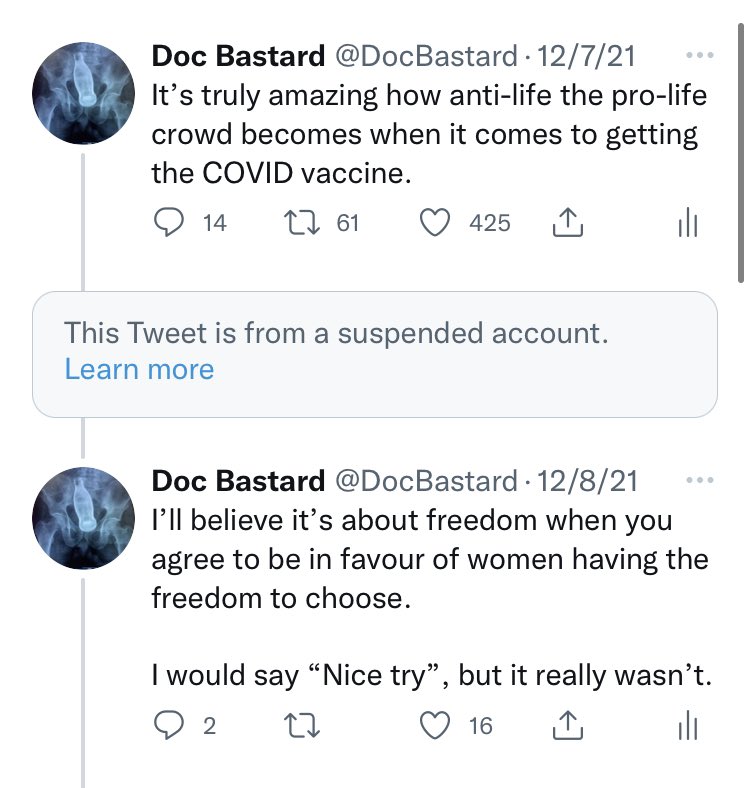
Then tell me about how “bodily autonomy” is valid as an excuse to refuse the vaccine but not for women’s right to choose.
15
140
641
8 May 2022
Someone just pointed out that I predicted the future 5 months ago. Now for those lottery numbers…
3
4
71
9 Dec 2021
"Experimental drugs" are given to a few thousand people in clinical trials.
So far 4.3 billion people have received 8.3 billion doses of the COVID vaccines. The experiment is over.
We ALL want to get back to normal, and the vaccine is our best chance. Please get vaccinated.
19
89
468
9 Dec 2021
You can hate me all you like. I'm fine with that because your personal opinion of me is inconsequential. But please understand that comparing vaccine advocacy to the atrocities of the Holocaust actually makes you a terrible person.
Cheers.
9 Dec 2021

I'm completely trapped in my area. Can't travel out of, or across my country. Lost our jobs and Homes. We're asked to show papers everywhere. Sound familiar? I've always hated doc bastard but I never put him on the same level as Nazis, until now.
6
17
190
9 Dec 2021
This pandemic has taught me one very sad lesson:
Any moron with a computer and an internet connection can read a few headlines and somehow believe he knows more than people who’ve spent a lifetime studying this extremely complex issue.
34
138
782
8 Dec 2021
It’s truly amazing how anti-life the pro-life crowd becomes when it comes to getting the COVID vaccine.
9
47
343
7 Dec 2021
Viral diseases eradicated by vaccines:
Smallpox
Rinderpest
Viral diseases eradicated by 'natural' herd immunity:
None.
Get vaccinated.
9
56
319
6 Dec 2021
I'm tired of wearing a mask, but I do.
I don't like getting shots, but I will.
I'm tired of not visiting friends, but I don't.
I'm tired of social distancing, but I do.
We're ALL sick and tired of this pandemic. That's why we should ALL do everything we can to end it.
12
86
496
6 Dec 2021
I wholerectumly approve the entirety of this thread.
5 Dec 2021

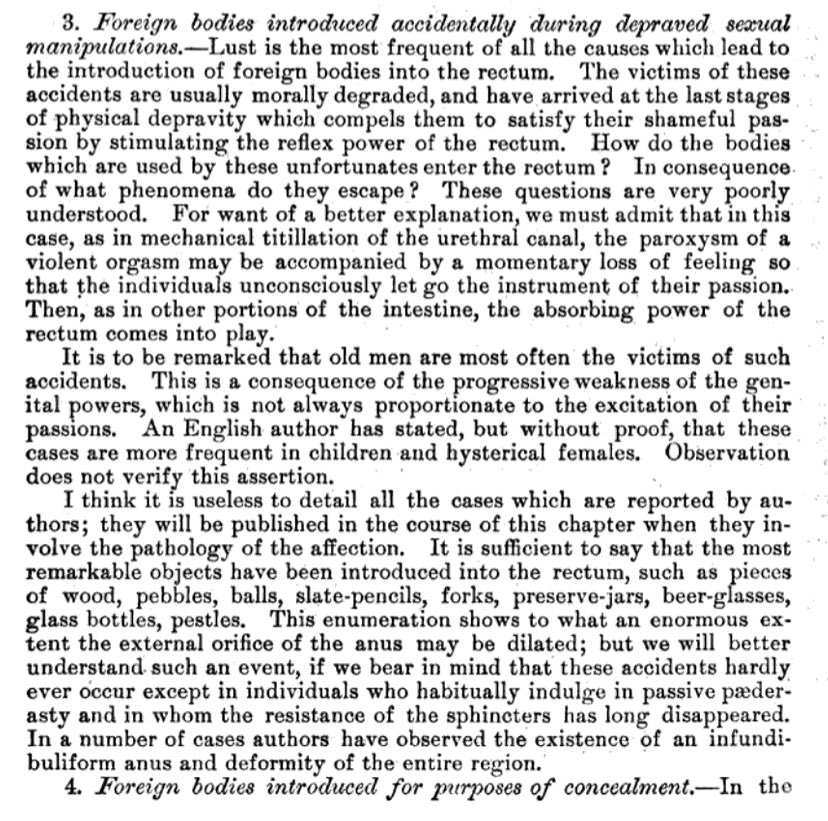
In 1880, Alfred Poulet published a volume on foreign objects found & removed from the human body. The chapter on objects removed from the rectum cites the following; pencils, jars, bottles, pestles, forks, balls, bottles, the tail of a pig, & in one case, 70 snails.
6
7
38