
Dreampop Musician, Follower of Jesus, Child of Joy, father of 4, devoted ex-, ex-liberal and sky-pilot, 12-steppin' surfer, & so much less
Joined May 2010
- Tweets 92,636
- Following 11,535
- Followers 28,522
- Likes 39,814
16,259 Photos and videos






Pinned Tweet

Apr 13
“Do not suppose that I have come to bring peace to the earth. I did not come to bring peace, but a sword.” Jesus Christ, Mathew 10:34
Apr 10

God does not bless any conflict. Anyone who is a disciple of Christ, the Prince of Peace, is never on the side of those who once wielded the sword and today drop bombs. Military action will not create space for freedom or times of #Peace, which comes only from the patient promotion of coexistence and dialogue among peoples.
1
2
372
These substitutions keep the blues "feel" (blue notes, swing) while adding jazz sophistication. The YouTube Short you shared demonstrates exactly this—extended/jazz chords over the 12-bar form for richer harmony. Experiment and transcribe players like Charlie Parker, Count Basie, or Joe Pass for real-world application!azz blues substitutions transform the simple, repetitive 12-bar blues (I–IV–V dominant chords) into a harmonically richer form full of ii–V movements, chromatic motion, tritone subs, diminished chords, and turnarounds. This creates the sophisticated sound heard in bebop, swing, and modern jazz.jazzguitar.beBasic 12-Bar Blues (in F, a common jazz key)Bar123456789101112ChordF7F7F7F7Bb7Bb7F7F7C7Bb7F7C7This uses only three dominant 7th chords. Jazz players expand it with extensions (9ths, 13ths, alterations) and substitutions.jazzguitar.bejenslarsen.nllearnjazzstandards.comCommon Jazz Blues Substitutions
Quick Change / Early IV (1930s style): Move to IV7 in bar 2 for forward motion.
Example in F: Bar 2 becomes Bb7, then back to F7 in bar 3.jazzguitar.be
ii–V Insertions: Replace or precede dominant chords with minor 7 → dominant 7 (ii–V) for smoother voice leading.Bar 4: Cm7–F7 (ii–V of Bb7).
Bars 9–10: Often Gm7–C7 (ii–V of F).music.stackexchange.com
#IVdim7 (Count Basie style): In bars 2 and/or 6, insert Bdim7 (or equivalent) for tension and chromaticism. It acts as a passing chord or V7b9 substitute.jazzguitar.be
Secondary Dominants: Use V-of-V (or further) for chains like D7–G7–C7. This builds momentum, especially in turnarounds.music.stackexcha…
Tritone Substitution (bII7 for V7): Replace any dominant 7 with the dominant a tritone away. They share the same 3rd and 7th (guide tones), creating strong resolution via half-step bass motion.G7 → Db7 (tritone sub).
Common in bar 4 (before IV), turnarounds, or descending dominants (e.g., F7–E7–Eb7–D7).
This is a hallmark of jazz blues for chromatic lines and altered sounds.jazzguitar.bepianogro…
Turnarounds (Bars 11–12): Instead of V7–I or straight V–IV–I, use:iii–VI–ii–V (e.g., Am7–D7–Gm7–C7).
I–VI–ii–V (F7–D7–Gm7–C7).
Tritone or diminished versions for variety.
These lead back smoothly to bar 1.learnjazzstandards.comBebop/Bird Blues (e.g., "Blues for Alice") layers multiple ii–Vs, tritone subs, and iii–VI–ii–V for dense, fast-moving harmony.jazzguitar.bePractical TipsVoicings: Use rootless 3-string or 4-note voicings (e.g., 3-7-9-13) for comping. Add alterations (#9, b13) on dominants for tension.
Improvisation: Target guide tones (3rd/7th) and use the blues scale Mixolydian altered scales over subs.
Practice: Start with basic changes, then layer one substitution at a time. Play along with backing tracks in F, Bb, or C.
67
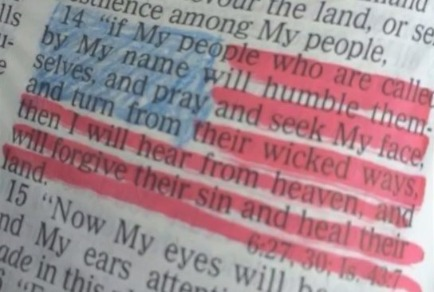

UK is a police state
Jun 15

JUST IN: UK Government clarifies adults will still be able to use social media by verifying their identities with digital IDs, facial recognition, passports and credit cards.
13,169
41,302
276,816
38,375,259
Jun 15
He is facing 2 federal counts of threats against the president.
Jun 15

No friends for Comey; judge rules no amicus briefs justthenews.com/nation/state…
77
DocRock1007 🇺🇸 retweeted

James is absolutely right!

1,176
14,392
45,001
273,303
DocRock1007 🇺🇸 retweeted

I am almost moved to tears.
British Patriots are grabbing crosses as they march to take back their country. AMEN
UK has fallen. UK Patriots want it back that fightback started in Belfast lest week
Jesus Christ is KING 🙏
148
1,324
6,353
44,025

DocRock1007 🇺🇸 retweeted

Jun 14
This is a complete disaster for the Left

LOOK AT THE AMOUNT OF PEOPLE IN ATTENDANCE FOR THE UFC WHITE HOUSE WEIGH IN 😮
3,858
10,651
87,451
2,805,972
DocRock1007 🇺🇸 retweeted

Jun 14
“It has been estimated that 24 million voter registrations in the United States – about one in eight – are either invalid or significantly inaccurate.” Husted v. A. Philip Randolph Inst., 584 U.S. 756, 760 (2018) (citing Pew Center on the States, Election Initiatives Issue Brief (Feb. 2012)). According to this same study, approximately “2.75 million people are said to be registered to vote in more than one State.” More recently in 2020, Judicial Watch compared the total registration statistics in a subset of states to the most recent U.S. Census Bureau’s American Community Survey and found that 353 counties had more registered voters than voting-age citizens.

100
2,069
4,690
40,105
DocRock1007 🇺🇸 retweeted

Jun 14
Thank you for the advice, sir . I am humbly aware that offensive language is the real issue in politics today. Who cares about fixed elections, crime, or child trafficking, when offensive syntax should clearly be seen as our real enemy?
Just kidding. Eat shit.
#INSTABLOCK
Jun 13

Now I understand why you are a writer and not a public official. This language is not appropriate for public officials and public servants have been in my family since I was 6 Y/O and none used this language to express their displeasure. Clean up your thought process.
1,688
6,787
42,859
546,258
Starship is a very big rocket
Jun 12

SpaceX is a company whose mission is *axiomatically* the love of humanity
To extend the light of consciousness
The power of this kind of love is hard to quantify but clearly makes the impossible far more probable.

8,222
20,779
189,652
22,368,251
Jun 14
Pocahontas
Jun 14

Just a reminder that our Native Senator who hates the oligarchs flies private.
43
DocRock1007 🇺🇸 retweeted

Jun 14
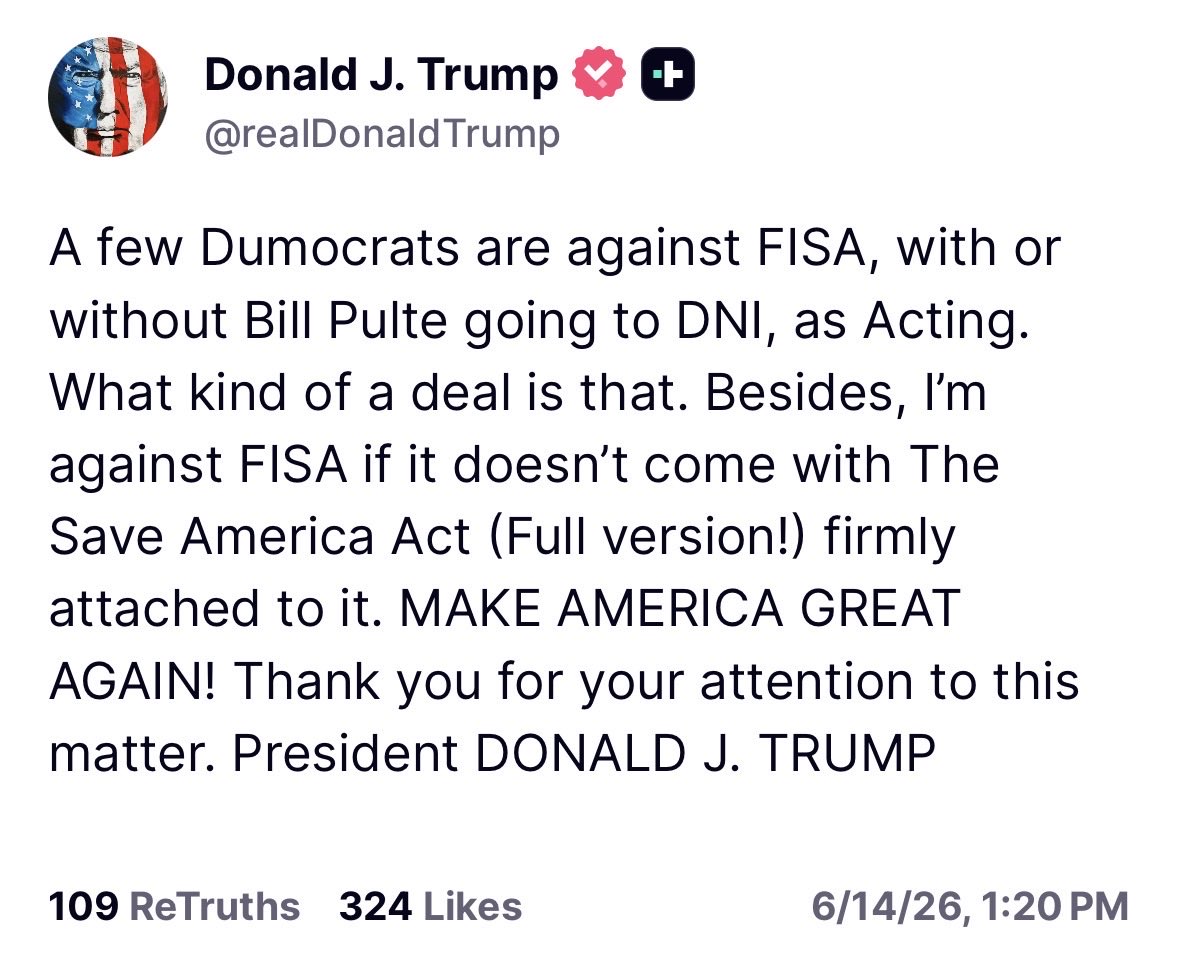
🚨JUST POSTED🚨
President Donald Trump says he against renewing FISA if the Save America Act isn’t attached to it.
100
912
4,179
37,590
DocRock1007 🇺🇸 retweeted

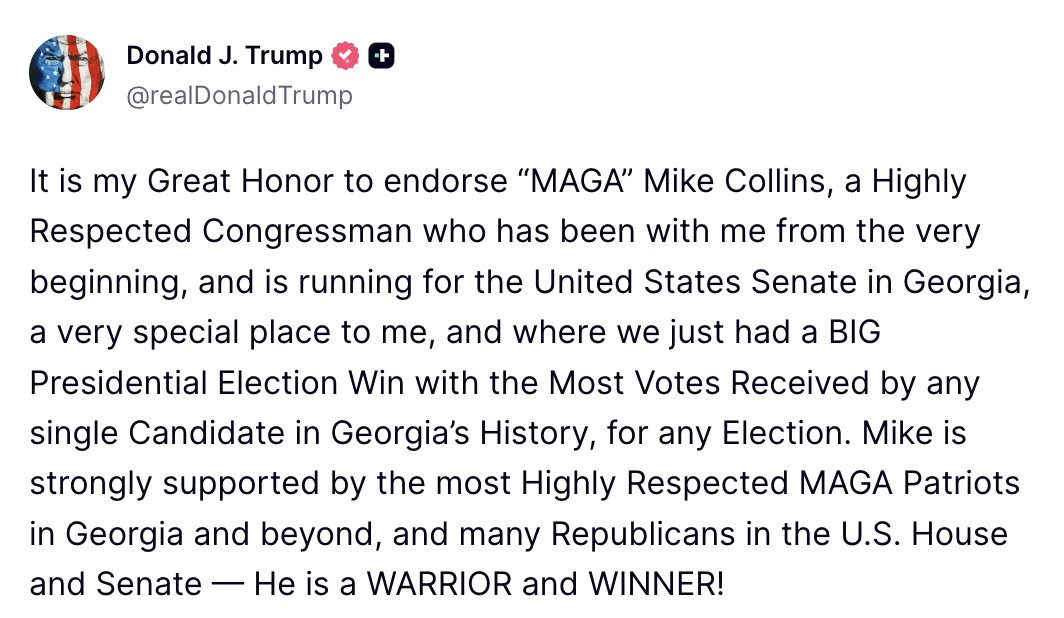
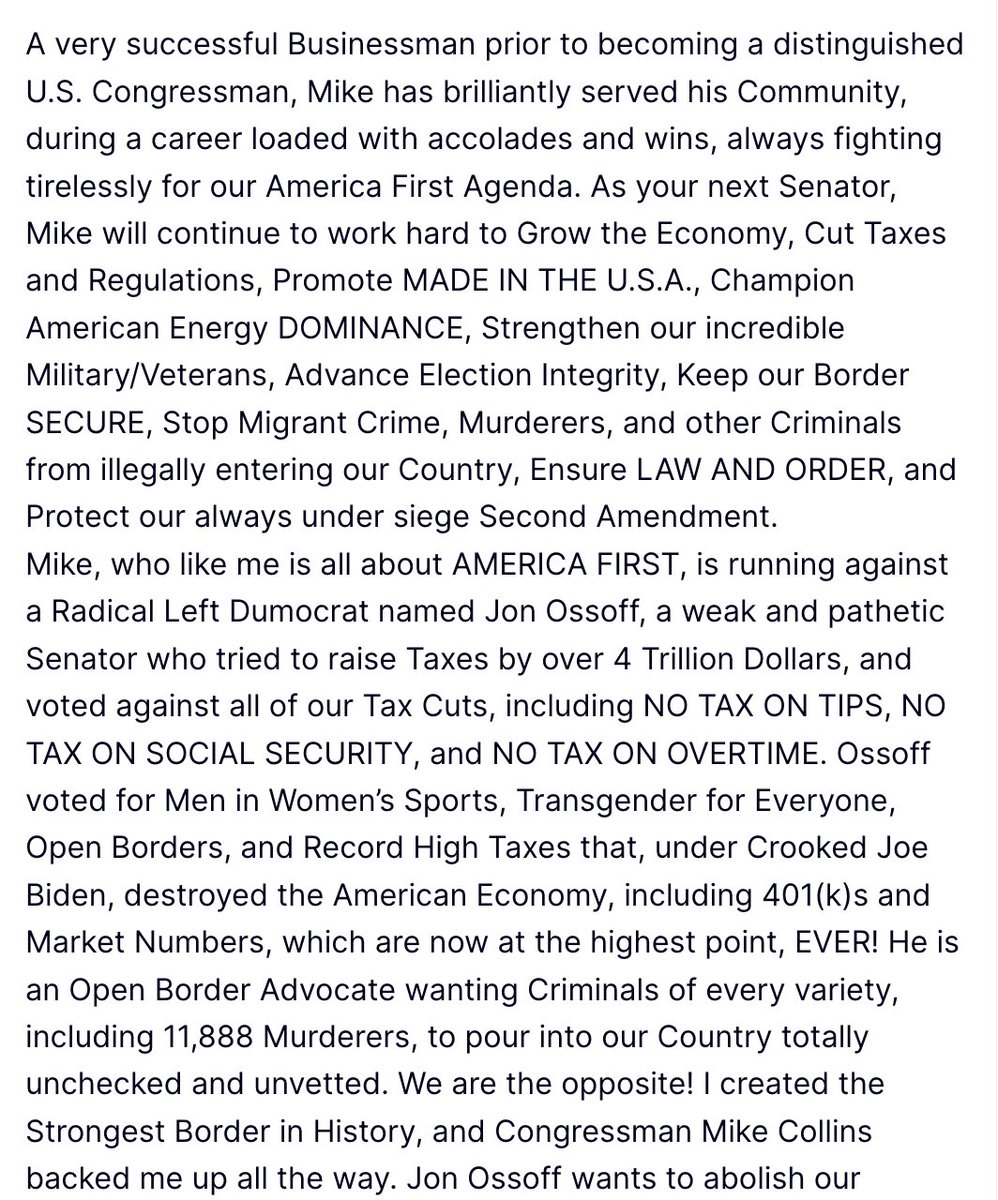
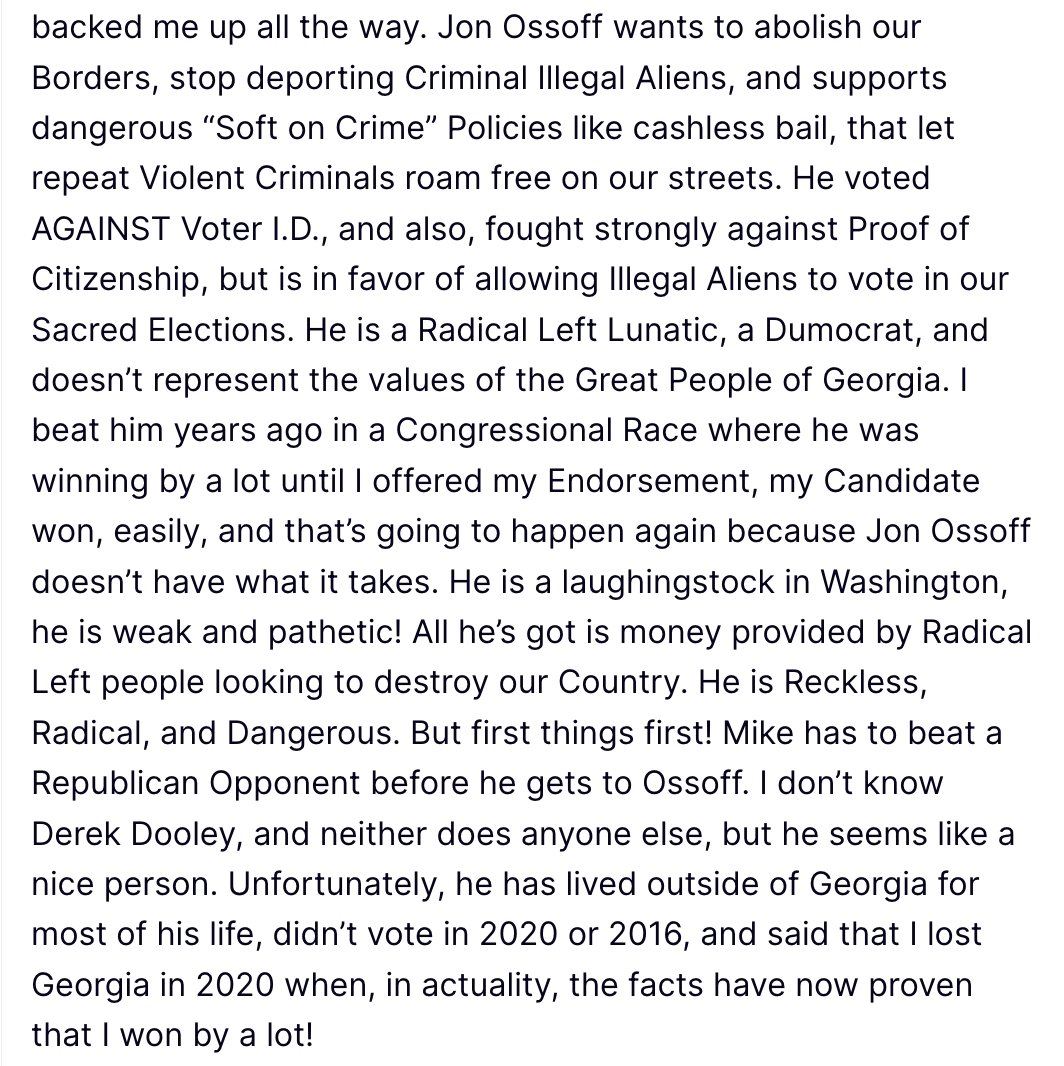
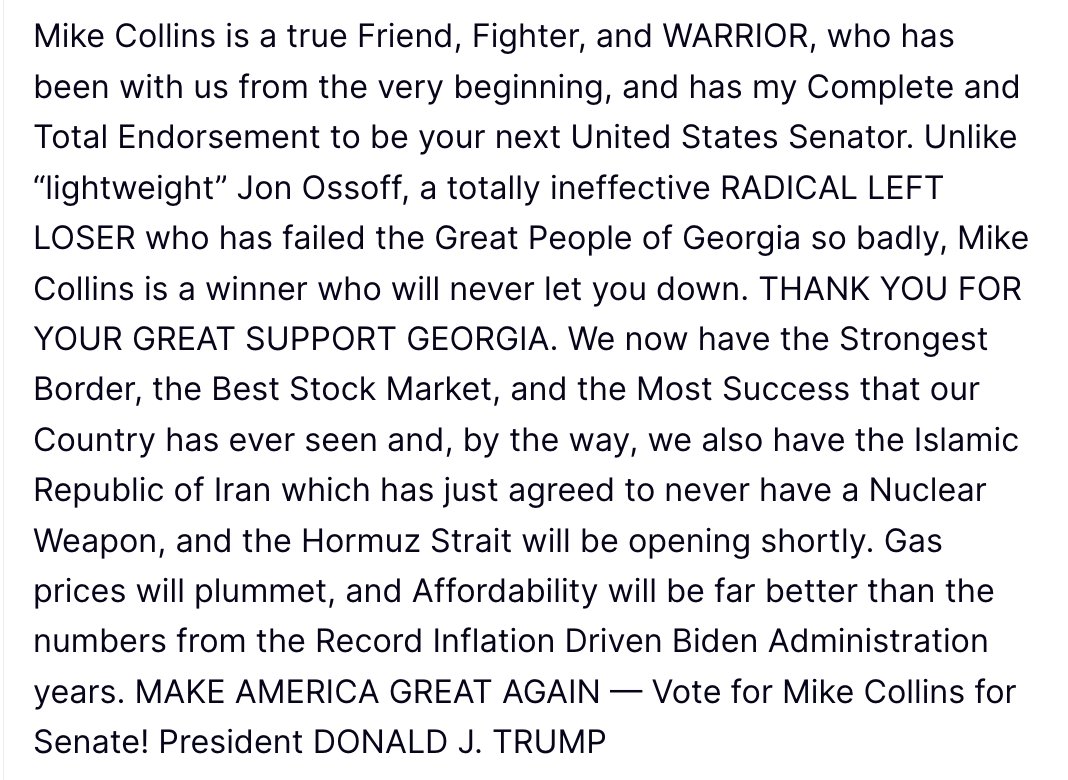
🚨 NEW COMPLETE AND TOTAL ENDORSEMENT OF @MikeCollinsGA FOR U.S. SENATE!
GEORGIA - VOTE FOR MIKE IN THE RUNOFF ON JUNE 16! THANK YOU FOR YOUR ATTENTION TO THIS MATTER!
19
265
901
36,195
DocRock1007 🇺🇸 retweeted

Jun 14
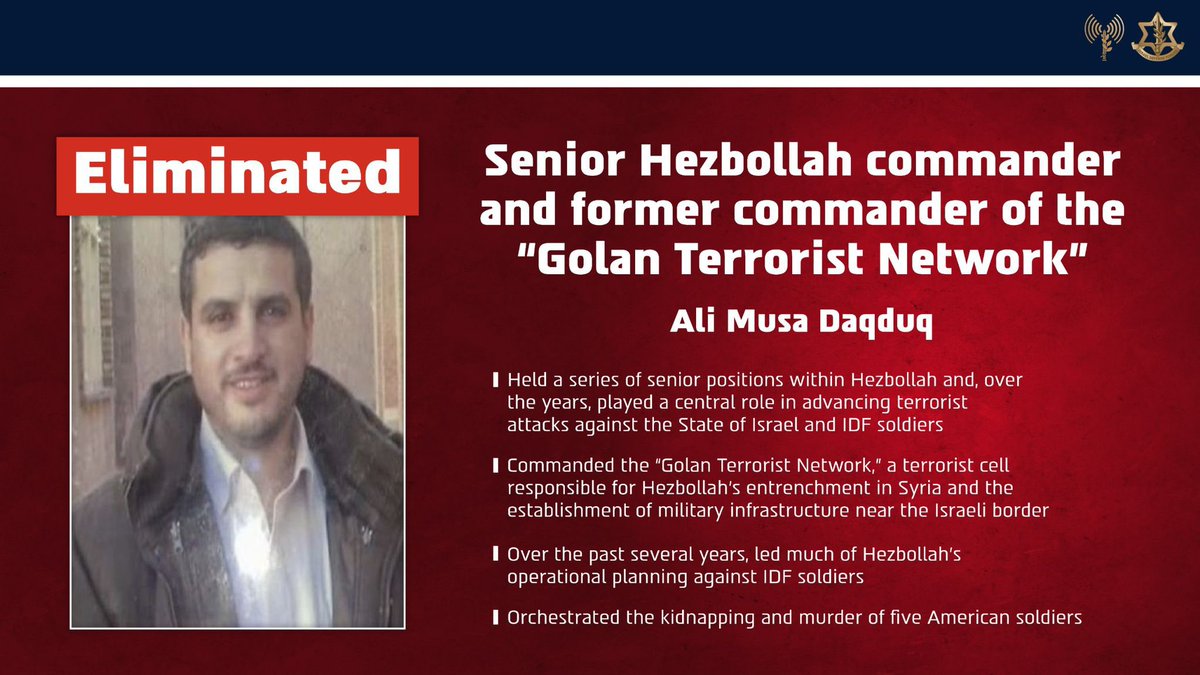
Today, on President Trump’s 80th birthday, Israel killed a senior Hezbollah commander who orchestrated the kidnapping and murder of 5 US soldiers.
The Woke Reich will tell you getting justice for murdered American soldiers is “America Last”…
Because they hate America.
Jun 14

🔴ELIMINATED: Ali Musa Daqduq, a senior Hezbollah commander who held a series of 5 senior positions within Hezbollah.
Daqduq played a central role in advancing terrorist attacks and combat operations against Israel and IDF soldiers. In 2007, he orchestrated the kidnapping and murder of 5 American soldiers.
439
2,395
9,051
172,926
