
MD (Respiratory Physician) | Evidence-based Longevity & Healthspan. VO₂max, circadian rhythm, peptides & more. Not medical advice. Free Healthspan Checklist ↓
Joined September 2025
- Tweets 349
- Following 100
- Followers 77
- Likes 102
54 Photos and videos






Pinned Tweet
Most people think hydrogen water is a scam.
The science says something more interesting:
It probably works.
Just not nearly as much as influencers claim.
A 2024 meta-analysis of randomized controlled trials found molecular hydrogen can:
• Improve aerobic performance
• Reduce exercise fatigue
• Lower exercise-induced oxidative stress
The benefits were strongest for endurance athletes, not strength athletes. (Frontiers)
The most consistent finding:
↑ VO₂-related performance
Not bigger muscles.
Not superhuman recovery.
Not anti-aging magic. (Frontiers)
My reading of the evidence:
Hydrogen water is a marginal gain tool.
Think 1% better.
Not 10%.
That may sound small.
Elite athletes spend years chasing 1%. (PubMed)
If you want to try it, ignore brands.
Look for:
• ≥1.0 ppm dissolved H₂
• Independent testing
• Non-permeable packaging
• Drink immediately after opening/generation
• Buy hydrogen, not "alkaline water" marketing (PubMed)
Bottom line:
Hydrogen water is neither a miracle nor a scam.
Current evidence suggests a small but real benefit for endurance and recovery.
Worth testing if you've already optimized sleep, training, nutrition and creatine.
Follow for evidence-based performance and longevity insights. 🚀
3
2
51
Juraj Simovic, MD retweeted
2
1
109
Juraj Simovic, MD retweeted
1
2
1
119
Juraj Simovic, MD retweeted
2
1
155
Juraj Simovic, MD retweeted
Strength training = nutrition = recovery.
You need all these components in balance. If you don't know how to recover in the best way possible, read my article below.
x.com/DoctorLongevity/status…

1
76
Juraj Simovic, MD retweeted
This is big.
Ray Kurzweil tracked exponential tech curves for decades and nailed the internet boom plus chess AI early. His 2032 longevity escape velocity prediction matches the AI-biotech surge today.
Here is what he actually said:
“By around 2032, people who are diligent with their health are going to reach what we call longevity escape velocity. This is when scientific breakthroughs will add more time to our remaining life expectancy than is going by. So we’ll be going backwards in time as far as our health is concerned.”
He goes on: “We’ll soon have the ability to rapidly test billions of possible molecular sequences to find cures, ultimately for all diseases.”
Kurzweil earned the National Medal of Technology and built AI at Google for over a decade. His track record is public and documented.
The original full interview is here: youtube.com/watch?v=Ln9-8Xef…
If you already follow basics like sleep, zone 2 cardio, resistance training, continuous glucose monitoring, and evidence-based supplements, you are positioned for this window. Next six years of therapies will compound your healthy years faster than aging.

1
1
146
Juraj Simovic, MD retweeted

27 Oct 2025
Finish with hormetic stress: sauna or cold exposure amplify mitochondrial signaling — but only after building the foundation (exercise nutrition sleep).
journals.physiology.org/doi/…
1
2
1
93
People chase longevity with pills.
But the strongest data points to something simpler
heat and cold
Sauna is linked to lower mortality
cold trains stress and metabolism
Different stress
same goal: resilience
I broke down what the science actually shows and what’s still hype
x.com/DoctorLongevity/status…
1
1
40
Juraj Simovic, MD retweeted
Most people searching for longevity are looking in the wrong place.
The strongest predictor of how long you live is not a supplement. It’s not a longevity drug.
It’s your VO₂max.
VO₂max measures how much oxygen your body can deliver and use during intense effort.
In other words: the capacity of your heart, lungs, blood vessels and mitochondria to work together.
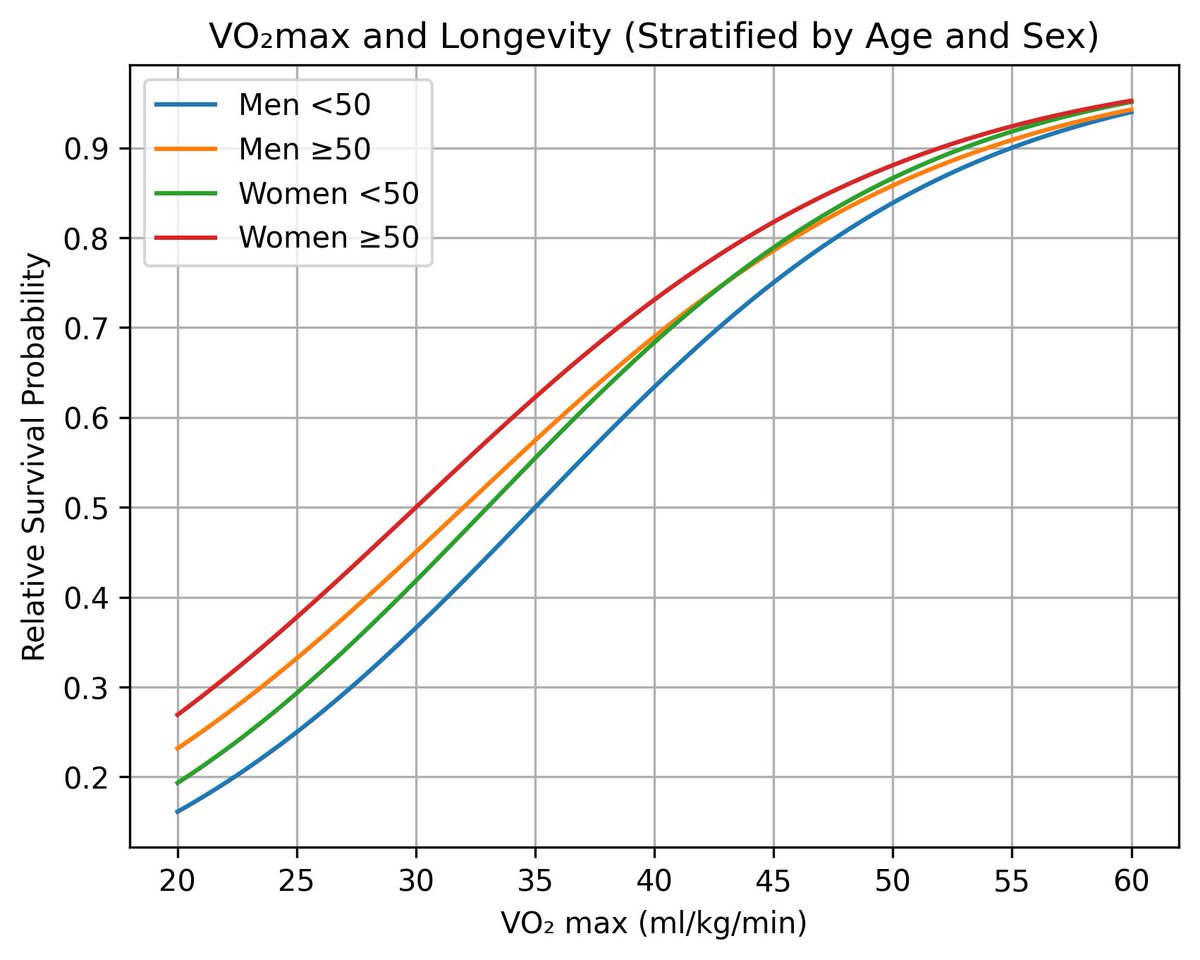
Across large human studies, higher VO₂max is one of the most powerful predictors of lower mortality. Independent of age, weight, or traditional risk factors.
And unlike genetics, it is highly trainable.
Clinical exercise trials show structured endurance training and interval work can raise VO₂max by ~15–20%, improving not only cardiovascular health but also cognitive function and physical resilience later in life.
Longevity science often looks futuristic.
But the most validated intervention we have today is simple:
Build a bigger aerobic engine.
Link to evidence: pmc.ncbi.nlm.nih.gov/article…
2
1
63
What’s your current estimated VO₂max (from Garmin/Whoop/etc.)?
I’m politely curious how many are training it intentionally.
21
VO₂max isn’t just for athletes. As a respiratory physician I see it as the single best trainable predictor of how long you’ll live. One number that beats most supplements.
Here’s why the data is so compelling:
• VO₂max reflects how well your heart, lungs, blood, and mitochondria work together
• Low cardiorespiratory fitness is a stronger predictor of mortality than smoking, hypertension, or diabetes in some cohorts
• Each ~3.5 ml/kg/min increase (~1 MET) is linked to a meaningful reduction in all-cause mortality risk
• The biggest longevity gains occur when moving from “low” to “below average” fitness
Mechanistically, higher VO₂max = better oxygen delivery, mitochondrial density, metabolic flexibility, and vascular health.
Translation: your entire system becomes more resilient.
How to improve it:
• Zone 2 training (build your aerobic base)
• VO₂max intervals (e.g., 4x4 min hard efforts)
• Consistency > intensity
• Re-test every few months
You don’t need elite numbers.
You just need to stop being unfit.
19
“I don’t have time to exercise” is not supported by the science.
Exercise physiology has tested this directly.
High-intensity interval training (HIIT) and traditional longer aerobic training both significantly increase VO₂max, one of the strongest predictors of longevity.
Large meta-analyses show similar improvements in VO₂max between the two approaches despite much lower total training time with HIIT.
The mechanism is clear. Brief maximal efforts strongly stimulate mitochondrial biogenesis, cardiac output, and peripheral oxygen utilization. These are the core drivers of VO₂max.
In practical terms:
A few minutes of real intensity can trigger the same cardiorespiratory adaptation that once required long aerobic sessions.
Time is not the limiting factor.
Intensity is.
Links to evidence:
pubmed.ncbi.nlm.nih.gov/3708…
pubmed.ncbi.nlm.nih.gov/3158…
1
1
51
Scientific research on nattokinase shows it is a potent fibrinolytic enzyme derived from fermented soy. Controlled studies report reductions in blood pressure and modulation of coagulation factors in humans. At higher intake levels around 10,800 FU daily, extended use has been associated with reduced carotid plaque thickness and improved lipid profiles in large clinical cohorts, with a favorable safety profile. Lower doses show smaller or inconsistent effects on lipids. Mechanistic data suggest effects on endothelial function and vascular inflammation.
Traditional intake from natto in Japan typically provides ~1,000–2,000 FU per serving, alongside vitamin K2 (MK-7), soy isoflavones, probiotics, and fermentation-derived peptides. Supplemental nattokinase isolates the enzyme, usually 2,000 FU daily for general support, with higher doses used in interventional settings under supervision.
This raises an important question: are observed cardiovascular benefits in natto-consuming populations attributable to nattokinase alone, or to the broader fermented soy matrix including K2 and isoflavones?
Conversely, does isolated supplementation replicate the vascular effects without the additional bioactive compounds?
Another layer worth discussing is soy’s isoflavone content. While fermented soy contains phytoestrogens with generally weak and context-dependent activity, concerns about estrogenic signaling persist.
Does fermentation meaningfully alter isoflavone bioactivity? And does isolated nattokinase avoid that concern entirely, or remove potentially synergistic compounds?
The distinction between whole-food exposure and enzymatic isolation deserves more rigorous comparative trials.
1
1
1
49
Link to study: pubmed.ncbi.nlm.nih.gov/3607…
19
Randomized trials show cocoa flavanols improve vascular function.
High-flavanol cocoa enhances endothelial nitric oxide production, improving arterial elasticity and modestly lowering blood pressure. Flavanols such as epicatechin also reduce oxidative stress and platelet reactivity -mechanisms directly tied to cardiovascular risk reduction.
Prospective data link sustained intake of flavanol-rich cocoa with lower rates of coronary events. In the COSMOS trial, cocoa flavanol supplementation was associated with a reduction in cardiovascular mortality signal.
Processing matters: natural (non-alkalized) cocoa retains significantly more flavanols. Dutch-processed (alkalized) cocoa loses a substantial portion during pH treatment, meaning fewer bioactive compounds, less vascular impact.
Recommendation: Choose minimally processed, natural cocoa with high flavanol content. Use it consistently as part of a cardiometabolic-supportive diet.
Links to studies:
mdpi.com/2072-6643/16/12/191…
mdpi.com/2297-8739/11/4/128
1
1
36