
Joined March 2022
- Tweets 2,323
- Following 57
- Followers 30
- Likes 27,797
20 Photos and videos

D. K. retweeted

Jun 8
Elle voulait juste que son père voie à quel point elle était belle avant de partir au balle 🥺❤️
55
1,151
22,001
248,686
D. K. retweeted

Mar 29
L’insupportable deux poids deux mesures du récit de la guerre contre l’Iran
2
7
24
926
D. K. retweeted

Mar 5
🇮🇷- Missiles pédagogiques : « On les bombarde par amour… pour les sauver ! »
- Cette punchline de Xavier-Louis de Izarra reprend l'inversion orwellienne : assassiner des civils afin de "sauver" le peuple iranien d'un régime accusé de massacres.
80
977
1,959
41,180

D. K. retweeted

14 Oct 2025
2
29
73
3,477

5 Sep 2025
Proclamation du jour 5 sept 1914
Joffre
"Au moment où s'engage une bataille dont dépend le sort du pays, il importe de rappeler à tous que le moment n'est plus de regarder en arrière. Tous les efforts doivent être employés à attaquer et à refouler l'ennemi.
1
1
753
5 Sep 2025
Une troupe qui ne peut plus avancer devra, coûte que coûte, garder le terrain conquis et se faire tuer sur place plutôt que de reculer. Dans les circonstances actuelles, aucune défaillance ne peut être tolérée "
583
D. K. retweeted

17 Aug 2025
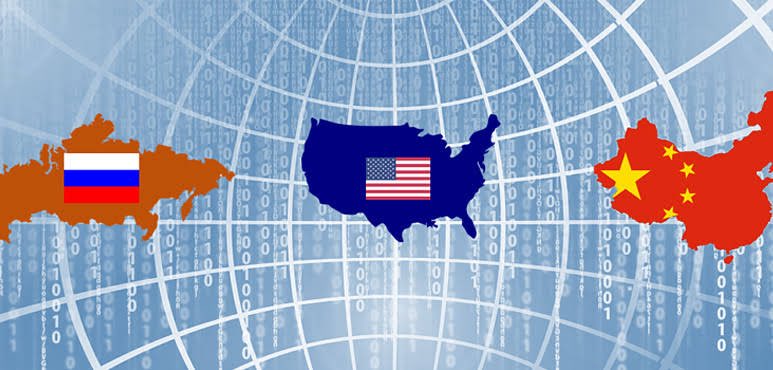
Why does the US need Russia? Beyond Donald Trump
Far beyond Trump or anyone else, there is a project of US hegemony that transcends White House terms and encapsulates American interests.
Russia does not threaten US hegemony today as the Soviet Union once did, but China, with over 1.3 billion people and a robust economy, boasting the largest industrial base on the planet, does threaten the US. Washington knows China is its true adversary, especially militarily.
The Chinese are flying fighter prototypes of a generation ahead of the Americans, launching missiles a generation ahead, with radars nearly a generation and a half ahead, and dominating the gallium market. In naval terms, China's production capacity is vast, and combined with Russia’s, it may account for over 60% of global military shipbuilding when às consider submarines. The US has unmatched industrial transformation capacity but needs to control the technological gap, partly by separating Russia from China.
Despite China’s impressive defense industry advances, Beijing still relies on Russian technologies and supplies for its armed forces in several areas.
Nuclear Sector:
China is reducing its military dependence on Russia, but it remains significant. The Type 041 submarine, with a compact nuclear reactor inspired by Russia’s VAU-6, relies on Moscow’s expertise. Similarly, nuclear reactors for future space projects are based on Russia’s Topaz-II, showing China’s reliance on Russian nuclear technology for space, submarines and obviously speed up the production of nuclear warheads.
Armor:
Chinese military armor, vital for tanks like the Type 99 and destroyers like the Type 055, uses Russian titanium alloys and composites. If we Compare Chinese tanks like the VT4 to Russian equivalents in weight and protection, we can see as China still has far to go.
Submarines:
Chinese submarines, like the Type 096, depend on Russian stealth propulsion and nuclear reactors to rival Western naval powers. The MGK-335 sonars in China’s Kilo-class submarines are another critical Russian technology for underwater operations. This is an area where China lags, and Russia leads, with technology transfers alarming the West.
Warships:
Chinese ships, like the Type 055 destroyer and Type 054 frigate, use gas turbines based on Russia’s UGT-25000, microelectronics for HHQ-9 air defense systems, and Russian steels and composites for naval armor. Naval radars, like the Type 346A on the Type 052D, also rely on Russian microelectronics.
Drones:
China is nearly self-sufficient in drones, but specific military models, like the hypersonic WZ-8, use Russian electro-optical sensors and composites.
Jamming:
In electronic warfare, a major Western concern, China relies on Russia for sophisticated jamming systems, like those inspired by the Krasukha, used on ships like the Type 055. With Russian microelectronics, China advances but remains behind Russia’s signal-jamming expertise.
Aviation:
J-20 fighters rely on Russian AL-31F and AL-41F engines, outperforming China’s WS-15. Z-20 helicopters use components based on Russia’s VK-2500 engine, key for high-altitude operations.
Missile and Rocket Systems:
DF-21D ballistic and CJ-10 cruise missiles use Russian microelectronics and sensors for precision guidance, as do other Chinese models. Artillery systems like the PHL-03 and PLZ-05 howitzer use Russian alloys for launch tubes and barrels.
Though China has adapted Russian designs to create its weapons, its reliance on Russian supplies persists and will continue through licensed agreements. From microelectronics to titanium alloys, nuclear reactors to jamming systems, the Sino-Russian partnership is a delicate interdependence, strengthened by Western sanctions.
Working towards distancing the Russians and Chinese is a priority for the US after the sanctions had the opposite effect.
The Europeans' problems with the Russians have become a lesser issue compared to America's survival as hegemonic superpower
79
143
535
57,324
29 Jun 2025
RT @r_chekkat: Israël a aussi « le droit de se défendre » en pulvérisant un enfant seul qui porte un sac de farine ?
Quel monde malade pe…
724
23 Feb 2025
youtube.com/live/80fj2Cack9Y…
Deux des meilleurs analystes du conflit Russo ukrainien.
1,975
D. K. retweeted

20 Feb 2025
Je veux bien mais la dernière fois que j'ai posé une question à votre gouvernement, j'ai été banni de l'Elysée.
Bon je tente quand même:
- Comment se fait-il, alors que la question de la sécurité européenne est au coeur de votre réflexion, que l'Europe n'ait pas réagi au sabotage de Nord Stream?
- Rétrospectivement, pensez-vous que le fait d'avoir remis en question la valeur juridique des accords de Minsk lors d'un échange téléphonique avec Vladimir Poutine le 20 février 2022, était judicieux?
- Maintenant que les Etats-Unis reconnaissent que les discussions sur l'élargissement de l'OTAN ont eu une incidence sur le déclenchement du conflit, estimez-toujours que la responsabilité n'en incombe qu'à la Russie ?
- L'installation des bases de la CIA aux frontières russes, comme l'a révélé le New York Times, ne pouvait-elle pas être selon perçue comme une menace par Moscou, et donc par ricochet mettre en péril la sécurité du continent européen ?
- Que pensez-vous de la présence de biolabs américains sur le sol ukrainien, dont Victoria Nuland s'inquiétait qu'ils tombent aux mains des Russes ?
- Pour parvenir à une architecture sécuritaire durable sur le continent, faut-il prendre en compte le point de vue de la Russie sur la question ?
- Etait-il judicieux pour Boris Johnson de faire capoter l'accord de paix d'Istanbul en 2022, comme l'a expliqué David Arakhamia, le négociateur en chef de la partie ukrainienne ?
- Sur quel élément factuel votre gouvernement se base-t-il pour affirmer, je cite Me Primas, que "la Russie ne s'arrêtera pas à l'Ukraine" ?
244
1,291
4,441
163,075
24 Jan 2025
youtu.be/bfKfM0kgeVk?si=YCw_…
Le retour de la France sur le plan européen après le traité de Vienne .
472
D. K. retweeted

30 Dec 2024
L’histoire est racontée dans cette vidéo:
youtu.be/bbDRIvrmt1A?si=Z0J2…
1
2
8
2,049
D. K. retweeted

16 Dec 2024
Khaled Nabhan, ce grand-père palestinien dont la douleur et la résilience avaient ému le monde, a rejoint ses petits-enfants sous les frappes barbares de l’armée israélienne à Gaza.
Sa voix s'éteint, mais son cri de justice résonnera à jamais.
Qu'Allah te couvre de sa Miséricorde, Khaled. 🌹
#Palestine #Gaza

28
254
728
17,253
D. K. retweeted

20 Oct 2024
Quand le gouvernement prend vos économies pour boucher le déficit.
81
2,173
11,027
815,426