Policy Analyst
Joined November 2021
- Tweets 41
- Following 200
- Followers 90
- Likes 62
Photos and videos
Md Shamsuddoha retweeted

15 Aug 2024
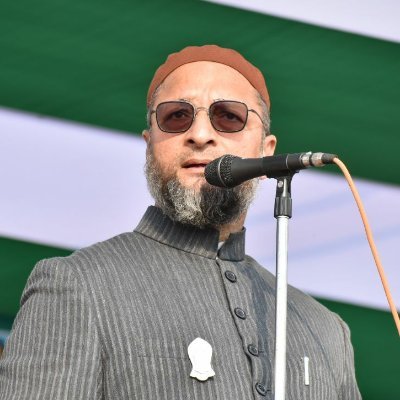
🚨 Asaduddin Owaisi criticises PM Modi for giving shelter to Sheikh Hasina in India.
He asks "Why Modi Govt is not supporting People of Bangladesh? Why are they supporting a 'deposed' leader?"
"If tomorrow Bangladesh Govt will say India should return Sheikh Hasina then what will you do?"
"Why did you (PM Modi) let former Bangladesh Prime Minister Sheikh Hasina come to India?" - OWAISI
1,842
1,450
12,189
1,828,513
Md Shamsuddoha retweeted

7 Aug 2024
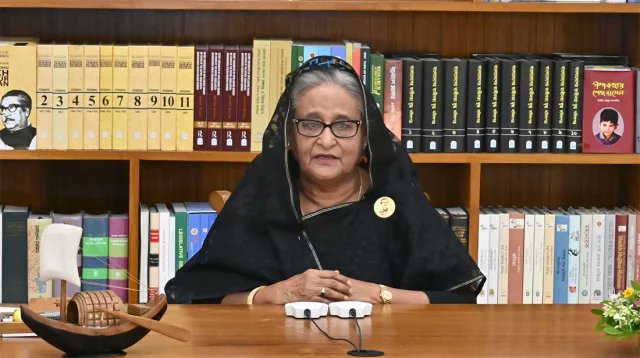
For some Bangladeshis the fall of the Awami League is the end of fear. For others, however, it may well be the beginning of fear.
It is difficult for people not conversant with Bangladesh to understand how for Bangladeshis (living both inside and outside the country) who wanted to express an opinion or view against the Awami League government, its fall has resulted in such an extraordinary release of fear.
The AL was in power since 2008, and certainly since 2015, if not earlier, people understood that speaking out could have significant repercussions, and as time went on the level or repercussions increased. These there not just repercussions for oneself but one's family: Bangladeshis could not speak out in the UK, knowing that their family was vulnerable in Bangladesh.
Kanak Sarwar, a popular YouTuber, highly critical of the government, lived in the US. As a result, the government arrested his sister on completely spurious charges and was arrested and jailed for over 6 months, without trial.
So as a result there is huge relief from government critics or just Bangladeshis who wanted to speak their mind.
However, that is just one side of the coin rights now. The other side is that with the Bangladesh Nationalist Party and other parties in the ascendent, the Awami Leaguers, or people who are known supporters of the Awami League, are receiving threats and are scared to come out in the public.
I heard today that a very senior lawyer, not particularly pro-Awami League, was chased down the corridor and had to quickly jump into his car. I also heard about another Awami League lawyer deciding not to come to court right now because he is scared of what will happen to him as he has received threats. There are also confirmed reports of attacks against Christian schools and Hindu temples - the minorities perceived by the opposition parties to be supporters of the Awami League.
One could see this as teething pains of the new dispensation particularly where there is not yet even a functioning government. In addition one could argue that in light of the terrible killings that took place in recent weeks (effectively authorised by the Awami League) it would be naive not to realise that in the immediate days after such events, there will be a lot of anger directed at the former governing party, but that it will reduce quickly.
Perhaps. However there is no reason to think that the opposition parties have suddenly learned any lessons from their own victimhood over the last 15 years and that they have become more tolerant of their political rivals.
If Bangladesh is not careful, the country will be replacing one repressive government for another. It is not inevitable, but it is also difficult to know how one can stop this from happening.
80
292
1,186
107,120

20 Jun 2024
I'm supporting the @mcsuk Manifesto for our Seas. Will you too? nmshr.io/s/twitter/ZBM8AjnEH…
15
31 May 2024
Do you share Commonwealth civil society’s vision for equitable, inclusive healthcare? ✍️ Add your name to the public record by co-signing the 12 Recommendations on Universal Health via @commonwealthorg:
actionnetwork.org/forms/uhc-…
2
29
Md Shamsuddoha retweeted

10 Jan 2024
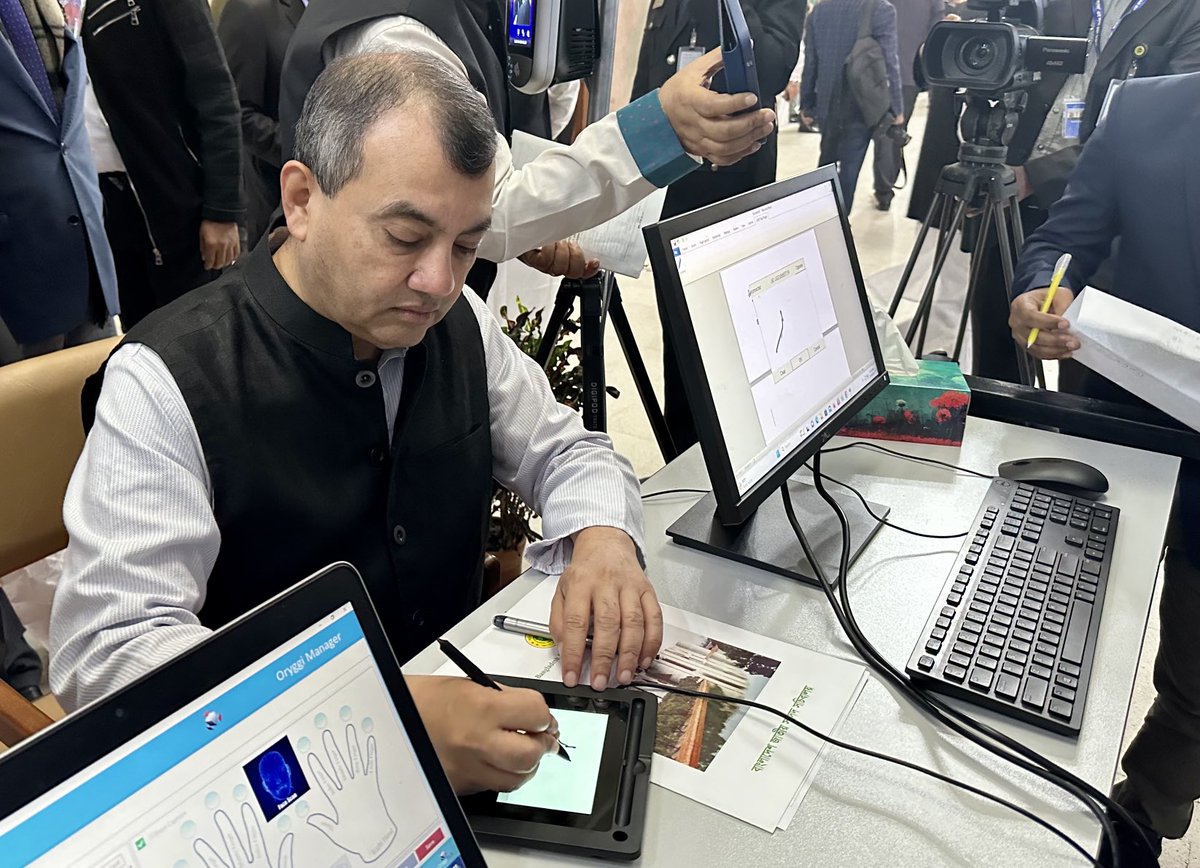
Following oath taking as Member of 12th Parliament, signed the Register and thereafter completed process for issuance of secured membership card. Now begins my fifth term of serving my constituents …
61
17
487
8,356
Md Shamsuddoha retweeted

13 Dec 2023
So the final #COP28 texts have arrived and there not much in them to resolve underlying problems,
- gone is any reference to science and the @IPCC_CH
- although resource constraints are recognised as preventing climate there are no recommendations how this will be reversed
2
4
8
657
Md Shamsuddoha retweeted
29 Apr 2023
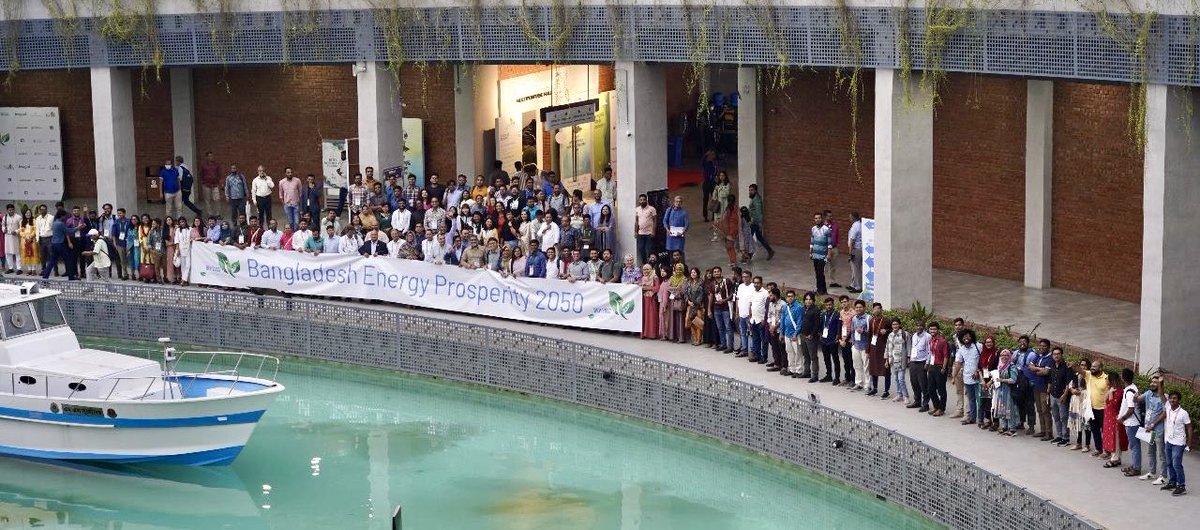
Thank you to the Organizers, resource persons and in particular to the 283 participants (mostly youth) who have contributed to a vibrant, informative and insightful #BEP2050. @ctgchatter @RazzaqNahim @TanvirSJoy #100%renewables
1
11
56
1,179
9 Mar 2023
90% of coastal women's lives, livelihoods are affected by climate change, a recent study conducted by CPRD reavels.
dhakatribune.com/climate-cha…
2
61
Md Shamsuddoha retweeted

24 Jan 2023
Happening now: 9th Annual Symposium on the Role of Religion & Faith Actors in International Affairs. Watch on YouTube to discover how faith communities, interfaith dialogue and cooperation can help usher in a new era of global solidarity for #HumanSecurity youtu.be/C7sNNfNInUM
6
14
661
14 Jan 2023
1
1
47
3 Jan 2023
1
2
48
Md Shamsuddoha retweeted
29 Dec 2022
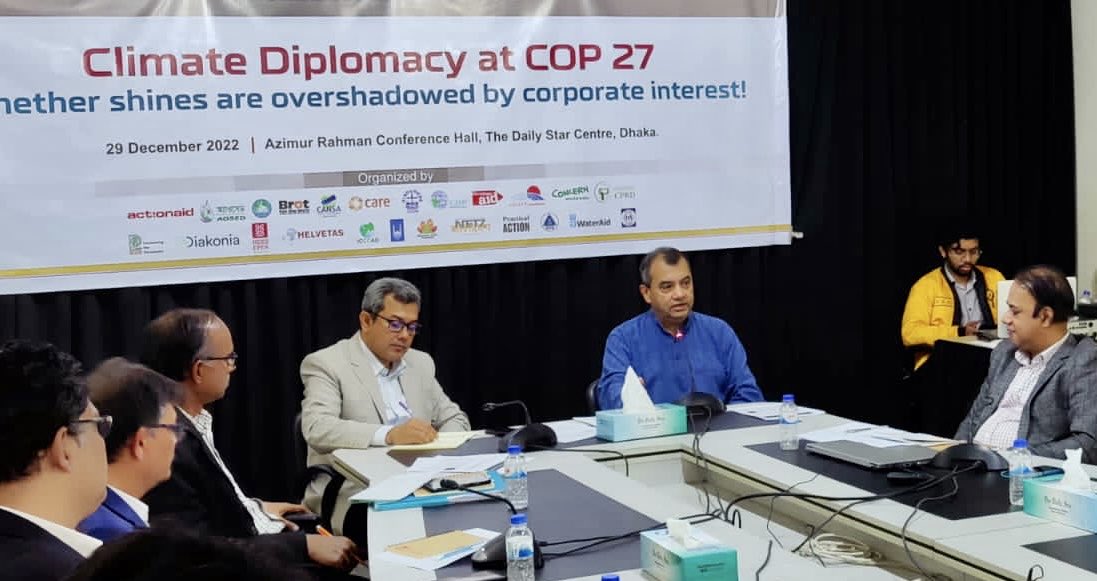
Excellent debrief on #COP27 outcomes by 23 🇧🇩 CSOs. Will discuss this at next Parliamentary Committee Meeting and look forward to finding a joint way forward.
1
5
65
1,505
Md Shamsuddoha retweeted

29 Dec 2022
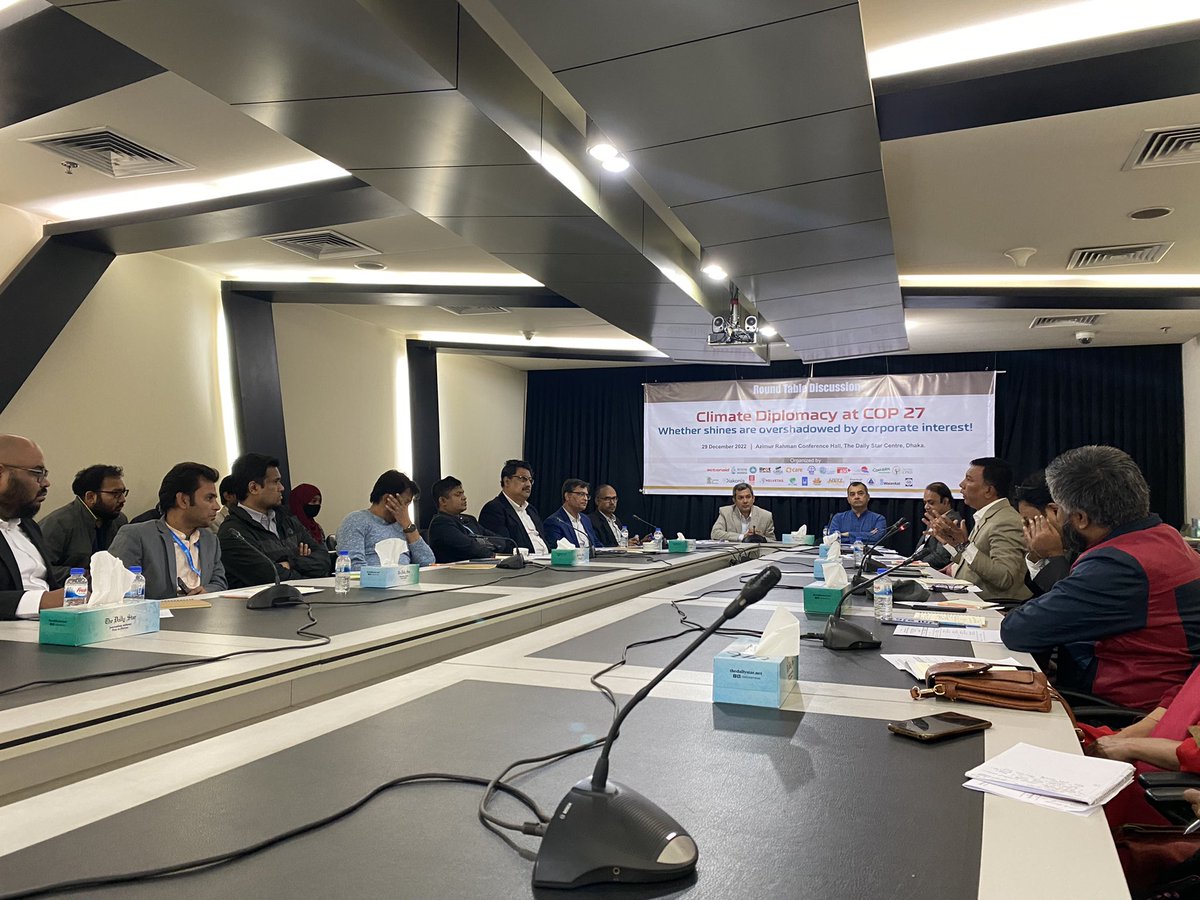
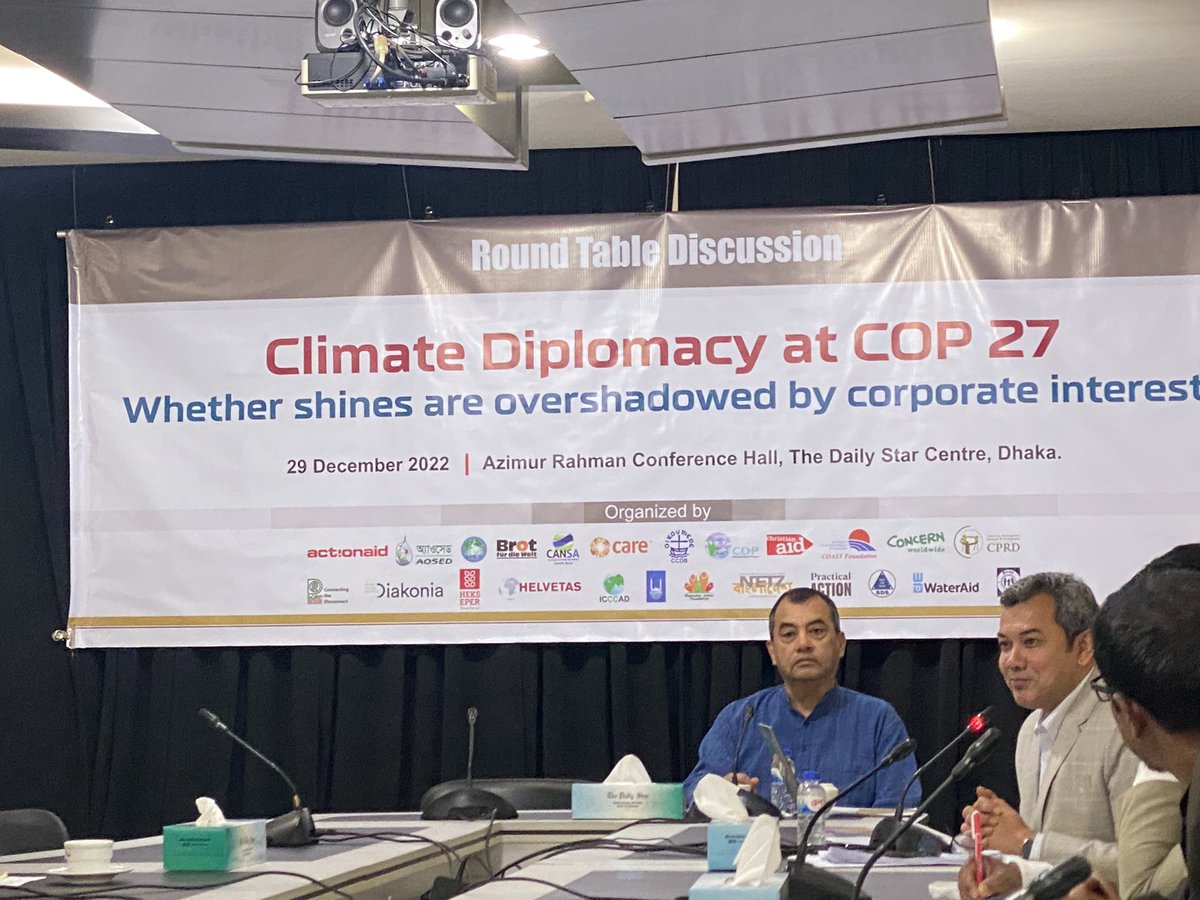
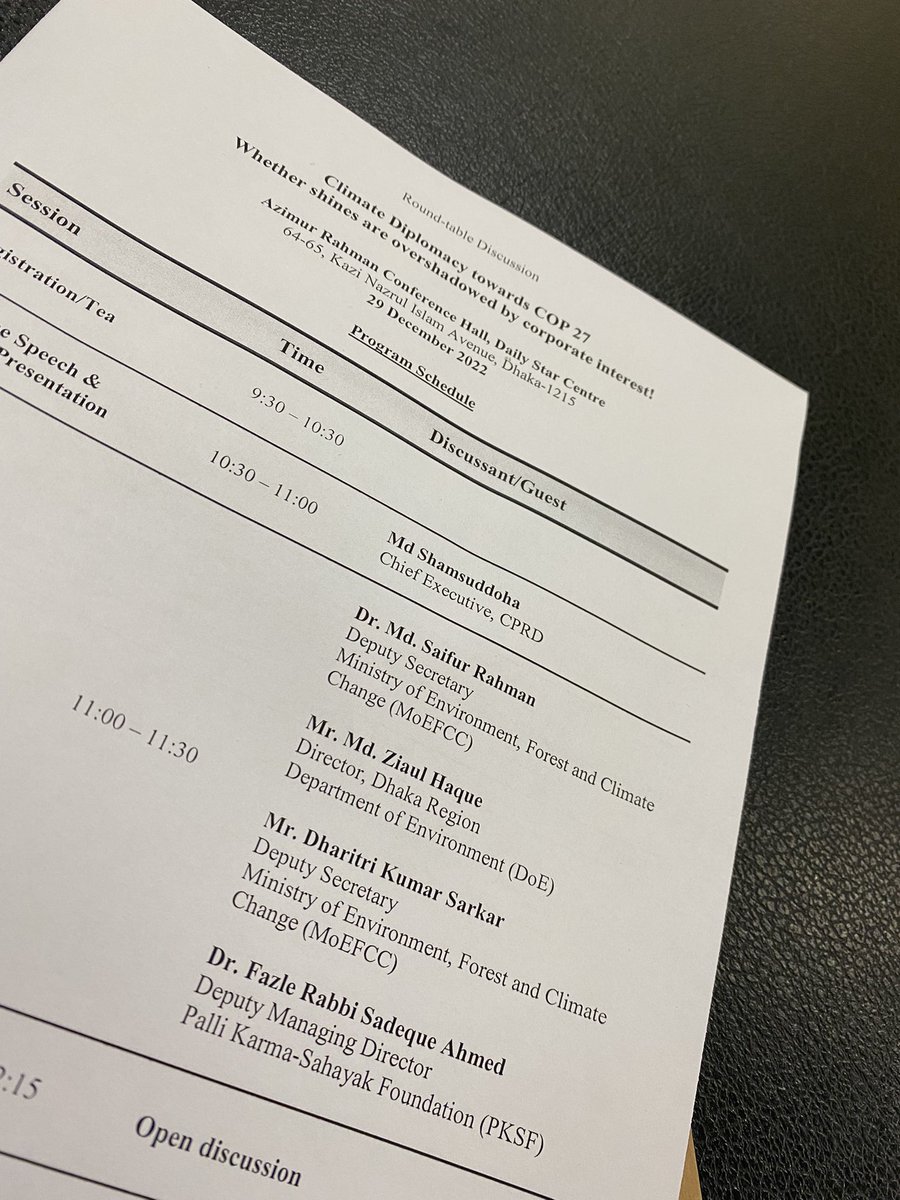
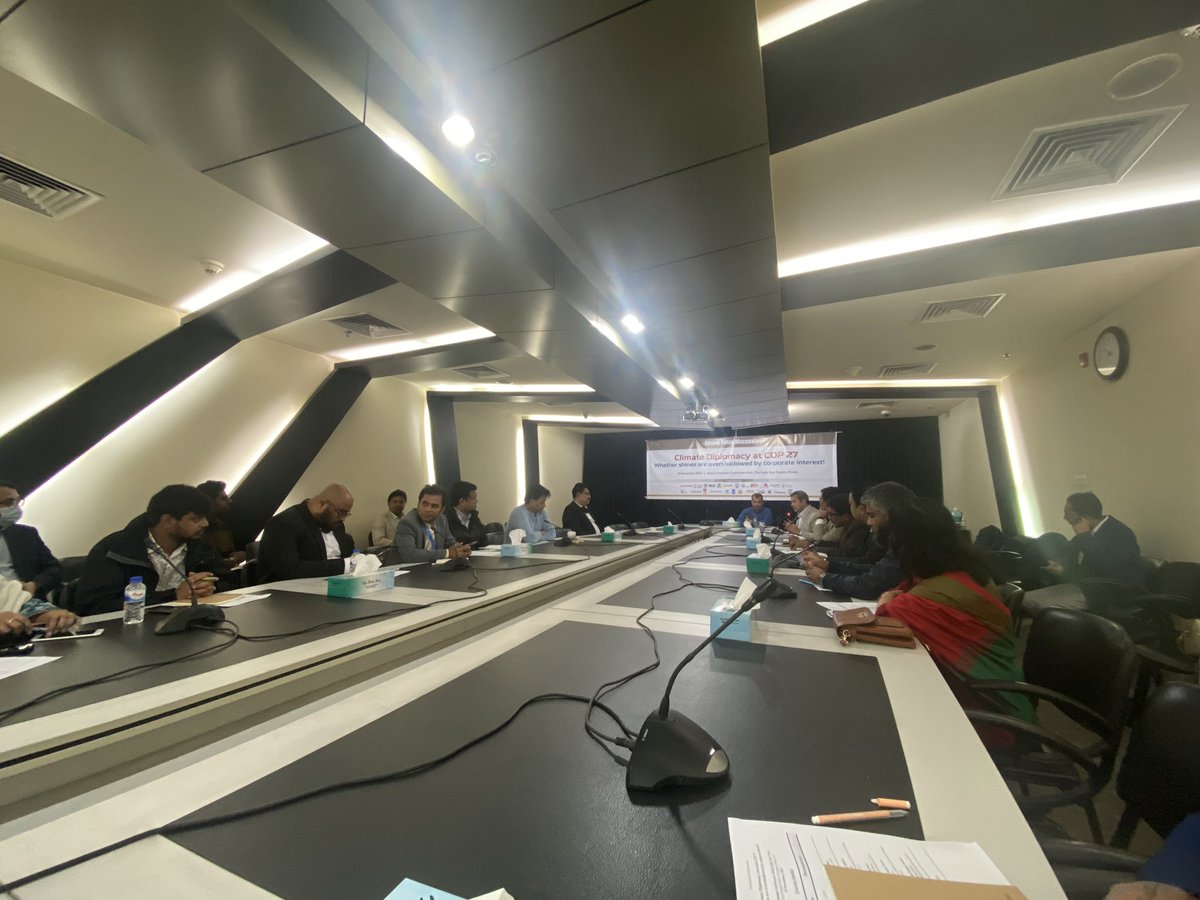
Discussion on #Climate Diplomacy towards #COP27-Bangladesh. #LossandDamage funding mechanism is a gsin. Challenges include no phase out of fossil fuel, #fossilfuel lobbyists, Harmful investment in low energy, Less focus on human rights-gender.@SaleemulHuq2 @DohaCprd @SohanBMYP
6
19
655
Md Shamsuddoha retweeted

12 Dec 2022
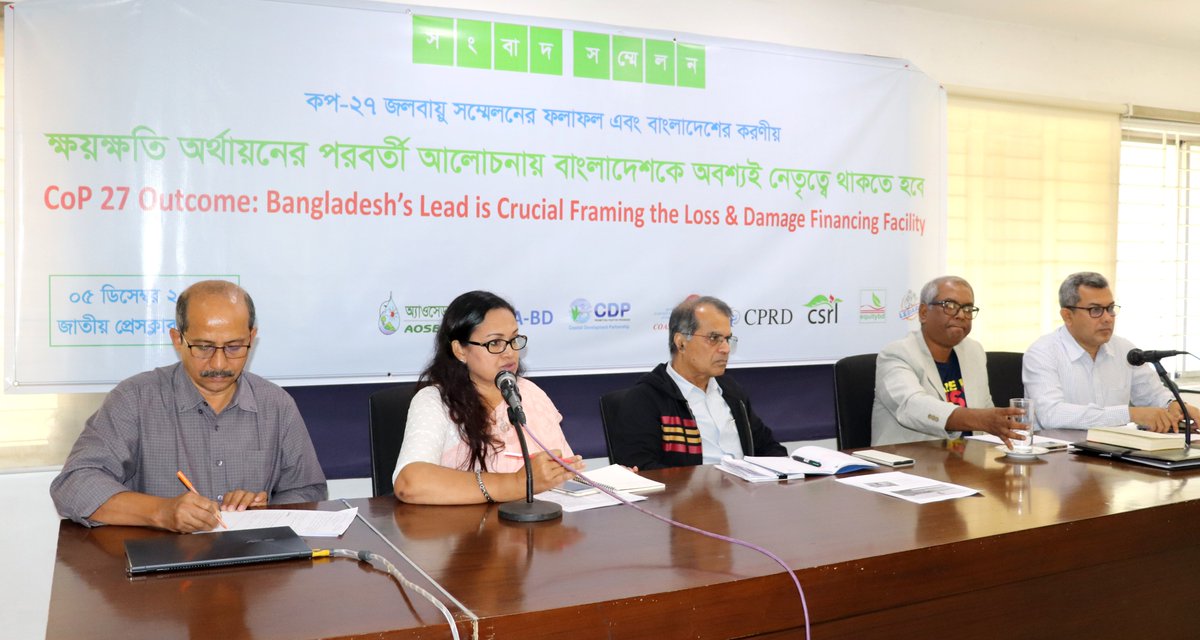
"We need enhanced emission reduction especially by Annex-1 countries under NDCs. Global warming is already at 1.1C & projected to reach 2.4C by 2100 with implementation of current emission reduction targets communicated by the NDCs!" - Ms Rabeya Begum, CANSA-BD Steering Committee
8
15
25 Nov 2022
25 Nov 2022
Md Shamsuddoha retweeted

8 Nov 2022
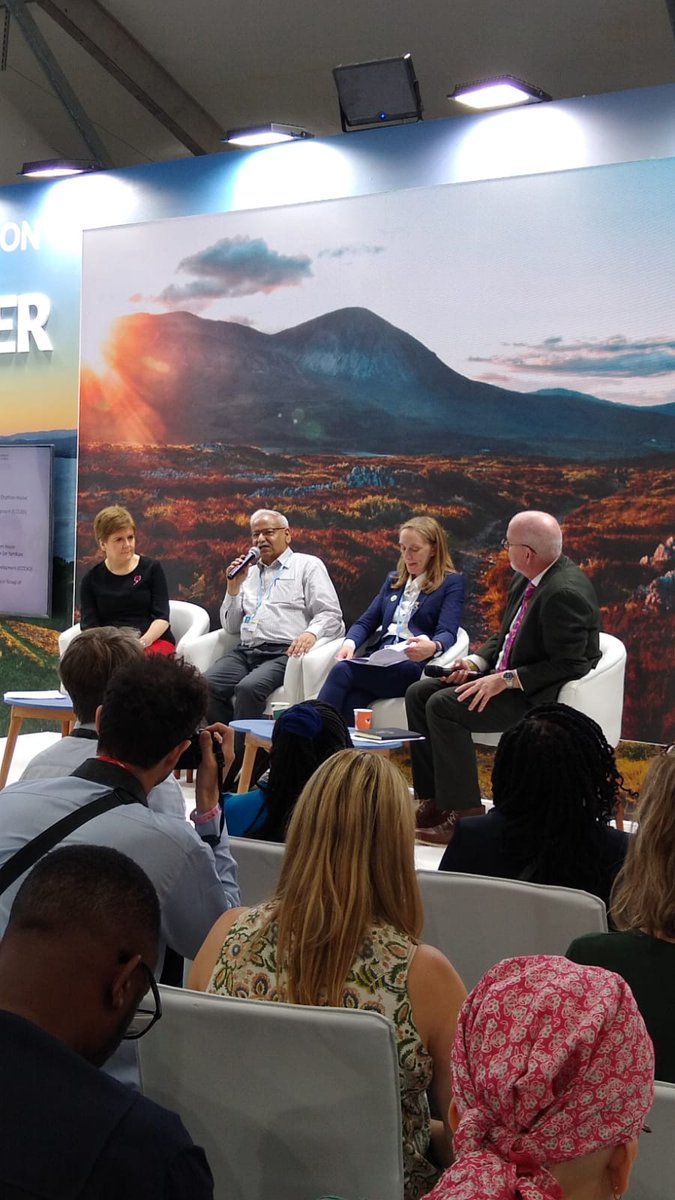
Speaking at event at @COP27P on @LossandDamage where First Minister Nicola Sturgeon of Scotland announced a new 5 Million Pounds support for Loss and Damage (in addition to the 2 Million she gave last year during @COP26) . She continues to show her leadership on this issue!
7
81
295
Md Shamsuddoha retweeted

11 Nov 2022
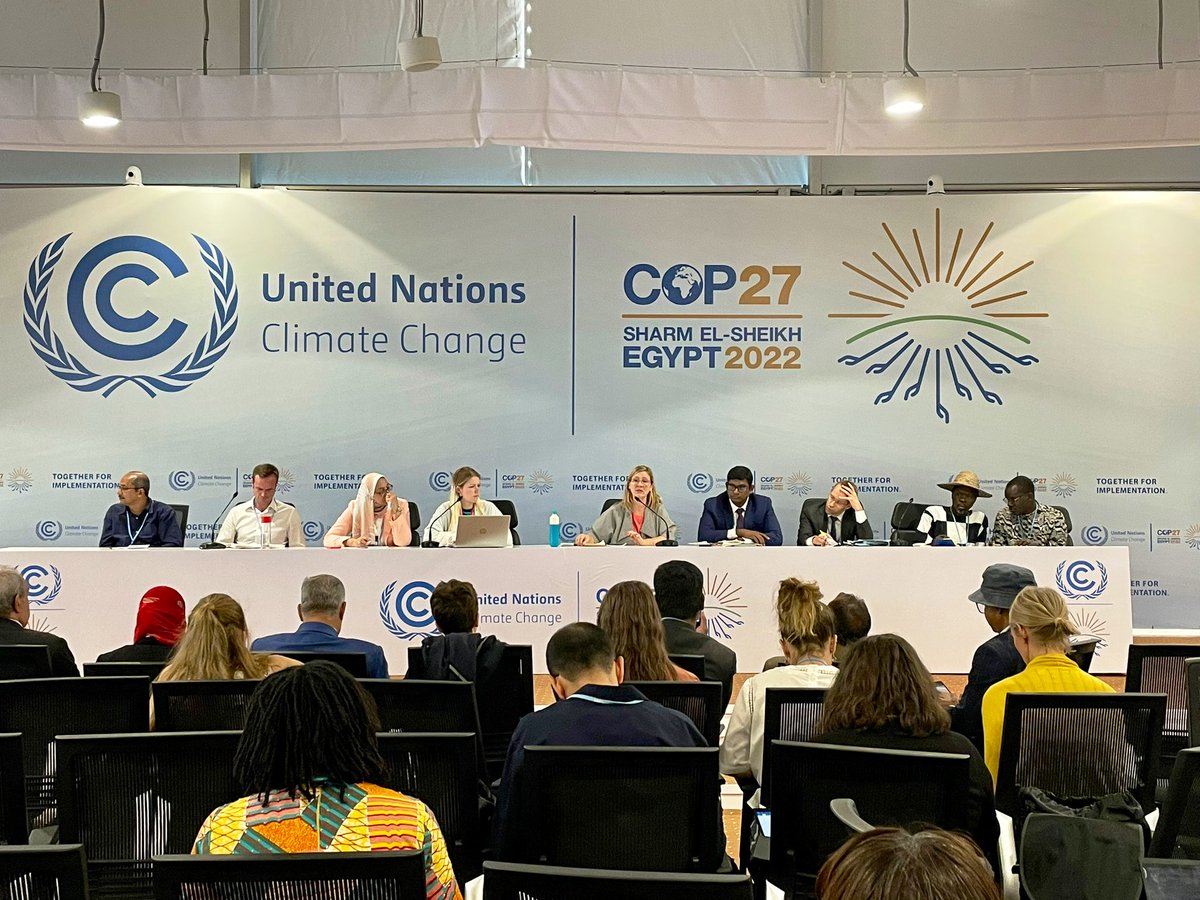
Thank you for making the call of @BROT_furdiewelt @COP27P #LossAndDamageFinance has to address #displacement & #migration beyond #adaptation #HumanitarianAid #ODA LnD must be grant & needs based!
11 Nov 2022

#COP27 Side event - Advancing rights-based protection of climate migrants: What role for local and international actors?
How can the risk of human mobility be reduced and the rights of displaced persons be protected?
Join us online ➡️ youtube.com/watch?v=BoYukpwC…
2
9
Md Shamsuddoha retweeted

10 Nov 2022
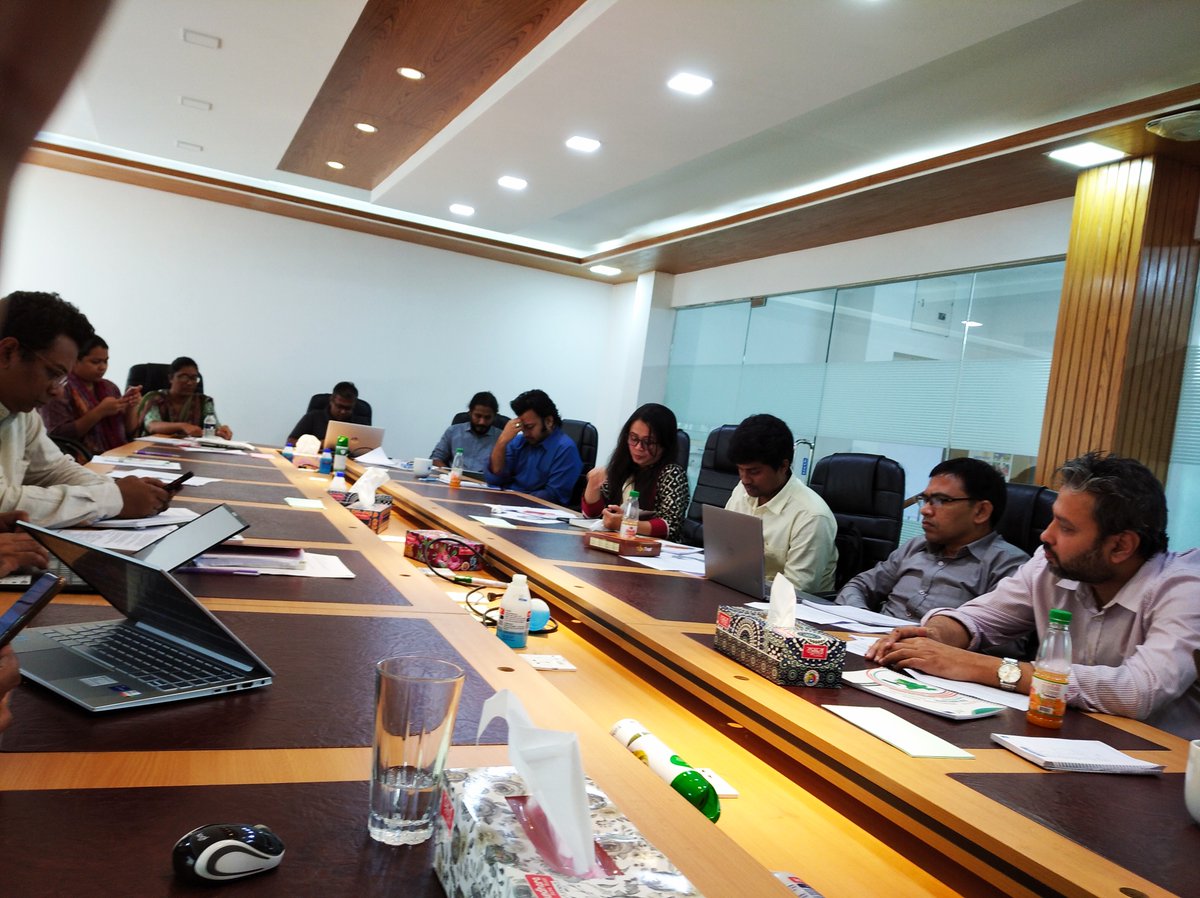
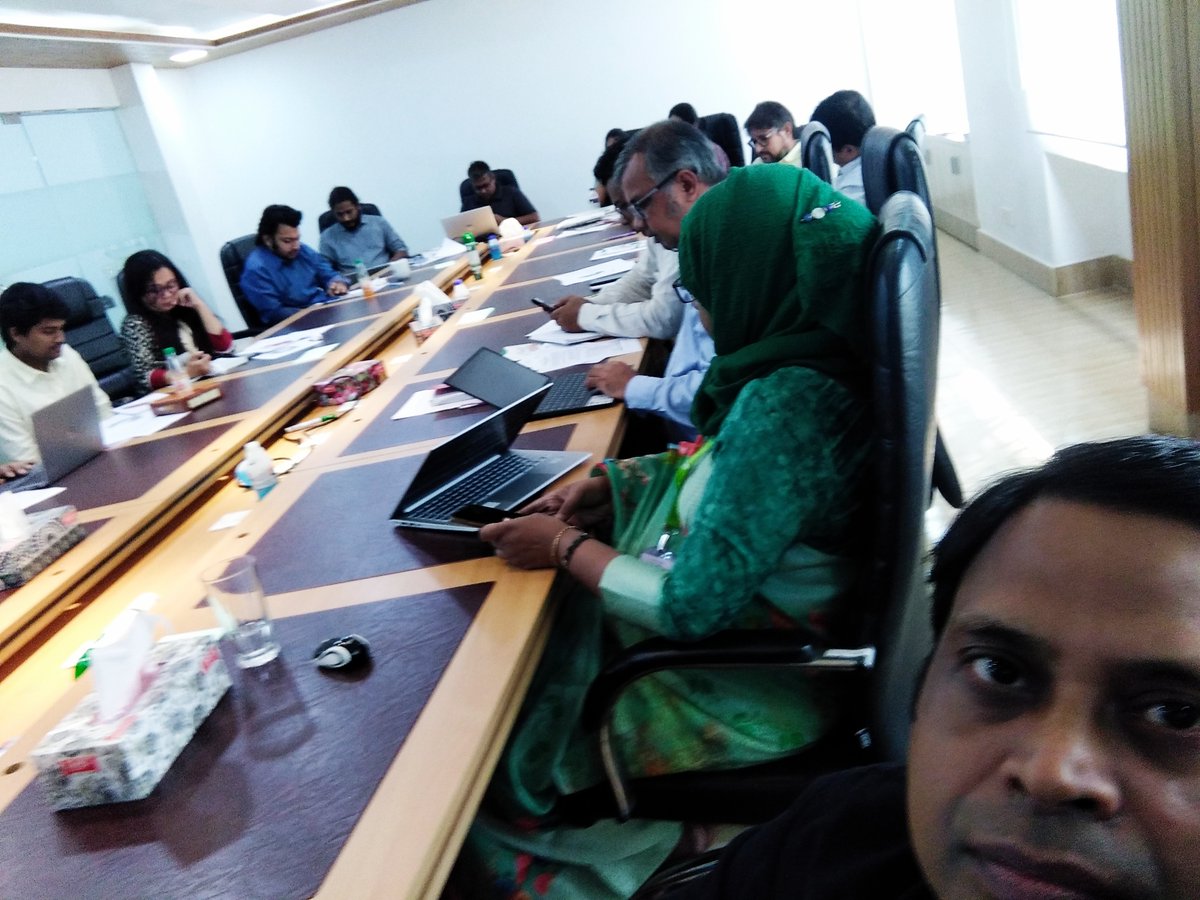
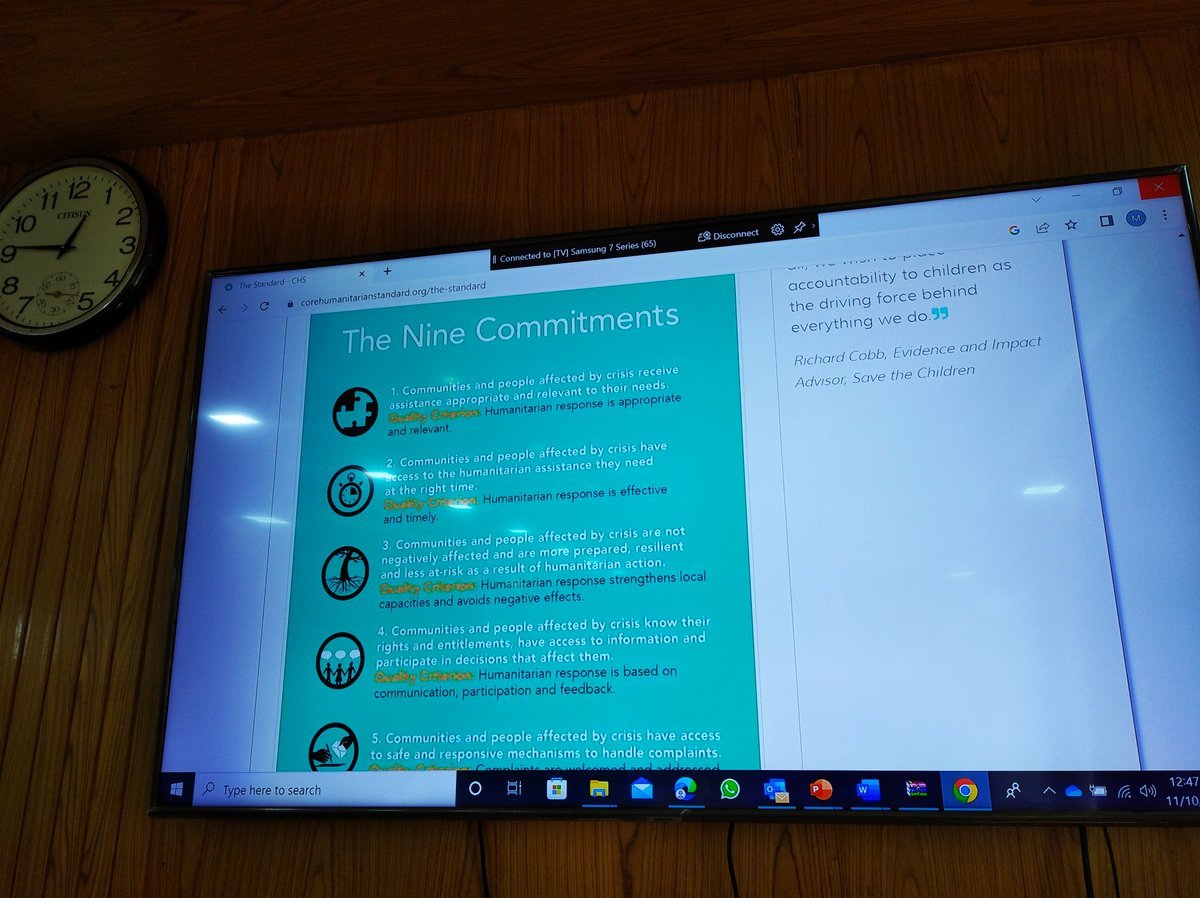
#Sphere Community🇧🇩 organised a consultation on #CHS revision today. I shared exp. from @trust_coast, said, indicators may not equally be applicable to northern & southern NGOs. 62 indicators itself a challenge for LNGOs. Indicator for INGO accountability in partnership needed.
2
5
10 Nov 2022