
Tutorial Fellow & Director of Studies in English @RegentsOx @engfac. Many interests, specialising in 16th-18th century English literature, history and theology.
Joined September 2021
- Tweets 666
- Following 539
- Followers 522
- Likes 885
33 Photos and videos

May 15
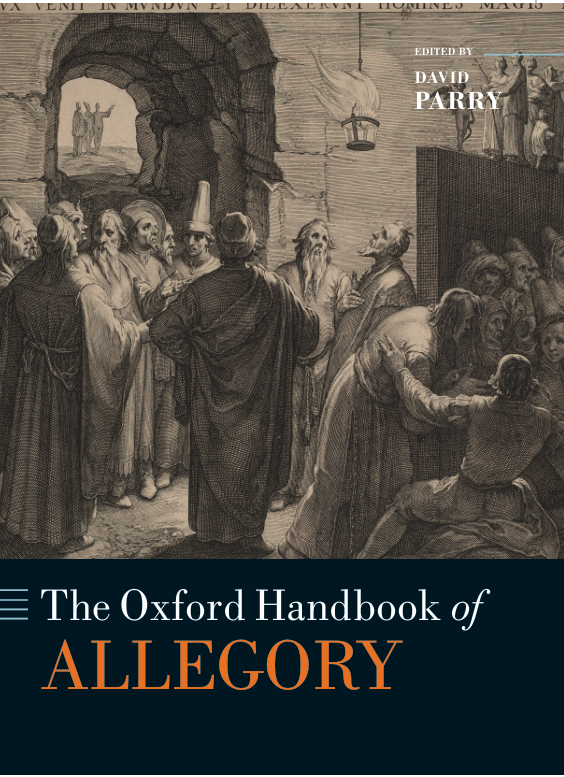
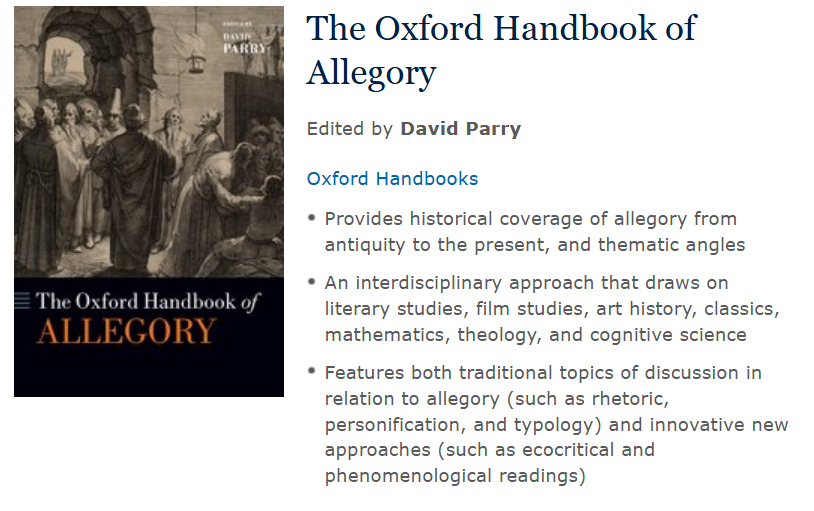
After years in the making, The Oxford Handbook of Allegory is out imminently: 37 chapters by 41 contributors from 4 continents and multiple academic disciplines on allegory from Plato to Inside Out!
global.oup.com/academic/prod…
1
1
4
114
3 Oct 2025
Literature and religion people: What would you recommend as introductory reading for an hour and a half class on biblical and religious contexts for English literature as part of a general Intro to English Lang and Lit course?
1
84
30 Sep 2025
Forthcoming June 2026:
The Oxford Handbook of Allegory - allegory from Plato to Inside Out, drawing on literary studies, film studies, art history, classics, mathematics, theology, and cognitive science. It's been a fun few years!
global.oup.com/academic/prod…
1
5
508
18 Apr 2025
"My God, my God, why hast thou forsaken me? Never had it been so with him before. Never before had he been unable to see God beside him. Yet never was God nearer him than now. For never was Jesus more divine.
1
1
156
18 Apr 2025
He could not see, could not feel him near; and yet it is “My God” that he cries.
Thus the Will of Jesus, in the very moment when his faith seems about to yield, is finally triumphant. It has no feeling now to support it, no beatific vision to absorb it.
1
1
66
18 Apr 2025
It stands naked in his soul and tortured, as he stood naked and scourged before Pilate. Pure and simple and surrounded by fire, it declares for God. The sacrifice ascends in the cry, My God."
(George MacDonald, Unspoken Sermons: 'The Eloi')
1
62
David Parry retweeted

31 Mar 2025
🔈Catch up on last week's episode on your favorite streaming platform! 🔈
1
71
25 Mar 2025
I had fun talking 17th century poetry with some well informed young readers at the Kids Talk Church History podcast. Enjoy!
24 Mar 2025

Some of us have heard the names of 17th-century poets like George Herbert, John Donne, and John Milton. But did you know that John Bunyan also wrote poems? And that there were many female poets too? 🔈 Listen to find out more!
4
140
3 Mar 2025
Excited to join the online launch of the Oxford Handbook of Restoration Literature this afternoon from 4:15-5:30 UK time. Presentations from David Alff (SUNY Buffalo), Kate Bennett (Magdalen, Oxford), Nigel Smith (Princeton) & Gillian Wright (Birmingham). teams.microsoft.com/l/meetup…
3
166
15 Jan 2025
I'm belatedly happy to announce that I've started a new post and am looking forward to getting stuck into the new term as Tutorial Fellow and Director of Studies in English @RegentsOx. New profile page below:
rpc.ox.ac.uk/people/dr-david…
6
2
90
6,712
25 Dec 2024
This is the month, and this the happy morn
Wherein the Son of Heav'n's eternal King,
Of wedded Maid, and Virgin Mother born,
Our great redemption from above did bring; (1/2)
1
1
189
25 Dec 2024
For so the holy sages once did sing,
That he our deadly forfeit should release,
And with his Father work us a perpetual peace.
(John Milton, 'On the Morning of Christ's Nativity')
1
137
11 Oct 2024
My article 'Milton's Quasi-Persons' is published today in Milton Quarterly (advance online open access). It proposes a new category of ‘quasi-persons’ for figures in Milton between full literal personhood and symbolic metaphorical personification. Enjoy!
doi.org/10.1111/milt.12496
3
163
9 Oct 2024
I enjoyed working on this online anthology of primary texts from early modern Exeter with @NiallAllsopp, @PhilipSchwyzer and our excellent student research intern Hannah Dow. (Among the fruits of our ReConEx project on writing religious identities in Exeter and the southwest.)

Now live: our annotated online anthology of primary texts from early modern Exeter exploring how varied religious and communal identities are expressed in writing. Includes poems, sermons, memoirs and polemical pamphlets from 1589 to 1740. Enjoy!
reconex.exeter.ac.uk/texts/
1
5
333
18 Sep 2024
Literary studies people:
Are there any accessible essays on or introductions to close reading that you would recommend for first-year undergradutes?
133
9 Aug 2024
Does anyone know of a postcolonial retelling of the Cupid and Psyche story? I'd like something that would teach well with C.S. Lewis's Till We Have Faces.
1
3
246
23 May 2024
My article on hypocrisy and sincerity in Exeter Dissenting sermons is now out (open access for anyone to read). As far as I know this is the first ever publication on a 26 vol MS collection of 17th/18th century sermons held by the @DExInstitution.
doi.org/10.1017/stc.2024.15
5
10
755