
Chief Market Strategist @WellingtonAltus. PhD Econ. Astute, observations and conclusions. Personal views. Not investment advice. Please do your own research.
Joined November 2019
- Tweets 18,054
- Following 26
- Followers 102,925
- Likes 14,286
5,326 Photos and videos





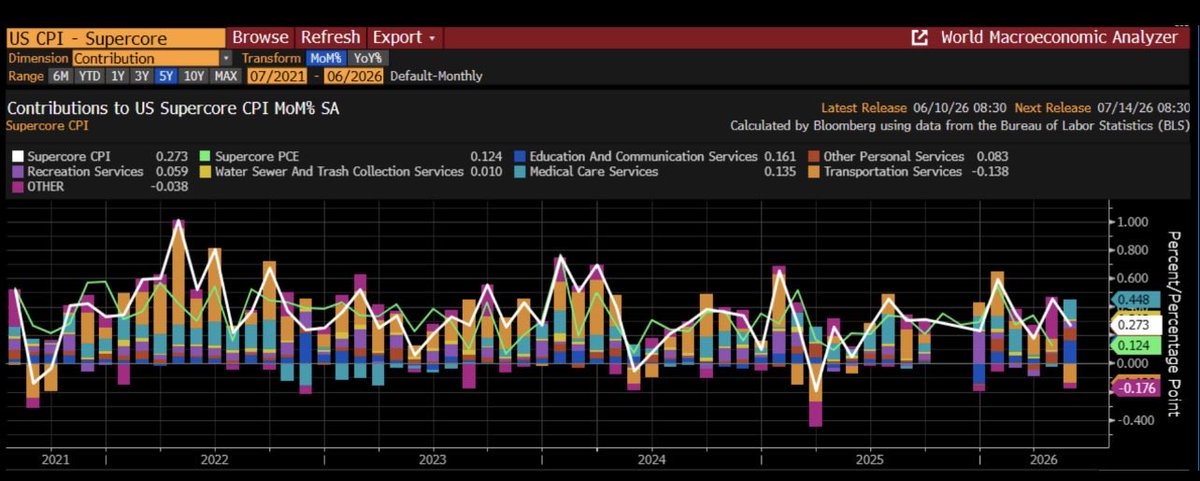
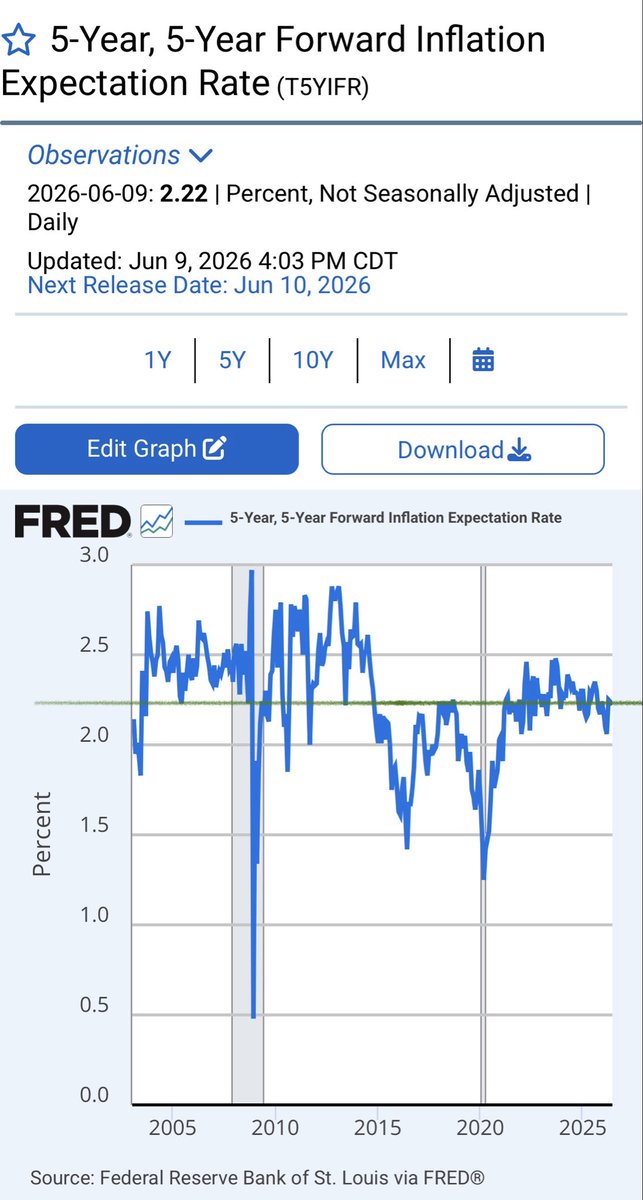
Pinned Tweet

Jun 8
THE REBIRTH TRADE IS UNDERWAY
This isn’t politics.
It’s REGIME CHANGE.
America is done subsidizing the world while its factories rust and debt explodes.
Hard power = energy, manufacturing, supply chains, chips, power grids.
The U.S. is bringing it all home.
AI isn’t hype and the cycle will be longer than assumed.
It’s an arms race for hardware, data centers, electrons, and industrial muscle.
The age of easy Keynesianism is DEAD.
Welcome to supply-side growth, capex explosion, and a new secular bull market in reindustrialization.
Trump isn’t the whole story.
He’s the forcing function.
The 250th anniversary isn’t a museum piece.
It’s America choosing renewal over imperial drift.
Pax Americana is dying.
The American rebirth has begun.
Position accordingly.
Who’s riding the rebirth? Drop your biggest conviction play below 👇
America is back.
May 29

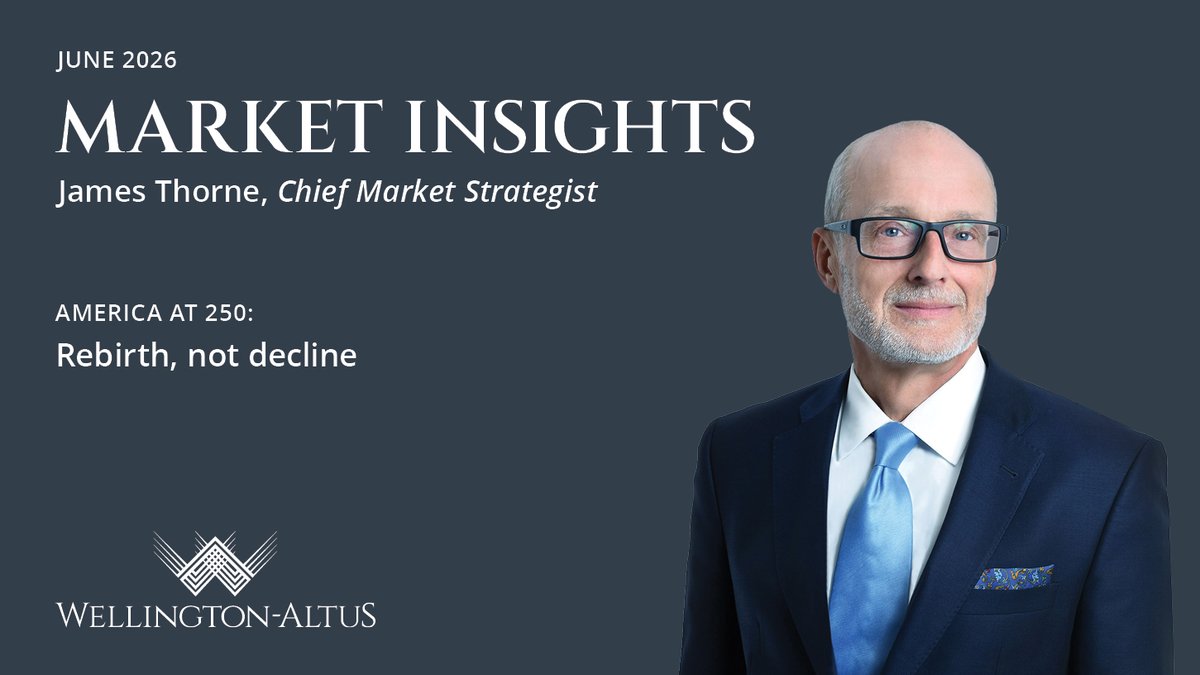
The American 250th anniversary marks a new declaration. In his June #MarketInsights, @DrJStrategy explores America’s rebirth—and why investors are not seeing the last gasp of U.S. exceptionalism: wellington-altus.ca/june-mar… #Investing
32
62
324
39,986
Manifest destiny in real time looks like this: a historic deal with Iran materializes on cue, signed while the president stands at the G7, then a victory lap broadcast from a UFC fight on the White House lawn, before markets even have time to process it.
By Monday’s open, oil drops, rates drop, risk surges, and the entire global macro backdrop resets in real time.
President Trumps strategy of Peace through Strength gives the world a global peace divided .
And as this unfolds, the World Cup commands the world’s attention on U.S. soil, the Knicks finally claim a championship, and America celebrates its 250th birthday.
Geopolitics, markets, culture, and spectacle, compressed into a single, perfectly timed sequence. Not chaos. Not coincidence. Convergence.
And still, people insist there is nothing greater at work, no design, no higher order, no almighty God.

33
76
347
17,044
For the record.
SpaceX, Hayek, and the Progressive War on Wealth Creation
The progressive left clings to the fantasy that wealth is manufactured by the state and its pet technocrats rather than by entrepreneurs who risk their own capital to create real value.
In their mythology, government planners are the heroic “designers” of prosperity, while the private sector is a problem to be taxed, regulated, and morally lectured. As Hayek warned, “the more the state ‘plans’ the more difficult planning becomes for the individual,” and progressives are determined to make individual planning all but impossible.
Their entire project rests on a basic fraud, confusing redistribution with creation. Social-democratic and socialist progressives boast about “fairness” and “equity,” but their toolkit is nothing more than confiscation and reallocation, slicing the same pie thinner while pretending they’ve baked a new one.
Hayek’s point that “there is all the difference in the world between treating people equally and attempting to make them equal” goes straight over their heads, they weaponize the latter to justify endless expropriation from those who actually produce.
The manufactured outrage on the progressive left over the SpaceX IPO is not about fraud, abuse, or failure, it is about their ongoing indoctrination campaign to portray success, risk-taking, and genuine wealth creation as moral crimes. A private company goes from “10 percent chance of success” to one of the most valuable enterprises on earth, and their instinctive response is not admiration or curiosity, but rage that such achievement is even allowed to exist. They see Elon Musk’s trillionaire status not as the byproduct of extraordinary innovation and execution, but as a kind of cosmic theft that must be punished by the tax state.
This is entirely consistent with the broader progressive project, socialize resentment, demonize entrepreneurial gains, and condition the public to believe that any concentration of wealth outside the state is inherently illegitimate. Hayek saw this coming decades ago when he warned that central planning steadily erodes the scope for individual initiative, because the logical end of their ideology is a public that no longer dares to think in terms of independent ambition or long-term wealth building. Progressive leaders feed this mindset daily, insisting that “rigged” markets and “oligarchs” are the problem, while cleverly leaving the state, and its favored constituencies, as the only acceptable repositories of power and resources.
Their reaction to SpaceX is a case study in this pathology. A company that has slashed launch costs, expanded human access to space, and built critical strategic infrastructure is reduced in their rhetoric to a symbol of “inequality” and “greed,” precisely because it exposes how much more effective decentralized, risk-taking capital can be than bureaucratic planning. The message encoded in their fury is clear, do not build, do not risk, do not aspire, unless it is under the watchful, confiscatory eye of the state.
$SPCX
30
161
473
13,162
Truth 👇

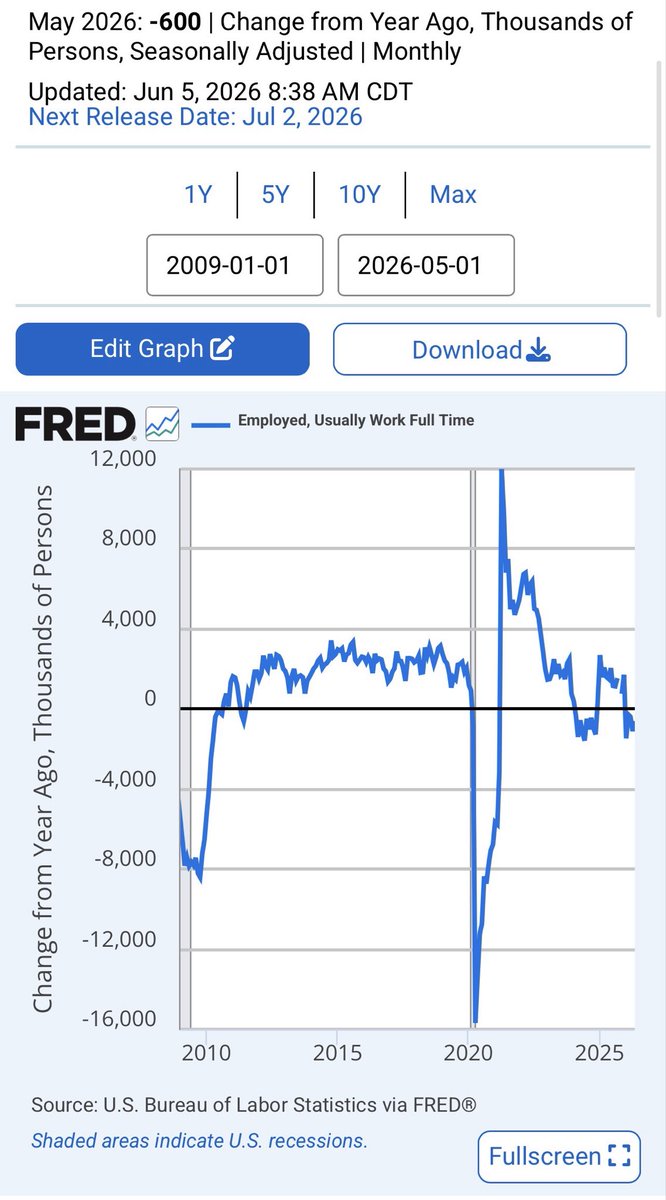
The @realDonaldTrump economy is creating a record number of private-sector jobs, fueled in large part by the historic Working Families Tax Cuts. Naysayers attempting to credit the World Cup can thank President Trump for bringing it back to America, just as he is bringing back manufacturing jobs, energy dominance, and American industry.
4
10
69
6,274
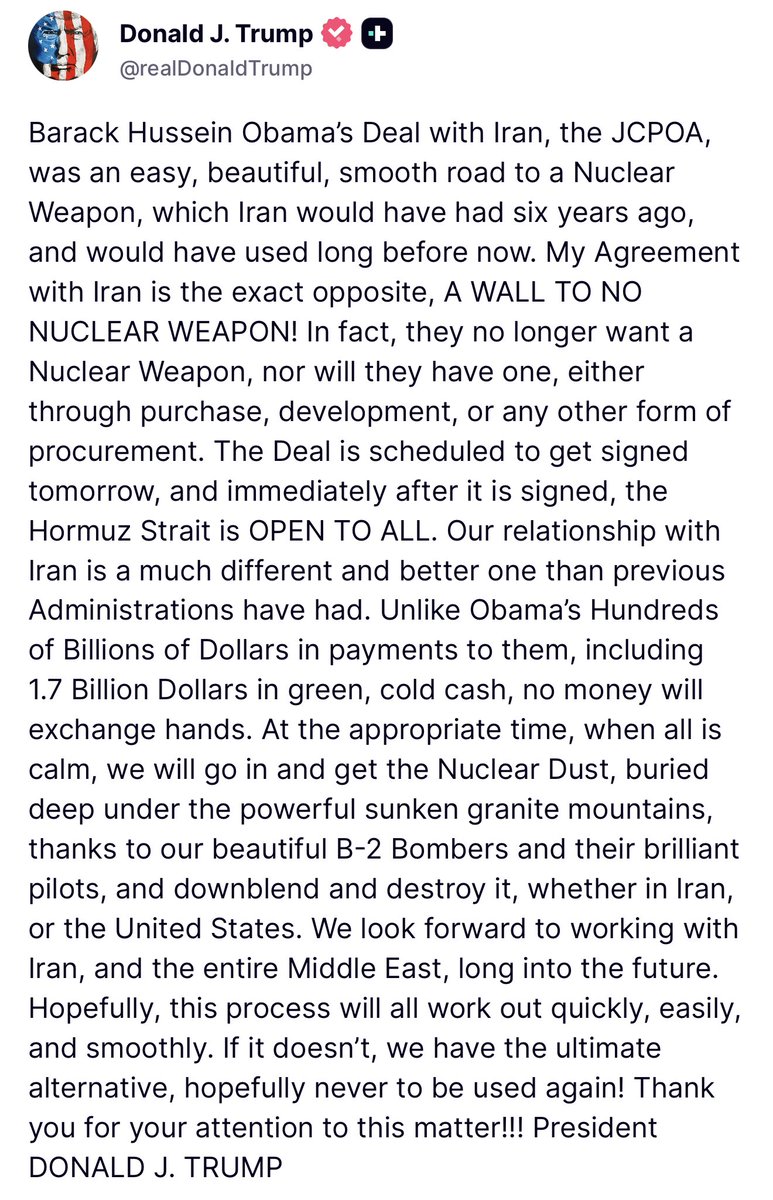
I’m squarely in the ‘the president is going to land a historic deal’ camp and I’m equally sure the doomers on Wall Street and in the MSM will spend the whole time complaining.👇

38
22
240
11,773
For the USD bears.
The 1990s taught a simple lesson: when the United States leads a genuine innovation wave, capital follows and the dollar strengthens, often to levels the rest of the world finds intolerable. We are on the cusp of a similar dynamic today, yet much of the market remains anchored to a structurally bearish dollar narrative.
In the last great tech super-cycle, the combination of U.S. productivity gains, deep capital markets and institutional credibility created a persistent bid for dollar assets. The result was not a “too weak” dollar undermining U.S. competitiveness, but a “too strong” dollar exporting pain to the rest of the world. Those who misread that regime paid for it in performance and policy error.
Fast-forward to this decade. The United States is again at the epicentre of an innovation boom – this time in AI, advanced computing and energy infrastructure – and is pairing it with an explicit tilt back toward supply-side economics. The policy mix may be politically contentious, but its market signal is clear: favour capital formation, domestic production and energy security.
By contrast, much of the developed world remains trapped in a low-growth, high-regulation equilibrium. Technocratic, progressive policy frameworks often prioritise redistribution and control over risk-taking and investment. That divergence in growth potential and returns is exactly what foreign exchange markets are designed to price.
If history rhymes, the risk by the late 2020s is not dollar collapse but dollar strength that feels excessive to everyone else. A structurally bearish stance on the dollar, in that context, is less a bold contrarian call than a refusal to engage with fundamentals.
Aldous Huxley warned that “the most important of all the lessons of history is that men do not learn very much from the lessons of history.” Dollar bears may once again be determined to prove him right.
14
43
182
9,516
As Musk opens up space, some random thoughts from up here in paradise.
My rule is simple: don’t bet against Elon. Canada, almost reflexively, does the opposite.
Canada’s failure to embrace Elon Musk and SpaceX is not an isolated misstep, it is the latest expression of a deeper, decades-long flaw: a persistent lack of economic humility. At a time when global power is being redefined by technological capability, Canada continues to default to caution, complacency, and the assumption that its model requires little adaptation.
Musk, like Alexander Graham Bell before him, has Canadian roots. Bell became a symbol of transformative innovation tied to Canada’s early industrial identity. Yet the modern parallel is uncomfortable: Canada is far more inclined to celebrate innovators in retrospect than to support them in real time. The country reveres past builders while hesitating in the face of present ones confident in its narrative, but reluctant to confront its shortcomings.
Musk represents exactly what Canada claims to lack: a builder of industries, not a manager of assets. SpaceX has fundamentally altered the economics of space, created a new industrial ecosystem, and positioned itself at the center of future defense, communications, and energy infrastructure. These are strategic capabilities. Canada’s response? Indifference at best, suspicion at worst.
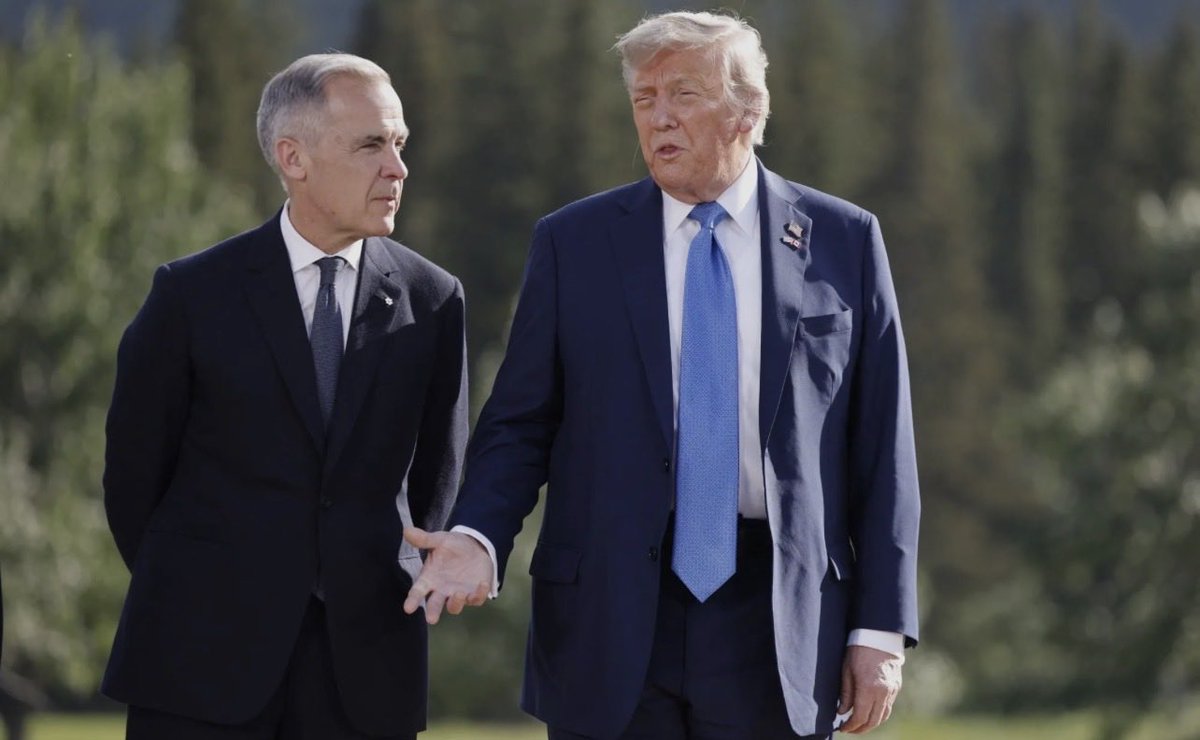
The irony is hard to ignore. A political and corporate establishment that loudly signals climate virtue has shown little appetite to embrace Tesla, while moves to sideline or cancel Starlink over Musk’s perceived political affiliations only deepen the contradiction, especially as figures like Carney and Ford now pivot toward rhetoric around a “Fortress North America.” Industrial policy is not a performative art. It demands coherence, discipline, and a willingness to engage with reality rather than posture around it.
This reflects a broader economic structure shaped by that same lack of humility. Canada has optimized for regulatory capture, financial engineering, real estate, banking concentration, and asset inflation, while underinvesting in productivity, innovation, and industrial scale. Capital exists, but it is not deployed toward building globally competitive companies. Risk is not evaluated and priced; it is reflexively avoided.
The reaction to SpaceX IPO made this mindset visible. Instead of recognizing a generational industrial milestone, much of the commentary defaulted to valuation cynicism and personality critique. This is a country more comfortable second-guessing builders than backing them, more fluent in critique than in creation.
The issue is not Musk. It is a system that confuses stability with strength, optics with strategy, and past success with future relevance. Without a reset in mindset, toward humility, realism, and ambition Canada will continue to watch the industries of the future be built elsewhere.
Canada is not being outcompeted, it is choose not to compete decades ago.

27
65
378
17,012
Food for thought.
Will the BOJ follow the ECB and show the level of incompetence that exists at global central banks.
The BOJ hiking rates into a potential energy supply shock from Middle East/Hormuz tensions is the same broken central bank playbook.
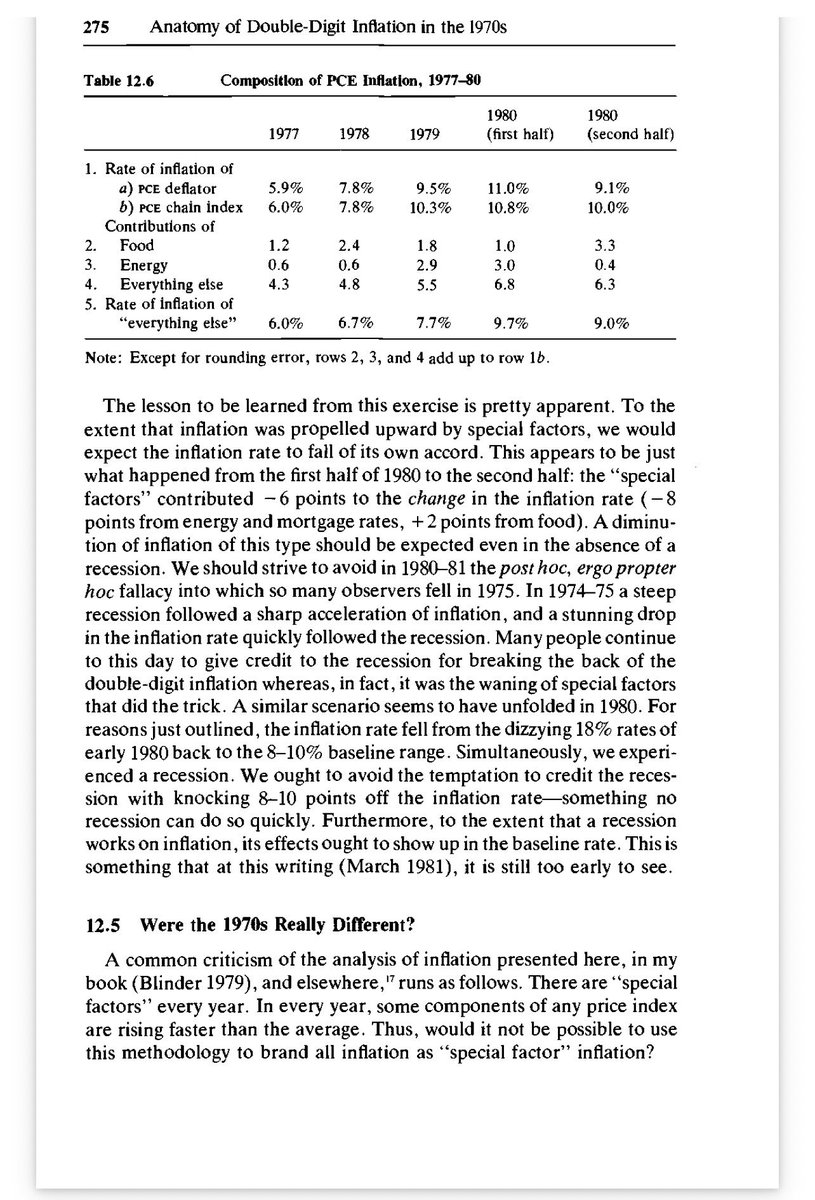
They assume 25 bps will “immunize” the economy from a relative price shock that will likely dissipate once a deal is reached. But Blinder’s 1982 analysis showed 1970s double-digit inflation from food energy shocks fell “by itself” when the shocks ended, no aggressive demand clamp needed.
Central bankers treat the ’70s as the baseline for second-round effects instead of the exception it was. Flawed models, predictable mistake.
Blinders paper 👇
“The lesson to be learned from this exercise is pretty apparent. To the
extent that inflation was propelled upward by special factors, we would
expect the inflation rate to fall of its own accord.”
nber.org/system/files/chapte…
5
12
70
5,061
Investing is about the future.
Target for S&P 500 for 2027 10,000.
Have a nice day.
31
32
433
27,328
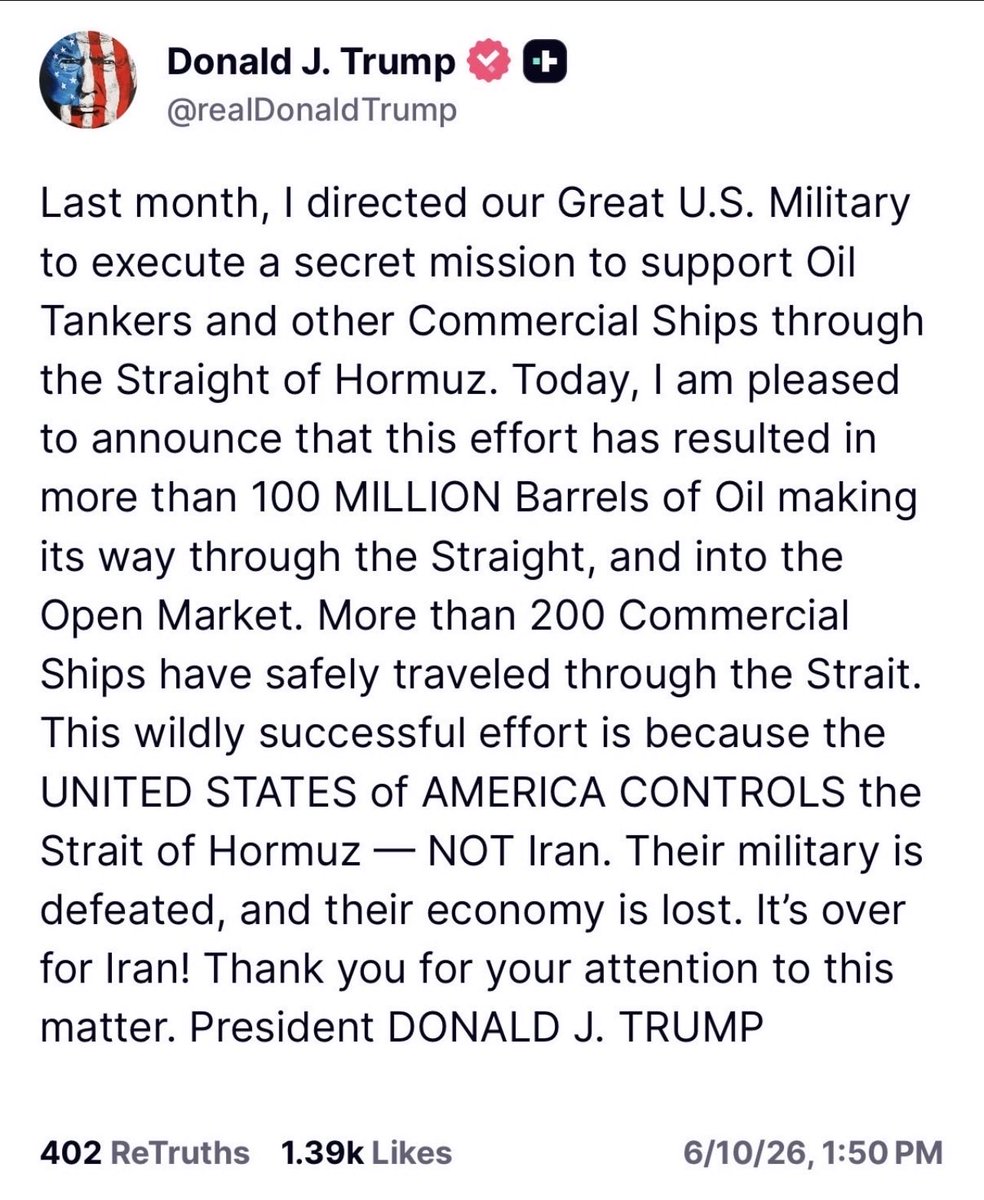
I am in the camp that believes a deal with Iran will get done. And when it does, oil will drop, interest rates will follow, and a real peace dividend will begin to ripple through the global economy as the Hormuz risk premium comes out of the system.
President Trump’s Iran deal is not the end of a war. It is something rarer: a decisive victory that changes the terms of the war.
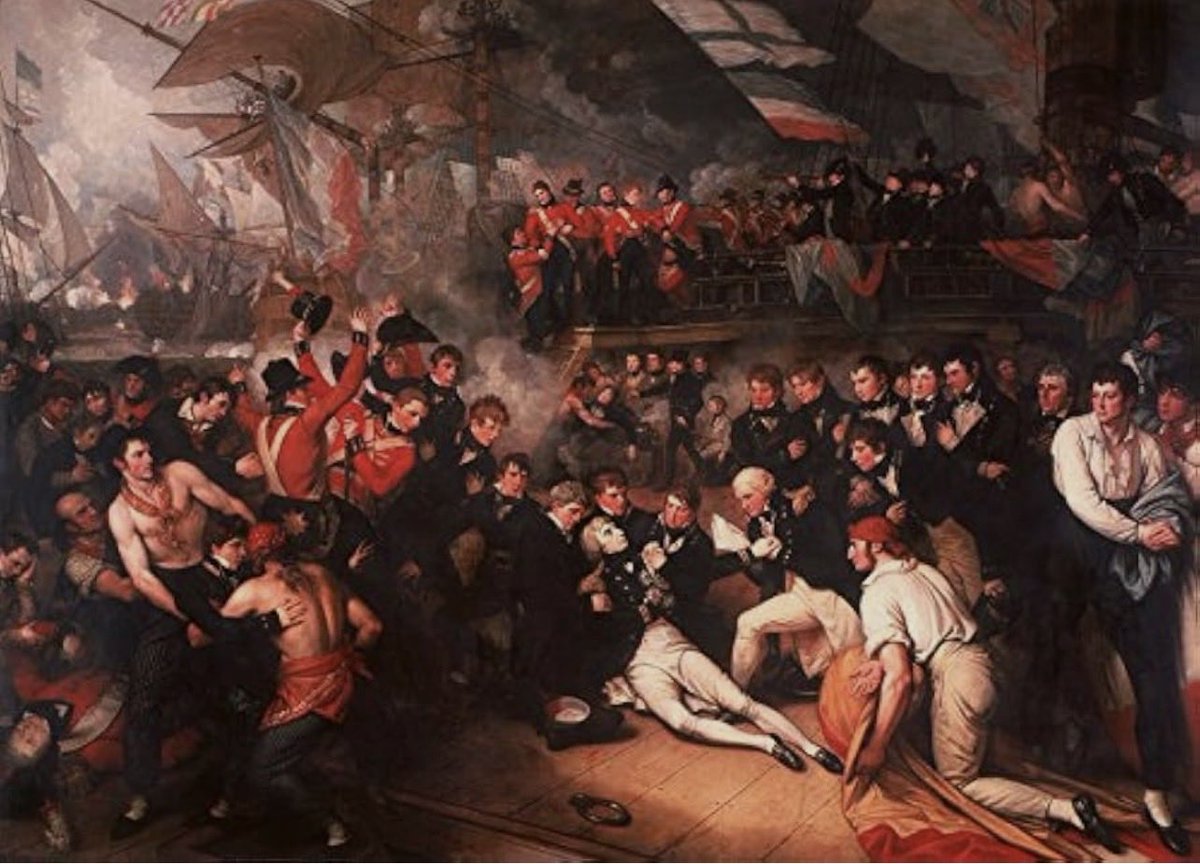
Trump’s Iran deal is a Trafalgar moment: a single, brutal victory that doesn’t end the war, but decides who holds the decisive weapon. In classic Mahanian fashion, it seizes the Strait of Hormuz out of Tehran’s grip and smashing its ability to weaponize the world’s oil supply. The agreement rips away Iran’s most dangerous levers, energy blackmail, nuclear ambiguity and the cash flow that fuels global jihad, even as the regime survives.
Critics who demand regime change will howl. But if this deal is completed, it will stand as the moment the balance turned, just as Nelson’s annihilation of Napoleon’s fleet at Trafalgar settled who would command the seas.
The peace dividend is not only about cheaper oil. It is about a world in which one of the most dangerous regimes on earth has less money to fund terror and less cover to hide a nuclear program behind constant crises. When the main state sponsor of jihadist violence loses its favorite leverage over global energy and finance, risk premiums fall not just at the pump, but across the entire security and investment landscape.
138
101
520
27,536
Jun 13
Who owns the Straits?
Try the US.
Jun 13

Iran launched multiple one-way attack drones in an attempt to strike commercial ships transiting the Strait of Hormuz. U.S. forces have downed all of them in recent hours as traffic flow through the strait continues unimpeded. The international trade corridor remains open for transit.
16
17
224
20,405
Jun 13
President Trump deal. 👇
Peace through strength.
Jun 13

🚨 NEW: RETIRED FOUR STAR GENERAL JACK KEANE SAYS THE AYATOLLAH MUST APPROVE TRUMP’S IRAN DEAL… AND IRAN IS MOVING IN THE RIGHT DIRECTION 🚨
“They want to survive. They want to recover what they've lost”
9
4
64
8,010
Jun 12
Buckle up. 👇
Looking forward to taking our exciting partnership with Nvidia to the next-level
12
227
17,220
Jun 12
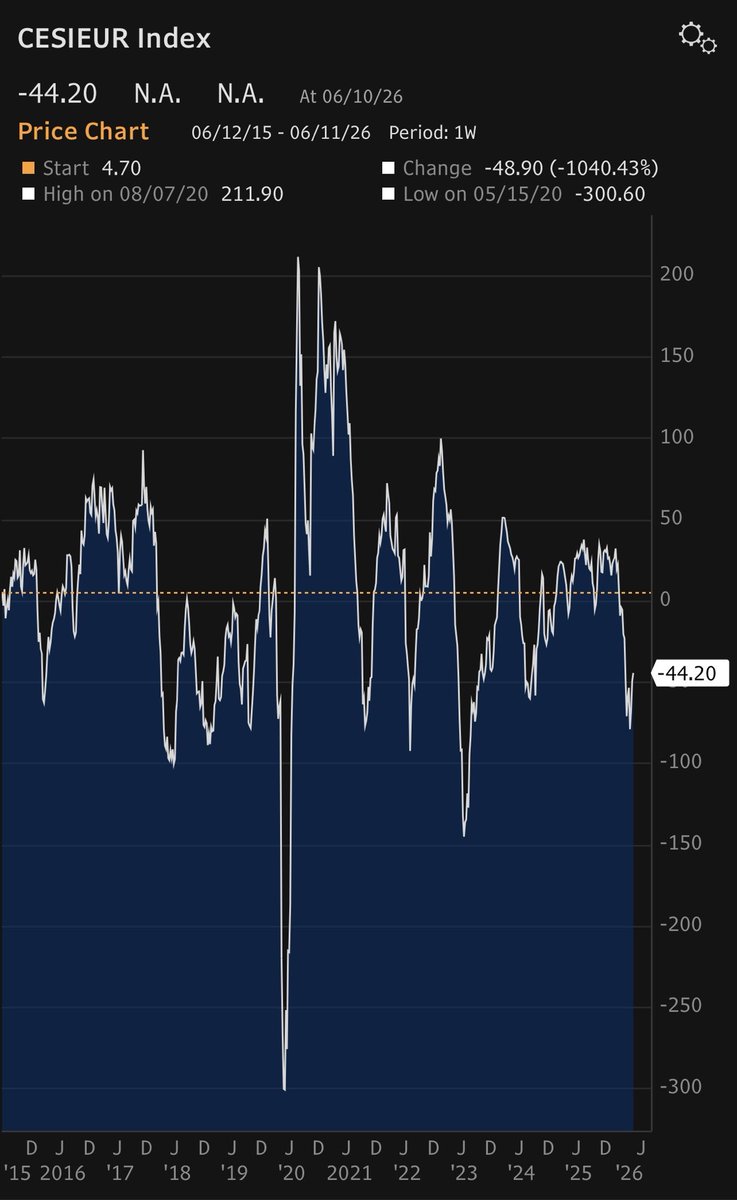
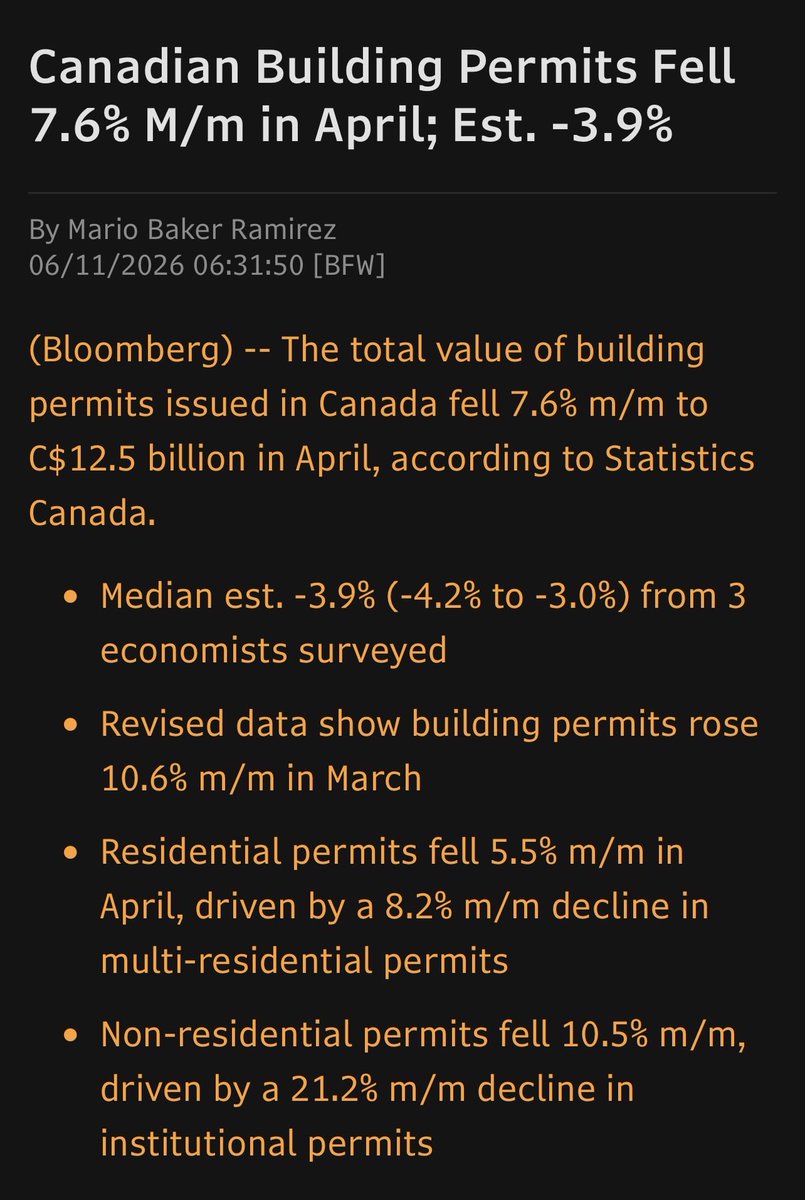
And some in Canada suggest Europe is the region that will lead the global economy.
Another day in paradise.

JUST IN: SpaceX is now worth more than Canada
Community note
SpaceX's market cap is about $2 trillion. Canada's GDP is about $2.5 trillion per year. The post compares the company's valuation to the country's annual economic output.
finance.yahoo.com/quote/SPAX.PVT/ worldometers.info/gdp/canada-gdp/
27
35
358
19,372