
History, paleogenetics, archeology, sociology, geopolitics
Joined October 2013
- Tweets 2,544
- Following 33
- Followers 187
- Likes 3,771
163 Photos and videos











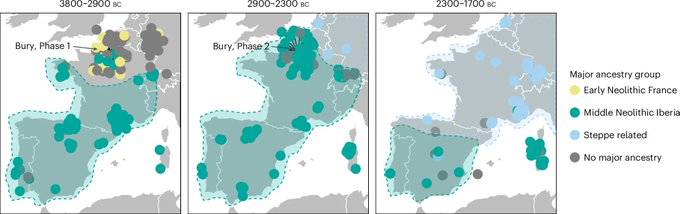
There was no BB material culture associated with those individuals (phase 2 Bury) .
BB ceramics derive from CW
Cultural sequence Paris Basin
- Rubane (G2a; LBK) 5200-4700
- Cerny (pred LBK; G2a)
- Michelsberg (mixed; E1b, I2a) 4400-3600
- SOM (post-Cardial; H2, I2a-L161) 3200-2900
- Gord (post-Cardial I2a-M36 ) 2900-2500
- early BB
Jun 10

So, there was an Iberian Neolithic ancestry surge in France between 2900 and 2300 BC. It seems that the spread of the earliest Beakers into France was somehow driven by demic diffusion, after all. Cool.
2
490
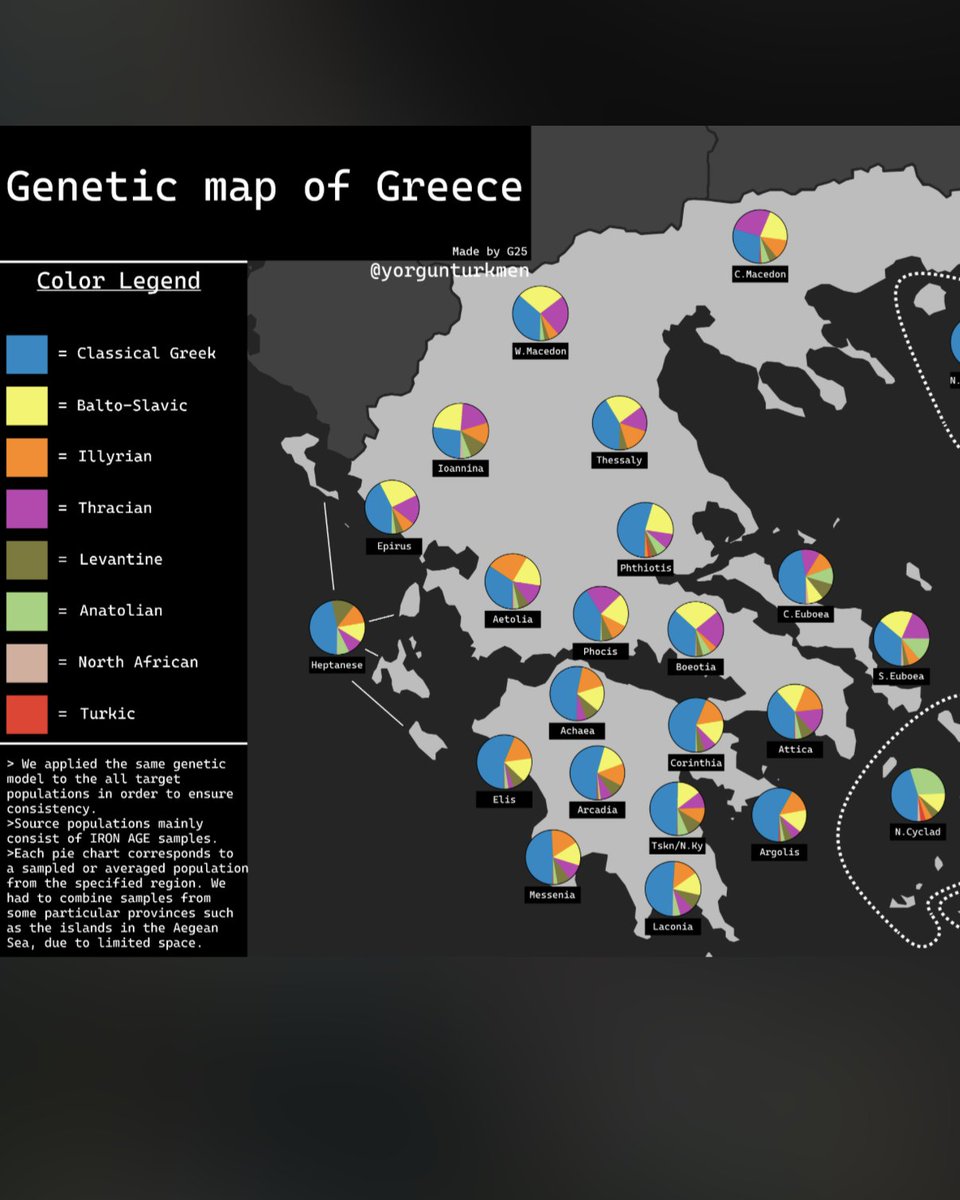
Fairly typical Greeks and Bulgarian viewpoint, - and not just low-tards from Twitter, but state sanctioned “historians” too
You fail at basic facts and have run a gaslighting campaign for decades.
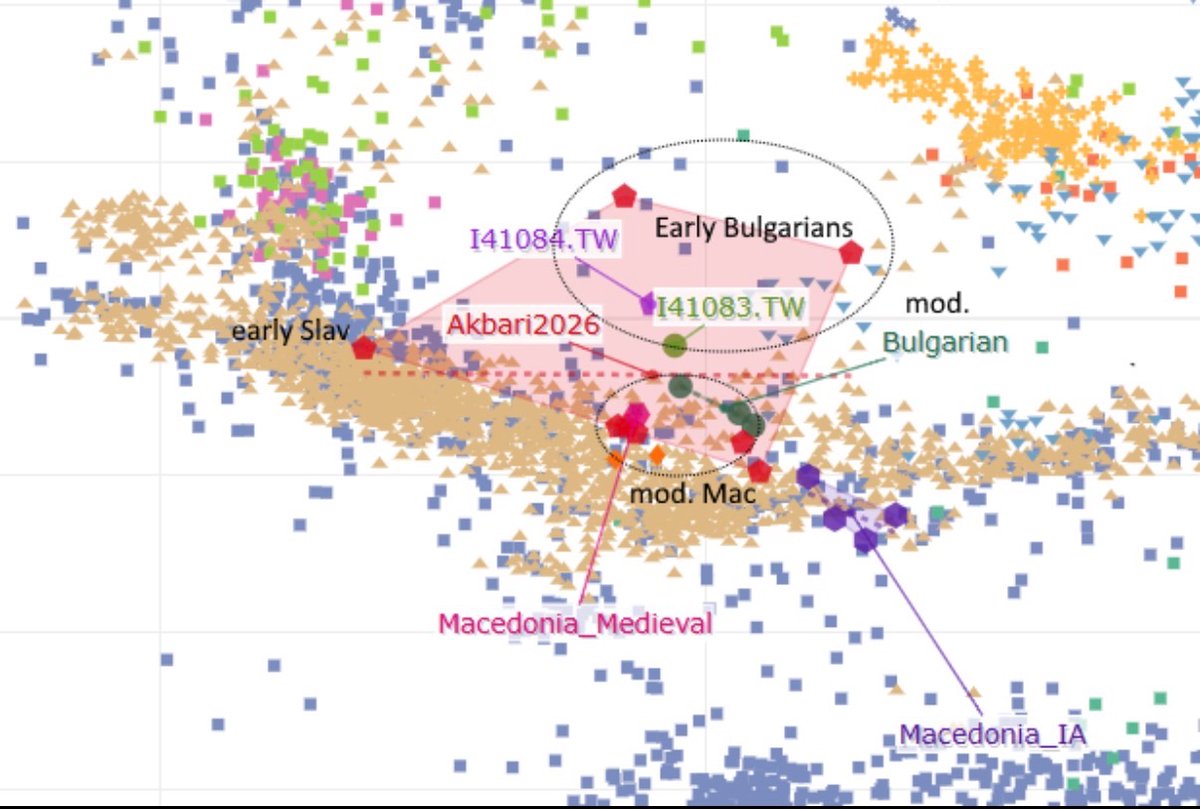
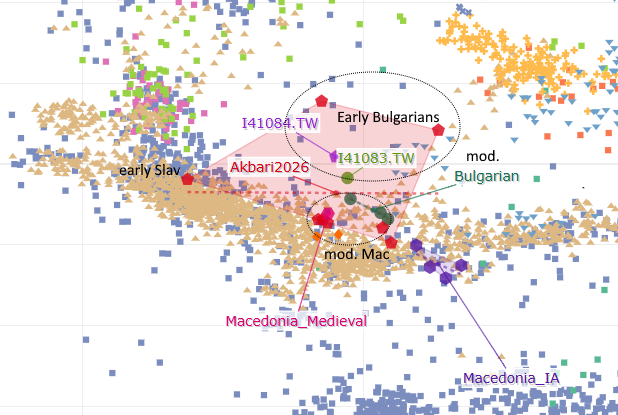
1. Original Bulgars spoke Turkic or Sarmatian. Nth Macedonians don’t speak these languages.
Modern Bulgarian is in fact “east (medieval) Macedonian”.
2. Nobody is “stealing Greek history”, for fucks sake it’s just a statue of Alexander the Great.
Perhaps if Greeks didn’t lose so hard to Turkey, you wouldn’t be so paranoid.
Approaching Israeli levels of “it was promised to us 3000 years ago” we wazzery

So temu-Macedonians take the Bulgarian language, rename it Macedonian and they believe they turned Macedonian overnight
After the language was reclassified as Macedonian, they try to appropriate Greek history-culture by promoting fake claims, historically unfounded and distortive
4
1,056
Somebody help this poor bloke out
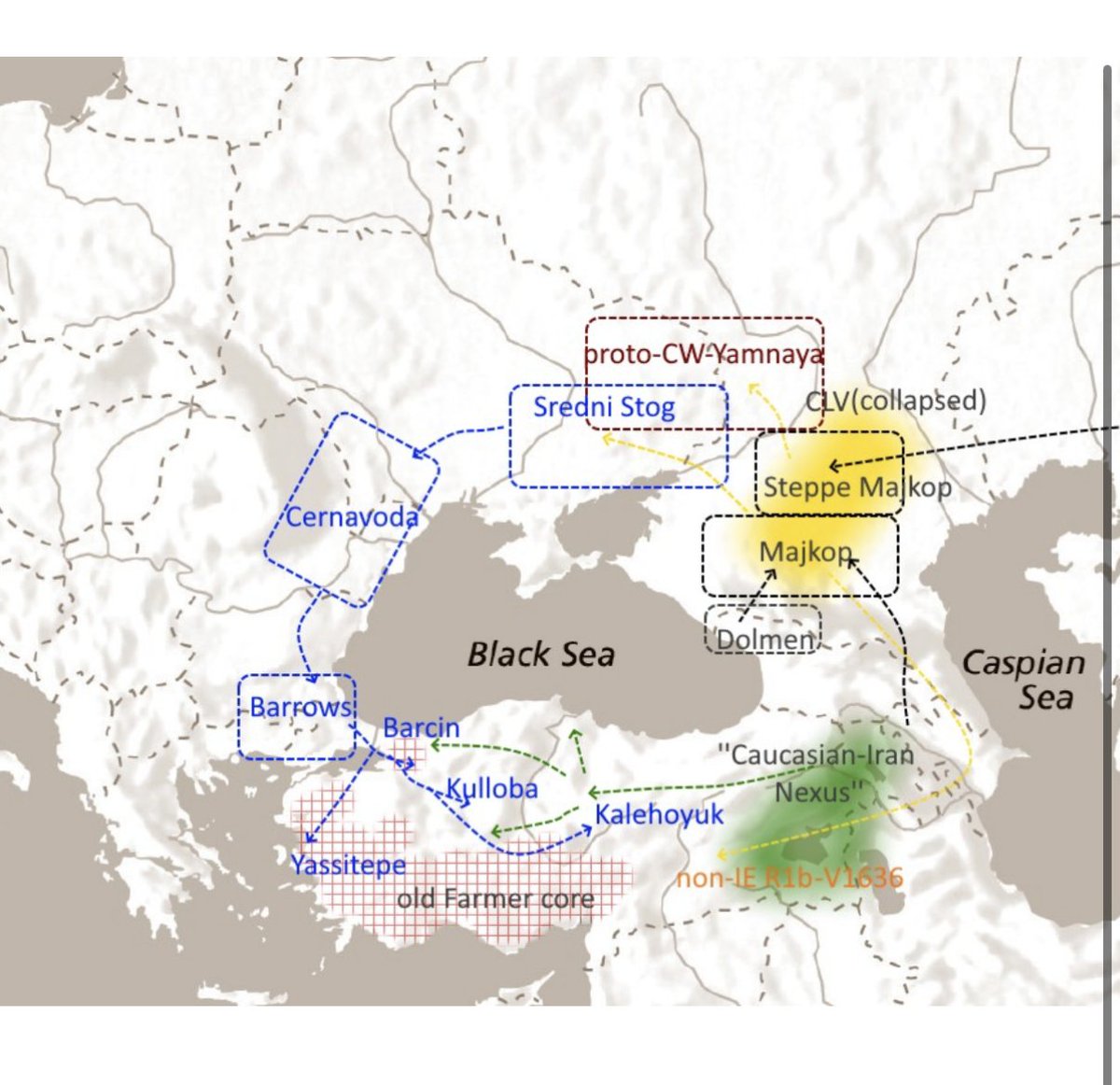
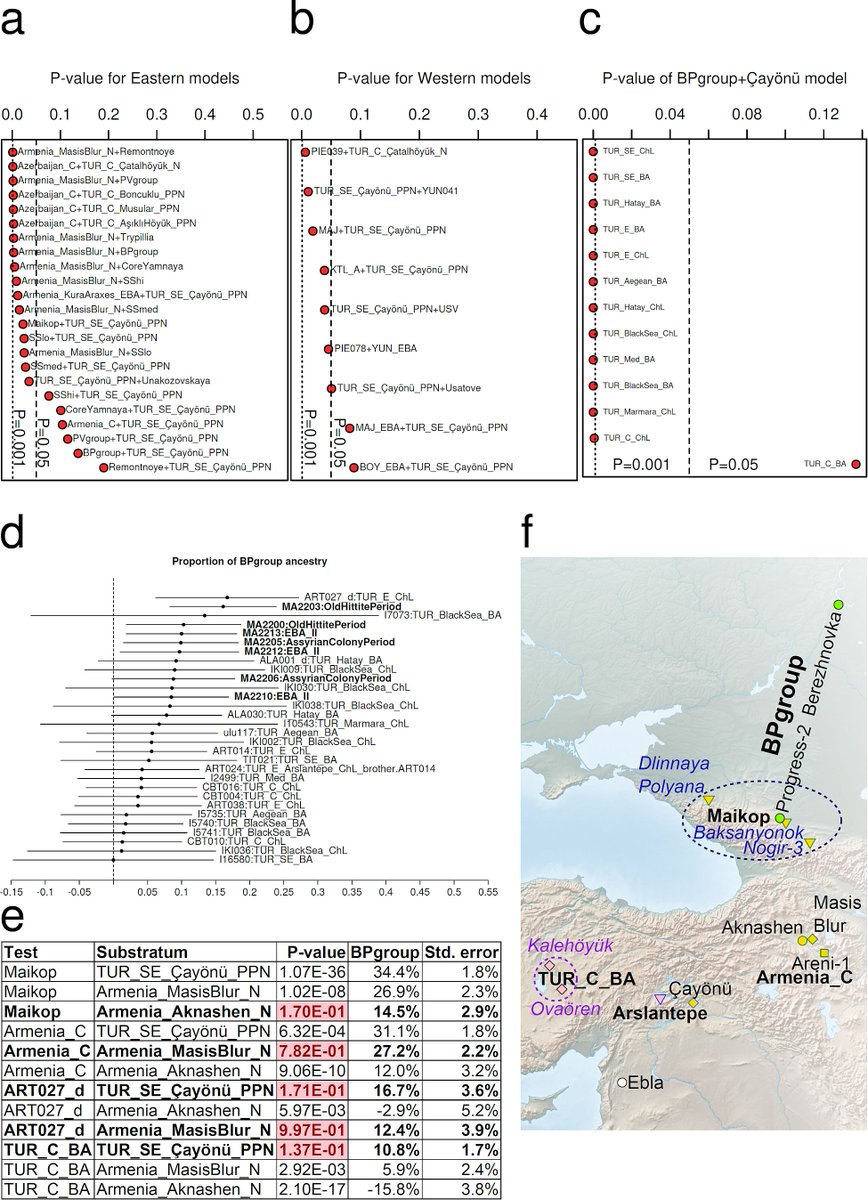
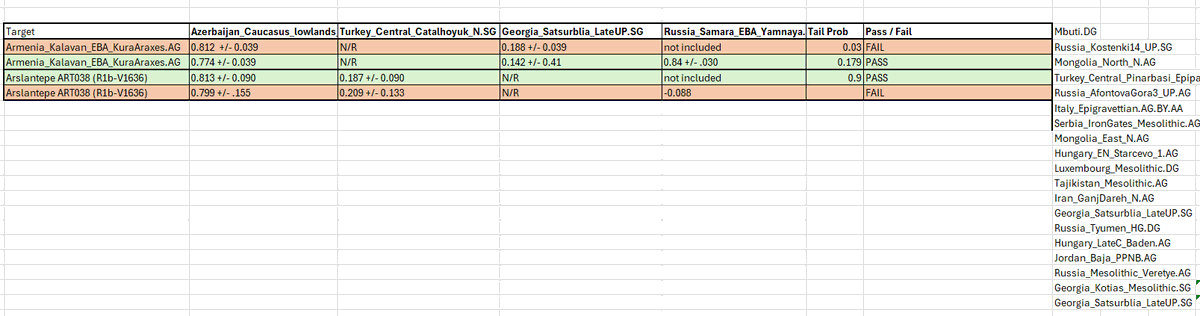
Lazaridis & Reich Lab Co. present a problematic reconstruction of East Anatolian history for several reasons (1) they ignore context, and in this case the R1b-V1636 from Arslantepe is a sacrificial burial (from Skourtianoti ART038 - 'lying on top of stone slabs closing the Royal tomb. Probably sacrificed. Dating of human bone: 3361-3105 cal BCE (4534 ± 27 BP, MAMS-34112). (2) Lazaridis' models are poorly executed, ART-018, despite being R1b, has less (almost zero) steppe ancestry than KAx populations, suggesting that ART018 had indeed been part of a non-IE KAx meta-group; (3) Their explanation that the KAx expansion 'erased' steppe ancestry in East and C. Anatolia doesn't hold, because KAx expanded c. 3200 BC, whilst we have Chalcolithic samples from from E-C Ant dating to 4000 and 3000 BC, which lack steppe ancestry. Hence in addition to poor analysis, they seem to be historically mis-informed; (4) We have a clear trace of steppe ancestry in western Anatolia, coupled with a clear Y-DNA signal
@iosif_lazaridis

There is steppe ancestry in Arslantepe, both autosomal and with the diagnostic R-V1636 haplogroup that ties it precisely to the Caucasus-Lower Volga people who also share IBD links with EBA Central Anatolia.
1
3
2,703
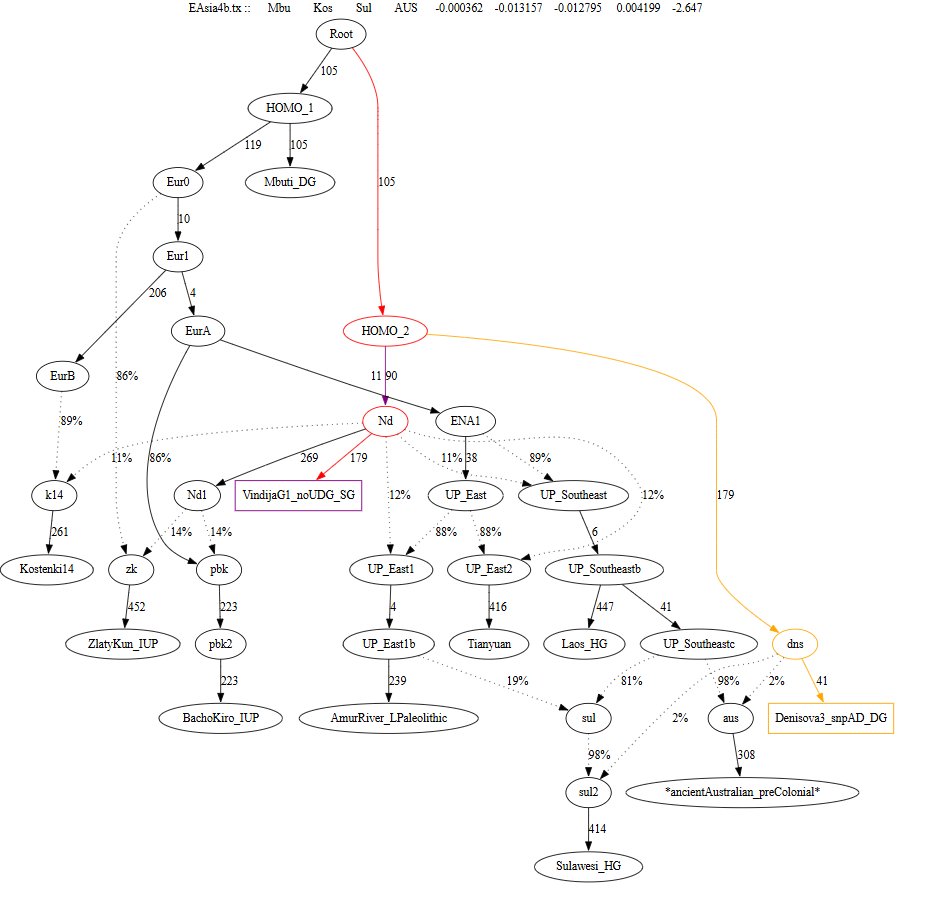
Our phylogenetic tree (qpGraph analysis of published genomes), reveals the following:
1. ''Out-of-Africa'' populations diverged in western Eurasia (Branch 1 Zlaty Kuhn - Bohemia, branch 2 'Kostenki, Russia", Branch 3 ' Balkan IUP and all East Asian subsumed)
2. Their expansion occurred after 55,000 BP
3. Australians share ancestry with hunter-gatherers from Indonesia & Laos (SEA), consistent with predicted migratory routes
4. Indonesians, Papuans and Australians have additional ancestry from Denisovans, higher than other East Asian populations.
5. There is no detectable ‘ghost modern’ ancestry (debuking the pre-60,000 BP dispersal hypothesis)
6. Views that W & A were colonized by modern humans before 50,000, or via a southeast Asian secondary homeland, are not based on scientific rigour, but rely on flawed inferencing from *modern* uniparental DNA, dubious indirect dating methods and a fossil record which, when dated directly never support their original claims. It even takes fallacious dimension amongst some ‘scholar’ circles with a cult-like vigour. E.g. x.com/ChrisStringer65/status…
Jan 21

Rock art from at least 67,800 years ago in Sulawesi. Nature (2026) doi.org/10.1038/s41586-025-0…
1
1
2
1,407
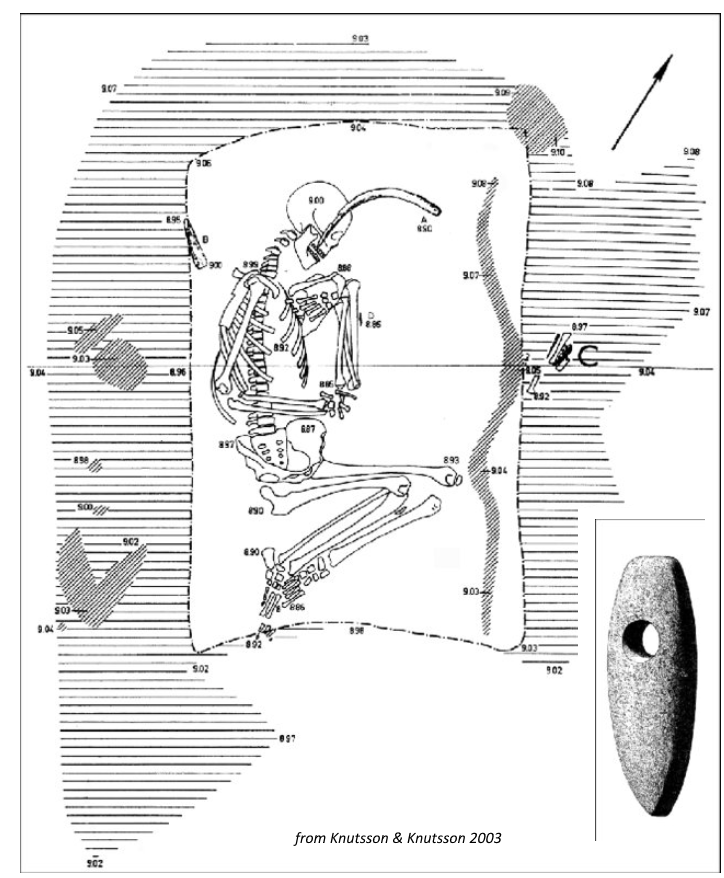
In contrast to the ‘core CW” group (non-outlier CW from Czech, Germany, Poland, Baltic), BAC have excess ‘farmer’ ancestry. We have determined that the most likely source of this ancestry are local Swedish TRB groups. Although IBD suggests the main source of ‘’farmer’’ ancestry (with elevated WHG) in ‘CW core’ comes from GAC, the additional farmer ancestry in Swedish BAC might derive from TRB because (i) GAC did not exist in Sweden (ii) Swedish BAC have more farmer ancestry than putative source groups, (iii) BAC burials re-utilised TRB Megaliths, pointing to cultural interactions (iv) Swedish TRB provides slightly better Tail probds. than GAC
1
3
791
Caveats: (i) ‘statistical fits’ are affected by genotype quality & type (capture vs shotgun), (ii) currently there are only 2 published Danish SGC samples (the male being R1b-V1636); (iii) there is a ‘Late neolithic' R1a individual from Jutland (NEO876, Allentoft 2025). This provides a ‘good statistical fit’ for BAC and might support a southern trans-Baltic route via the Danish Isles. However, so far it is a single individual, slightly younger than Swedish BAC, and from a bog deposit context.
1
736
No collapse but long transformation of Cucuteni-Trypillia
sciencedirect.com/science/ar…
In the often simplistic 'kurganist' metanarratives, the CT collapsed due to Yamnaya invasions.
This article outlines the long & dynamic history of the
CT culture. Only critique is they left out the GAC expansion which in fact impacted much of the CT area.
1
1
4
1,420
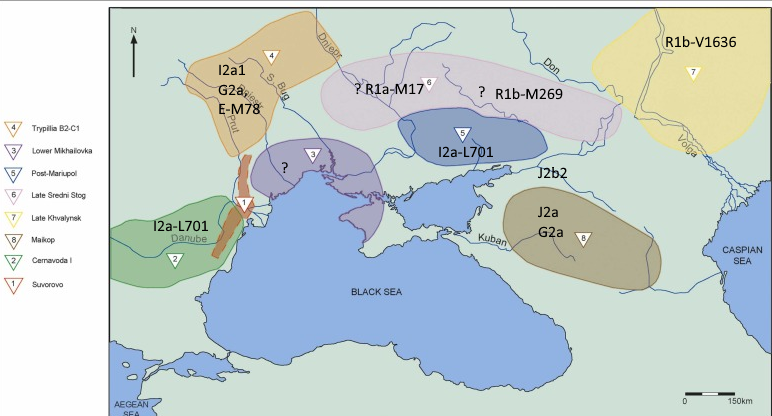
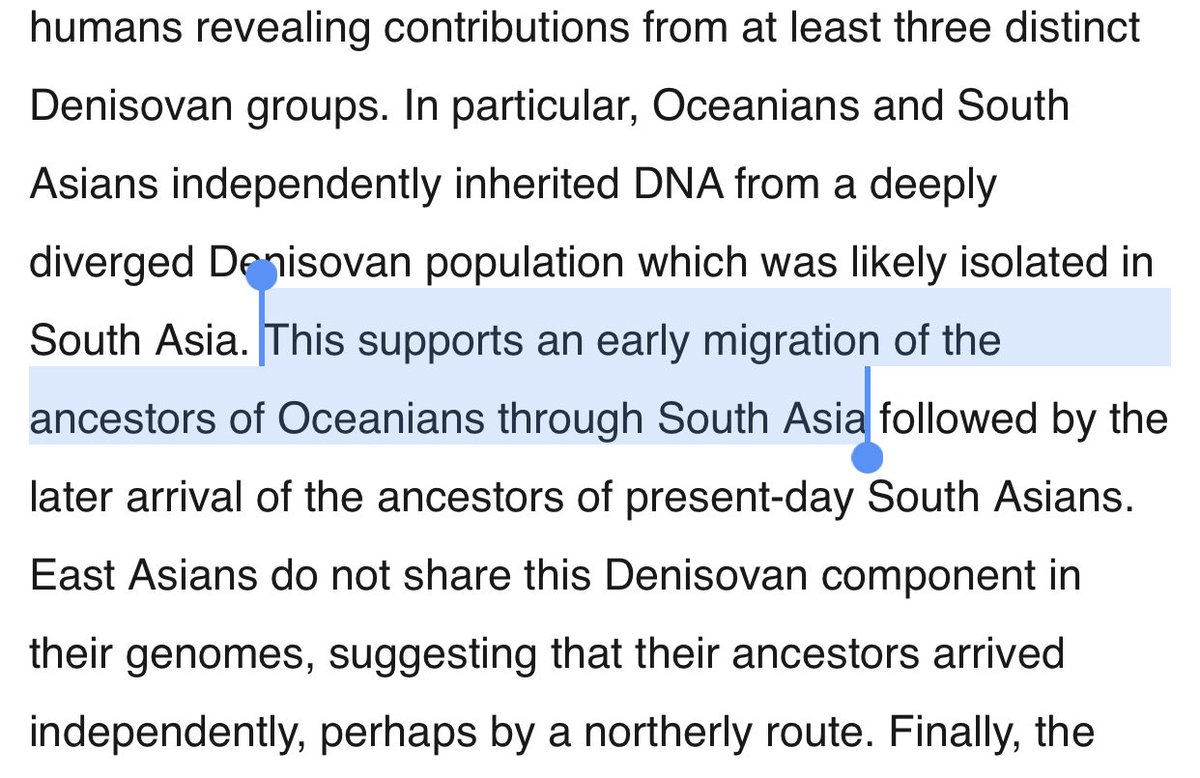
Are supporters of the early-rapid southern route ever going to provide solid evidence apart from this flimsy indirect Denisovan inferencing and misdated soil samples?
For example, at least one directly dated skeleton over 35,000 years ago from Southeast Asia would ne nice— and please don’t blame the humid rainforest.😂

3
7
3,567
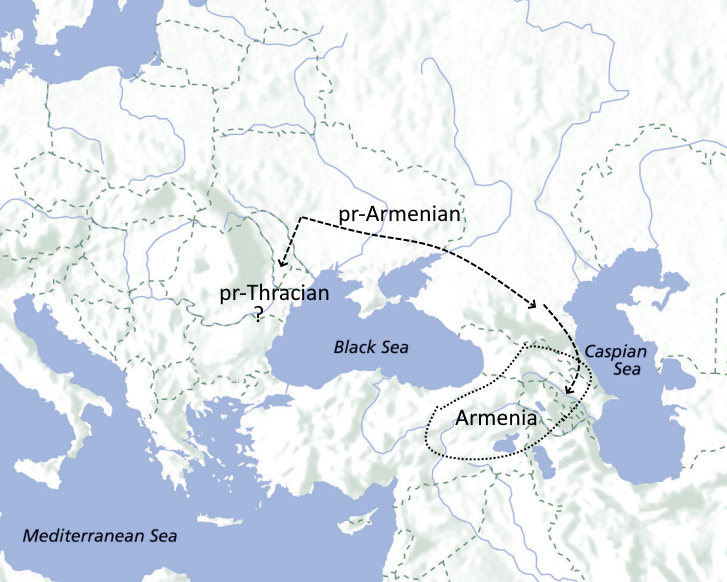
Proto-Armenians- not quite from Catacomb
Paleogenetics provides evidence of migrations from the East European steppe to southern Caucasus during the Bronze Age. This can be reasonably linked with the introduction of a cultural package which included proto-Armenian language.
The focus so far by the ‘Echo Chamber’ has been on Yamnaya-Catacomb & Y-hg R1b-M269, moving south as they ‘took over’ dominance from Kura-Araxes groups.
However, this proposal misses important details.
12
2
3,084
