
Matthew Guggemos, entrepreneur, NSF/SBIR researcher, speech-language pathologist, drummer, Brazilian Jiu Jitsu student, publisher
Joined July 2019
- Tweets 334
- Following 596
- Followers 194
- Likes 720
83 Photos and videos








Feb 14
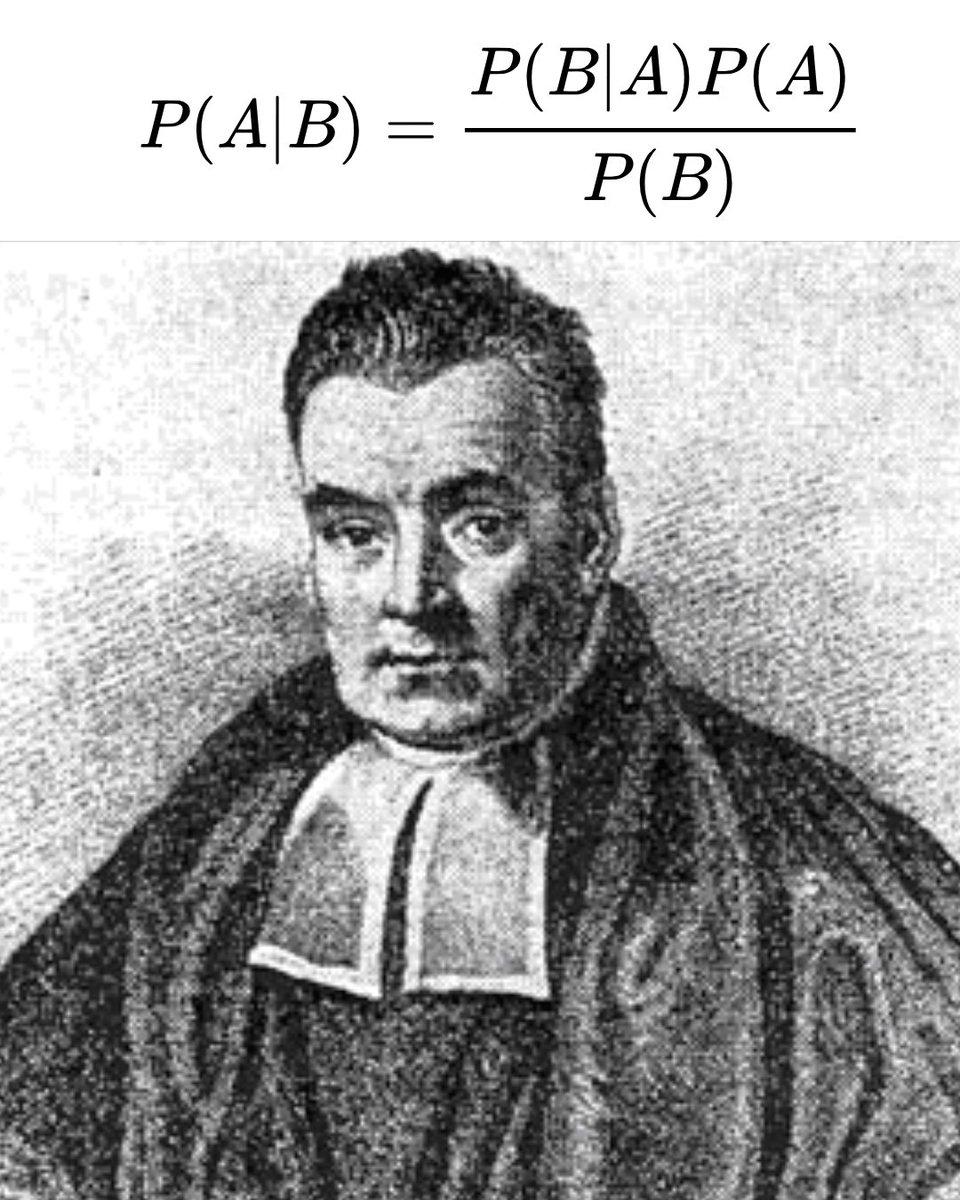
Everyone needs to be familiar with Bayesian analysis...
x.com/Math_files/status/2022…
Feb 14

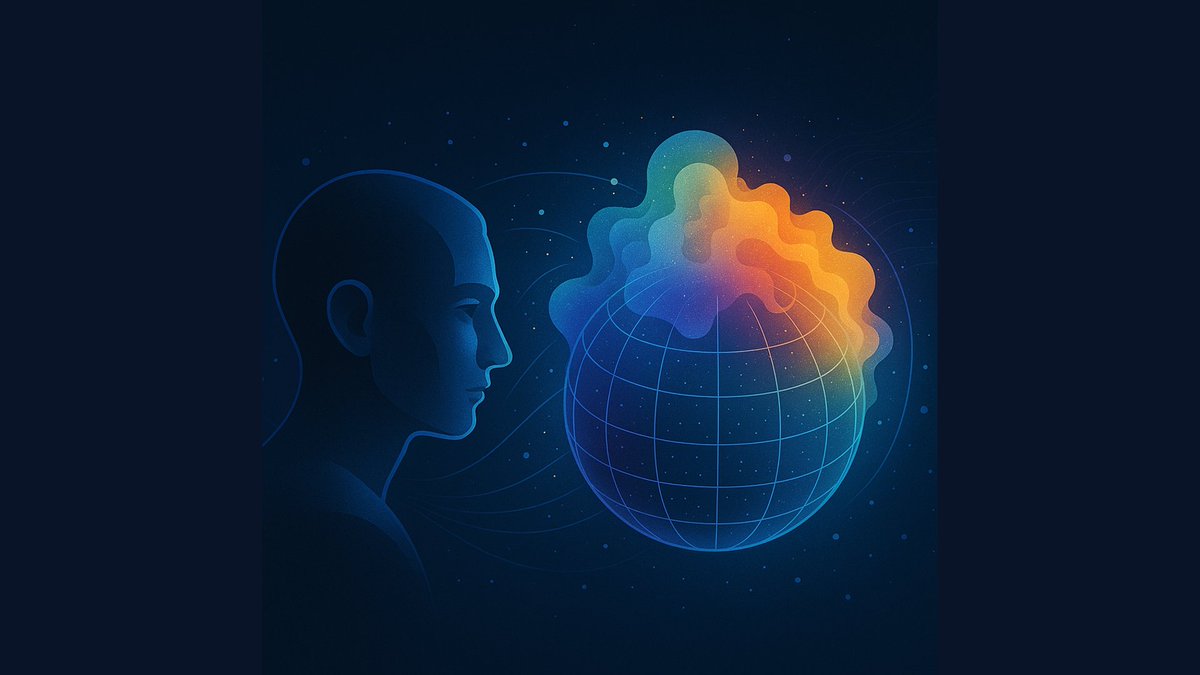
Bayes’ theorem is probably the single most important thing any rational person can learn.
So many of our debates and disagreements that we shout about are because we don’t understand Bayes’ theorem or how human rationality often works.
Bayes’ theorem is named after the 18th-century Thomas Bayes, and essentially it’s a formula that asks: when you are presented with all of the evidence for something, how much should you believe it?
Bayes’ theorem teaches us that our beliefs are not fixed; they are probabilities. Our beliefs change as we weigh new evidence against our assumptions, or our priors. In other words, we all carry certain ideas about how the world works, and new evidence can challenge them.
For example, somebody might believe that smoking is safe, that stress causes mouth ulcers, or that human activity is unrelated to climate change. These are their priors, their starting points. They can be formed by our culture, our biases, or even incomplete information.
Now imagine a new study comes along that challenges one of your priors. A single study might not carry enough weight to overturn your existing beliefs. But as studies accumulate, eventually the scales may tip. At some point, your prior will become less and less plausible.
Bayes’ theorem argues that being rational is not about black and white. It’s not even about true or false. It’s about what is most reasonable based on the best available evidence. But for this to work, we need to be presented with as much high-quality data as possible. Without evidence—without belief-forming data—we are left only with our priors and biases. And those aren’t all that rational.
2
30
Jan 10
I'm returning to my alma mater, CSU East Bay, to teach Speech and Hearing Science this spring, and I couldn't be more excited. This is a course students often dread. The material is legitimately hard. But I don't believe difficult means inaccessible.
When I was a graduate student, I felt like there was a lot of gatekeeping. I didn't agree with it then, and I don't agree with it now. Difficult topics can be learned with the right instruction. I know this from thirteen years building AI-powered assessment and intervention tools through federal grants from NSF and NIH. I also know it from learning Brazilian jiu-jitsu under Ryan Murphy at the Crosley Gracie school in Brentwood. Ryan doesn't focus on who doesn't belong. He meets students where they are, uses analogies to connect what you know with what you're learning, and builds you up rather than weeding you out.
That's the approach I've woven into this course.
Students get a complete learning environment each week built around one peer-reviewed article: podcasts, briefing docs, flashcards, interactive modules, and a Critical Reasoning Mirror for Socratic dialogue about the evidence. The course traces the path of a spoken word from intention to perception, asking the question: what has to be true for linguistic communication to be worth the energy?
The standard is high. The path is clear. The goal is for everyone to succeed. Thanks to my colleagues at the American Society for AI, particularly Elizabeth (Liz) Ngonzi, for helping refine these approaches. We can each learn in our own way while still meeting professional standards.
I can't wait to share this with students.
hashtag#SpeechLanguagePathology hashtag#SLP hashtag#HigherEd hashtag#AIinEducation hashtag#EvidenceBasedPractice hashtag#CSUEastBay hashtag#TeachingInnovation
#SpeechLanguagePathology #FutureSLP #SLPeeps #HigherEd #AIinEducation #CSUEastBay #FullCircle #GivingBack
1
27
Jan 6
Five years ago, we started building something that didn't exist: an AI platform that could analyze a child's natural speech and generate standardized evaluation metrics in minutes instead of hours.
Today, EASI is commercially available through Northern Speech Services.
The journey here wasn't linear, let alone easy. We lost a key technical partner when their approach produced unreliable results. Rather than give up, we rebuilt from scratch. We navigated the shift from early language models to LLM's clinical reasoning capabilities. Through it all, the National Science Foundation believed in what we were building. EASI is the result of an NSF Phase I and Phase II Small Business Innovation Research award, steadfastly developed with their investment to reach this point.
What EASI actually does: it transforms five-hour speech evaluations into fifteen to thirty minutes. It separates speakers automatically with 98-99% accuracy. It generates IPA transcription, MLU, IPSYN, PCC, and vocabulary diversity metrics. It produces standardized scores and percentile rankings from naturalistic speech samples. And it includes MySLP, a HIPAA-compliant clinical reasoning partner that provides second opinions before you sign your name.
This isn't ChatGPT with a clinical veneer. It's purpose-built infrastructure on AWS Bedrock, designed by practicing speech-language pathologists who spent thirteen years doing the work we're now automating.
The market validation: after extensive research, we've found no other commercially available platform using dual-agent LLM analysis for speech-language evaluation. EASI appears to be first to market. For the 150,000 SLPs drowning in documentation, for the children waiting months for evaluations, for the districts struggling with caseload capacity, this is for you.
Thank you to the National Science Foundation and the Small Business Innovation Research program for making this possible. Your investment in innovation changes lives.
Lois Brady and I are grateful to everyone who believed this was possible when the evidence suggested otherwise.
Purchase it now at easi-as.com, available exclusively through NORTHERN SPEECH SERVICES, INC.
#SpeechTherapy #SLP #AI #HealthcareAI #EdTech #SBIR #NSF #Innovation #americanspeechlanguagehearingassociation
1
24
11 Dec 2025
Most augmentative and alternative communication systems are built on a theory of language that would fail if applied to modern AI. Isolated symbols, drills, compliance data..if that can't teach an LLM to converse, why is it the default for human communicators?
innervoiceapp.com/
#AAC #SLP #BCBA #autism #neurodiversity #speechtherapy
4
21
11 Dec 2025
SLPs spend 15 hours a week on paperwork. Caseloads of 60, 70, even 80 students. IEPs that take hours to prep, run, and follow up. Scheduling that feels like solving a Rubik's cube blindfolded. And after all that, you still have to find time to actually do therapy.
Research shows that when caseloads cross 45 students, nearly half of SLPs say their workload is unmanageable. At 60 or more, that number climbs to 70%. And 75% of school-based SLPs have considered leaving the field entirely.
We built EASI because we are SLPs, and we have lived this.
EASI is a HIPAA-secure platform that includes MySLP (My Second Look Protocol), a clinical assistant trained on every state's IEP eligibility criteria and years of proprietary clinical data. It does not think for you. It helps you verify whether your clinical decisions are sound or need a second look.
The platform also includes language sample analysis that transcribes speech in context, including filler words and disfluencies, and calculates MLU, IPSyn, percentage of consonants correct, and more. Coming soon: a record review feature that compiles your test scores, previous reports, and IEPs into comprehensive evaluations.
And yes, MySLP can help with scheduling. Put your caseload and available times in, and it generates a schedule for you.
We are looking for beta testers before our early 2026 launch. If you want early access, sign up here.
easi-as.com/
1
16
9 Dec 2025
I've completely revamped my website into an interactive exhibit of the projects I've been involved with, including music, tech, speaking, writing, and more. Check it out and let me know what you think!
drumlanguage.com/
1
13
20 Nov 2025
Intelligence Is the Wrong Word
I was using speech-to-text while talking. Sound waves hit a microphone, converted to electrical signals, got analyzed for patterns, and translated into text. Pixels on a screen shaped into letters and words following the rules of English spelling and grammar. That text went to Claude, a large language model, which generated a response I found useful. It identified emotional layers I hadn't articulated. It offered frameworks for thinking through a problem.
This made me wonder what's actually happening here and why we call this "artificial intelligence" when the mechanisms are more interesting than the label.
What Are Large Language Models Actually Doing?
LLMs perform extraordinarily sophisticated statistical pattern matching. During training, they processed billions of text sequences. Through optimization algorithms (mathematical methods that iteratively improve performance), the models' parameters (like connection strengths in a network) adjusted to predict the next word in a sequence with increasing accuracy. What emerged was statistical compression of human communication patterns.
Think of it like this. If you've heard thousands of songs, you can probably predict what chord might come next in a sequence, not because you memorized every song, but because you've internalized patterns of how music works. Language models do something similar with text.
When someone writes "I was just trying to help" followed by "lack of gratitude," the structure itself carries meaning. These phrases cluster statistically with disappointment, unmet expectations, relational tension. The model learned those patterns because humans write them constantly. The network is the compressed representation of those patterns.
The Biological Parallel
Human communication operates through analogous mechanisms, just implemented in biological tissue instead of silicon.
When you hear speech, sound waves hit your cochlea (the spiral hearing organ in your inner ear) and convert to electrochemical signals. Those signals travel through neural pathways, networks of neurons connected by synapses (junctions where signals pass between neurons) with varying connection strengths. These strengths were established through repetition and experience.
When you hear the word "disappointment," you activate a distributed pattern across brain regions. Auditory cortex processes sounds, temporal regions handle word meaning, limbic structures (emotion-processing areas) add emotional weight, prefrontal regions evaluate context. The meaning emerges from the activation pattern, weighted by connection strengths shaped by every prior experience with disappointment.
Transformer-based language models work through parallel distributed processing as well. Multiple attention heads operate simultaneously, each capturing different relationships between words. Some track syntactic structure, others semantic associations, others positional context. "Help" in the phrase "I was trying to help" gets weighted differently across these attention heads, taking on a meaning closer to unrequited generosity than simple assistance.
The architectures diverge significantly in implementation. Biological neurons have temporal dynamics, neuromodulation, continuous learning, and recursive feedback loops that transformers lack. But both systems process information through networks of nodes with weighted connections shaped by experience.
Input, Process, Output
Both systems follow similar architecture for communication.
Human communication works this way. Acoustic waves hit the ear. Mechanical vibrations convert to electrical signals. Distributed neural networks with weighted connections process these signals. Motor cortex activates speech muscles. Sound waves are produced. Another person receives them.
Language model communication works this way. Acoustic waves hit a microphone or text gets typed. Sound converts to electrical signals, gets pattern-matched, becomes text. Artificial neural networks with weighted connections process this text. Statistical prediction generates the next most likely words. Text renders as pixels. A human visual system processes them.
Both involve external stimulus translated into electrical or electrochemical signals. Processing happens through networks of nodes (biological neurons or artificial parameters) that distribute computational work. Connection weights get shaped by experience, whether through synaptic plasticity (how biological neurons strengthen or weaken connections) or gradient descent (the mathematical process adjusting artificial network weights). Outputs get used by another system.
Why "Intelligence" Obscures More Than It Clarifies
We keep calling these systems "artificial intelligence" and worrying about "superintelligence." The term obscures what's actually valuable about them.
Intelligence remains poorly defined. We recognize multiple forms of it: spatial reasoning, linguistic facility, emotional attunement, motor coordination, abstract thinking, social navigation. Which of these constitutes intelligence? All of them? None individually? The concept fractures under examination.
The word "artificial" creates another problem. Given a choice between real and artificial, humans nearly always choose real. Real wood over laminate. Real butter over margarine. Real conversation over chatbot interaction. "Artificial" suggests substitute, lesser, fake.
More precise language serves us better. Language models are compressed statistical representations of human communication patterns, optimized through mathematical processes to generate contextually appropriate text. They have no consciousness, no phenomenological experience (no sense of what it feels like to be the system), no goals beyond token prediction, no continuous self-model. Calling this "intelligence" anthropomorphizes what's actually happening and creates false expectations about capabilities and limitations.
What they can do is serve as external cognitive tools. Ways to reflect on your own thinking that didn't exist before. Human communication patterns contain collective wisdom, and these models surface those patterns on demand.
How They Function
When I was processing frustration about someone's poor communication, the model reflected back the structure of my thinking in a way that helped me see it more clearly. It distinguished between immediate practical problems and deeper tensions. It offered frameworks separating personal hurt from professional action.
The model recognized linguistic patterns associated with such situations and generated text statistically resembling thoughtful human responses. Functionally, that was useful.
Consider how this works in clinical contexts. When reviewing a case report, the model recognizes linguistic patterns statistically associated with specific diagnostic indicators because those patterns appear consistently in clinical documentation. It reflects domain expertise back through probabilistic text generation. The clinician still makes the diagnosis. The model surfaces relevant patterns from compressed representations of how thousands of clinicians have documented similar cases.
The Recursive Loop
I used Claude to help me think about how Claude helps thinking. Externalizing cognition, getting statistically optimized reflection back, using that reflection to refine understanding. This is a feedback loop between biological and artificial pattern recognition systems, each operating on similar principles but with different substrates (biological tissue versus silicon) and constraints.
Your brain does something similar when you talk to yourself, journal, or explain ideas to others. Externalizing thought into language creates structure you can re-internalize with fresh perspective. Language models make that loop faster and more accessible, though without the embodied understanding humans bring.
What This Reveals
The existence of functional language models should make us curious about both systems.
Pattern recognition over linguistic data produces coherent responses. What does that reveal about the sufficiency of statistical learning for certain cognitive functions?
Emotional states can be inferred from word choice and narrative structure. If human cognition is externalized in language, can non-human pattern recognizers decode it just as well? And what does that tell us about language itself, which shapes thought, encodes cultural knowledge, creates shared cognitive spaces between minds?
The Practical Reality
You can have sophisticated conversations with language models because human communication is extraordinarily structured. Every interaction with an LLM queries a vast statistical model of how humans use language to navigate ideas, emotions, social situations, technical problems, existential questions.
This makes it a unique tool for externalizing and reflecting on thinking. The insights you arrive at are yours, reflected through a statistical mirror that learned to arrange words the way millions of humans arranged them when thinking carefully about similar problems.
Maybe having access to this compressed representation of human communicative patterns, flawed and limited as it is, gives us something genuinely new: an always-available mirror that helps us see patterns in our own thoughts.
We should stop asking whether these systems are intelligent and start asking more useful questions. What cognitive functions can statistical pattern recognition perform effectively? Where does it fail? How do we design human-machine collaboration that leverages the strengths of both systems? What happens when we externalize thinking through language and get optimized reflections back?
The mechanisms matter more than the label. Understanding how these systems actually work, what they can and cannot do, positions us to use them effectively rather than fear or worship them. They are tools for thought, not substitutes for it.
1
3
92
19 Nov 2025
Mr. Rogers understood that play is the work of children. For young learners, and perhaps for all of us, play remains the most natural pathway to development. Yet in an era dominated by screens and digital media, intentional play has become more critical than ever.
Children learn language through lived experience, handling objects, taking turns, asking questions, receiving responses. These exchanges happen organically during play, and parents are uniquely positioned to facilitate them, particularly in the early years.
Speak & Play supports parents in creating play-based interactions that strengthen communication skills. The platform analyzes audio samples of your child's speech, identifies specific areas for growth, and generates targeted recommendations you can incorporate into everyday routines.
Rather than adding complexity to already full schedules, our resources are designed for practical use: brief visual guides, five-minute podcasts, and sign language demonstrations with contextual suggestions for where and how to practice at home.
Developed with National Science Foundation funding, Speak & Play helps parents reclaim and sustain play as a daily practice in the lives of their children.
Visit our site to learn more: speakandplay.ai/
2
35
17 Nov 2025
The biggest challenge with clinical AI is often knowing how to use it effectively. A 2024 JAMA study by Goh et al. revealed that physicians using AI tools showed minimal improvement over those without, achieving only 76% accuracy despite the AI's 92% capability. The gap? Clinicians frequently lack prompt engineering skills to leverage AI as a decision-making partner. ChatSLP solves this with pre-structured prompts specifically designed for speech-language pathology workflows. Get diagnostic support, streamlined documentation, session-planning advice, and evidence-based clinical reasoning without the learning curve. Available soon, exclusively through Northern Speech Services on the EASI-AS platform! Visit easi-as.com to learn more today!
2
44
20 Oct 2025
I’m looking forward to seeing the new Grok-based algorithm on X. This should really help spread content in a much more engaging way! Thanks @elonmusk
2
47
19 Jun 2025
Check out my latest article: Reframing Intelligence: Large Language Models as Quantum Fields of Meaning linkedin.com/pulse/reframing… via @LinkedIn
43
7 May 2025
This is a super intricate and frenetic take on “Kurdzhaliiska Ruchenica”, originally performed by the virtuosic Ivo Papasov on clarinet and Yuri Yunakov on alto sax. I’ve been a fan of these guys for over 20 years. Now that I have the Yamaha EAD10, I can finally play along with recordings like this.
To me, Balkan music is almost like a form of metal—relentless, complex, and powered by absolutely off-the-charts musicianship.
For an extra challenge, I sped this one up even faster than the original just to see if I could keep up. It sounds completely unhinged now!
1
98
2 Mar 2025
Can rhythmic structures serve as metaphors for AI?
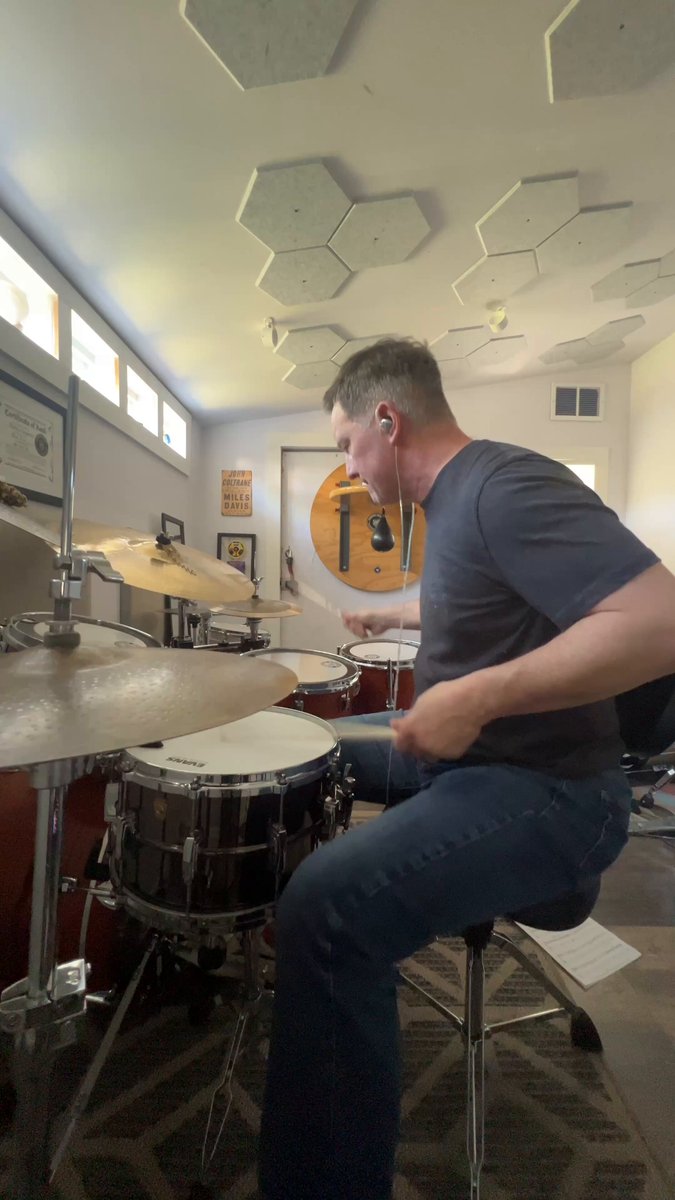
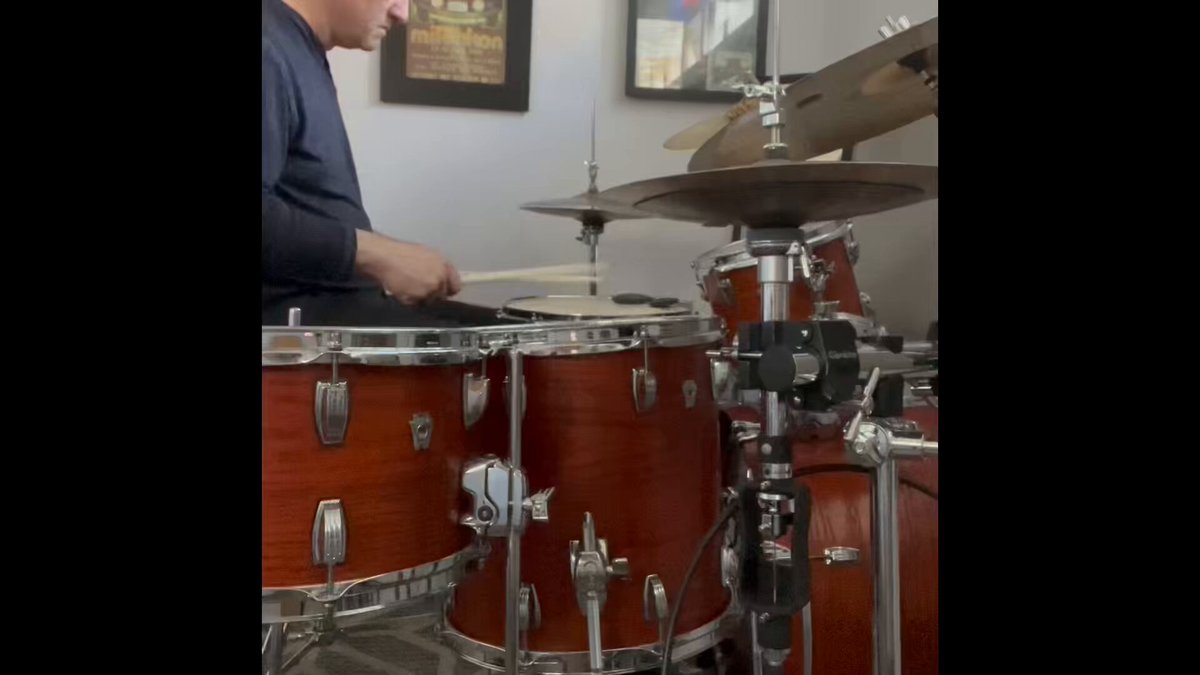
I’ve been exploring two drumming approaches that, in many ways, mirror two facets of AI. One clip features me playing the Meshuggah “Bleed” beat—a relentless, rule-bound (and very difficult!) pattern that I hone every day to improve my performance accuracy. In this piece, my feet repeat the same figures in one time signature while my hands follow another, creating an illusion of constant change despite the repetition of each limb group. Even though the underlying pattern is fixed, subtle human inconsistencies remind us that even rule-based systems (like symbolic AI) can exhibit slight variations—much like how minor latencies or data quirks can affect a machine’s output.
In the second part of the video, I experiment with a “chain-of-thought” performance built on Gary Chafee’s sticking systems. Rather than adhering to preset patterns, I play with different rhythmic organizational structures—tweaking themes by using a variety of number groups (3, 5, 7, 8, etc.) and chaining together the elements in creative ways. This approach captures the balance between predictable, rule-based systems and dynamic, evolving rhythms, much like the difference between traditional symbolic AI and modern chain-of-thought reasoning.
In AI terms, the Meshuggah beat represents a symbolic, rule-based system that improves over time with better data and refined rules—even though slight imperfections can sneak in. Meanwhile, the chain-of-thought performance symbolizes a more emergent, fluid approach where the output is shaped by the interplay of multiple rhythmic ideas. It’s a dialogue between precision and improvisation, mirroring the evolving nature of AI where human insight meets machine logic.
What do you think—can rhythmic orchestration help us understand some aspects of AI?
1
74
8 Feb 2025
Here's a clip from Invincible Star, performing at Blue Note Napa, where we take "Song of Storms" from Koji Kondo's Legend of Zelda: Ocarina of Time and explore it through jazz. Like show tunes for past generations, video game music speaks to people who grew up with these melodies as their soundtrack. Max builds those McCoy-style chord foundations, Alex brings in touches of Coltrane on sax, Jeff anchors us with his bass lines, and I'm channeling some Elvin Jones as we create together. What made this performance even more special was having my son Quinn in the audience capturing this moment—where a video game tune becomes a launching point for real musical conversation.
3
104

25 Jan 2025
Encoding Creative Thought and the Role of AI
When creating something new—whether it’s coding, composing music, writing a story, or designing a recipe—the effort it takes to encode an idea directly affects its complexity. If it takes too much effort, the idea might never be fully formed.
Sometimes, people compose music by writing it down onto sheet music first, then playing it after they’ve written it. Other people work it out on an instrument, encoding it into the movements of their fingers, their voice, or however they remember the song. The medium they use shapes what they create.
AI-assisted tools, especially LLMs, change this equation. Traditional tools like paintbrushes or pianos are passive—useful, but they don’t interact. An LLM doesn’t have agency, but it does allow real-time interactive iteration. Instead of spending cognitive energy on transcription, a creator can use it for dialogue—treating the LLM like a Socratic mentor, testing ideas, challenging assumptions, and refining concepts through back-and-forth reasoning. Rather than just capturing a thought, the process itself becomes a conversation, shaping the idea in ways that weren’t possible before.
When a medium can capture creative thought as it happens and help shape it in real-time, entirely new possibilities emerge. The ideas that once got lost due to friction can now take shape and evolve. This is one of the ways AI isn’t just accelerating work but changing the way we create—reshaping the space between thought and expression in ways we’re only beginning to understand.
36
17 Jan 2025
1
1
28
15 Jan 2025
Following my August 2024 presentation in the Mensa Speaker Series, the concept of Harmonized Learning has gained new relevance. The idea integrates human creativity, diverse skills, and AI to shape the future of learning and innovation. A recent article in Nature Human Behaviour by Chiriatti et al. introduces "System 0," a framework that positions AI as a cognitive foundation, working alongside our intuitive and analytical thinking. This perspective beautifully complements the themes explored in Harmonized Learning: how human-AI collaboration can enhance, rather than replace, our unique abilities.
To bring these concepts to life, I’ve developed an innovative presentation format — a cognitive symphony where music, neuroscience, and technology converge. What sets it apart is an integrated AI assistant that not only adapts to your interests but also translates content into any language. This interactive tool embodies System 0 thinking in action, providing a hands-on demonstration of how AI can support and amplify human learning.
Access the interactive presentation here: lnkd.in/g7wwMm-j
This isn’t just another presentation about AI’s capabilities — it’s an exploration of a collaborative future where human creativity and machine intelligence harmonize to solve problems and inspire innovation. If you’re curious about this vision or working on similar ideas, I’d love to hear your thoughts.
@MensaFoundation
@elonmusk
13