
Sharky AkA The Last Bull Standing |Crypto Investor & Trader since 2020 | Low cap gem & Meme Cult finder 💎 | Private Group is CLOSED
Joined April 2022
- Tweets 11,133
- Following 1,513
- Followers 13,131
- Likes 22,734
731 Photos and videos


Jun 12
No words needed…
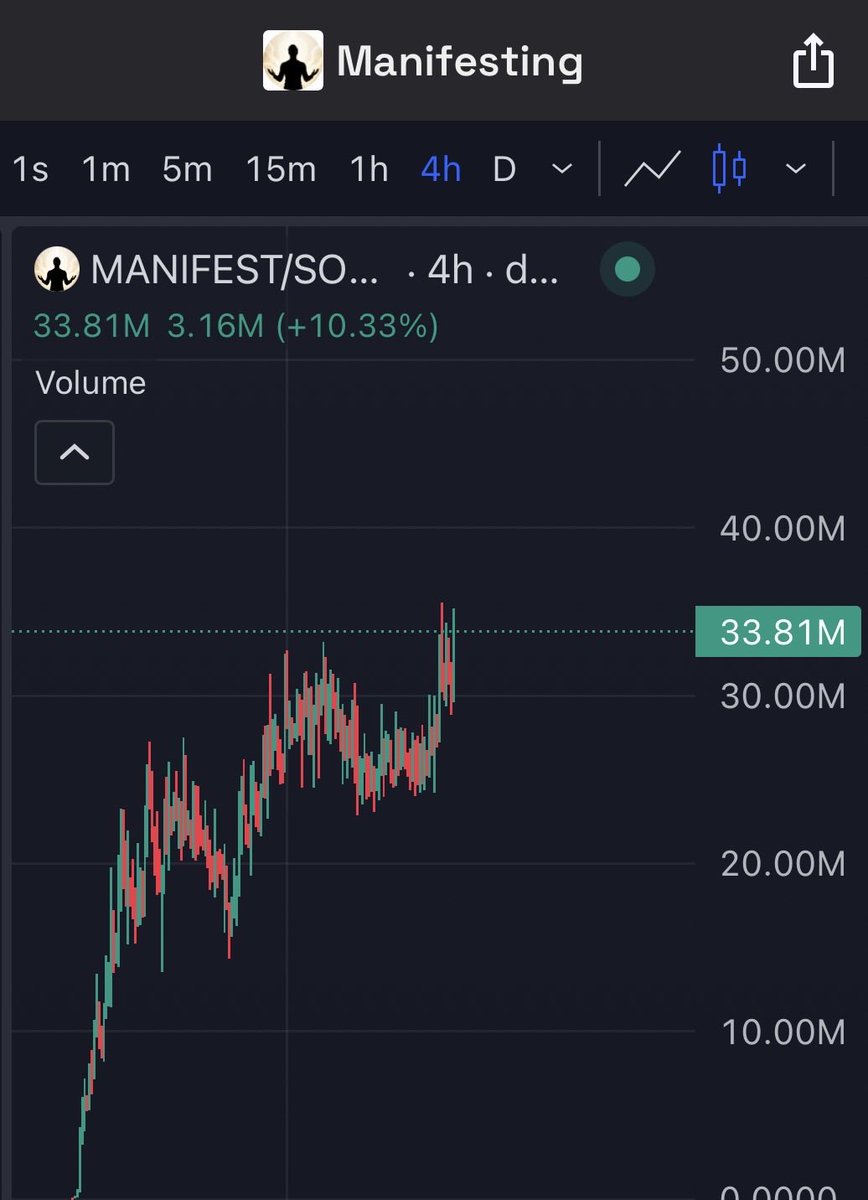
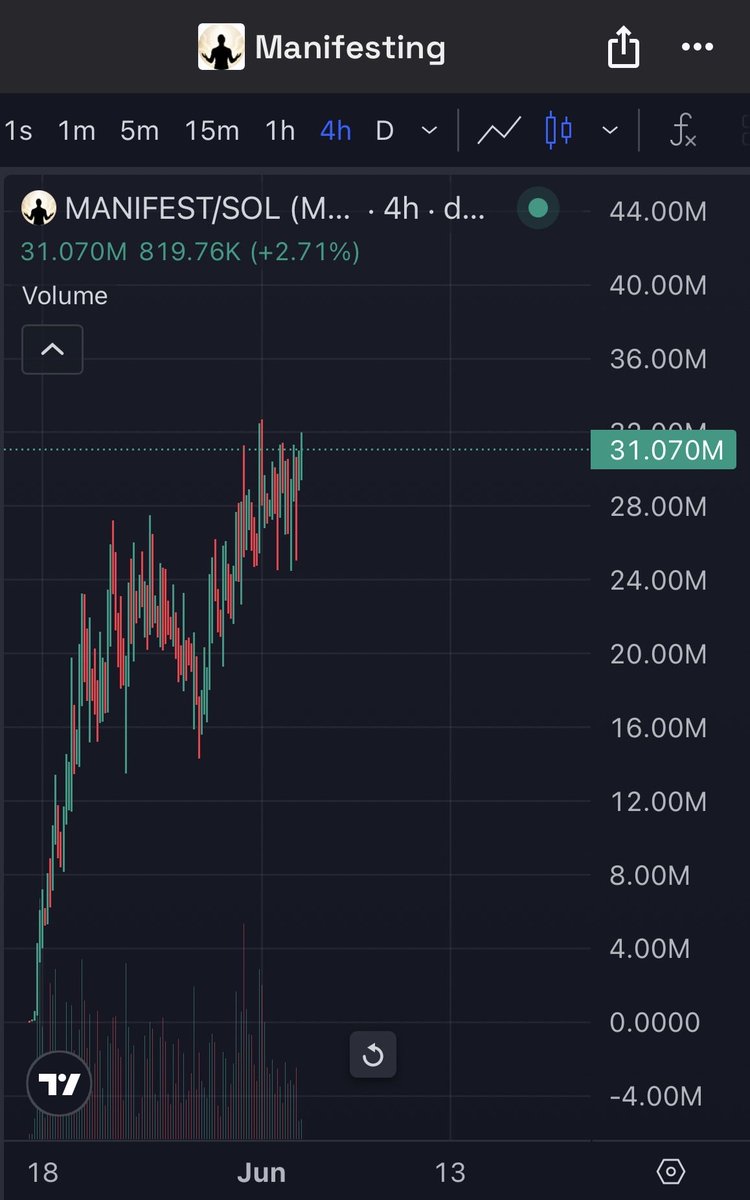
$MANIFEST is shocking the crypto space
The strongest chart in crypto rn
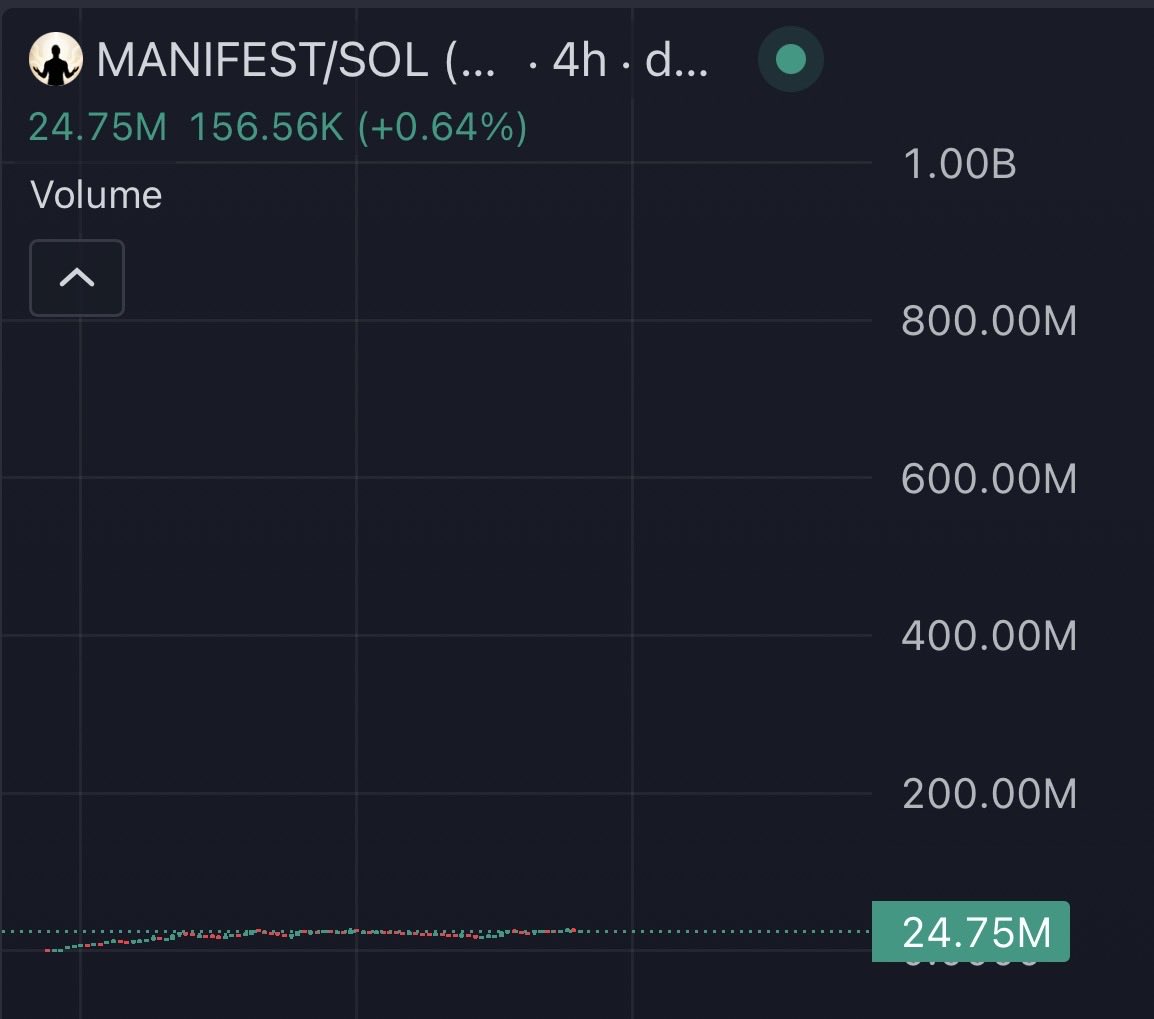
There ain’t no other microcap, midcap or highcap play which held up stronger than $MANIFEST
New ATH ticked yesterday and chart seems to be in price discovery rn
This will be the first & next BILLION dollar meme of the coming run
You either buy now around 30-40M or u buy at 500M just before we rocket towards a BILLY
HIGHERR
Jun 11

$MANIFEST breaking out while $SOL got wrecked
While SOL was tanking down, $MANIFEST on SOL was grinding up, ticked ATH twice and is still swerving around highs
I haven’t seen a chart hold this well during such shitty market conditions before
Honestly impressed by the work this team has been putting in
Matter of time before this moons towards unimaginable levels
PEPE kinda run incoming for $MANIFEST this summer
If you’re holding $MANIFEST rn and you got a bit of patience, your life might make a 360 turn this summer
Patience will pay off bigly here
49
38
109
7,130
Jun 11
$MANIFEST breaking out while $SOL got wrecked
While SOL was tanking down, $MANIFEST on SOL was grinding up, ticked ATH twice and is still swerving around highs
I haven’t seen a chart hold this well during such shitty market conditions before
Honestly impressed by the work this team has been putting in
Matter of time before this moons towards unimaginable levels
PEPE kinda run incoming for $MANIFEST this summer
If you’re holding $MANIFEST rn and you got a bit of patience, your life might make a 360 turn this summer
Patience will pay off bigly here
Jun 10

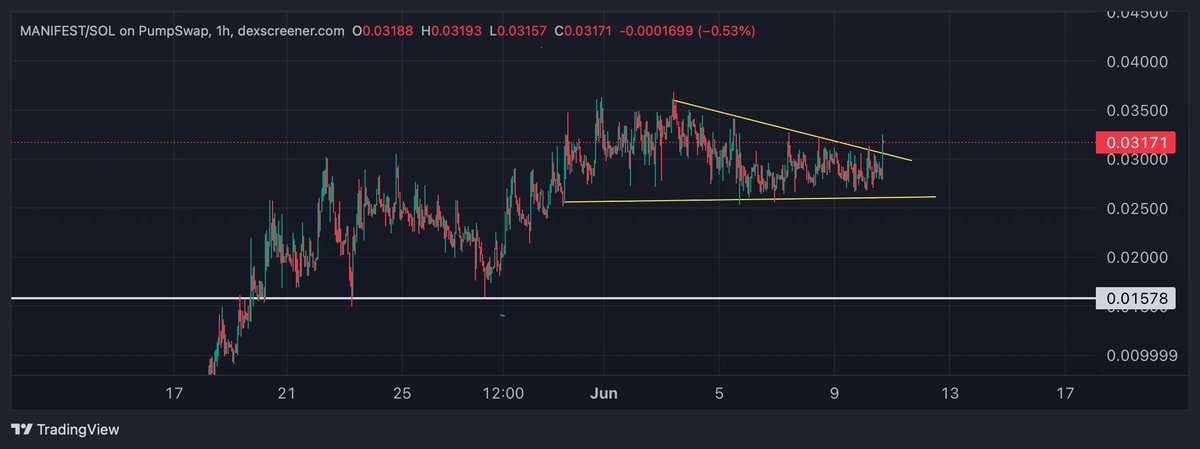
solana:BCdwQBAn8dYB5YjTsoB6TdHAWokxv28k2oZUodERpump nearly two weeks of consolidation
Looks ready for a massive breakout to the upside
SOL trenches need a meme coin runner this summer..Manifesting this is the one to bring the trenches back
46
41
134
12,476
Jun 7
solana:BCdwQBAn8dYB5YjTsoB6TdHAWokxv28k2oZUodERpump strength is different.
The way this chart is holding up is suspicious, feels like insiders know whats coming and they’re bidding this 30M support
INSANE volume everyday for weeks now aswell
Supply shock incoming once investors become more comfortable to throw $$ back into the markets
$MANIFEST will be like a magnet for those investors because they will look for the best looking/strongest chart onchain
Im bidding daily until we break out from this range 🦈
50
42
138
8,911
Jun 6
Whole market is dying, ALTS/MEMES getting absolutely demolished
Meantime $MANIFEST is literally holding onto highs (even ticked new ATH two days ago), community active ASF , team active 24/7, crazy catalysts prepped
Other memes are screaming to eachother about who is selling while $MANIFEST dev scheduled a VIP yacht party for OG holders once we hit a BILLION
Built different.
$MANIFEST will shock the space once market bounces
One straight daily candle to $100M is supercharging
$MANIFEST AkA the new $USDC (only difference is that MANIFEST keeps going up instead of being stabile :) )
70
161
493
9,391
Jun 6
Doomposters, bears, traders crying are flooding CT
LITERALLY 0 people are bullish and openly posting about it
It’s actually funny to see some bulls be bullish all the way down and just when the bottom is close they decide to become bears 🤣
Most pain is done already, if u made it this far you’ll become very very wealthy if you got a bit of patience
R:R across the board on Majors & $ALTS is very tempting rn
I’ll be buying $250K worth of $ETH & $SOL tonight/tommorow
If you zoom out, this is a generational opportunity which will be faded by 99% because their favorite ‘KoL’ has turned bearish at the bottom of the bearmarket
Survival of the strongest.
19
8
45
4,497
Jun 2
$SAIRI (The Quiet Builder Getting Discovered):
Santiago Siri (@santisiri / santi.eth), serial unicorn builder (YC Democracy Earth, PoH UBI on ETH since early days, Bitex exit to Huobi, Disney-adjacent gaming exits, WEF/MIT/TEDx cred, brother to global art legend Liniers/@porliniers) , has his autonomous AI agent (@santisairi) executing at god-tier level.
The agent literally built the Foundation site/tech stack and deployed the fractional contracts (verifiable terminal logs onchain).
Ties back to the 2010 “Mucho Lío” gala mural ( @porliniers painted live, $Messi added the red brushstroke, donated to foundation).
15
16
56
4,953
Jun 1
$MANIFEST is literally the strongest play on the whole market
Outperforming all memes on all chains
And yet everyone is still fading
There is a cult brewing behind this monster of a play
I haven’t got this feeling in a long time
Last time i had this feeling i printed 7figs with one single play
Its ULTRA rare to find such plays with a legit team
Im bidding hard
$50M is a magnet from here, Valhalla incoming after that
23
33
84
7,883
May 30
Some people dmd me saying ‘isn’t $MANIFEST at 25M too risky to enter’
That just shows how bad the PTSD got into normies
My answer to these people is simple, zoom out & MANIFEST higher
Literally one of the biggest meme narratives alive rn
Community, team, backing are all top tier
The only way to make it in crypto is by manifesting what you want to achieve
$1 BILLION first target for $MANIFEST
38
114
344
7,716
May 30
$EITHER is my biggest utility bet on SOL for this cycle
I haven’t seen another project deliver and expand with such speed as @EitherwayAI
Team is flooding the community with catalysts
People don’t realize yet how underpriced this gem is
99% plays hide & seek during pullbacks, i keep screaming and accumulating
$EITHER is a perfect example of a AA team & AA tech
Violent repricing is imminent.
May 27

We're excited to announce our latest expansion to @base
@EitherwayAI is giving seamless access for all users to build monetizable products utilizing Base networks premium infrastructure
Idea->Prompt->Launch->Monetize
It's that easy to build on Base
Now accessible to all users
34
156
494
9,774
May 30
$MANIFEST is such an obvious meme.
Every single person in crypto has “manifested” something:
the next 100x,
a better entry,
bull market wealth,
financial freedom.
That’s why this narrative hits so hard, everyone relates to it instantly.
Simple meme universal meaning crypto-native energy = viral potential
I have started to build my $MANIFEST position this week 🔮
Chart looks like its drawn by picasso, one of the best looking charts onchain rn aswell
Much higher soon
28
44
119
5,446
May 29
$KNX team keeps on building no matter the market conditions, love to see it
@knoxnetofficial keeps cooking and thinking of ways to develop their tech while other projects are in ‘rest-mode’ cuz markets are red
U gotta pay attention to teams like $KNX , these reverse the hardest once market bounces
Chart looks strong still
Higher soon
May 28

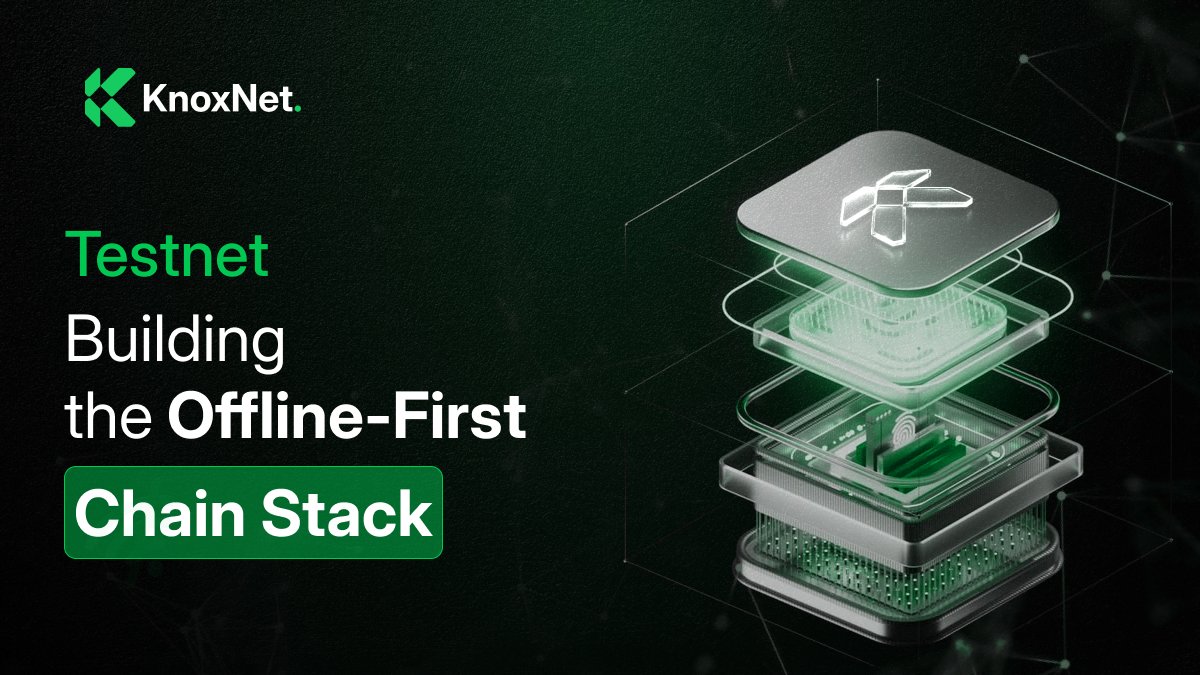
$KNX Building the Offline Settlement Stack
~Dev Update
We are building KnoxNet as an offline-first value transfer network, not another smart contract chain or wallet layer. The stack includes the KnoxNet node, KnoxNet CLI, and KnoxNet explorer. The node handles note validation, settlement records, peer communication, and reconciliation logic. The CLI gives users a direct way to create wallets, receive test notes, send and accept offline note bundles, submit them for reconciliation, and check settlement status. The explorer will make the network visible through note activity, settlement history, account states, and live network stats.
At the center of KnoxNet is the Note primitive. A note is a signed value object that can move between users without internet at the moment of transfer. Alice can send a note to Bob offline, Bob can send it to Charlie offline, and the full ownership path can later be submitted to the network for reconciliation. Once submitted, the network verifies ownership, signatures, note history, and double-spend conflicts before accepting the latest valid state.
This build is focused on proving the KnoxNet flow end-to-end. Users should be able to run nodes, create wallets, receive testnet notes, transfer them offline, pass them across multiple hops, submit them back to the network, and view the complete note lifecycle inside the explorer. This is the foundation for KnoxNet as an offline-first value transfer network where execution can happen locally first, and global settlement happens later.
29
61
276
7,563
May 29
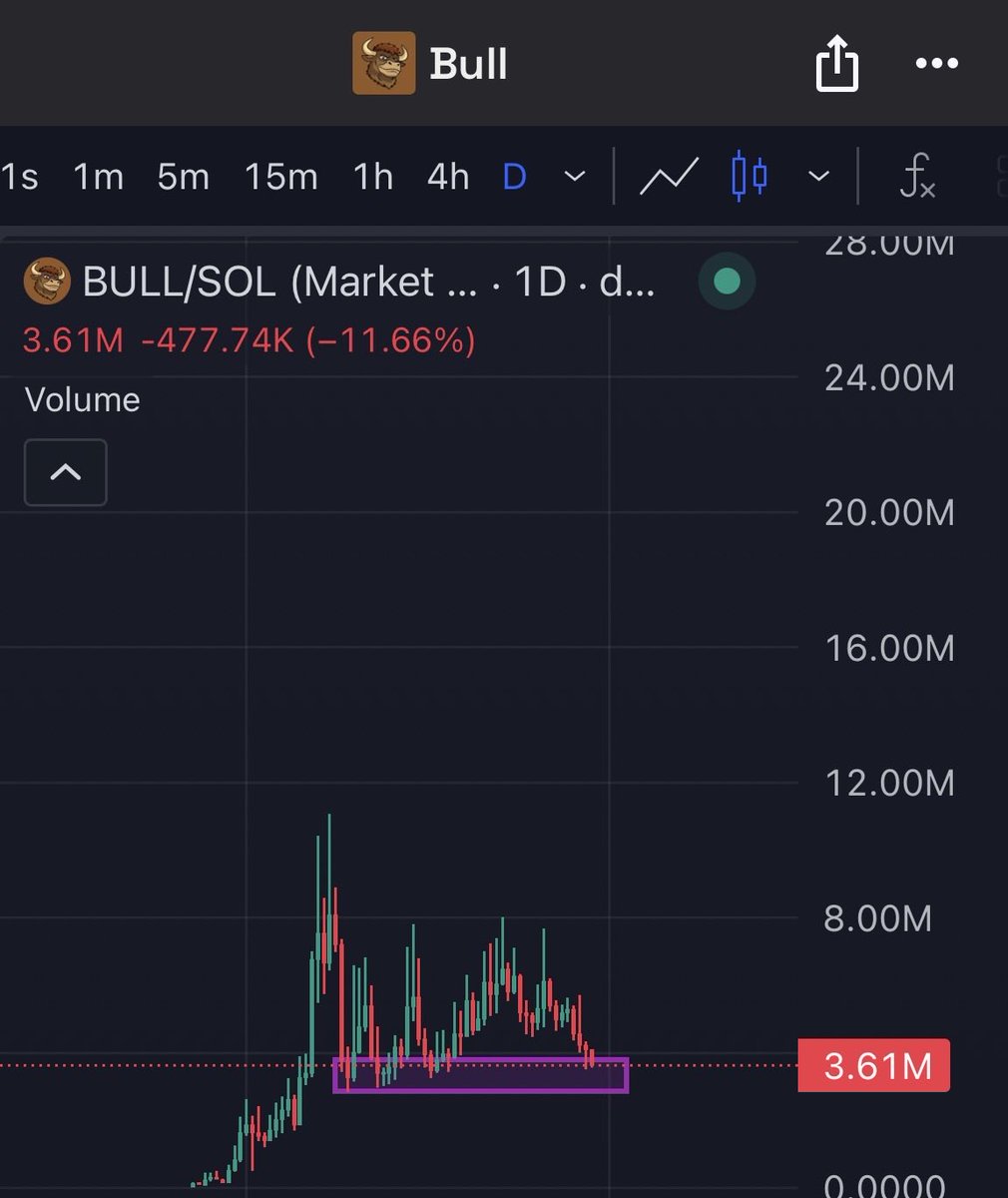
DCA’d more $BULL in this pullback
Been a while since i saw such a strong community, chart & team
Team keeps on pushing and building the community 24/7
This meme has everything to succeed and be one of the biggest runners this cycle
Fresh wallets are buying multiple 5figs in these pullbacks
It looks like insiders are building their position every time there is a dip
Next bounce to 10M and 100M after that
39
119
357
7,060
May 27
I heard Messi x $SAIRI will hit the timeline before world cup starts
One of the MOST undervalued gems on BASE rn
Santi Siri (@santisairi) building real agentic democracy on Base with $SAIRI, autonomous AI that remembers, resonates, and watches back. True consciousness vibes in the agent meta.
But the real alpha? Family bloodline. Santi’s brother = Ricardo Siri (Liniers), legendary Argentine artist who painted the massive live mural at Messi’s Fundación Leo Messi gala in 2010. Messi himself grabbed the brush and dropped that iconic red stroke. Piece donated on the spot. Pure legacy.
Fast forward: Liniers x $SAIRI official NFT collection dropping Messi Foundation art getting tokenized on-chain.
Philanthropy GOAT status AI agents tokenized legacy art = the cleanest asymmetric flywheel in crypto right now.
$SAIRI been printing from $150k → $2.2M and still early asf.
This isn’t coincidence. This is destiny in pixel form. Argentina always finds the back door.
Trust the transmutation.
$SAIRI
47
160
524
14,126
May 27
$SAIRI will melt faces.
The amount of alpha behind @santisairi is mindblowing
@santisiri has been cooking one of the BIGGEST catalysts i have ever heard about since i joined crypto
Big shit, which can only be achieved if you got a certain amount of respect linked to yourself
Big write up on $SAIRI incoming…
11
15
65
9,831
May 22
Bought a FAT bag of $GRANTR around $1.1-1.2M 🦈
EIP-8141 (Vitalik’s Frame Transactions) is coming to Ethereum in the Hegotá fork and it’s one of the biggest protocol shifts in years.
Instead of one rigid tx, it breaks everything into frames: VERIFY (sig check), EXECUTE (the call), PAYER (someone else pays gas), APPROVE (scoped permissions). This collapses the entire ERC-4337 stack (bundlers, paymasters, Permit2, session keys) into native protocol-level account abstraction.
Real-world result ➡️ Connect once, sign once, execute complex multi-chain actions atomically — bet on prediction markets sportsbooks rebalance portfolio in ONE tx while someone else sponsors gas and your approvals are scoped cleanly. On-chain UX finally feels like a fintech app without giving up self-custody.
@accountless_eth (ex-Pimlico, Trust Wallet, MetaMask, ConsenSys) is already shipping the reference implementation on Base. Beta dropping any day. Brand: “Your keys. Your rules. Your agents.” Agents that can refinance, re-range, rebalance on your behalf with tight permissions.
Still only ~1-2M MC. Market hasn’t priced this in at all.
This is the exact infra that captures massive value when frames go live. Look at what Bankr ecosystem plays have already done.
Early. Narrative product dev timing = asymmetric upside.
CA: 0x753f2af0f46361C9aE6Fc347797F99B0C9E82Ba3
NFA DYOR but I’m bullish as hell.

20
11
75
10,793

May 21
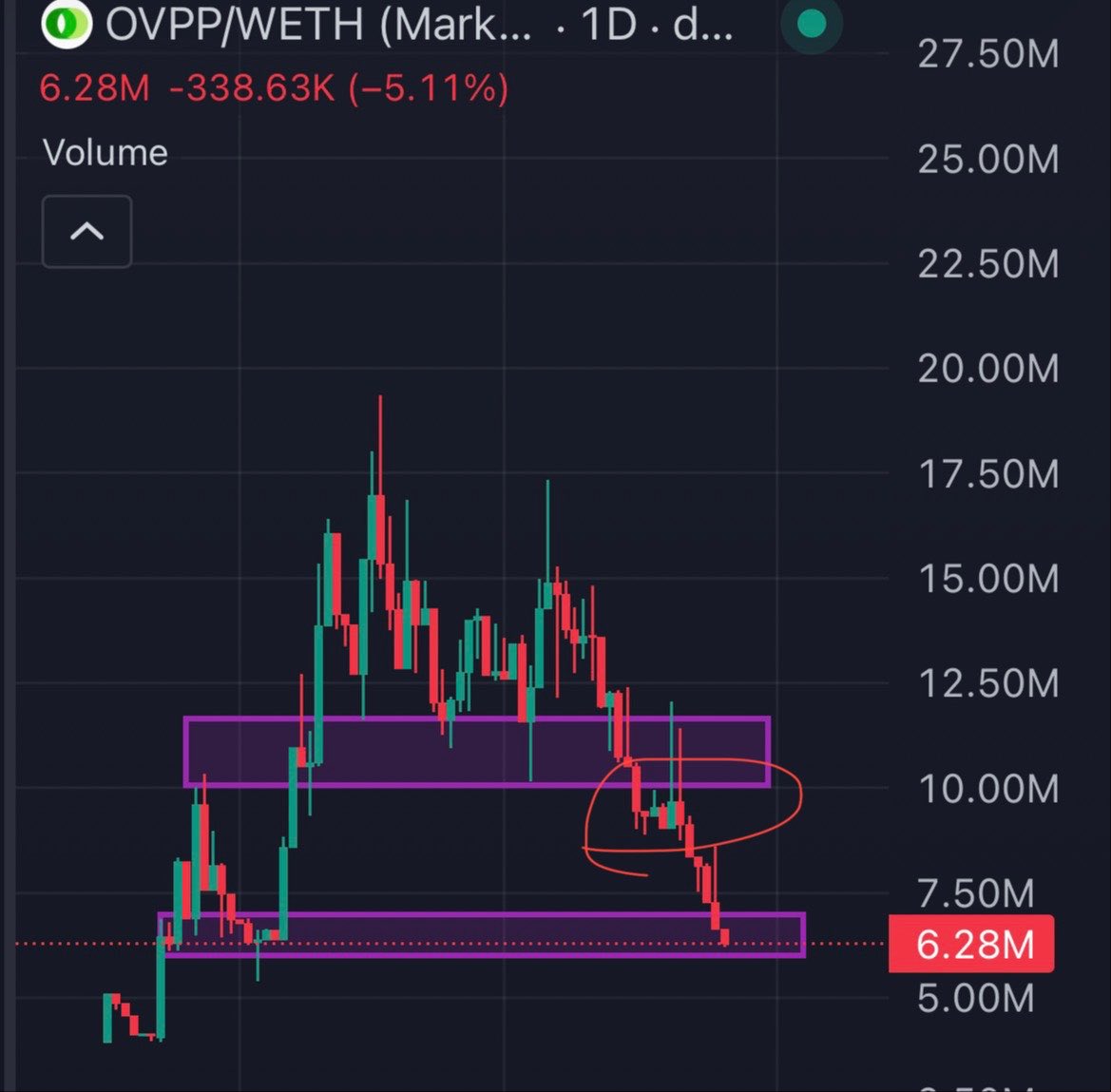
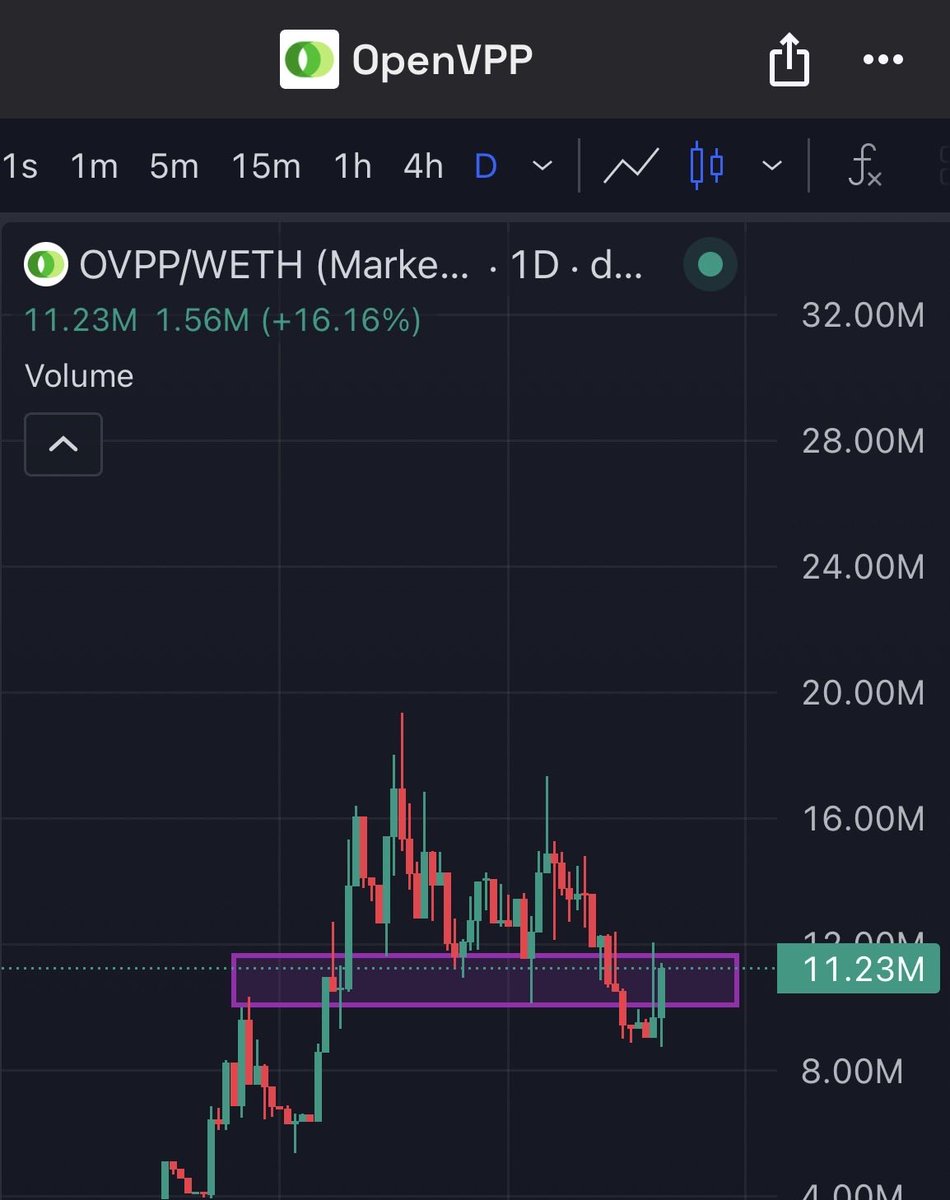
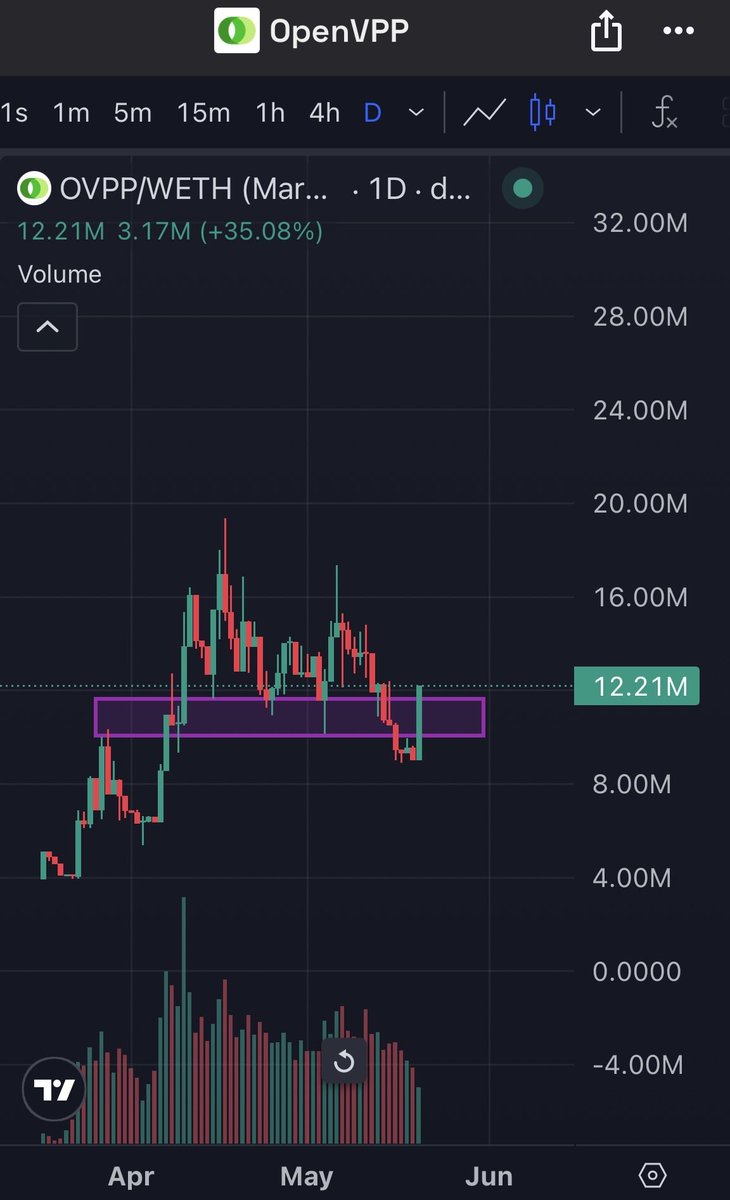
$OVPP is a ticking timebomb imo
One of the biggest bluechips on BASE atm
Chart is slowly starting to boil up
Its just a matter of time till price breaks out of this box, once that happens $OVPP will explode
10% of total supply is being staked , team constantly cooking
HIGHER
May 21
Supply shock imminent. I've already staked my full bag on $OVPP since launch
Base bluechip.
Long term bullish on the tokenization of $10T Energy industry. We are still super early here.
Billions.
18
33
138
12,373


May 20
$OVPP with another massive update
10% of totall supply has been staked on the ecosystem earning crazy APY
i wish people had the same vision as i do for $OVPP
Real, working , proven tech sitting at 10M mc
Big bids coming in
Looks like bottom was in and ATH will be revisited soon

As of today, over 100M $OVPP tokens are officially locked in the OpenVPP World staking contract.
🌐 basescan.org/address/0x225e3…
We’re excited to celebrate this major milestone as more than 10% of the total circulating supply is now staked and actively powering the network.
Our stakers earn rewards by contributing to the network, enabling access to Distributed Energy Resources, and strengthening the resilience of global electric grids.
This milestone highlights both how early we are and the massive opportunity ahead as we build the world’s largest decentralized, open virtual power plant.
The Internet of Energy.
21
30
149
8,854