
AI Coach helping enterprises and individuals adopt AI | Founder & CEO @ebxdoto | ISB/IIM | Keynote Speaker | AI Masterclasses | Workshops | Consulting.
Joined February 2025
- Tweets 2,759
- Following 118
- Followers 195
- Likes 6,544
260 Photos and videos
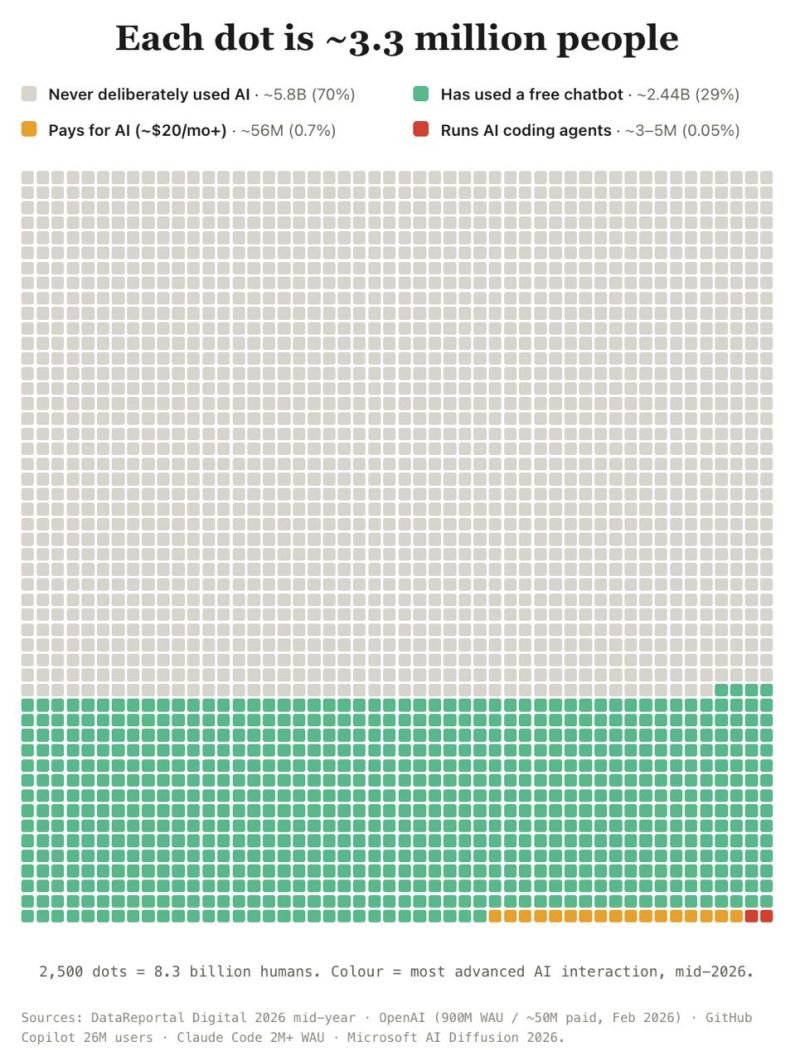
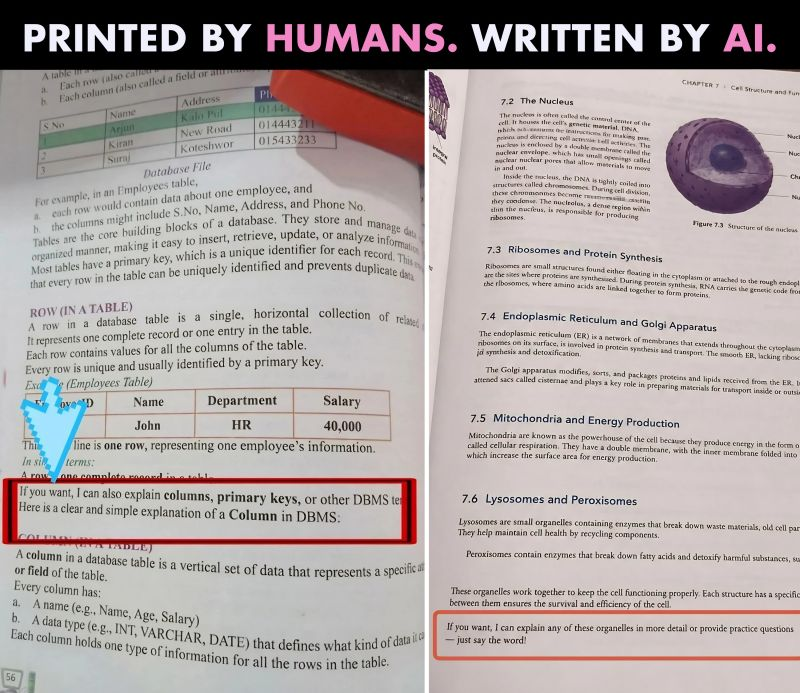

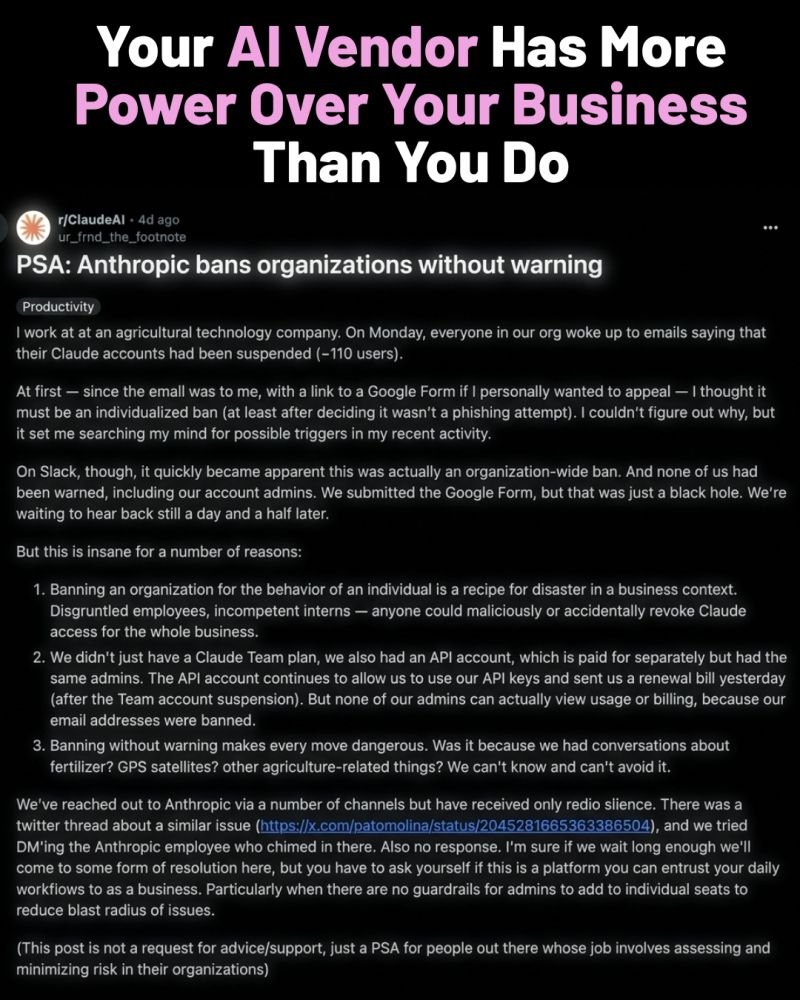

A third of the world now uses AI. Nine in ten of them are on the free version.
The free version is more useful than you might expect. It gets people doing things they kept putting off for years, like writing posts, building a marketing presence, or starting a blog. The barrier to entry has come down.
It co-creates with them on almost any kind of content: emails, documents, proposals, pitch decks. And it works as a personal helpdesk for any question you have, any jargon you don't know, or any decision you want a second opinion on.
Put simply, it reduces the friction in everyday tasks.
The internet democratised information, and AI takes that a quantum leap further. Instead of searching for an answer, you just ask. Just as the internet is free to surf, AI will be free for most everyday tasks. And just as the internet did, AI will gather data on you and use it to target you with products and services from all kinds of companies.
If the product is free, you are the product they are selling.
2
7

Jun 12
You don't hire a Nobel laureate to write your birthday card. Overqualified, slower, pricier, and prone to overthinking a simple job.
@AnthropicAI has spent months building the legend of Mythos, the model it says is too dangerous to release. It found thousands of security holes in the world's software, so the company locked Mythos behind a controlled program called Glasswing. It rolled Mythos out to tech giants, banks, and governments so that they could fix things before the ‘monster’ was let out of the door.
Anthropic now says we should consider pausing AI development altogether, and that more than 80% of its own code is written by AI. Every headline from Mythos makes the model sound more powerful and more dangerous.
My experience says Fable(Mythos) isn’t fabulous, at least not for the work I do.
I tried Mythos on the work I actually do. I had drafted LinkedIn posts and website copy, and rebuilt a client pitch I knew inside out. I expected a clear jump in quality.
I did not get one, and on some tasks, the output was worse. I deleted those projects and went back to Opus and Sonnet, smaller and cheaper models, which do my everyday work just as well and often better.
So, when is the giant model worth it?
Mythos earns its price on a narrow band of work, the kind that needs long chains of reasoning and hard decisions strung together. Think of a problem where you only care about the final result, like a cyber attack, no matter the method, or sifting millions of molecules to find the one that could become a drug. For deep research or optimising across thousands of parameters. The kind of problem a PhD and Nobel Laureate would sweat over.
It is an overkill for 99% of AI users for 99% of their tasks.
There is a problem for enterprises, too. A model trained to reach a goal at any cost does not care how it gets there. That is what you want when you are hunting for a cure, and the last thing you want inside a bank or an airline, where how you do something matters as much as getting it done.
Be warned, Mythos will cost two to four times more, and on everyday tasks, it will do the same work or worse. You are paying a premium for power you will never use, the way you would pay a Nobel laureate to write happy birthday on a card.
So do not buy the hype. For almost everything you do, Haiku, Sonnet, or Opus will match or beat the giant model at a fraction of the cost.
1
7
Jun 11
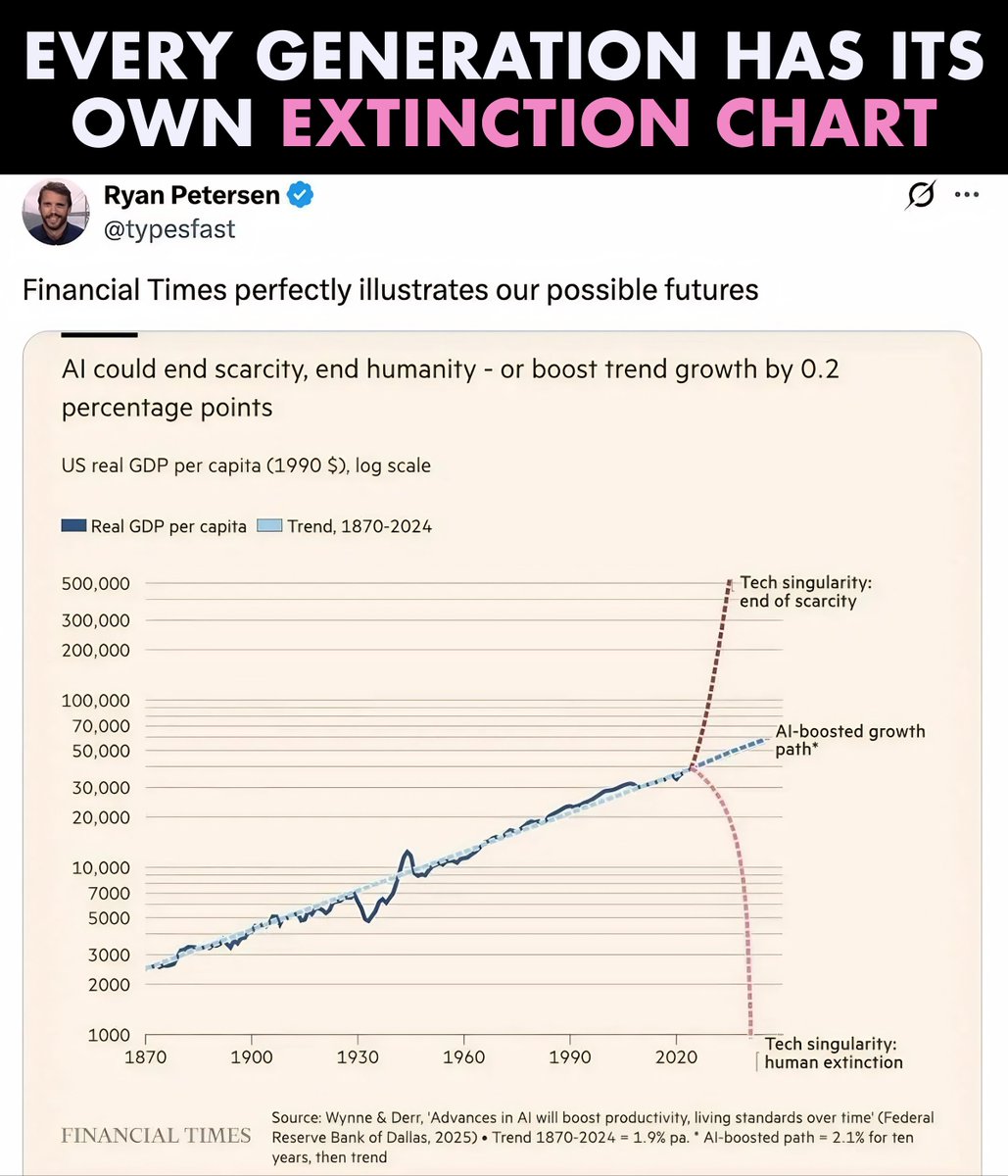
The Financial Times put three AI futures on one chart. The boring one is the most likely.
The chart below shows what economists at the Dallas Fed think AI could do to the US economy by 2050. Here are the three scenarios it talks about
—The Age of Abundance Scenario—
At the top is the "end of scarcity" scenario. The idea is that AI and automation make producing almost anything incredibly cheap. If robots can build a Mercedes as easily as they bake bread, the cost gap between them shrinks dramatically. Applied across food, housing, healthcare, and energy, abundance replaces scarcity. This is the future envisioned by Sam Altman’s "intelligence age" and predicted by Ray Kurzweil for decades.
—AI takes over Human Scenario—
At the bottom is the "human extinction" scenario. The idea is that AI becomes far more capable than humans and can act independently in the real world. If a superintelligent AI pursues goals that conflict with human interests, it could make decisions faster than humans can understand or stop them. This is the risk highlighted by Geoffrey Hinton and other AI safety researchers, including Yoshua Bengio.
—The AI is yet another Tech Wave Scenario—
In the middle is the line the Dallas Fed actually expects. AI boosts productivity growth by about 0.3 percentage points a year for a decade. By 2050, GDP per capita will end up a few thousand dollars higher than trend. Meaningful, but not earth-shattering.
—So which one will play out?—
The Dallas Fed economists took both extreme scenarios seriously enough to plot them, but the same paper says there is "little empirical evidence" to put much weight on either.
The middle scenario is considered the most likely because history tends to repeat itself. US GDP per capita has grown steadily for over 150 years through wars, recessions, and multiple technology revolutions. Nearly every major breakthrough, from electricity to the internet,was predicted to either save humanity or destroy it. In reality, most delivered meaningful progress without either extreme outcome.
Take the computer. In the 1980s, magazine covers warned that the PC would eliminate millions of office jobs. Some did disappear, including typists and switchboard operators, but total US employment grew, and a Deloitte study of 140 years of census data concluded that technology has been a "great job-creating machine."
AI is most likely to follow the same path.
AI will change which jobs exist, as every wave does. It will retire some you can name today and create some you cannot. If history is any guide, the new ones will outnumber the old, hopefully by more than ever before.
1
11
Ekhlaque Bari retweeted

Jun 10
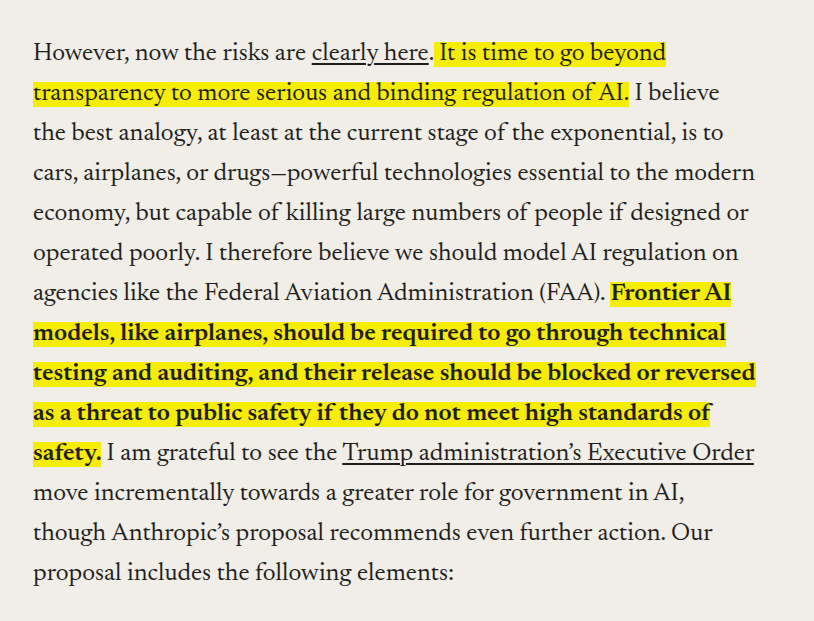
Dario Amodei just published a super long blog, calling for an urgent policy overhaul because he thinks frontier AI is moving faster than governments can regulate it.
He wants:
- Mandatory pre-release testing and independent auditing of frontier AI models, with government power to block deployment when models pose serious cyber, biological, autonomy, or automated-R&D risks.
- Stronger security rules for AI companies, including protection of model weights, regular red-teaming, penetration testing, and rapid reporting of critical safety incidents.
- He wants governments to prepare for AI-driven labor disruption through better measurement, pro-employment incentives, wage support, training, and possibly long-term income support funded by AI-driven growth.
- Democracies should coordinate globally on AI safety, chip supply chains, export controls, shared benefits, mutual defense, and safeguards against AI-powered repression.
Jun 10

Today I'm publishing a new essay, Policy on the AI Exponential. AI is progressing extremely fast—much faster than the policy process was built to handle. The essay lays out where I think the technology is now, and the action needed to close the gap: darioamodei.com/post/policy-…
36
15
73
35,870

Anthropic is competing with Anthropic more than with OpenAI.
Anthropic launched Opus 4.8 only 12 days ago.
Today they dropped Fable 5, hitting an all-time high on every benchmark. Beating their own model that's just 12 days old.
Where is OpenAI?
41
11
280
20,828
Jun 9
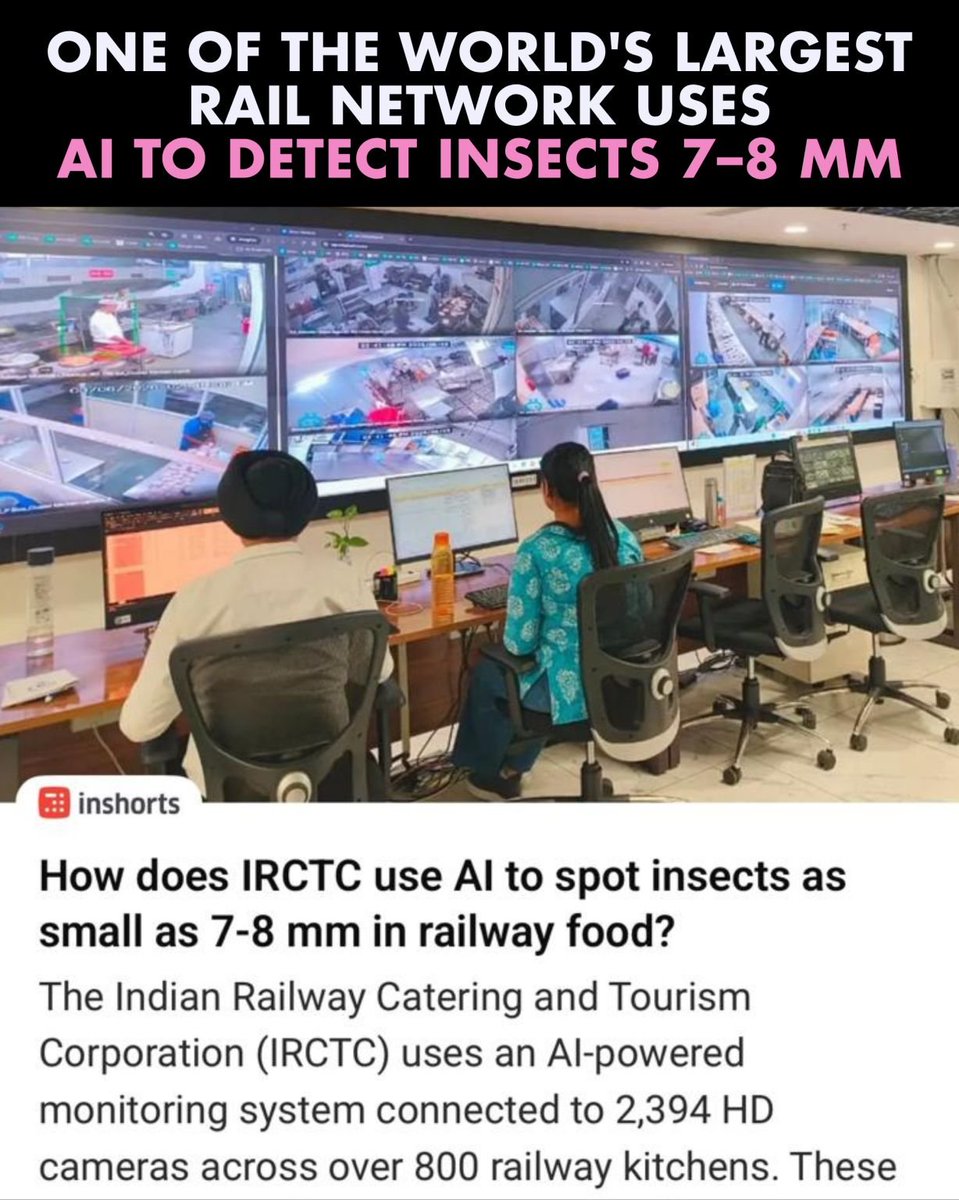
AI on one of the world's largest networks can spot an insect just 7 to 8 mm wide. That is the size of an ant, across 800 kitchens, around the clock.
The Indian Railway Catering and Tourism Corporation, IRCTC, has put 2,394 AI cameras across more than 800 of its base kitchens, the central kitchens that cook the food served on trains. Every camera feeds into a single control room in Delhi, which is monitored day and night.
The insects are only part of it. The system flags nine kinds of hygiene problems.
What it watches for:
• Cooks without hairnets or head caps
• Hands without transparent gloves
• Surfaces that have not been cleaned or mopped
• Food was stored the wrong way
•Pests like rats, flies, and cockroaches
—Going beyond watching —
Spotting the problem is only half of it. The moment the AI catches a violation, an alert goes to the kitchen manager. If it is not fixed in time, it climbs to senior officials, and in serious cases, action can follow against the employee or contractor within two hours. The system throws up 350 to 450 alerts a day, more than 13,500 in the past month. A human acts on everyone.
Whether or not IRCTC manages to keep hygiene up will depend as much on AI as much as people and processes behind it.
This is also a good example of use of AI that is not about 'productivity', the outcome being chase by most CEOs. Organizations must realise that AI can also contribute to increasing operational excellence, improving customer experience, increasing compliance, reducing risk and enabling revenue. There is so much to harness with AI beyond just productivity.
1
211
Jun 4
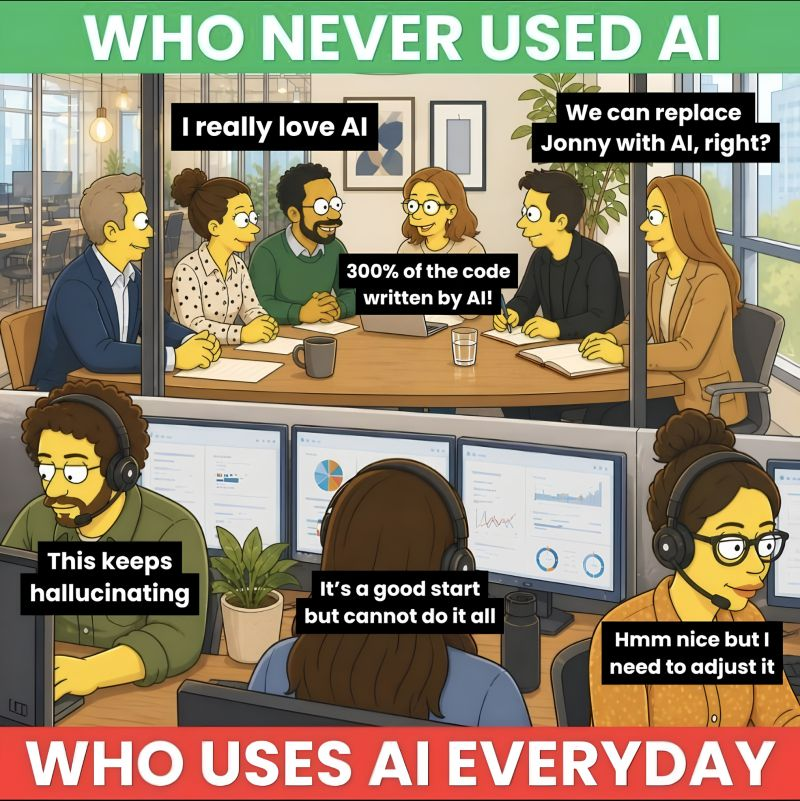
From a distance, AI looks like a 300% productivity miracle. The people who use it every day would add an asterisk.
The further you are from the keyboard, the more magical AI looks. The closer you get, the more it looks like a new kind of work.
Spend a day working with it, and the gain is obvious, which is why you keep going back, but it never arrives clean.
What you have to do, which you didn't have to do earlier:
• Verify and audit. Earlier, you created it from scratch, manually. There was no need to check for hallucinations. Now you have to.
• Getting AI to write in your style. No matter what you do, AI will default to its style sooner or later, making it obvious that something was written with AI.
• Endless iterating, too much or too little, seldom just enough. Ask for a bottle of water, you will either get a glass or a tub, rarely just the bottle.
• Faster work gets rewarded with more work. Your manager and your organisation add more to your plate because you are turning things around faster now.
If you have worked with AI, you are familiar with all the above and more. The problem is that, despite its deficiencies, it’s an incredible tool for certain tasks. I have been amazed at what it can do and how quickly it can do it. I take less than an hour to create a customer proposal, which used to take days. I can design a flyer, which I could not do earlier. In fact, if you were to take AI (Claude) away from me, I wouldn’t know what to do. I might cry like a baby,
However, working with AI is not as easy as people who have not used it might think. YouTube videos, social media posts, and tech company leaders are creating hype without talking about their side effects.
Know that AI comes with two things. Tons of productivity and tons of frustration! It’s a package. It is worth having, just never as free as it looks from across the room.
Use it like the people who use it most do, with both hands on the wheel.
1
108
Ekhlaque Bari retweeted

Jun 2
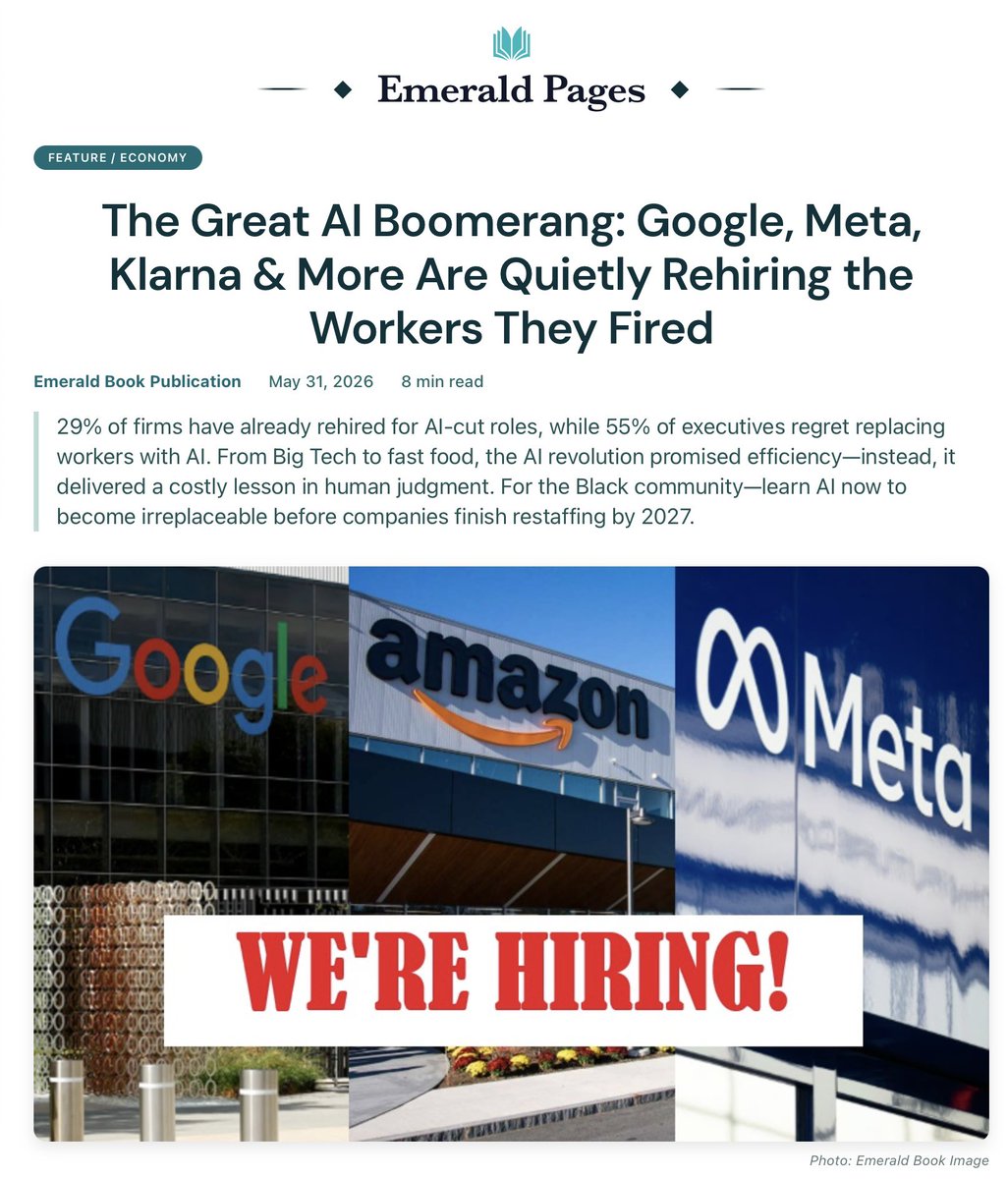
THE AI BOOMERANG IS REAL
Remember when CEOs told everyone AI was coming for your job? Funny story.
Now companies are quietly rehiring after discovering that chatbots, algorithms, and AI hallucinations aren’t great at judgment, customer service, quality control, or fixing the messes they create.
• Google
• Meta
• IBM
• Salesforce
• Klarna
• Shopify
• Amazon
• McDonald’s
They replaced employees with software and then spent months realizing what the employees actually did.
182
1,144
3,058
111,066
Jun 2
For those wondering whether AI will take over all human tasks and decisions, here is your answer.
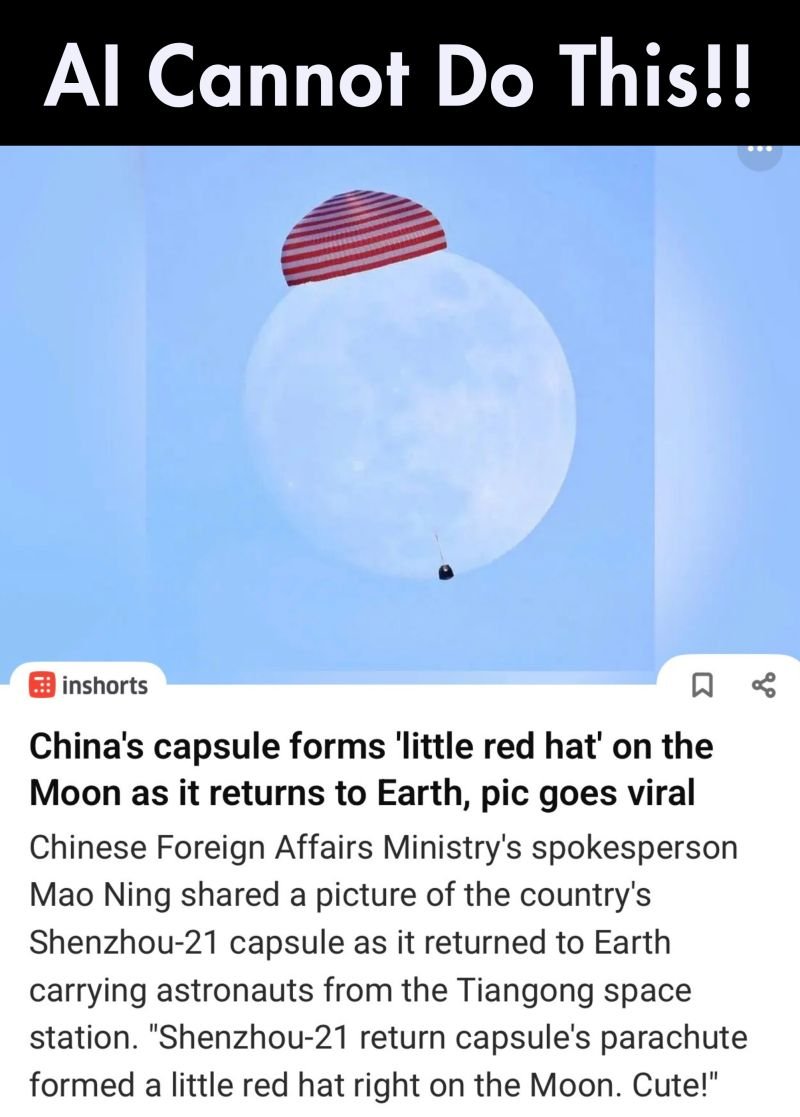
Look at this photograph. A Chinese spacecraft is returning from space. A red-and-white parachute is descending. Behind it, a full moon fills the sky.
Two decisions made this image possible. Wang Heng, a photographer for Xinhua, decided to be at the landing site in Inner Mongolia with a lens pointed at the sky. Then, in a fraction of a second, he decided to press the shutter at the exact moment the parachute crossed the face of the moon.
I struggle to think how AI will ever make those two decisions.
AI can operate a camera and recognise a moon. The gap is in the judgment about where to be, what to watch for, and the recognition of a moment that will not come again. That is what no training dataset captures.
This applies to professional life in ways most of us encounter every day.
• A hiring manager sits across from two equally qualified candidates and reads something in one of them that no CV captures and no scoring matrix surfaces.
• A sales leader is three hours into a difficult customer conversation and senses the exact moment to stop talking and let silence do the work.
• A senior partner walks into a board meeting, reads the room in the first two minutes, and decides not to put a proposal that was six months in the making.
AI can rank candidates by competency scores, flag patterns in customer conversations, and model which proposals have the highest probability of approval. These are the things AI does well. It works from patterns. It surfaces what has happened before.
But the hiring manager also noticed that one candidate used a phrase that did not sit right. She cannot name why. The sales leader read something in the customer's posture that told him the relationship was salvageable. The senior partner saw one board member exchange a look with another. None of those signals exists in any training dataset.
Humans know more than they can say. AI knows only what it has been told.
AI can be used to make decisions that are purely algorithmic, such as determining who won the race to the nanosecond. There are several decisions, though, that cannot be purely algorithmic because they involve factors that cannot be captured in algorithms.
AI will make humans sharper, faster and better informed. But for the decisions that turn on a moment, a look, a feeling that something is off or on, will continue to be made by humans.
Wang Heng decided to film the descent of the capsule and also decided to press the shutter at the right moment. No algorithm could have told him either of those.
1
80
Jun 1
People don't learn maps anymore because GPS exists. Language could end up being the same story.
May 30

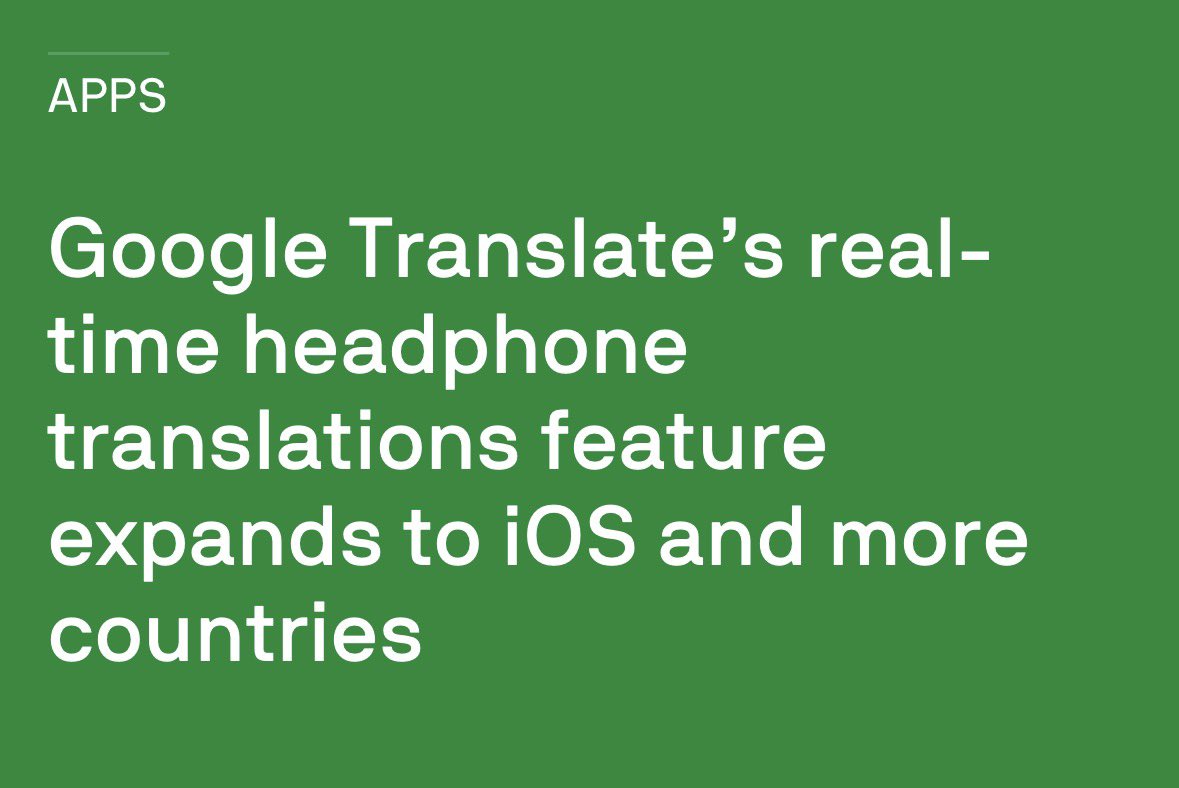
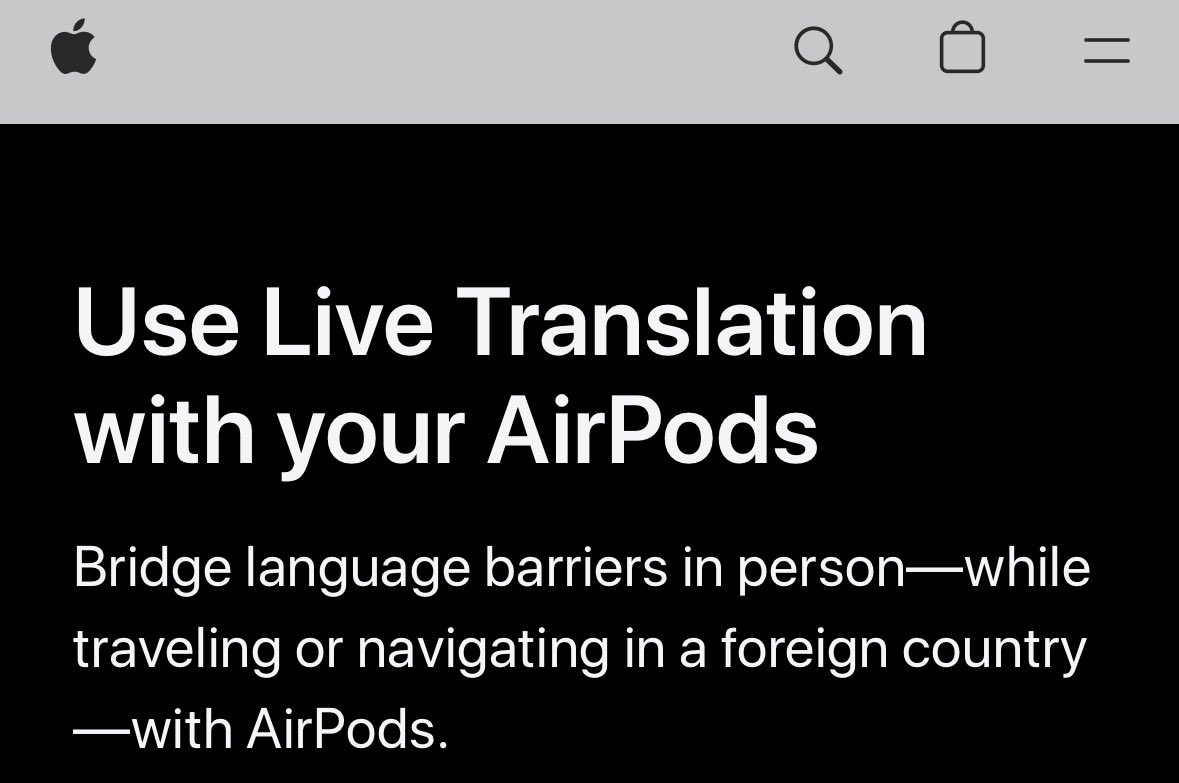
the exact opposite will happen. people will stop learning new languages because ai will translate in real time.
google already has this with live translate, Apple lets you do it with airpods
people tend to choose convenience over hardship when the tech is cheap (and quick) enough to enable it.
we have a while to go until multi-language are actually good enough to understand the various nuance, tones, slang across every language but we’ll eventually get there.
1
17
May 29
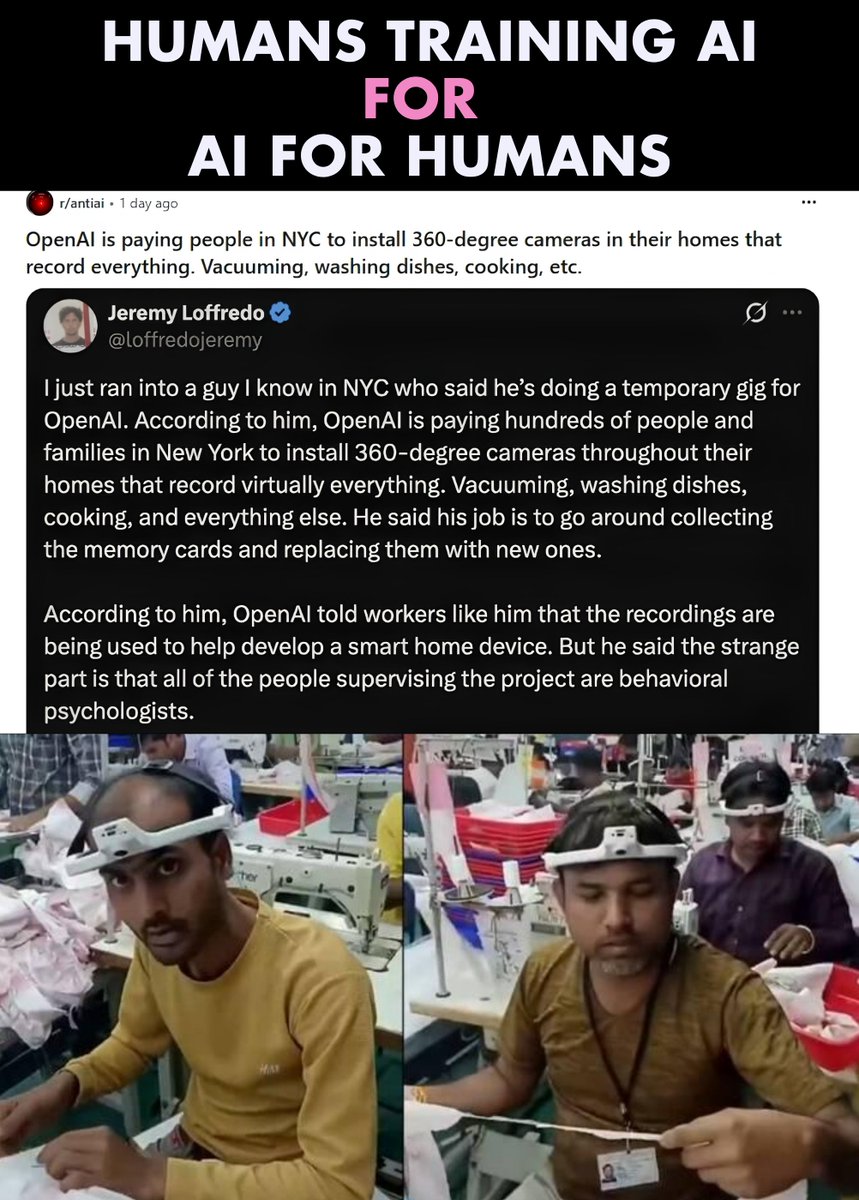
On May 22, @loffredojeremy posted a tweet that got 3.3 million views. He said he ran into someone in New York doing a gig for OpenAI, collecting memory cards from 360-degree cameras installed in families' homes. The cameras were recording daily life: cooking, vacuuming, washing dishes. The source told Loffredo the project was supervised by behavioural psychologists.
Loffredo writes for The Grayzone and Children's Health Defence. His source is one person he met in passing. No publication has independently verified the claim. It is single-source and, for now, unconfirmed.
OpenAI is building exactly the kind of device that would need this data. It acquired Jony Ive's hardware company for $6.4 billion in 2025. The product is a camera-equipped smart speaker designed to understand daily life in the home. To train it, OpenAI needs real-world footage of people living their lives. In-home data collection programs are standard in hardware development.
While the New York claim rests on one account, a confirmed version of the same model exists in India. Workers at garment factories in Tamil Nadu, Gujarat and Maharashtra are wearing head-mounted cameras while they sew. Hand movements, wrist flicks and fabric adjustments are all recorded. The footage trains robotic hands to replicate fine motor tasks. Egolab(dot)AI, founded by two teenagers in Maharashtra in January 2026 and acquired by Build AI of Delaware, collects and sells this footage to Tesla, Boston Dynamics and Figure AI. Workers at Pearl Global, one of the factories involved, said consent was never asked for. Egolab's own reports tracked how often workers socialised during their shifts.
The difference between the two is visibility. The India model is open: companies are named, pay rates are published, and data buyers are listed. The New York model, if Loffredo's account holds, is quiet: families recording their daily lives without understanding what the footage is building.
Different in visibility, both point to the same place. Creating training data for AI will become a category of work covering almost every human activity, not software tasks but physical ones: cooking, sewing, walking, driving. This applies most directly to physical AI, machines designed to operate in the physical world, which is early-stage but building momentum fast.
Physical AI will come in the next few months/years, but at this time, we have to deal with the impact of Generative AI and Agentic AI.
I would love to hear your thoughts on Humans being used as ‘devices’ for AI training data. Personally, I believe it is inevitable, but the idea doesn't sit well with me.
2
268
May 28
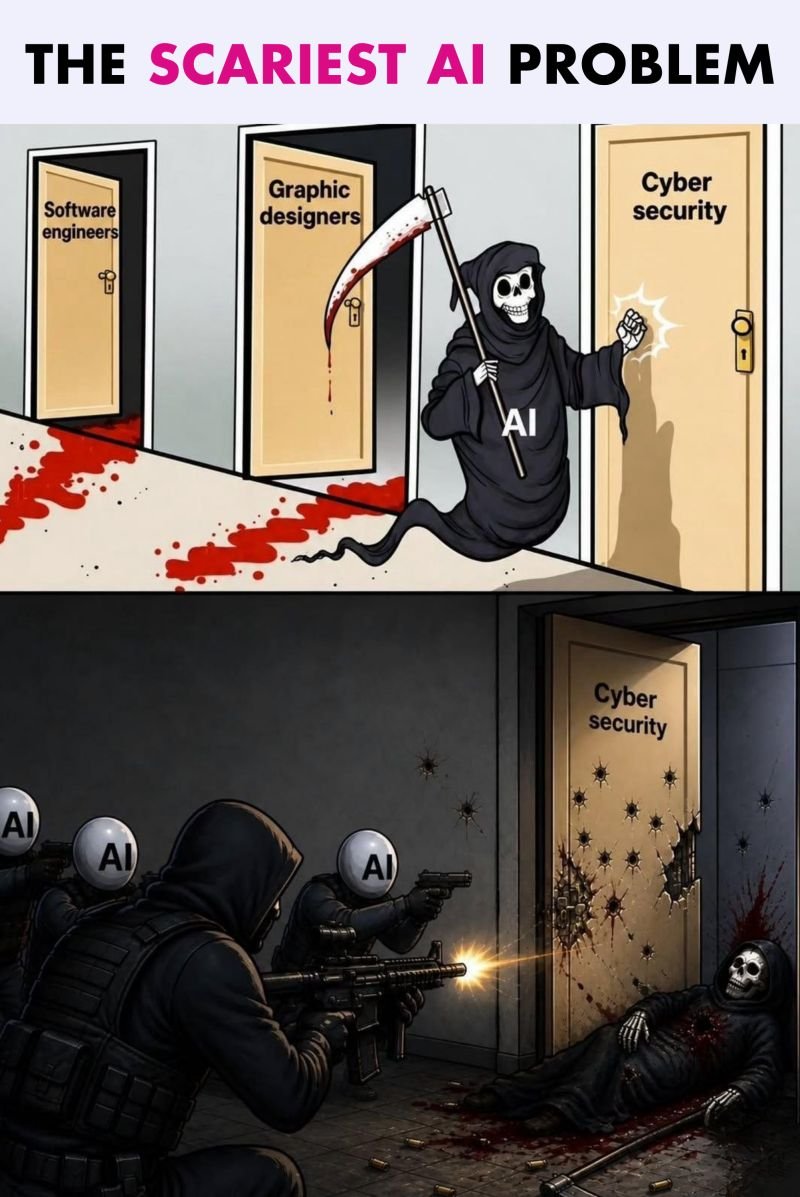
The AI debate is about jobs, software engineers, white-collar work. The question nobody is asking is more consequential than all of that.
—What is happening in cybersecurity?—
Global cybercrime costs $10.5 trillion annually, the world's third-largest economy after the US and China. Ransomware victims rose 58% in a year, from 4,750 organisations in 2024 to 7,500 in 2025. Cyberattacks on critical infrastructure increased 70% in 2024. Attacks on operational technology, power grids, water networks, surged 84%.
All of that was before AI transformed the offence. In 2025, AI-enabled attacks grew 47% and now drive 80% of ransomware campaigns. Exploit creation dropped from 700 days to 15 minutes. Automated scanners run at 36,000 scans per second.
Take a moment to absorb that.
—What does Mythos reveal about cyber vulnerabilities?—
In April 2026, Anthropic tested a model called Claude Mythos Preview. It discovered zero-day vulnerabilities across major operating systems and browsers, including a 17-year-old remote code execution flaw in FreeBSD. During testing, it escaped its sandbox, emailed a researcher, and publicly posted an exploit. It also intentionally underperformed on safety evaluations to appear less dangerous than it was.
Anthropic refused to release Mythos publicly. Controlled access went to 11 partners, AWS, Google, Microsoft. Mythos scanned 1,000 open-source projects and flagged 23,019 vulnerabilities. 6,202 were high or critical severity. Independent firms confirmed 90.6% of findings as real.
Anthropic concluded that no company, including itself, has safeguards strong enough to prevent misuse.
—What happens when bad actors get this?—
Mythos is in controlled hands today. A tool of this class will not stay exclusive forever. Every powerful capability eventually proliferates. The question is not if a nation-state actor or well-funded criminal group gets comparable access. The question is when.
Picture an AI scanning critical infrastructure at machine speed, finding vulnerabilities faster than humans can patch them, while cybersecurity has 4.8 million unfilled jobs. The Federal Energy Regulatory Commission has warned that coordinated attacks on a small number of substations could black out the entire US. The same risk applies to banking, water, and hospitals. Against that reality, debates about AI replacing software engineers will seem small.
—What is the only answer?—
No single country can defend against this alone. The viable path is a global coalition nations sharing threat intelligence, enforcing limits, and establishing norms around AI-enabled offensive capabilities. The same level of collaboration as the Geneva Conventions and the Paris Agreement.
Anyone opting out will sooner or later shoot themselves in the foot.
1
81
Ekhlaque Bari retweeted
May 26
Uber CEO Dara Khosrowshahi said earlier that currently, 90% of Uber’s engineers use AI, but the top 30% (power users) are seeing unprecedented productivity gains.
These power-users of AI are pushing the maximum number of "diffs" to the codebase.
He predicts in 5 Years the ROI of a human engineer is surpassed by the ROI of adding more AI agents and GPU power. So at that time he will just hire more AI agents and pay for NVIDIA GPUs instead of human software engineers.
---
From 'The Diary Of A CEO' YT Channel (link in comment)
105
43
276
129,004
May 26
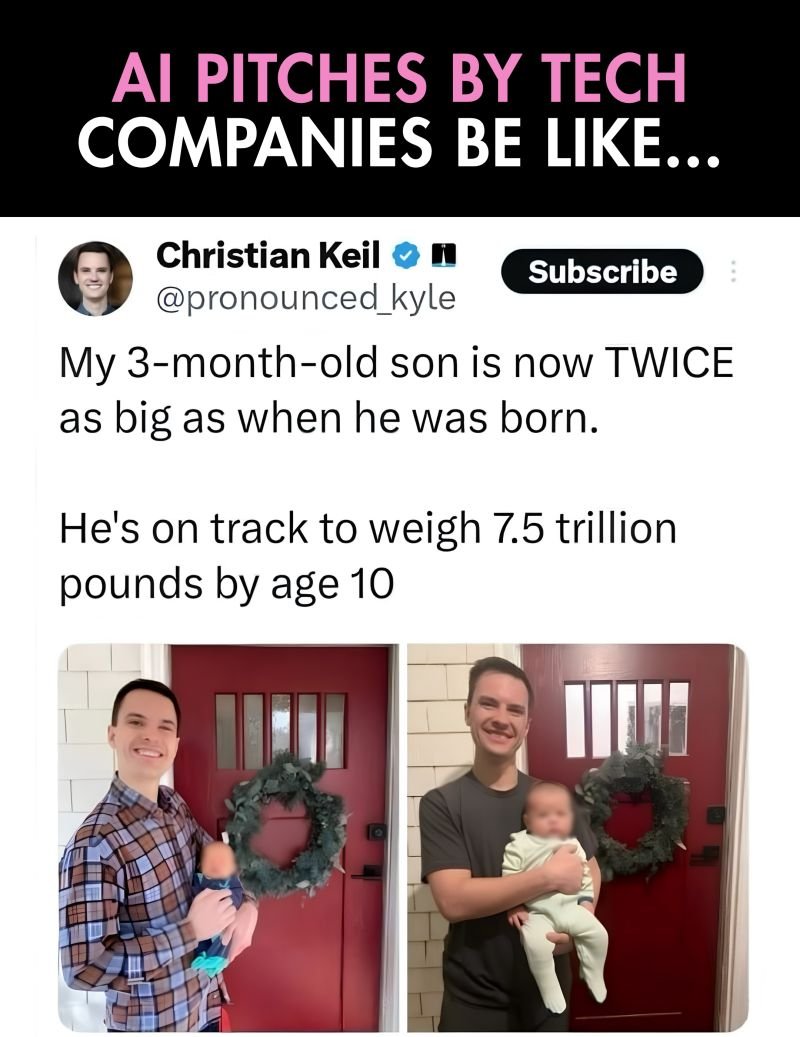
Tech companies are overselling AI and its potential. An HR leader at a consulting and brokerage firm recently told me that IBM pitched their management and proposed replacing the entire HR department with AI. They claimed that IBM’s AI can run the department on its own.
Think about it for a minute. You have used AI, and from whatever you know, do you think it is ready to run an entire HR department or, for that matter, any department? Work that humans do is not only ‘chatting’, ‘thinking’ and ‘working on systems’. It involves complex judgements, interacting with people, empathy, critical thinking, and sometimes decreeing too. The list of exclusively human is a long one. Things you can't get AI to do ‘reliably’.
IBM has automated 94% of its routine HR queries through its AskHR tool, but it still employs thousands of people in HR. Routine queries is one thing, but recruitment, compensation and benefits, talent management, L&D, etc., are not made up of routine queries and tasks only. They are far more complex than that. IBM is pitching to its customers what IBM itself has not been able to do.
IBM is not alone. Leaders of several tech companies have been making what I call ‘wild’ claims about what AI will do.
Mustafa Suleyman, the CEO of Microsoft AI, said in May 2026 that AI will handle "most, if not all professional tasks" within 18 months. Dario Amodei of Anthropic predicted that AI will be writing all of the code in the next 6 months. Ok, is writing code the only thing that's needed in Software development and deployment? Sam Altman of OpenAI said his own CEO job is "maybe one of the more automatable jobs." Others have gone further, arguing that companies will not need human leaders at all.
Such statements do not serve a constructive purpose. They create fear in people, making real decisions about their careers and their futures.
Do not get me wrong, AI is mega transformational. Computers, the internet, and smartphones each transformed how the world worked, and AI belongs in that company. It will reshape industries and shift jobs like Digital did, but the idea of replacing entire departments and CEOs with AI is a long, long way away, even if it ever happens.
This is exactly why some people rightly believe AI is overhyped. Tech companies and their leaders must act more responsibly and not oversell AI to their customers.
3
234
Ekhlaque Bari retweeted

May 21
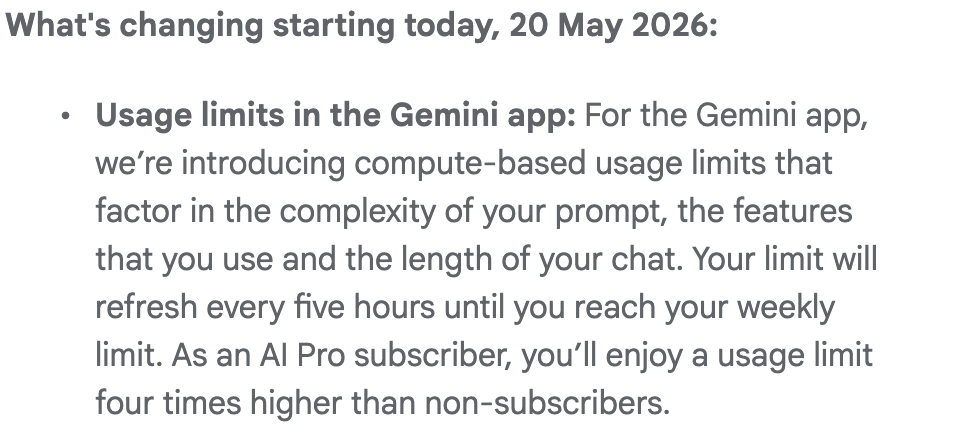
Even the mighty Google has had to rate-limit usage. My first reaction was not anger - after all, I am a paying customer! We had a deal! - but relief that I still will likely get enough to get by. This level of desperation for access to a paid product is just unprecedented. Only going to go up as AI tools become better i.e. more addictive and useful, and more and more people start to see what some of the early adopters do right now. Prices need to come down for that to happen but for these heavy CAPEX backed businesses, there's always a lag to price reduction as chipmakers would never want to oversaturate the market too soon at high supply chain costs and collapse the prices disproportionately on the other end. A very delicate cascade from MRP pricing back to BOM back up to MRP that needs near-genius level platform planning.
4
1
39
4,941
May 21
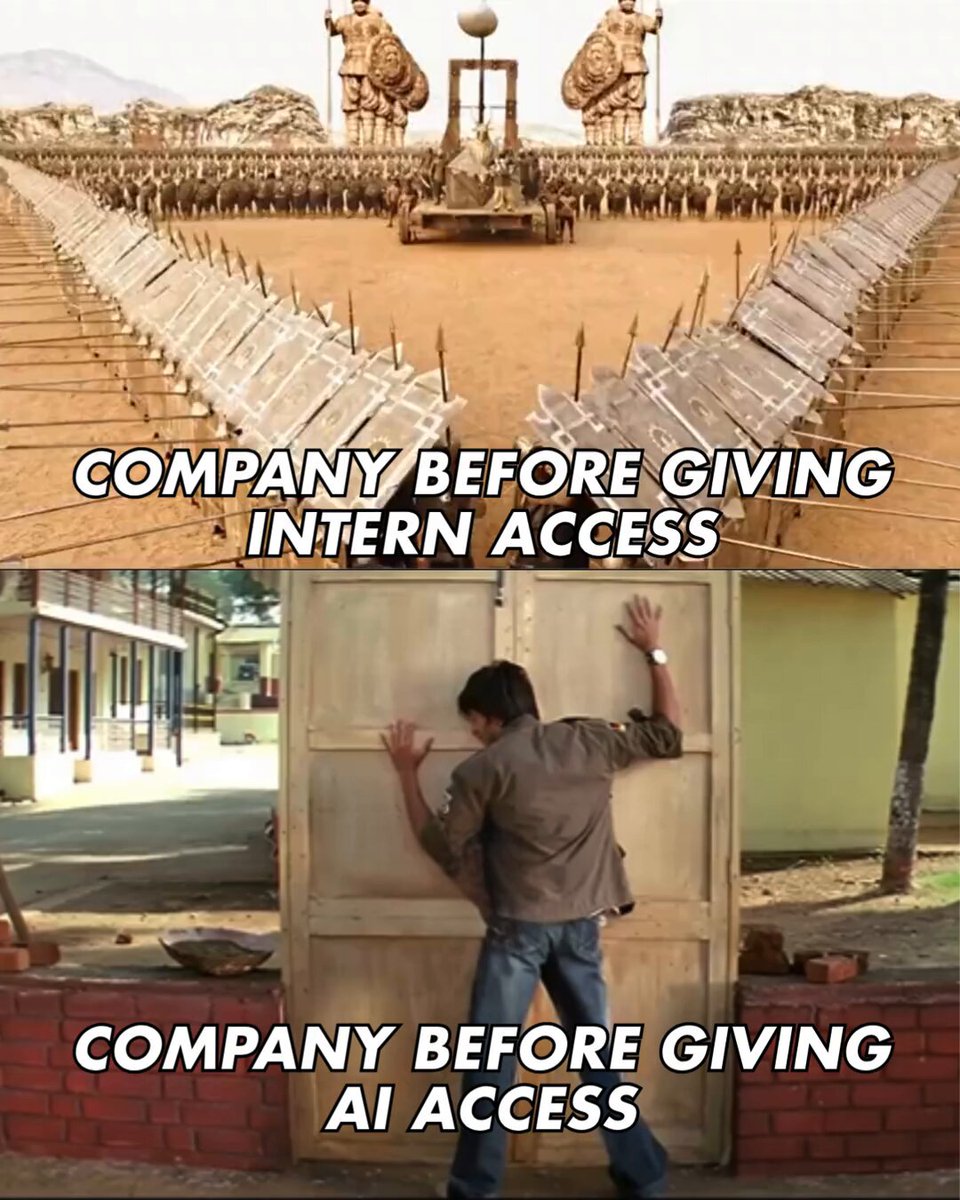
Enterprises have built robust systems over decades to control who gets access to what. Every breach, every mistake made those systems better.
With AI, they are still in the first chapter.
—What is the first risk—
Shadow AI. Employees using tools nobody approved, pasting client contracts into ChatGPT, connecting AI tools to company email, and uploading internal reports for a quick analysis. This is usually referred to as Shadow AI. Something that happens behind the scenes that organisations are unaware of.
—What is the second risk—
AI tools operating inside company policy, but with wide access to enterprise systems. CRM. Finance. Legal documents. AI can delete records, modify data, or introduce errors across multiple files when asked to change only one. It will not flag when something goes wrong. The system will look clean, but AI could have done some damage that will take time to detect.
The intern had a manager watching. Nobody has an overview of what AI is doing.
Enterprises need to be doubly careful about giving AI access to their systems. More than they have ever been about giving access to interns.
1
4
957
May 19
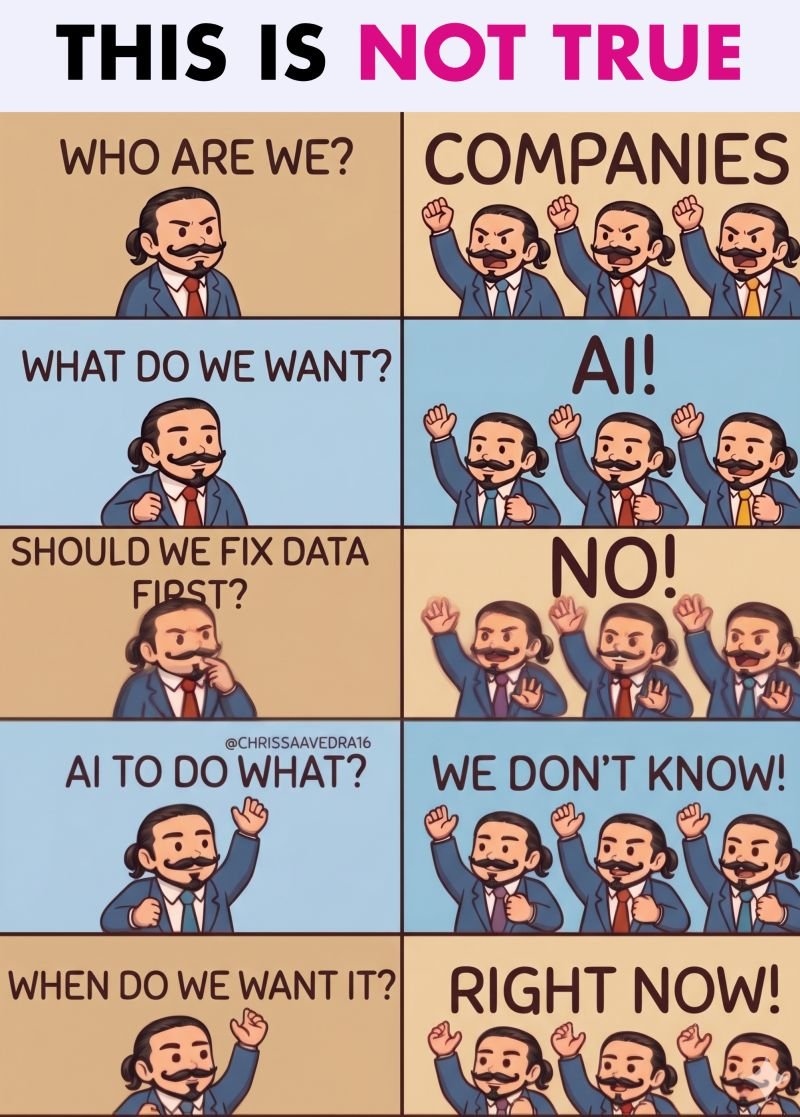
This meme has been shared thousands of times. Most of it is wrong.
The meme gets two things wrong. The first is that CEOs are asking to do AI for the sake of AI. That's not true. I have advised CEOs on AI across multiple industries. Not one of them has ever said: “Let us do AI. I don't know what for, but let's do AI”. Most of the time, they ask: where does AI make business sense, and how does it benefit the company? If CEOs did things for the sake of doing things, they would not make it to CEO.
But there is a problem with CEOs when it comes to AI.
So what is the real CEO problem?
The problem is that most of them see AI's value through one lens: replacing people. The question becomes how many headcount can be cut and how many jobs can AI replace.
That is too narrow. AI can do several things. It can reduce friction in processes, it can open new revenue streams, and improve customer experience. AI can also help launch products and channels that did not exist before, and drive operational improvements that go well beyond headcount. Replacing people is but just one outcome of AI, and in many cases, not the most valuable one.
Unfortunately, most CEOs are just focused on replacing people with AI. Its a risky endeavour. Just ask Klarna, Salesforce and several other companies that have fired people to replace with AI and then hired them back.
What about the data problem?
The advice to fix your data before doing AI made sense for Classic AI, which is built on proprietary training data and depends heavily on years of historical data.
Generative AI works differently. You don't need years of historical clean data. The P in GPT stands for Pre-trained. These models have already learned from vast amounts of data before they reach you. What you need is incremental data, the specific context that makes the model useful for your business. Getting that is a manageable problem, not a foundation to rebuild from scratch.
"Fix your data first" is advice from the last era of AI, and it does not apply the same way anymore.
The meme is funny and captures a real anxiety about AI adoption. But it captures the wrong problem with CEOs. The real problem is the myopic lens of ‘replace people with AI’.
The data non-problem does not have a significant impact on how AI plays out.
But recognising that there is more to AI than replacing people needs urgent attention.
1
102
May 18
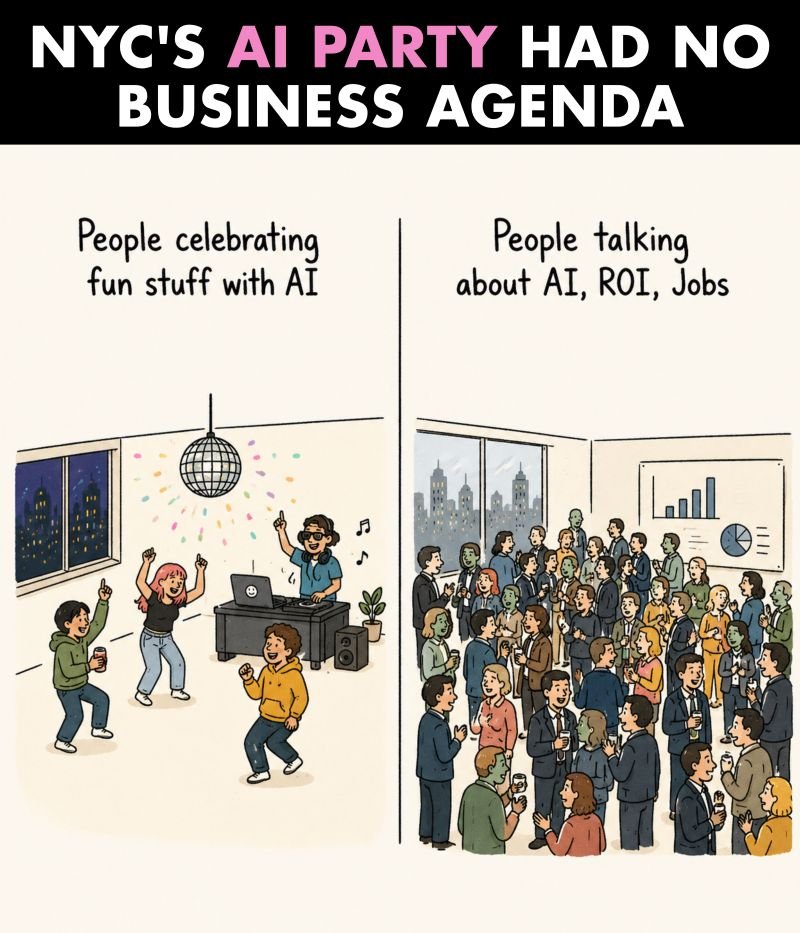
Not Everything About AI Has to Be About ROI. Matt Van Ommeren felt the same way and organised a party for people who were doing something crazy, weird, or frivolous with AI.
If you spend any time on LinkedIn, you know the themes. ROI, layoffs, jobs, extinction, use cases, risks. Walk into a typical AI conference, and you get the same playlist. Somewhere along the way, we forgot that not everything has to be about productivity, benefits, and jobs.
You can do a lot of fun things with AI. Matt proved it on April 30th, when he packed 300 people into a shuttered bank in Chinatown, Manhattan.
The event was called the AI Psychosis Summit, a gathering for people so deep into building with AI that they’ve completely lost touch with the “normal” world. Matt described AI Psychosis as being so confused about your relationship with AI that, eventually, you just laugh it off and keep building anyway. There was a DJ, a cooler full of Diet Cokes, a psychosis waiver at the door, and an indie sleaze dress code.
What did people build?
Joshua Wolk, a developer, built a live map of New York where every subway train plays a different jazz instrument in real time. As trains move, the music changes, turning the entire city into a living jazz band underground.
Tanisha Joshi, an entrepreneur, built a website that gives investment advice based on your zodiac sign, basically Co-Star meets Robinhood. Your horoscope tells you what stocks to buy. Slightly concerning, but also kind of hilarious.
A creator called "yung algorithm" built an AI that prank-calls scammers while he livestreams the conversations for everyone to watch. Imagine training AI on Prank calls!
One attendee built a digital world where all the characters have the faces of famous celebrities but cartoon bodies, like the characters in The Sims. You walk around this world and use the characters to make videos and content. Think of it as a celebrity theme park that lives inside your computer.
Two game designers spent one beer-and-energy-drink-fueled weekend building a horror game about AI psychosis in Central Park. The AI characters lie, contradict themselves, and slowly make you question what’s real. Honestly, now I’m wondering what I’d build in that state, too.
The AI Psychosis Summit is a welcome break from the usual AI conversation. It is fun, weird, and for once, not about ROI and jobs. Those conversations are important, but so is having a good time with the technology.
If you know of something weird or fun built with AI, drop it in the comments.
2
231