- Tweets 20,980
- Following 4,792
- Followers 5,155
- Likes 15,178


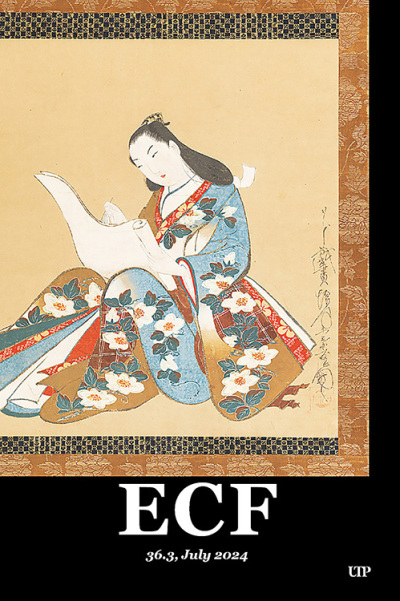
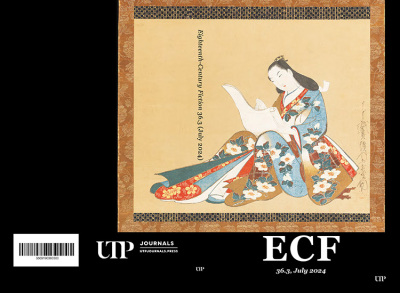
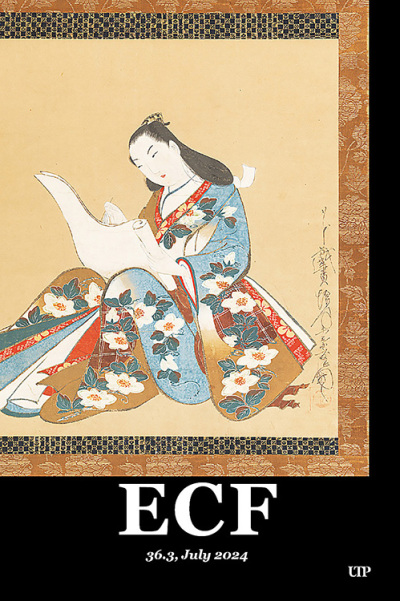
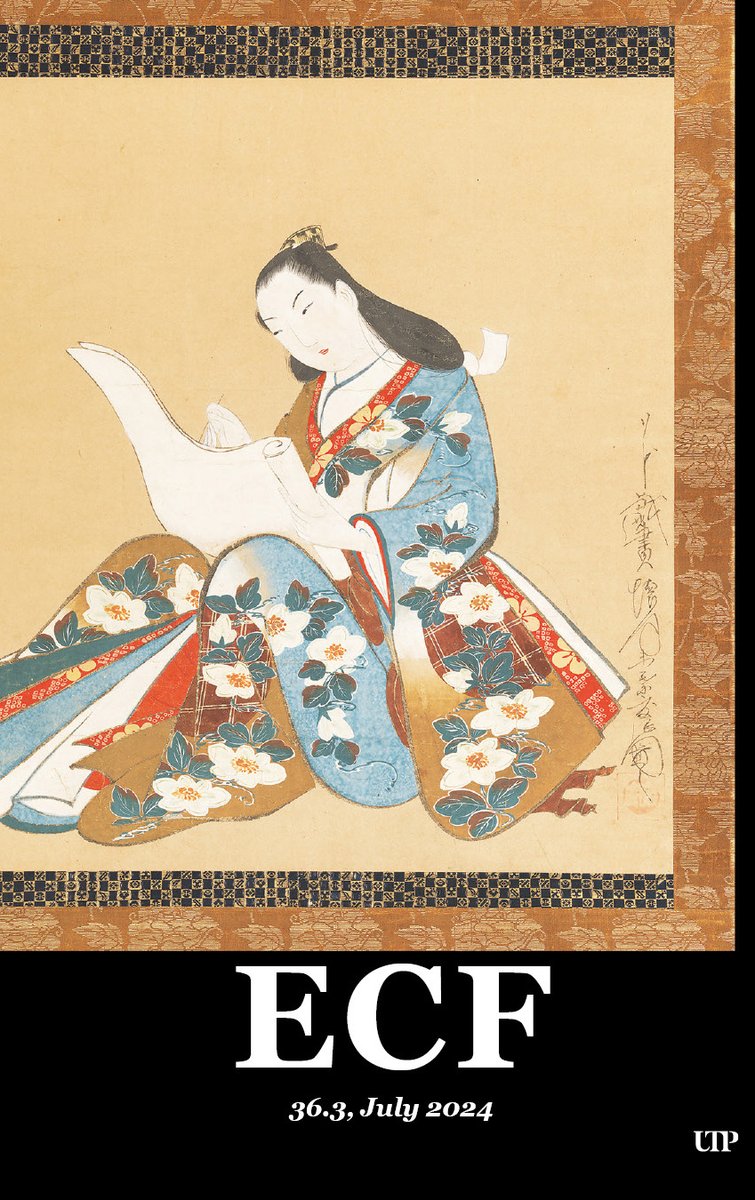
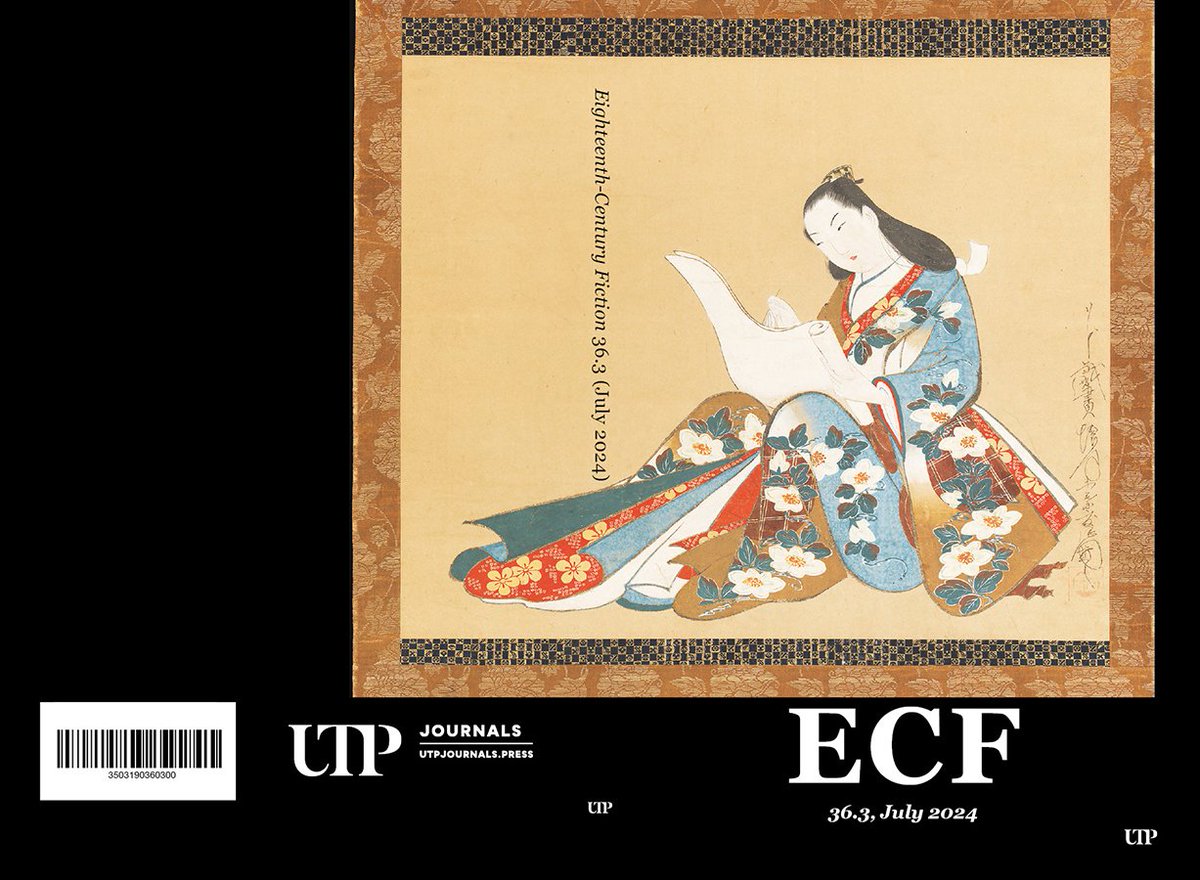
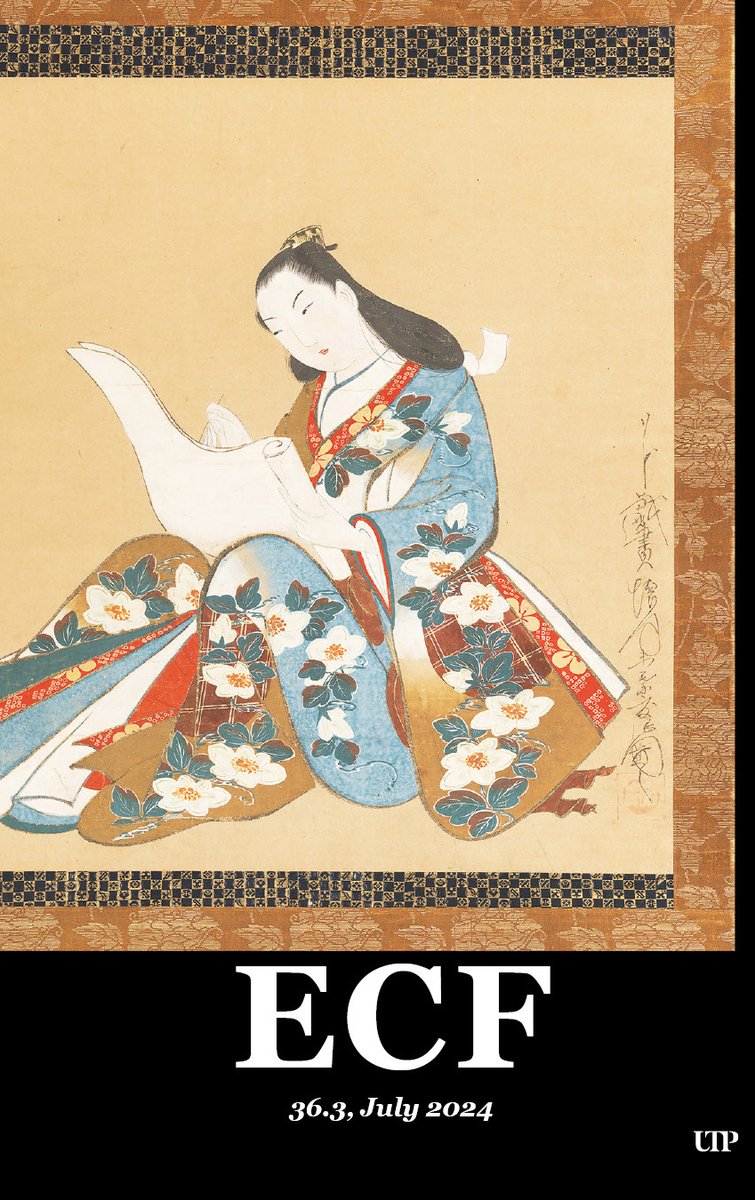

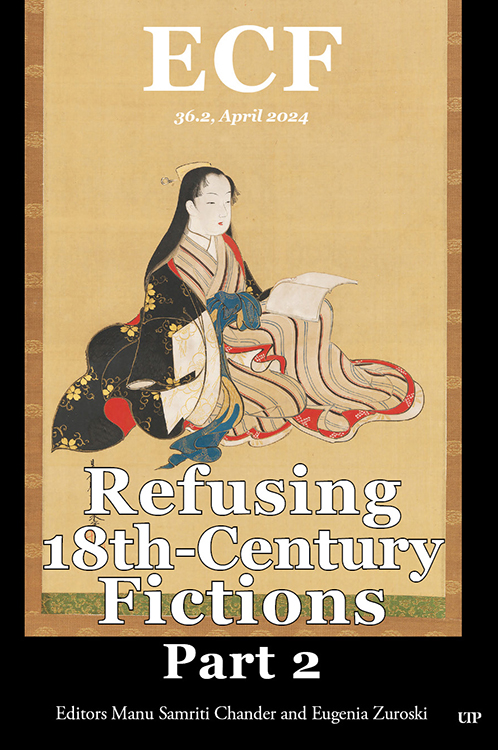
ALT Front Cover: The image on the front cover is Young Woman with a Book, by Miyagawa (Katsukawa) Shunsui (mid-18th century). The digital file of this Public Domain painting is provided courtesy of The Met, New York.
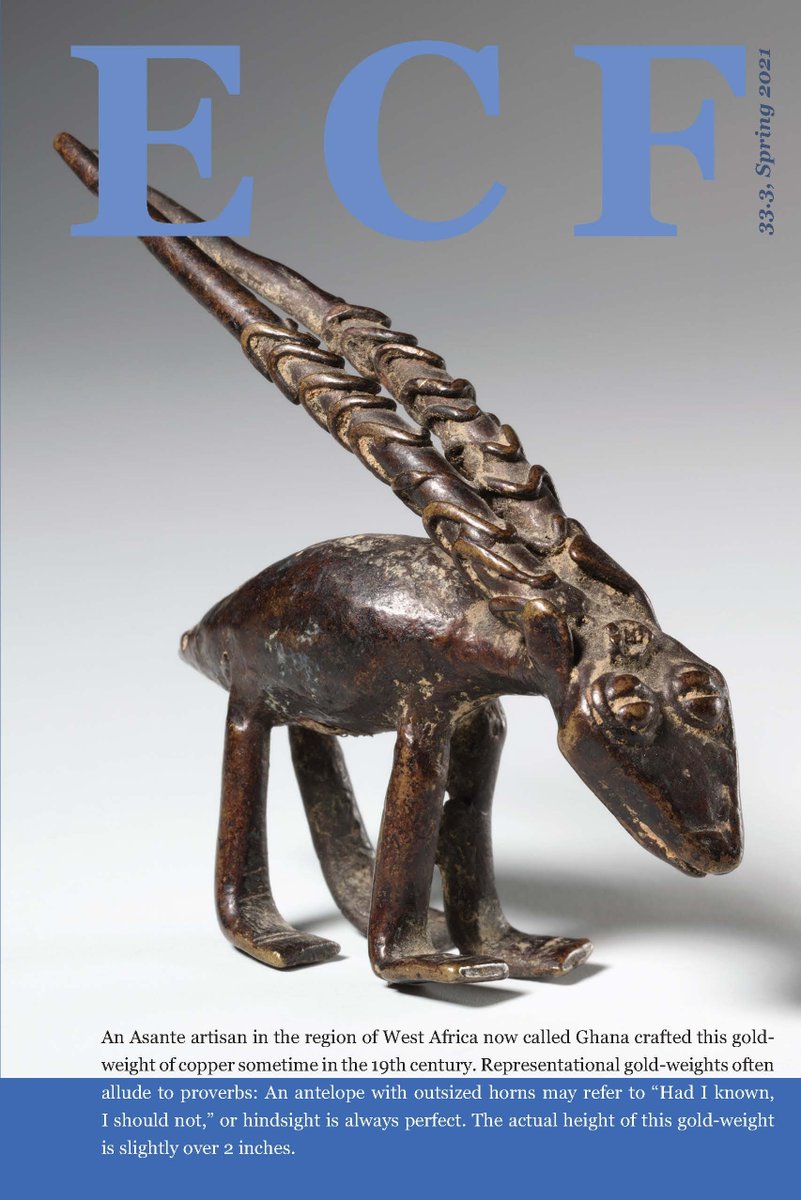
ALT Cover of the academic journal ECF showing a gold-weight sculpture in the form of an antelope with gigantic horns.
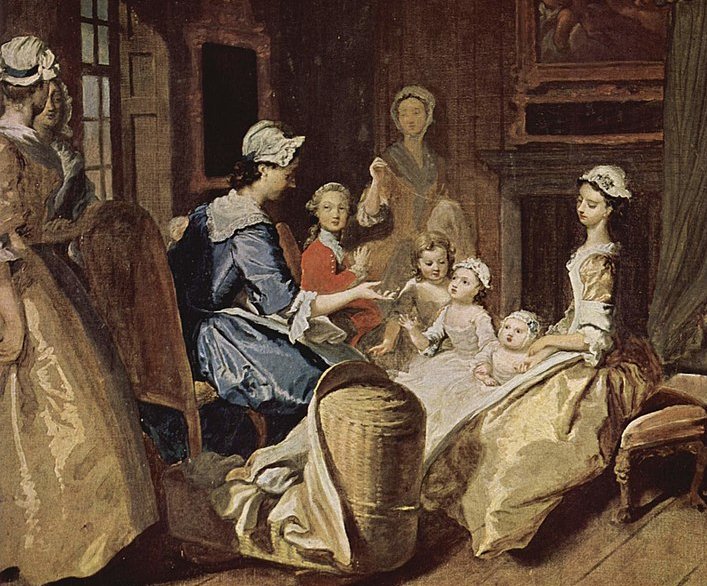
ALT Eighteenth-century painting of a family scene with many women and children. The women wear lovely gowns and bonnets. A bassinet stands in the foreground. The woman in the blue fown in the center of the image gestures toward the youngest children.
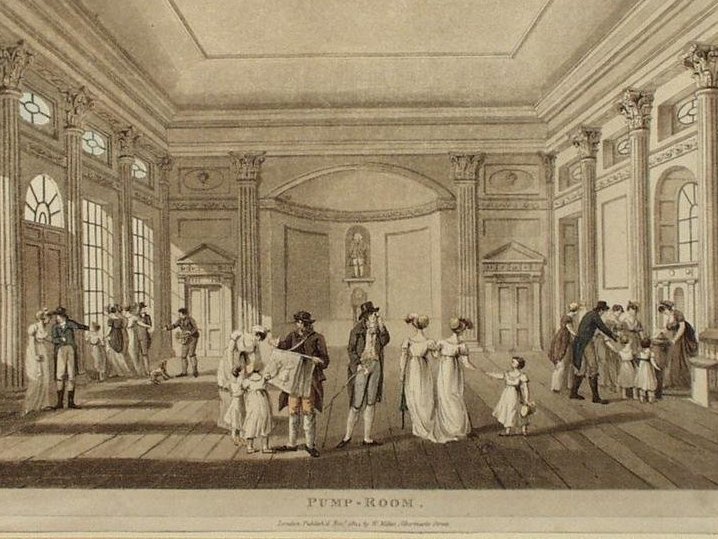
ALT An early nineteenth-century engraving of the Pump Room in the English city of Bath. People are milling around or chatting in groups. Tall window let in a lot of sunlight. The women wear flowing white dresses, and a few children are also shown. The Bath Pump Room was built in 1795.


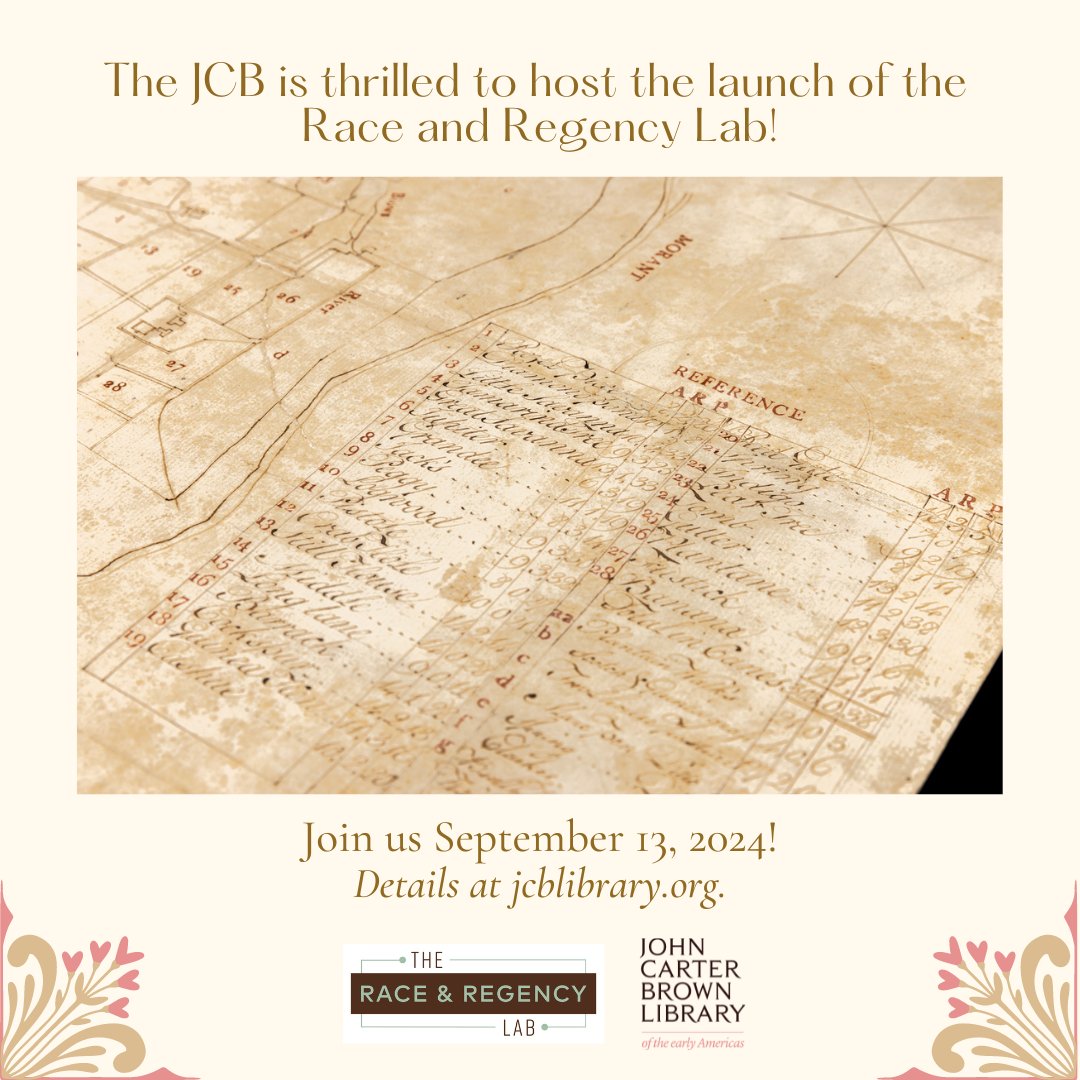
ALT The poster contains an image from a map of an estate, the Race and Regency Lab logo, the JCB Logo, and the text, "The JCB is thrilled to host the launch of the Race and Regency Lab! Join us September 13, 2024! Details at jcblibrary.org."
ALT Abstract: This article examines two novels that parody popular, late eighteenth-century fiction: Mrs F.C. Patrick, More Ghosts! (1798) and Sarah Green, Romance Readers and Romance Writers (1810). Both texts embrace and resist elements of gothic romance through intertextuality and generic instability. These two novels are marked by dynamic ambivalence: the writers overtly disavow the gothic genre, yet fail to abandon gothic sympathies for a consistent parody. Dynamic ambivalence empowers the reader to take multiple, conflicting positions within and against the plot. Both authors warn readers that in order to strengthen one’s mind, one must be insensible to melodrama and resist romantic extravagances; nevertheless, each exposes this stance as a façade. Using comic elements to deflect criticism and satire to establish their moral vision, Patrick and Green aim to elicit sympathy for female characters, even when they are foolish, deceived, or debauched ...
ALT Abstract: Focusing on three pseudonymously published mock-scientific treatises on artificial generation from the 1750s, this article considers the roots and purposes of human-plant analogies in the period. The first half establishes how the texts express anxieties about human classification in light of Linnaean botany, treatments of liminal organisms such as the sensitive plant and the polyp, and unresolved theories about the function of the egg and sperm and the nature of the human embryo. The second half addresses the classification of the infant products of the fictional experiments and of the natural philosophers that present them. In the first case, it draws links between the cultivation systems advocated in these texts and the iatromechanical theories of Stephen Hales and George Cheyne. In the second case, it parallels the natural philosophers’ violence and immodesty with Abraham Trembley’s and Henry Baker’s experiments in the artificial reproduction of polyps.
ALT Abstract: The cosmopolitan and the slave are the offspring of a global world governed by exchangeability and transportability. In Voltaire's most famous work, Candide, ou l'optimisme (1759), these two juxtaposed characters represent radically different results of globalization. A historical reading that explores the context of colonialism, war, and the increasing world trade of the eighteenth century reveals how migration defines the identities of the cosmopolitan and the slave, and the ways in which both characters challenge a traditional notion of belonging. While the cosmopolitan moves freely, the slave is unfree and only moved by others. Focusing on Candide's encounter with a Negro slave in Surinam, I discuss how the tale deals with the legal and philosophical problems raised by the transatlantic slave trade, and question why Voltaire treats North African slavery differently ...


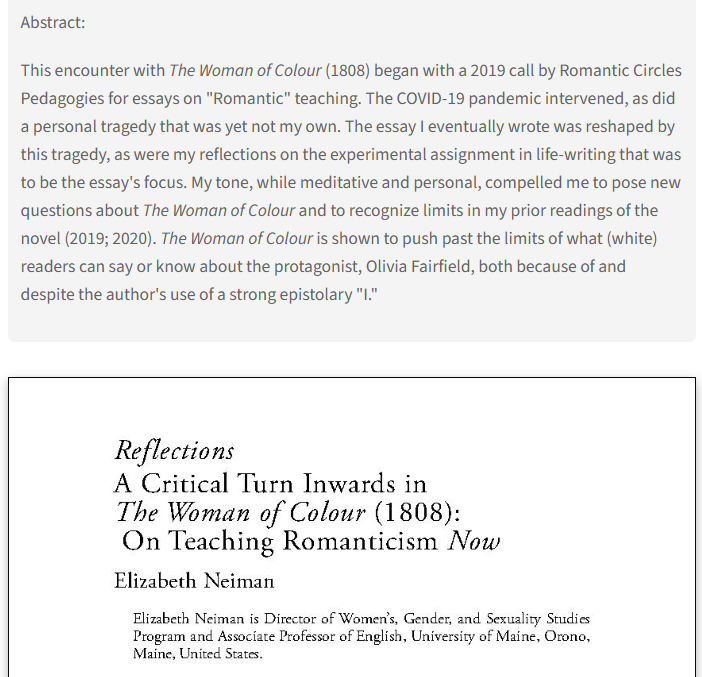
ALT Abstract: This encounter with The Woman of Colour (1808) began with a 2019 call by Romantic Circles Pedagogies for essays on "Romantic" teaching. The COVID-19 pandemic intervened, as did a personal tragedy that was yet not my own. The essay I eventually wrote was reshaped by this tragedy, as were my reflections on the experimental assignment in life-writing that was to be the essay's focus. My tone, while meditative and personal, compelled me to pose new questions about The Woman of Colour and to recognize limits in my prior readings of the novel (2019; 2020). The Woman of Colour is shown to push past the limits of what (white) readers can say or know about the protagonist, Olivia Fairfield, both because of and despite the author's use of a strong epistolary "I."
ALT Abstract: I analyze Joan Anim-Addo's libretto entitled Imoinda, or She Who Will Lose Her Name (2008) and illustrate how its narrative poetry generates a speculative, gendered history around the slave past. Informed by Srinivas Aravamudan's observation of parodic subversion in the afterlives of Aphra Behn's Oroonoko (1688), I return to Anim-Addo's oeuvre in order to read Imoinda as a work that counter-writes the colonial gaze of "Western" knowledge. By centering on Caribbean carnival as the performance context for the libretto, I examine how histories of rebellion and survival carried out by enslaved Africans and their descendants unfold through the libretto's narrative poetry. I argue that Imoinda, under the guise of artistic forms associated with "the West," breaks from Eurocentric perspectives that misrepresented subaltern struggles while ushering forth the question of "who speaks?" ...
ALT Abstract: Jonathan Swift’s Irish writings are replete with sartorial imaginings that fashion his unique satirist self by interlacing, for mutual subversion, colonial discourse on Irish dress with a mock-Lockean idea of self as outward Dress. Swift contests the legacy of Edmund Spenser’s A View of the State of Ireland (1596), a colonial attack on Irish dress that combined the Renaissance notion of dress generating identity by permeating the wearer and a more modern presumption of essential differences between the Irish and (New) English. Swift’s insight into Spenser’s contradictory logic penetrates Jack’s sartorial “Projects of Separation” from Peter in A Tale of a Tub (1704), and culminates later in Gulliver’s Travels (1726) and A Modest Proposal (1729) ...
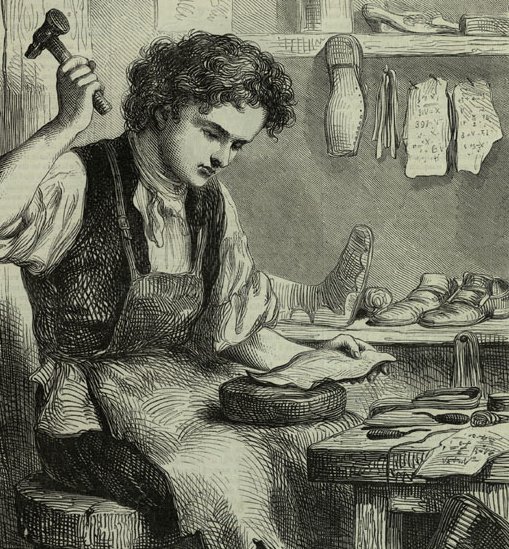
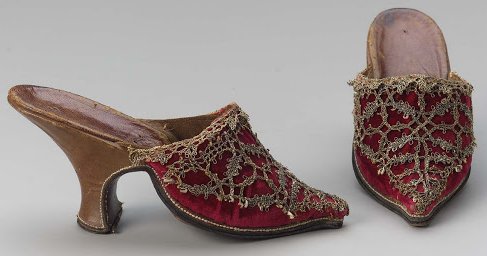
ALT 18th-century heeled mule-style slip-on shoes with red velvet
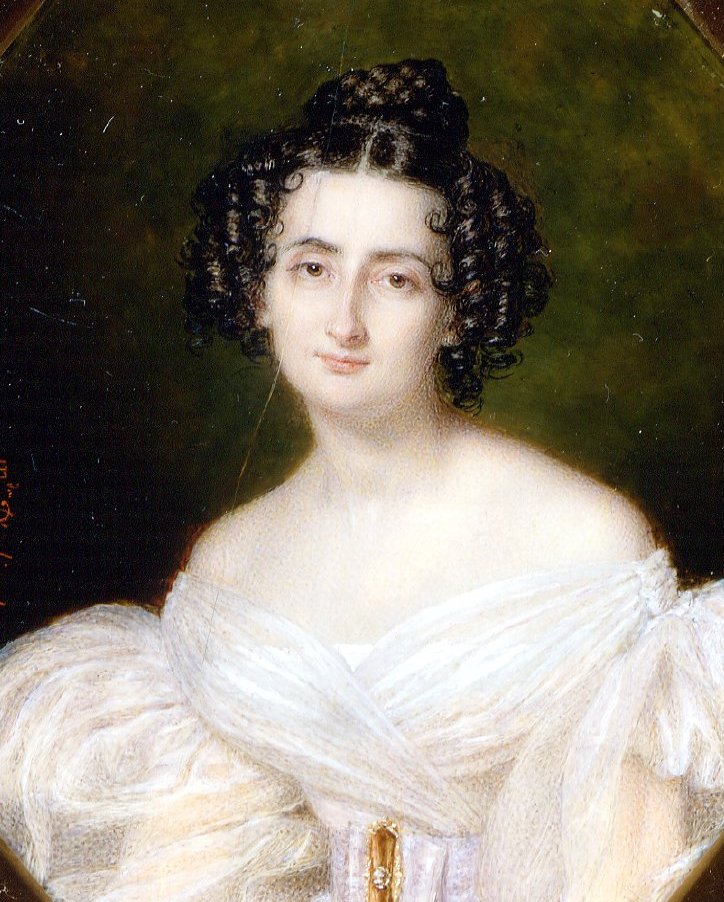
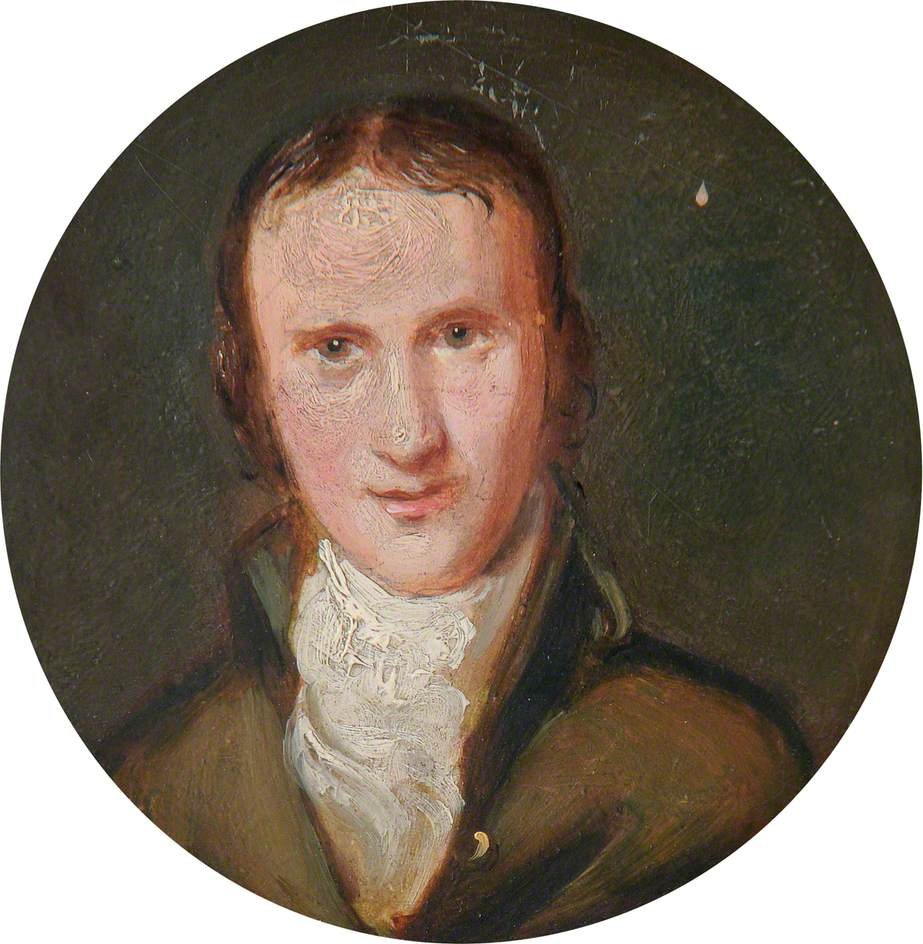
ALT Portrait of author Phebe Gibbes aka Mrs Lazarus, the wife of Joshua Lazarus.
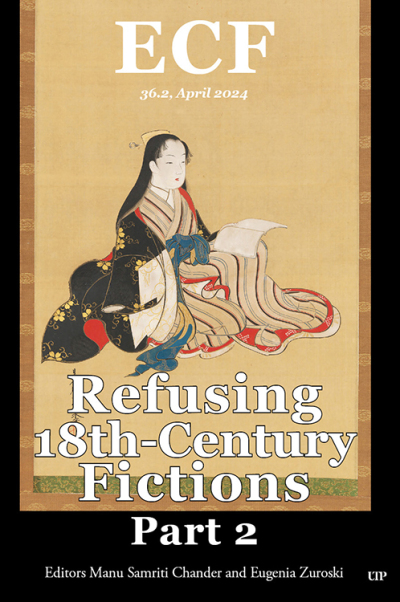
ALT Front Cover: The image on the front cover is Courtesan Writing a Letter, by Kaigetsudō Doshin (ca. 1715). The digital file of this Public Domain painting is provided courtesy of The Met, New York.