Hosted by Stanford University School of Medicine's Eating Disorder Research Program: A resource for eating disorder (ED)-related information
Joined March 2009
- Tweets 665
- Following 100
- Followers 4,723
- Likes 222
24 Photos and videos




Pinned Tweet

3 Sep 2021
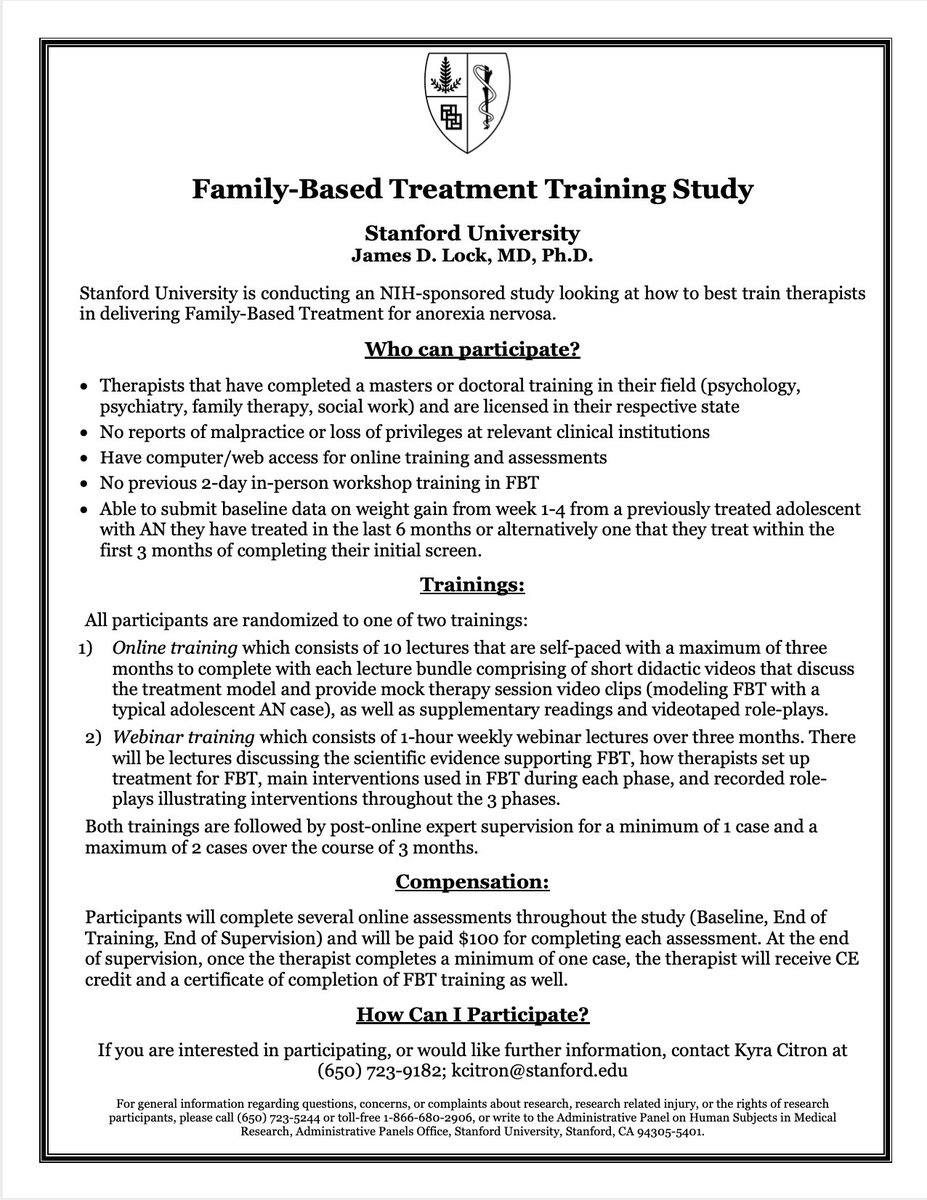
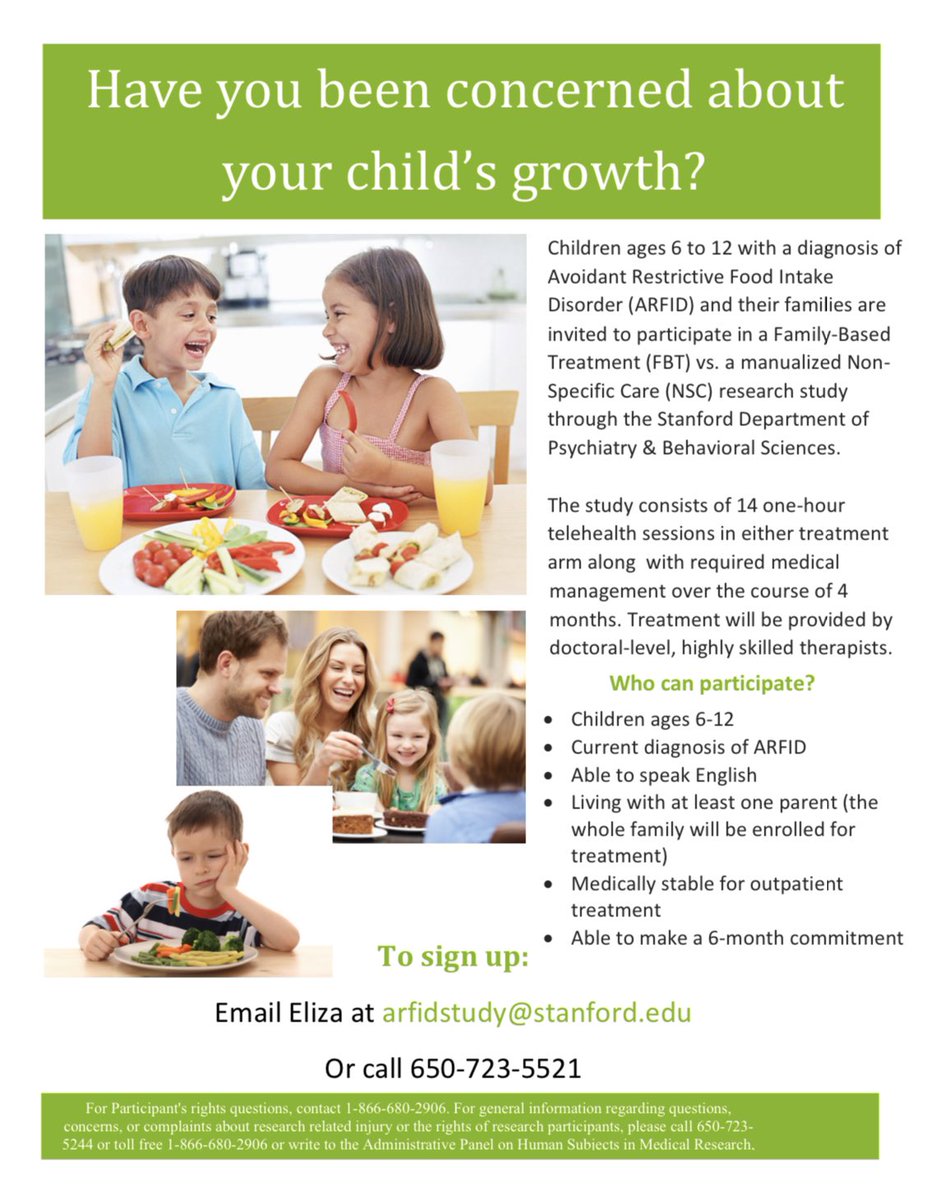
Stanford is conducting an NIH-sponsored study looking at how to best train private practice therapists in delivering Family-Based Treatment for anorexia nervosa. Participants will learn FBT, earn CE credits & compensation! Determine your eligibility here: redcap.link/b0ykko3q
7
10
Stanford Eating Disorder Research retweeted

1 Dec 2023
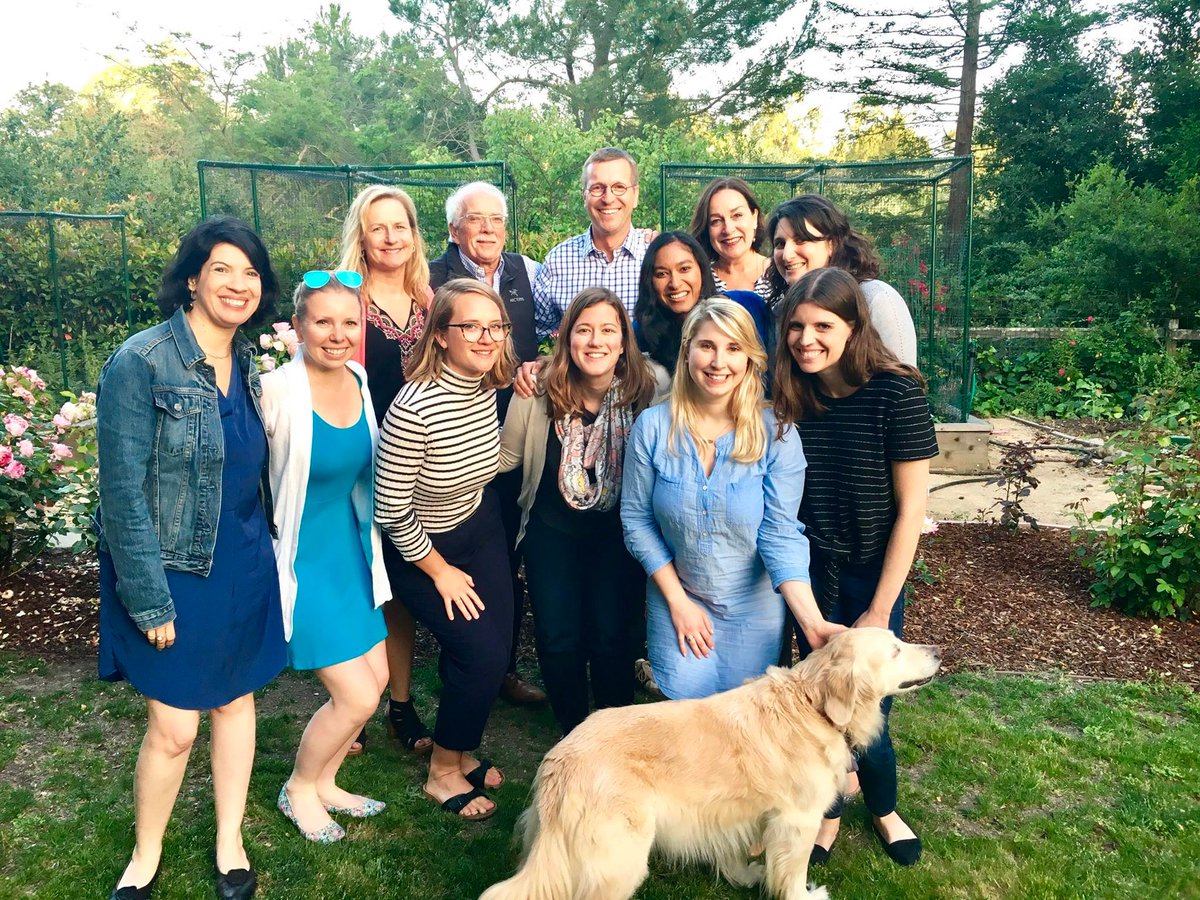
It feels surreal to come to terms with the loss of a mentor, especially someone as profoundly influential in one's life as Barr has been in mine.
C. Barr Taylor was not only a brilliant, creative, and diligent scholar but also a kind, warm, and fun mentor, collaborator, and friend. His research focused on developing and studying accessible, affordable, evidence-based interventions for various mental and physical health conditions. Barr was also a pioneer in incorporating technology into clinical practice. As early as the 1990s, he studied telephone-based group interventions, and in his recent endeavors, he explored the efficacy of chatbots for both prevention and intervention. His significant body of work, with a staggering 63,706 citations (scholar.google.com/citations…), speaks volumes about the impact he has made in the field of behavioral medicine. Barr was not only a distinguished scholar but also a passionate painter, avid fisherman, and accomplished author outside the academic realm. His diverse interests and talents enriched his life and left a multifaceted legacy that touched many beyond the scholarly community.
On a personal level, collaborating with Barr, alongside the numerous colleagues and friends I encountered through our shared efforts, has been a gift that irreversibly altered the course of my career. May the memory of Barr be a lasting blessing.
@LifeAtPAU @BehavioralMed
1 Dec 2023

I was deeply saddened to learned about the passing of my dear colleague, @IntJEatDisord board member, Professor C. Barr Taylor. Our community lost a beloved giant and pioneer. profiles.stanford.edu/craig-…
@aedweb @NEDAstaff @EDResearch @Stanford @ColumbiaED
7
4
26
14,111
Stanford Eating Disorder Research retweeted

31 Mar 2023
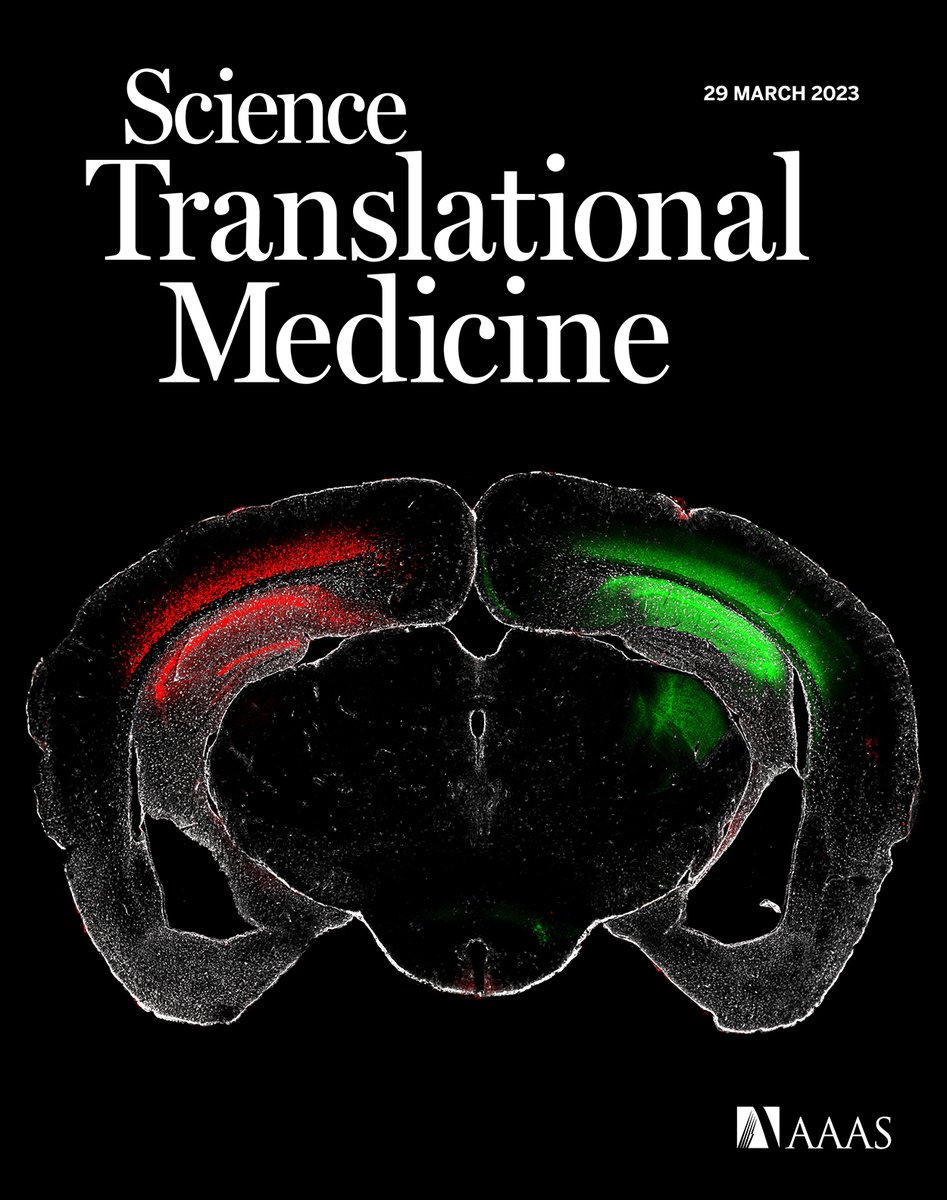
Don't miss this week's issue of #ScienceTranslationalMedicine!
Connectome blueprints reveal how habit-forming brain circuits go awry in binge eating, antiviral antibodies protect large animals from severe yellow fever, and more. scim.ag/25s
1
10
41
38,847
Stanford Eating Disorder Research retweeted

29 Mar 2023
🔥Hot off the press at Science Translational Medicine🔥 thrilled to share this elegant work on habit circuitry in binge-type eating disorders using @CaraBohon's NIMH K23 multi-modal imaging data led by superstar (& soon-to-be MD!) Allan Wang science.org/doi/10.1126/scit…
6
25
2,768
Stanford Eating Disorder Research retweeted

11 Aug 2022
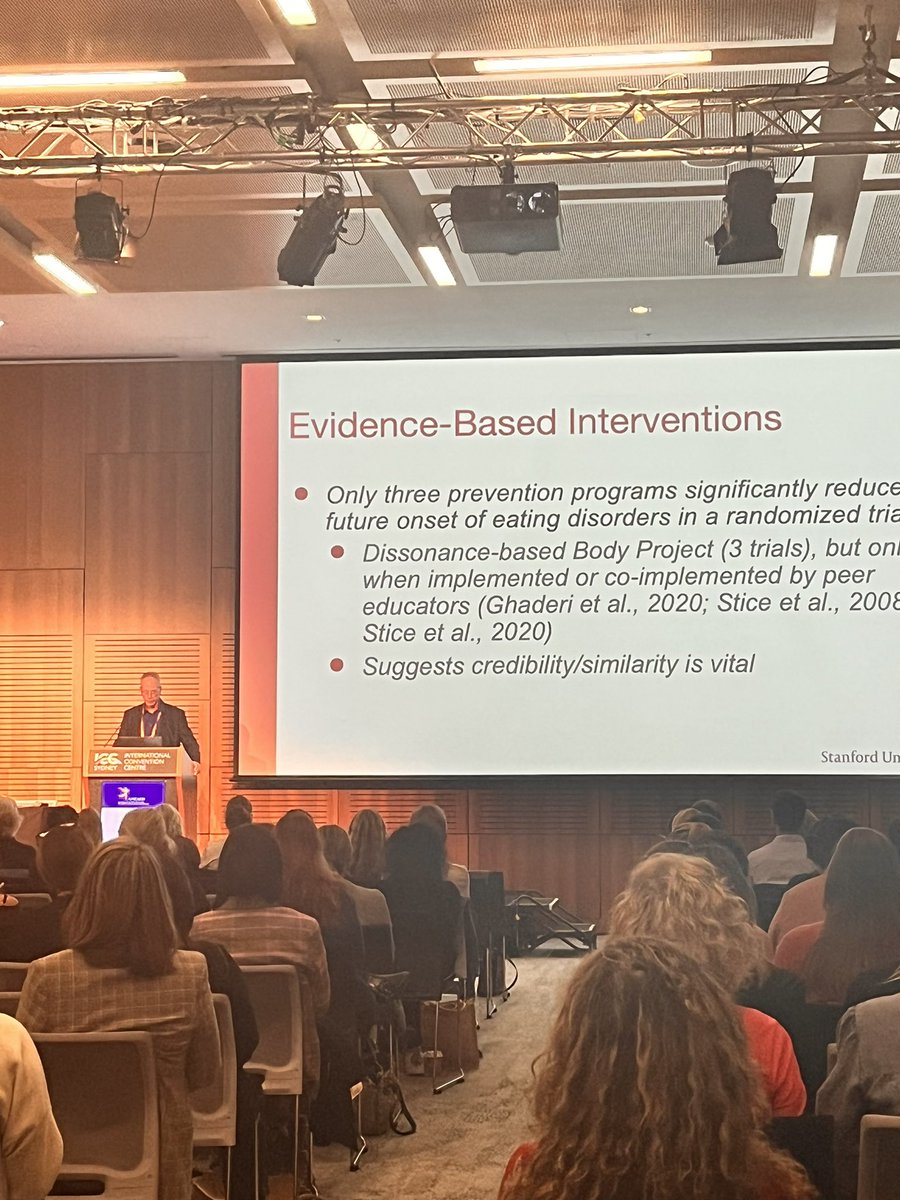
Hard to read but worth the effort! Prof Eric Stice at #ANZAED2022 explaining the most effective prevention for EDs must include peers. Take note. @EDResearch
5
10
Stanford Eating Disorder Research retweeted
25 Sep 2022
Interesting #EatingDisorders research from @nandinid88 and colleagues at @StanfordPSY @EDResearch: teens diagnosed with #AnorexiaNervosa during #COVID19 had ⬇️ weight and ⬆️ compensatory exercise compared to adolescents with AN presenting pre-pandemic.
pubmed.ncbi.nlm.nih.gov/3612…
1
4
11
10 Aug 2022
We're hiring! We are looking for a research coordinator to help out with a new study! Here is the link to apply: careersearch.stanford.edu/jo…
1
6 May 2022
Stanford is conducting an NIH-sponsored study looking at how to best train private practice therapists in delivering Family-Based Treatment for Anorexia Nervosa. Email kcitron@stanford.edu or determine your eligibility here: redcap.link/b0ykko3q
1
4
5 May 2022
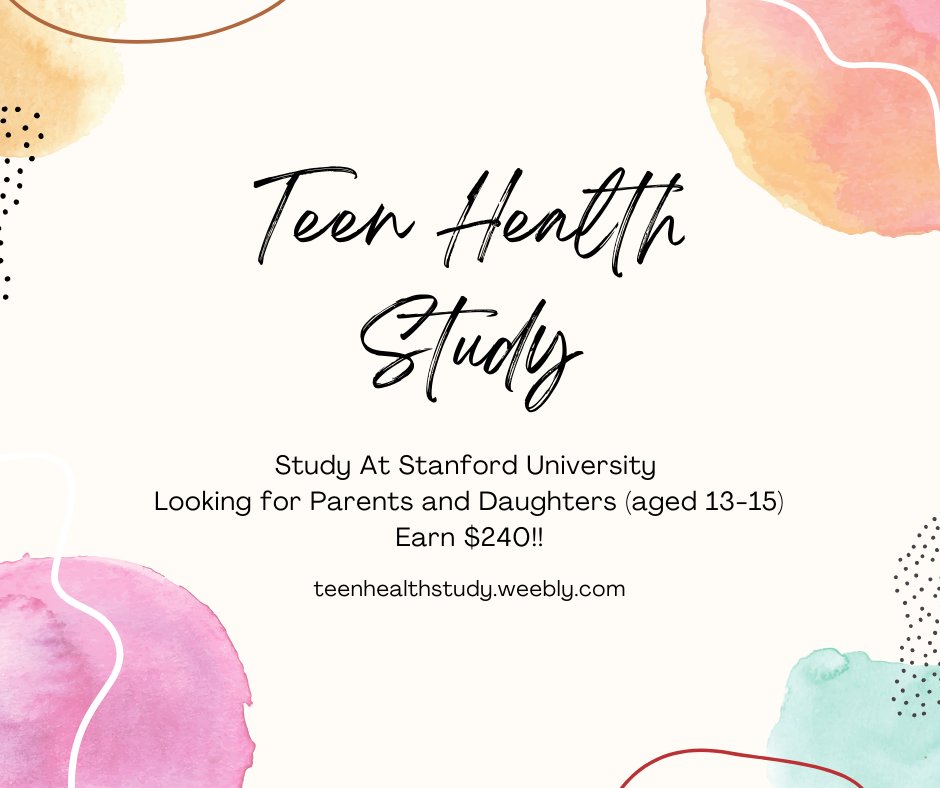
Do you have a daughter between the ages of 13-15 and live in the CA Bay Area? Join the Teen Health Study! you could earn up to $255! redcap.link/thsinterest #parenting #research #parents #California #Stanford #research #HealthyEating #participate
28 Apr 2022
Do you have a biological daughter between the ages of 13-15 and live in the CA Bay Area? Join researchers at Stanford as they hope to learn more about adolescent development and eating behaviors! Learn more: teenhealthstudy.weebly.com You will be compensated for your time!
2
Stanford Eating Disorder Research retweeted
3 Sep 2021
Stanford is conducting an NIH-sponsored study looking at how to best train private practice therapists in delivering Family-Based Treatment for anorexia nervosa. Participants will learn FBT, earn CE credits & compensation! Determine your eligibility here: redcap.link/b0ykko3q
7
10
17 Dec 2021
Are you a parent with a 13-15 year old daughter? A Stanford study is investigating development of healthy eating and invites you and your daughter to participate! Teens can earn $225 and parents can earn $15! To learn more: redcap.link/teenhealthstudy or visit teenhealthstudy.weebly.com
1
17 Dec 2021
Are you a parent with a 13-15 year old daughter? A Stanford study is investigating development of healthy eating and invites you and your daughter to participate! Teens can earn $225 and parents can earn $15! To learn more: redcap.link/teenhealthstudy or visit teenhealthstudy.weebly.com
17 Dec 2021
Do you want to participate in a study about the brain and food? A Stanford University study is using fMRI to learn how brain function relates to eating and emotions. ALL women 18-25 are invited to participate and will earn $75 for taking part! Learn more redcap.stanford.edu/surveys/…
2
Stanford Eating Disorder Research retweeted

8 Nov 2021
🚨 #NewPublication alert
The effect of mood on food versus non-food interference among females who are high and low on emotional eating
pubmed.ncbi.nlm.nih.gov/3471…
@JEatDisord @CaraBohon
2
3
Stanford Eating Disorder Research retweeted

11 Oct 2021
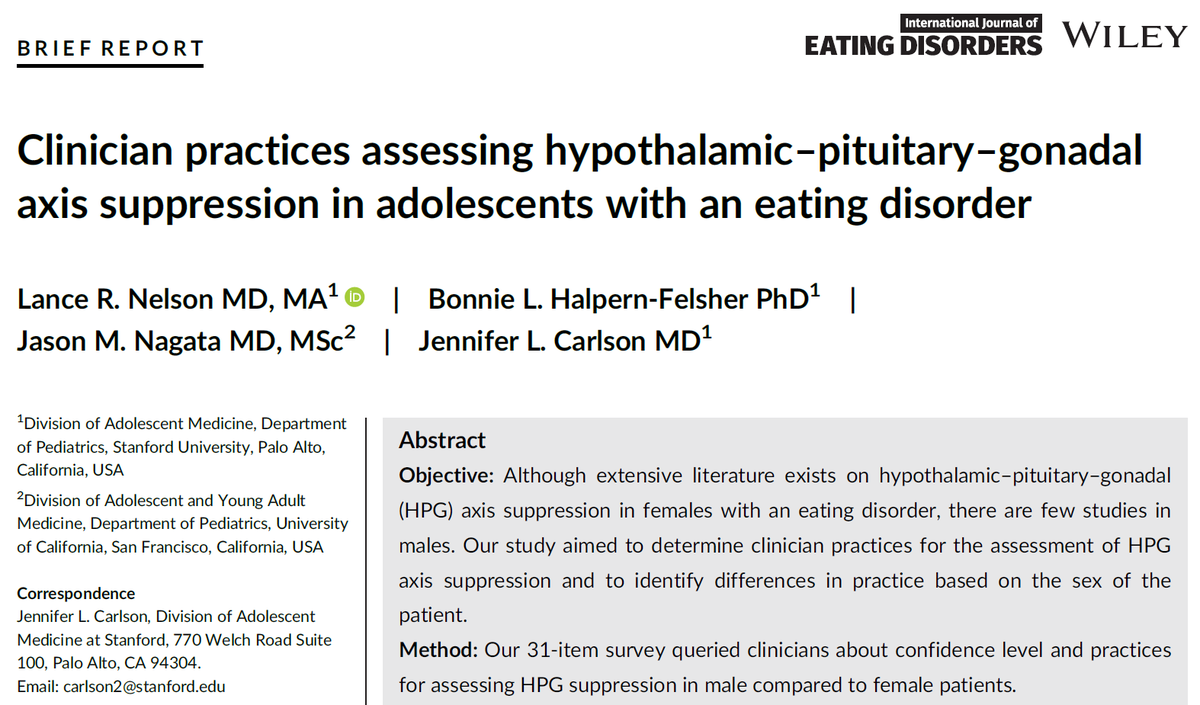
📢 Clinicians feel less confident evaluating males with #eatingdisorders and were less likely to evaluate HPG axis suppression in males, highlighting the need for more provider training.
📣 New study in @IntJEatDisord by Lance Nelson @StanfordPeds 🔗 bit.ly/3lsJJ7Q
1
5
21
Stanford Eating Disorder Research retweeted

6 Oct 2021
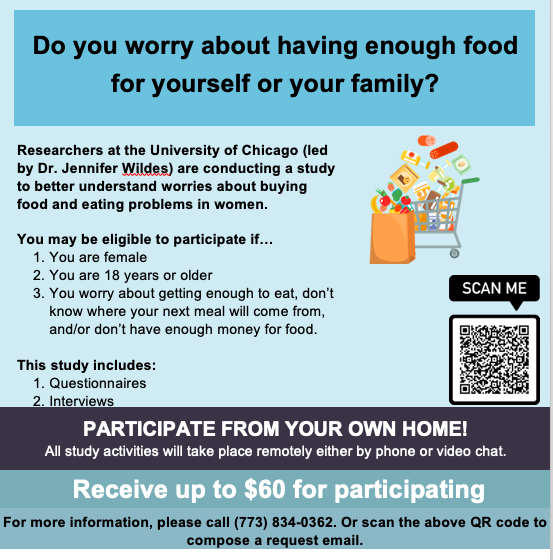
Our team at University of Chicago is currently recruiting women for a study in food access and eating behaviors. Email stodorov@uchicago.edu or scan the QR code if interested. Please RT and spread the word!
16
13
7 Oct 2021
Join us!!
6 Oct 2021

@StanfordPSY is accepting applications for postdoctoral fellowship in clin psych - major emphasis in #eatingdisorders : med.stanford.edu/psychiatry/… Join our team!
2
22 Sep 2021
We are hiring clinical faculty! Role includes teaching/supervision of pre-doc psych interns, psych postdocs, & child psychiatry fellows & providing clinical care for children, adolescents & young adults w/ eating disorders at inpatient & outpatient levels academicjobsonline.org/ajo/j…
1
4
30 Jul 2021
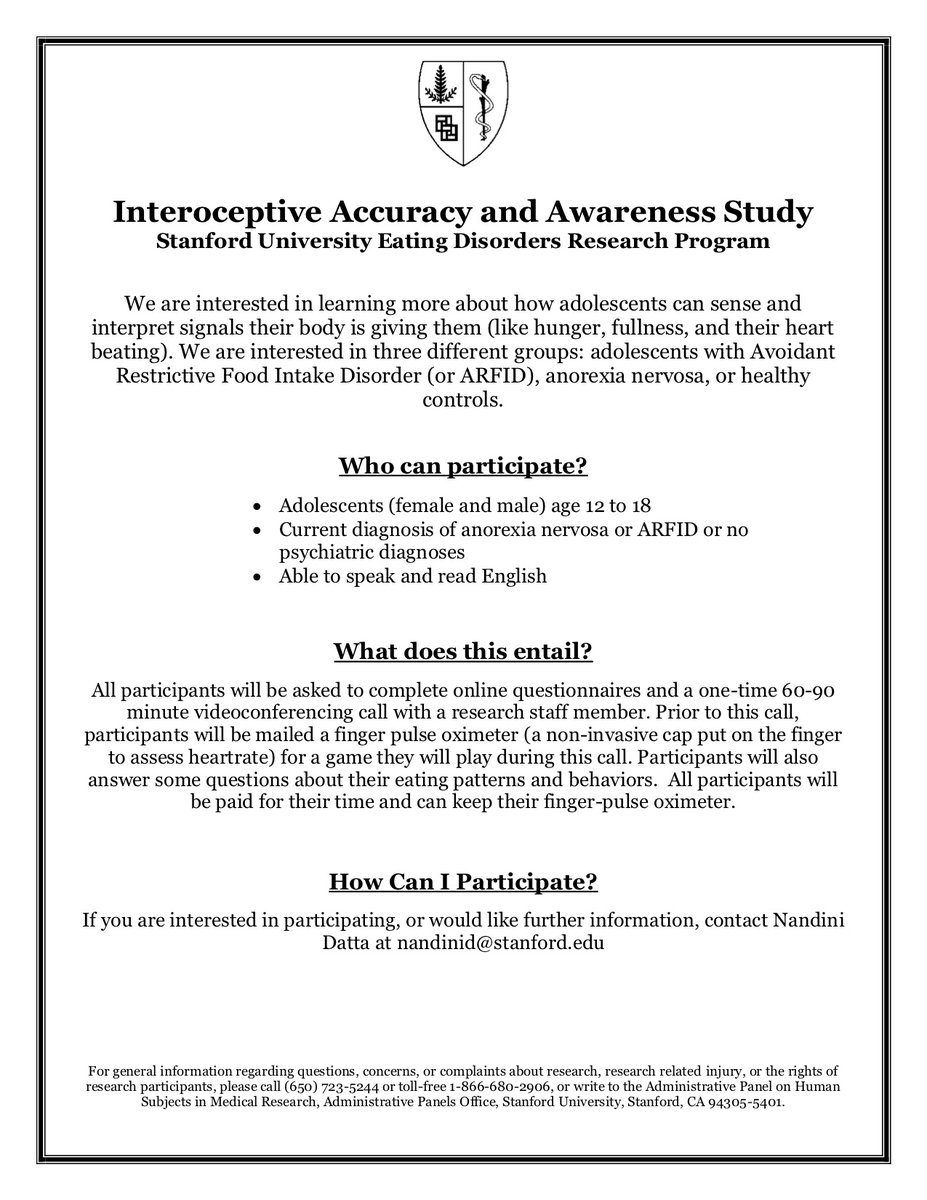
The Stanford Eating Disorders Research Program are currently recruiting for a study investigating how adolescents can sense and interpret signals their body is giving them (like hunger, fullness, and their heart beating). See thread and image for more details.
1
1
4
30 Jul 2021
How can I participate? Please respond to this email or separately email Nandini Datta (nandinid<at>stanford.edu) expressing interest and a member of our research staff will be in touch to provide additional information.
1
30 Jul 2021
For general information regarding questions, concerns, or complaints about research, please call 1-866-680-2906, or write to the Administrative Panel on Human Subjects in Medical Research, Administrative Panels Office, Stanford University, Stanford, CA 94305-5401.