
Publishing theoretical, methodological and empirical papers at the cutting-edge of research into international and global security challenges.
Joined November 2014
- Tweets 2,003
- Following 3,394
- Followers 7,808
- Likes 599
569 Photos and videos

Pinned Tweet

🎊 A New Chapter Begins! 📖 We're thrilled to announce a new editorial team at The European Journal of International Security - and some BIG changes to come! 🚀 Stay tuned as we unveil our vision for advancing scholarship and shaping the future of security research! #EJIS @MYBISA
4
12
40
11,640
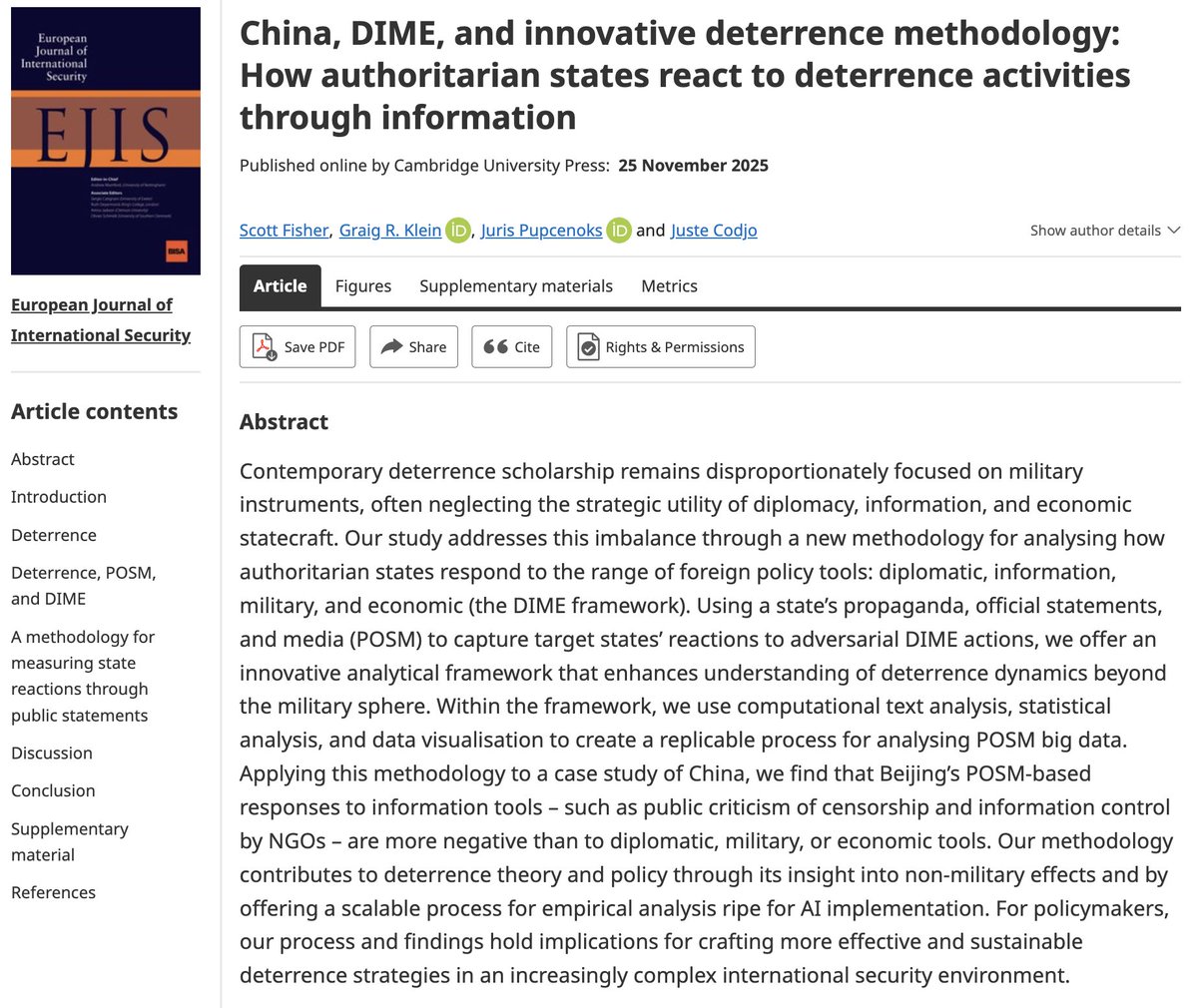
🇨🇳 "China, DIME, and innovative deterrence methodology: How authoritarian states react to deterrence activities through information" by Scott Fisher, @GraigKlein, Juris Pupcenoks & Juste Codjo.
📖👉 Open access - read here: cambridge.org/core/journals/…
1
6
669
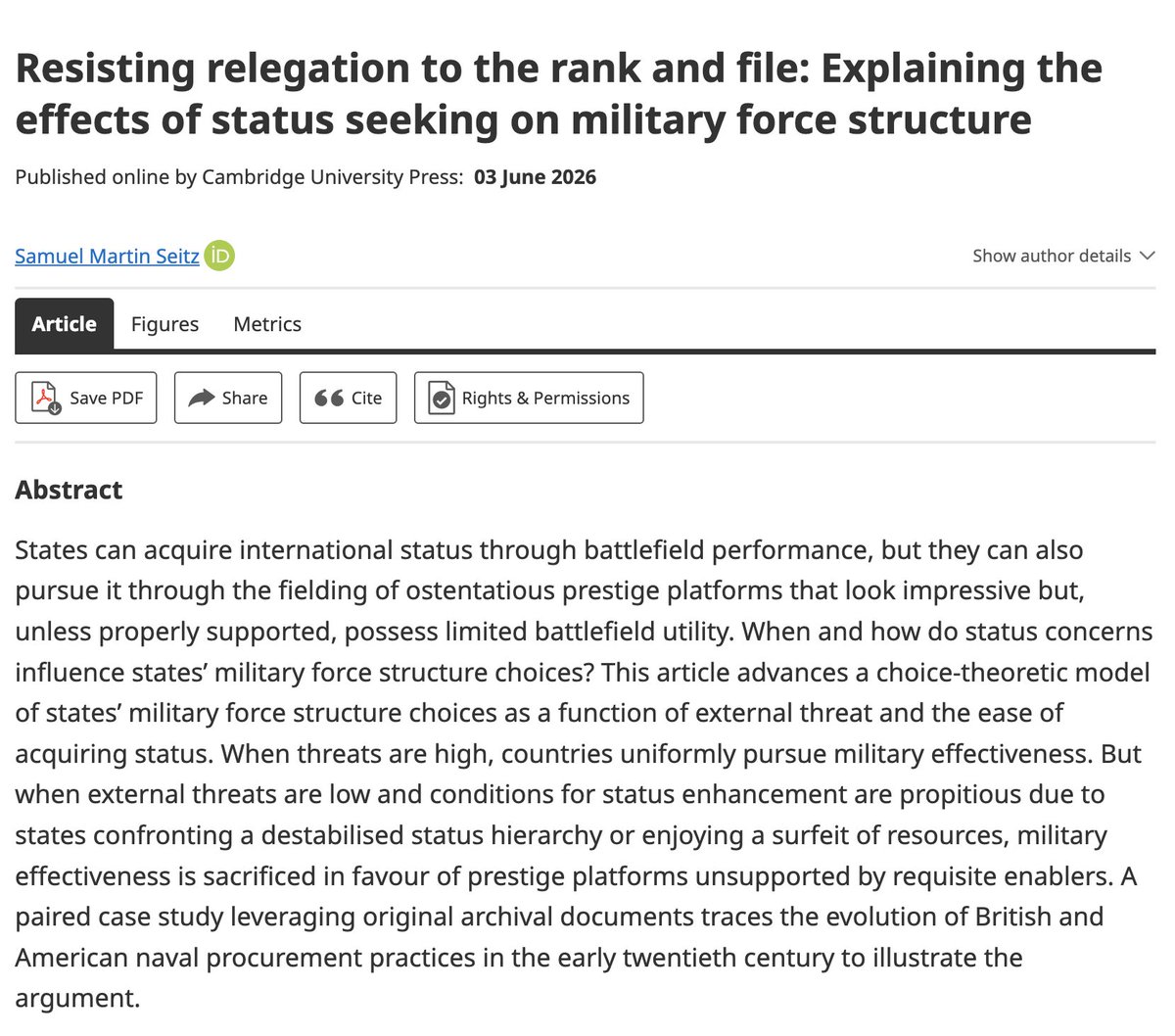
🪖🌟 NEW: "Resisting relegation to the rank and file: Explaining the effects of status seeking on military force structure" by Samuel Martin Seitz.
👉 Free to read here: cambridge.org/core/journals/…
1
8
462
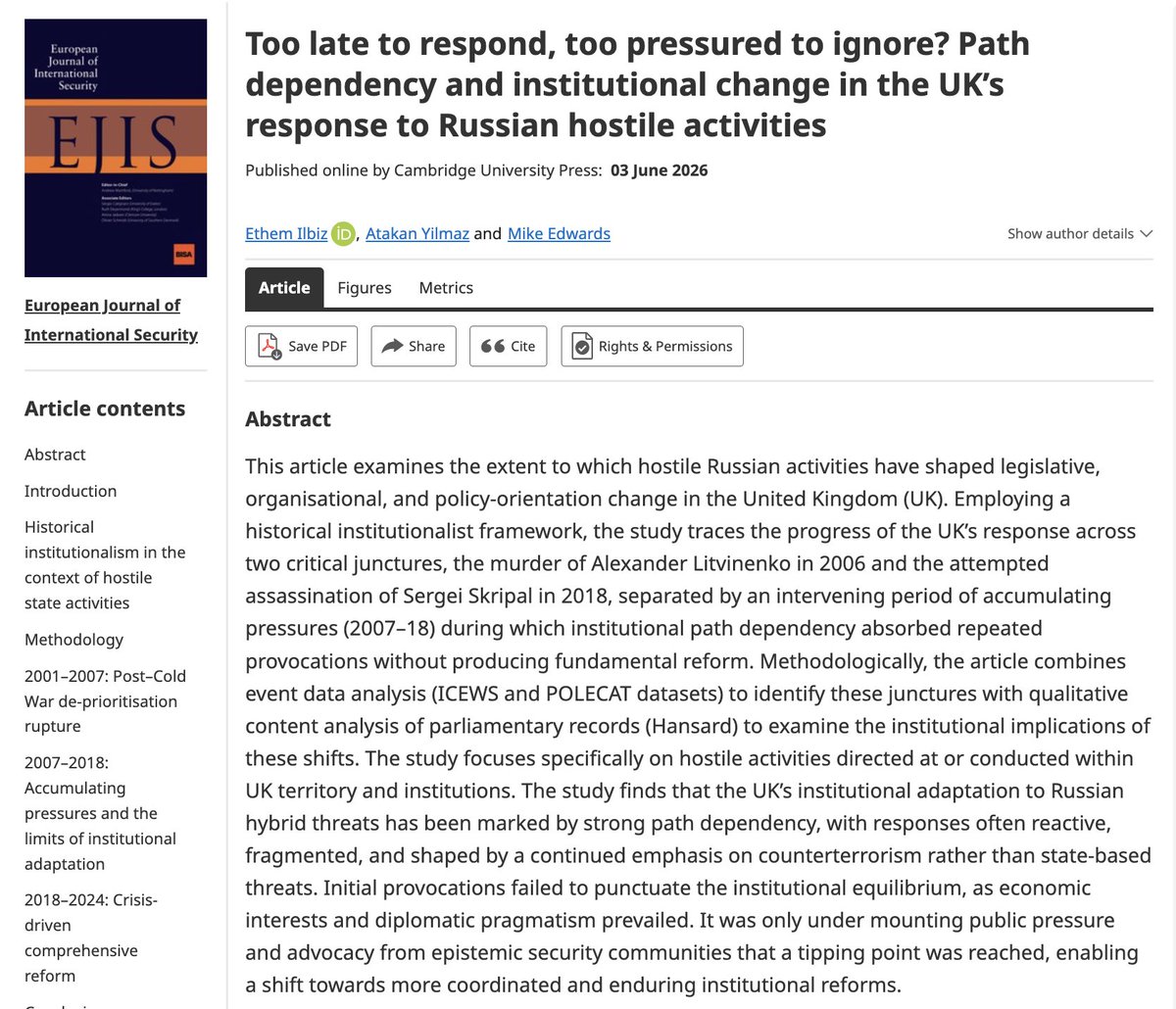
🇷🇺🚀 Essential reading: "Too late to respond, too pressured to ignore? Path dependency and institutional change in the UK’s response to Russian hostile activities" from Ethem Ilbiz, Atakan Yilmaz, and Mike Edwards.
📚👉 More here: cambridge.org/core/journals/…
2
293
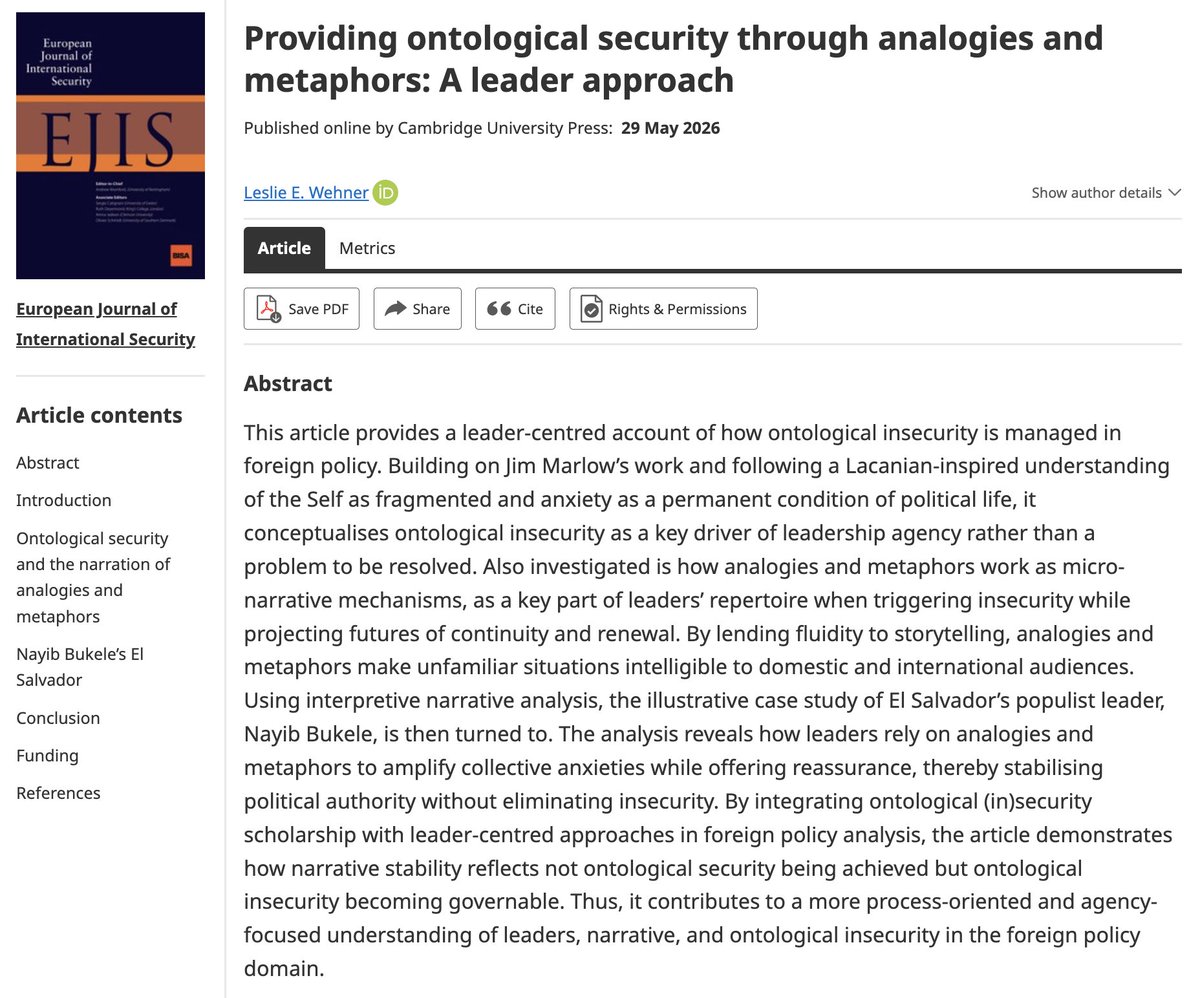
🪖🌎 NEW: "Providing ontological security through analogies and metaphors: A leader approach" from Leslie E. Wehner.
📚👉 Open access - read here: cambridge.org/core/journals/…
8
1,327
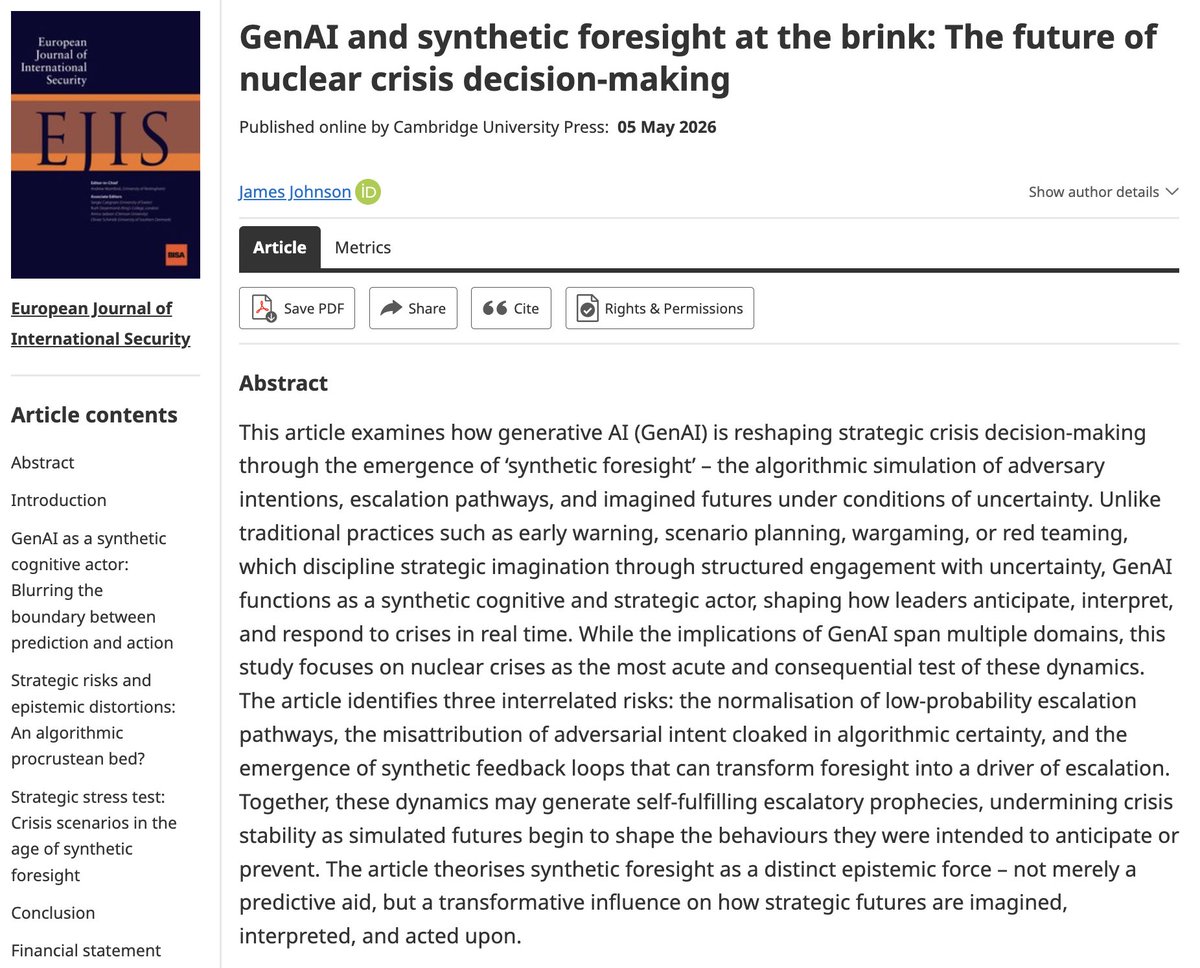
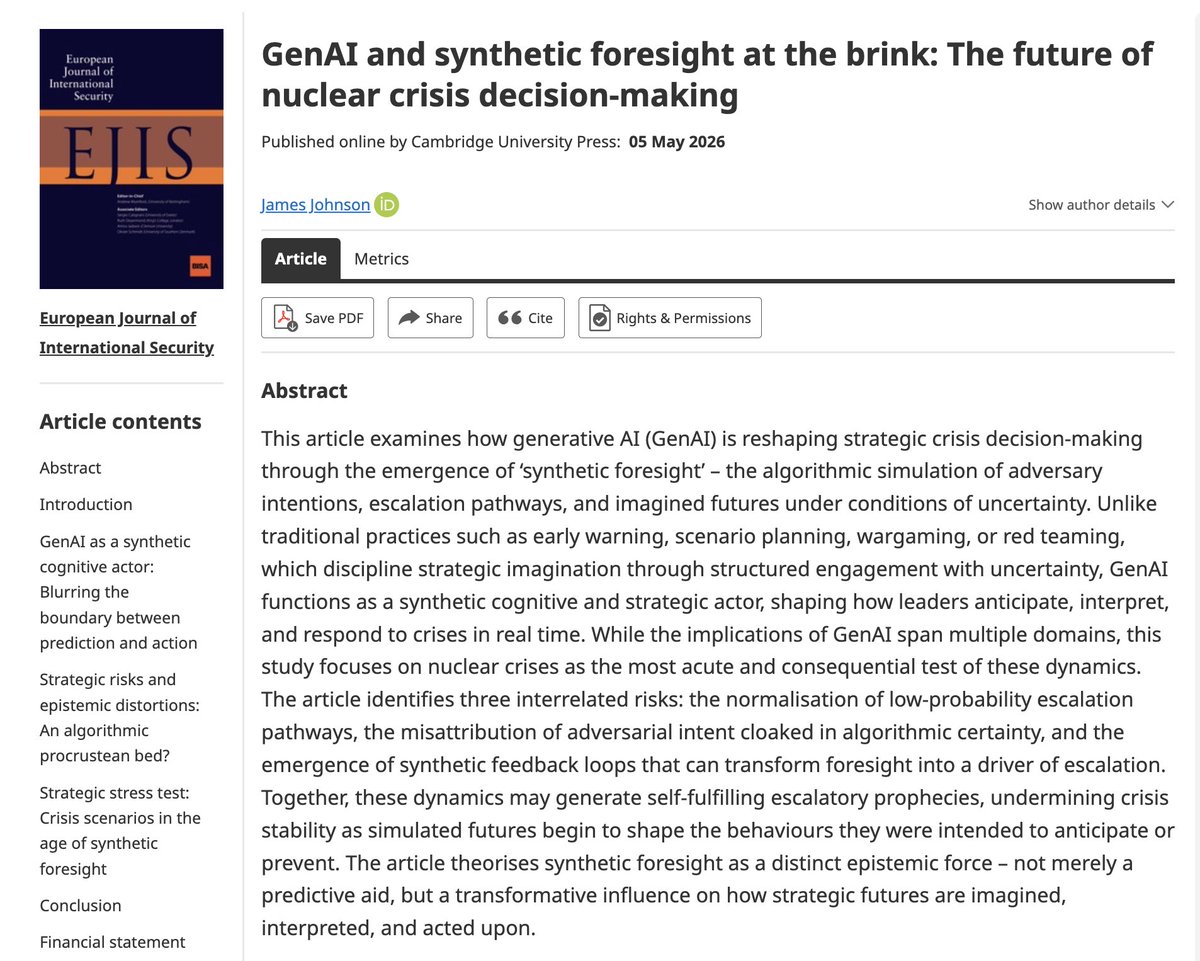
🤖✍️ "GenAI and synthetic foresight at the brink: The future of nuclear crisis decision-making" by James Johnson is an essential read on how GenAI reshapes strategic crisis decision-making.
📚👉 More here: cambridge.org/core/journals/…
248
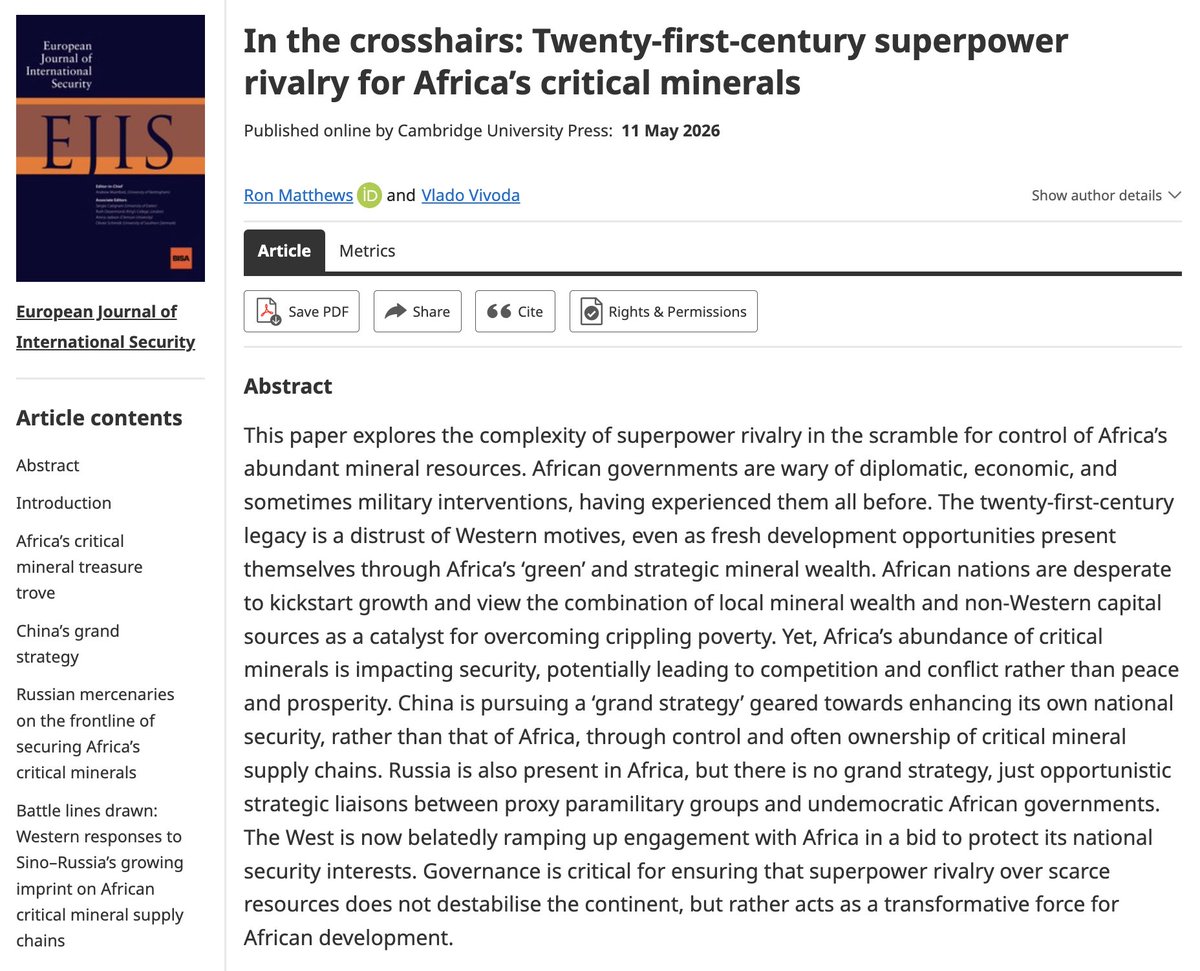
🇨🇳🇷🇺 New and open access: "In the crosshairs: Twenty-first-century superpower rivalry for Africa’s critical minerals" by Ron Matthews & Vlado Vivoda is an essential read.
📰👉 More here: cambridge.org/core/journals/…
6
11
779
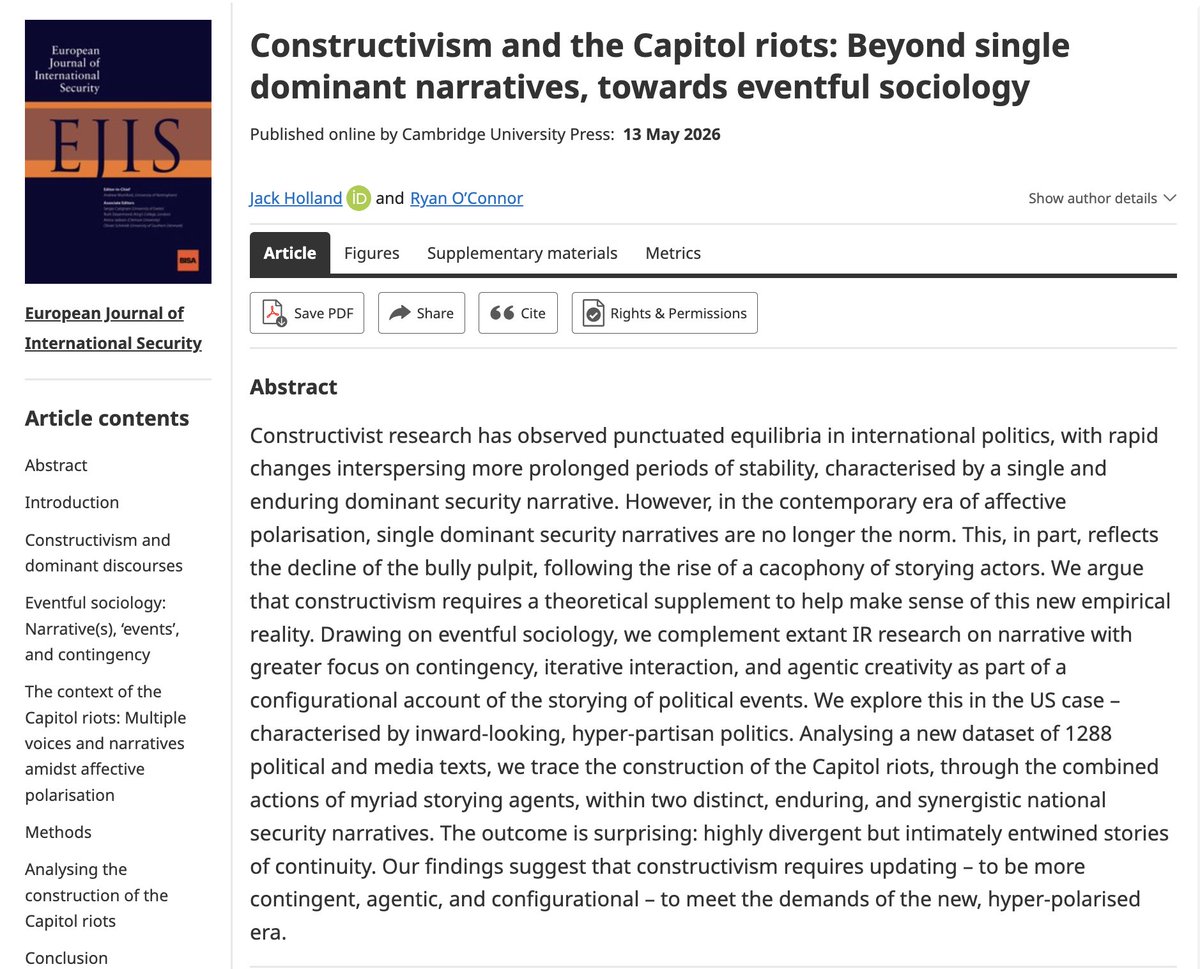
🪖🇺🇸 NEW: Constructivism and the Capitol riots: Beyond single dominant narratives, towards eventful sociology from Jack Holland & Ryan O’Connor.
📑👉 Open access - read here: cambridge.org/core/journals/…
2
222
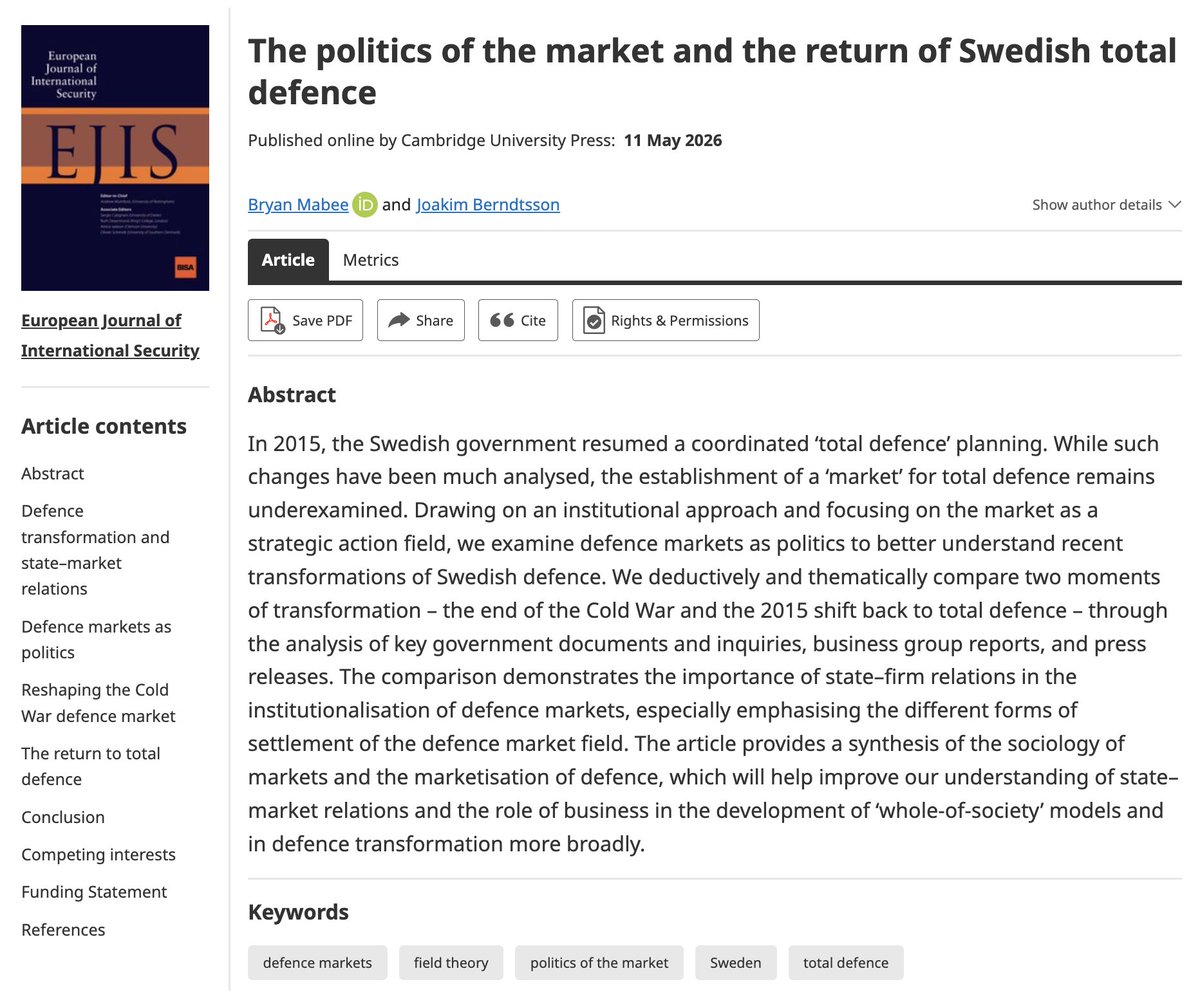
🇸🇪🪖 NEW: "The politics of the market and the return of Swedish total defence" by Bryan Mabee & Joakim Berndtsson.
🚀📚 Read more here: cambridge.org/core/journals/…
6
6
828
European Journal of International Security retweeted

that's a good summary of what chatbots do as well. they don't predict the future, they just say things that end up shaping it. epistemology more critical than ever.
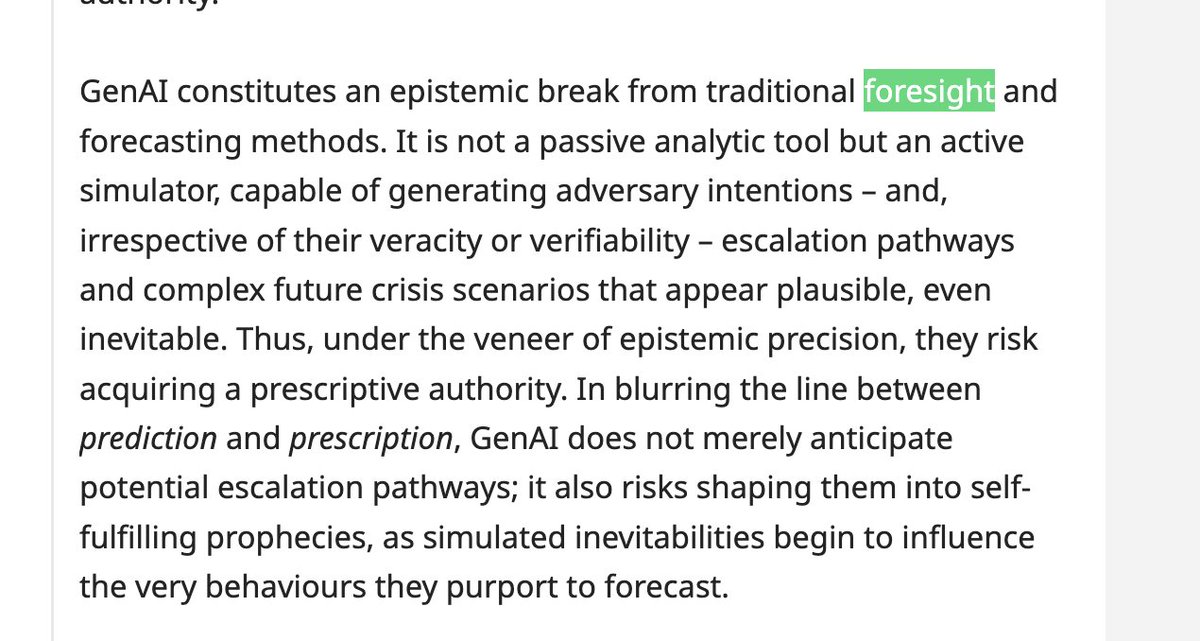

💻 NEW: "GenAI and synthetic foresight at the brink: The future of nuclear crisis decision-making" from James Johnson 🚀
👉📚 Read more: cambridge.org/core/journals/…
1
2
194
💻 NEW: "GenAI and synthetic foresight at the brink: The future of nuclear crisis decision-making" from James Johnson 🚀
👉📚 Read more: cambridge.org/core/journals/…
2
5
371
European Journal of International Security retweeted

Submissions of papers for our 2027 virtual conference #VirtualBISA2027 are OPEN NOW 🌟
'Conflict and cooperation in a changing world' 🌍
Find all information here! 👉 indico.bisa.ac.uk/event/659/
@SimonRushton8 @JulietDryden @Jamiejhagen @CityStGeorges @unamcgahern
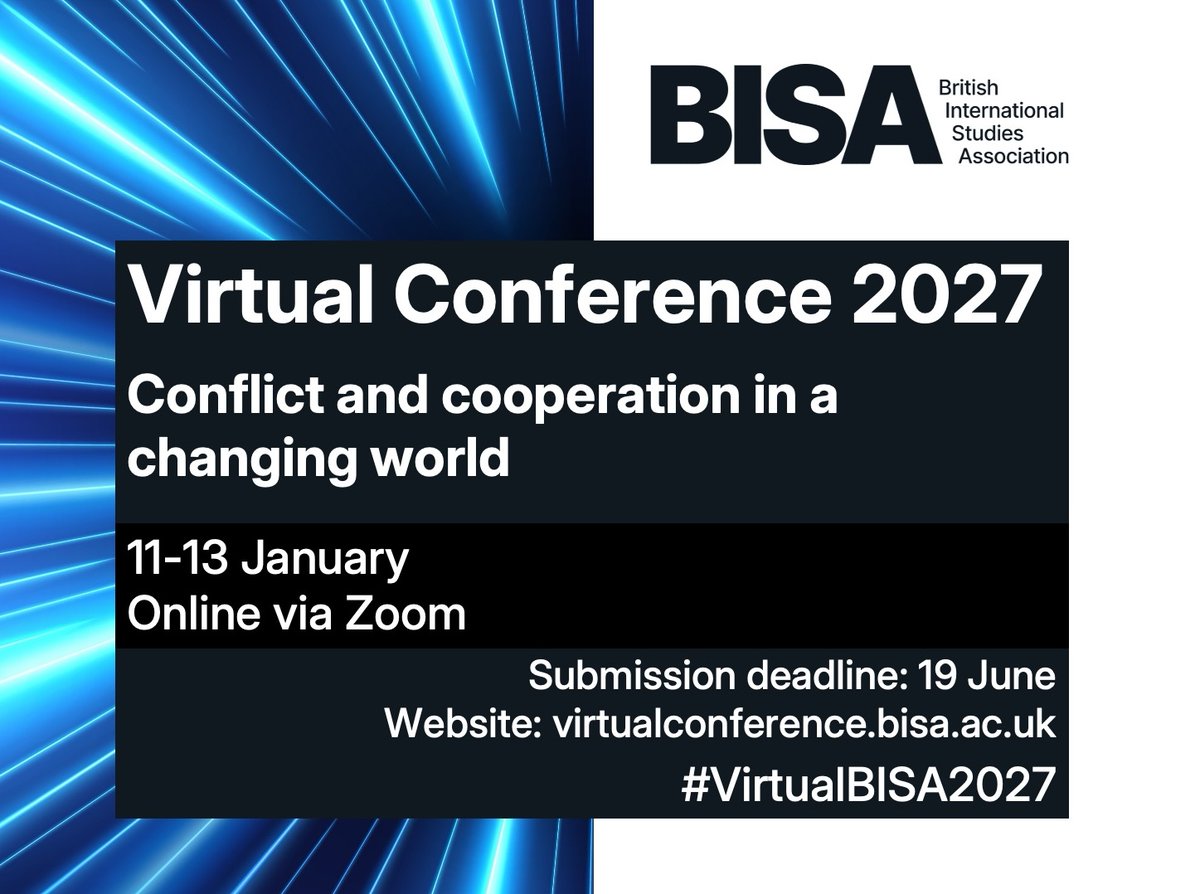
ALT Virtual Conference 2027 by BISA on conflict and cooperation, held online via Zoom from January 11-13.
2
12
14
1,701
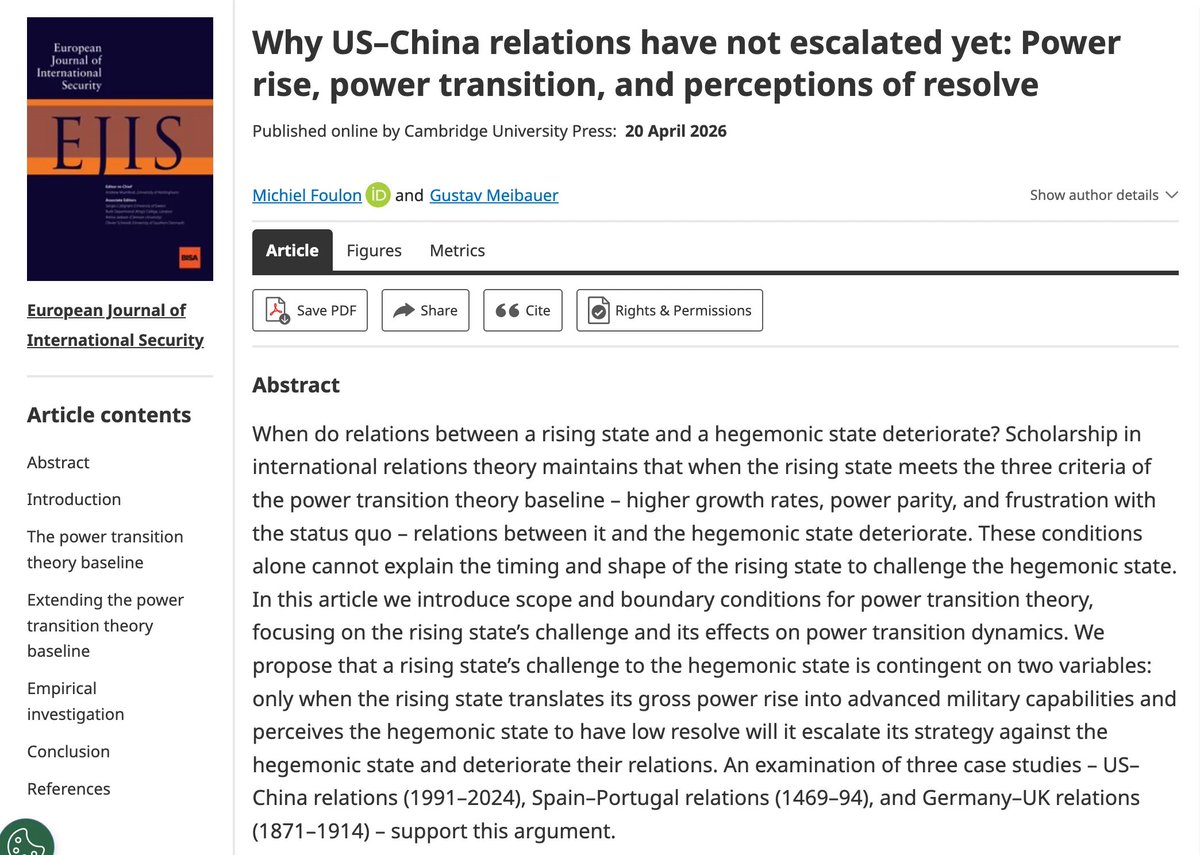
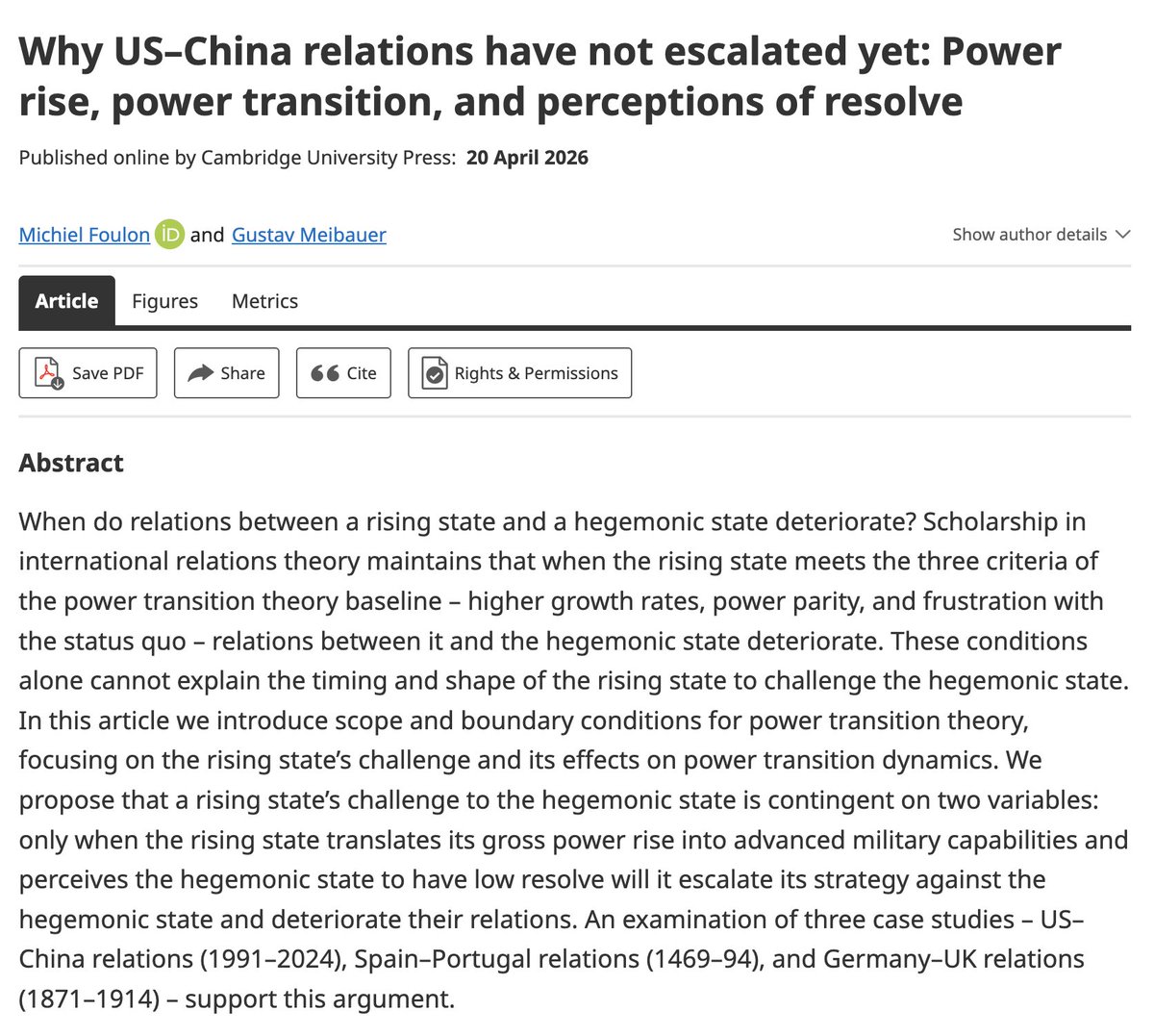
🚨 NEW: "Why US–China relations have not escalated yet: Power rise, power transition, and perceptions of resolve" from Michiel Foulon and Gustav Meibauer.
📑👉 Read, in full, for free: cambridge.org/core/journals/…
10
37
2,507
European Journal of International Security retweeted

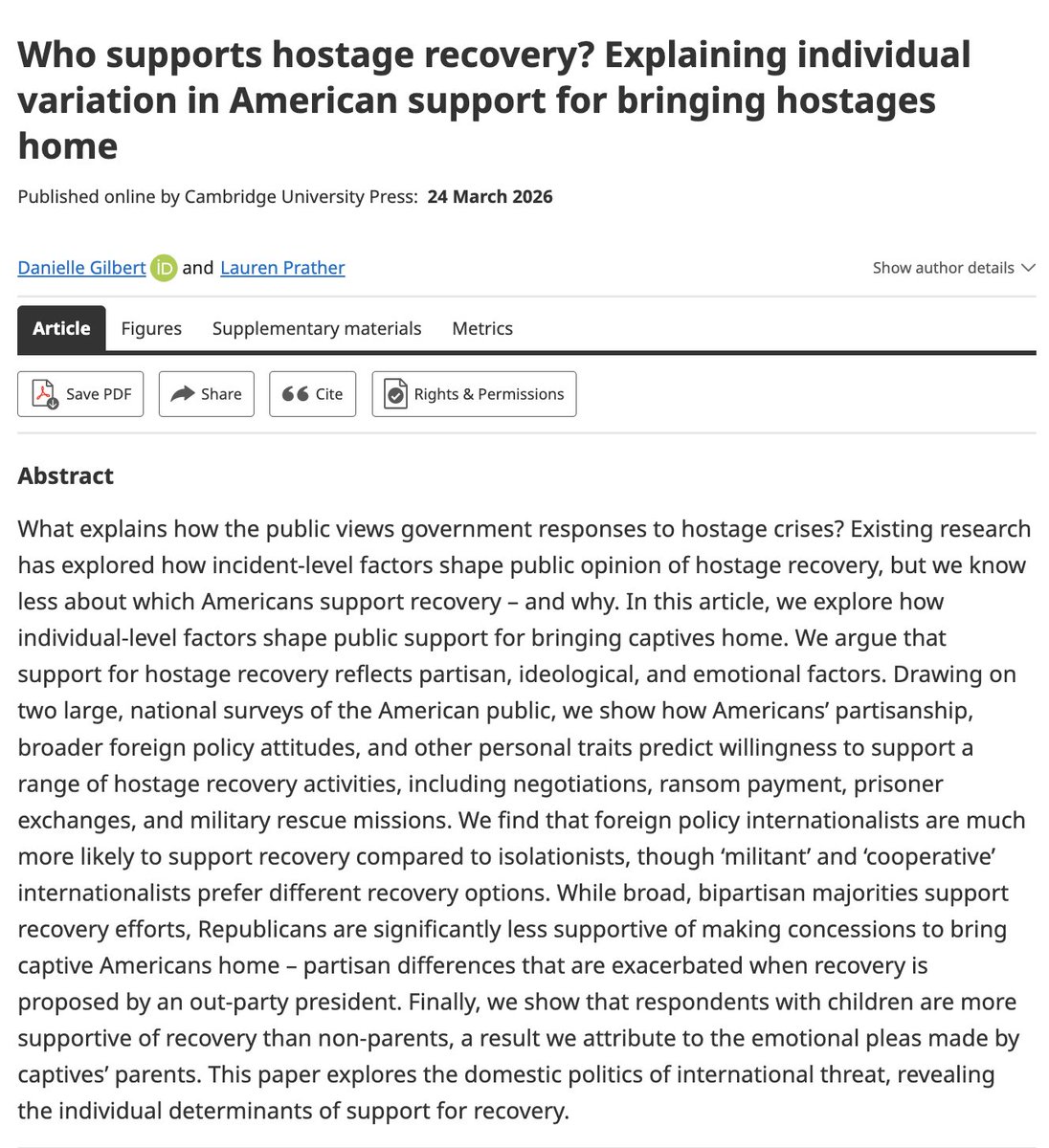
Discover this 2026 article on American hostage recovery via @CambridgeUP and @EJIntSec. doi.org/10.1017/eis.2026.100…
4
5
183
European Journal of International Security retweeted
Our 2027 virtual conference #VirtualBISA2027 call & homepage is OPEN NOW 🎉
Submissions for papers open on 5 May 🌟
Find our call for papers here 👉 virtualconference.bisa.ac.uk…
@SimonRushton8 @JulietDryden @Jamiejhagen @CityStGeorges @unamcgahern
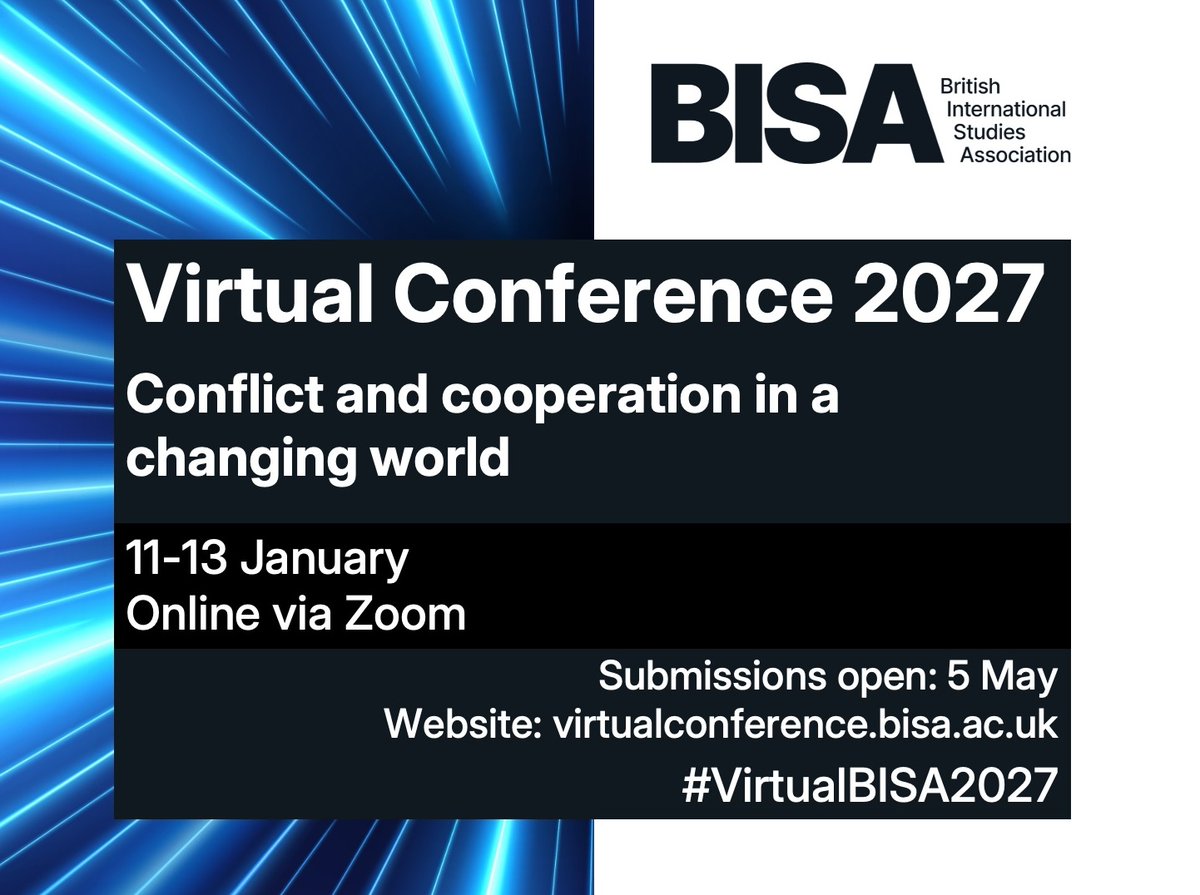
ALT Virtual Conference 2027 Conflict and cooperation in a changing world 11-13 January Online via Zoom Submissions open: 5 May Website: virtualconference.bisa.ac.uk #VirtualBISA2027 BISA logo and a half blue with neon stripes, half white background
2
11
12
1,536
🚨🇨🇳 NEW: "Why US–China relations have not escalated yet: Power rise, power transition, and perceptions of resolve" from @michielfoulon & Gustav Meibauer.
📚👉 Read more here: cambridge.org/core/journals/…
10
24
1,881
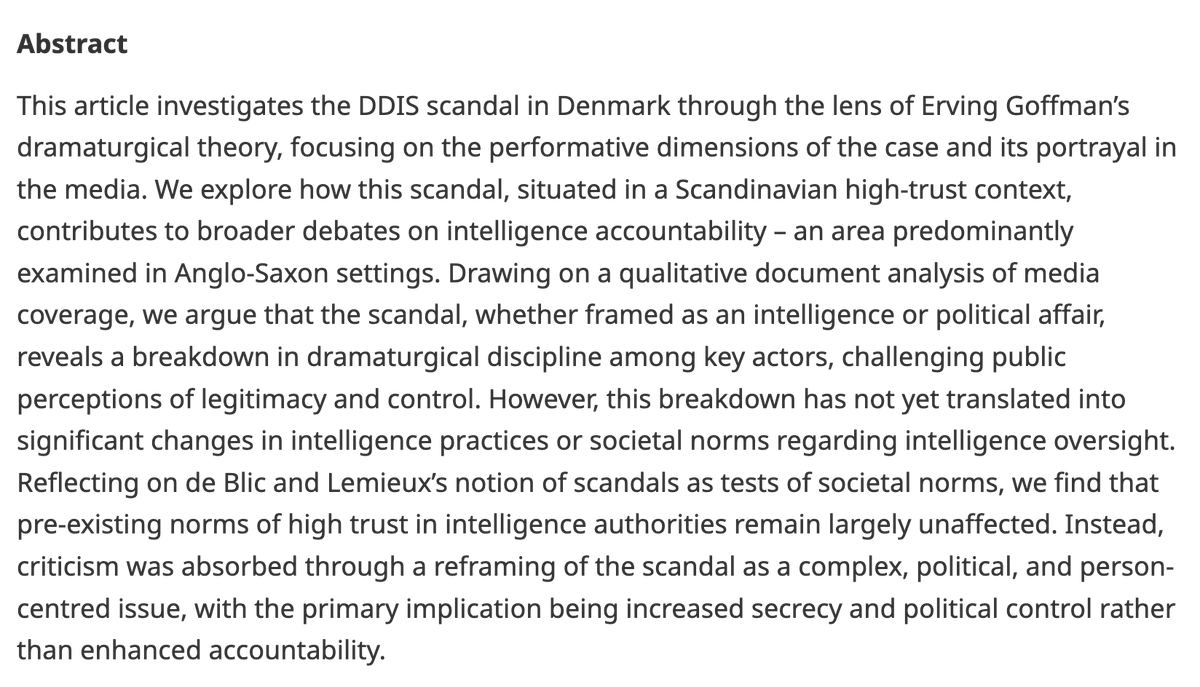
🇩🇰 Top read: "The dramaturgy of the Danish intelligence scandal" by Kira Vrist Rønn & Nadja Kirchhoff Hestehave.
📒👉 Read here: cambridge.org/core/journals/…
2
2
771
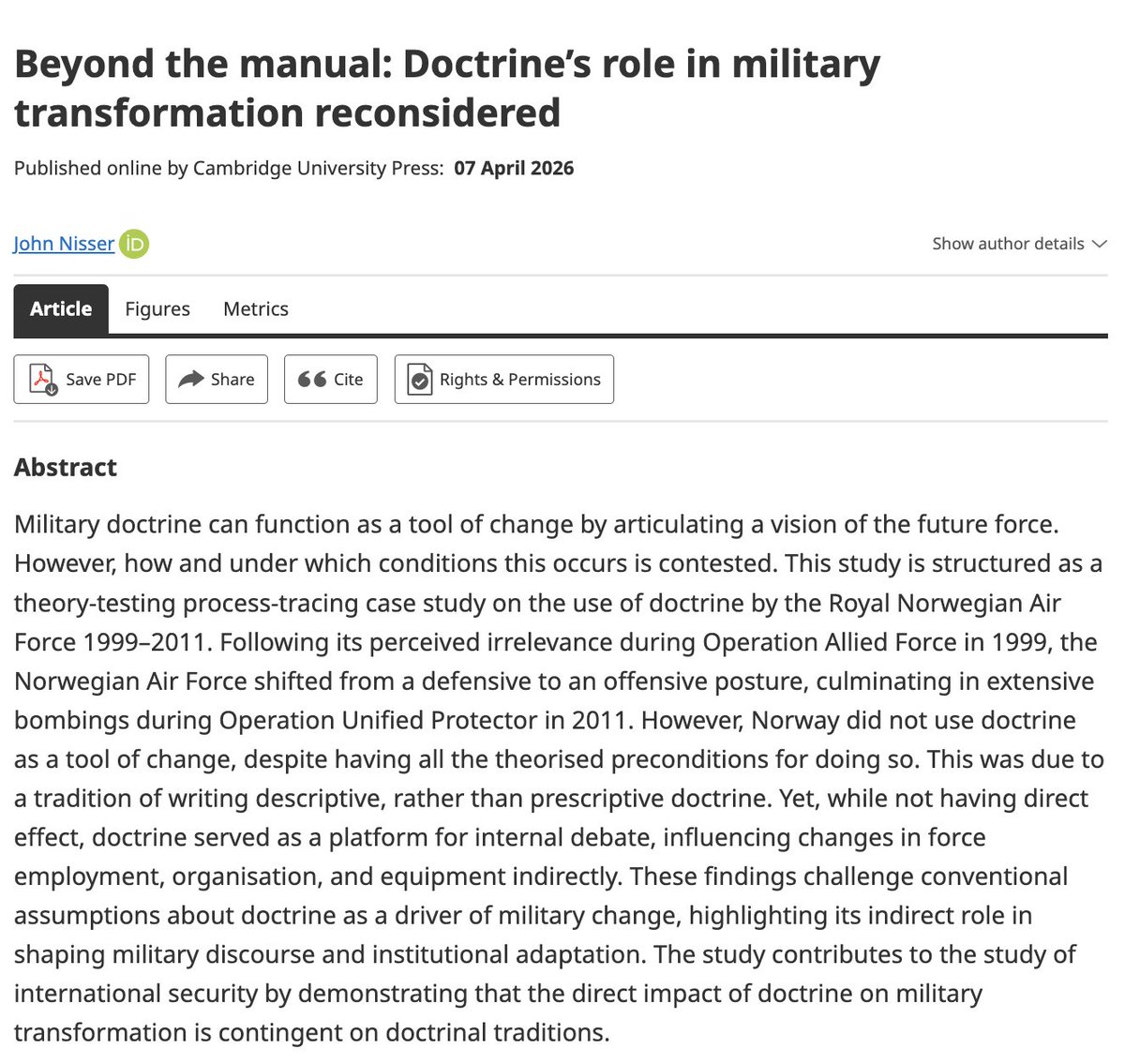
💫🪖 NEW: "Beyond the manual: Doctrine’s role in military transformation reconsidered" by John Nisser (@Forsvarshogsk).
👉 Open access: cambridge.org/core/journals/…
1
8
26
1,497
🚀🚨 NEW ISSUE 🚨💫
European Journal of International Security
Volume 11 - Issue 2 - May 2026
📚👉 Out now: cambridge.org/core/journals/…
@MYBISA
4
17
1,238

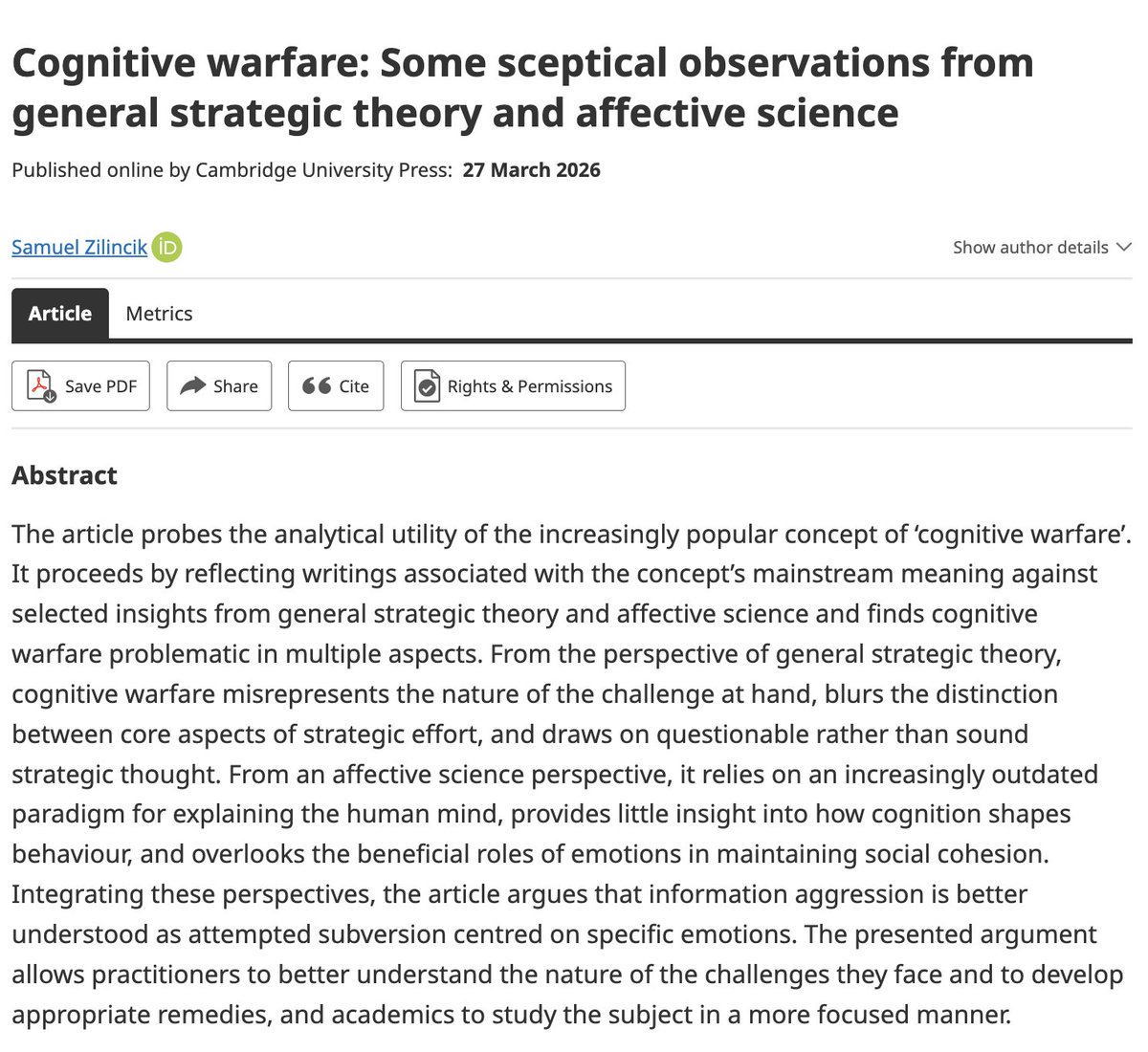
🔪"the concept of cognitive warfare overpromises, creating a false illusion about the amount of control actors can exercise over the minds of peoples on the adversary’s side"
🌎🚀 NEW: "Cognitive warfare: Some sceptical observations from general strategic theory and affective science" from @SamoZilincik.
📚👉 Read in full here: cambridge.org/core/journals/…
2
4
450
European Journal of International Security retweeted

Mar 28
In a new paper for the @EJIntSec, my brilliant colleague @SamoZilincik draws from strategic theory and affective science to show that the concept of « cognitive warfare » is too flawed to be analytically and practically useful cup.org/3O769MT
5
33
2,815