Scottish but heavily modified by a Welsh girl for over sixty years. Retired from the international construction industry. Just a sinner saved by grace.
Joined July 2015
- Tweets 15,872
- Following 1,621
- Followers 1,047
- Likes 1,549
190 Photos and videos












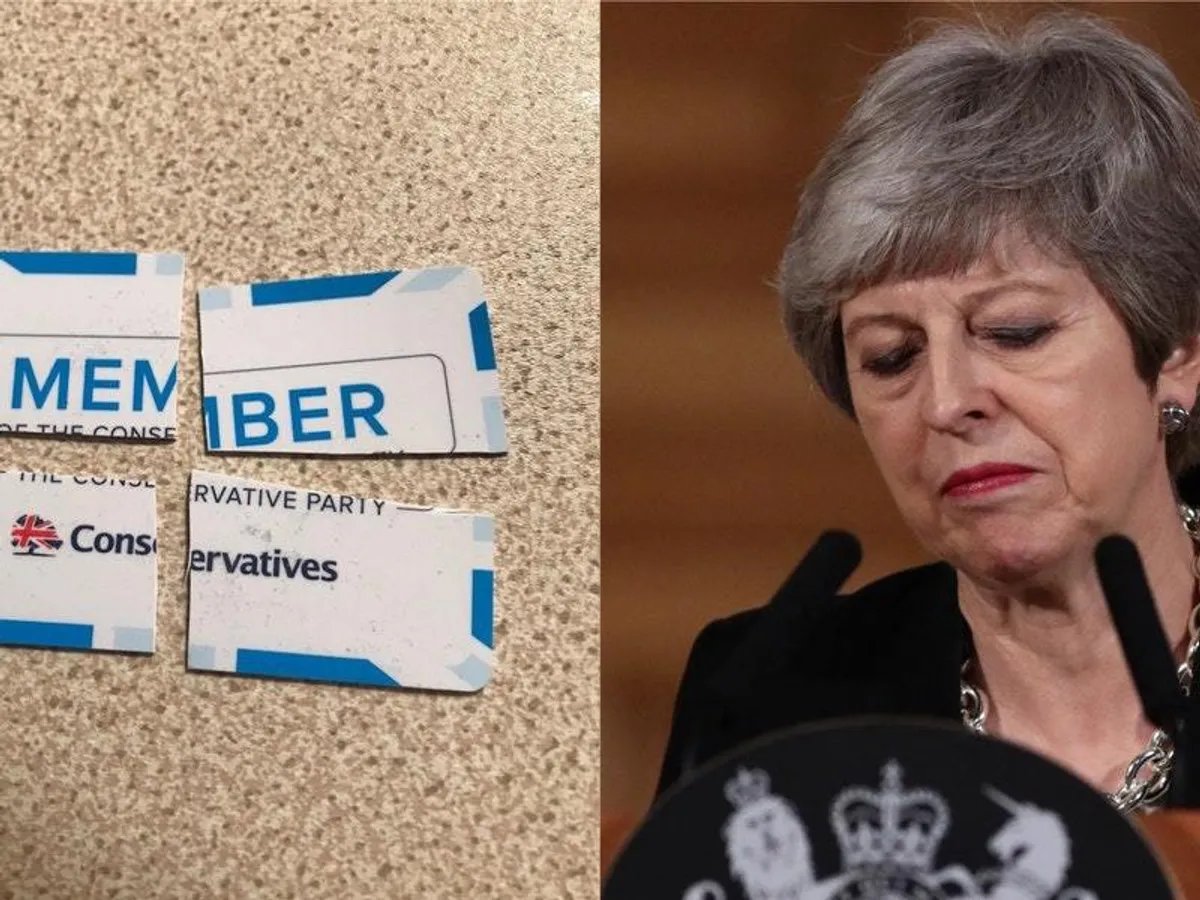
If you've followed this account for a while, you'll know that when surveying the UK political landscape I reserve my deepest contempt for the Conservative Party.
You might wonder why that is. After all I'm a small c conservative. Patriotic, keen on the nation state, understanding the importance of law and order and strong armed forces ready to defend our nation. A fan of low taxes, low public spending and a balanced budget. On benefits, giving a hand up for people when they need it, not a handout. Keen to encourage the private sector and especially small businesses. Suspicious of state bureaucracy. Happy with a small amount of selective immigration of people who will add something to our society, not detract from it.
The problem is, the Conservative Party isn't any of these things any more.
You might say: "Ah, but the Labour Party are even worse". And they are. But I don't expect anything better from them. I expect better from the Conservative Party - because I am a conservative, and expect them to be too.
When Margaret Thatcher was in power, I was young and foolish and had all sorts of kind, but naive, liberal ideas. Decades have passed, and I have been cured of most of those, as a result of experiencing the world as it is rather than as I might like it to be. But just at the moment in time when I was ready to vote for a small c conservative party, the Conservative Party sailed past me in the opposite direction, en route to a kind of lily-livered, globalist, unpatriotic social democracy little different from the Blairite Labour Party.
Not only that but I've watched the Conservative Party for 14 years break its promises over cutting immigration, seen it doing its best to obstruct Brexit, seen it do nothing to reverse the worst mistakes of the Blair government and its march of cultural Marxists through our institutions, watch it increase the tax burden on us, deplete our armed forces (while at the same time getting us embroiled in wars which didn't concern us), fail to deliver energy security, and get us involved in all sorts of liberal virtue signalling about the climate and overseas aid. Practically the only thing I can think of that they did well is the school reforms they introduced, but even those were somewhat scuppered by shutting schools in 2020 to hide from a virus which wasn't even a deadly threat to most adults, never mind children.
So, when it comes to politics, I reserve my deepest hatred and vitriol for the Conservative Party. For 14 years of betrayal and broken promises. For failing to be the centre right party that Britain needed. For persuading Nigel Farage to stand down Brexit Party candidates in 2019 and then delivering a half-arsed Brexit, and an enormous wave of low skills immigration as a punishment for Brexit.
I'll be happy if the Labour Party withers and dies in the next few years, but I'll be absolutely over the moon if the Conservative Party dies - because they betrayed me and so many people who voted for them - and the death of the party will mean that can never happen again.
154
261
1,117
24,208
Ed Donald retweeted

May 6
In 2016, South Australia learned what happens when a grid leans too hard on the wind.
The Aussie state led the world in renewable dependence, with about 40% of its electricity coming from wind.
Then a strong storm hit, and no less than nine wind farms cut their output, removing more than 450 megawatts in a matter of seconds.
That cumulative loss tripped the Heywood interconnector, and the entire state went dark - about 1.7 million people without power.
An official AEMO report found the sudden reduction in wind output was the key driver of the system collapse.
South Australia had to restart the grid using diesel black-start generators and gas power plants.
A weather-dependent grid died in seconds, and only fossil fuels brought it back.
42
597
1,191
20,450
Ed Donald retweeted

May 6
The brilliant @KathrynPorter26 obliterates the myth of ‘free electricity’ with @FraserMyers for @spikedonline.
“It's very frustrating actually, to see people celebrating this… what it means is you're breaking the grid.”
12
254
539
9,558
Ed Donald retweeted

The state pension is not a random government favour, it’s the back end of a 35–40 year compulsory “contract” where people are forced to hand over National Insurance on the clear promise of a basic pension at the end.
Politicians and think tanks helped design an unfunded, pay‑as‑you‑go system where today’s workers pay today’s pensioners, then have the gall to call it “unsustainable” as if the public dreamt it up.
If a private firm sold you a retirement product on fixed terms, took your money for four decades, then announced at 66 that you “didn’t really need it” and would henceforth be means‑tested or frozen, they would be in court for mis‑selling and fraud.
The crisis here is not pensioners “leeching off the young”, it’s a political class that built a Ponzi‑style NI system, diverted the proceeds for other spending, and now wants to default on the people who kept their side of the bargain.
You do not blame the victims of a defective product for believing the brochure; you go after the people who wrote it.
507
4,876
16,012
294,734

Apr 28
Sarah Smith just said that the comments by our US ambassador were a diplomatic ‘SNAFU’!
Does she know what that means? 😊
1
1
27
Ed Donald retweeted

Apr 22
I had to share this. If you haven’t seen this lady in action - you soon will !!! What a legend!!! THIS is the passion and honesty we desperately need in British Politics!! @SorchaEastwood 🇬🇧 I solute you Sorcha !
566
3,603
16,622
533,272
Apr 21
Does anyone think that the PM now regrets sacking Sir Olly Robbins?
Must only be a matter of time before he sacks someone in the Cabinet Office for advising him to sack Olly.
2
82
Apr 21
Can we arrange for Olly Robins to become our Foreign Secretary please?
1
23
Apr 3
I must admit that I am a great admirer of Trump.
Even when he is winning effortlessly he is still able to concentrate on the task at hand until he is over the winning line.
As a Scot however I still hope John Higgins gets to the final and then beats him.
19
Ed Donald retweeted

Mar 19
🚨 Watch Starmer and Khan in their own words — then watch them bury the truth.
Starmer opens his mouth and utters the words “particularly since 7 October”… the date of the worst massacre of Jews since the Holocaust. He realises he’s just stepped in it, back-pedals and pivots straight into “Islamophobia is intolerable” while Khan sits there nodding like a broken Churchill dog on the dashboard. Vile opportunists 🤬
Not ONE word about the British girls raped and trafficked by Muslim grooming gangs in Rotherham, Rochdale, Oxford. Not a whisper about the 7/7 London bombings, the Manchester Arena slaughter, the Reading stabbings, the Southport knife attack, or the endless queue of Islamist terror plots our security services are still fighting every single week.
MI5, MI6 and every counter-terror chief for the last 20 years have said the same thing out loud: Islamist extremism is the single biggest terror threat to the United Kingdom. Full stop. Our own eyes, our own streets, our own daughters, our own statistics — they all scream the same message.
Yet these two parasites sit there pretending the real danger is “phobia” instead of the ideology that can’t live peacefully with Christians, Jews, Hindus, Sikhs… or even itself.
Muslims can’t live with anyone — including each other — and the proof is on every news channel, every crime report, every no-go street in London, Birmingham and beyond.
British people aren’t “Islamophobic.” If they’re guilty of anything—it’s having 20/20 vision.
Starmer and Khan? They’re blind on purpose — because the truth would cost them their votes, their donors, and their precious “tolerance” narrative.
Enough. The lies stop here.
Britain first. Deport the threats. Stop importing the problem.
Tag them. Share it everywhere. Let the video do the talking.
21
232
413
18,801
Ed Donald retweeted

This from @Geoffrey_Cox was titanic - a truly beautiful speech.
He outshone those sat opposite. They could only watch. And nervously laugh.
This should be seen by every new MP to understand what they do, & every new barrister to understand what we do.
467
3,184
10,288
860,612
Feb 27
If I have a choice, at the next general election, of Nigel Farage, Wes Streeting or Zack Polanski, will this pass the threshold test for the new assisted dying bill?
1
114
Feb 10
As a role model for young Swedish women, I think I prefer Isabella Wrana to Greta Thunberg. 😊
2
442
Ed Donald retweeted

Feb 9
Morgan McSweeney’s Labour Together set private investigators on journalists researching his corruption, but we managed to bring him down.
Please consider contributing if you value my work: crowdfunder.co.uk/p/support-…
Follow @jodymcintyre_ for more on Starmer’s last days in office.
58
550
1,568
31,844
Ed Donald retweeted

Feb 8
MIT Professor of Meteorology confirming there is very little evidence of man-made climate change
125
1,499
4,832
152,437
Ed Donald retweeted

I’ve never voted Conservative. Living in Dundee, I’ve voted tactically for Labour because it was the only realistic way to keep the SNP out. I’m pro‑UK, and I’ve always backed whichever option gave Scotland the best chance of stability and unity.
But let’s be honest: the old parties have run out of road.
Labour, the Conservatives, the SNP, they all react the same way to Reform.
Not by debating the issues, but by attacking the people.
Not by answering the arguments, but by smearing the supporters.
They’re scared.
Because Reform isn’t a fringe movement, it’s a response to their failure.
Here’s the reality they don’t want to acknowledge:
Reform supporters are normal people.
The ones I see every day?
Builders. Nurses. Drivers. Teachers. Small business owners.
Up early, grafting all day, raising families, paying mortgages, keeping the country running.
No chaos. No drama. Just responsibility, decency, and backbone.
These are the people who keep Britain standing.
Not extremists. Not caricatures.
Just ordinary citizens who’ve had enough of being ignored and patronised.
Meanwhile, the political establishment, across all parties,would rather label than listen.
They shout “dangerous” because it’s easier than admitting they’ve lost touch with the country.
Reform isn’t the threat.
Reform is the consequence.
People want competence.
People want honesty.
People want a party that defends the UK without the spin, the tribalism, or the excuses.
Normalising Reform isn’t radical.
It’s simply recognising where the public actually are.
The old parties broke trust.
Reform is what happens next.
399
869
3,770
129,662
Ed Donald retweeted

Feb 6
"The tone of public life has been lowered ever since Alastair Campbell connived, lied and bullied his way across our political life - with Blair's blessing."
"Standards have deteriorated radically since then."
Michael Howard tells @campbellclaret some home truths in 2007. 🇬🇧
84
789
3,726
128,124
Ed Donald retweeted

Once upon a time, Great Britain didn’t ask for relevance — it forged it, usually out of coal, sweat, and mild child endangerment. We kick-started the Industrial Revolution, invented the modern factory, mechanised everything that didn’t run away fast enough, and powered the world with steam engines, steel, and sheer bloody-minded confidence.
Other nations looked at Britain and thought: “Blimey. They’ve turned smoke into money.”
We built railways before most countries had clocks. We made ships that ruled the seas, machines that fed empires, and cities that hummed night and day like angry mechanical beehives. Manchester, Birmingham, Sheffield — names that once meant output, innovation, muscle. Britain didn’t just punch above its weight; it redefined the weight class.
And now?
Now we argue over bike lanes.
At our peak, we exported locomotives and engineering expertise across the globe. Today we export… strongly worded apologies, consultants, and episodes of “How Not To Run A Country.” We once built things so solid they’re still standing. These days we can’t even pour concrete without an inquiry, a delay, a feasibility study, and a sudden announcement that the budget’s been spent on consultants who’ve never seen concrete in the wild.
We went from “the workshop of the world” to “the waiting room of decline.”
The factories closed — not because we ran out of ideas, but because we decided making things was somehow beneath us. Why build steel when you can build PowerPoint decks? Why manufacture goods when you can shuffle paper, inflate property bubbles, and call it a “service economy”? Industry was dirty, unfashionable, and didn’t fit the new vision — so we swapped engineers for administrators and hoped the lights would stay on out of politeness.
Spoiler: they didn’t.
We sold off national assets like a desperate car-boot sale. Energy, rail, water — gone. Not because it made strategic sense, but because it looked tidy on a spreadsheet for about five minutes. The idea of long-term national interest was quietly replaced with short-term optics and a ministerial resignation letter already half-written.
And while other countries doubled down on manufacturing, skills, and self-sufficiency, Britain doubled down on managed decline. We stopped planning for the future and started firefighting the present. Everything became a crisis. Nothing became a solution.
Our politicians? Once statesmen. Now careerists. Once builders of systems. Now managers of headlines. They don’t ask “What will Britain need in 30 years?” — they ask “Will this survive the next news cycle?” Leadership has been replaced by risk avoidance. Vision by polling. Courage by a strong preference for not being yelled at on social media.
Meanwhile, the public is told to lower expectations. Don’t expect reliable infrastructure. Don’t expect affordable housing. Don’t expect pride in national achievement. Just be grateful, apparently, and try not to notice the slow erosion of competence dressed up as progress.
We still talk like a great power. We still remember being one. But memory without action is just nostalgia — and nostalgia doesn’t keep the lights on, the trains running, or the country moving forward.
The tragedy isn’t that Britain fell from greatness. Empires rise and fall — that’s history. The tragedy is that we chose drift. We mistook decline for sophistication. We confused moral posturing with material strength. We forgot that you can’t redistribute wealth if you’ve stopped creating it.
We didn’t lose Britain in a single disaster.
We misplaced it, slowly, carefully, with paperwork.
And the maddest part? The bones are still there. The talent. The ingenuity. The stubborn streak that once bent the world to our will. Britain isn’t broken — it’s underused, mismanaged, and allergic to its own potential.
We don’t need to relive the past.
But we do need to remember this:
A country that once built the modern world should not be struggling to change a lightbulb.
17
68
241
3,975
Ed Donald retweeted

Jan 21
My monologue on what the new world order means for Britain, from @TimesRadio today:
For those of you who’ve not yet copped that we’re at a watershed in global politics I suggest you have a read of Mark Carney’s speech in Davos yesterday. It’s not often a Canadian prime minister charts a seminal change in world politics. But Carney, a former governor of the Bank of England, has.
This is the key passage:
“Over the past two decades, a series of crises in finance, health, energy, and geopolitics have laid bare the risks of extreme global integration. And as a result, many countries are drawing the same conclusions—that they must develop greater strategic autonomy: in energy, food, critical minerals, in finance and supply chains. And this impulse is understandable. A country that can’t feed itself, fuel itself or defend itself has few options. When the rules no longer protect you, you must protect yourself.”
Coming from a fully-paid up member of the liberal global elite, this is dynamite. Carney says the era of global integration is over and that what he calls ‘middle powers’, like Canada and the UK, who benefitted from it and got used to working through global institutions — like the WTO, the UN, COP, NATO, the EU — need to realise the game is up.
If you can’t feed, fuel and defend yourself in this new world of rupture you’re finished. So these are his priorities for Canada. He’s junked a lot of his net zero baggage to increase Canada’s energy security. He’s moving from multilateral to bilateral deals he thinks will benefit Canada, most recently with China. And he’s doubling spending on defence.
The British government should take stock. Carney’s world of rupture has been brought about by Donald Trump’s wrecking ball approach to the rules-based world order that has served us so well these past 80 years.
It’s played into the hands of the autocrats of Moscow, Beijing and elsewhere who want to replace that world order with a system far more attuned to their interests. Trump is obliging them.
Food. Fuel. Defence. These are Carney’s watchwords for a scary new world in which middle powers need to seek strategic autonomy when old alliances and multinational institutions no longer work. They should guide British policy too.
We need to be able to feed ourselves better. To be able to count on cheap, secure sources of energy. And to be able to defend ourselves from multiple and growing threats. At the moment the Starmer government is doing none of the above.
Instead it is lumbering business with the most expensive energy costs in the world and households with the second or third most expensive domestic energy in the world.
It is pursuing a multi-billion pound dash to net zero while adding only a few crumbs to the defence budget.
And it’s covering good farming land with solar panels.
It would be hard to think of a set of policies less designed to give us the strategic autonomy Carney thinks middle powers must strive for.
Britain needs a step change in its energy, food and defence policies. The billions earmarked for net zero need to be diverted to rearming the nation.
We need an energy policy that couples secure supplies with lower prices so that we can start to rebuild some of our heavy industry, essential to defence.
And we need a farm policy that champions growing food once more rather than prioritising various fashionable environmental wheezes.
None of this is likely to happen under the Starmer government. The PM has no vision or aptitude for such a strategy. His party is a prisoner to old 20th century ways of thinking, as is much of British politics on the left and right.
But unless the Carney challenge is recognised and policy changed in radical ways to meet it, we risk not only further economic decline in the rest of this decade but growing vulnerability to the evil intent of our enemies. And without America at our back to protect us.
447
1,157
4,318
395,672
Ed Donald retweeted
Jan 19
For all of my life Russia has tried to decouple Europe from America and break the North Atlantic Alliance. It never succeeded. Instead it lost the Cold War, leaving NATO more powerful than ever.
But now success is staring the Kremlin in the face. All thanks to Donald Trump.
Denmark’s Prime Minister says that if Trump tries to take Greenland by force it would destroy NATO. He’s right, of course. The problem is President Trump doesn’t seem to care.
Previous Presidents have toyed with the idea of acquiring Greenland. Harry Truman even made an offer in 1948 — $1.5 billion in today’s money, since you ask. The Danes turned him down.
But Trump is the first President to threaten force if he can’t get what he wants by negotiation.
Nobody should underestimate the catastrophic consequences for NATO if its leading member annexed the territory of a smaller member. It would be the abnegation of everything NATO is meant to stand for.
Nobody denies Greenland is gaining in strategic importance to America. Melting ice is opening up new sea lanes around it of growing geopolitical and economic significance.
It sits almost midway in the Arctic region between Russia’s northern coast, with its intercontinental ballistic missile bases, and the US mainland. It is on the approach route to America should these missiles ever head this way. It’s why America already has a crucial Space Force base in Greenland.
So when it comes to Greenland the US obviously has skin in the game. But the crucial point is that, in security terms, America can have whatever it wants in Greenland without annexing an ally against its will.
After it turned down Truman, Denmark signed up to the 1951 Greenland Defence Agreement (renewed in 2004). It gives the US the right to build as many bases as it wants and station unlimited numbers of military folk there. During the Cold War around 15,000 US person were based in Greenland. It’s now 200.
Trump claims Greenland is under threat from imminent takeover by China and/or Russia. It isn't, of course.
They haven’t seen a Chinese ship up there for 12 years. But if Trump truly believes it, there's nothing to stop him from ramping up US military assets in Greenland back to Cold War levels or more.
Moreover his European Nato allies are on side – the defence of what's being called the 'High North' does need to be bolstered. That's why they sanctioned some extra troop deployments to Greenland last week, a small first step to increase Nato resources in the Arctic.
But instead of welcoming the move, Trump inexplicably saw it as a threat to America, designed to thwart his ambition to grab Greenland.
So he slapped penal tariffs on the UK and seven other NATO allies. He always puts higher tariffs on America’s friends than its enemies
The Trump administration depicts Greenland as a defenceless frozen waste in danger of being picked off by NATO’s enemies. It’s a nonsense.
Greenland is a self-governing Danish protectorate. As such it is fully covered by NATO security guarantees, including the all-important Article 5 — which says an attack on one of us is an attack on all of us.
Yet Trump still wants to grab Greenland, all part of his mission not just to be Imperial President of the USA but Imperial Overlord of the whole Western Hemisphere.
In an almost deranged message to Norway’s prime minister today he even suggests he’s keener than ever because Norway denied him the Nobel Peace Prize.
There is no dealing with such nonsense. Europe and Canada will need to start preparing for a NATO without America, embracing all the extra defence spending that will entail.
Under Trump America is on the brink of becoming the enemy, not our most important ally. As a lifelong supporter of the US it is chilling to write and say such words.
The stakes could not be higher. As I speak there is despair in European capitals and delight in Moscow. That should tell you everything about the dangerous watershed we’ve now reached.
977
2,182
9,208
1,321,289