
The economy moves in a sequence. Read it before consensus does.
Joined February 2015
- Tweets 14,847
- Following 283
- Followers 128,679
- Likes 13,160
5,385 Photos and videos
Pinned Tweet

May 29
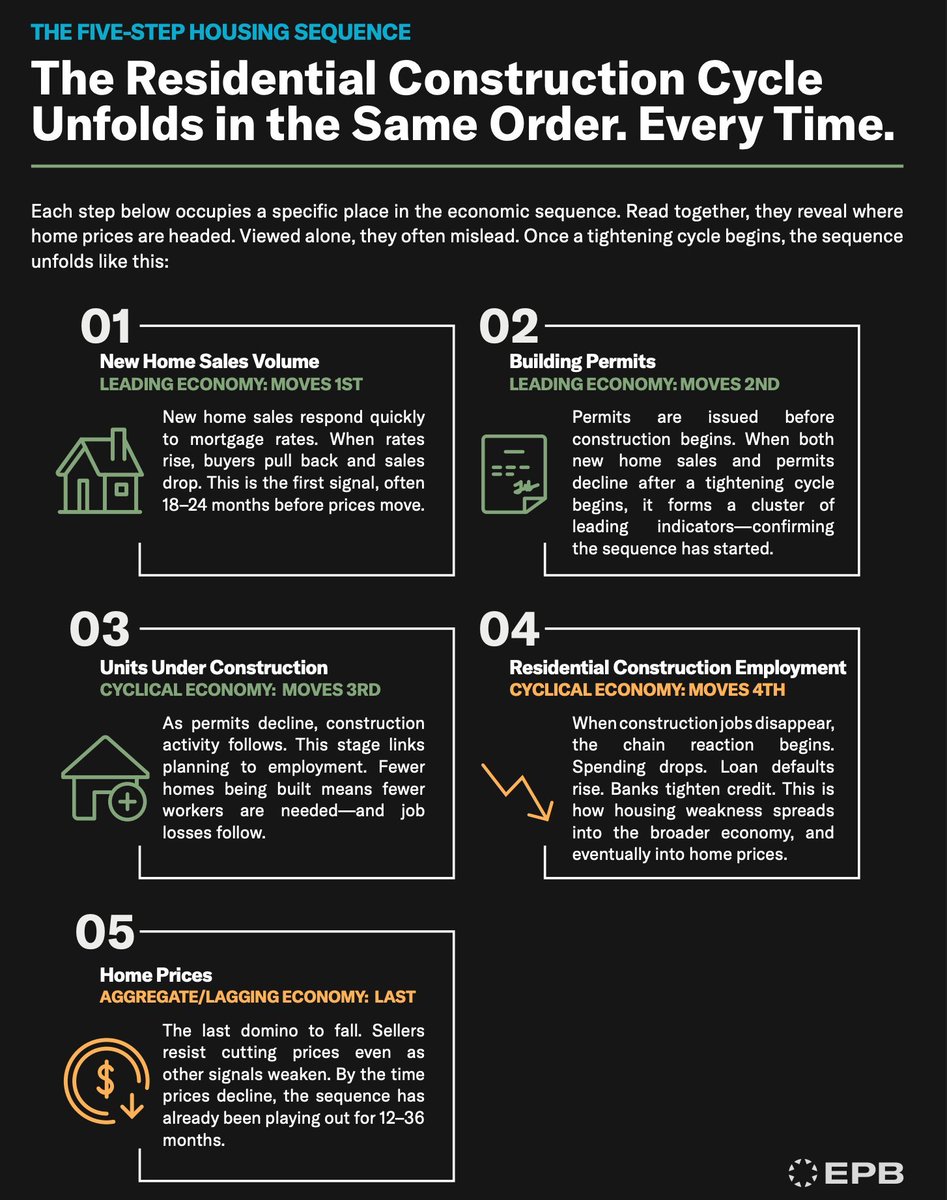
Most people watch home prices to read the housing market.
Home prices are the last domino, not the first.
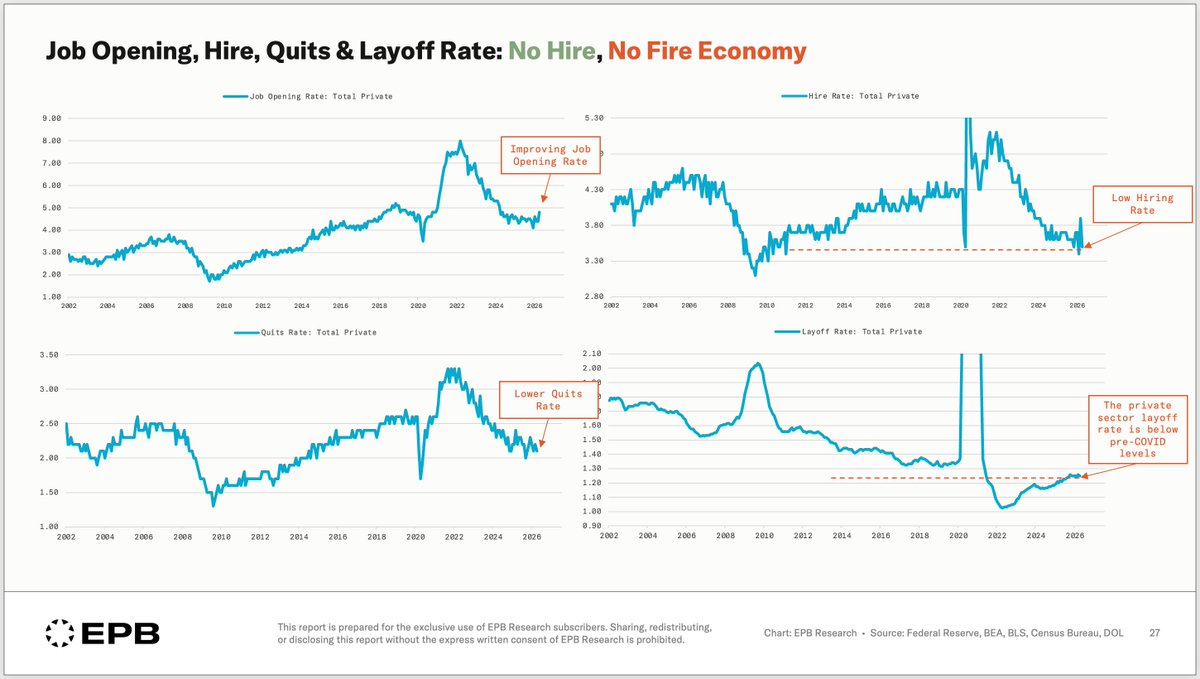
Right now, we're stuck on step 4, the employment domino.
Free PDF guide with the full sequence: epbresearch.com/housing
4
9
79
14,435
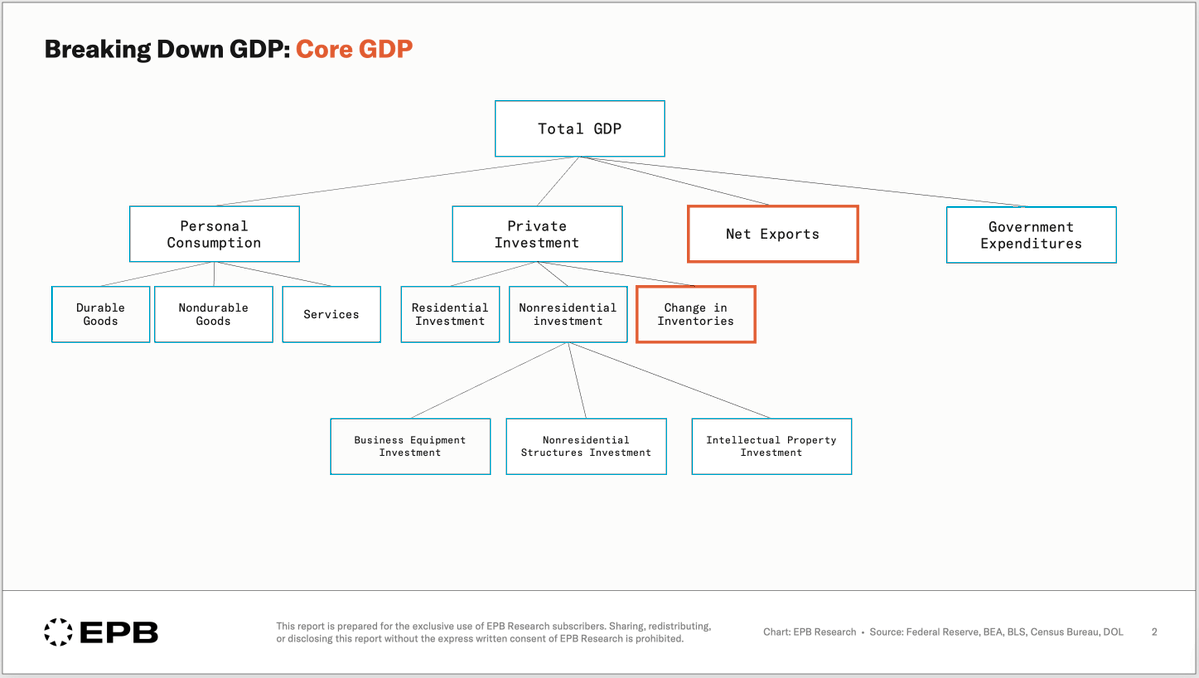
GDP is the most widely reported number in economics.
It also tells you nothing about where the cycle is heading.
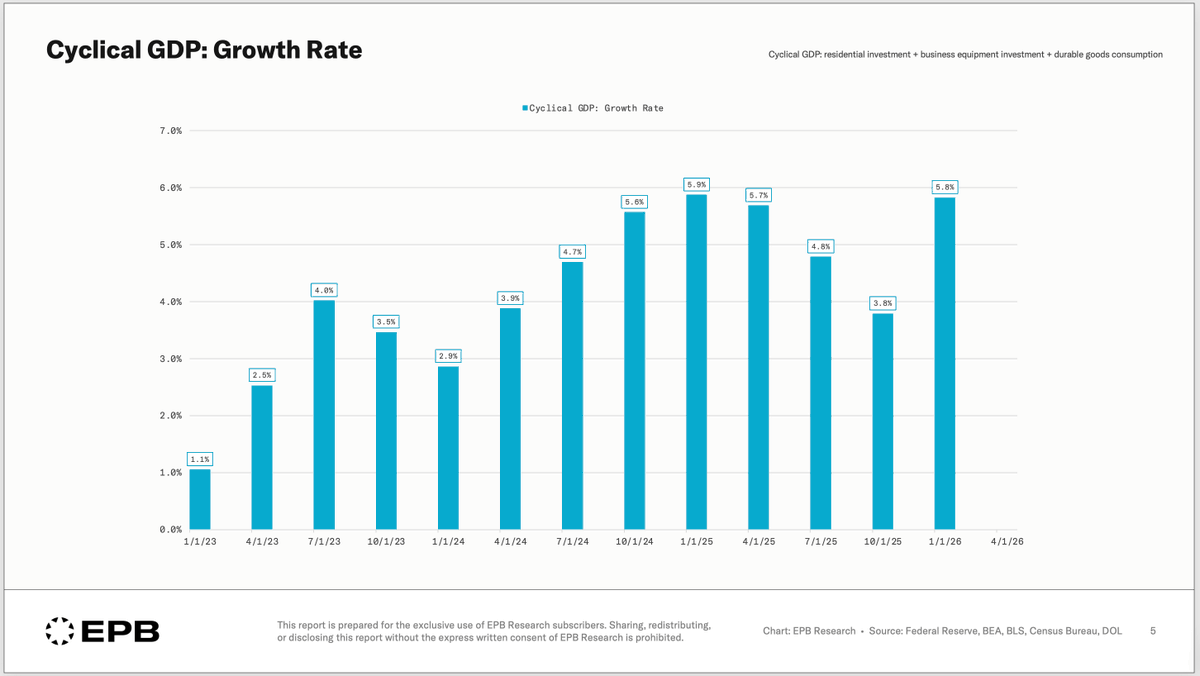
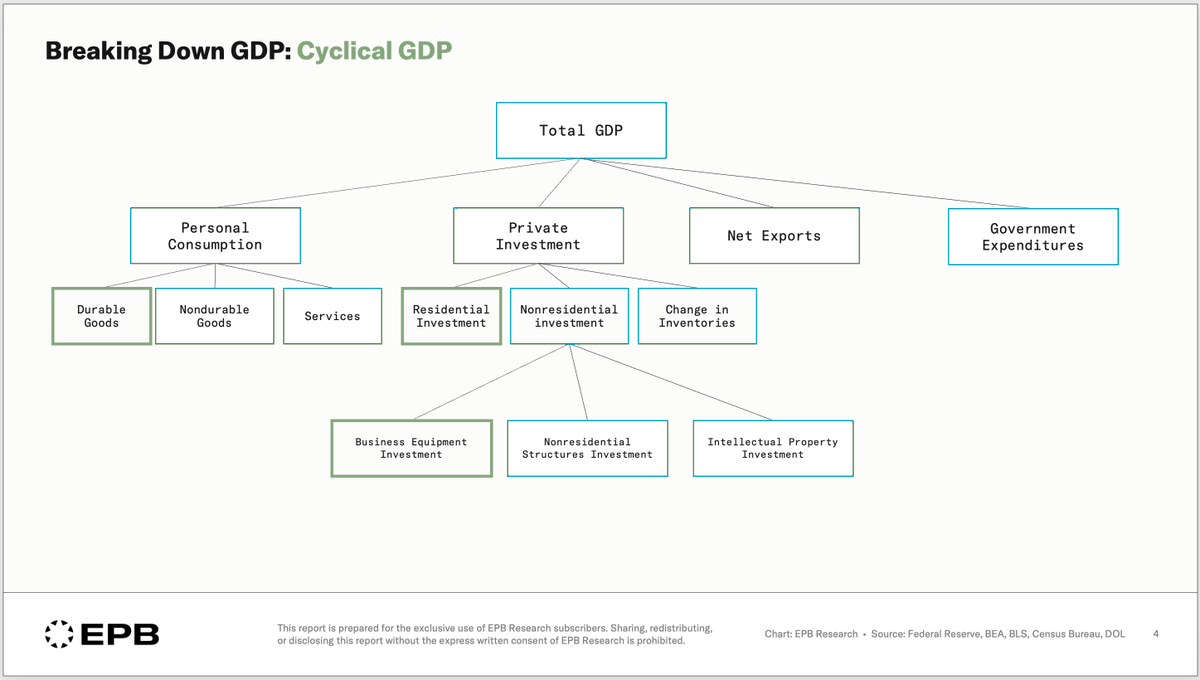
In this post, I outline a few steps to help you read the report and how the true signal lives in a small 20% slice of the economy.
👇

1
3
39
8,778
Eric Basmajian retweeted
Jun 12
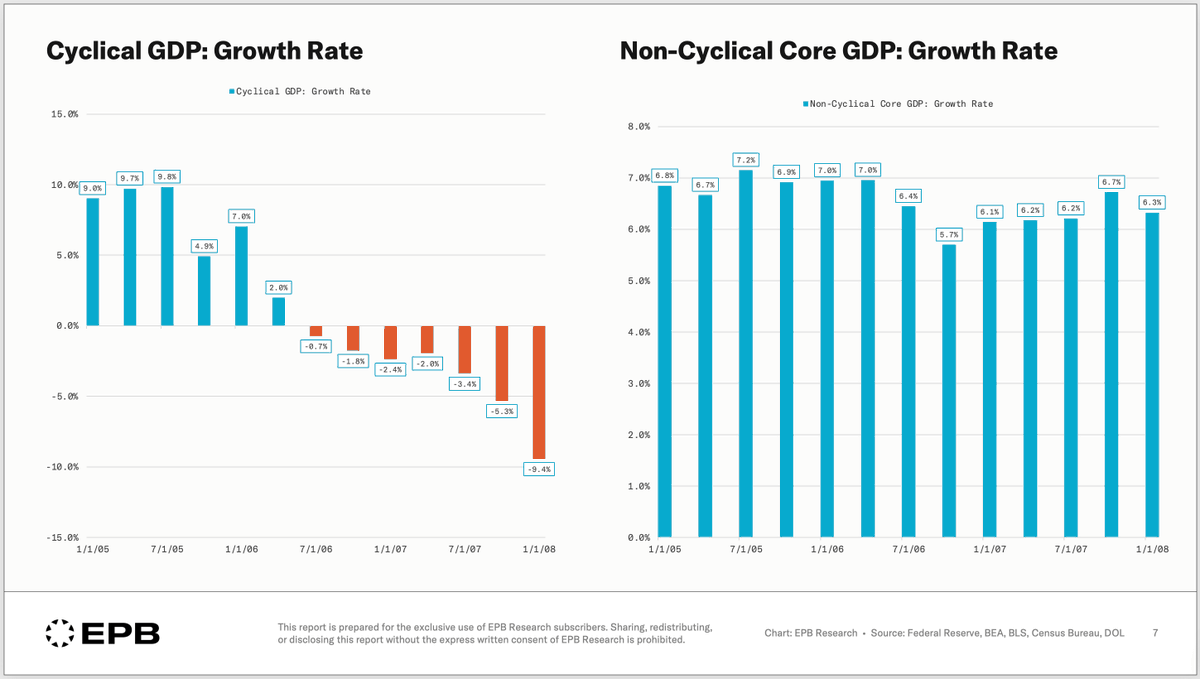
80% of the US economy barely moves, even in recessions.
The entire business cycle lives in the other 20%.
Headline GDP blends it all together and buries the signal.
Here's how to read GDP in 4 steps:
1/
2
21
116
23,153
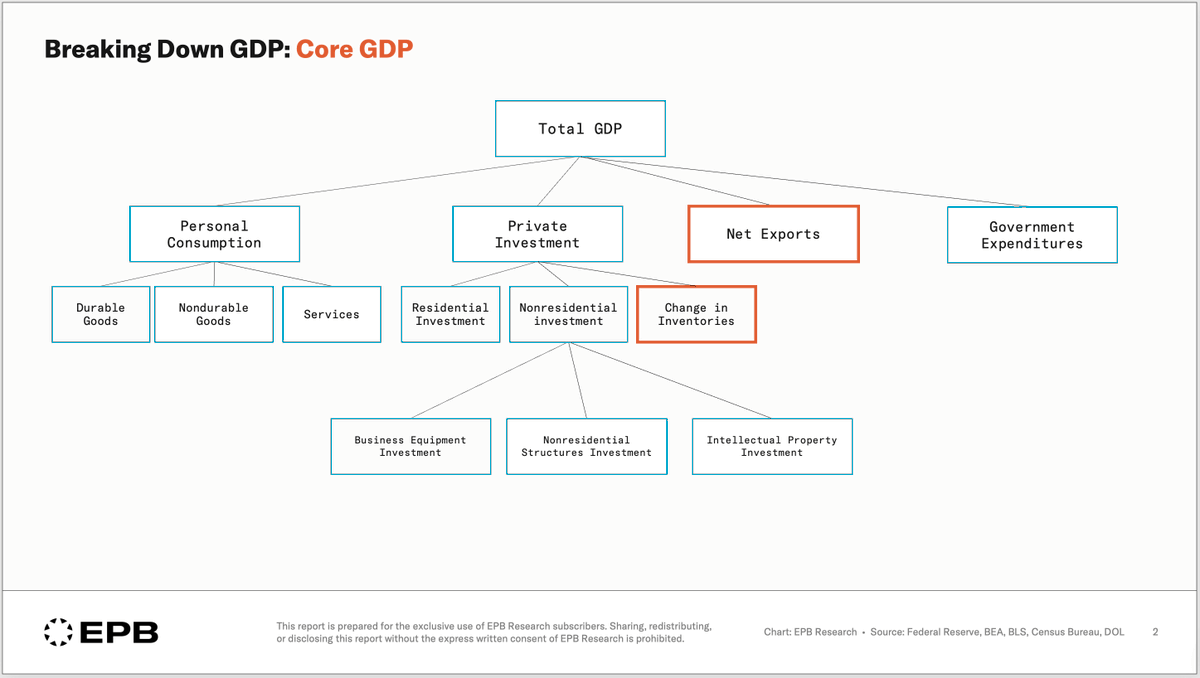
Jun 12
80% of the US economy barely moves, even in recessions.
The entire business cycle lives in the other 20%.
Headline GDP blends it all together and buries the signal.
Here's how to read GDP in 4 steps:
1/
2
21
116
23,153
Jun 12
The cycle is not in the big number. It's in the small one.
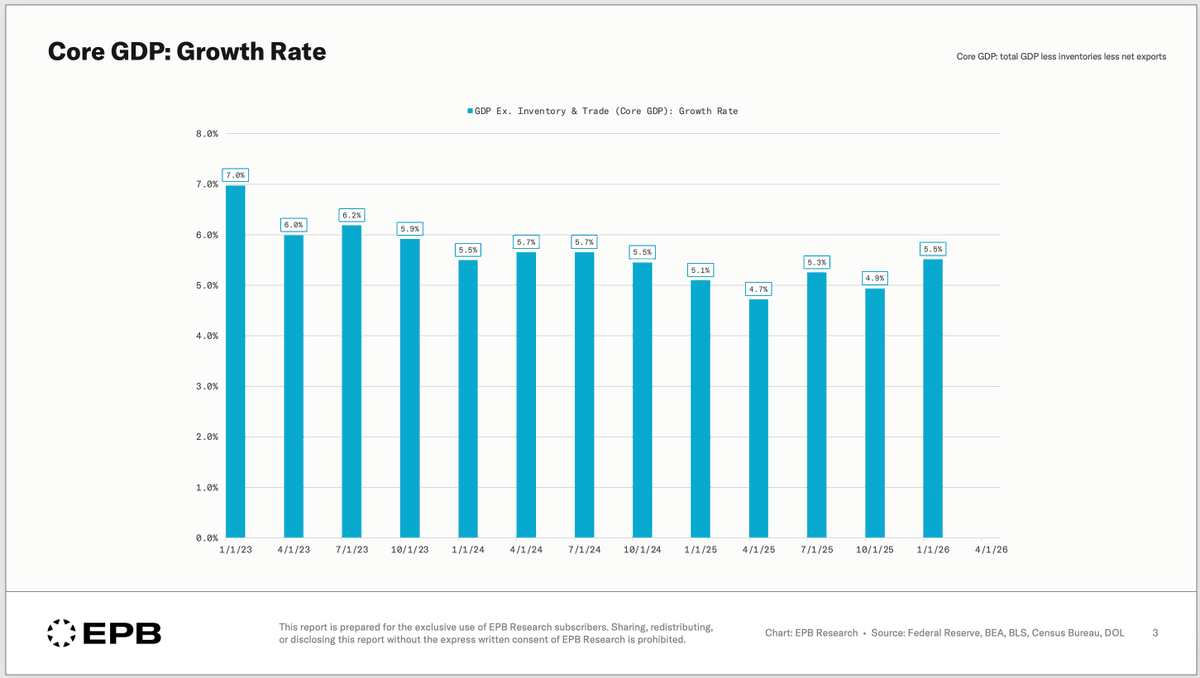
When GDP is released: pick nominal or real, strip out inventories and trade, then compare the 20% cyclical slice to the 80% non-cyclical slice against history.
That's the correct process for the most information.
10/
1
1
18
3,696
Jun 12
The economy moves in a repeatable sequence, and GDP is one of the best windows into it.
To see this framework applied to the data every week, join the free EPB Sunday newsletter.
You'll also get our free Breaking Down GDP guide.
Join here: epbresearch.com/newsletter
11/11
2
2
15
3,469
Jun 11
GDP is the most widely reported number in economics.
It also tells you nothing about where the cycle is heading.
In this post, I outline a few steps to help you read the report and how the true signal lives in a small 20% slice of the economy.
5
2
31
9,049
Jun 9
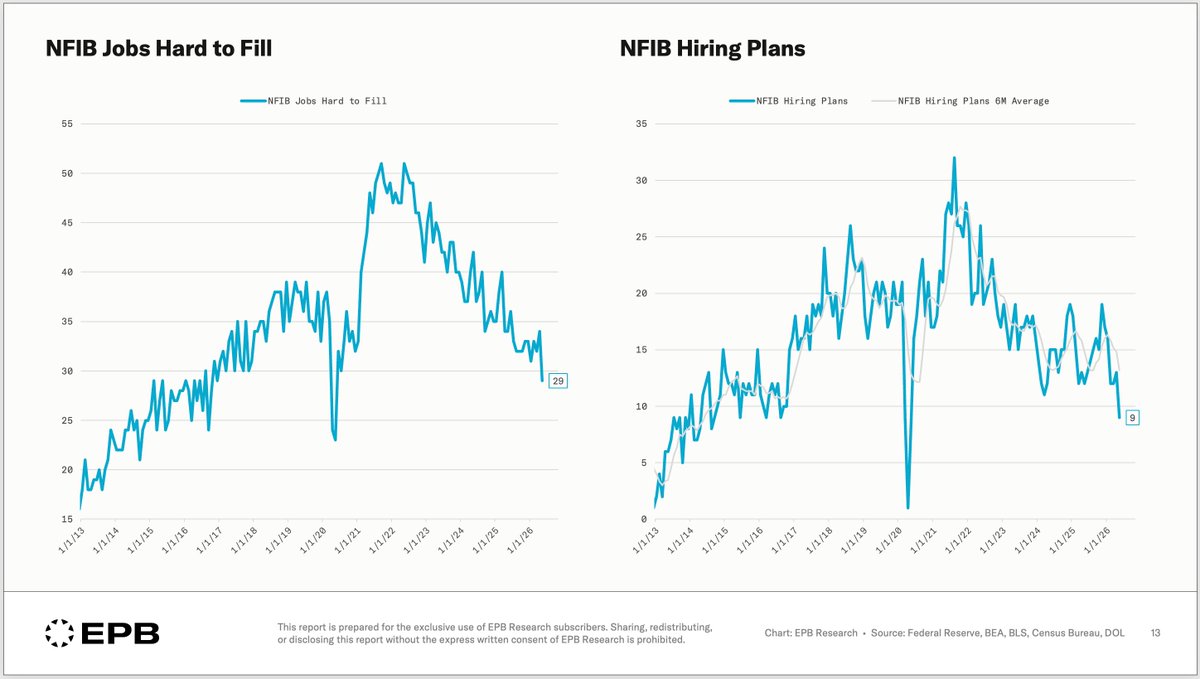
The official jobs data tells you where the labor market was.
Small business surveys can tell you where it is heading.
NFIB reported that small business job openings and hiring plans both fell to a cycle low.
6
23
94
10,996
Eric Basmajian retweeted
Jun 1
Corporate profit margins just hit 20.6%, the highest on record, but the average worker keeps falling behind.
It's not greed. It's not just Big Tech.
The real cause has a name.
Here's what's happening:
1/
14
38
271
61,454
Jun 8
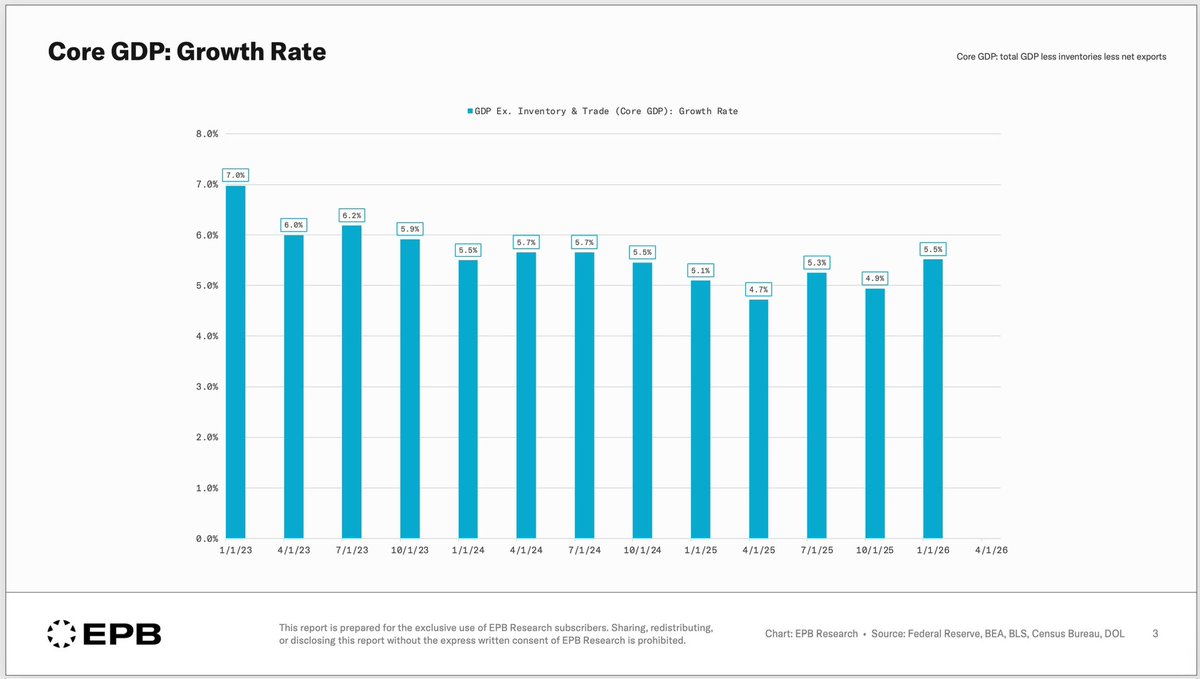
Strip out inventories & trade, and nominal growth has been remarkably stable for 2 years.
3
4
41
7,028
Eric Basmajian retweeted

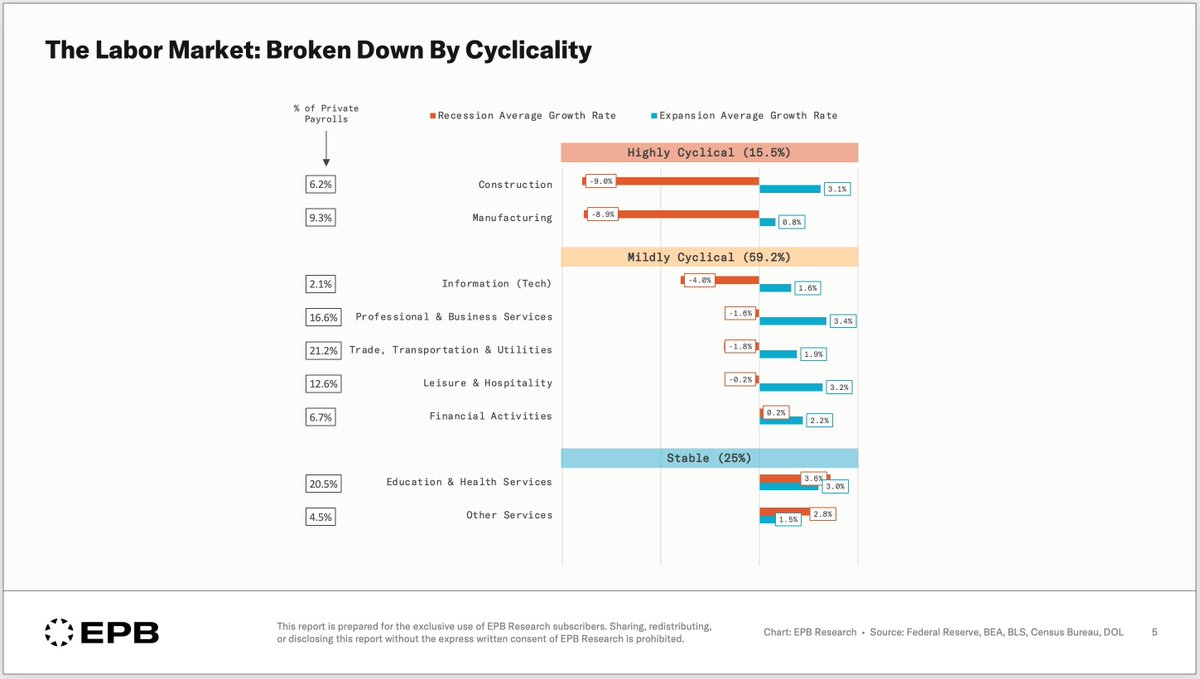
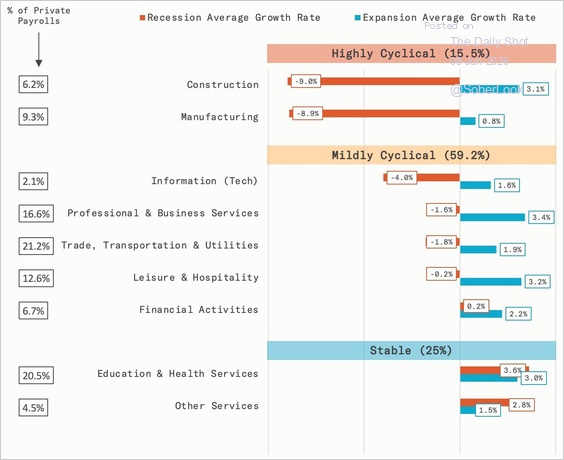
According to EPB research, only 15.5% of the labor market drives the economic cycle, while 25% is recession-proof.
Source: @EPBResearch
1
13
67
13,800
Jun 7
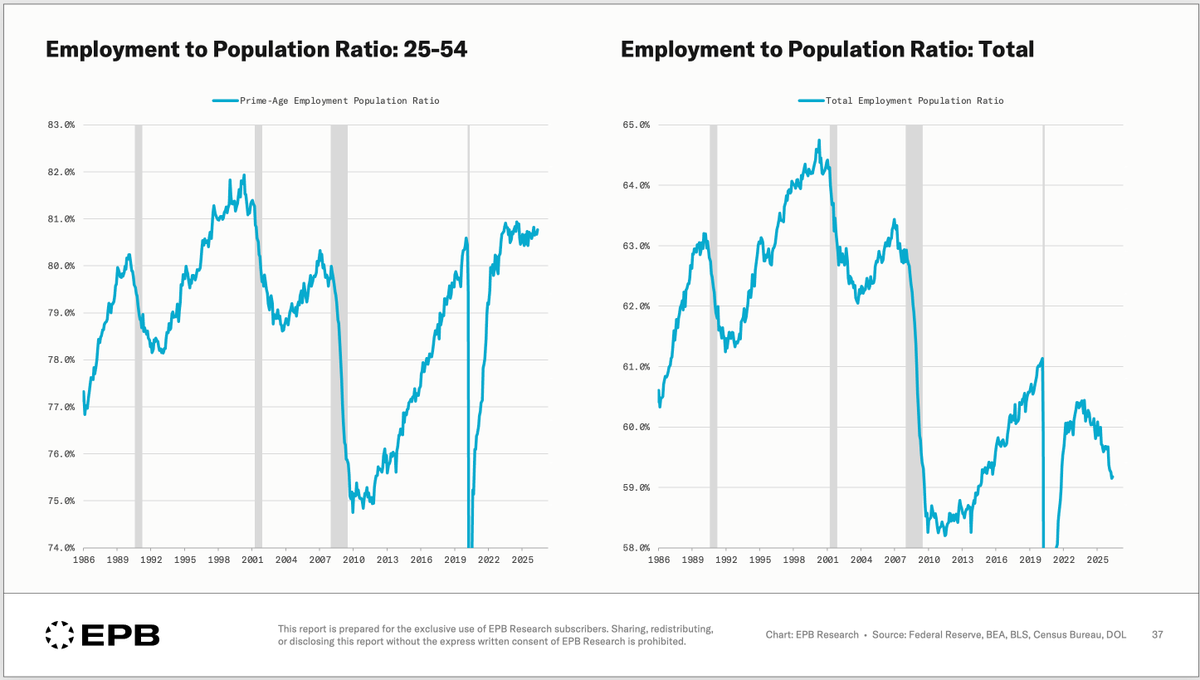
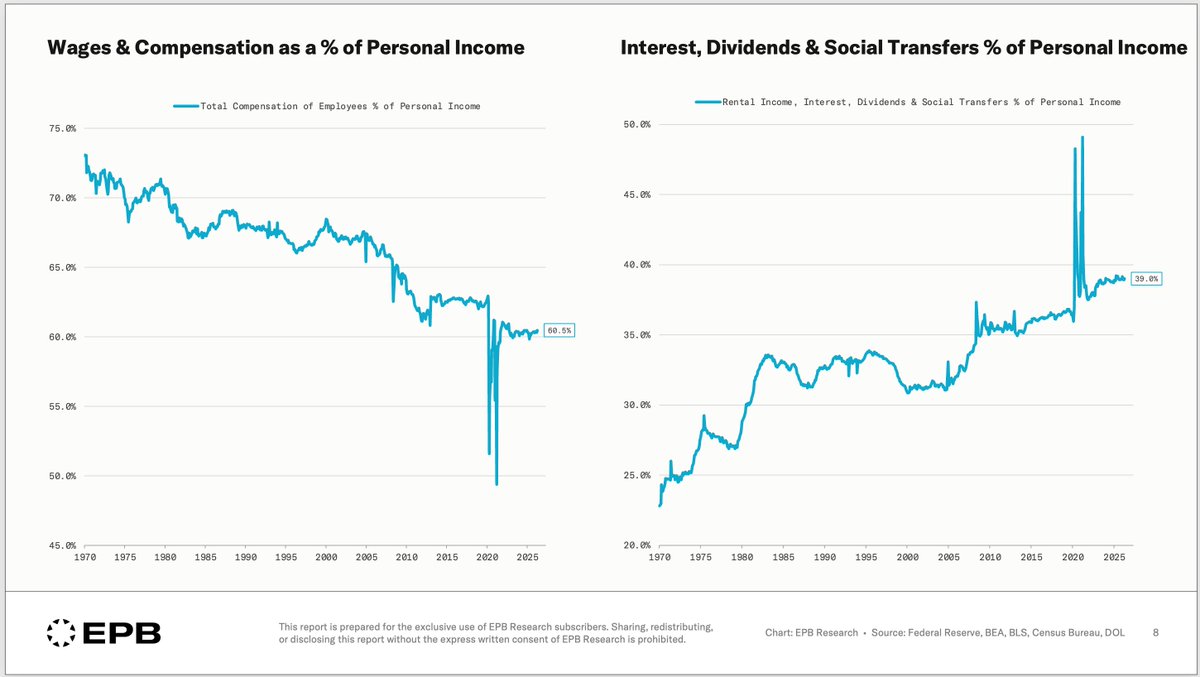
The prime-age labor market is stable, but the total employment-to-population ratio is falling rapidly.
Fewer workers would normally weaken income.
Today, that effect is increasingly offset by government transfer payments, funded by debt.
6
14
74
8,907
Jun 5
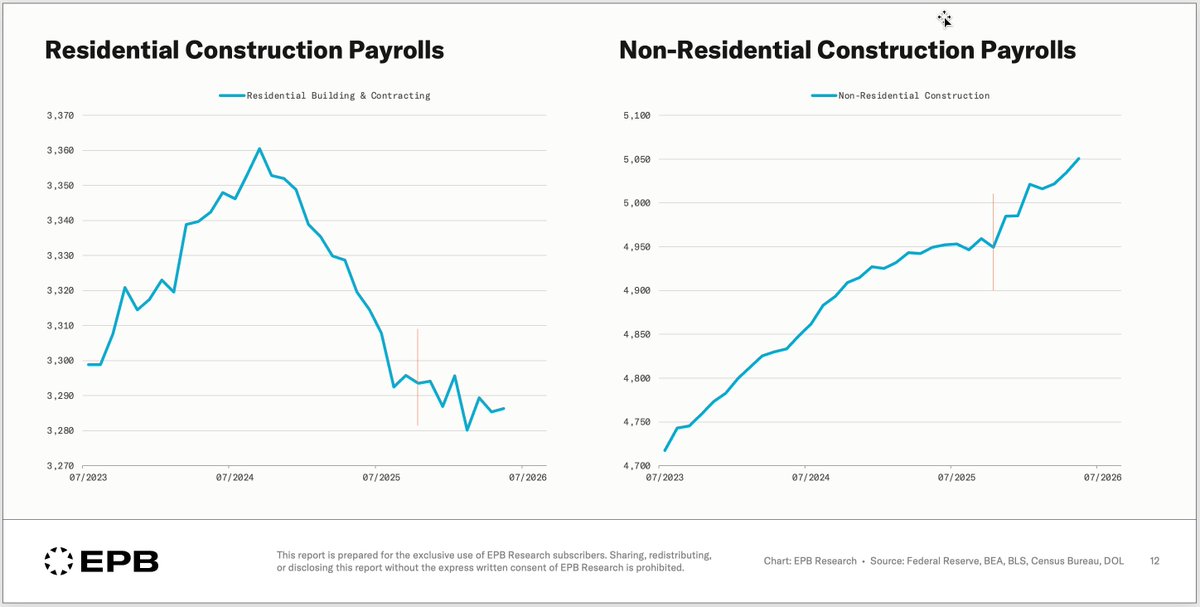
Is construction employment rising or falling?
Both.
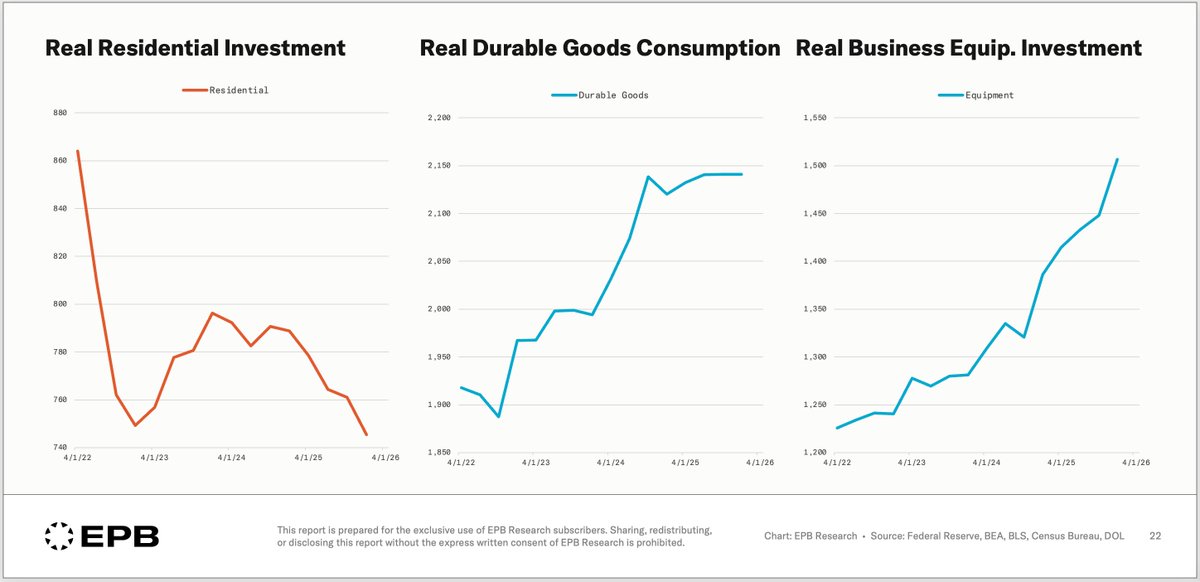
Residential building has eased from its 2024 peak, while non-residential building continues to climb to new highs.
10
11
51
9,400