
ERCST is an independent non-profit organisation working on European and Global climate change policy.
Joined December 2019
- Tweets 631
- Following 371
- Followers 951
- Likes 412
290 Photos and videos

7 Feb 2025
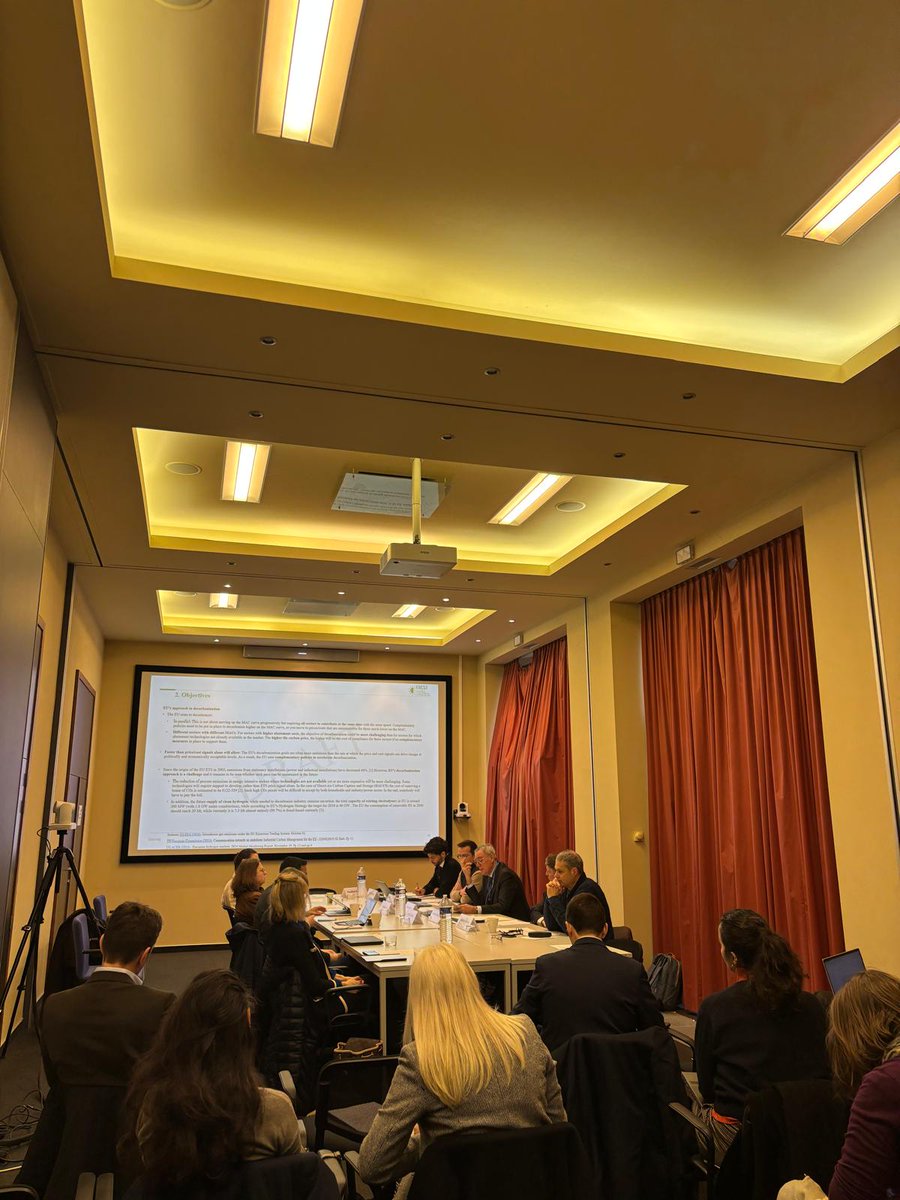
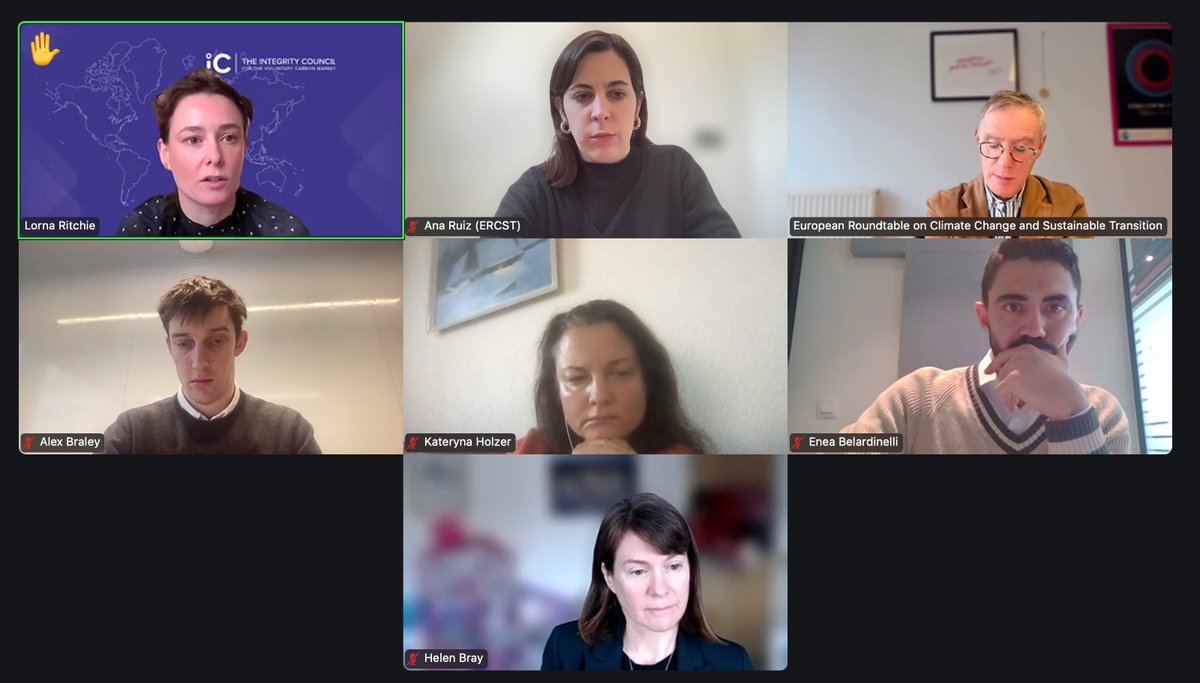
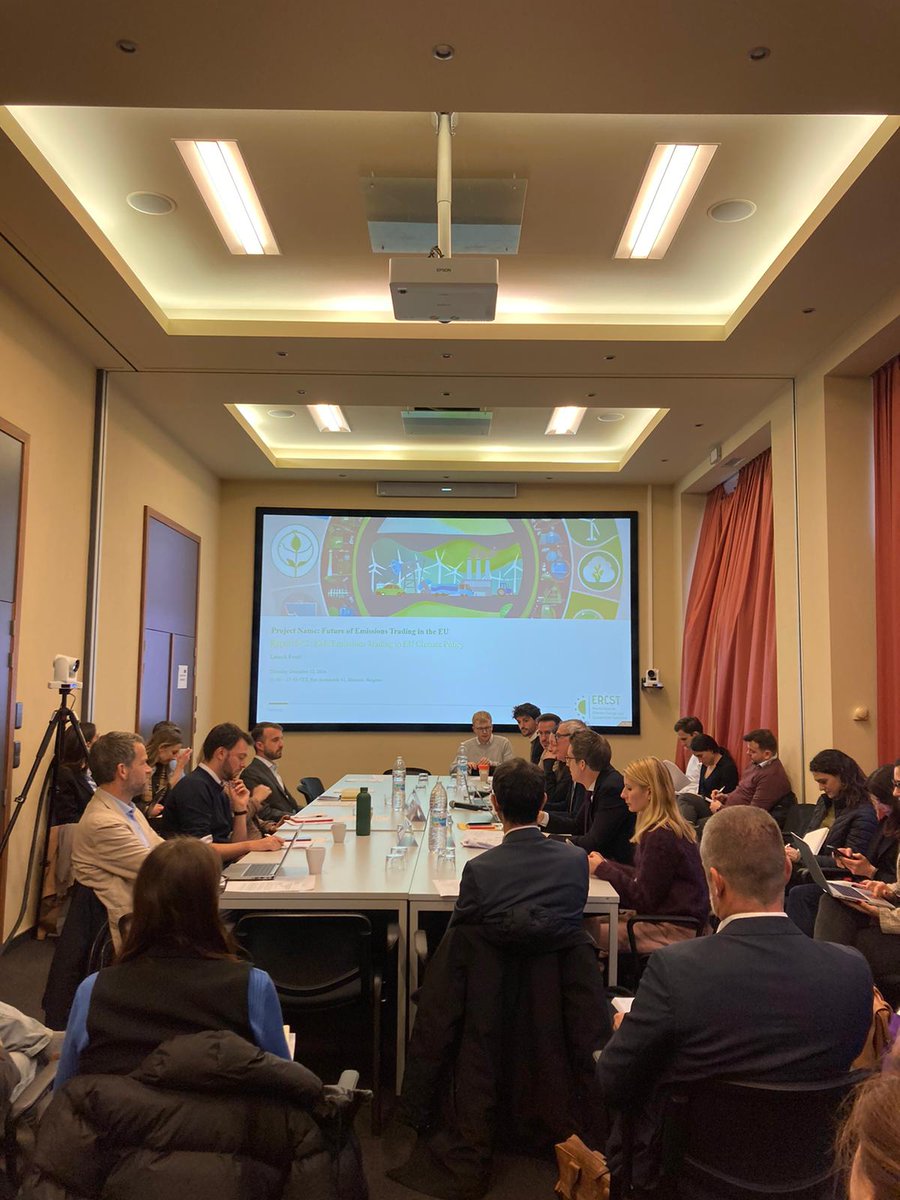
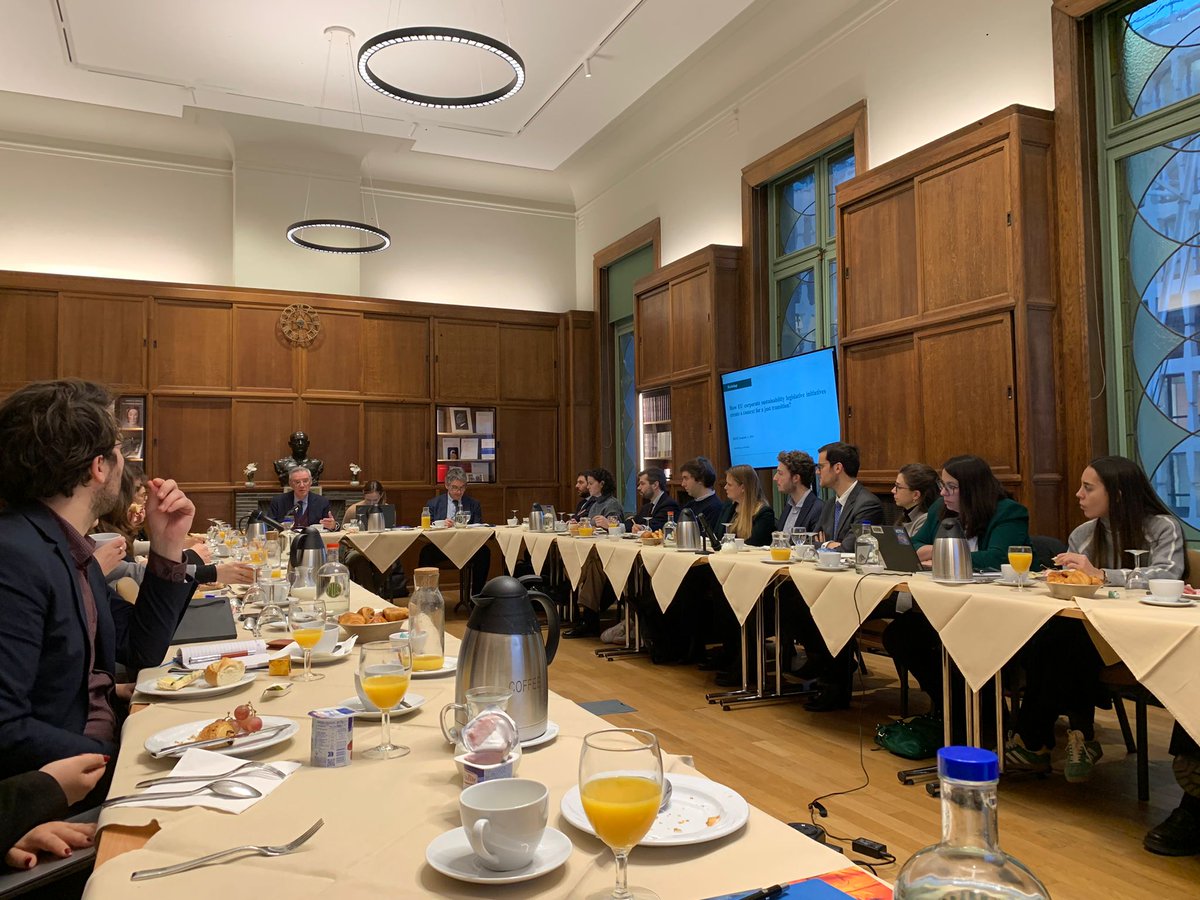
📌Yesterday, the European Roundtable on Climate Change and Sustainable Transition (ERCST) hosted the Stakeholder Roundtable "Future of #Emissions Trading in the EU: Price Signal and Competitiveness".
𝗧𝗵𝗲 𝗵𝗶𝗴𝗵𝗹𝗶𝗴𝗵𝘁𝘀:
✅ Competitiveness should be looked at from a broader perspective, where #climate and EU ETS have a key role to play.
✅ To ensure both an effective price signal and maintain #competitiveness of EU Industry, costs should not destroy industry viability in the EU. The carbon price should be high enough to push #decarbonisation, costs have to be partially socialised, trade measures put in place to address asymmetries in costs borne by the EU industry, and creating business case for long-term predictability.
✅ EU ETS must be adapted and complemented. It has to be adapted with CDRs, geographical expansion, new sectors, linking, MSR reform, Art 29a, regulatory predictability and good #governance. It has to be complemented with #CBAM for exports, international credits, support of CAPEX/OPEX, CCFDs, demand side measures, and social support.
There was an exchange of views with experts that presented their views and expanded on key issues, setting the scene for an in-depth discussion.
📅 Stay informed about our upcoming events 👉🏼 t.ly/ya6OM
1
198
6 Feb 2025
📌 IT'S TOMORROW!
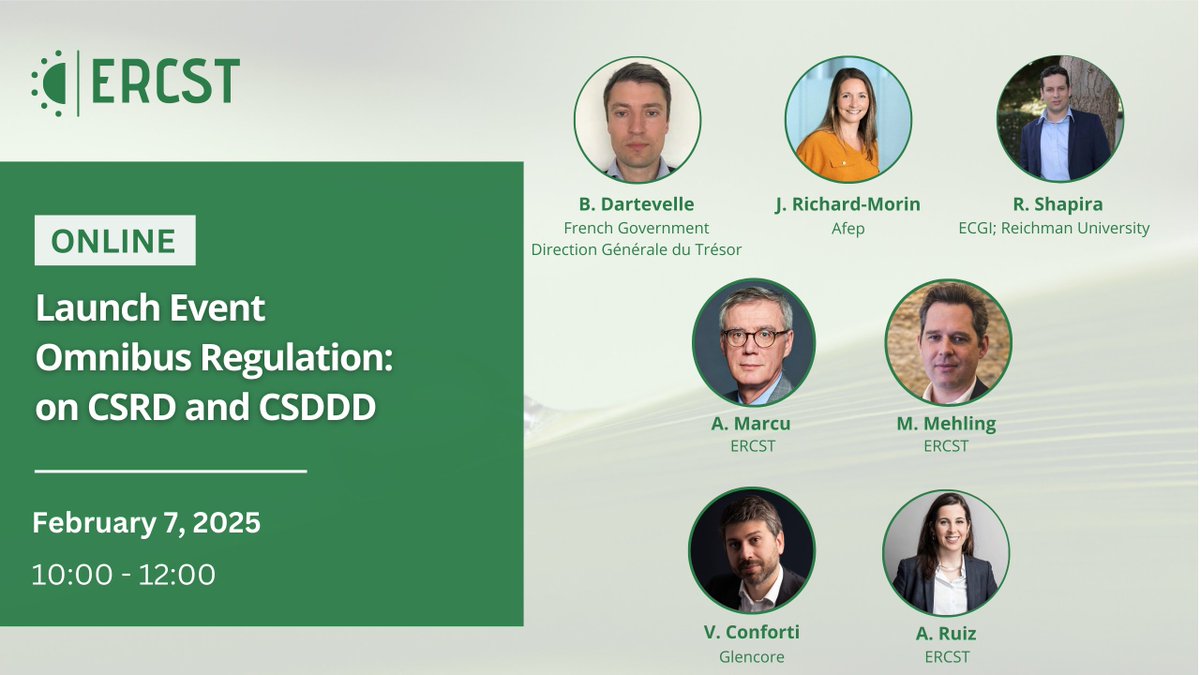
hashtag#CSRD hashtag#CSDDD | "Launch Event: Omnibus hashtag#Regulation: on CSRD and CSDDD"
📆 7 February - 10:00 - 12:00
🖥️Register online👉🏼t.ly/cE5K8
Last chance to register at the launch event of the ERCST paper, addressing key issues to be considered in the hashtag#Omnibus package, particularly in relation to the CSRD and CSDDD.
✅As the European hashtag#Commission prepares to unveil the “Omnibus Regulation” proposal on February 26, 2025, with President Ursula von der Leyen now directly overseeing the file, pressure is mounting from all sides – both within and beyond the EU, and from companies as well as governments.
The panel will include:
🟢Andrei Marcu, ERCST
🟢Michael Mehling, ERCST
🟢Benjamin Dartevelle, Direction générale du Trésor (French Treasury)
🟢Roy Shapira, European Corporate Governance Institute (ECGI) and Reichman University
🟢Justine Richard - Morin, Afep
🟢Vincenzo A. Conforti, Glencore
🟢Ana Ruiz, ERCST
🔎Read more 👉🏼t.ly/QaBIy
📅 Stay informed about our upcoming events 👉🏼 t.ly/ya6OM
224
5 Feb 2025
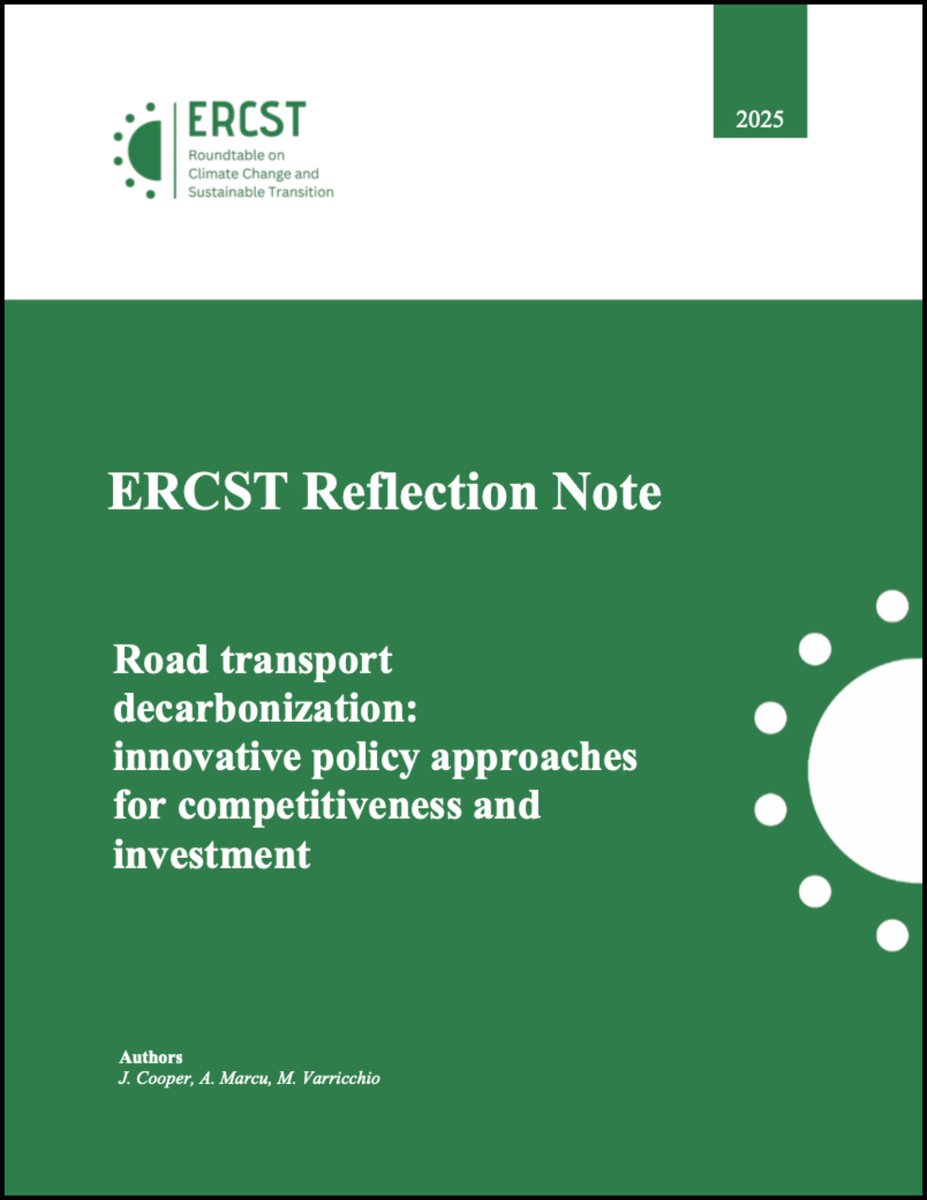
🚨 A new ERCST publication is out 👇
🔹 "Reflection Note: Road Transport #decarbonisation: innovative policy approaches for competitiveness and investment"
✅The report identifies significant risks to #Europe’s industrial competitiveness under existing approaches to road transport #decarbonisation, which not only hinder investment in #automotive materials, #manufacturers and #energy suppliers, but also lead to significant lost opportunities for developing a market for low #carbon products.
✅The publication underscores the urgency for policymakers to adopt a holistic approach, balancing #environmental goals with economic realities. Failure to act risks irreversible industrial decline and undermines the EU’s efforts in achieving a sustainable transition.
🔸 “It is important to note that this paper does not propose a reduction of ambition; the essence is take stock, and then propose better use of the high implied carbon price signals (around €500/tonne CO2) in vehicle regulation to create a wider scope of industrial investments, leading to wider supply of CO2 reductions for compliance”, said Andrei Marcu, Executive Director of ERCST
🔸 “The European Vehicle CO2 policies were initially highly effective promoting vehicle efficiency, but now appear to have unexpected, undesirable effects. With methodology established well over two decades ago, these CO2 regulations now have stark inconsistencies with corresponding policies for aviation and shipping. Given the growing concern over European de-industrialisation, it is timely to consider a ground-up review of how road transport CO2 regulation drives industrial competitiveness, investment and choices for citizens. This new work of ERCST provides a forum for exactly this”, said John Cooper, Senior Fellow of ERCST.
📄Read the publication here 👉t.ly/X8qXW
1
106
4 Feb 2025
📌 LAUNCH EVENT
#CSRD #CSDDD | "Launch Event: Omnibus #Regulation: on CSRD and CSDDD"
📆 7 February - 10:00 - 12:00
🖥️Register online👉🏼t.ly/cE5K8
Register now at the launch event of the ERCST paper addressing key issues to be considered in the #Omnibus package, particularly in relation to the CSRD and CSDDD.
✅As the European #Commission prepares to unveil the “Omnibus Regulation” proposal on February 26, 2025, with President Ursula von der Leyen now directly overseeing the file, pressure is mounting from all sides – both within and beyond the EU, and from companies as well as governments.
The panel will include:
🟢Andrei Marcu, ERCST
🟢Michael Mehling, ERCST
🟢Benjamin Dartevelle, Direction générale du Trésor
🟢Roy Shapira, European Corporate Governance Institute (ECGI) and Reichman University
🟢Justine Richard - Morin, Afep
🟢Ana Ruiz, ERCST
🔎Read more 👉🏼t.ly/QaBIy
📅 Stay informed about our upcoming events 👉🏼 t.ly/ya6OM
174
27 Jan 2025
📌 IT'S TOMORROW!
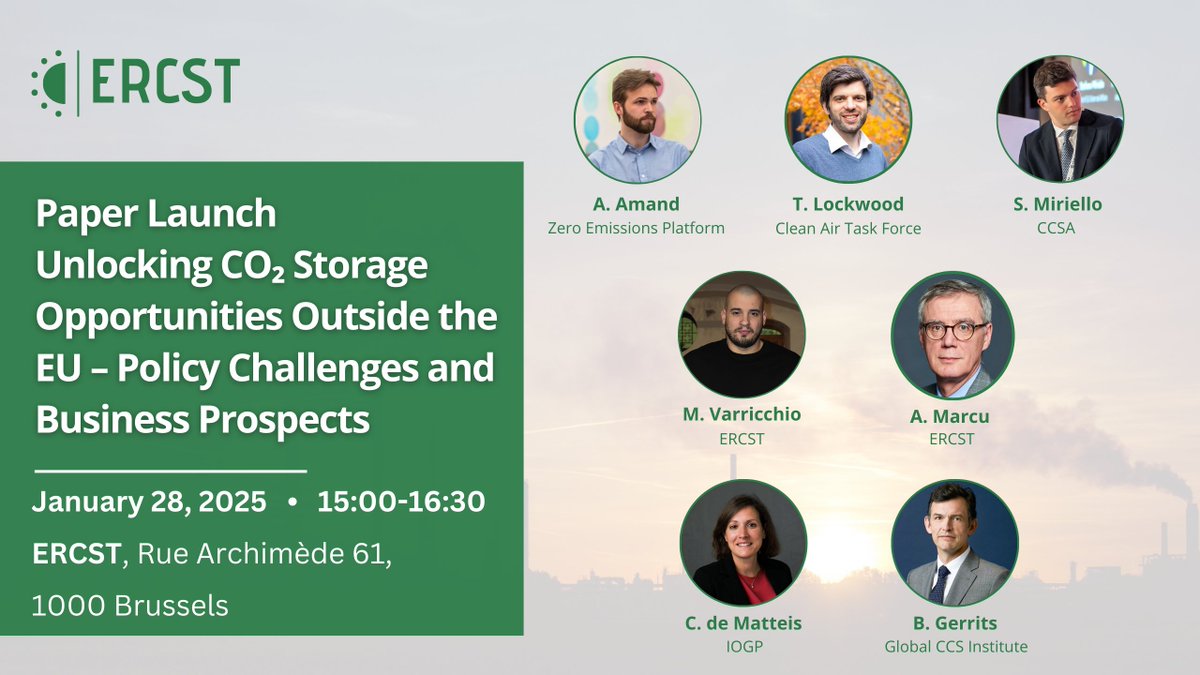
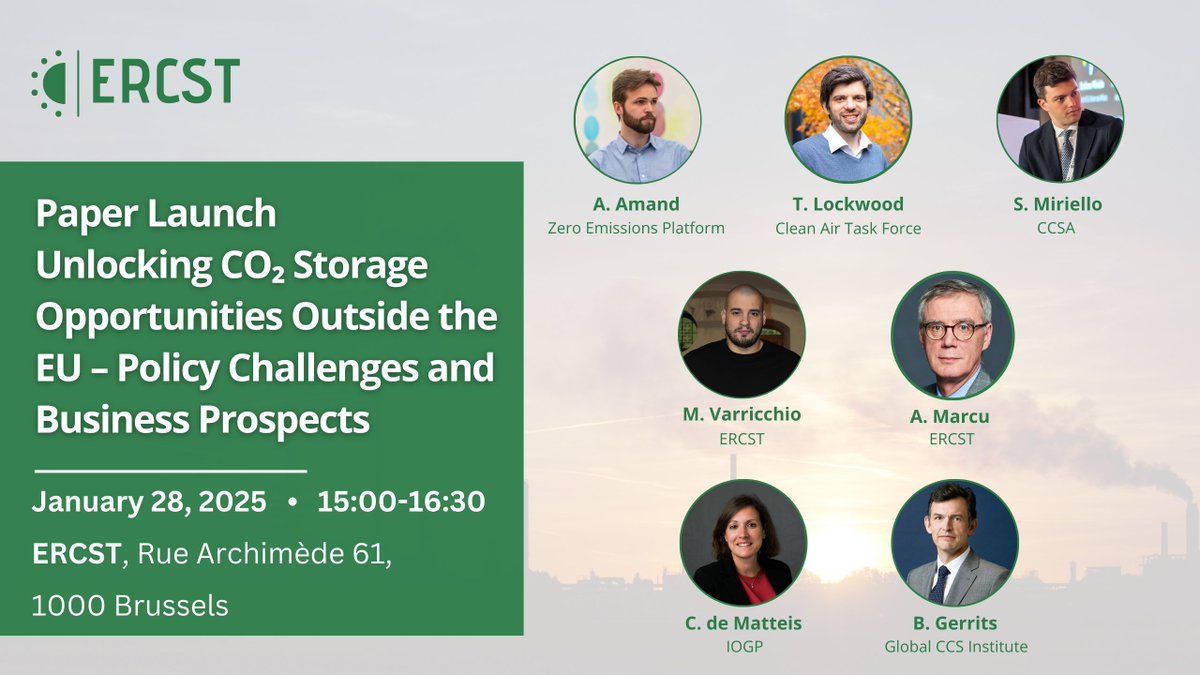
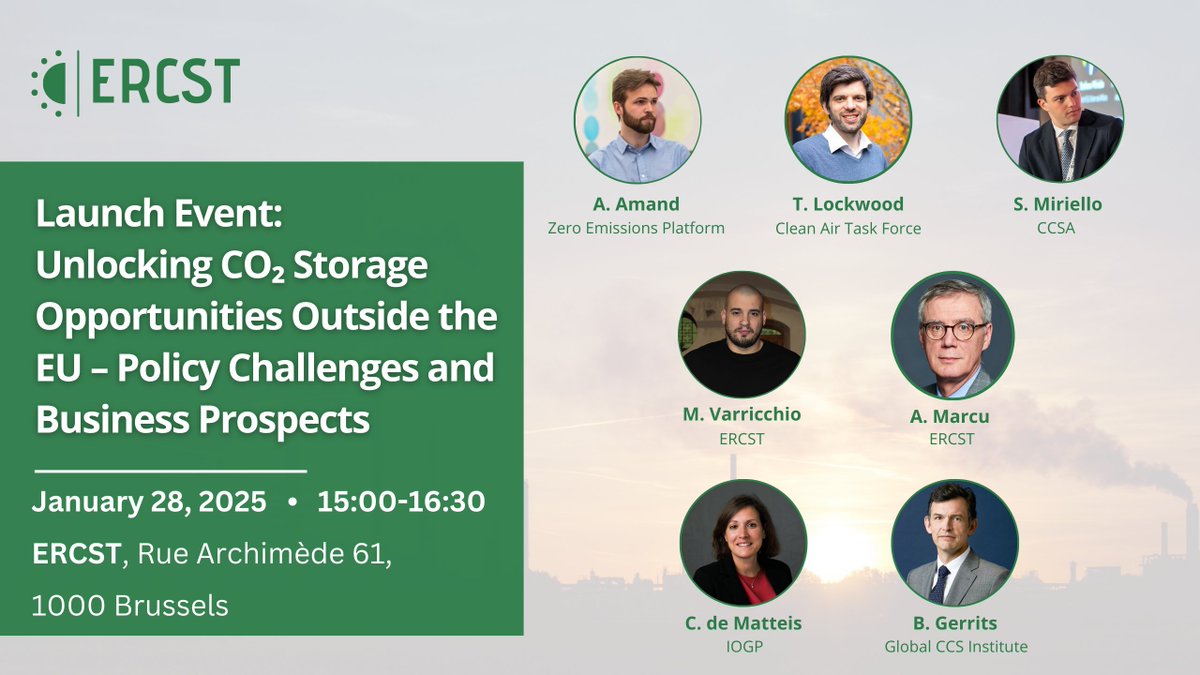
#CCUS | "Launch Event: Unlocking CO₂ Storage Opportunities Outside the EU – Policy Challenges and Business Prospects"
📆 28 January - 15:00 - 16:30
👥Register in-person 👉🏼t.ly/nyCKk
🖥️Register online (if located outside Belgium) 👉🏼t.ly/-ltWn
Last chance to register at the launch event of the ERCST report on the ‘Unlocking #CO2 Storage Opportunities Outside the #EU – Policy Challenges and Business Prospects’.
🎯𝗠𝗮𝗶𝗻 𝗾𝘂𝗲𝘀𝘁𝗶𝗼𝗻𝘀
✅What are the legal and policy challenges associated with storing CO₂ #emissions produced within the EU in countries outside the EU?
✅Is it possible to develop a compelling #business case for the storage of EU-generated CO₂ in non-EU territories?
The panel will include:
🟢Andrei Marcu, ERCST
🟢Toby Lockwood, @cleanaircatf
🟢Caterina De Matteis, @IOGP_EU
🟢Aymeric Amand, @EUCarbonCapture
🟢Stefano Miriello, Carbon Capture and Storage Association
🟢Bruno Gerrits, @GlobalCCS
🟢Marino Varricchio, ERCST
🔎Read more 👉🏼bitly.cx/SlVZ
📅 Stay informed about our upcoming events 👉🏼 t.ly/ya6OM
70
22 Jan 2025
📌Yesterday, the European Roundtable on Climate Change and Sustainable Transition (ERCST) hosted the Focus Group event "Green Claims Directive (#GCD) trilogues – How does the GCD connect with (Voluntary) #Carbon Markets?".
𝗧𝗵𝗲 𝗵𝗶𝗴𝗵𝗹𝗶𝗴𝗵𝘁𝘀:
As #trilogues are set to begin soon (with the first meeting scheduled for January 28, 2025), it is important to clarify the connection between the GCD and #VCMs and whether, and how, the discussion around the GCD is ultimately relevant for VCMs. This is particularly significant in light of recent developments in some Member States (e.g., Finland and Portugal) promoting VCMs.
After ERCST delivered a brief presentation on the research question, participants provided input on the following points:
✅ If a more restrictive approach prevails, what are the potential consequences for VCMs?
✅ Does the GCD play a role in promoting VCMs, or is this necessarily outside the scope of the #directive?
✅ How are various pieces of legislation (e.g., #CSRD and #CRCF) interconnected with the GCD?
✅ How can the VCMI and ICVCM inform or be articulated with the GCD, given the "quality and quantity" concerns expressed in the GCD provisions?
📅 Stay informed about our upcoming events 👉🏼 t.ly/ya6OM
100
20 Jan 2025
📌 EVENT REMINDER
#CCUS | "Launch Event: Unlocking CO₂ Storage Opportunities Outside the EU – Policy Challenges and Business Prospects"
📆 28 January - 15:00 - 16:30
👥Register in-person 👉🏼t.ly/nyCKk
🖥️Register online (if located outside Belgium) 👉🏼t.ly/-ltWn
Register now at the launch event of the ERCST report on the ‘Unlocking #CO2 Storage Opportunities Outside the #EU – Policy Challenges and Business Prospects’.
🎯𝗠𝗮𝗶𝗻 𝗾𝘂𝗲𝘀𝘁𝗶𝗼𝗻𝘀
✅What are the legal and policy challenges associated with storing CO₂ #emissions produced within the EU in countries outside the EU?
✅Is it possible to develop a compelling #business case for the storage of EU-generated CO₂ in non-EU territories?
The panel will include:
🟢Andrei Marcu, ERCST
🟢Toby Lockwood, Clean Air Task Force
🟢Caterina De Matteis, IOGP
🟢Aymeric Amand, Zero Emissions Platform
🟢Stefano Miriello, Carbon Capture and Storage Association
🟢Bruno Gerrits, Global CCS Institute
🟢Marino Varricchio, ERCST
🔎Read more 👉🏼bitly.cx/SlVZ
📅 Stay informed about our upcoming events 👉🏼 t.ly/ya6OM
50
13 Jan 2025
📣 #CCUS | "Launch Event: Unlocking CO₂ Storage Opportunities Outside the EU – Policy Challenges and Business Prospects"
📆 28 January - 15:00 - 16:30
👥Register in-person 👉🏼t.ly/nyCKk
🖥️Register online (if located outside Belgium) 👉🏼t.ly/-ltWn
Join us at the launch event of the ERCST report on the ‘Unlocking #CO2 Storage Opportunities Outside the #EU – Policy Challenges and Business Prospects’, which will be followed by a discussion on the following two questions:
✅What are the legal and policy challenges associated with storing CO₂ #emissions produced within the EU in countries outside the EU?
✅Is it possible to develop a compelling #business case for the storage of EU-generated CO₂ in non-EU territories?
The panel will include:
🟢Andrei Marcu, ERCST
🟢Toby Lockwood, Clean Air Task Force
🟢Caterina De Matteis, IOGP
🟢Aymeric Amand, Zero Emissions Platform
🟢Stefano Miriello, Carbon Capture and Storage Association
🟢Bruno Gerrits, Global CCS Institute
🟢Marino Varricchio, ERCST
🔎Read more 👉🏼t.ly/ArL10
📅 Stay informed about our upcoming events 👉🏼 t.ly/ya6OM
55
19 Dec 2024
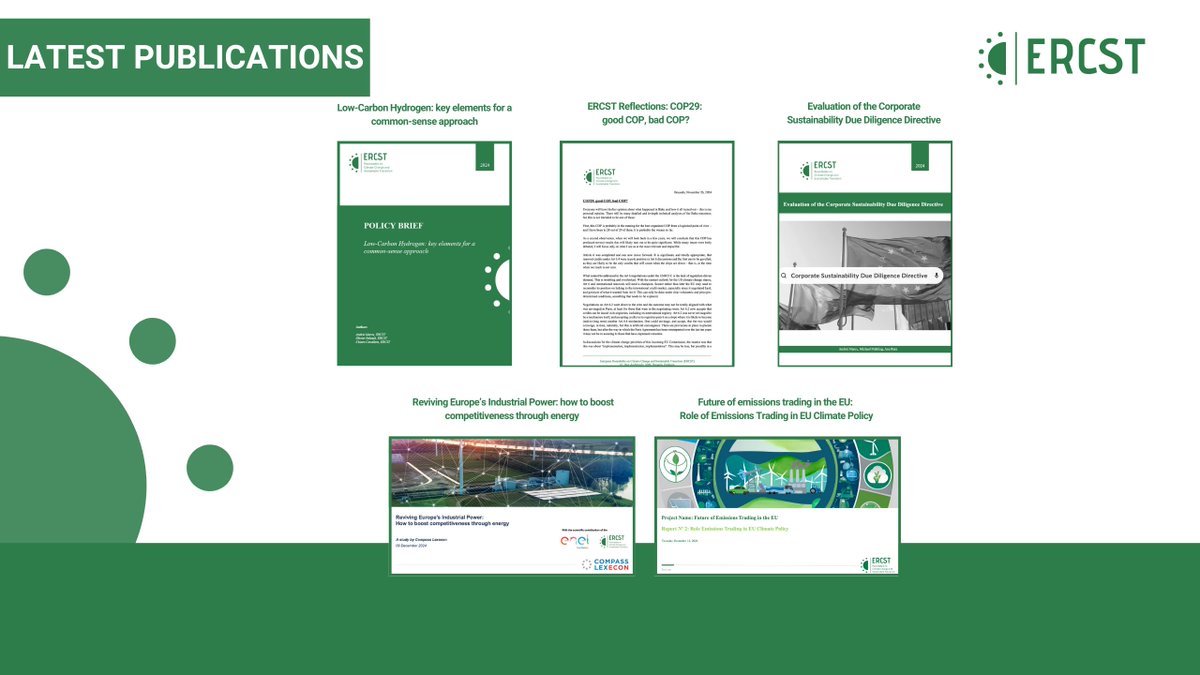
📄 Did you miss one of our latest #publications? Discover our recent reports and analyses covering key topics shaping the future of environmental policy and #sustainable development in the #EU and beyond 👇🏼
🔹ERCST Reflections: COP29: good COP, bad COP? 👉🏼t.ly/6w44R
🔹Low-Carbon Hydrogen: key elements for a common-sense approach👉🏼t.ly/ZJ70W
🔹Evaluation of the Corporate Sustainability Due Diligence Directive👉🏼t.ly/KdEGe
🔹Reviving Europe’s Industrial Power: how to boost competitiveness through energy👉🏼t.ly/Vqoat
🔹Future of emissions trading in the EU: Role of Emissions Trading in EU Climate Policy👉🏼t.ly/5hQQ7
📹Don't miss our latest recordings👉🏼t.ly/C9mkm
🗓️ Stay tuned for our upcoming events in 2025👉🏼 t.ly/ya6OM
1
42
18 Dec 2024
The EU can improve substantially global #competitiveness and achieve net-zero #emissions by electrifying industries. Overcoming economic, technological, and regulatory barriers requires bold policies, investments, and cooperation to reduce emissions, lower costs, and future-proof manufacturing sectors.
This is a study sponsored by @EnelFoundation, and undertaken by @compasslexecon and ERCST, providing crucial insights into this debate.
📄Read the publication👉 t.ly/Vqoat
🗞️Discover the research in this @Euractiv article 👇
euractiv.com/section/eet/opi…
39
13 Dec 2024
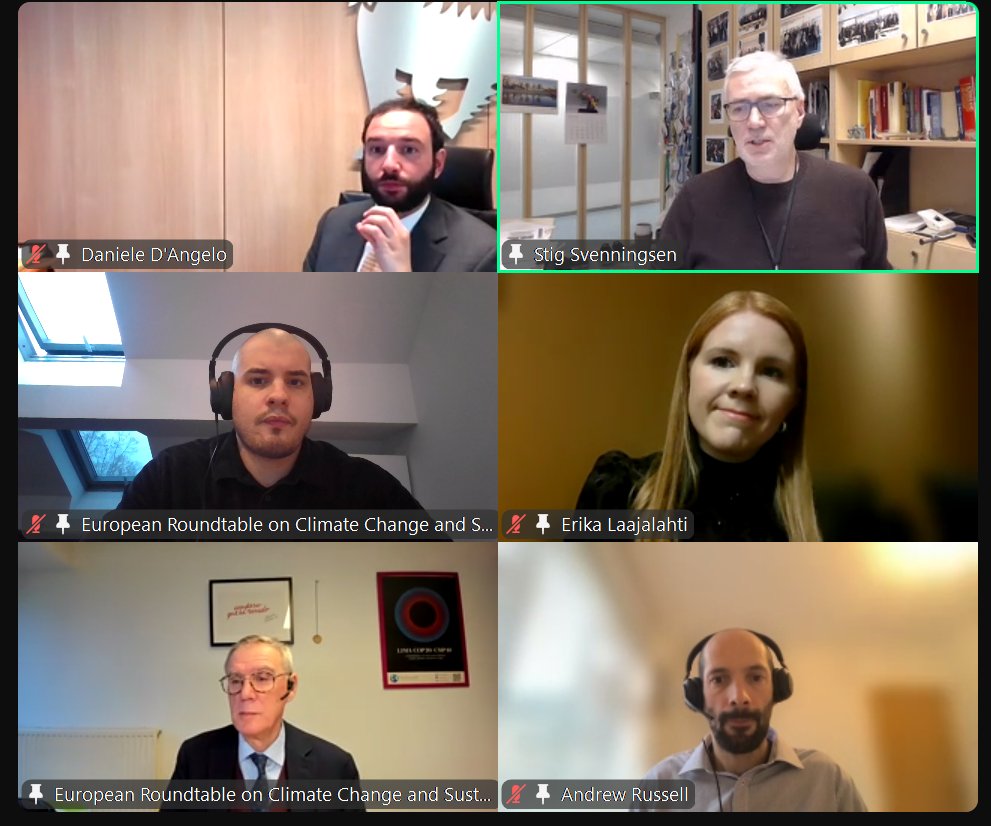
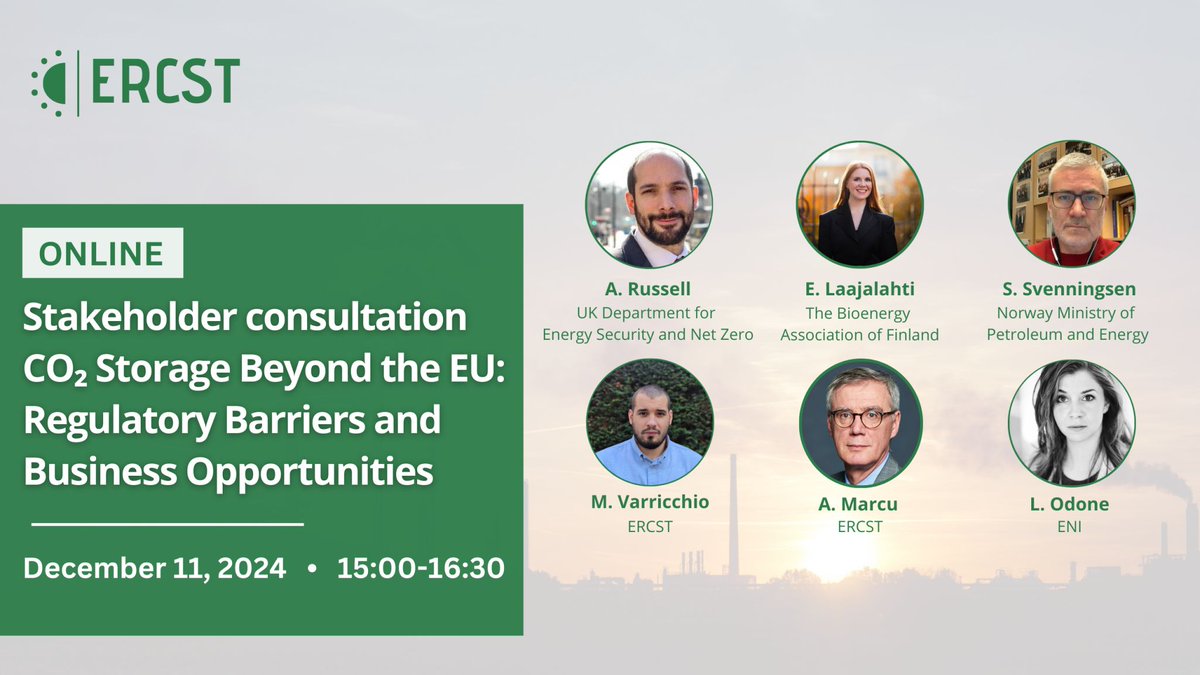
📌 On Wednesday, ERCST hosted the Stakeholder consultation “CO₂ Storage Beyond the EU: Regulatory Barriers and Business Opportunities”.
The Highlights:
✅ The storage of #CO2 outside the EU is complicated by the absence of a unified regulatory framework that matches the EU's stringent standards for carbon capture and storage. The #CCS Directive within the EU provides a clear legal framework for safe geological storage, but this does not extend beyond EU borders.
✅ The UK's exit from the #EU has added another layer of complexity, especially for projects involving the North Sea, which is a key area for potential CO2 storage. The need for regulatory changes to accommodate cross-border CO2 transport and storage has been highlighted, as the regulatory environment has shifted, potentially disrupting previous cooperative frameworks.
"Leveraging storage potential outside the EU for CO2 storage is essential for effective #climate mitigation, given the relatively limited suitable sites within Europe and the need for regulatory coherence", said Andrei Marcu, Executive Director of ERCST.
There was an exchange of views with experts that presented their views and expanded on key issues, setting the scene for an in-depth discussion:
🟢Andrei Marcu, ERCST
🟢Andrew Russell, @energygovuk
🟢@ErikaLaajalahti, @bioenergiary
🟢Stig Svenningsen, @energidep
🟢Daniele D'Angelo, @eni
🟢@marinovarr, ERCST
📅 Stay informed about our upcoming events 👉🏼 t.ly/ya6OM
51
13 Dec 2024
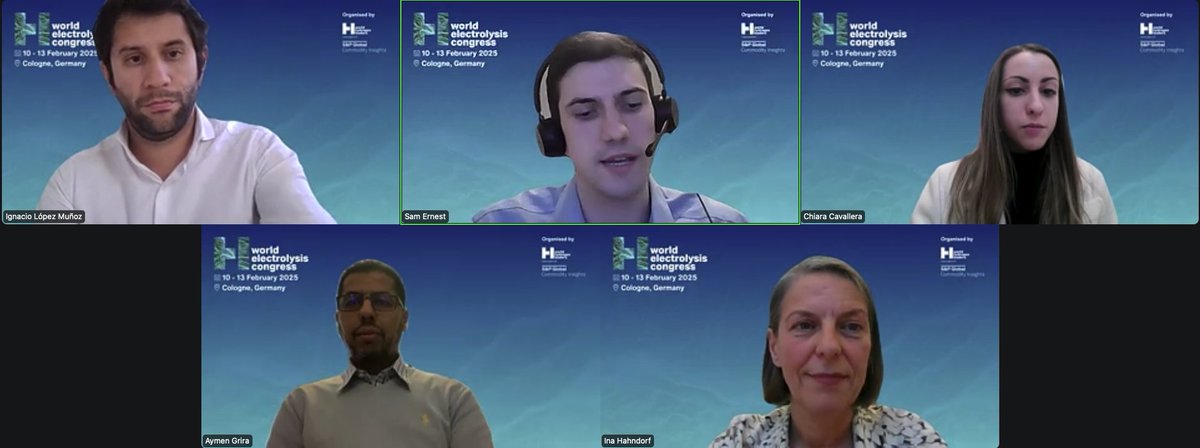
📌 On Wednesday, ERCST Junior Policy Analyst, Chiara Cavallera, participated in the debate “Approaching 2030: Mapping the Trajectory of Electrolytic #Hydrogen Markets” organised by @HydrogenLeaders.
The Highlights:
✅The EU has set ambitious renewable hydrogen targets, but these targets are unlikely to be met, and the absence of targets for low-carbon hydrogen creates uncertainty. Additionally, hydrogen prices remain high, and there are difficulties in securing demand.
✅Economies of scale are key to lowering #electrolyser CAPEX and OPEX costs and making the hydrogen produced more cost-competitive.
✅#Nuclear energy offers solutions to address the intermittency of renewables, reduce hydrogen production costs (as SMR can be located next to end-users), and, from a regulatory perspective, nuclear can waive the ‘additionality’ requirement outlined by the EU Renewable Energy Directive.
✅In Germany, the creation of a hydrogen core network connecting production sites to #industrial consumption hubs is an opportunity to establish the backbone of a national hydrogen infrastructure and create a favorable environment for project developers.
"The EU is not on track for reaching its 2030 renewable hydrogen targets. A technology neutral approach is needed if we want to achieve net-zero by 2050. Low carbon hydrogen can play a relevant role in the decarbonization as well as in testing and advancing hydrogen technologies, accelerating their scalability, and fostering the development of the hydrogen market", said Chiara Cavallera.
🗓️ Stay informed about our upcoming events 👉🏼 t.ly/ya6OM
45
12 Dec 2024
📌Today, the European Roundtable on Climate Change and Sustainable Transition (ERCST) presented his new paper "Future of emissions trading in the EU: Role of Emissions Trading in EU Climate Policy".
𝗧𝗵𝗲 𝗵𝗶𝗴𝗵𝗹𝗶𝗴𝗵𝘁𝘀:
✅This report focuses on the role the #Emissions Trading System plays within the overall EU climate policy. Considering the overall climate picture is important as Emissions Trading does not operate in isolation, but it is part of a complex policy mix.
✅Achieving #climate neutrality by 2050 through EUA prices only would require very high prices, which is not viable from an economic or social point of view. The reality is that the EU #ETS did not, and does not, provide a full price signal - it was never really allowed to deliver an entire price. There were complementary measures that muted the real price and cost of carbon for compliant entities.
✅In order to stay in the policy mix beyond 2030 Emissions Trading needs to be adapted and complemented. It needs to be adapted because, among other issues, there is an upcoming liquidity problem in the carbon #market. It needs to be complemented to provide an adequate price signal for investments. This can be accomplished through temporary and structural instruments, and a fit for competitiveness carbon leakage package.
“Emissions trading in the #EU faces fundamental challenges transcending mere system design. Its success requires careful calibration of measures to adapt and complement the EU ETS. This will lead to a well-functioning market and good price discovery, an economic rational allocation of assets and ‘good decarbonization; which is not achieved through deindustrialization”. said Andrei Marcu, Executive Director of ERCST.
There was an exchange of views with experts that presented their views and expanded on key issues related to the paper’s findings. Their expertise brought additional depth and practical insights into the discussions, enriching the conversation with diverse perspectives:
🟢Mette Quinn, DG CLIMA - @EU_Commission
🟢Andrei Marcu, ERCST
🟢Joachim Hein, @Der_BDI
🟢Cillian O'Donoghue, @Eurelectric
🟢Domien Vangenechten, @e3g
🟢Nick Bitsios, @MetlenSA & @Eurometaux
📄Read the new report👉🏼t.ly/5hQQ7
📹 Watch the recording 👉🏼t.ly/YdeNg
🔎Read more 👉🏼 t.ly/MzejH
📅 Stay informed about our upcoming events 👉🏼 t.ly/ya6OM
42
12 Dec 2024
📌Yesterday, ERCST hosted a breakfast workshop that explored the EU corporate #sustainability legal framework.
Designed as an open and interactive conversation with a diverse group of stakeholders, the discussion covered a range of topics, including:
✅Voluntary and mandatory Due Diligence;
✅Business perception on implementation;
✅Challenges in collecting comprehensive, comparable, and usefull data within the value chain;
✅The importance of meaningful #engagement of stakeholders.
💡Key themes included the interconnection between the Corporate Sustainability Reporting Directive (#CSRD) and the Corporate Sustainability Due Diligence Directive (#CSDDD), the role of transition plans for #climate change mitigation, the omnibus simplification package, and the emphasis on adopting a risk-based approach. Participants also shared insights on navigating these regulations, highlighting the internal organisational changes required and the evolving relationships with stakeholders that sustainability professionals must manage in this transformative era.
Guest speakers:
🟢Kimberley Botwright, Head of Sustainable Trade, World Economic Forum @wef
🟢Luigi Sampaolo, Head of Strategic Sustainability Relations, @eni
🗓️Stay informed about our upcoming events 👉🏼 t.ly/ya6OM
46
11 Dec 2024
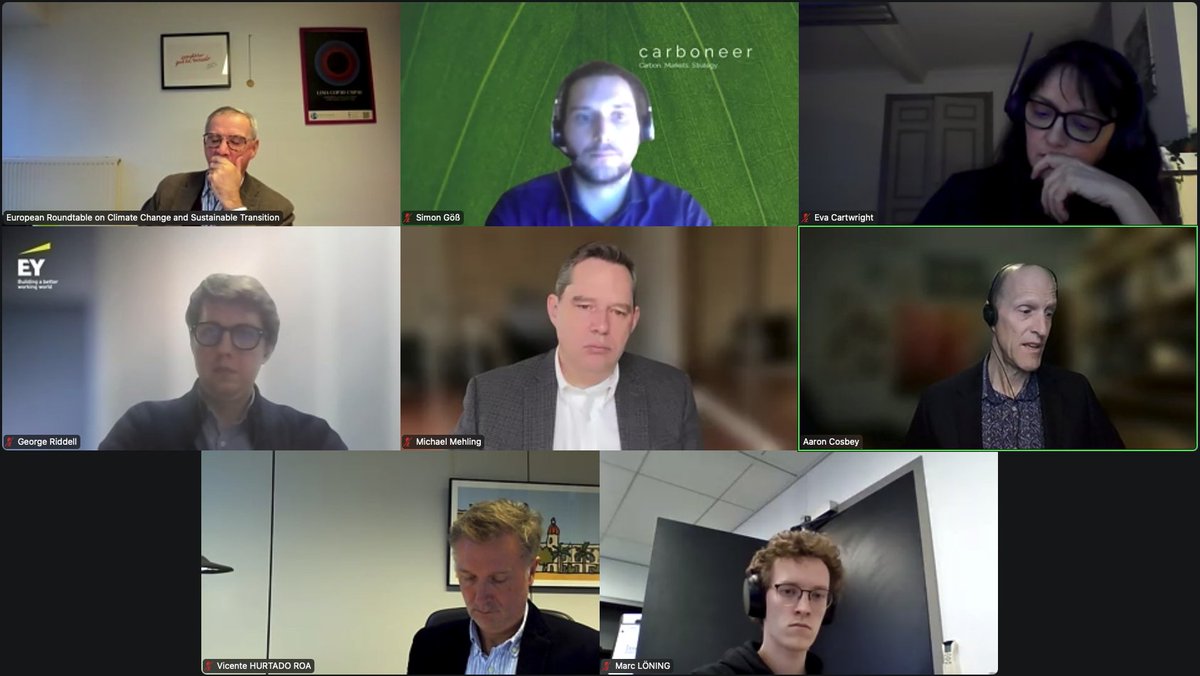
📌Yesterday, the European Roundtable on Climate Change and Sustainable Transition (ERCST) hosted the event "International townhall: #CBAM implementation – One year later".
𝗧𝗵𝗲 𝗵𝗶𝗴𝗵𝗹𝗶𝗴𝗵𝘁𝘀:
✅ International reaction to the #EU CBAM is still evolving and is to be monitored.
✅ Providing early visibility, i.e. on possible scope extension to new sectors and on default values, is key for #companies to plan their cash flows/understand how much CBAM is likely to cost them and to decide whether to change #suppliers.
✅ There is an increasing recognition of the need for interoperability of standards and methodologies globally for accounting embedded #emissions. There is a need to work together with other jurisdictions on methodologies to simplify the situation for #exporters across the world. The question remains though who is going to take the leadership on driving such a process? Within the EU, there is also scope for harmonising CBAM data requirements with data requested under other regulations like #CS3D, taxonomy, and #CSRD.
✅ Resource shuffling, (e.g. through the use of scrap): it is unclear what resource shuffling actually means, and if it is a serious problem or a natural #market reaction to the measure. One could try to “benchmark” what is happening on the ground in terms of trade flows against a theoretical scenario entailing a global carbon price to understand how serious it is. As more carbon pricing mechanisms and BCAs are introduced globally, eventually the shuffling potential diminishes/disappears.
✅ Simplification: The European Commission will be working in 2025 on ways to simplify CBAM, taking into account that in terms of volume of emissions, 15% of importers account for about 80% of emissions. The idea is to simplify through e.g. raising the de minimis threshold, or reducing the number of #imports that need to be verified.
✅ EU #Exports remain the “dinosaur” in the room and therefore a EC report on the topic, initially planned for 2027, has been advanced as part of the 2025 review.
"This is an evolving issue that has many aspects yet to be defined by EU Institutions, and with international reaction to be monitored”, said Andrei Marcu, Executive Director of ERCST.
There was an exchange of views with experts that presented their views and expanded on key issues, setting the scene for an in-depth discussion:
🟢Andrei Marcu, ERCST
🟢Vicente Hurtado Roa, DG TAXUD - @EU_Commission
🟢Michael Mehling, ERCST
🟢Aaron Cosbey, ERCST
🟢George Riddell, @EYnews
🟢Cartwright Eva, @CLECAT_Forward
🟢Marc Löning, Directorate-General for Energy and Climate, France
🟢Simon Göß, carboneer
📹 Watch the Recording👉🏼t.ly/r-eJa
📅 Stay informed about our upcoming events 👉🏼 t.ly/ya6OM
60
11 Dec 2024
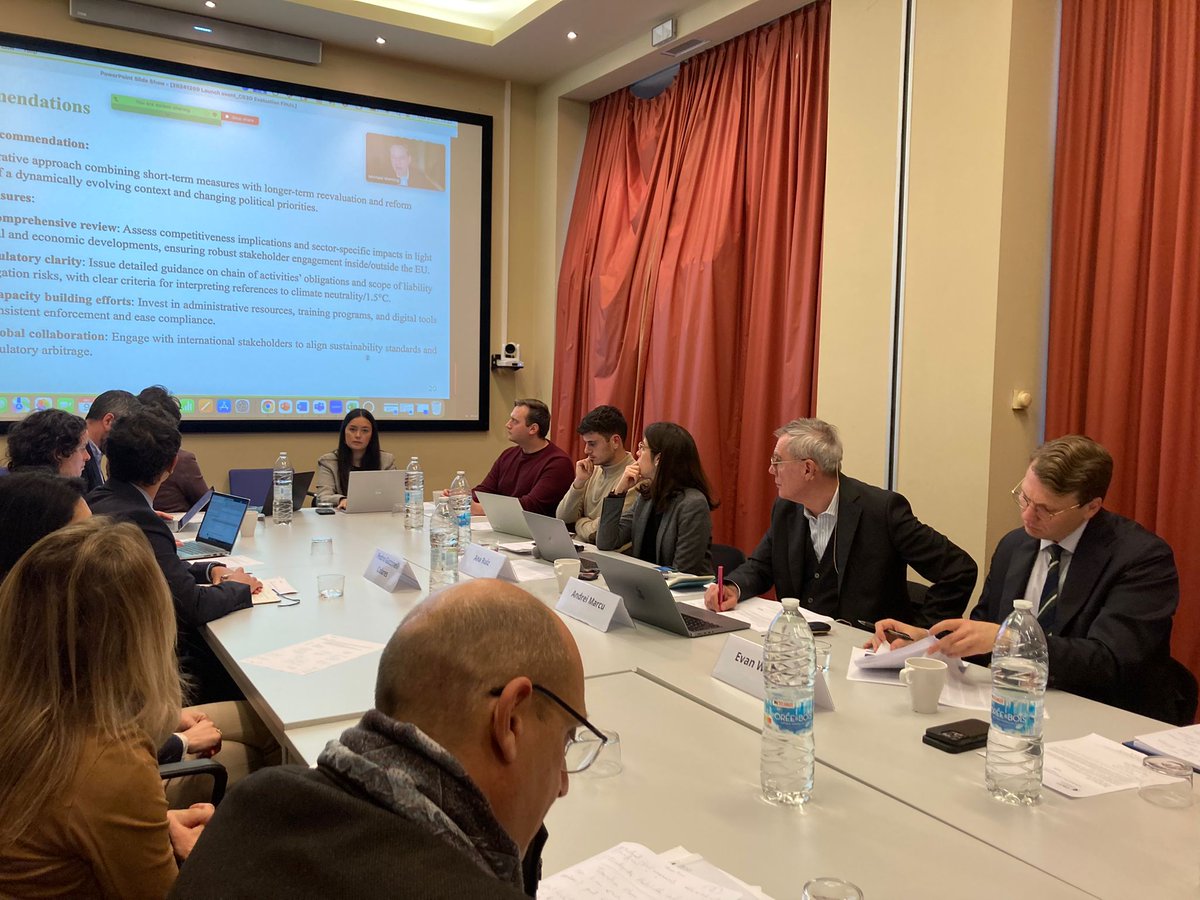
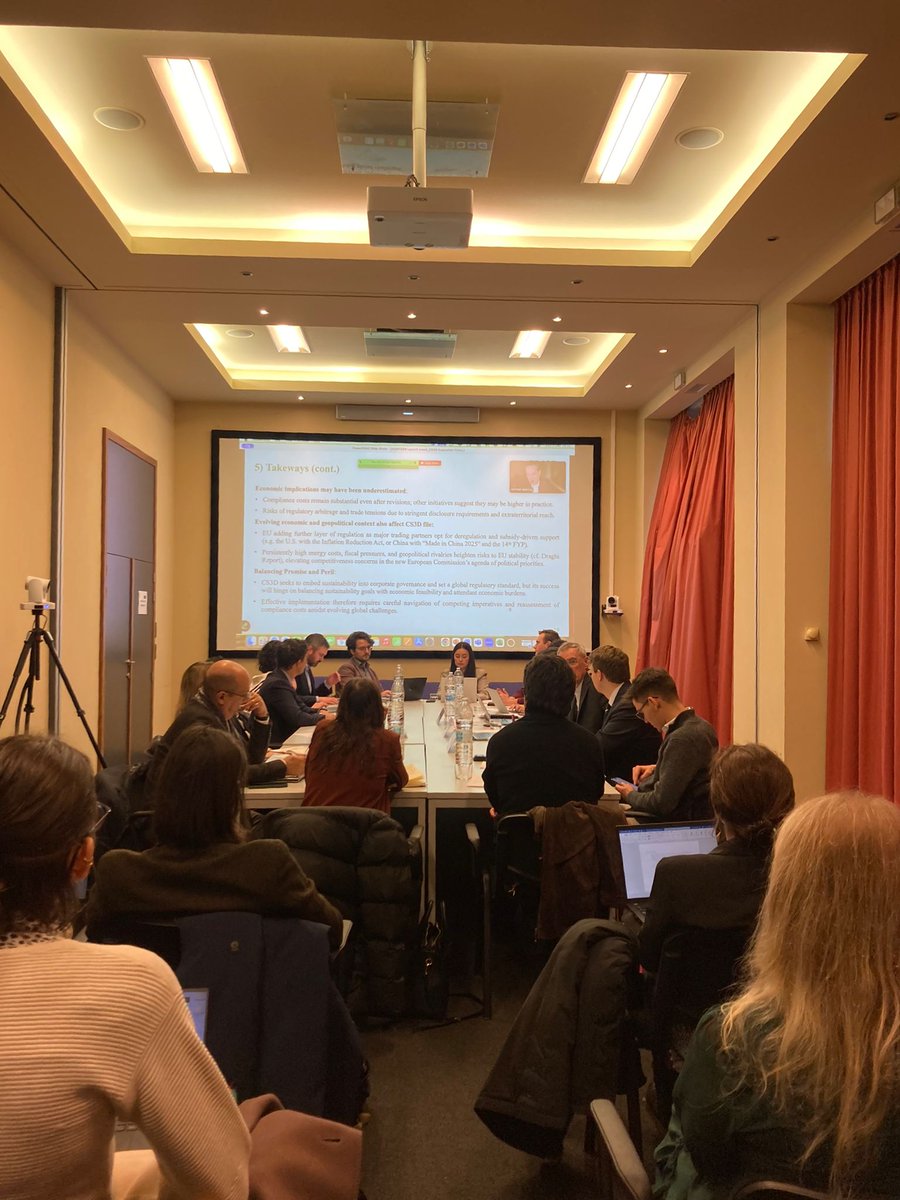
📌On Monday, the European Roundtable on Climate Change and Sustainable Transition (ERCST) presented his new paper "Evaluation of the Corporate Sustainability Due Diligence Directive".
𝗧𝗵𝗲 𝗵𝗶𝗴𝗵𝗹𝗶𝗴𝗵𝘁𝘀:
✅The success of the #CS3D depends on its ability to balance ambition with feasibility. While the overarching goals of the CS3D are laudable, its implementation must reflect the diverse capacities and circumstances of the companies it seeks to regulate.
✅The #EU should consider a more flexible approach that differentiates requirements based on company size, sector, and geographic context, reducing burdens on #SMEs and high-risk sectors, and that allows companies to prioritise their efforts based on the materiality of risks and their specific contexts.
✅It becomes evident that the CS3D embodies both promise and peril. Its ambition to embed #sustainability into corporate governance and harmonise due diligence standards across the EU represents a laudable step toward addressing global challenges.
"The success of the CS3D will ultimately depend on the ability of #policymakers to balance these competing imperatives, crafting an overall regulatory framework that advances sustainability objectives without imposing unsustainable burdens on the European #economy”, said Andrei Marcu, Executive Director of ERCST.
There was an exchange of views with experts that presented their views and expanded on key issues related to the paper’s findings:
🟢Andrei Marcu, ERCST
🟢Michael Mehling, ERCST
🟢Evan Williams, @USChamber
🟢Luca Enriques, University of Oxford
🟢Pedro Colares, Brazilian Ministry of Foreign Affairs @ItamaratyGovBr
🟢Tsvetelina Kuzmanova, @cisl_cambridge
🟢Ana Ruiz, ERCST
📄Read the new report👉🏼t.ly/KdEGe
📹 Watch the Recording👉🏼t.ly/Qq15t
📅 Stay informed about our upcoming events 👉🏼 t.ly/ya6OM
57
10 Dec 2024
📌IT'S TOMORROW! | #CO2 | "Stakeholder consultation – CO₂ Storage Beyond the EU: Regulatory Barriers and Business Opportunities"
Join us at this online stakeholder consultation:
📆 11 December - 15:00 - 16:30
🖥 Register online👉🏼t.ly/Rdx06
The panel will include:
🟢Andrei Marcu, ERCST
🟢Andrew Russell, @energygovuk
🟢@ErikaLaajalahti, @bioenergiary
🟢Stig Svenningsen, @energidep
🟢Lucia Odone, @eni
🟢@marinovarr, ERCST
Read more 👉🏼t.ly/XaGsW
📅 Stay informed about our upcoming events 👉🏼t.ly/ya6OM
58