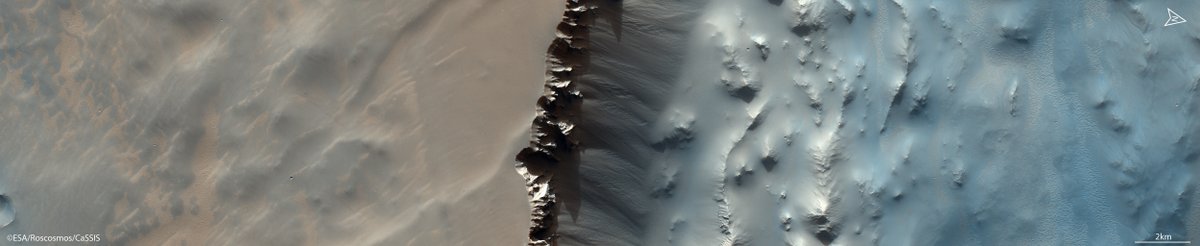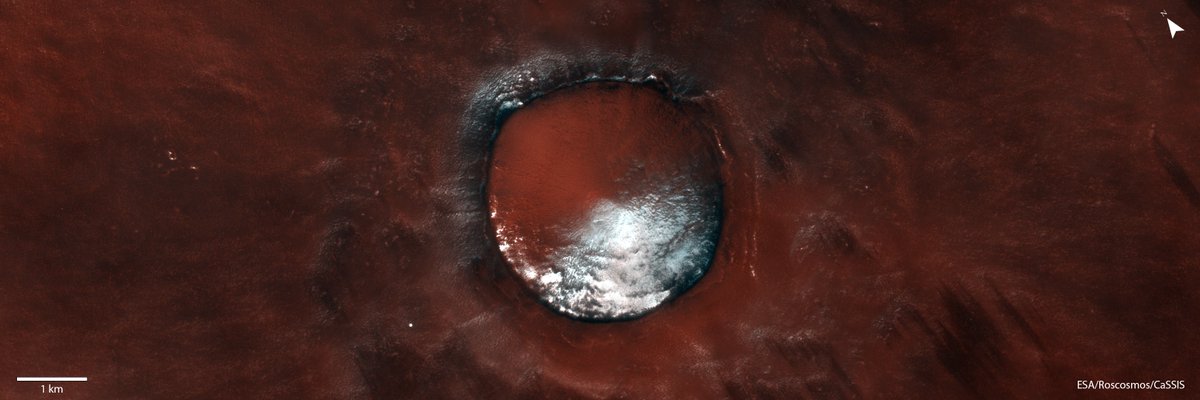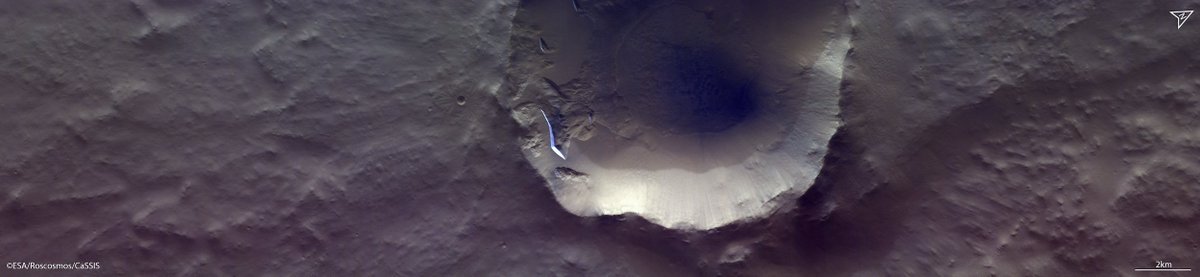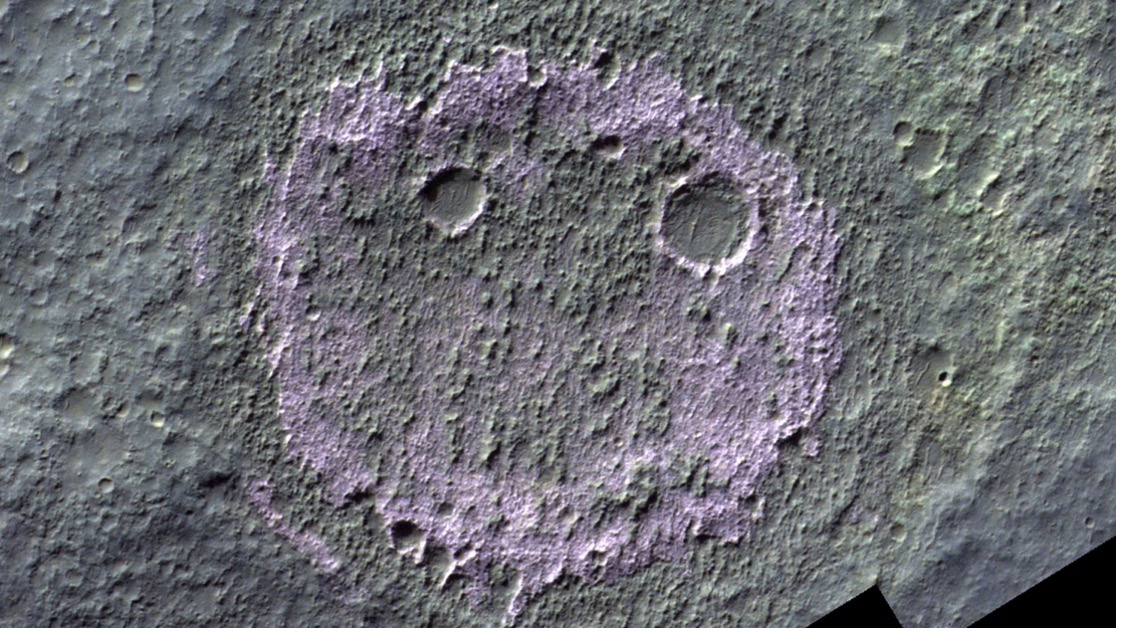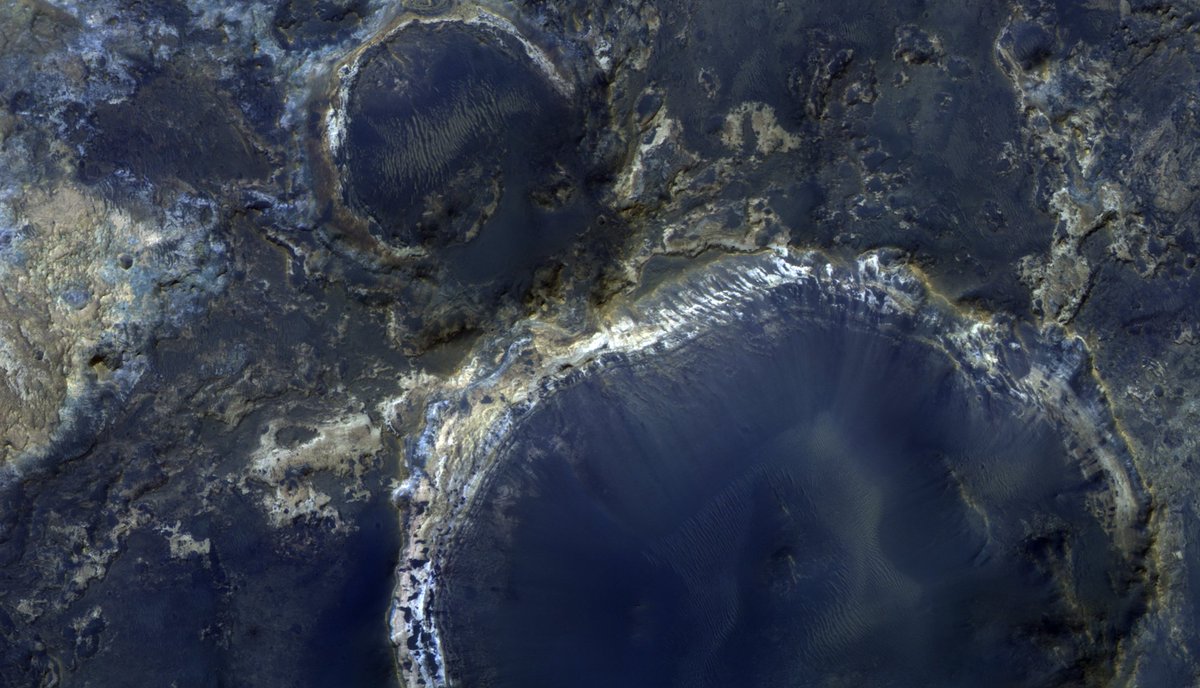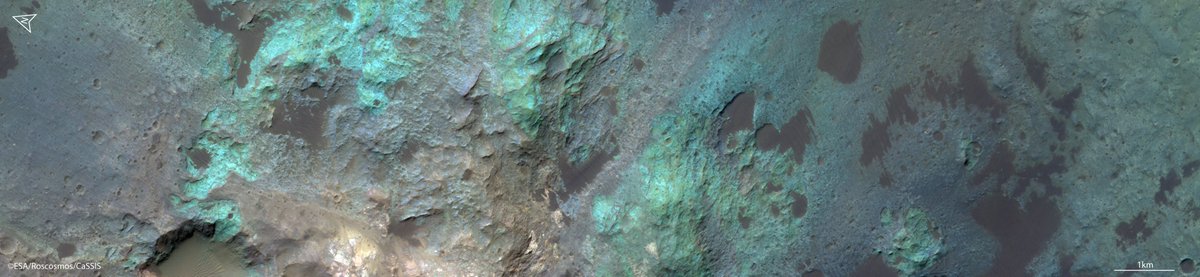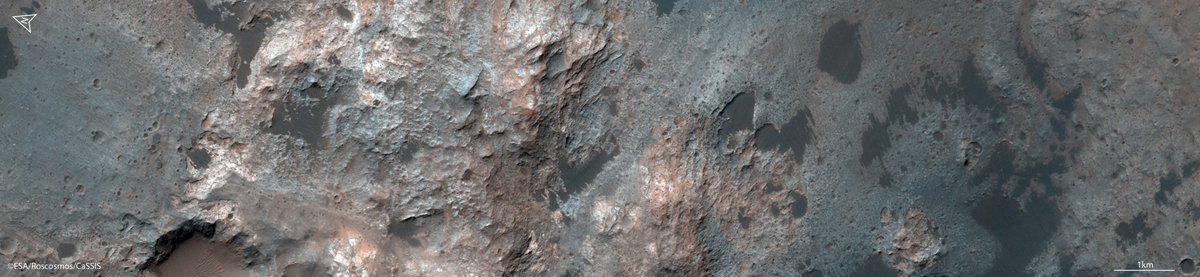
ALT Chloride-bearing terrain on Mars does not stand out in regular black-and-white images but shows up a distinct pink to purple hue in colour-infrared images, making ESA's ExoMars CaSSIS instrument a unique tool to study the distribution of salts across Mars from orbit. In the absence of colour, chlorides are easily confused with other light-toned materials such as clays. This image shows a salt deposit in a crater with the appearance of a 'smiley'.
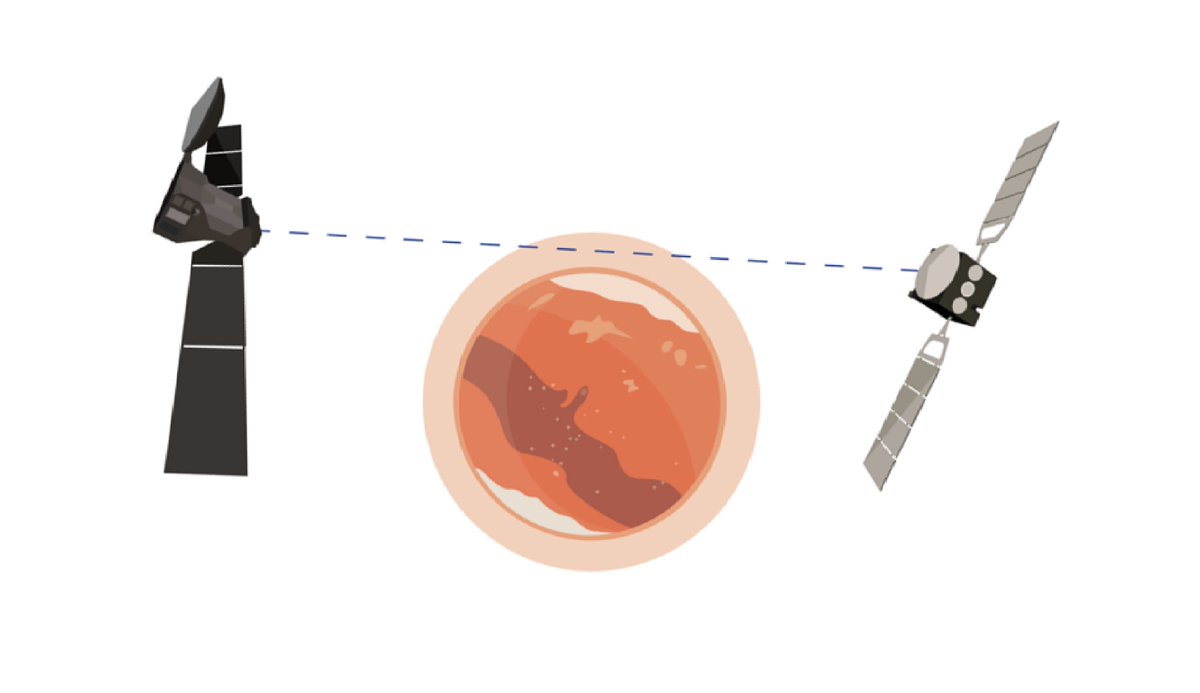
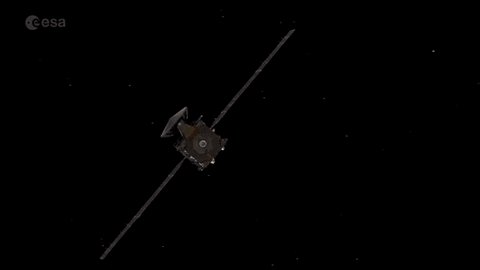
Two European spacecraft play hide and seek around Mars for new atmospheric science. 🫣📡📶
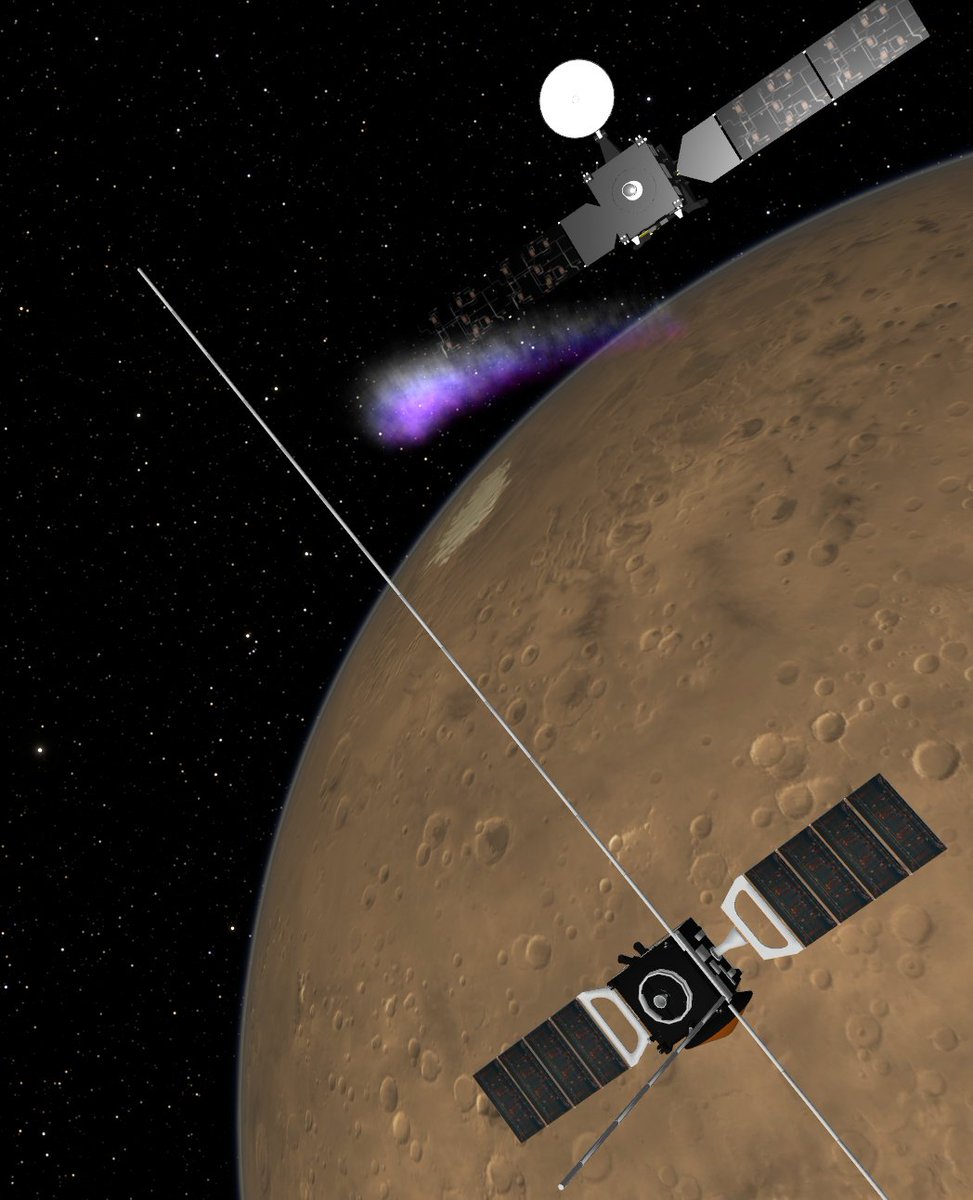
🃏 @ESA_TGO has a new capability under its sleeve: mutual radio occultation. For the first time, underused short-range antennas from the Trace Gas Orbiter and Mars Express are put to work to probe the martian atmosphere.
👀 blogs.esa.int/to-mars-and-ba…
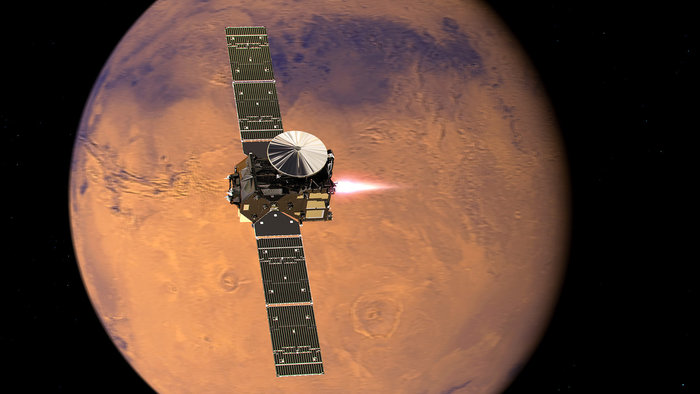
ALT Martian mutual radio occultation measurement between ESA’s Mars Express (foreground) and Trace Gas Orbiter (background) spacecraft around Mars.
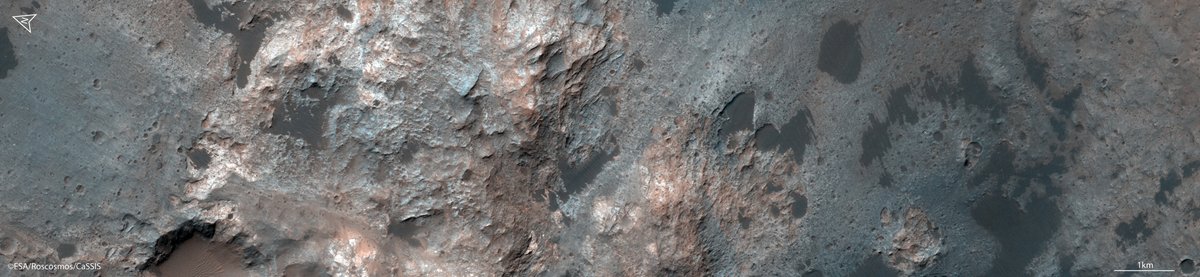
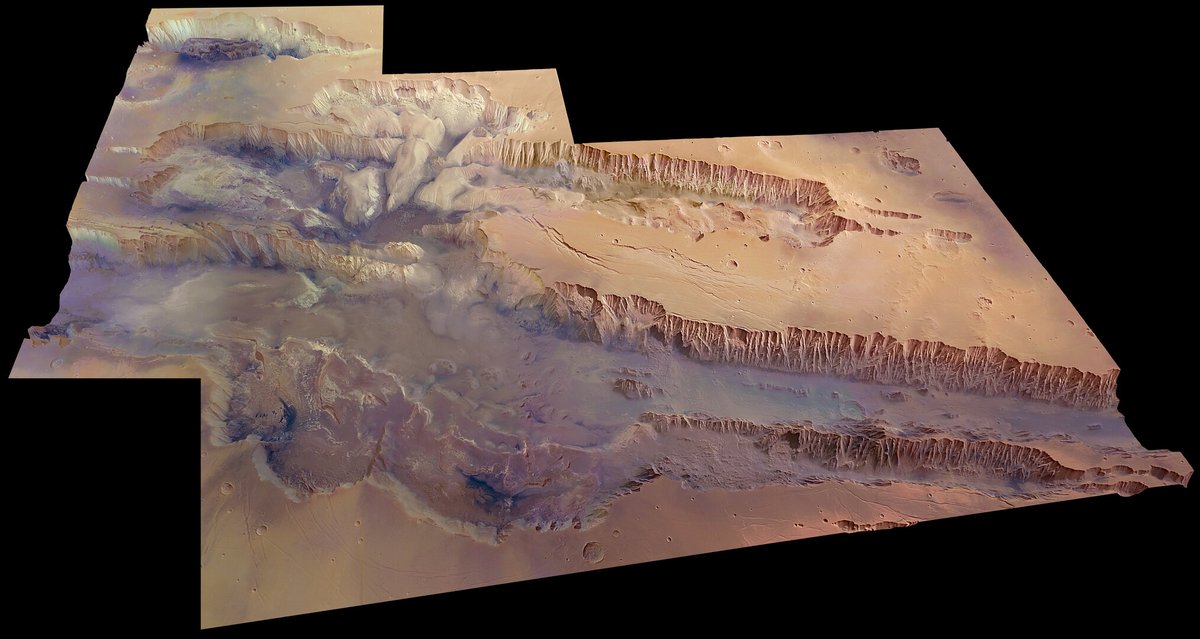
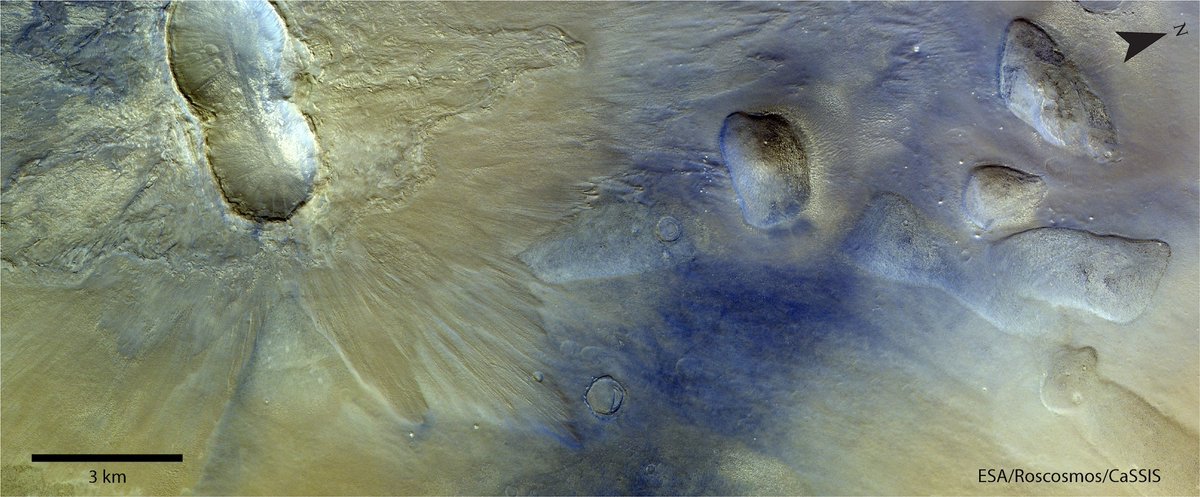
That’s right, I see Mars in a whole range of colours! 😍 Scientists on Earth find it useful to reveal the planet’s composition and decipher a landscape that took shape 3.6 billion years ago.
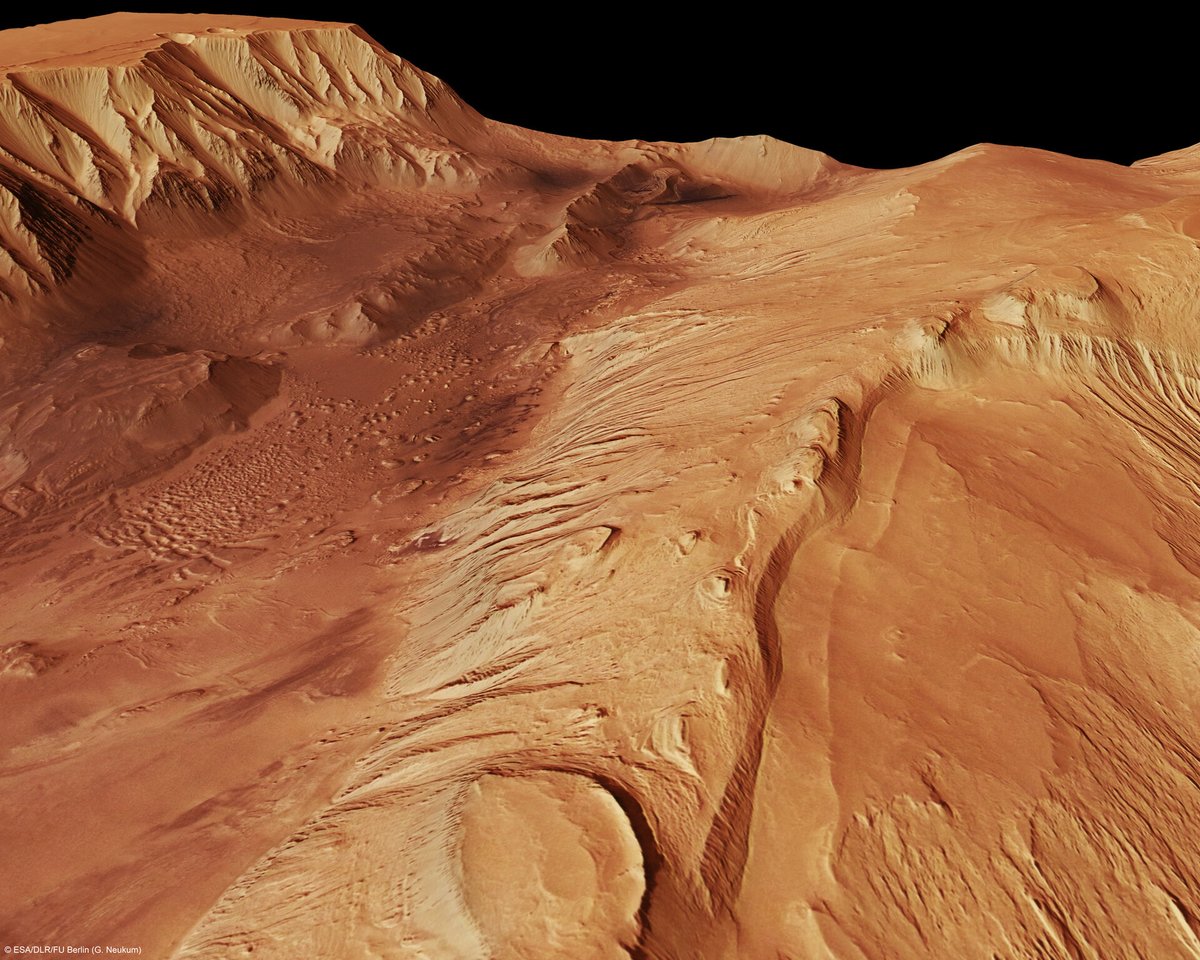
Zoom in on my high-resolution view of the landscape below 👉 esa.int/ESA_Multimedia/Image…
Metallic Mars 🤘🏼
A new image reveals a heavy presence of iron, magnesium and aluminium in the Mawrth Vallis region.
👀 We call it the Red Planet, but a fine camera on Europe's Trace Gas Orbiter can capture more colours on Mars than our eyes can see: esa.int/ESA_Multimedia/Image…
ALT False colour image of the Mawrth Vallis region on Mars.
🧑🎄 Getting ready for Christmas? I'm getting ready for #Mars ‘solar conjunction season’ 🔴🌞🌍
Happening roughly once every 25 months, during this period the Red Planet is located on the opposite side of the Sun from Earth, making it tricky for me and other spacecraft at Mars to talk to Earth.
Learn more below 👇
🆕science alert! I've spotted a green glow 🟢 lighting up Mars's night sky – something long suspected to exist but never spotted before.
Under clear skies, the glow could be bright enough for humans and rovers to see by 👀
Find out more 👉esa.int/Science_Exploration/…
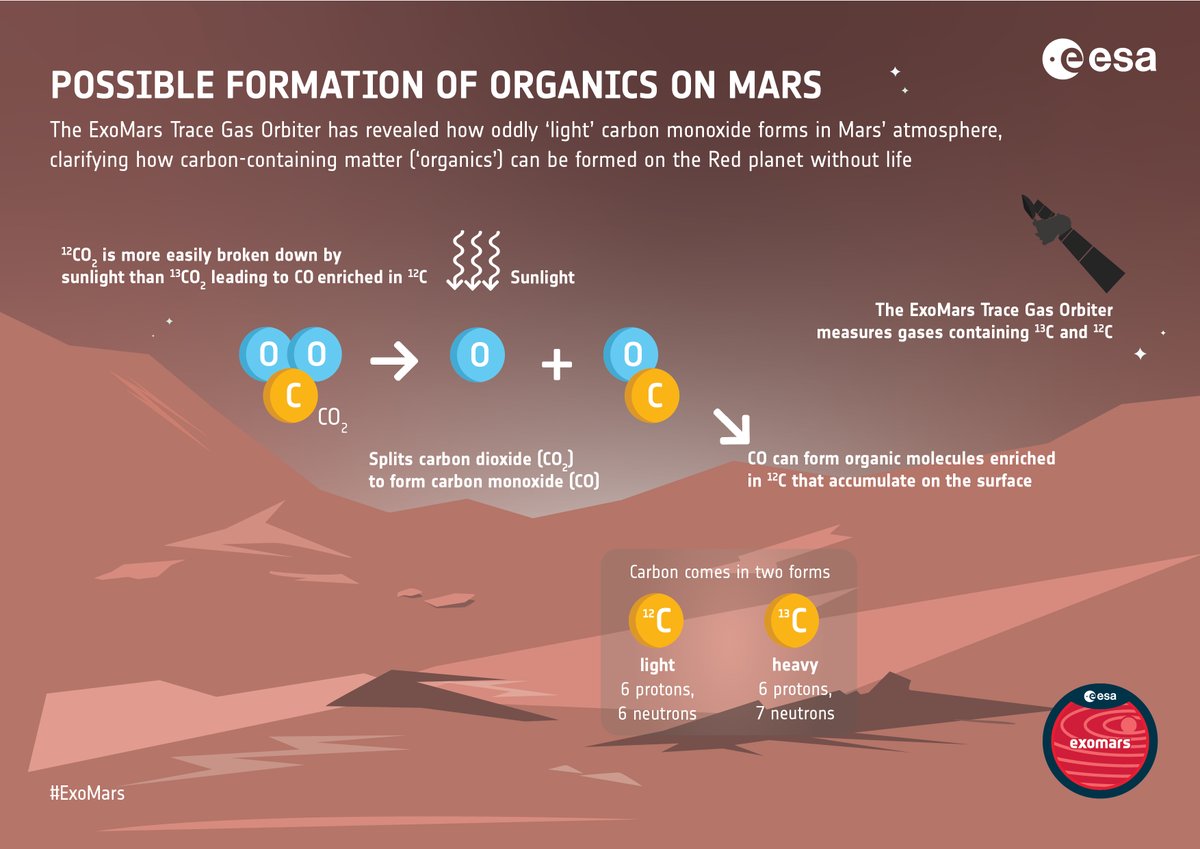
New science alert! I’ve spotted something weird in Mars' atmosphere! 🔴🛰️🔍
Turns out that #Mars' carbon monoxide is ‘lighter’ than it should be. But why?
Could biology be to blame… or is it all a matter of chemistry? 🤔 ☀️
👉 esa.int/Science_Exploration/…#ExploreFarther [1/2]
ALT Infographic showing how oddly ‘light’ carbon monoxide forms in Mars’ atmosphere. It shows carbon dioxide molecules being split by sunlight to form carbon monoxide and oxygen, with an illustration of Mars' red-hued surface below.
Excitingly, this clarifies a tantalising puzzle found by @MarsCuriosity in 2022. Curiosity saw that rock samples from Gale Crater were also weirdly lacking in heavy carbon – a signature that’s typically associated with life here on Earth. Background: mars.nasa.gov/news/9113/nasa… [2/2]
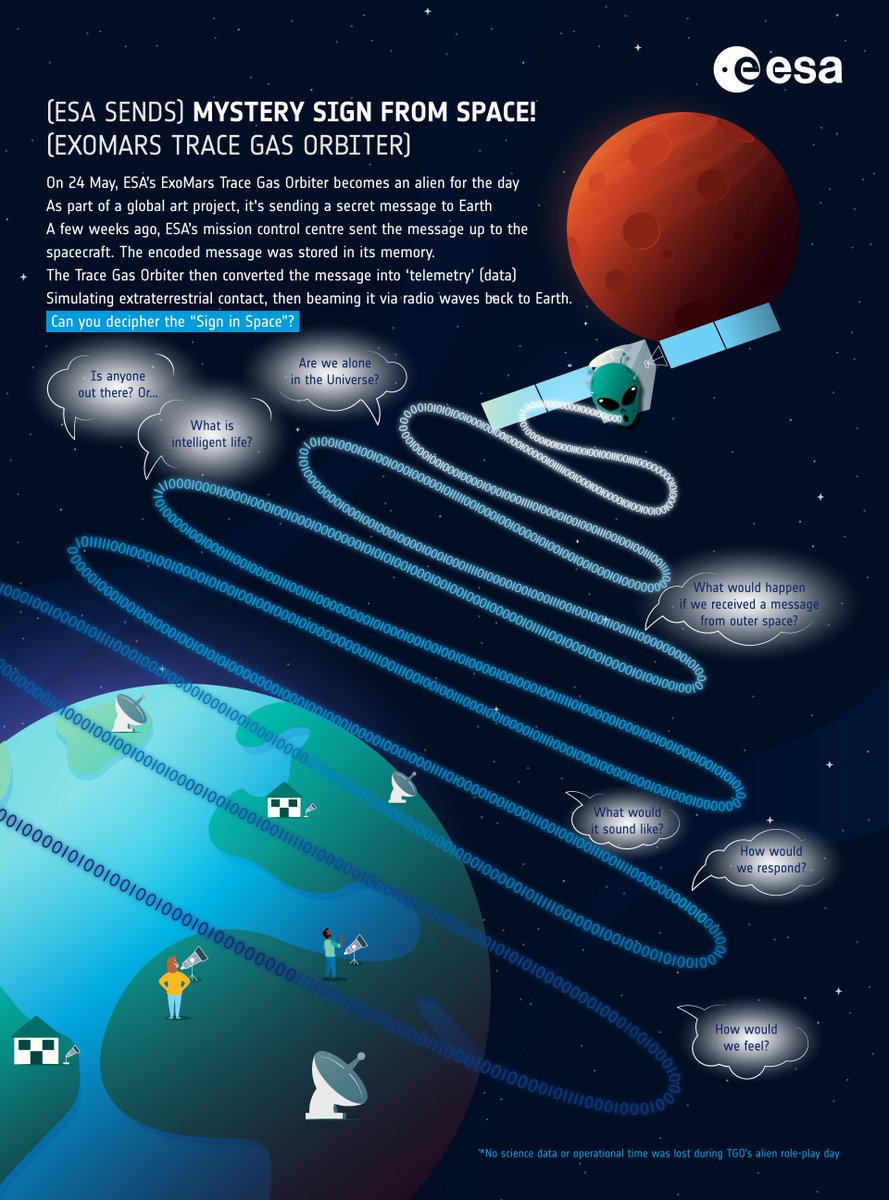
What would you ask an extraterrestrial civilisation?👽
@ESA_TGO will this evening mimic an alien first contact, in a global art project calling for the public to decode and interpret the message.
Watch #SETILive from 20:15 CEST👉 youtube.com/watch?v=zgQq36IR…
Our dear Trace Gas Orbiter, @ESA_TGO, will send a mysterious signal to #Earth tonight.
😱 Should we be scared?
🤩 Excited?
🧐 Curious?
Follow this simulated #FirstContact and help decode the secret message. 👽
What would you ask an extraterrestrial civilisation?👽
@ESA_TGO will this evening mimic an alien first contact, in a global art project calling for the public to decode and interpret the message.
Watch #SETILive from 20:15 CEST👉 youtube.com/watch?v=zgQq36IR…
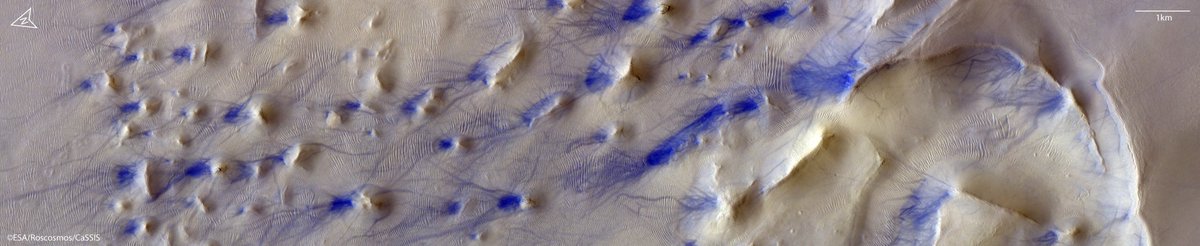
Red Mars, blue Mars… ever wondered why my images are typically blue?!
Enjoy this 🆕 image of #Mars, part of Alga Crater, and look through my @ExoMars_CaSSIS eyes to dig deeper into the reasons why I see Mars this way 🔴👀esa.int/Science_Exploration/…
#Mars has always been on the horizon for space exploration.
Here is a handy overview of @ESA's ambitions for the Red Planet, including sending Europeans to Mars by 2040. 🤩👩🚀🔴 #ExploreFartheresa.int/Science_Exploration/…
#ExoMars rover team members join the line up for #MarsDay22 👇 on 14 March, which is also the launch anniversary of our ExoMars Trace Gas Orbiter @ESA_TGO!
The timetable of speakers for #MarsDay22 has launched!
Want to learn about the future of @esa's human spaceflight and robotic exploration? Join Dr David Parker, Director of Human and Robotic Exploration at ESA, at 09:40 on March 14
Full timetable 👉 bit.ly/3LihpzY
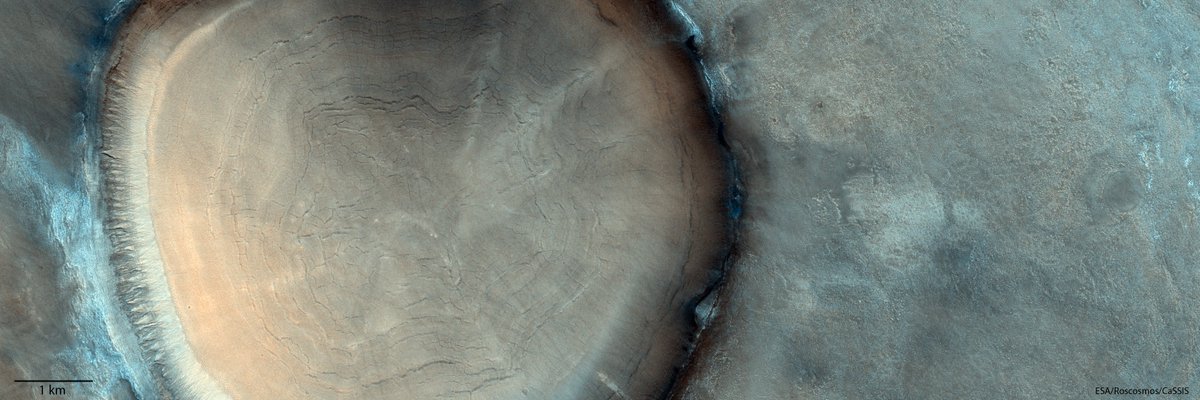
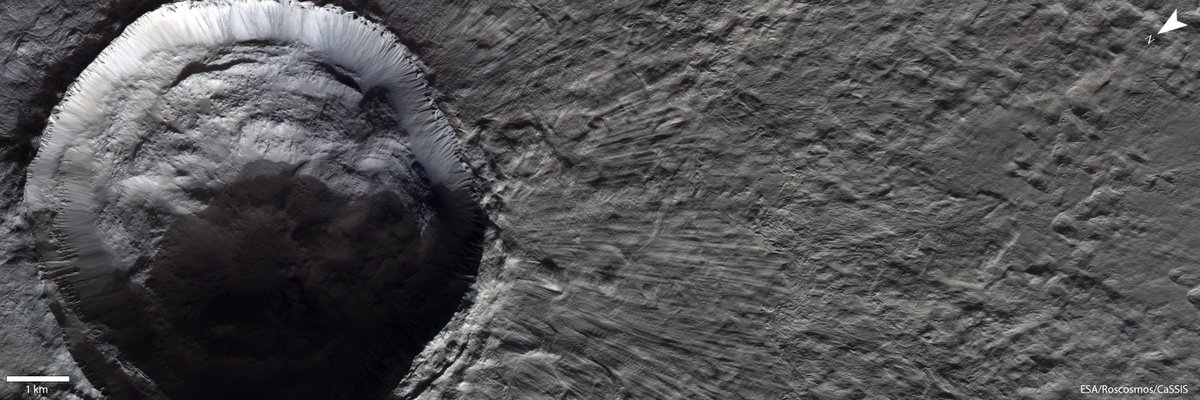
Just me, or does this impact crater look like a tree stump with characteristic rings?! Worlds apart, but just as tree rings provide snapshots of Earth’s past climate, the patterns inside this ice-rich crater reveal details of Mars history #ExploreFarther
📷esa.int/ESA_Multimedia/Image…
From #Mars with love this holiday season: an ice-filled crater set against the deep red of the surface, all the way from the planet's north pole ❄️☃️
Explore hi-res👉
esa.int/ESA_Multimedia/Image… 📷 @ExoMars_CaSSIS
New image from #Mars! Part of the Ritchey impact crater, including its central uplift raised from depth during the impact process itself, and a variety of different textures and features within! #ExploreFarther 📷 esa.int/ESA_Multimedia/Image…@ExoMars_CaSSIS
And here 👇 in a different colour scheme to help differentiate between different materials to understand more about the history of the region
x.com/ExoMars_CaSSIS/status/…
📸Ritchey Crater (309.06°E, 28.13°S) has exposed bedrock, variety of impactites and post-impact materials. RGB images show what you would see but my filters (NIR-RED-PAN-BLU) help differentiate various materials. Can you 👀 the differences ? #Mars#UniBern#ExoMars#ESA#Roscomos