
Official @ESA feed for James #Webb Space Telescope – an international partnership between NASA, ESA and CSA #WebbSeesFarther #BFFinSpace with @Hubble_Space
- Tweets 4,725
- Following 189
- Followers 261,227
- Likes 780
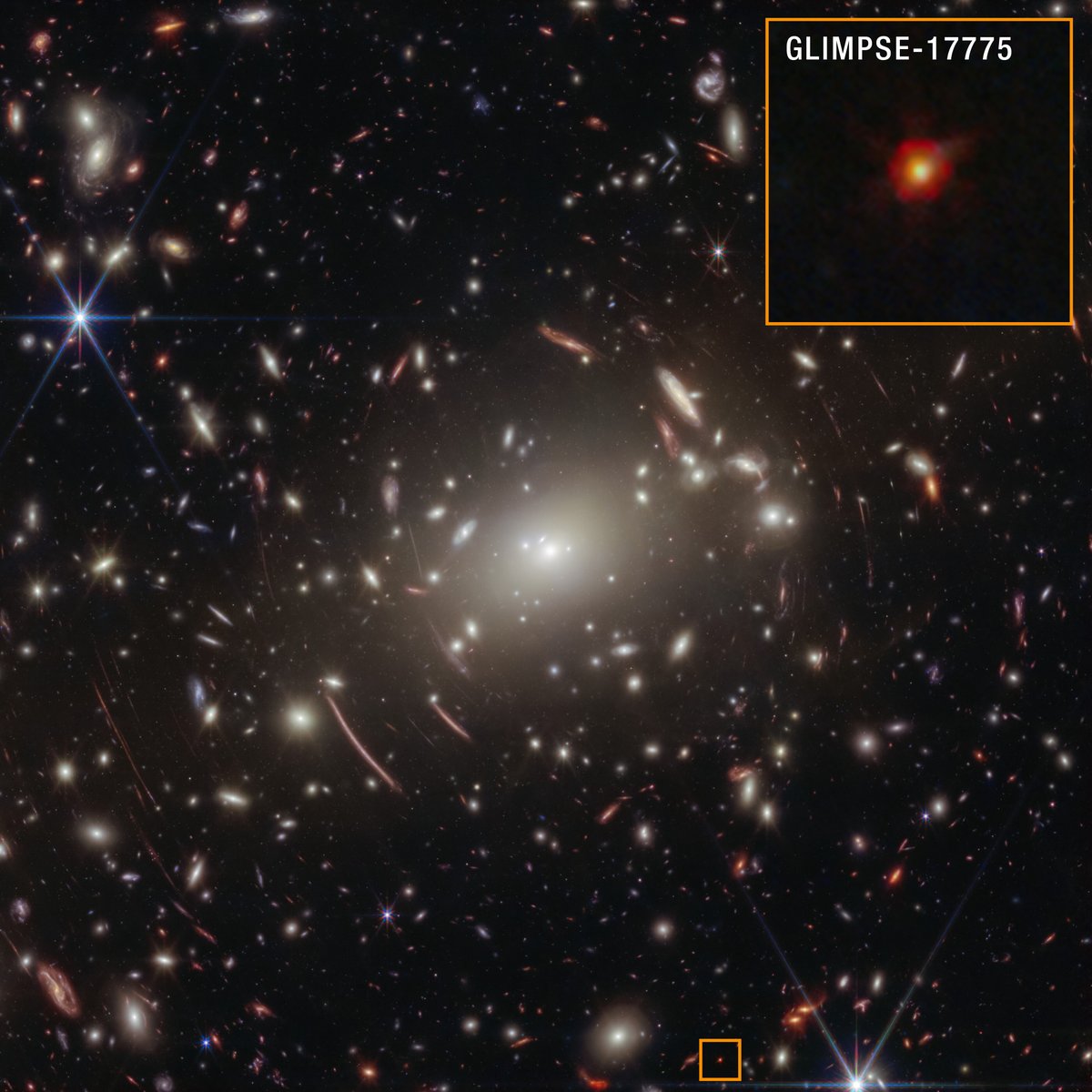
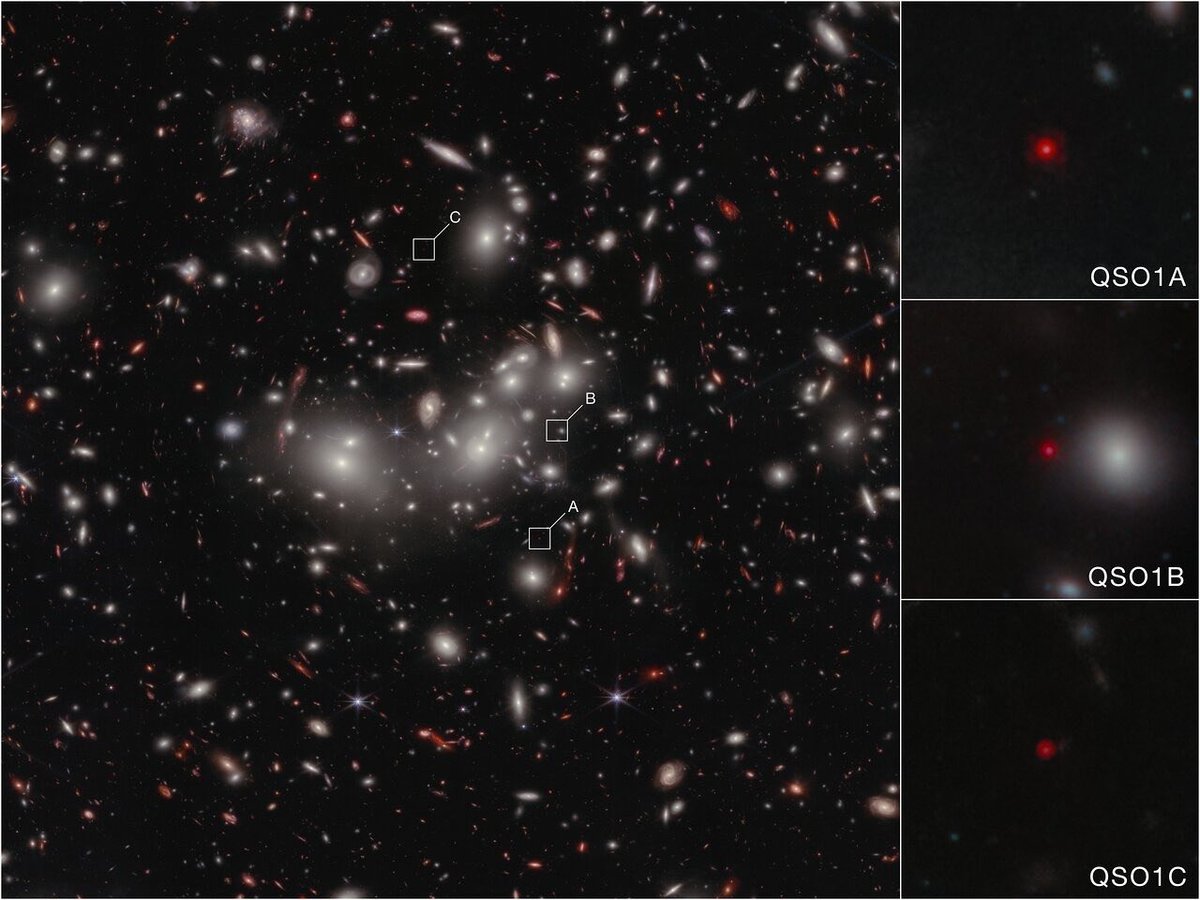

ALT A field of galaxies against the black background of space. In the centre is a bright-white elliptical galaxy that is the core of the Abell S1063 galaxy cluster. Around the core are short, curved red lines, which are distant background galaxies magnified and warped by gravitational lensing. A couple of foreground stars appear large and bright with Webb’s signature eight-point diffraction spike pattern. Toward the very bottom, slightly off center toward the right, is a small red dot that is highlighted by an orange square outline. A larger orange square in the top right corner shows the object in more detail. The object, labeled “GLIMPSE-17775” looks like a fuzzy red dot with a yellow core.
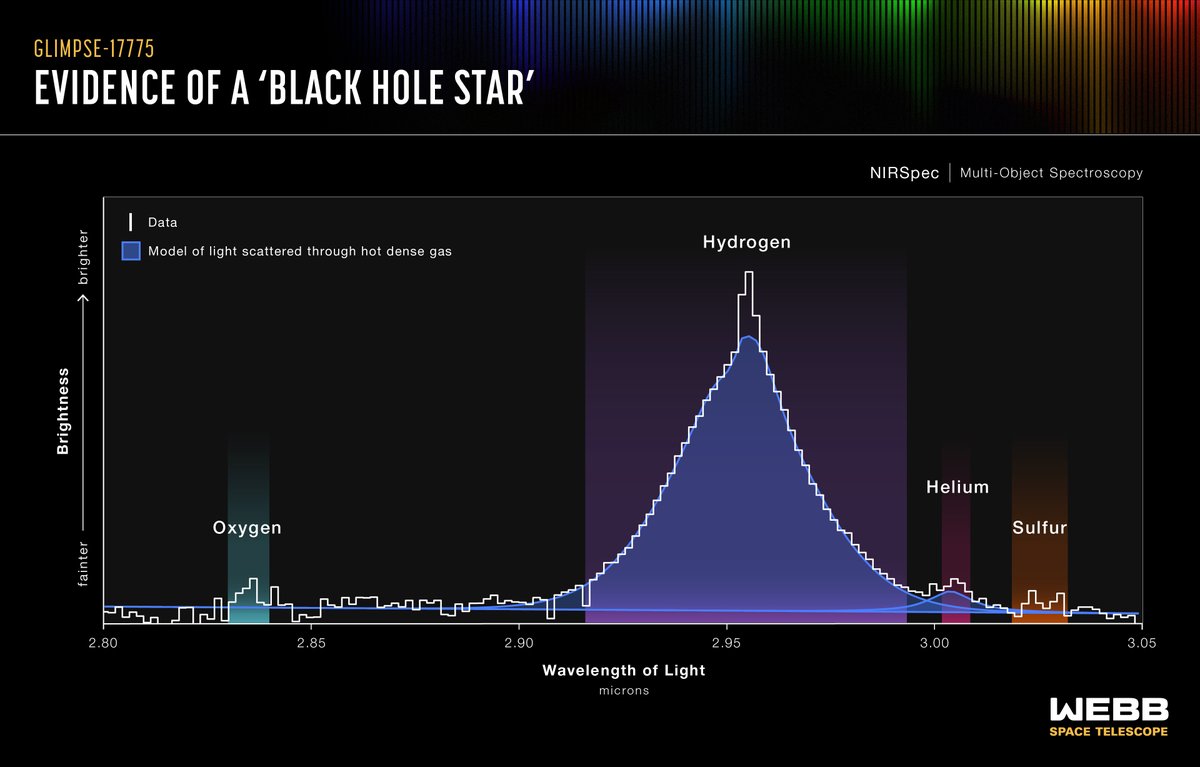
ALT A spectrum graphic showing the amount of light blocked on the y-axis versus wavelength of light, in microns. The bottom of the y-axis is labeled “fainter,” and the top is labeled “brighter.” The x-axis starts with 2.80 microns at left and continues in increments of five, ending with 3.05 microns at right. A key at top left has a white line labeled “Data” and a small blue square labeled “Model of light scattered through hot dense gas.” The white data line is stepped with a large bell-like curve that peaks at 2.95 microns. It is labeled “hydrogen” and highlighted by a semi-transparent purple. The data also forms small peaks highlighted with different colors: around 2.84 microns, oxygen, green; 3.0 microns, helium, red; and 3.02 microns, sulfur, orange. The blue filling, representing the model, approximately fills the bell-like curve that marks hydrogen. A smaller peak of blue also approximately fills the data’s peak of helium.
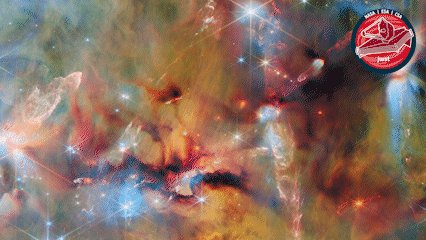
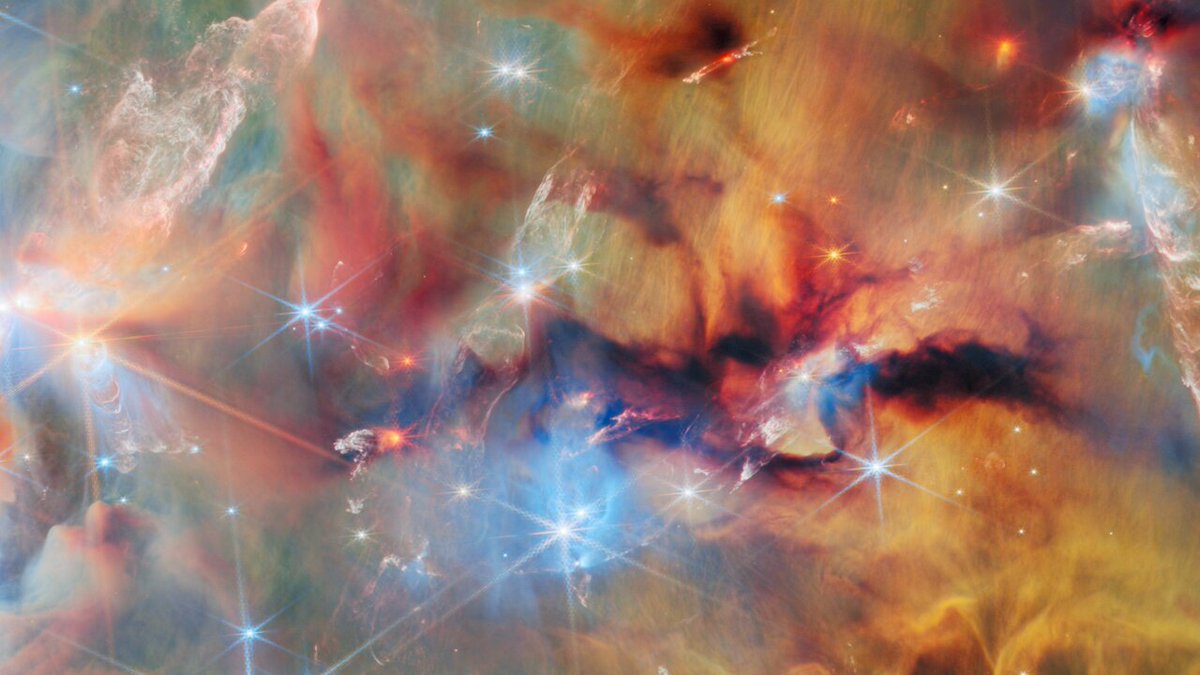
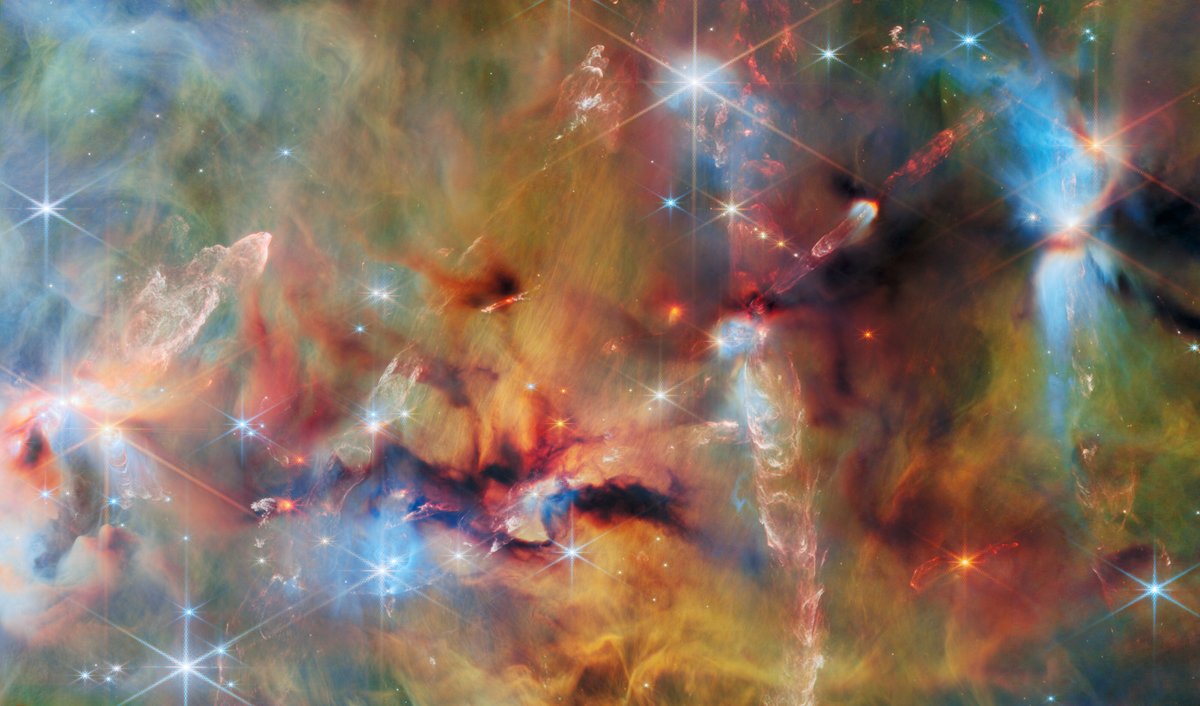
ALT An area inside a star-forming molecular cloud. The background is covered with layers of gas and dust in blue, green and yellowish colours. Thicker clumps of cold dust, dark brown to black, block out light completely. Stars lie among and atop the clouds, from small orange ones to large white or blue ones. Waves and streams of glowing whitish gas are created by jets from protostars colliding with the surrounding material.