
#Ethereum #ETH #Layer2 Guides. Join us - Trading: t.me/ FC46WN27lfplNGE1 , Airdrop: discord.com/invite/WgRgnx9me… For business proposal, contact: t.me/tk_media.
Joined May 2021
- Tweets 14,232
- Following 516
- Followers 102,900
- Likes 7,557
7,898 Photos and videos













Jun 12
Ethereum staking just dropped a pretty strong signal.
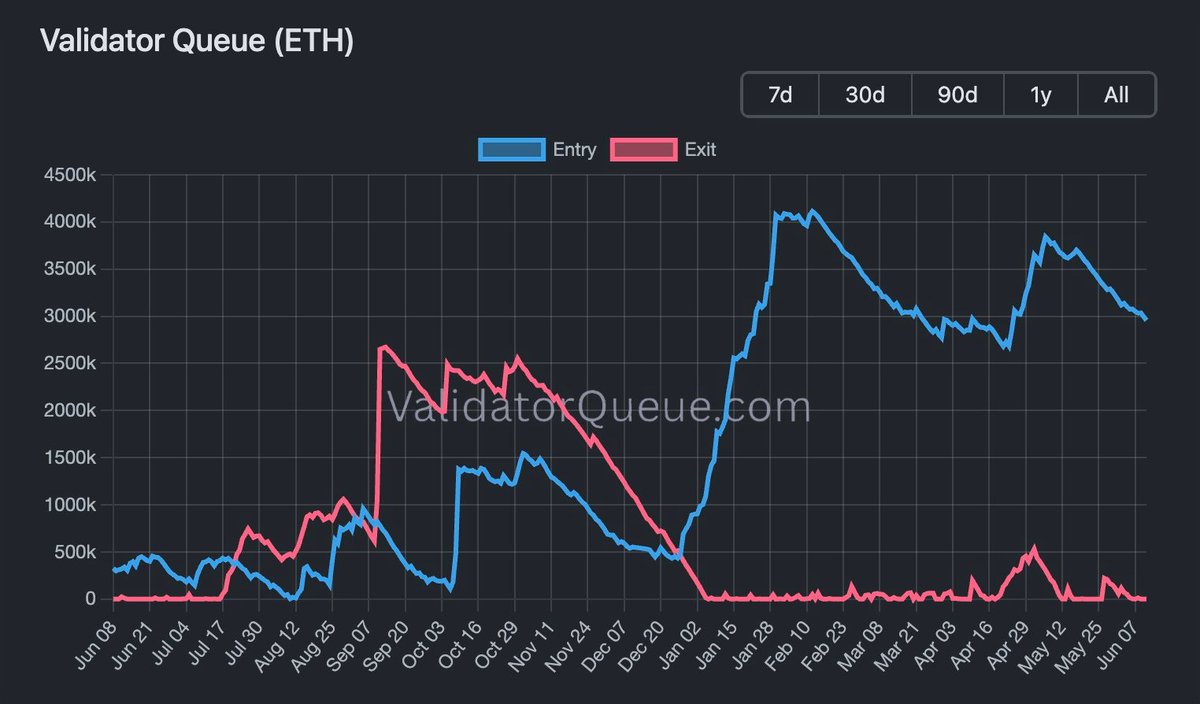
The exit queue is basically at zero right now. That means almost nobody is unstaking their ETH. If you wanted to exit today, you could do it in minutes — no waiting around.
Meanwhile, the entry queue is stacked with nearly 3 million ETH waiting to get in. People are lining up and willing to wait around 50 days just to start staking.
This tells you a lot. Stakers aren’t bailing out — they’re doubling down and more are jumping in. It shows real long-term confidence in Ethereum. Low exit pressure plus heavy demand to stake usually means bullish sentiment and growing trust in $ETH as a solid, yield-bearing asset.
25
143
433
15,399
Jun 11
🔥 Michael Saylor: Confidence in Ethereum has collapsed. Sui has collapsed after being hyped as the 'next Solana.' The rest of the crypto market is fighting over utility. They are not money. Bitcoin is the only dominant digital currency network.
Jun 10

🔥 Circle just launched cirBTC on Ethereum – a simple, 1:1 backed token that represents real Bitcoin.
So why did they launch on Ethereum first instead of other chains?
Because Ethereum is already the main hub for serious institutional finance on blockchain. It has deep, mature lending markets, strong DEX liquidity, plenty of tokenized assets, and steady flows of stablecoins like USDC. In short, it’s where the big players already do their DeFi, tokenization, and liquidity work every day.
Other chains may be fast or cheap, but they don’t yet have the same proven infrastructure and depth that institutions rely on for large-scale lending, market making, OTC trades, treasury ops, and settlement. Ethereum gives cirBTC the best possible start so it can be used right away in real financial activity.

14
3
27
7,246
Jun 10
solana:So11111111111111111111111111111111111111112 has been declining for nine months, but I've hardly seen any posts from haters... or maybe SOL has been forgotten.
13
65
7,758
Jun 10
🔥 Circle just launched cirBTC on Ethereum – a simple, 1:1 backed token that represents real Bitcoin.
So why did they launch on Ethereum first instead of other chains?
Because Ethereum is already the main hub for serious institutional finance on blockchain. It has deep, mature lending markets, strong DEX liquidity, plenty of tokenized assets, and steady flows of stablecoins like USDC. In short, it’s where the big players already do their DeFi, tokenization, and liquidity work every day.
Other chains may be fast or cheap, but they don’t yet have the same proven infrastructure and depth that institutions rely on for large-scale lending, market making, OTC trades, treasury ops, and settlement. Ethereum gives cirBTC the best possible start so it can be used right away in real financial activity.
Jun 9
🔥 In the past week, Tom Lee's Bitmine bought 126,971 ETH (~$213 million). This is the largest single purchase of Ethereum by them so far in 2026.
Even with a recent price drop around $1,630, they believe the real value of ETH is growing because of better technology, stronger demand, and its role in new areas like AI and DeFi.
With this latest purchase, BitMine now holds more than 5.5 million ETH. The move sends a clear message: BitMine sees Ethereum as a long-term winner and is putting real money behind that belief.

20
33
274
22,522
Jun 9
🔥 In the past week, Tom Lee's Bitmine bought 126,971 ETH (~$213 million). This is the largest single purchase of Ethereum by them so far in 2026.
Even with a recent price drop around $1,630, they believe the real value of ETH is growing because of better technology, stronger demand, and its role in new areas like AI and DeFi.
With this latest purchase, BitMine now holds more than 5.5 million ETH. The move sends a clear message: BitMine sees Ethereum as a long-term winner and is putting real money behind that belief.
Jun 8
I've never stopped being bullish on Ethereum, but this right here is the moment I feel the most bullish on $ETH I've ever been.
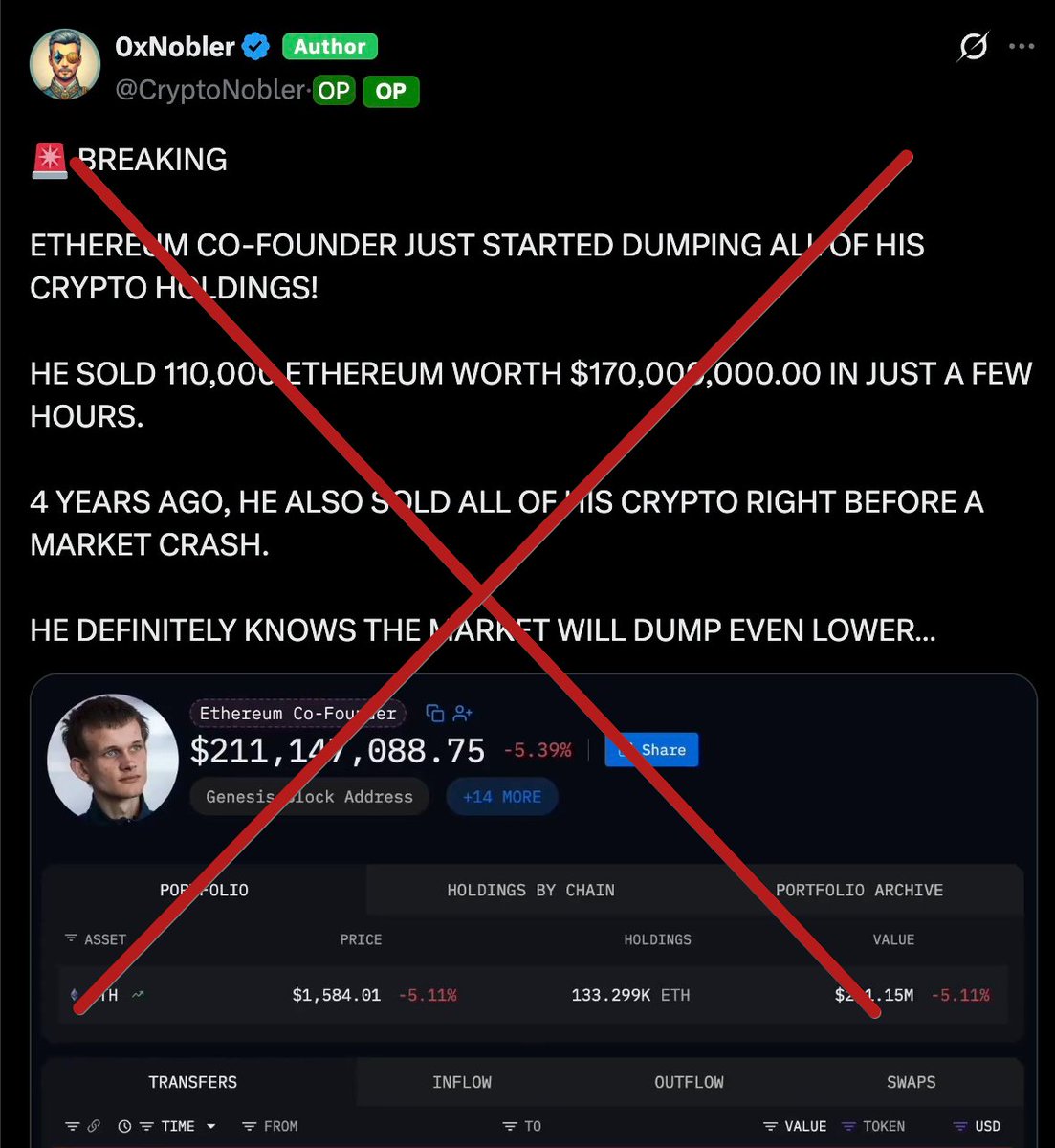
Bad news is everywhere, and a ton of accounts are straight-up faking stories about Vitalik selling ETH just to farm likes. Most people don't even bother checking if it's real. CT's pessimism is hitting peak levels right now, and history shows that when the doomposting is at its loudest, you're usually near the bottom of an asset.
The coming period is going to be really interesting for Ethereum.
8
35
62
20,380
Jun 8
I've never stopped being bullish on Ethereum, but this right here is the moment I feel the most bullish on $ETH I've ever been.
Bad news is everywhere, and a ton of accounts are straight-up faking stories about Vitalik selling ETH just to farm likes. Most people don't even bother checking if it's real. CT's pessimism is hitting peak levels right now, and history shows that when the doomposting is at its loudest, you're usually near the bottom of an asset.
The coming period is going to be really interesting for Ethereum.
19
95
184
17,647
Jun 6
.@AurexAIOfficial is moving through its ARX presale phase.
Current seed price: $0.01 per ARX
Next stage price: $0.05
Reported sales: 23.6M ARX
The ecosystem focuses on AI-powered trading intelligence, prediction market analytics, smart money tracking, and copy trading tools.
Website: aurex-chain.org
TG: t.me/AUREXofficialTG
4
4
11
2,975
Jun 5
The debate over whether Ethereum’s success is tied to $ETH’s price is a total non-issue—it’s just the tip of the iceberg.
If we were in a bull market and ETH was sitting at $5,000, nobody would even be talking about this. All the current drama is simply because the price has dropped. That’s how it always goes in a downtrend: everyone scrambles to find a narrative that explains why their asset is falling, and ETH is no different.
The crypto market is still running on its classic 4-year cycle—moving from fear and doubt to pure euphoria, then panic and outrage. Right now it’s June, so if the cycle holds, this downtrend should bottom out around November—that’s only 4–5 months from now. That’s exactly why I said you’ve got a maximum of 6 months left to stack ETH.
The fundamentals for crypto in general—and Ethereum in particular—are actually stronger than ever. Big institutions like BlackRock, Mastercard, and Visa are actively rolling out stablecoins and building on Ethereum for real-world use, plugging the whole ecosystem straight into Wall Street. Even though prices look ugly right now, the integration with traditional finance is only accelerating.
We’re on the right path. Ethereum and ETH are gearing up for one of the biggest bull runs we’ve ever seen. Your only job is to tune out the short-term noise and keep your eyes on the bigger picture.
May 14
You have a maximum of 6 months left to accumulate $ETH. Thank me later.
14
241
356
14,029
Jun 4
Football cards are entering a new onchain format.
@MarketCardsHQ’s first MintBox features 68 rare one-of-one football cards, with a disclosed 300,000 USDC sale valuation and 100% public issuance.
The model is built around open card details, transparent Box allocation, and a verifiable draw mechanism using public market data.
MintBox opens Jun 4, 08:00 UTC.
Trading starts Jun 8, 08:00 UTC.
Full details in the official article below 👇

3
1,388
Jun 4
Tom Lee, I know you're a real $ETH holder and I trust you 100%. But please tell me you've got a solid plan for this market-wide dump!
52
14
153
18,856
Jun 3
🔥 Tom Lee made a point about Ethereum that most people are not paying enough attention to.
The Ethereum Foundation used to hold 17% of the ETH supply.
Today, it holds only 100,000 ETH, or about 0.1% of supply.
That is a huge shift.
And according to Lee, it means the old funding model is no longer enough.
Under a traditional foundation model, he estimates the Ethereum Foundation could support only around $10 million in grants.
For a network trying to become the future of finance, that is tiny.
But this is where the story gets interesting.
BitMine, SharpLink, and other public Ethereum treasuries now own around 7% of the ETH supply.
And because that $ETH can generate staking yield, Lee says these treasuries are producing about $500 million a year in rewards.
That completely changes the game.
Ethereum no longer has to depend on one foundation to fund everything.
A wider network of public companies, treasury vehicles, staking rewards, ecosystem grants, L2 builders, and private-sector teams can now help support Ethereum’s growth.
This is why Lee believes Ethereum is entering a new phase.
Not a single foundation carrying the whole ecosystem.
But an entire capital network forming around ETH.

34
172
624
41,980

Jun 2
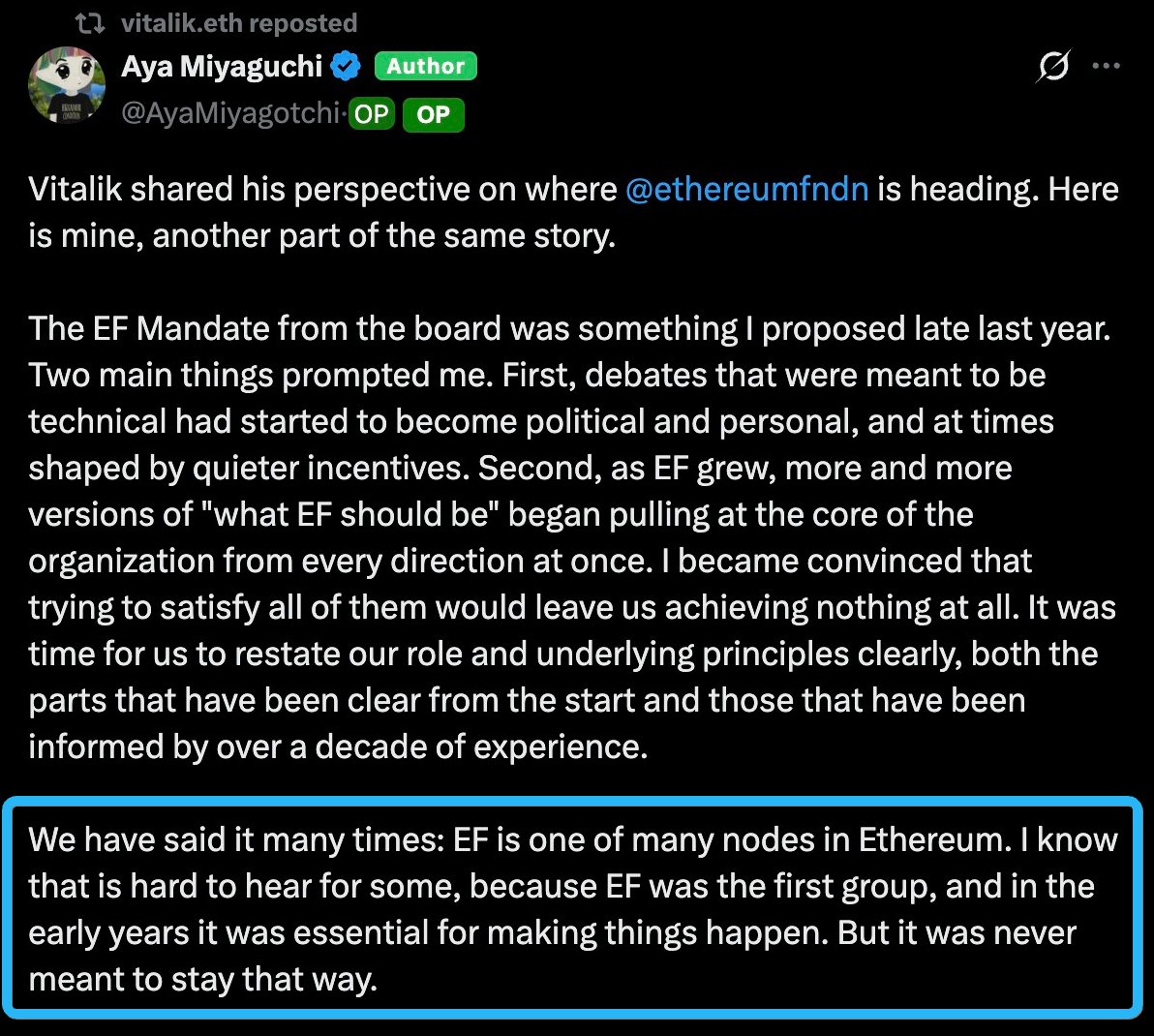
Following Vitalik, Ethereum Foundation President Aya Miyaguchi has also shared her clear perspective on where the EF is heading.
In short:
EF is not the center of Ethereum — it’s simply one specialized node in a much larger ecosystem.
She proposed a new “EF Mandate” to refocus the organization. Instead of trying to please everyone and do everything, EF is becoming smaller, more opinionated, and laser-focused on its unique mission: protecting Ethereum’s core values of censorship resistance, openness, privacy, and security (what she calls CROPS).
It's time we stopped viewing EF as the center of attention and stopped directing all criticism towards them. EF currently holds less than 0.2% of all ETH, and they don't represent the interests of $ETH holders.
Jun 1
🔥Joseph Chalom: Ethereum today is like Amazon in its early days
Years ago, people heavily criticized Jeff Bezos because Amazon was losing money just selling books. Critics only looked at the short-term losses and the stock price. But Bezos had a different vision. He told them: "I'm not just selling books. I'm building a platform that will change the future of commerce." We all know how that turned out—Amazon's value eventually grew 1000x.
Ethereum is in that exact same stage right now. While critics are busy worrying about short-term price action, Ethereum is quietly building the ultimate, secure platform for the future of global finance (like stablecoins and tokenized assets).
Don't just look at the short-term price. Look at the massive foundation being built for the future.

8
8
74
11,914
Jun 1
🔥Joseph Chalom: Ethereum today is like Amazon in its early days
Years ago, people heavily criticized Jeff Bezos because Amazon was losing money just selling books. Critics only looked at the short-term losses and the stock price. But Bezos had a different vision. He told them: "I'm not just selling books. I'm building a platform that will change the future of commerce." We all know how that turned out—Amazon's value eventually grew 1000x.
Ethereum is in that exact same stage right now. While critics are busy worrying about short-term price action, Ethereum is quietly building the ultimate, secure platform for the future of global finance (like stablecoins and tokenized assets).
Don't just look at the short-term price. Look at the massive foundation being built for the future.
16
34
292
24,269
May 29
We're in the middle of a storm right now, but remember—after every storm comes the calm. With the latest news, I'm pretty sure we're nowhere near the top; we're down near the bottom.
Believe in somETHing.
12
1
36
2,783
May 28
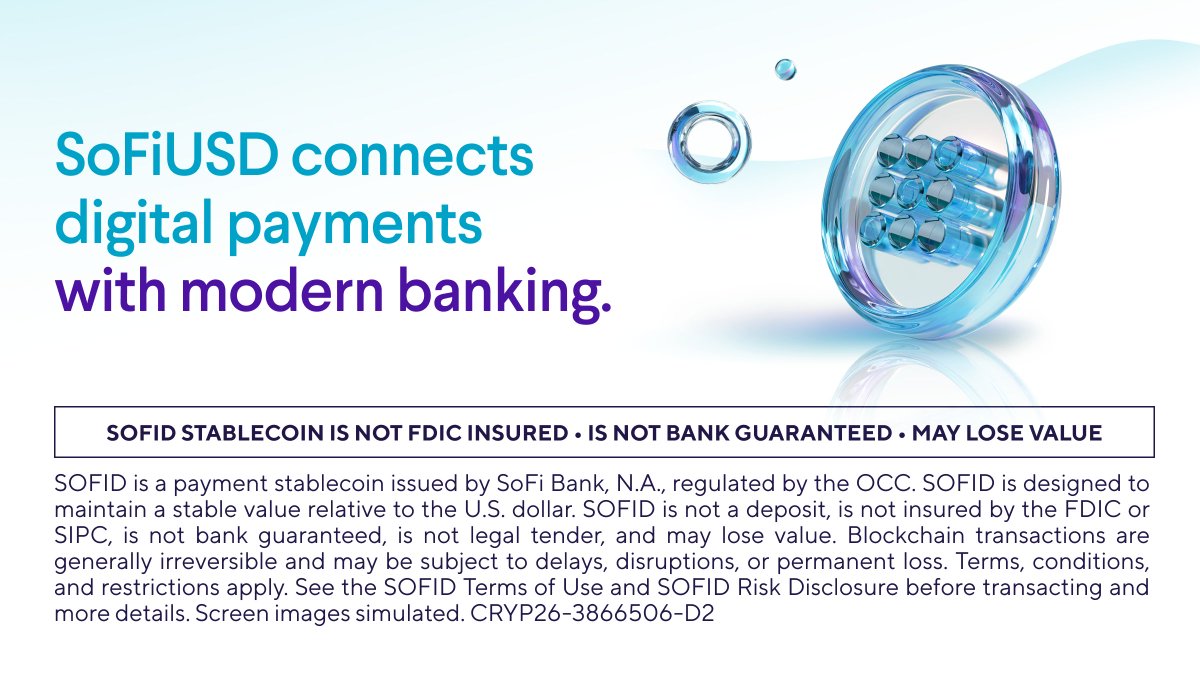
BREAKING: @SoFi launches SoFiUSD (SoFiD) on Ethereum.
The first stablecoin issued by a U.S. nationally chartered bank.


Say “hi” to SoFiUSD (SoFiD) 👋
The first stablecoin issued by a U.S. national bank and redeemable 1:1 for cash or cash equivalents. Rolling out now, it’s built for how money moves today: fast, flexible, 24/7.
15
61
595
58,527
May 28
Valuing Ethereum Based on Fees Is Completely Ridiculous
David Hoffman:
"Say what you will about the difficulty of valuing smart contract chains based on fees and revenue… but fees and revenue are clearly the way that smart contract L1 assets improve their pricing power.
By 2026, we have ample amounts of data that all of these things are intimately correlated: L1 activity, L1 fees, and L1 native-asset price appreciation."
I disagree with this viewpoint:
Years ago, when Ethereum transactions cost $50 each, were you celebrating… or were you complaining that the network was too slow and too expensive?
That’s the key point most people miss: when an L1 blockchain generates high fees (what many call “revenue”), it simply means users are paying high costs. That’s bad for users, bad for the apps built on top of it, and the wrong way to value the project.
Any truly successful L1 will naturally push transaction fees lower over time. Lower fees create a better experience for everyone — users, developers, and protocols — which drives more adoption and real growth.
Hyperliquid is a different story. It’s a DEX, and traders are happy to pay fees to trade there. A big chunk of those fees is used to buy back the native token and burn it, permanently reducing supply. In that case, valuing the token based on the fees it generates actually makes sense.
But Ethereum is not a trading platform like Hyperliquid. You cannot value $ETH based on the fees generated by the L1 base layer. That approach is fundamentally flawed.
Instead, we should use the framework proposed by Tom Dunleavy and others — one that actually makes sense: value ETH based on the total assets it is securing and protecting on the Ethereum network.
Right now, Ethereum is protecting roughly $250 billion in assets (stablecoins, tokenized real-world assets, Layer-2 bridges, DeFi, and more). Yet the amount of ETH staked to secure all of that is only about $72 billion — far too low.
Think about what happens as adoption grows. When major institutions like BlackRock start moving serious capital on-chain, the value of assets on Ethereum could easily exceed one trillion dollars. At that scale, the value of staked ETH will need to rise dramatically to keep everything safe and secure.
12
6
81
6,133
May 28
If you're looking for a solid ethereum:native entry, now’s the time. Thank me later.
9
2
116
5,733