
Joined July 2025
- Tweets 440
- Following 71
- Followers 15
- Likes 181
63 Photos and videos






Mar 12
Automation is becoming a core layer of DeFi.
Vaults, strategies, and agents increasingly manage capital flows without constant human intervention.
This changes how liquidity behaves. Rebalancing becomes continuous. Incentives propagate faster. Capital rotates with less friction.
As automation scales, the design challenge shifts toward coordinating many automated actors operating on the same liquidity rails.
9
Mar 11
As DeFi matures, the main constraint is shifting from innovation to coordination. Many protocols can attract liquidity. Fewer can maintain it when conditions change.
Liquidity moves quickly, reacts to incentives, and concentrates around efficiency.
Infrastructure design increasingly revolves around one question: How does capital behave when everyone tries to move at the same time?
1
1
14
Mar 10
Stablecoins are quietly reshaping how capital moves in DeFi.
When the base asset remains stable, strategies become easier to structure and risk becomes easier to measure. Lending, liquidity provision, and basis trades start to look less like speculation and more like capital allocation.
As stablecoin liquidity grows, DeFi begins to resemble a programmable financial market built around stable settlement layers.
1
17
Mar 4
Liquidity depth is often mistaken for TVL. They are not equivalent.
TVL measures parked capital. Depth measures executable size under stress. In calm conditions, both look sufficient. In volatility, only one absorbs flow without dislocation.
Designing DeFi infrastructure means asking:
- How fast can liquidity exit?
- Who warehouses imbalance?
- What incentives persist when spreads widen?
Capital efficiency matters. Liquidity resilience matters more.
1
9
Mar 3
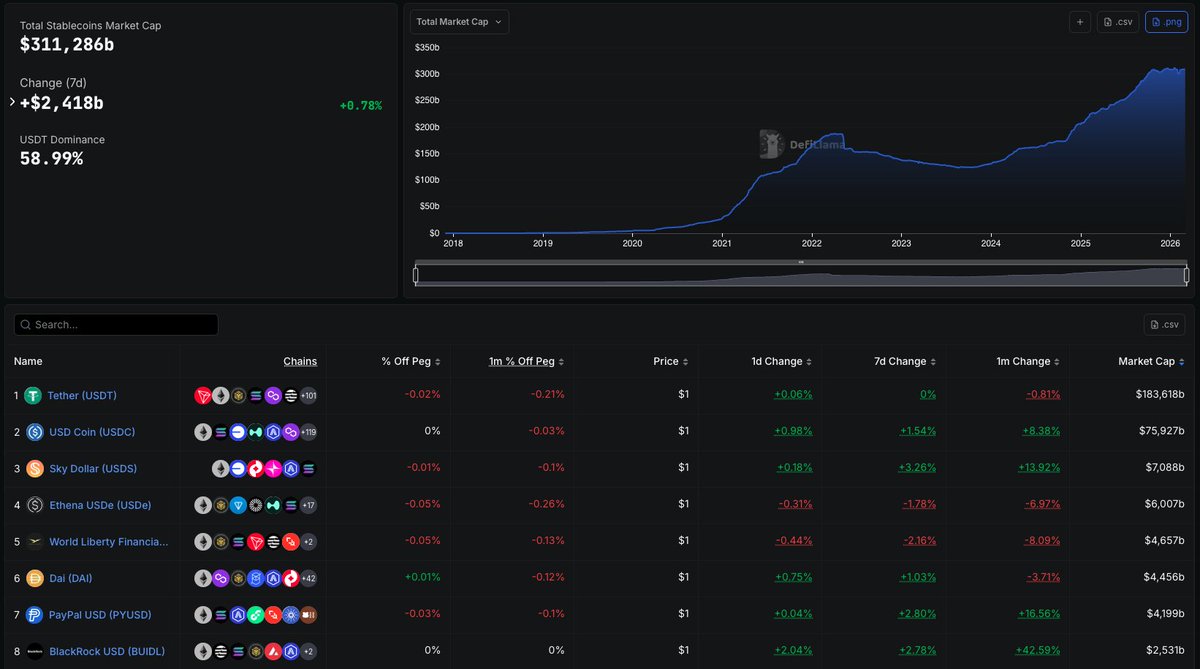
Stablecoins are becoming core settlement layers inside DeFi.
As they scale, they change how capital can be deployed. Treasury management, lending, basis trades, and liquidity provision become accessible without embedding directional exposure. This expands the design space for stable-denominated strategies.
For many portfolios, that means participation in on-chain markets while keeping volatility tightly controlled.
The structural shift is simple: When the unit of account stabilizes, capital allocation becomes more deliberate.
Source: @DefiLlama
9
Mar 2
DeFi discussion still centers on yield.The structural variable is liquidity coordination under stress.
When volatility expands, three dynamics matter:
- Withdrawal sequencing
- Inventory absorption
- Automation vs discretion in rule enforcement
- Most systems optimize for capital efficiency in stable conditions.
Fewer are designed for asymmetric behavior, inventory imbalances, and strategic exits. The relevant question is how liquidity behaves when it becomes active, not passive.
Infrastructure defines coordination rules for that moment.
2
Feb 25
Liquidity is becoming more engineered than directional.
In early DeFi, capital chased upside. Today, capital optimizes structure.
- Stablecoins monetize balance sheets.
- LPs monetize volatility.
- Stakers monetize security budgets.
- Perp venues monetize leverage demand.
Different revenue sources. Different risk surfaces.
The next cycle likely won’t be about “what goes up.” It will be about which liquidity models remain stable when volatility compresses and which ones require constant narrative fuel to function.
1
2
Feb 24
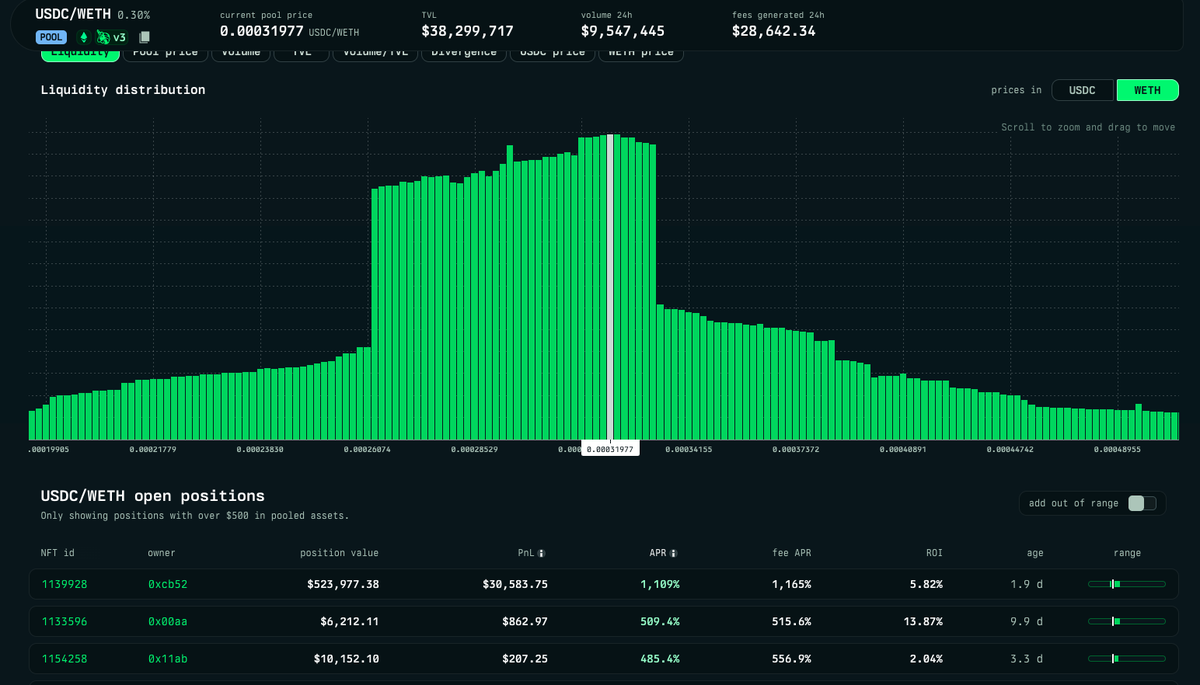
Most people DCA into a downtrend. Few realize AMMs let you get paid to do it.
If you want to accumulate a token that’s trending lower, the default approach is simple: buy spot over time. But AMMs introduce a different execution model.
Instead of placing periodic market buys, you provide liquidity against a strong asset (e.g. USDC) within a defined range. As price declines into your range, the pool gradually converts your capital into the token you want to accumulate.
You are effectively:
- Buying more as price falls
- Letting volatility execute the trade
- Earning fees while flow passes through your range
This is not yield farming. It’s inventory acquisition through mechanism design.
Structurally, the difference looks like this:
DCA = time-based execution.
LP accumulation = volatility-conditioned execution.
But the trade-off matters. When you LP, you are short convexity.
- You earn fees during churn.
- You accumulate faster if price bleeds lower.
- You give up upside if price rips aggressively.
So the real question isn’t “are the fees attractive?”
It’s:
Are you comfortable exchanging convex upside for flow monetization while building inventory?
Used correctly, LP positions aren’t just passive yield tools. They’re programmable accumulation strategies embedded in market structure.
2

how to master defi
- get an understanding of how ethereum works
- do basic swaps on uniswap, lend on aave
- ask yourself how it works under the hood, try to answer
- learn defi basics from youtube and protocol docs
- study AMMs (uniswap v2/v3, balancer, curve), liquidity provisioning, impermanent loos, lending protocols, LTV
- find a protocol with a liquidity mining campaign (like @katana) and start farming incentives on LPs
- study tokenomics and emissions. at some point research ve 3,3 as well
- study smart contract risks, read rektnews
- learn mev, slippage, oracles
- research different types of bridges
- learn onchain analysis with arkham/etherscan/nansen
- understand narratives and capital rotation
- learn how to do R:R assesment, make sure you are good at DYOR
- start farming in defi with bigger capital, diversify farms
- start reading vitalik's blog, cobie's blog, hack post mortems, messari crypto reports
- learn how to read solidity, at least things you'll need on etherescan
- ask smart people or LLMs hard questions on defi. Use gemini's canvas to repeat
- feel free to ask me recomendations on who to follow and what tools to learn
learning the fundamentels is the best thing you can do in a bad market.
good luck
44
26
361
21,080
Feb 20
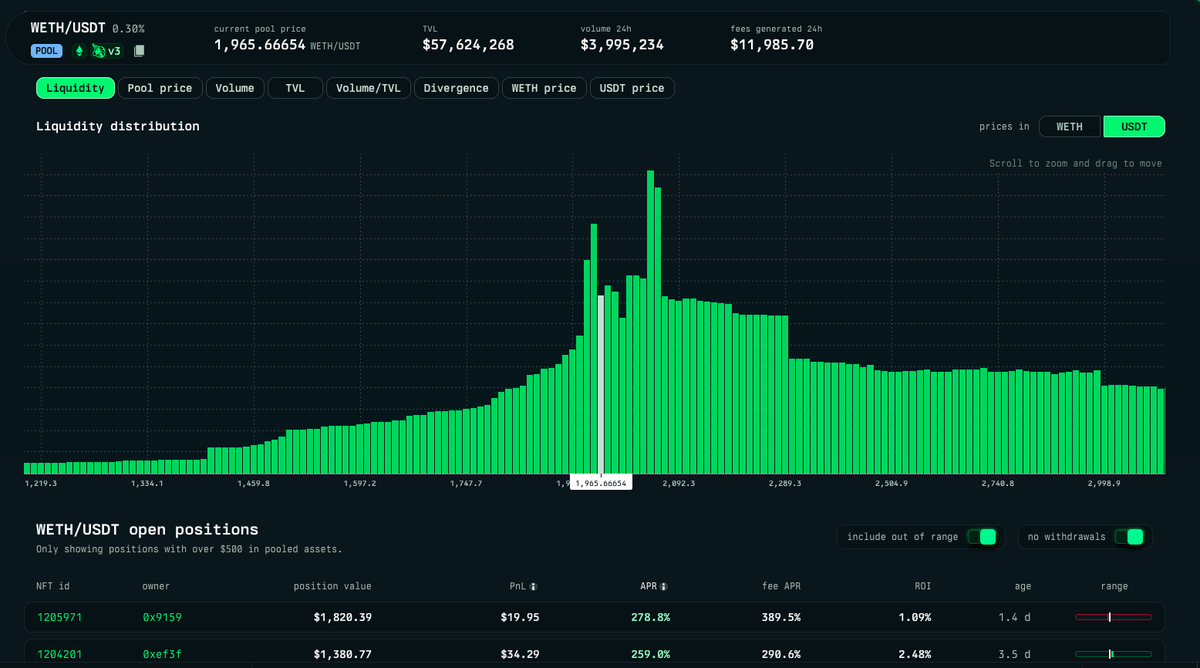
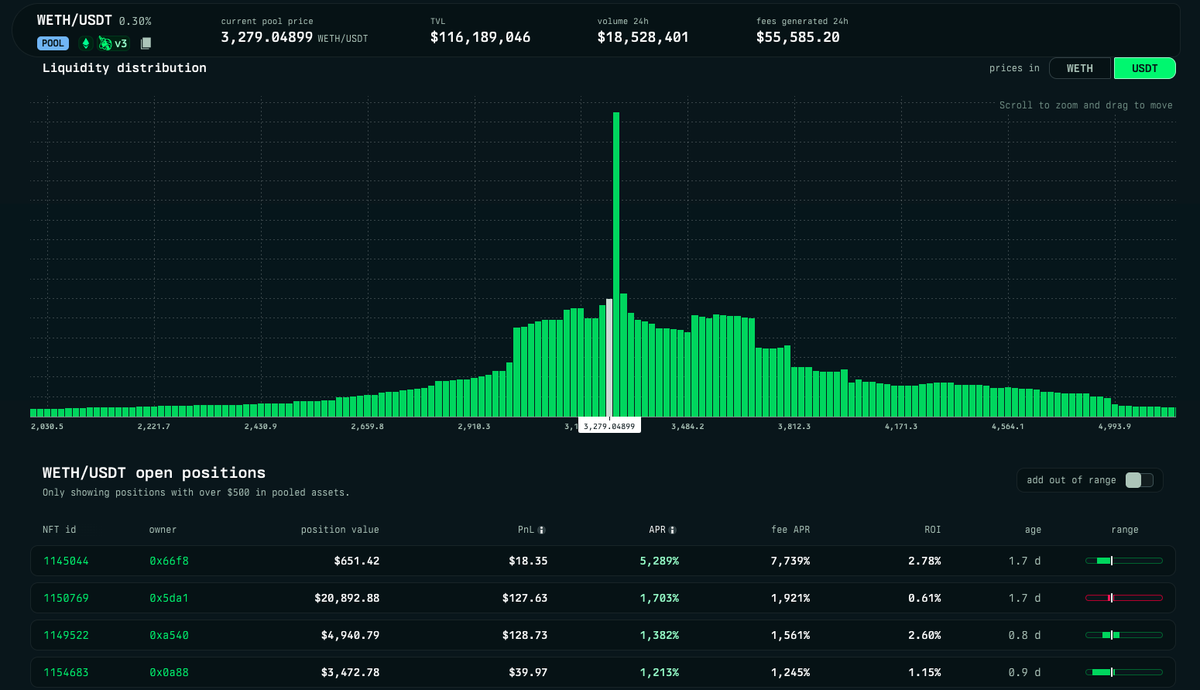
🔥 Pool of the Week — WETH / USDT (0.30%) Ethereum Mainnet
WETH/USDT is where liquidity stops being relative and becomes directional. One side of the pair is volatile. The other is the unit of account. That asymmetry defines the entire risk surface.
In volatile–stable pools, there is no shared drift. There is no correlation cushion. Liquidity providers are implicitly underwriting directional movement in exchange for flow. The design question is not return, it is how capital behaves when price dislocates.
📊 Pool snapshot
- TVL: ~$57.6M
- 24h Volume: ~$4.0M
- Fees generated (24h): ~$12.0K
- Current price: ~1,965.7 USDT per WETH
- Fee tier: 0.30%
- Chain: Ethereum
Liquidity is tightly concentrated around the current price, with visible layering above it. That structure suggests short-range positioning optimized for active flow capture, combined with staggered capital anticipating upward drift.
In this type of pool, observed APR is structurally misleading. What matters is range survival under velocity. If price moves faster than positions can adjust, liquidity turns into passive inventory. If volatility compresses, narrow ranges dominate fee extraction.
The product here is not yield. It is inventory management under directional volatility.
Data via @revertfinance
1
22
Feb 18
Most LPs think they are providing liquidity. They are positioning against future flow.
The real variable isn’t price direction, it’s whether volume will be persistent, reversible, or forced.
Liquidity design only works if your assumption about flow is correct.
8
EasyFi retweeted

Feb 17
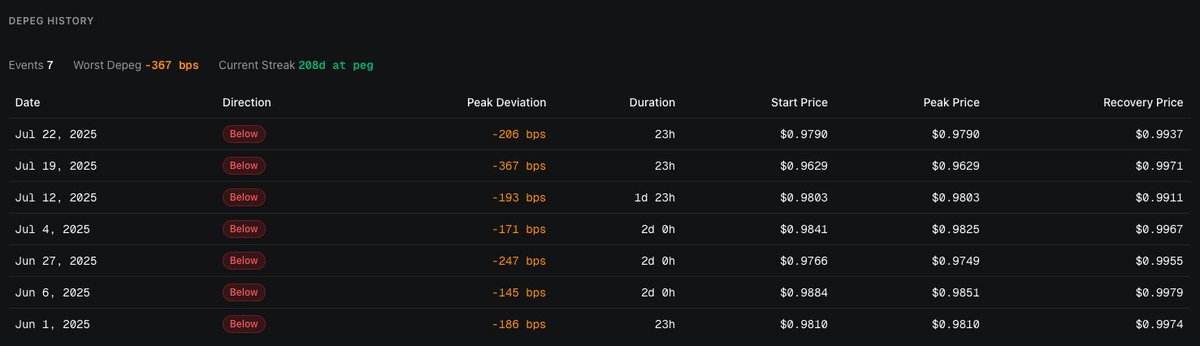
Stablecoin risk is the most ignored part of DeFi.
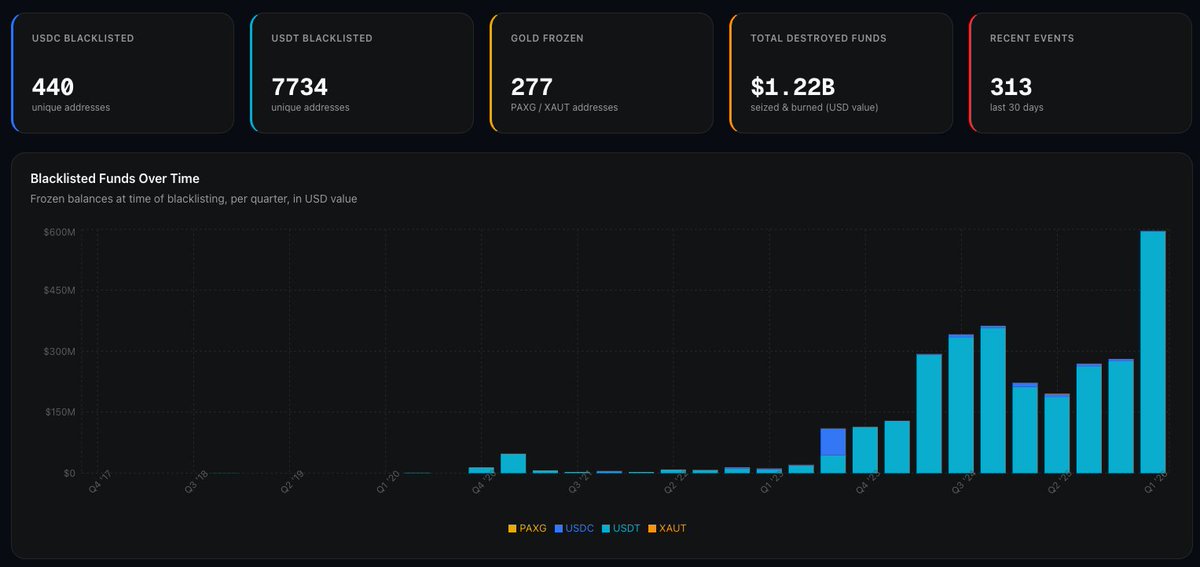
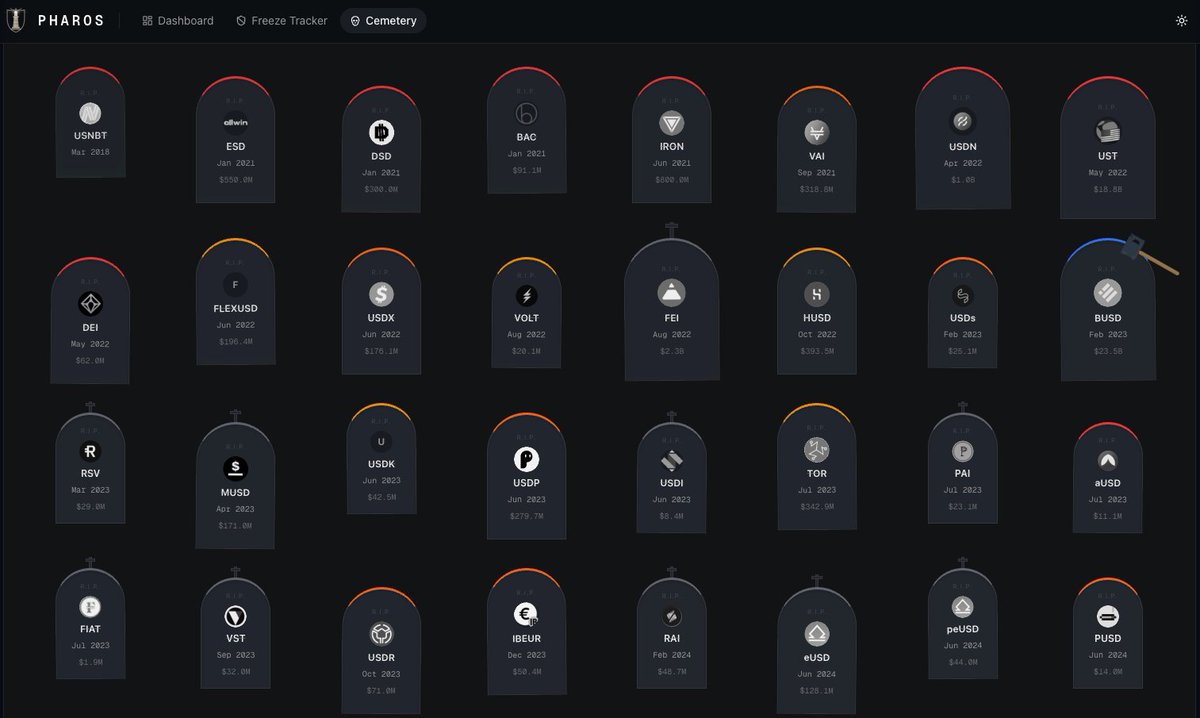
I’ve been testing Pharos, a platform by @TokenBrice that tracks 119 stablecoins.
You can filter by everything: fiat-backed (USD, EUR), crypto-collateralized, or algorithmic. You can even see the exact backing (RWA, crypto, etc.) for each one.
What I found most useful are the "Risk Scenarios." For example, BOLD from @LiquityProtocol has had short depegs, but you can see how the protocol mechanics helped it recover in less than one day.
Understanding these patterns is how you find arbitrage opportunities, though they are harder to catch than they look.
Two things really blew my mind:
> Frozen Funds: In just the first half of Q1 2026, over $600M in USDT and USDC has been frozen.
> The Cemetery: They have a section for "dead" stables with 61 projects. Looking at the list, I realized I’ve personally used 15 of them.
I’m talking about classics like UST (Terra), but also Liquity forks like Gravita, Vesta, or Prisma. I even touched aUSD back when Polkadot parachains were the meta.
I’ve probably lost more money to stablecoin depegs than anything else in crypto. Seeing them all in one graveyard makes you realize how much of a gambler you have to be to survive this space.
If you want to stop guessing and start tracking your risk, check Pharos out: pharos.watch/
14
12
100
7,403
Feb 17
Speed is not what makes markets competitive. Capital coordination under stress does.
When volatility spikes, the question isn’t latency it’s who controls liquidity, who gets repriced first, and who is forced to move.
That’s where structure is revealed.
4
Feb 16
Liquidity pools are not just yield venues. They are automated market structure.
Three structural advantages:
- Continuous price formation
No order book gaps. No reliance on discrete matching. Liquidity is always programmatically available.
- Deterministic execution rules
Pricing, fees, and settlement are transparent and encoded. No hidden matching logic.
- Composable capital
Liquidity can interact with lending, derivatives, and collateral systems without custodial fragmentation.
Pools don’t eliminate risk. They make it explicit and programmable.
7
Feb 12
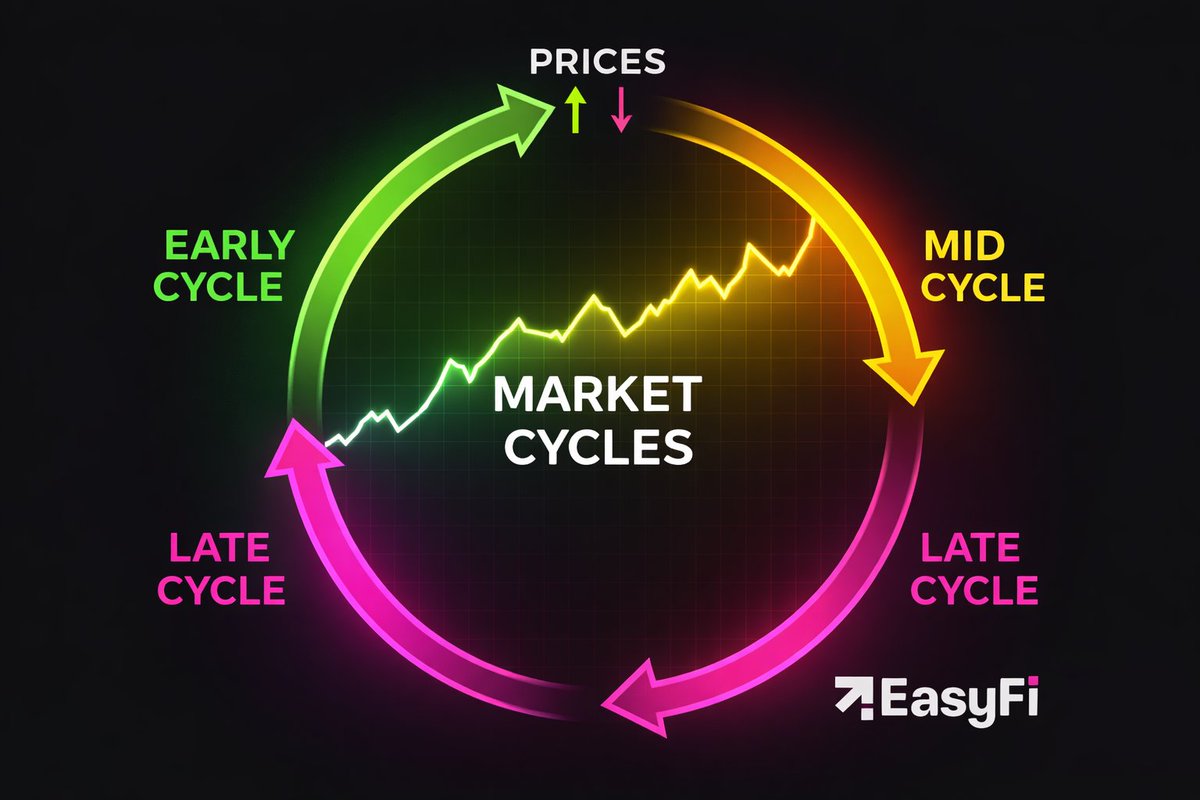
Price doesn’t define market cycles.
Flow does.
Who generates volume, how persistent it is, and whether liquidity absorbs or retreats under stress that’s the cycle.
Up or down is just the surface.
7
Feb 11
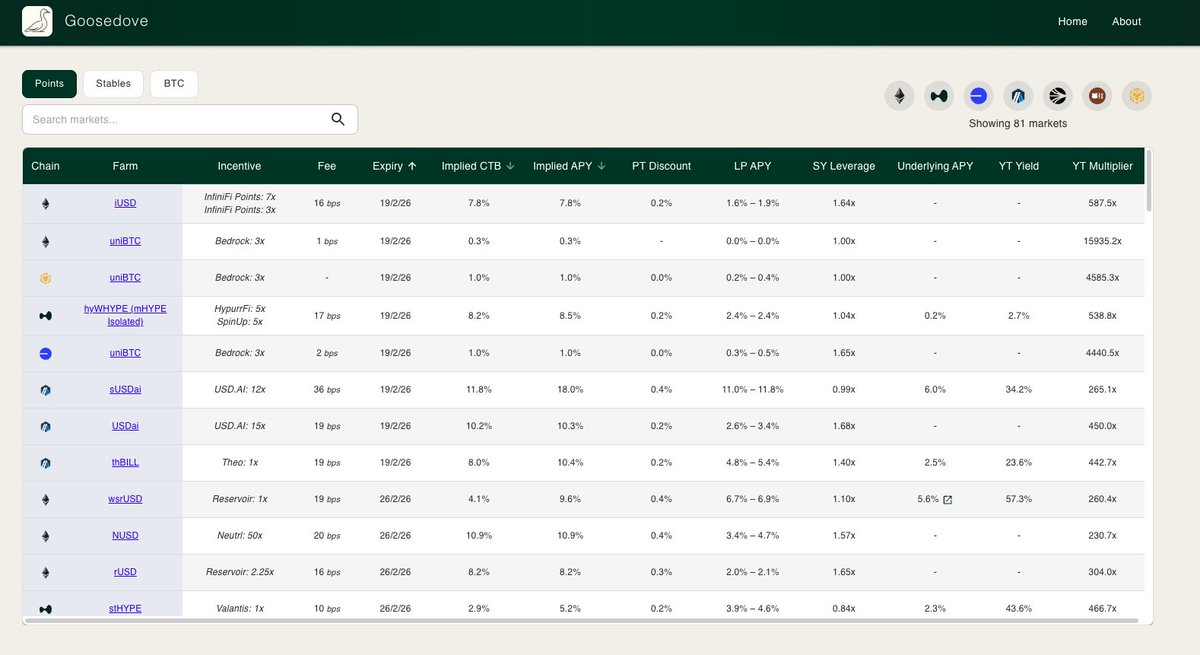
🛠️ Tool of the Week — goosedove.xyz/
Most people try to operate in DeFi by watching price and volume. That’s already too late.
GooseDove is an on-chain analytics layer focused on wallet behavior, capital movement, and positioning, not outcomes
1
6
Feb 11
Problem it addresses
Most analytics tools collapse behavior into totals. TVL, volume, and fees tell you what happened,
but not who acted, in what sequence, and under what constraints.
GooseDove decomposes on-chain activity at the wallet and flow level, making capital behavior explicit.
1
4
Feb 11
Why it matters for market structure
Market structure is shaped by who moves first and who is forced to react. When a small set of wallets drives disproportionate flow, liquidity and volatility behave very differently than when activity is broadly distributed.
GooseDove doesn’t forecast prices. It clarifies capital coordination and reflexivity which is where structure actually forms
4
Feb 5
What no one tells you about market cycles: they’re not prices going up and down.
They’re about who generates volume, under what conditions, and when those conditions break.
1
6
Feb 5
From a structural perspective, fewer liquidity providers with sustained volume is not a problem.
It’s the condition under which positioning matters.
1
2
Feb 5
Market cycles don’t punish wrong prices.
They punish wrong assumptions about who will trade next and why.
2