
Principal Engineer at Microsoft working on .NET runtime.
Joined November 2010
- Tweets 2,288
- Following 180
- Followers 5,559
- Likes 6,841
350 Photos and videos
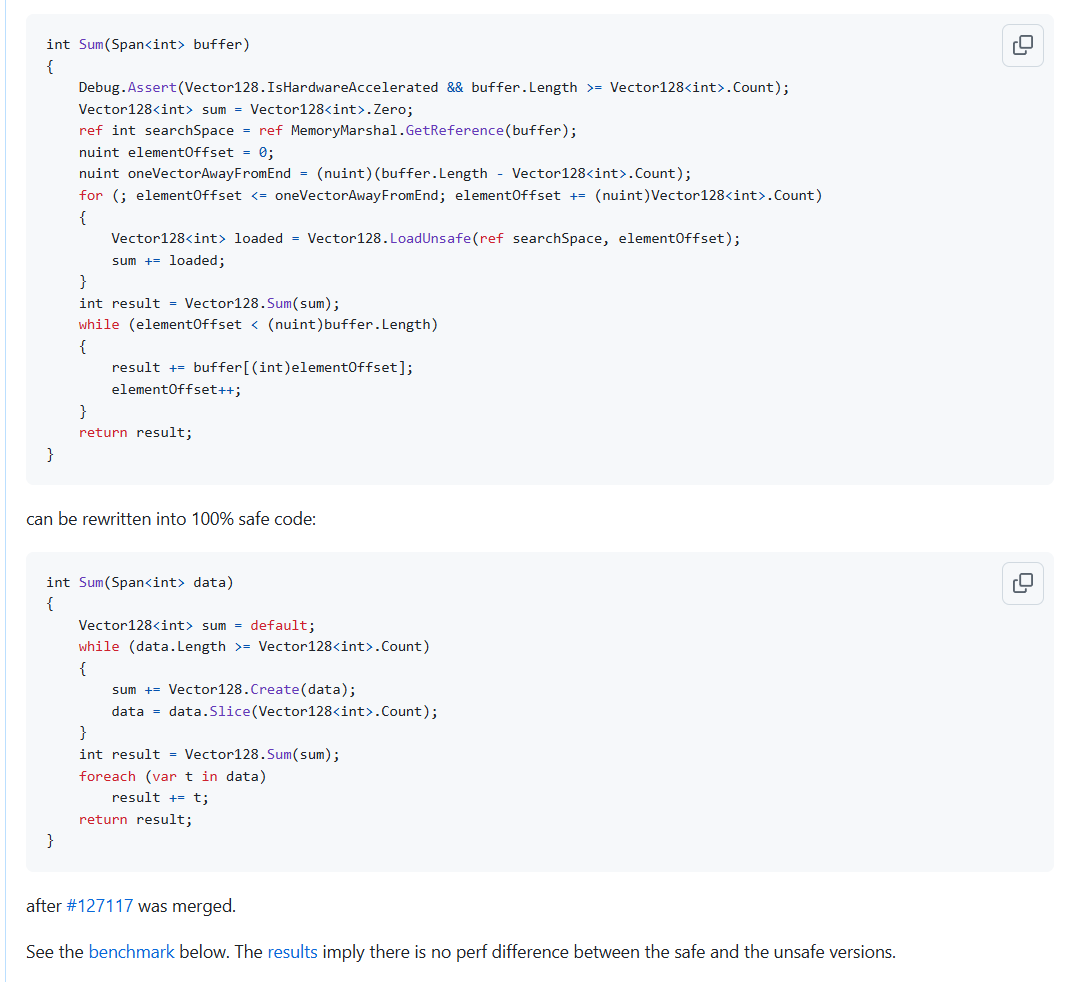


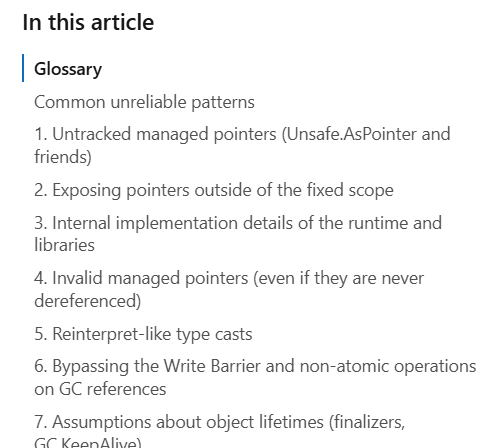

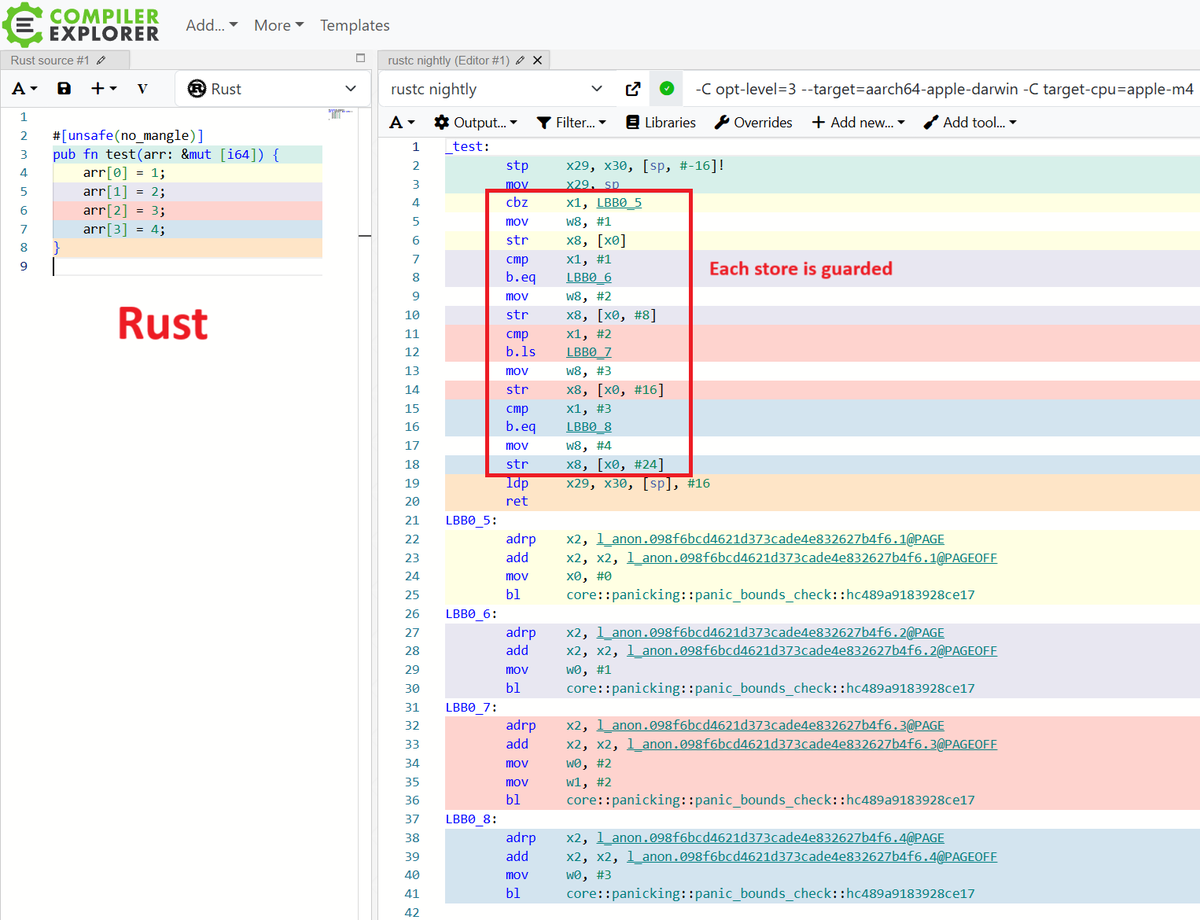


One thing Rust suffers from is lack of complex bound check elimination in LLVM, trivial example: godbolt.org/z/4fMcjh8Eh LLVM has knownbits & constant ranges, but no symbolic ranges. 🤔
1
9
1,103
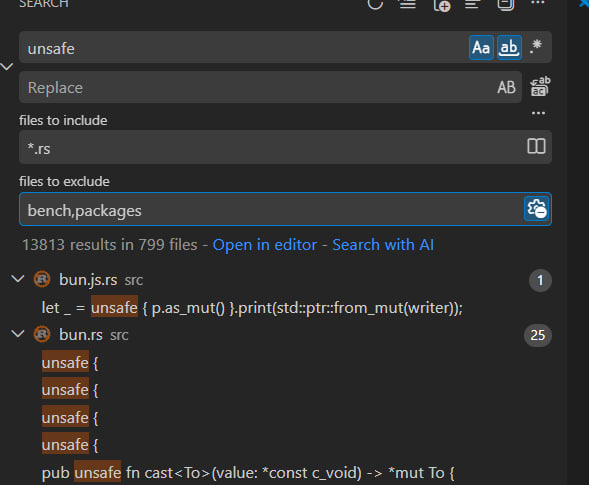
So they optimize bound checks using unsafe in their stdlib github.com/rust-lang/rust/pu… 🥲
2
682
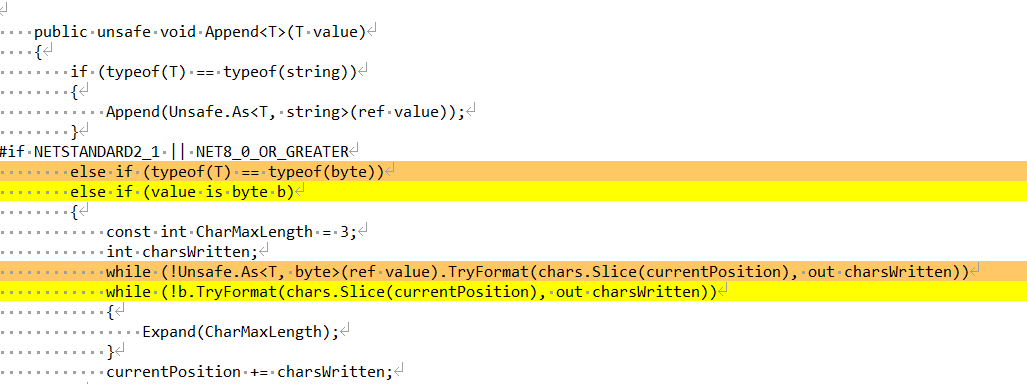
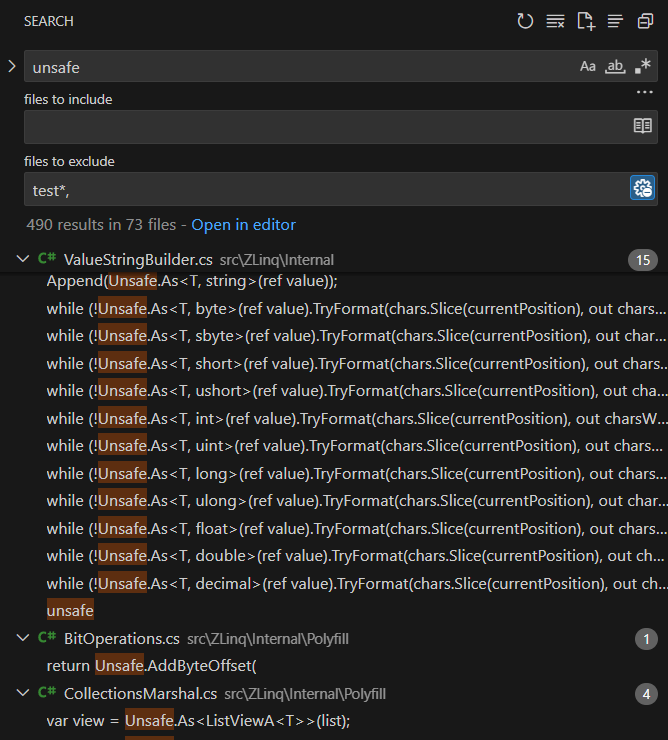
in .NET 11.0 we've landed many changes in JIT (applies to NAOT too) to optimize redundant bound checks to make safe code as fast as unsafe (can be tracked via reduce-unsafe label github.com/dotnet/runtime/pu…). Example: github.com/EgorBot/Benchmark…
3
21
184
12,064
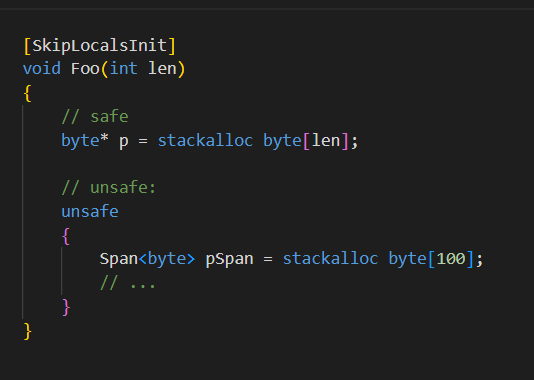
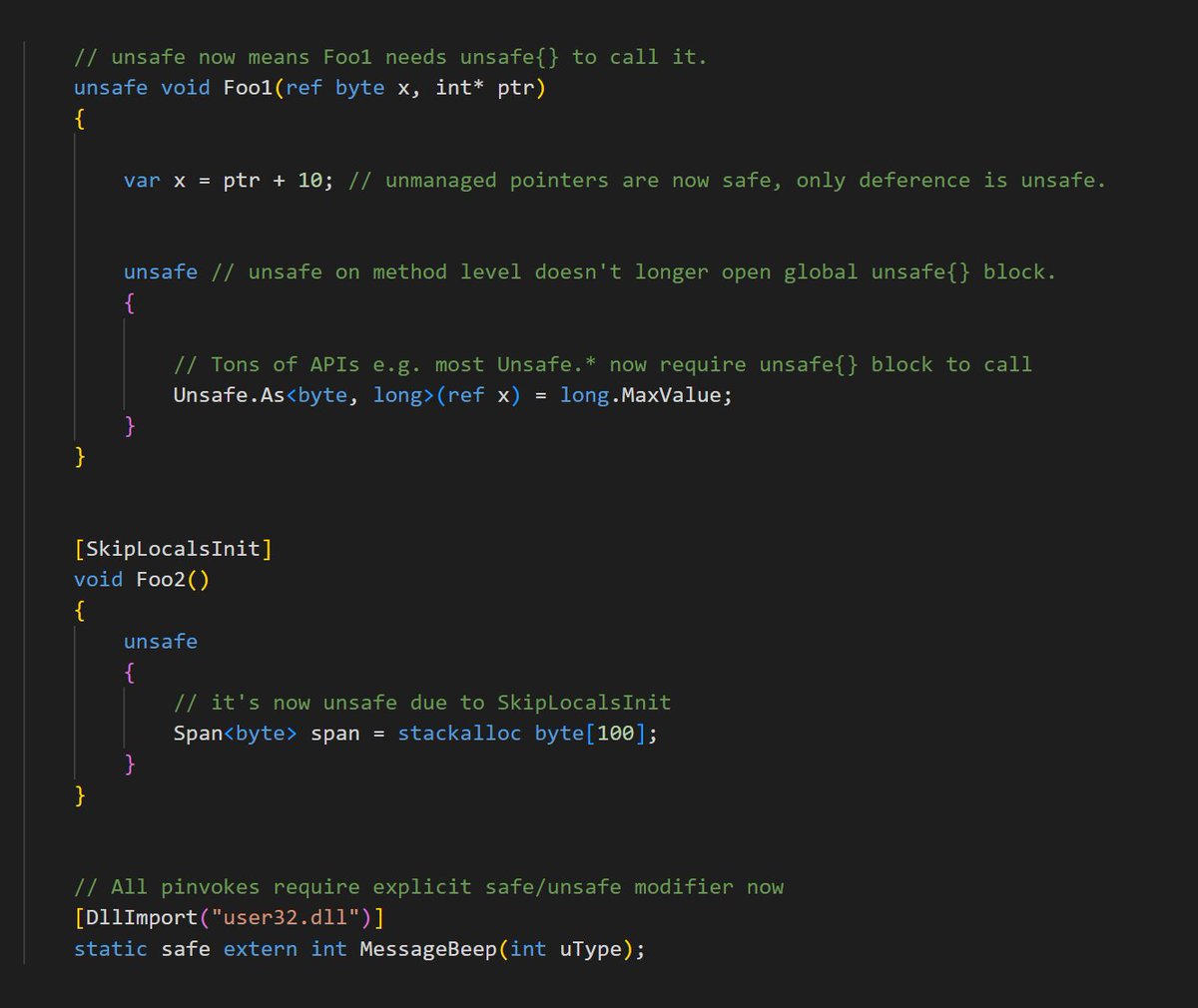
TL;DR on the upcoming changes in C# vNext for 'unsafe' (blog post devblogs.microsoft.com/dotne…)
7
14
71
6,301
Our small, tight-knit team is hiring a Compiler Engineer for the .NET JIT. We're happy to both teach and learn new ways to make code run faster 🚀 (C /C#, Redmond area) jobs.careers.microsoft.com/g…
4
19
62
7,673
We've just published "Unsafe C# code best (worst) practices" article - a set of 25 good/bad examples: learn.microsoft.com/en-us/do… Let's crash productions in style together! 🧐
8
30
125
8,016
EgorBo retweeted

10 Sep 2025
The .NET 10 performance blog post has landed
A monster of a read again from @stephentoub !
devblogs.microsoft.com/dotne…
11
55
269
20,393
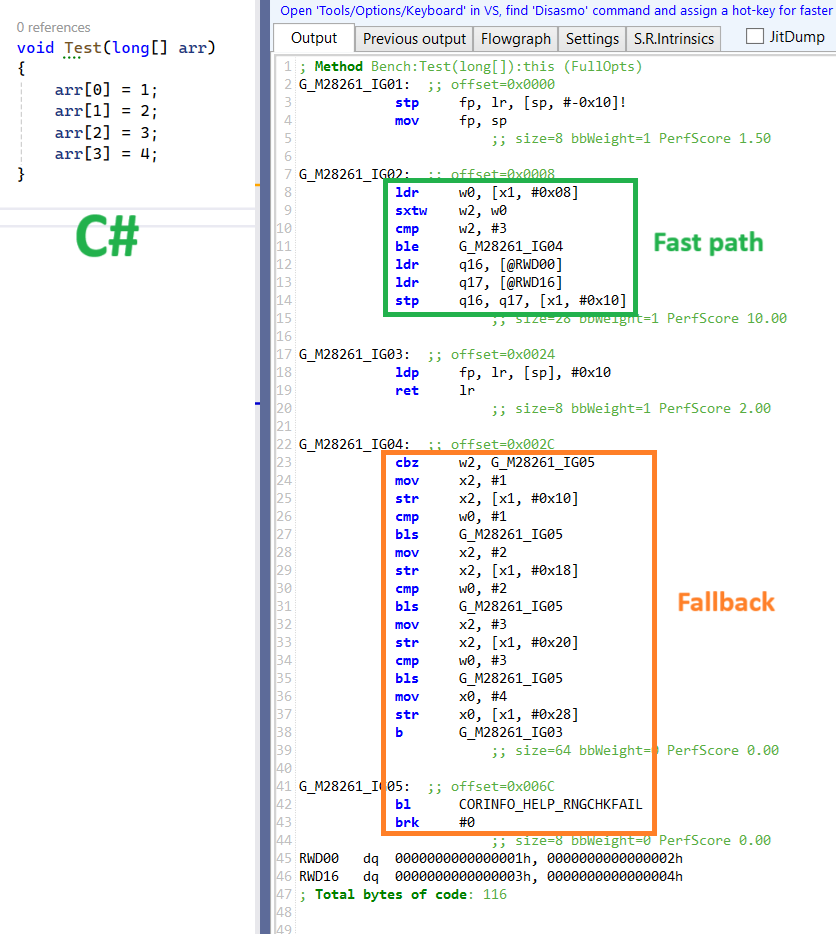
Related LLVM issue: github.com/llvm/llvm-project…. Related .NET optimization: github.com/dotnet/runtime/pu…
19
3,971
Prompt-files are new scripts? 😅github.com/dotnet/runtime/pu…
1
9
1,072
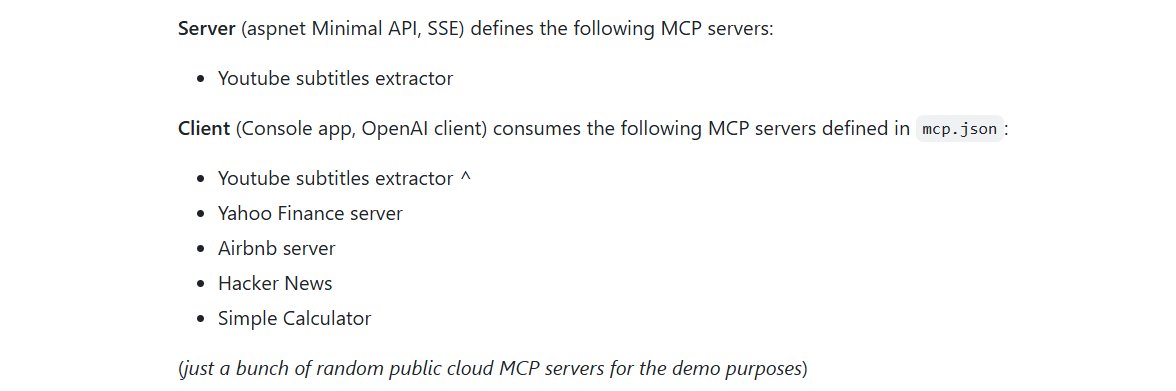
A small MCP Client & Server example in C# I built to learn the SDK, it's a bit unfortunate there is no common standard for a config 🫤 github.com/EgorBo/McpClientS…
1
10
1,513
EgorBo retweeted

1 Nov 2024
It's been a year since I started my blog, so I rerun the benchmark on .NET9 RC2 (on the same machine). And it's indeed faster! Today I've got
Producer: 961K msg/s ( 10%)
Consumer: 939K msg/s ( 12%)
#fsharp #dotnet @apache_pulsar
x.com/Lanayx/status/17162686…
23 Oct 2023

2
13
1,925
EgorBo retweeted
12 Sep 2024
It's that time again!
Performance Improvements in .NET 9 by @stephentoub
devblogs.microsoft.com/dotne…
8
27
117
8,455
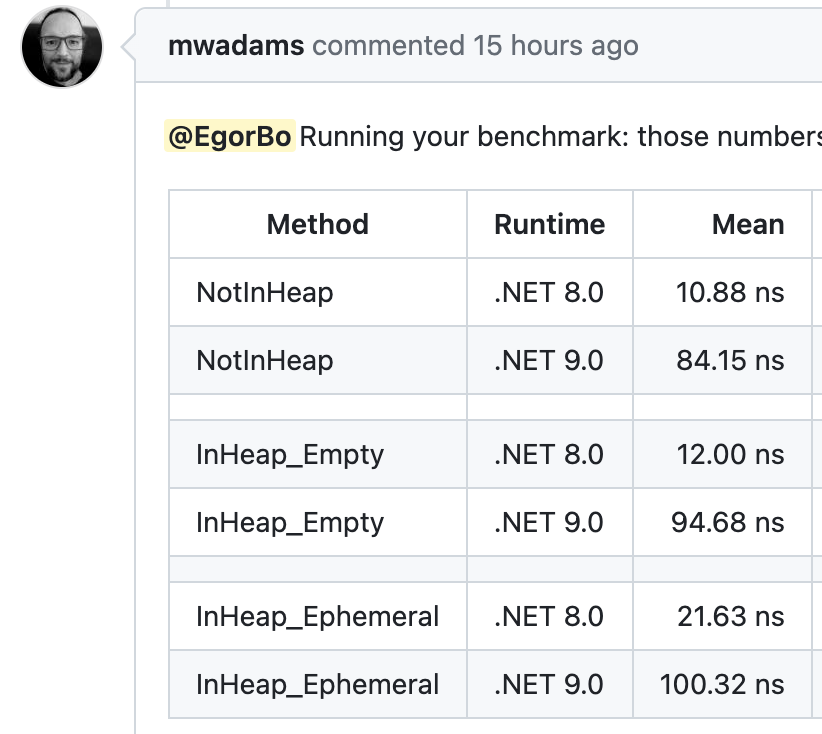
A huge perf regression in .NET 9.0 due to ... one missing 'vzeroupper' instruction 😐 github.com/dotnet/runtime/is… (only on certain CPUs, though)
4
15
88
10,867
EgorBo retweeted

19 Jul 2024
That’s the biggest freaking Tiger Shark i’ve ever seen! 😳
733
6,710
71,862
13,661,656

EgorBo retweeted

20 Jun 2024
Validating gigabytes of Unicode strings per second… in C#?
We have been working on a fast library to validate and transcode Unicode and other formats such as base64 in C : simdutf. We wondered: could we achieve the same good results in C#?
Microsoft’s .NET framework has made great strides in leveraging advanced instructions. For instance, if your processor supports AVX-512, you can instantiate 512-bit registers right in C#! The standard .NET runtime library effectively utilizes these features, demonstrating that they practice what they preach.
Most strings on the Internet are Unicode strings stored in UTF-8. When you ingest such strings (from disk or from the network), you need to validate them. To test the waters, we set our eyes on UTF-8 validation. With John Keiser, I helped designed a fast UTF-8 validation algorithm designed for modern-day CPUs. We call the algorithm ‘lookup’. It may require less than one instruction per byte to validate even challenging input. The lookup validation algorithm is part of Oracle Graal, Google Fuchsia, the Node.js and Bun JavaScript runtimes and so forth.
The .NET library has its own fast UTF-8 validation function: Utf8Utility.GetPointerToFirstInvalidByte. It is highly optimized. As the name implies, it finds the location of the first byte where an error might occur. It also computes some parameters from which you can tell how the input could be transcoded. The function is an internal function, but we can expose it by copying and pasting it.
Could we beat the .NET runtime, at least some of the time? It seems that we can!
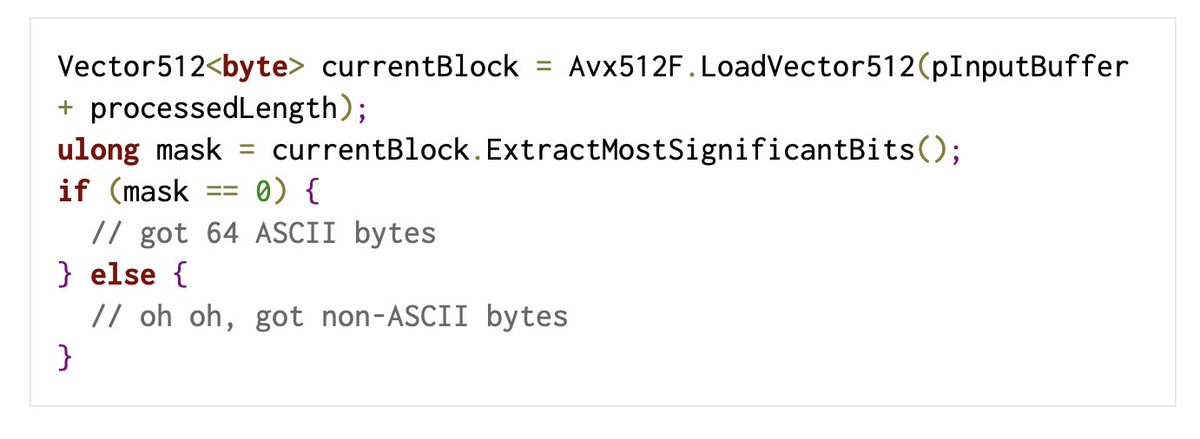
Maybe you want to know what our code looks like? Here is a simplified example where we load 64 bytes, check whether they are ASCII.
Of course, the whole algorithm is more complicated, but not that much more… It is maybe 30 lines of code. We implement various versions of the algorithm, one for ARM processors, one for older x64 processors, and so forth.
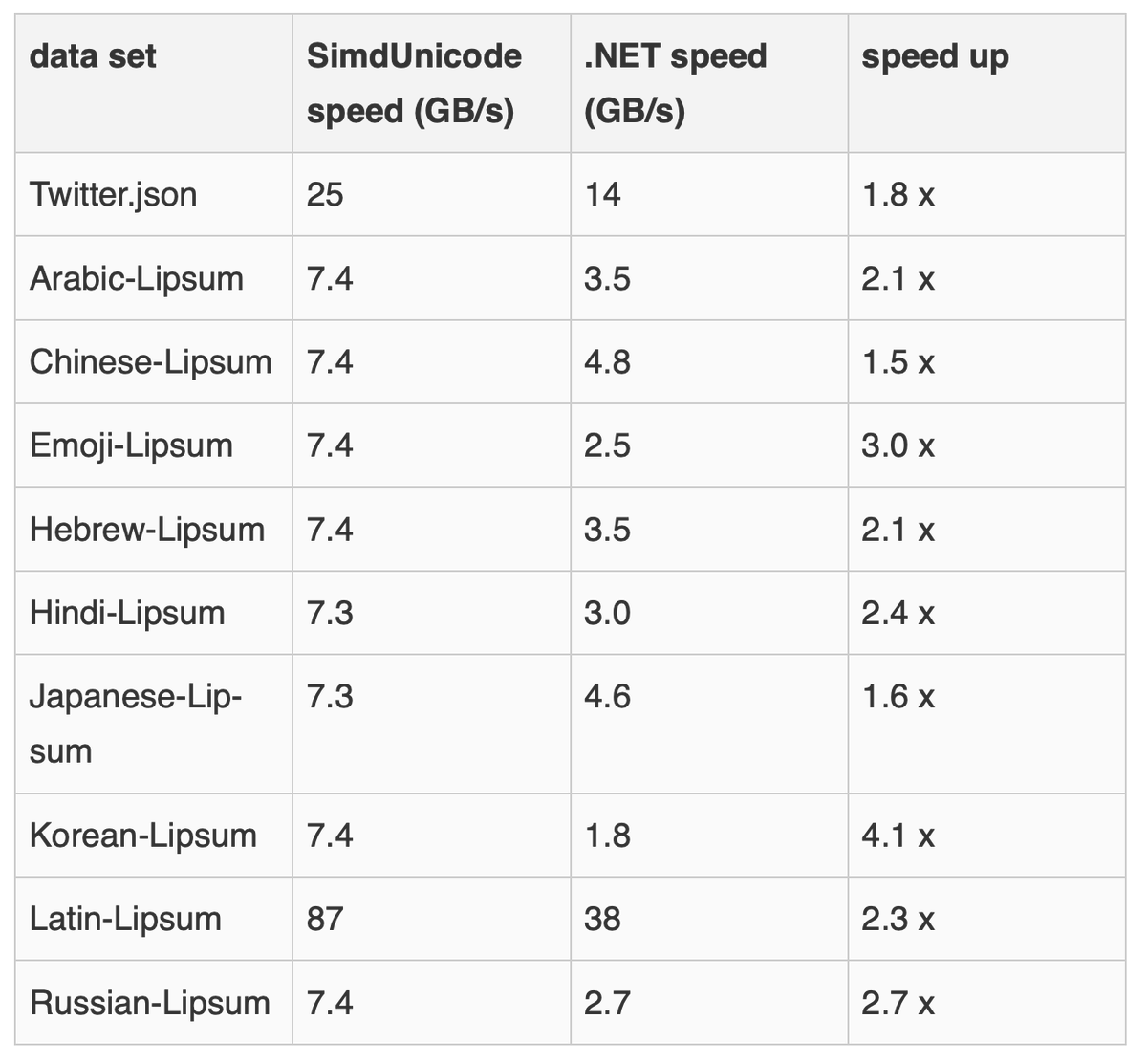
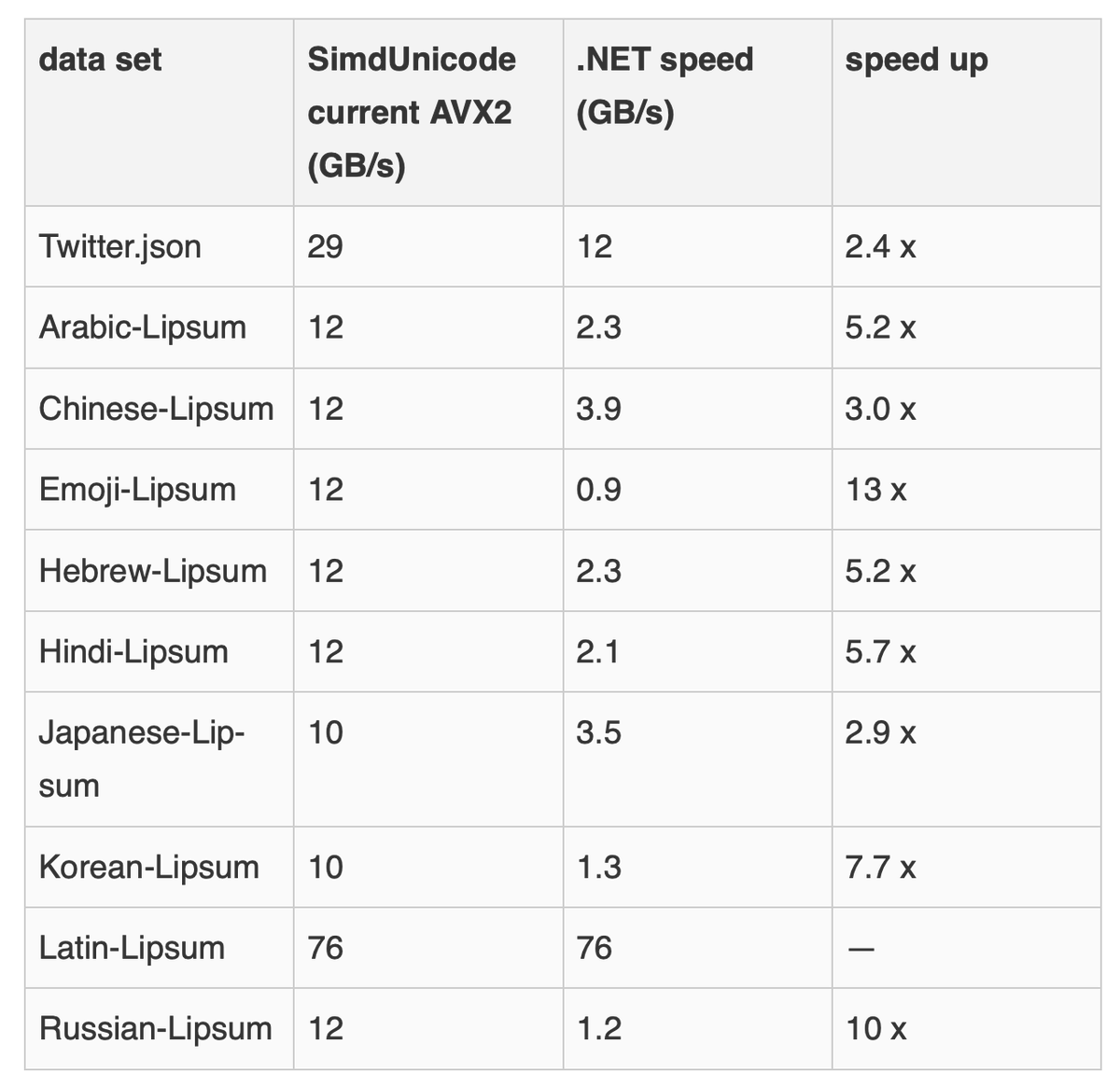
For benchmarking, we use valid strings. The first one we check is twitter.json, a JSON file that is mostly ASCII with some non-trivial Unicode content within strings. We also use various synthetic strings representative of various languages.
On an Intel Ice Lake system, our validation function is up to 13 times faster than the standard library. On twitter.json, we are 2.4 times faster.
On an Apple M2 system, our validation function is 1.5 to four times faster than the standard library.
Observe how the standard library provides a function that is already quite fast: it can run at gigabytes per second. We are several times faster, but evidently, C# makes it possible to write highly optimized functions.
You can run your own benchmarks by grabbing our code from GitHub.
It is a pleasure doing this performance-oriented work in C#. It is definitively one of my favorite programming languages right now.
cc @tannergooding @EgorBo
9
42
289
32,865
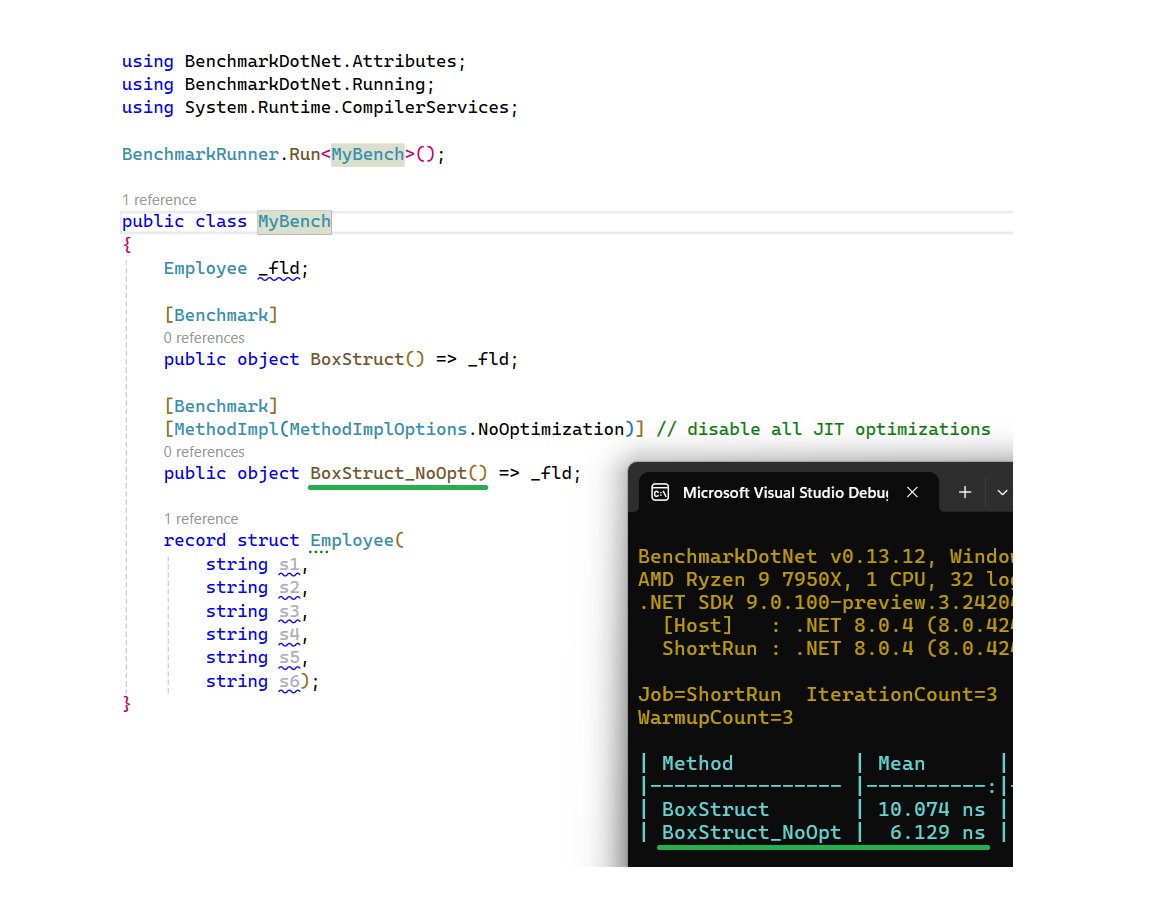
Consider using NoOptimization attribute to improve performance in your production! 🙃 (from github.com/dotnet/runtime/pu…)
4
7
67
10,510