
Joined January 2011
- Tweets 4,610
- Following 1,944
- Followers 5,325
- Likes 12,077
765 Photos and videos

Jun 10
What's the status of cultivated meat in Canada?
As of this time, although the novel foods pathway is defined, regulators have not received any submissions:
youtube.com/watch?v=d4N1_XwE…
2
9
355
Elliot Swartz retweeted

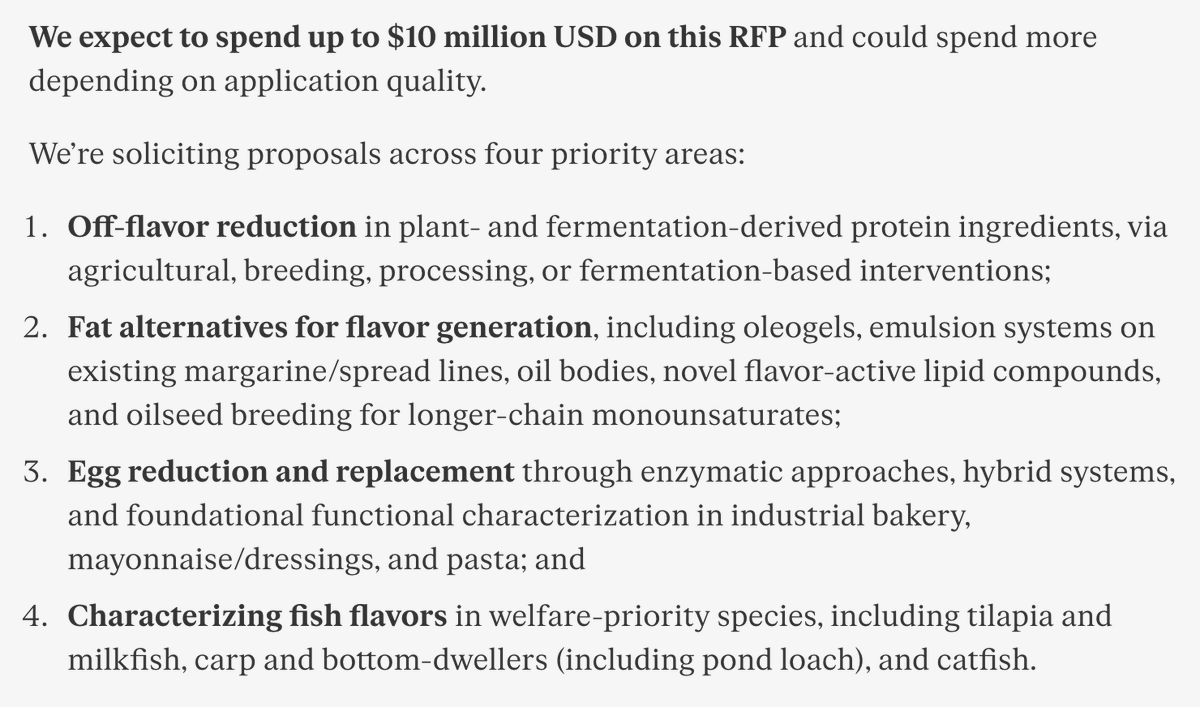
We're launching a $10 million RFP for R&D on one of the biggest barriers to alternative protein adoption: taste. 🧵
4
35
198
28,745
Jun 4
Screwworm does not affect #cultivatedmeat.
Another argument for cultivated meat to provide a more resilient and stable meat supply chain.
Jun 4

NEWS: Screwworm has been detected in Texas, USDA confirmed - marking a serious threat to US cattle and other animals
Larvae of the parasite were found in the umbilical cord of a 3 week old calf
Screwworm was eradicated from the US in 1966
4
21
491
Jun 1
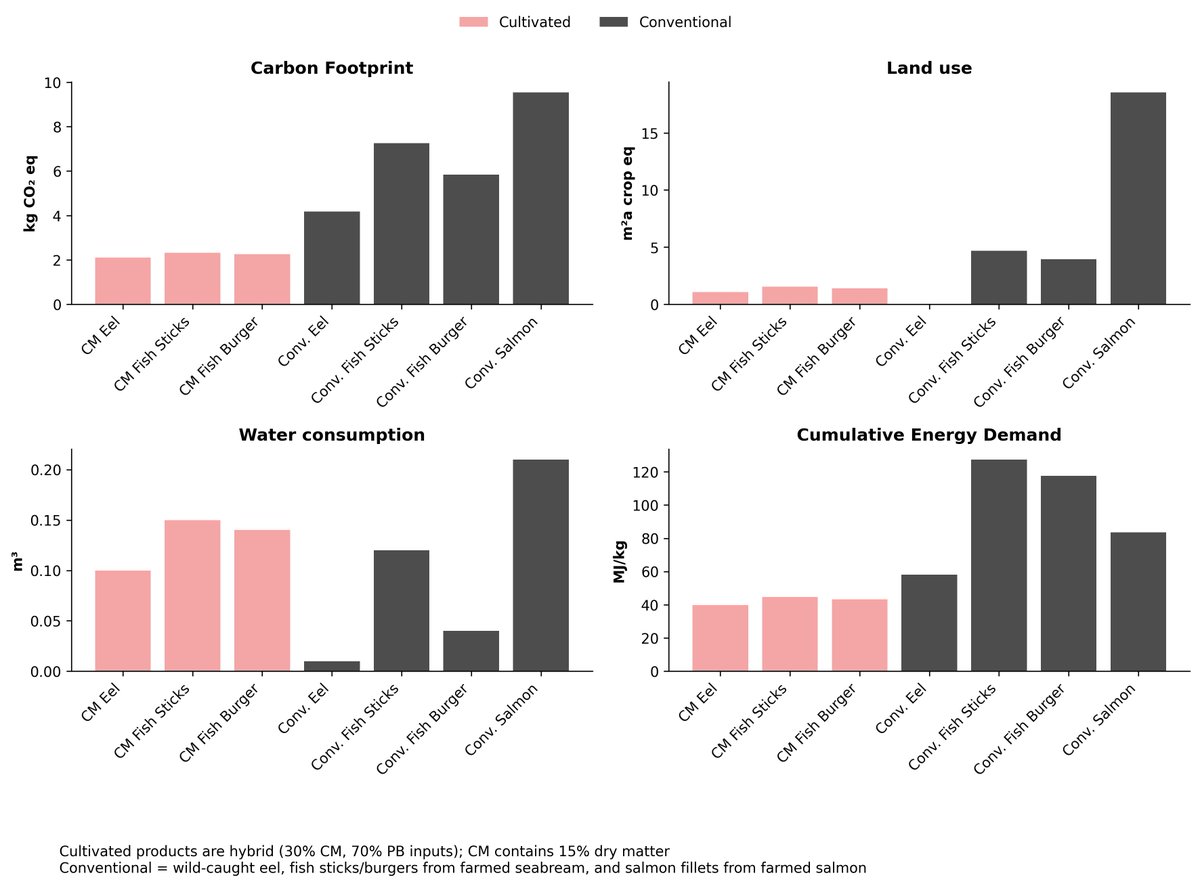
🐟 New LCA study finds that cultivated seafood could have beneficial environmental impacts compared to wild-caught and farmed fish 🐠
The study uses primary pilot-scale data from the startup Forsea to model the impacts of a scaled production facility based in Japan, finding that cultivated products had a lower carbon footprint, lower land use than aquaculture, lower energy demand, and similar or higher water use (figure is mine, based on data reported).
Why? The study is one of the first to actually model cultivated products as we expect them to come to market — as hybrid products. Cultivated cells make up 30% of the product, with the remaining inputs being plant-based ingredients. The cultivated cells are only 15% dry matter, consistent with products that have already been approved. These two factors not only dilute the expected cost of the final product but also the overall environmental impacts.
Lower energy demand can be explained, in part, by aquatic cell culture at lower temperatures, requiring less energy to heat bioreactors. The higher water use can be explained, in part, by the assumption that water was not being recycled in the facility.
While this is still a model and data gaps persist, the use of primary data from a startup company (rated generally as medium-high quality by the authors) is encouraging. Nice to see LCA studies becoming more realistic/sophisticated as the industry matures.
1
4
12
427
May 28
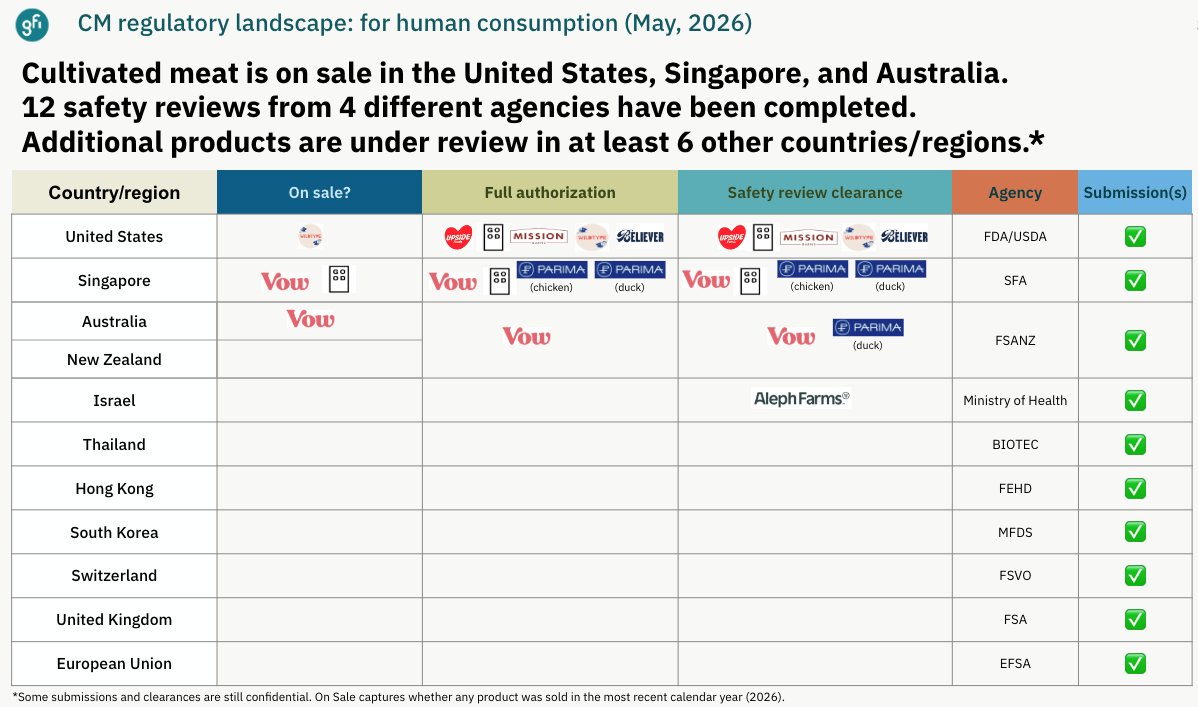
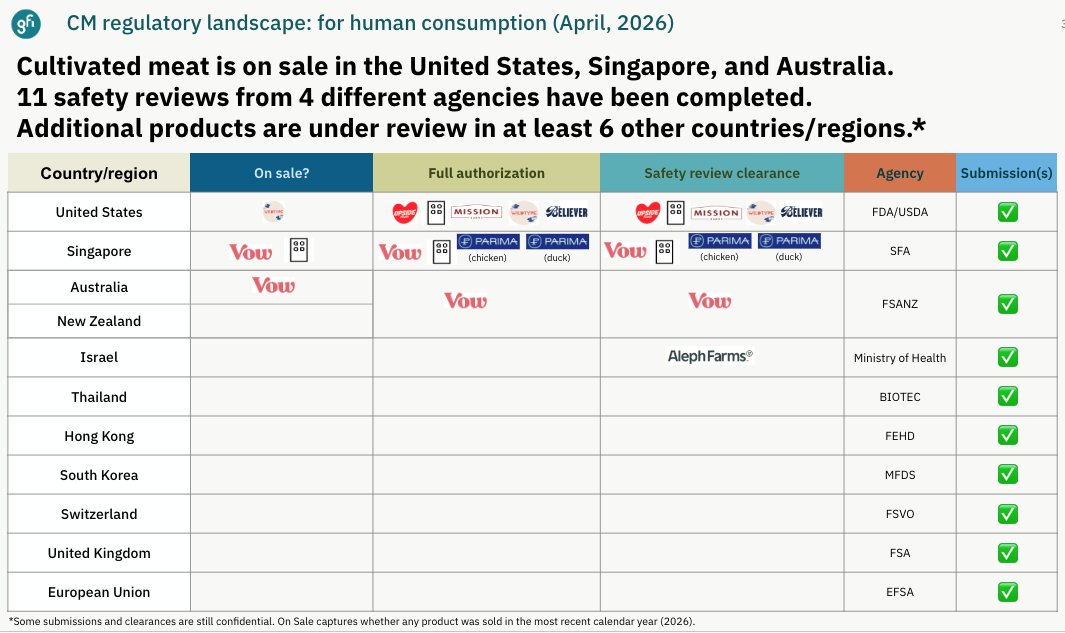
French startup PARIMA reports that they received safety review clearance for their cultivated duck product in Australia/New Zealand. Pending a successful outcome following a ~60-day review period, it would be the second cultivated product authorized for sale in the region.
Following the adoption of a dedicated regulatory pathway for cultivated meat in 2025, Australia/New Zealand now has an established review structure and timeline. The safety review period lasted ~8 months, making it an attractive region for market entry.
It's the 12th completed safety review across 4 different agencies for cultivated meat. For more, see our page "Where cultivated meat can be sold": gfi.org/resource/where-culti…
1
10
268
Elliot Swartz retweeted

May 27
Global meat consumption has set a new record almost every year since 1961, despite decades of public health messaging asking us to eat less.
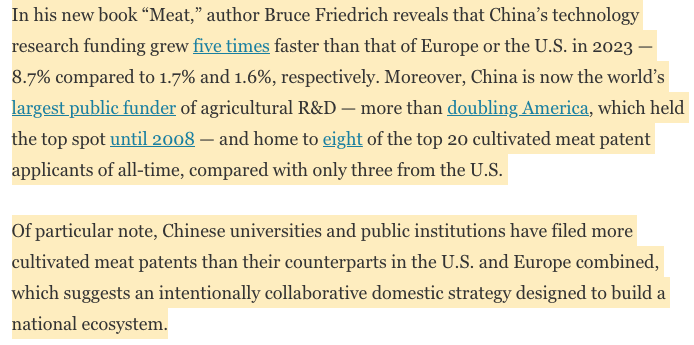
Bruce Friedrich's argument is that the answer was never going to be moral persuasion, it was always going to be technology.
We unpack what's actually happening with plant-based and cultivated meat in 2026, what Beyond Meat got wrong, and why governments, not just venture capital, will decide how this story ends.
For the full show notes head to: theproof.com/what-the-headli…
17
4
39
3,179
May 24
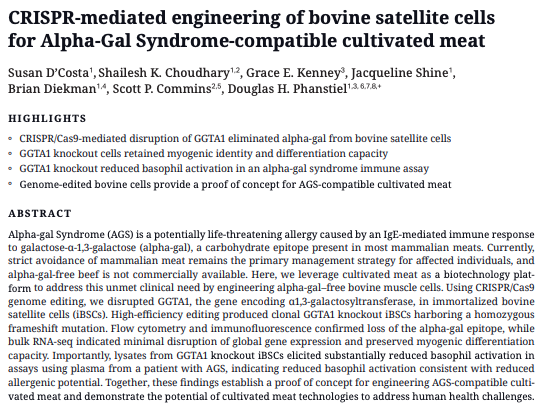
New study by UNC researchers shows cultivated bovine cells can be edited to remove the alpha-gal epitope, consistent w/ reduced allergenicity, likely enabling alpha-gal syndrome patients to eat red meat in the future
Tailored solutions are a clear advantage for cultivated meat:
2
4
17
790
May 23
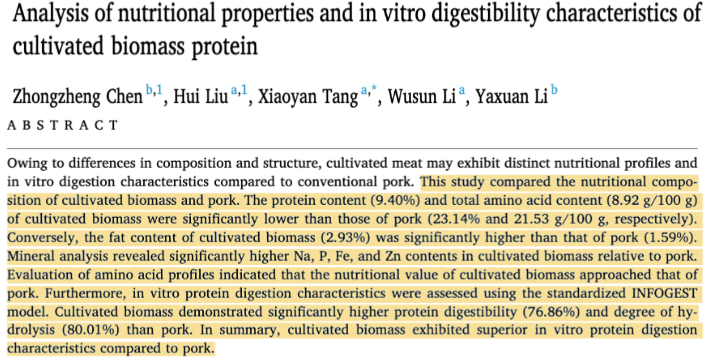
Pretty much everyone who tries cultivated meat is surprised at how much it tastes like the real thing (because it is):
youtu.be/iFb8MncOwF4?si=tCgc…
1
8
545
May 21
Great to see fermentation & cultivated food technology included in Germany's new high-tech agenda and biotechnology roadmap
This is the type of public investment that can establish early leadership in up-and-coming sectors
gfieurope.org/blog/hightech-…
1
5
13
390
May 15
Czech startup Bene Meat partners with Italian company Forza10 to debut cultivated pet food in Europe
The product contains 26% cultivated cells, and will be sold initially in Portugal and Spain
greenqueen.com.hk/bene-meat-…
2
3
19
3,348
May 15
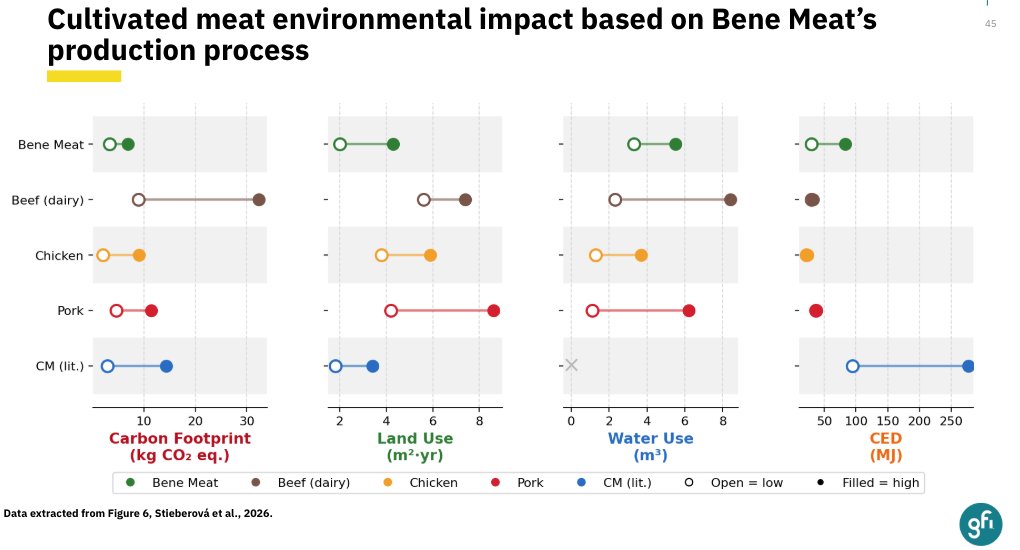
Last month, Bene Meat published environmental impact data on their production process, showing it to be competitive with chicken on carbon footprint, and using much less land than other forms of meat production:
x.com/elliotswartz/status/20…
Apr 11

Real-world production data from Czech startup Bene Meat's small-scale production facility shows cultivated meat's environmental impacts
Cultivated meat had a lower land use than conventional production & a competitive carbon footprint with chicken and pork:
4
233
May 13
One of the first cultivated meat startups @_SuperMeat_ raises $6M, plans for initial launch of their cultivated chicken product in Switzerland:
proteinproductiontechnology.…
8
28
1,606
May 12
Lots of opportunities for people with crypto or AI wealth to donate to organizations working to end animal suffering & improve the food system
At @GoodFoodInst, we help catalyze the development of alternative proteins, and are a top recommended charity for climate & biodiversity, as rated by @GivingGreenE
givinggreen.earth/research/g…
givinggreen.earth/research/g…
May 12

Sent another 64 ETH to the Animal Welfare Fund.
I encourage others to think and act more in support of our non-human cousins too! The extreme suffering we're imposing on them in the billions is not something we talk about often, but it continues to be one of the larger blights on humanity.
And I'm getting optimistic that this century we can finally end it. Farming practices are improving, synthetic alternatives are improving.
Also, in my recent experience, good old low-tech vegetarian and vegan food has improved massively worldwide over the last ten years; I encourage anyone who has tried it long before and given up to take second look; there are far more healthier and tastier options today than the "pasta and salad" you would often get ten years ago.
4
16
531
May 7
UK startup Meatly, which was the first company to commercialize cultivated pet food, raises $14M to build a pilot facility:
meatly.pet/meatly-series-a/
1
3
25
665
May 5
New report shows how China can replicate its EV and solar buildout success for food, by focusing on alternative proteins and becoming a net protein exporter as soon as 2040:
ft.com/content/637215a5-4814…
2
4
15
2,706
May 3
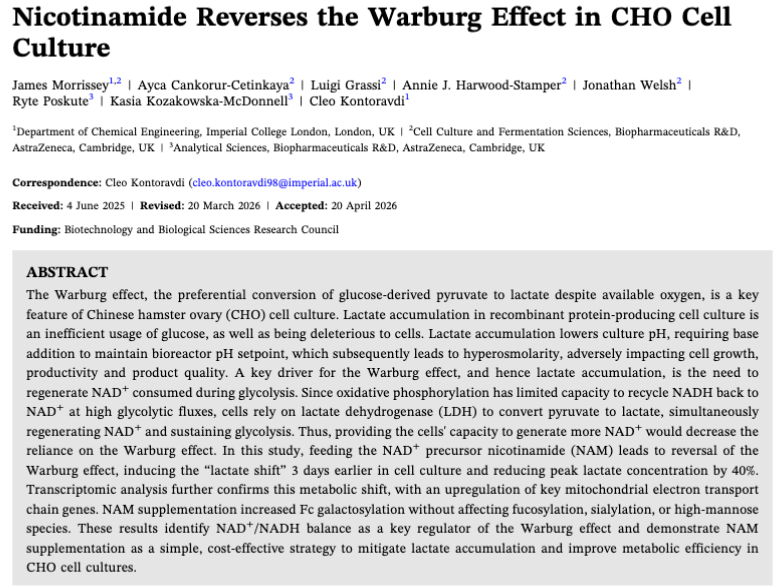
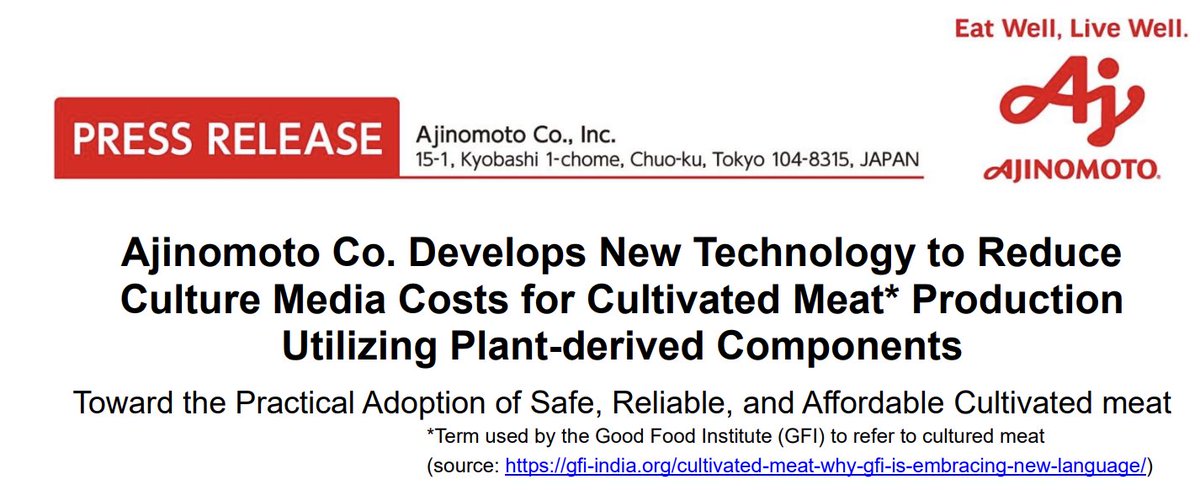
Simple input that could help productivity for cultivated meat production:
1
14
384