
Venture Capital | Early-stage | Europe & North America | Deep Tech
Joined January 2010
- Tweets 283
- Following 1,117
- Followers 90
- Likes 12,484
1 Photos and videos
Elya Chiechienieva 🇺🇦 retweeted

Apr 3
You have no experience.
You’ve never started a company.
You’ve never had a full time job.
Nike is going to kill you.
You’re a kid.
You don’t have technical skills.
You shouldn’t build hardware.
Apple is going to kill you.
You can’t build hardware.
You can’t measure heart rate non-invasively.
Athletes don’t care about recovery.
Under Armour is going to kill you.
It won’t be accurate.
You don’t listen.
You’re an ineffective leader.
You can’t recruit great talent.
You’re going to have to pay every athlete.
You can’t measure sleep non-invasively.
It’s too expensive to research.
Athletes are a small market.
The product costs too much to make.
The product costs too much to sell.
Your valuation is too high.
Consumers aren’t going to want it.
Hardware is too hard.
You should measure steps.
Fitbit is going to kill you.
You can’t build a marketing engine.
You can’t raise enough money.
You need a real CEO.
Google is going to kill you.
You can’t be a subscription.
You can’t build a brand.
You can’t do consumer in Boston.
Your valuation is too high.
You shouldn’t make accessories.
You shouldn’t make apparel.
Lululemon is going to kill you.
You can’t predict Covid.
Stay in your niche.
You are going to run out of money.
You can’t build a health platform.
Amazon is going to kill you.
You can’t measure blood pressure.
You can’t get medical approvals.
The market is too small.
You don’t understand AI.
The market is too competitive.
It won’t work internationally.
The supply chain is too complicated.
You can’t build an AI.
You can’t raise enough money.
It’s too competitive.
Healthcare isn’t going to want it.
…
Just keep going ✌️

1,061
2,876
23,347
2,494,935
Elya Chiechienieva 🇺🇦 retweeted

Mar 6
Russian soldiers who were injured trying to murder Ukranian's are now competing in the Paralympic games in Italy. Right now, the Russian flag is being marched through the entrance. Absolutely disgraceful.
1,023
3,265
19,615
540,176

Send Keith Kellogg to UAE, keep Patriot missiles as reserve
2
107
Elya Chiechienieva 🇺🇦 retweeted

Feb 28
You know, Ukraine has never blown up a school full of little girls. Sometimes an accident is not an accident, especially with countries like the US, Russia and Israel that repeatedly commit the same crimes against children.
56
1,055
5,865
96,887
Elya Chiechienieva 🇺🇦 retweeted

Feb 28
Іронія долі, звісно, що рускій народ, який втік у Дубаї, тепер отримує іранські ракети у сраку від союзничка.
God Bless🤞
14
55
1,898
25,006
Elya Chiechienieva 🇺🇦 retweeted

Feb 24
Throughout all four years of the full-scale war, Ukrainian soldiers, sergeants, and officers have demonstrated every day that, despite shortages of personnel, weapons, and resources, it is possible to effectively resist a numerically superior enemy if priorities are set correctly. This is the central lesson of this war: the decisive factor is not hardware, money, or technology, but people.
People who, in the most demanding conditions under constant shelling, repel enemy assaults, counterattack, and capture prisoners for exchange. People who, under fire on the battlefield, save the lives of wounded brothers-in-arms. People who work in the rear across dozens of roles so that those in the trenches may have it at least slightly easier. People who make every effort at every level to bring our prisoners home.
Each of them could have fled, hidden, avoided responsibility, or refused to risk life and health. Yet for nearly five years, hundreds of thousands have stood firm. Thanks to these people, their decisions, and selflessness, Ukraine continues to live and fight. That is why Ukraine must remember every day who its greatest asset is and treat these people accordingly.
The entire Azov system, from personnel training and operational planning to the provision of timely medical care for the wounded and the extensive infrastructure surrounding the unit, is built on this principle: the life and health of our personnel are our highest priority and greatest value. Comprehensive professional development, continuous training, and the establishment of clear internal processes designed to simplify service rather than create additional burdens have always received maximum attention in Azov. The unit’s success on the battlefield confirms that this course is the right one.
Only a unit in which commanders at every level see their subordinates not as a resource for personal career advancement but as people for whom they bear responsibility, whom they must train, support, and properly equip, can be effective in combat, continue to develop, and serve as an example to others. This is what Azov was before the start of the full-scale invasion, and this is what it remains today. I am proud that the officers of all brigades of the First Corps Azov of the National Guard of Ukraine share this vision.
Today, we must unite around a shared purpose, constantly learn from one another, and remain flexible enough to adapt quickly to the evolving conditions of war. Otherwise, there will be no Ukraine. The enemy understands that division among Ukrainians is its only chance to realize its plans and occupy our state, and it is doing everything possible to split us. Preventing that division and carrying out our duties with integrity, guided by our values and priorities, is what we must focus on today.
44
299
1,687
30,718


Elya Chiechienieva 🇺🇦 retweeted

Feb 19
"The biggest mistake in general that I've made, is to put too much weighting on somebody's talent and not enough on their personality.
I think it actually matters whether somebody has a good heart. “
—Elon Musk
125
248
1,463
19,055
Elya Chiechienieva 🇺🇦 retweeted

Feb 18
Focus vs Multitasking when you have many things to do... This is 100% true!
140
1,439
6,662
459,438
Elya Chiechienieva 🇺🇦 retweeted

Feb 7
Dante's Inferno treats neutrality just as harshly as actual sin.
People who took no side in life, the "uncommitted," land in the Vestibule of Hell. Since they fought under no flag, their punishment is to chase a meaningless, blank banner for eternity. This is the contrapasso that corresponds to their actions.
For sitting out the spiritual war (choosing neither good nor evil), Dante considers them people who "were never alive."
He has them chased and stung by hornets, while maggots on the ground feed on the blood. In other words, for refusing to risk shedding blood in life, the blood now spilled for their efforts is wasted in the dirt. The maggots evoke death, for these are people who never lived.
Dante, who was exiled for his own political life, saw wealthy families of Florence opt out of important issues because they had too much wealth and comfort to lose. Dante doesn't even give them the courtesy of mentioning them by name — the uncommitted are all nameless.
There is no neutrality in moral matters. If you stand for nothing, nothing is what you'll become.

144
1,244
5,779
542,723
Elya Chiechienieva 🇺🇦 retweeted

Feb 6
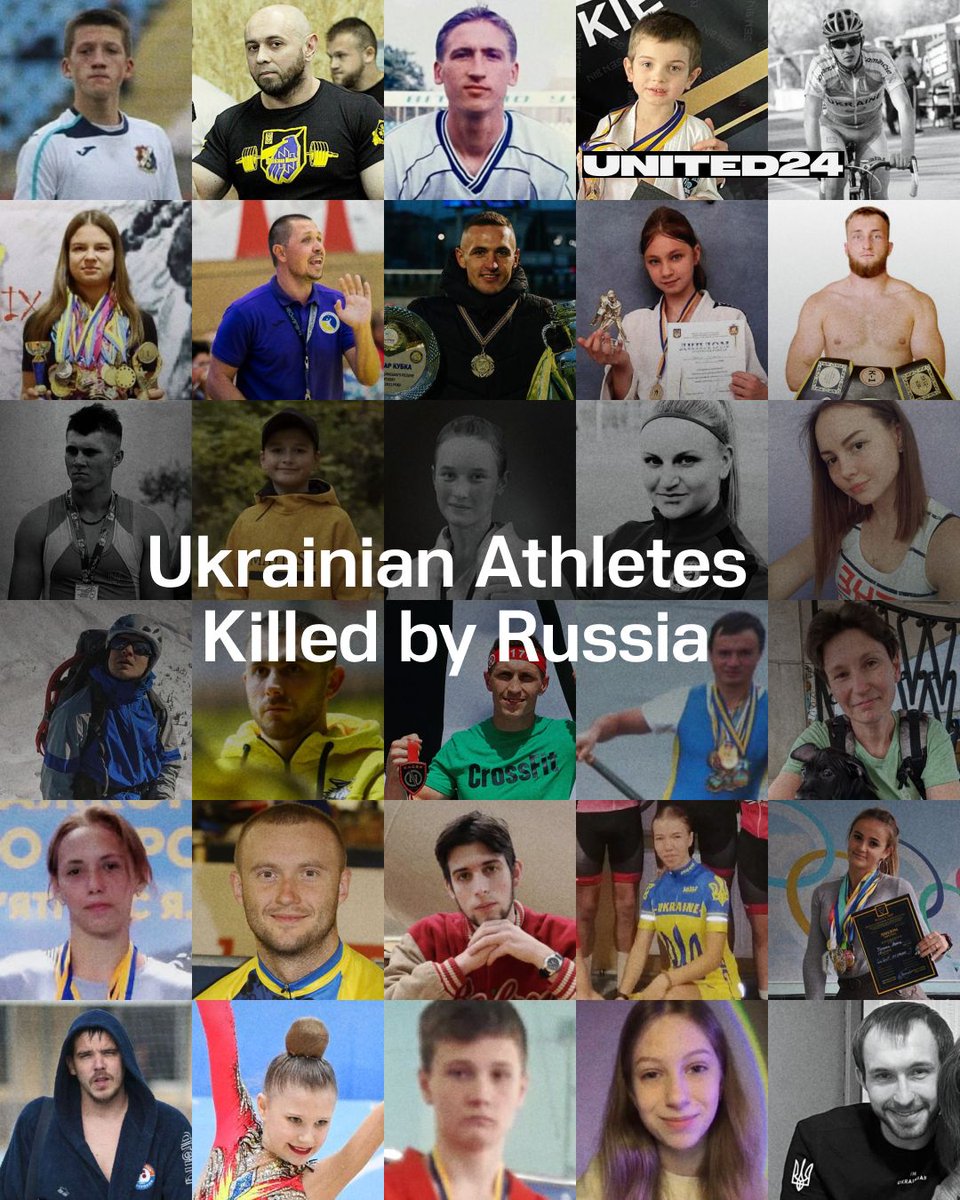
Russia has killed over 650 Ukrainian athletes and destroyed at least 15 Olympic training bases.
🧵 1/12 ⬇️
301
6,692
12,916
397,422
Elya Chiechienieva 🇺🇦 retweeted

Spot on!
Feb 6

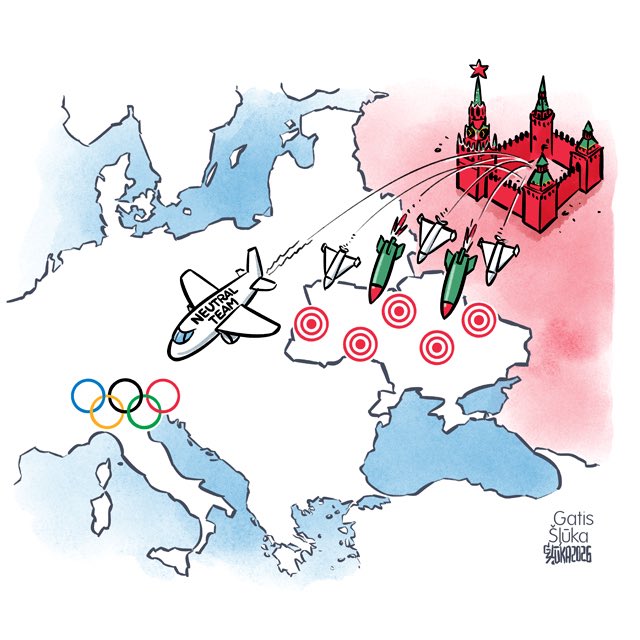
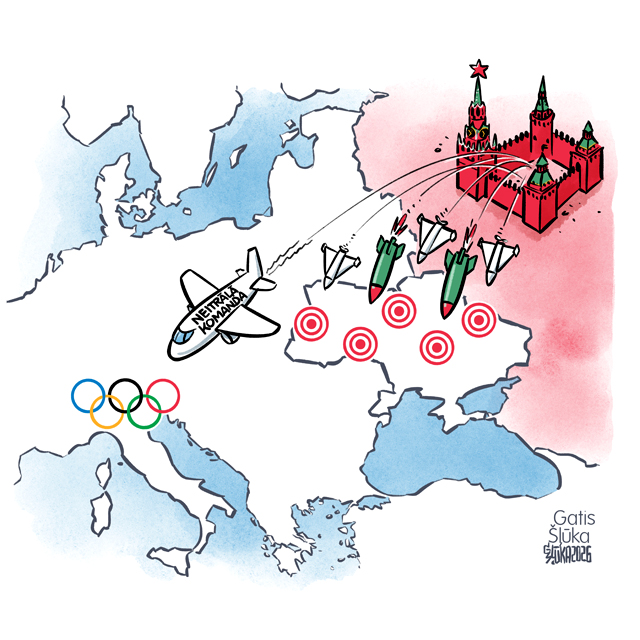
Šodien 🇮🇹 oficiāli atklātas ziemas olimpiskās spēles, kas Milānā un Kortīnā d'Ampeco notiks līdz 22. februārim.
Starptautiskās Olimpiskās komitejas izpildkomiteja pieņēmusi lēmumu, ka 🇷🇺 un 🇧🇾 sportistiem būs atļauts piedalīties šajās spēlēs zem neitrālā karoga. @lasilvportals
51
2,887
16,841
297,276
Elya Chiechienieva 🇺🇦 retweeted

Дві новини два різних всесвіти:
Італія очікує зимові Олімпійські ігри
Україна очікує новий масований обстіл
6
127
878
13,837

Elya Chiechienieva 🇺🇦 retweeted

Every damaged power station becomes a monument to our cowardice. We could have helped Ukrainians more to push Russia back, but we didn’t. We must.

Russia's attacks on civilian infrastructure are meant to create chaos and fear and make ordinary people suffer.
But Ukraine stands strong, and its people will not be broken. NATO stands with you
— @SecGenNATO visits Ukraine 🇺🇦
141
1,622
5,067
79,850
Elya Chiechienieva 🇺🇦 retweeted

🎬Our documentary "Kherson: Human Safari" is selected for the prestigious MSC Cinema Series; an official side event, Munich Security Conference 2026
Come to the screening followed by a high-level panel discussion. I'll be there.
12 Feb, 15.30 Gloria Palast. Free tickets: below



27
434
813
48,478
Elya Chiechienieva 🇺🇦 retweeted

Russia just bombed maternity hospital in Ukraine.
Yes, Again.
75
1,734
8,479
71,136
RT @nanoebano: Тож виходить: цивілізований світ — це Україна та декілька європейських країн
112

Elya Chiechienieva 🇺🇦 retweeted

Jan 27
За минулий тиждень повернули електрику до 1 200 000 домівок після обстрілів рф
27
56
1,537
20,436