
नित्य
Joined February 2010
- Tweets 60,630
- Following 3,085
- Followers 655
- Likes 10,191
1,592 Photos and videos





Pinned Tweet

20 Apr 2025
My two favourite posts..links below:
1. This is for students and parents who are stuck in pcm subjects of any standard atleast somewhere due to multiple reasons..the link is this..why me 99% in PCMB in X CBSE 1992, 0.01% in country toppers, 45 All India rank in National Science Talent Search Exam, All India rank 599 in IIT JEE advanced making to IIT Kanpur in maiden attempt with no class room coaching help in 1994 when total All India seats were around 1800 or so including NRIs..so you should take me seriously I may have something rare to offer which may not available in the market by spending money...
x.com/Emotion_Reason/status/…
2. This is my upcoming book on feelings and emotions versus reasons of living beings..just 1% introduction:
x.com/Emotion_Reason/status/…
6 Jun 2021

MY UPCOMING BOOK DESCRIPTION
========================
If emotions of anger, sadness, depression, frustration, ambition, desires, supremacy, inferiority, compassion, selfishness, clinging to life, lust, sex, greed, honesty, dishonesty, pride, egoism, comforts, 1/n
3
1
7
6,462
24 Nov 2025
Translation by ChatGPT and edited by me:
In the scriptures and many other texts, we often see the idea of inherent nature.
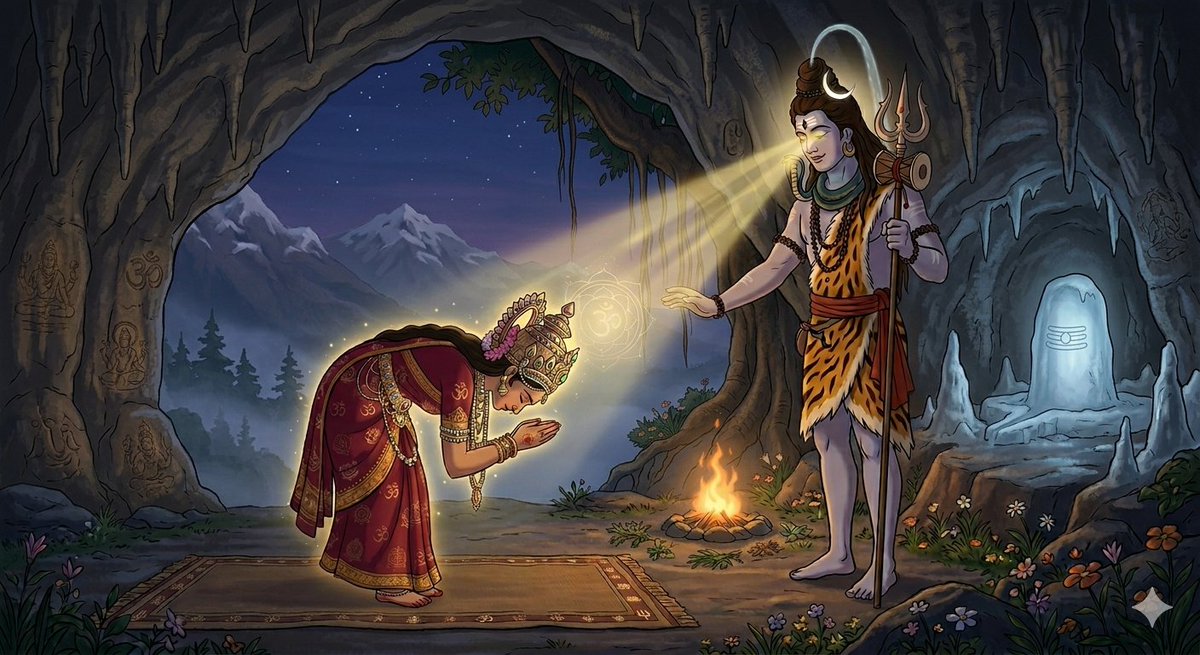
The gods, sages, rishis, and munis are shown as benevolent—or you could say, that is simply their nature. The same goes for God.
They are intelligent, discerning, strong, and compassionate. Pure, spotless—aware of deceit, yet never adopting deceit themselves.
These are their many divine qualities.
On the other hand, what the British once described in their language as “negative frequency,” the texts describe as various forms of demonic tendencies—mockery, cruelty, deception, trickery, many faces, and countless other things you all already know.
When someone faces bad times or misfortune, these people seem almost delighted—as if they might die of happiness.
There are many such types.
Their cleverness or craftiness is always shallow, and cruelty gives them a certain twisted pleasure.
Their restless, jumpy intellect lacks depth, seriousness, and real conclusions. Yet an excess of intellect brings arrogance—naturally—because the knowledge itself is hollow and leads nowhere. They often have power, and in the absence of wisdom, they misuse it in absurd ways.
Their biggest issue is arrogance. Out of ego, they want everyone to follow their ways. If someone remains independent, they want to show power over them.
Among them are certain demonic types who, if given money, will do anything to anyone. Some display power only to impress others.
Anyway, all this is just the drama of the world. I am writing all this merely as a witness.
I have nothing to prove to anyone, so showing off is not my compulsion. Those who are desperate to show their power may do so. These are just worldly facades—what can one really do about them?
In Kaliyuga, their so-called cleverness depends only on branding and narrative.
But those who are truly knowledgeable—and those who are genuinely confused—when their confusion clears, they even become friends. Well… that itself proves the honesty of such critics.
Now, these people who rely on branding—what do they do in Kaliyuga?
As it seems to me (I may also be wrong, so please use your own intelligence and judgement):
If they were to encounter Bhagvan Shiv today, they would say, “What kind of God builds a golden Lanka for His wife?”
People would lose faith in renunciation and discipline.
These are the pompous types.
Some would say, “How can you call Bhagvan Ram Maryada Purushottam? He shot Brahma’s son Bali from behind through trickery! Because of him, the blood of thousands of people in Lanka was shed.”
This is called false reasoning.
They will never touch all aspects of truth—only highlight that single fact which suits their agenda or narrative.
“How can he be Maryada Purushottam if he killed demons living in the forests?”
Meaning—they are now branding, and while they are not exactly hiding the truth, they are distorting it.
And once distorted, truth loses its beauty and becomes ugly.
They would say about Krishna, “What kind of bloodthirsty Bhagvan is this who caused such a massive war?”
Presenting truth in the wrong context is nothing but rumour—an eclipse on truth.
It is like saying the clouds are the real form of reality, not the sun.
They deny the real context—and that confuses everyone.
I remember when during my IIT days I used to run away to ashrams in search of truth.
A seeker once told me,
“Aseem, on the path of truth, friendship and social games are just distractions. Here, no one is competing with anyone. You may understand this, but don’t assume others will. They will unnecessarily get entangled in competition which has no purpose at all.”
Your race is only with yourself.
This is what is called spiritual illusion or maya.
A true seeker of truth focuses only on himself: “How can I refine myself?”
Many people who were competing with each other in worldly life start doing the same in spiritual life.
What does that achieve?
Nothing—just more impurities.
contd..
1
972
Jun 16
माया मरी ना मन मरा मर मर गए शरीर
आशा तृष्णा ना मरी कह गए दास कबीर
स्वामी राम जी के लाडले शिष्य कबीर जी
1
14
Material success is useful to live comfortably.
Many live with success as life's goal.
Same goes with many things.
सांसारिक सफलता सुखपूर्वक जीवन में सहायक है। कुछ लोग सफलता इत्यादि को जीवन ध्येय बना लेते हैं।
अनेकों प्रकार के ताने बाने।
Aseem Mishra ©
असीम मिश्र ©
9
Jun 14
CC @jagograhakjago @narendramodi @AmitShah @myogiadityanath @hitachienergy @Hitachi @boschindia @HitachiAC_GB
Service centre guy is doing hit and try instead of directly looking error blink code in odu PCB, more instead in...you know..
Jun 14
5th june and today the issue remains unresolved...where is @boschindia doesn't even answer or read emails
There is no escalation ladder..no area manager details...that I can find
39
Jun 13
What is one thing that come to your mind talking about my place unfortunately is POWER CUTS...we celebrate if it comes back and remain terrified if it goes this or that second...too much politicisation of a govt department
13