
Joined March 2024
- Tweets 783
- Following 25
- Followers 1,335
- Likes 360
332 Photos and videos





29 Jul 2025
For those who missed it, we just posted the second episode of our TFHE series where @furkanakal explains how linear operations are performed on GLWE ciphertexts.
(Reference Guide: TFHE-rs Handbook by
@zama)
Watch ↓
youtube.com/watch?v=GKstnlt2…
1
7
822
18 Jul 2025
We’re continuing our series on privacy protocols.
In this video, @furkanakal breaks down what @RAILGUN_Project is and how it powers confidential tokens.
Watch ↓
6
8
44
6,951
Encrypt Onchain retweeted

14 Jul 2025
There are many privacy solutions based on Zether these days. If you're wondering how it simply works and have missed our latest video, take a look!
Also turn the notifications from @EncryptOnchain on for the video of the week.
11 Jul 2025

Confidential transfers are essential for mass adoption.
In the first video of our new series on confidential transfers, @furkanakal breaks down how Zether works.
Watch ↓
1
8
624
11 Jul 2025
Confidential transfers are essential for mass adoption.
In the first video of our new series on confidential transfers, @furkanakal breaks down how Zether works.
Watch ↓
15
6
51
3,678
8 Jul 2025
Most people think about proof systems in terms of what they can prove.
But there’s a whole other dimension that’s just as important: How big are the proofs?
This is where we start talking about succinctness 🧵
1
1
7
328
8 Jul 2025
Succinctness is also the difference between feasible and infeasible in the real world.
You could write down the entire transcript of a computation. But if someone can just hand you a tight little proof that says “this was done correctly,” and you can check it instantly?
That’s a real thing!
1
3
150
8 Jul 2025
So if you’re thinking about proof systems, don’t just ask “What can it prove?”. Also ask: “How big is the proof?” and “How fast is verification?”
That’s what succinctness is about!
3
136
7 Jul 2025
How would you decide who is richer from a set of two people in a confidential way?
@miguel_de_vega from @nillion explains Yao's millionaire problem and some ways to solve it.
Watch ↓
1
4
259
4 Jul 2025
Have you ever wondered what would a decentralized VPN look like?
In our latest video, @furkanakal breaks it down in a simple way.
Watch ↓
5
5
19
434
2 Jul 2025
If you missed our podcast episode with @davidlsneider from @litprotocol, we just posted it on YouTube!
Watch ↓
youtube.com/watch?v=USL851sx…
3
3
447
30 Jun 2025
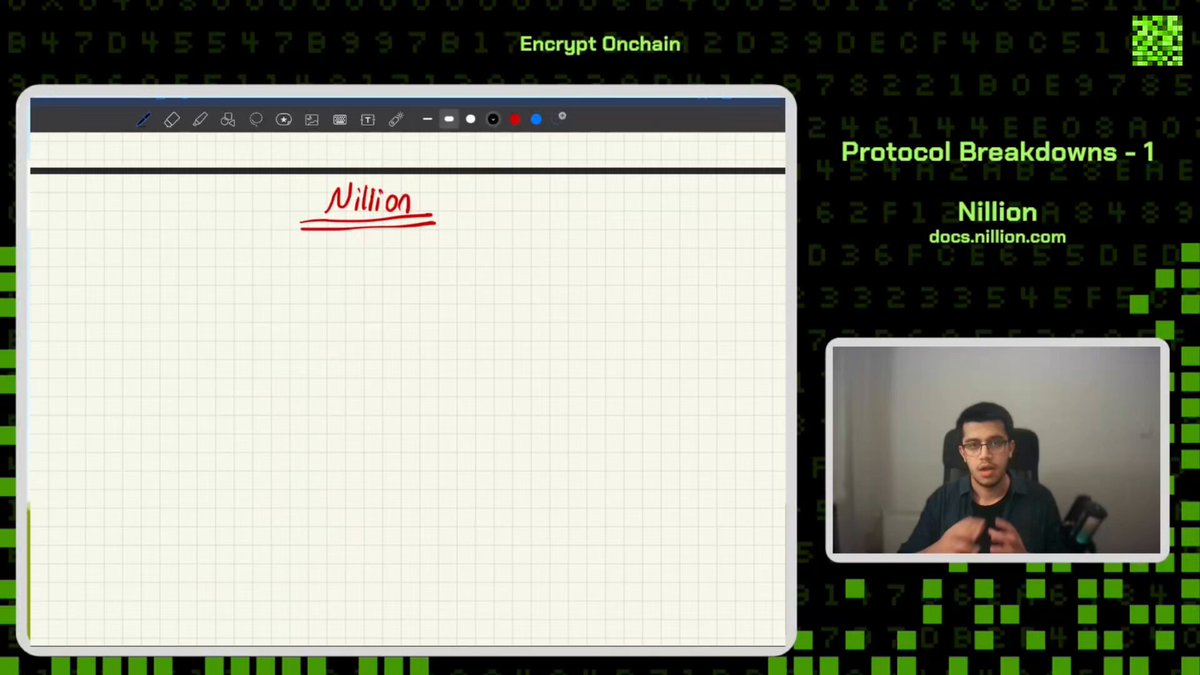
ĀWe’re excited to launch a new whiteboard video series where we briefly break down privacy protocols in Web3.
In the first episode, @furkanakal explores @nillion — what it is and how it brings privacy to blockchains.
Watch ↓
6
2
25
2,845
30 Jun 2025
For those who missed it, we just posted the first episode of our TFHE series where @furkanakal made an intro and touched on morphology of FHE ciphertexts.
(Reference Guide: TFHE-rs Handbook by @zama)
Watch ↓
youtube.com/watch?v=byIOHz2M…
4
2
14
580
27 Jun 2025
FHE verifiability is a fairly new and wide open field of research. If you are into math and privacy at the same time, jump in!
In this short video @furkanakal highlights why verifiability matters in FHE
Watch ↓
2
4
20
1,142
26 Jun 2025
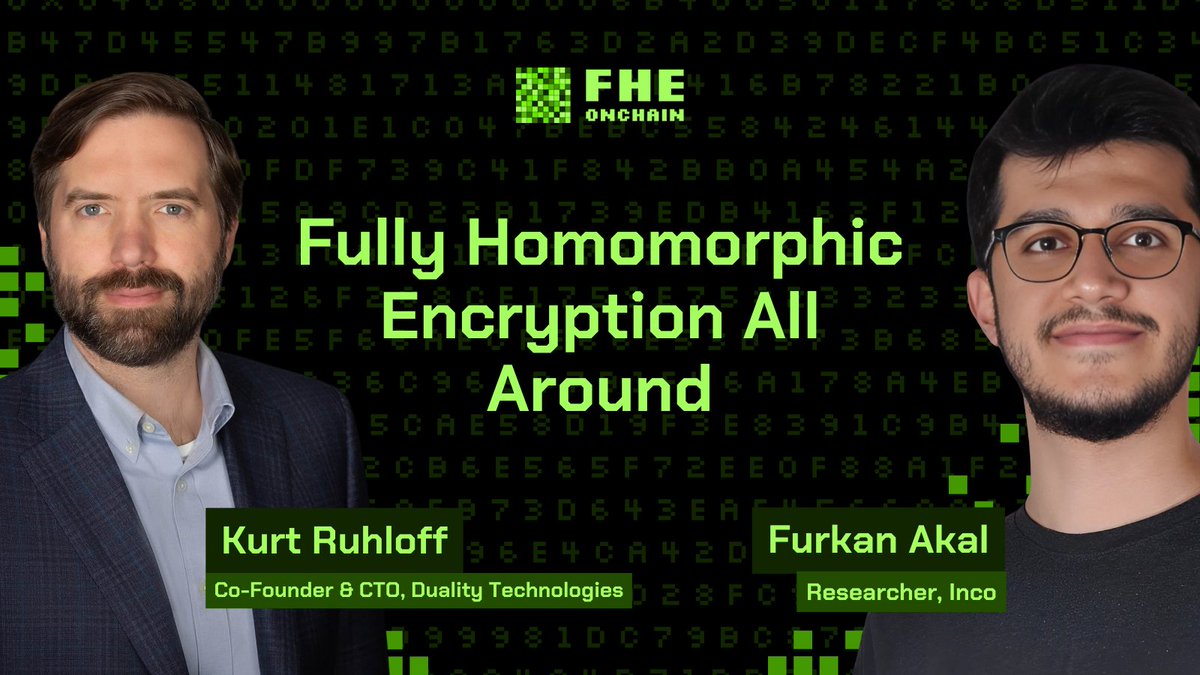
If you missed our podcast episode with Kurt Ruhloff from @DualityTech, we just posted it on YouTube!
Watch ↓
1
1
4
239