
Evil Genius, RWAs Preacher, Avid Reader.
Joined May 2019
- Tweets 81,765
- Following 2,002
- Followers 2,206
- Likes 128,693
1,355 Photos and videos














Pinned Tweet

12h
The crypto market moves in cycles, every era creates its own winners.
First it was Bitcoin, then
Smart contracts
DeFi
NFTs
Now we're entering the age of AI, that's where @ActionModelAI comes in.
The biggest opportunities rarely announce themselves. By the time the crowd arrives, the early advantage is already gone.
Dear Anon, take advantage of Action model ecosystem early.
70
1
79
631
MAD Epic retweeted
12h
The crypto market moves in cycles, every era creates its own winners.
First it was Bitcoin, then
Smart contracts
DeFi
NFTs
Now we're entering the age of AI, that's where @ActionModelAI comes in.
The biggest opportunities rarely announce themselves. By the time the crowd arrives, the early advantage is already gone.
Dear Anon, take advantage of Action model ecosystem early.
70
1
79
631
12h
The crypto market moves in cycles, every era creates its own winners.
First it was Bitcoin, then
Smart contracts
DeFi
NFTs
Now we're entering the age of AI, that's where @ActionModelAI comes in.
The biggest opportunities rarely announce themselves. By the time the crowd arrives, the early advantage is already gone.
Dear Anon, take advantage of Action model ecosystem early.
70
1
79
631
Jun 14
Robert Kiyosaki, author of the bestselling book Rich Dad Poor Dad, is right when he says that holding assets like $BTC , $ETH, and gold is superior to holding cash over the long term.
But the lesson isn't about the assets themselves, it's about the properties those assets possess.
Cash can be printed. Its supply expands at the discretion of central banks, leaving it vulnerable to losing purchasing power over time.
The real value of Bitcoin, gold, and Ethereum isn't simply that they are assets it's that they embody characteristics investors seek: scarcity, durability, portability, and resistance to debasement.
Too many people focus on the asset and overlook the property.
The question isn't "Should I own Bitcoin?" The question is: what makes Bitcoin valuable in the first place?
History shows that wealth flows toward assets with stronger monetary properties.
Gold dominated for centuries because it was scarce. Bitcoin emerged because it introduced digital scarcity. The winners are rarely the assets themselves they are the attributes those assets embody.
46
59
546
Jun 13
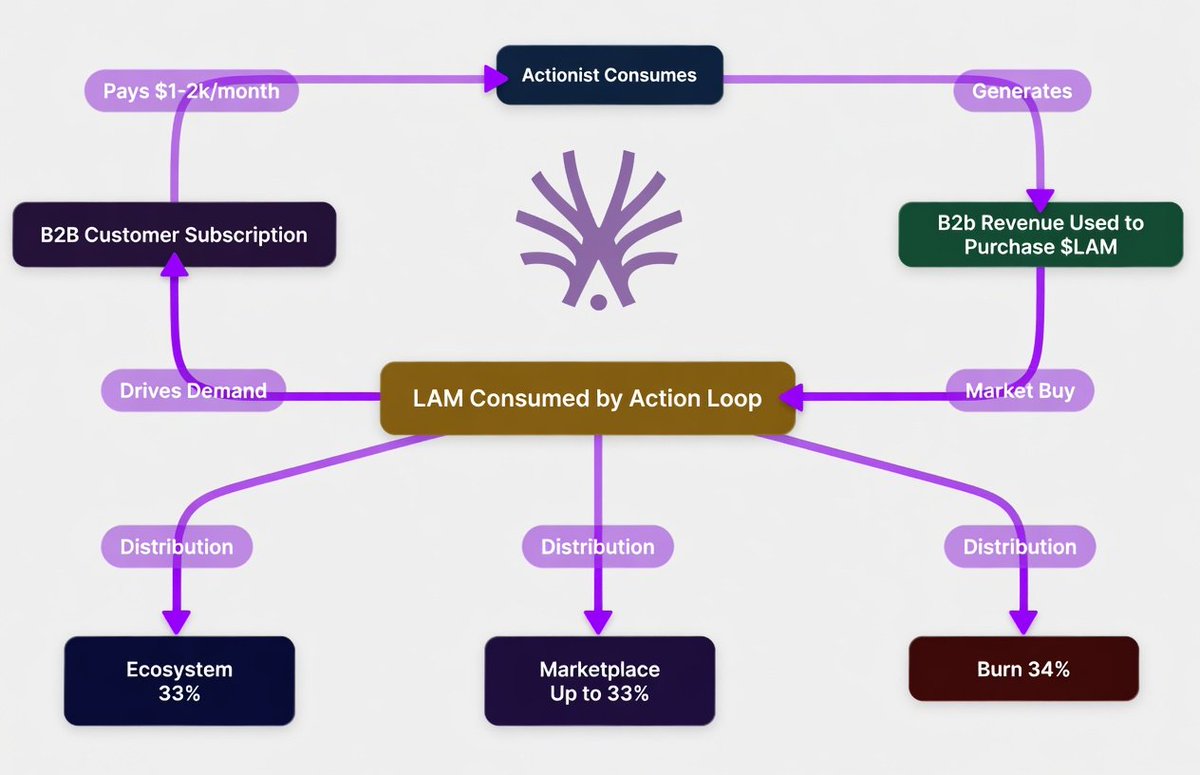
A quick dive into Action model tokenomics.
@ActionModelAI ecosystem token $LAM is built in a simple loop:
Businesses will pay for AI agents, that revenue buys back tokens from the market, and platform usage burns tokens.
Every time $LAM is used on the platform, roughly 34% is permanently burned, reducing the circulating supply over time.
This is how revenue will generated:
•Businesses subscribe to AI agents for $1,000–$2,000/month.
•80% of subscription revenue is used to buy $LAM from the open market.
67
83
832
Jun 12
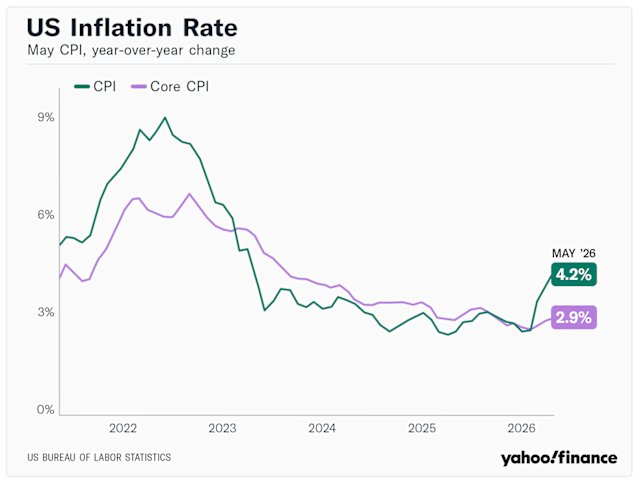
We were sold the dream $BTC is the hedge against inflation but now USA has the 3yrs high inflation and $BTC price is falling, why ???
The logic is that governments print excess money, currencies lose purchasing power, and scarce assets like Bitcoin become more valuable.
Yet U.S. inflation has climbed to 4.2%, its highest level in three years, and Bitcoin is nowhere near the unstoppable inflation hedge many expected. What happened?
The answer is that markets are discovering a crucial distinction between inflation and liquidity.
Bitcoin performs best when money is abundant, interest rates are low, and investors are willing to take risk. The inflation that fueled Bitcoin's historic run in 2020 and 2021 came alongside massive monetary stimulus and unprecedented liquidity injections. Capital had to go somewhere, and Bitcoin benefited.
The theory that Bitcoin protects against inflation was never entirely wrong. It was simply incomplete. Bitcoin doesn't thrive because inflation exists. Bitcoin thrives when the response to inflation floods the system with liquidity.
87
103
1,010
Jun 11
The irony is that Bitcoin biggest competitor may never have been gold, governments, or regulation but this current AI revolution.
The market currently is not choosing between Bitcoin and cash, It is choosing between Bitcoin and ownership in the companies building the future.
For years, Bitcoin had a unique advantage. If you wanted exposure to a transformative technology outside traditional markets, there weren't many alternatives, today that's changing.
When investors get the opportunity to buy into companies like SpaceX, robotics, defense-tech, and autonomous systems firms that are expected to go public in the coming years, capital has to come from somewhere.
Every dollar allocated to the blockbuster IPO is a dollar that isn't buying Bitcoin.
This doesn't mean investors do not like Bitcoin. It means AI has become the market's most compelling growth story.
Bitcoin now faces competition from something it hasn't had to contend with before: a technology sector generating real economic value at scale, which could make Bitcoin could make the price of $BTC to face some challenges, not because the thesis is broken, but because investors have another revolutionary technology competing for the same pool of capital.
64
1
80
819
Jun 10
The race now is to build smarter and bigger models, more parameters, more reasoning, more capability. But there's a question almost no one is asking:
"what happens once AI agents become capable enough to actually do work on the internet?"
A new problem shows up which is trust.
Right now, when you hire a freelancer, you check their portfolio, their ratings, their work history, their references. When you call an Uber, the driver has a rating. When you shop on Amazon, the seller has reviews. When you hire someone off LinkedIn, they have a professional history you can scroll through.
Reputation is the invisible infrastructure that makes digital economies work. It's the thing that lets strangers transact with confidence, and AI agents have none of this.
As AI shifts from generating text to actually performing real world tasks, businesses will have to start asking harder questions.
Has this agent done something like this before? How reliable is it? How often does it fail? Can it be trusted with my data? With my customers?
This is what makes @ActionModelAI worth paying attention to.
Action Model keeps building around actions themselves. Every completed task, every interaction, every successful outcome adds to a growing record of how an agent actually behaves in the real world. Over time, that record becomes something the AI industry has been missing: accountability.
In the future, we may not pick agents based on who built them. We may pick them based on what they've actually done the same way companies hire people with proven track records, businesses may start hiring AI agents the same way.

73
93
888
Jun 9
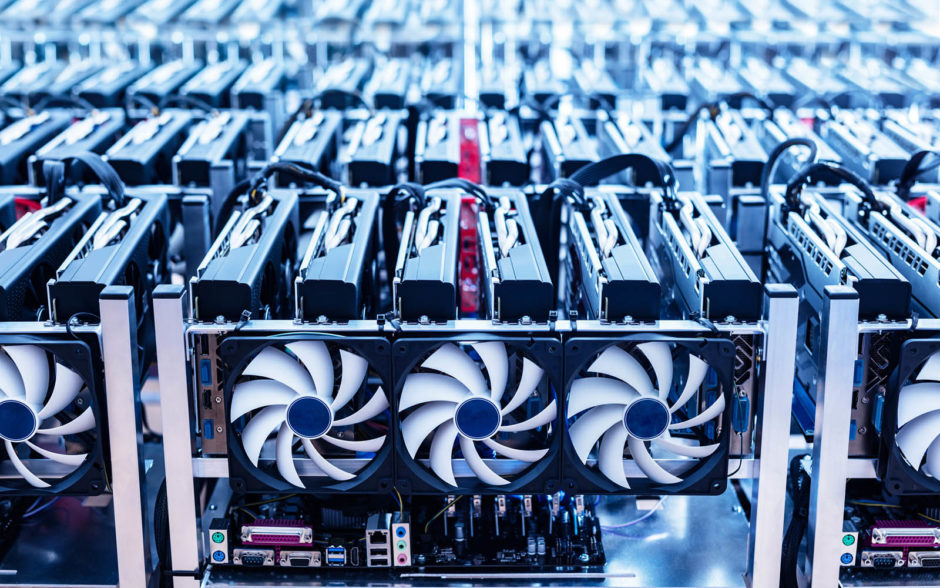
Bitcoin miners are moving into AI because AI pays better than mining $BTC.
For years, miners made money using specialized, electricity-hungry computers to earn $BTC. But the business has grown harder. Every halving cuts mining rewards in half while the math gets twice as difficult even as more miners keep joining the network. Add Bitcoin's volatile price swings, and most miners are barely covering their electricity bills.
Then AI arrived and changed the math entirely.
The AI boom created massive demand for data centers capable of powering and cooling thousands of GPUs. Companies building AI models desperately need three things: huge amounts of electricity, large facilities, and cooling infrastructure which Bitcoin miners already have.
So instead of gambling on Bitcoin's price, miners realized they could sign 10–15 year contracts with AI companies and generate predictable revenue.
Which looks nothing like the old model:
Buy ASICs → Mine Bitcoin → Hope BTC price rises → Survive halvings.
The new model is simpler:
Rent power and facilities to AI companies → Collect steady payments → Lock in revenue for years.
The market is adjusting. These newly minted AI mining stocks have been outperforming Bitcoin itself because investors increasingly see these companies as AI infrastructure businesses, not crypto plays. Wall Street values predictable cash flows over volatile mining income.
A miner locked into a 15-year AI contract starts to look like a utility company and commands a valuation to match and this might affect the price of $BTC on the long run.
69
87
1,293
Jun 8
The biggest problem with paid ads isn't the cost.
It's the blind spot that comes after the click. You pay influencers and agencies for reach, but reach isn't revenue.
Did any user actually use your product? Did any user complete onboarding? Did any user come back the next day?
Most of the time, you won't know.
The ad platform shows you millions of impressions. It doesn't show you what happened inside your product.
And the behavioral data those campaigns generate? It stays locked inside their ecosystem helping them optimize their business, not yours.
So you end up:
•Spending thousands acquiring users
•Unable to see which ones found real value
•Optimizing for clicks while losing the retention war
•Dependent on a platform that knows your customers better than you do
That's the trap and it has to change , @ActionModelAI is building the way out.
By connecting acquisition data with product usage data, growth teams get one clear view from the ad impression to the revenue event.
Not vanity metrics. Not campaign dashboards. Knowing which channel brought users who actually stuck, which campaigns are producing power users, and which source is quietly draining budget on users who never return.
Growth teams stop flying blind. They start making budget decisions based on what their best users actually did not what an ad platform reported.
When you know which users activated, engaged, retained, and generated revenue you stop optimizing for clicks.
You start optimizing for outcomes.
That's where product analytics beats ad analytics every time.

65
1
82
1,021
Jun 7
Mike Saylor is complaining that Artificial Intelligence is stealing the spotlight $BTC was supposed to own.
According to Saylor, the recent weakness in Bitcoin isn't because Bitcoin is broken or losing relevance. His argument is that investors are rotating capital into AI at a fast pace. With hundreds of billions of dollars flowing into AI infrastructure, startups, and upcoming IPOs, money that could have found its way into Bitcoin is being redirected elsewhere.
He points to the recent outflows from Bitcoin ETFs as evidence. In his view, investors are chasing the next big opportunity in AI, temporarily draining liquidity from Bitcoin. Saylor believes this is simply capital rotation not a sign that Bitcoin's long-term thesis has failed.
But I don't completely buy that argument.
MicroStrategy is sitting on significant leverage. Add the recent geopolitical tensions and rising job losses into the mix, and $BTC touching $30K becomes a real scenario one that would be devastating for Saylor's position.
What I see are two technological revolutions that will eventually converge, not compete.
AI is an entirely different ball game arguably the biggest general-purpose technology of our lifetime, with the potential to transform nearly every industry on Earth. Capital is flowing into AI because investors see enormous productivity gains and entirely new business models being created.
There's no reason to be upset about that.
In fact, AI and crypto are already beginning to merge. We're seeing the rise of the agentic economy, machine-to-machine commerce, autonomous AI agents, and payment standards like x402 that allow AI systems to transact online. These developments could become major growth drivers for blockchain networks and digital assets.
Rather than viewing AI as Bitcoin's rival, it may end up being one of crypto's biggest catalysts.

63
3
83
1,058
Jun 6
People are saying $ZEC is going to zero after news broke of a critical vulnerability in Zcash privacy system. But what really happened?
Recently, security researcher Taylor Hornby discovered a serious soundness bug in Zcash Orchard shielded pool while conducting an audit for Shielded Labs.
In zero-knowledge systems, soundness means it should be impossible to convince the network that a false statement is true. If soundness breaks, invalid transactions could potentially appear valid.
The bug was found with assistance from the newly released Claude Opus 4.8, which helped analyze the Orchard circuit logic and uncover a previously undetected flaw.
A proof-of-concept exploit demonstrated that unlimited fake $ZEC could be created in a local testing environment. The issue was immediately disclosed to Zcash developers, who began working on a fix.
The vulnerability had existed since Orchard launched in 2022 and had passed multiple audits, making the discovery particularly significant.
If exploited on the live network, the bug could have enabled:
• Creation of counterfeit $ZEC within the Orchard shielded pool
• Double-spending without detection inside that pool
• Invalid state transitions appearing legitimate
However, there is no evidence the vulnerability was ever exploited on the live network.
It's also important to note that Zcash "turnstile mechanism" continued protecting the overall 21 million supply cap, preventing inflation from spreading across the entire system.
The Zcash team responded quickly:
• An emergency update temporarily disabled Orchard functionality
• A network upgrade was activated on June 3 to deploy the fix
• Orchard functionality was safely restored after the patch
No user funds were reported lost, and user privacy remained intact.
So why did the market react negatively?
The concern isn't that the exploit was used. The concern is that a critical bug capable of creating counterfeit coins existed for years in one of crypto's most heavily audited privacy systems. For many investors, that raises questions about security assumptions and trust.
That said, the bug was discovered before any known exploitation, disclosed responsibly, and patched rapidly.
Whether this becomes a temporary scare or a long-term reputation issue for Zcash will depend on how much confidence the community retains in the protocol going forward.


66
93
1,388
Jun 5
Referral systems have been around since the days of PayPal. At their core, they are designed to help people invite friends, family, and communities into a platform they find valuable.
@ActionModelAI follows the same principle, but it's not about doing anyone a favor, it's a genuine win-win system built on aligned incentives.
Think back to the early days of Hype. Many users joined through referrals, but they didn't stay because of a referral link. They stayed because they found value in the product, benefited from being early, and naturally invited others to participate.
That's the kind of network effect @ActionModelAI is building.
Every new user joins with full earning power from day one. They can earn $LAM points, access ownership opportunities, participate in ActionFi bounties, and monetize workflows through Actionist.
Most importantly, a user's rewards are never reduced to benefit a referrer. Referrers earn additional incentives generated on top of user activity, alongside milestone-based bonuses.
New users can also build their own referral networks and expand their earning potential. As more participants contribute, the LAM becomes smarter, the ecosystem becomes stronger, and the value created is shared across the network.
Everyone contributes. Everyone benefits. Everyone earns.

85
2
103
979
Jun 4
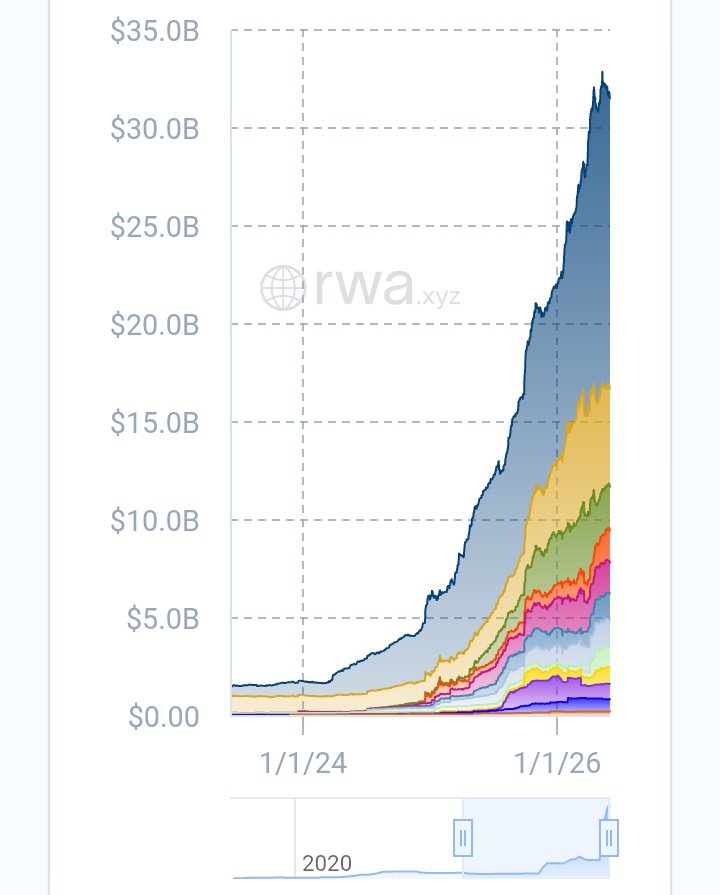
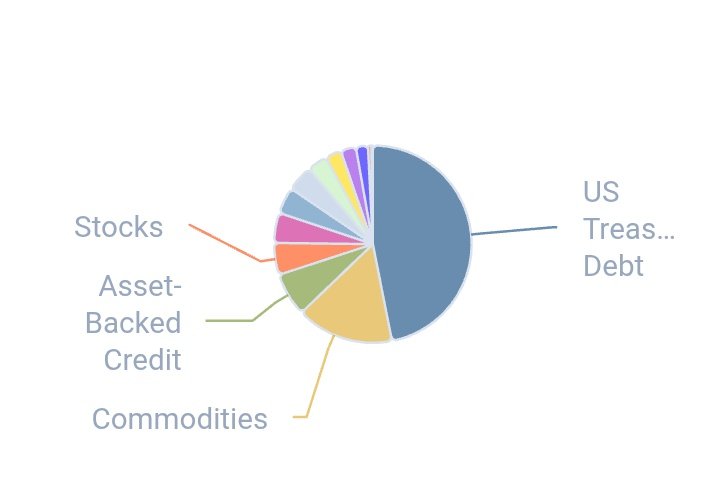
Ethereum RWA sector is experiencing a super growth, as we speak financial institutions tokenize high-quality real-world assets on its secure and mature blockchain.
Industry leaders such as BlackRock BUIDL fund, Franklin Templeton, Ondo Finance, Tether Gold, and Paxos Gold are driving adoption by bringing tokenized U.S Treasuries, gold, and private credit worth billions of dollars on-chain. These assets provide attractive yields in a transparent and actively traded market while remaining aligned with regulatory requirements.
At the same time, progress toward regulatory clarity, including developments around the CLARITY Act, will reduce uncertainty and encouraging greater participation from traditional financial institutions.
As a result, Ethereum now accounts for more than 52% of the global tokenized RWA market, with over $16.6 billion in on-chain assets.
This trend shows us a broader view of migration of institutional capital into public blockchains in pursuit of greater efficiency, transparency, and yield opportunities which will strengthe Ethereum long-term network value.
63
83
868
Jun 3
Today I sat down and thought what if @ActionModelAI extends its reach into RWA tokenization?
Tokenizing assets is relatively easy, verifying them is the hard part.
Anyone can put a building, business, or commodity on-chain and claim it's worth millions. The real challenge is proving that the asset exists, is properly valued, and continues to perform as expected over time.
@ActionModelAI could build AI models capable of analyzing documents, ownership records, financial statements, images, satellite data, market data, and human verification reports submitted by contributors.
The AI could continuously monitor these data sources, flag inconsistencies, detect fraud risks, and identify changes in asset conditions.
Instead of relying on a one-time verification process, assets could be verified continuously.
This would help create a more transparent and trustworthy RWA ecosystem one where investors rely not only on issuer claims, but also on ongoing AI-powered verification backed by human contributors.

73
1
89
815
Jun 1
Most people won't realize how valuable an opportunity is until it's gone.
Right now, every person you bring today into @ActionModelAI gets you a permanent 1.5x multiplier on every task they complete, not for a week but forever on:
>Every bounty.
>Every action.
>Every point earned.
While others joining the movement later gets 1.4x, 1.3x, and eventually 1x, your referrals lock in the highest multiplier available and keep that advantage for life.
Think about it same effort, same platform.
But one user earns 50% more simply because they got in earlier.
The clock is already ticking are you going to be part of this ???

51
66
442
May 30
A free AI platform means
You’re not the user.
You’re the product.
Your data is more valuable and they need you to get addicted to Token or the uptime they sell too.
You should join @ActionModelAI where you not just data cow but an important factor in the system.

42
1
59
574
May 29
Tokenization of Real World Assets means turning ownership of physical or traditional assets into digital tokens on a blockchain.
examples of RWAs:
>Real estate
>Gold
>Stocks
>Bonds
>Art
> Music royalties
> Company revenue
Now Brian Armstrong and Coinbase are betting heavily on RWA tokenization.
Coinbase is now moving beyond crypto trading into payments, tokenized assets, and financial infrastructure as exchanges wants to capture new market shares.
The present financial system is flawed, fragmented, slow, expensive, and full of middlemen. tokenization changes that for us, a good example is a building in New york could be invested in by someone in Tokyo instantly, that opens a new opportunity up if you see.
This makes RWAs special to me, and it will create a new opportunity for those paying rapt attention. IYKYK.

33
1
49
565
May 28
It's not going to be shocking that AI will automate most jobs.
Even the roles that remain will likely need far fewer humans in the loop.
That’s the direction many experts and reports are pointing toward.
But what happens to everyone left out?
Humans were supposed to help train AI and benefit from it.
Instead, big tech companies trained AI on our data, our behavior, our content, and our actions online and built trillion-dollar valuations from it.
Is that fair?
>Every click.
>Every search.
>Every post.
>Every action online.
All helping power and improve massive AI systems.
Yet most people who generated that value receive nothing in return.
That’s what @ActionModelAI AI wants to change.
A future where human contribution to AI is recognized, rewarded, and owned by the people creating the value —not only the corporations collecting it.
So the ball is in your court, what are you choosing?

51
1
63
644