Project funded by @ERC_Research, hosted in @sapienzaRoma, PI A. Ghignoli. Graphic symbols in pragmatic literacy from Late Antiquity to early medieval Europe.
Joined November 2018
- Tweets 97
- Following 163
- Followers 185
- Likes 47
5 Photos and videos

ERC_NOTAE retweeted

Jun 6
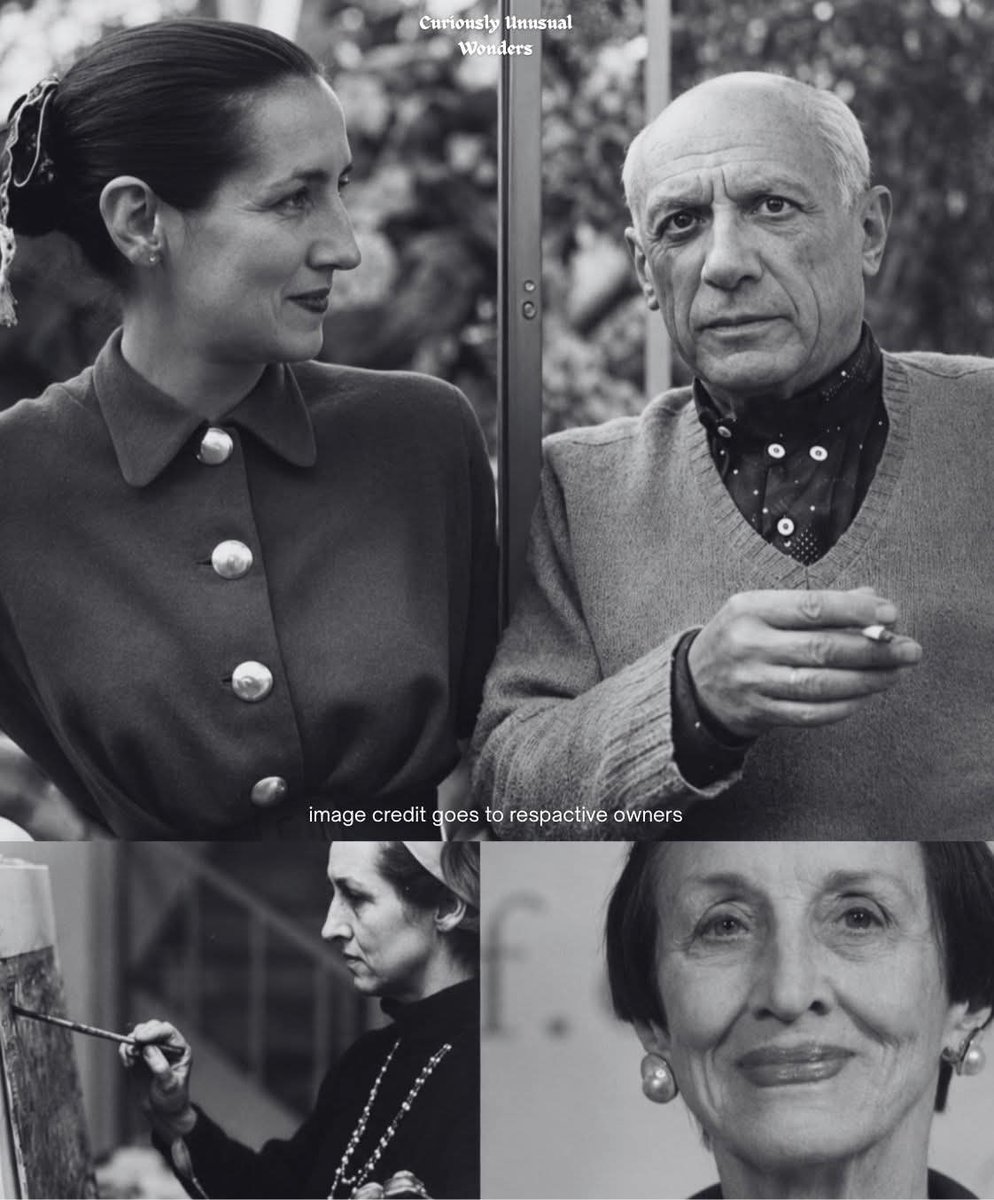
On an afternoon in 1953, she packed two suitcases, put her children in the car, and drove away from his life. Picasso shouted after her, mocking her with the claim that no one leaves a man like him, believing she would eventually crawl back once she realized the world didn’t care about a woman without his shadow to protect her.
He was wrong. Françoise Gilot didn’t just leave a relationship; she reclaimed a life that had been sidelined by a giant’s ego, and in doing so, she became the only woman in history to survive Picasso with her spirit and her art fully intact.
While the rest of the world looked at Pablo Picasso as an untouchable god of art, she looked at him and saw a man who wanted to own her soul.
Their story began in occupied Paris in 1943. She was a twenty-one-year-old artist with a bright future, and he was sixty-one, a legend who thrived on chaos. For ten years, Gilot lived in the eye of the storm.
She was his muse, his partner, and the mother of his children, Claude and Paloma. But being a muse often meant being a victim of his legendary cruelty and his need for total emotional dominance. Picasso famously treated women like “goddesses or doormats,” and he expected Gilot to eventually become the latter.
He dismissed her painting, tested her patience, and tried to shrink her world down to only him.
Yet, Gilot possessed a core of steel.
She continued to paint every single day, refusing to let her own creative voice be silenced by the thunder of his fame. She watched as the women who came before her crumbled into madness or despair, and she realized that if she stayed, her own light would eventually go out too.
When she finally walked out, she wasn’t just leaving a man; she was breaking a curse.
Picasso spent years trying to destroy her reputation and her career out of spite. He even tried to block the publication of her memoir, “Life with Picasso,” in the 1960s, but she fought him in court and won. Her life after Picasso wasn’t a footnote; it was a masterpiece of its own.
She moved to America, married the legendary scientist Jonas Salk, and saw her own paintings hung in the world’s most prestigious museums, including the Met and MoMA. She lived to be 101 years old, proving that the best revenge is a life lived beautifully and independently.
When she passed away in 2023, she wasn’t remembered merely as a former lover of a famous man, but as a titan who refused to let anyone else hold the brush to her life’s story.
The story of Françoise Gilot is a loud, ringing anthem for every woman who has ever felt her own light dimming to make room for someone else’s ego.
She understood a fundamental truth that many spend a lifetime trying to learn: your potential is not a sacrifice to be offered up for someone else’s greatness.
For many women, the "shadow" isn't always a famous painter; sometimes it is a workplace that overlooks their talent, a relationship that demands they play small, or a cultural expectation that they should prioritize everyone’s dreams except their own. Gilot’s life proves that you can be a mother, a creator, and a partner without losing the core of who you are.
She refused to let her role as a mother to Claude and Paloma be an excuse to stop painting, and she refused to let Picasso’s international fame be a reason to stop seeking her own.
She didn't wait for permission to be great; she simply got to work.
When she eventually married Jonas Salk, the man who saved millions from polio, she did so as an equal, a woman who had already validated her own existence.
When she walked out of that villa, she wasn't just walking away from Picasso; she was walking toward herself.
15
132
458
31,214
ERC_NOTAE retweeted

On #LabourDay, we recognise not only the work we see, but also the work that often remains invisible⌛
Valeria Pulignano from KU Leuven explores how unpaid labour contributes to insecurity in today’s labour market by studying care, gig, and creative work.
4
10
1,548

The same is also for the Notae system. We also hope to be back soon
7 Jun 2025

Due to some connectivity issues on the GARR node in Catania, all the LAD databases are down. Other services are either down or running withstring limitations. Apologies, and we hope to be back online soon.
57
ERC_NOTAE retweeted

18 Apr 2025
The volume includes a paper by some former members of the ERC research project @ErcNotae: Zahra Ziran, @__fleotta , @mecellone and me
17 Apr 2025

OPEN ACCESS🏆
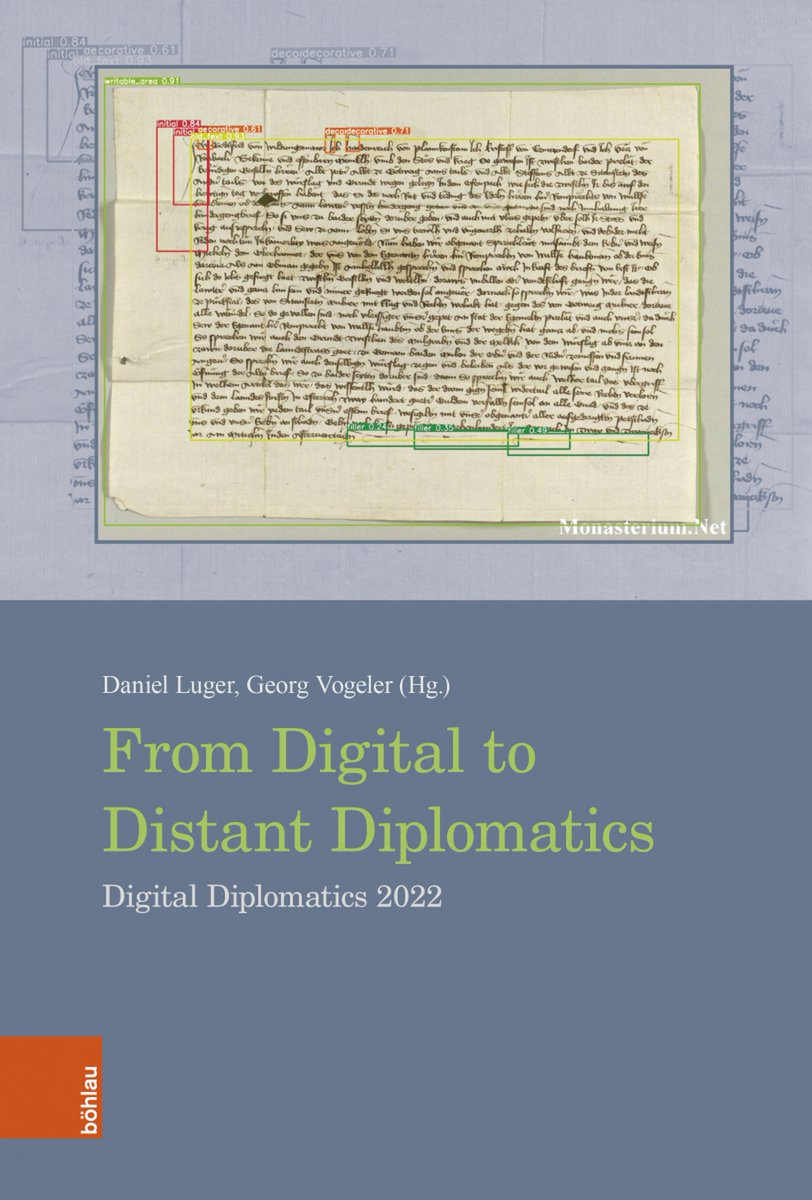
From Digital to Distant Diplomatics: Digital Diplomatics 2022, eds. Daniel Luger, Georg Vogeler (@BoehlauVerlag, April 2025)
facebook.com/MedievalUpdates…
vr-elibrary.de/doi/book/10.7…
#medievaltwitter #medievalstudies #medievaldiplomatics
3
5
1,381
ERC_NOTAE retweeted

16 Dec 2024
Testo, supporto e sistema comunicativo: Dalla Grecia antica al web ift.tt/Qrk6FBo
1
1
92
We are delighted to announce the publication of the book “Mani e scritture, simboli e testi”, edited by M. Boccuzzi, at Edizioni di Storia e Letteratura, in free open access, among the results of the Erc advanced grant project Notae. storiaeletteratura.it/catalo…
2
4
154
The third volume of the Book Series “Graphic Symbols, Written Words” promoted by the project Notae funded by @ERC_Research, is out in open access:
storiaeletteratura.it/catalo…
5
7
459
A new output of the project NOTAE: I testamenti dei cittadini romani d'Egitto tra storia sociale e prassi giuridica, Harrassowitz, Philippika 178, by Lucia C. Colella in free OA <harrassowitz-verlag.de/I_tes…’Egitto_tra_storia_sociale_e_prassi_giuridica/titel_7426.ahtml>
1
1
2
137
New output of the Erc project NOTAE: the book authored by Livia Briasco - Aneta Skalec, L'Archivio di Patermouthis. Scrivere documenti nella Syene tardoantica, Roma, Edizioni di Storia e Letteratura, 2024. In free open access <storiaeletteratura.it/catalo…>
3
2
327
New book in free OA released today: T. De Robertis, A. Ghignoli, S. Zamponi, Il papiro di Vicenza (P.Vic). Un nuovo papiro latino del VI secolo, Firenze, Firenze University Press (Edizioni dell’Istituto papirologico “G. Vitelli”, 15). books.fupress.com/isbn/97912…
2
2
140
The program of the final conference of the ERC project NOTAE, which will take place in Rome, Sapienza University, 31/05/2024-01/06/2024
corsidilaurea.uniroma1.it/si…
5
6
557
ERC_NOTAE retweeted

5 Apr 2023
New #openaccess collection: Segni, sogni, materie e scrittura dall’Egitto tardoantico all’Europa carolingia edited by @AGhignoli , et al. storiaeletteratura.it/catalo… @ErcNotae
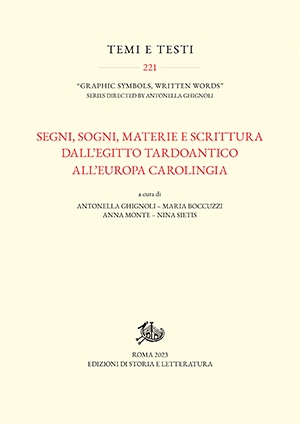
ALT bok cover
5
5
1,149
The preview of a new paper published by the PI of the NOTAE project (Applied Category Analysis for Interpreting a List in the Late Antique Documentary Tradition) academia.edu/91212650/_Previ… via @academia
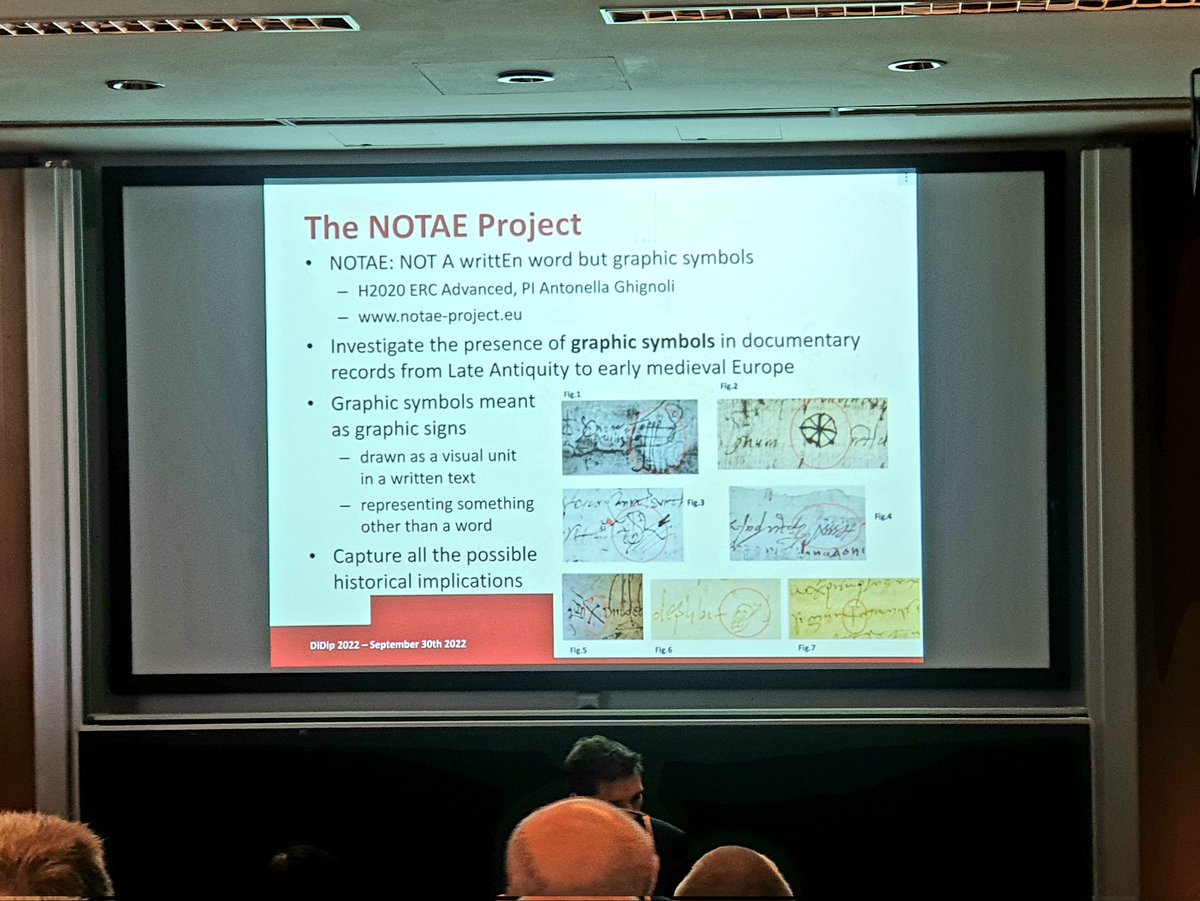
Our @__fleotta has just presented the experience of the project NOTAE, funded by @ERC_Research and hosted by @SapienzaRoma, at the first Conference organized by the Erc project DiDip. Thanks to our great IT team @mecellone @catarci1 Silvestro Eleonora Zahra and Lauren !
30 Sep 2022

The last speaker of this session is Francesco Leotta (@__fleotta) from @SapienzaRoma. He speaks about Image processing and semantic technologies in digital humanities: The NOTAE experience.#digdipl2022
5
ERC_NOTAE retweeted
29 Sep 2022
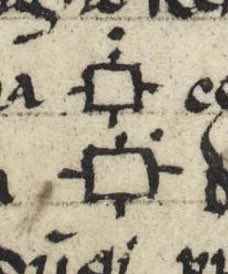
To medievalists or experts in Medieval Latin manuscripts, a request for help: Has anyone ever seen signs like these (ms. Brit. Library Harley 5402), studying manuscripts of the 12/13 centuries, containing texts (in Latin or in other languages) on astronomy or astrology? Thanks!
2
28
46
Many congratulations to our Anna Monte, former official team member of the funded @ERC_Research project NOTAE, who has been awarded the @MSCActions Seal of excellence 2021! Great result! We are proud of you!
notae-project.eu/2022/05/06/…
1
4
👇still open! Deadline 8.05.2022.
4 May 2022

I just uploaded 'Positions in Papyrology and Digital Humanities still open at ERC project NOTAE. De…' to @academia! academia.edu/78421753/The_fo…
1
1
Calls opened for 3 positions (1 post graduate; 2 postdoc) at our @ERC_Research funded project NOTAE hosted buona @SapienzaRoma (deadline 8.5.22).
<web.uniroma1.it/trasparenza/…>
<web.uniroma1.it/trasparenza/…>
<web.uniroma1.it/trasparenza/…>
1
2
5