
Joined October 2024
- Tweets 2,385
- Following 49
- Followers 215
- Likes 6,146
712 Photos and videos







Pinned Tweet

9 Oct 2025
Join 🔶️Core🔶️ Voices #saygmtribe: Amplify Your Passion for Core DAO! We're thrilled to launch Core Voices, an exclusive, invite-only program celebrating the most authentic and dedicated voices in the @Coredao_Org
ecosystem! If you’re creating content about Core, this is your chance to shine.Each week, we welcome new members to this vibrant community. As a Core Voice, you’ll enjoy:
👉Recognition: Stand out as a key contributor to the Core ecosystem.
👉 Rewards: Earn exciting incentives for your creativity and dedication.
👉 Amplified Reach: Boost your content’s visibility across our platforms.
Ready to take your content to the next level? Apply now to secure your spot—spaces are limited, and it’s first come, first serve! Join a community of passionate creators shaping the future of Core DAO. Don’t miss out—apply today!
Apply here:👇 app.gmtribe.xyz/core
2
284
Core🔶️essentials retweeted

16 Oct 2025
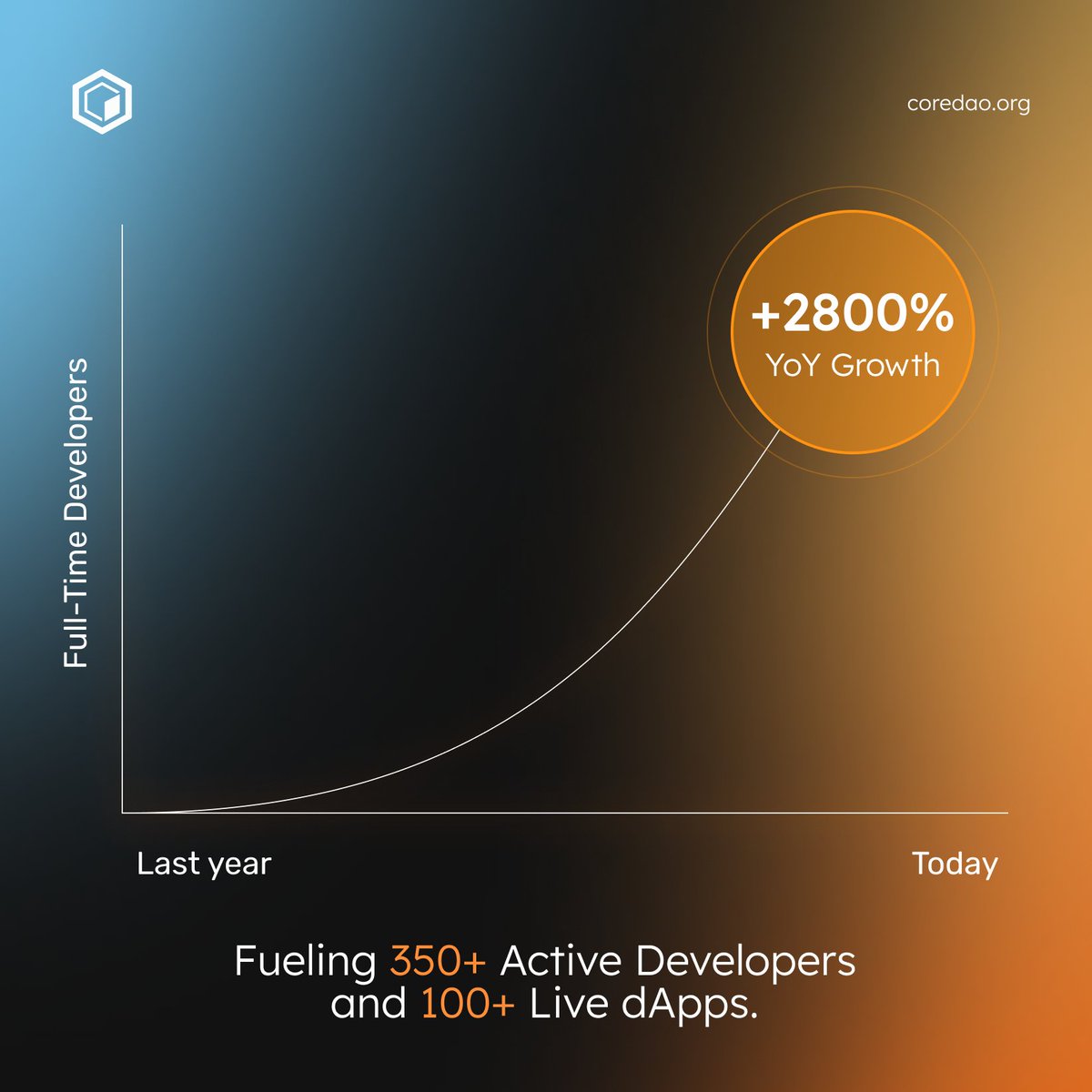
2,800% YoY growth.
350 active developers.
100 live dApps.
The builders are choosing Core. ⚒️
136
165
515
31,667
15 Oct 2025
The easier the better

We love easy!!! 🤩
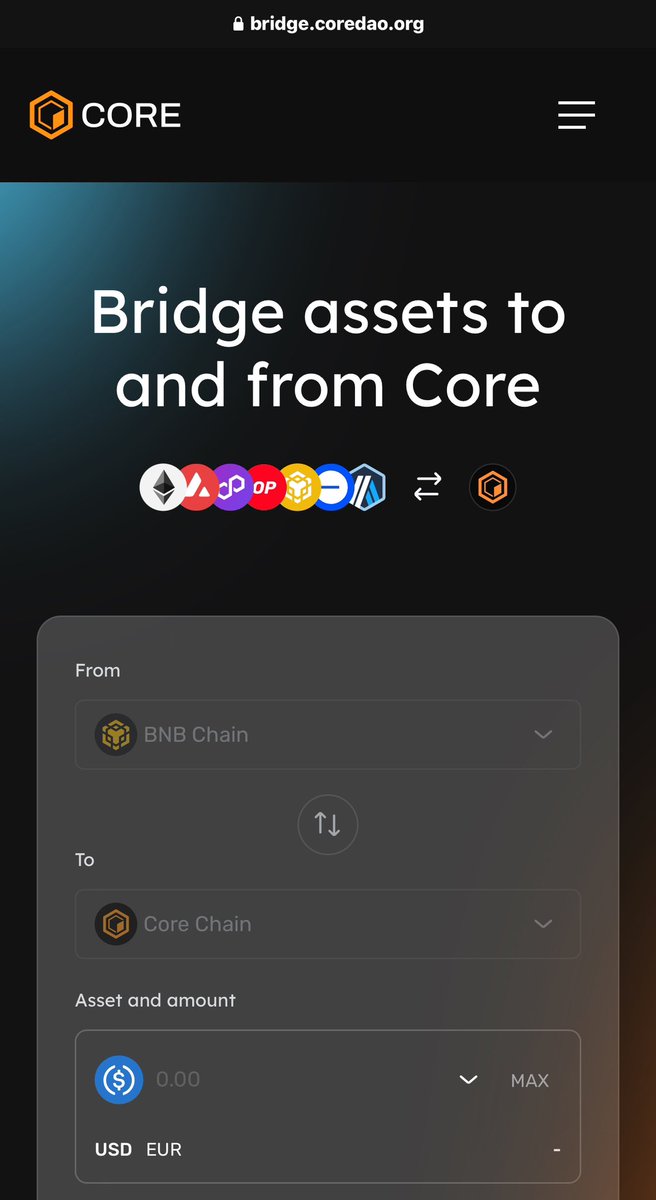
And bridging on core just got easier!
Check out the revamped $Core Bridge seamless asset transfers to and from @Coredao_Org.
✅Low fees
✅fast
✅and the UI is chef's kiss!
✅bridge now with : bridge.coredao.org/bridge/
#defi
1
4
132

🔥 FIVE NEW $CORE PROJECTS TO WATCH - Are you bullish on any of these new @Coredao_Org-based projects...? Let us know which are missing from this list bsc.news/post/promising-proj…
15
15
110
12,894
15 Oct 2025
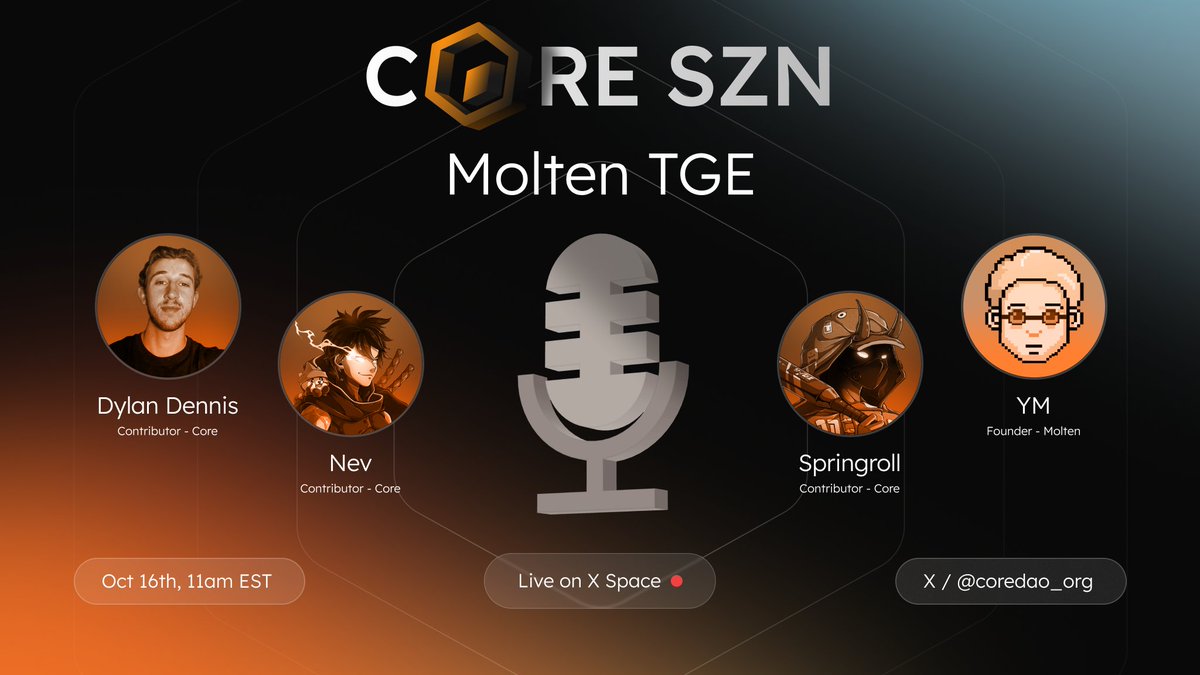
Unlock the volcanic power of BTCfi's liquidity revolution @Coredao_Org ! MoltenDEX, Core's innovative native engine for BTC-backed swaps and yield vaults, ignites its $MLTN Token Generation Event (TGE)—empowering governance, staking rewards, and milestone-driven airdrops for sustainable DeFi growth.Tomorrow, October 16th at 11am EST, join our live X Space for an expert deep-dive into tokenomics, liquidity strategies, and Bitcoin's DeFi future @moltendex. Set your reminder: x.com/i/spaces/1LyxB… Ignite your portfolio—don't miss this eruption of opportunity! #BTCfi #MoltenDEX #DeFiInnovation
52
15 Oct 2025
1/🔥 Molten Airdrop Checker is LIVE 🔥
The moment has arrived — check if you’re eligible for the upcoming $MLTN airdrop\.
Molten is rewarding real users, real activity, real impact\.
👉 molten.finance/portal/airdro…
Full blog: blog.molten.finance/molten-f…
1
61
15 Oct 2025
♻️
15 Oct 2025

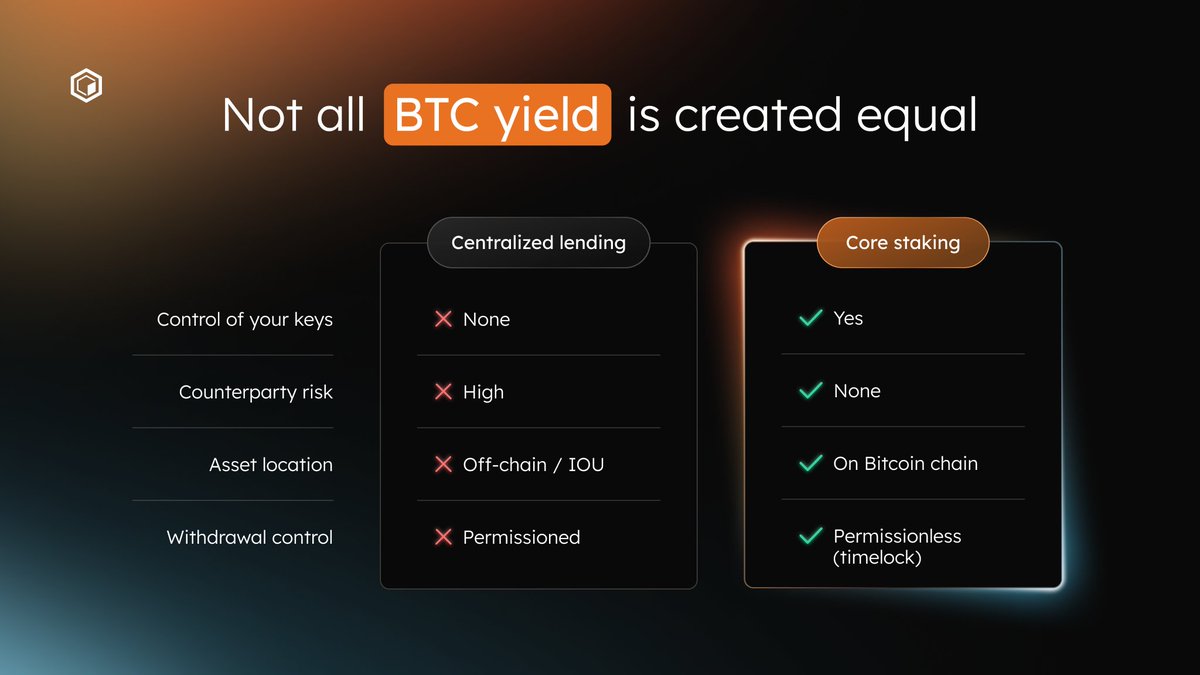
Staking with Core is the only Bitcoin yield source that offers full self-custody.
No counterparty risk. No permissioned withdrawals.
Just BTC yield. 🤝
1
1
3
67
15 Oct 2025
#MoltenFinance—the super DEX that's revolutionizing Bitcoin DeFi on the Core blockchain. As tokens rain down on early adopters, this isn't just free crypto; it's a gateway to liquidity like never before.Molten Finance fuses BitFLUX's battle-tested infrastructure with Glyph's Bitcoin trading prowess, creating a powerhouse DEX that tackles fragmented liquidity head-on. Imagine swapping Bitcoin-pegged assets with Uniswap's versatility and Curve's razor-sharp efficiency, all while slashing slippage and fees. Backed by UTXO and Core Ventures, it transforms BTC from a sleepy store of value into a DeFi dynamo, enabling seamless, incentivized pools for sophisticated products like lending and yield farming.On this pivotal day, claim your MOLTEN rewards and dive into a ecosystem poised for explosive growth. With over $3.5B in potential swap volume and governance via ve(3,3), Molten isn't hype—it's the foundation of Core SZN. Join the melt: liquidity unlocked, fortunes forged. The future of Bitcoin finance starts now.
@moltendex
@Coredao_Org
1
119
14 Oct 2025
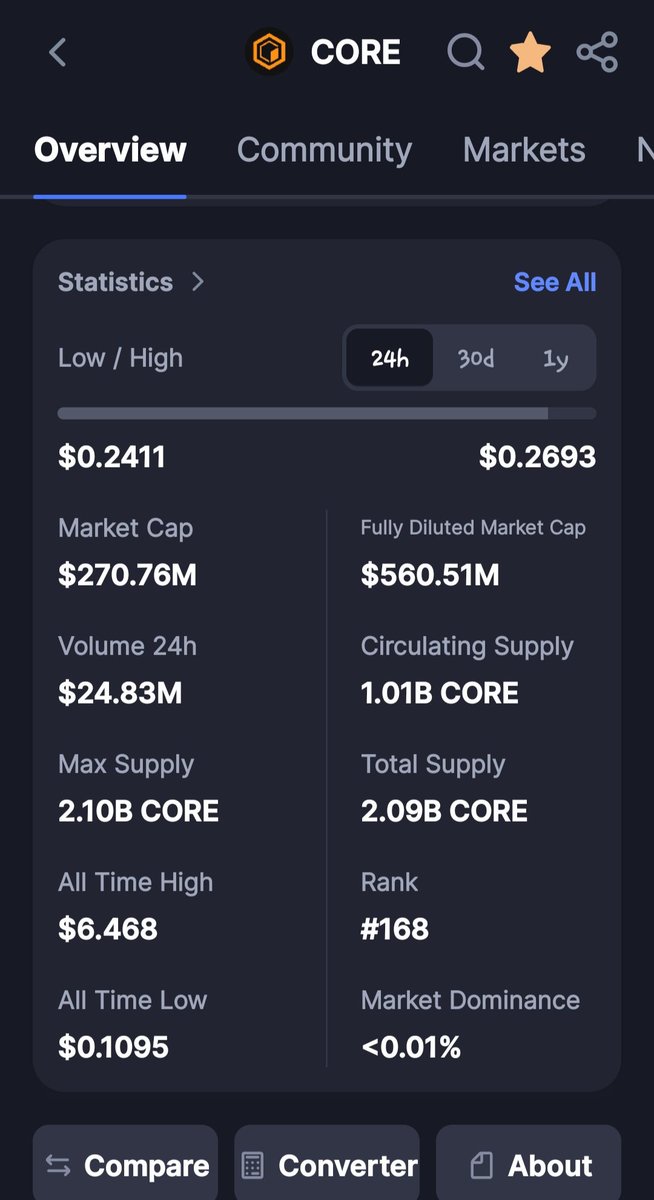
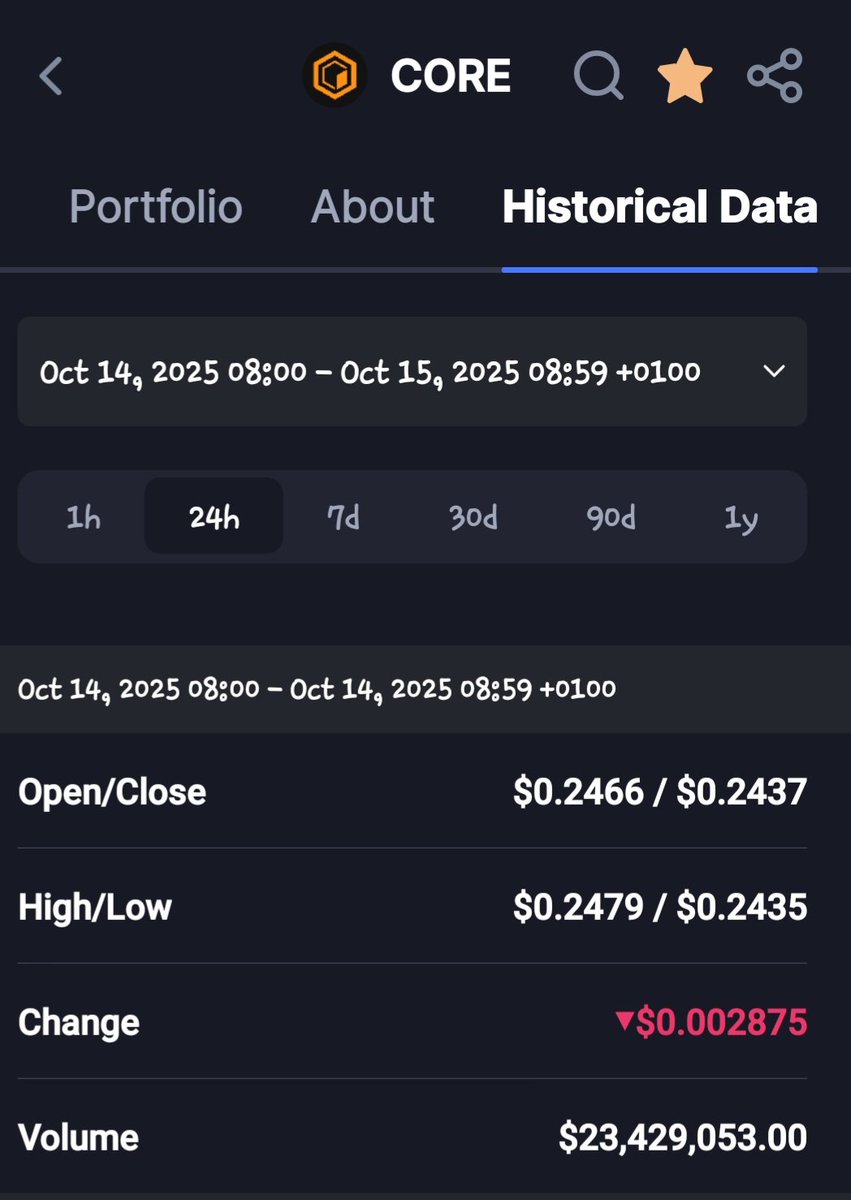
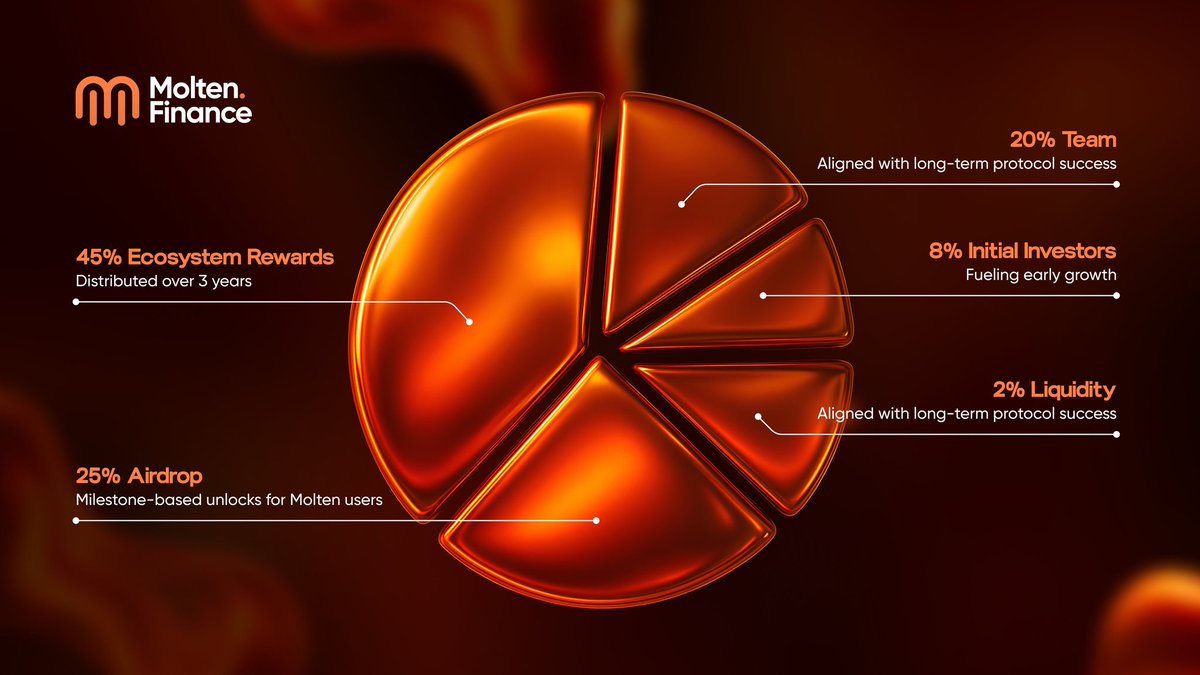
DeFi's Game-ChangerMolten Finance, Core's leading DEX, launches $MLTN on October 15, 2025, driving BTC-backed swaps and yield vaults. Its tokenomics and airdrop are built for sustainable BTCfi growth, rewarding real users.Tokenomics: 1B MLTN total supply, fixed. Emissions roll out over 3 years, with ~15-20% circulating post-TGE to curb dumps. Team (20%) and investors (8%) face 1-year cliff 24-month vesting. Allocation: 45% ecosystem rewards (450M, fueling $250M TVL), 25% airdrop (250M), 2% liquidity (20M). With $250-300M FDV, $MLTN could hit $0.20-0.30, offering 5-10x upside as TVL grows.Utility: LPs earn $MLTN in BTC-pegged pools (e.g., WBTC/CORE). Fees fund xMLTN staking buybacks; governance unlocks voting on pools and emissions.Airdrop: 25% (250M) milestone-based—1% instant for early LPs, rest tied to TVL ($50M-$250M) and volume ($500M-$2B). Top 5% unlock faster, with 10K claimers eyeing $500-5K drops at $0.25/token. Anti-sybil design boosts TVL 2-3x.Why Molten? Core’s 20% APY Molten’s vaults = DeFi rocket fuel. Projected: $100M TVL Q1 2026. Stake now, DYOR, and join BTCfi’s future! #MLTN #CoreDAO
1
149
14 Oct 2025
Bridging on Core refers to transferring cryptocurrency assets between the Core blockchain—a Bitcoin-powered, EVM-compatible layer-1 network designed for everyday users, enabling staking of CORE tokens and Bitcoin for rewards—and other blockchains.
coredao.org
Core, the fastest-growing BTCfi ecosystem, integrates Bitcoin's security with smart contract functionality, allowing users to access DeFi, dApps, and GameFi.
coredao.org
In crypto, bridging facilitates cross-chain interoperability by locking assets on one chain and minting equivalents on another, often via wrapped tokens.
nu.fi
On Core, this is primarily handled by the official Core Bridge (bridge.coredao.org), a decentralized solution powered by LayerZero for secure, efficient transfers without intermediaries.
docs.coredao.org
It uses smart contracts like WrappedTokenBridge and LayerZero Endpoint to enable seamless movement.
docs.coredao.org
Supported chains include Ethereum, BNB Smart Chain, Polygon, Optimism, Avalanche, Arbitrum, and Base.
docs.coredao.org
Common assets are USDT, USDC, ETH (as WETH), WBTC, and CORE, with wrapped versions like BTCB on BSC or BTC.b on Avalanche.
docs.coredao.org
Alternatives like Symbiosis, Stargate Finance, or Allbridge also support Core bridging for swaps.
datawallet.com 2.
To bridge: 1) Set up an EVM wallet (e.g., MetaMask) and add Core network. 2) Visit the bridge, connect wallet, select source/destination chains. 3) Choose asset/amount, approve gas fees. 4) Confirm; funds arrive in minutes. Verify via Core Scan or LayerZero Explorer.
coredao.org
Gas fees apply on both chains; risks include network congestion, smart contract vulnerabilities, or impermanent loss—always double-check addresses.
coredao.org
This unlocks Core's ecosystem for yield farming and Bitcoin DeFi
14 Oct 2025
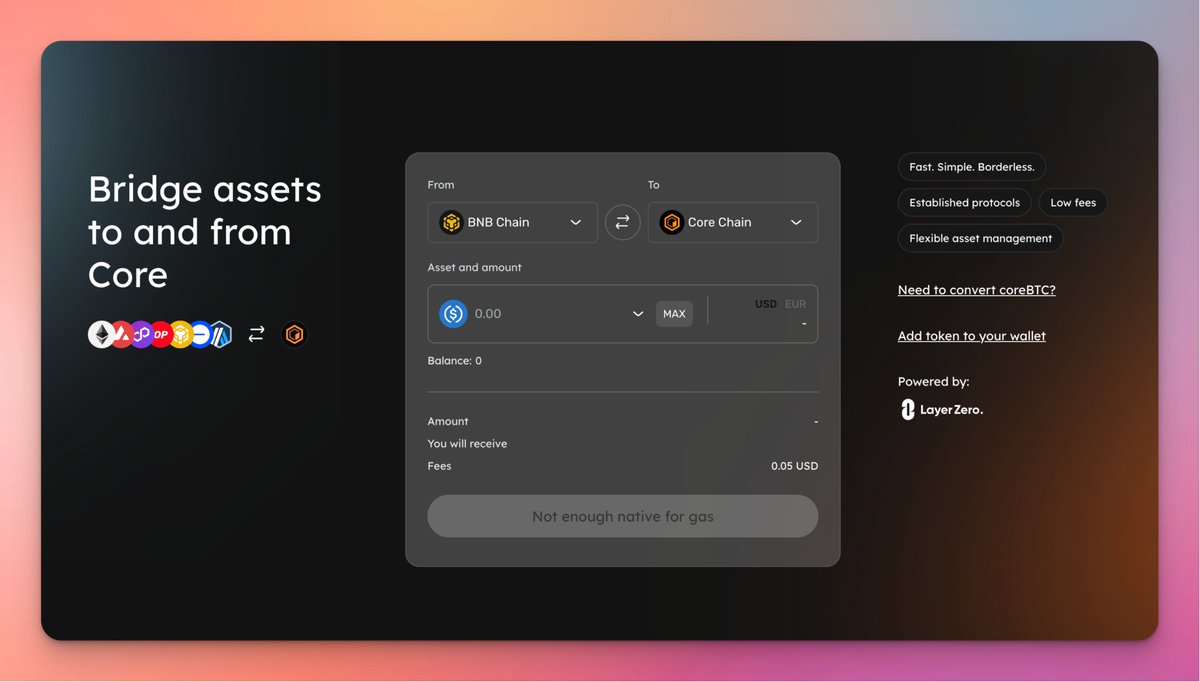
Bridging to Core has never been so beautiful. 🤩
Check out the updated Core Bridge at bridge.coredao.org/bridge/ 🌁
2
87
Core🔶️essentials retweeted
14 Oct 2025
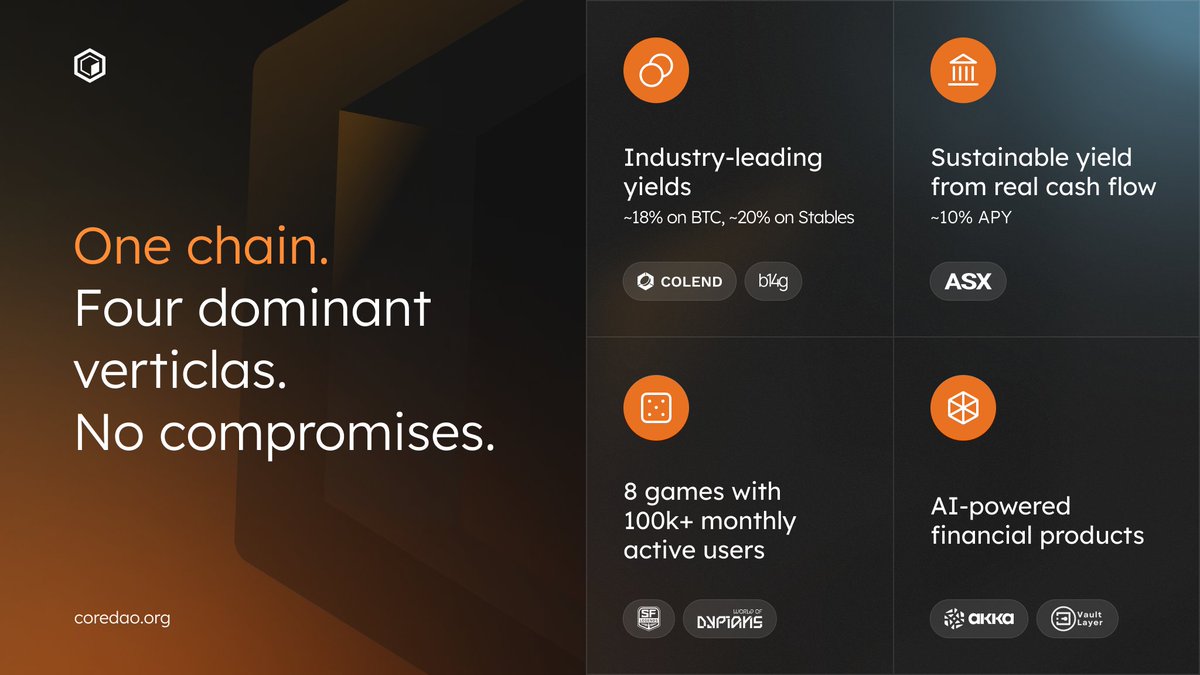
Industry-leading Yields
RWAs
AI DeFi
Gaming
One chain. Four dominant verticals. No compromises. 🔶
136
155
462
18,991
13 Oct 2025
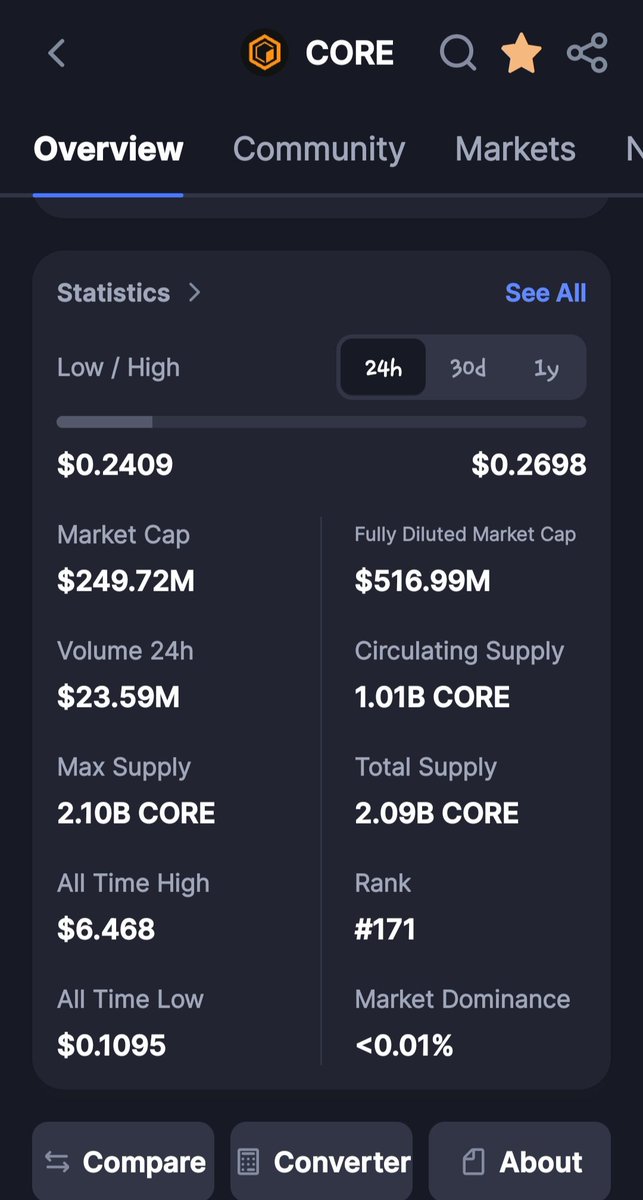
If you aspire to become a billionaire, you could toil a billion hours—or smarter yet, align with billionaires and high-impact ecosystems. Consider Core, the Bitcoin-secured blockchain revolutionizing DeFi. Bitcoin, the cornerstone of crypto, boasts a staggering market capitalization of $2.28 trillion
coinmarketcap.com
, with over 19.93 million coins in circulation and a price exceeding $114,000. This immense value—trillions in assets—is increasingly channeled through Core Chain, an EVM-compatible Layer 1 that unlocks yield for BTC holders and miners. Core's Total Value Locked (TVL) stands at $215.54 million
defillama.com
, including $122.33 million in bridged assets, reflecting rapid growth in Bitcoin-powered DeFi.Do the math: By contributing to or building on Core, you're tapping into Bitcoin's vast liquidity flow, positioning yourself at the epicenter of crypto's next billion-dollar wave. Opportunity awaits those who act.
2
7
49
1,735
Core🔶️essentials retweeted

12 Oct 2025
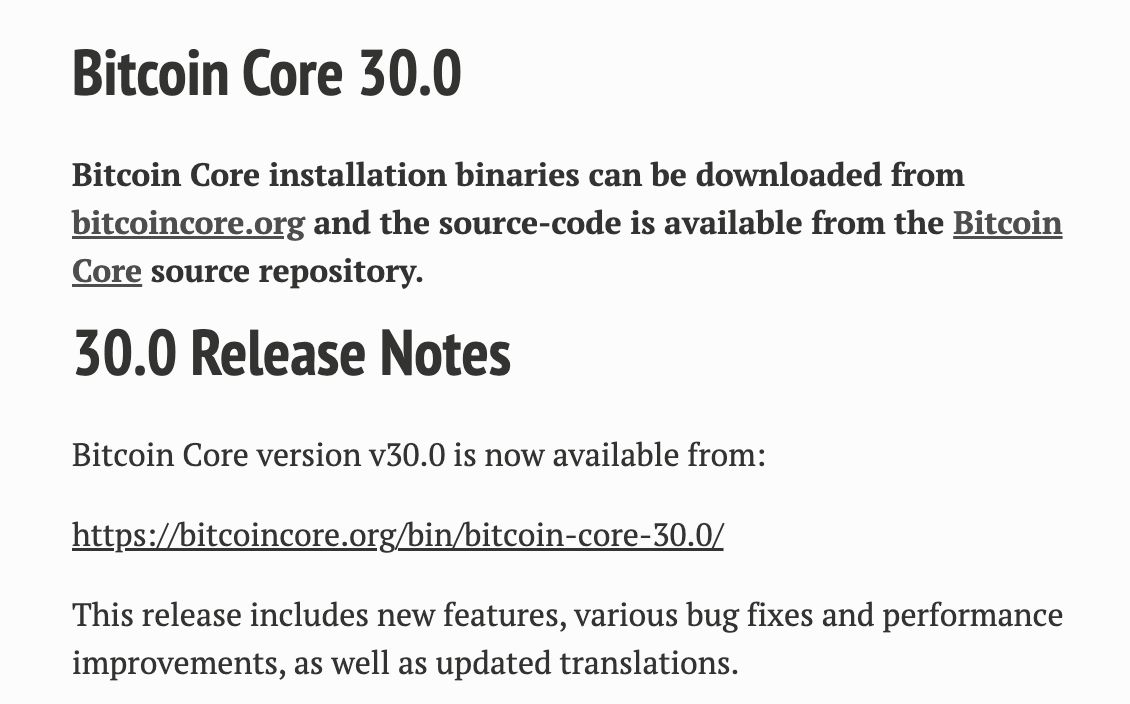
💥 JUST IN: Bitcoin Core 30.0 has officially been released
225
188
1,178
342,637
Core🔶️essentials retweeted

12 Oct 2025
Set a reminder for my upcoming Space! x.com/i/spaces/1LyxBXlZZrbGN
1
6
295
Core🔶️essentials retweeted
12 Oct 2025
This is what uncompromised security looks like.
87% of Bitcoin's total hash power is delegated to Core. 🔶
193
178
549
26,237
Core🔶️essentials retweeted

10 Oct 2025
1/ Core SZN keeps charging ahead. 🔶
This week:
• $MLTN token announced
• AKKA and Colend keep the yield engines running
• Vaulter Agents push BTCFi automation cross-chain
Full recap 🧵👇
22
51
240
25,875