
Joined May 2021
- Tweets 744
- Following 2,241
- Followers 469
- Likes 50,223
180 Photos and videos










Evan Munk 🌞 retweeted

Jun 15
Strategy has acquired 1,587 BTC for $100 million to increase our $BTC Reserve to ₿846,842. We have also increased our USD Reserve by $100 million to $1.1 billion. $MSTR $STRC strategy.com/press/strategy-…
1,060
2,359
18,401
1,442,673
Evan Munk 🌞 retweeted

Jun 12
The US, UK, Canada and the EU are importing instability, weakening national identity, and then using the chaos they helped create to justify more surveillance, censorship, and government control.
448
2,555
13,937
189,261
Evan Munk 🌞 retweeted

Jun 10
This is the GREATEST video of all time!
168
237
2,277
215,266
Evan Munk 🌞 retweeted

Jun 10
Let me ask you guys 8000 lives lost 3 trillion dollars for zionism.. Tell me what did those lives and treasure buy us? Was it worth it? Are we getting free oil?
We need to call this for what it is. A compromised government
1,061
3,791
37,161
654,980
Evan Munk 🌞 retweeted

Israel has used American-supplied munitions to kill tens of thousands of innocent civilians.
America is morally obligated to end support of Israel’s devastation of Gaza and its people. I’m cosponsoring the Block the Bombs Act to limit the transfer of offensive weapons to Israel.

2,671
14,272
51,691
709,754
Evan Munk 🌞 retweeted

May 28
U.S.-born Israeli spy Jonathan Pollard admits Israel will have to go to war with Turkey and Egypt once they finish off Iran, Gaza, and Lebanon.
He says, “The storm is coming,” unlike anything the world has ever seen before.
“We have to be prepared for the next war, which will probably be against Turkey and Egypt.”
1,281
5,087
10,102
1,213,617

May 28
RT @TheMumMuslim: British surgeon who operated on Palestinians in Gaza, tells Tucker Carlson how the Israelis would deliberately shoot star…
5,397
1
Evan Munk 🌞 retweeted

BREAKING: THE UNITED ARAB EMIRATES JUST IS NOW ALLOWING ALL RESIDENTS TO PAY GOVERNMENT TAXES AND FEES IN #BITCOIN AND CRYPTO
NEW GLOBAL MONEY IS HERE
THIS IS MASSIVE 🔥


33
129
666
20,215
Evan Munk 🌞 retweeted

May 8
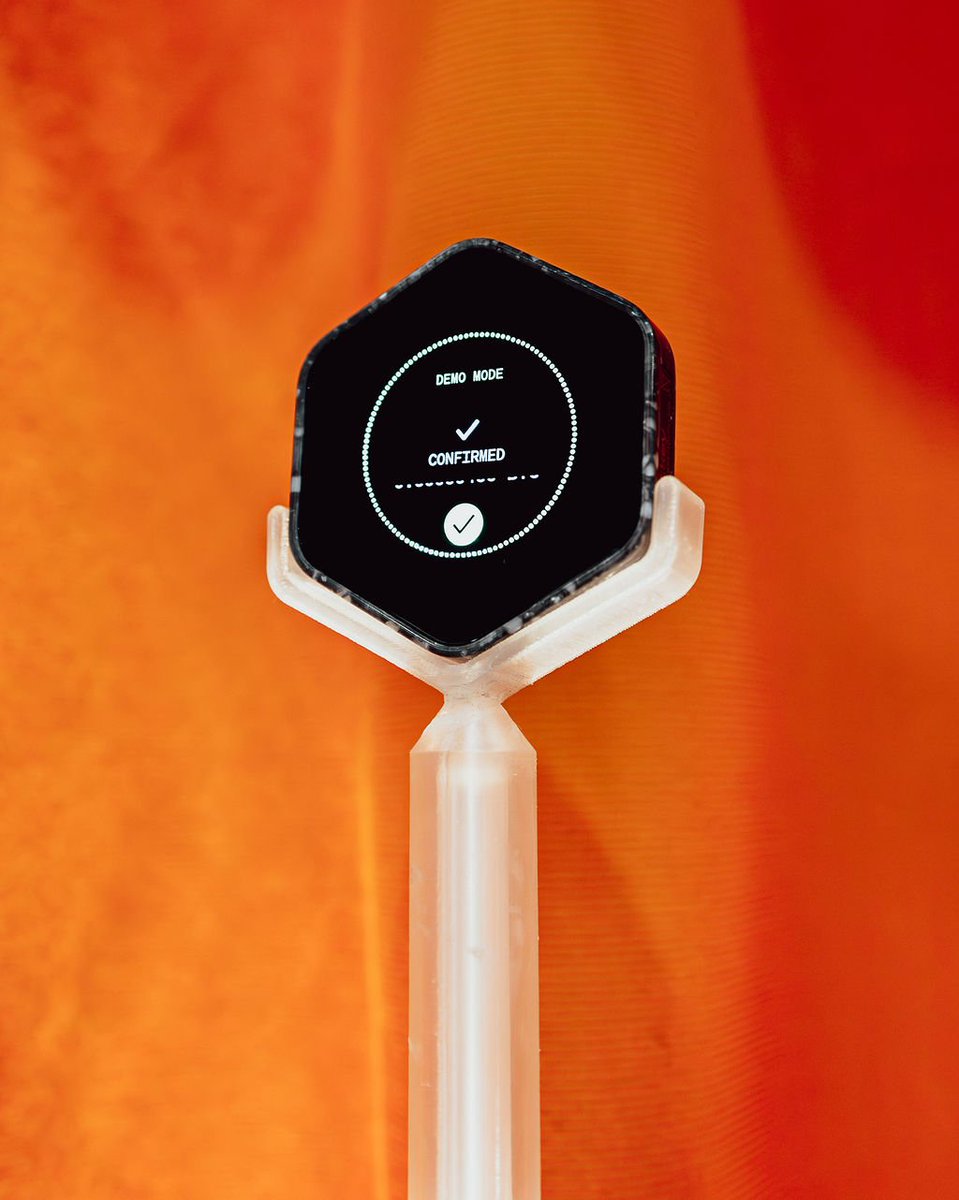
The COLDCARD Q is built for Bitcoiners.
Clean QR signing, airgapped security, and a focus on simplicity.
We’re giving one away.
To enter:
• Like 👍
• Repost 🔁
• Comment why you want a Q 👇
221
228
399
23,657
Evan Munk 🌞 retweeted

May 7
If you've been thinking about taking self-custody seriously, this is your sign. We are giving away a COLDCARD Q to get you the most secure hardware out there!
To enter like, retweet and follow our friends at
@COLDCARDwallet
84
292
416
16,464

Evan Munk 🌞 retweeted
May 1
MicroSD 2FA on the COLDCARD adds a physical second factor.
Pair it to a specific microSD card and it won’t unlock without it, even with the correct PIN.
No card or wrong card = seed wiped.
We’re giving away an Mk5.
To enter: Like, repost, and comment why you want to win one.
155
152
331
20,012
Evan Munk 🌞 retweeted

Apr 29
The IRS is built on a myth.
There are over 80 million Americans who don't file income tax forms.
The truth they never wanted you to know:
The income tax wasn't meant for the vast majority of Americans.
The 1040 is a VOLUNTARY confession where you literally swear under oath that you owe the IRS money.
You’ve been conditioned to believe you have to pay income taxes, you don't.
Learn how to take your freedom back at hubs.ly/Q04dShtm0
62
492
1,166
54,999
Evan Munk 🌞 retweeted

Sci-Hub is an evil website that pirated 85M research papers and made them freely available
And now they've added AI to their database to make Sci-Bot.
It answers your questions using latest, full-text articles.
But DO NOT use it. We should all try to make billion-dollar academic publishers richer.
I'm putting the link below so you know how to avoid it.
836
8,893
46,803
4,953,800
Evan Munk 🌞 retweeted

PS got this right. All the gym bro science is deadly especially when you add in the blue light and magnetic decline.
In a magnetic decline never work out indoors and make sure you are grounded to Earth to avoid lattice lock.
How bad are indoor gyms? Your gym might have 4x the amount of CO2 than outdoor air and it might shrink your brainNormal outdoor air is around 415. Some sealed gyms and indoor spaces hit 1,500 parts per million.
Here's why this is bad for your health:• Above 800 ppm, research shows your sleep quality drops and brain fog increases. • At 1,500, your thinking and focus are measurably worse.
Now picture yourself in that environment for two hours with an elevated heart rate, breathing harder than normal, pulling all of that recycled air deep into your lungs.The irony is brutal. The place designed to make you healthier is quietly making your brain worse.
Typical CO₂ Levels in Gyms
Outdoor baseline: ~400–420 ppm.
Well-ventilated indoor spaces: ideally <800–1000 ppm.
Many gyms (especially sealed, crowded, or poorly ventilated ones): 1,200–2,000 ppm during classes or peak times, with some reports hitting 3,000–5,000 ppm in extreme cases. ----> redalyc.org/journal/3072/307…
Studies on fitness centers in Brazil (SAA), Europe, and elsewhere have documented averages around 1,489 ppm or higher when occupied, with spikes well above 1,500 ppm in enclosed rooms with high occupancy and inadequate fresh air exchange.
smartairfilters.com/en/blog/…
Cognitive and Health ImpactsThe research is clear and consistent:
Above ~800–1,000 ppm: Measurable drops in cognitive performance, increased brain fog, slower reaction times, and reduced focus. Complex decision-making and strategic thinking suffer first. ---->
pmc.ncbi.nlm.nih.gov/article…
At 1,000–1,500 ppm: Significant declines in cognitive scores (e.g., 6 of 9 decision-making scales impaired in classic Lawrence Berkeley Lab studies). Response times slow, throughput drops.----> newscenter.lbl.gov/2012/10/1…
Higher levels (1,500–3,000 ppm): Stronger negative effects on complex tasks, with meta-analyses showing large standardized mean differences in performance. Prolonged exposure makes it worse.
sciencedirect.com/science/ar…
During intense exercise you breathe much deeper and faster, pulling more of that recycled, high-CO₂ air into your lungs and bloodstream. This is the brutal irony I mention to all my PROFESSIONAL ATHLETES. The way their teams makes them work out is setting the table for their CTE post retirement. The environment designed for physical optimization quietly undermines the neurological side of performance and recovery.
Additional concerns in gyms:
Poor ventilation also concentrates other pollutants (VOCs from cleaners/equipment, PM2.5 from shoes/sweat/dust).
Elevated CO₂ correlates with worse sleep quality when exposure is chronic.
In the broader framework (SAA-era isotopic load deuterium stress), anything that further impairs mitochondrial efficiency or cerebral blood flow adds friction to an already taxed lattice.
In the NFL players with metabolic syndrome they are walking to an early grave ----> Reggie White
How Bad Is It Really?
In a magnetic declination it is horrible.
For occasional light sessions in a well-ventilated gym: manageable but as the mag field declines you run the risk of acute lattice lock nd death.
For regular intense training in a sealed, crowded facility: a meaningful drag on cognition, recovery, and long-term brain health, especially if you’re already dealing with circadian disruption or metabolic stress. It can be deadly. See Demar Hamlin or JJ Watt.
Practical Eagle Moves
Train outdoors whenever possible (best lattice reset). GROUNDED
Choose gyms with good ventilation, open doors/windows, or lower-occupancy times.
Use a portable CO₂ monitor to check real conditions.
Post-workout: prioritize fresh air, circadian alignment, and deuterium-management strategies (ketones/MCTs, etc.) to clear the session’s load.
The science here is straightforward and not controversial, unlike some layers of my framework. Indoor gyms are a classic centralized “solution” (climate-controlled convenience) that creates hidden downstream DEURATION costs. The decentralized fix is simple: more fresh air, more nature, less sealed boxes. Your brain will thank you.
Apr 26

Saladino said your gym might have 4x the amount of CO2 than outdoor air.
Normal outdoor air is around 415. Some sealed gyms and indoor spaces hit 1,500 parts per million.
Here's why this is bad for your health:
• Above 800 ppm, research shows your sleep quality drops and brain fog increases.
• At 1,500, your thinking and focus are measurably worse.
Now picture yourself in that environment for two hours with an elevated heart rate, breathing harder than normal, pulling all of that recycled air deep into your lungs.
The irony is brutal.
The place designed to make you healthier is quietly making your brain worse.
48
131
778
78,242
Evan Munk 🌞 retweeted

Apr 23
X family: We’re GIVING AWAY a full beef box this weekend!!!
USDA prime, grass-fed & finished, dry-aged beef— raised right here in Lampasas, Texas
What’s included:
– 2 ribeyes
– 2 flat irons
– 8 wagyu burger patties
– 2 lb ground beef
– king sized picanha
– cross cut bone-in short ribs
We’ll ship it straight to your door!!
to enter:
• follow @ElkinsCattleCo
• repost this
• comment your all-time favorite beef cut
must be in the U.S. (AK/HI not included)
Winner announced monday 04/27 at noon CT
ships out Tuesday 04/28
1 winner will be announced DM’d from this account only. Good luck! 🙏🥩🇺🇸

6,087
5,798
6,469
463,743
Evan Munk 🌞 retweeted

Apr 21
Today Bitcoin was recognized as a strategic tool on the world stage, confirmed by the U.S.’s most senior commander responsible for our posture against China.
This is the result of years of policy work and educational initiatives. I’m beyond proud of the BPI team and the years of effort that it took to get us to this point.

BREAKING: ADM Paparo, 4-star Admiral and Commander of U.S. Indo-Pacific Command, just testified before the Senate that “Bitcoin shows incredible potential” as a tool for U.S. national security. Watch the full exchange:
44
313
2,045
177,624