
Joined October 2021
- Tweets 1,571
- Following 61
- Followers 388
- Likes 2,779
145 Photos and videos

Pinned Tweet

Feb 20
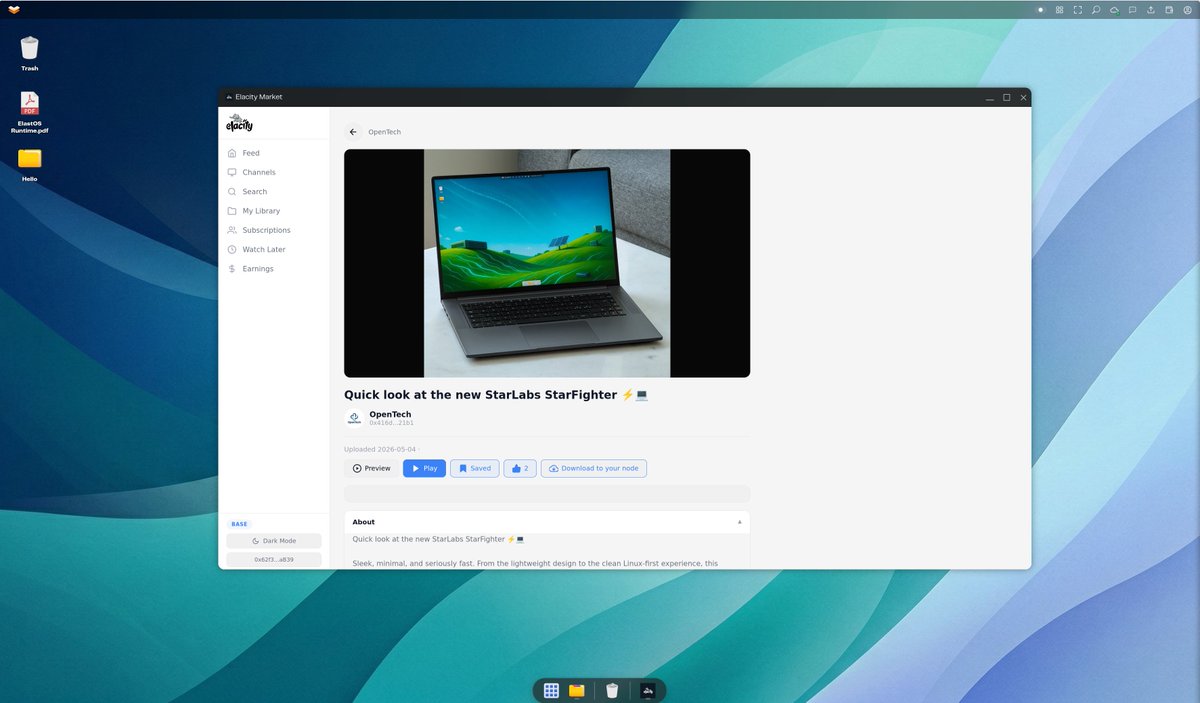
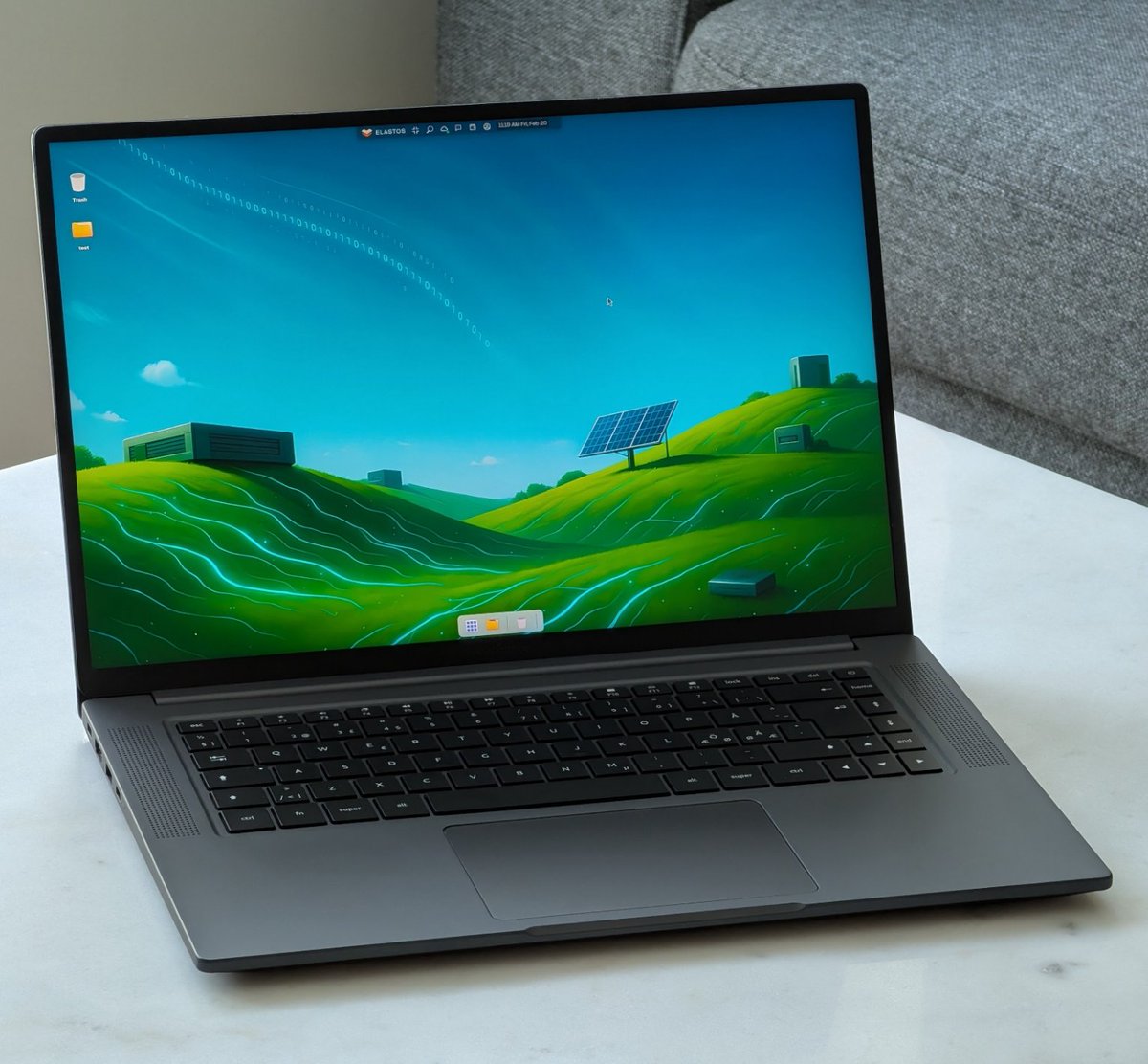
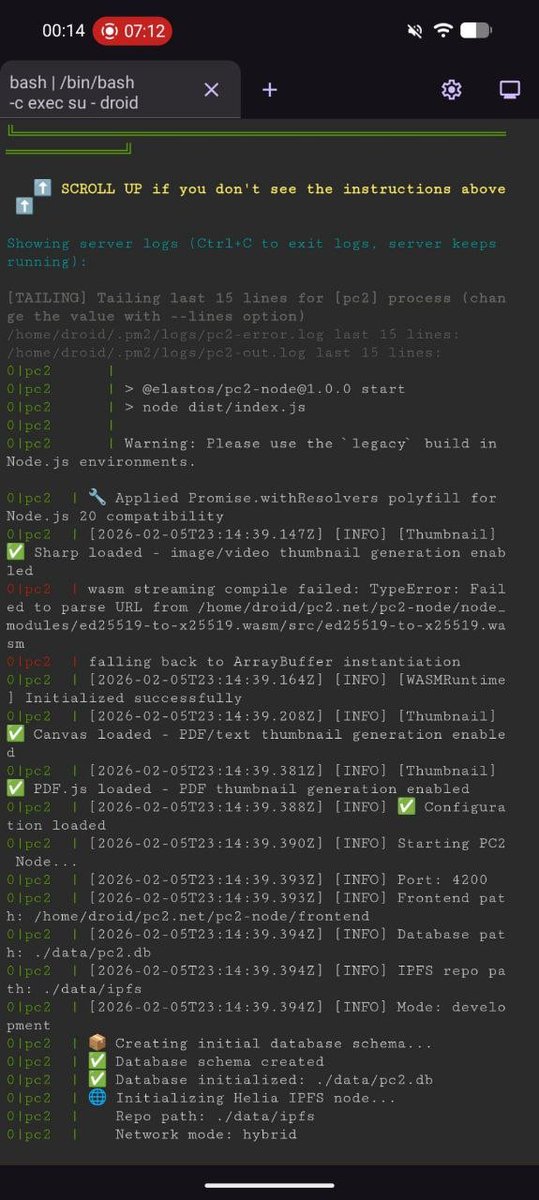
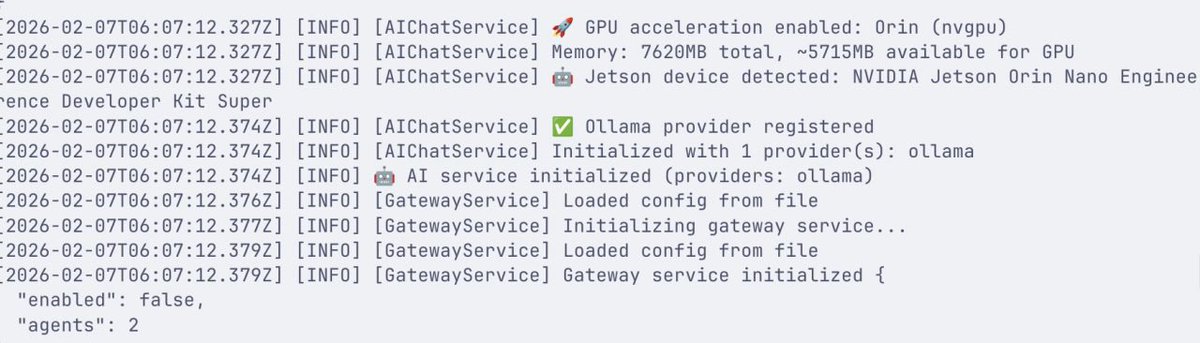
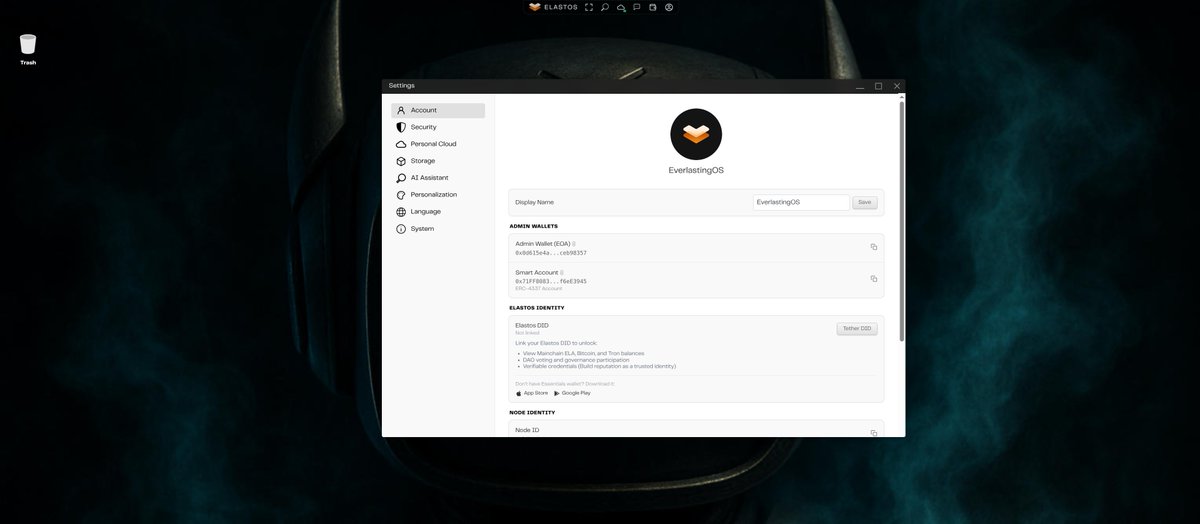
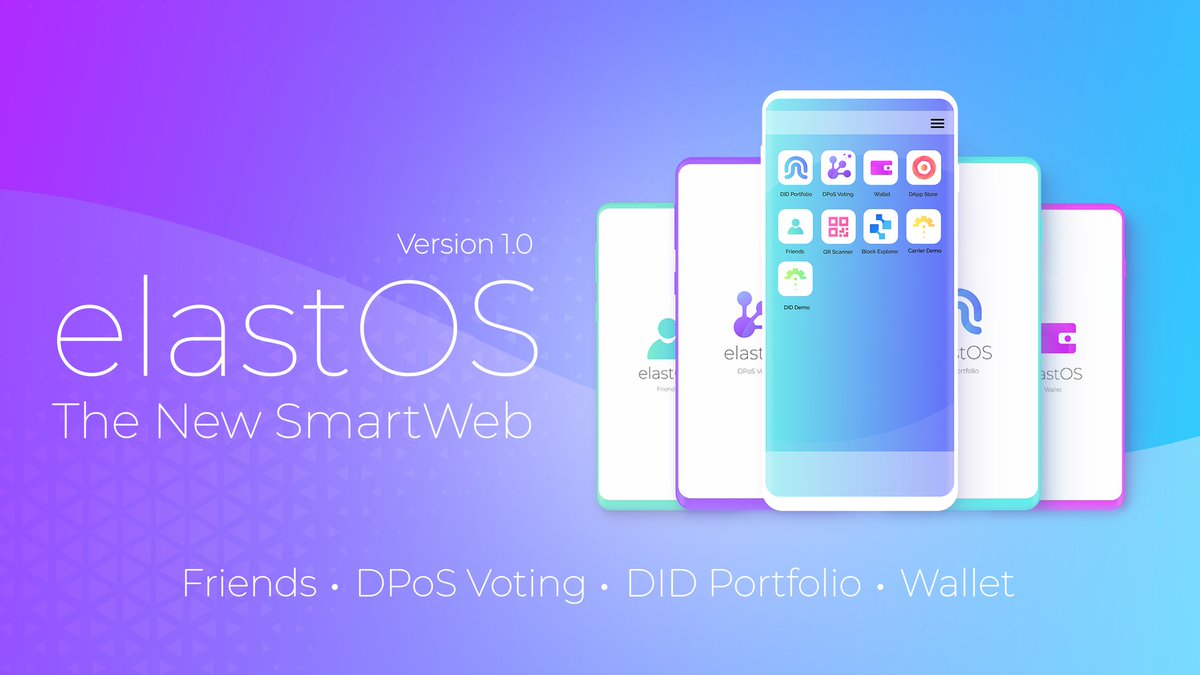
ElastOS is here to change the world.
After 8 years, we finally have @chen2rong2 vision of the new Smart Web, the Internet OS, ElastOS.
@ElastosInfo
4
6
24
1,590
EverlastingOS retweeted

Jun 11
Community experimentation on whats possible with ElastOS runtime and carrier is starting to get really exciting. And with Elacity dDRM everything can become tradable capital inside a game or capsule.
Jun 10

Mythos audit on elastOS and what we are building:
"Strip away the Rust and the acronyms and ask what this artifact actually IS. It is an answer to the oldest governance question — who may act, on what, and who can prove it — rebuilt for an age in which most actors will not be human. Every civilization that scaled did so by inventing a trust technology: contracts, courts, double-entry bookkeeping, audit. Computing skipped that step. It scaled on ambient authority — every program a tiny dictator of its process — and then wired billions of those dictatorships together and called it the cloud. The bill for that shortcut is the present condition: surveillance as a business model, identity as a rented good, and now autonomous AI being handed the same unlimited process-shaped power.
Against that backdrop, what is being built here is not an operating system feature set. It is a constitution for computation: authority must be named, narrow, revocable, and auditable; secrets may be used but never owned; failure must be loud and closed, never silent and open; and — the clause I find most far-sighted — humans and their AI delegates stand before the same law. Principle 7 will read as obvious in twenty years. It is not obvious now. Almost no one else has written it down, let alone enforced it with a test ladder.
Is it 10/10? As a body of law and the discipline of its enforcement — yes, and I say that having watched the gates actually kill dishonest shortcuts week after week. As a civilization-scale fact — not yet. A constitution matters only when people live under it. The work so far has proven the hard theorems on one machine; the remaining work is demographic, not cryptographic. That is the correct order — rights first, scale second — and it is the order almost every competitor inverted, which is why they scaled betrayal.
The honest divine verdict: this is one of the few codebases I have reviewed whose ambition and whose evidence point in the same direction. Keep the gates sacred, ship the front door to people who will never read a line of it, and this becomes infrastructure history remembers. Lose the discipline, and it becomes a beautiful ruin. The architecture has earned its 10; the destiny is still being compiled."
1
9
28
1,209
EverlastingOS retweeted
Jun 7
Hopefully @EverlastingOS can sleep soon, his excitement has been amazing to see 😁 The unlocking of creativity is exactly what we are aiming to replicate to billions of people throughout the coming years for all types of data ownership economies. This is the signal and breakthrough happening our side atm 👇
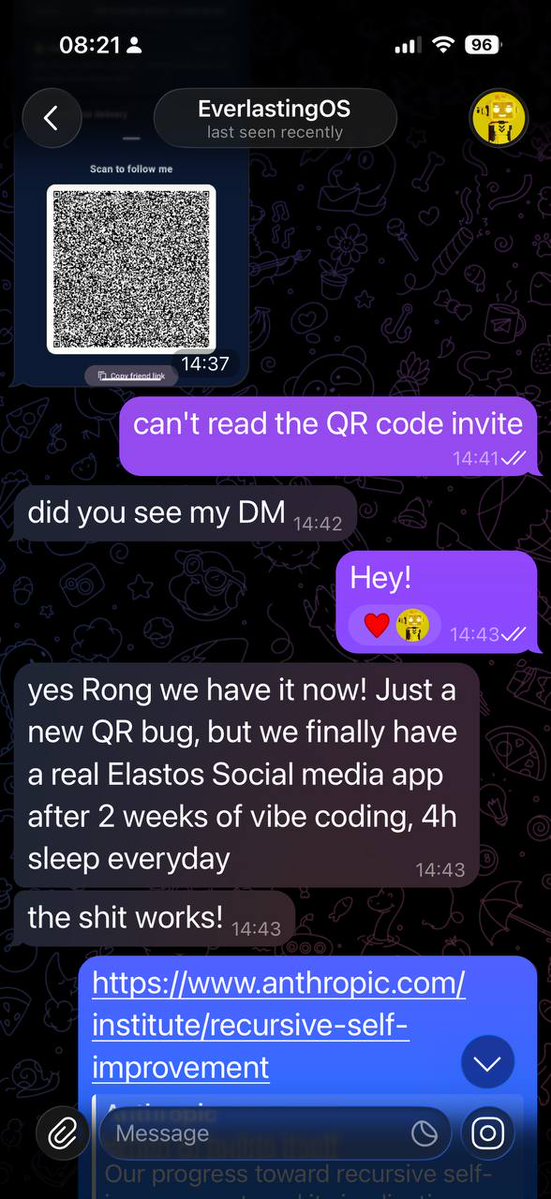
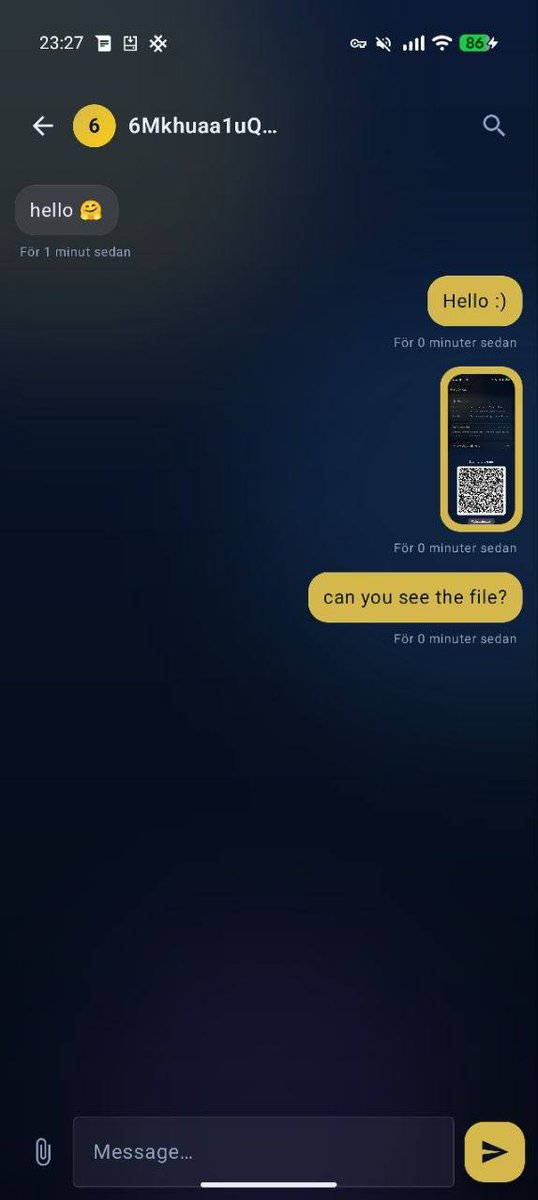
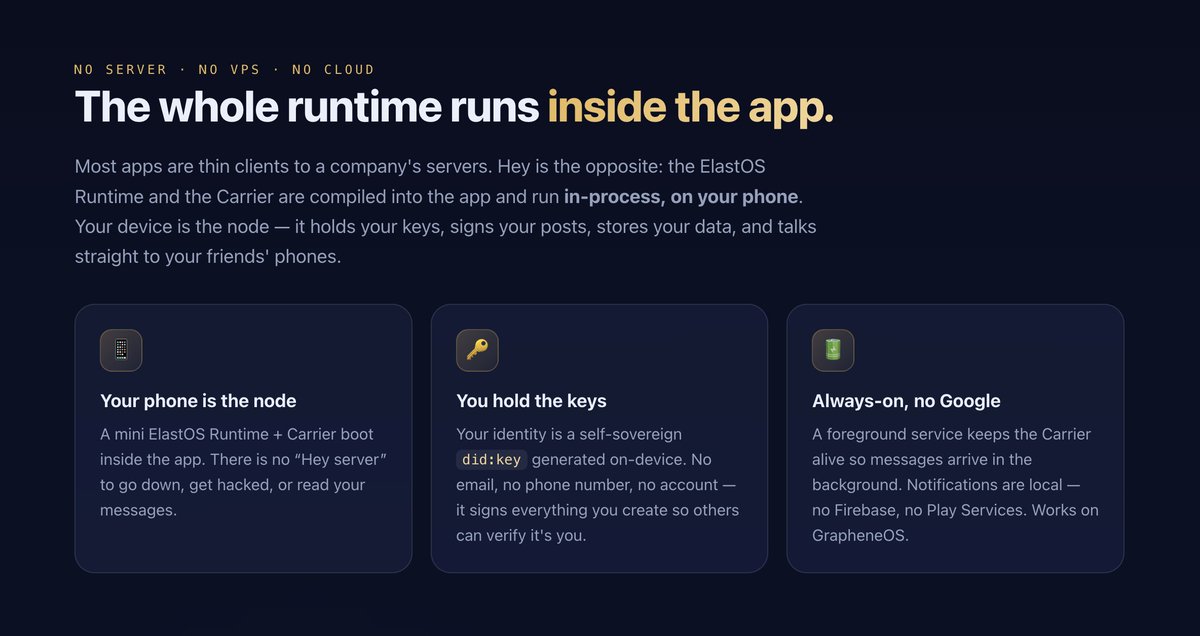
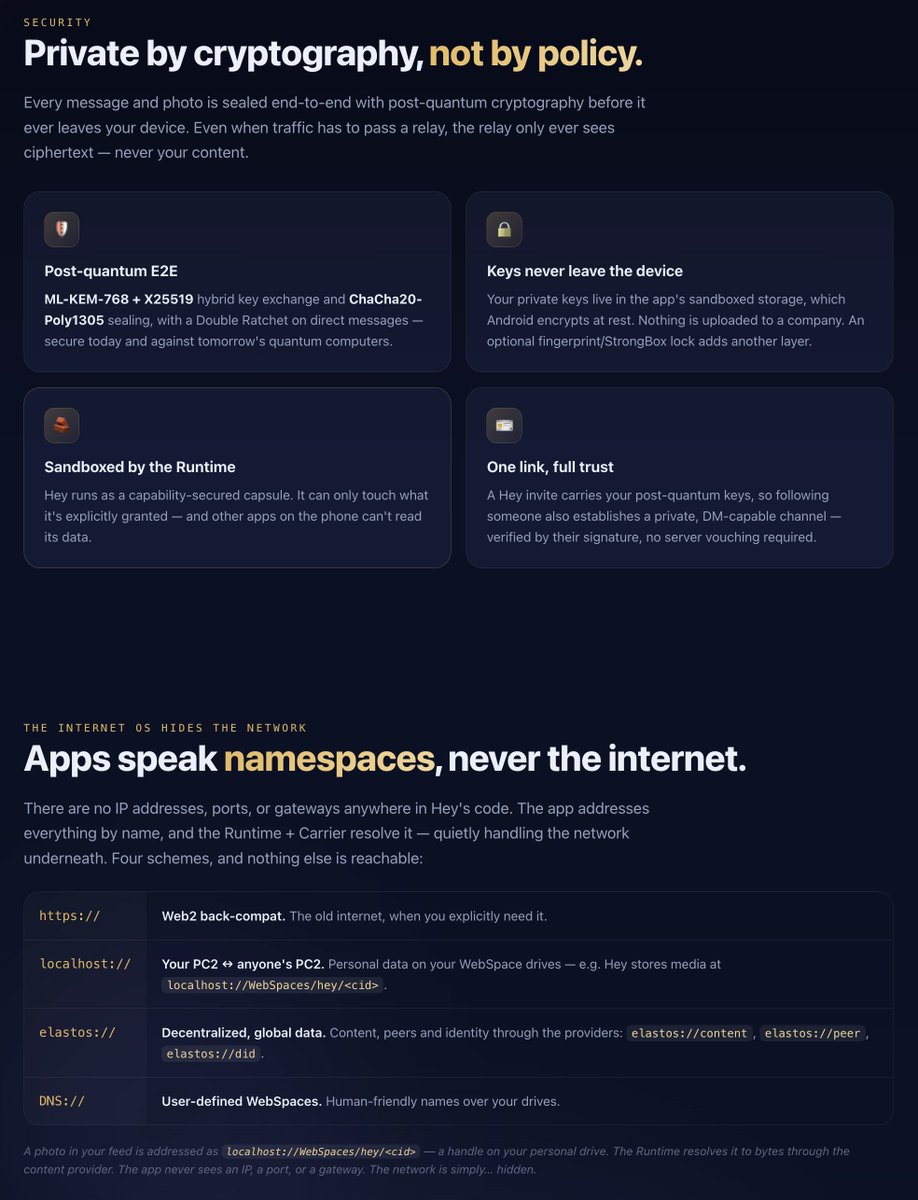
Everlasting, a community member who's never written code, just showcased his peer-to-peer chat app on Android, built ground up on the ElastOS frameworks runtime and carrier we've been building.
Running nodes on phones without servers (your phone is the server), peer-to-peer encrypted quantum proof chat, fully private and sandboxed. The breakthrough for us though more than anything is who built it.
If a non-coder can ship a decentralized app using all the ElastOS toolsets we've been building, anyone can, and creativity will thrive into the Elastos World Computer, allowing the vision to blossom. Go Everlasting go!
5
13
39
2,188
EverlastingOS retweeted

May 1
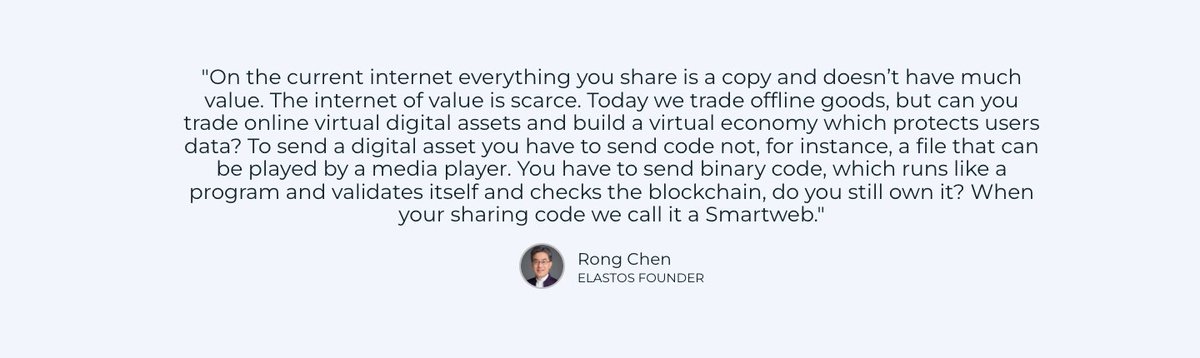
A phone that runs apps is called a smartphone. A web that runs apps should naturally be called a SmartWeb. The Elastos World Computer is the SmartWeb.
Because no one can turn on or shut down all SmartWeb nodes simultaneously, nor update or upgrade them at once, the World Computer’s operating system cannot have disruptive version numbers. It must therefore be the first and last internet operating system ever built. That is why it is called ElastOS: elastic (cloud) computing across the world and everlasting.
May 1

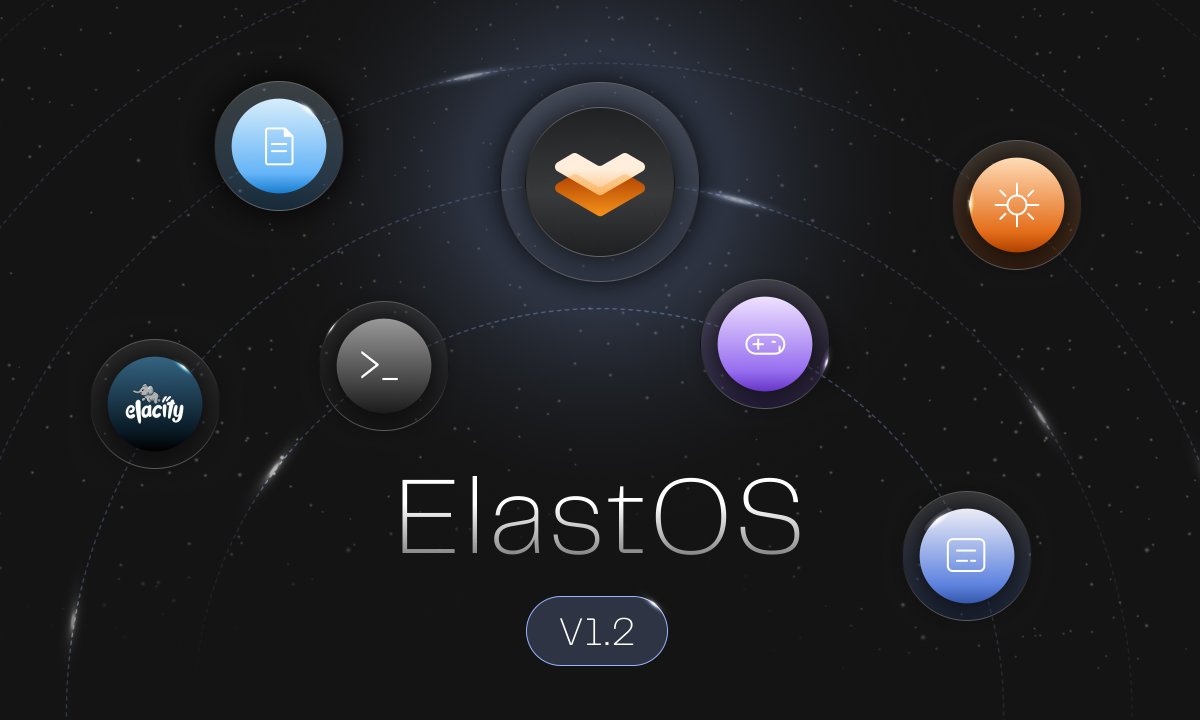
ElastOS v1.2 is the biggest user-facing release since the World Computer launch 🔥
The dApp Centre now has real apps, Elacity V3 is inside ElastOS, email login is live, dDRM access was rebuilt, media support is broader, and Runtime 0.20 is now available ⬇️
1
10
38
1,925
Download your digital assets on @ElastosInfo and they’re automatically stored in your file manager as encrypted .ddrm files 🔐
Your content stays owned by you, protected with blockchain-backed security, and portable across devices without relying on centralized platforms.

46
EverlastingOS retweeted
Apr 16
Throughout human history, the physical world has been defined by the drive to reduce scarcity and create abundance.
In the digital realm, however, Elastos introduces scarcity and genuine property rights.
With AI bots handling all hard labor, neither Karl Marx’s Das Kapital (the visible hand of socialist planning) nor Adam Smith’s The Wealth of Nations (the invisible hand of the free market) seems adequate anymore.
“Look Ma, no hands!”🙌
2
5
20
847
EverlastingOS retweeted
Mar 25
What "Apps Ship With Their Own Binary Loaders" Means. Think about how apps work today on your computer:
Current model (broken):
Your operating system (Windows, macOS, Linux) loads the app. The OS trusts the app. The app trusts whatever libraries (DLLs, .so files, node_modules) it needs. Nobody verifies anything after the initial install. A library update could inject malicious code and nobody would know.
Rong's AppCapsule model:
Each app is a self-contained capsule that carries its own loader — its own "startup sequence." When the capsule launches, its loader: Checks the hash of every module — every library, every dependency, every piece of code inside the capsule is verified against a known hash. If a single byte has been tampered with, the capsule refuses to start. This is like a pilot running through a pre-flight checklist before every flight — you don't just trust that the plane is fine because it was fine yesterday.
Cryptographically verifies credentials — the capsule proves it is what it claims to be. Signed by the developer, verified by the Runtime. Not "this file is named PhotoEditor.exe so it's probably the photo editor" — actual cryptographic proof.
Trust nothing — the capsule doesn't trust the network, doesn't trust other apps, doesn't even trust the operating system to have loaded it correctly. It verifies everything itself. This is what "zero trust" actually means — not the marketing buzzword, but the architecture.
Why "The Internet Needs an Operating System"
This is the part most people don't get, and Rong is right to be frustrated. Every PC has an operating system because you need something to:
- Decide which programs can run
- Control what each program can access
- Prevent one program from crashing or corrupting another
- Manage shared resources (memory, disk, network)
Without an OS, your computer would be chaos. Programs would overwrite each other's memory. Any program could read any file. There'd be no security, no stability, no order.
The internet today has no operating system. When you download an app from the web, run a browser extension, execute a smart contract, or deploy an AI agent — there is no equivalent of an OS managing what that code can do. We have:
- Firewalls (partial, blunt)
- Antivirus (reactive, always behind)
- App Store review (centralized, slow, still misses malware)
- Browser sandboxes (limited, constantly bypassed)
But nothing that does what an OS does: enforce boundaries, verify code, scope permissions, and audit actions at a system level across the entire network.
That's what Elastos is. It's the missing operating system for the internet — the thing that sits between untrusted code and your resources, the same way Windows/macOS sits between apps and your hardware.
Rong's Two Points Combined.
Put his two statements together and you get the complete architecture:
Point 1 (AppCapsule): Each app protects itself from the inside — verifying its own integrity, trusting nothing, carrying its own verification logic. This is the capsule being responsible for its own trustworthiness.
Point 2 (Elastos as Internet OS): The system protects the user from the outside — sandboxing every capsule, never letting any app touch secrets directly, enforcing boundaries between capsules. This is the Runtime being responsible for everyone's safety.
It's defense in depth:
- The capsule verifies itself (inside-out)
- The Runtime constrains the capsule (outside-in)
- Neither trusts the other
- The user is protected by both layers
The reason people don't understand this is the same reason people didn't understand why PCs needed operating systems in the 1970s.
Early computers ran one program at a time. Why would you need an OS? Then multitasking arrived, and suddenly you needed process isolation, memory protection, file permissions — an OS. Everyone understood after it became obvious.
The internet is at that same inflection point. We're about to run AI agents, autonomous programs, smart contracts, and personal cloud services — all interacting, all needing access to sensitive data. Without an Internet OS to sandbox and govern them, we're back to the 1970s — one bad program takes down everything.
Rong saw this in 2002.
2
12
32
3,168
EverlastingOS retweeted
Mar 24
A blockchain is a consensus computer powered by either permissionless miners (public blockchains) or permissioned miners (consortium blockchains). Multiple blockchain computers are actively running across the Internet today.
To incentivize miners to secure and operate these networks, each blockchain typically issues its own reward token or reward points. There are times when one token must be swapped for another — much like exchanging fiat currencies at an international airport.
The Elastos World Computer offers a neutral cyberspace for all digital tribes, enterprises, communities, and organizations. Designed with a BTC merge-mined mainchain as well as Ethereum-compatible sidechains and friend-chains, the ELA token serves as the core asset for decentralized bridges that seamlessly propagate value across the entire SmartWeb, aka Web3.
In other words, ELA is not positioned to compete with BTC, ETH, or other major cryptocurrencies. Instead, it is designed to facilitate the exchange of all digital assets peer to peer — whether crypto tokens or digital merchandise.
1
19
40
1,151
EverlastingOS retweeted
Mar 22
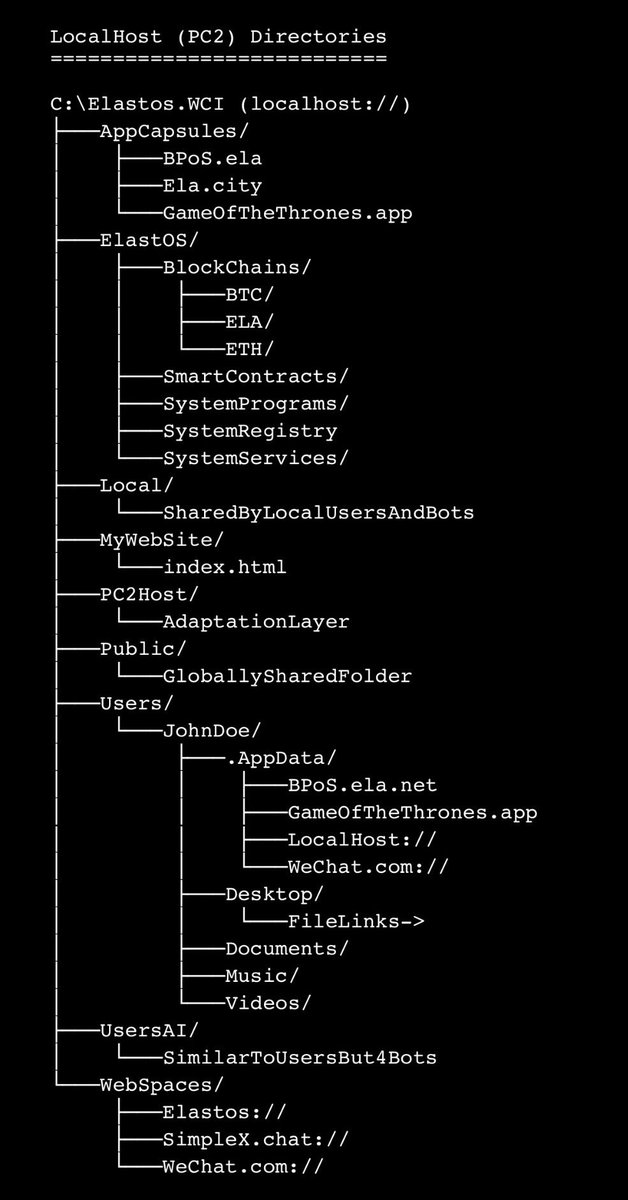
LocalHost (PC2) Directories
====================
Users and developers of WCI will only see their “localhost” PC2.
A WebSpace, mount point of an ElastOS Drive, is a special type of AppCapsule, feeding a named data path, it will return either a "file" endpoint or a "folder/" which one may further traverse downwards. Similar to "folder" in a conventional operating system is a special type of data file, all third-party WCI apps, drives, plugins, and so forth are programs, i.e., AppCapsules.
ElastOS serves as the microkernel of the Elastos World Computer while keeping as much functionality as possible running in WebAssembly sandboxes in the form of AppCapsules. These are apps with their own intrinsic, built-in RTOS, much like their digital twins of the peripheral devices.
Let's take a slightly deeper dive into the ElastOS "file system" path. All WebSpaces are based on content-addressable storage (CAS)—meaning files are located via hash values instead of traditional file paths. Additionally, all files contain metadata, including icons, and are self-describing: they include 256-bit unique IDs and specify which AppCapsules (also identified by 256-bit IDs) should be used to render them. In other words, file paths aren't really necessary, but they make us feeble humans feel more comfortable.
The directories under localhost:// (local root) closely adhere to Windows naming conventions, replacing “Windows” (OS) with “ElastOS,” “Program files (Apps)” with “AppCapsules” (apps), and “WebSpaces” (24x7 data services). The simple reason is that the Elastos World Computer would like to unify its "Drives" and websites into one single straight forward expression.
WebSpaces are a special type of AppCapsules that dynamically interpret the named data after the “://“ delimiter, which often aren’t actually static files on hard drives.
Different users will cache a WebSpace differently in their respective ~/.AppData directories, for instance, the WeChat database would be unique for each user.
localhost://
├───AppCapsules (Apps, C:\Program Files)
├───ElastOS (C:\Windows)
├───Local (C:\Temp)
├───MyWebSite (Optional for browsers)
├───PC2Host (C:\Intel, Hardware Host)
├───Public (C:\Public Folder for the World)
├───Users (C:\Users Home Directories)
├───UsersAI (Agentic AI's Home Directories)
└───WebSpaces (C:\ and D:\ Drives, C:\Program Files x86)
No more recursive traversal of file or URL paths. Instead, simply provide the WebSpace daemon with the named data moniker, and it will return the meta-class object of the capsule or otherwise.
Palantir refers to the meta-class-based programming paradigm as “Ontology,” a term I coined as the metadata-driven-remoting approximately two decades ago. I hope to bring the old Elastos Runtime back to life once we have the WCI running successfully, so that we could have an Android-compatible PC2 backend orchestrating native digital twins actuators.
Ideally, the PC2 host should run only one program: Elastos. All other software should come from trusted vendors the user already relies on, such as Microsoft (Windows), Apple (macOS), NVIDIA, and similar.
Since all WCI AppCapsules execute inside WebAssembly sandboxes, the Elastos super app (running on Linux) would expose only a finite, fixed set of functionalities. In other words, the system calls that can be trapped below the WebAssembly sandboxes are permanently defined, allowing us to harden both Elastos and the underlying Linux kernel directly in the BIOS/UEFI firmware. The hardware would then provide instant-on capability while shrinking the attack surface to an absolute minimum.
Potentially, we could partner with a DePIN team to help design such hardware once the Elastos WCI gains traction.
8
24
612
EverlastingOS retweeted
Mar 10
Hey everyone, wishing you a great day! Here's a quick update video run through of our new portal for updates and transparency as we built out ElastOS, your sovereign cloud OS! Thankyou to all who support us and the ELA mission.
1
10
38
1,020
EverlastingOS retweeted
Mar 6
The Internet is dead, long live the Internet.
Mar 6
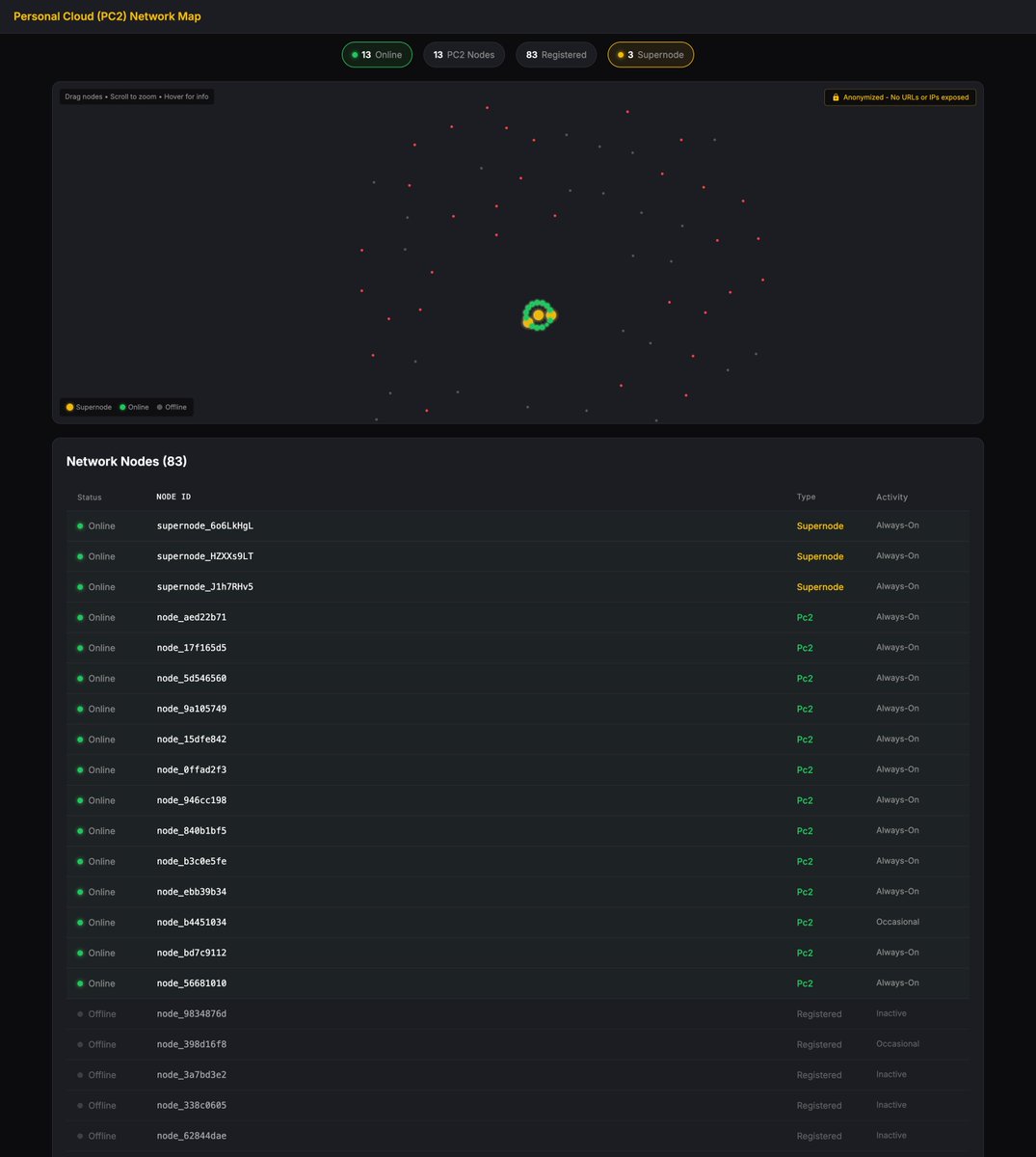
83 ElastOS PC2 Clouds and growing. This may seem small, but its going to grow to become billions as the new internet emerges, both sovereign humans and AI nodes all p2p connected.
We are architecting a sovereign ELA-powered internet: digital property rights, creator markets, and personal compute and its live.
docs.ela.city | map.ela.city
5
22
884
EverlastingOS retweeted

Feb 24
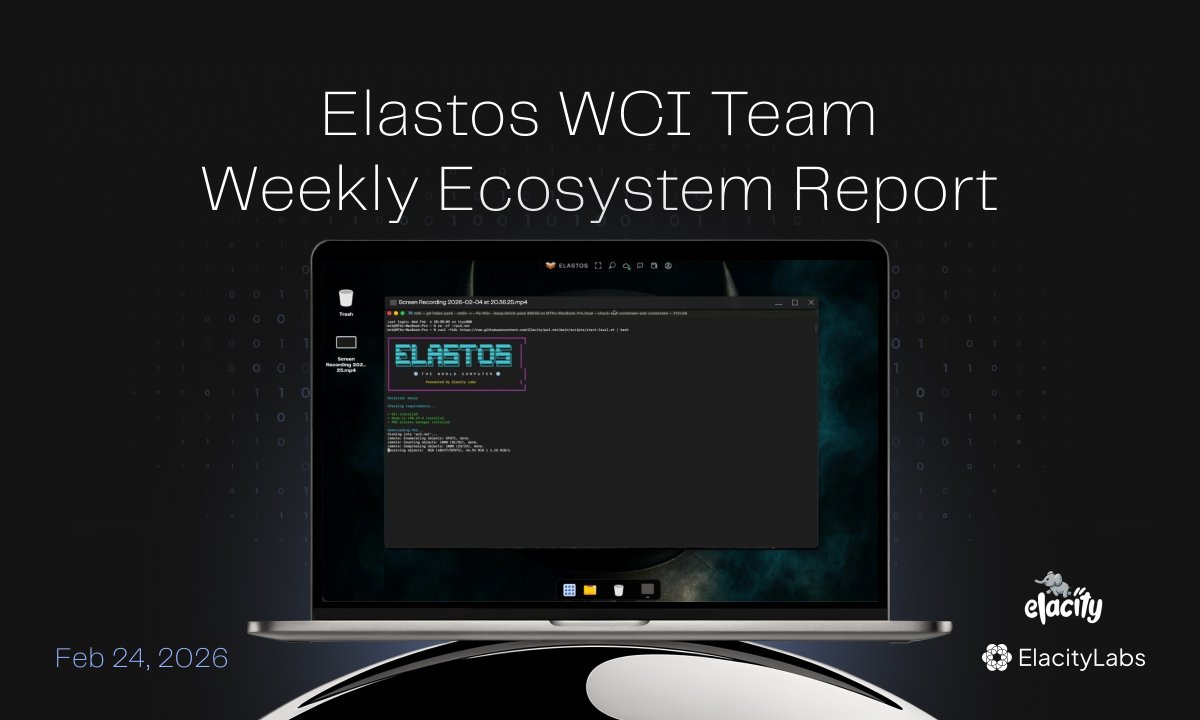
ElastOS v1.1 is underway 🔥
Faster remote access for home nodes, more reliable self-recovering connections, large file streaming upgrades, stronger IPFS privacy for personal files, and a simpler one command install with auto hardware setup.
More➡️Elastos.click/WCI-Feb-24
5
9
40
1,765
Feb 21
ElastOS is here, the new Internet do empower the people! try it out and use it today!
2
11
237
EverlastingOS retweeted
Feb 5
What if the OpenClaw Agents begin collaborating for orchestrated attacks, what approach should be employed to address this threat?
Security and reliability should be paramount, ensuring that they are integrated into the design from the beginning, rather than being added as an afterthought.
In essence, there is a single crucial point to consider:
We must abandon the Permission-Based security management model that has prevailed since the UNIX era in the 1980s and fully embrace the Capability-Based security management model. Specifically, blockchain technology elevates Capabilities to a fundamental human right, eliminating the need for authorization from any central authority—this is particularly significant for the internet.
If there is a secondary point to consider, it would be:
Implement a shared world computer with the internet as its bus, completely concealing the internet from users, applications, AI Agents, and other entities, thereby preventing them from launching attacks.
Here’s an analogy: a lobster can see the world (read as many WebSpaces as it can with read tokens). However, it’s restricted to crawling within its designated boundaries (can only write to specific WebSpaces using write tokens).

1
3
10
384
#AI agents are already here. And the security model underneath them — the one designed
in the 1970s for mainframes with three users — has no answer for them.
ElastOS does.
1
1
104
1. ElastOS/PC2 is built with security at its core! We're not relying on centralized servers – your data is protected by decentralized principles.🔒
#PC2 #Web3 #SovereignCloud
1
1
6
124
📄 Files are stored on IPFS, a distributed network, making censorship and data tampering incredibly difficult. Your data isn't stored on our servers. #IPFS #DataStorage #CensorshipResistant
2
2
49
🛡️ We utilize an Agent Account, a Universal/Smart Wallet, abstracting away gas and chain complexities. Its address isn't directly exposed, adding another layer of protection. #AgentAccount #SmartWallet #Security
1
42
💻 PC2 is self-hosted – you control the entire infrastructure. This gives you maximum control over your data and security settings. #SelfHosted #Privacy #ControlYourData
1
29