
The Existential Movement aims to bring wisdom to the world.
Joined July 2023
- Tweets 2,009
- Following 556
- Followers 325
- Likes 1,489
115 Photos and videos


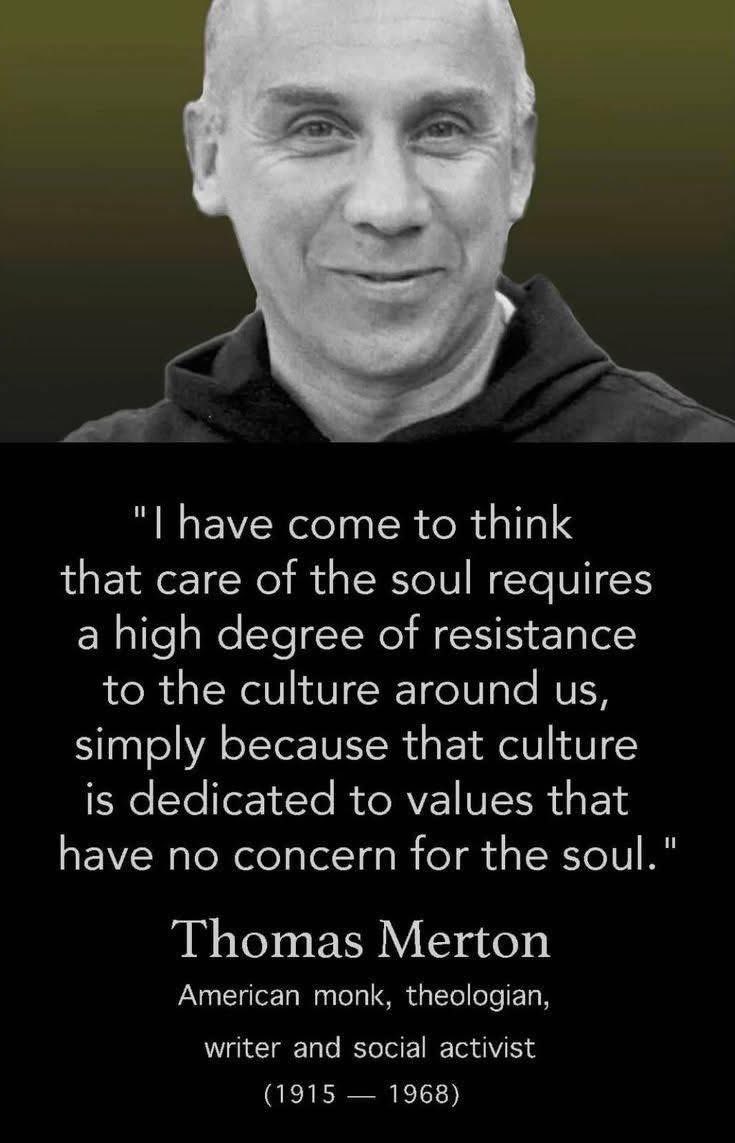
Existential Movement retweeted

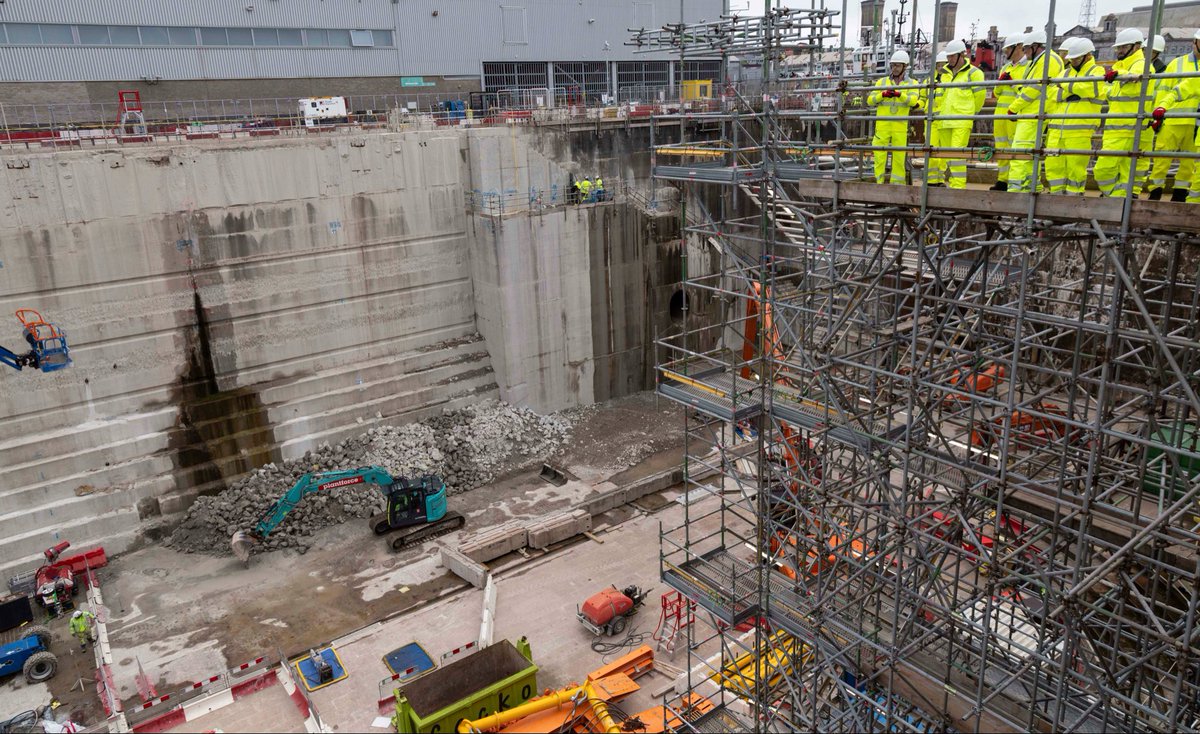
The nuclear deterrent is the bedrock of our national security.
That’s why the submarine maintenance improvements we’re making at Devonport are vital.
Last Friday, I visited Royal Navy personnel and staff from Babcock to thank them for their efforts.
1/2



5
35
250
28,048
Existential Movement retweeted

The key to a good life is your persistence and determination in tackling... youtu.be/bBMA6Xb6GHg?si=Pk3K… via @YouTube
1
1
151

Kirk Schneider’s new book The Vibrant Center will be launched at the Fourth World Congress of Existential Therapy in Denver in June.
To find a new consciousness in a broken age.
#existential

The Vibrant Center: A New Consciousness for Our Broken Age (June 1, 2026) is now available for preorder in e-book at amazon (amazon.com/Vibrant-Center-Ne…) and Barnes & Noble: barnesandnoble.com/w/the-vib…
3
4
93
Existential Movement retweeted
Life changes require daily dedication youtu.be/N4UY5kFibBc?si=kKT4… via @YouTube
5
6
228
Emmy van Deurzen’s book Beginning to Live: the Art of Existential Freedom is released this week.
Opening new doors within everyday life.
penguin.co.uk/books/444981/b…
6
5
225
Existential Movement retweeted
Let the ego recede when you no longer need it.
#existential
May 11

"Make your interests gradually wider and more impersonal, until bit by bit the walls of the ego recede, and your life becomes increasingly merged in the universal life."
Bertrand Russell on how to grow old and what makes a fulfilling life themarginalian.org/2026/05/1…
4
5
227
Existential Movement retweeted
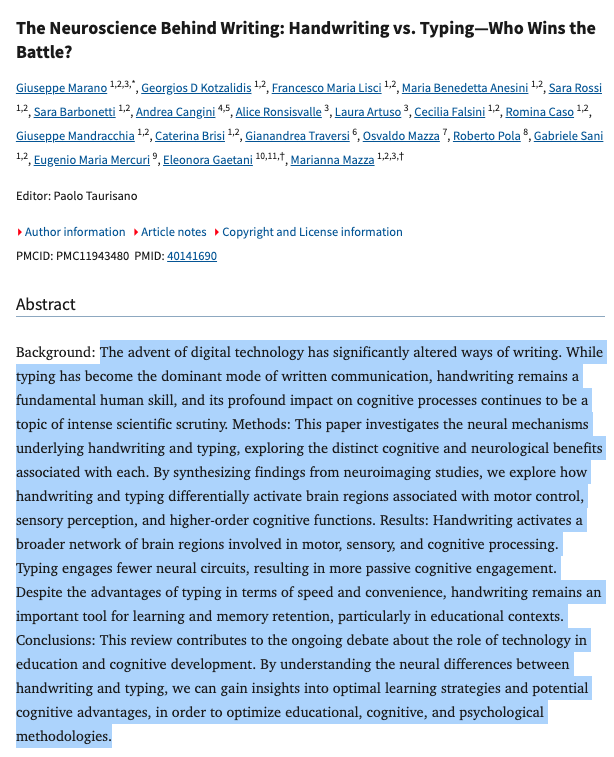
Handwriting activates a wider network in the brain.
#existential
May 10

Your brain physically rewrites itself every time you pick up a pen.
Neuroscientists at Norwegian University scanned students' brains while they handwrote letters versus typing the same letters on a keyboard.
The results shattered decades of assumptions about how we process information.
Handwriting activated massive networks in the sensorimotor cortex, the visual processing centers, and the hippocampus simultaneously. Complex neural symphonies lit up across multiple brain regions, creating rich interconnected pathways between motor control, visual recognition, and memory formation.
Typing the same letters? The brain activity looked like someone had dimmed the lights across entire cognitive districts. The neural networks that flourished during handwriting simply went dark.
The difference?
When you form letters by hand, your brain constructs elaborate spatial maps of each character. The motor cortex learns the precise pressure, angle, and trajectory needed to create an 'A' versus a 'B.' Your visual system tracks the ink flowing from pen to paper in real time. Your parietal lobe integrates hand position with eye movement. Your hippocampus encodes not just what you wrote, but how the writing felt, where you paused, which words required more pressure.
Typing activates almost none of that circuitry. You press a key, a letter appears. The motor movement is binary. The visual feedback is uniform. The spatial relationship between thought and symbol gets mediated by a machine that standardizes every character into identical fonts and spacing.
Your brain treats these as fundamentally different cognitive tasks.
The evolutionary context makes this obvious once you see it. Human hands developed for manipulation, creation, and fine motor control over millions of years. We painted on cave walls, carved bone tools, and shaped clay vessels long before we invented written language. When writing emerged 5,000 years ago, it built on top of existing neural infrastructure that already connected hand movement with symbolic thinking.
Keyboards appeared 150 years ago. Touchscreen typing maybe 20 years ago. From an evolutionary timeline perspective, we started using them approximately yesterday. Our brains are still running ancient software that expects physical engagement with symbols.
That software produces dramatically different learning outcomes.
Students who take handwritten notes consistently outperform students who type the same information on memory tests, comprehension assessments, and creative applications of the material. The difference persists even when researchers account for typing speed, note length, and time spent studying.
The act of forming letters by hand forces deeper processing at the moment of information encounter. You cannot handwrite as fast as someone speaks, so your brain must actively filter, summarize, and prioritize information in real time. The motor effort required to form each word creates additional memory traces that typing does not generate.
Children who learn to write letters by hand develop reading skills faster than children who learn letters primarily through typing or screen interaction. The sensorimotor experience of creating letterforms helps their brains recognize those same letterforms when they encounter them in text.
Adults who handwrite shopping lists, daily schedules, or meeting notes remember the information better than adults who type identical lists into phones or computers. The spatial memory of where you wrote something on a page provides retrieval cues that digital text does not offer.
These findings collide directly with how education and work environments have evolved over the past two decades. Schools replaced handwriting instruction with typing classes. Offices converted from paper systems to fully digital workflows. Students take notes on laptops. Professionals draft documents on screens.
We optimized for speed and efficiency while accidentally severing the neural pathways that evolution spent millions of years developing.
The implications reach beyond memory and learning into fundamental questions about human cognition. If the physical act of forming symbols changes how your brain processes ideas, what happens to thinking itself when you remove the physical component?
Digital text is infinitely searchable, instantly editable, and perfectly shareable. But it may be creating brains that process information more superficially, store memories less durably, and connect ideas more weakly than brains that regularly engage in handwriting.
The neuroscience suggests we traded cognitive depth for technological convenience without realizing what we were giving up.
Some of the most innovative thinkers across history were obsessive handwriters. Darwin kept detailed handwritten journals. Einstein worked through complex theories in handwritten notebooks. Virginia Woolf wrote her novels by hand before transcribing them. Steve Jobs famously took handwritten notes during Apple meetings even as he was building the most advanced computers on Earth.
Perhaps they intuited something about the relationship between hand, brain, and insight that we measured in brain scanners but somehow forgot in practice.
Your pen is literally a cognitive enhancement device that activates neural networks digital keyboards cannot reach.
3
5
212
Beginning to live celebration.
#existential

May 20th: ‘Beginning To Live’ A celebration with its author – Emmy van Deurzen madintheuk.com/2026/03/may-2… via @MITUKTeam
3
3
151
Existential Movement retweeted
Book signing at the Denver World Congress.

7
7
159
Existential Movement retweeted
Not to be missed. Emmy will be in conversation with several of her colleagues as well as introducing the new book.
#existential

5 DAYS TO GO! Live Online - Beginning to Live: The Art of Existential Freedom with Prof Emmy van Deurzen
Register here to join LIVE (Your ticket includes access to the recording) buff.ly/KmS8t0J

7
6
267
Existential Movement retweeted
Rollo May on Existential Freedom youtu.be/Kfi0SARiVrI?si=ZNeO… via @YouTube
7
9
438
Existential Movement retweeted

Time to free yourself from your victimhood and begin to live.
Beginning to Live: the Art of Existential Freedom.
penguin.co.uk/books/444981/b…

Psychiatry has thrust 'illness identities' on a 1/4 of the population. Yet, recent research confirms that once we adopt an illness identity, we often behave in ways that confirm & deepen it' becoming chronic 'treatment'-consumers. This isn't helping & healing - it's exploitation.
2
9
13
670
Existential Movement retweeted
Irvin Yalom on Existential Freedom youtu.be/7omyAHZQSr8?si=cj6D… via @YouTube
8
9
315
Existential Movement retweeted
Gilles Deleuze on Existential Freedom youtu.be/yfgDEKJwpNI?si=0pOu… via @YouTube
7
6
346
Existential Movement retweeted
Emmy van Deurzen's view on Existential Freedom youtu.be/nV_o9crDe_8?si=tuah… via @YouTube
7
8
725
Existential Movement retweeted

3 DAYS TO GO! Live Online - Beginning to Live: The Art of Existential Freedom with Prof Emmy van Deurzen
Register here to join LIVE (Your ticket includes access to the recording) buff.ly/KmS8t0J

9
7
150
Existential Movement retweeted
Erich Fromm on Existential Freedom youtu.be/VeS2oTdi8vk?si=tx70… via @YouTube

6
6
393
Existential Movement retweeted
You are not alone.
But you only truly realize that in solitude.
#existential
Apr 27
"Here lies the paradox of solitude. Look long and hard enough at yourself in isolation and suddenly you will see the rest of humanity staring back."
Wonderful read: themarginalian.org/2021/10/1…
1
1
2
202