
Joined September 2023
- Tweets 2,620
- Following 144
- Followers 150
- Likes 5,188
780 Photos and videos







The Time Traveler🐾 retweeted

May 25
Some people whisper from the "gutter" behind your back,
Just keep your eyes on the "lane",
The FUD can roll, curve, and spin all it wants, sooner or later, misinformation falls like pins in a "strike",
No need to spare energy on negativity,
In the meantime, let's kill fud with fun🎳😎
May 24

4. Watch out for fake news.
I don't surf (kite surfing is a diff sport). Dubai is not even a surfing destination. There is Surf Abu Dhabi, worlds largest man made surf place, which I haven't tried yet. No rip current there. Let's go together?
7
14
42
1,164
The Time Traveler🐾 retweeted

May 18
THIS IS THE LAST TIME A HUMAN WILL EVER WIN AGAINST ROBOTS.
FIGURE AI’S ROBOT LOST A 10 HOUR PACKAGE SORTING CHALLENGE BY JUST 192 PACKAGES
MAN: 12,924
ROBOT: 12,732
49
26
258
77,473
The Time Traveler🐾 retweeted
May 16
GM,
FUD fades. Conviction stays 🫡
Powered by a community that understands the bigger picture
Every day we build, every day we get stronger
Keep building
11
16
50
976
The Time Traveler🐾 retweeted
May 11
15 months🫡
That's multiple lifetimes in crypto
15 months of loyalty
15 months of conviction
15 months of building together
Trends came and went. Noise came and went. People came and went.
Not many communities last.
Even fewer grow stronger with time.
The strongest community on the BNB Chain isn’t built in a day.
It’s forged through patience, belief, and people who refuse to quit.
Respect to every holder who’s been part of this journey.
15 months down. Legacy ahead 🚀
17
31
72
2,336
The Time Traveler🐾 retweeted

Sharbi — Queen of Memes. The work behind the scenes has been going on for over 3 years, and the moment everyone has been waiting for is finally here very soon @stryk_one . Thanks to our incredible community and the top Dao team — together we are unstoppable.#Sharbi @SharbiToken
5
9
16
1,060
The Time Traveler🐾 retweeted

May 5
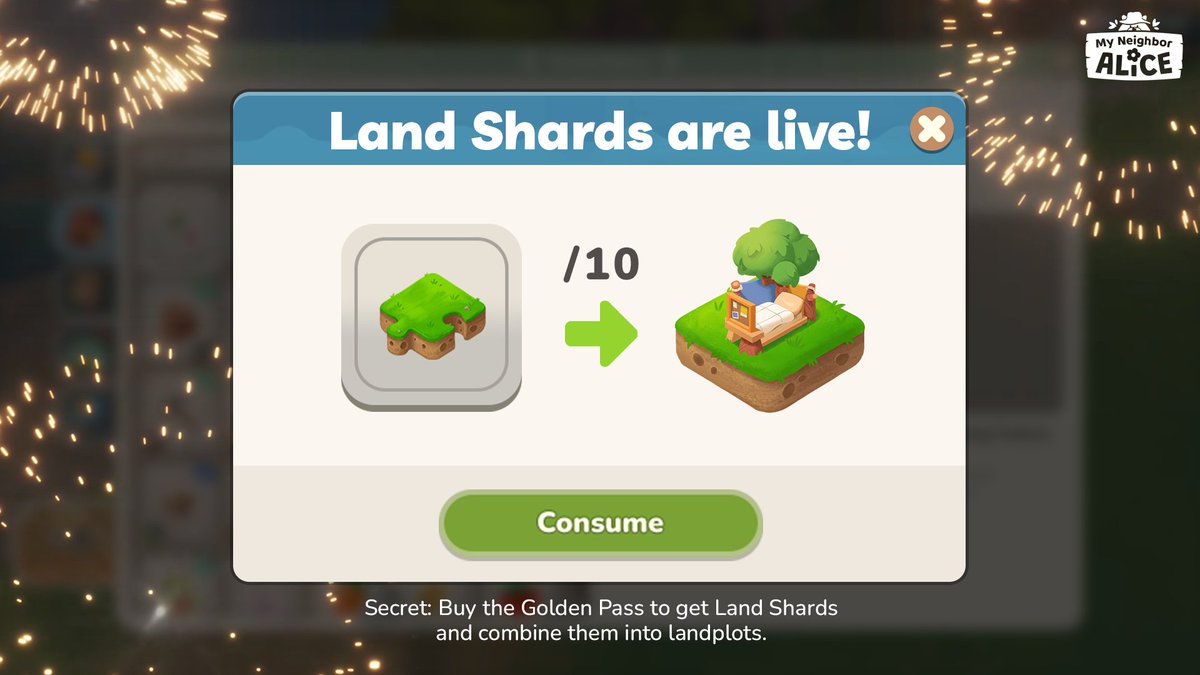
Looking to buy a land yet not sure on how to make it happen?
Fear not, as we’re introducing a new way to get the most out of the Archipelago - please welcome the Land Shards! 🧩
Expand your plans in Lummeluna and get closer to your dream plot!
The way to make it happens is THAT simple:
➡️ buy your Alice Golden Pass
➡️ every Pass comes with 1 Land Shard
➡️ you can redeem one random land every 10 Land Shards
We're giving out every type of land, including the most rare one in games - meaning you can win big big BIG time 👀
⚡️ Get ready for a new way of having fun in Lummelunda, join the game and find your way to the Golden Pass!
PS: what would you build first on your land?
33
12
100
12,122
The Time Traveler🐾 retweeted

Apr 30
Remove more please
Many rubbish on alpha
9
2
26
1,849
#Sharbi. I have a lot of videos like this. But that's not the main thing. It's all about how the team works, and sometimes the community as well. Come to us.
Feb 14

What ticker won’t rug me?
I'm buying.
1
234
The Time Traveler🐾 retweeted

Feb 10
@grok show us your skills! Are you able to improve and do a better job at creating the video above? Don't be lame, show us what you've got.
1
1
3
75
The Time Traveler🐾 retweeted

Feb 9
WHY @base - CONTEXT FOR THE DAO DECISION
The DAO’s migration vote is not about expansion, hype, or launching something new.
It is about recovery, continuity, and long-term survivability for a community-led DAO following the Shibarium exploit.
BASE emerged as the leading option because it offers:
• Proven infrastructure reliability at scale
• Deep liquidity and ecosystem depth for long-term continuity
• A neutral execution environment without reliance on a single project’s validator set
• A sustainable foundation for governance, claims, and future community decisions
This decision is focused on protecting affected holders, executing the DAO-approved recovery, and ensuring K9 can continue as a community-run protocol without ongoing infrastructure risk.
Further details on execution and user actions will follow after the vote formally concludes.
Feb 9

DAO GOVERNANCE UPDATE: QUORUM REACHED
The DAO vote to select a migration chain for the minting of KNINE tokens affected by the Shibarium exploit has already reached quorum (102%).
Voting remains open until Feb 11, 2026, but the current results are as follows:
Current Results:
• BASE: 73.6B votes (89.7%)
• Polygon (PoS): 4.1B votes (4.95%)
• Arbitrum: 2.5B votes (3.02%)
• Abstain / No Preference: 1.9B votes (2.33%)
• BNB Smart Chain / Avalanche: 0 votes
Vote Timeline:
• Created: Feb 6, 2026 at 2:07 PM
• Voting period: Feb 6 - Feb 11, 2026
If results hold through the close of voting, BASE will be the selected migration chain.
Execution details, timelines, and user instructions will be shared after the vote formally concludes.
Follow the link in the reply below to vote on Snapshot
8
8
37
5,682
The Time Traveler🐾 retweeted
Feb 5
Want to know more? Here are all the details → myneighboralice.medium.com/t…
239
242
173
3,247
The Time Traveler🐾 retweeted

Feb 2
Hey @MarioNawfal @RoundtableSpace yes the bottom is in and @SharbiToken doesn’t depend on a market she just continues to build non stop the Multichain Queen of memes
$BASE $SOL $SHARBI @SharbiDream @SharbiToken

Jan 18

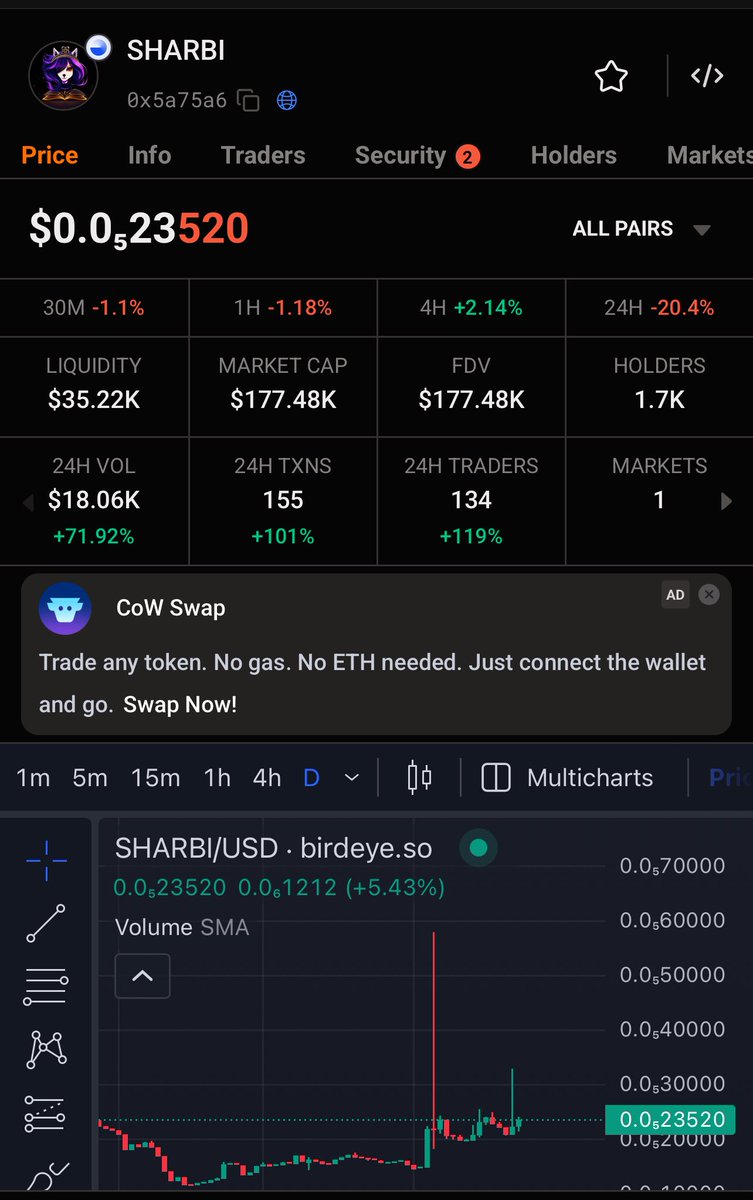
The Multichain Queen of Memes $SHARBI
Continues to build on $BASE 368 days strong …@stryk_one in the pipe and lots to come in 2026 for @SharbiToken
Lock in 👑💎🚀
0x5a75a61032143575067dE2B38eF38d601976091E
4
5
8
294
How does the community work? Community projects don't worry about prices. They do it because they value real and genuine teams.
#Sharbi has been prepared for three years.


Not just another meme. A whole reward system for those who keep this gem. Just wait and see.
Say thank you later.
#Sharbi @stryk_one
@1CrypticPoet @3orovik @binance @Cryptoking @Eljaboom
2
2
5
87
Not just another meme. A whole reward system for those who keep this gem. Just wait and see.
Say thank you later.
#Sharbi @stryk_one
@1CrypticPoet @3orovik @binance @Cryptoking @Eljaboom
3
1
3
382
The Time Traveler🐾 retweeted
Jan 27
Ez it’s @SharbiToken building for year across multiple chains
Jan 18
The Multichain Queen of Memes $SHARBI
Continues to build on $BASE 368 days strong …@stryk_one in the pipe and lots to come in 2026 for @SharbiToken
Lock in 👑💎🚀
0x5a75a61032143575067dE2B38eF38d601976091E
2
4
8
68
The Time Traveler🐾 retweeted
Jan 25
Enough Is Enough: Accountability Is Not a Donation Drive
At some point, clarity has to replace comfort.
When the Shibarium bridge failed, K9 Finance holders lost real funds totaling over three-quarters of a million dollars. That loss did not occur because of a K9 smart contract flaw, reckless tokenomics, or mismanagement by our DAO. It occurred because of a failure in upstream infrastructure that K9 did not design, control, audit, or custody.
From a strictly legal standpoint, K9 Finance had no obligation to make anyone whole.
▫️No custody.
▫️No control over the bridge.
▫️No unilateral authority over Shibarium security systems.
That matters, because responsibility in decentralized systems is not emotional, it is structural.
And yet, K9 acted anyway.
We did not wait for law enforcement updates. We did not ask the community to donate first. We did not spin up a token, a narrative, or a performative campaign to signal virtue. We did the uncomfortable thing: we researched remedies, explored restitution paths, modeled trade-offs, and put our own future on the table to prioritize our holders.
That is what leadership looks like when there is no safety net.
What has become increasingly difficult to ignore is the attempt by others to retroactively reframe this period as a collective moral exercise where accountability is diluted into “community donations,” and responsibility is abstracted into symbolic gestures.
- Charity is not accountability.
- Narrative control is not restitution.
And launching adjacent tokens does not absolve structural failure.
The introduction of "Shib Owes You" SOU NFTs on Ethereum, framed primarily as something the community must donate into, quietly shifts the burden away from the systems that failed and onto the users who were harmed. That may be well-intentioned. It may even be technically elegant. But it is not the same thing as taking responsibility.
K9 Finance did not ask to be made whole by donations. We asked hard questions. We took reputational risk. We made decisions that hurt in the short term because our holders deserved outcomes, not theater.
And let’s be clear here... doing the right thing here was optional. That is precisely why it matters.
In decentralized ecosystems, the absence of legal obligation is often where true character is revealed. K9 chose action over optics, restitution over revisionism, and governance over noise.
So when others claim to be “stepping up,” while ignoring or attacking the only project that consistently acted with discipline, transparency, and holder-first reasoning throughout this entire process, it’s not just frustrating. It’s dishonest.
Enough is enough.
History should reflect who did the work, not who controlled the microphone.
------------
Where Responsibility Actually Lives - And What Comes Next
None of this is to say that alternative recovery mechanisms are unwelcome. If pathways open that allow third-party initiatives, community contributions, or external systems to meaningfully route value back to affected users, that should be explored seriously and in good faith. Real restitution matters more than pride.
But we cannot allow the existence of side efforts to obscure a fundamental truth:
❌The responsibility for this failure does not belong to the community.
❌It does not belong to downstream projects.
❌It does not belong to holders who already paid the price.
✅It belongs to the operators of the infrastructure that failed.
When a security system collapses, accountability does not migrate to whoever shows up afterward with the most creative workaround. It remains with those who designed, maintained, and controlled the system in the first place. Anything else is narrative displacement.
What has been deeply troubling to watch is how quickly the burden of recovery has been reframed as something users should opt into, fund themselves, or gamble on again, this time wrapped in hope, novelty, or “next iteration” promises.
Asking people who were harmed by systemic failure to finance their own recovery is not decentralization. It is abdication.
K9 Finance refuses to participate in that sleight of hand.
We stepped up not because we were required to, but because our holders deserved someone to. That does not absolve others of responsibility, and it never will.
So here is the call to action, plainly stated:
• If you control ecosystem infrastructure, own the outcomes when it fails.
• If you represent that infrastructure publicly, stop allowing responsibility to diffuse into abstractions.
• If you are a holder, do not let anyone convince you that donating, minting, or speculating again is the same thing as being made whole.
Support real recovery. Demand structural accountability. Separate genuine restitution from narrative noise.
K9 Finance will continue to act with discipline, transparency, and a holder-first mandate, regardless of hype cycles, side narratives, or pressure to play along.
Accountability is not optional.
And it is not crowdsourced.
24
17
62
9,263
Matt! How about dancing with the real ones? #Sharbi
Jan 22

GM degens!☕️
Difficult times are opportunities to become stronger. Which community is the strongest?
32
Real cults like #Sharbi take years to build. Community power great team always wins. Sharbi has exciting times ahead - > @stryk_one
145