
Social Scientist @BKCHarvard | Public Policy @MBRSG & @Georgetown | Member @wef | Founder @NexusFrontier | Chief Economist @micro1_ai | Professor @northeastern
Joined August 2012
- Tweets 67,822
- Following 11,743
- Followers 53,914
- Likes 138,138
337 Photos and videos








Mark Esposito, PhD retweeted
one of the most practical ways to act on this: 100x your investment in contextual evaluations as an enterprise.
this allows you to define what good looks like for your agents, own your intelligence layer (even when built on top of foundation models), and generate real ROI beyond pilots and demos.
probabilistic software requires a re-think of the traditional product development lifecycle. evals can no longer be something that happens at the end. they need to be there from day one and become the most core part of the product development process itself. every product decision, iteration, deployment, and improvement should be driven by evaluations.

6
8
59
13,125
Mark Esposito, PhD retweeted

2,232
5,809
30,029
45,020,377

Jun 7
Prioritization of Risks from Artificial Intelligence: A Delphi Study of 272 International Experts - goo.gl/scholar/11R1Jk #ScholarAlerts
57
79
Mark Esposito, PhD retweeted

Jun 5
we’re partnering with 50 companies over the next two weeks, each with 50–200 employees, to help improve AI models using real-world company workflows.
we believe the companies that helped build modern business workflows should participate in — and very much benefit from — the value created by the next generation of AI systems.
for many companies, these partnerships can create a meaningful new revenue stream, often ranging from $100K to $2M , with opportunities to become recurring over time. our goal is to do this in a way that is privacy-first, low-lift, and aligned with the work companies are already doing every day.
if you’re interested in contributing to AI advancement while improving your own workflows alongside micro1 and our frontier AI lab partners, we’d love to hear from you.
please reach out to to camilo@micro1.ai if you’re an executive at a 50 employee company, excited to potentially partner up!
13
22
67
4,980
Mark Esposito, PhD retweeted
Jun 2
5.5 million as of today
22 Oct 2025

now at 2M!
2,000,000 amazing experts have signed up on the micro1 platform to get matched with frontier AI opportunities, training the best LLMs.
4
7
29
2,110
Mark Esposito, PhD retweeted

🆕 READ: Sr. Fellow @Exp_Mark reflects on global #AI governance after Trump's China summit, saying "the two governments most capable of setting norms for frontier AI development recognize that the absence of any dialogue carries its own risks."
peacediplomacy.org/2026/05/2…
2
4
191
May 28
The Beijing summit should be read neither as a breakthrough nor as a failure. It is an early, tentative signal that the two governments most capable of setting norms for frontier AI development recognize that the absence of any dialogue carries its own risks. peacediplomacy.org/2026/05/2…
@Diplomacy_Peace
1
1
120
Mark Esposito, PhD retweeted

The Enterprise AI Paradox: Why Fast Automation Is Not the Goal. Watch the executive recap below.
Key insights:
- Intelligence is cheap, but trust is expensive.
- Talent, not data, is the new bottleneck.
DM for the full 45-minute recording.
@dcwgoh @Exp_Mark @Terencecmtse
1
2
120
Mark Esposito, PhD retweeted

May 18
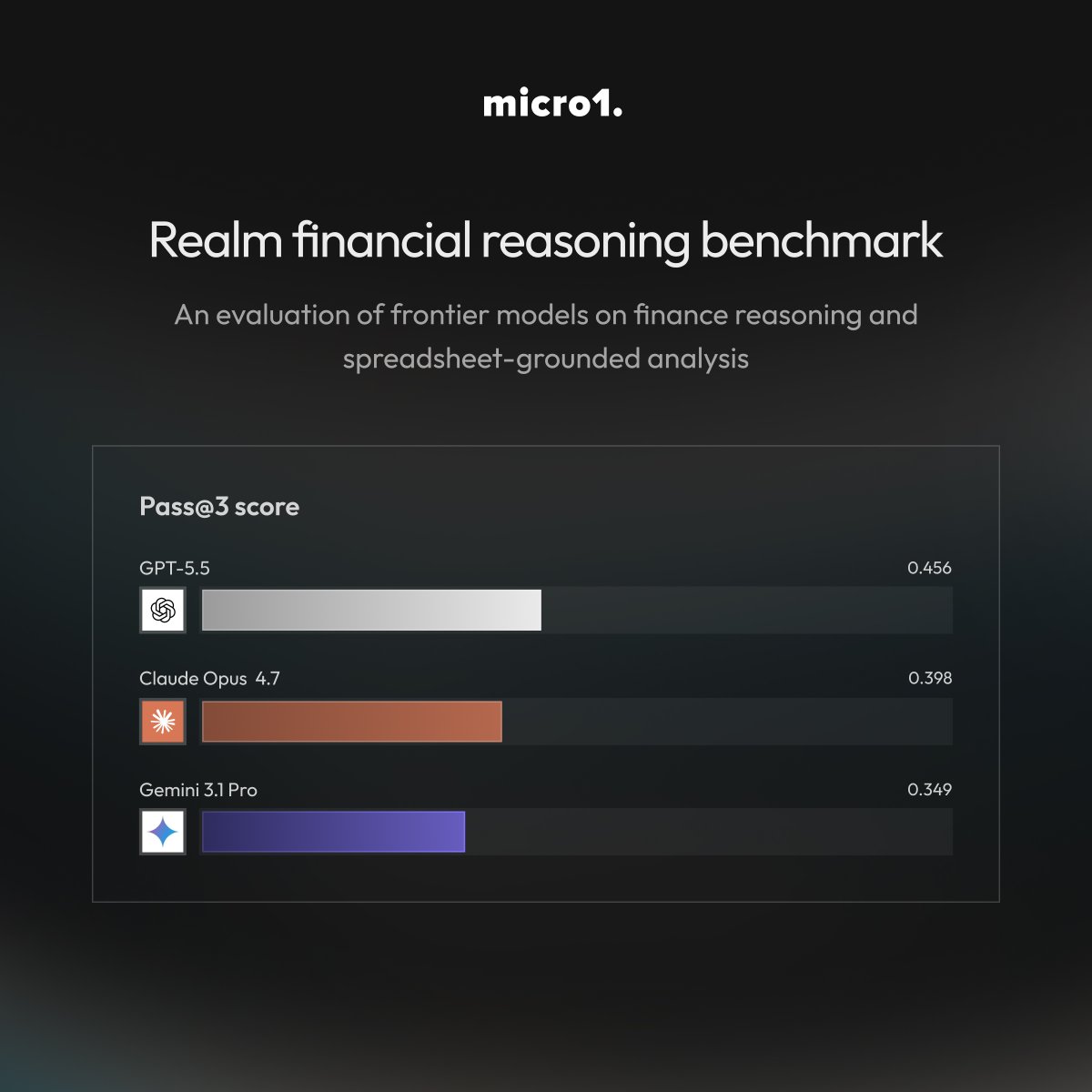
Introducing the Realm Financial Reasoning benchmark, our new evaluation of frontier AI on reasoning in finance and spreadsheet-grounded analysis.
Tasks are built around the actual work product that practitioners deliver, from IFRS reconciliation workbooks and hedge-fund backtests to VC term sheet analyses and treasury cash-flow forecasts. Each task drops the model into a sandbox with the same source materials a human analyst would open: named-range Excel workbooks, broker PDFs, earnings call transcripts, monetary-policy decisions.
Here's what the results showed (Pass@3):
-GPT-5.5: 0.456
-Claude Opus 4.7: 0.398
-Gemini 3.1 Pro: 0.349
The three models score similarly, and none clears 50% on tasks that demand a judgment call. The back and middle office are defensible today, but on capital allocation questions current frontier models should be treated as research accelerators, not final decision-making support systems.
Full report linked in the comments.
8
21
66
5,364
Mark Esposito, PhD retweeted
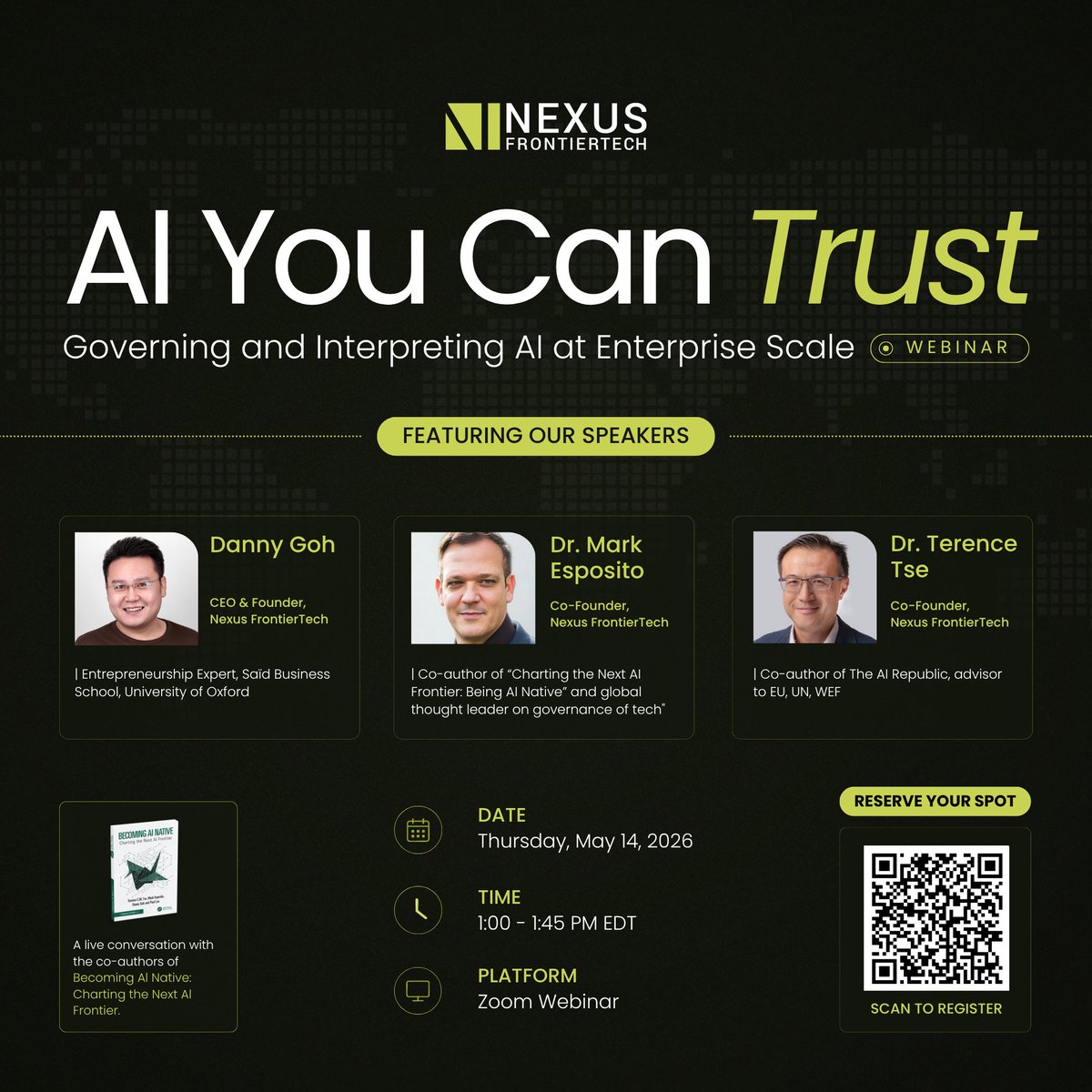
Most AI pilots fail governance, not technology.
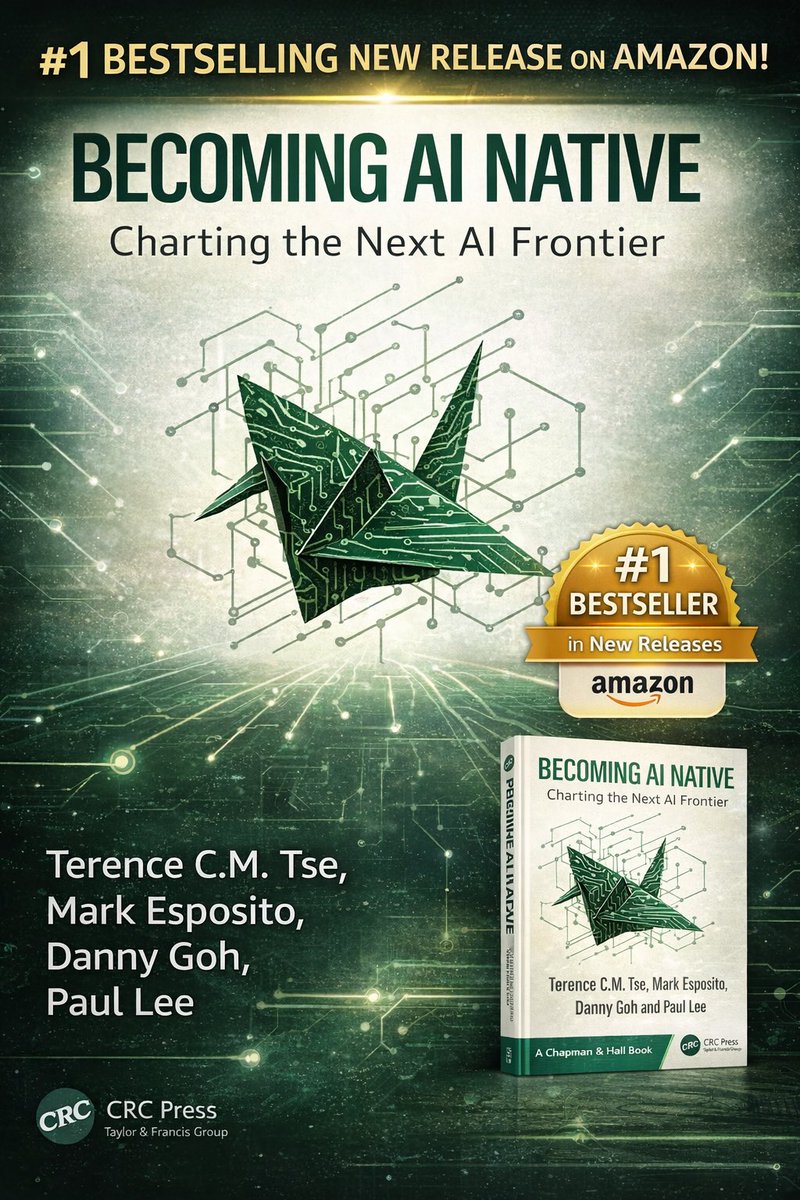
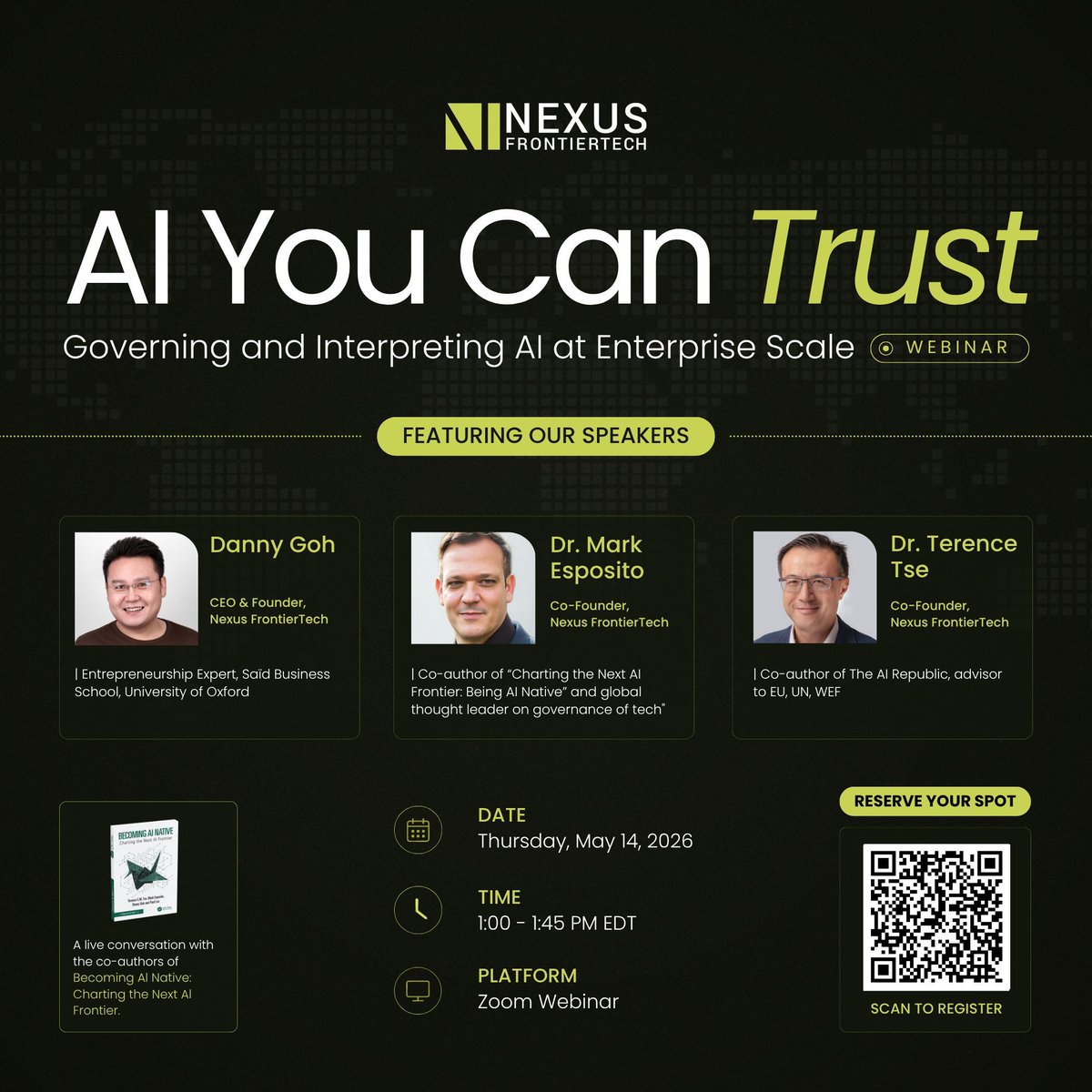
Join us tomorrow for a live conversation with the co-authors of Becoming AI Native @dcwgoh, @Exp_Mark, @Terencecmtse on governing and scaling enterprise AI.
May 14 · 1PM EDT → us06web.zoom.us/webinar/regi…
#AIGovernance #EnterpriseAI
1
2
97
Mark Esposito, PhD retweeted

1
1
165
Mark Esposito, PhD retweeted
May 8
Earlier this week we hosted the “Women Shaping the Future of AI in Law” panel, bringing together leaders across legal, AI, and enterprise technology to discuss what it actually takes to build reliable AI systems for the legal industry.
The conversation covered where AI is already driving real value in legal workflows, the challenges that still remain around trust, accuracy, and human oversight, and how the industry is thinking about building systems that can perform consistently in real-world legal environments.
A huge thank you to Anique Drumright, D. Isabel Ajuria, Shannon Yavorsky, Isabel Yishu Yang, and Amy Sennett for an incredible discussion, and to everyone who joined us.
The future of legal AI will depend on more than model capability alone. It will require deep collaboration between AI builders, legal experts, and the enterprises bringing these systems into real-world workflows.

5
4
30
2,378
Mark Esposito, PhD retweeted
May 7
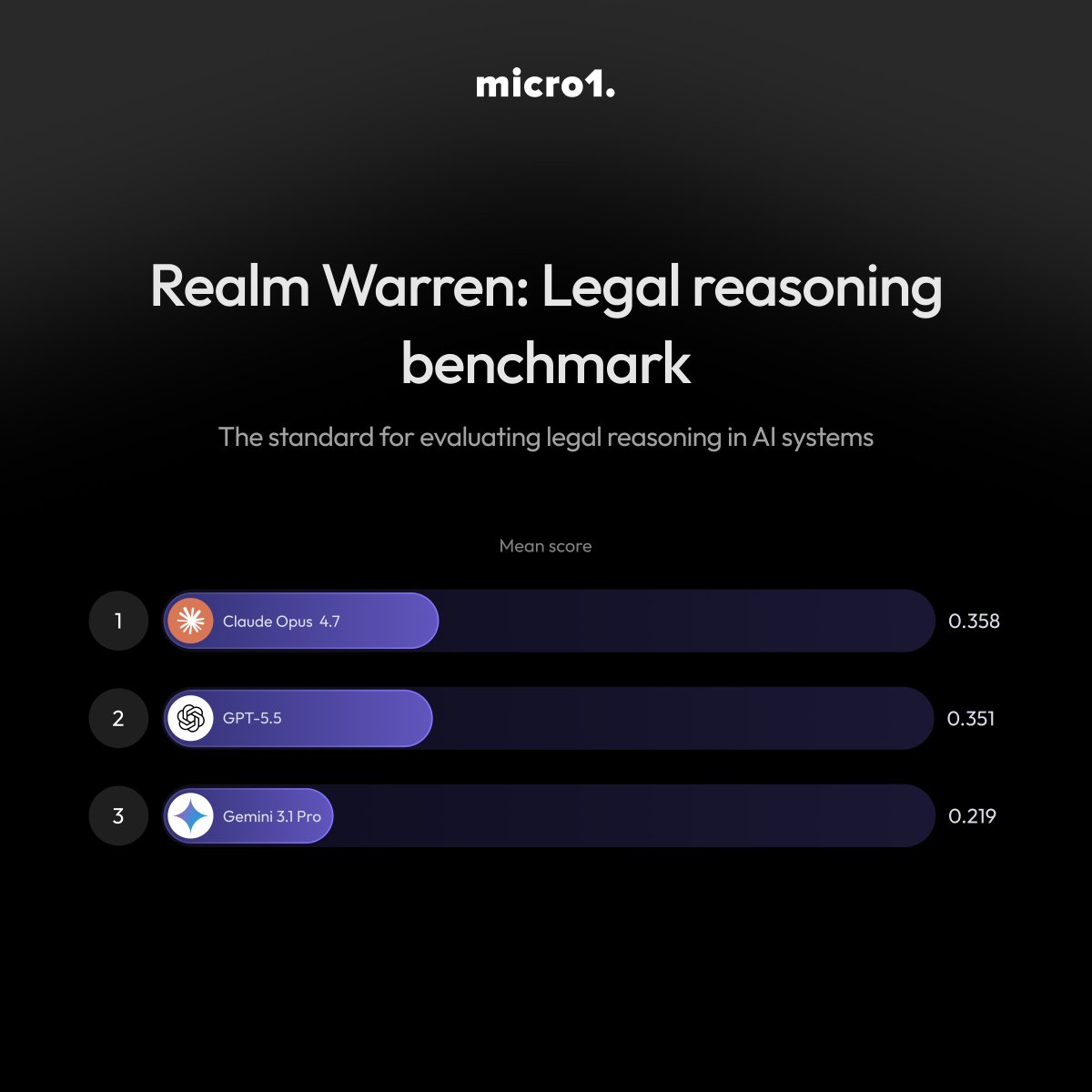
Today we’re releasing Realm Warren, part of the Realm benchmark series for measuring frontier AI models on real-world expert workflows.
Each task tests whether a model can produce a legal work product and adapt it as circumstances evolve. We evaluated Claude Opus 4.7, GPT-5.5, and Gemini 3.1 Pro across federal and state law, scored through IRAC: issue spotting, rule identification, factual application, and legal conclusion.
Here’s the results (mean score):
-Claude Opus 4.7: 0.358
-GPT-5.5: 0.351
-Gemini 3.1 Pro: 0.219
The sub-40% result shows where models break down on long-horizon legal work. Three failure modes drive it: the IRAC chain breaks after issue spotting, models front-load their effort and fail to revise, and skipping visual exhibits leads to invented facts.
Full report linked in the comments.
4
14
50
3,498
Mark Esposito, PhD retweeted

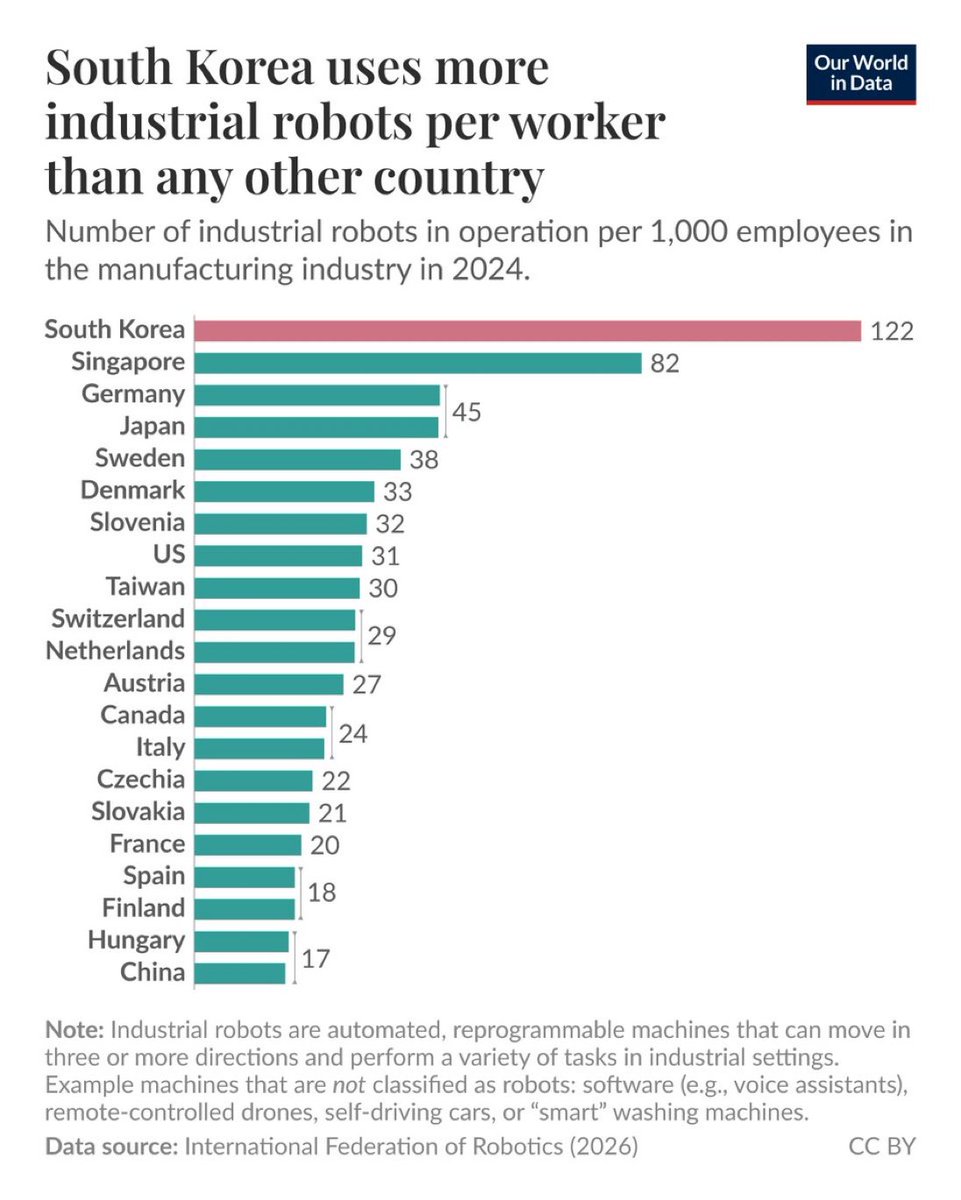
🤖 South Korea Leads the World in Industrial Robot Adoption
Here’s the 2024 ranking (robots per 1,000 employees):
Top 10:
1. 🇰🇷 South Korea – 122
2. 🇸🇬 Singapore – 82
3. 🇩🇪 Germany – 45
3. 🇯🇵 Japan – 45
5. 🇸🇪 Sweden – 38
6. 🇩🇰 Denmark – 33
7. 🇸🇮 Slovenia – 32
8. 🇺🇸 United States – 31
9. 🇹🇼 Taiwan – 30
10. 🇨🇭 Switzerland – 29
10. 🇳🇱 Netherlands – 29
(Our World in Data)
72
204
675
90,222
Mark Esposito, PhD retweeted

Apr 24
Most AI readiness tools, such as those from Cisco, Microsoft, Avanade, and Google, are designed for organisations. They look at things like your company’s infrastructure, data pipelines, cloud setup, and governance. And then there are many educational outfits preparing leaders to use AI in their companies. These tools are helpful, but they really just answer one question: “Is our organisation ready for AI?”
But they don’t answer a more personal question: “Am I ready for AI?”
This is the gap that AI Compass aims to fill.
AI Compass is an AI readiness intelligence platform created by the AI Native Foundation. Instead of just giving you a quiz and a score, it first gathers and checks information from 12 different sources about you, your company, and your industry. Then, it tailors 25 questions to fit your profile, including your seniority, sector, and regulatory environment, and creates a personalised report with 11 sections.
The report covers peer benchmarks, a regulatory scorecard, a register of risks and opportunities, competitive intelligence, a skills and career matrix, and a 90-day action plan designed for your role. This isn’t just a generic checklist—it’s a personalised strategic briefing.
What makes it different from what’s out there? Most tools in the market are organisation-level diagnostics designed for CIOs and IT teams, often pointing you towards a specific vendor’s ecosystem. AI Compass is designed for individuals — from individual contributors to board members, across technology, finance, healthcare, government, education, and beyond. Whether you use AI tools every day or have never touched one, the assessment adapts to you.
As AI readiness becomes a key career skill, it’s more important than ever to know where you stand personally.
Try it here: aicompass.ainativefoundation…
If your company or institution wants team, group, or enterprise access, feel free to message me.
#AICompass #AIReadiness #AINativeFoundation #ArtificialIntelligence #AIStrategy #CareerDevelopment #Leadership
1
2
245
Mark Esposito, PhD retweeted
May 5
A lot of people are focused on rolling out AI at scale, but not many are discussing how to manage it effectively. That’s a real issue.
How can you trust an AI system if you can’t explain its decisions? How do you manage something that changes faster than your compliance rules? And what does responsible AI really mean when it’s part of your daily work, not just a slide in a deck?
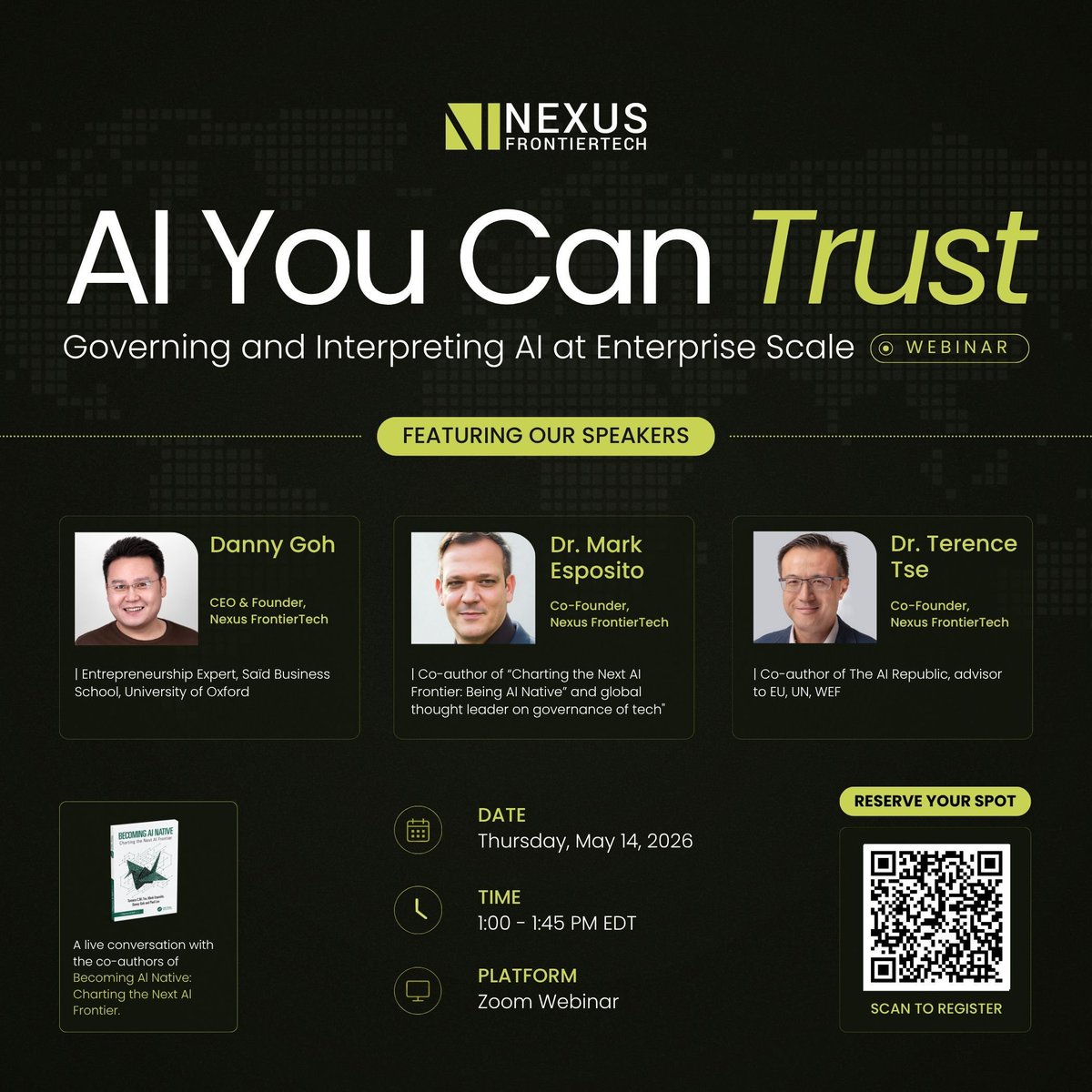
Danny Goh @dcwgoh, Mark Esposito @Exp_Mark, and I will dive into these questions in our upcoming webinar: AI You Can Trust: Governing and Interpreting AI at Enterprise Scale.
This won’t be just a theory. Together, we’ve built AI systems, advised governments and global organisations, and even written the book on becoming AI native. We’ll share what has worked, what hasn’t, and what enterprise leaders should focus on right now.
If you’re a CTO working to build trust in your AI stack, a board member asking tough questions, or a leader who thinks your organisation’s AI governance is more about slides than real action, this session is for you.
Join us on Thursday, May 14, 2026, from 1:00 to 1:45 PM EDT for a Zoom webinar.
You can scan the QR code in the image or go here tinyurl.com/2pjjms92
Hope to see you there!
#AIGovernance #TrustworthyAI #BecomingAINative #NexusFrontierTech #AI #EnterpriseAI #Leadership
2
5
83
Mark Esposito, PhD retweeted

May 4
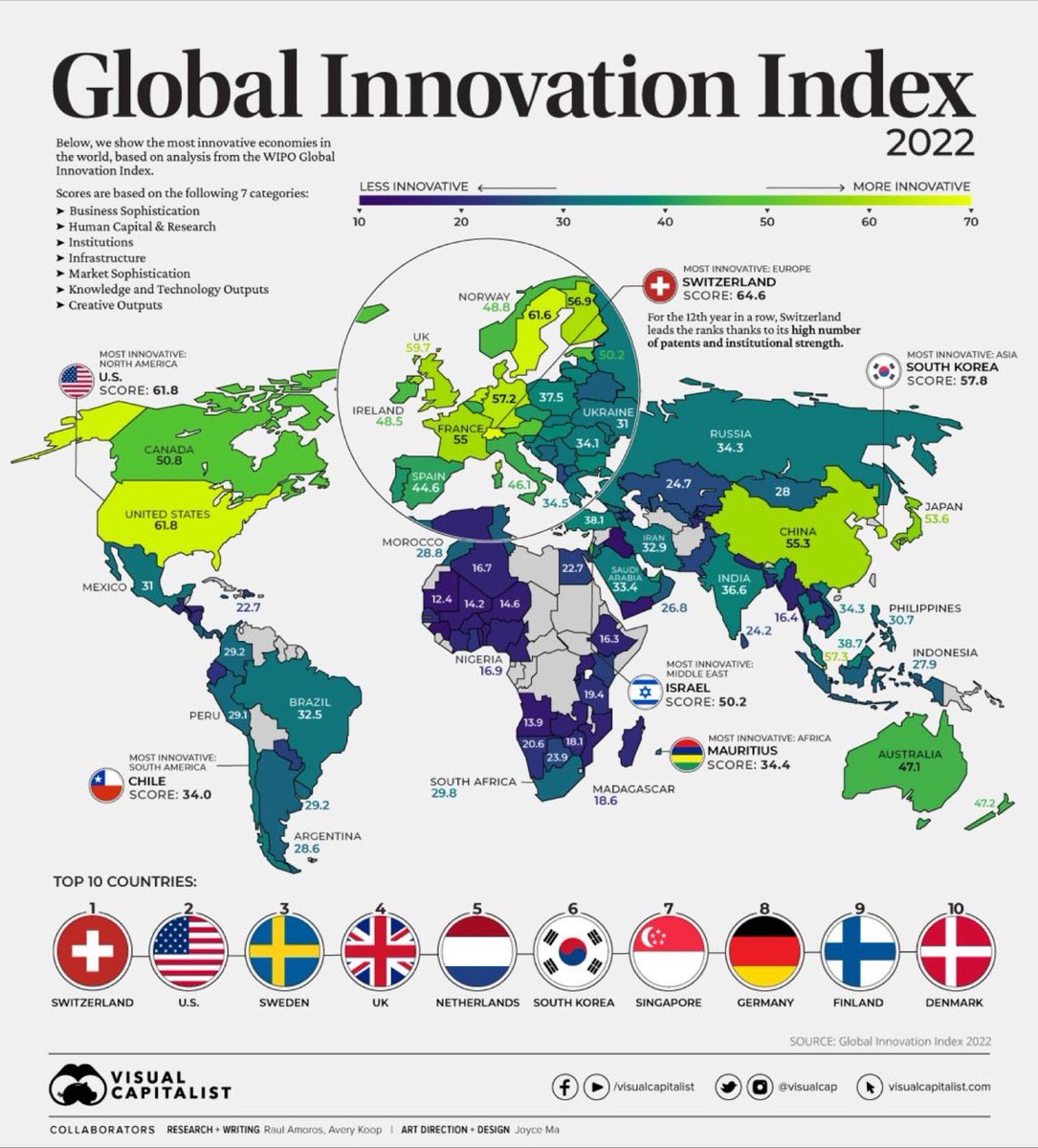
Switzerland has the most AI and Robotics developers per capita and there's a budding ecosystem growing out of EPFL and ETH.
It can't afford to lose like it did with crypto where it had a first mover advantage and didn't convert to creating a sustainable economy.
30
13
265
15,580
Mark Esposito, PhD retweeted

Switzerland looks unreal in places.
Glacier lakes, cliffside villages, medieval towns, waterfalls, castles, and mountains that make you wonder how one small country holds this much beauty.
Let’s travel through 20 of its most iconic and scenic places. 🧵

ALT Credit: @collapsed24
70
504
3,093
139,394
Mark Esposito, PhD retweeted

Apr 30
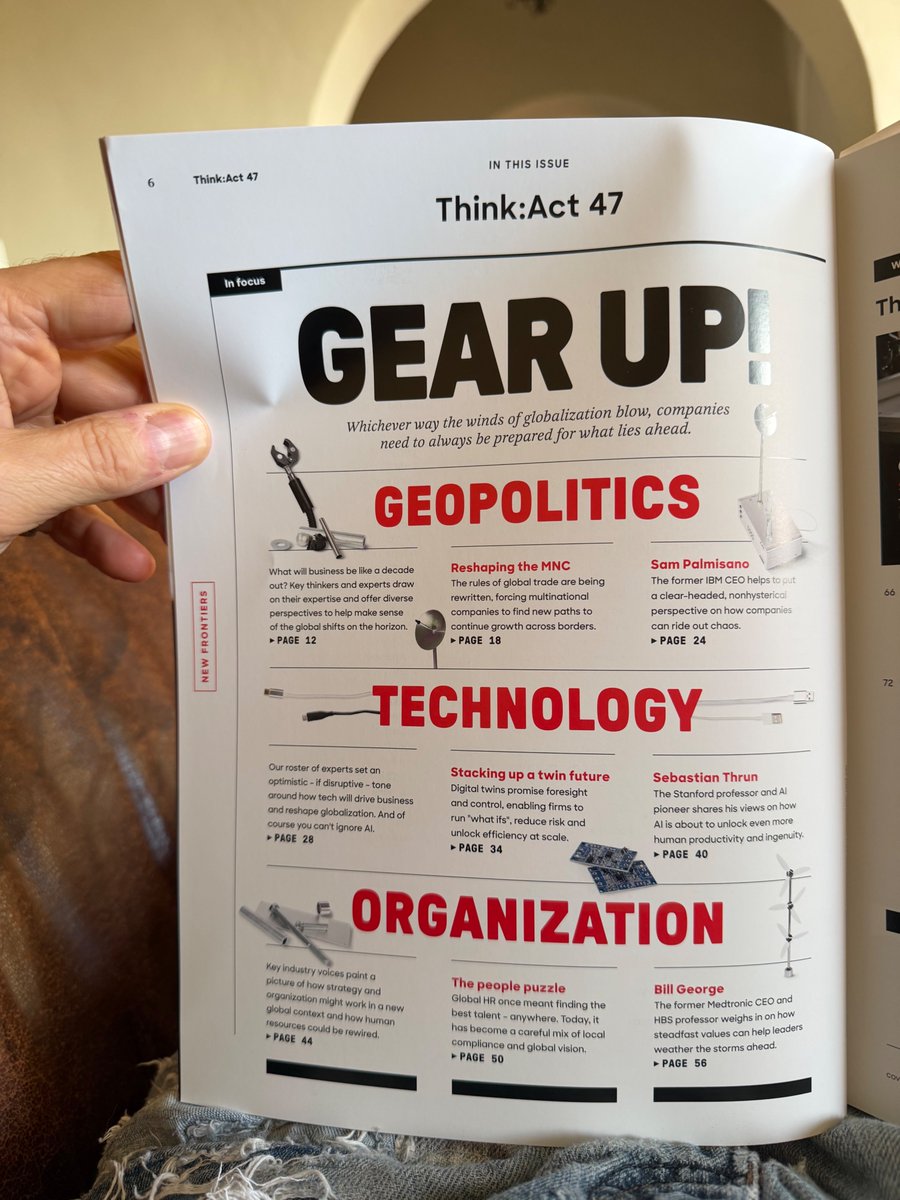
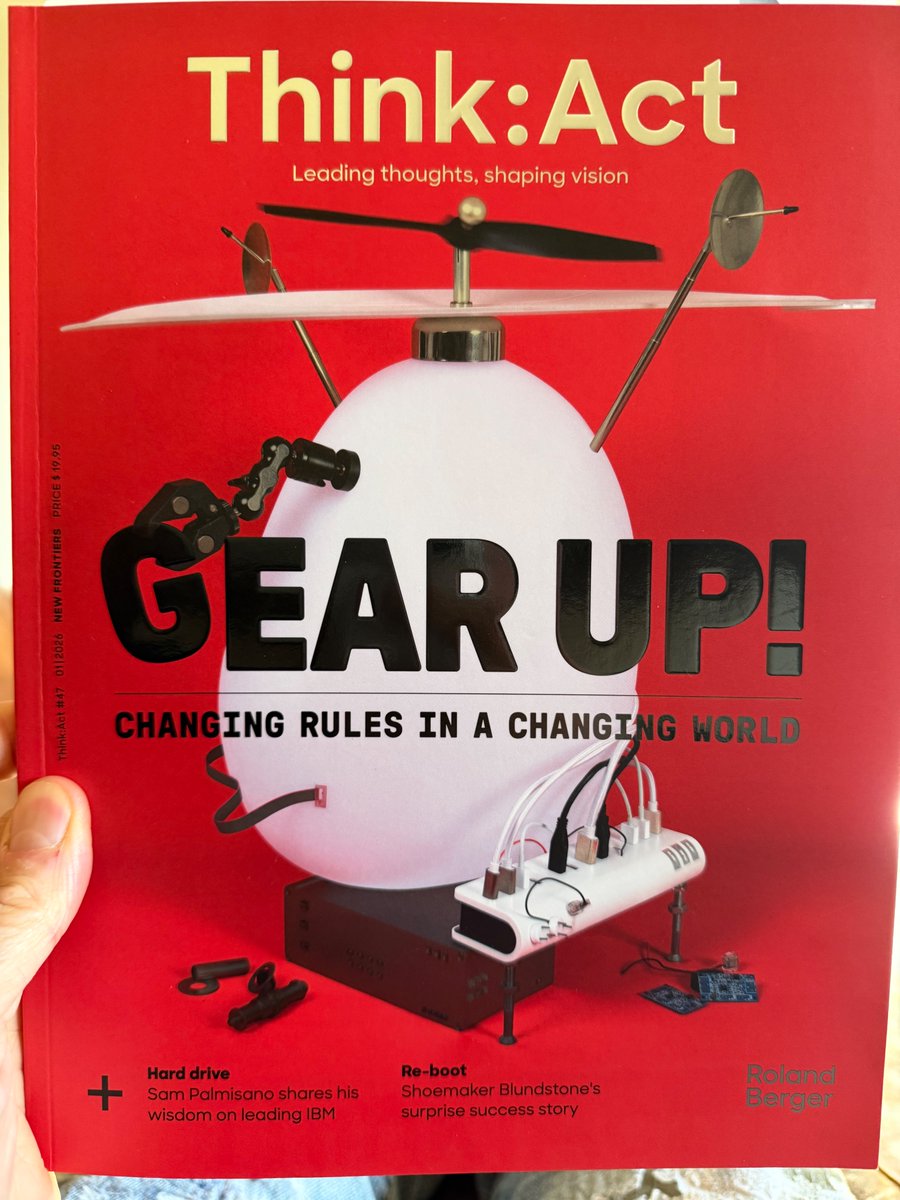
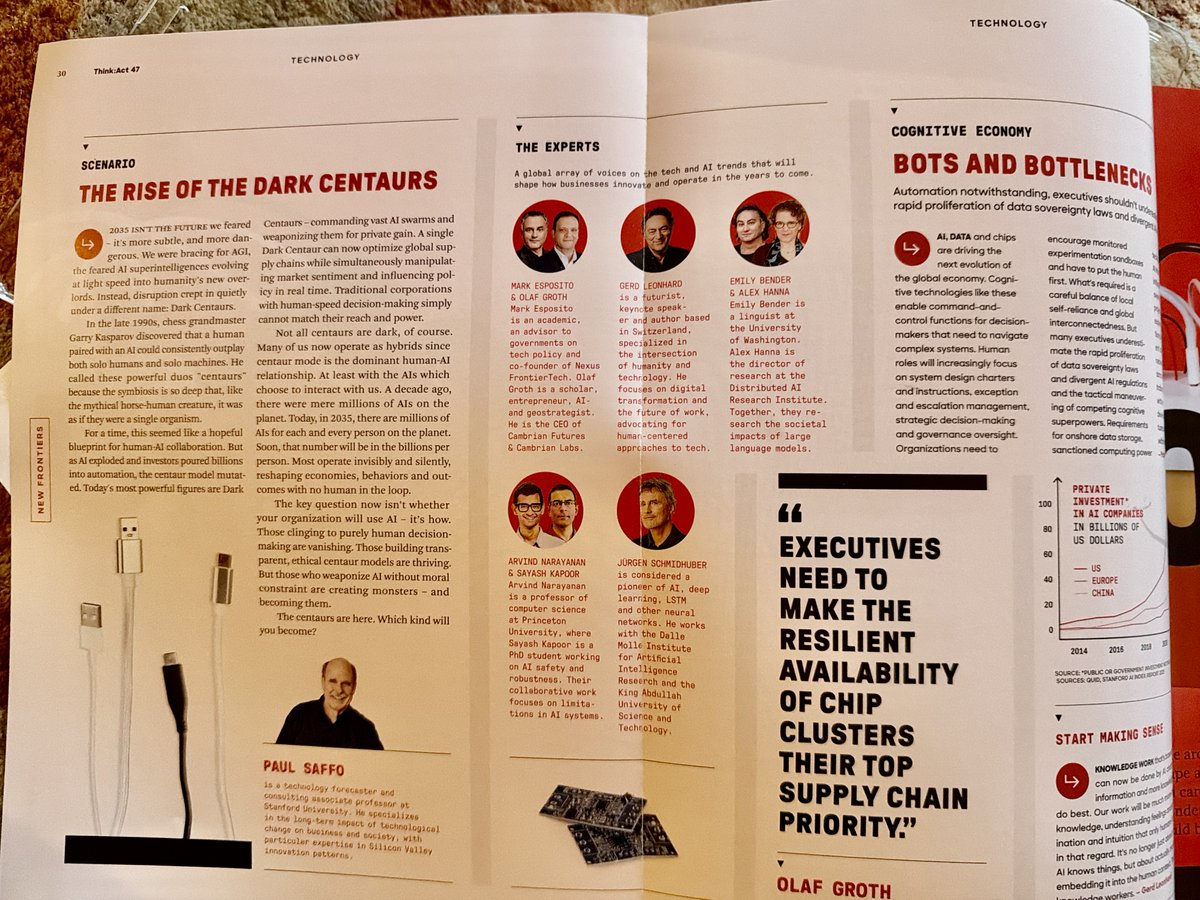
Highly recommend this issue of "Think:Act" from Roland Berger. For one because it's dedicated to "Changing Rules for a Changing World," which is where our attention needs to be. But also because it's jam-packed with great ideas on what we can do to shape the emerging future, from Sam Palmisano, Linda Hill, Sebastian Thrun, Paul Saffo, AG Lafley, Rita McGrath, Kishore Mahbubani, Juergen Schmidhuber, Gerd Leonhard, Emily Bender, Alex Hanna and many more. And yes, my friend, colleague and co-author, @Exp_Mark, and I are in it as well. Yes, yes, shameless, I know. 😉 Enjoy: rolandberger.com/en/Think-Ac…
1
2
101
Mark Esposito, PhD retweeted
Apr 29
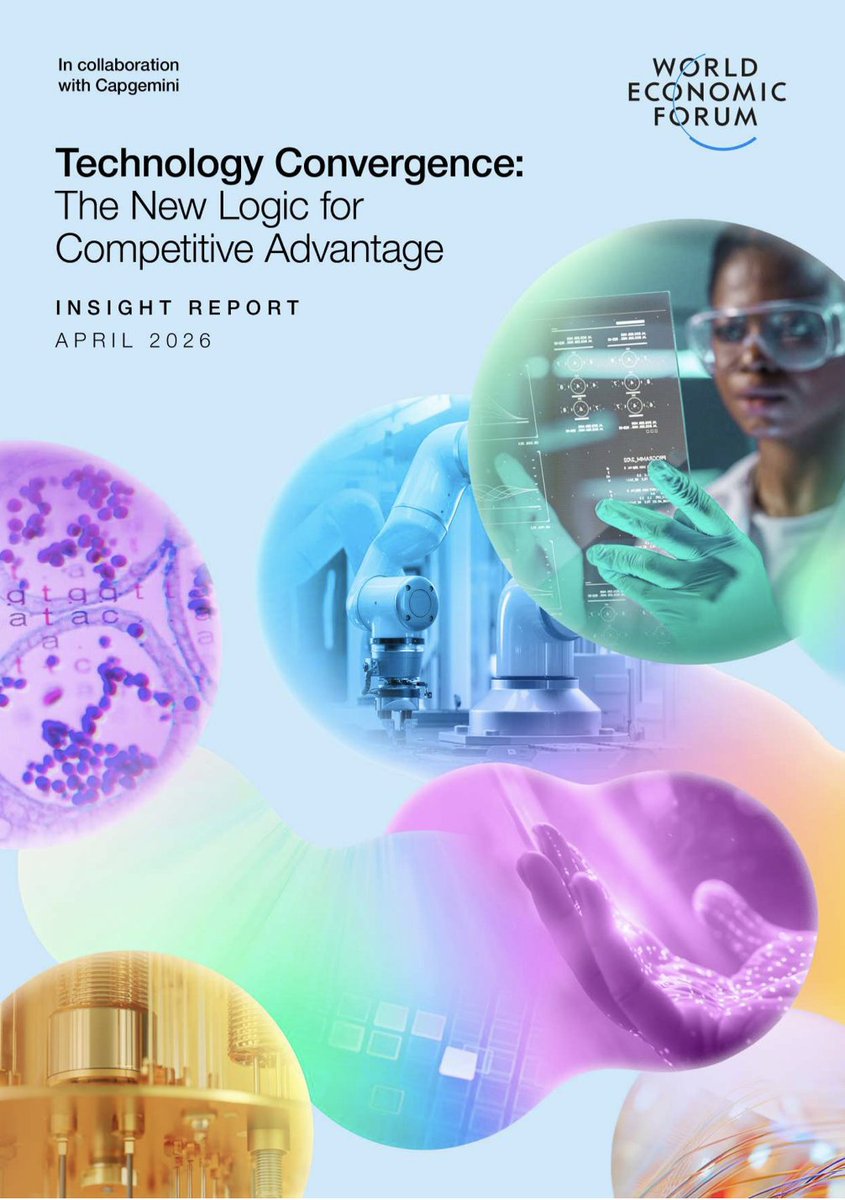
Glad to have contributed, alongside my longterm friend, colleague and co-author @Exp_Mark, to this bleeding edge report by the World Economic Forum @Davos and our friends at @Capgemini: weforum.org/publication…
Crack it open -- you won't be disappointed. It delivers actionable insights and tools that help policy-makers, economists and business leaders design systems, structure organizations and scale solutions beyond the scope of a single technology for broader societal value. The analysis examines how eight advanced technology domains interact, using the 3C framework and the Technology Maturity Index to track how technologies move from experimentation to real-world impact and global change. Thanks to the teams of both organizations.
Thanks to the teams of both organizations: Jeremy Jurgens, Aiman Ezzat, Kary Bheemaiah, Cathy Li, Mylo Kidwell, Antoine Tillette de Mautort, Connie Kuang, Simone Schmalzbauer; Simone Xinyi QIU, Mattia Damati, Maria Basso.
1
3
211